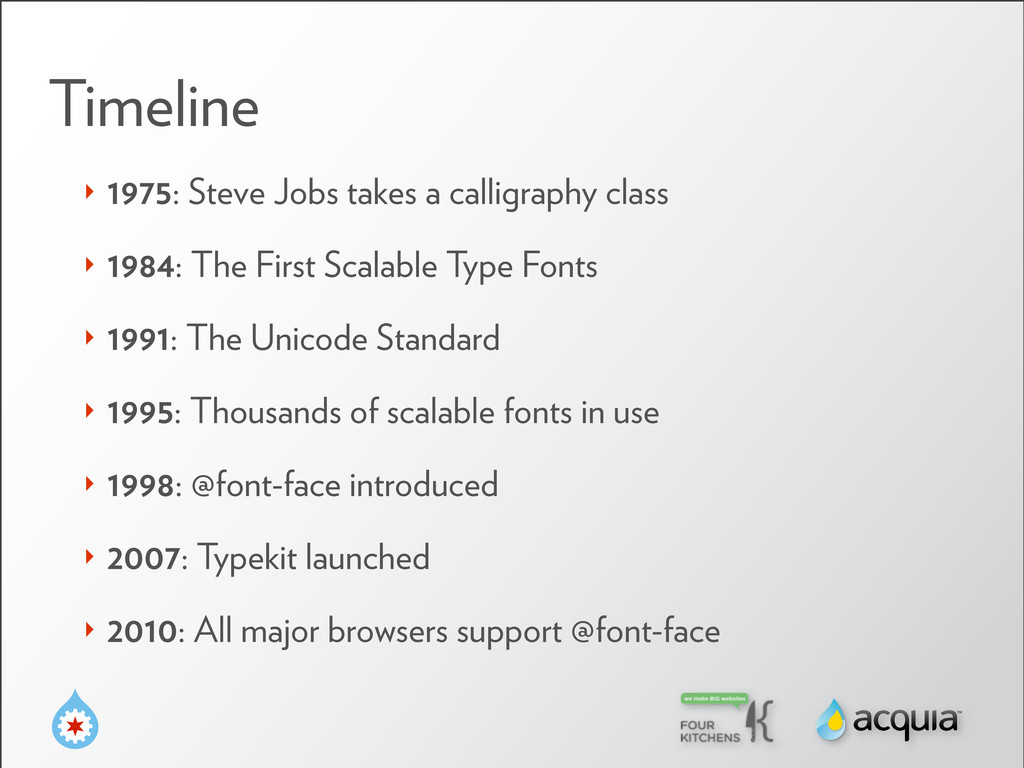
1984: The First Scalable Type Fonts ‣ 1991: The Unicode Standard ‣ 1995: Thousands of scalable fonts in use ‣ 1998: @font-face introduced ‣ 2007: Typekit launched ‣ 2010: All major browsers support @font-face
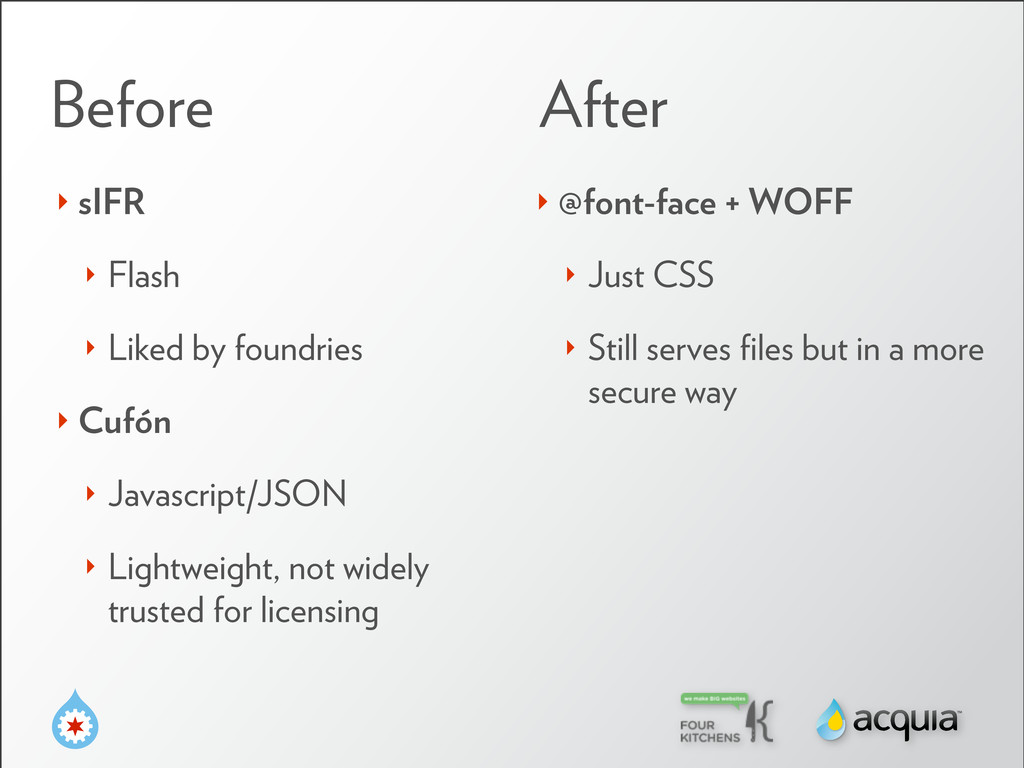
Cufón ‣ Javascript/JSON ‣ Lightweight, not widely trusted for licensing ‣ @font-face + WOFF ‣ Just CSS ‣ Still serves files but in a more secure way After
you're allowed to use these fonts personally or commercially, as long as you credit the original creator, and if you made tweaks and changes to the typefaces, any new typefaces resulting from it should be licensed under the same terms. That way all our fonts and any new fonts resulting from them will always be open. “
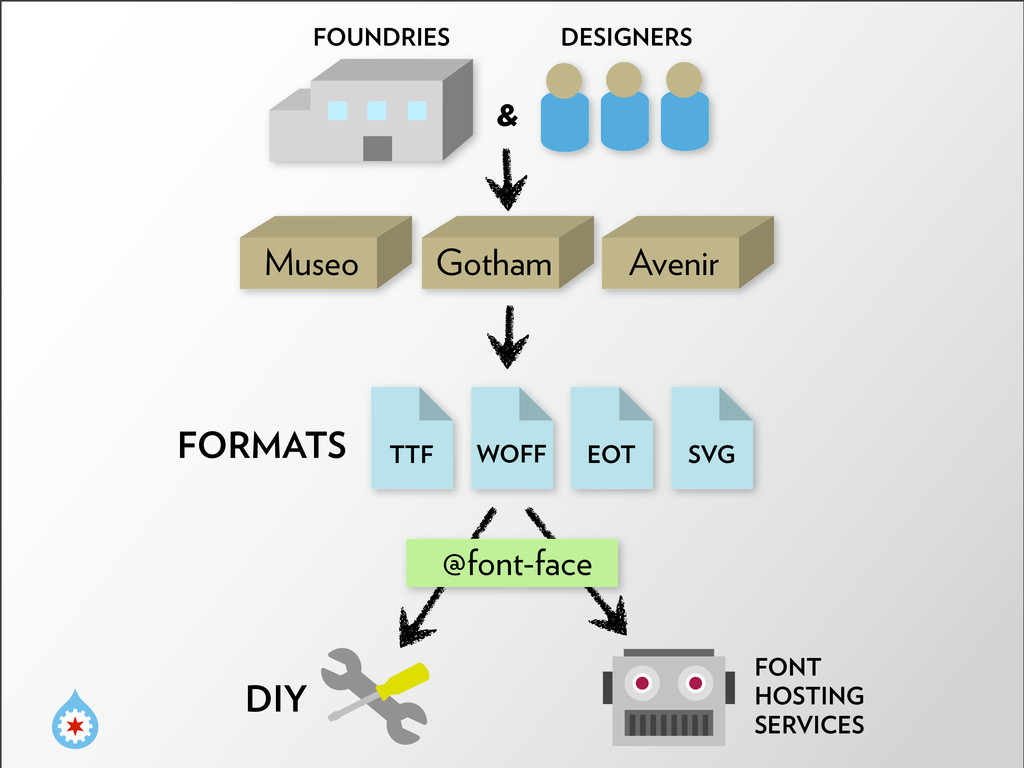
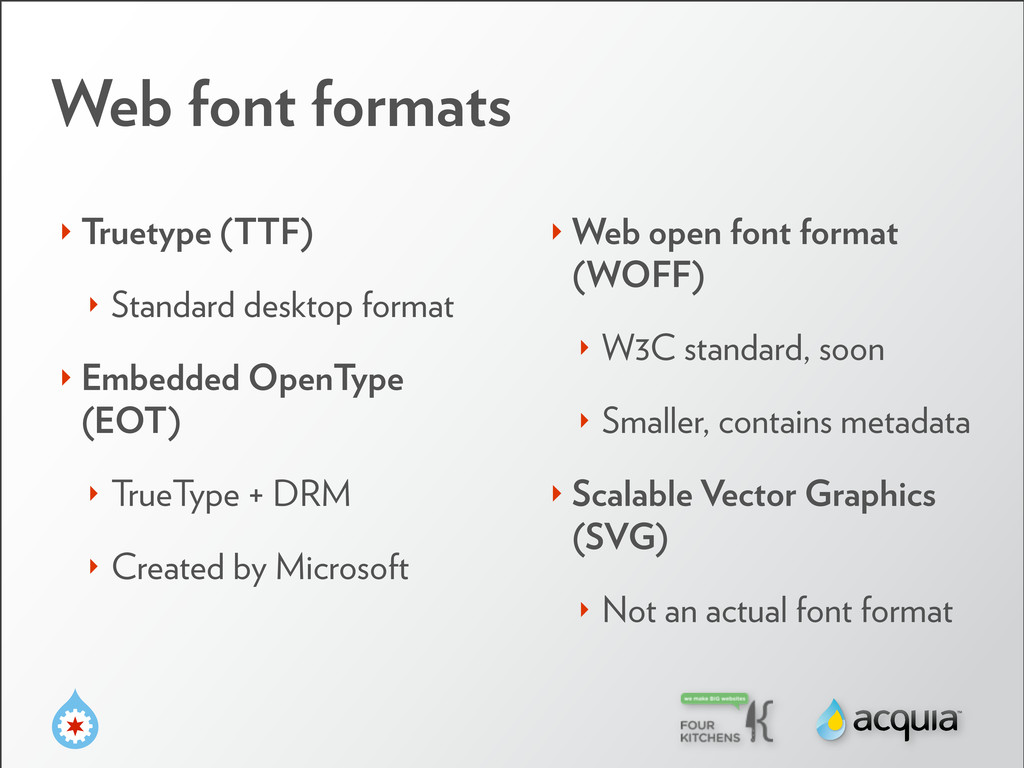
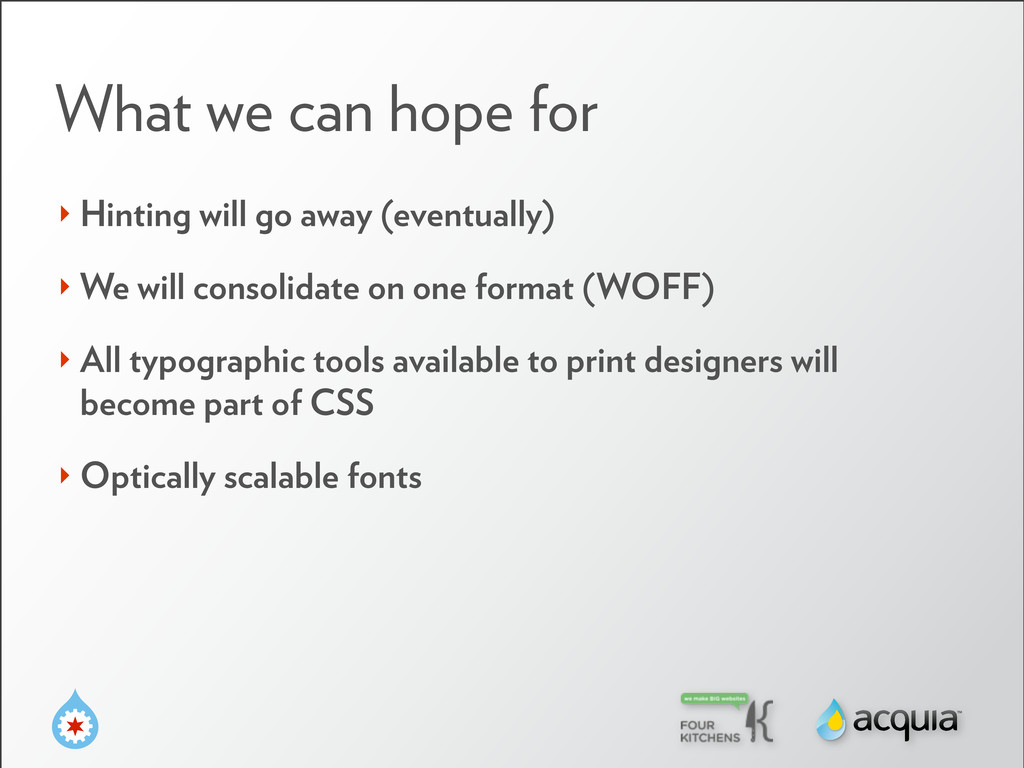
‣ Embedded OpenType (EOT) ‣ TrueType + DRM ‣ Created by Microsoft ‣ Web open font format (WOFF) ‣ W3C standard, soon ‣ Smaller, contains metadata ‣ Scalable Vector Graphics (SVG) ‣ Not an actual font format
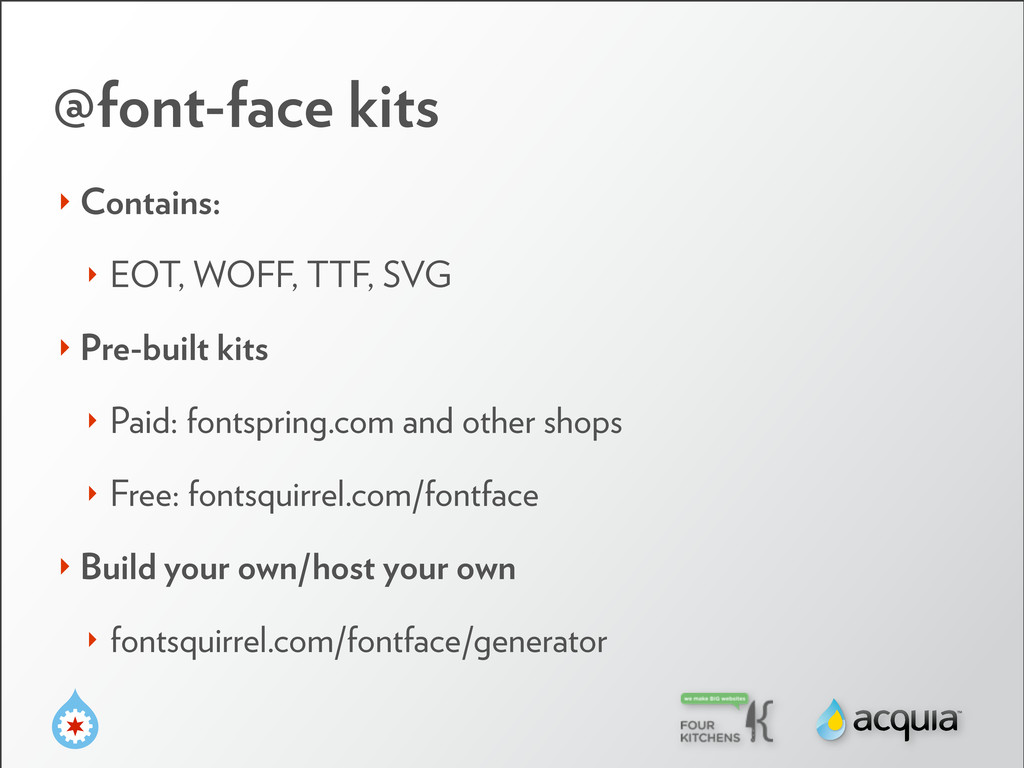
Pre-built kits ‣ Paid: fontspring.com and other shops ‣ Free: fontsquirrel.com/fontface ‣ Build your own/host your own ‣ fontsquirrel.com/fontface/generator
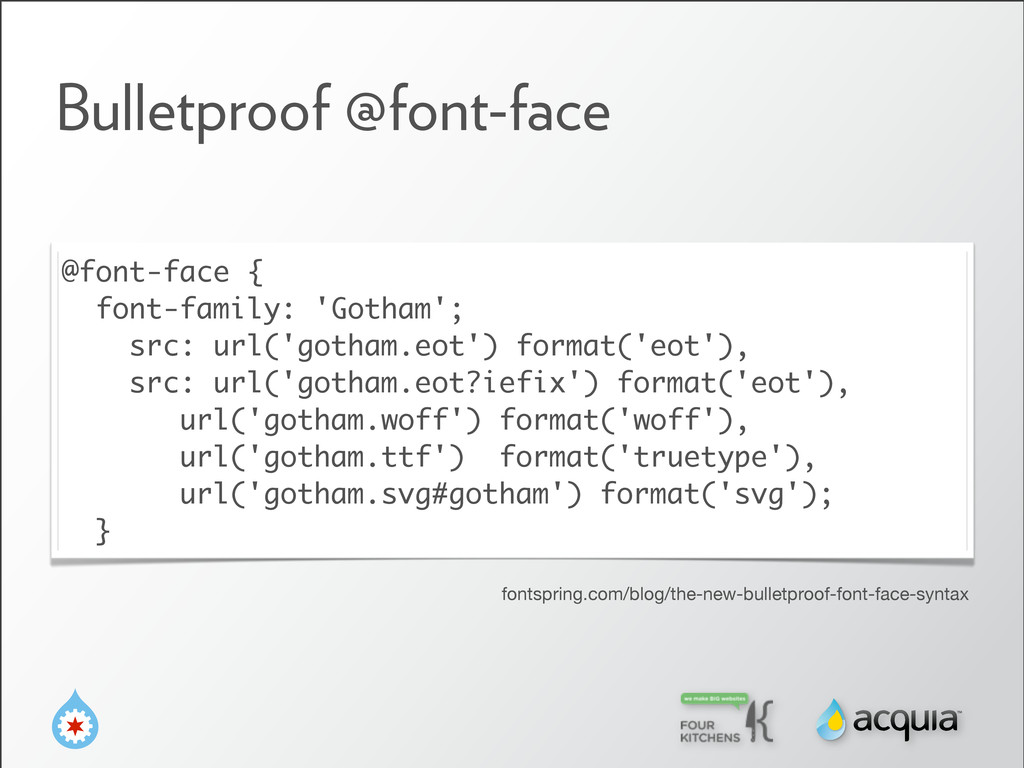
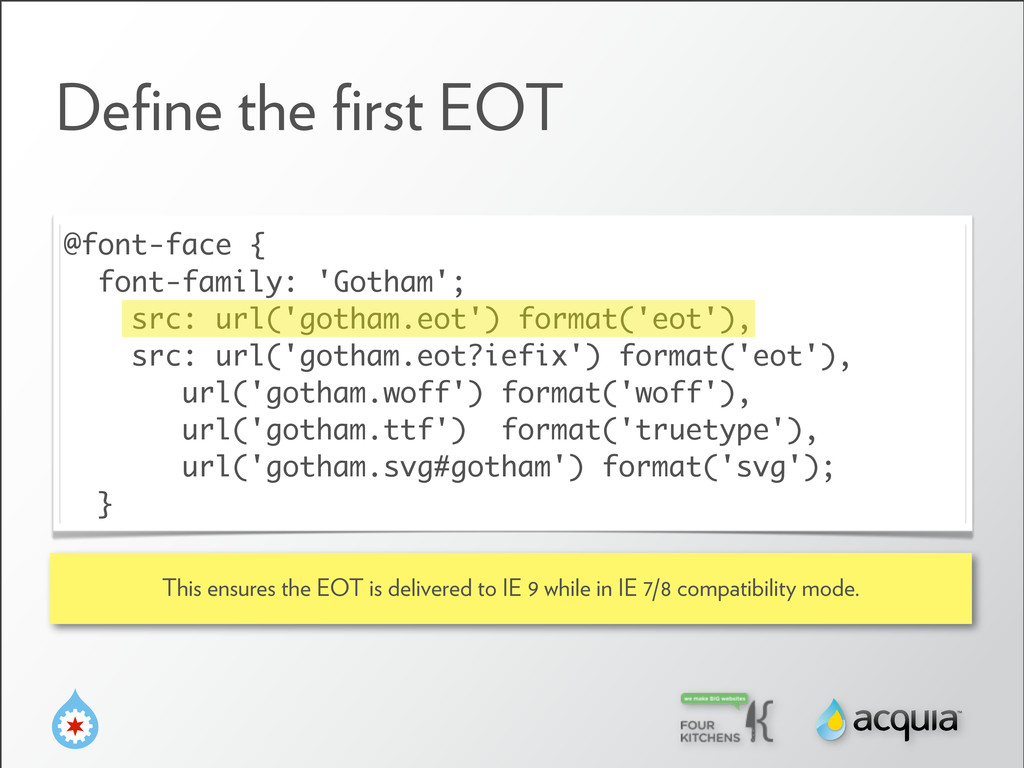
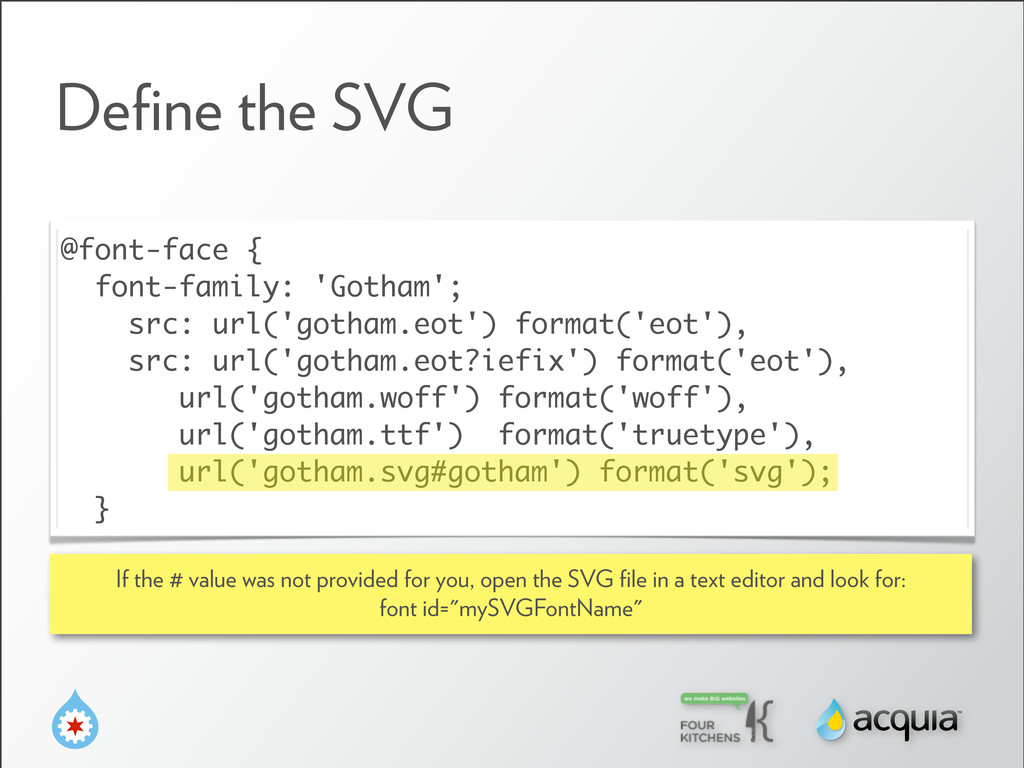
format('eot'), src: url('gotham.eot?iefix') format('eot'), url('gotham.woff') format('woff'), url('gotham.ttf') format('truetype'), url('gotham.svg#gotham') format('svg'); } This ensures the EOT is delivered to IE 9 while in IE 7/8 compatibility mode.
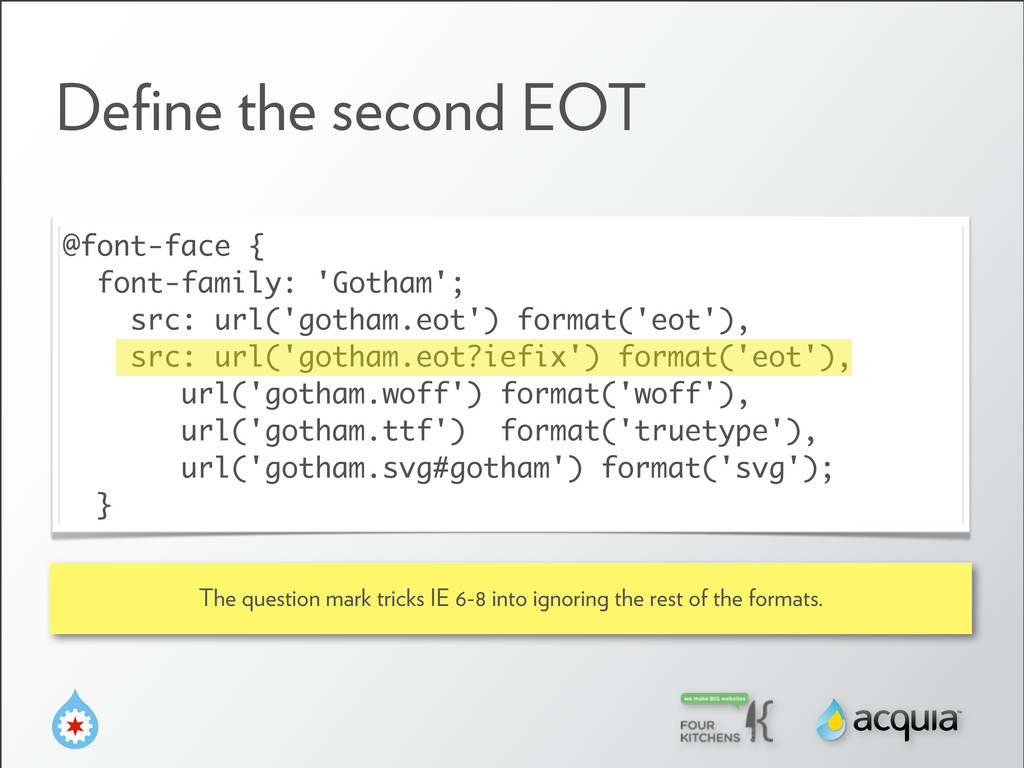
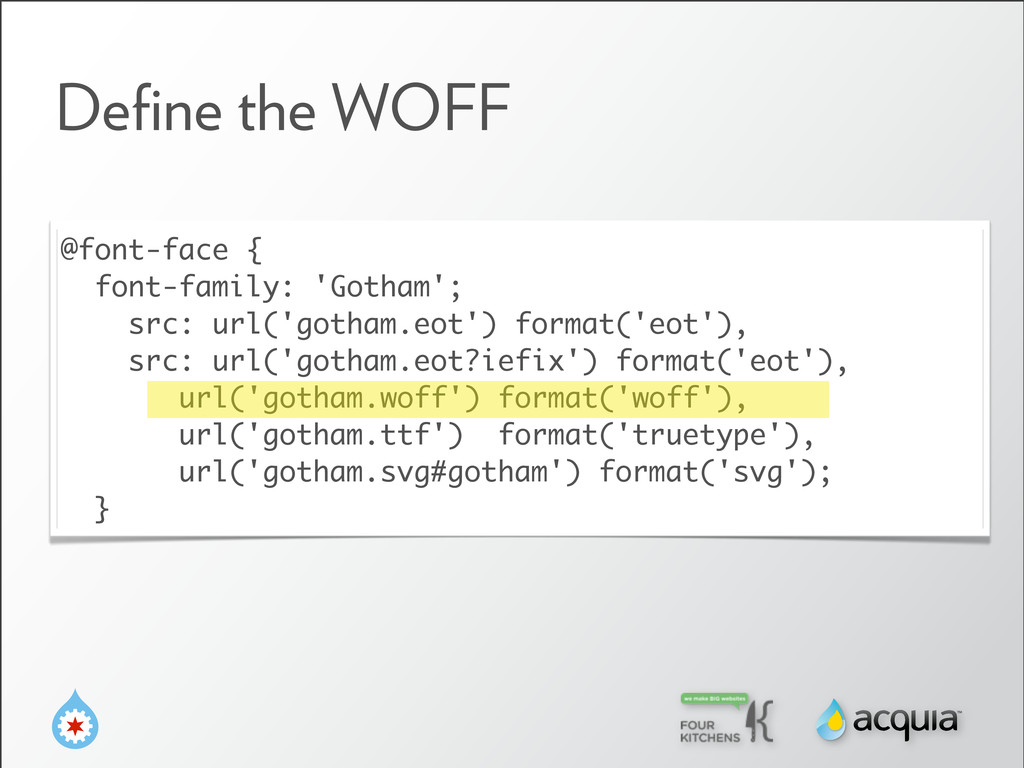
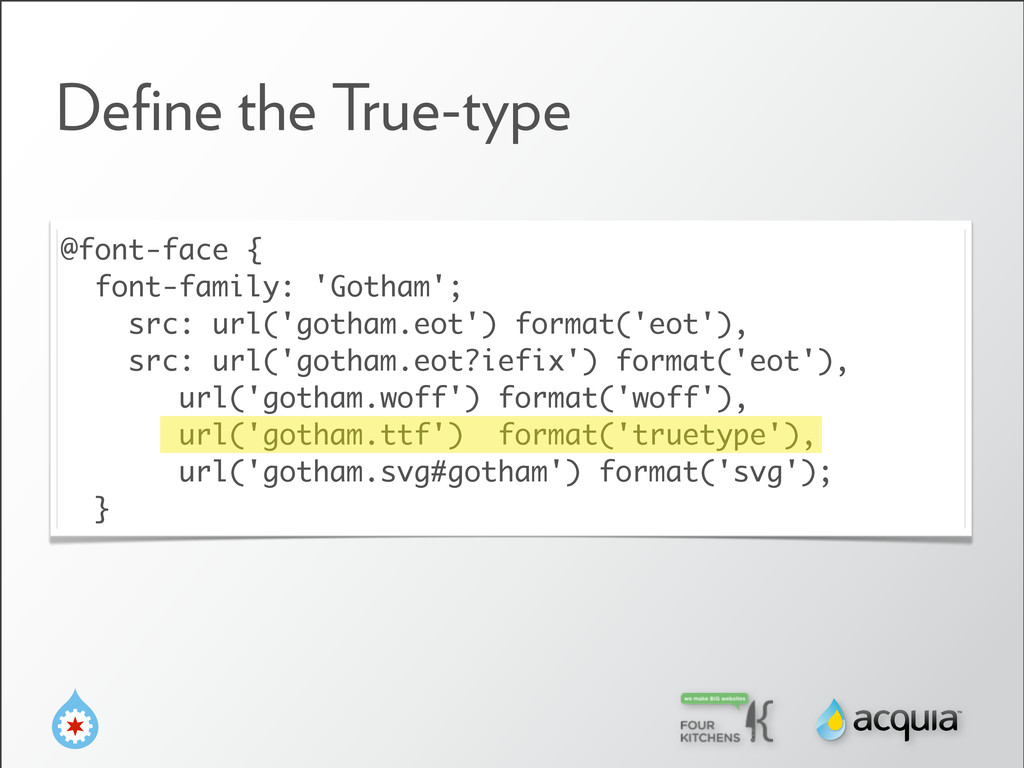
url('gotham.woff') format('woff'), url('gotham.ttf') format('truetype'), url('gotham.svg#gotham') format('svg'); } The question mark tricks IE 6-8 into ignoring the rest of the formats. Define the second EOT
the SVG file in a text editor and look for: font id="mySVGFontName" @font-face { font-family: 'Gotham'; src: url('gotham.eot') format('eot'), src: url('gotham.eot?iefix') format('eot'), url('gotham.woff') format('woff'), url('gotham.ttf') format('truetype'), url('gotham.svg#gotham') format('svg'); } Define the SVG
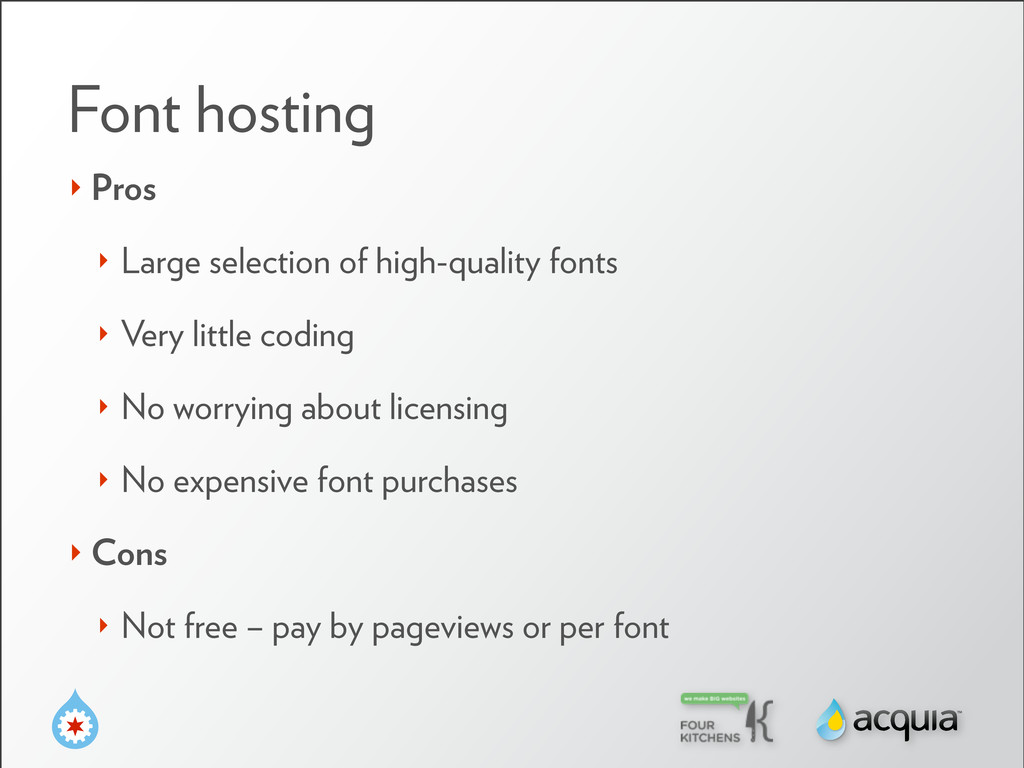
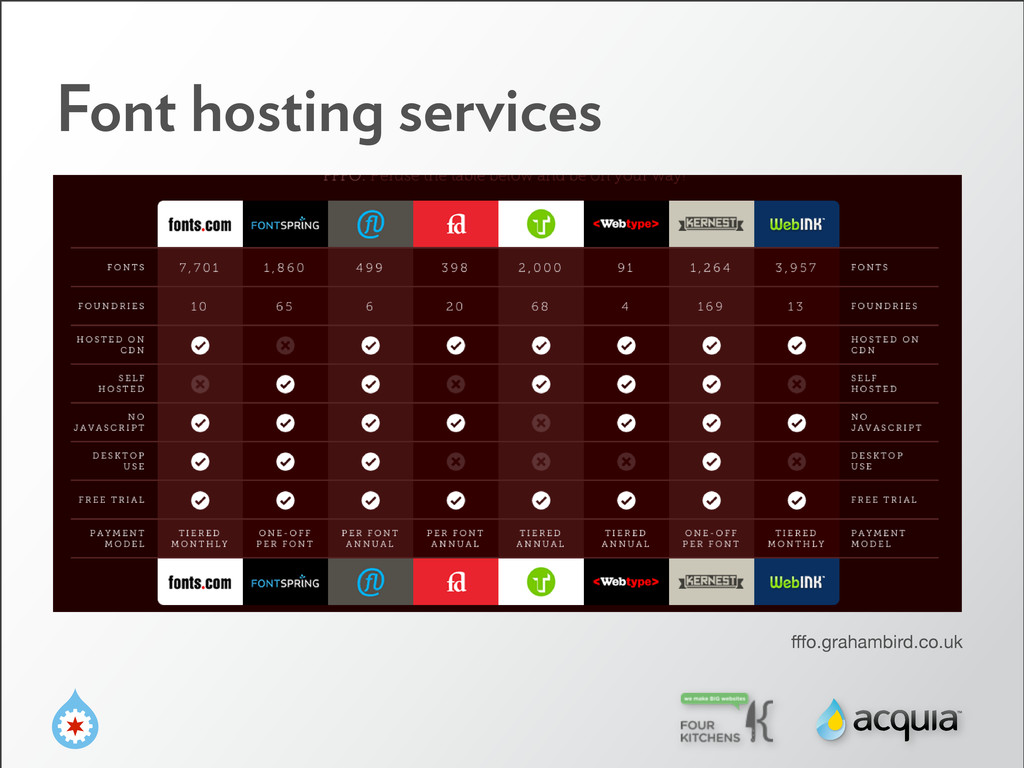
Fonts.com, Font Squirrel, Kernest, and FontDeck ‣ Enabling a font happens automatically, e.g. no JS to add ‣ Can apply fonts to site elements through the UI


 astanush
 apolaine
 isaikaori
 miyayou
 ishii_mit
 dmattsun
 cygames
 chiemitaki
 sekiguchiy
 taku10101
 terencebasart
 harakeishi
 cassininazir
 bcantrill
 jmmastey
 matthewcrist
 chikuwait
 jonoalderson
 szymonslowik
 lindahogenes
 tenderlove
 csswizardry
 reverentgeek
 honnibal

![[email protected] @aaronstanush kevin.o'[email protected] Aaron Stanush Kevin O’Leary Partner and Designer](https://files.speakerdeck.com/presentations/500f68deac941a0002021b3c/slide_1.jpg)