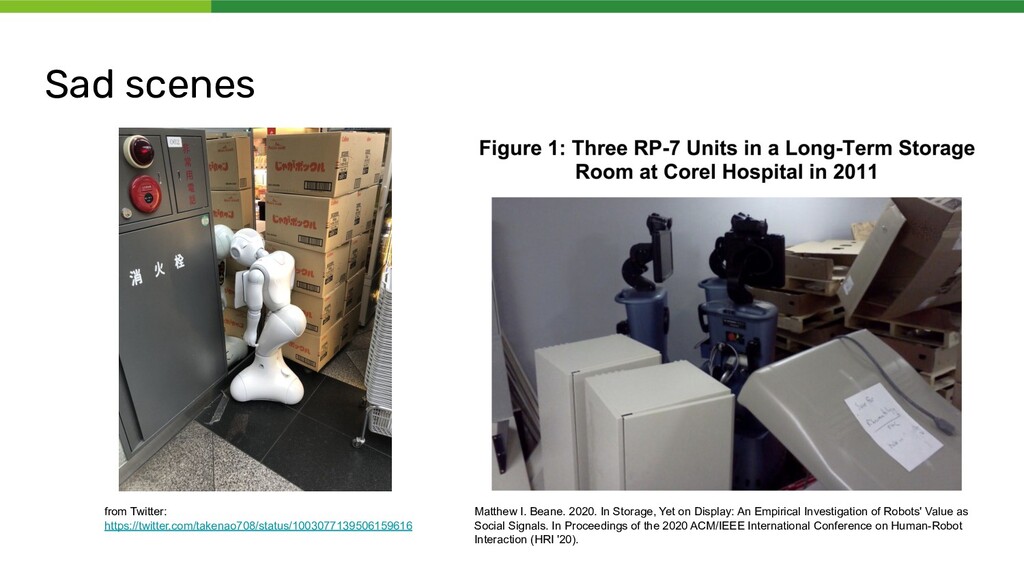
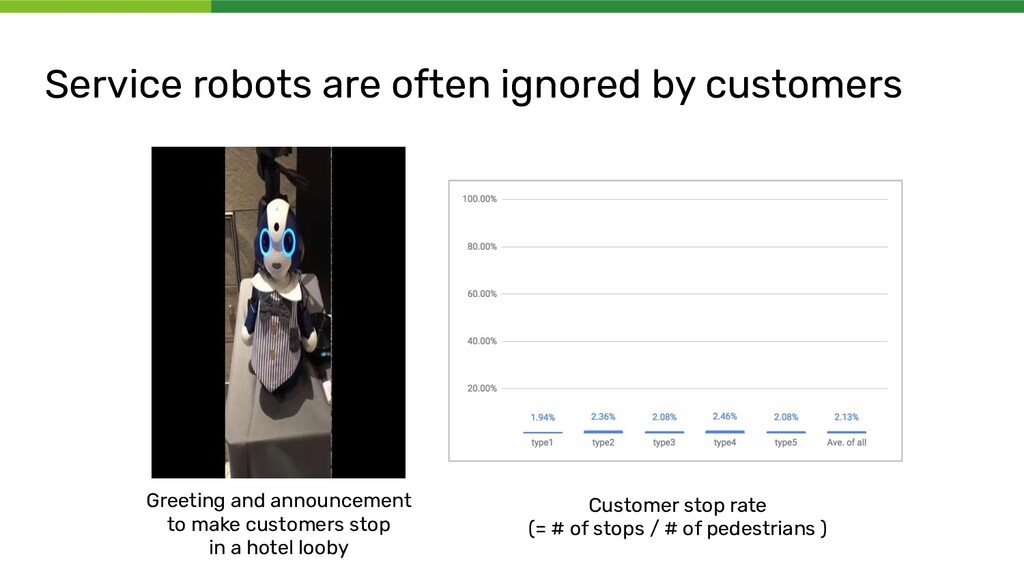
Display: An Empirical Investigation of Robots' Value as Social Signals. In Proceedings of the 2020 ACM/IEEE International Conference on Human-Robot Interaction (HRI '20). from Twitter: https://twitter.com/takenao708/status/1003077139506159616
is “eliciting people’s social/interpersonal reactions/behaviors”. • Impressions of the robots: Expertise / Pressure / Trust ... • Emotional reactions: Empathy / sympathy ... Social reactions/behaviors ⇒ Building an interpersonal relationship with a customer ⇒ What happens next?
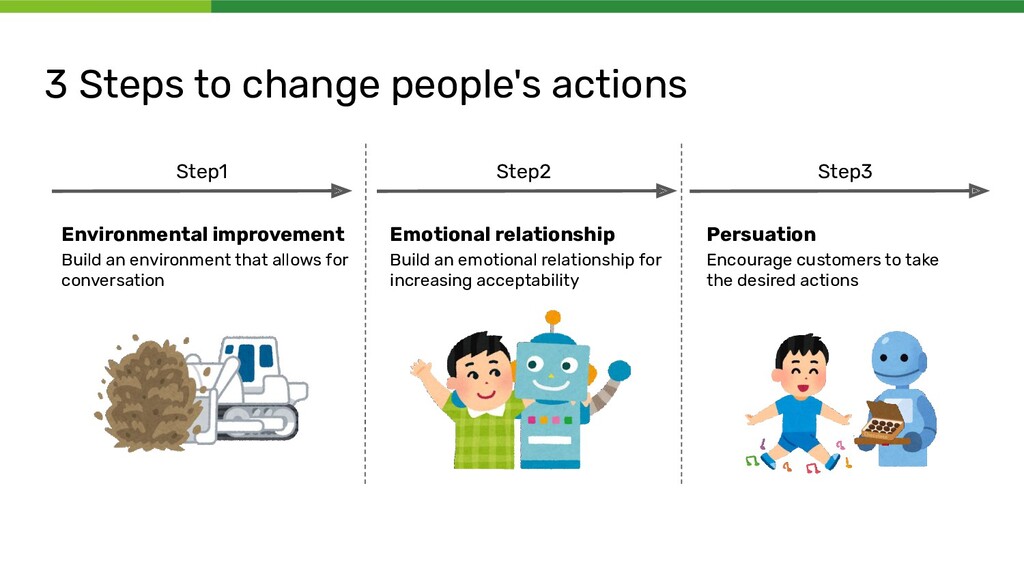
improvement Build an environment that allows for conversation Emotional relationship Build an emotional relationship for increasing acceptability Persuation Encourage customers to take the desired actions
to Make Passersby Stop by a Humanoid Robot in a Shopping Mall” [HRI (Companion) 2020] • “Behavioral assessment of a humanoid robot beyond human performance when attracting pedestrians in a mall” [in-review]
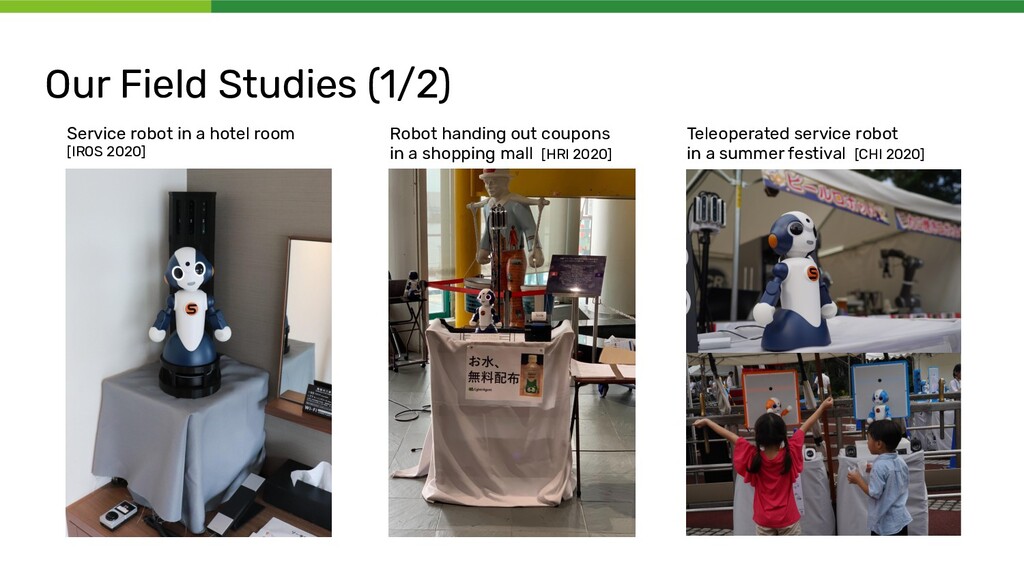
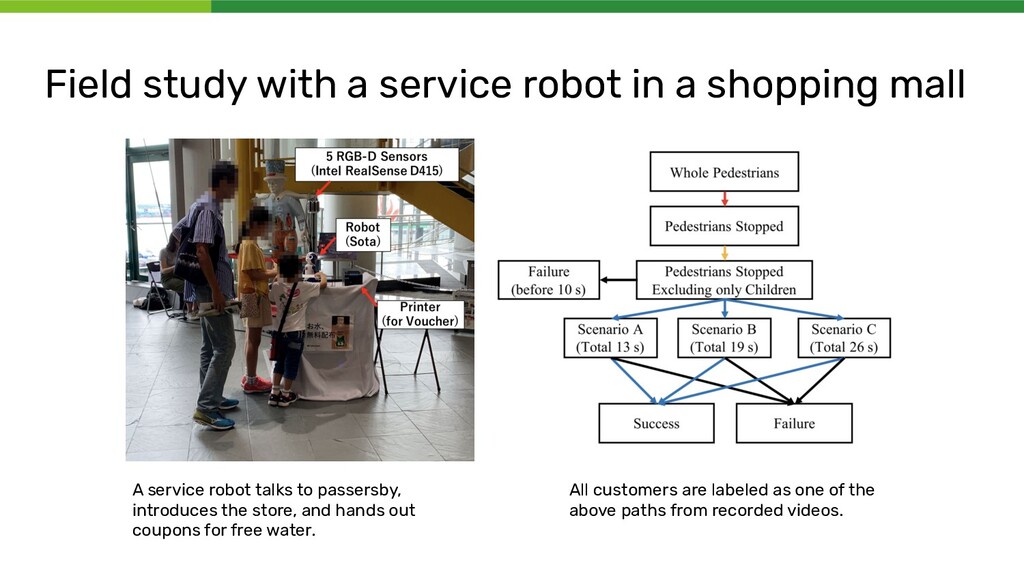
A service robot talks to passersby, introduces the store, and hands out coupons for free water. All customers are labeled as one of the above paths from recorded videos.
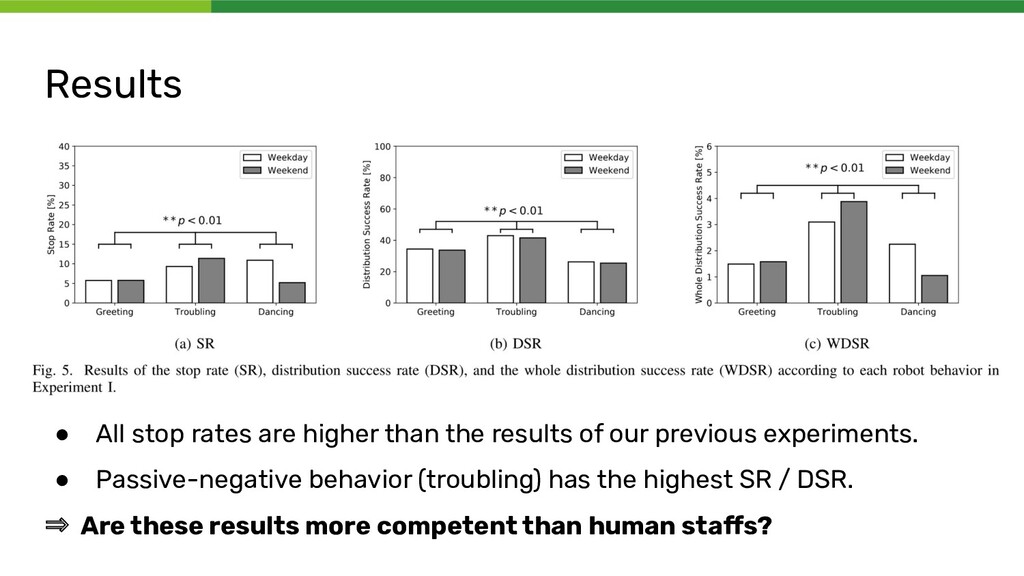
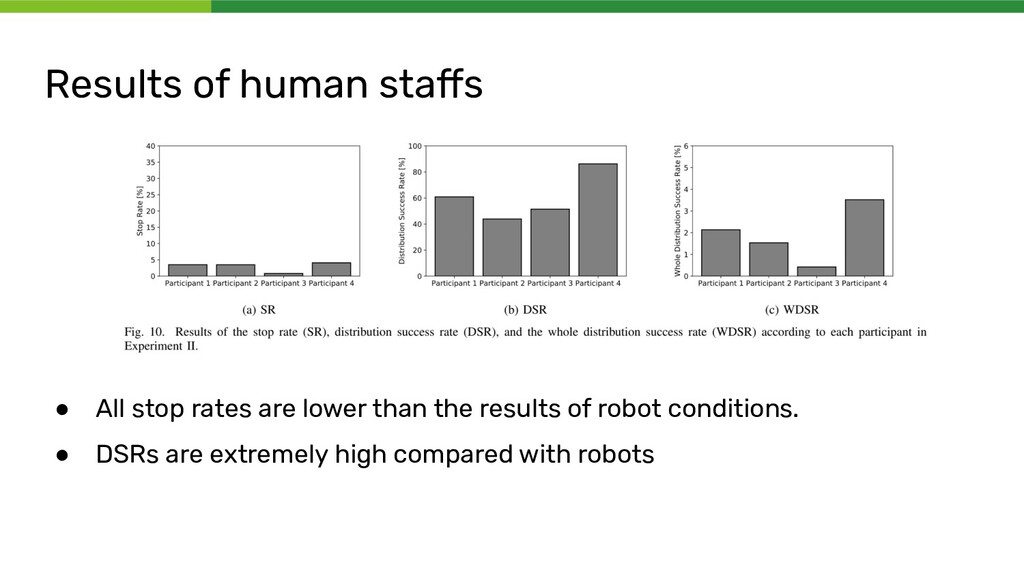
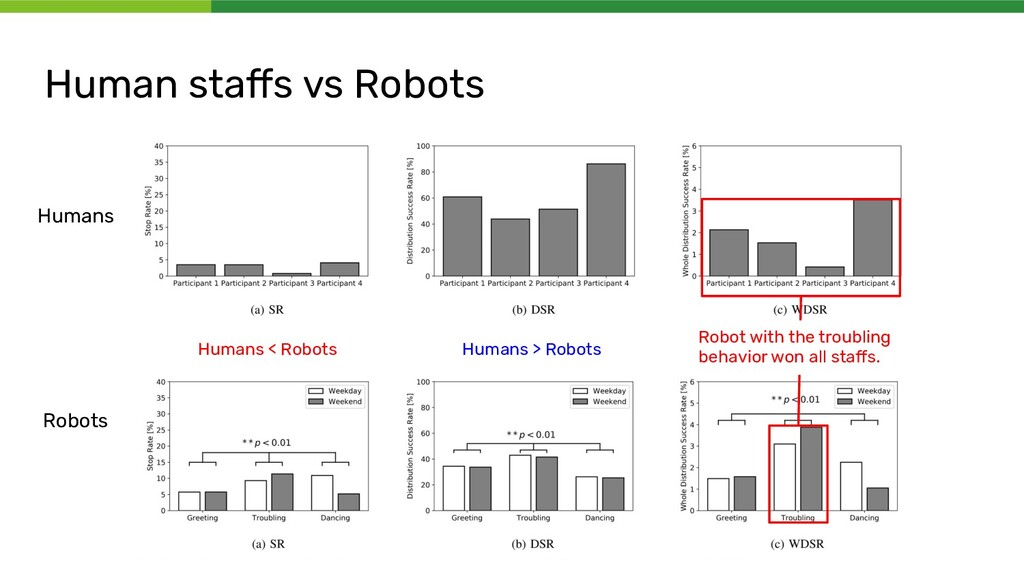
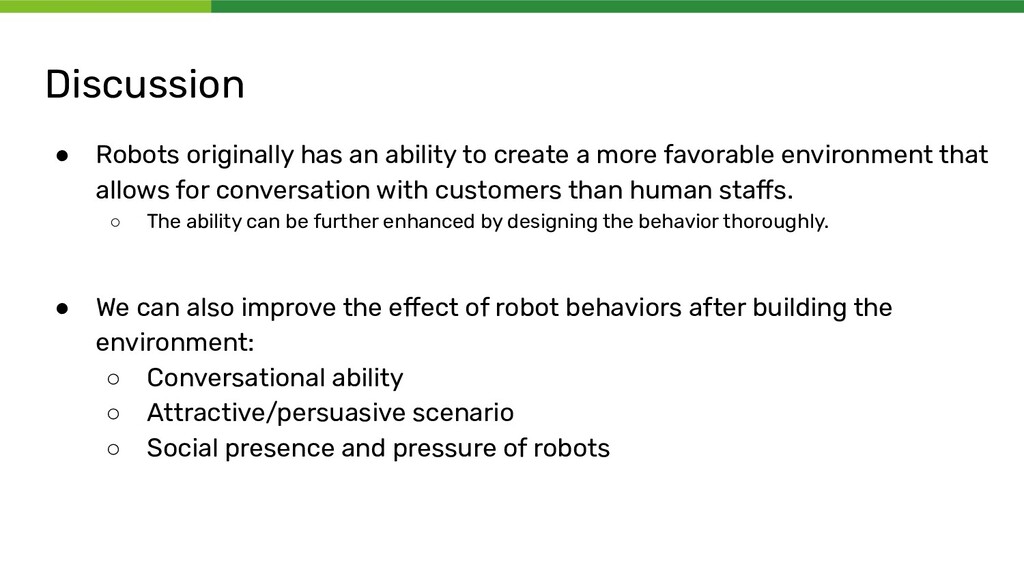
more favorable environment that allows for conversation with customers than human staffs. ◦ The ability can be further enhanced by designing the behavior thoroughly. • We can also improve the effect of robot behaviors after building the environment: ◦ Conversational ability ◦ Attractive/persuasive scenario ◦ Social presence and pressure of robots
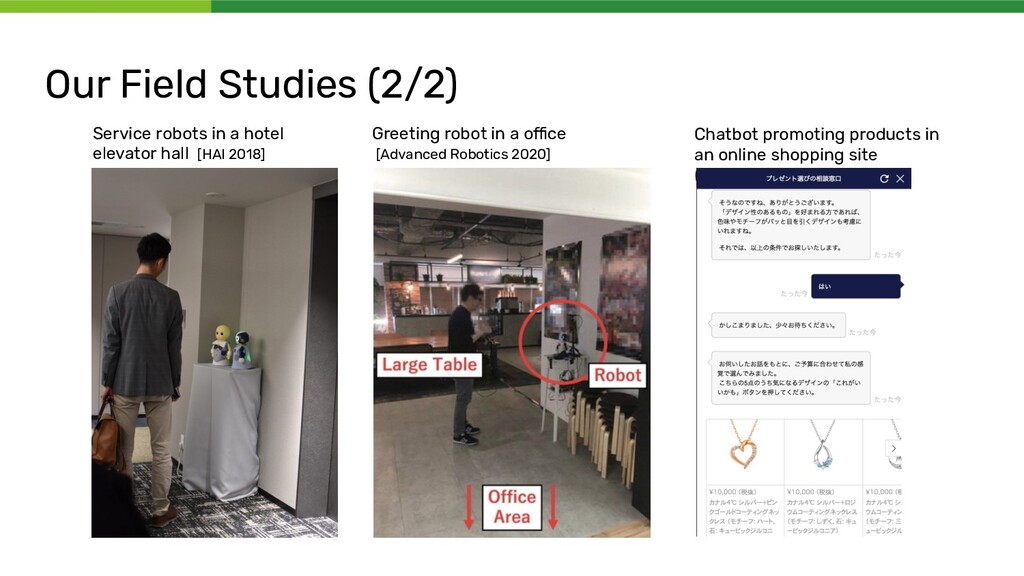
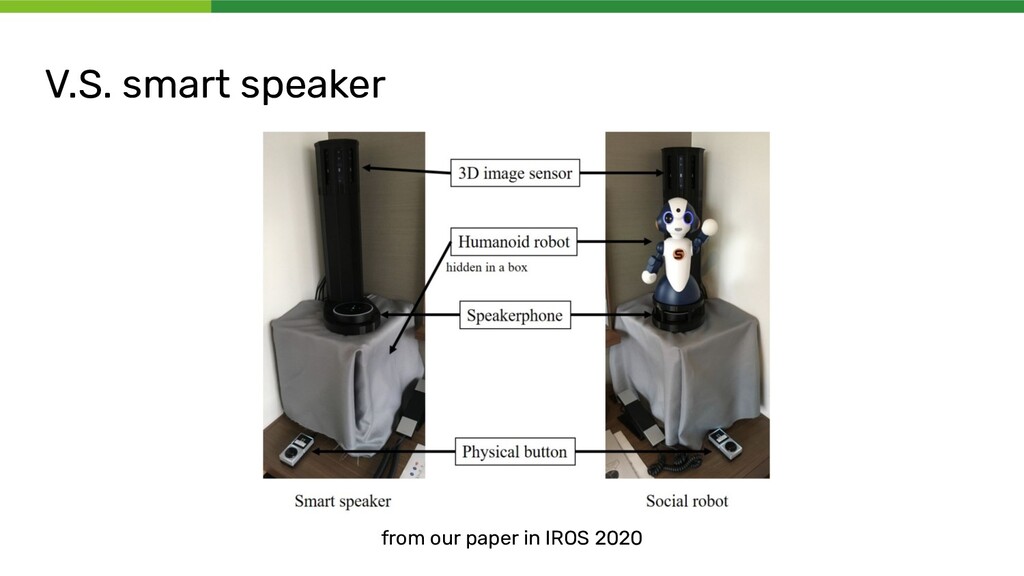
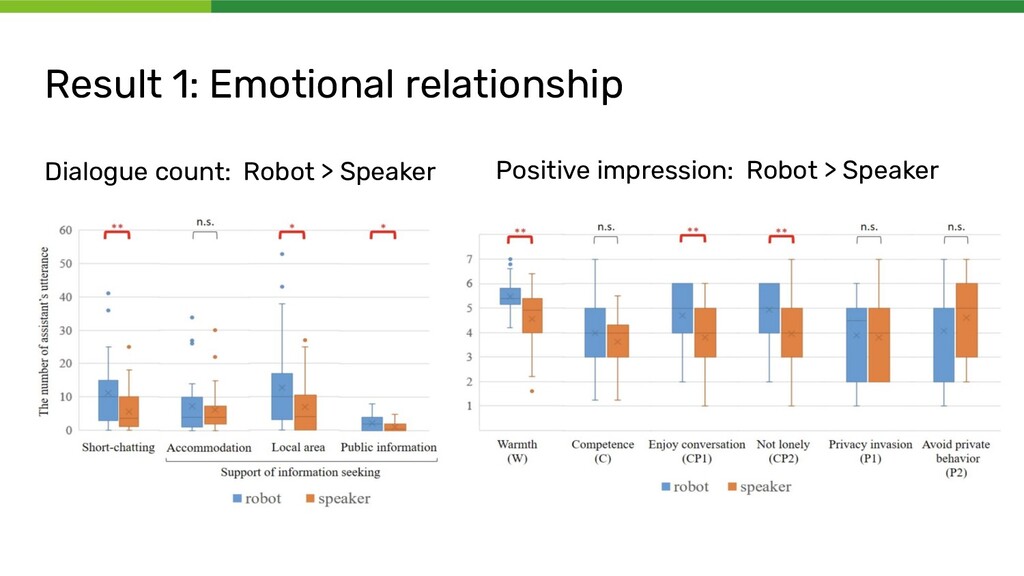
in Heartwarming Interaction Service at a Hotel?” [HAI 2018] • “Soliloquising Social Robot in a Hotel Room” [OZCHI 2019] • “Smart Speaker vs. Social Robot in a Case of Hotel Room” [IROS 2020]
for Better Customer Satisfaction” [CHI EA 2020] • “Mind The Voice!: Effect of Robot Voice Pitch, Robot Voice Gender, and User Gender on User Perception of Teleoperated Robots” [CHI EA 2020]
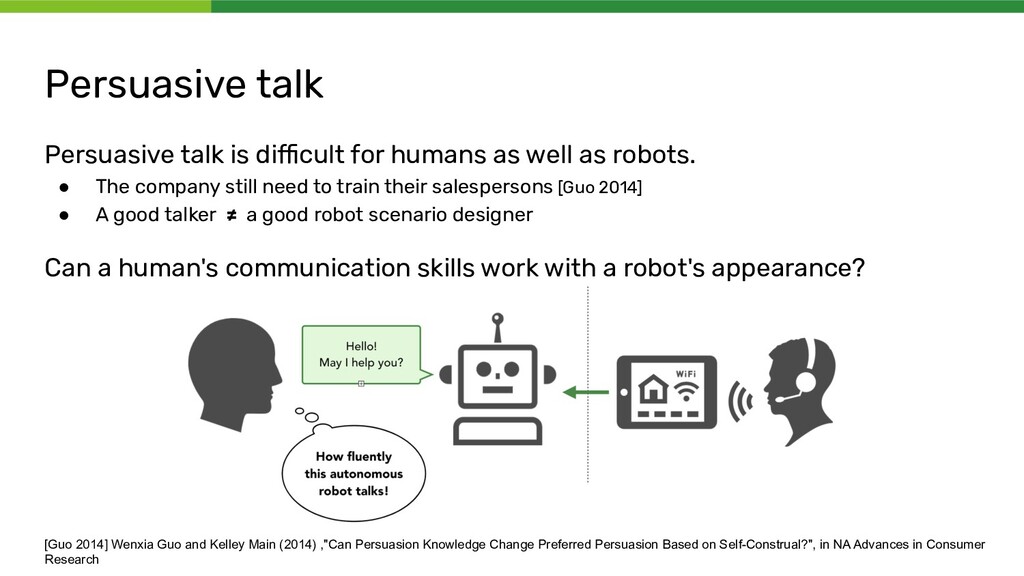
as robots. • The company still need to train their salespersons [Guo 2014] • A good talker ≠ a good robot scenario designer Can a human's communication skills work with a robot's appearance? [Guo 2014] Wenxia Guo and Kelley Main (2014) ,"Can Persuasion Knowledge Change Preferred Persuasion Based on Self-Construal?", in NA Advances in Consumer Research
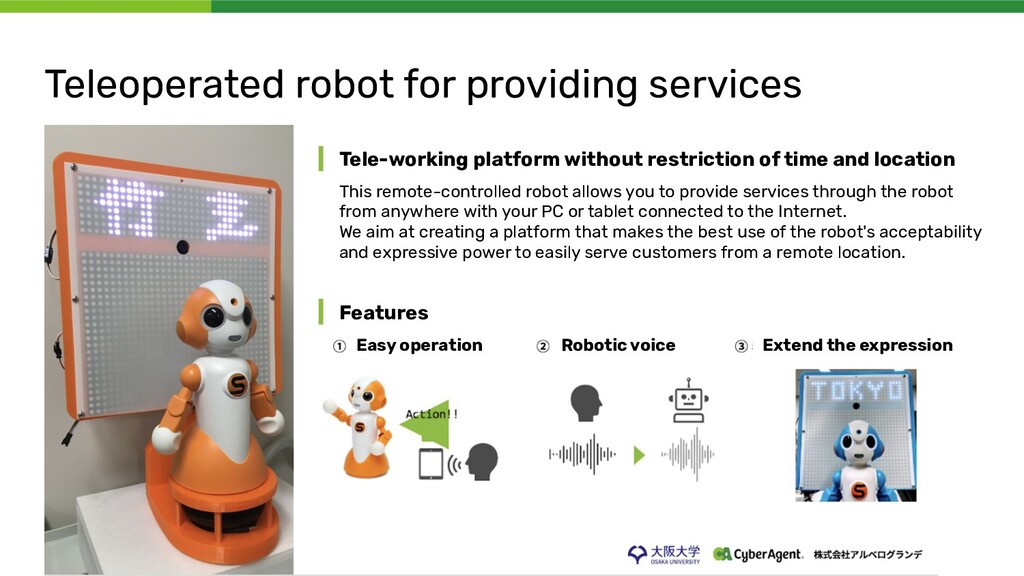
time and location This remote-controlled robot allows you to provide services through the robot from anywhere with your PC or tablet connected to the Internet. We aim at creating a platform that makes the best use of the robot's acceptability and expressive power to easily serve customers from a remote location. Features Easy operation Robotic voice Extend the expression
repeat, and enjoyed the talks. • People who not realize the operation rated higher than those who realized it. ◦ A CG agent as a computer increased willingness to disclose than as an avatar [Lucas, 2014] Satifaction Intention to Repeat Enjoyed Satifaction Intention to Repeat Enjoyed [Lucas 2014] Lucas GM, Gratch J, King A, Morency L-P (2014) It’s only a computer: Virtual humans increase willingness to disclose. Computers in Human Behavior,
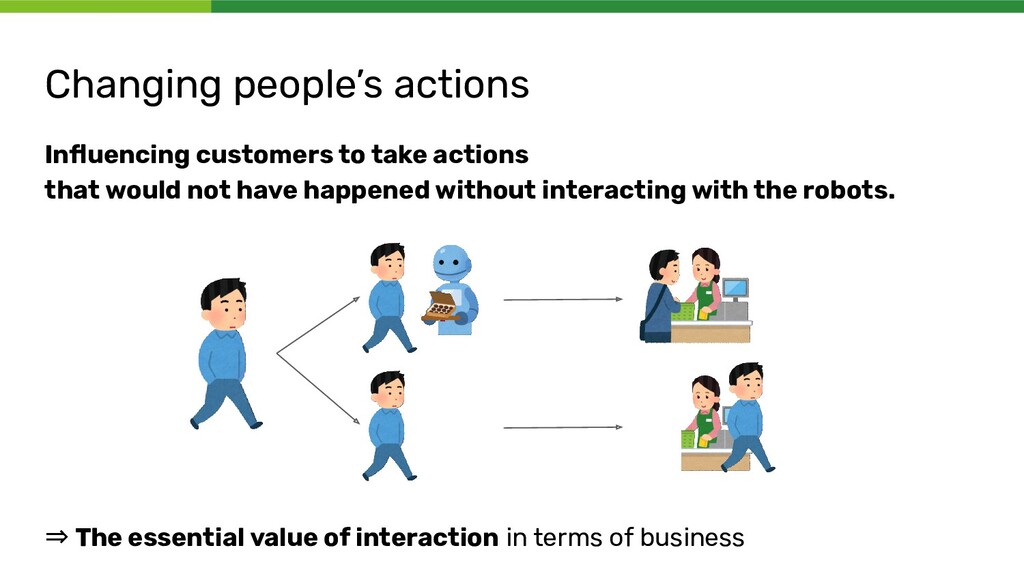
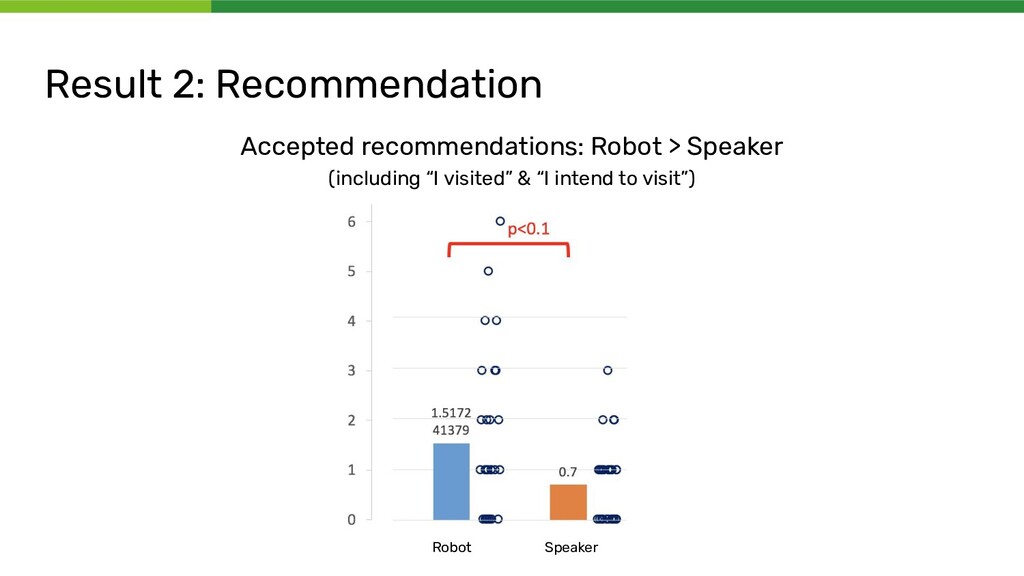
change customer behaviors/actions in real fields with thoroughly designed interaction. ◦ Their performances are equal to or higher than conventional methods (humans / devices). ◦ Human-Robot interaction has a powerful effect in terms of business • Appearance has a great power to encourage people to take desired actions. ◦ Customers imagine and expect the future of interaction from the appearance of robots. ◦ The positive gap between the expectation and the actual can change customer behaviors. ◦ This may be a distinctive finding that reflects real reactions in real fields.
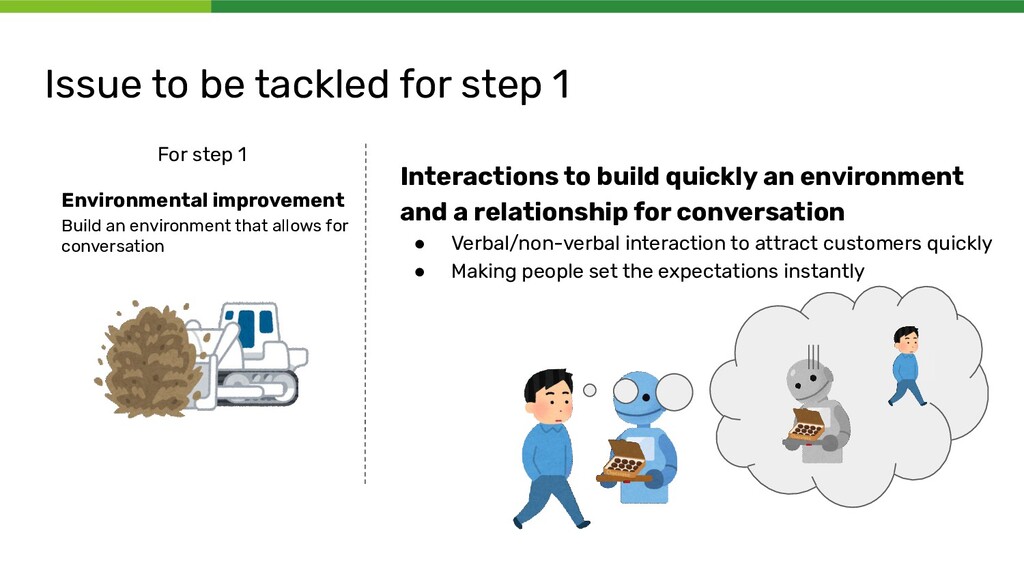
Environmental improvement Build an environment that allows for conversation Interactions to build quickly an environment and a relationship for conversation • Verbal/non-verbal interaction to attract customers quickly • Making people set the expectations instantly
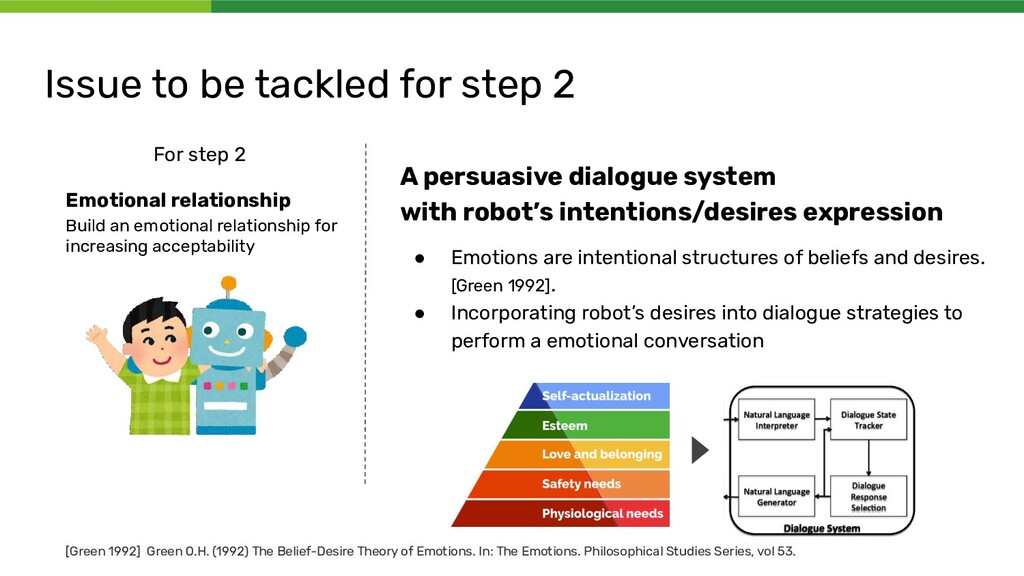
system with robot’s intentions/desires expression • Emotions are intentional structures of beliefs and desires. [Green 1992]. • Incorporating robot’s desires into dialogue strategies to perform a emotional conversation For step 2 Emotional relationship Build an emotional relationship for increasing acceptability [Green 1992] Green O.H. (1992) The Belief-Desire Theory of Emotions. In: The Emotions. Philosophical Studies Series, vol 53.
actions/behaviors ◦ 3 steps and 3 cases for showing the value: i. Environmental improvement - Robot handing out coupons in a shopping mall ii. Emotional relationship - Service robot in a hotel room iii. Persuation - Teleoperated robot for better customer satisfaction • Please contact us: ◦ [email protected] CyberAgent AI Lab ◦ @baba5246 ◦ Jun Baba


 baba5246
.png) satai
satai
 junkurihara
 mickey_0226
 rikkabotan7
 resolutionfoundation
 kento1109
 koide3
 hisaokatsumi
 kanekomasahiro
 institutdelelevage
 upura
upura
 imai448
 andyhume
 uxyall
 kastner
 soudai
 baasie
 speakerdeck
 kimpetersen
 addyosmani
 mayatellez
 trishagee
 jonoalderson