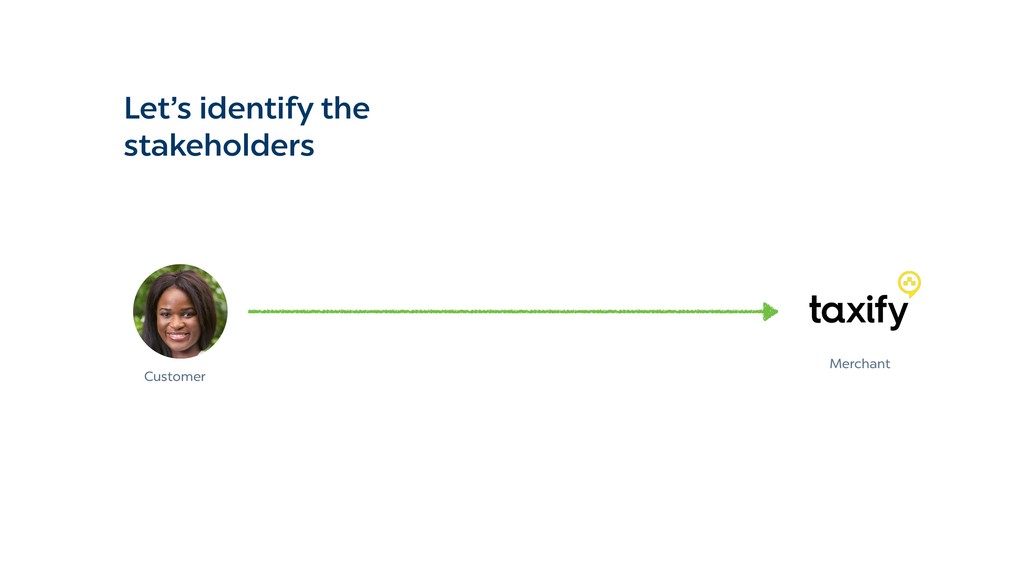
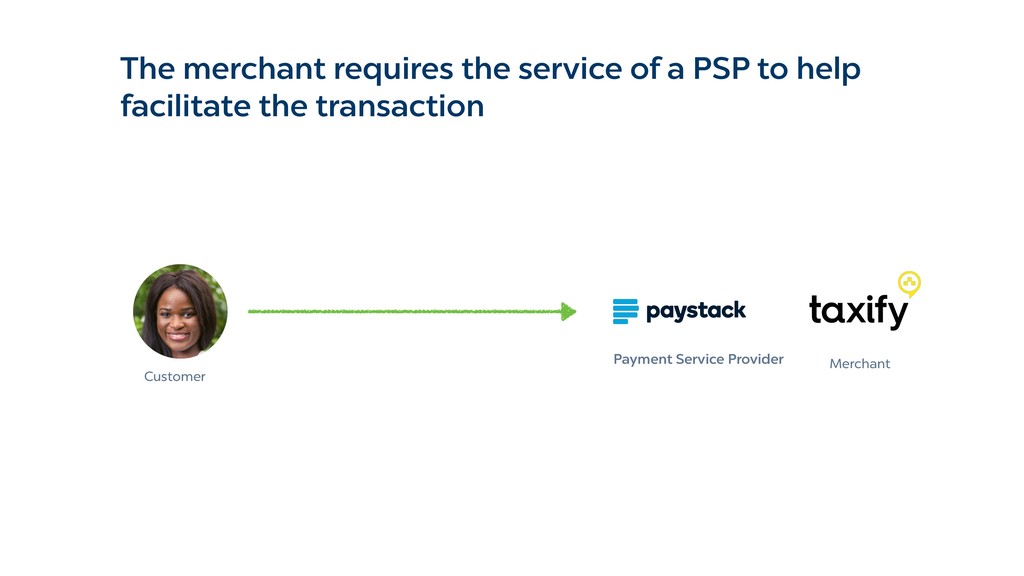
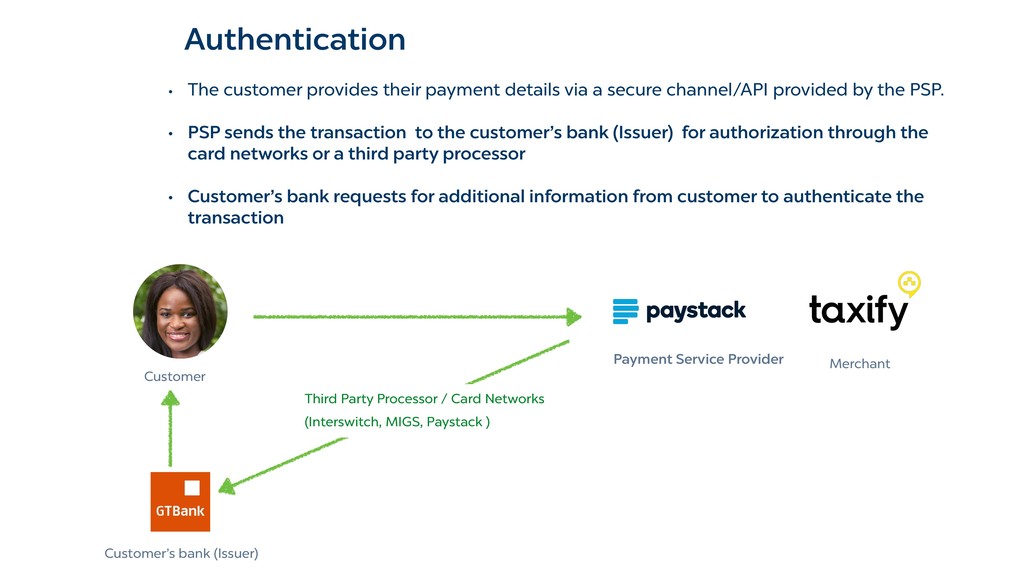
channel/API provided by the PSP. • PSP sends the transaction to the customer’s bank (Issuer) for authorization through the card networks or a third party processor • Customer’s bank requests for additional information from customer to authenticate the transaction Customer Merchant Payment Service Provider Customer’s bank (Issuer) Third Party Processor / Card Networks (Interswitch, MIGS, Paystack ) Authentication
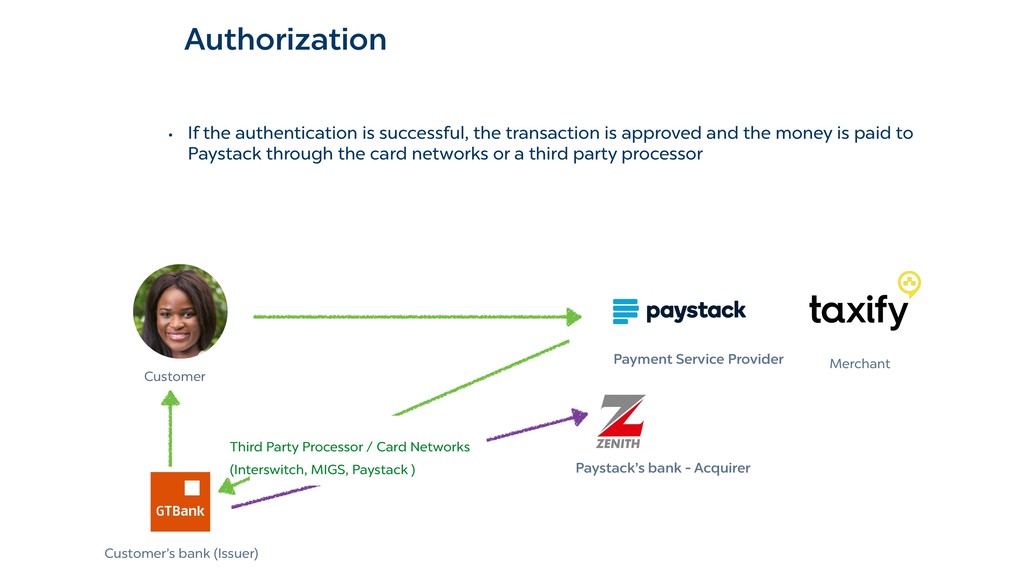
and the money is paid to Paystack through the card networks or a third party processor Customer Merchant Payment Service Provider Customer’s bank (Issuer) Third Party Processor / Card Networks (Interswitch, MIGS, Paystack ) Authorization Paystack’s bank - Acquirer
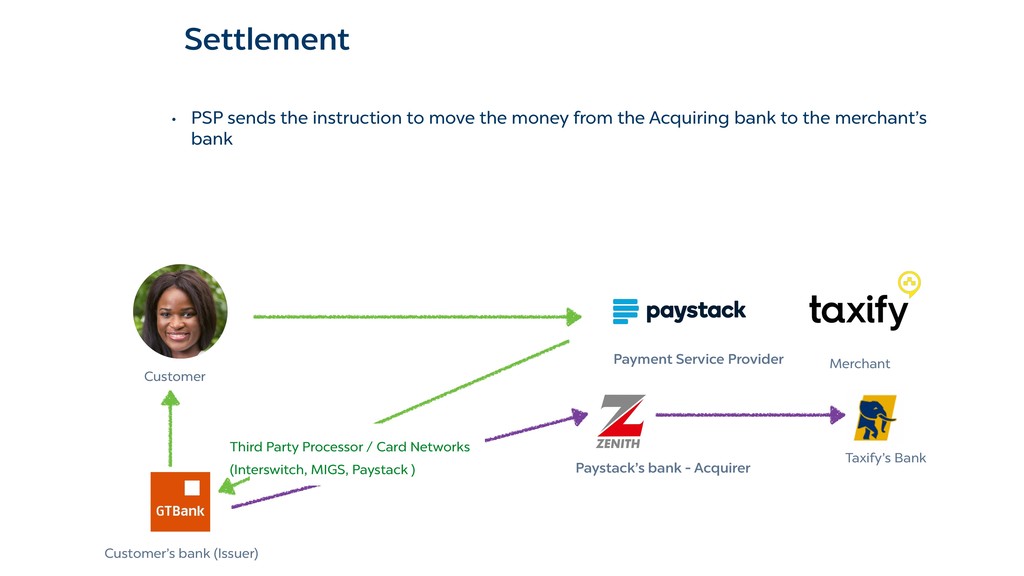
the Acquiring bank to the merchant’s bank Customer Merchant Payment Service Provider Customer’s bank (Issuer) Third Party Processor / Card Networks (Interswitch, MIGS, Paystack ) Settlement Paystack’s bank - Acquirer Taxify’s Bank
disputes a charge with their bank • There are 2 kinds of chargebacks: Fraud and Disputes • Disputes arise when the cardholder does not get value for a transaction • Fraud happens when a transaction was unduly authorized • When a chargeback is reported, the issuing bank reports it to the acquirer. • Acquirer reports to Paystack • Paystack reports to merchant
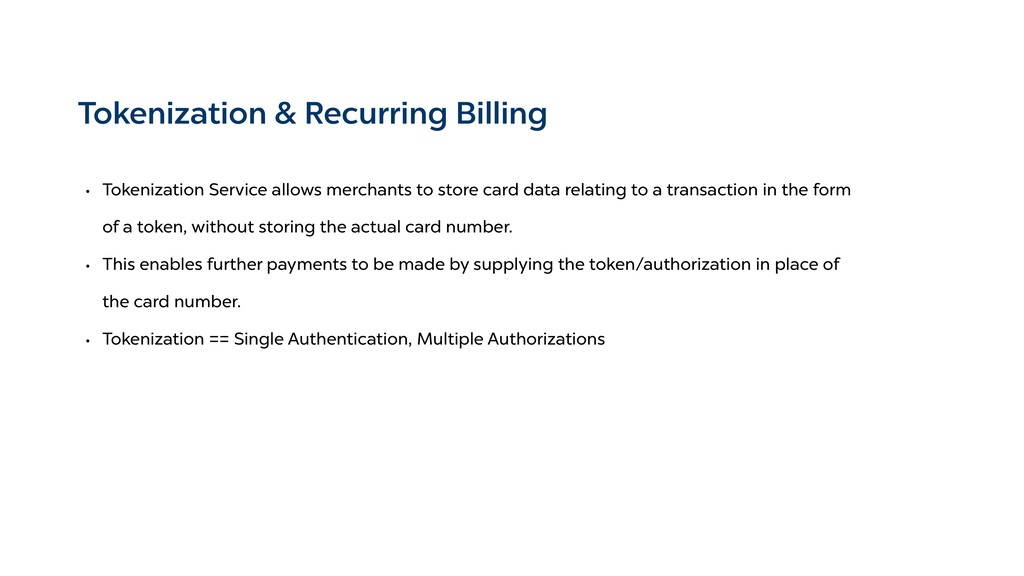
store card data relating to a transaction in the form of a token, without storing the actual card number. • This enables further payments to be made by supplying the token/authorization in place of the card number. • Tokenization == Single Authentication, Multiple Authorizations


 bosunski
 hrm
hrm
 nessu_inc
 roms
roms
 hiyoriyamakankou
 maruishi
 uniam
uniam
 mercari_inc
 hansodeeeeee
 loglass2019
 natsumidnx
.jpg) ikuodanaka
ikuodanaka
 takeuchigroup
 sonatard
 ipullrank
 jcasabona
 aki_iinuma
 axbom
axbom
 reverentgeek
 pauljervisheath
 stephaniewalter
 pwiseman
 mkilby
 ianozsvald
 inesmontani