Upgrade to Pro — share decks privately, control downloads, hide ads and more …

Teaching from Within - Contemplative Pedagogy

Avatar for CW CW
September 08, 2026

Teaching from Within - Contemplative Pedagogy

The purpose of this C-HEARTS presentation is to share the model and transformational results of the CTX "Teaching from Within" project, demonstrating how a contemplative faculty development program, when framed as a gift to faculty, can effectively combat burnout, foster genuine community, and significantly influence institutional culture and pedagogical innovation in higher education. This topic addresses leadership/organizational development and contemplative pedagogy.

Avatar for CW

CW

September 08, 2026

More Decks by CW

Other Decks in Education

Transcript

  1. LILLY FACULTY FELLOWS GRANT PROJECT Teaching from Within Contemplative Practice

    & Implementation: Fall 2024 Dr. Corinne Weisgerber Concordia University Texas [email protected]
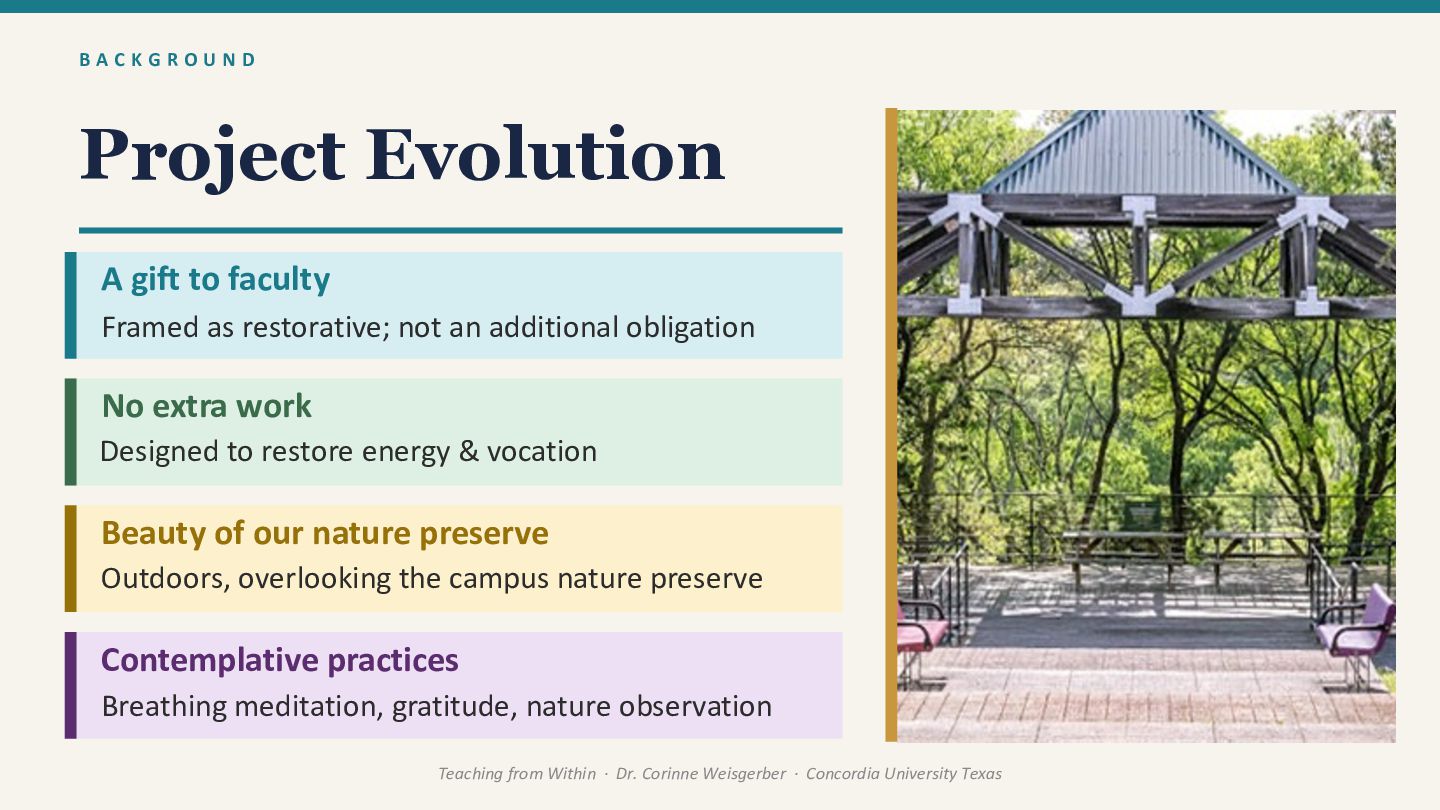
  2. BACKGROUND Project Evolution A gift to faculty Framed as restorative;

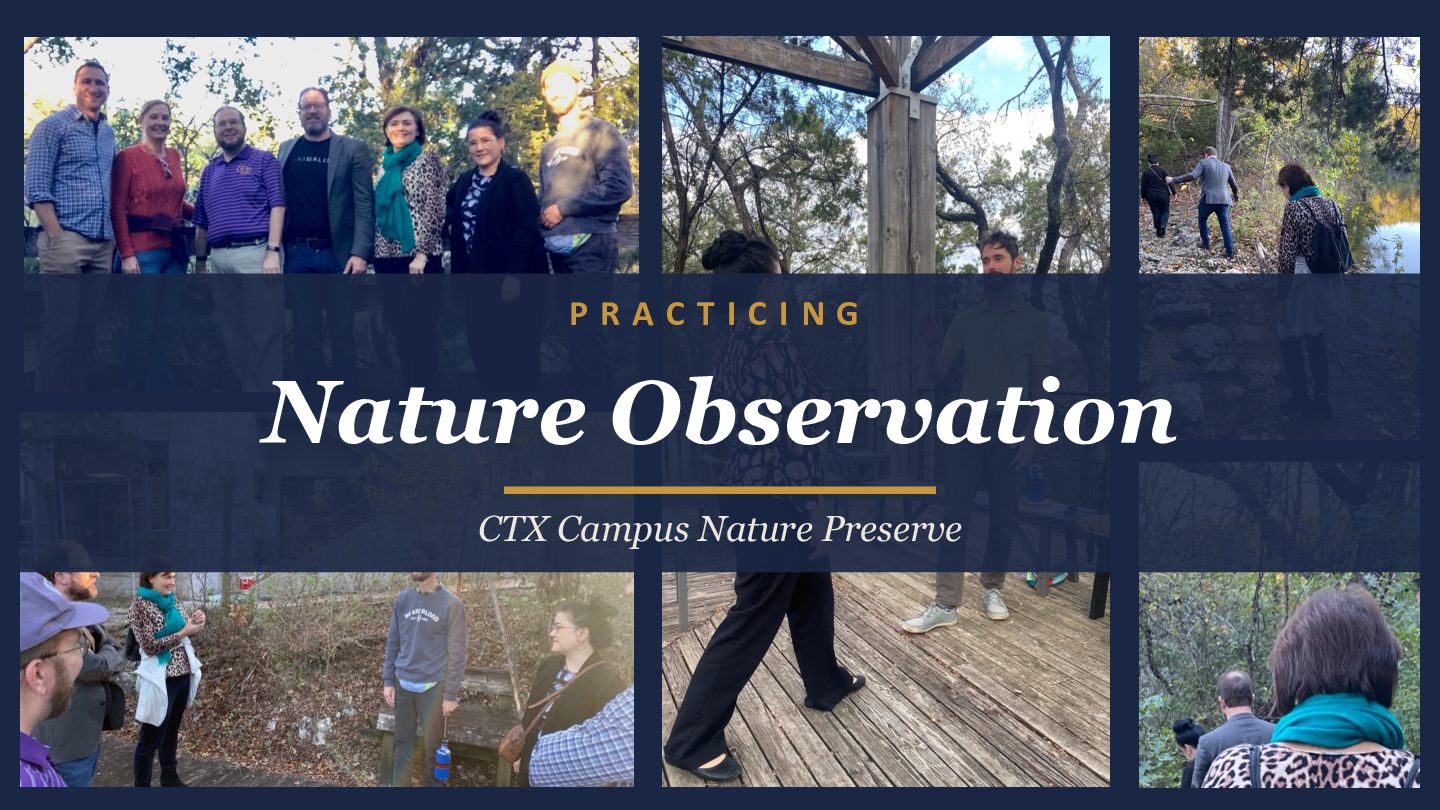
    not an additional obligation No extra work Designed to restore energy & vocation Beauty of our nature preserve Outdoors, overlooking the campus nature preserve Contemplative practices Breathing meditation, gratitude, nature observation Teaching from Within · Dr. Corinne Weisgerber · Concordia University Texas
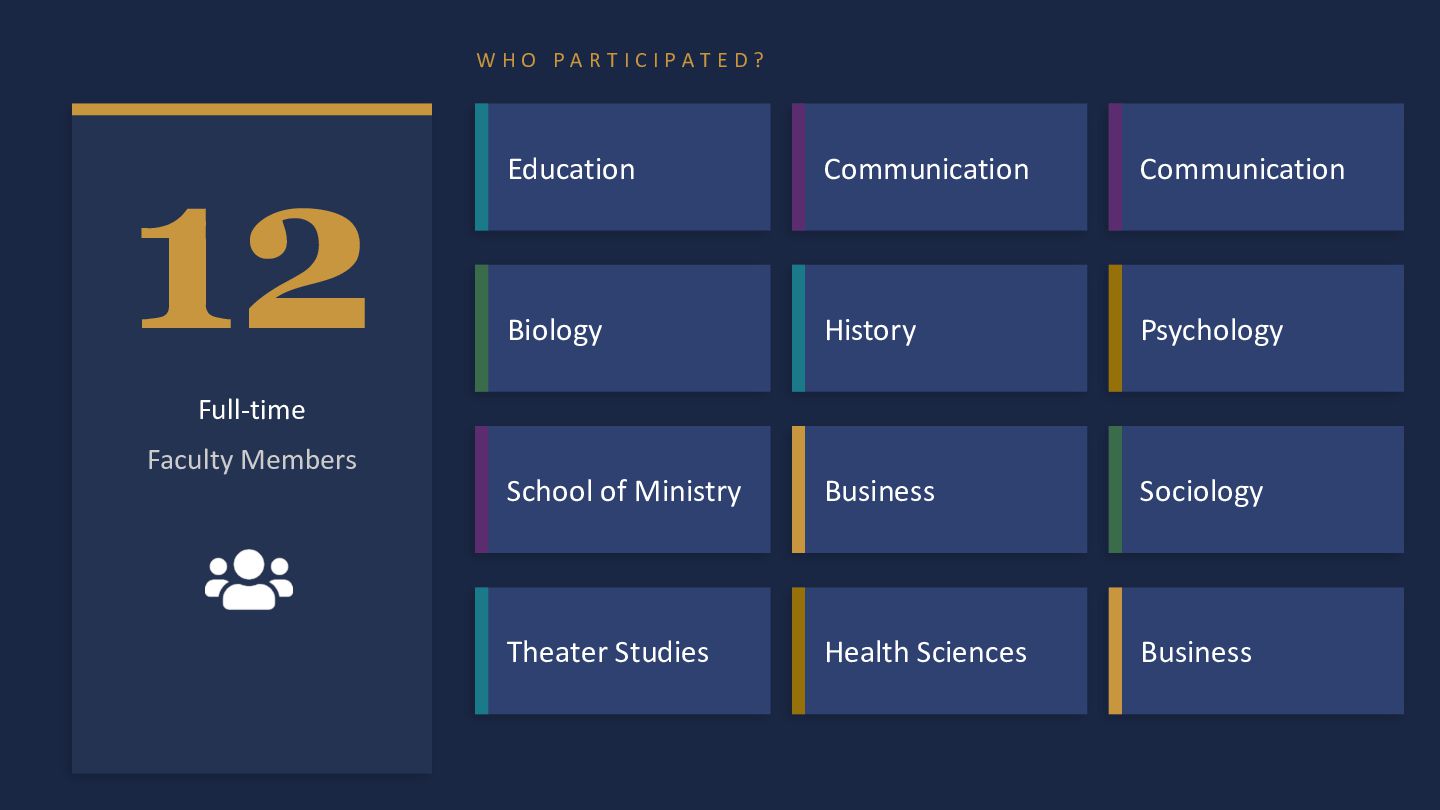
  3. WHO PARTICIPATED? 12 Education Communication Communication Biology History Psychology School

    of Ministry Business Sociology Theater Studies Health Sciences Business Full-time Faculty Members
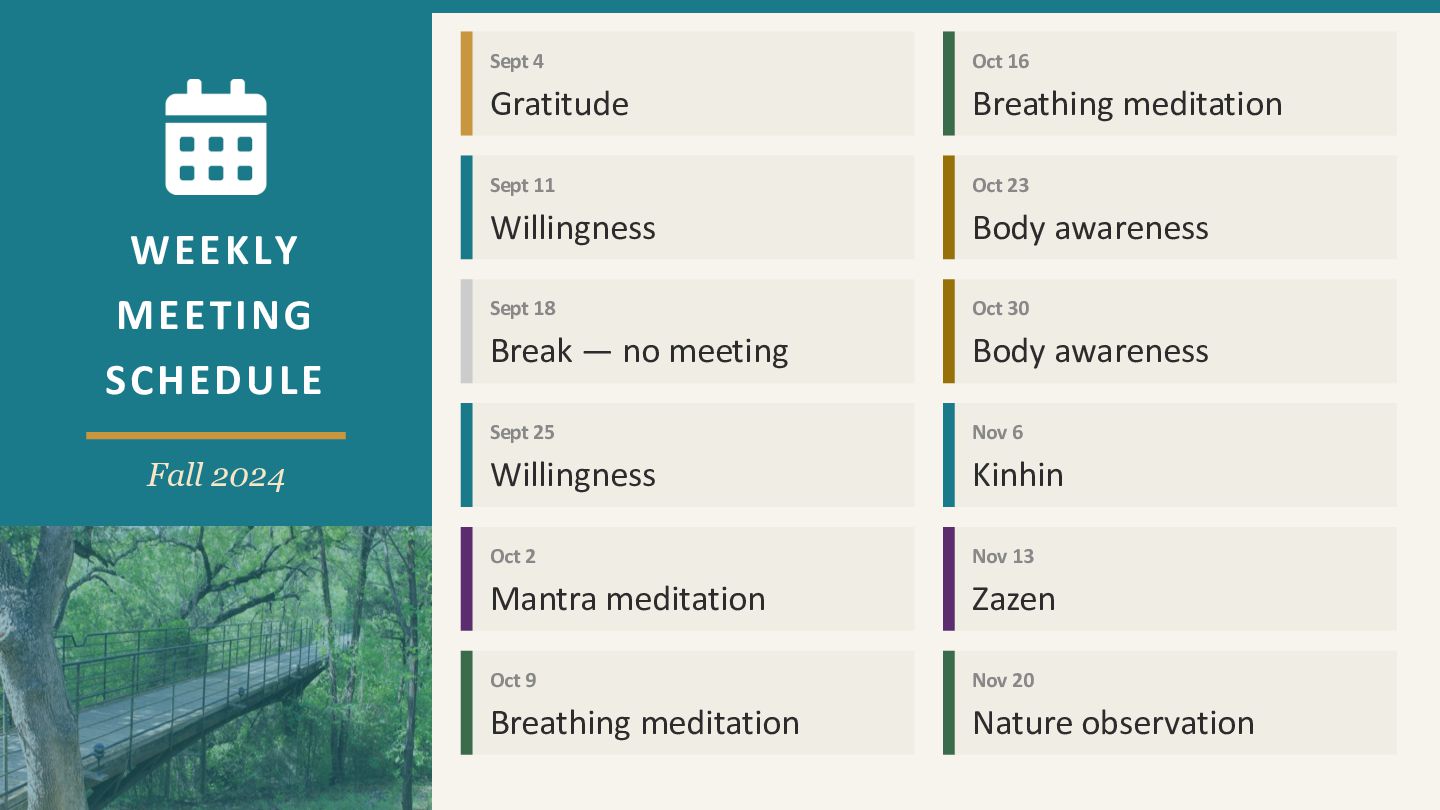
  4. WEEKLY MEETING SCHEDULE Fall 2024 Sept 4 Oct 16 Gratitude

    Breathing meditation Sept 11 Oct 23 Willingness Body awareness Sept 18 Oct 30 Break — no meeting Body awareness Sept 25 Nov 6 Willingness Kinhin Oct 2 Nov 13 Mantra meditation Zazen Oct 9 Nov 20 Breathing meditation Nature observation
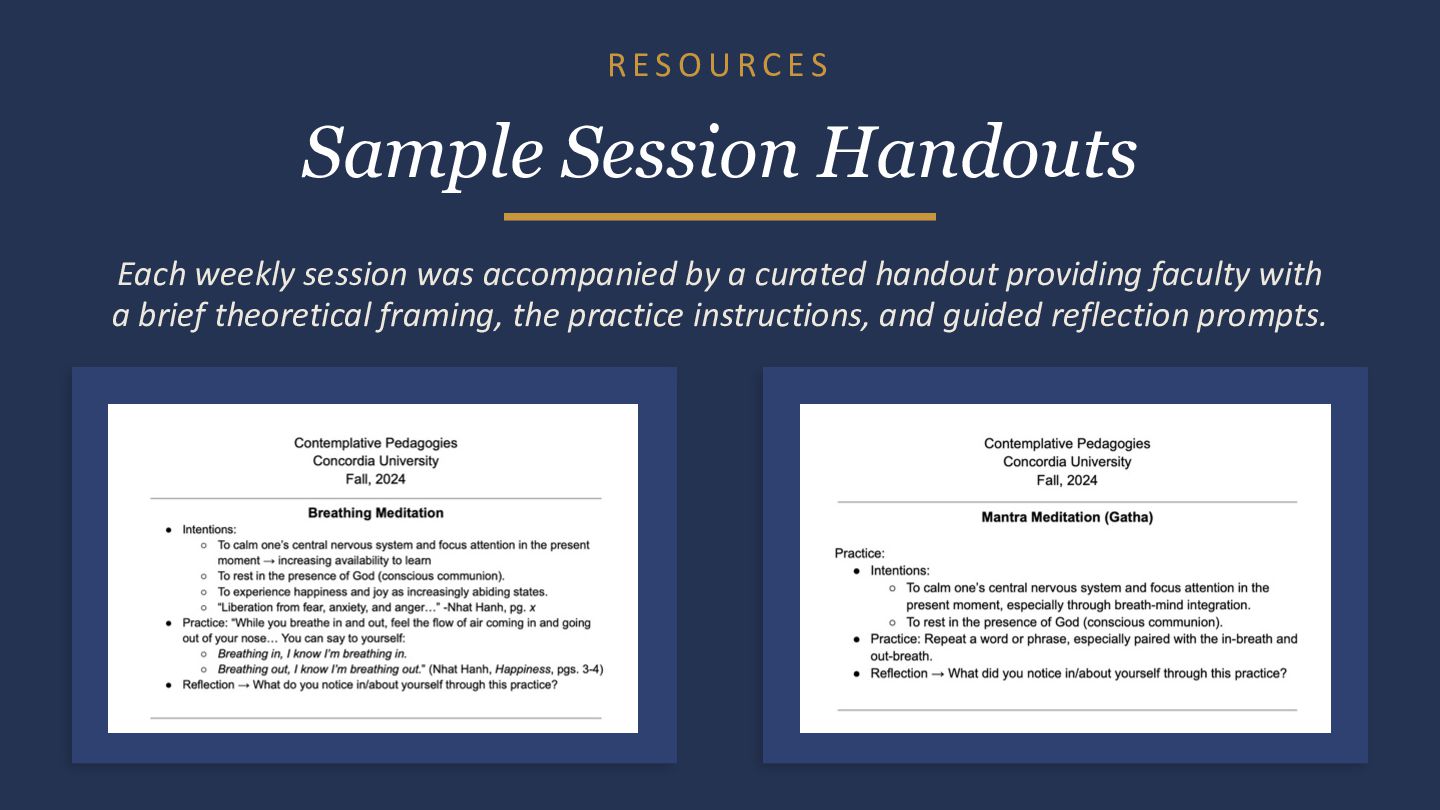
  5. RESOURCES Sample Session Handouts Each weekly session was accompanied by

    a curated handout providing faculty with a brief theoretical framing, the practice instructions, and guided reflection prompts.
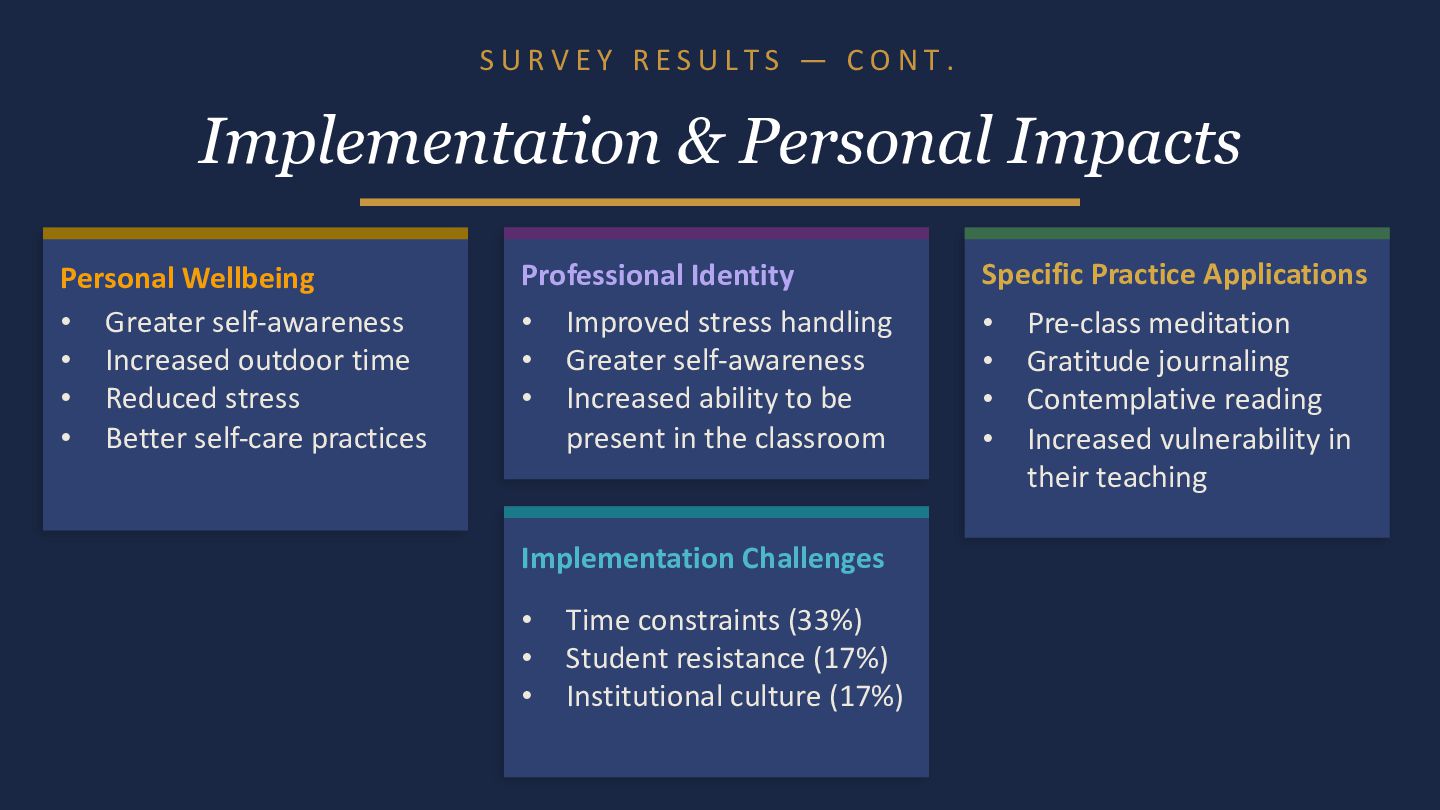
  6. SURVEY RESULTS — CONT. Implementation & Personal Impacts Personal Wellbeing

    • Greater self-awareness • Increased outdoor time • Reduced stress • Better self-care practices Professional Identity • Improved stress handling • Greater self-awareness • Increased ability to be present in the classroom Implementation Challenges • • • Time constraints (33%) Student resistance (17%) Institutional culture (17%) Specific Practice Applications • • • • Pre-class meditation Gratitude journaling Contemplative reading Increased vulnerability in their teaching
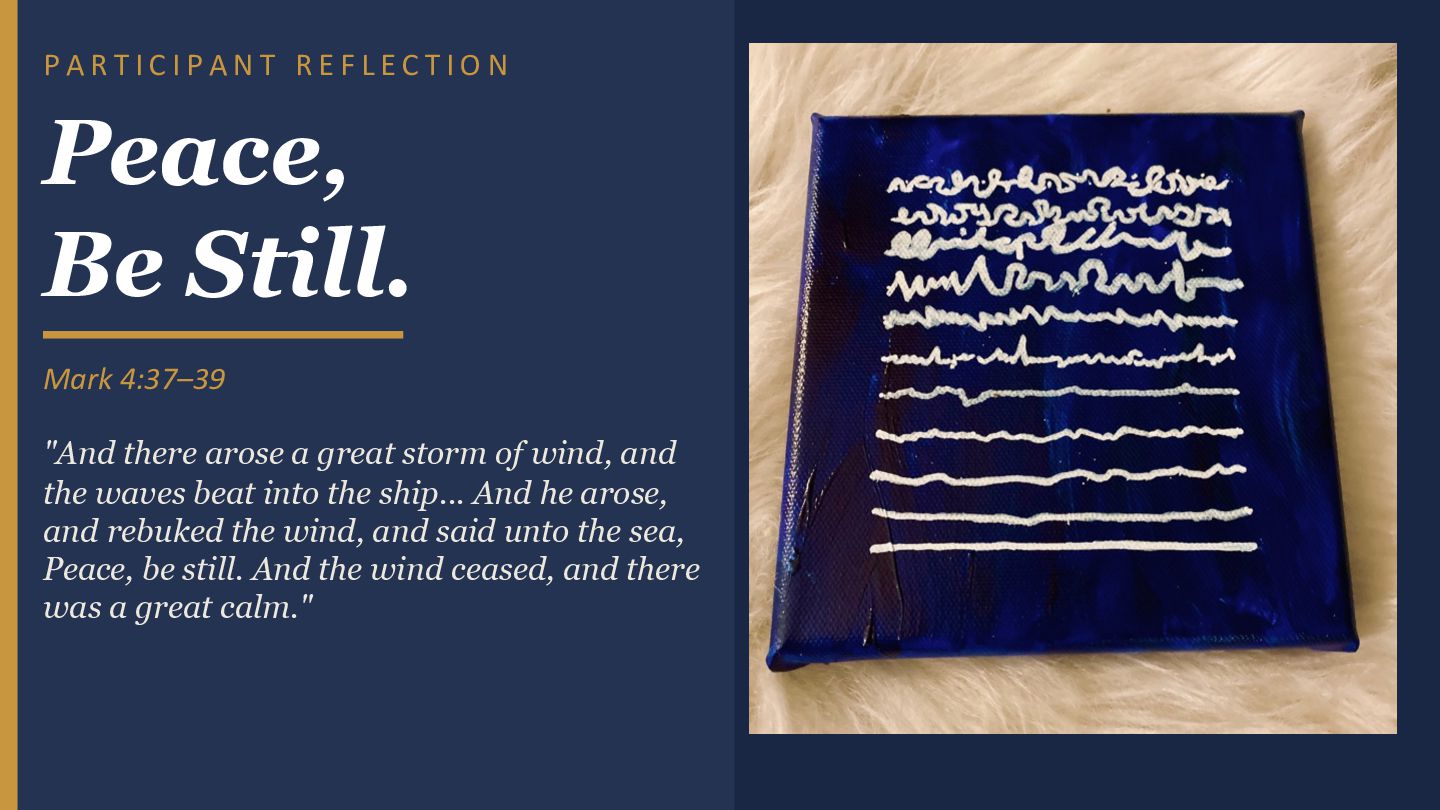
  7. PARTICIPANT REFLECTION Peace, Be Still. Mark 4:37–39 "And there arose

    a great storm of wind, and the waves beat into the ship... And he arose, and rebuked the wind, and said unto the sea, Peace, be still. And the wind ceased, and there was a great calm."
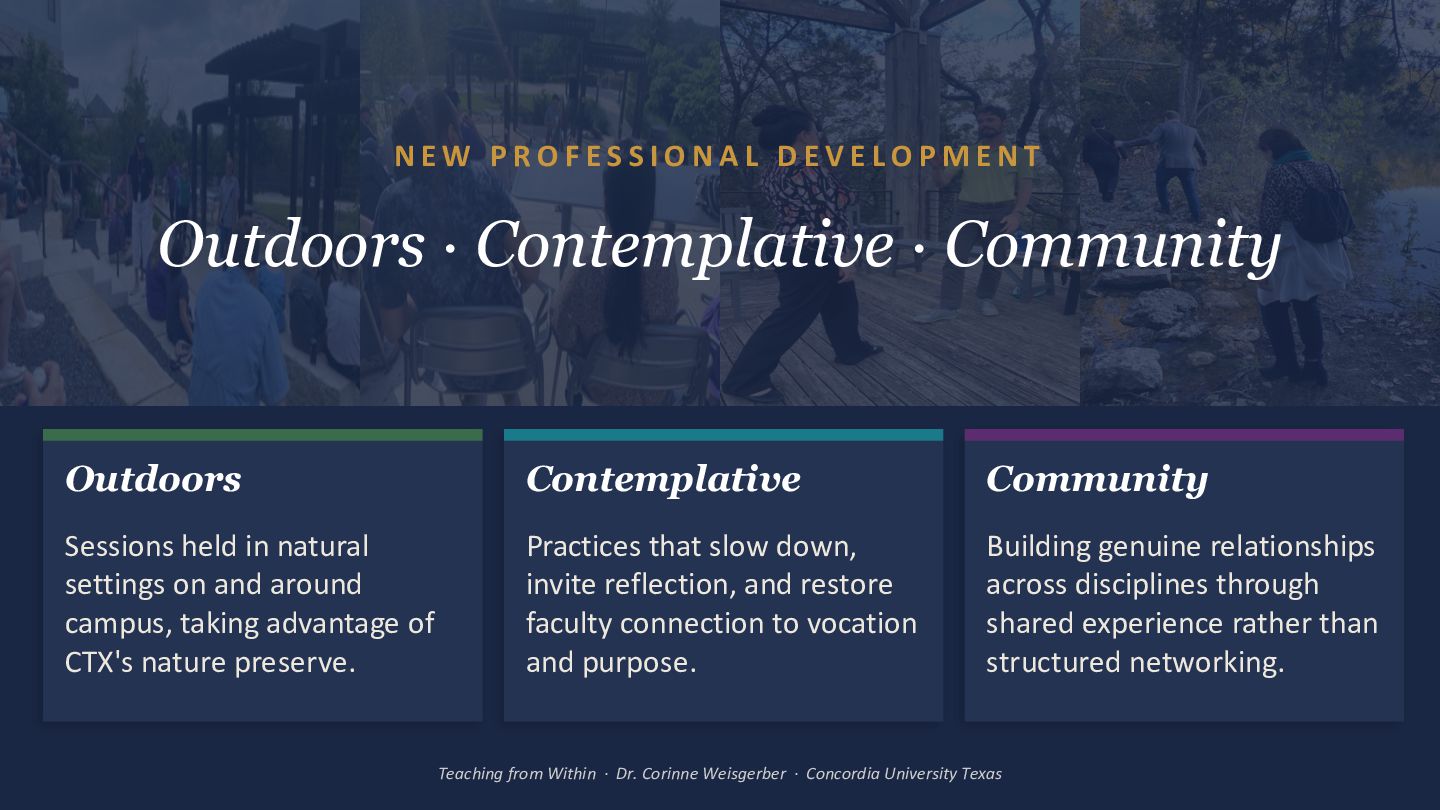
  8. NEW PROFESSIONAL DEVELOPMENT Outdoors · Contemplative · Community Outdoors Contemplative

    Community Sessions held in natural settings on and around campus, taking advantage of CTX's nature preserve. Practices that slow down, invite reflection, and restore faculty connection to vocation and purpose. Building genuine relationships across disciplines through shared experience rather than structured networking. Teaching from Within · Dr. Corinne Weisgerber · Concordia University Texas
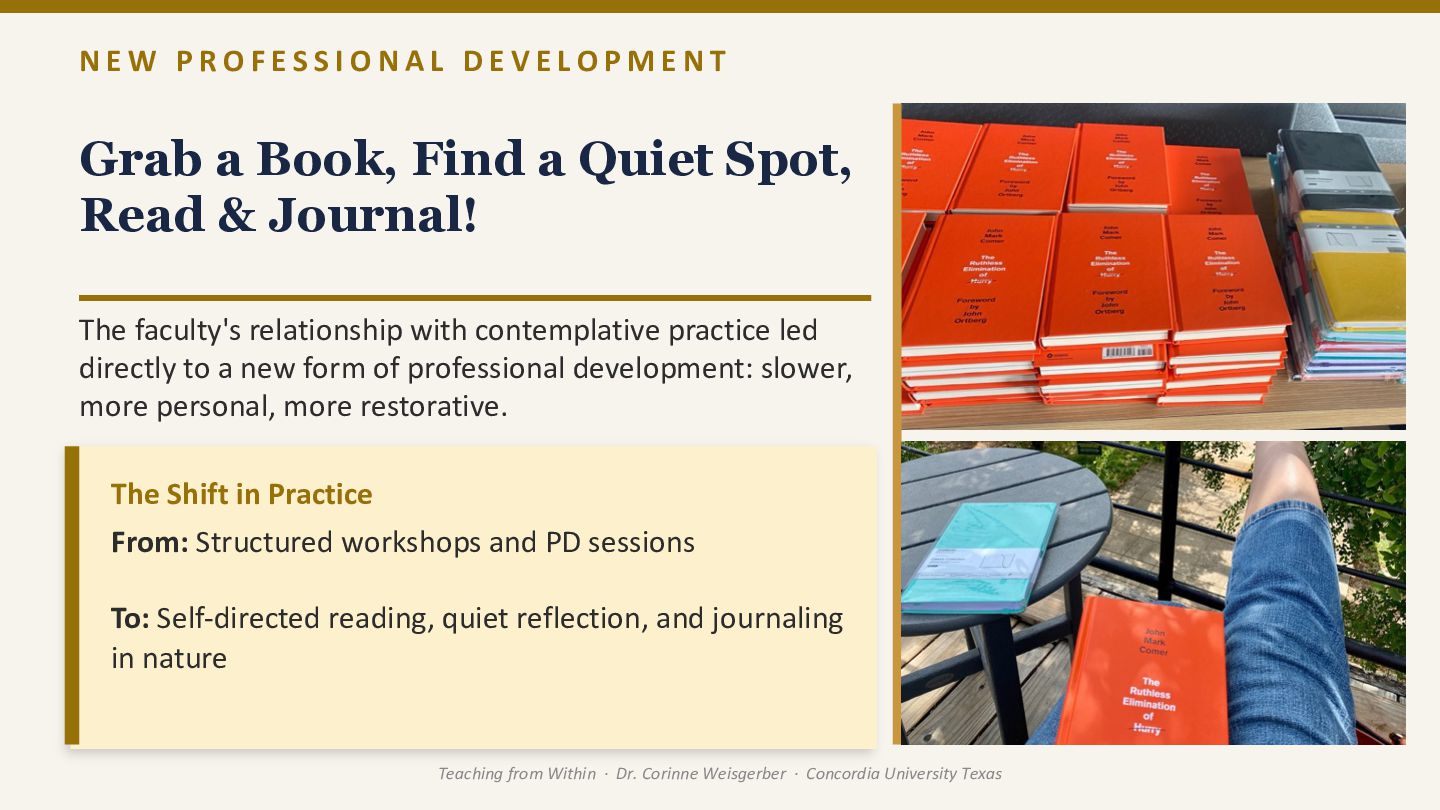
  9. NEW PROFESSIONAL DEVELOPMENT Grab a Book, Find a Quiet Spot,

    Read & Journal! The faculty's relationship with contemplative practice led directly to a new form of professional development: slower, more personal, more restorative. The Shift in Practice From: Structured workshops and PD sessions To: Self-directed reading, quiet reflection, and journaling in nature Teaching from Within · Dr. Corinne Weisgerber · Concordia University Texas
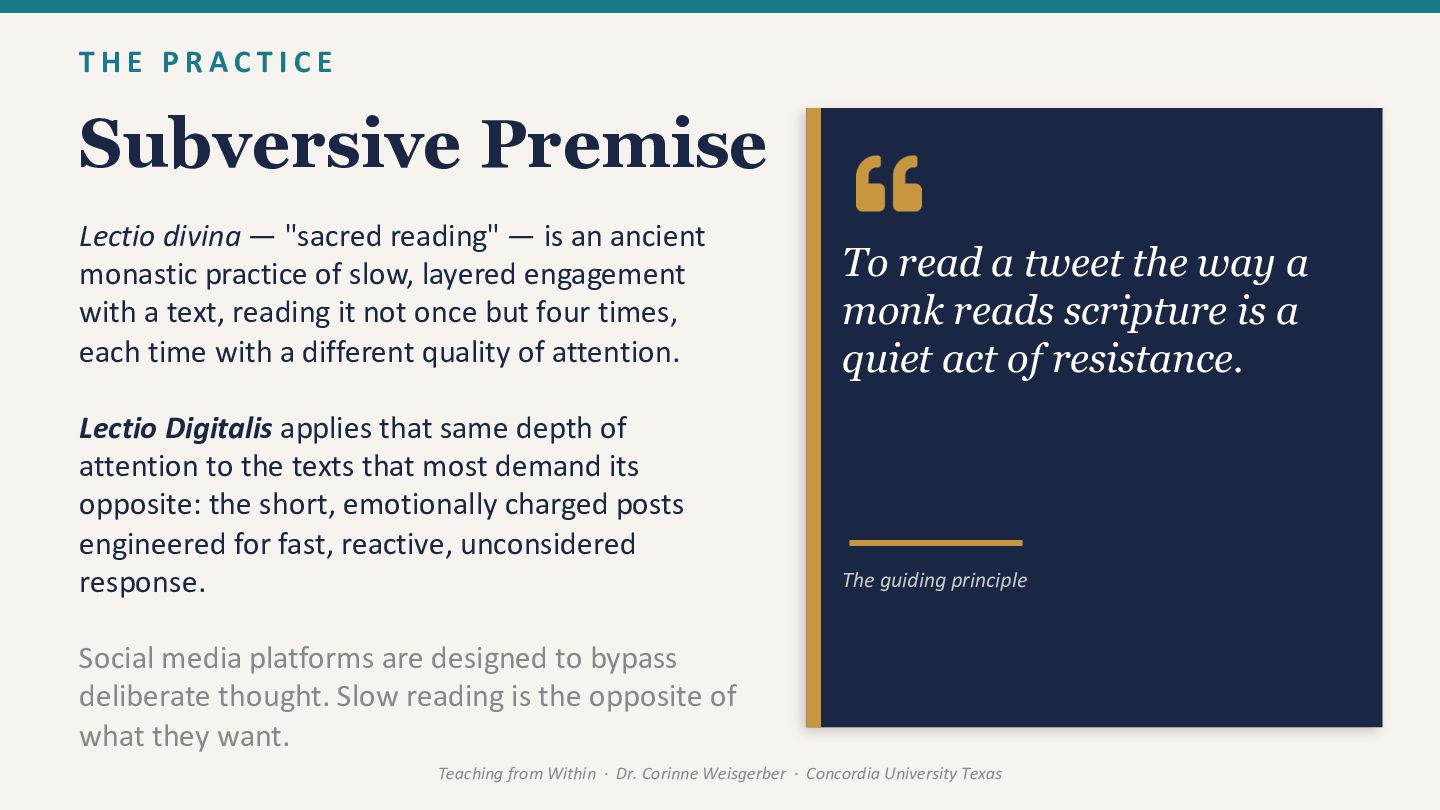
  10. THE PRACTICE Subversive Premise Lectio divina — "sacred reading" —

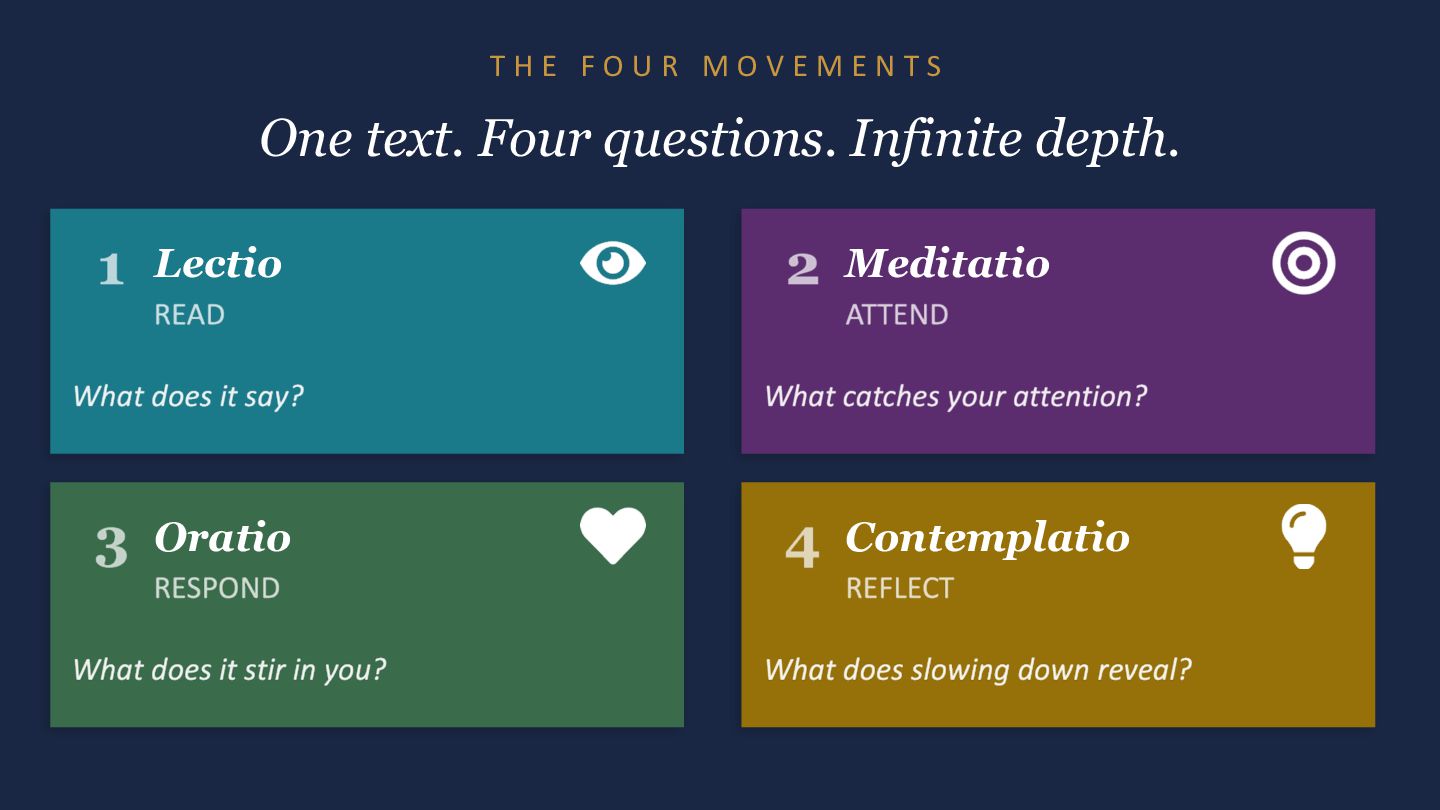
    is an ancient monastic practice of slow, layered engagement with a text, reading it not once but four times, each time with a different quality of attention. To read a tweet the way a monk reads scripture is a quiet act of resistance. Lectio Digitalis applies that same depth of attention to the texts that most demand its opposite: the short, emotionally charged posts engineered for fast, reactive, unconsidered response. The guiding principle Social media platforms are designed to bypass deliberate thought. Slow reading is the opposite of what they want. Teaching from Within · Dr. Corinne Weisgerber · Concordia University Texas
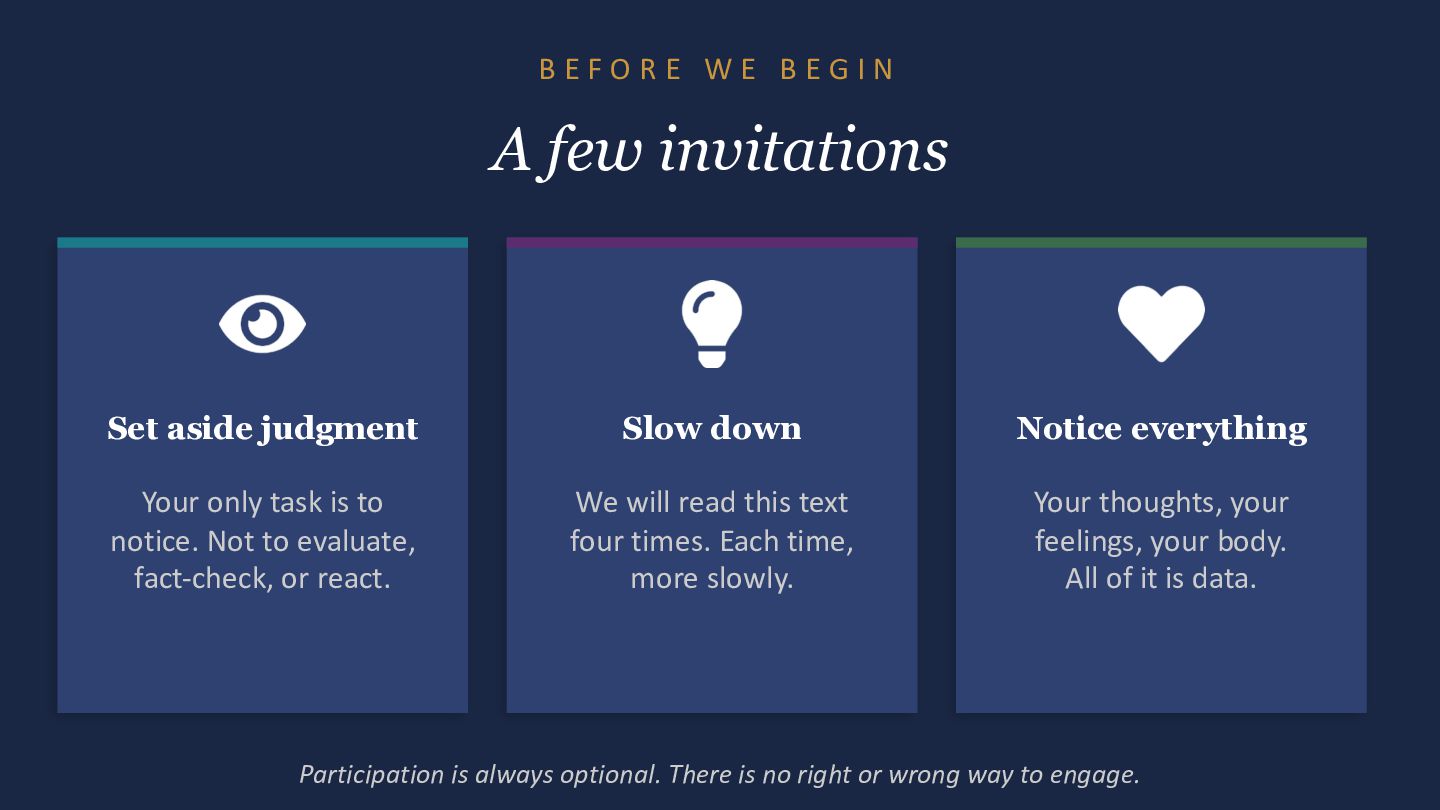
  11. BEFORE WE BEGIN A few invitations Set aside judgment Slow

    down Notice everything Your only task is to notice. Not to evaluate, fact-check, or react. We will read this text four times. Each time, more slowly. Your thoughts, your feelings, your body. All of it is data. Participation is always optional. There is no right or wrong way to engage.
  12. THE TEXT Read this. Nothing more — yet. A post

    on higher ed: College is a scam. It’s a $1.4 trillion debt trap that enslaves our youth for decades. We are selling kids a lie that a piece of paper is a ticket to the middle class, while the administrators get rich and the students get radicalized or broken. Stop sending your kids to these overpriced country clubs. No usernames. No likes. No share counts. Just the words.
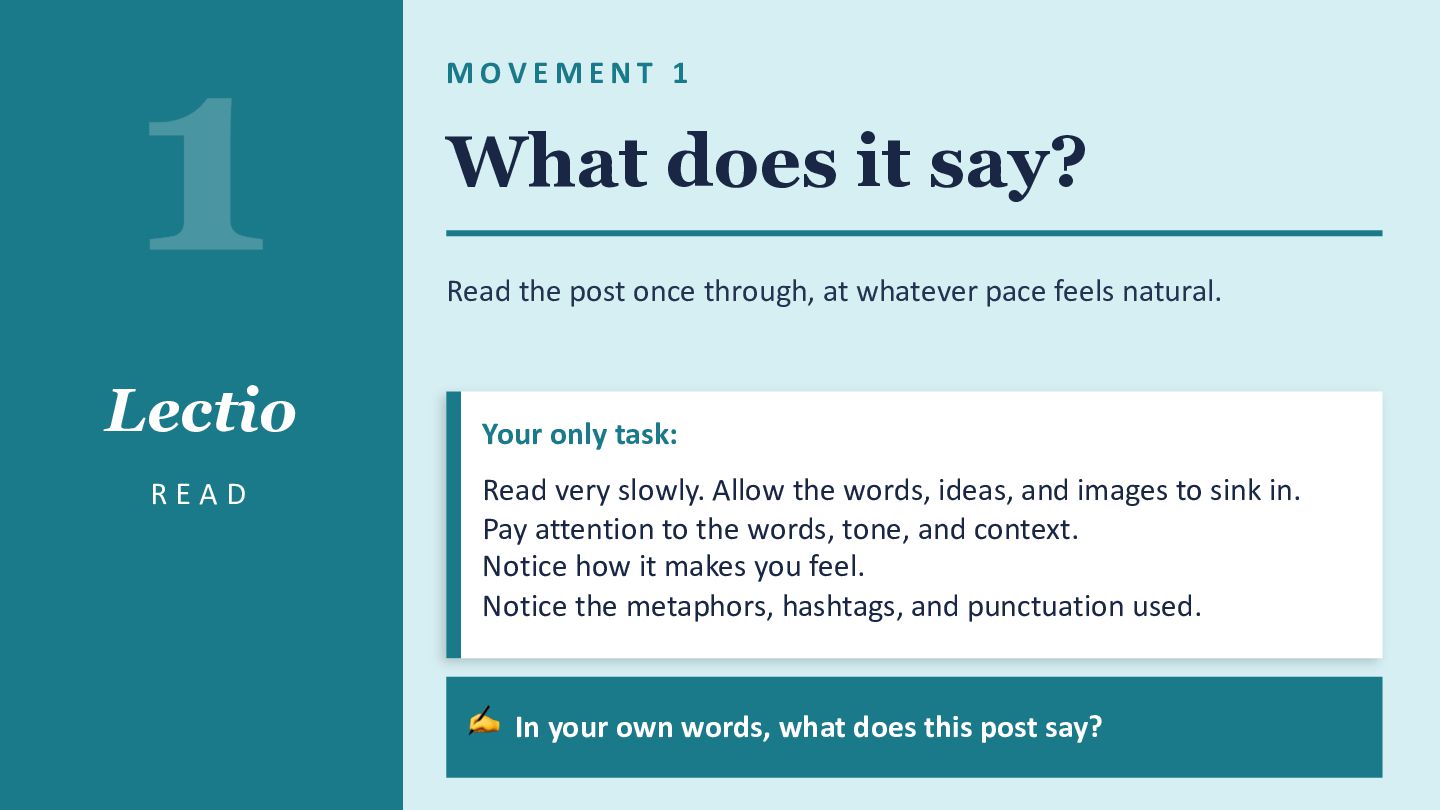
  13. MOVEMENT 1 What does it say? Read the post once

    through, at whatever pace feels natural. Lectio READ Your only task: Read very slowly. Allow the words, ideas, and images to sink in. Pay attention to the words, tone, and context. Notice how it makes you feel. Notice the metaphors, hashtags, and punctuation used. ✍ In your own words, what does this post say?
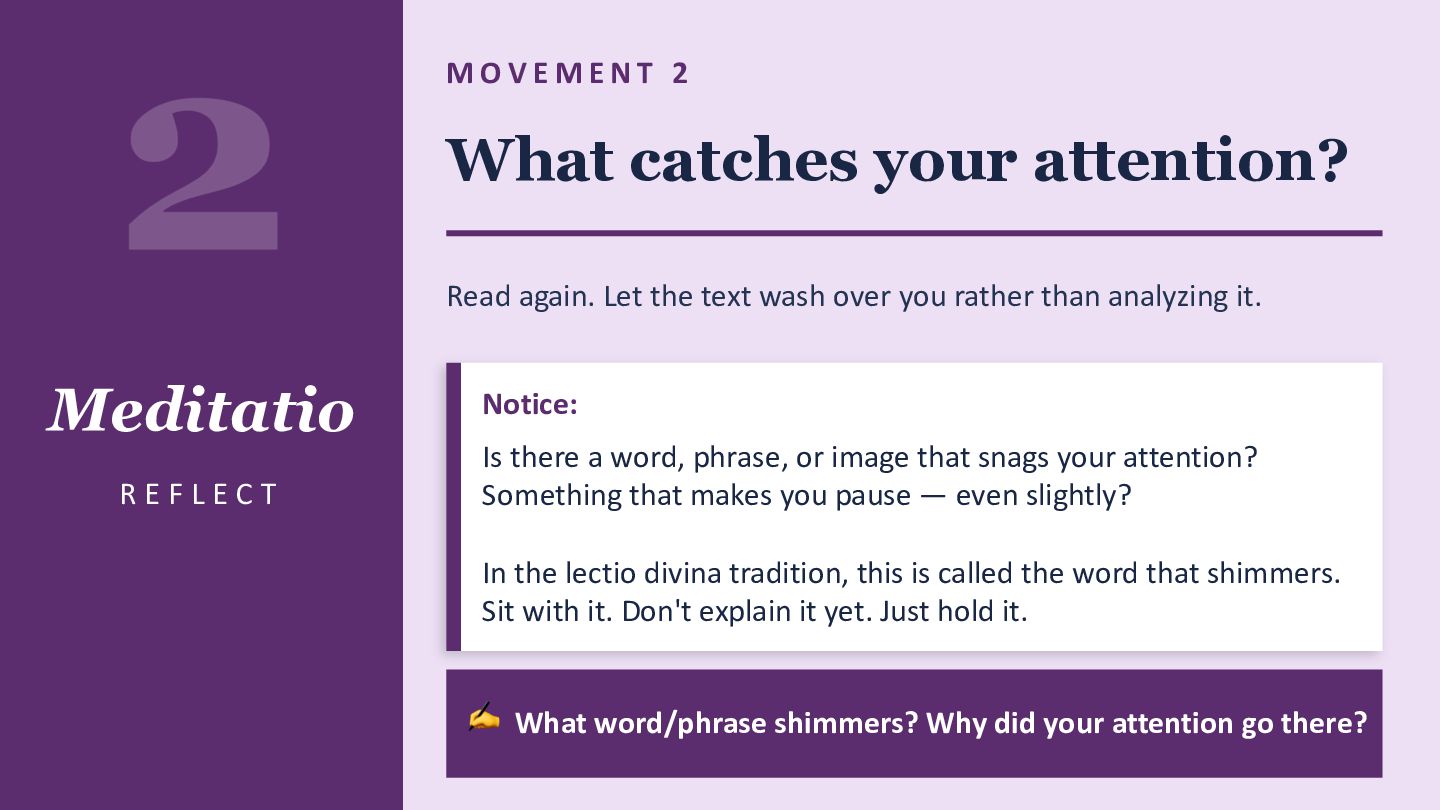
  14. MOVEMENT 2 What catches your attention? Read again. Let the

    text wash over you rather than analyzing it. Meditatio REFLECT Notice: Is there a word, phrase, or image that snags your attention? Something that makes you pause — even slightly? In the lectio divina tradition, this is called the word that shimmers. Sit with it. Don't explain it yet. Just hold it. ✍ What word/phrase shimmers? Why did your attention go there?
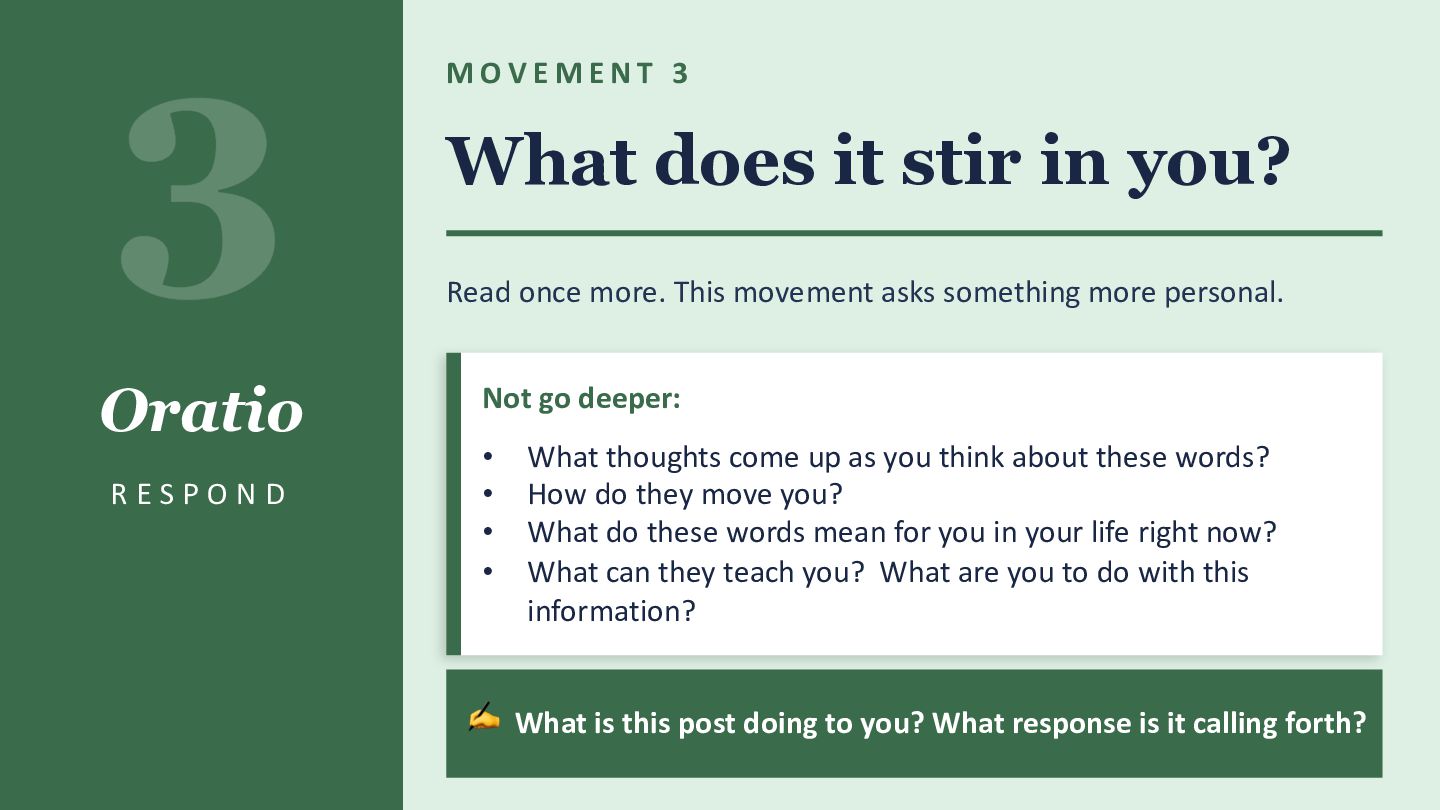
  15. MOVEMENT 3 What does it stir in you? Read once

    more. This movement asks something more personal. Oratio RESPOND Not go deeper: • • • • What thoughts come up as you think about these words? How do they move you? What do these words mean for you in your life right now? What can they teach you? What are you to do with this information? ✍ What is this post doing to you? What response is it calling forth?
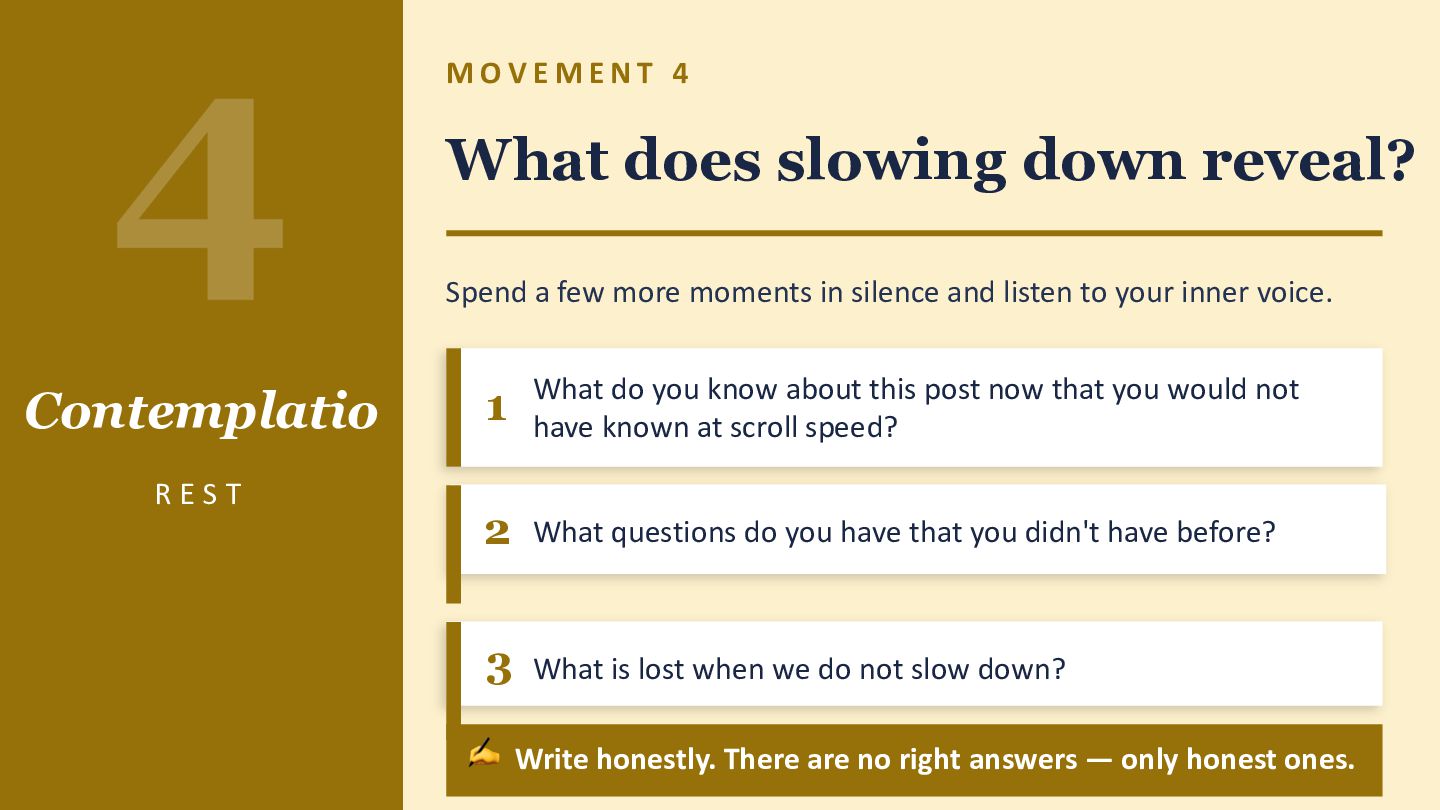
  16. MOVEMENT 4 What does slowing down reveal? Spend a few

    more moments in silence and listen to your inner voice. Contemplatio REST do you know about this post now that you would not 1 What have known at scroll speed? 2 What questions do you have that you didn't have before? 3 What is lost when we do not slow down? ✍ Write honestly. There are no right answers — only honest ones.
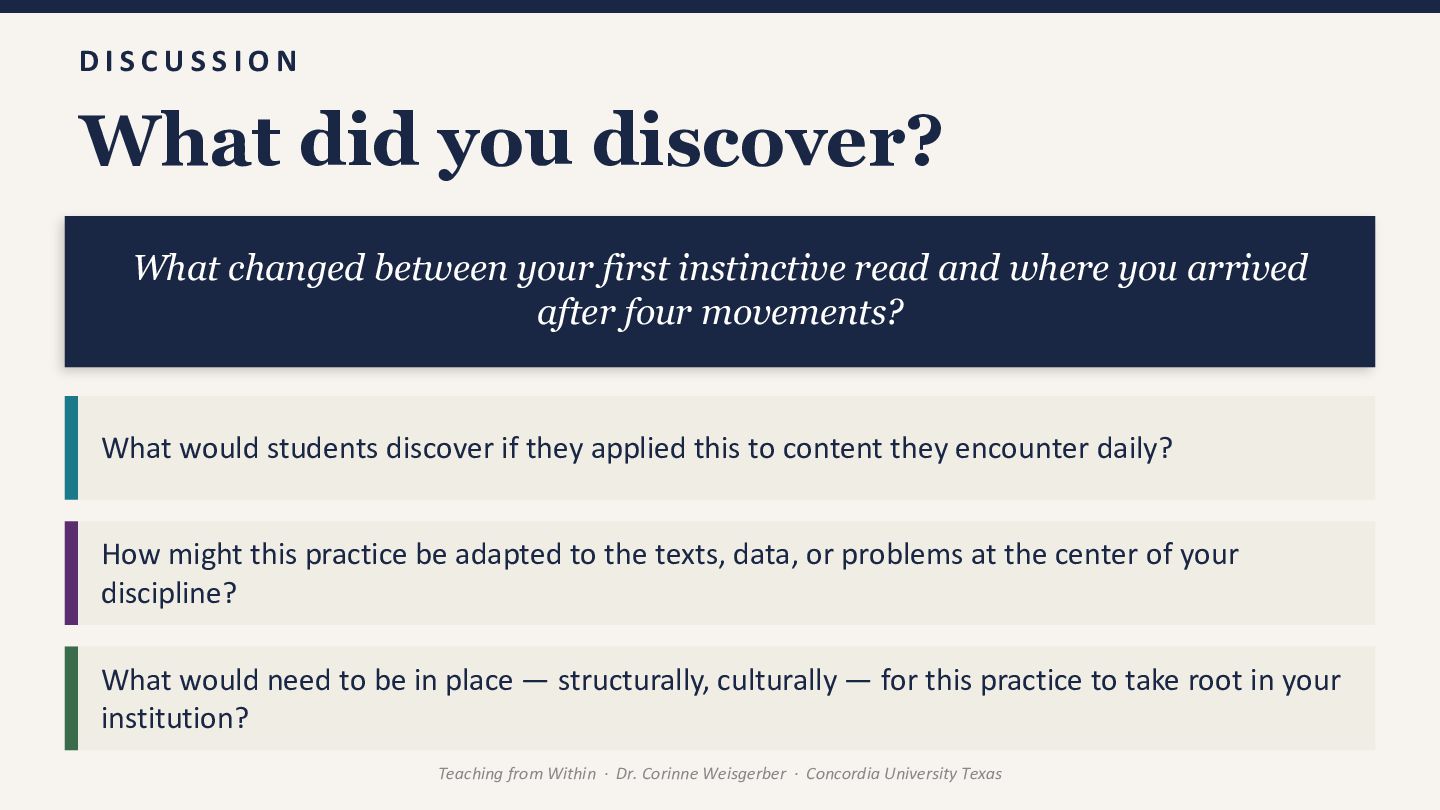
  17. DISCUSSION What did you discover? What changed between your first

    instinctive read and where you arrived after four movements? What would students discover if they applied this to content they encounter daily? How might this practice be adapted to the texts, data, or problems at the center of your discipline? What would need to be in place — structurally, culturally — for this practice to take root in your institution? Teaching from Within · Dr. Corinne Weisgerber · Concordia University Texas
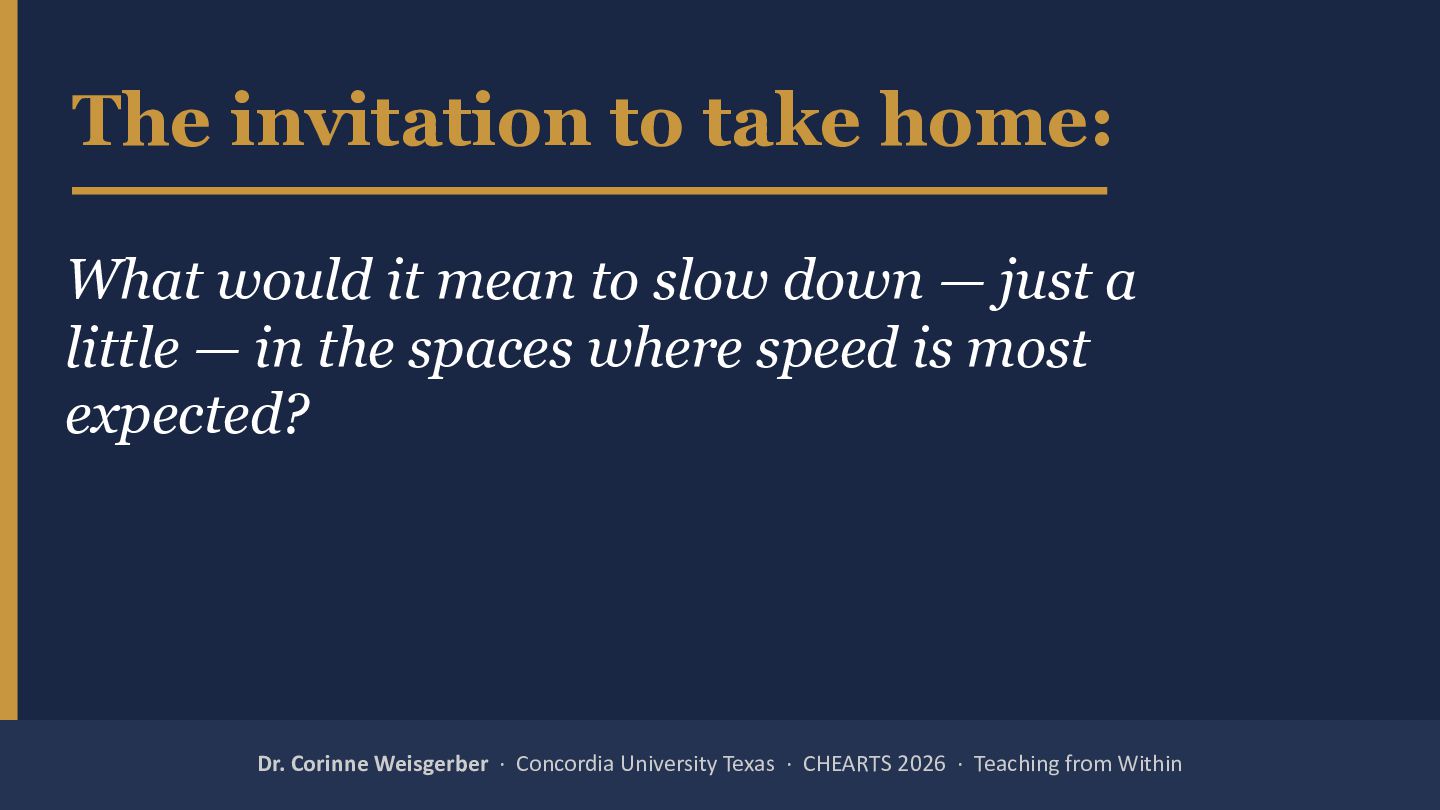
  18. The invitation to take home: What would it mean to

    slow down — just a little — in the spaces where speed is most expected? Dr. Corinne Weisgerber · Concordia University Texas · CHEARTS 2026 · Teaching from Within