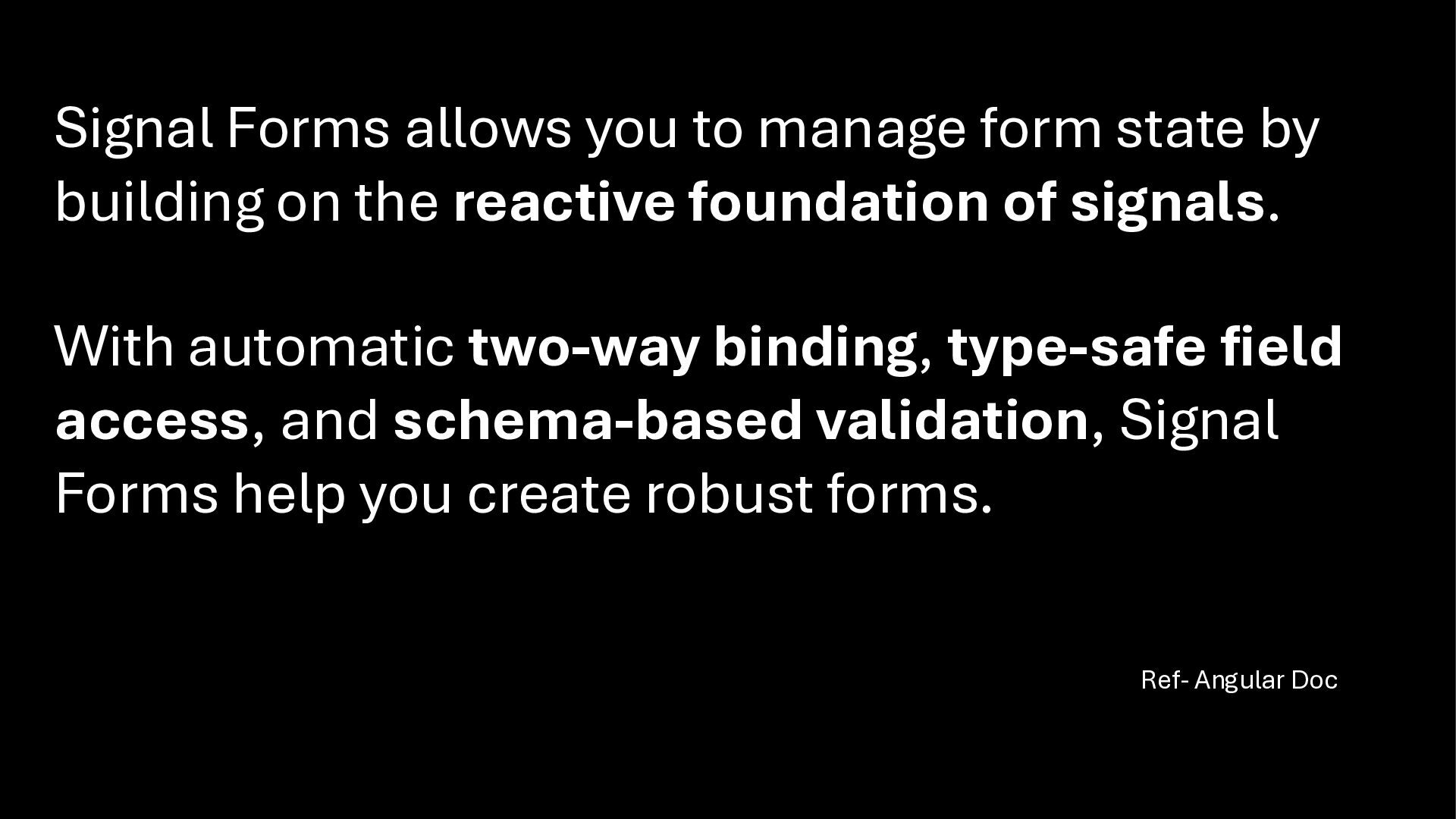
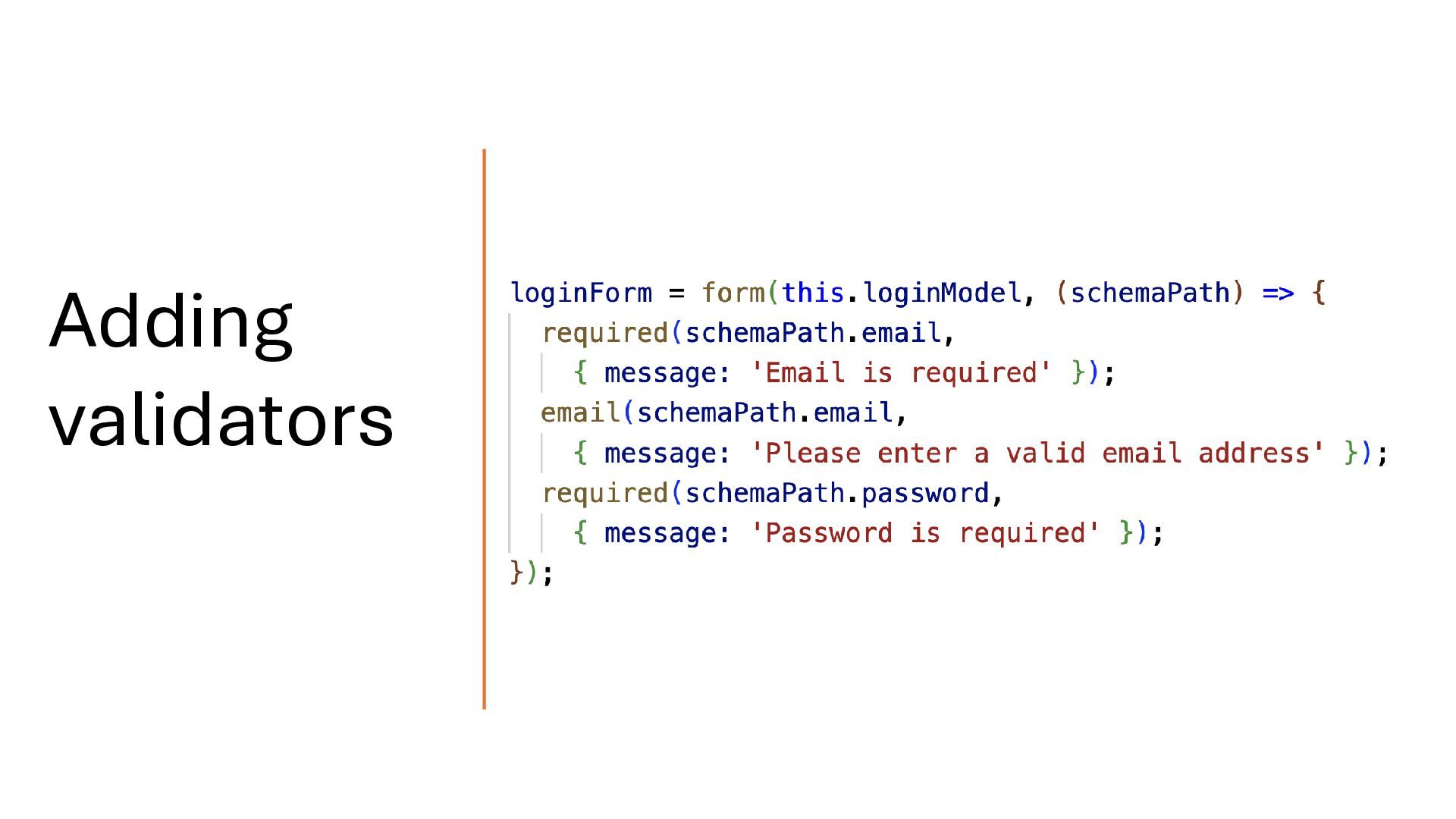
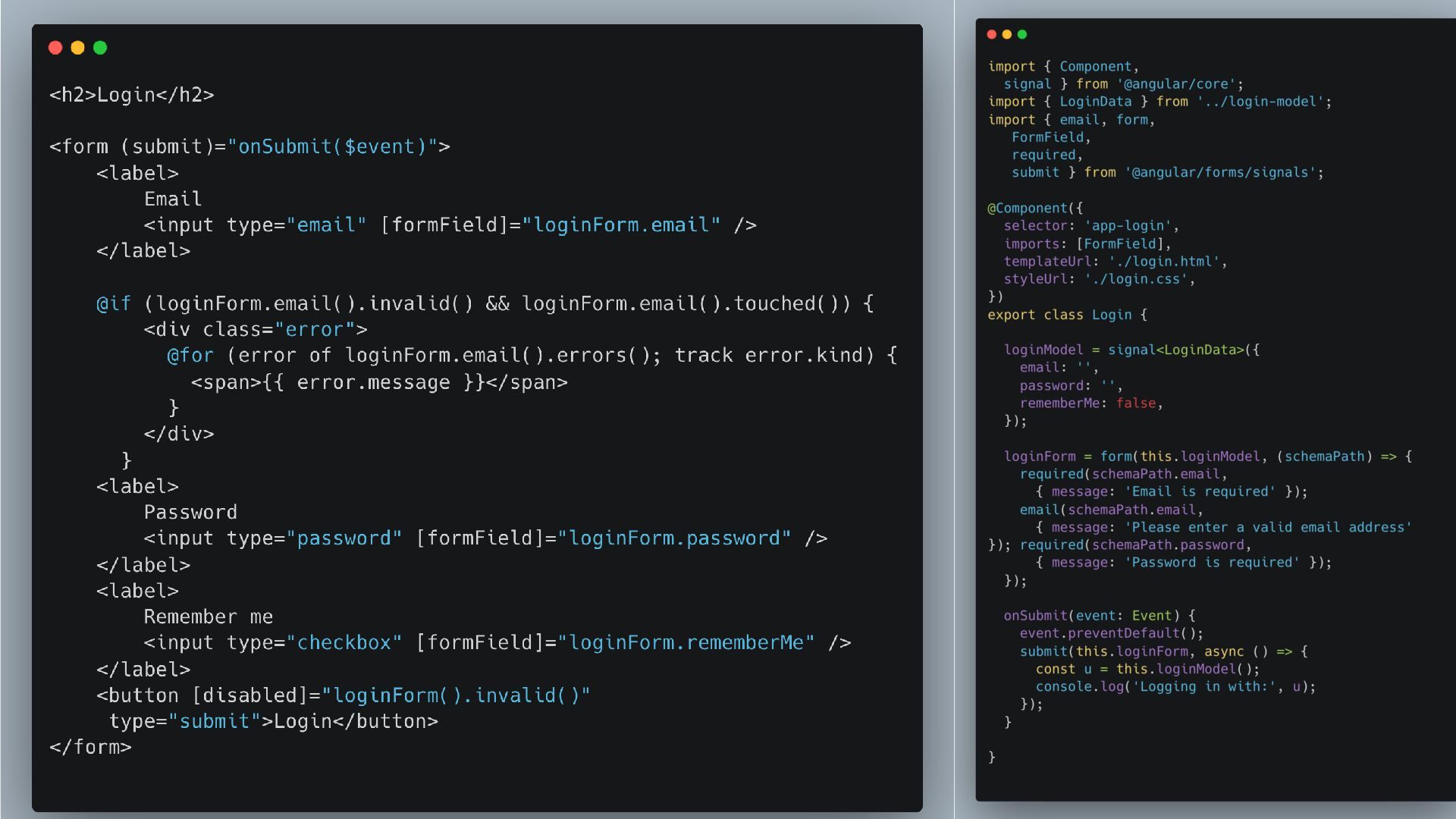
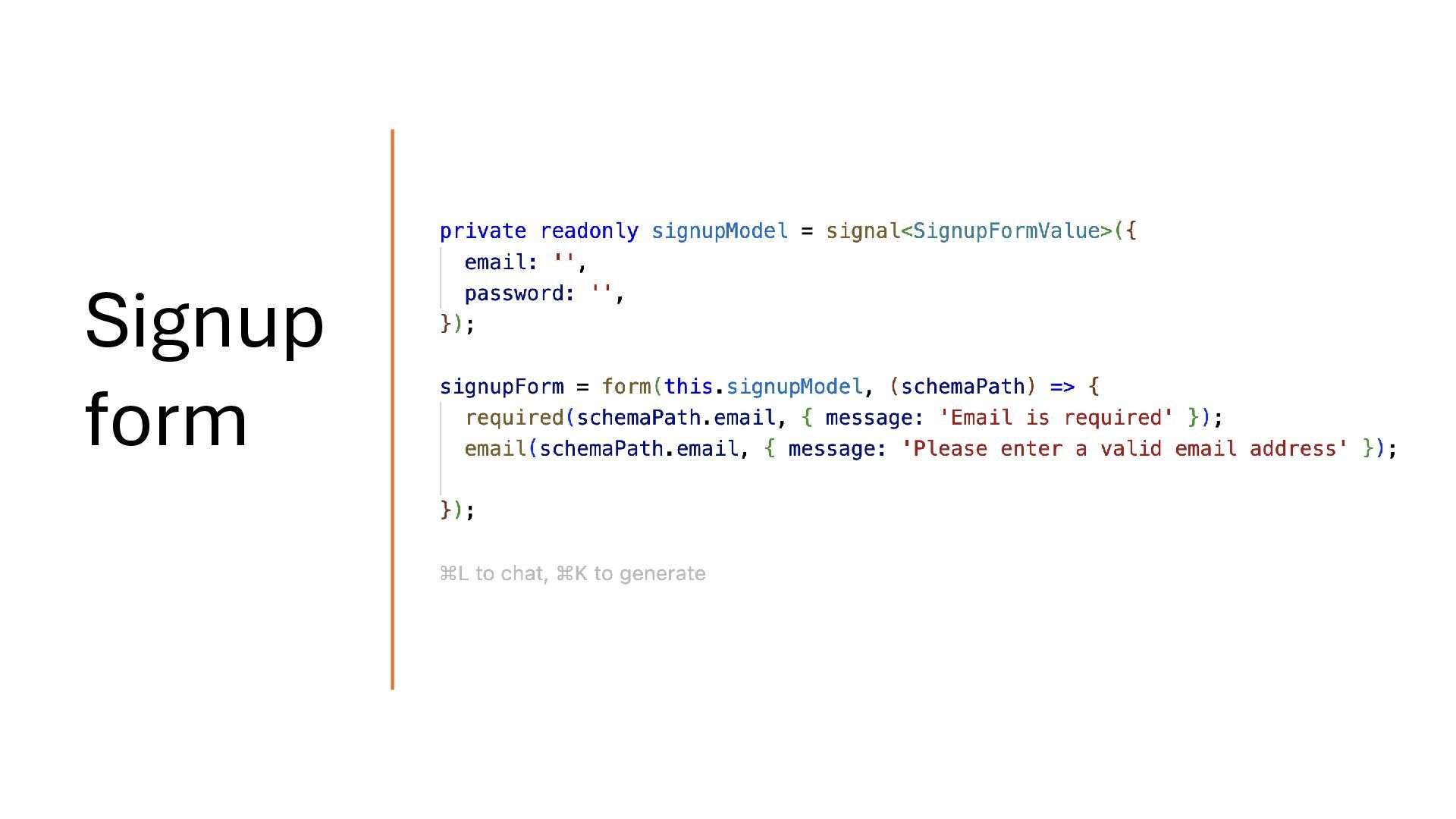
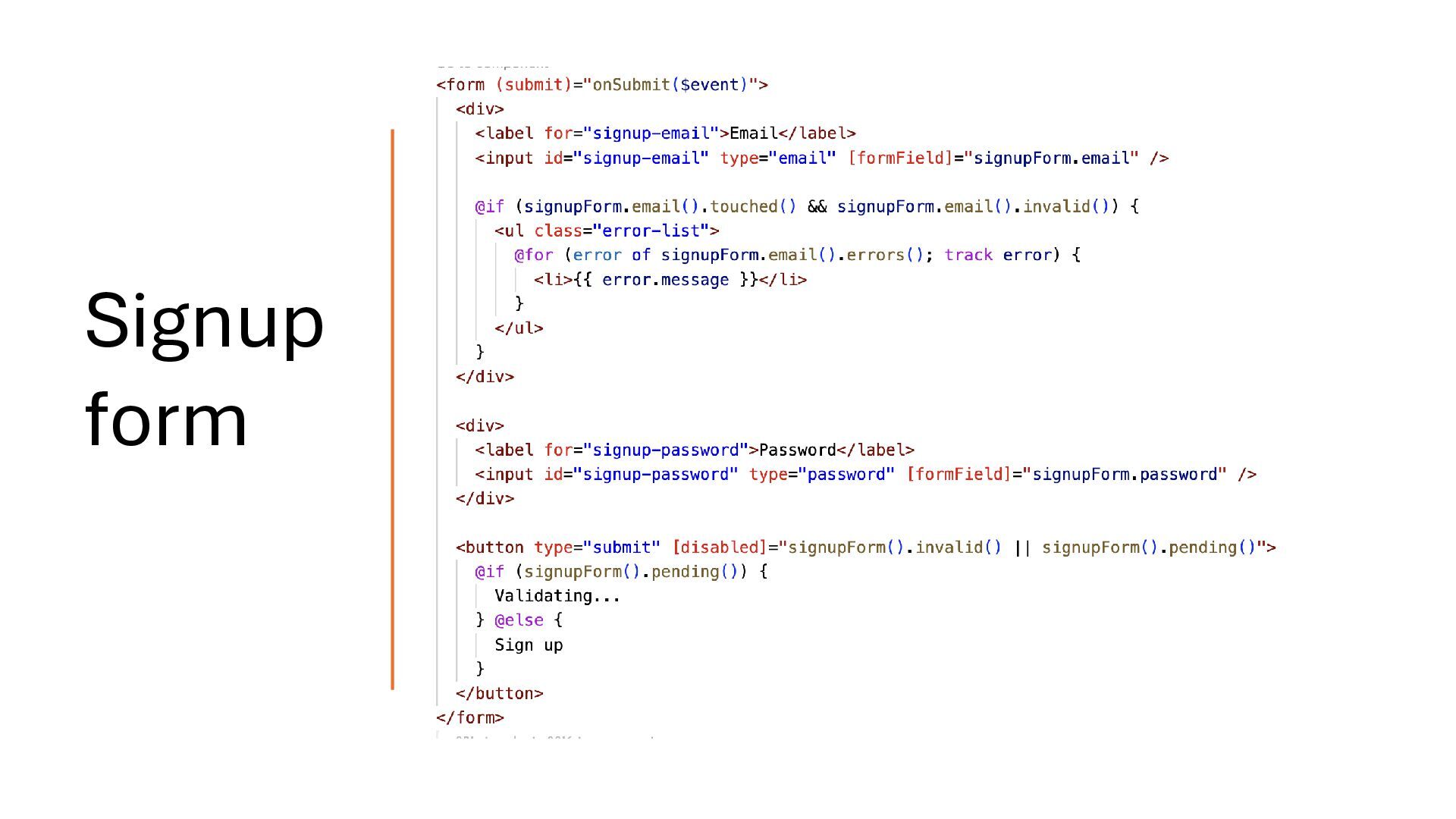
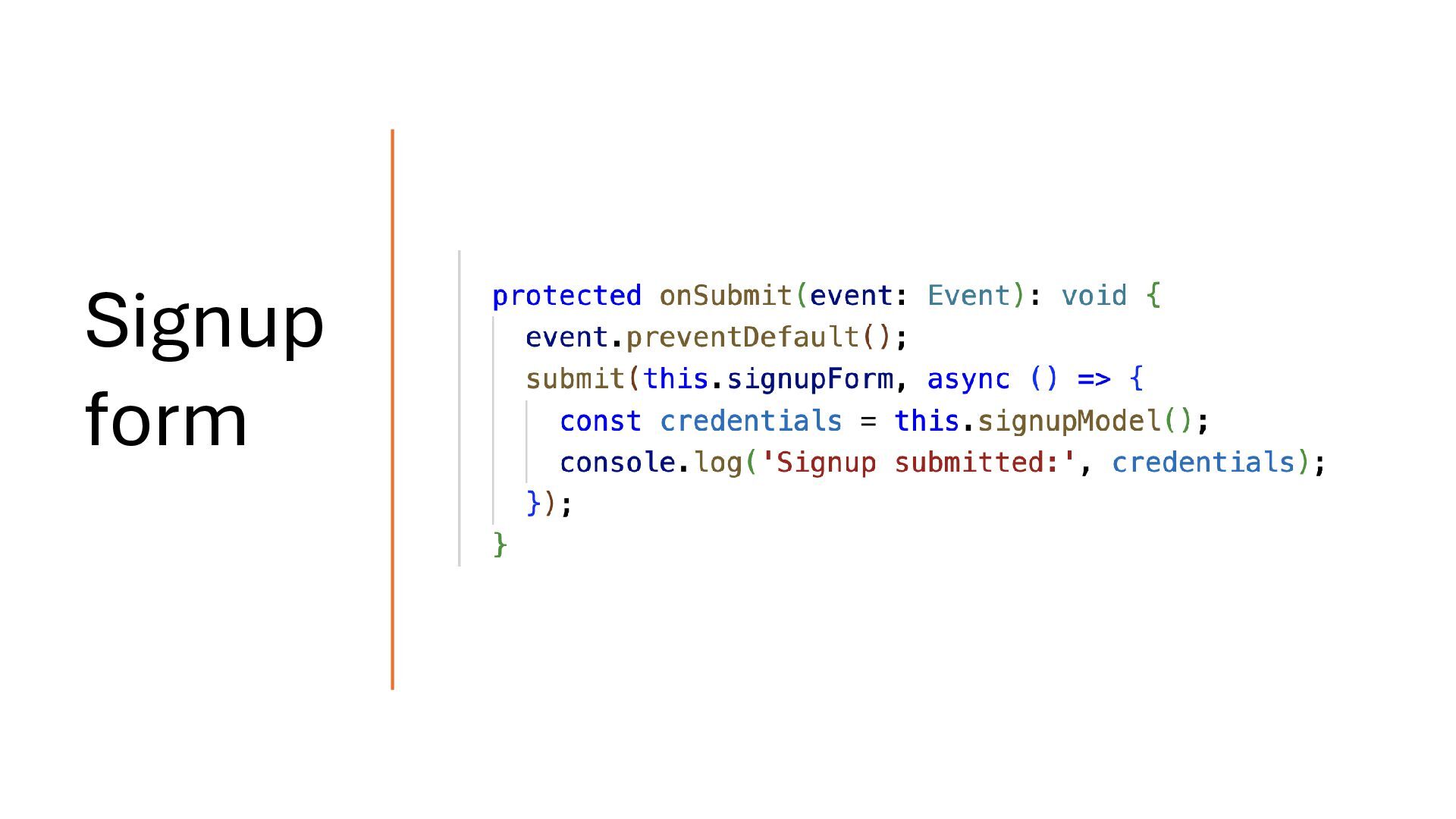
on the reactive foundation of signals. With automatic two-way binding, type-safe field access, and schema-based validation, Signal Forms help you create robust forms. Ref- Angular Doc
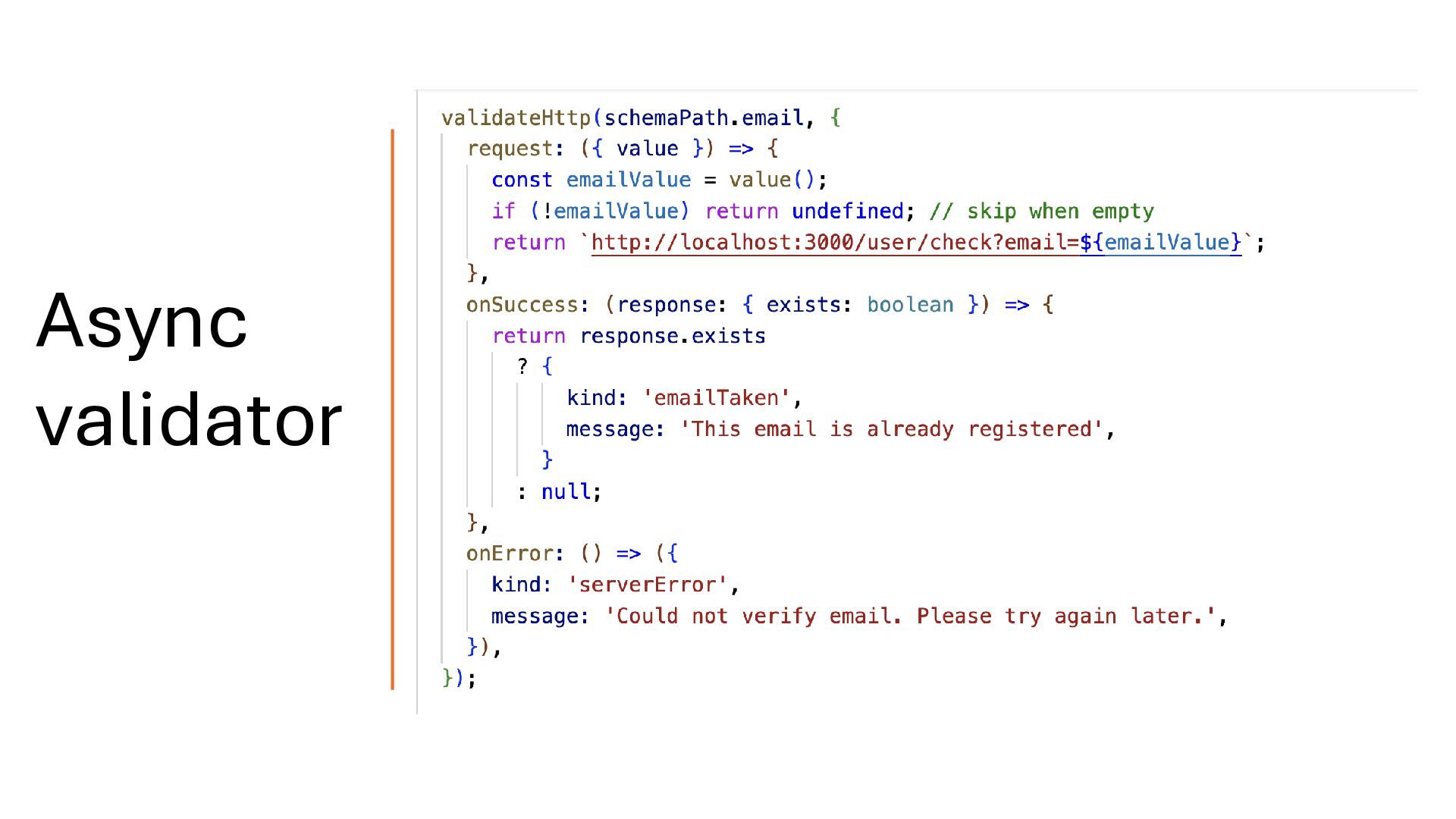
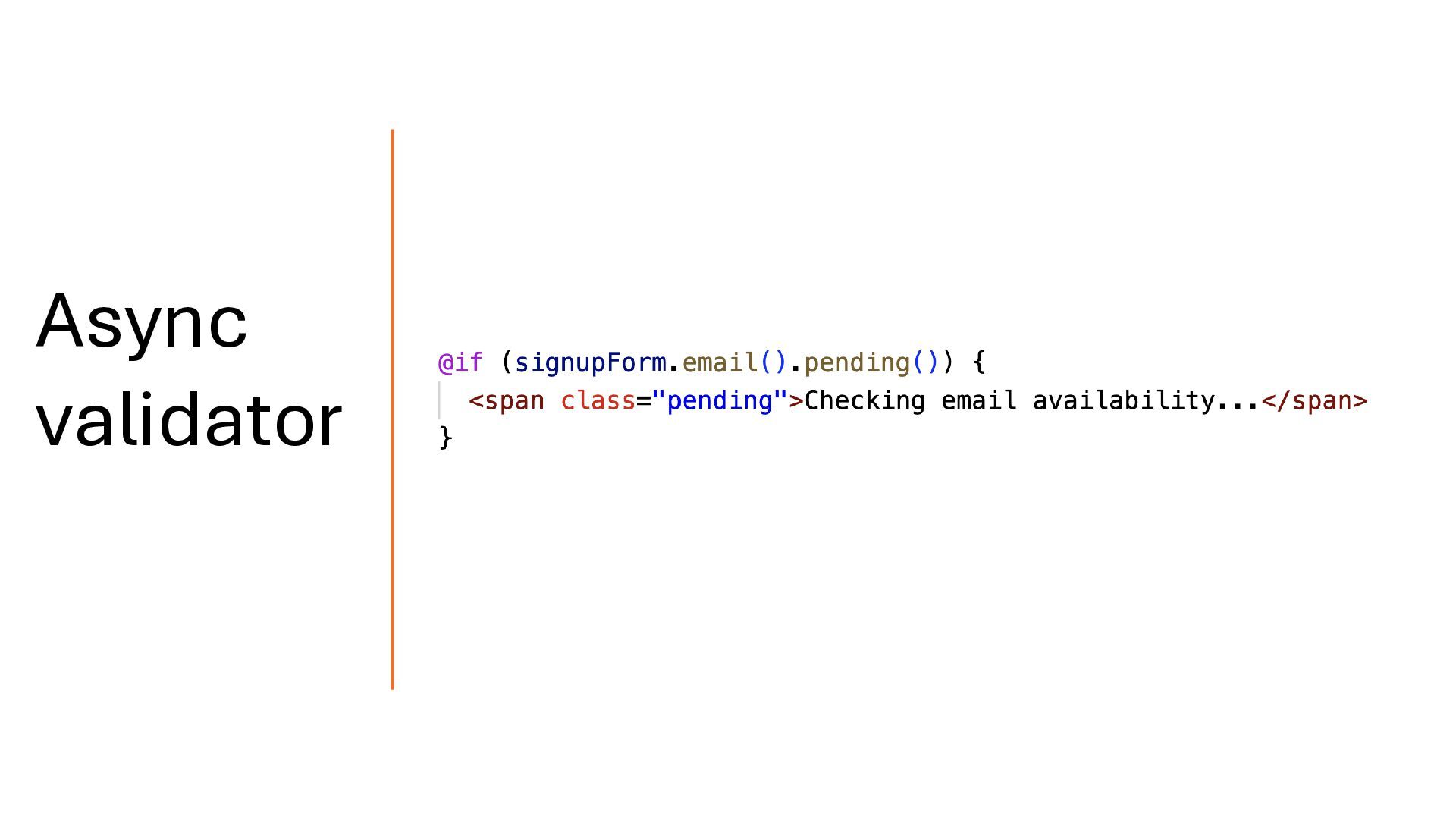
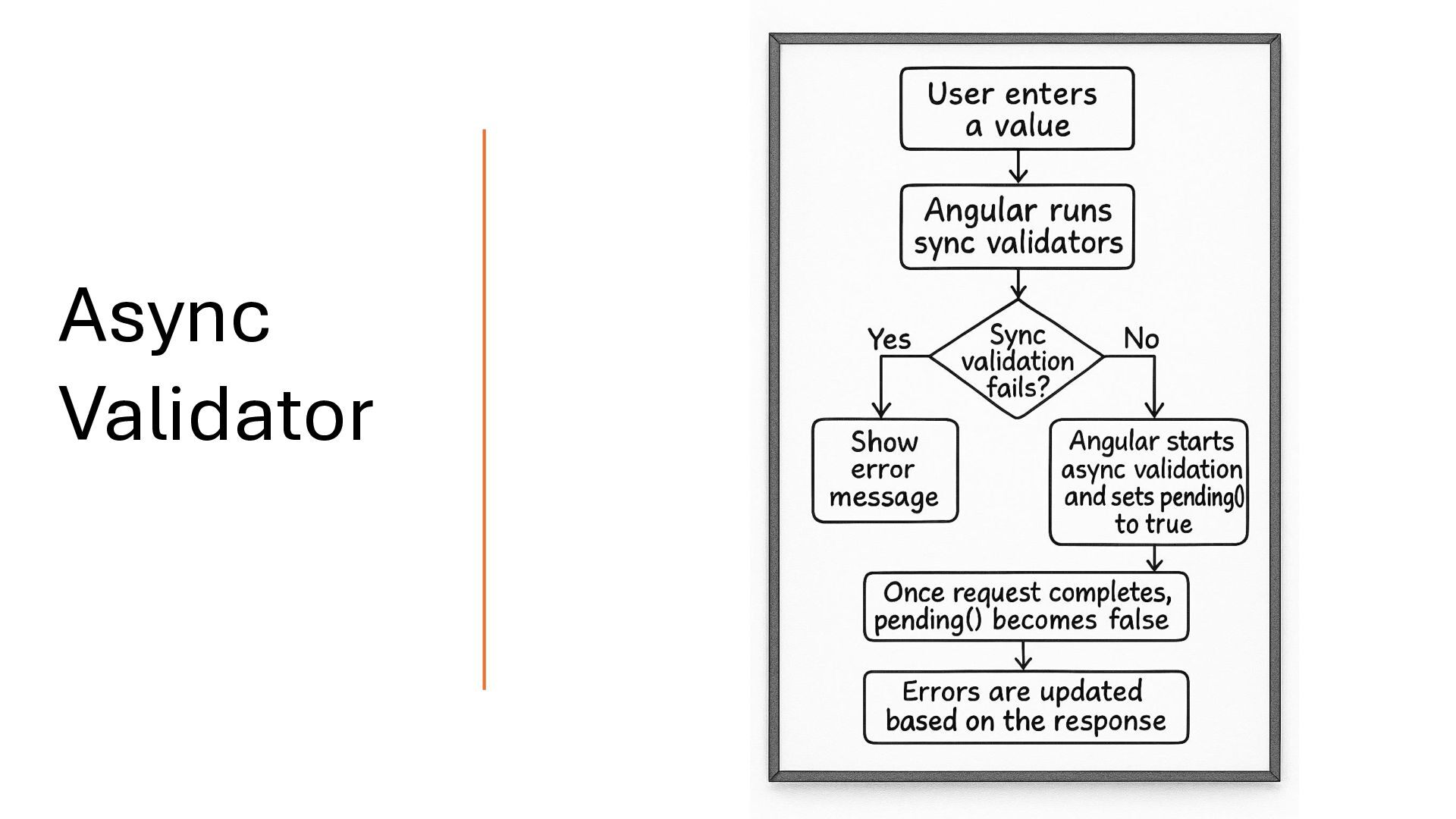
taken • Look up data in the database to confirm values • Use external services (APIs) to verify things like addresses or tax IDs • Apply business rules that only the server can validate
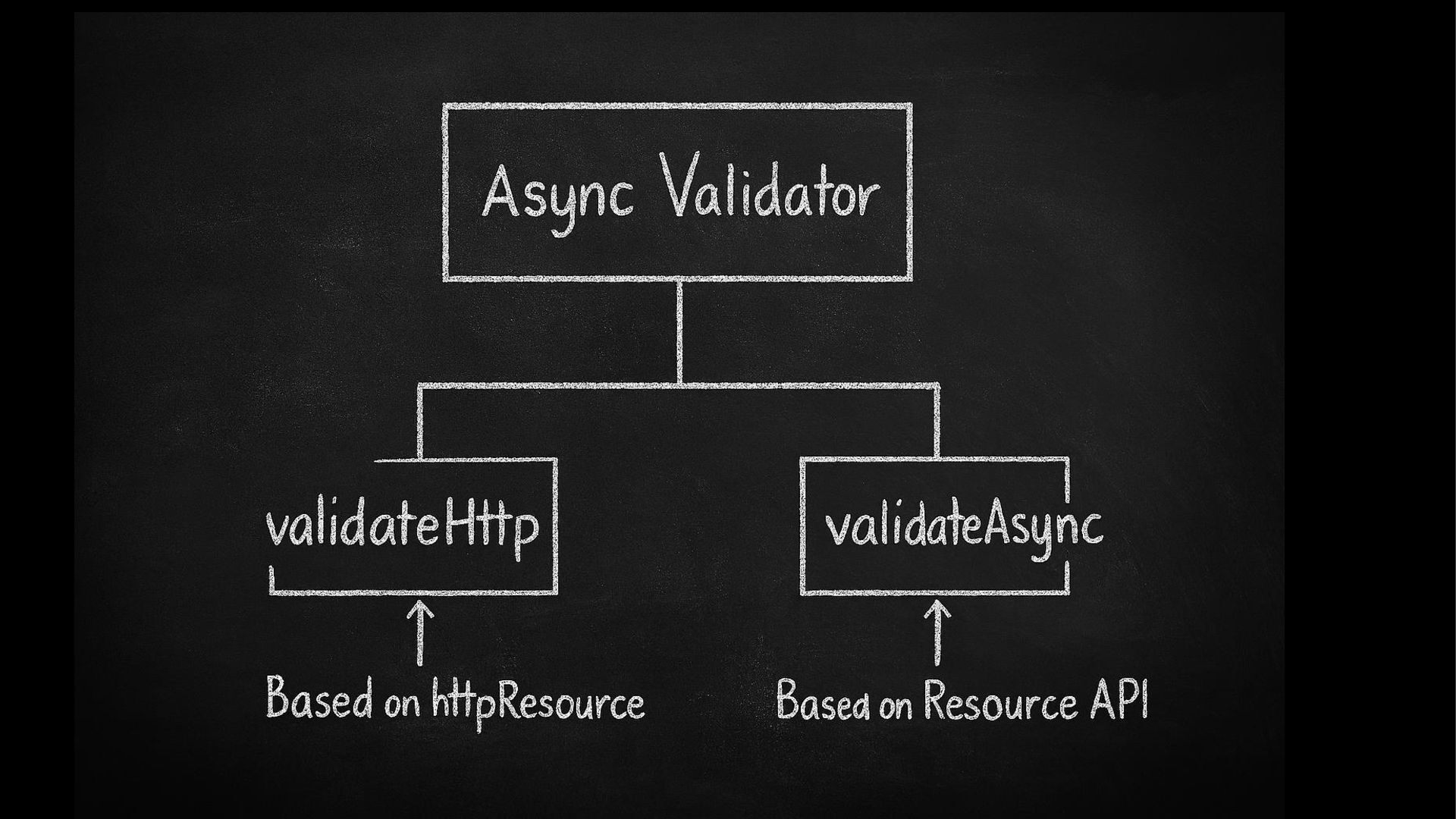
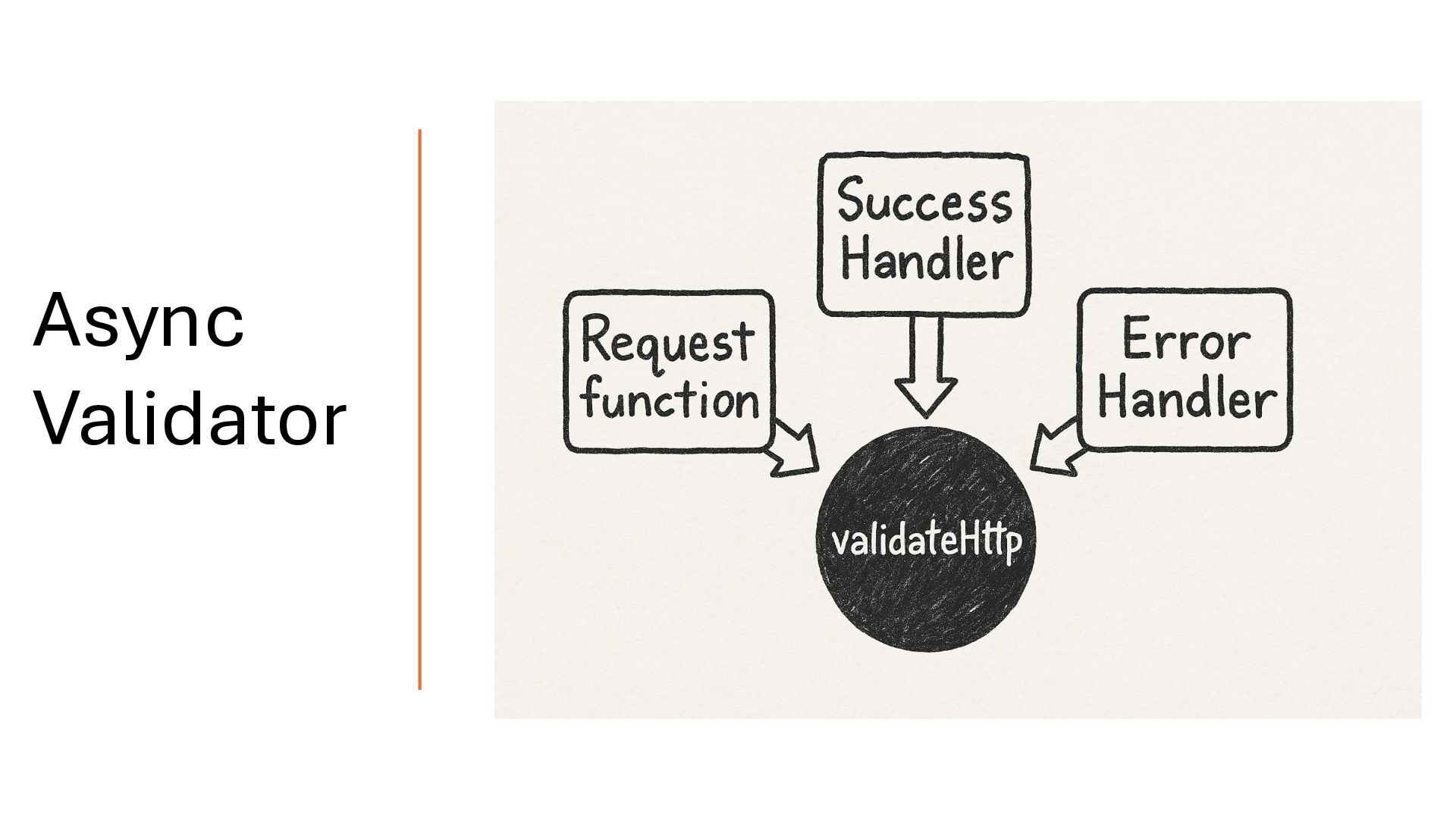
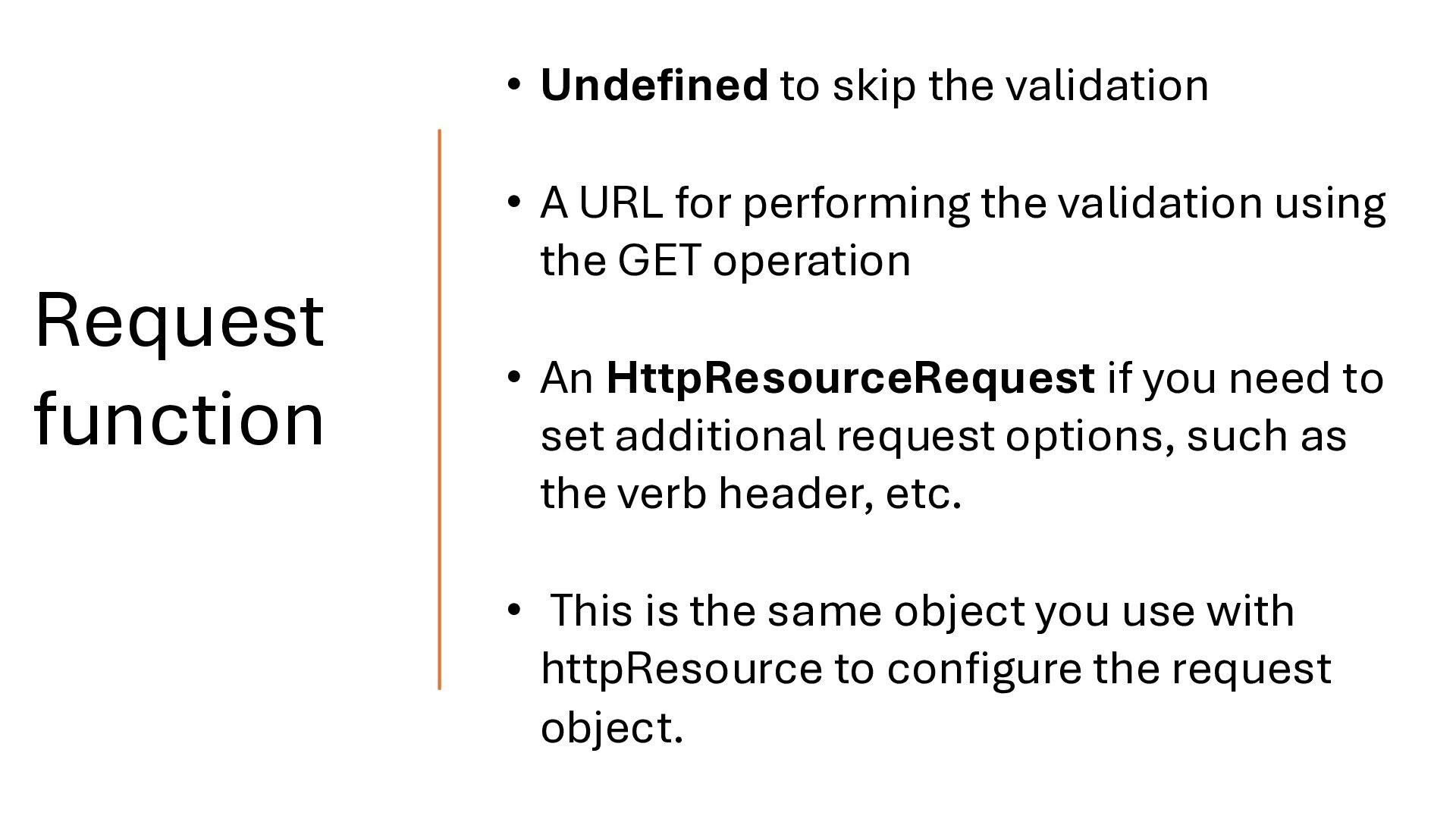
URL for performing the validation using the GET operation • An HttpResourceRequest if you need to set additional request options, such as the verb header, etc. • This is the same object you use with httpResource to configure the request object.
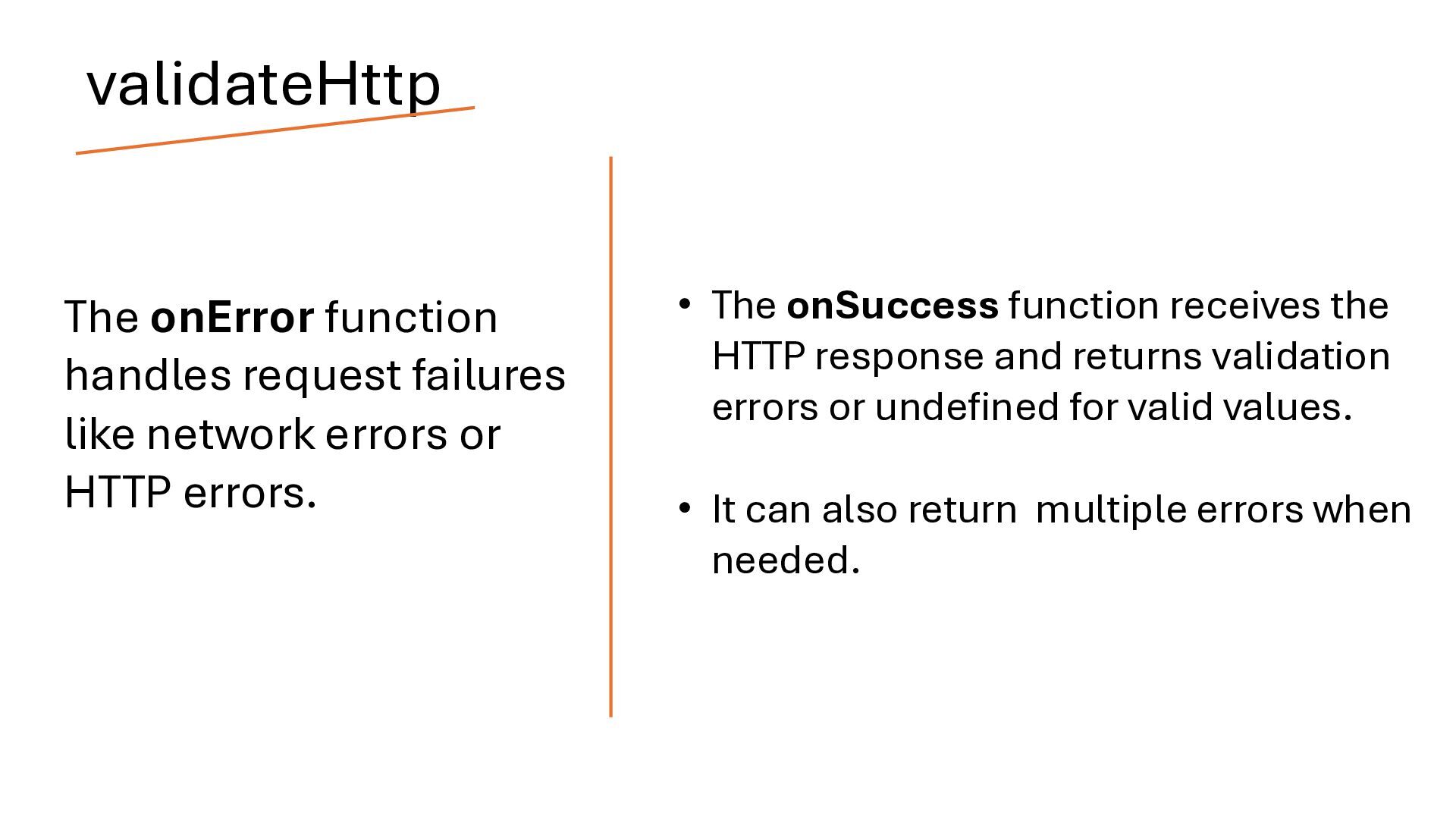
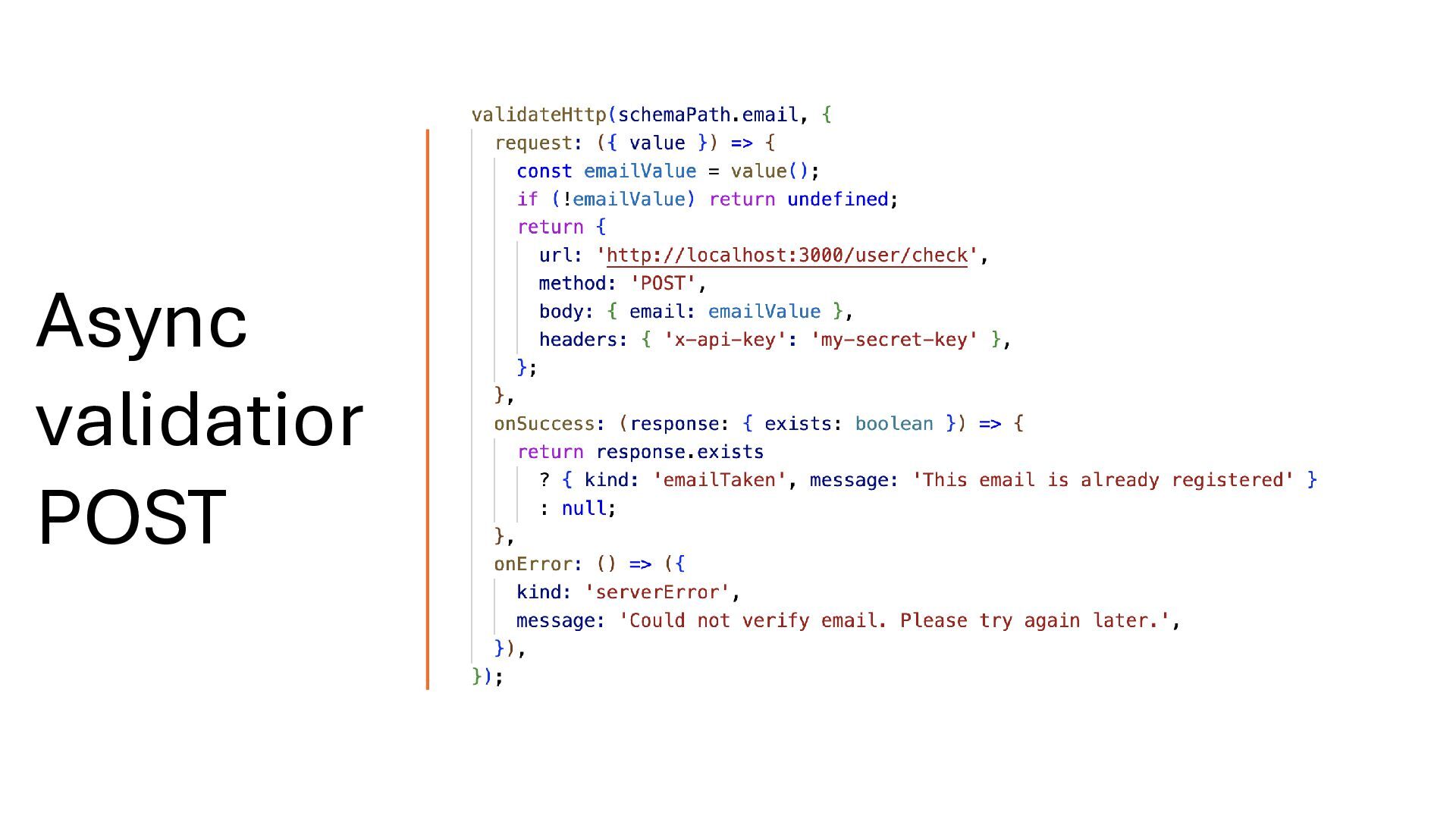
HTTP errors. • The onSuccess function receives the HTTP response and returns validation errors or undefined for valid values. • It can also return multiple errors when needed. validateHttp
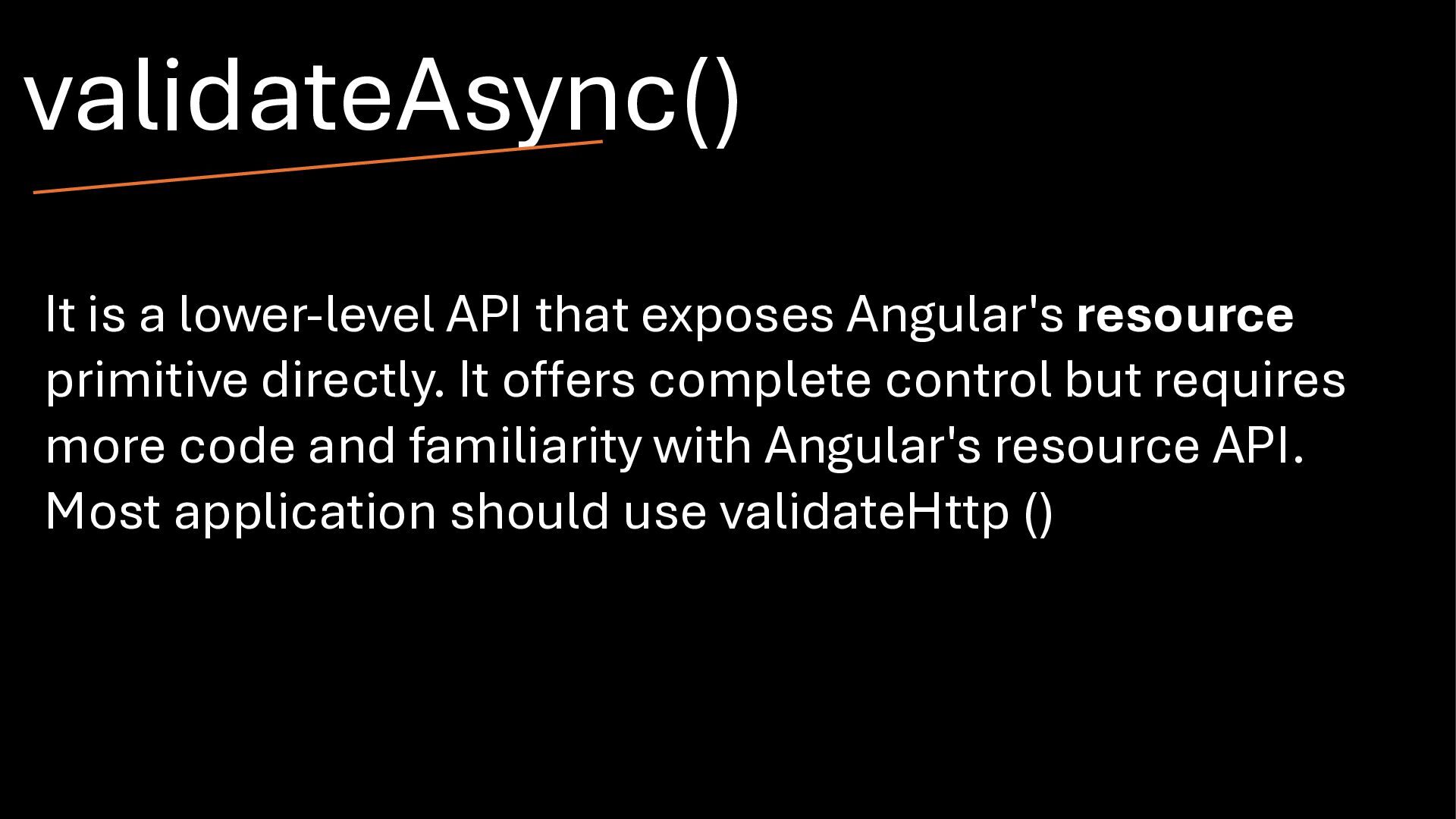
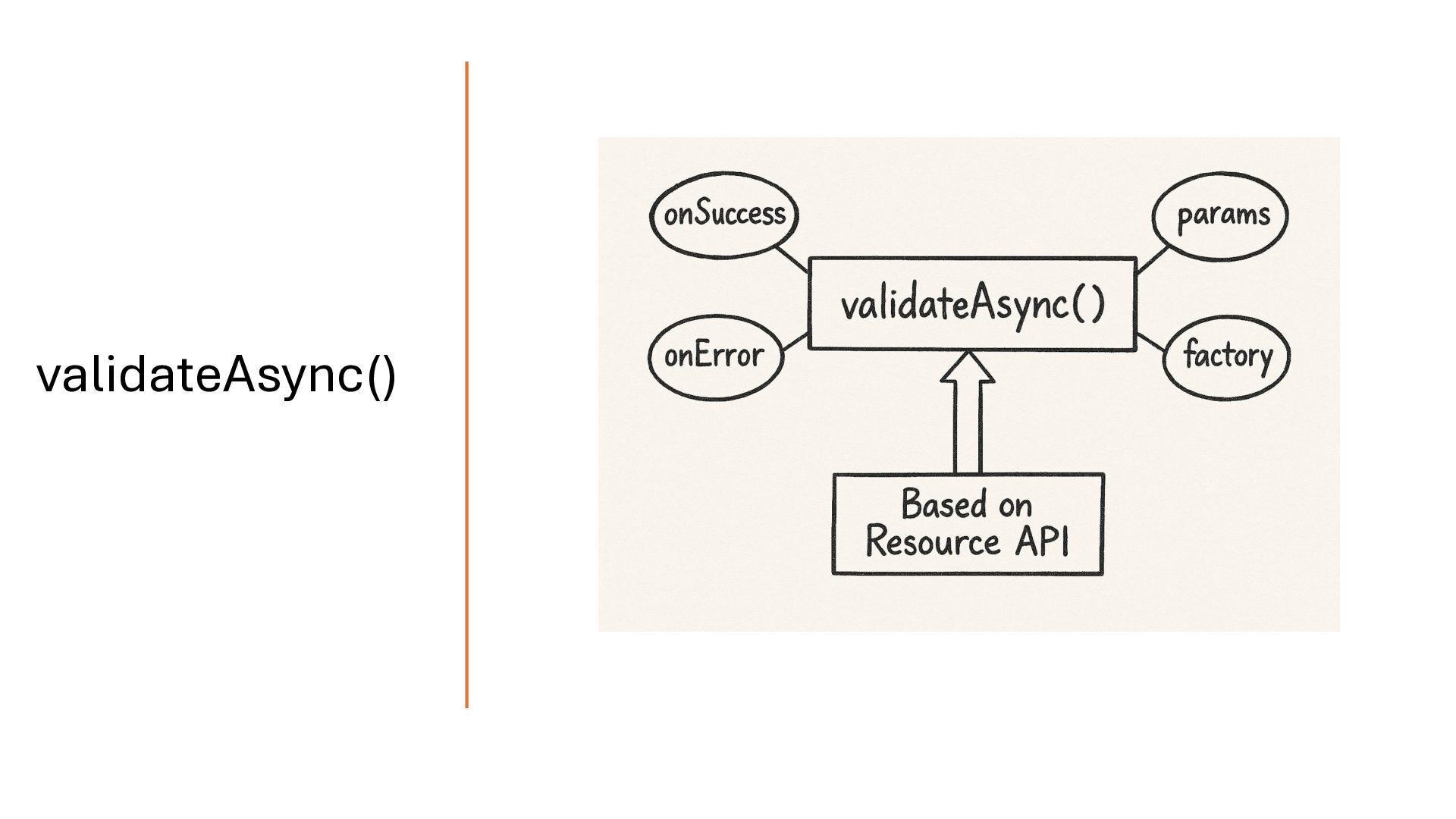
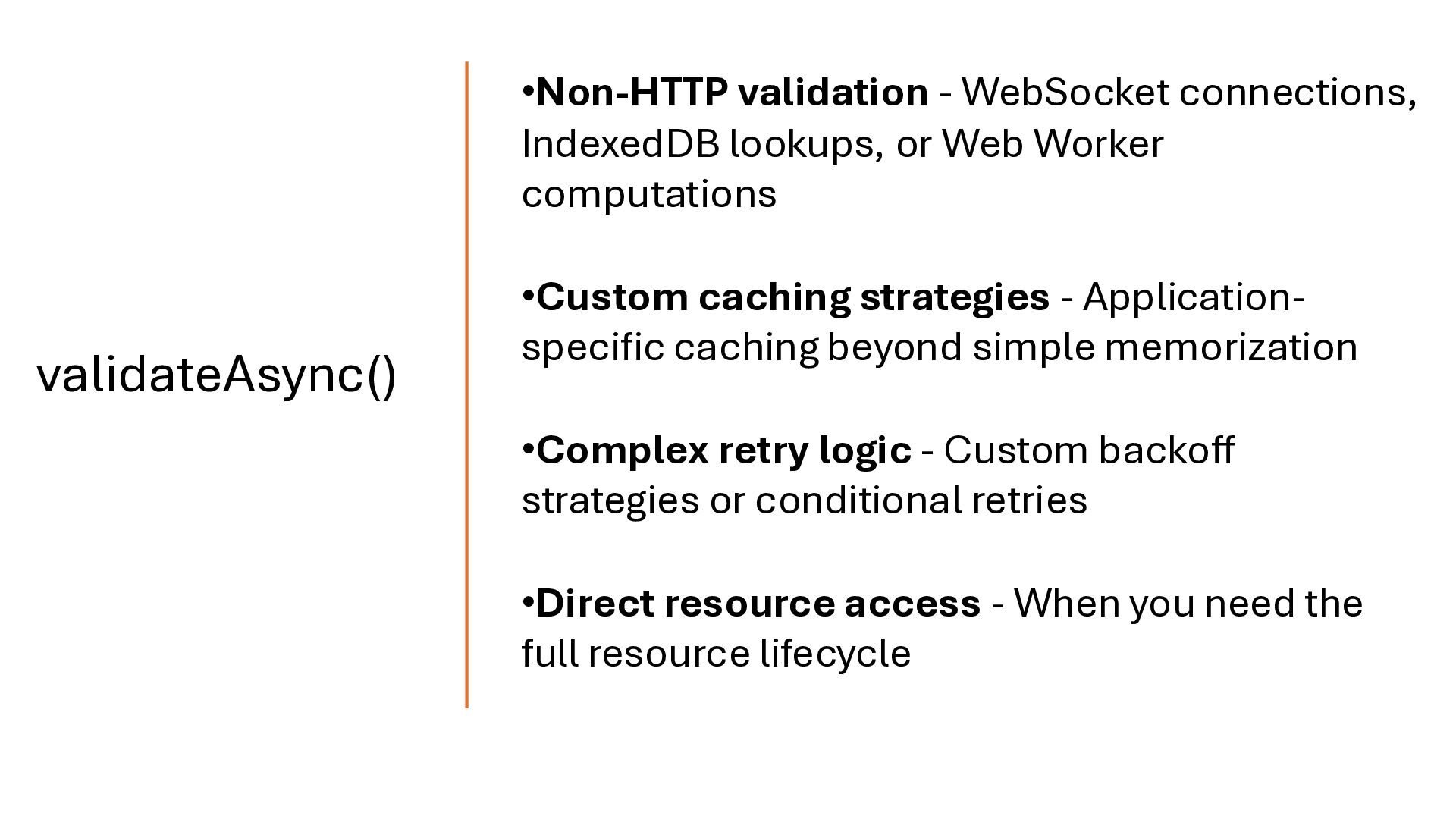
directly. It offers complete control but requires more code and familiarity with Angular's resource API. Most application should use validateHttp () validateAsync()
Worker computations •Custom caching strategies - Application- specific caching beyond simple memorization •Complex retry logic - Custom backoff strategies or conditional retries •Direct resource access - When you need the full resource lifecycle
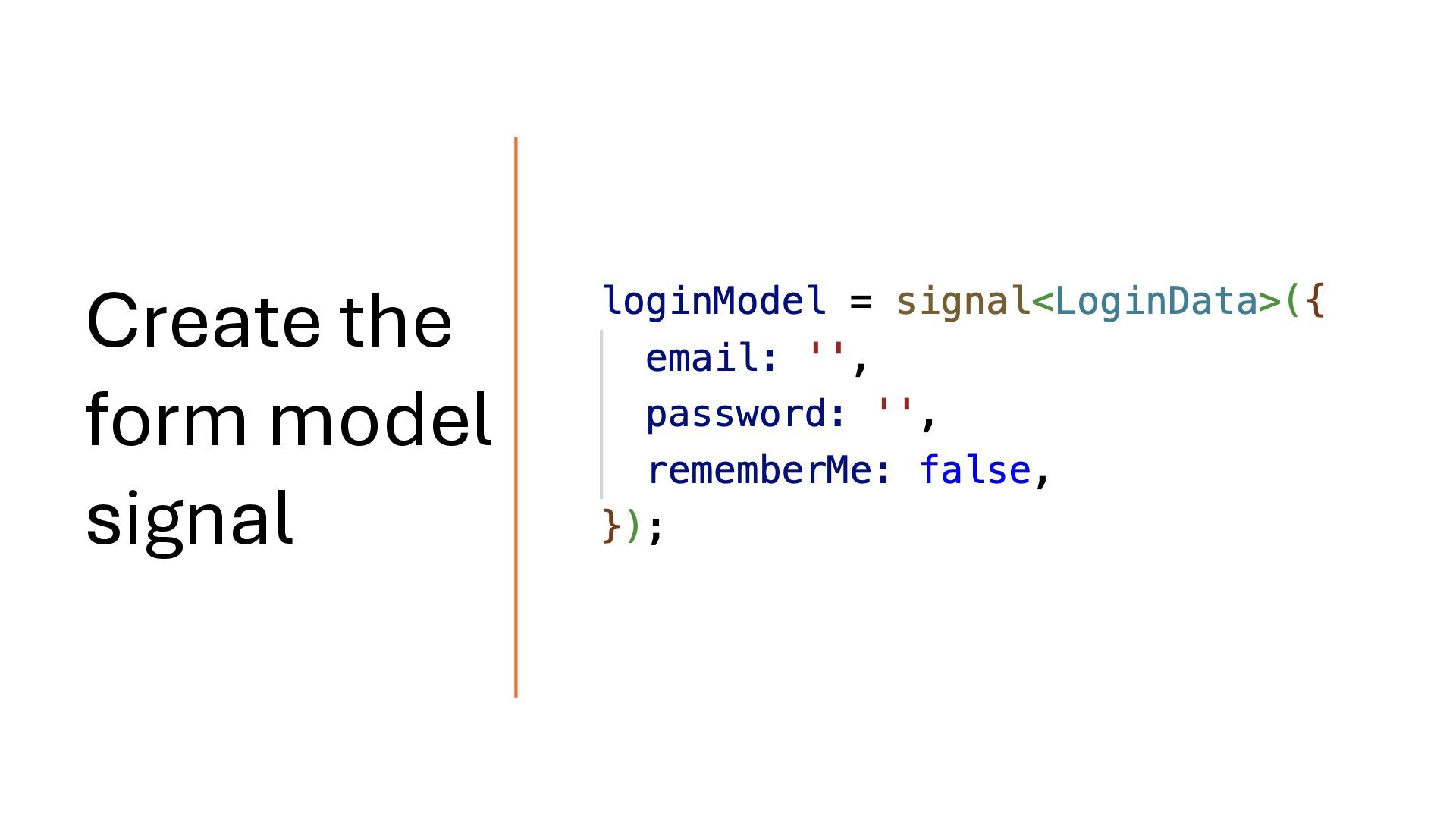
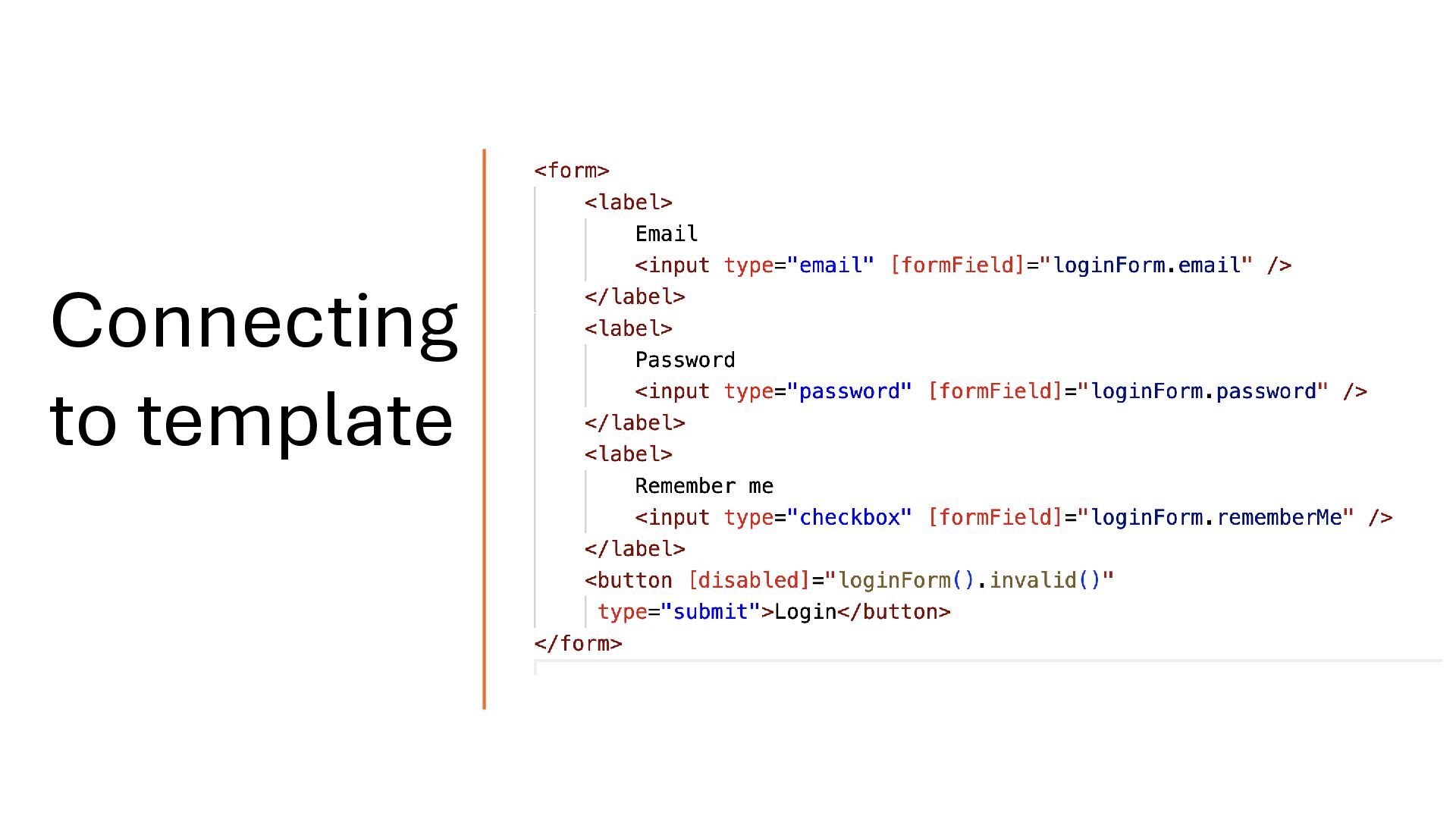
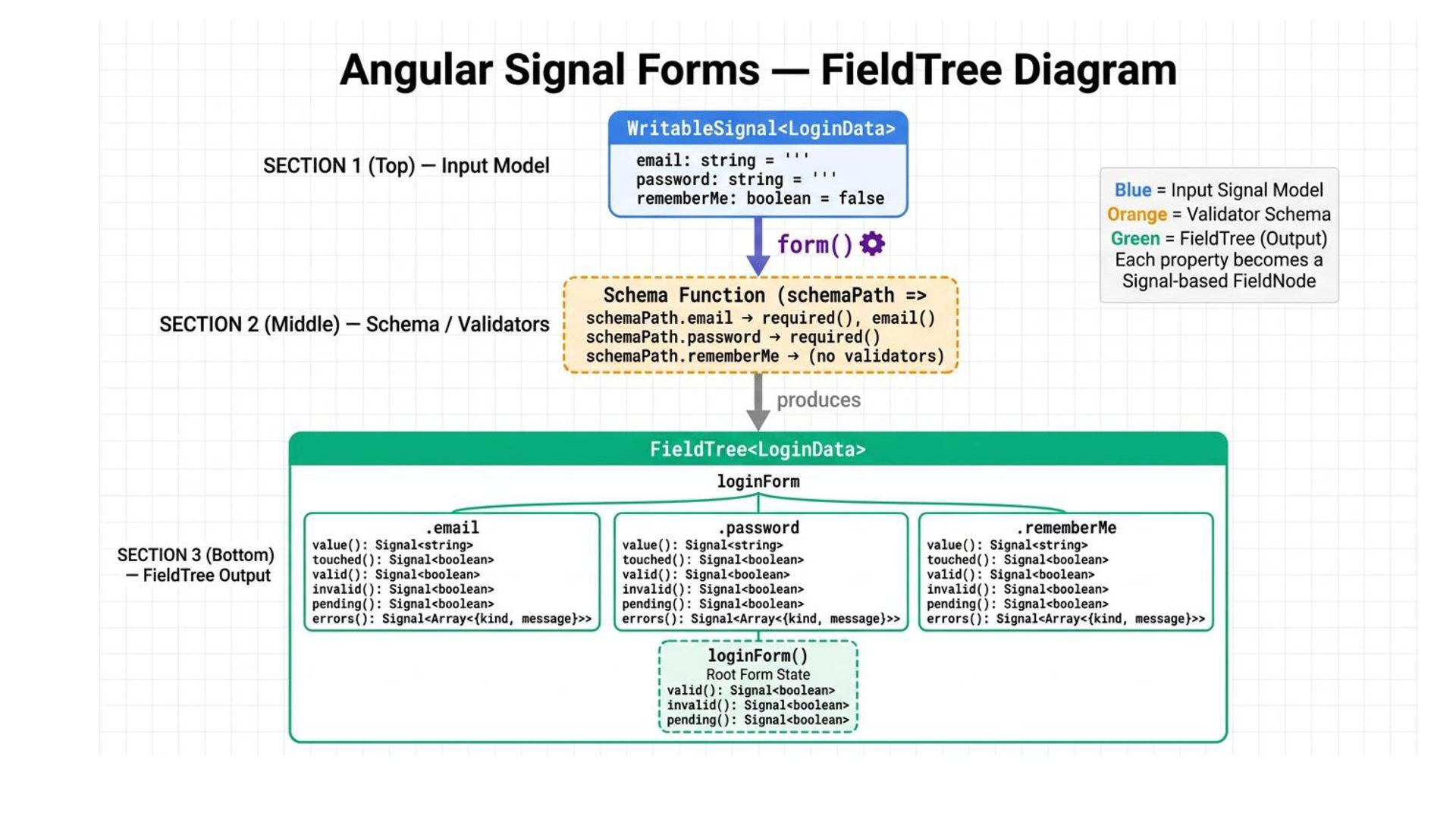
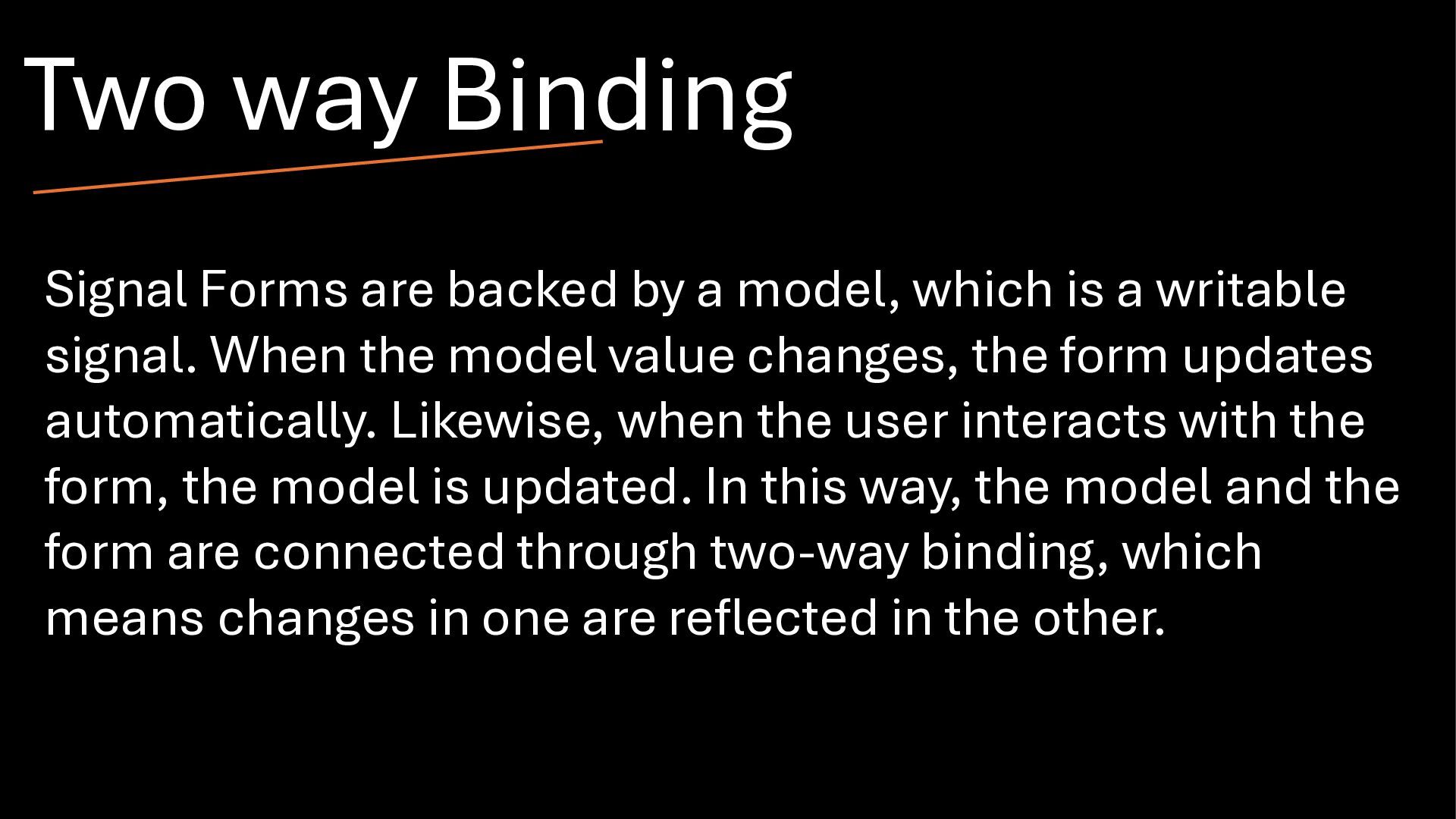
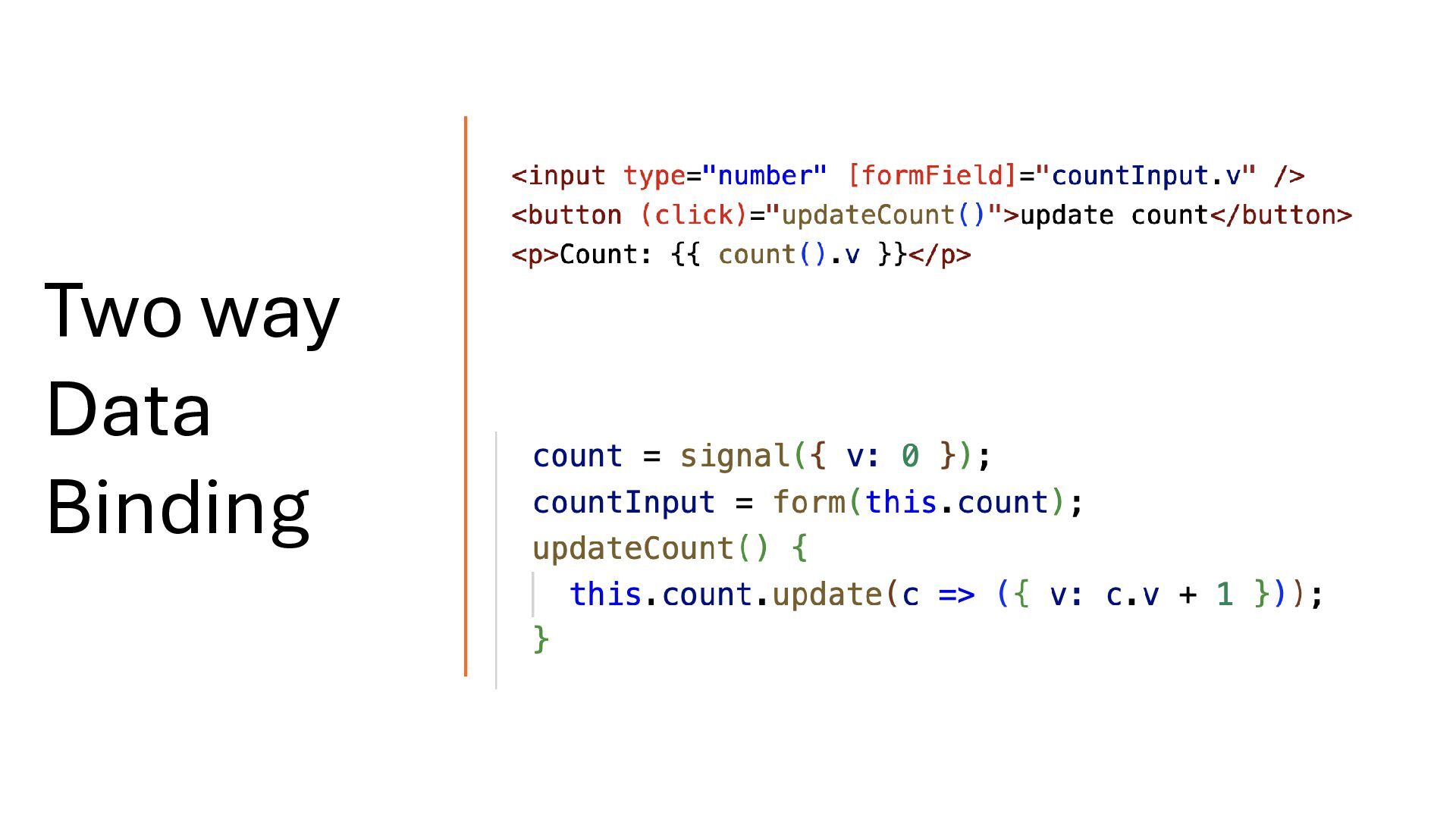
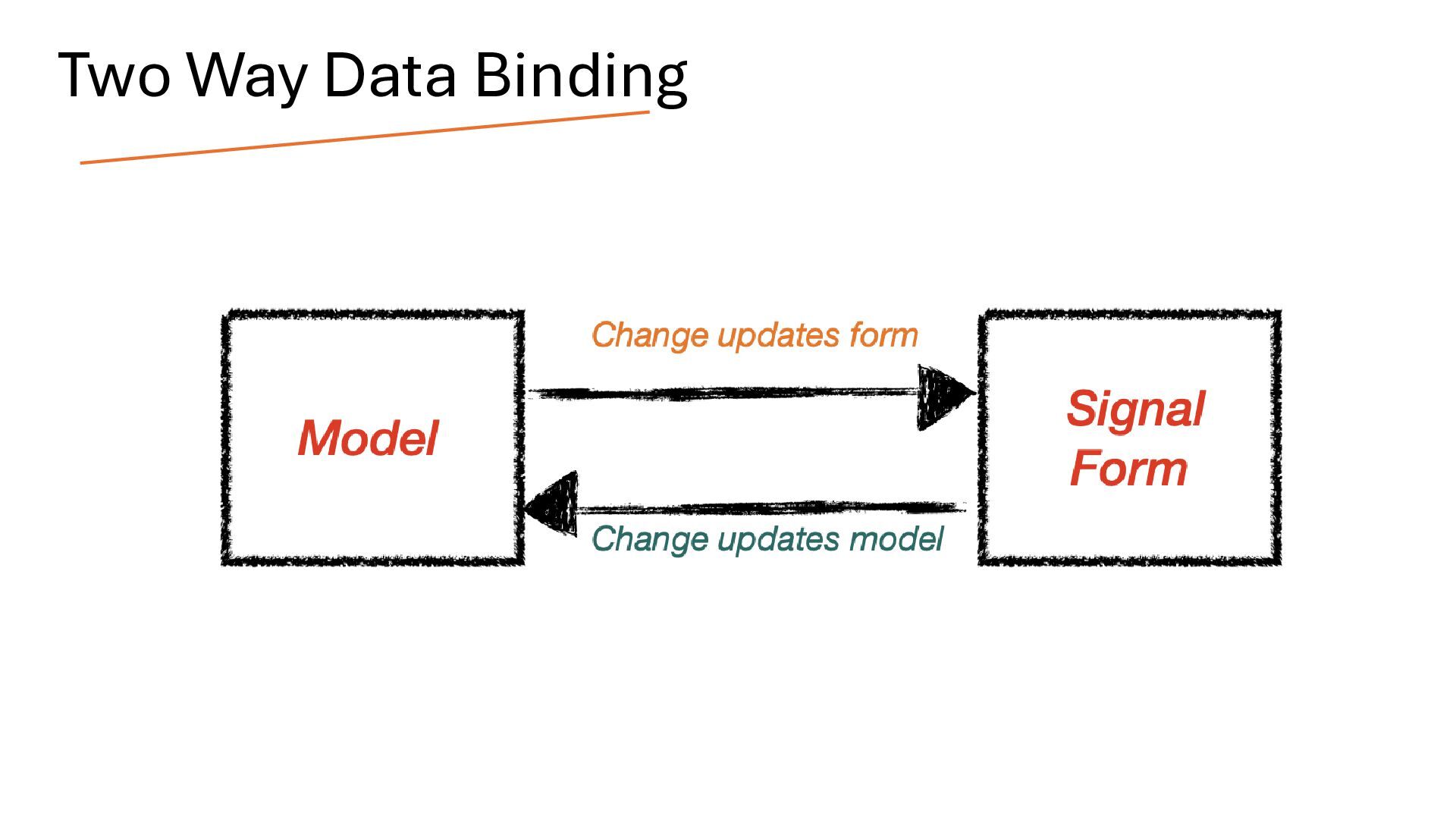
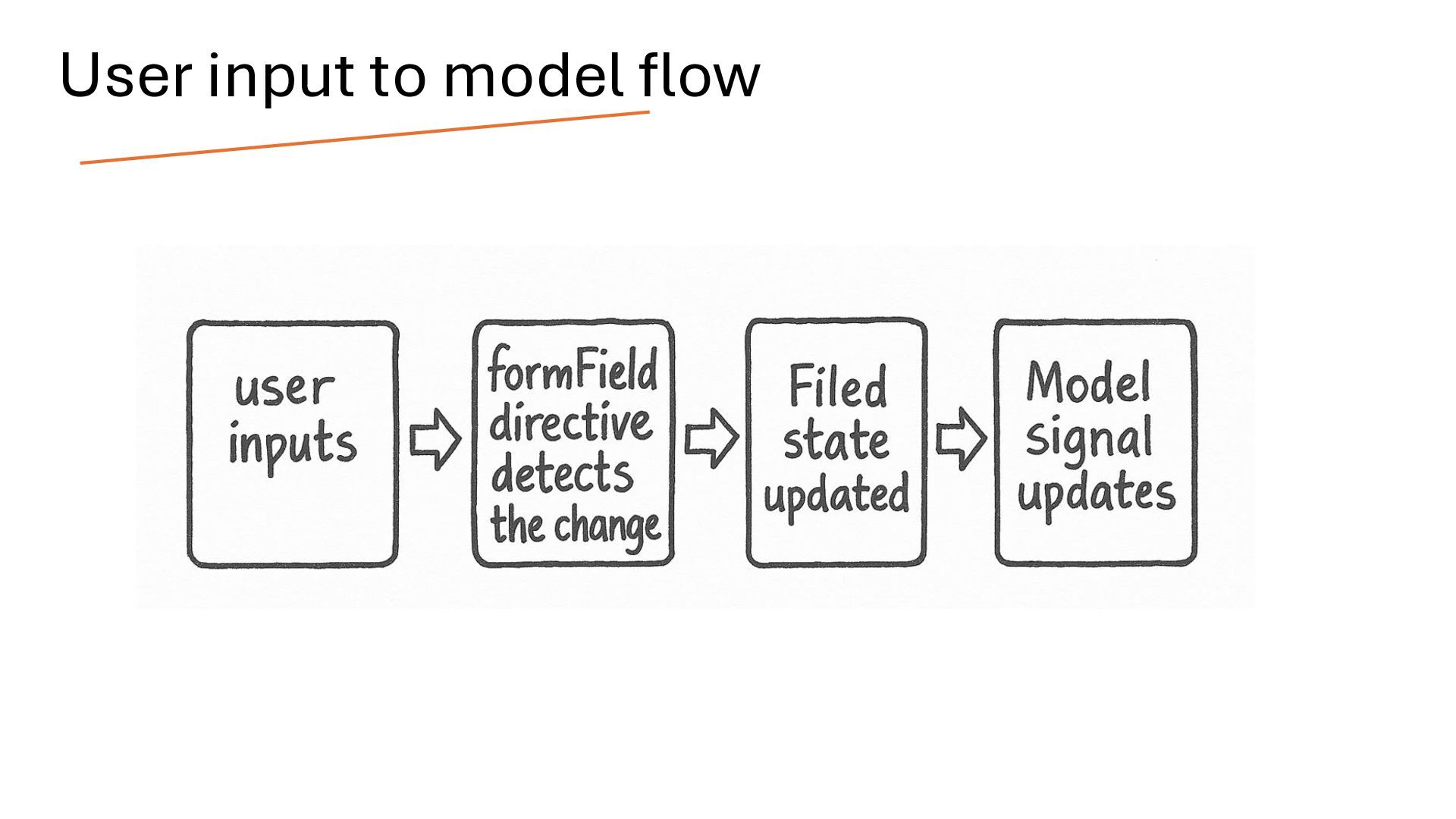
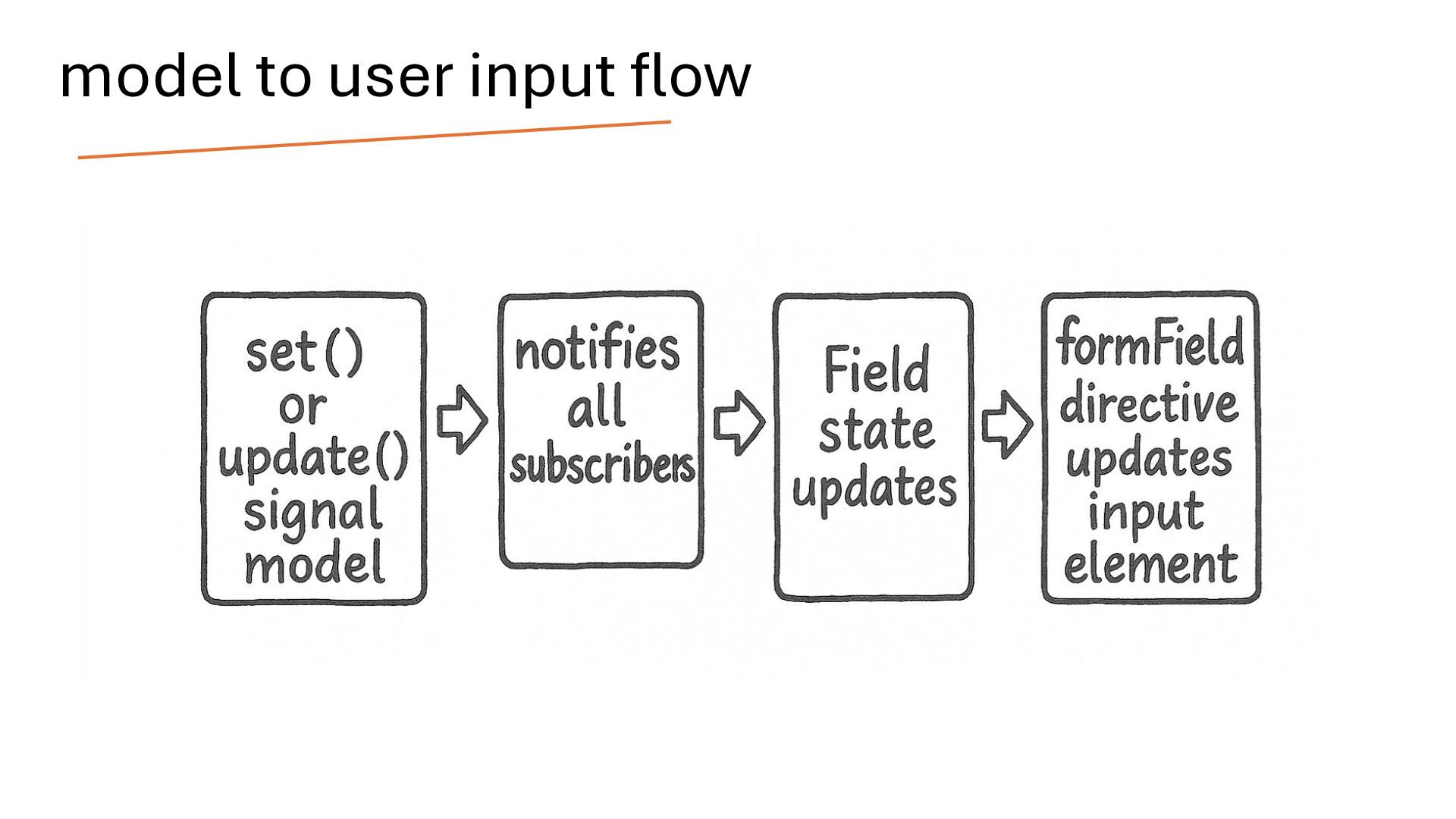
writable signal. When the model value changes, the form updates automatically. Likewise, when the user interacts with the form, the model is updated. In this way, the model and the form are connected through two-way binding, which means changes in one are reflected in the other. Two way Binding
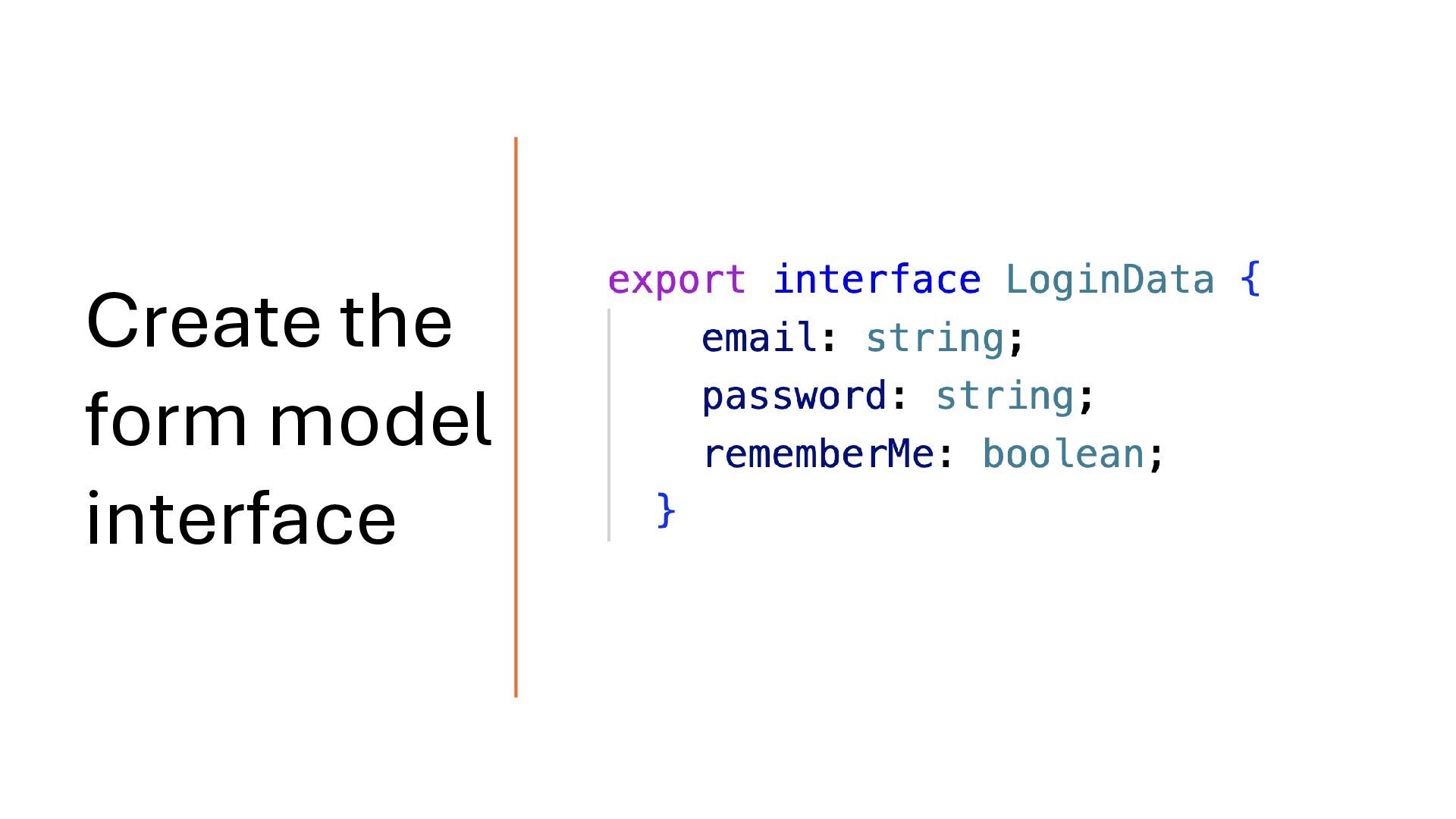
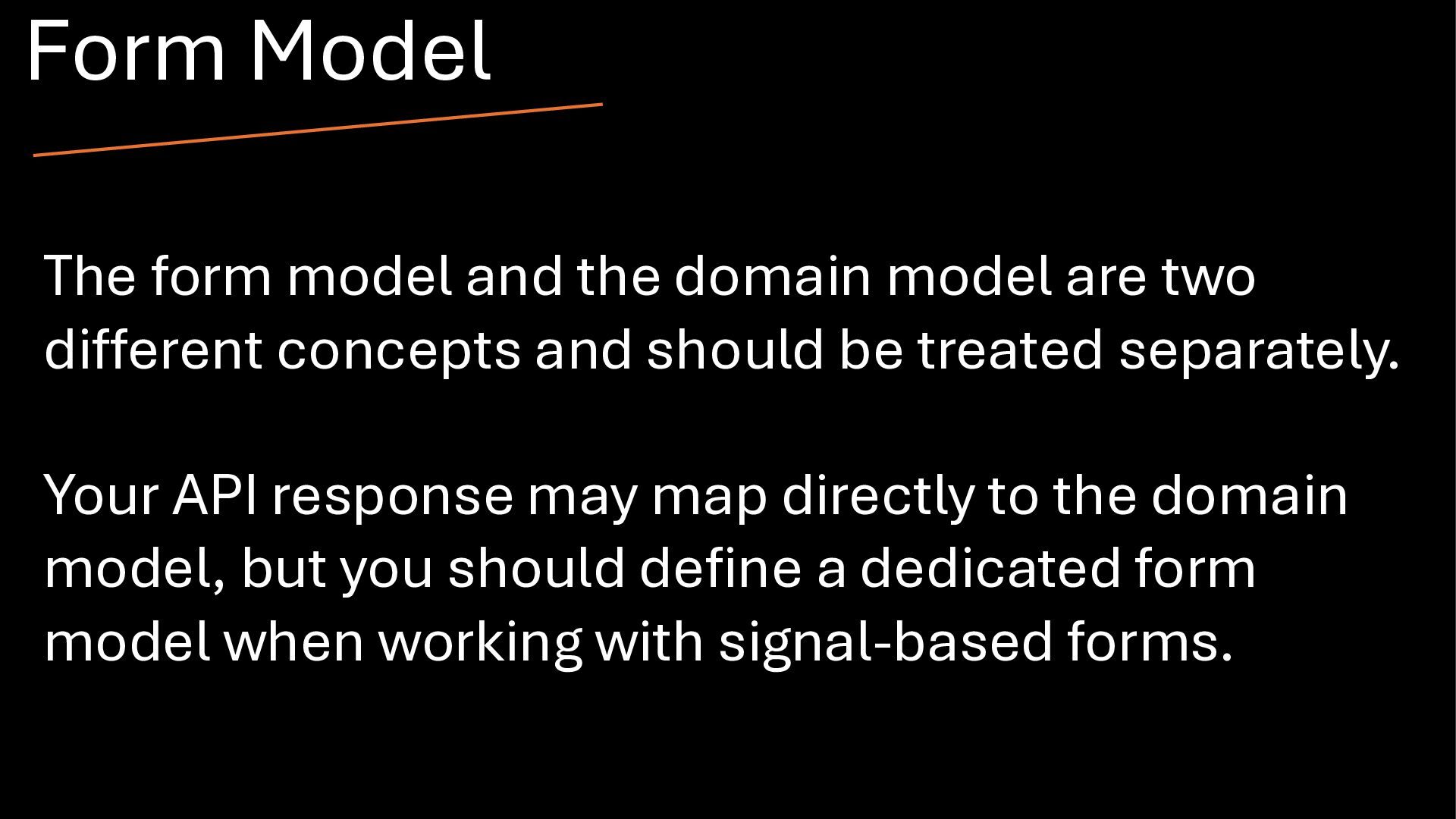
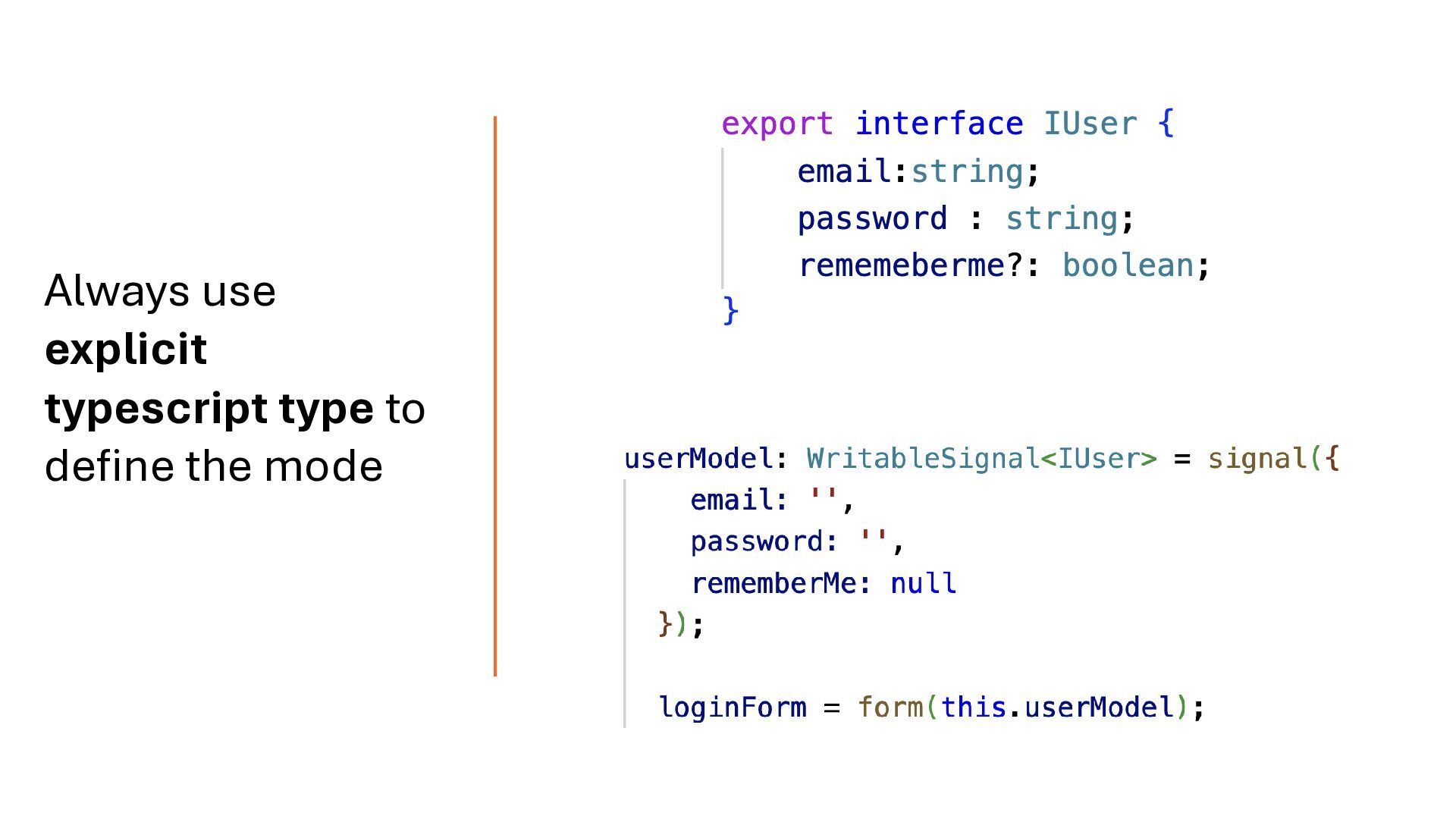
concepts and should be treated separately. Your API response may map directly to the domain model, but you should define a dedicated form model when working with signal-based forms. Form Model
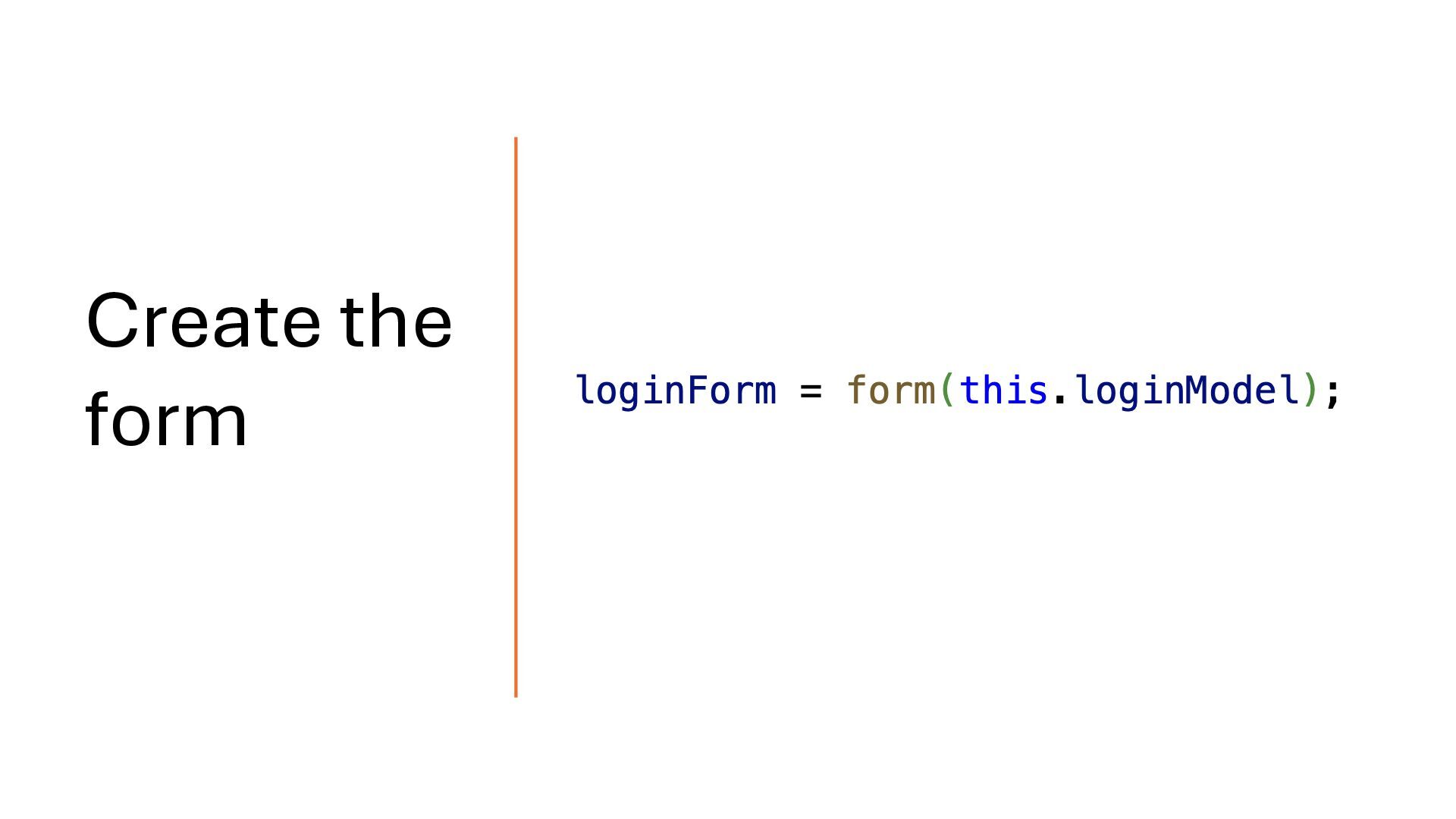
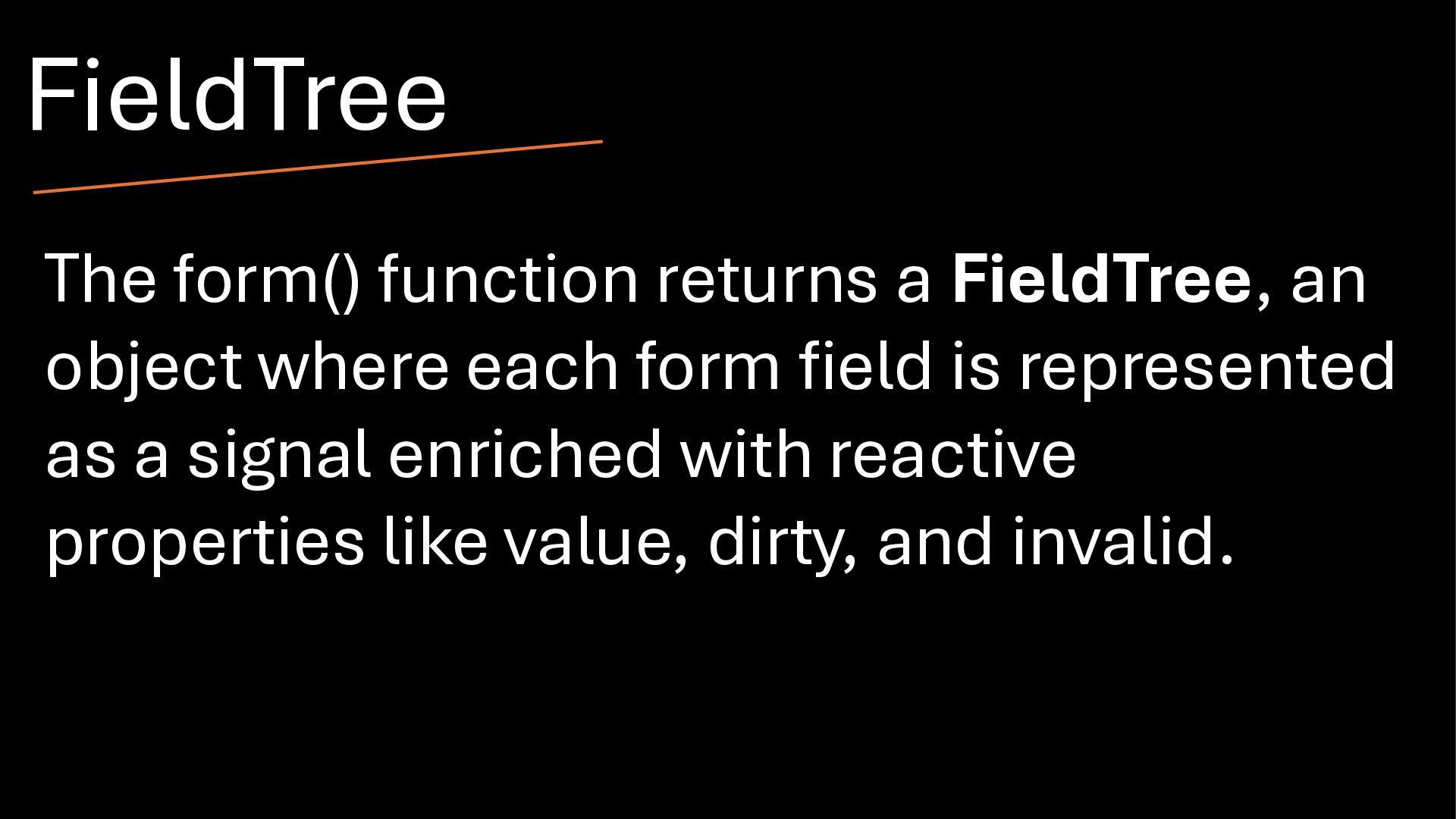
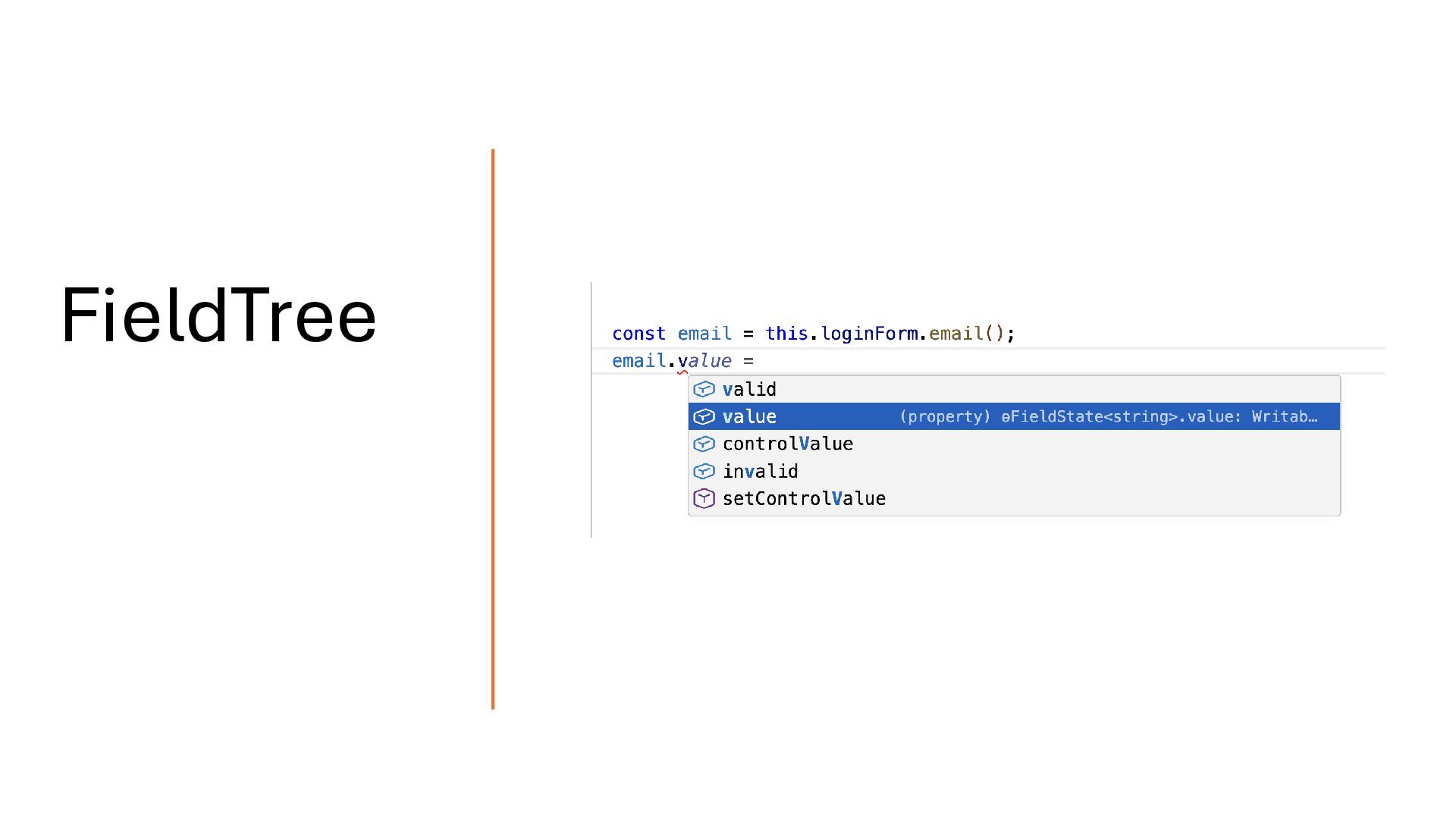
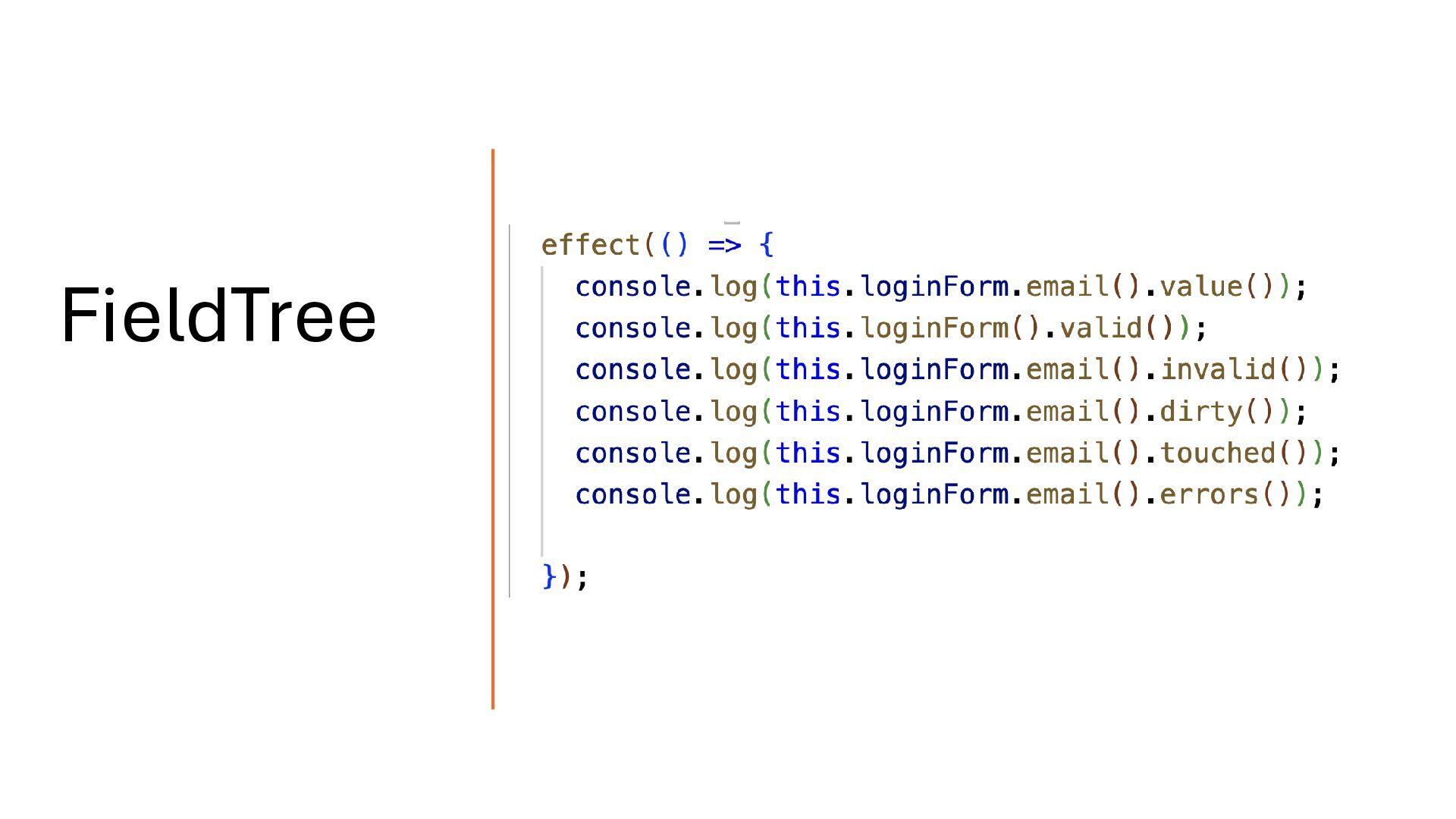
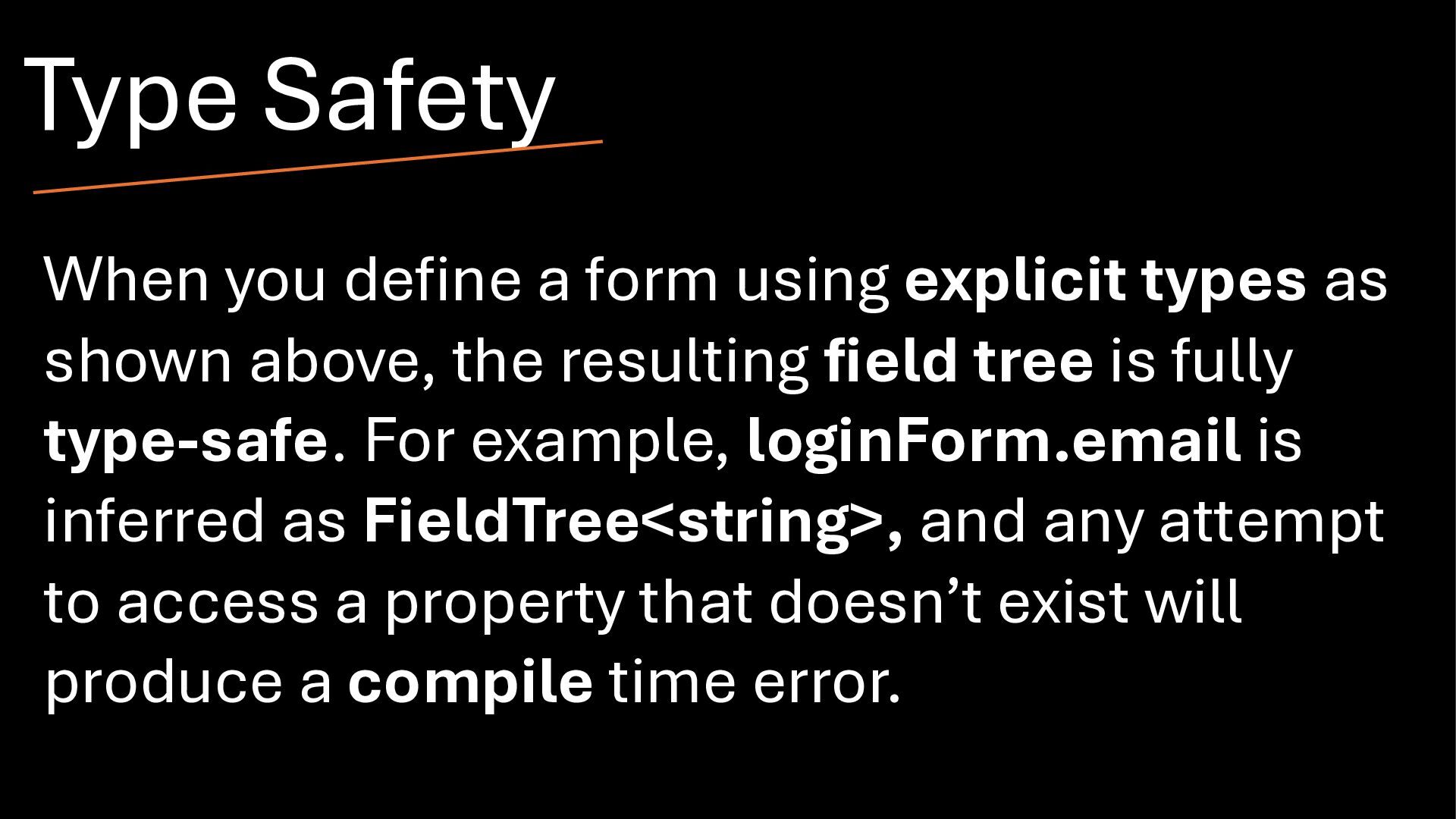
above, the resulting field tree is fully type-safe. For example, loginForm.email is inferred as FieldTree<string>, and any attempt to access a property that doesn’t exist will produce a compile time error. Type Safety
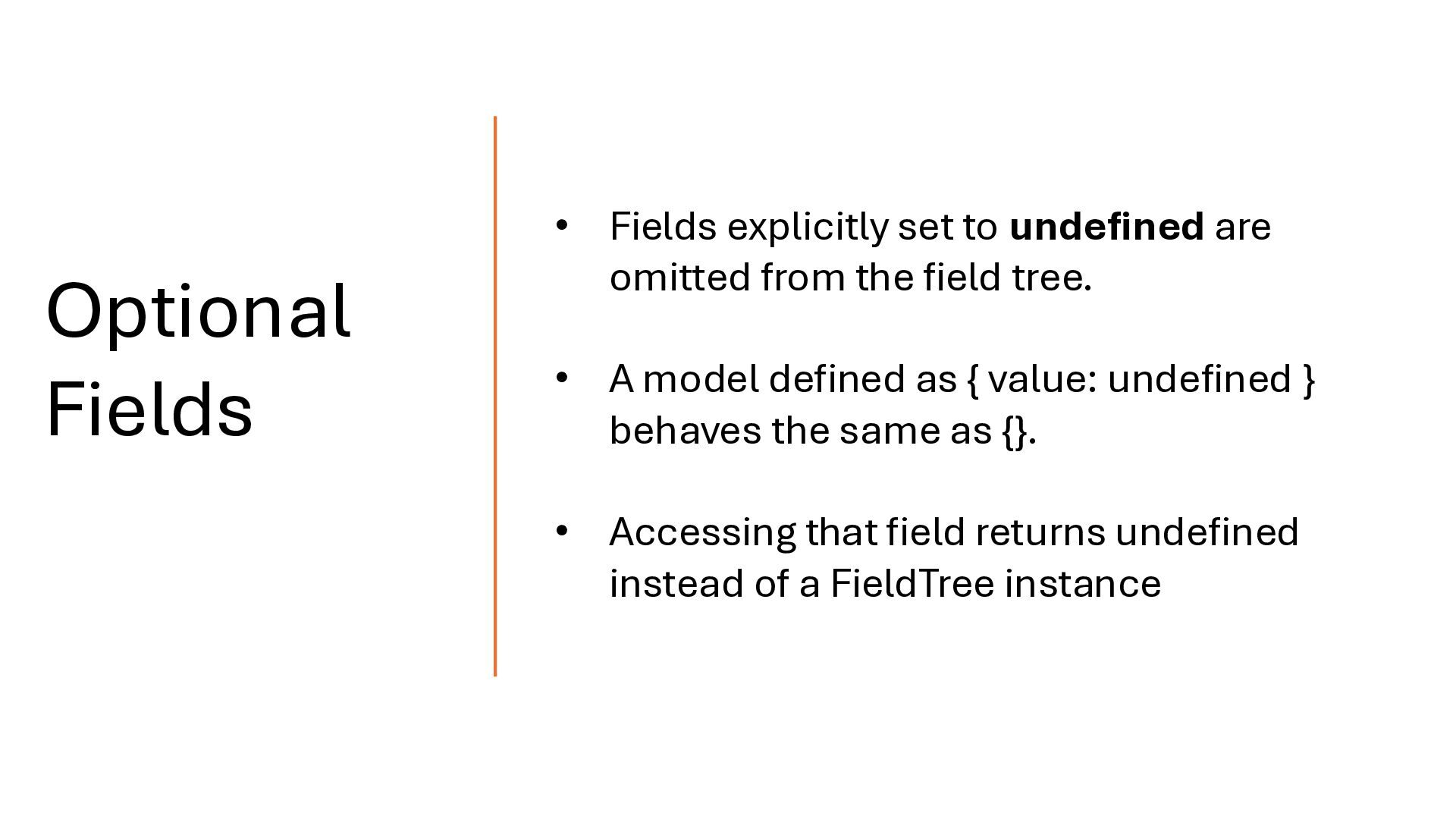
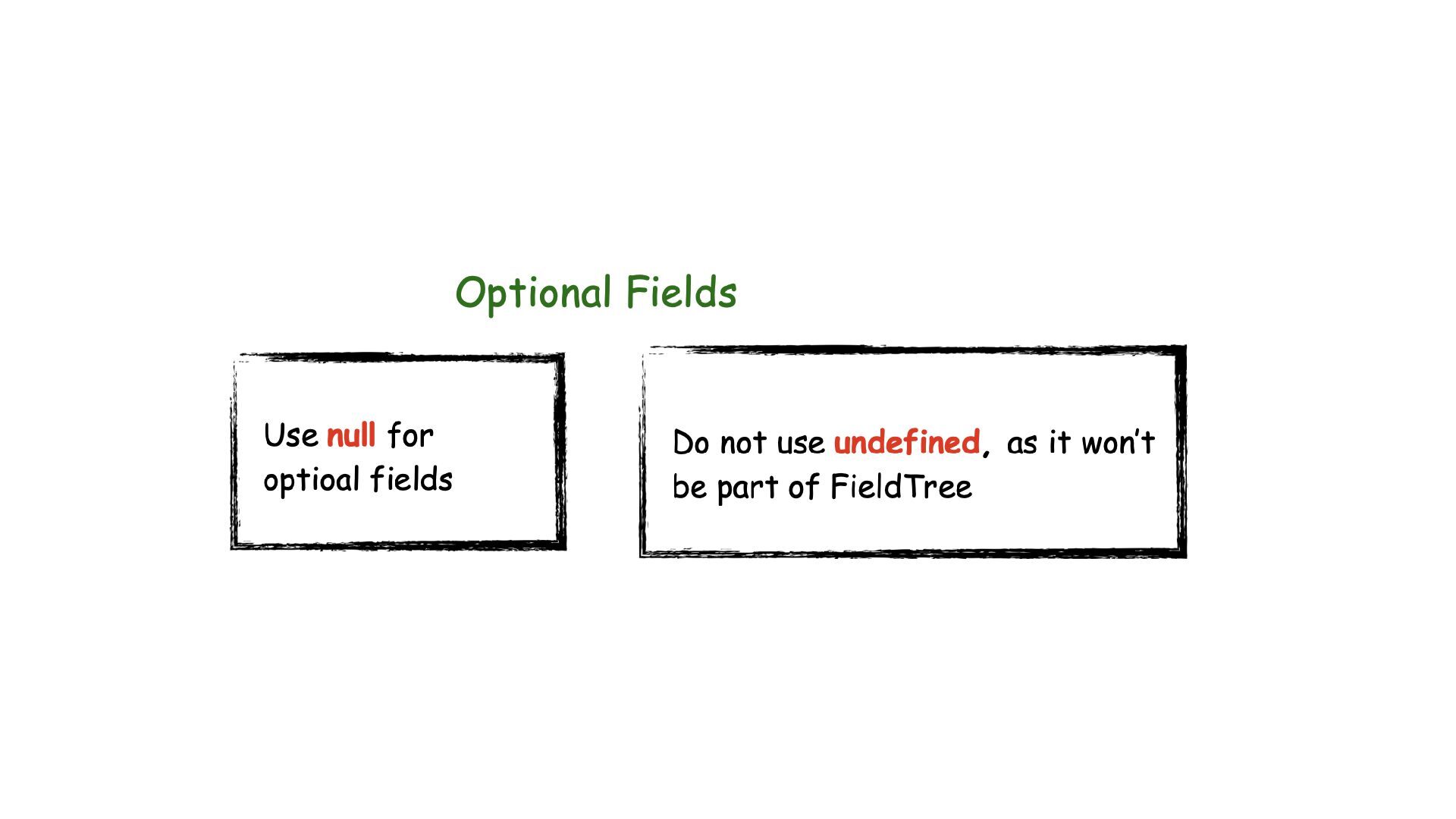
from the field tree. • A model defined as { value: undefined } behaves the same as {}. • Accessing that field returns undefined instead of a FieldTree instance


 debug_mode
 petamoriken
 rkaga
rkaga
 nao_randd
 gonta
gonta
 steliosf
 suneo3476
 yukiny
 florets1
 satotakeshi
 oku053
 artoy
artoy
 neuecc
 cassininazir
 tammielis
 soudai
 watany
 aleyda
 chrisshort
 techseoconnect
 palkan
.png) helenjbeal
helenjbeal
 rasagy
 dugsong
 pedronauck
![Thank You • [email protected] • Training • Consulting • Speaking](https://files.speakerdeck.com/presentations/29ae88c672bd4707864cb606363351d3/slide_50.jpg)