Upgrade to Pro — share decks privately, control downloads, hide ads and more …

The War on Attention Poverty: Measuring Twitter...

Sponsored · SiteGround - Reliable hosting with speed, security, and support you can count on.

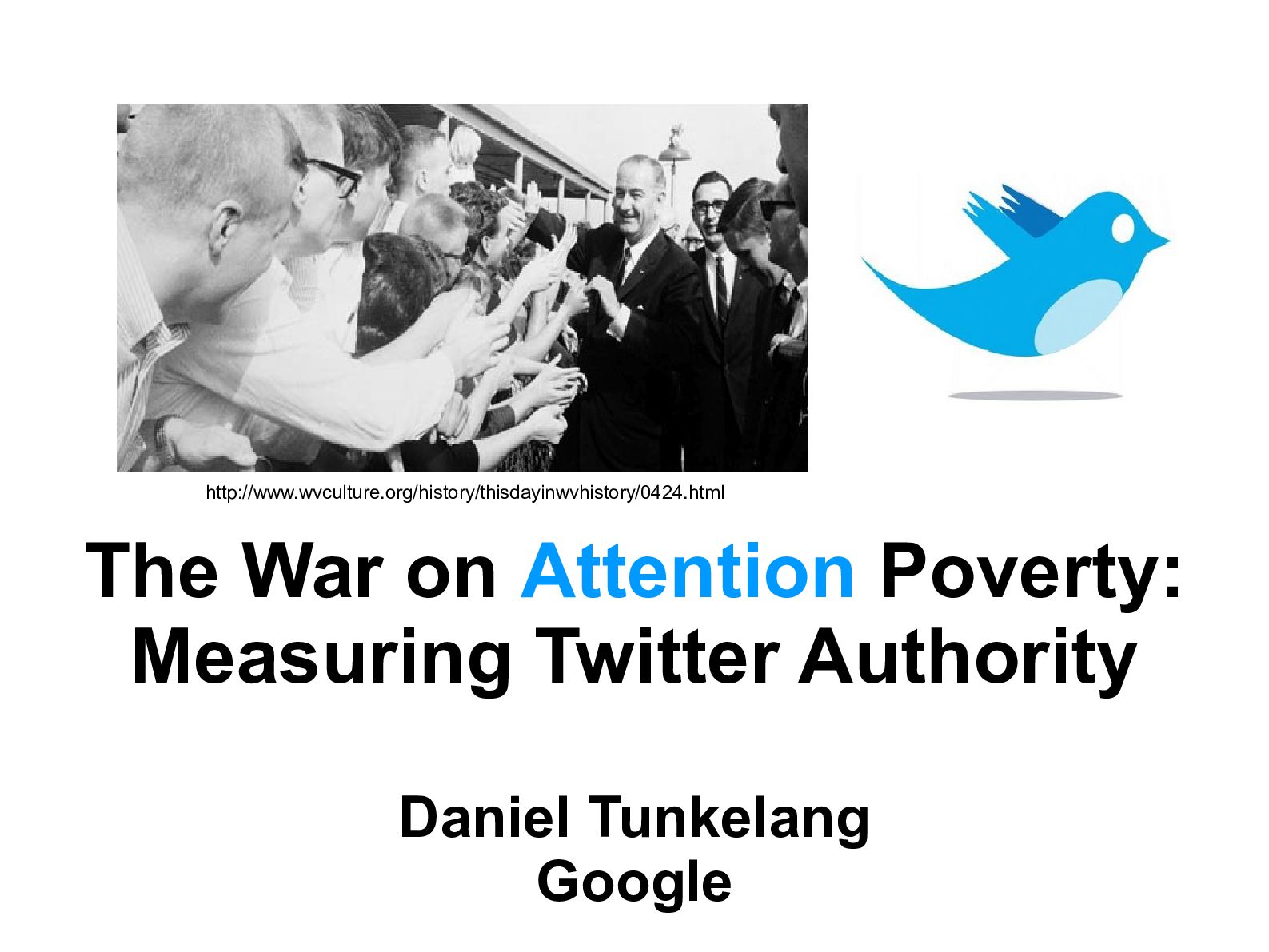
The War on Attention Poverty: Measuring Twitter Authority

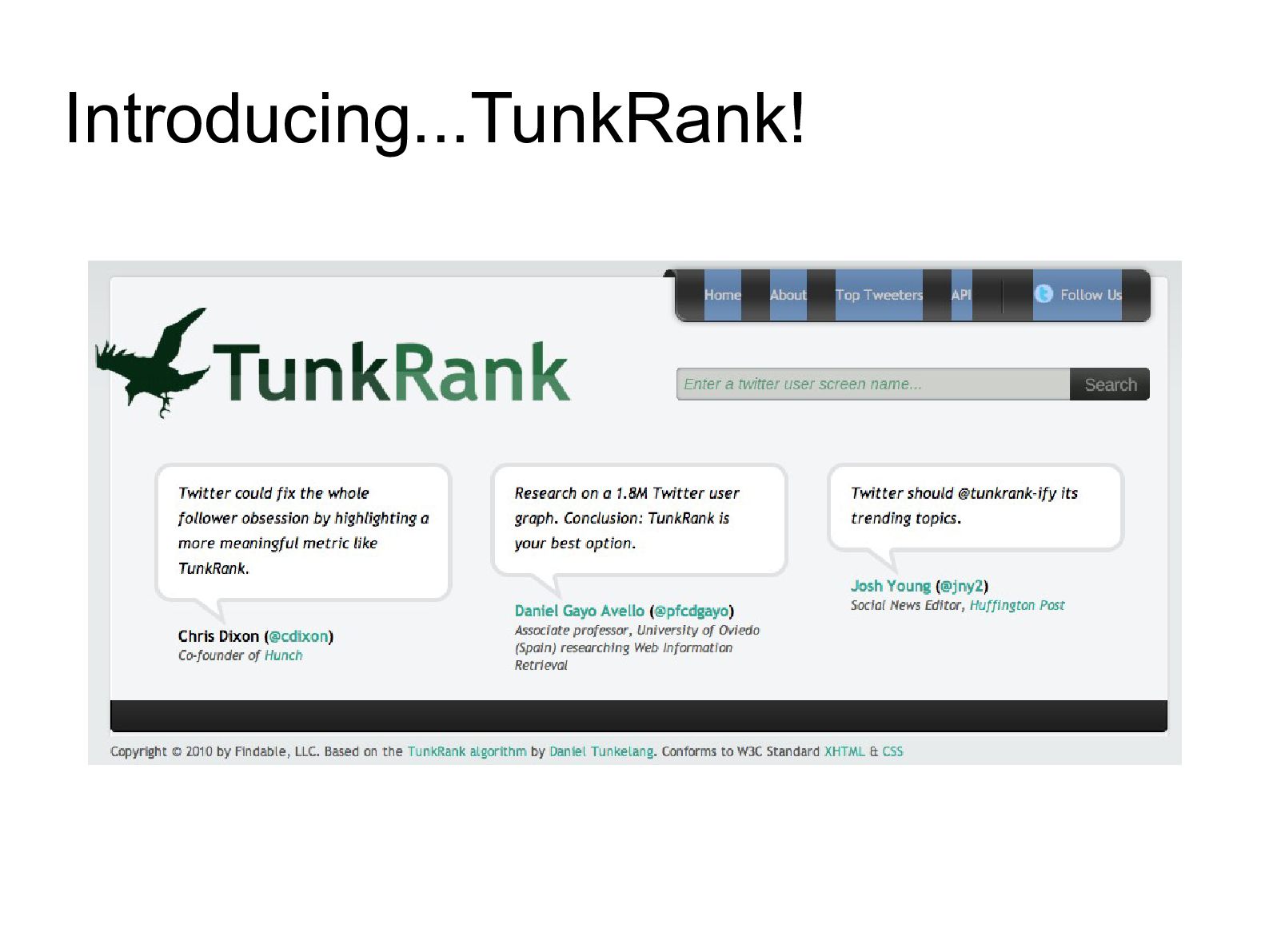
This 2010 AT&T Labs presentation discusses an analysis of measuring authority on Twitter through a proposed method called 'TunkRank,' which aims to address the issue of attention scarcity in an information-rich world. It discusses the influence dynamics and the importance of follower relationships while highlighting challenges such as spam and data manipulation. The conclusion emphasizes the need for effective measures to manage social information overload, positioning tunkrank as a viable solution.

Avatar for Daniel Tunkelang

Daniel Tunkelang

May 26, 2026

More Decks by Daniel Tunkelang

Other Decks in Technology

Transcript

  1. The War on Attention Poverty: Measuring Twitter Authority Daniel Tunkelang

    Google http://www.wvculture.org/history/thisdayinwvhistory/0424.html
  2. Disclaimers • Much of the material in this presentation is

    work done prior to my employment at Google. • Google is not, to the best of my knowledge, using TunkRank. • Any opinions expressed are my own, and do not represent Google's official positions.
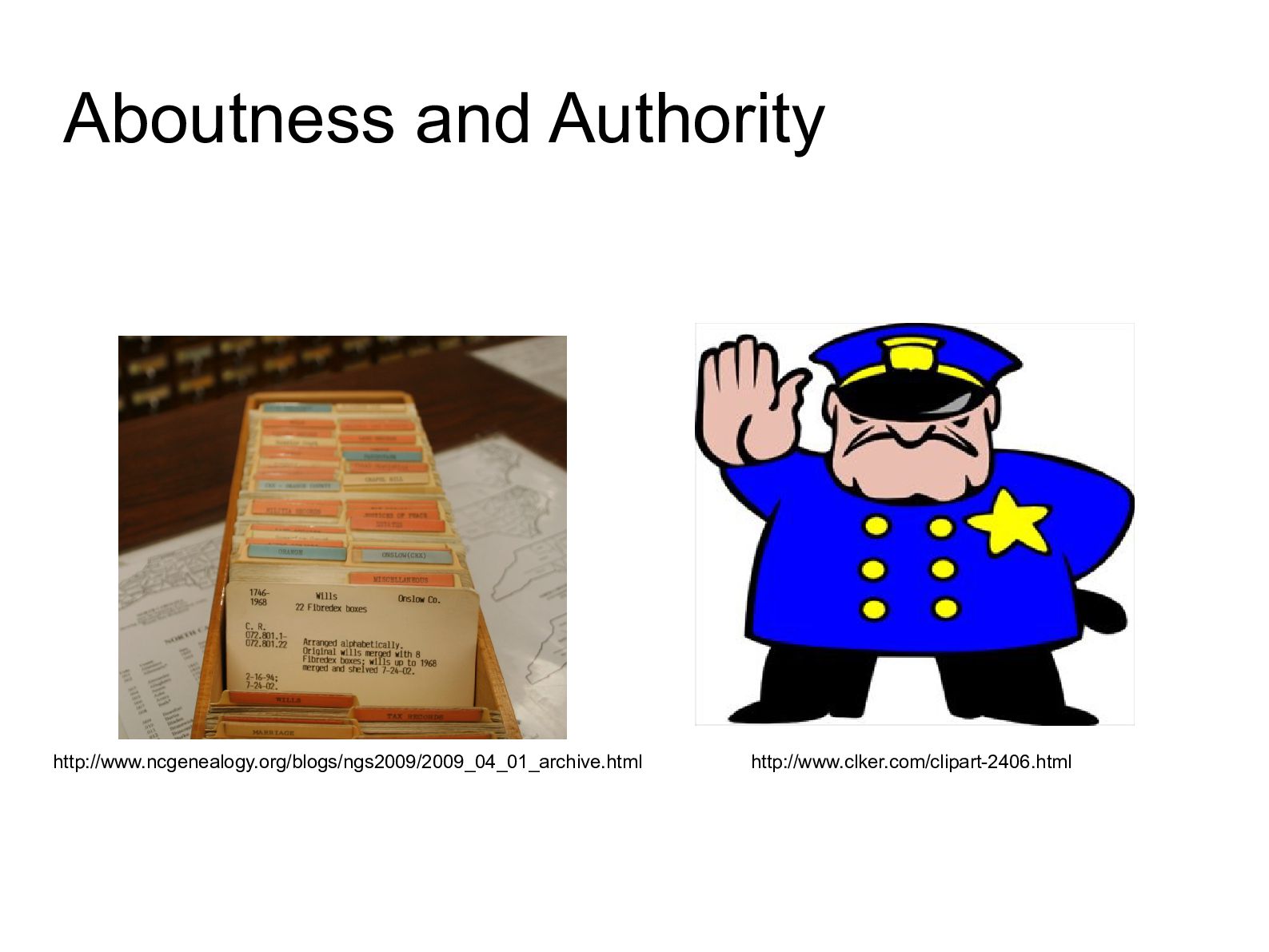
  3. Overview • Aboutness and Authority • Social Networks 101 •

    Measuring Twitter Authority • TunkRank
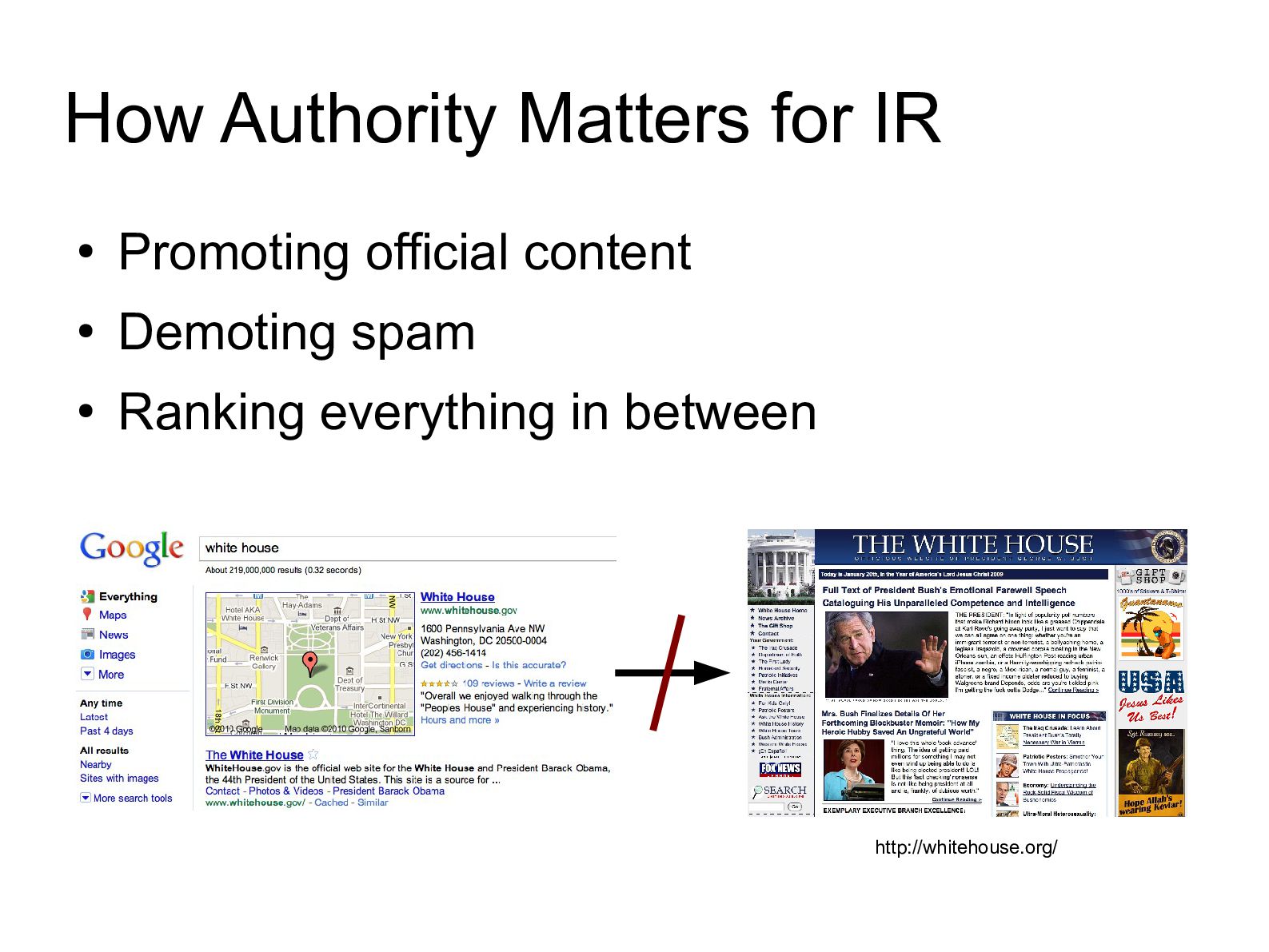
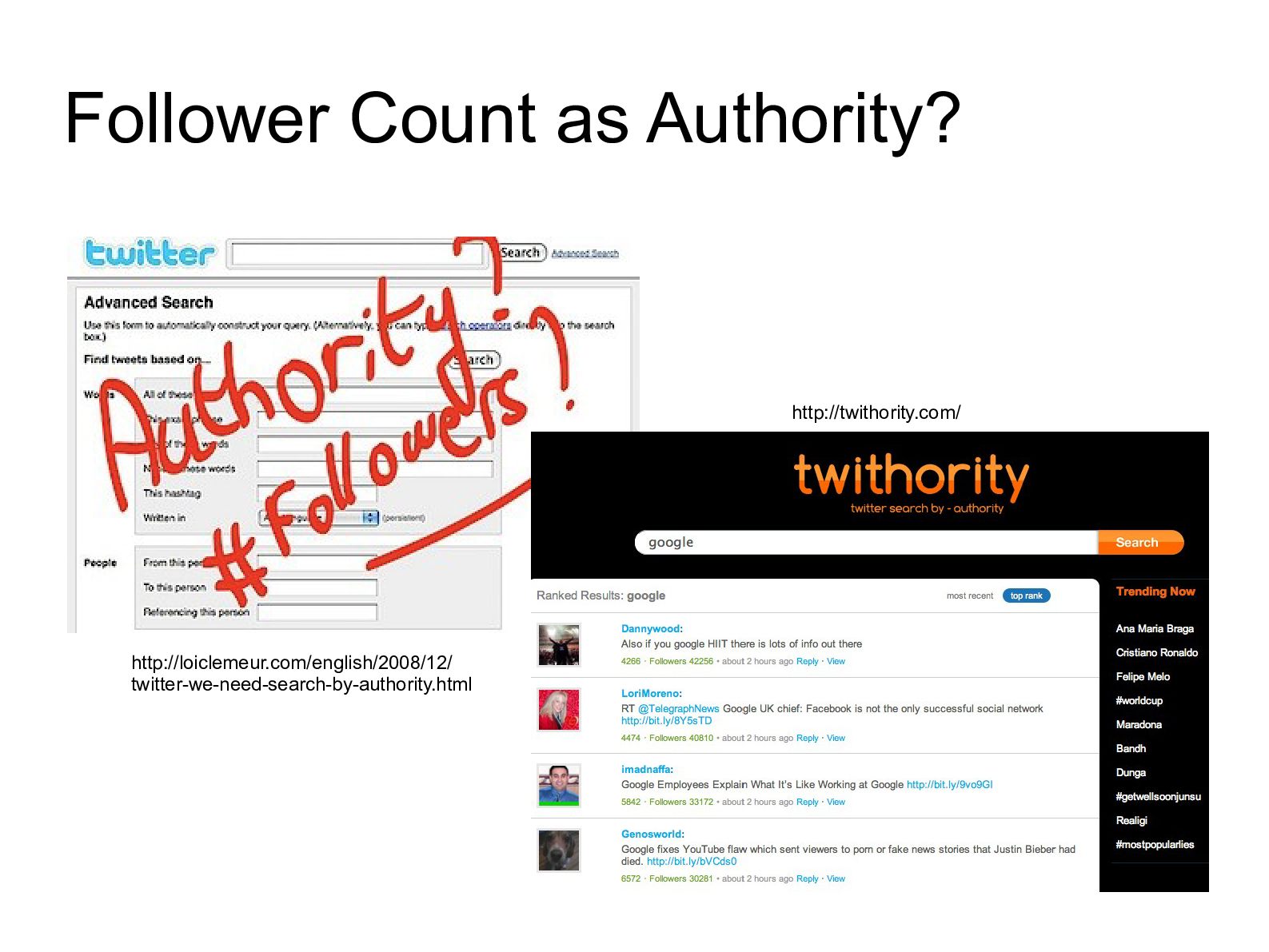
  4. How Authority Matters for IR • Promoting official content •

    Demoting spam • Ranking everything in between http://whitehouse.org/
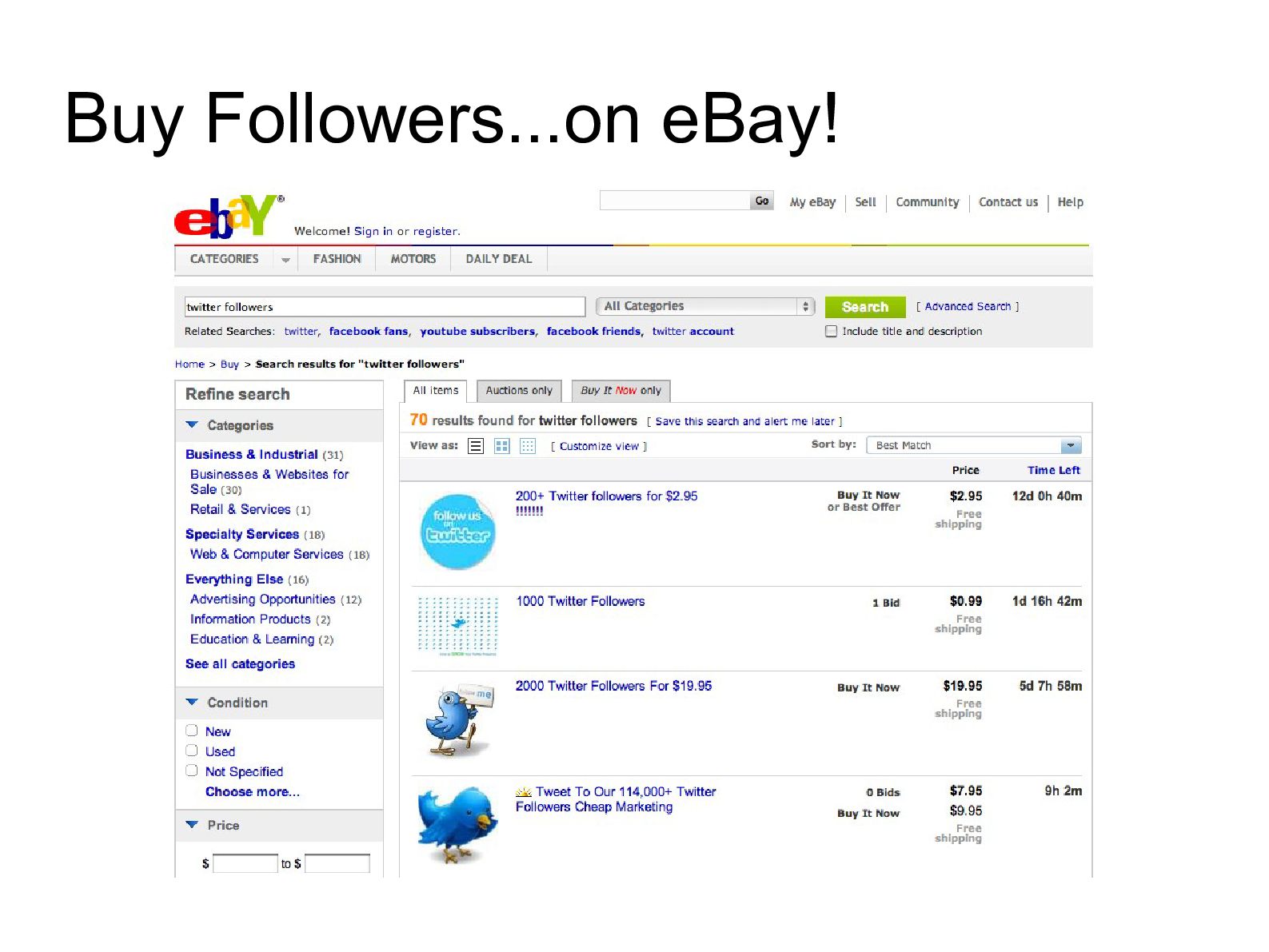
  5. Social Networking Sites • 2003: goes live • 2010: claims

    400M+ users • Global Alexa Top 30 also include:
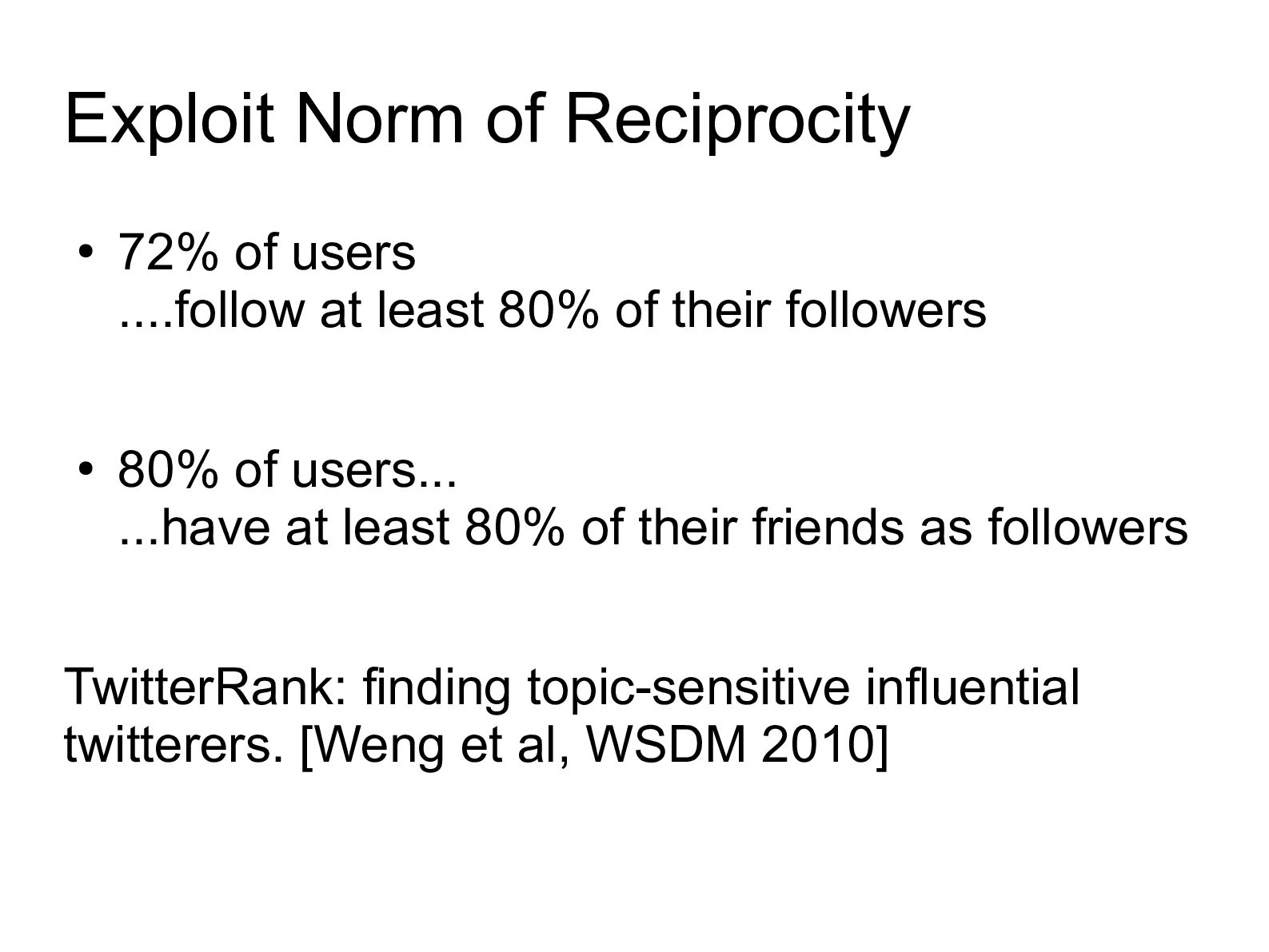
  6. Exploit Norm of Reciprocity • 72% of users ....follow at

    least 80% of their followers • 80% of users... ...have at least 80% of their friends as followers TwitterRank: finding topic-sensitive influential twitterers. [Weng et al, WSDM 2010]
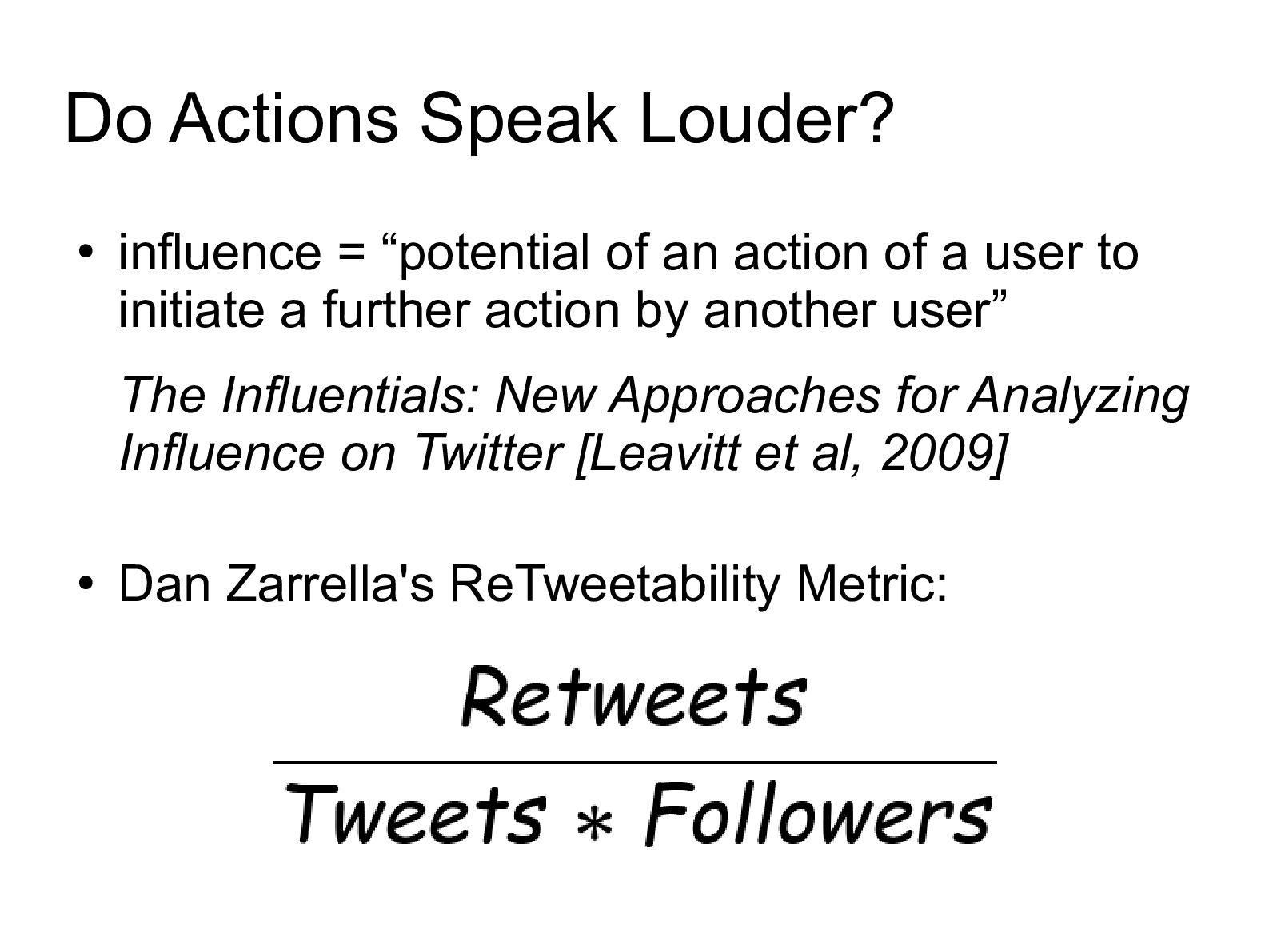
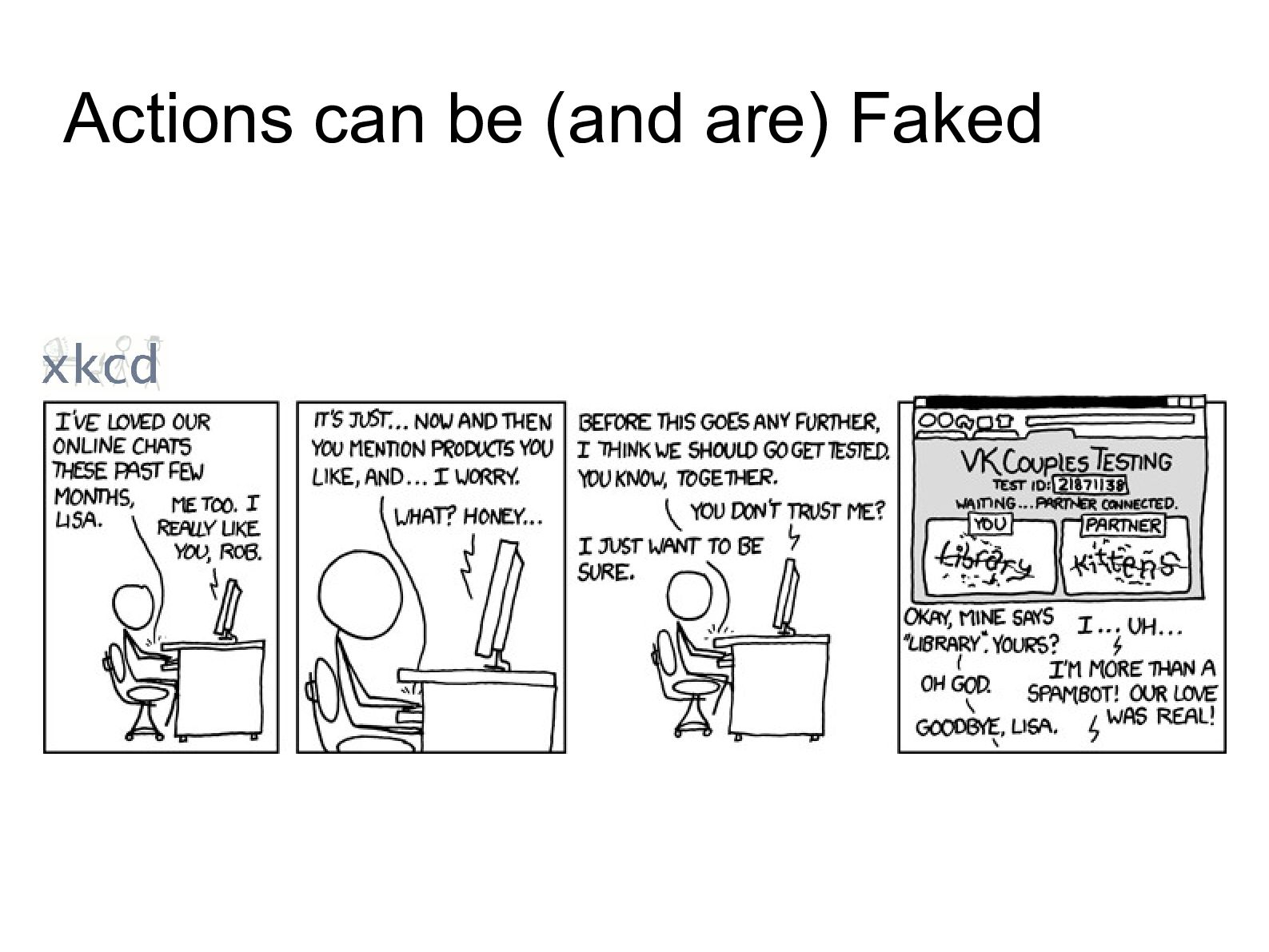
  7. Do Actions Speak Louder? • influence = “potential of an

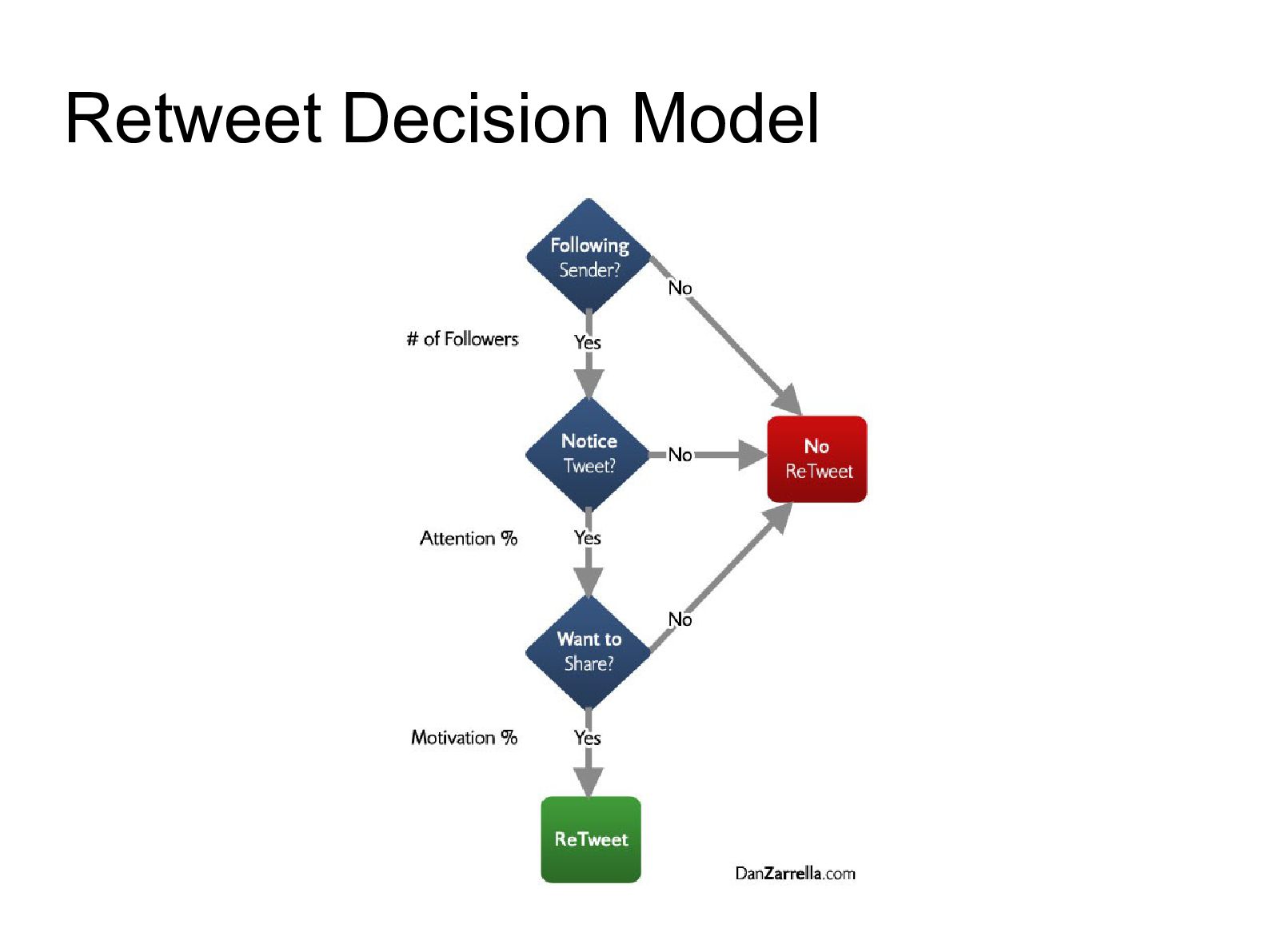
    action of a user to initiate a further action by another user” The Influentials: New Approaches for Analyzing Influence on Twitter [Leavitt et al, 2009] • Dan Zarrella's ReTweetability Metric:
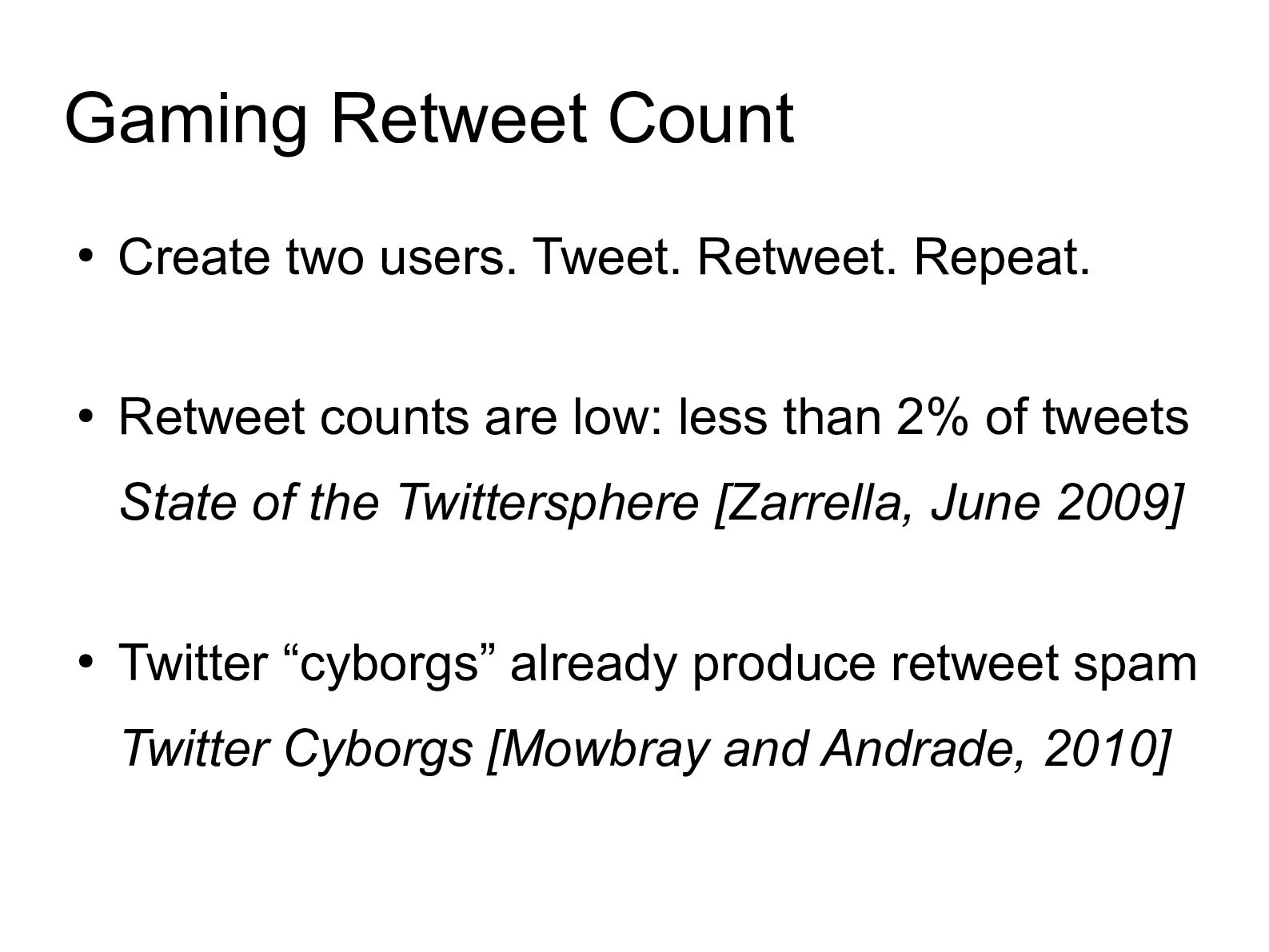
  8. Gaming Retweet Count • Create two users. Tweet. Retweet. Repeat.

    • Retweet counts are low: less than 2% of tweets State of the Twittersphere [Zarrella, June 2009] • Twitter “cyborgs” already produce retweet spam Twitter Cyborgs [Mowbray and Andrade, 2010]
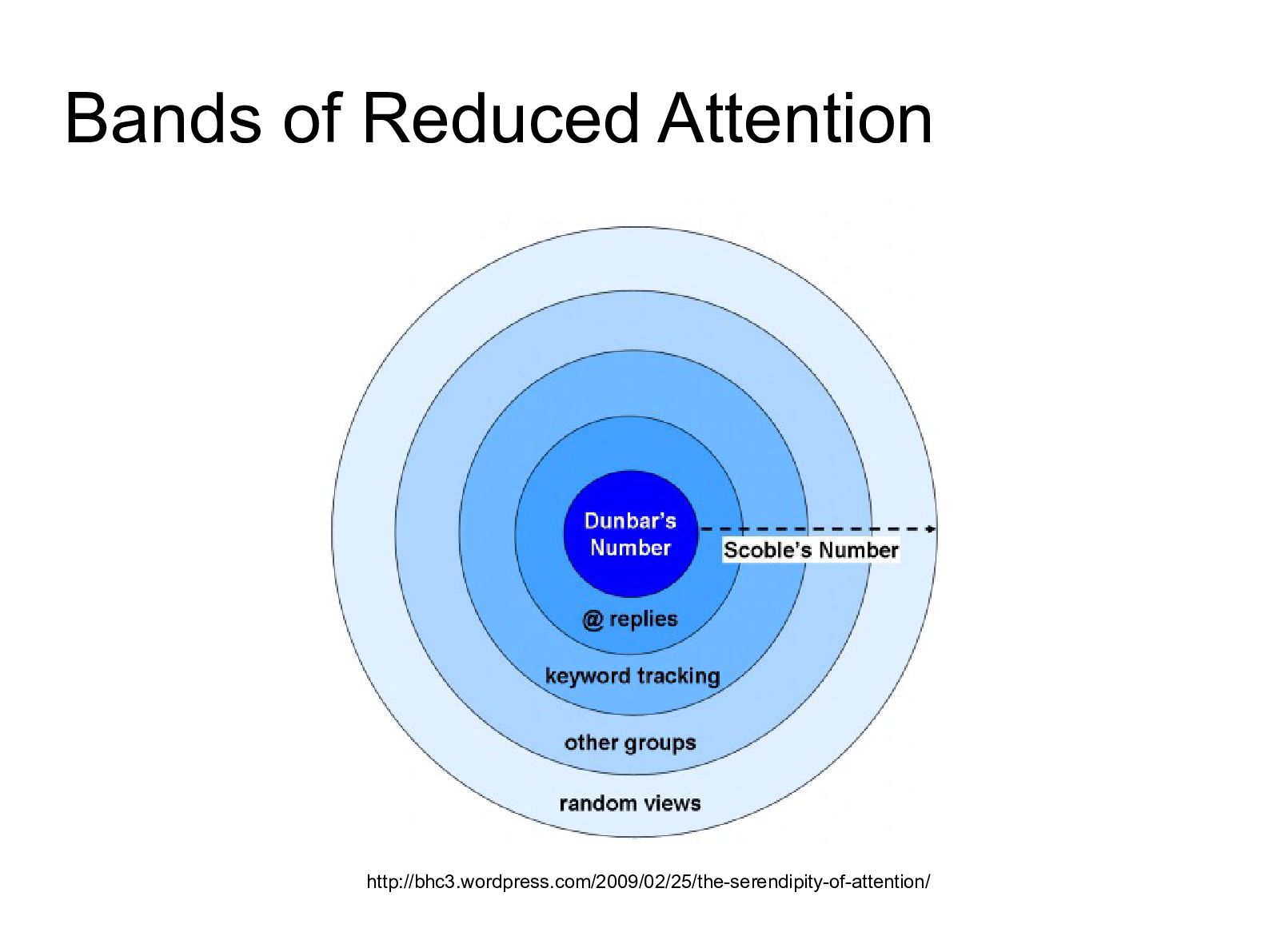
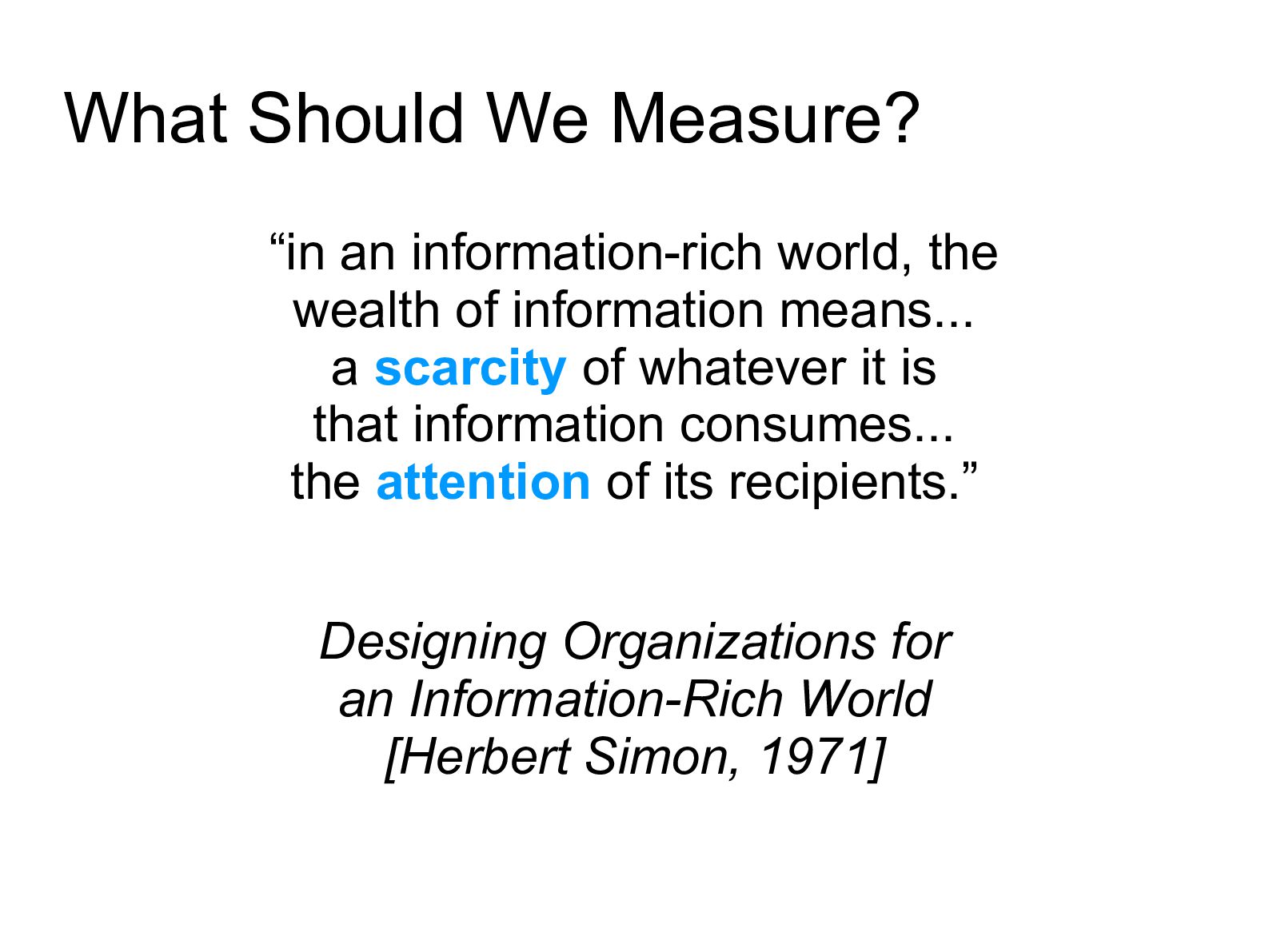
  9. What Should We Measure? “in an information-rich world, the wealth

    of information means... a scarcity of whatever it is that information consumes... the attention of its recipients.” Designing Organizations for an Information-Rich World [Herbert Simon, 1971]
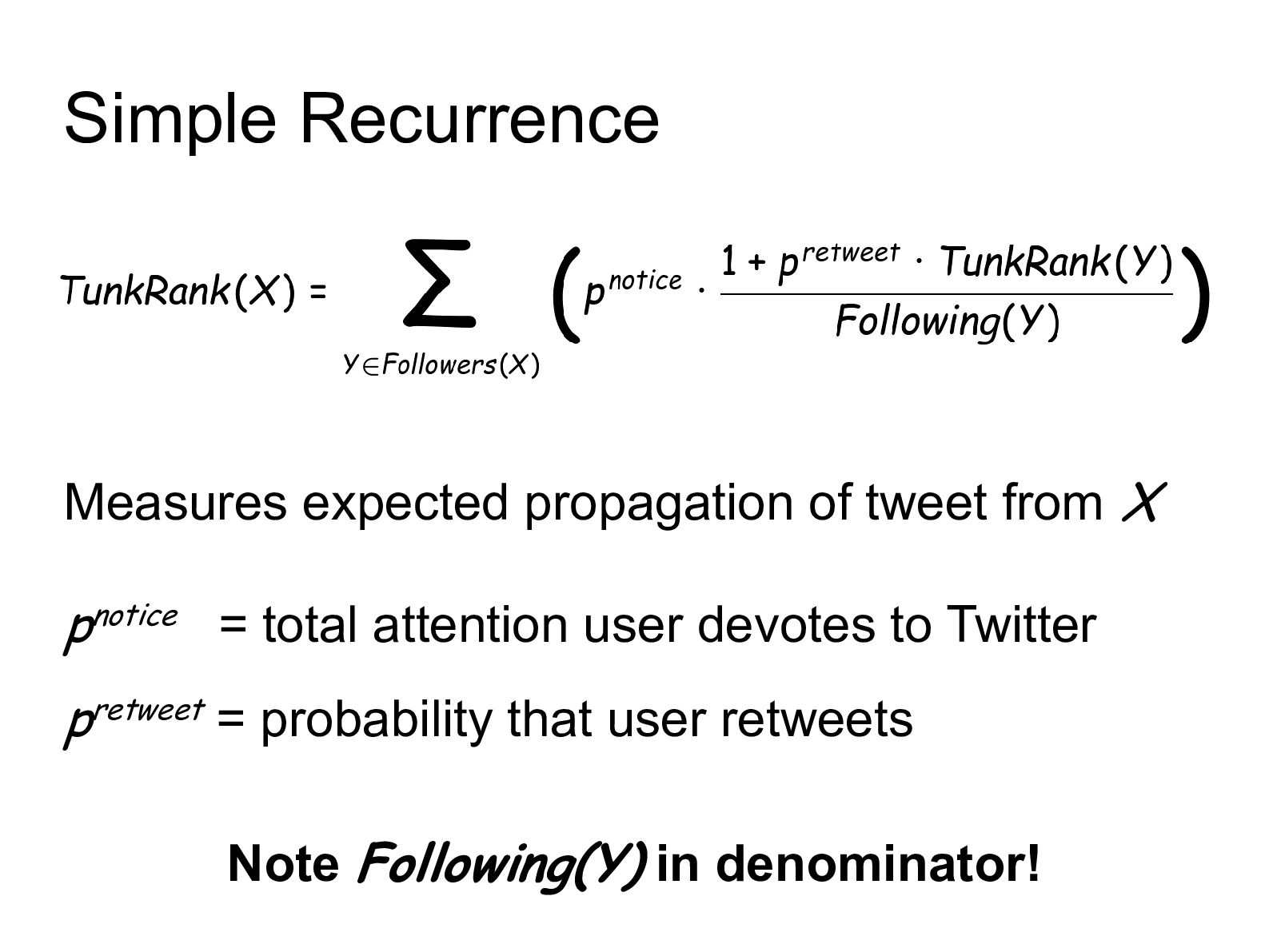
  10. Simple Recurrence Measures expected propagation of tweet from X pnotice

    = total attention user devotes to Twitter pretweet = probability that user retweets Note Following(Y) in denominator!
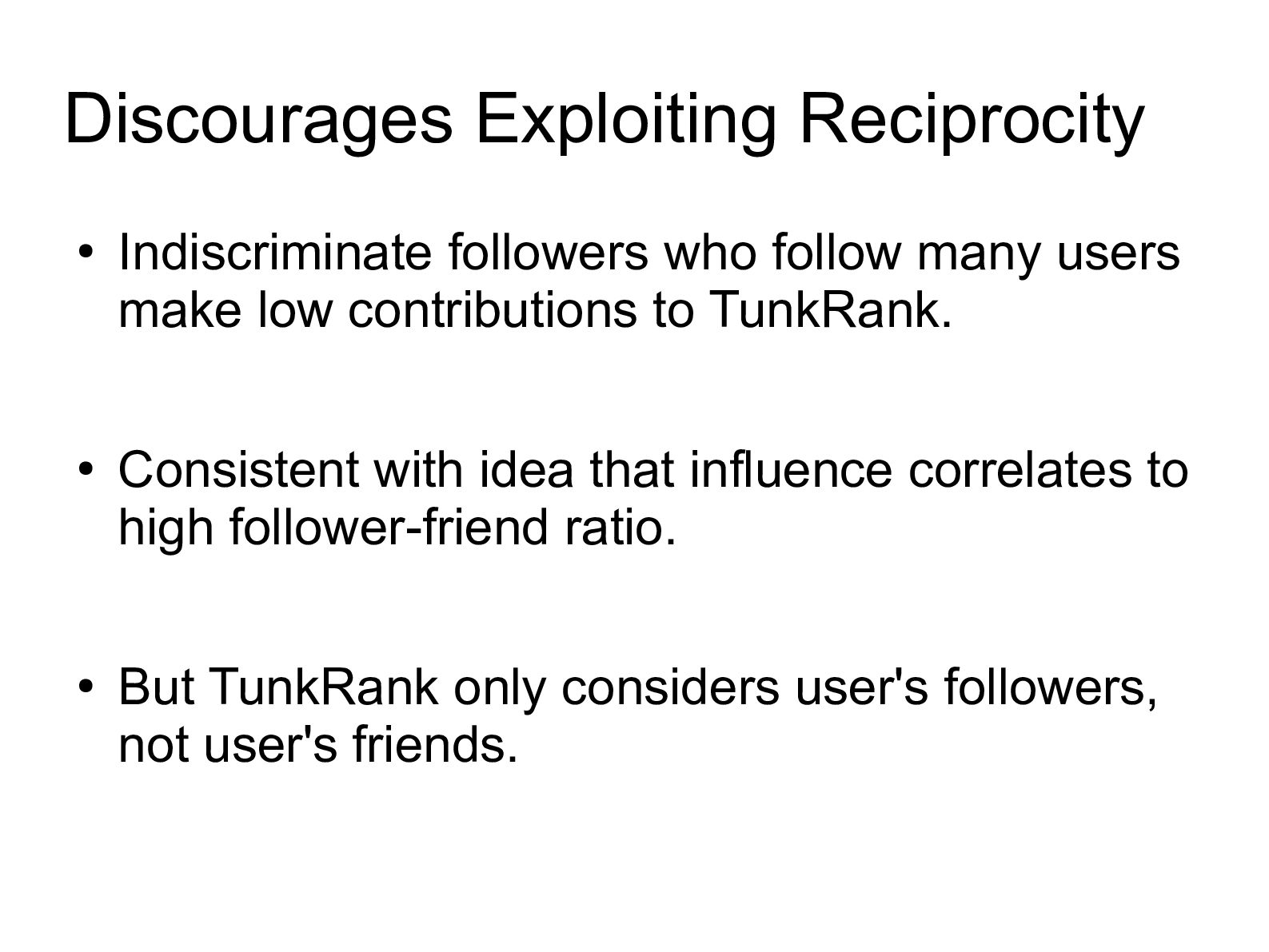
  11. Discourages Exploiting Reciprocity • Indiscriminate followers who follow many users

    make low contributions to TunkRank. • Consistent with idea that influence correlates to high follower-friend ratio. • But TunkRank only considers user's followers, not user's friends.
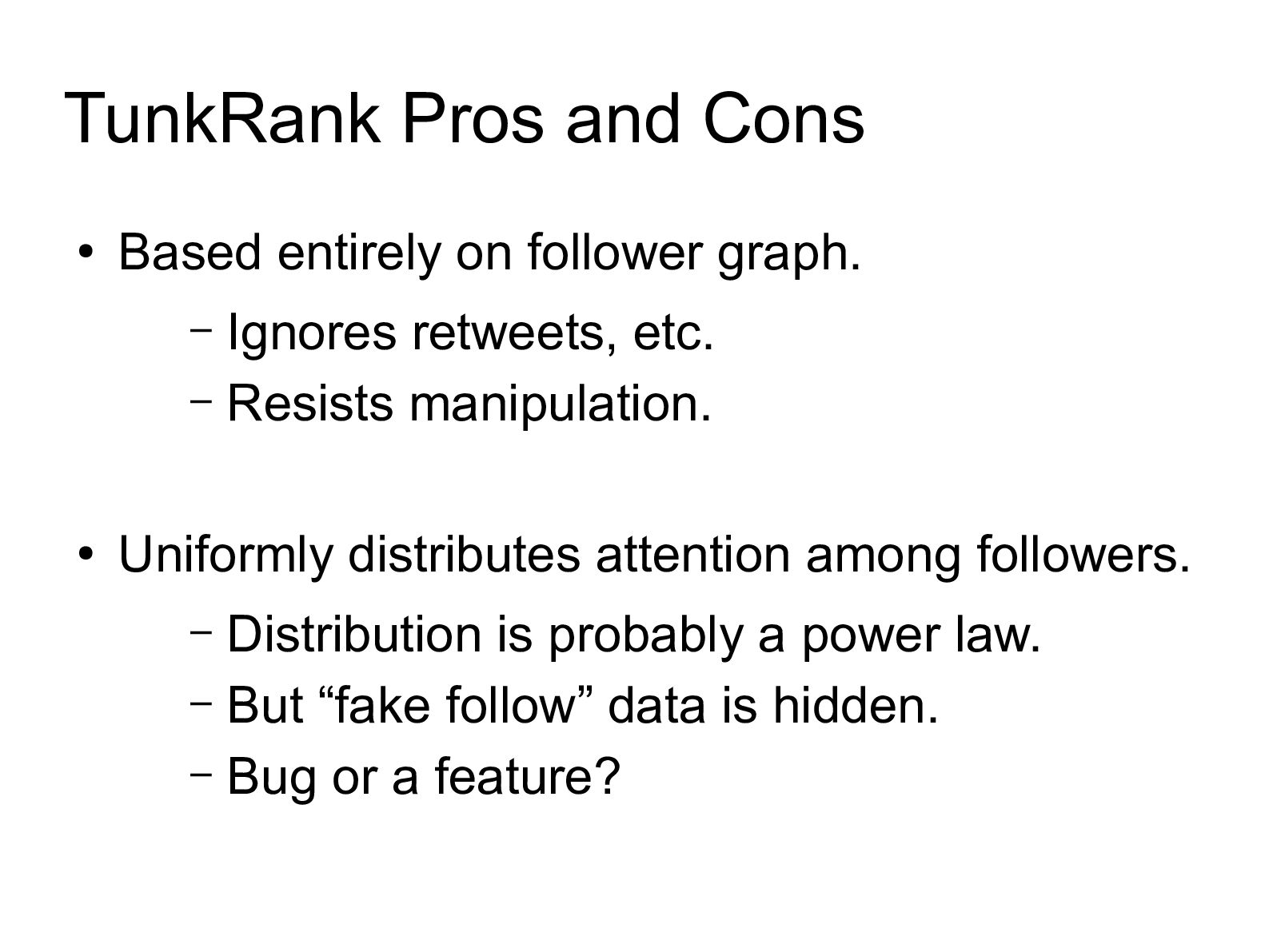
  12. TunkRank Pros and Cons • Based entirely on follower graph.

    – Ignores retweets, etc. – Resists manipulation. • Uniformly distributes attention among followers. – Distribution is probably a power law. – But “fake follow” data is hidden. – Bug or a feature?
  13. Research TwitterRank: finding topic-sensitive influential twitterers. [Weng et al, 2010]

    Overcoming Spammers in Twitter – A Tale of Five Algorithms [Gayo-Avello and Brenes, 2010] Nepotistic Relationships in Twitter and their Impact on Rank Prestige Algorithms [Gayo-Avello, 2010]
  14. Go TunkRank! [Gayo-Ayello, 2010] • similar to PageRank but better

    vs. “cheating” • aggressive marketers almost indistinguishable from common users • spammers grab small amount of global available prestige • agrees with PageRank for top-ranked users • simple, induces plausible rankings, severely penalizes spammers compared to PageRank
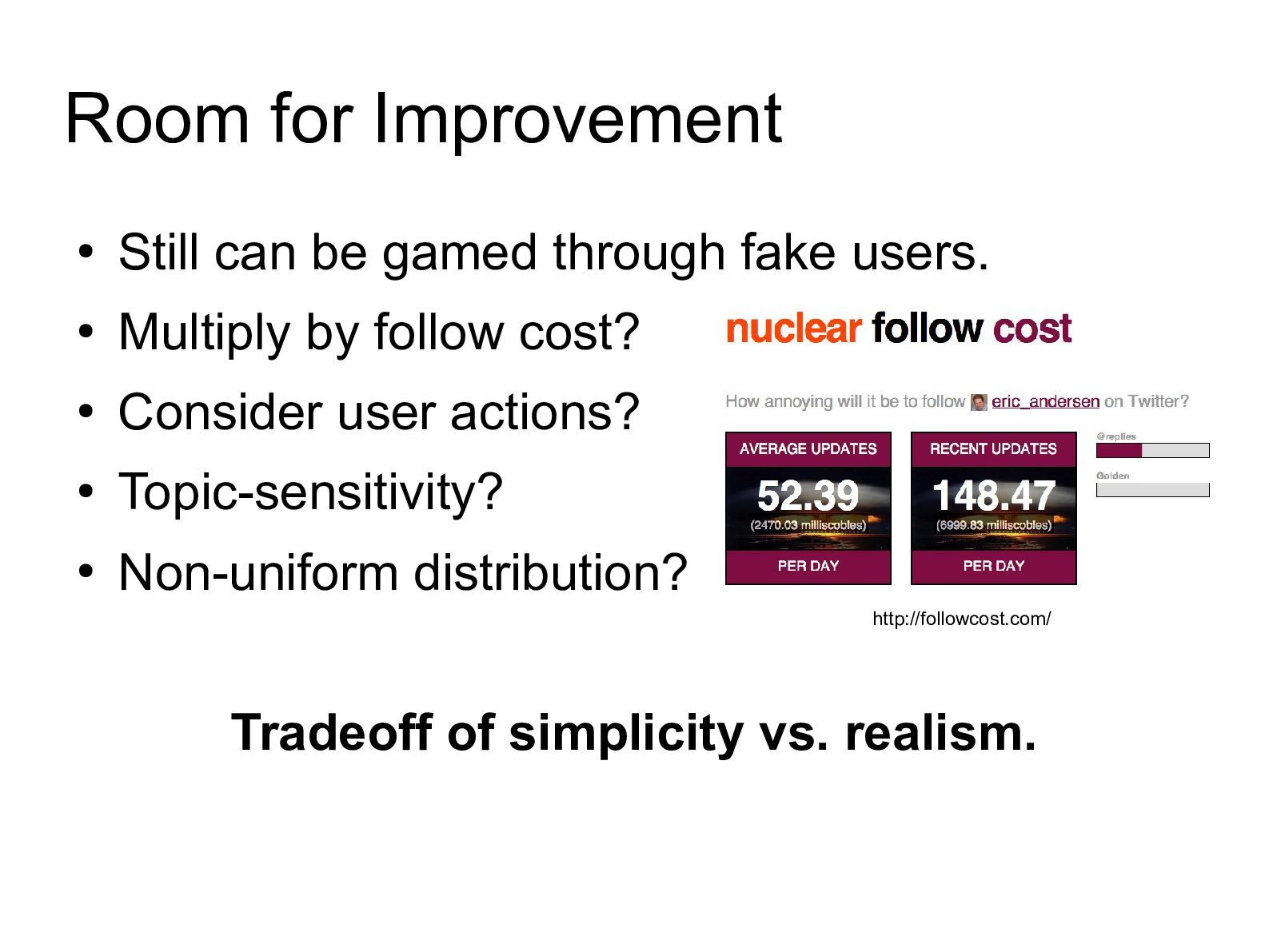
  15. Room for Improvement • Still can be gamed through fake

    users. • Multiply by follow cost? • Consider user actions? • Topic-sensitivity? • Non-uniform distribution? Tradeoff of simplicity vs. realism. http://followcost.com/
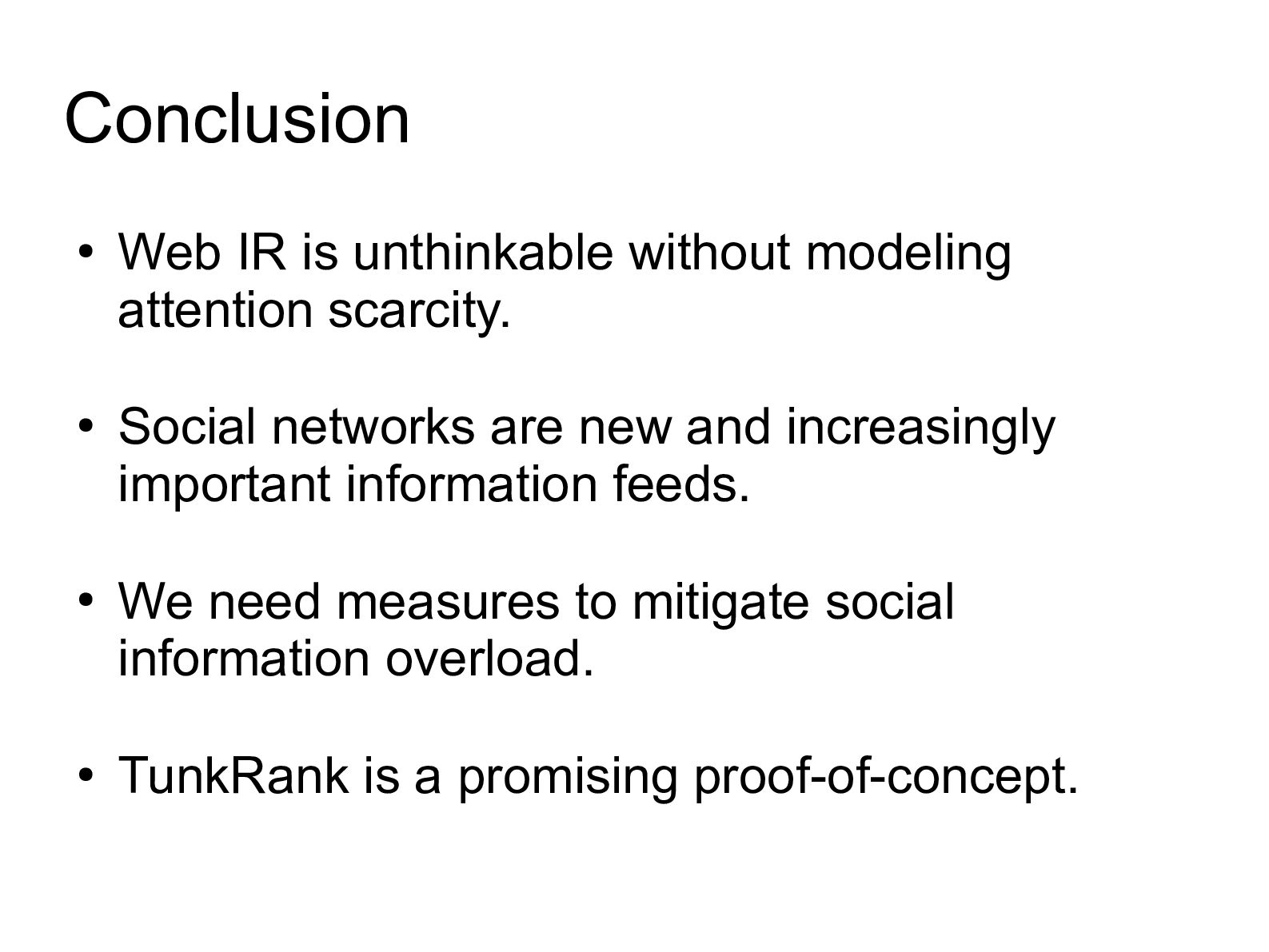
  16. Conclusion • Web IR is unthinkable without modeling attention scarcity.

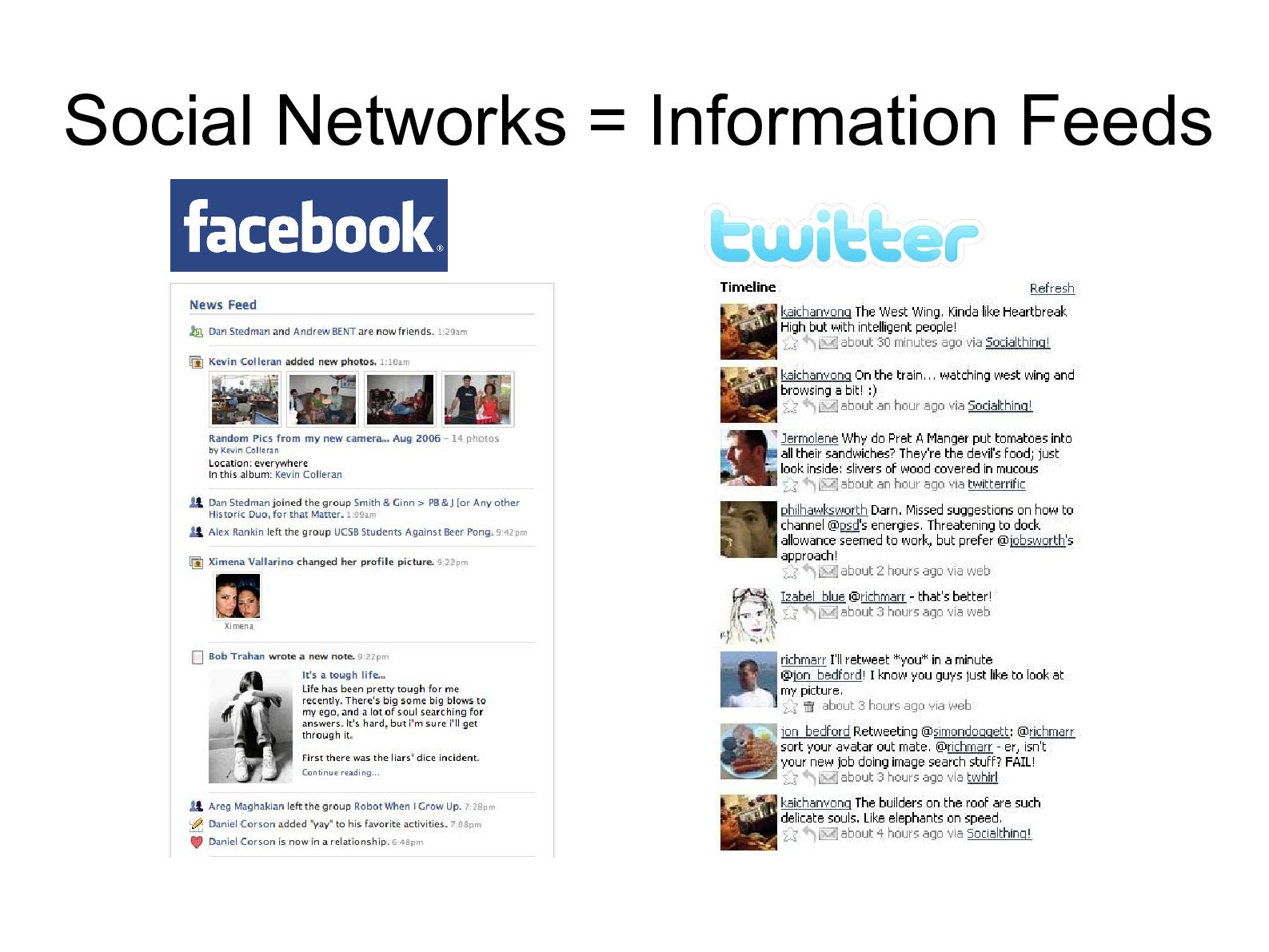
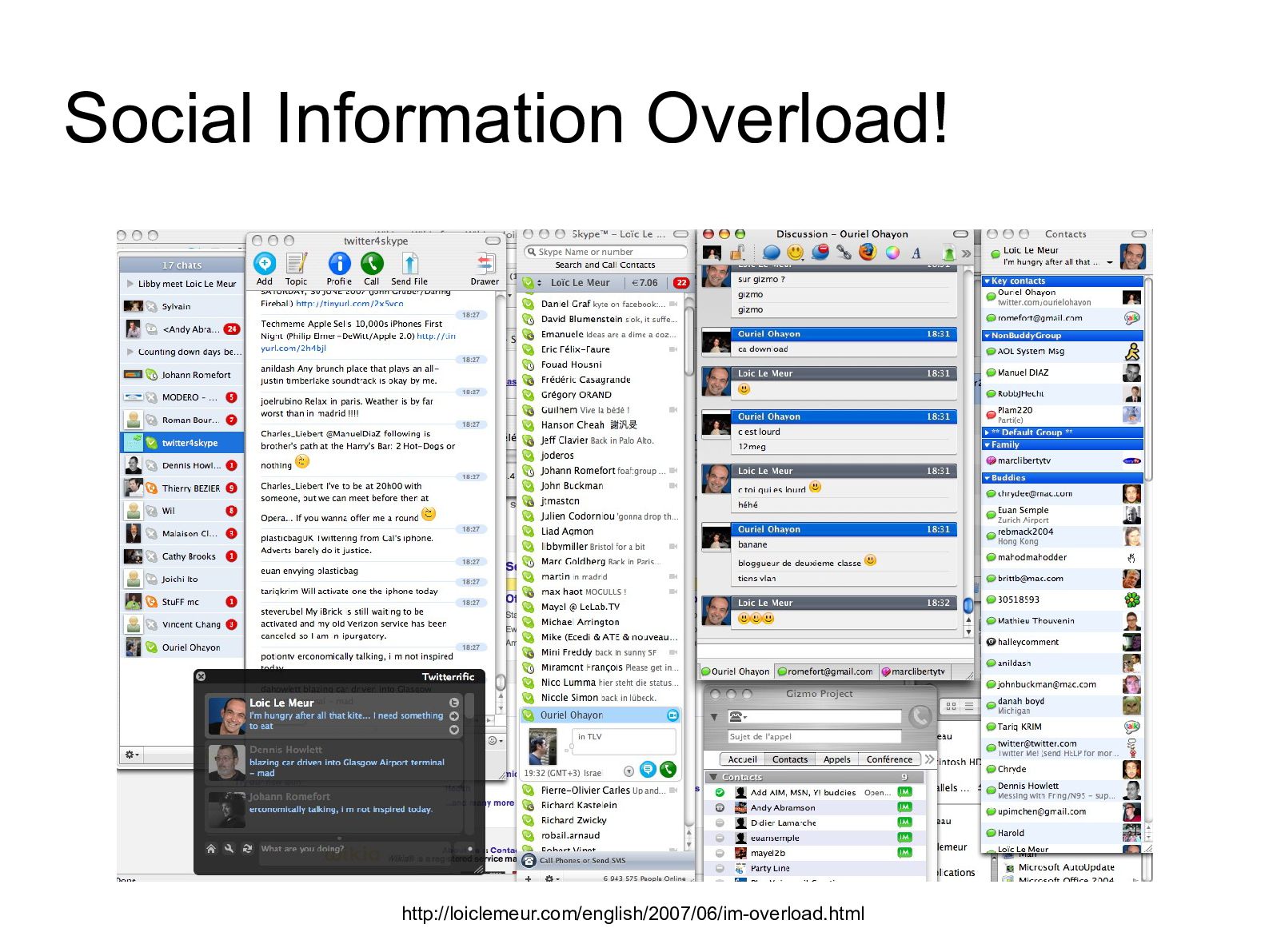
    • Social networks are new and increasingly important information feeds. • We need measures to mitigate social information overload. • TunkRank is a promising proof-of-concept.
  17. Thank you! ...and thanks to Jason Adams for developing and

    maintaining the http://tunkrank.com site! Questions? Email: [email protected] Twitter: @dtunkelang Blog: http://thenoisychannel.com/