Upgrade to PRO for Only $50/Year—Limited-Time Offer! 🔥

FY 2024: MDC 23 - Factors Influencing Health S...

Avatar for e4health e4health PRO
April 04, 2024
140

FY 2024: MDC 23 - Factors Influencing Health Status

Avatar for e4health

e4health PRO

April 04, 2024
Tweet

More Decks by e4health

Transcript

  1. H I M | C O D I N G

    & C D I | H E A LT H I T | R E V C Y C L E Empowering Better Health e4health tackles healthcare’s data, quality and revenue challenges empowering your providers to focus on better care.
  2. Objectives • Review MDC 23- Factors Influencing Health Status with

    a focus on selected diagnoses and procedures • Learner will acquire a basic understanding of the diagnoses and procedures included in MDC 23 • Discuss Query opportunities related to MDC 23 • Review coding clinics relevant to MDC 23
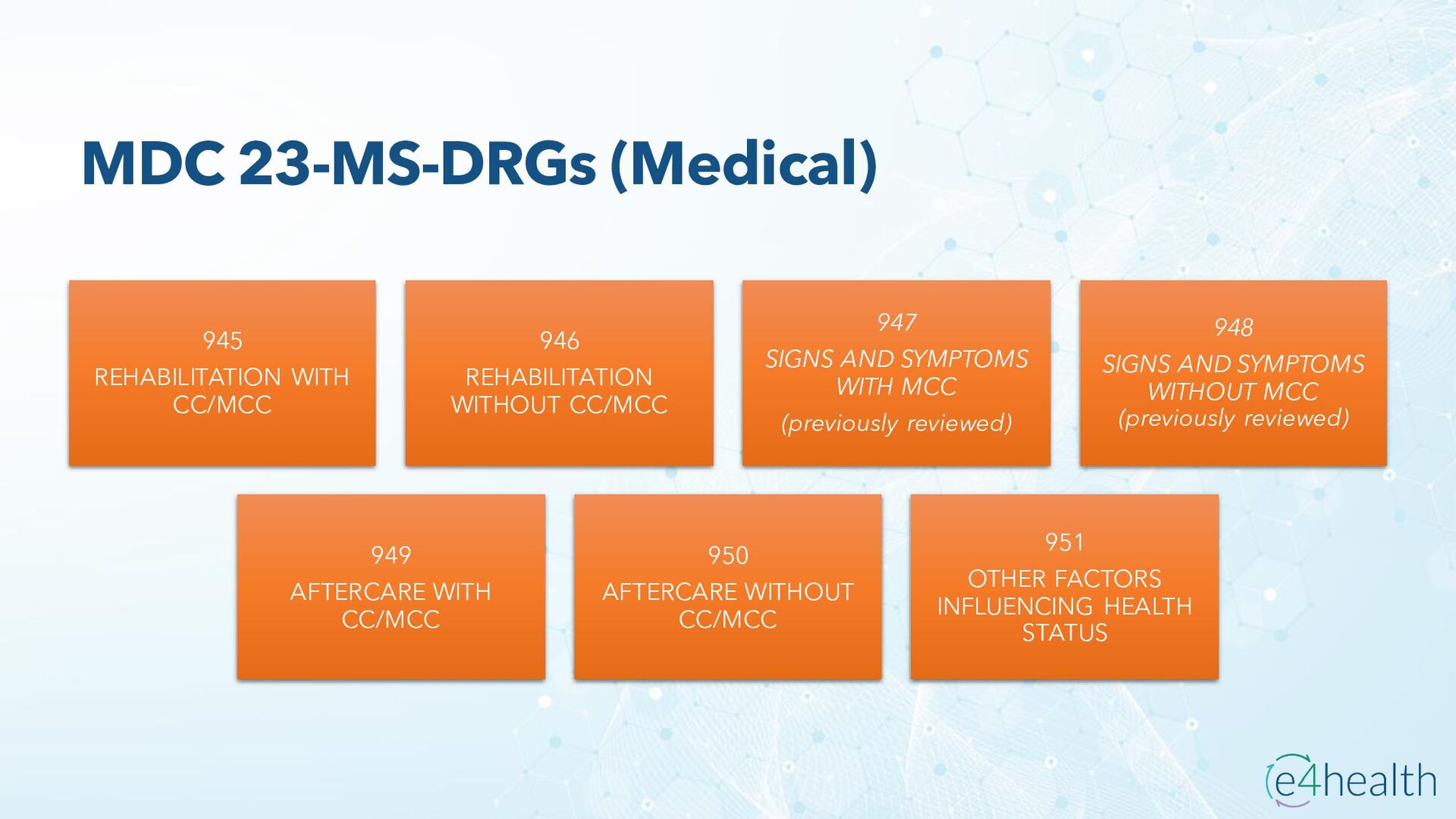
  3. MDC 23-MS-DRGs (Medical) 945 REHABILITATION WITH CC/MCC 946 REHABILITATION WITHOUT

    CC/MCC 947 SIGNS AND SYMPTOMS WITH MCC (previously reviewed) 948 SIGNS AND SYMPTOMS WITHOUT MCC (previously reviewed) 949 AFTERCARE WITH CC/MCC 950 AFTERCARE WITHOUT CC/MCC 951 OTHER FACTORS INFLUENCING HEALTH STATUS
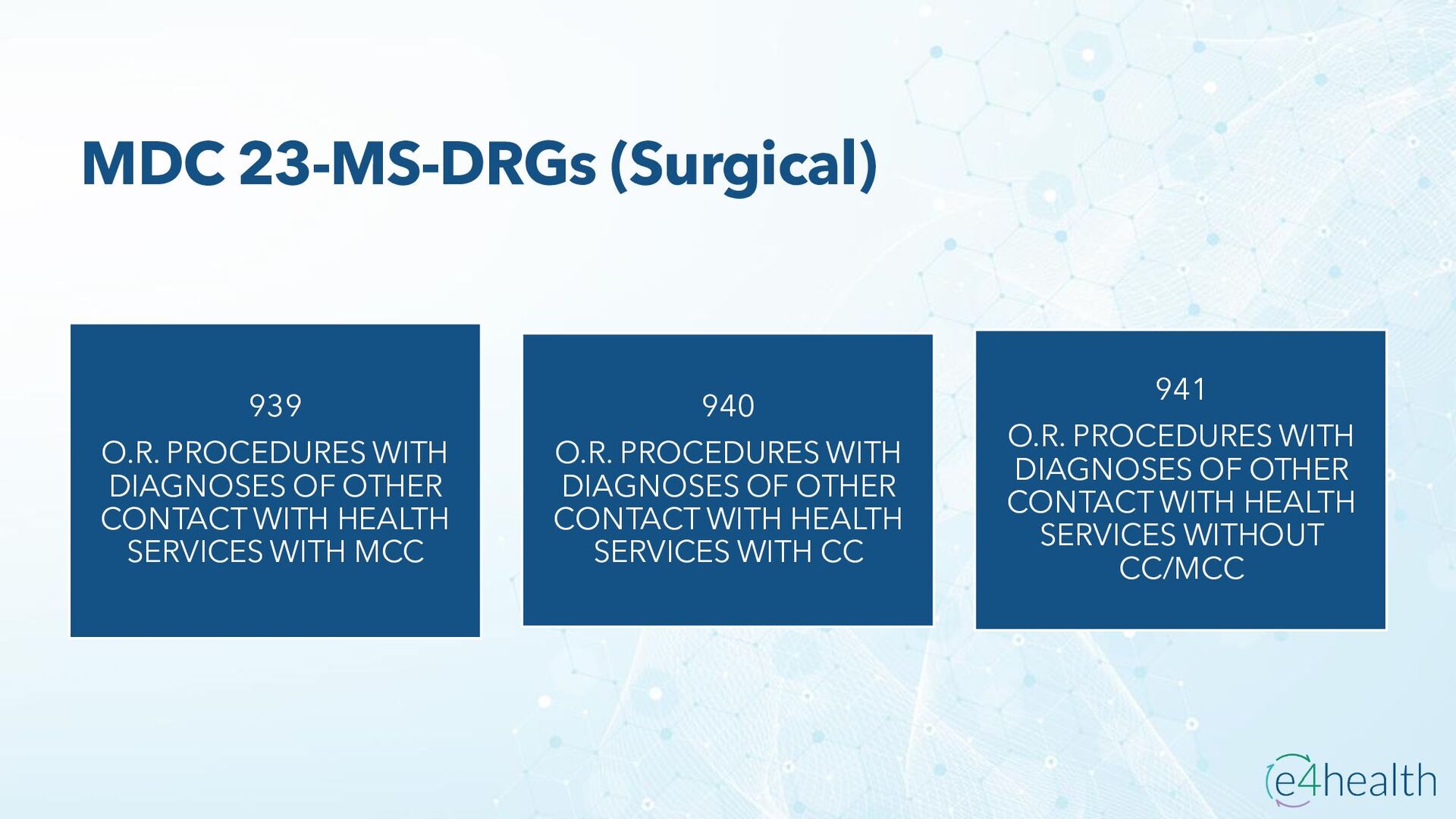
  4. MDC 23-MS-DRGs (Surgical) 939 O.R. PROCEDURES WITH DIAGNOSES OF OTHER

    CONTACT WITH HEALTH SERVICES WITH MCC 940 O.R. PROCEDURES WITH DIAGNOSES OF OTHER CONTACT WITH HEALTH SERVICES WITH CC 941 O.R. PROCEDURES WITH DIAGNOSES OF OTHER CONTACT WITH HEALTH SERVICES WITHOUT CC/MCC
  5. Chapter specific guidelines Use of Z Codes in Any Healthcare

    Setting Z codes are for use in any healthcare setting. Z codes may be used as either a first-listed (principal diagnosis code in the inpatient setting) or secondary code, depending on the circumstances of the encounter. Certain Z codes may only be used as first-listed or principal diagnosis. Z Codes Indicate a Reason for an Encounter or Provide Additional Information about a Patient Encounter Z codes are not procedure codes. A corresponding procedure code must accompany a Z code to describe any procedure performed.
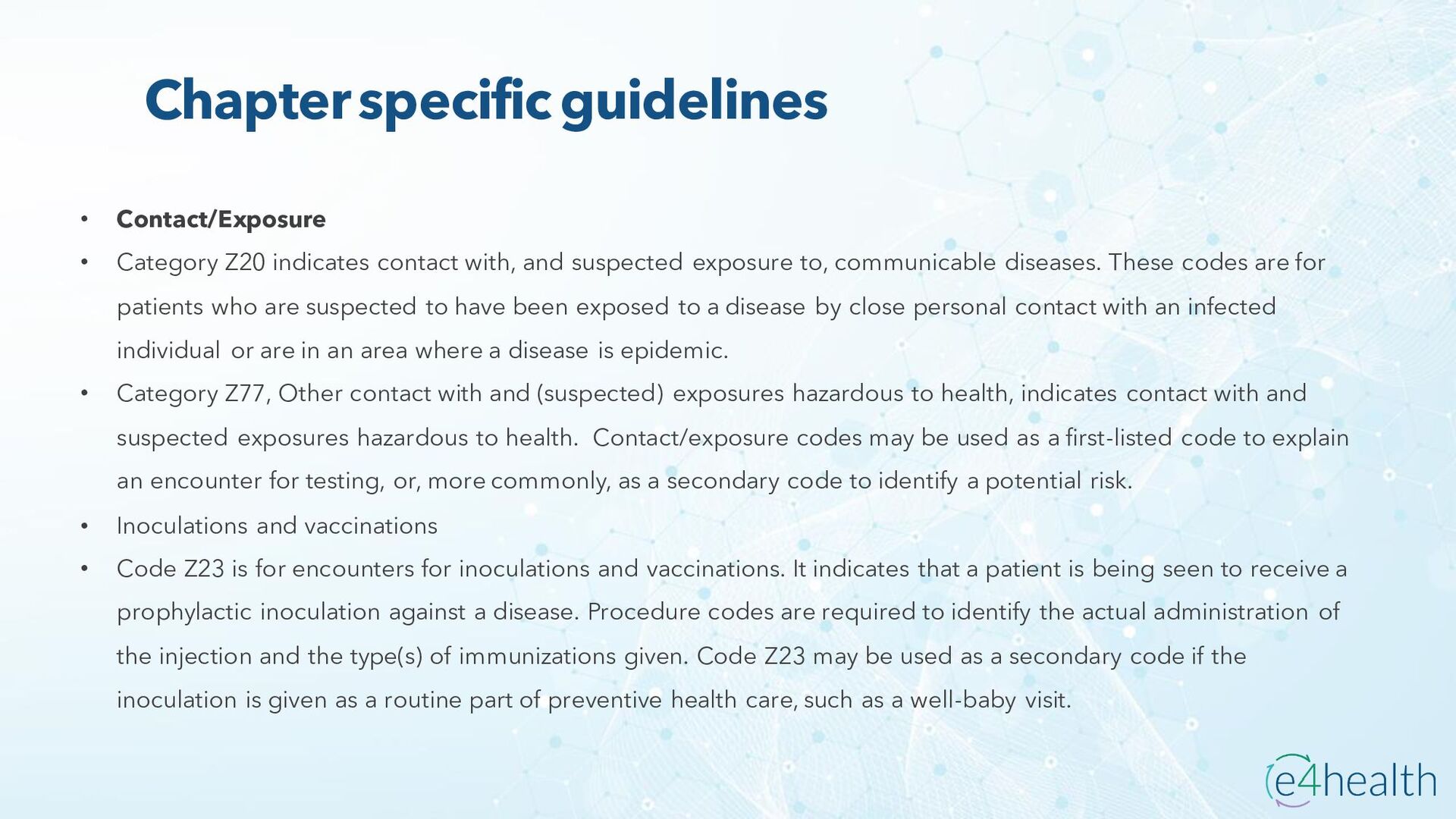
  6. Chapter specific guidelines • Contact/Exposure • Category Z20 indicates contact

    with, and suspected exposure to, communicable diseases. These codes are for patients who are suspected to have been exposed to a disease by close personal contact with an infected individual or are in an area where a disease is epidemic. • Category Z77, Other contact with and (suspected) exposures hazardous to health, indicates contact with and suspected exposures hazardous to health. Contact/exposure codes may be used as a first-listed code to explain an encounter for testing, or, more commonly, as a secondary code to identify a potential risk. • Inoculations and vaccinations • Code Z23 is for encounters for inoculations and vaccinations. It indicates that a patient is being seen to receive a prophylactic inoculation against a disease. Procedure codes are required to identify the actual administration of the injection and the type(s) of immunizations given. Code Z23 may be used as a secondary code if the inoculation is given as a routine part of preventive health care, such as a well-baby visit.
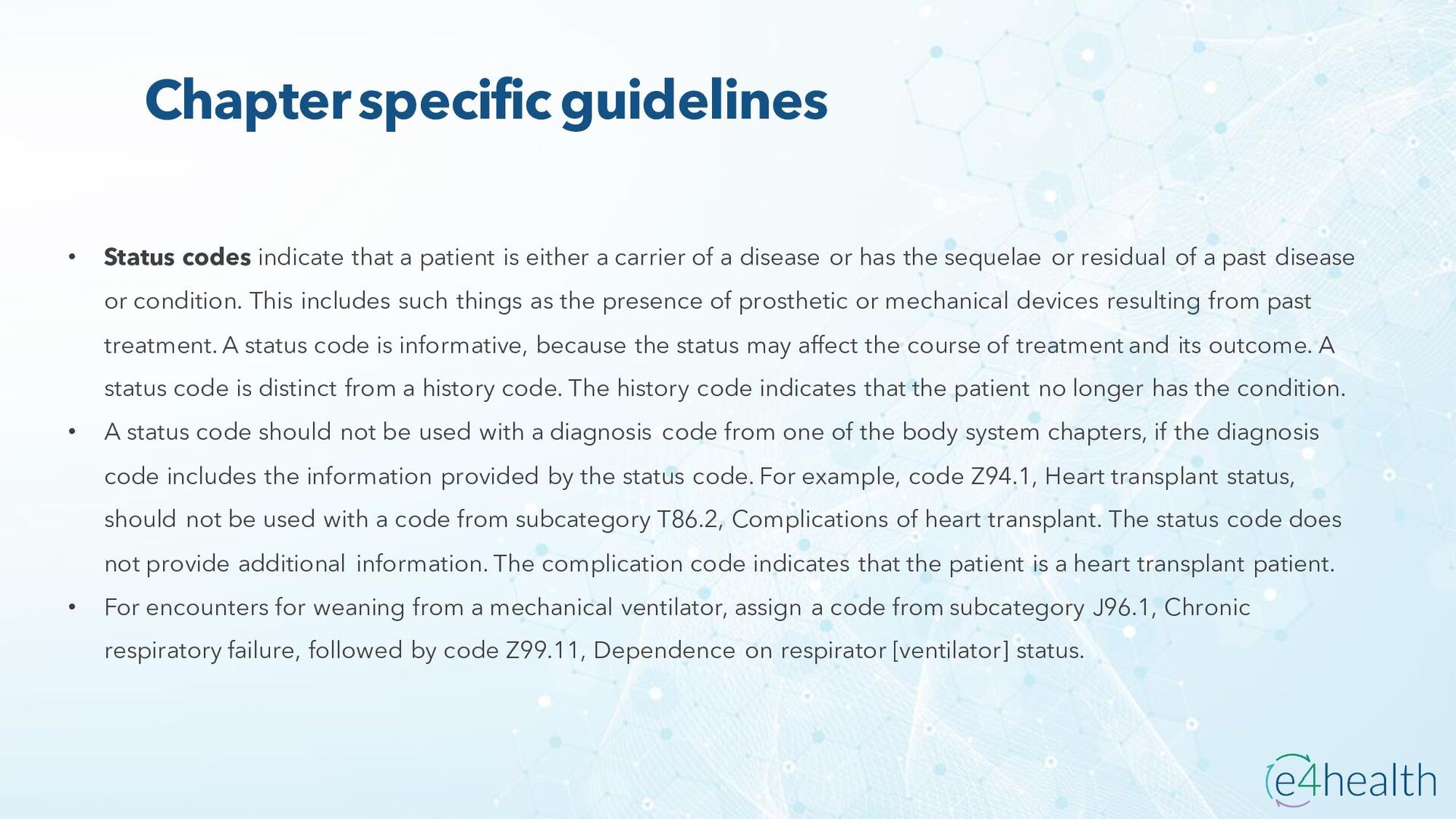
  7. Chapter specific guidelines • Status codes indicate that a patient

    is either a carrier of a disease or has the sequelae or residual of a past disease or condition. This includes such things as the presence of prosthetic or mechanical devices resulting from past treatment. A status code is informative, because the status may affect the course of treatment and its outcome. A status code is distinct from a history code. The history code indicates that the patient no longer has the condition. • A status code should not be used with a diagnosis code from one of the body system chapters, if the diagnosis code includes the information provided by the status code. For example, code Z94.1, Heart transplant status, should not be used with a code from subcategory T86.2, Complications of heart transplant. The status code does not provide additional information. The complication code indicates that the patient is a heart transplant patient. • For encounters for weaning from a mechanical ventilator, assign a code from subcategory J96.1, Chronic respiratory failure, followed by code Z99.11, Dependence on respirator [ventilator] status.
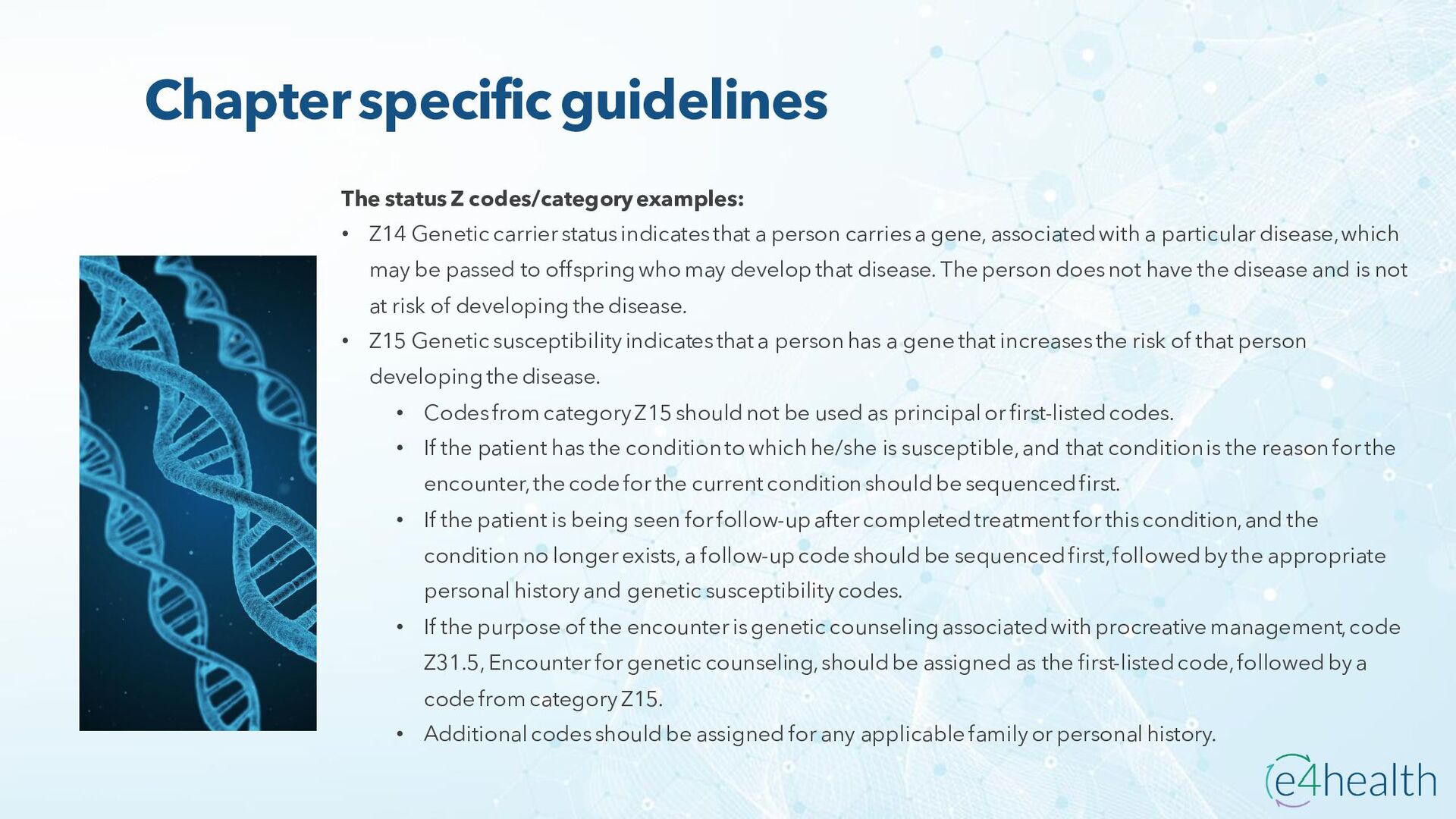
  8. Chapter specific guidelines The status Z codes/category examples: • Z14

    Genetic carrier status indicates that a person carries a gene, associated with a particular disease, which may be passed to offspring who may develop that disease. The person does not have the disease and is not at risk of developing the disease. • Z15 Genetic susceptibility indicates that a person has a gene that increases the risk of that person developing the disease. • Codes from category Z15 should not be used as principal or first-listed codes. • If the patient has the condition to which he/she is susceptible, and that condition is the reason for the encounter, the code for the current condition should be sequenced first. • If the patient is being seen for follow-up after completed treatment for this condition, and the condition no longer exists, a follow-up code should be sequenced first, followed by the appropriate personal history and genetic susceptibility codes. • If the purpose of the encounter is genetic counseling associated with procreative management, code Z31.5, Encounter for genetic counseling, should be assigned as the first-listed code, followed by a code from category Z15. • Additional codes should be assigned for any applicable family or personal history.
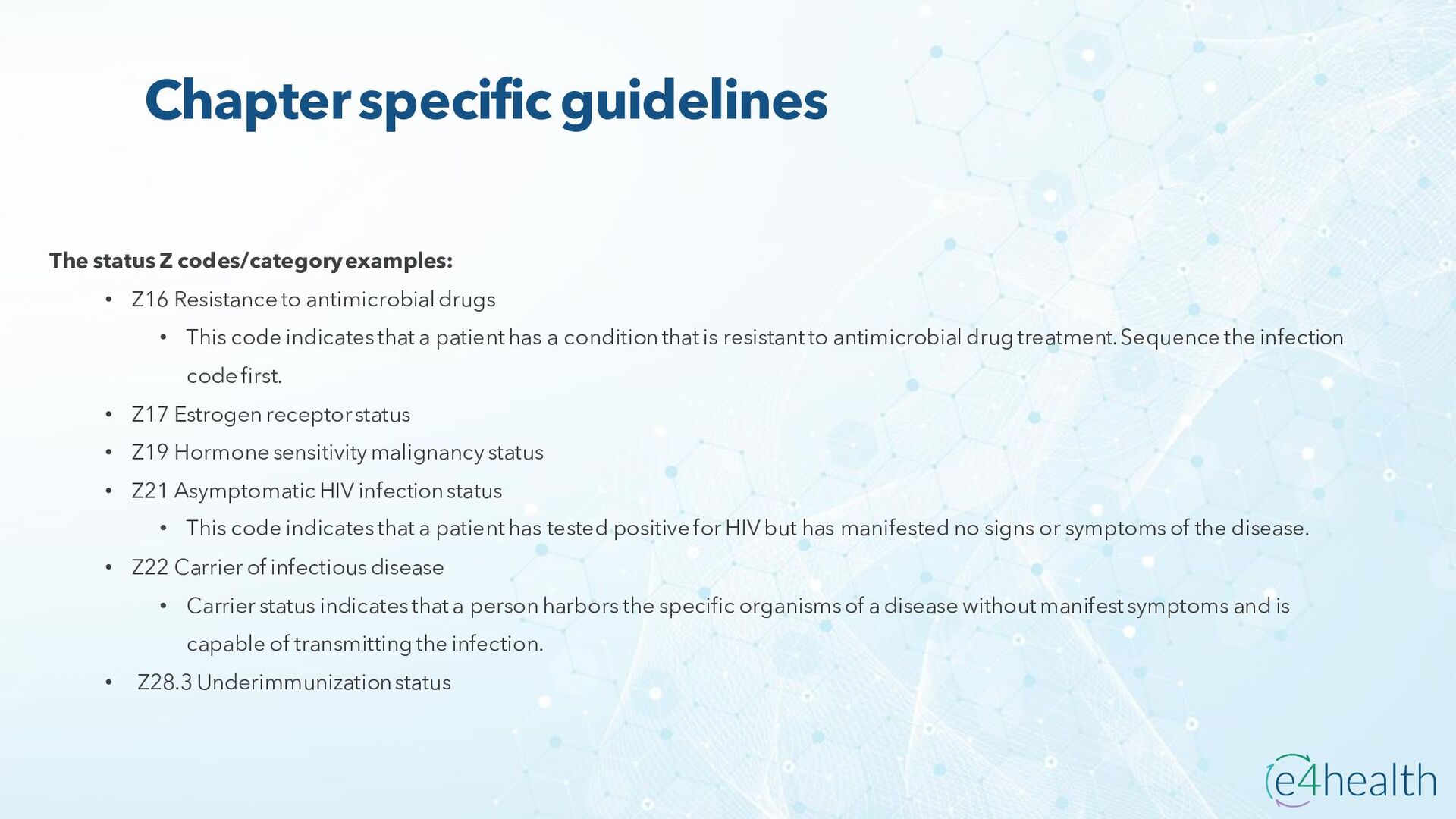
  9. Chapter specific guidelines The status Z codes/category examples: • Z16

    Resistance to antimicrobial drugs • This code indicates that a patient has a condition that is resistant to antimicrobial drug treatment. Sequence the infection code first. • Z17 Estrogen receptor status • Z19 Hormone sensitivity malignancy status • Z21 Asymptomatic HIV infection status • This code indicates that a patient has tested positive for HIV but has manifested no signs or symptoms of the disease. • Z22 Carrier of infectious disease • Carrier status indicates that a person harbors the specific organisms of a disease without manifest symptoms and is capable of transmitting the infection. • Z28.3 Underimmunization status
  10. Chapter specific guidelines The status Z codes/category examples: • Z68

    Body mass index (BMI) • BMI codes should only be assigned when there is an associated, reportable diagnosis (such as obesity). Do not assign BMI codes during pregnancy. • Z79 Long-term (current) drug therapy • Codes from this category indicate a patient’s continuous use of a prescribed drug (including such things as aspirin therapy) for the long-term treatment of a condition or for prophylactic use. • It is not for use for patients who have addictions to drugs. • This subcategory is not for use of medications for detoxification or maintenance programs to prevent withdrawal symptoms (e.g., methadone maintenance for opiate dependence). • Assign the appropriate code for the drug use, abuse, or dependence instead. • Assign a code from Z79 if the patient is receiving a medication for an extended period as a prophylactic measure (such as for the prevention of deep vein thrombosis) or as treatment of a chronic condition (such as arthritis) or a disease requiring a lengthy course of treatment (such as cancer). • Do not assign a code from category Z79 for medication being administered for a brief period of time to treat an acute illness or injury (such as a course of antibiotics to treat acute bronchitis).
  11. Chapter specific guidelines The status Z codes/category examples: • Z92.82

    SP administration of tPA (rtPA) in a different facility within the last 24 hours prior to admission to a current facility • Assign code Z92.82, Status post administration of tPA (rtPA) in a different facility within the last 24 hours prior to admission to current facility, as a secondary diagnosis when a patient is received by transfer into a facility and documentation indicates they were administered tissue plasminogen activator (tPA) within the last 24 hours prior to admission to the current facility. • This guideline applies even if the patient is still receiving the tPA at the time they are received into the current facility. • The appropriate code for the condition for which the tPA was administered (such as cerebrovascular disease or myocardial infarction) should be assigned first. • Code Z92.82 is only applicable to the receiving facility record and not to the transferring facility record. • Z99 Dependence on enabling machines and devices, not elsewhere classified • Note: Categories Z89-Z90 and Z93-Z99 are for use only if there are no complications or malfunctions of the organ or tissue replaced, the amputation site or the equipment on which the patient is dependent.
  12. Chapter specific guidelines History (of) • There are two types

    of history Z codes, personal and family. Personal history codes explain a patient’s past medical condition that no longer exists and is not receiving any treatment, but that has the potential for recurrence, and therefore may require continued monitoring. • Family history codes are for use when a patient has a family member(s) who has had a particular disease that causes the patient to be at higher risk of also contracting the disease. • Personal history codes may be used in conjunction with follow-up codes and family history codes may be used in conjunction with screening codes to explain the need for a test or procedure. • History codes are also acceptable on any medical record regardless of the reason for visit. • A history of an illness, even if no longer present, is important information that may alter the type of treatment ordered. • The reason for the encounter (for example, screening or counseling) should be sequenced first and the appropriate personal and/or family history code(s) should be assigned as additional diagnos(es). This Photo by Unknown author is licensed under CC BY-ND.
  13. Chapter specific guidelines History (of) Code Examples: • Z80 Family

    history of primary malignant neoplasm • Z81 Family history of mental and behavioral disorders • Z82 Family history of certain disabilities and chronic diseases (leading to disablement) • Z83 Family history of other specific disorders • Z84 Family history of other conditions • Z85 Personal history of malignant neoplasm  Z86 Personal history of certain other diseases  Z87 Personal history of other diseases and conditions  Z91.4- Personal history of psychological trauma, not elsewhere classified  Z91.5- Personal history of self-harm  Z91.81 History of falling  Z91.82 Personal history of military deployment  Z92 Personal history of medical treatment  Except: Z92.0, Personal history of contraception  Except: Z92.82, Status post administration of tPA (rtPA) in a different facility within the last 24 hours prior to admission to a current facility
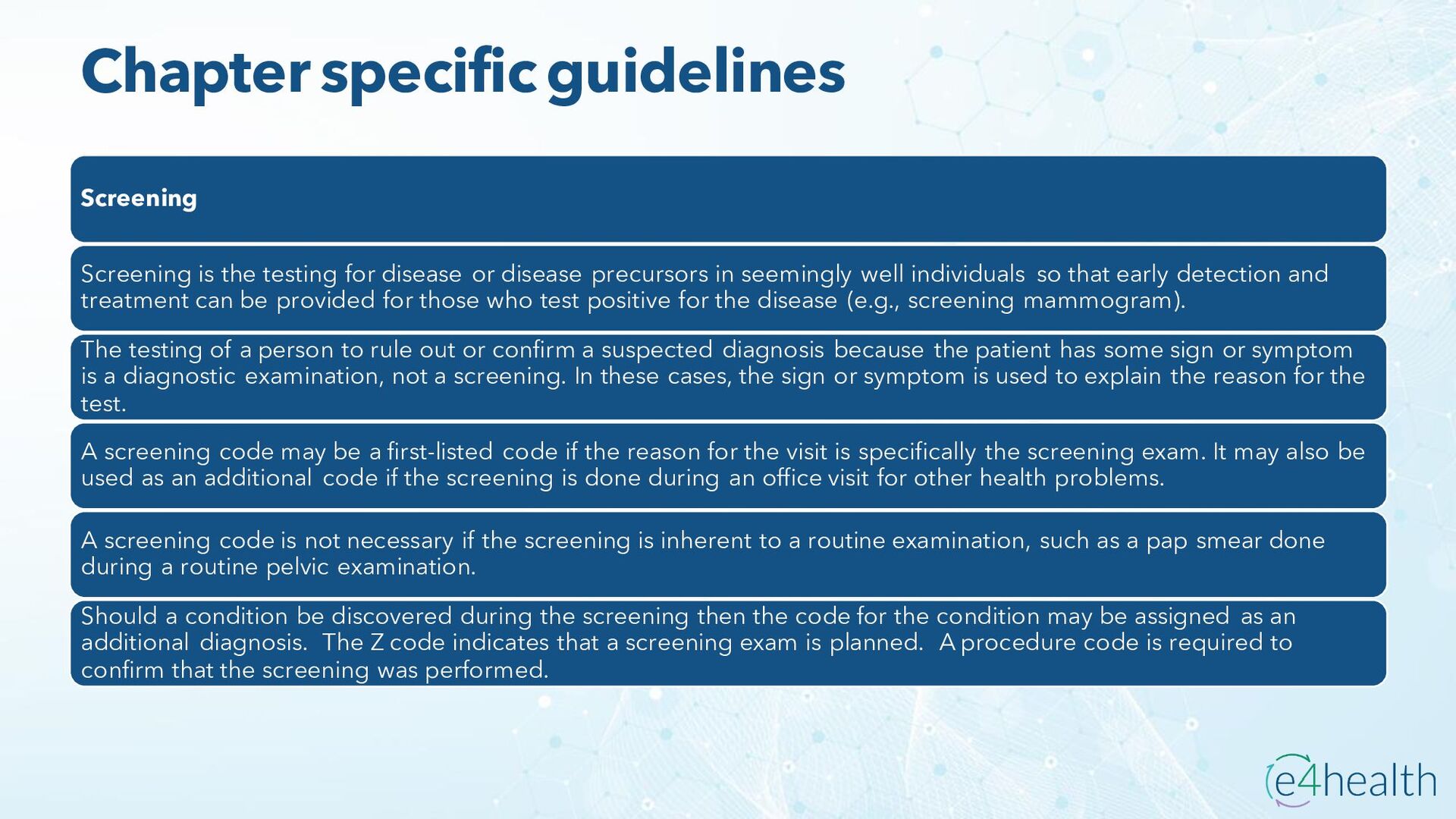
  14. Chapter specific guidelines Screening Screening is the testing for disease

    or disease precursors in seemingly well individuals so that early detection and treatment can be provided for those who test positive for the disease (e.g., screening mammogram). The testing of a person to rule out or confirm a suspected diagnosis because the patient has some sign or symptom is a diagnostic examination, not a screening. In these cases, the sign or symptom is used to explain the reason for the test. A screening code may be a first-listed code if the reason for the visit is specifically the screening exam. It may also be used as an additional code if the screening is done during an office visit for other health problems. A screening code is not necessary if the screening is inherent to a routine examination, such as a pap smear done during a routine pelvic examination. Should a condition be discovered during the screening then the code for the condition may be assigned as an additional diagnosis. The Z code indicates that a screening exam is planned. A procedure code is required to confirm that the screening was performed.
  15. Chapter specific guidelines •Screening • The screening Z codes/categories: •

    Z11 Encounter for screening for infectious and parasitic diseases • Z12 Encounter for screening for malignant neoplasms • Z13 Encounter for screening for other diseases and disorders • Except: Z13.9, Encounter for screening, unspecified • Z36 Encounter for antenatal screening for mother This Photo by Unknown author is licensed under CC BY-SA.
  16. Chapter specific guidelines Observation • There are three observation Z

    code categories. They are for use in very limited circumstances when a person is being observed for a suspected condition that is ruled out. The observation codes are not for use if an injury or illness or any signs or symptoms related to the suspected condition are present. In such cases the diagnosis/symptom code is used with the corresponding external cause code. • The observation codes are primarily to be used as a principal/first-listed diagnosis. An observation code may be assigned as a secondary diagnosis code when the patient is being observed for a condition that is ruled out and is unrelated to the principal/first- listed diagnosis. Also, when the principal diagnosis is required to be a code from category Z38, Liveborn infants according to place of birth and type of delivery, then a code from category Z05, Encounter for observation and evaluation of newborn for suspected diseases and conditions ruled out, is sequenced after the Z38 code. Additional codes may be used in addition to the observation code, but only if they are unrelated to the suspected condition being observed.
  17. Chapter specific guidelines Observation • Codes from subcategory Z03.7, Encounter

    for suspected maternal and fetal conditions ruled out, may either be used as a first-listed or as an additional code assignment depending on the case. They are for use in very limited circumstances on a maternal record when an encounter is for a suspected maternal or fetal condition that is ruled out during that encounter (for example, a maternal or fetal condition may be suspected due to an abnormal test result). These codes should not be used when the condition is confirmed. In those cases, the confirmed condition should be coded. In addition, these codes are not for use if an illness or any signs or symptoms related to the suspected condition or problem are present. In such cases the diagnosis/symptom code is used. • Additional codes may be used in addition to the code from subcategory Z03.7, but only if they are unrelated to the suspected condition being evaluated. Codes from subcategory Z03.7 may not be used for encounters for antenatal screening of mother. See Section I.C.21. Screening. • For encounters for suspected fetal condition that are inconclusive following testing and evaluation, assign the appropriate code from category O35, O36, O40 or O41.
  18. Chapter specific guidelines • Observation Code Examples: • Z03 Encounter

    for medical observation for suspected diseases and conditions ruled out • Z04 Encounter for examination and observation for other reasons • Except: Z04.9, Encounter for examination and observation for unspecified reason • Z05 Encounter for observation and evaluation of newborn for suspected diseases and conditions ruled out This Photo by Unknown author is licensed under CC BY-SA.
  19. Chapter specific guidelines Aftercare • Aftercare visit codes cover situations

    when the initial treatment of a disease has been performed and the patient requires continued care during the healing or recovery phase, or for the long-term consequences of the disease. • The aftercare Z code should not be used if treatment is directed at a current, acute disease. The diagnosis code is to be used in these cases. Exceptions to this rule are codes Z51.0, Encounter for antineoplastic radiation therapy, and codes from subcategory Z51.1, Encounter for antineoplastic chemotherapy and immunotherapy. • These codes are to be first listed, followed by the diagnosis code when a patient’s encounter is solely to receive radiation therapy, chemotherapy, or immunotherapy for the treatment of a neoplasm. • If the reason for the encounter is more than one type of antineoplastic therapy, code Z51.0 and a code from subcategory Z51.1 may be assigned together, in which case one of these codes would be reported as a secondary diagnosis. • The aftercare Z codes should also not be used for aftercare for injuries. For aftercare of an injury, assign the acute injury code with the appropriate 7th character (for subsequent encounter).
  20. CHAPTER SPECIFIC GUIDELINES Aftercare • The aftercare codes are generally

    first listed to explain the specific reason for the encounter. An aftercare code may be used as an additional code when some type of aftercare is provided in addition to the reason for admission and no diagnosis code is applicable. • An example of this would be the closure of a colostomy during an encounter for treatment of another condition. • Aftercare codes should be used in conjunction with other aftercare codes or diagnosis codes to provide better detail on the specifics of an aftercare encounter visit, unless otherwise directed by the classification. The sequencing of multiple aftercare codes depends on the circumstances of the encounter. • Certain aftercare Z code categories need a secondary diagnosis code to describe the resolving condition or sequelae. For others, the condition is included in the code title.
  21. CHAPTER SPECIFIC GUIDELINES Aftercare  Additional Z code aftercare category

    terms include fitting and adjustment, and attention to artificial openings.  Status Z codes may be used with aftercare Z codes to indicate the nature of the aftercare. For example, code Z95.1, Presence of aortocoronary bypass graft, may be used with code Z48.812, Encounter for surgical aftercare following surgery on the circulatory system, to indicate the surgery for which the aftercare is being performed.  A status code should not be used when the aftercare code indicates the type of status, such as using Z43.0, Encounter for attention to tracheostomy, with Z93.0, Tracheostomy status. This Photo by Unknown author is licensed under CC BY-NC-ND.
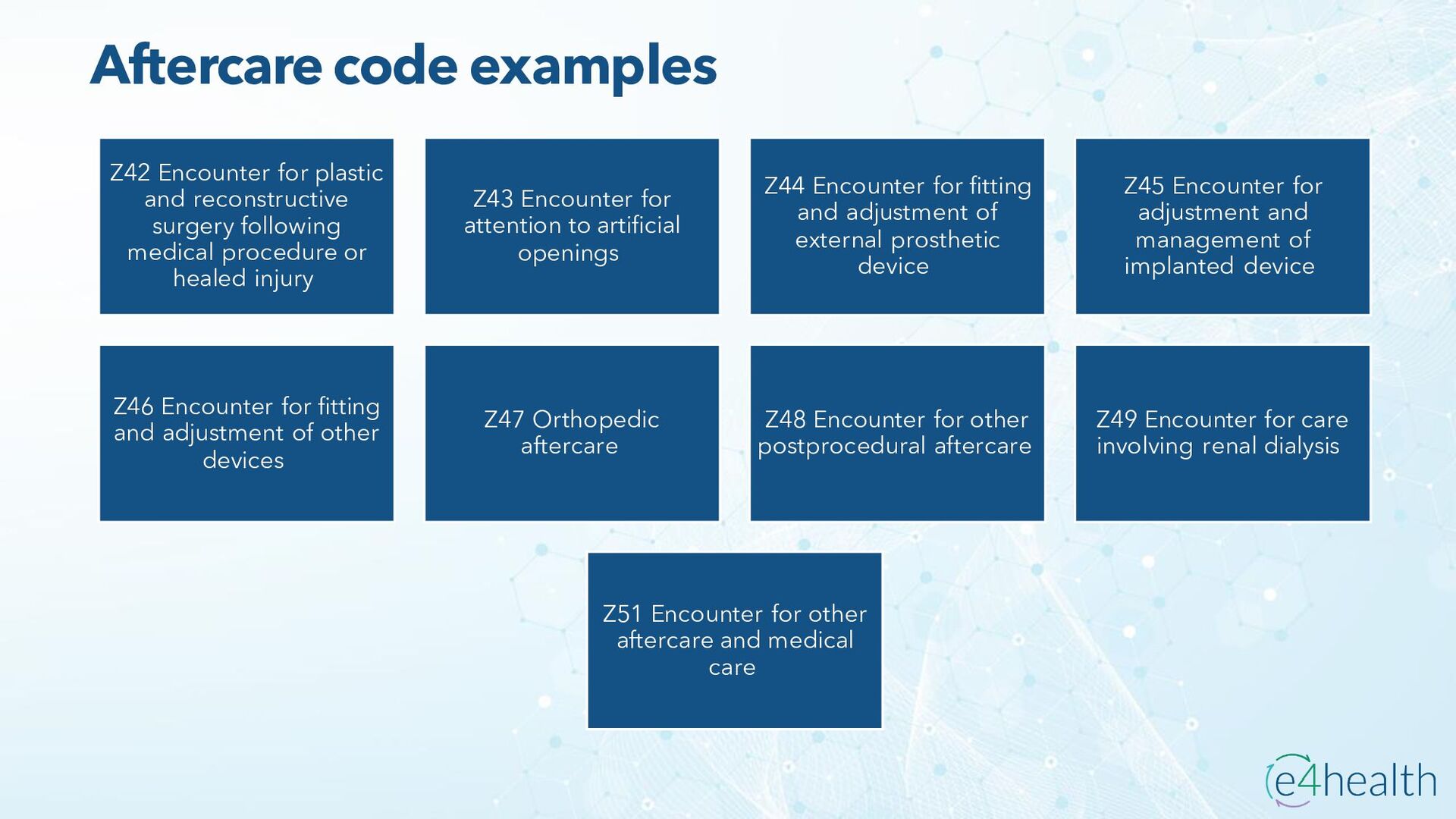
  22. Aftercare code examples Z42 Encounter for plastic and reconstructive surgery

    following medical procedure or healed injury Z43 Encounter for attention to artificial openings Z44 Encounter for fitting and adjustment of external prosthetic device Z45 Encounter for adjustment and management of implanted device Z46 Encounter for fitting and adjustment of other devices Z47 Orthopedic aftercare Z48 Encounter for other postprocedural aftercare Z49 Encounter for care involving renal dialysis Z51 Encounter for other aftercare and medical care
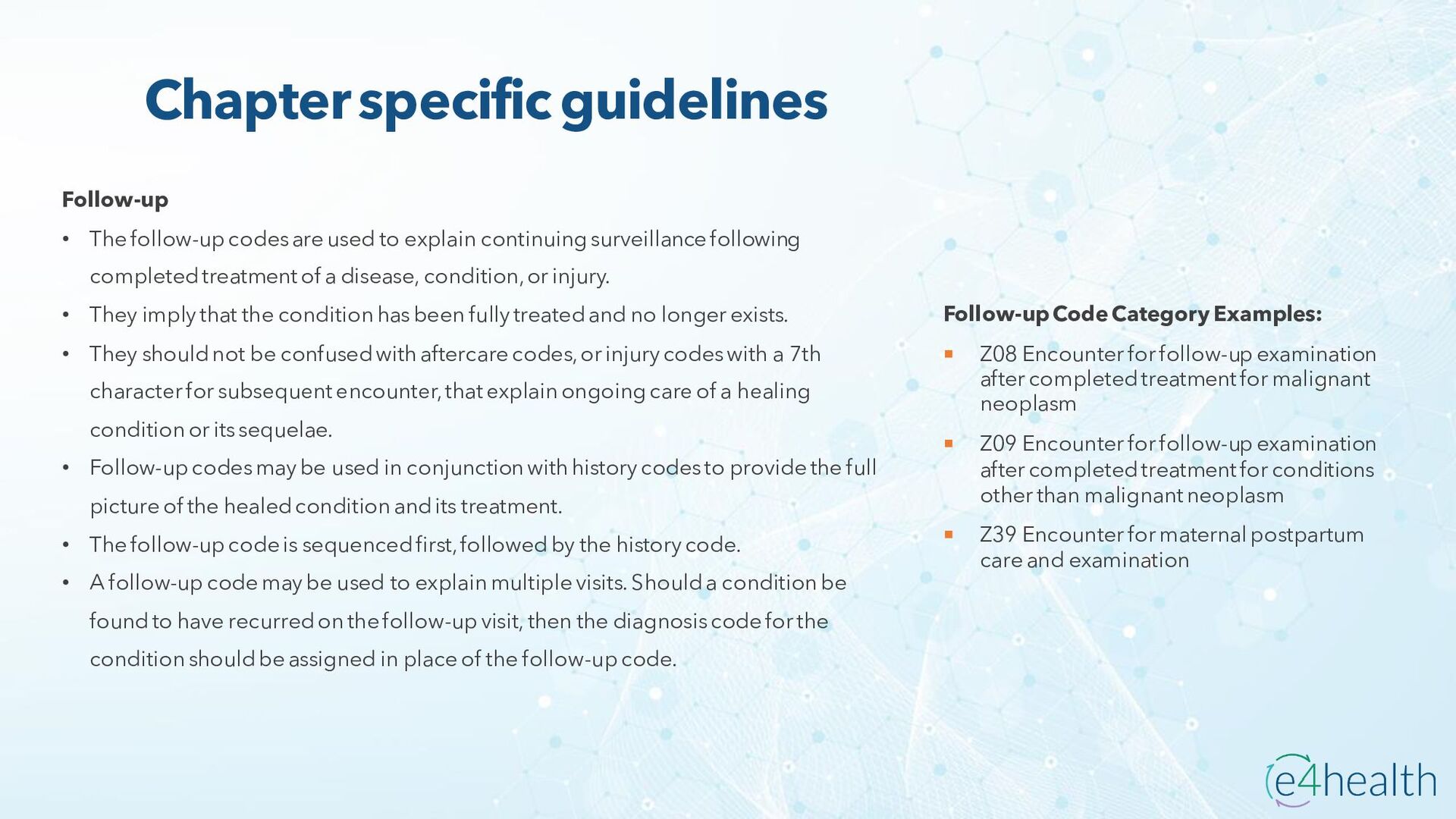
  23. Chapter specific guidelines Follow-up • The follow-up codes are used

    to explain continuing surveillance following completed treatment of a disease, condition, or injury. • They imply that the condition has been fully treated and no longer exists. • They should not be confused with aftercare codes, or injury codes with a 7th character for subsequent encounter, that explain ongoing care of a healing condition or its sequelae. • Follow-up codes may be used in conjunction with history codes to provide the full picture of the healed condition and its treatment. • The follow-up code is sequenced first, followed by the history code. • A follow-up code may be used to explain multiple visits. Should a condition be found to have recurred on the follow-up visit, then the diagnosis code for the condition should be assigned in place of the follow-up code. Follow-up Code Category Examples:  Z08 Encounter for follow-up examination after completed treatment for malignant neoplasm  Z09 Encounter for follow-up examination after completed treatment for conditions other than malignant neoplasm  Z39 Encounter for maternal postpartum care and examination
  24. Chapter specific guidelines Donor • Codes in category Z52, Donors

    of organs and tissues, are used for living individuals who are donating blood or other body tissue. • These codes are for individuals donating for others, as well as for self-donations. • They are not used to identify cadaveric donations. This Photo by Unknown author is licensed under CC BY-NC-ND.
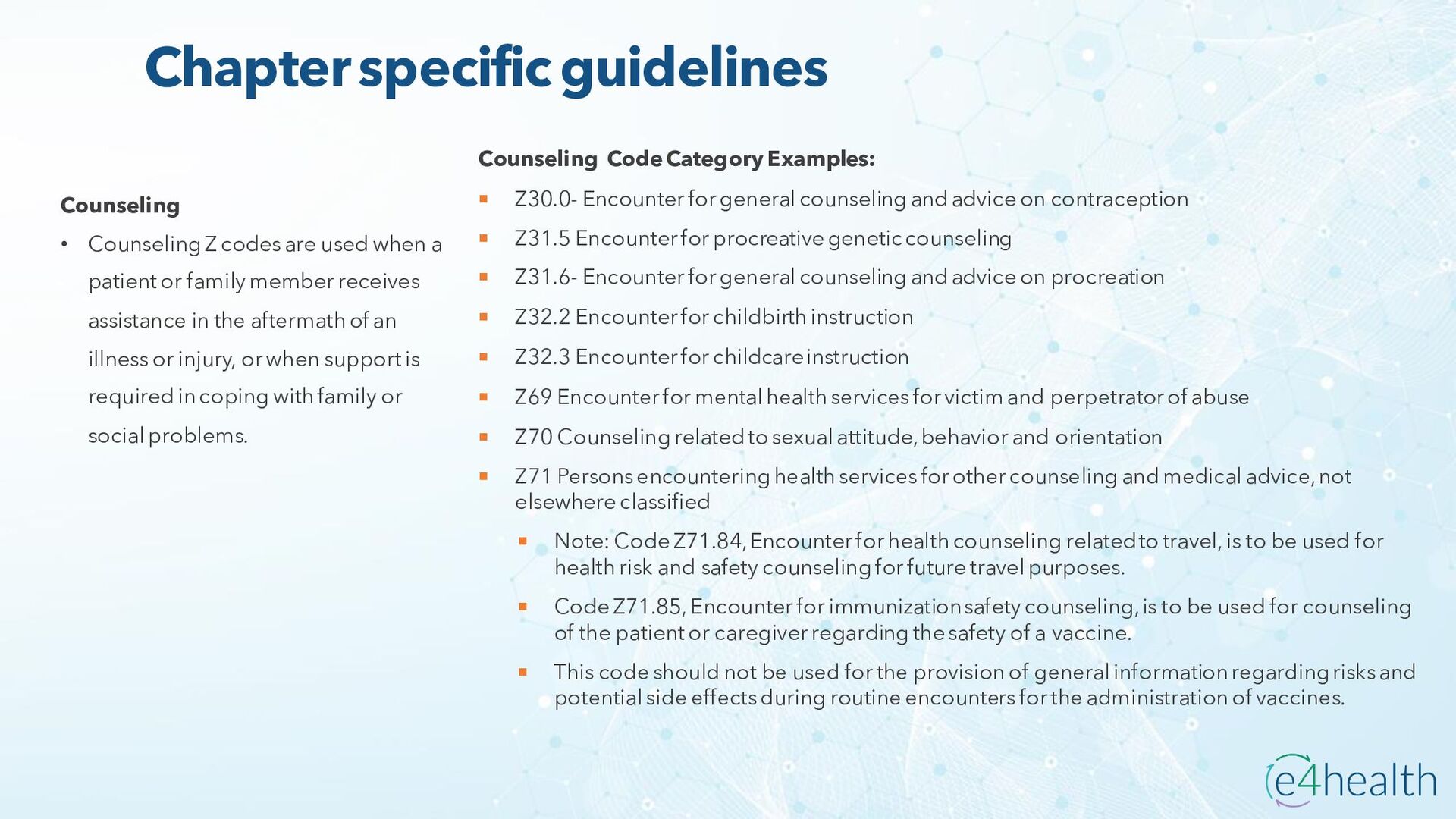
  25. Chapter specific guidelines Counseling • Counseling Z codes are used

    when a patient or family member receives assistance in the aftermath of an illness or injury, or when support is required in coping with family or social problems. Counseling Code Category Examples:  Z30.0- Encounter for general counseling and advice on contraception  Z31.5 Encounter for procreative genetic counseling  Z31.6- Encounter for general counseling and advice on procreation  Z32.2 Encounter for childbirth instruction  Z32.3 Encounter for childcare instruction  Z69 Encounter for mental health services for victim and perpetrator of abuse  Z70 Counseling related to sexual attitude, behavior and orientation  Z71 Persons encountering health services for other counseling and medical advice, not elsewhere classified  Note: Code Z71.84, Encounter for health counseling related to travel, is to be used for health risk and safety counseling for future travel purposes.  Code Z71.85, Encounter for immunization safety counseling, is to be used for counseling of the patient or caregiver regarding the safety of a vaccine.  This code should not be used for the provision of general information regarding risks and potential side effects during routine encounters for the administration of vaccines.
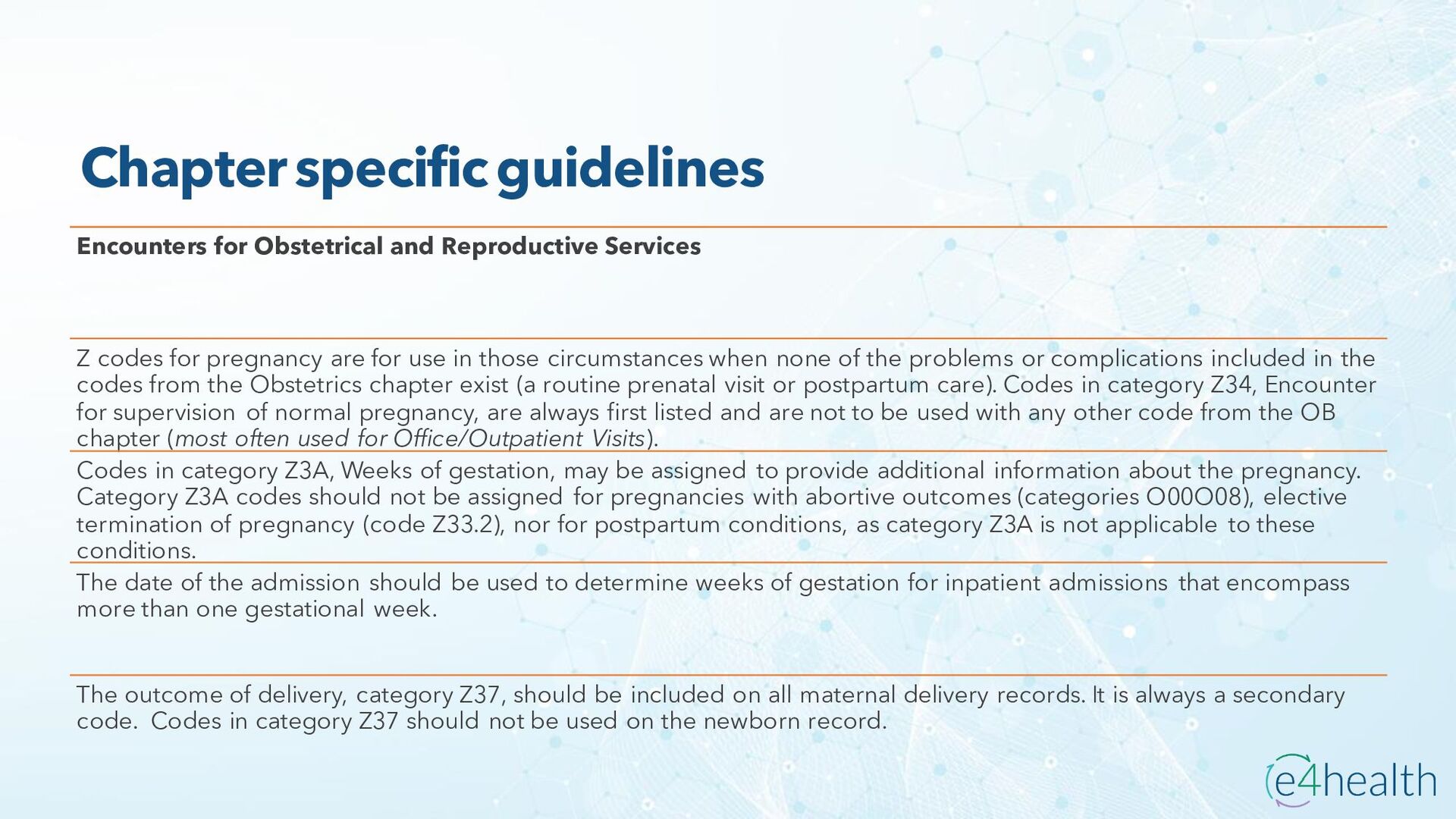
  26. Chapter specific guidelines Encounters for Obstetrical and Reproductive Services Z

    codes for pregnancy are for use in those circumstances when none of the problems or complications included in the codes from the Obstetrics chapter exist (a routine prenatal visit or postpartum care). Codes in category Z34, Encounter for supervision of normal pregnancy, are always first listed and are not to be used with any other code from the OB chapter (most often used for Office/Outpatient Visits). Codes in category Z3A, Weeks of gestation, may be assigned to provide additional information about the pregnancy. Category Z3A codes should not be assigned for pregnancies with abortive outcomes (categories O00O08), elective termination of pregnancy (code Z33.2), nor for postpartum conditions, as category Z3A is not applicable to these conditions. The date of the admission should be used to determine weeks of gestation for inpatient admissions that encompass more than one gestational week. The outcome of delivery, category Z37, should be included on all maternal delivery records. It is always a secondary code. Codes in category Z37 should not be used on the newborn record.
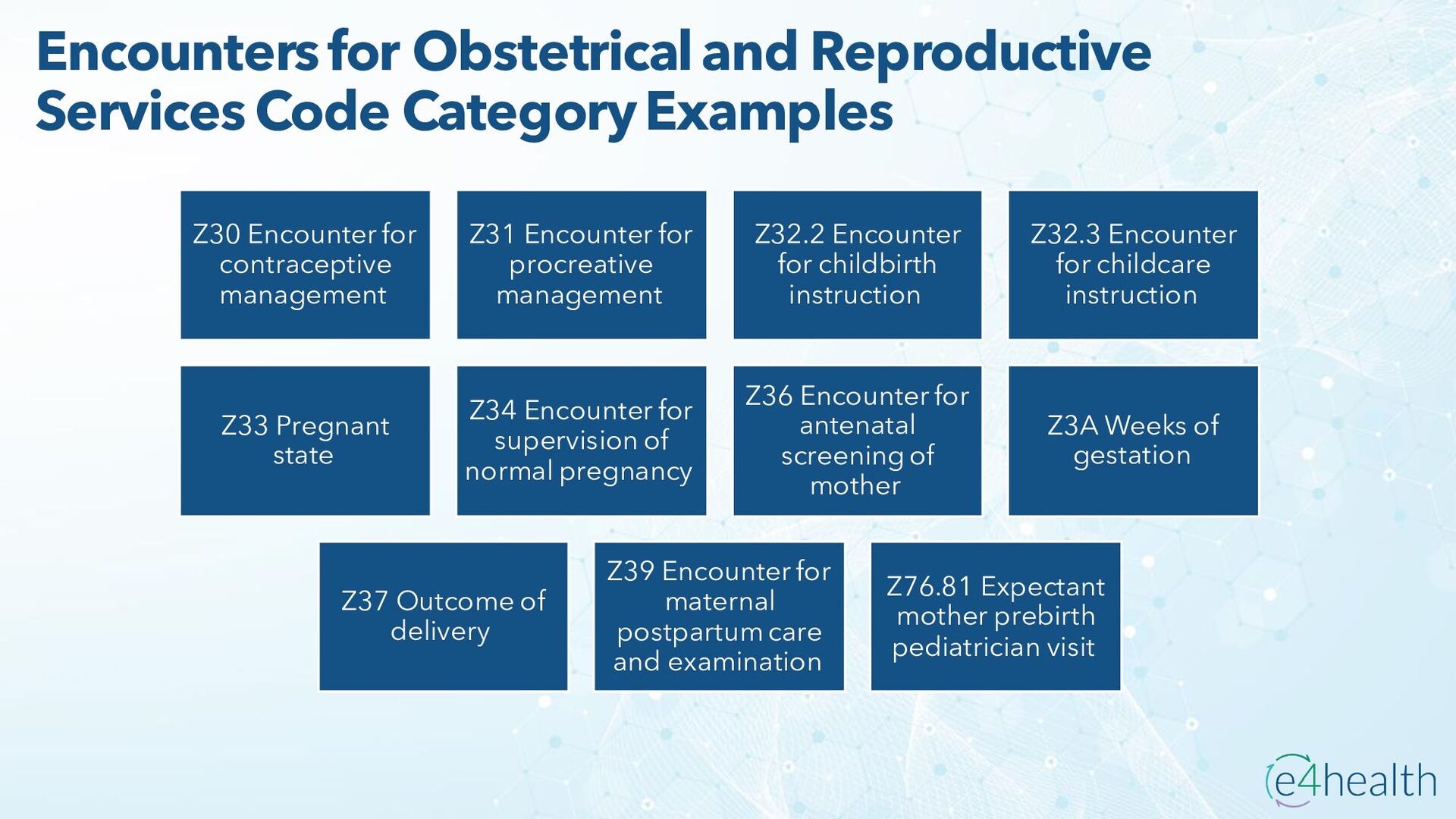
  27. Encounters for Obstetrical and Reproductive Services Code Category Examples Z30

    Encounter for contraceptive management Z31 Encounter for procreative management Z32.2 Encounter for childbirth instruction Z32.3 Encounter for childcare instruction Z33 Pregnant state Z34 Encounter for supervision of normal pregnancy Z36 Encounter for antenatal screening of mother Z3A Weeks of gestation Z37 Outcome of delivery Z39 Encounter for maternal postpartum care and examination Z76.81 Expectant mother prebirth pediatrician visit
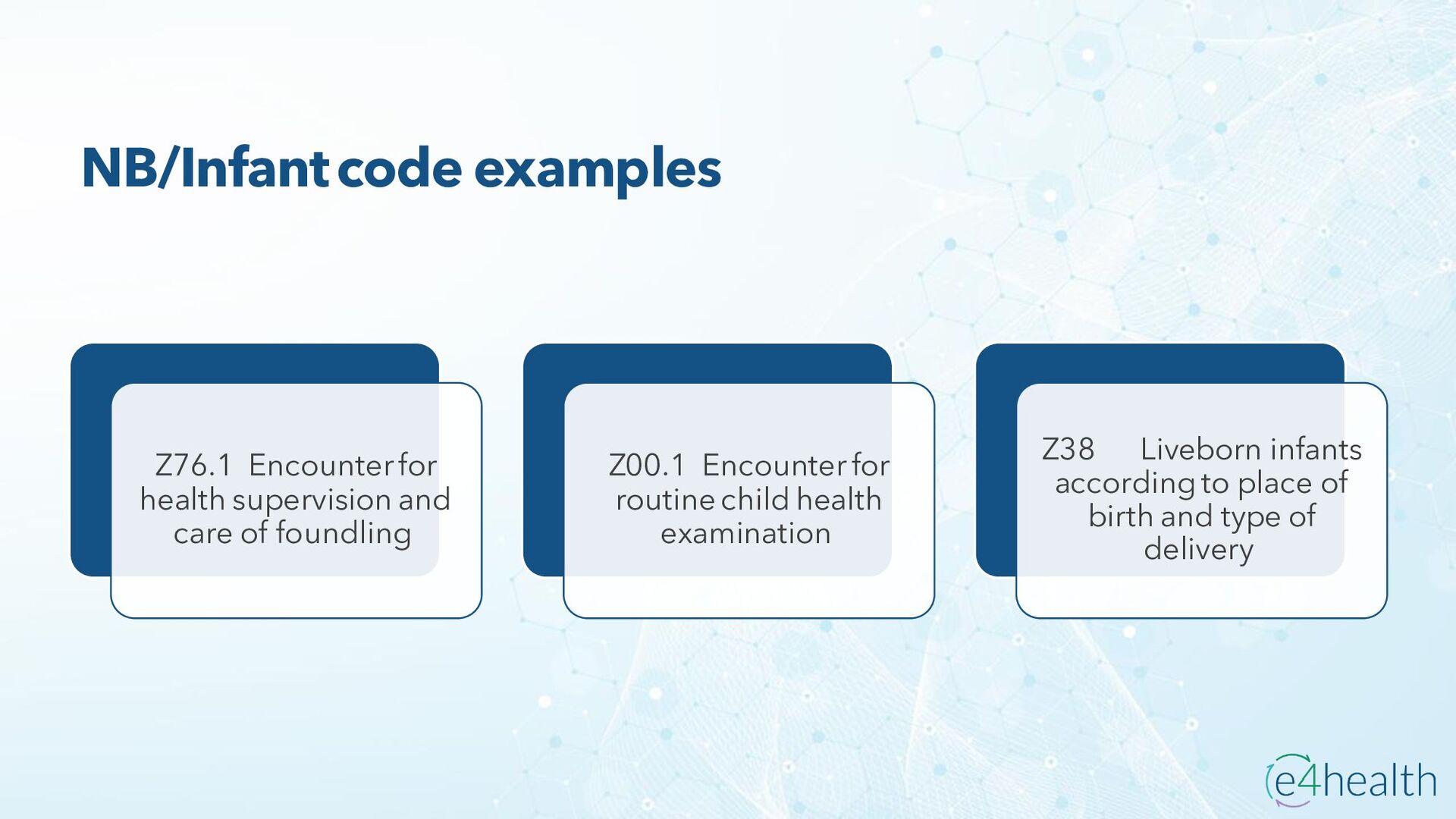
  28. NB/Infant code examples Z76.1 Encounter for health supervision and care

    of foundling Z00.1 Encounter for routine child health examination Z38 Liveborn infants according to place of birth and type of delivery
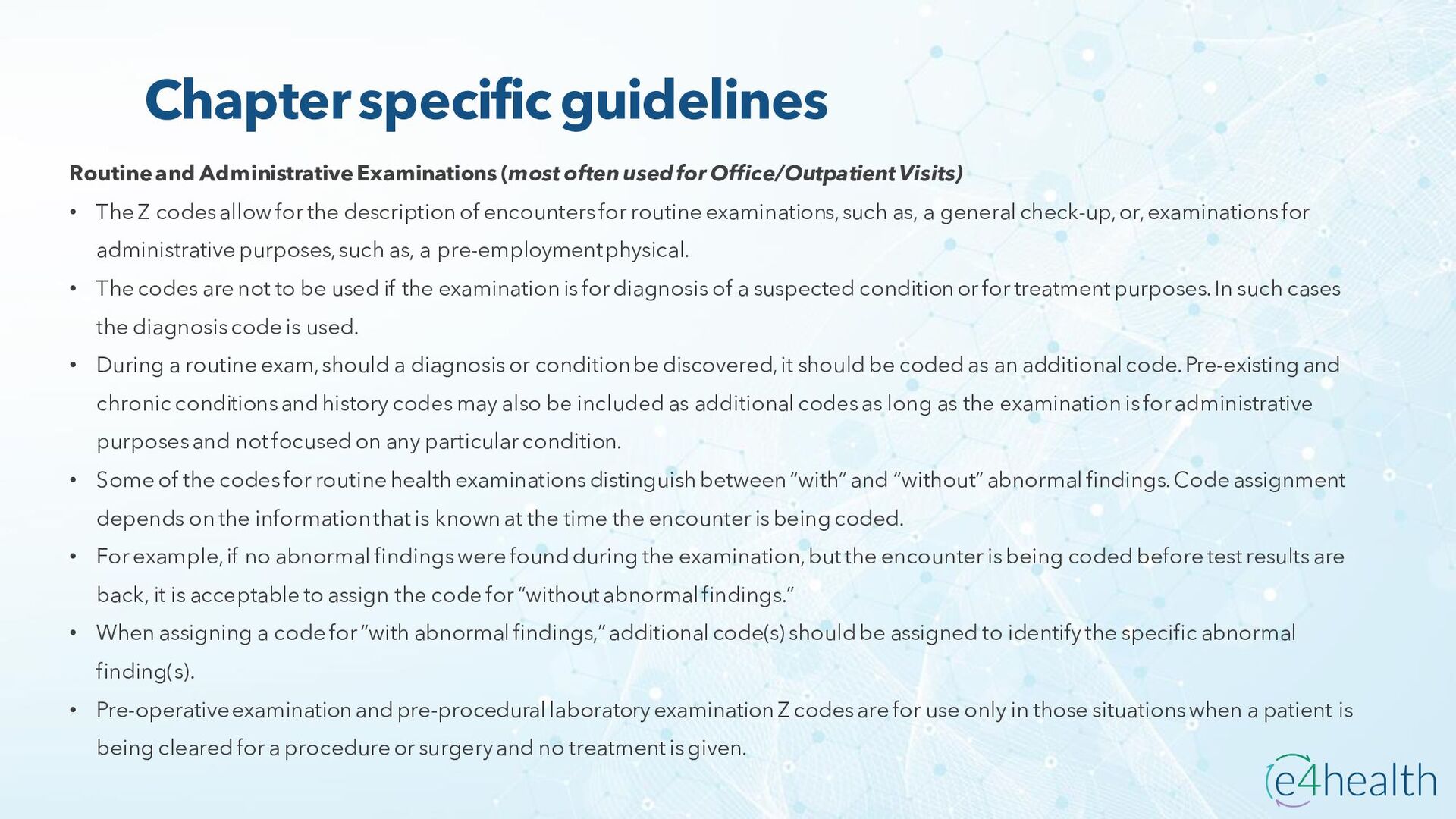
  29. Chapter specific guidelines Routine and Administrative Examinations (most often used

    for Office/Outpatient Visits) • The Z codes allow for the description of encounters for routine examinations, such as, a general check-up, or, examinations for administrative purposes, such as, a pre-employment physical. • The codes are not to be used if the examination is for diagnosis of a suspected condition or for treatment purposes. In such cases the diagnosis code is used. • During a routine exam, should a diagnosis or condition be discovered, it should be coded as an additional code. Pre-existing and chronic conditions and history codes may also be included as additional codes as long as the examination is for administrative purposes and not focused on any particular condition. • Some of the codes for routine health examinations distinguish between “with” and “without” abnormal findings. Code assignment depends on the information that is known at the time the encounter is being coded. • For example, if no abnormal findings were found during the examination, but the encounter is being coded before test results are back, it is acceptable to assign the code for “without abnormal findings.” • When assigning a code for “with abnormal findings,” additional code(s) should be assigned to identify the specific abnormal finding(s). • Pre-operative examination and pre-procedural laboratory examination Z codes are for use only in those situations when a patient is being cleared for a procedure or surgery and no treatment is given.
  30. Chapter specific guidelines Miscellaneous Z Codes • The miscellaneous Z

    codes capture a number of other health care encounters that do not fall into one of the other categories. • Some of these codes identify the reason for the encounter; others are for use as additional codes that provide useful information on circumstances that may affect a patient’s care and treatment. This Photo by Unknown author is licensed under CC BY-SA.
  31. Chapter specific guidelines Prophylactic Organ Removal • For encounters specifically

    for prophylactic removal of an organ (such as prophylactic removal of breasts due to a genetic susceptibility to cancer or a family history of cancer), the principal or first-listed code should be a code from category Z40, Encounter for prophylactic surgery, followed by the appropriate codes to identify the associated risk factor (such as genetic susceptibility or family history). • If the patient has a malignancy of one site and is having prophylactic removal at another site to prevent either a new primary malignancy or metastatic disease, a code for the malignancy should also be assigned in addition to a code from subcategory Z40.0, Encounter for prophylactic surgery for risk factors related to malignant neoplasms. A Z40.0 code should not be assigned if the patient is having organ removal for treatment of a malignancy, such as the removal of the testes for the treatment of prostate cancer.
  32. Chapter specific guidelines Z Codes That May Only be Principal

    Diagnosis • Z00 Encounter for general examination without complaint, suspected or reported diagnosis • Except: Z00.6 Z01 Encounter for other special examination without complaint, suspected or reported diagnosis • Z02 Encounter for administrative examination • Z04 Encounter for examination and observation for other reasons • Z33.2 Encounter for elective termination of pregnancy • Z31.81 Encounter for male factor infertility in female patient • Z31.83 Encounter for assisted reproductive fertility procedure cycle • Z31.84 Encounter for fertility preservation procedure
  33. Chapter specific guidelines Z Codes That May Only be Principal

    Diagnosis • Z34 Encounter for supervision of normal pregnancy • Z39 Encounter for maternal postpartum care and examination • Z38 Liveborn infants according to place of birth and type of delivery • Z40 Encounter for prophylactic surgery • Z42 Encounter for plastic and reconstructive surgery following medical procedure or healed injury • Z51.0 Encounter for antineoplastic radiation therapy • Z51.1- Encounter for antineoplastic chemotherapy and immunotherapy • Z52 Donors of organs and tissues • Except: Z52.9, Donor of unspecified organ or tissue • Z76.1 Encounter for health supervision and care of foundling • Z76.2 Encounter for health supervision and care of other healthy infant and child • Z99.12 Encounter for respirator [ventilator] dependence during power failure
  34. Chapter specific guidelines Social Determinants of Health (SDOH) • Social

    determinants of health (SDOH) codes describing social problems, conditions, or risk factors that influence a patient’s health should be assigned when this information is documented in the patient’s medical record. • Assign as many SDOH codes as are necessary to describe all of the social problems, conditions, or risk factors documented during the current episode of care. • For example, a patient who lives alone may suffer an acute injury temporarily impacting their ability to perform routine activities of daily living. When documented as such, this would support assignment of code Z60.2, Problems related to living alone. However, merely living alone, without documentation of a risk or unmet need for assistance at home, would not support assignment of code Z60.2. • Documentation by a clinician (or patient-reported information that is signed off by a clinician) that the patient expressed concerns with access and availability of food would support assignment of code Z59.41, Food insecurity. • Similarly, medical record documentation indicating the patient is homeless would support assignment of a code from subcategory Z59.0-, Homelessness.
  35. Chapter specific guidelines Social Determinants of Health (SDOH) • For

    social determinants of health, such as information found in categories Z55-Z65, Persons with potential health hazards related to socioeconomic and psychosocial circumstances, code assignment may be based on medical record documentation from clinicians involved in the care of the patient who are not the patient’s provider since this information represents social information, rather than medical diagnoses. • For example, coding professionals may utilize documentation of social information from social workers, community health workers, case managers, or nurses, if their documentation is included in the official medical record. • Patient self-reported documentation may be used to assign codes for social determinants of health, as long as the patient self-reported information is signed-off by and incorporated into the medical record by either a clinician or provider.
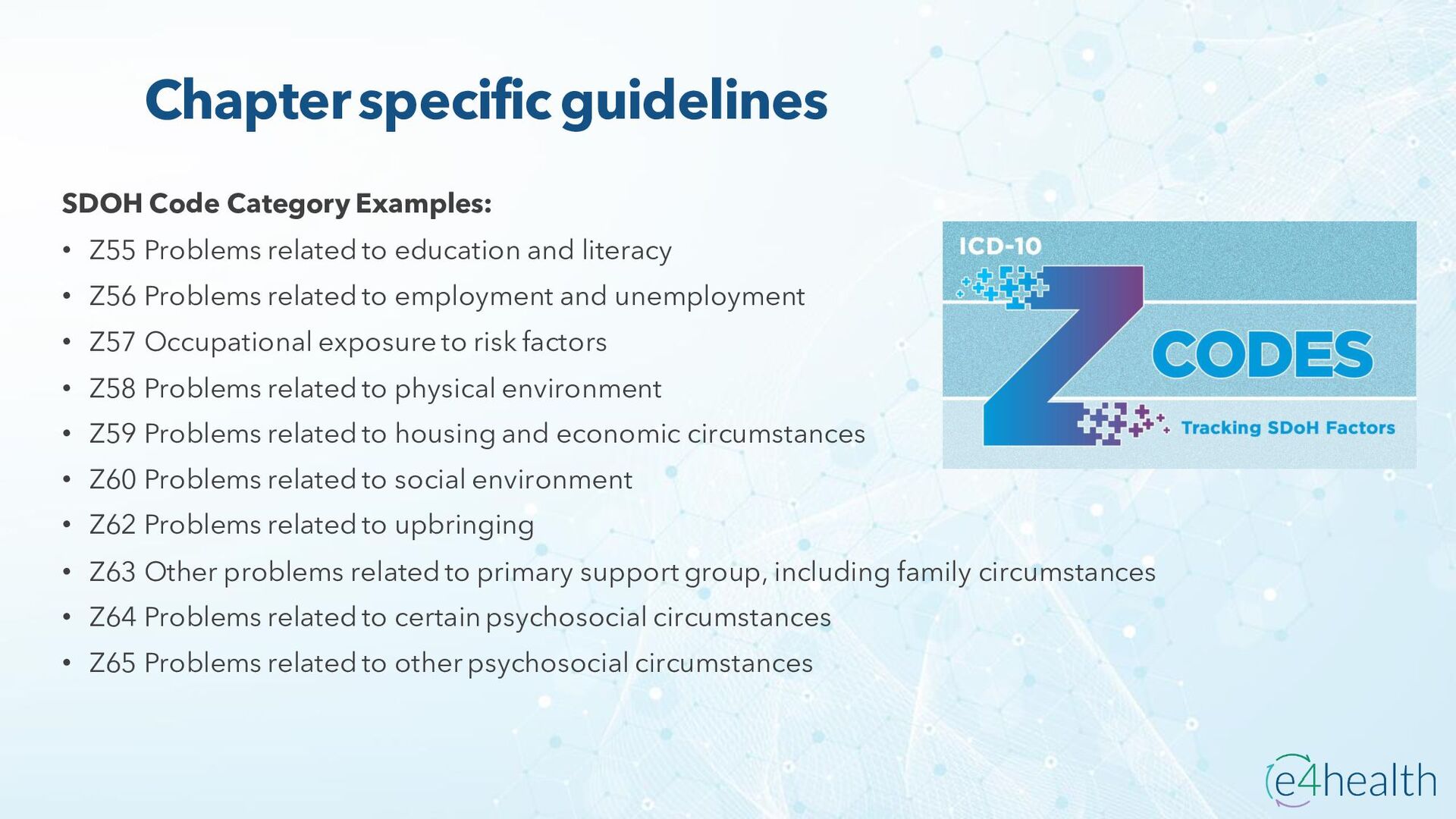
  36. Chapter specific guidelines SDOH Code Category Examples: • Z55 Problems

    related to education and literacy • Z56 Problems related to employment and unemployment • Z57 Occupational exposure to risk factors • Z58 Problems related to physical environment • Z59 Problems related to housing and economic circumstances • Z60 Problems related to social environment • Z62 Problems related to upbringing • Z63 Other problems related to primary support group, including family circumstances • Z64 Problems related to certain psychosocial circumstances • Z65 Problems related to other psychosocial circumstances
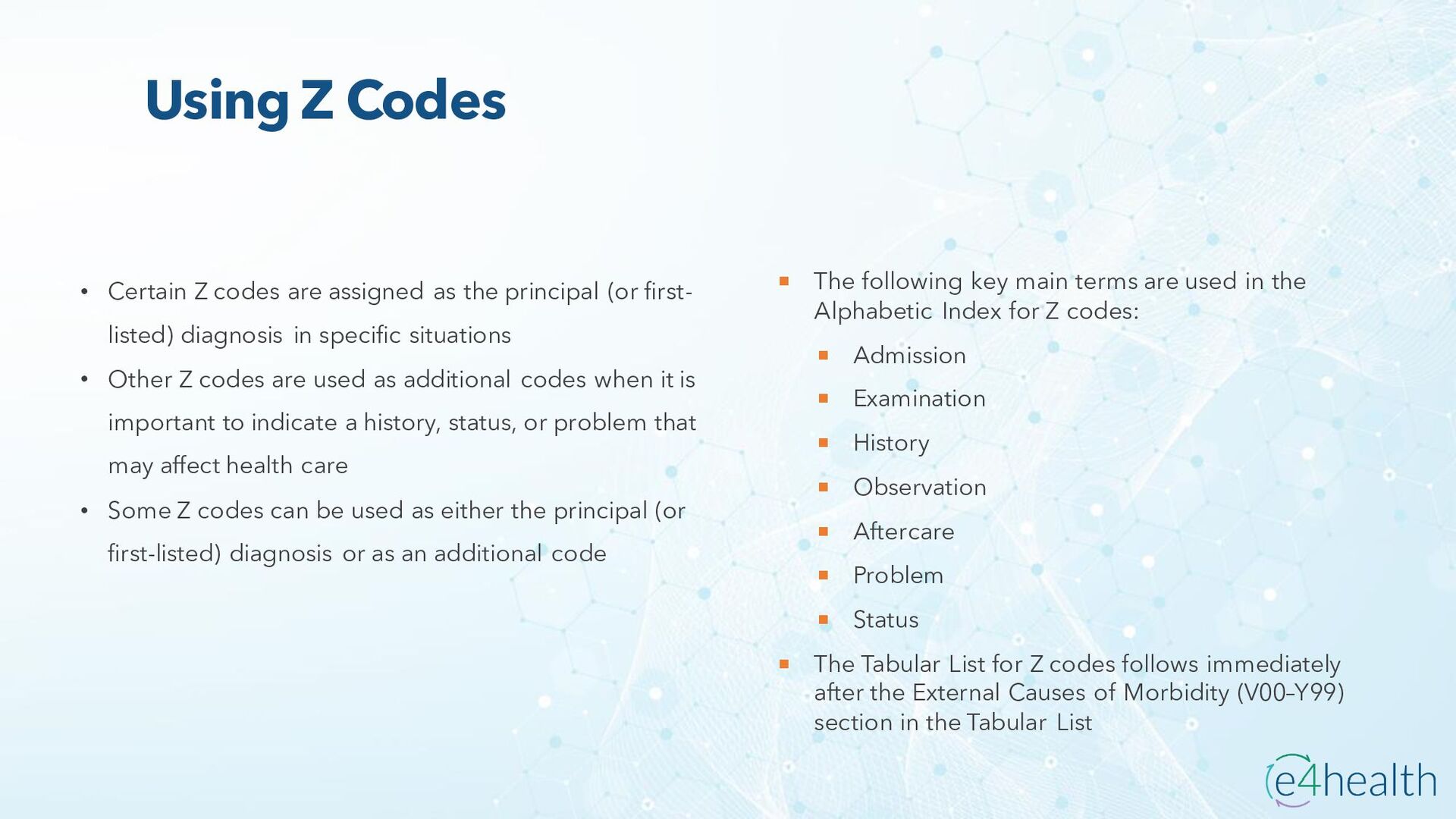
  37. Using Z Codes • Certain Z codes are assigned as

    the principal (or first- listed) diagnosis in specific situations • Other Z codes are used as additional codes when it is important to indicate a history, status, or problem that may affect health care • Some Z codes can be used as either the principal (or first-listed) diagnosis or as an additional code  The following key main terms are used in the Alphabetic Index for Z codes:  Admission  Examination  History  Observation  Aftercare  Problem  Status  The Tabular List for Z codes follows immediately after the External Causes of Morbidity (V00–Y99) section in the Tabular List
  38. Z codes as principal VS Additional diagnosis Z codes are

    used as principal diagnosis to indicate: • That a person with a resolving disease or a chronic condition is being seen for specific aftercare • That the patient is seen for the sole purpose of special therapy • That a person not currently ill is encountering the health service for a specific reason • The birth status of newborns Z codes are used as additional diagnosis to indicate:  That a patient has a history, health status, or other problem that is not in itself an illness or injury but may influence patient care.  The reason for the encounter (e.g. screening or counseling) should be sequenced first and any appropriate personal and/or family history codes should be assigned as additional diagnoses.  The outcome of delivery for obstetric patients
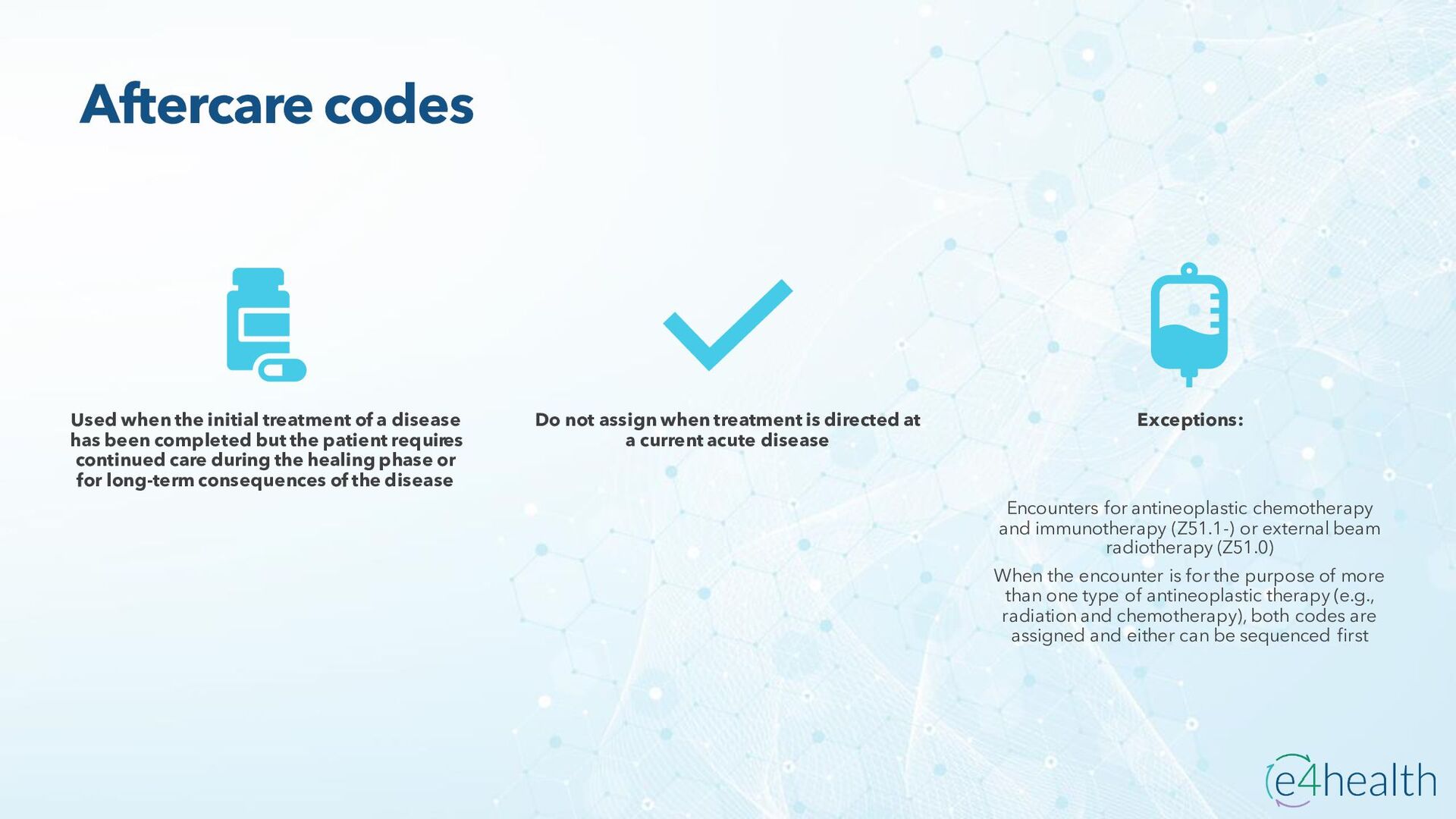
  39. Aftercare codes Used when the initial treatment of a disease

    has been completed but the patient requires continued care during the healing phase or for long-term consequences of the disease Do not assign when treatment is directed at a current acute disease Exceptions: Encounters for antineoplastic chemotherapy and immunotherapy (Z51.1-) or external beam radiotherapy (Z51.0) When the encounter is for the purpose of more than one type of antineoplastic therapy (e.g., radiation and chemotherapy), both codes are assigned and either can be sequenced first
  40. Palliative care • Code Z51.5, Encounter for palliative care, is

    used to classify admissions or encounters for comfort care, end-of-life care, hospice care, and terminal care for terminally ill patients • This code may be used in any health care setting • Palliative care is different from end-of-life (hospice) care, where the patient is not expected to live beyond six months • There is no unique ICD-10-CM code for encounter for hospice care Palliative care is an alternative to aggressive treatment for patients who have a serious illness or are in the terminal phase of an illness
  41. Injury aftercare • The aftercare Z codes should not be

    used for aftercare for injuries • For aftercare of an injury, assign the acute injury code with the appropriate seventh character for subsequent encounter (e.g., “D,” “G,” “K,” or “P” for fractures) • Aftercare codes are generally listed first to explain the specific reason for the encounter • Occasionally, they can be used as additional codes when aftercare is provided during an encounter for treatment of an unrelated condition but no applicable diagnosis code is available  Aftercare codes should be used in conjunction with any other aftercare or diagnosis code(s) to provide better detail on the specifics of an aftercare visit, unless otherwise directed by the classification  The sequencing of multiple aftercare codes depends on the circumstances of the encounter  Certain aftercare Z codes need a secondary diagnosis code to describe the resolving condition or sequelae  Other aftercare Z codes include the condition in the code title
  42. Complication of previous care When the patient is admitted because

    of a complication of previous care, the appropriate code from the main classification is assigned rather than the aftercare Z code These codes should be reported along with any other aftercare codes or other diagnosis codes to provide more detail regarding an aftercare visit
  43. Admission for follow up A code from category Z08, Z09,

    or Z39 is assigned as the principal diagnosis or reason for encounter when a patient is admitted for the purpose of surveillance after the initial treatment of a disease or injury has been completed If a recurrence, extension, or related condition is identified, the code for that condition is assigned as the principal diagnosis rather than a code from category Z08, Z09, or Z39 Code Z09, Encounter for follow-up examination after completed treatment for conditions other than malignant neoplasm, may be assigned as the reason for encounter only when the patient is no longer receiving treatment
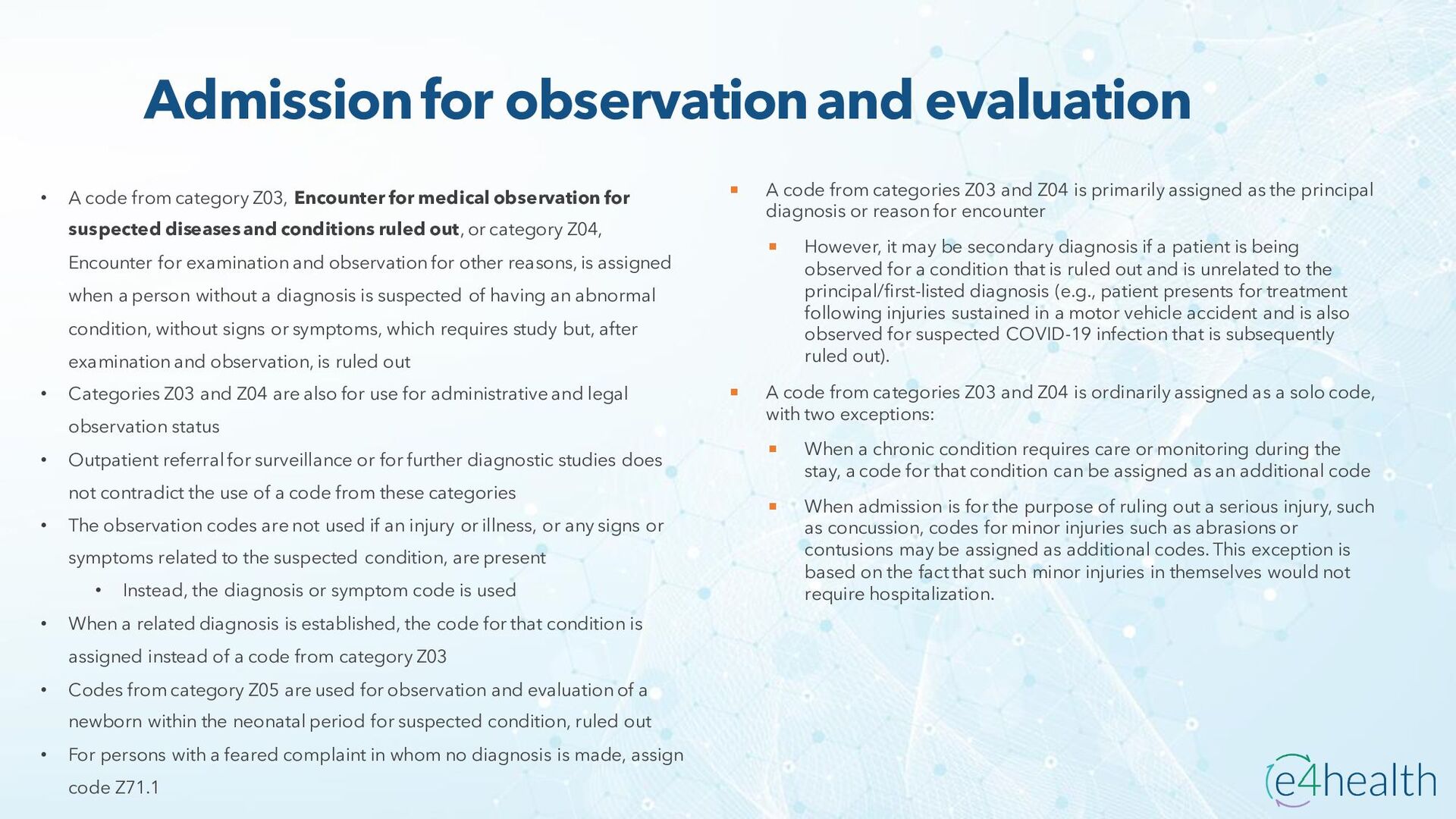
  44. Admission for observation and evaluation • A code from category

    Z03, Encounter for medical observation for suspected diseases and conditions ruled out, or category Z04, Encounter for examination and observation for other reasons, is assigned when a person without a diagnosis is suspected of having an abnormal condition, without signs or symptoms, which requires study but, after examination and observation, is ruled out • Categories Z03 and Z04 are also for use for administrative and legal observation status • Outpatient referral for surveillance or for further diagnostic studies does not contradict the use of a code from these categories • The observation codes are not used if an injury or illness, or any signs or symptoms related to the suspected condition, are present • Instead, the diagnosis or symptom code is used • When a related diagnosis is established, the code for that condition is assigned instead of a code from category Z03 • Codes from category Z05 are used for observation and evaluation of a newborn within the neonatal period for suspected condition, ruled out • For persons with a feared complaint in whom no diagnosis is made, assign code Z71.1  A code from categories Z03 and Z04 is primarily assigned as the principal diagnosis or reason for encounter  However, it may be secondary diagnosis if a patient is being observed for a condition that is ruled out and is unrelated to the principal/first-listed diagnosis (e.g., patient presents for treatment following injuries sustained in a motor vehicle accident and is also observed for suspected COVID-19 infection that is subsequently ruled out).  A code from categories Z03 and Z04 is ordinarily assigned as a solo code, with two exceptions:  When a chronic condition requires care or monitoring during the stay, a code for that condition can be assigned as an additional code  When admission is for the purpose of ruling out a serious injury, such as concussion, codes for minor injuries such as abrasions or contusions may be assigned as additional codes. This exception is based on the fact that such minor injuries in themselves would not require hospitalization.
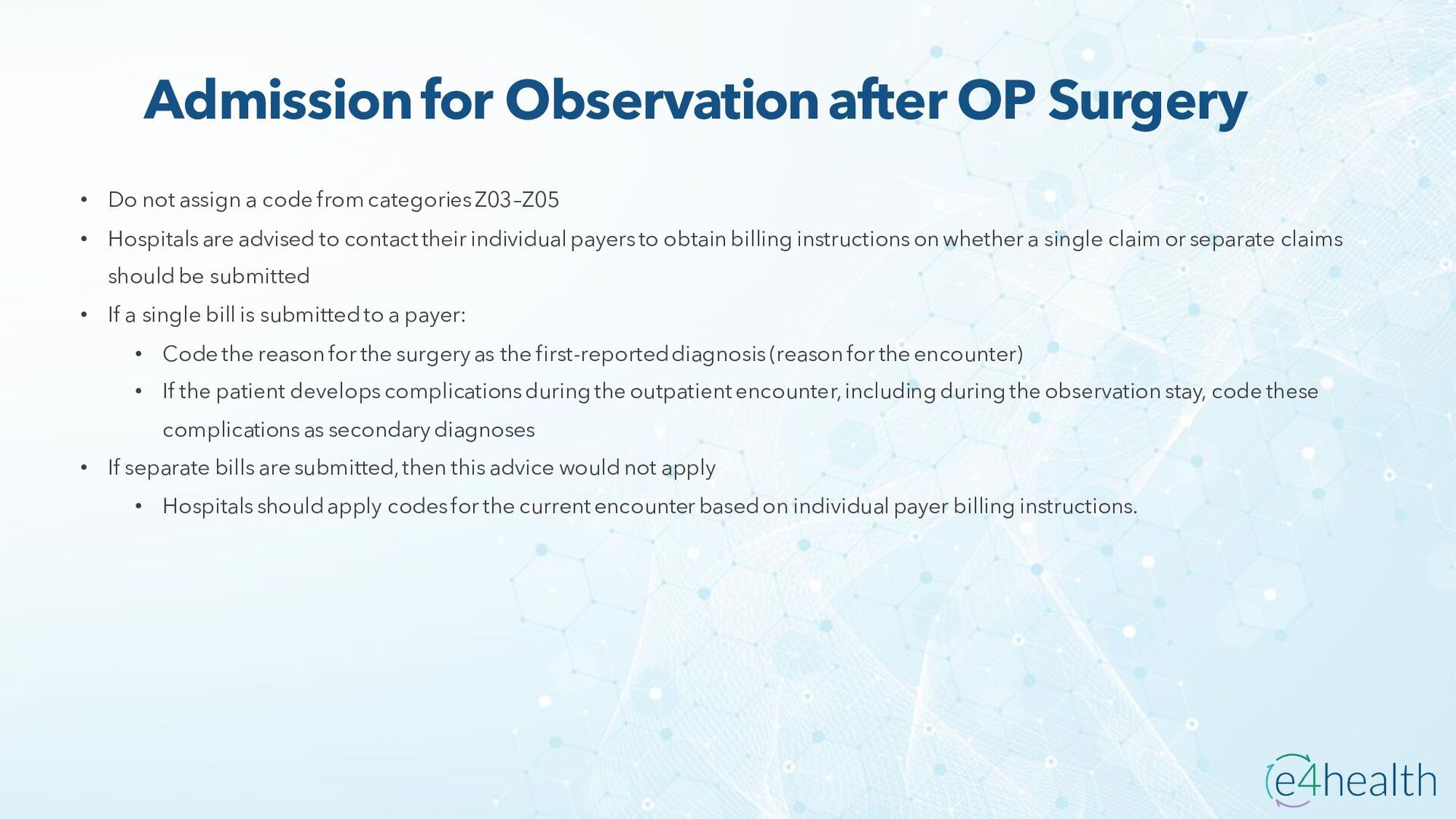
  45. Admission for Observation after OP Surgery • Do not assign

    a code from categories Z03–Z05 • Hospitals are advised to contact their individual payers to obtain billing instructions on whether a single claim or separate claims should be submitted • If a single bill is submitted to a payer: • Code the reason for the surgery as the first-reported diagnosis (reason for the encounter) • If the patient develops complications during the outpatient encounter, including during the observation stay, code these complications as secondary diagnoses • If separate bills are submitted, then this advice would not apply • Hospitals should apply codes for the current encounter based on individual payer billing instructions.
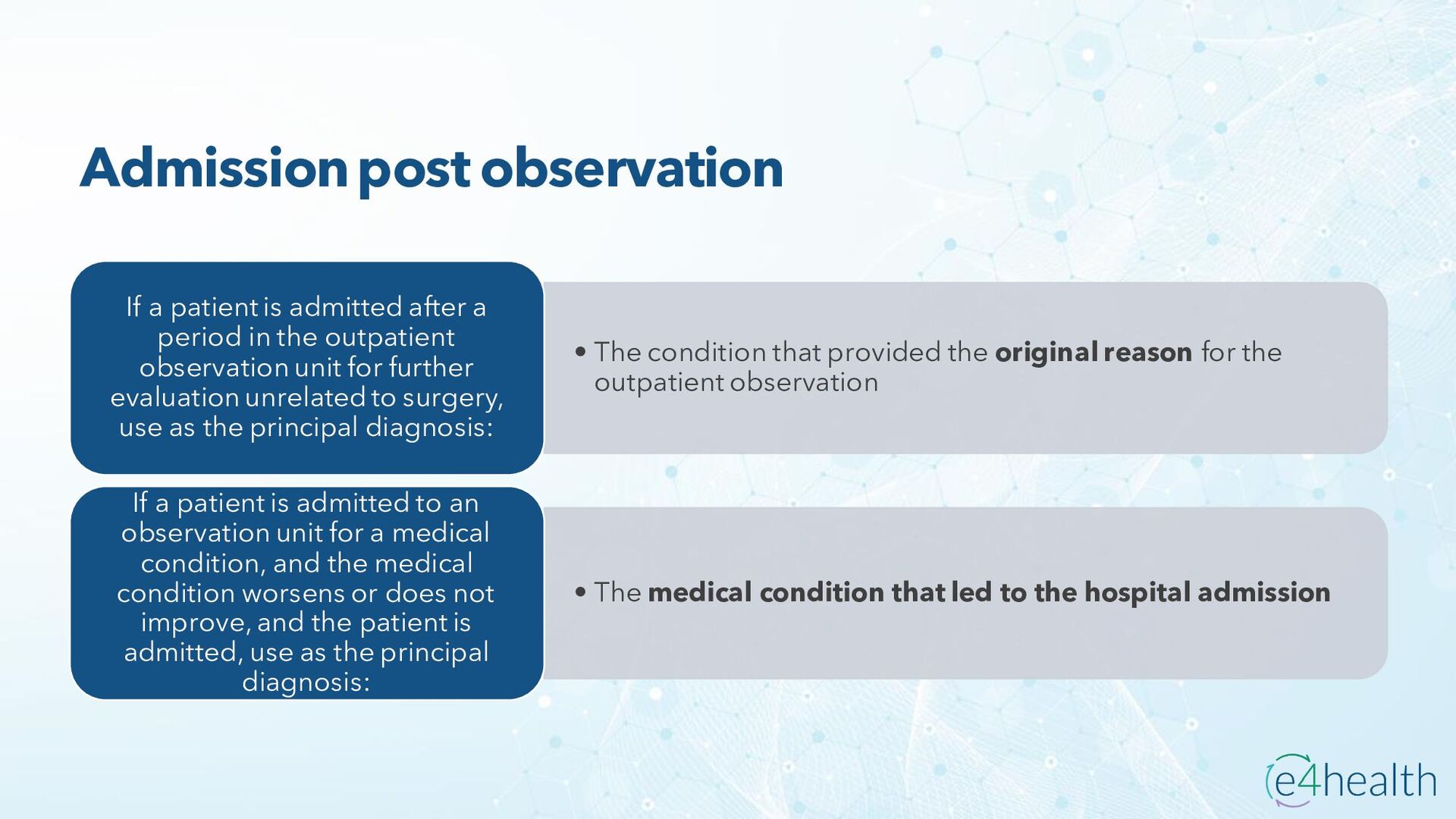
  46. Admission post observation • The condition that provided the original

    reason for the outpatient observation If a patient is admitted after a period in the outpatient observation unit for further evaluation unrelated to surgery, use as the principal diagnosis: • The medical condition that led to the hospital admission If a patient is admitted to an observation unit for a medical condition, and the medical condition worsens or does not improve, and the patient is admitted, use as the principal diagnosis:
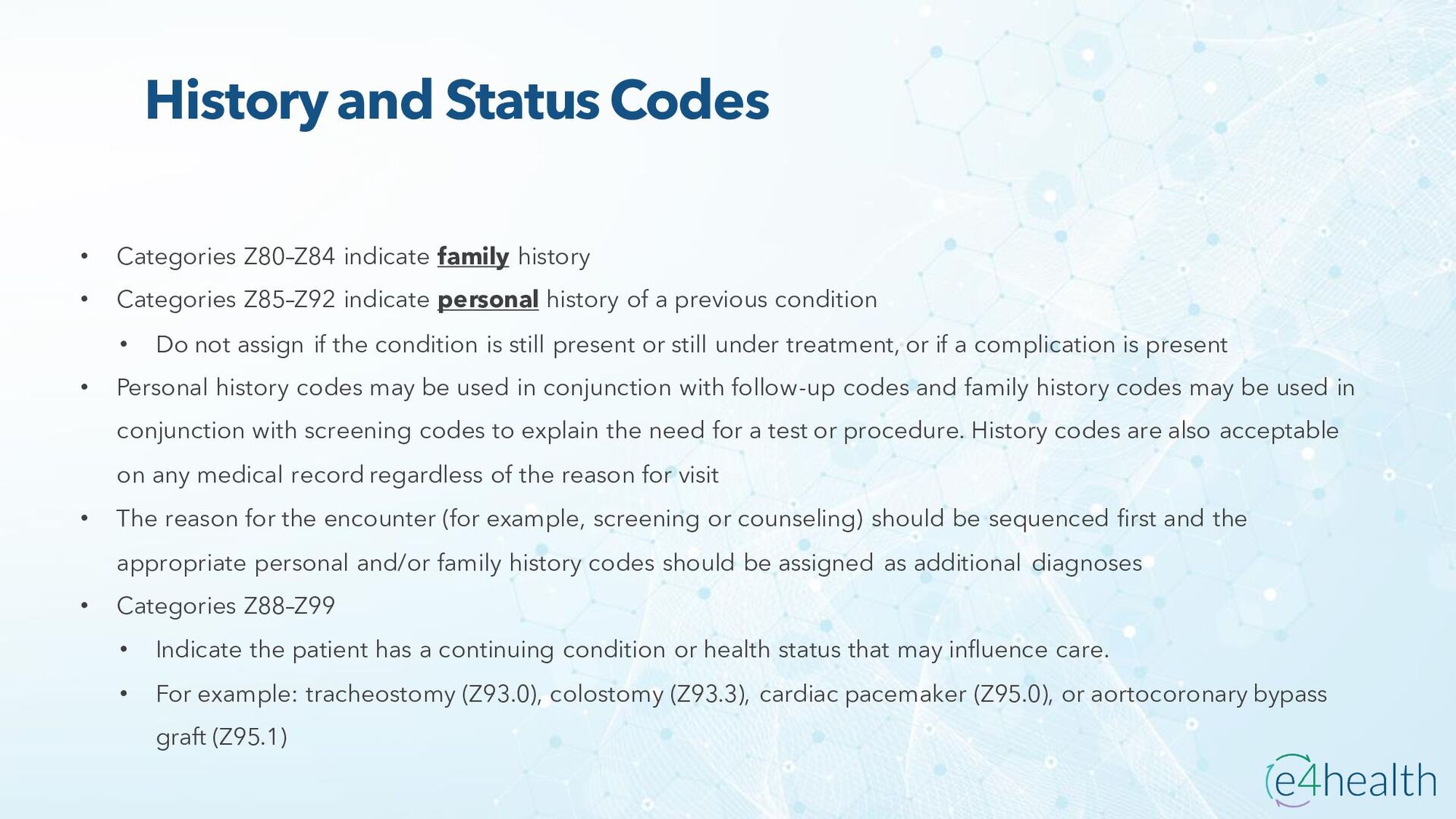
  47. History and Status Codes • Categories Z80–Z84 indicate family history

    • Categories Z85–Z92 indicate personal history of a previous condition • Do not assign if the condition is still present or still under treatment, or if a complication is present • Personal history codes may be used in conjunction with follow-up codes and family history codes may be used in conjunction with screening codes to explain the need for a test or procedure. History codes are also acceptable on any medical record regardless of the reason for visit • The reason for the encounter (for example, screening or counseling) should be sequenced first and the appropriate personal and/or family history codes should be assigned as additional diagnoses • Categories Z88–Z99 • Indicate the patient has a continuing condition or health status that may influence care. • For example: tracheostomy (Z93.0), colostomy (Z93.3), cardiac pacemaker (Z95.0), or aortocoronary bypass graft (Z95.1)
  48. History and Status Codes • Status codes indicate that a

    patient is a carrier of a disease, has the sequelae or residual of a past disease or condition, or has another factor influencing a person’s health status. • Z codes indicating status are redundant when the diagnosis code itself indicates that the status exists • The diagnostic statement “status post” most often refers to an earlier surgery, injury, or previous illness and usually has no significance for the episode of care • No code for the condition is assigned in this case • A personal history code can be assigned if desired • History and status codes ordinarily cannot be used as the principal diagnosis • These codes can be used as additional codes for any patient regardless of the reason for the encounter, but they are ordinarily assigned only when the history, status, or problem has some significance for the episode of care • History codes vs. status codes: • History—Problem no longer exists • Status—Condition is present
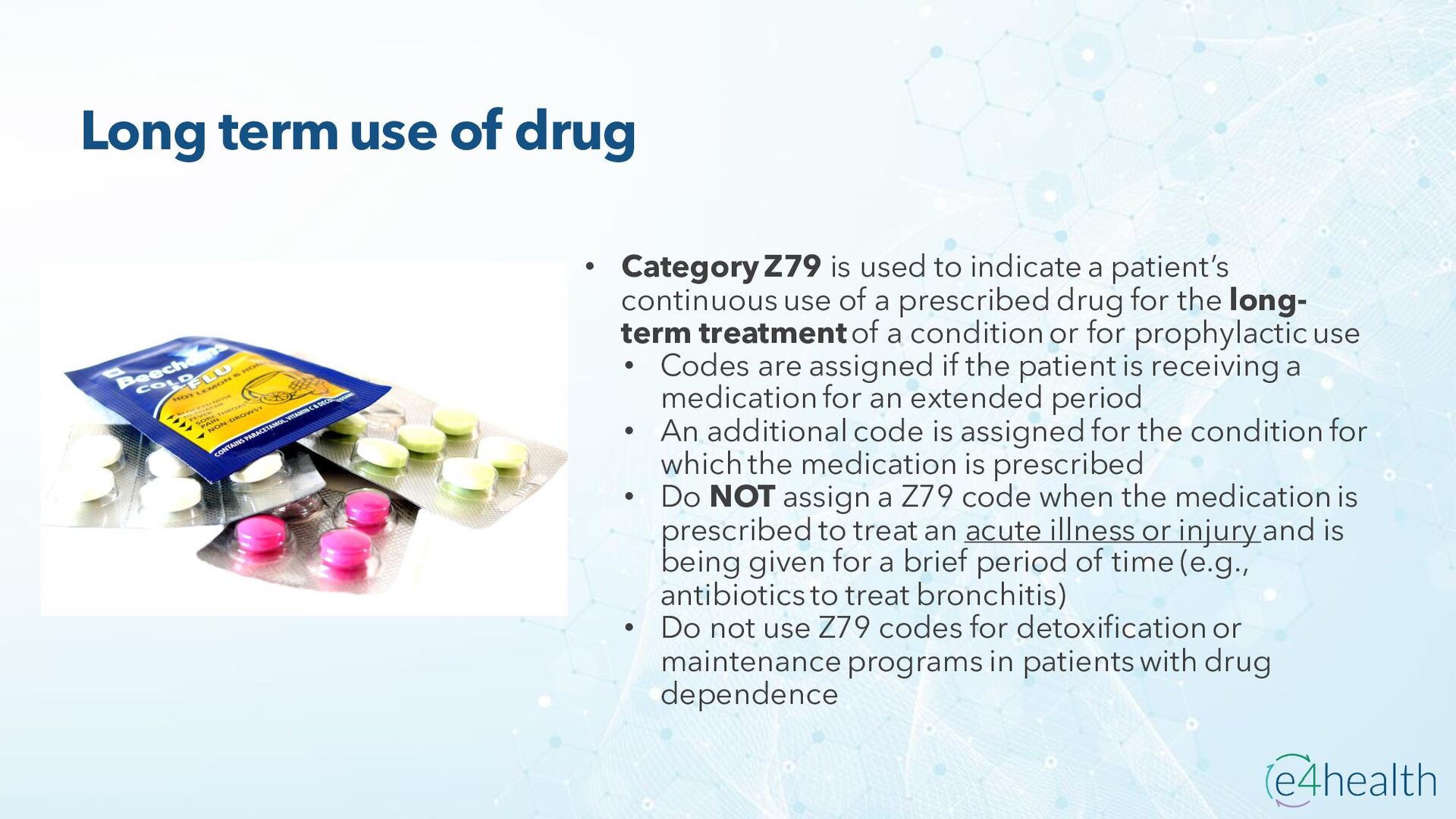
  49. Long term use of drug • Category Z79 is used

    to indicate a patient’s continuous use of a prescribed drug for the long- term treatment of a condition or for prophylactic use • Codes are assigned if the patient is receiving a medication for an extended period • An additional code is assigned for the condition for which the medication is prescribed • Do NOT assign a Z79 code when the medication is prescribed to treat an acute illness or injury and is being given for a brief period of time (e.g., antibiotics to treat bronchitis) • Do not use Z79 codes for detoxification or maintenance programs in patients with drug dependence
  50. Genetic Susceptibility • Genetic susceptibility refers to a genetic predisposition

    for contracting a disease • It is important to distinguish susceptibility from carrier state • An individual who is a carrier of a disease is able to pass it on to an offspring • Codes from category Z15 should not be used as principal or first-listed codes  Patient has the condition to which he/she is susceptible, and that condition is the reason for the encounter:  Code the current condition first, followed by the Z15.- code  Patient is being seen for follow-up after completed treatment for this condition, and the condition no longer exists:  Assign a follow-up code first, followed by the personal history (Z85.- to Z87.-) and genetic susceptibility (Z15.-) codes  The purpose of the encounter is genetic counseling associated with procreative management  Assign code Z31.5, Encounter for procreative genetic counseling, first, followed by a code from category Z15.  Assign additional codes for any applicable family or personal history
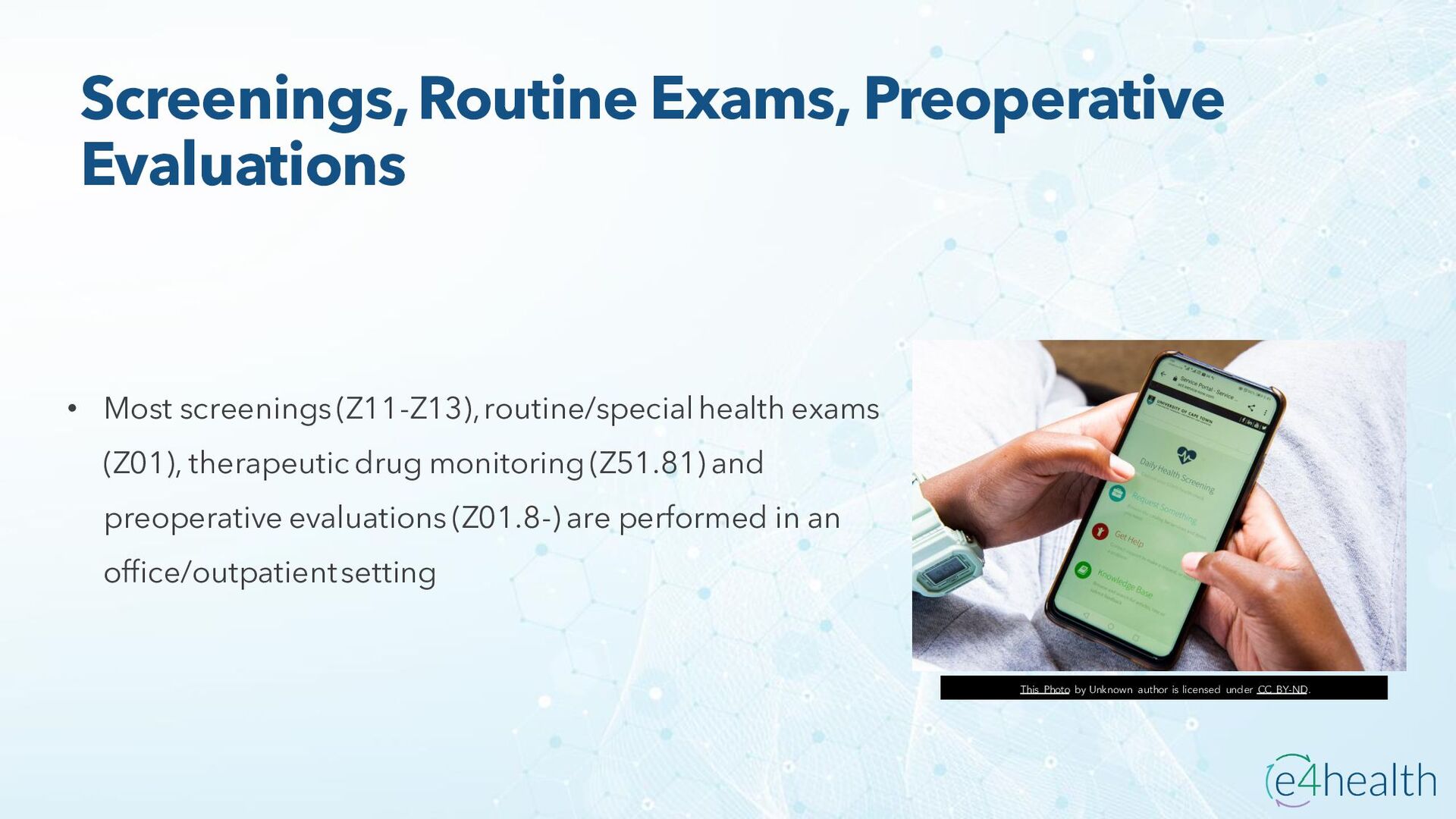
  51. Screenings, Routine Exams, Preoperative Evaluations • Most screenings (Z11-Z13), routine/special

    health exams (Z01), therapeutic drug monitoring (Z51.81) and preoperative evaluations (Z01.8-) are performed in an office/outpatient setting This Photo by Unknown author is licensed under CC BY-ND.
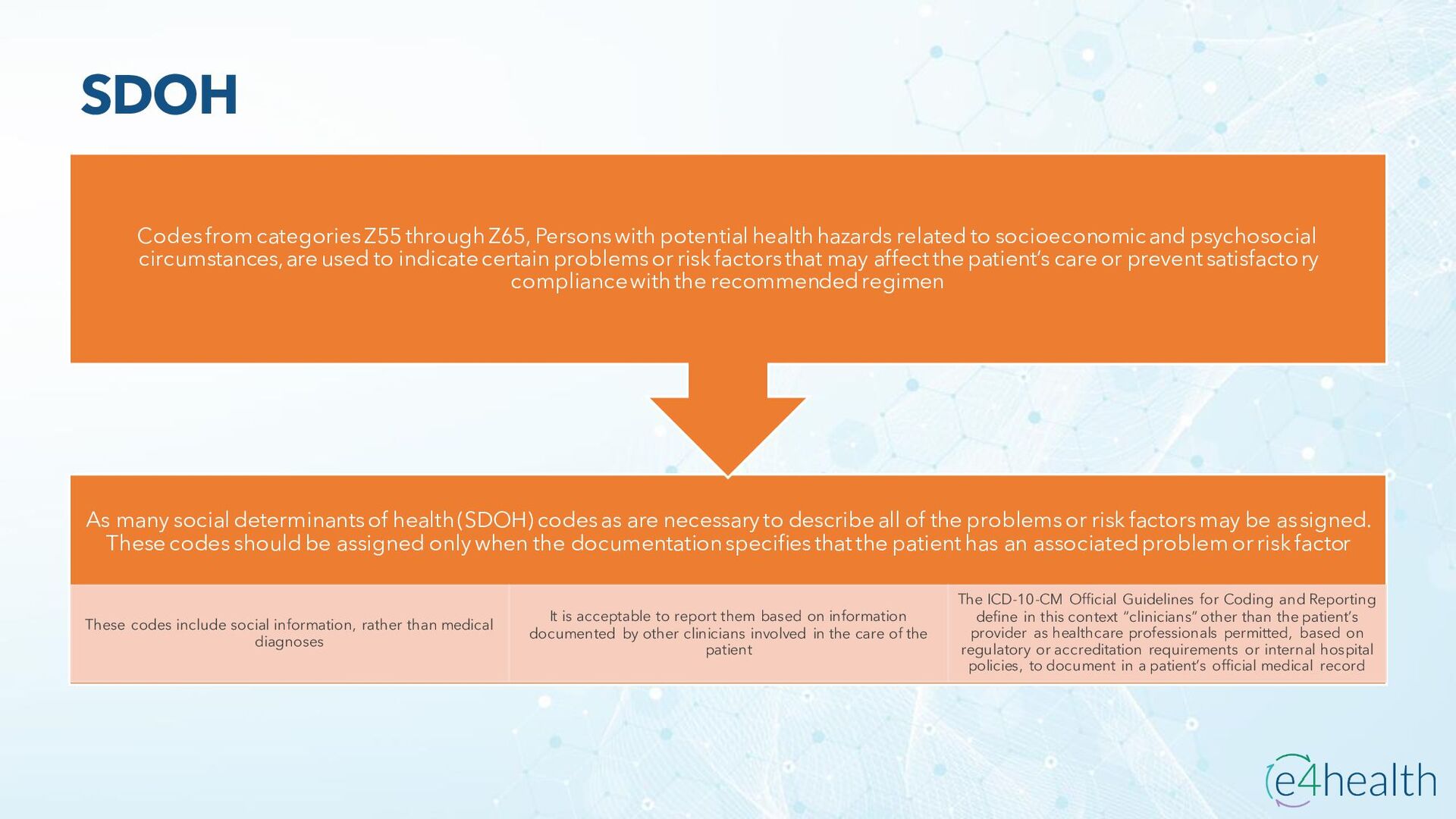
  52. SDOH As many social determinants of health (SDOH) codes as

    are necessary to describe all of the problems or risk factors may be assigned. These codes should be assigned only when the documentation specifies that the patient has an associated problem or risk factor These codes include social information, rather than medical diagnoses It is acceptable to report them based on information documented by other clinicians involved in the care of the patient The ICD-10-CM Official Guidelines for Coding and Reporting define in this context “clinicians” other than the patient’s provider as healthcare professionals permitted, based on regulatory or accreditation requirements or internal hospital policies, to document in a patient’s official medical record Codes from categories Z55 through Z65, Persons with potential health hazards related to socioeconomic and psychosocial circumstances, are used to indicate certain problems or risk factors that may affect the patient’s care or prevent satisfactory compliance with the recommended regimen
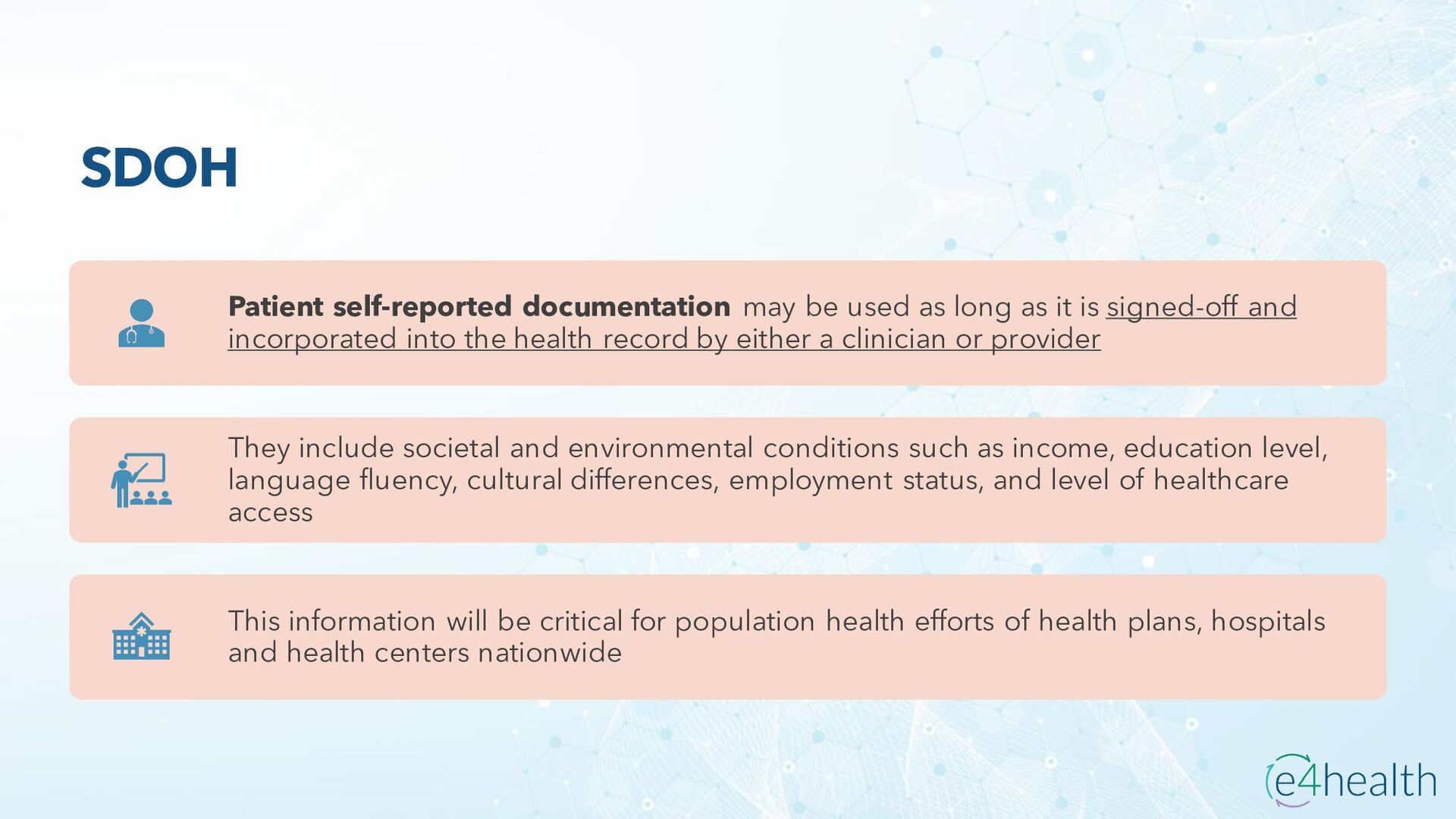
  53. SDOH Patient self-reported documentation may be used as long as

    it is signed-off and incorporated into the health record by either a clinician or provider They include societal and environmental conditions such as income, education level, language fluency, cultural differences, employment status, and level of healthcare access This information will be critical for population health efforts of health plans, hospitals and health centers nationwide
  54. Factors Influencing Health Status General Query opportunity • Review documentation

    to ensure conditions are a history of, status, vs. active condition • Review nursing documentation for any self-reported social determinants of health • Review ER MD notes and H&P for conditions documented as history of, status, vs. active condition • Review and/or query for conditions, such as: • Non-compliance • Homelessness • Long-term use of medications • Lack of transportation – review case managers or social work notes • Lack of insurance – review case managers or social work notes • Lack of financial support – review case managers or social work notes
  55. Coding of Social Determinants Using Non-Physician Documentation Coding Clinic First
    Quarter 2018 Page 18 • Question: Is it appropriate to utilize nonphysician documentation to assign codes that provide information on social determinants of health? For example, codes from categories Z55-Z65, Persons with potential health hazards related to socioeconomic and psychosocial circumstances, provide important information that is typically only found in nurses or social worker documentation. • Answer: Categories Z55-Z65, Persons with potential health hazards related to socioeconomic and psychosocial circumstances, represent social information, rather than medical diagnoses. As such, it is acceptable to report these codes based on information documented by other clinicians involved in the care of the patient.
  56. Coding SDOH Based on Documentation from Other Clinicians Coding Clinic

    Fourth Quarter 2019 Page 67 • Question: Please define "clinicians" in the context of the ICD-10-CM Official Guidelines for Coding and Reporting, which allow code assignment for social determinants of health codes based on medical record documentation from clinicians involved in the care of the patient who are not the patient's provider since this information represents social information, rather than medical diagnoses. For example, may coding professionals utilize documentation of social information from social workers or community health workers in order to assign codes for social determinants of health? • Answer: The ICD-10-CM Official Guidelines for Coding and Reporting do not have a unique definition of the term "clinicians." In the context of code assignment for social determinants of health Z codes, documentation deemed meeting the requirements for inclusion in the patient's official medical record based on regulatory or accreditation requirements or internal hospital policies, could be utilized since the information pertains to social rather than medical information.
  57. Patient Self-Reported Information and SDOH Codes Coding Clinic Fourth Quarter

    2019 Page 66 • Question: Is it appropriate to utilize patient self-reported documentation to assign codes for social determinants of health, such as information found in categories Z55-Z65, Persons with potential health hazards related to socioeconomic and psychosocial circumstances? Currently, the ICD-10-CM Official Guidelines for Coding and Reporting allows code assignment based on medical record documentation from clinicians involved in the care of the patient who are not the patient's provider since this information represents social information, rather than medical diagnoses. • Answer: Yes. If the patient self-reported information is signed-off and incorporated into the health record by either a clinician or provider, it would be appropriate to assign codes from categories Z55-Z65, describing social determinants of health.
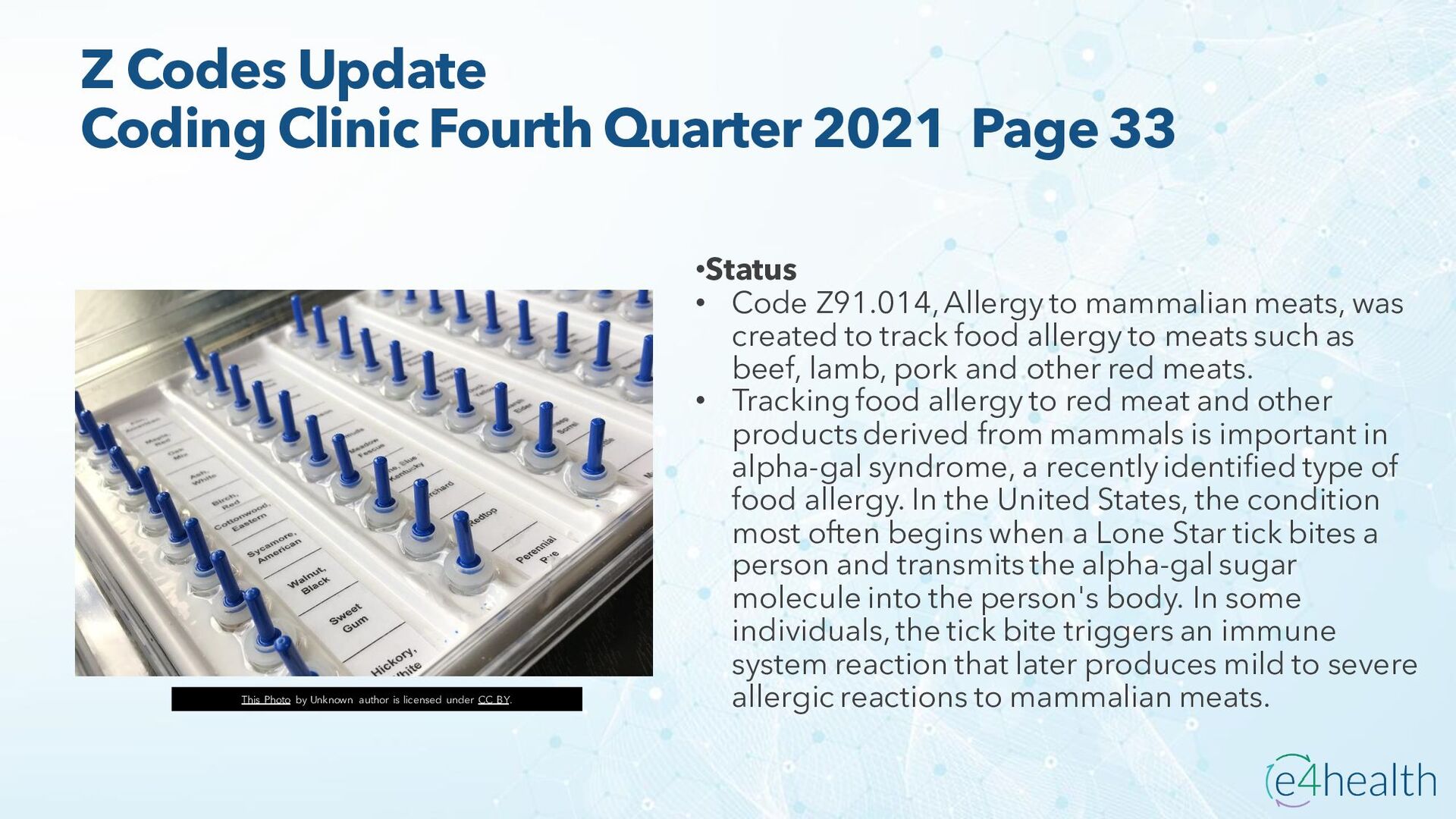
  58. Z Codes Update Coding Clinic Fourth Quarter 2021 Page 33

    •Status • Code Z91.014, Allergy to mammalian meats, was created to track food allergy to meats such as beef, lamb, pork and other red meats. • Tracking food allergy to red meat and other products derived from mammals is important in alpha-gal syndrome, a recently identified type of food allergy. In the United States, the condition most often begins when a Lone Star tick bites a person and transmits the alpha-gal sugar molecule into the person's body. In some individuals, the tick bite triggers an immune system reaction that later produces mild to severe allergic reactions to mammalian meats. This Photo by Unknown author is licensed under CC BY.
  59. Z Codes Update Coding Clinic for ICD-10-CM/PCS 2021 Page 33

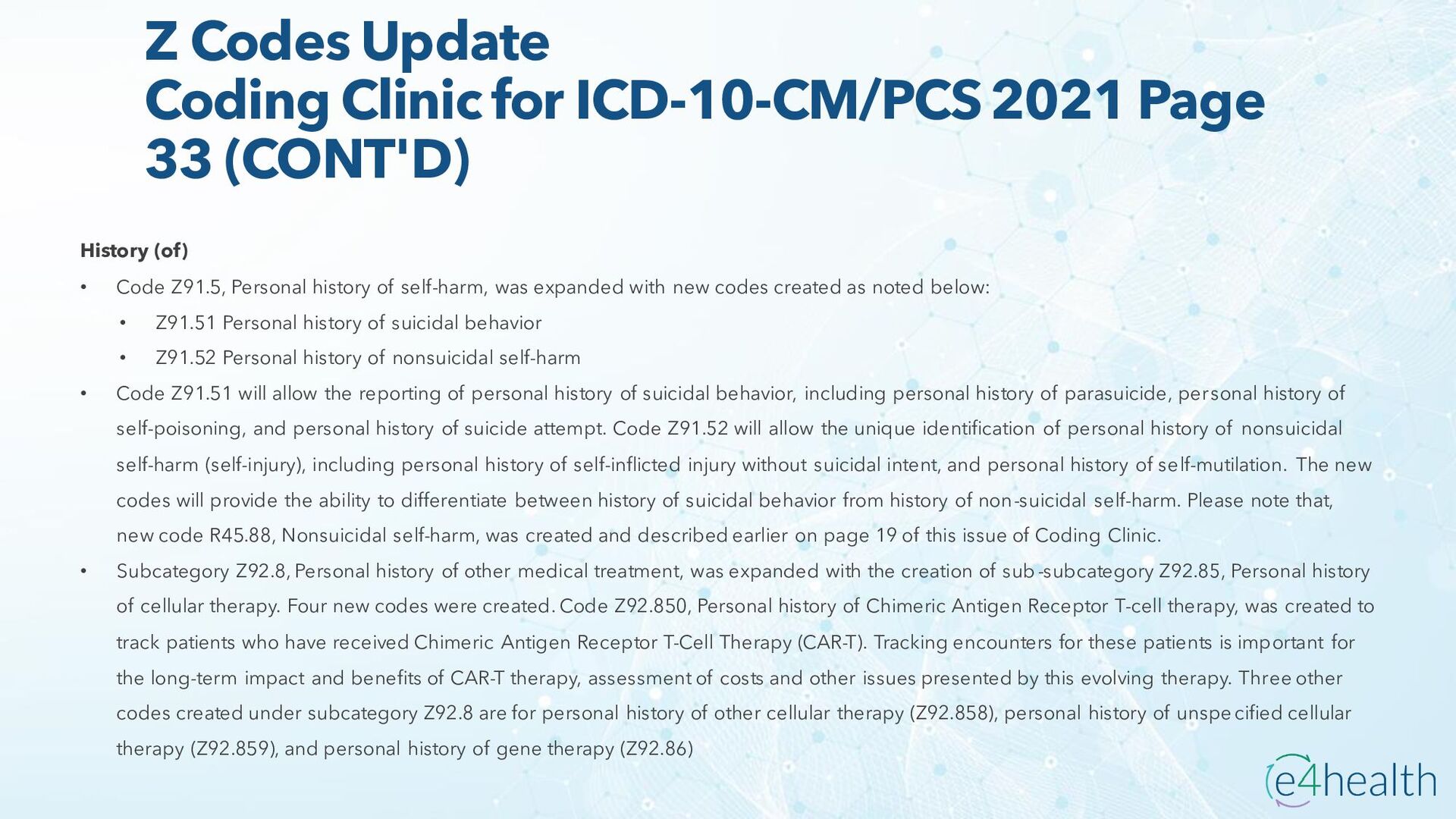
    (CONT'D) History (of) • Code Z91.5, Personal history of self-harm, was expanded with new codes created as noted below: • Z91.51 Personal history of suicidal behavior • Z91.52 Personal history of nonsuicidal self-harm • Code Z91.51 will allow the reporting of personal history of suicidal behavior, including personal history of parasuicide, personal history of self-poisoning, and personal history of suicide attempt. Code Z91.52 will allow the unique identification of personal history of nonsuicidal self-harm (self-injury), including personal history of self-inflicted injury without suicidal intent, and personal history of self-mutilation. The new codes will provide the ability to differentiate between history of suicidal behavior from history of non-suicidal self-harm. Please note that, new code R45.88, Nonsuicidal self-harm, was created and described earlier on page 19 of this issue of Coding Clinic. • Subcategory Z92.8, Personal history of other medical treatment, was expanded with the creation of sub-subcategory Z92.85, Personal history of cellular therapy. Four new codes were created. Code Z92.850, Personal history of Chimeric Antigen Receptor T-cell therapy, was created to track patients who have received Chimeric Antigen Receptor T-Cell Therapy (CAR-T). Tracking encounters for these patients is important for the long-term impact and benefits of CAR-T therapy, assessment of costs and other issues presented by this evolving therapy. Three other codes created under subcategory Z92.8 are for personal history of other cellular therapy (Z92.858), personal history of unspecified cellular therapy (Z92.859), and personal history of gene therapy (Z92.86)
  60. Z CODES UPDATE CODING CLINIC FOR ICD-10-CM/PCSPAGE 33 (CONT'D) Counseling

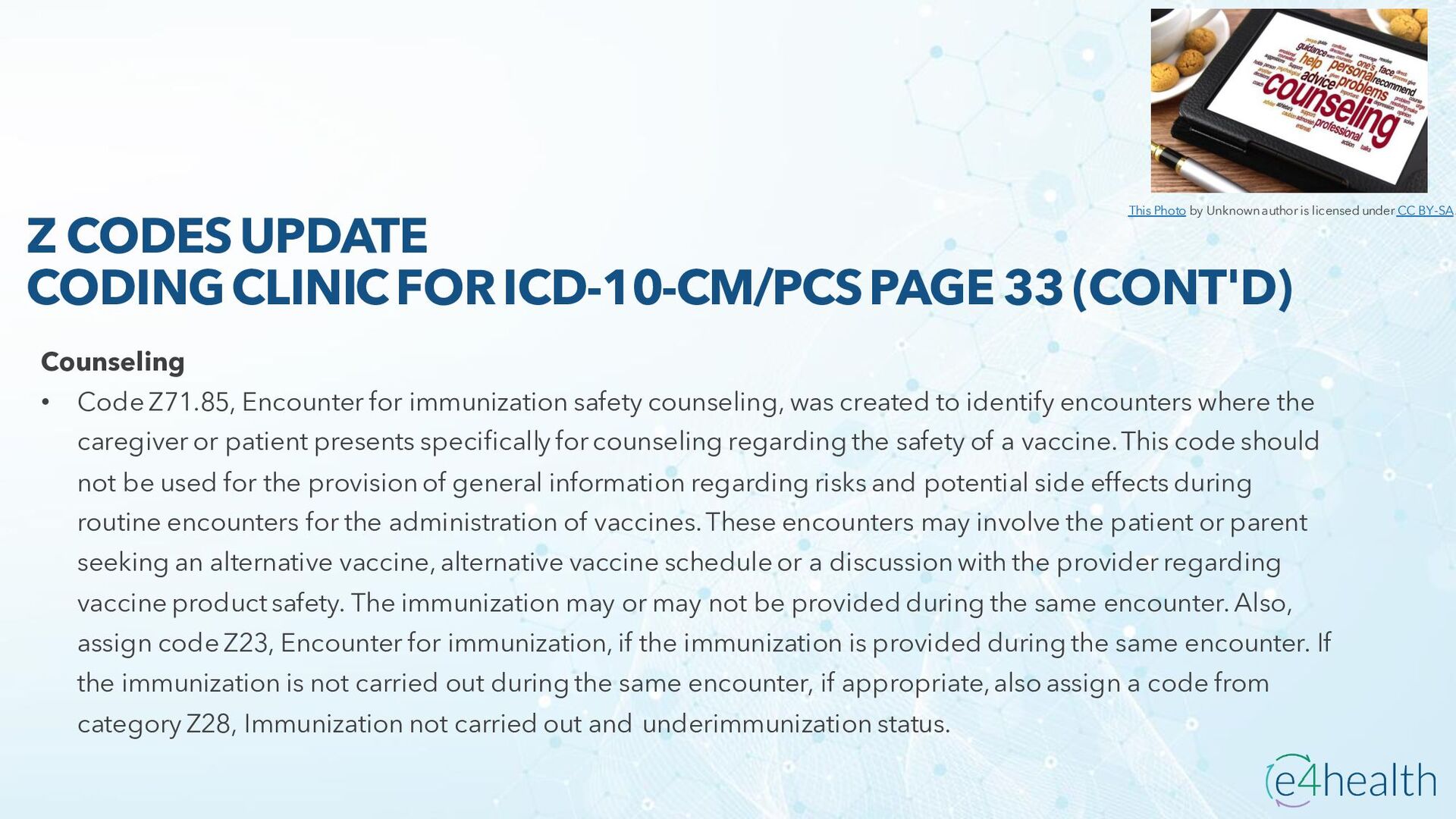
    • Code Z71.85, Encounter for immunization safety counseling, was created to identify encounters where the caregiver or patient presents specifically for counseling regarding the safety of a vaccine. This code should not be used for the provision of general information regarding risks and potential side effects during routine encounters for the administration of vaccines. These encounters may involve the patient or parent seeking an alternative vaccine, alternative vaccine schedule or a discussion with the provider regarding vaccine product safety. The immunization may or may not be provided during the same encounter. Also, assign code Z23, Encounter for immunization, if the immunization is provided during the same encounter. If the immunization is not carried out during the same encounter, if appropriate, also assign a code from category Z28, Immunization not carried out and underimmunization status. This Photo by Unknown author is licensed under CC BY-SA.
  61. Z CODES UPDATE CODING CLINIC FOR ICD-10-CM/PCSPAGE 33 (CONT'D) Social

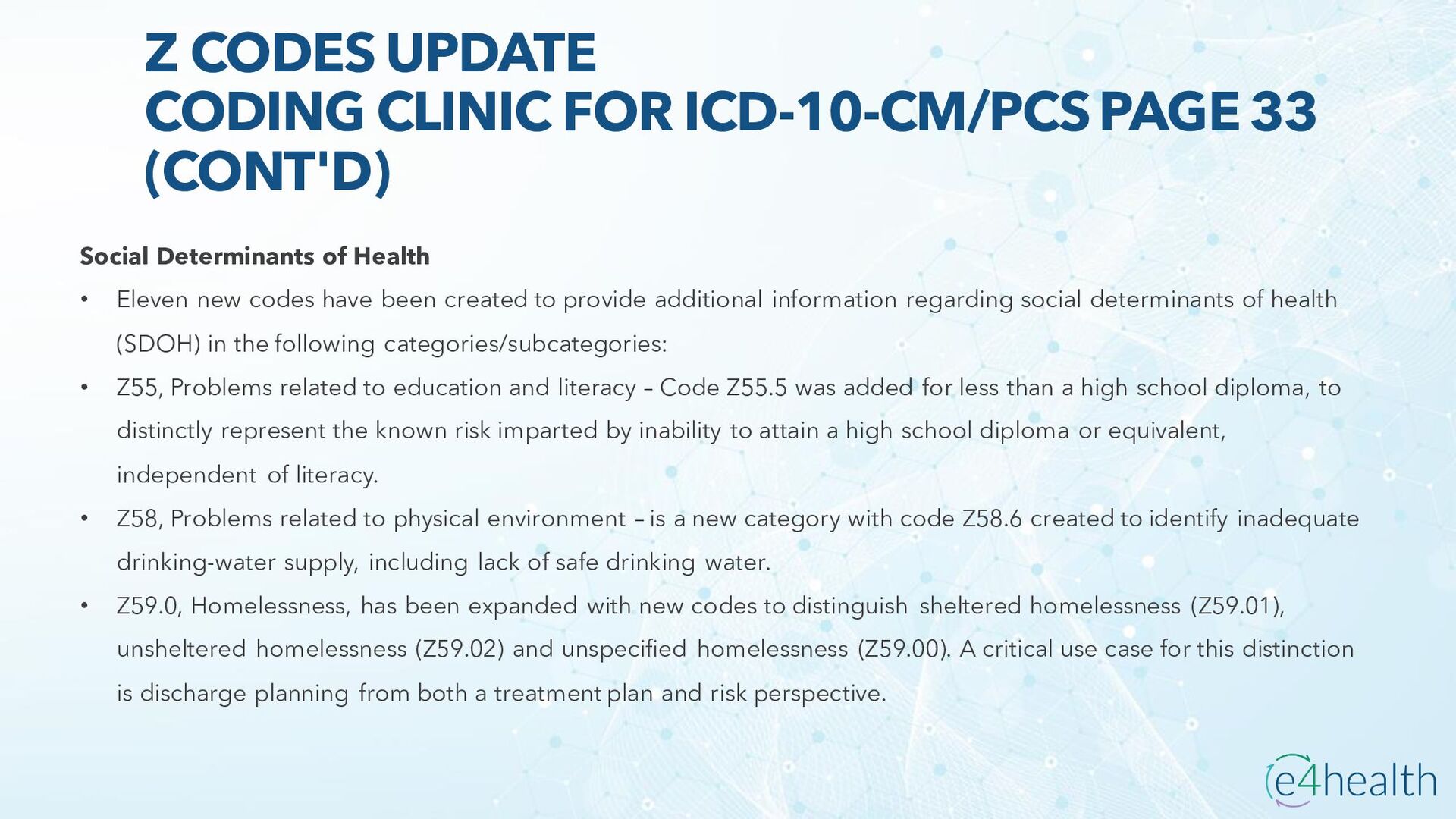
    Determinants of Health • Eleven new codes have been created to provide additional information regarding social determinants of health (SDOH) in the following categories/subcategories: • Z55, Problems related to education and literacy – Code Z55.5 was added for less than a high school diploma, to distinctly represent the known risk imparted by inability to attain a high school diploma or equivalent, independent of literacy. • Z58, Problems related to physical environment – is a new category with code Z58.6 created to identify inadequate drinking-water supply, including lack of safe drinking water. • Z59.0, Homelessness, has been expanded with new codes to distinguish sheltered homelessness (Z59.01), unsheltered homelessness (Z59.02) and unspecified homelessness (Z59.00). A critical use case for this distinction is discharge planning from both a treatment plan and risk perspective.
  62. Z CODES UPDATE CODING CLINIC FOR ICD-10-CM/PCSPAGE 33 (CONT'D) Social

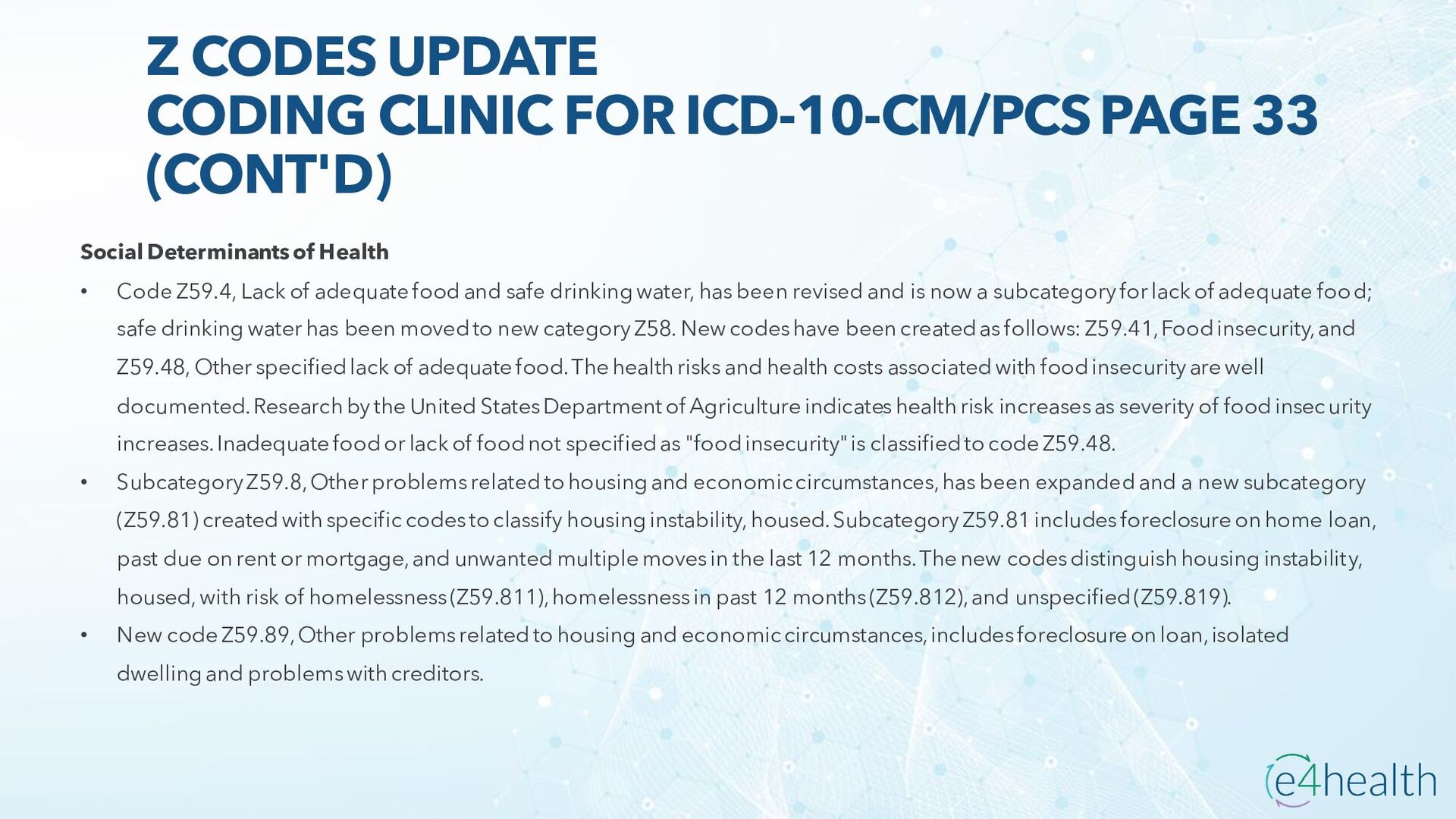
    Determinants of Health • Code Z59.4, Lack of adequate food and safe drinking water, has been revised and is now a subcategory for lack of adequate food; safe drinking water has been moved to new category Z58. New codes have been created as follows: Z59.41, Food insecurity, and Z59.48, Other specified lack of adequate food. The health risks and health costs associated with food insecurity are well documented. Research by the United States Department of Agriculture indicates health risk increases as severity of food insecurity increases. Inadequate food or lack of food not specified as "food insecurity" is classified to code Z59.48. • Subcategory Z59.8, Other problems related to housing and economic circumstances, has been expanded and a new subcategory (Z59.81) created with specific codes to classify housing instability, housed. Subcategory Z59.81 includes foreclosure on home loan, past due on rent or mortgage, and unwanted multiple moves in the last 12 months. The new codes distinguish housing instability, housed, with risk of homelessness (Z59.811), homelessness in past 12 months (Z59.812), and unspecified (Z59.819). • New code Z59.89, Other problems related to housing and economic circumstances, includes foreclosure on loan, isolated dwelling and problems with creditors.
  63. Z CODES UPDATE CODING CLINIC FOR ICD-10-CM/PCSPAGE 33 (CONT'D) Social

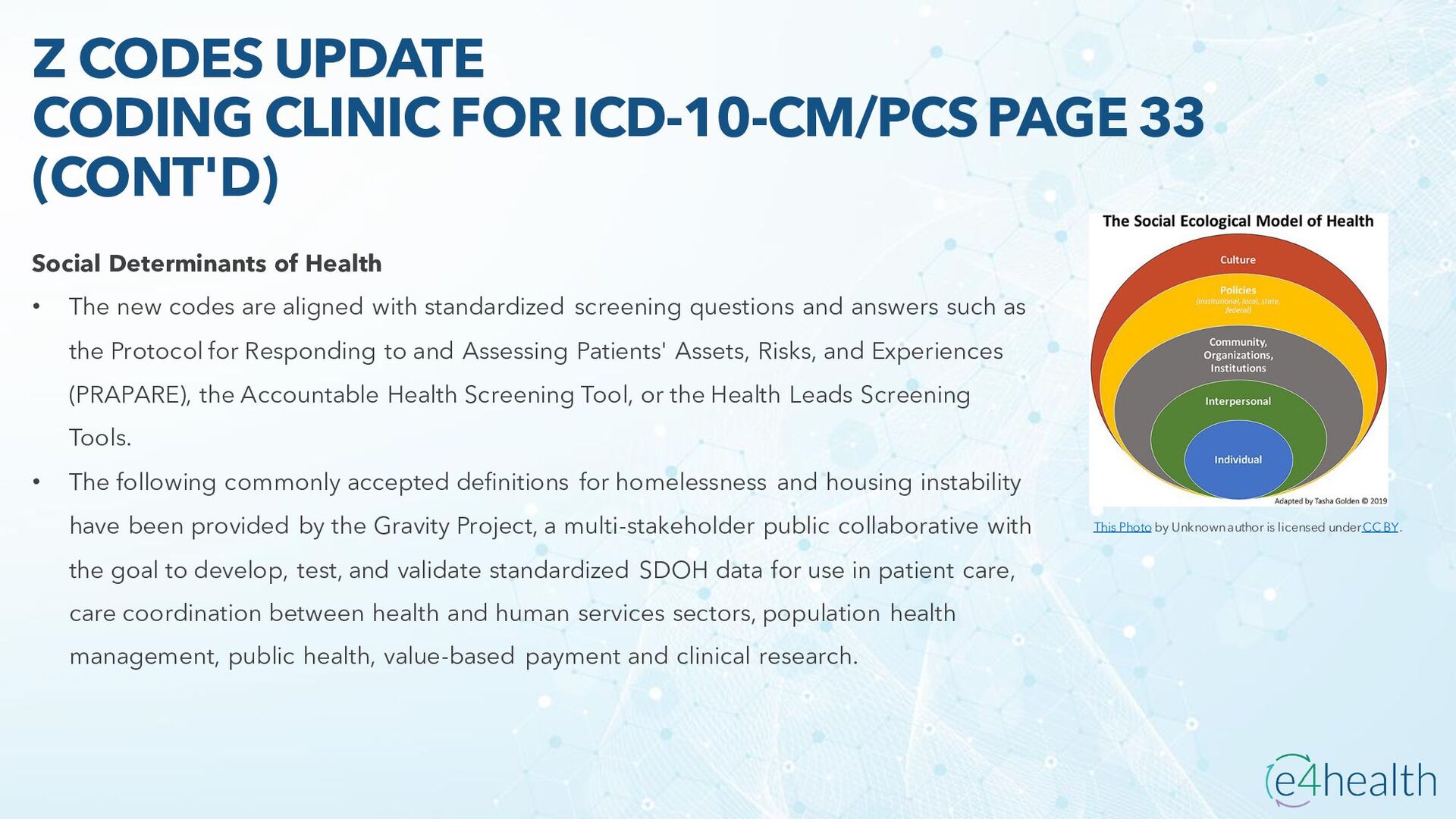
    Determinants of Health • The new codes are aligned with standardized screening questions and answers such as the Protocol for Responding to and Assessing Patients' Assets, Risks, and Experiences (PRAPARE), the Accountable Health Screening Tool, or the Health Leads Screening Tools. • The following commonly accepted definitions for homelessness and housing instability have been provided by the Gravity Project, a multi-stakeholder public collaborative with the goal to develop, test, and validate standardized SDOH data for use in patient care, care coordination between health and human services sectors, population health management, public health, value-based payment and clinical research. This Photo by Unknown author is licensed under CC BY.
  64. Z CODES UPDATE CODING CLINIC FOR ICD-10-CM/PCSPAGE 33 (CONT'D) •

    Homelessness • Defined as because of economic difficulties, currently living in a shelter, motel, temporary or transitional living situation, scattered site housing, not having a consistent place to sleep at night, or sleeping in a place not meant for human habitation. • Source Homelessness During Infancy: Associations With Infant and Maternal Health and Hardship Outcomes • Source Unstable Housing and Caregiver and Child Health in Renter Families • Homelessness, sheltered • Defined as because of economic difficulties, currently living in a shelter, motel, temporary or transitional living situation, scattered site housing, or not having a consistent place to sleep at night. • Source Homelessness During Infancy: Associations With Infant and Maternal Health and Hardship Outcomes • Source Unstable Housing and Caregiver and Child Health in Renter Families • Homelessness, unsheltered • Defined as residing in a place not meant for human habitation, such as cars, parks, sidewalks, abandoned buildings (on the street). • Source HUD
  65. Z CODES UPDATE CODING CLINIC FOR ICD-10-CM/PCSPAGE 33 (CONT'D) •

    Housing instability, housed • Defined as currently consistently housed, but experiencing any of the following circumstances in the past 12 months: being behind on rent or mortgage, multiple moves. • Source Promoting Caregiver and Child Health Through Housing and Stability Screening in Clinical Settings • Housing instability, housed with risk of homelessness • Defined as currently consistently housed, but with the imminent threat of being forced to live in a shelter, motel, temporary or transitional living situation, scattered site housing, not having a consistent place to sleep at night, or in a place not meant for human habitation. • Housing instability, housed, homelessness in the past 12 months • Defined as currently consistently housed, but with a history of homelessness, for any period of time during the past 12 months. • Source Homelessness During Infancy: Associations With Infant and Maternal Health and Hardship Outcomes • Source Unstable Housing and Caregiver and Child Health in Renter Families
  66. Z CODES UPDATE CODING CLINIC FOR ICD-10-CM/PCSPAGE 33 (CONT'D) •

    In addition, the ICD-10-CM Official Guidelines for Coding and Reporting have been revised and a new section created for Social Determinants of Health under Chapter 21, Factors influencing health status and contact with health services. Information previously found in Section I of the guidelines related to documentation that may be used for code assignment for social determinants of health has been moved to this newly created section. For the specific changes, please refer to the summary of the modifications to the ICD-10-CM Official Guidelines for Coding and Reporting, starting on page 61 of this issue.
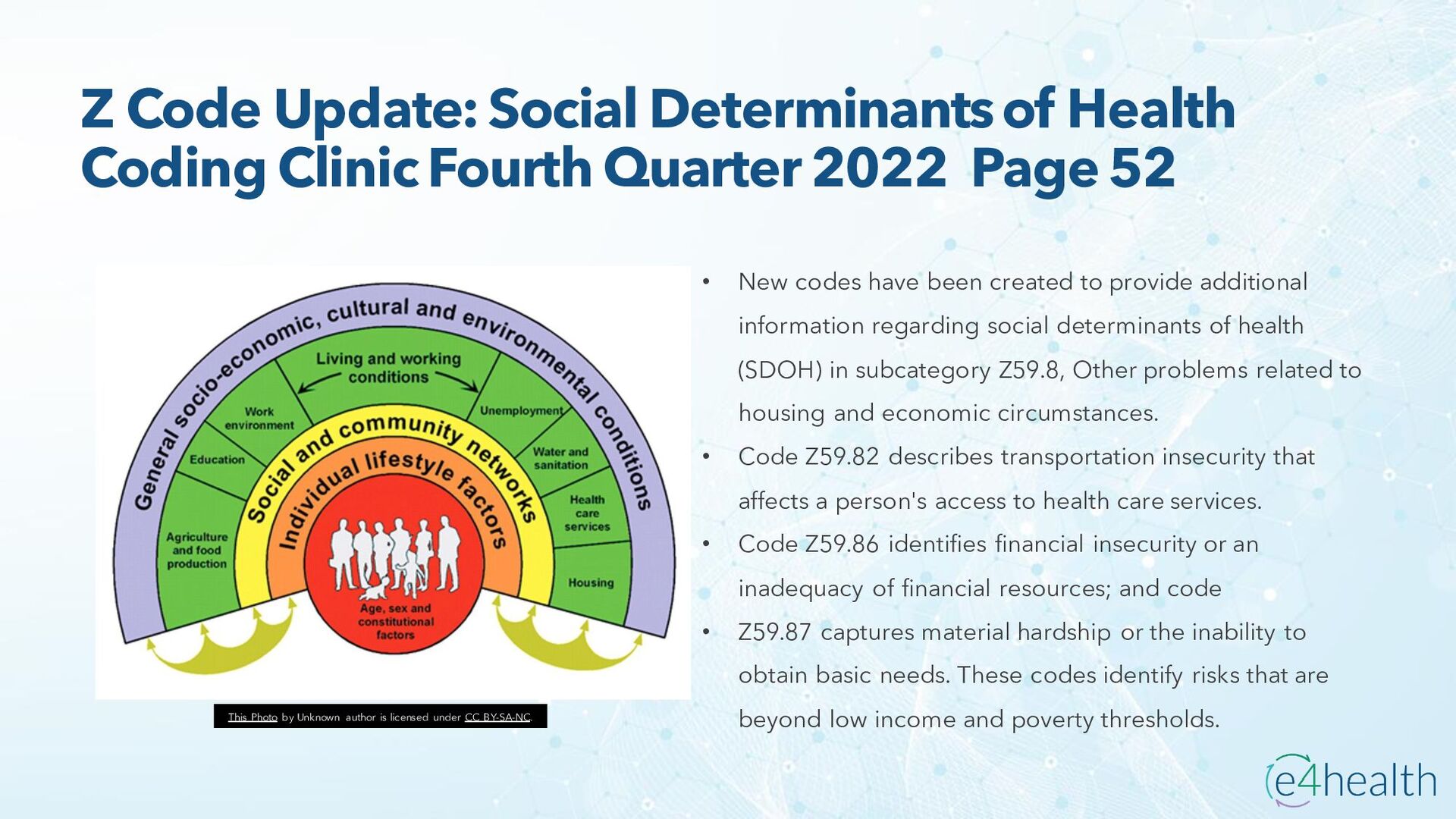
  67. Z Code Update: Social Determinants of Health Coding Clinic Fourth

    Quarter 2022 Page 52 • New codes have been created to provide additional information regarding social determinants of health (SDOH) in subcategory Z59.8, Other problems related to housing and economic circumstances. • Code Z59.82 describes transportation insecurity that affects a person's access to health care services. • Code Z59.86 identifies financial insecurity or an inadequacy of financial resources; and code • Z59.87 captures material hardship or the inability to obtain basic needs. These codes identify risks that are beyond low income and poverty thresholds. This Photo by Unknown author is licensed under CC BY-SA-NC.
  68. References • AHA ICD-10-CM and ICD-10-PCS Coding Handbook • ICD-10-PCS:

    An Applied Approach 2023 • Cengage: 3-2-1 CODE IT! • Medical Terminology Systems, 8th Edition • https://centralkneeclinic.co.uk/treatment/knee-replacements/total-knee-replacement/ • https://www.mayoclinic.org/tests-procedures/pacemaker/about/pac-20384689 • https://theparisnews.com/understanding-the-differences-between-a-pacemaker-and-a- defibrillator/article_584a1395-42f4-5dbc-b152-a5a5815d7572.html