$30 off During Our Annual Pro Sale. View Details »

FY 2024: MDC 5 - Circulatory System - Medical

Avatar for e4health e4health PRO
April 03, 2024
1.4k

FY 2024: MDC 5 - Circulatory System - Medical

Avatar for e4health

e4health PRO

April 03, 2024
Tweet

Transcript

  1. H I M | C O D I N G

    & C D I | H E A LT H I T | R E V C Y C L E Empowering Better Health e4health tackles healthcare’s data, quality and revenue challenges empowering your providers to focus on better care.
  2. Objectives • Review MDC 5- Diseases and Disorders of the

    Circulatory System with a focus on selected diagnoses • Learner will acquire a basic understanding of the diagnoses included in MDC-5 • Discuss Query opportunities in MDC-5 • Review coding clinics relevant to the chosen topics in each DRG
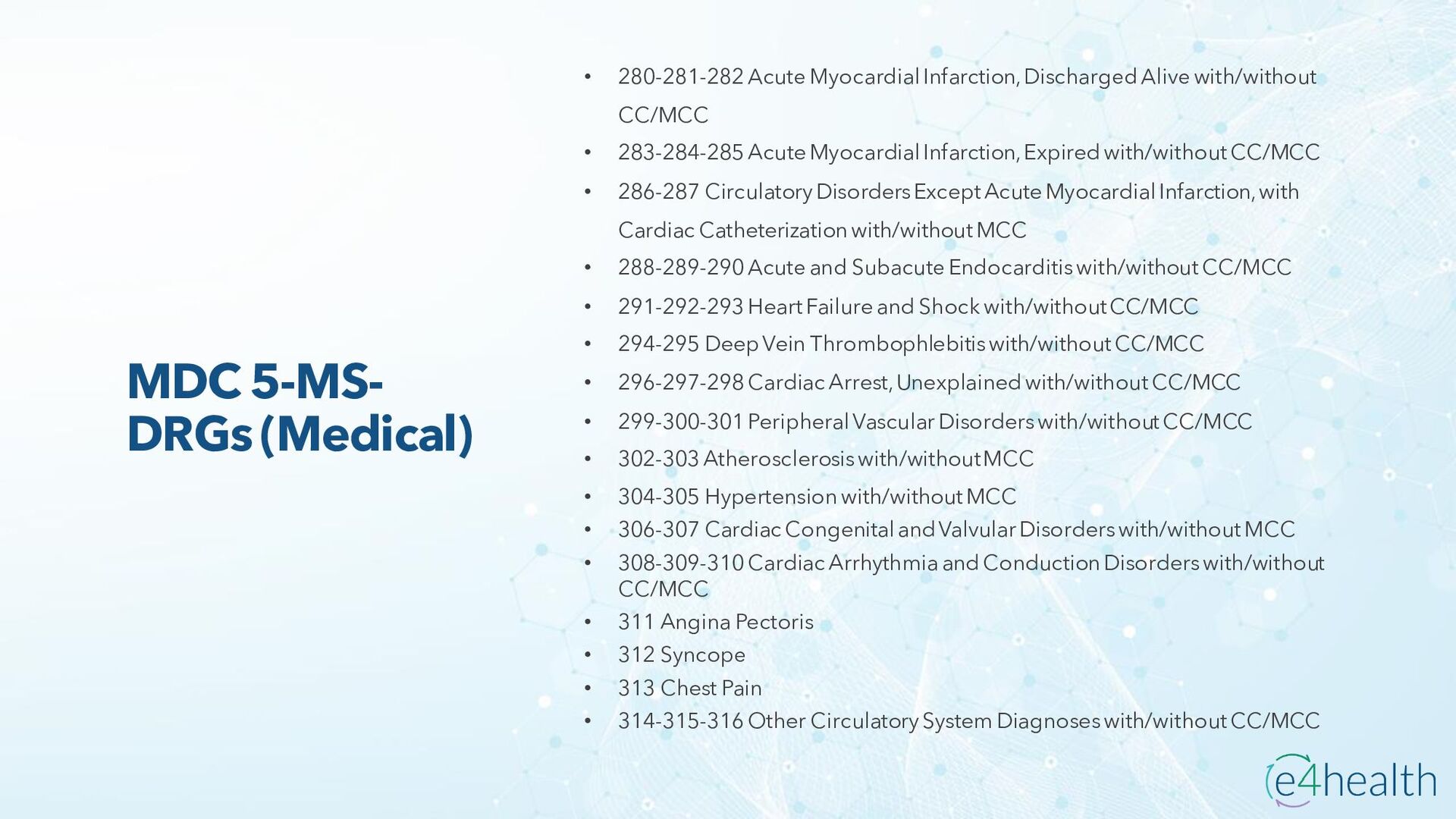
  3. MDC 5-MS- DRGs (Medical) • 280-281-282 Acute Myocardial Infarction, Discharged

    Alive with/without CC/MCC • 283-284-285 Acute Myocardial Infarction, Expired with/without CC/MCC • 286-287 Circulatory Disorders Except Acute Myocardial Infarction, with Cardiac Catheterization with/without MCC • 288-289-290 Acute and Subacute Endocarditis with/without CC/MCC • 291-292-293 Heart Failure and Shock with/without CC/MCC • 294-295 Deep Vein Thrombophlebitis with/without CC/MCC • 296-297-298 Cardiac Arrest, Unexplained with/without CC/MCC • 299-300-301 Peripheral Vascular Disorders with/without CC/MCC • 302-303 Atherosclerosis with/without MCC • 304-305 Hypertension with/without MCC • 306-307 Cardiac Congenital and Valvular Disorders with/without MCC • 308-309-310 Cardiac Arrhythmia and Conduction Disorders with/without CC/MCC • 311 Angina Pectoris • 312 Syncope • 313 Chest Pain • 314-315-316 Other Circulatory System Diagnoses with/without CC/MCC
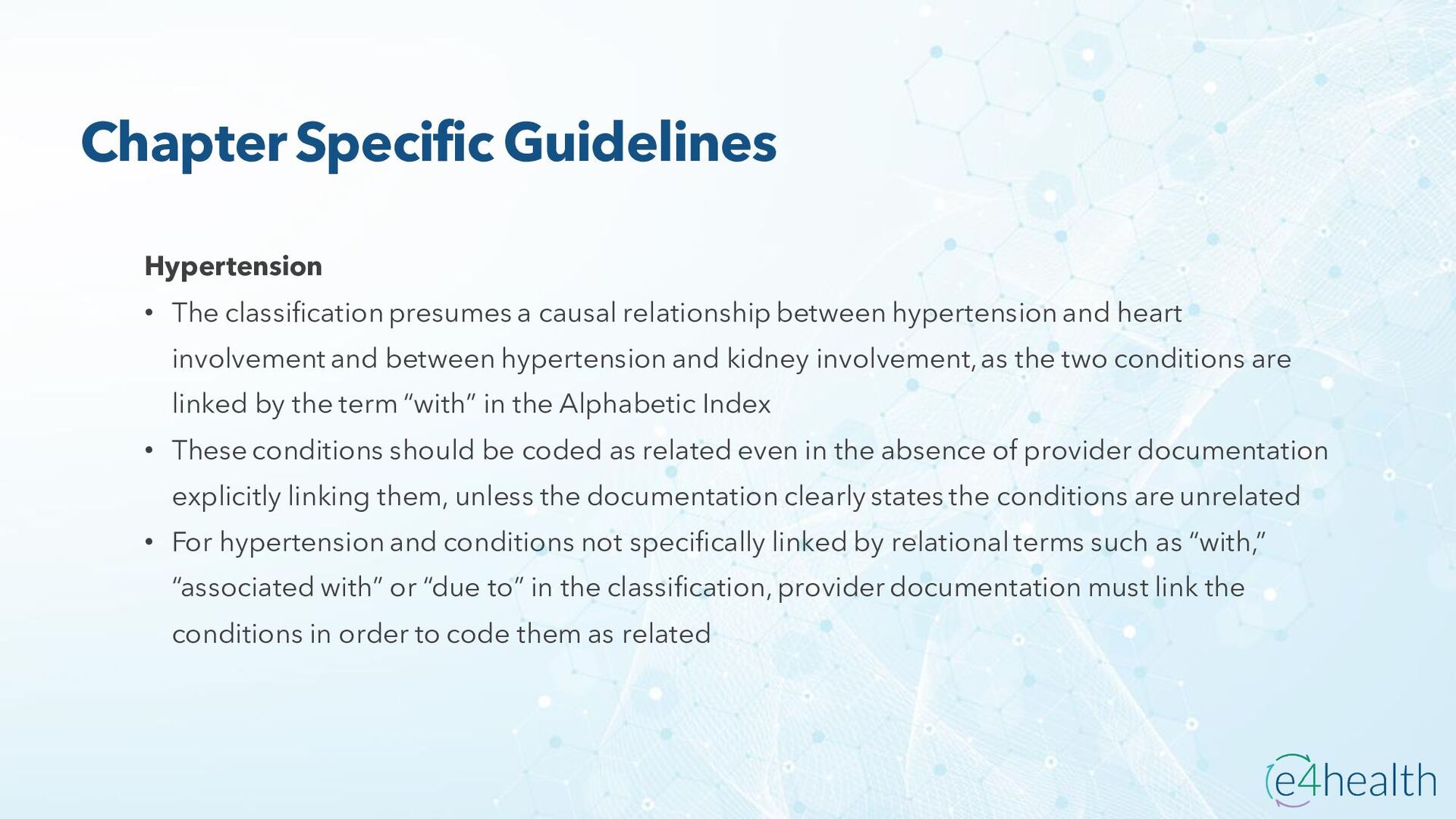
  4. Chapter Specific Guidelines Hypertension • The classification presumes a causal

    relationship between hypertension and heart involvement and between hypertension and kidney involvement, as the two conditions are linked by the term “with” in the Alphabetic Index • These conditions should be coded as related even in the absence of provider documentation explicitly linking them, unless the documentation clearly states the conditions are unrelated • For hypertension and conditions not specifically linked by relational terms such as “with,” “associated with” or “due to” in the classification, provider documentation must link the conditions in order to code them as related
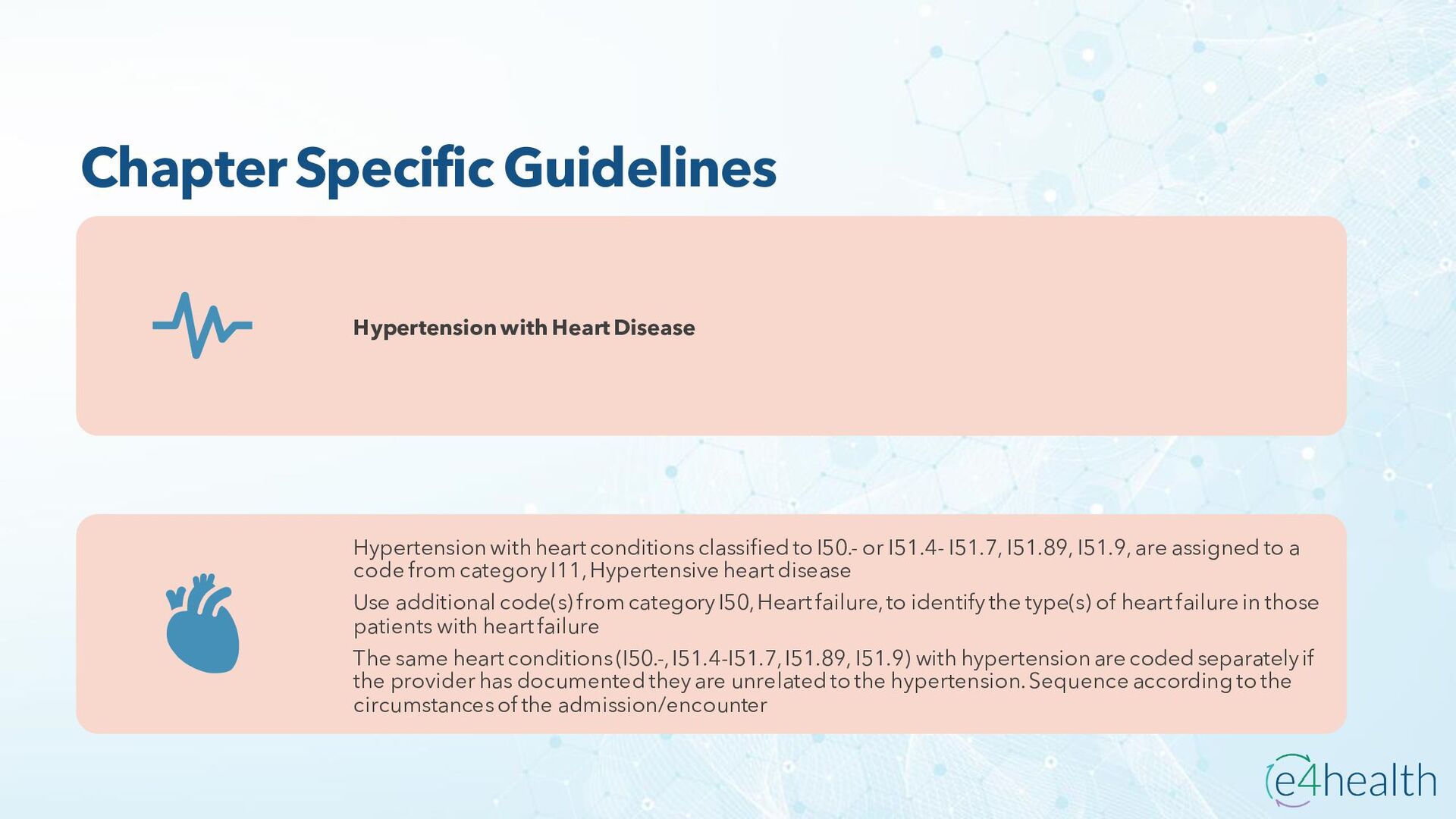
  5. Chapter Specific Guidelines Hypertension with Heart Disease Hypertension with heart

    conditions classified to I50.- or I51.4- I51.7, I51.89, I51.9, are assigned to a code from category I11, Hypertensive heart disease Use additional code(s) from category I50, Heart failure, to identify the type(s) of heart failure in those patients with heart failure The same heart conditions (I50.-, I51.4-I51.7, I51.89, I51.9) with hypertension are coded separately if the provider has documented they are unrelated to the hypertension. Sequence according to the circumstances of the admission/encounter
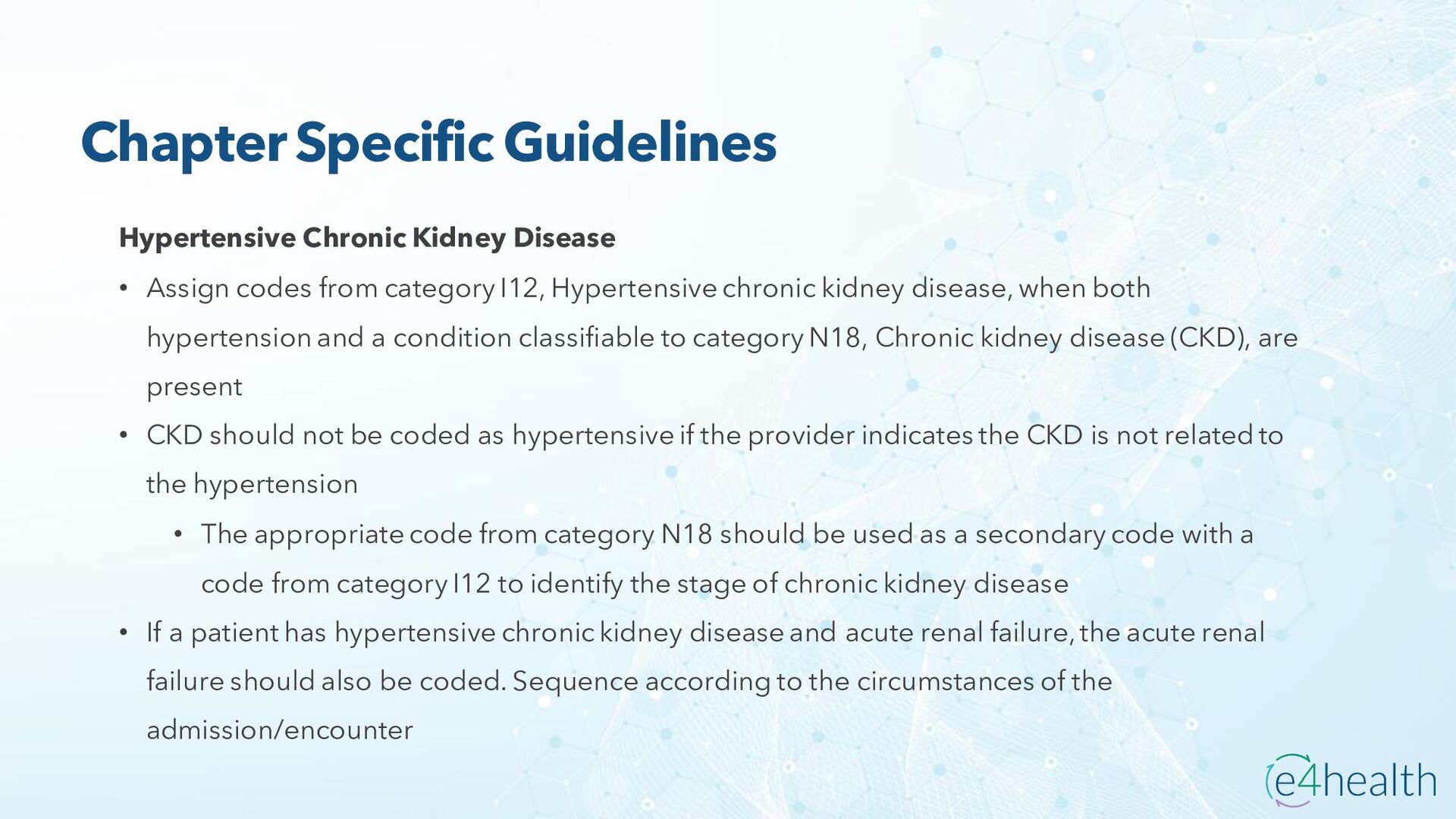
  6. Chapter Specific Guidelines Hypertensive Chronic Kidney Disease • Assign codes

    from category I12, Hypertensive chronic kidney disease, when both hypertension and a condition classifiable to category N18, Chronic kidney disease (CKD), are present • CKD should not be coded as hypertensive if the provider indicates the CKD is not related to the hypertension • The appropriate code from category N18 should be used as a secondary code with a code from category I12 to identify the stage of chronic kidney disease • If a patient has hypertensive chronic kidney disease and acute renal failure, the acute renal failure should also be coded. Sequence according to the circumstances of the admission/encounter
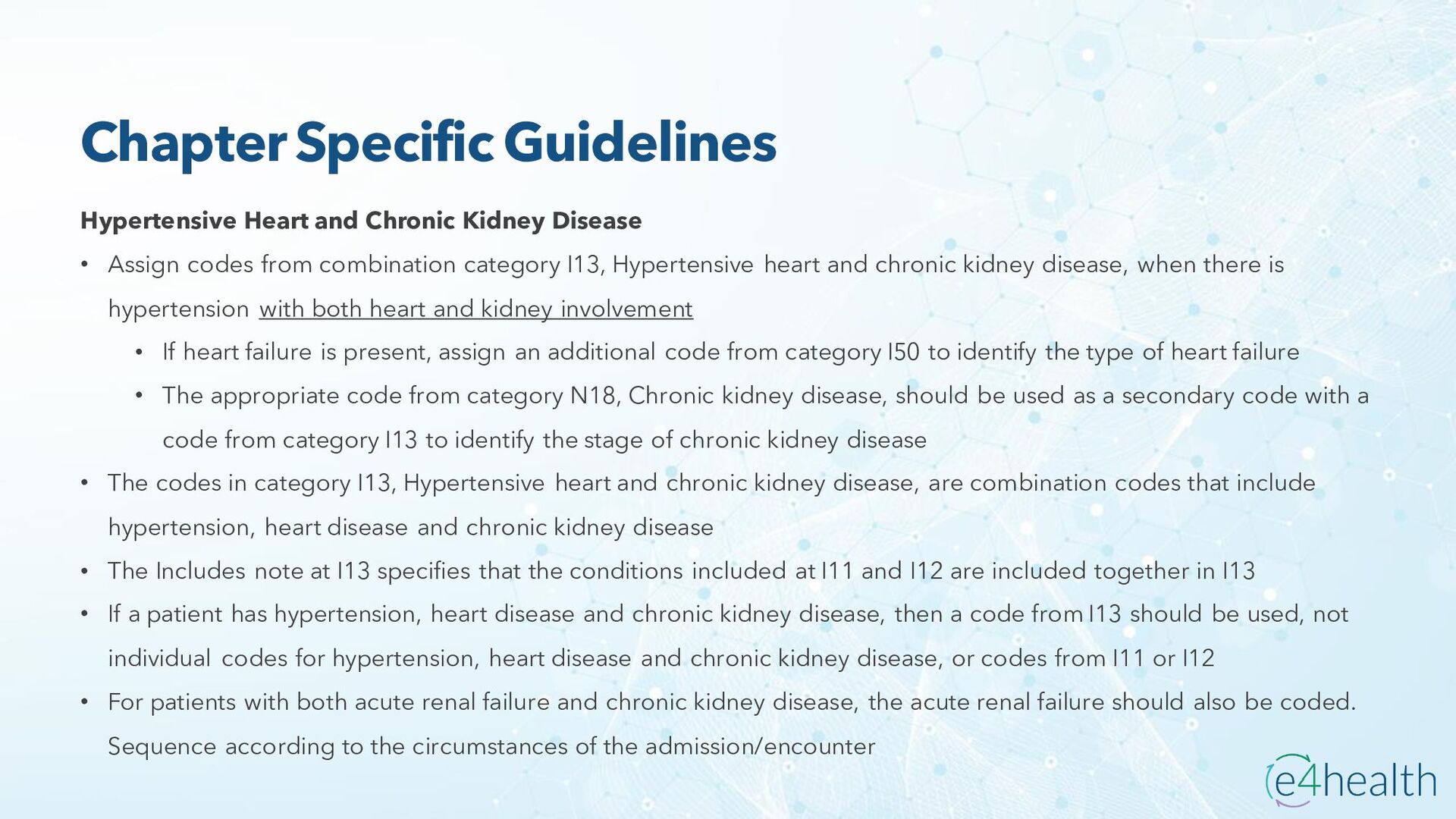
  7. Chapter Specific Guidelines Hypertensive Heart and Chronic Kidney Disease •

    Assign codes from combination category I13, Hypertensive heart and chronic kidney disease, when there is hypertension with both heart and kidney involvement • If heart failure is present, assign an additional code from category I50 to identify the type of heart failure • The appropriate code from category N18, Chronic kidney disease, should be used as a secondary code with a code from category I13 to identify the stage of chronic kidney disease • The codes in category I13, Hypertensive heart and chronic kidney disease, are combination codes that include hypertension, heart disease and chronic kidney disease • The Includes note at I13 specifies that the conditions included at I11 and I12 are included together in I13 • If a patient has hypertension, heart disease and chronic kidney disease, then a code from I13 should be used, not individual codes for hypertension, heart disease and chronic kidney disease, or codes from I11 or I12 • For patients with both acute renal failure and chronic kidney disease, the acute renal failure should also be coded. Sequence according to the circumstances of the admission/encounter
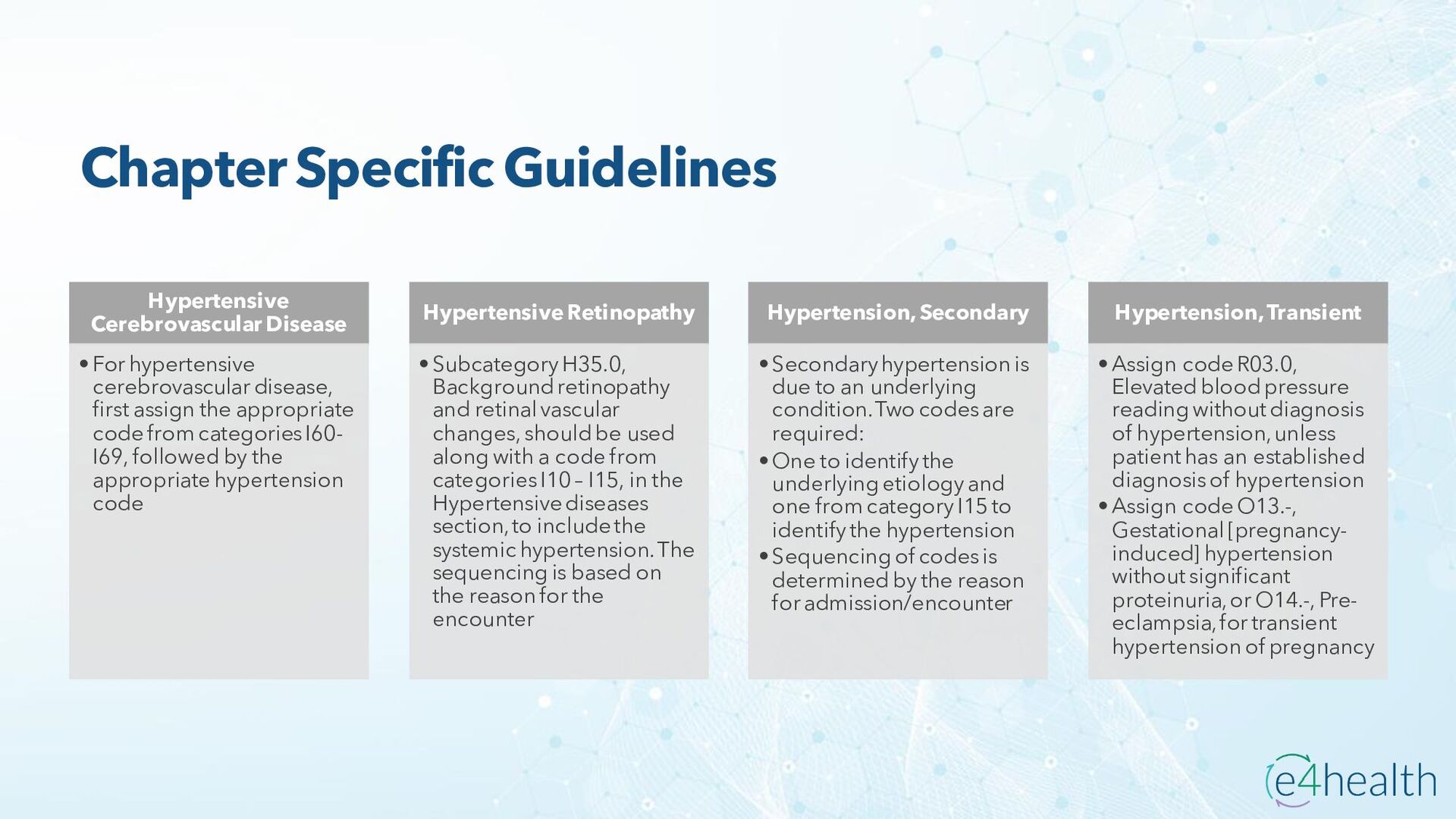
  8. Chapter Specific Guidelines Hypertensive Cerebrovascular Disease •For hypertensive cerebrovascular disease,

    first assign the appropriate code from categories I60- I69, followed by the appropriate hypertension code Hypertensive Retinopathy •Subcategory H35.0, Background retinopathy and retinal vascular changes, should be used along with a code from categories I10 – I15, in the Hypertensive diseases section, to include the systemic hypertension. The sequencing is based on the reason for the encounter Hypertension, Secondary •Secondary hypertension is due to an underlying condition. Two codes are required: •One to identify the underlying etiology and one from category I15 to identify the hypertension •Sequencing of codes is determined by the reason for admission/encounter Hypertension, Transient •Assign code R03.0, Elevated blood pressure reading without diagnosis of hypertension, unless patient has an established diagnosis of hypertension •Assign code O13.-, Gestational [pregnancy- induced] hypertension without significant proteinuria, or O14.-, Pre- eclampsia, for transient hypertension of pregnancy
  9. Chapter Specific Guidelines • Hypertension, Controlled • This diagnostic statement

    usually refers to an existing state of hypertension under control by therapy. Assign the appropriate code from categories I10-I15, Hypertensive diseases. • Hypertension, Uncontrolled • Uncontrolled hypertension may refer to untreated hypertension or hypertension not responding to current therapeutic regimen. In either case, assign the appropriate code from categories I10-I15, Hypertensive diseases • Hypertensive Crisis • Assign a code from category I16, Hypertensive crisis, for documented hypertensive urgency, hypertensive emergency or unspecified hypertensive crisis. Code also any identified hypertensive disease (I10I15). The sequencing is based on the reason for the encounter. • Pulmonary Hypertension • Pulmonary hypertension is classified to category I27, Other pulmonary heart diseases. For secondary pulmonary hypertension (I27.1, I27.2-), code also any associated conditions or adverse effects of drugs or toxins. The sequencing is based on the reason for the encounter, except for adverse effects of drugs (See Section I.C.19.e.).
  10. Chapter Specific Guidelines Atherosclerotic Coronary Artery Disease and Angina •

    ICD-10-CM has combination codes for atherosclerotic heart disease with angina pectoris. The subcategories for these codes are I25.11, Atherosclerotic heart disease of native coronary artery with angina pectoris and I25.7, Atherosclerosis of coronary artery bypass graft(s) and coronary artery of transplanted heart with angina pectoris. • When using one of these combination codes it is not necessary to use an additional code for angina pectoris. A causal relationship can be assumed in a patient with both atherosclerosis and angina pectoris, unless the documentation indicates the angina is due to something other than the atherosclerosis. • If a patient with coronary artery disease is admitted due to an acute myocardial infarction (AMI), the AMI should be sequenced before the coronary artery disease.
  11. Chapter Specific Guidelines • Category I69, Sequelae of Cerebrovascular disease

    • Category I69 is used to indicate conditions classifiable to categories I60-I67 as the causes of sequela (neurologic deficits), themselves classified elsewhere • These “late effects” include neurologic deficits that persist after initial onset of conditions classifiable to categories I60-I67 • The neurologic deficits caused by cerebrovascular disease may be present from the onset or may arise at any time after the onset of the condition classifiable to categories I60-I67 • Codes from category I69, Sequelae of cerebrovascular disease, that specify hemiplegia, hemiparesis and monoplegia identify whether the dominant or nondominant side is affected • Should the affected side be documented, but not specified as dominant or nondominant, and the classification system does not indicate a default, code selection is as follows: • For ambidextrous patients, the default should be dominant • If the left side is affected, the default is non-dominant • If the right side is affected, the default is dominant
  12. Chapter Specific Guidelines Codes from category I69 with codes from

    I60-I67 Codes from category I69 may be assigned on a health care record with codes from I60- I67, if the patient has a current cerebrovascular disease and deficits from an old cerebrovascular disease. Codes from category I69 and Personal history of transient ischemic attack (TIA) and cerebral infarction (Z86.73) Codes from category I69 should not be assigned if the patient does not have neurologic deficits.
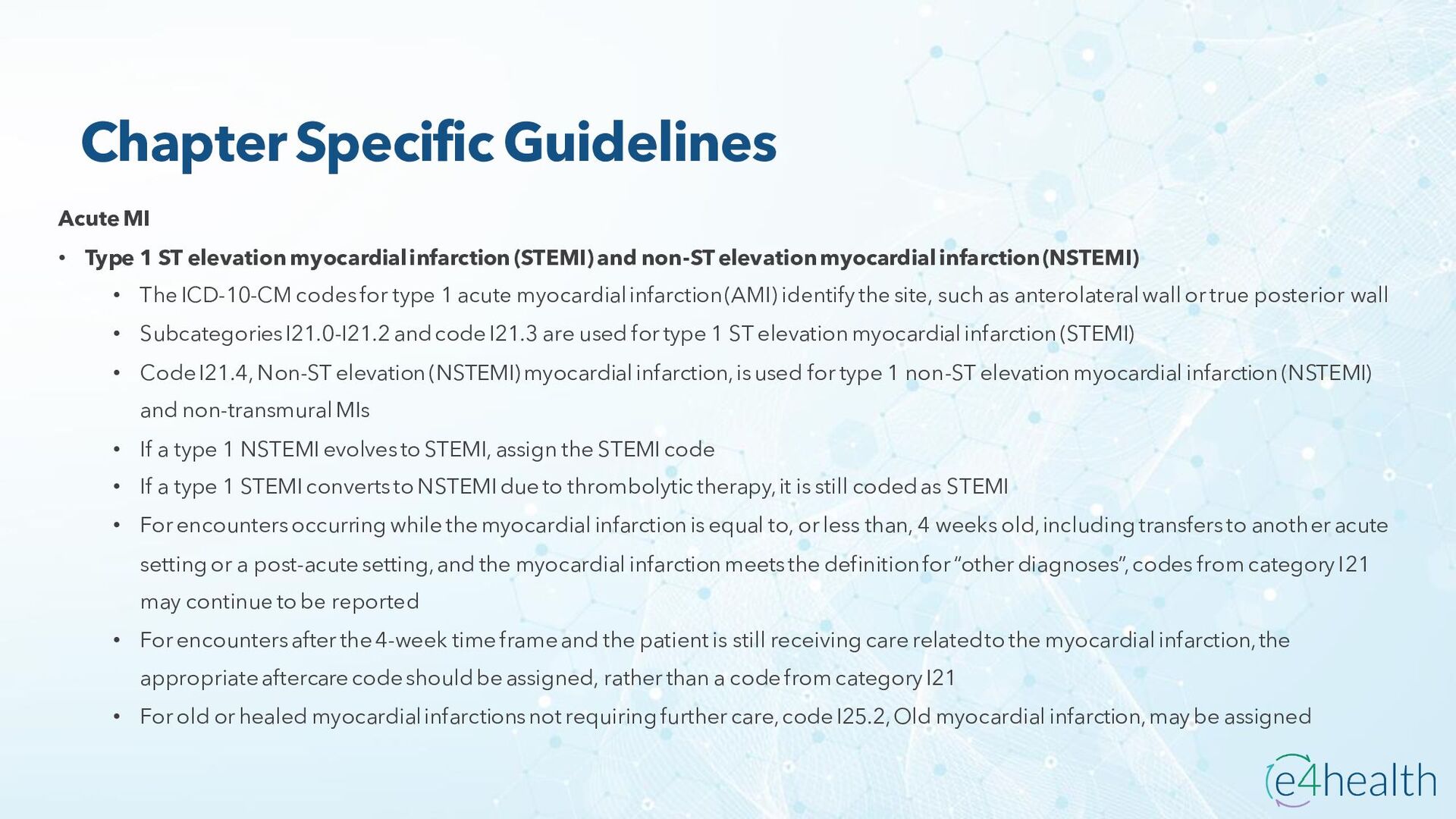
  13. Chapter Specific Guidelines Acute MI • Type 1 ST elevation

    myocardial infarction (STEMI) and non-ST elevation myocardial infarction (NSTEMI) • The ICD-10-CM codes for type 1 acute myocardial infarction (AMI) identify the site, such as anterolateral wall or true posterior wall • Subcategories I21.0-I21.2 and code I21.3 are used for type 1 ST elevation myocardial infarction (STEMI) • Code I21.4, Non-ST elevation (NSTEMI) myocardial infarction, is used for type 1 non-ST elevation myocardial infarction (NSTEMI) and non-transmural MIs • If a type 1 NSTEMI evolves to STEMI, assign the STEMI code • If a type 1 STEMI converts to NSTEMI due to thrombolytic therapy, it is still coded as STEMI • For encounters occurring while the myocardial infarction is equal to, or less than, 4 weeks old, including transfers to another acute setting or a post-acute setting, and the myocardial infarction meets the definition for “other diagnoses”, codes from category I21 may continue to be reported • For encounters after the 4-week time frame and the patient is still receiving care related to the myocardial infarction, the appropriate aftercare code should be assigned, rather than a code from category I21 • For old or healed myocardial infarctions not requiring further care, code I25.2, Old myocardial infarction, may be assigned
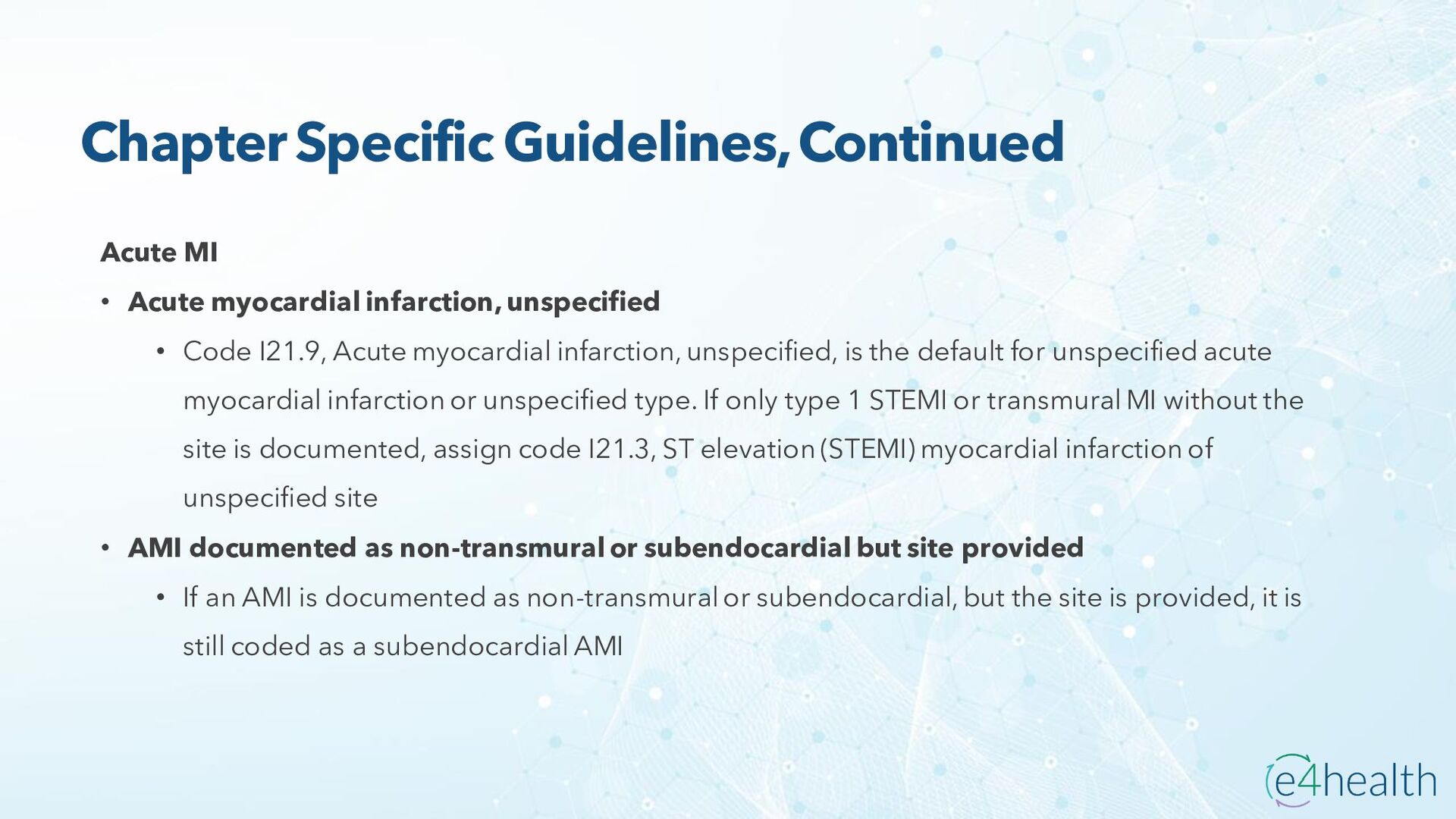
  14. Chapter Specific Guidelines, Continued Acute MI • Acute myocardial infarction,

    unspecified • Code I21.9, Acute myocardial infarction, unspecified, is the default for unspecified acute myocardial infarction or unspecified type. If only type 1 STEMI or transmural MI without the site is documented, assign code I21.3, ST elevation (STEMI) myocardial infarction of unspecified site • AMI documented as non-transmural or subendocardial but site provided • If an AMI is documented as non-transmural or subendocardial, but the site is provided, it is still coded as a subendocardial AMI
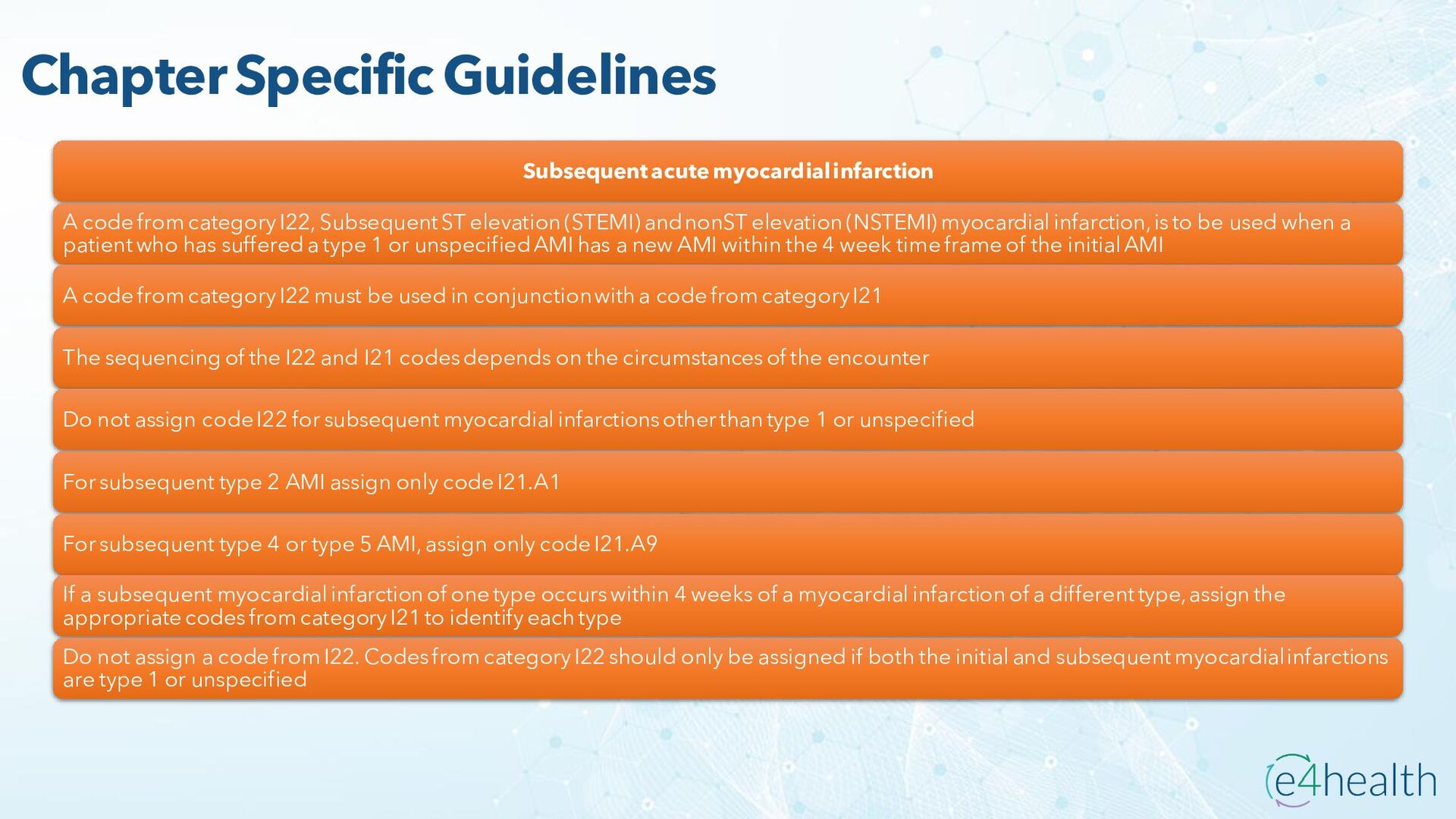
  15. Chapter Specific Guidelines Subsequent acute myocardial infarction A code from

    category I22, Subsequent ST elevation (STEMI) and nonST elevation (NSTEMI) myocardial infarction, is to be used when a patient who has suffered a type 1 or unspecified AMI has a new AMI within the 4 week time frame of the initial AMI A code from category I22 must be used in conjunction with a code from category I21 The sequencing of the I22 and I21 codes depends on the circumstances of the encounter Do not assign code I22 for subsequent myocardial infarctions other than type 1 or unspecified For subsequent type 2 AMI assign only code I21.A1 For subsequent type 4 or type 5 AMI, assign only code I21.A9 If a subsequent myocardial infarction of one type occurs within 4 weeks of a myocardial infarction of a different type, assign the appropriate codes from category I21 to identify each type Do not assign a code from I22. Codes from category I22 should only be assigned if both the initial and subsequent myocardial infarctions are type 1 or unspecified
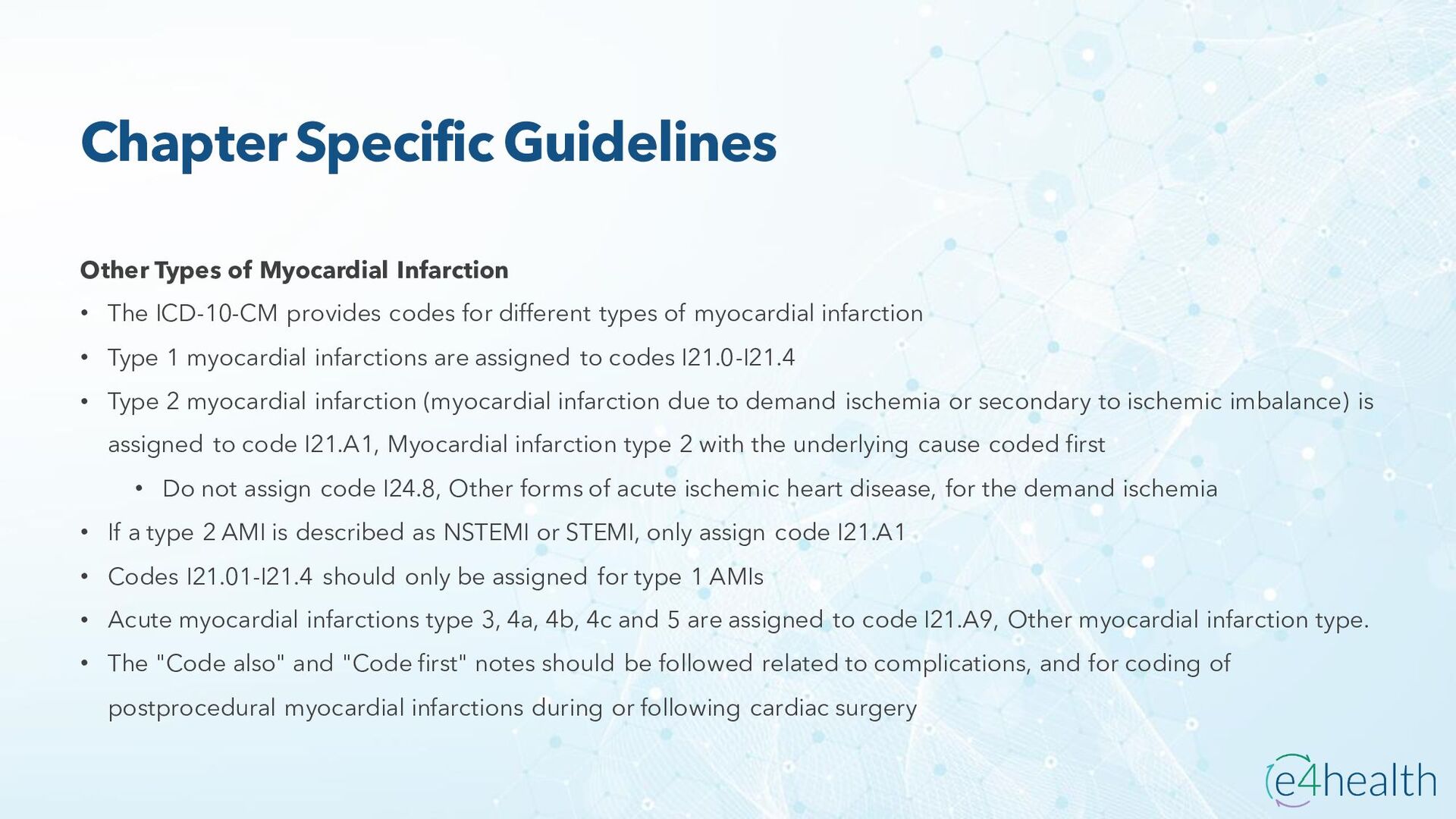
  16. Chapter Specific Guidelines Other Types of Myocardial Infarction • The

    ICD-10-CM provides codes for different types of myocardial infarction • Type 1 myocardial infarctions are assigned to codes I21.0-I21.4 • Type 2 myocardial infarction (myocardial infarction due to demand ischemia or secondary to ischemic imbalance) is assigned to code I21.A1, Myocardial infarction type 2 with the underlying cause coded first • Do not assign code I24.8, Other forms of acute ischemic heart disease, for the demand ischemia • If a type 2 AMI is described as NSTEMI or STEMI, only assign code I21.A1 • Codes I21.01-I21.4 should only be assigned for type 1 AMIs • Acute myocardial infarctions type 3, 4a, 4b, 4c and 5 are assigned to code I21.A9, Other myocardial infarction type. • The "Code also" and "Code first" notes should be followed related to complications, and for coding of postprocedural myocardial infarctions during or following cardiac surgery
  17. Chapter Specific Guidelines Myocardial Infarction with Coronary Microvascular Dysfunction •

    Coronary microvascular dysfunction (CMD) is a condition (also known as small artery disease or small vessel disease) that impacts the microvasculature by restricting microvascular flow and increasing microvascular resistance. • Code I21.B, Myocardial infarction with coronary microvascular dysfunction, is assigned for myocardial infarction with coronary microvascular disease, myocardial infarction with coronary microvascular dysfunction, and myocardial infarction with non-obstructive coronary arteries (MINOCA) with microvascular disease
  18. Myocardial Infarction with Coronary Microvascular Dysfunction (CMD) Risk factors leading

    to CMD: • HTN • Smoking • Diabetes • Overweight/obesity • Unhealthy diet • Arteriosclerosis Signs and symptoms of CMD: • Chest pain/angina • Short of breath • Sleep problems • Fatigue • Lack of energy Treatments of CMD: • Cholesterol medication • Anti-hypertensive medication • Antiplatelet medication • Nitroglycerin • Beta-blockers/calcium channel blockers
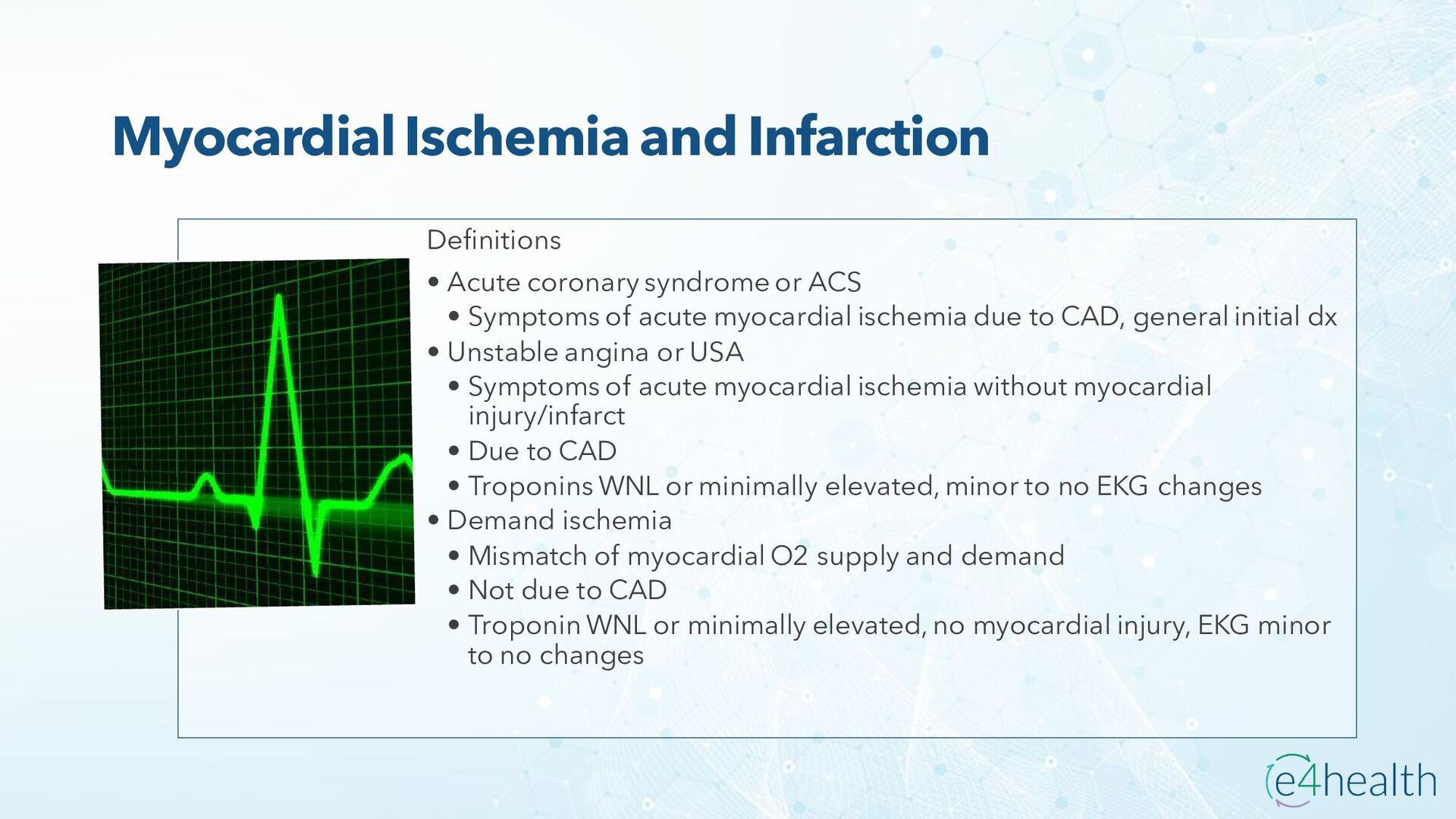
  19. Myocardial Ischemia and Infarction Definitions • Acute coronary syndrome or

    ACS • Symptoms of acute myocardial ischemia due to CAD, general initial dx • Unstable angina or USA • Symptoms of acute myocardial ischemia without myocardial injury/infarct • Due to CAD • Troponins WNL or minimally elevated, minor to no EKG changes • Demand ischemia • Mismatch of myocardial O2 supply and demand • Not due to CAD • Troponin WNL or minimally elevated, no myocardial injury, EKG minor to no changes
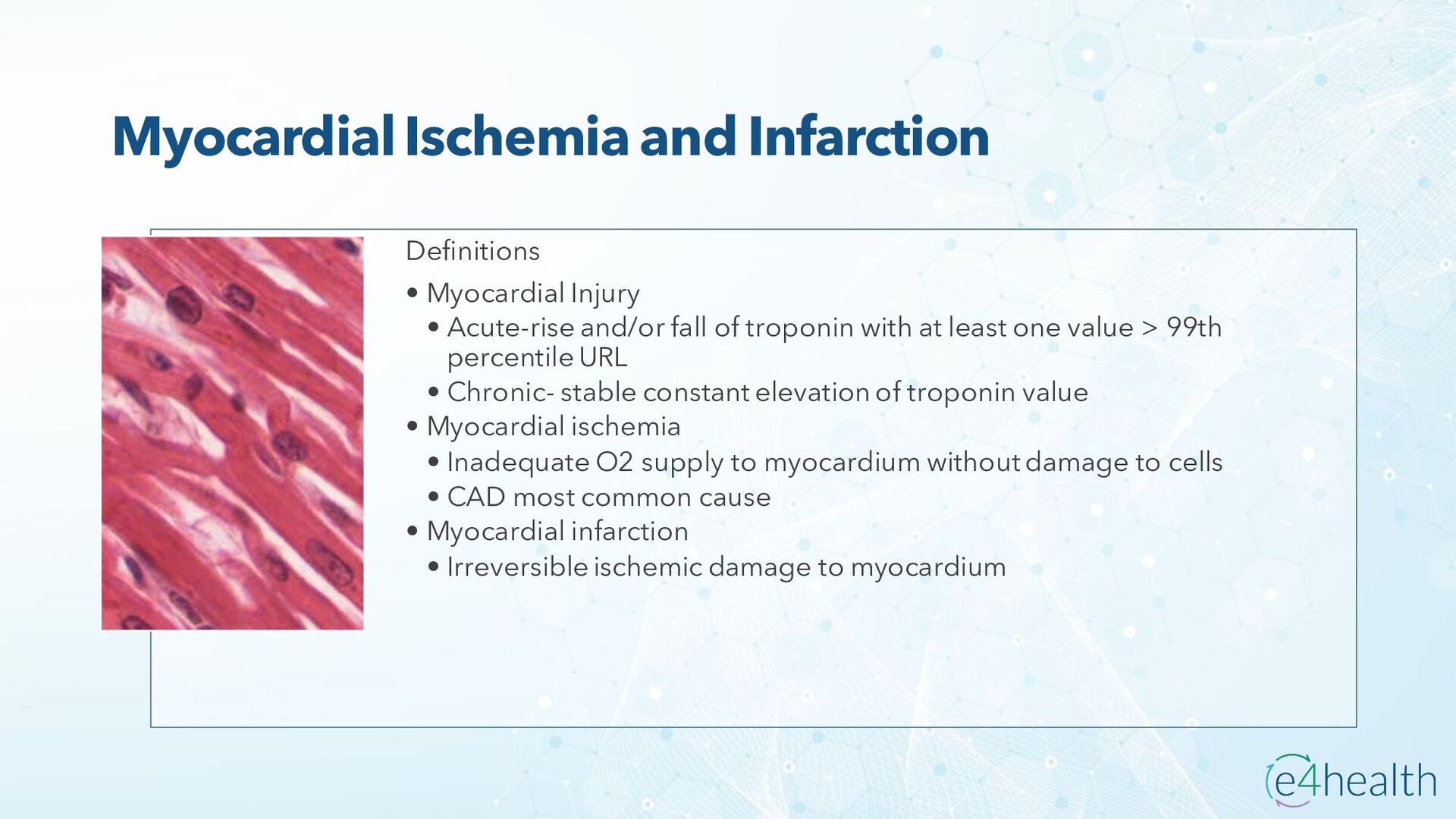
  20. Myocardial Ischemia and Infarction Definitions • Myocardial Injury • Acute-rise

    and/or fall of troponin with at least one value > 99th percentile URL • Chronic- stable constant elevation of troponin value • Myocardial ischemia • Inadequate O2 supply to myocardium without damage to cells • CAD most common cause • Myocardial infarction • Irreversible ischemic damage to myocardium
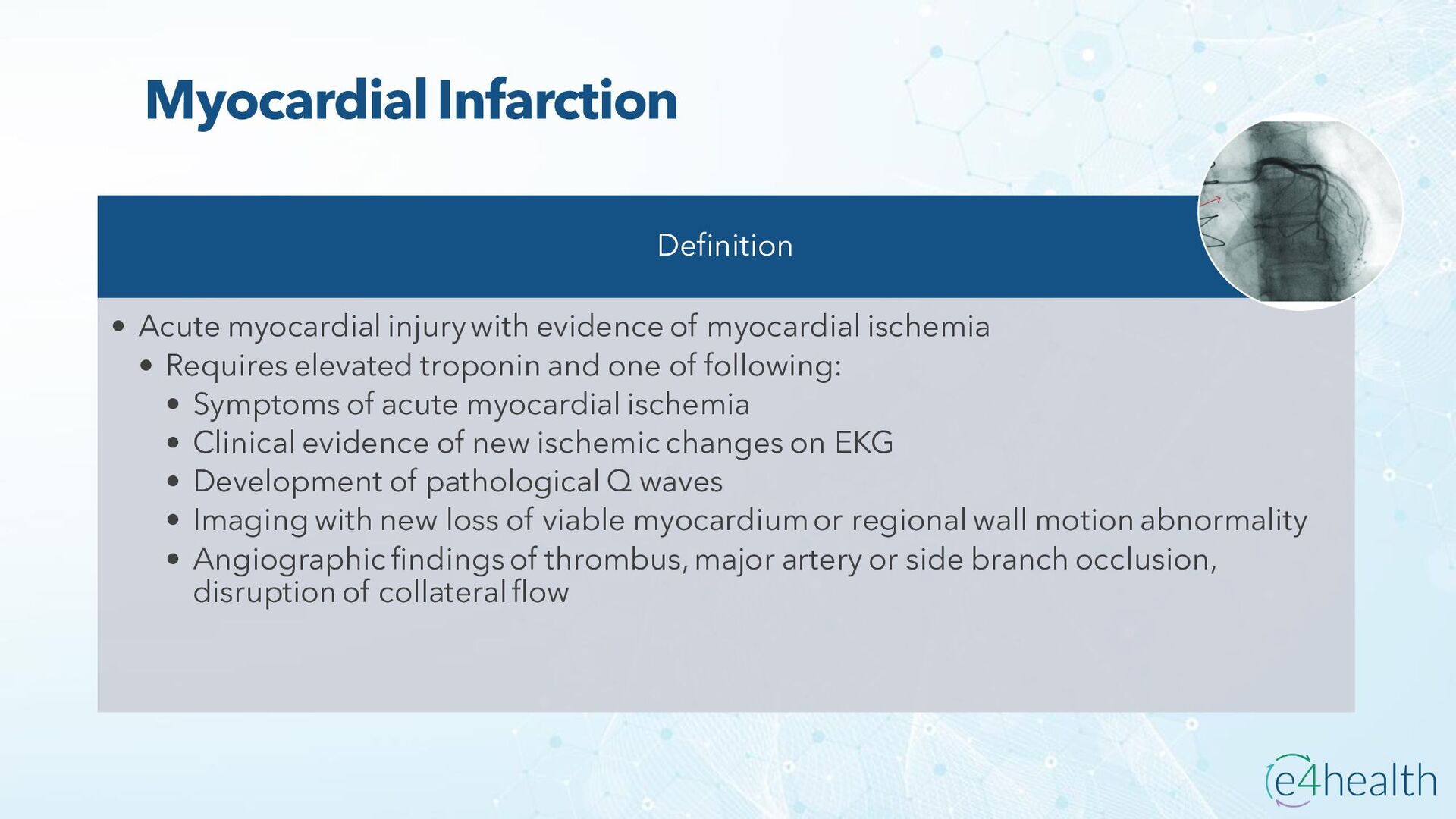
  21. Myocardial Infarction Definition • Acute myocardial injury with evidence of

    myocardial ischemia • Requires elevated troponin and one of following: • Symptoms of acute myocardial ischemia • Clinical evidence of new ischemic changes on EKG • Development of pathological Q waves • Imaging with new loss of viable myocardium or regional wall motion abnormality • Angiographic findings of thrombus, major artery or side branch occlusion, disruption of collateral flow
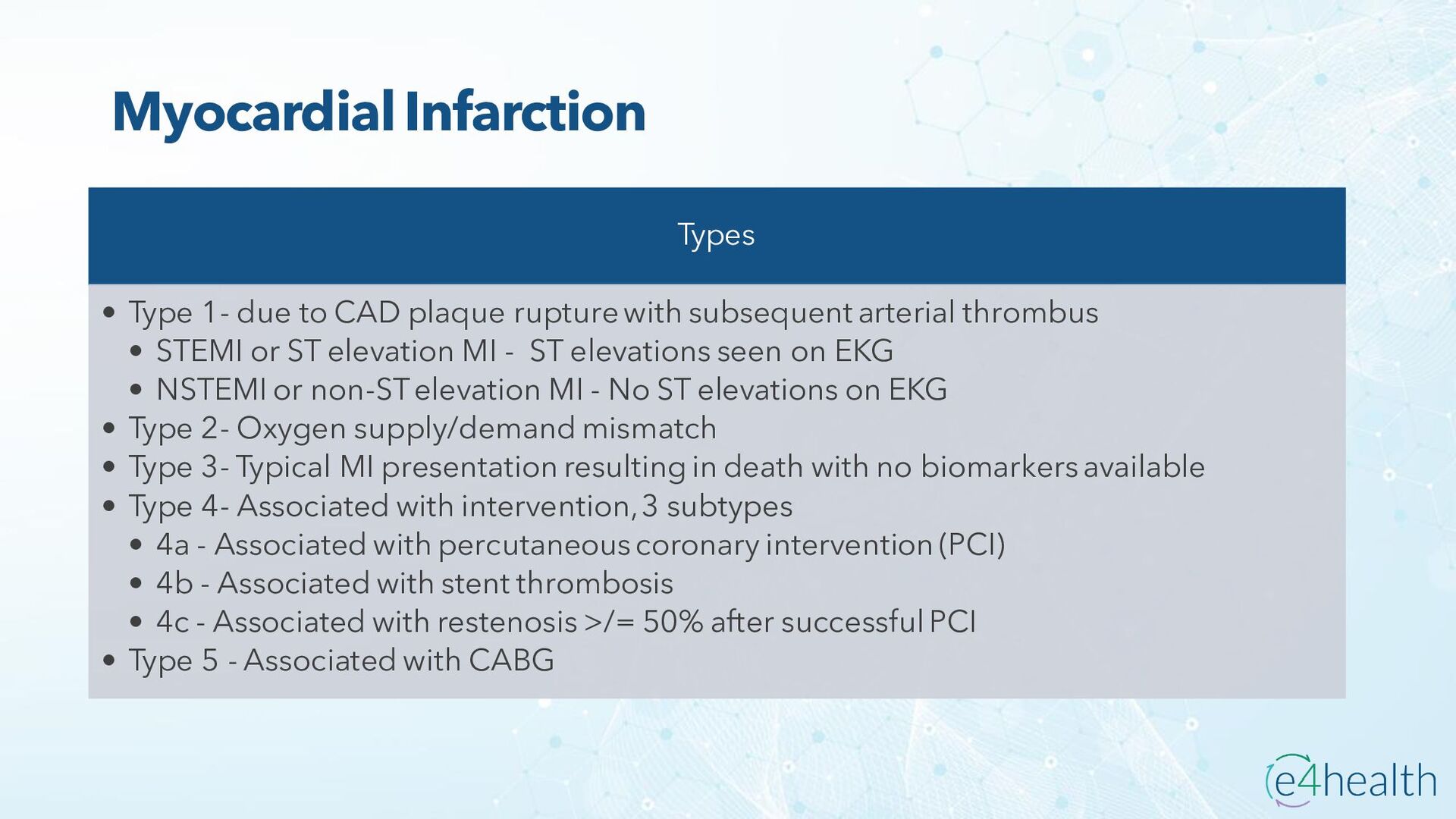
  22. Myocardial Infarction Types • Type 1- due to CAD plaque

    rupture with subsequent arterial thrombus • STEMI or ST elevation MI - ST elevations seen on EKG • NSTEMI or non-ST elevation MI - No ST elevations on EKG • Type 2- Oxygen supply/demand mismatch • Type 3- Typical MI presentation resulting in death with no biomarkers available • Type 4- Associated with intervention, 3 subtypes • 4a - Associated with percutaneous coronary intervention (PCI) • 4b - Associated with stent thrombosis • 4c - Associated with restenosis >/= 50% after successful PCI • Type 5 - Associated with CABG
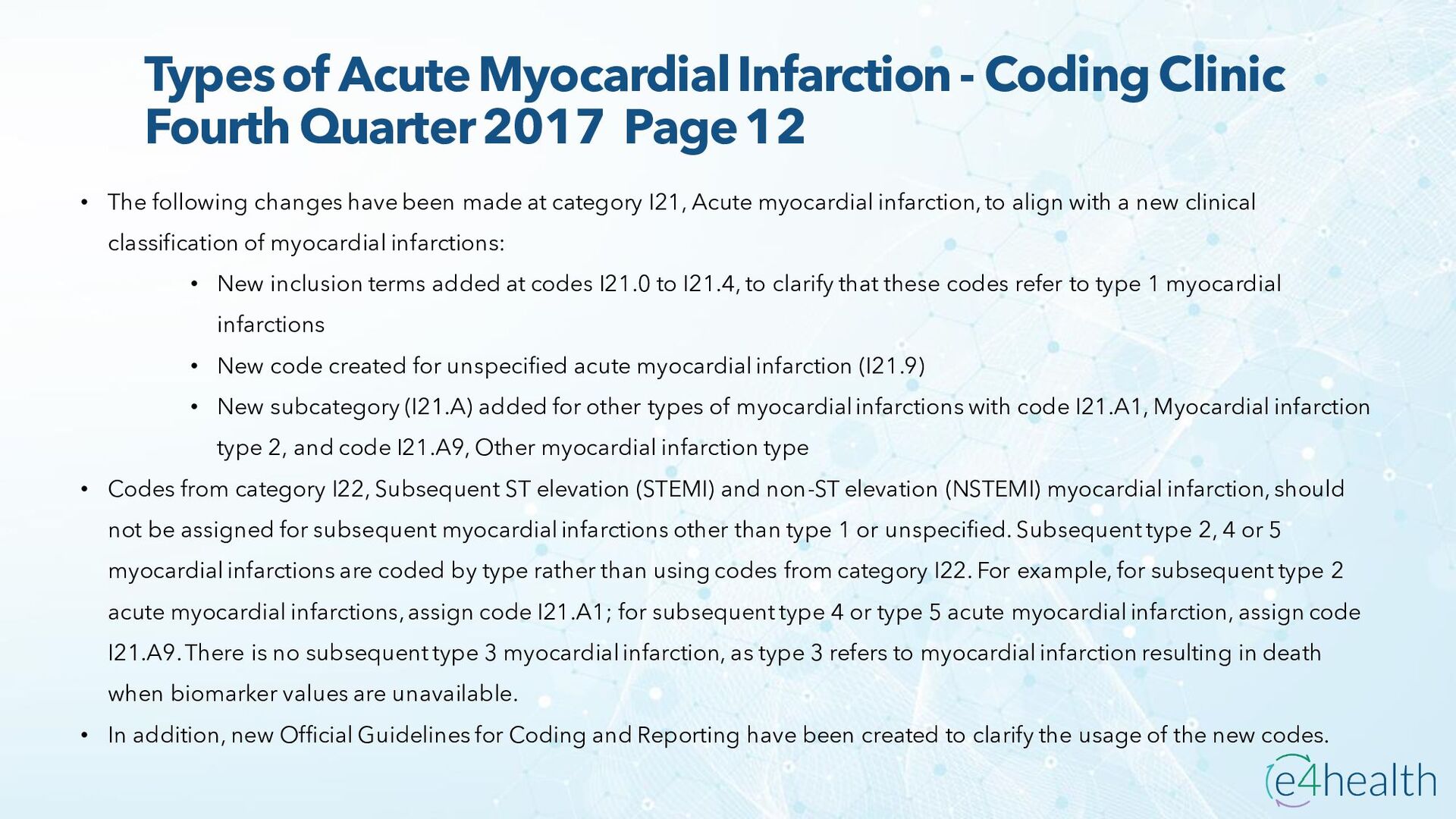
  23. Types of Acute Myocardial Infarction - Coding Clinic Fourth Quarter

    2017 Page 12 • The following changes have been made at category I21, Acute myocardial infarction, to align with a new clinical classification of myocardial infarctions: • New inclusion terms added at codes I21.0 to I21.4, to clarify that these codes refer to type 1 myocardial infarctions • New code created for unspecified acute myocardial infarction (I21.9) • New subcategory (I21.A) added for other types of myocardial infarctions with code I21.A1, Myocardial infarction type 2, and code I21.A9, Other myocardial infarction type • Codes from category I22, Subsequent ST elevation (STEMI) and non-ST elevation (NSTEMI) myocardial infarction, should not be assigned for subsequent myocardial infarctions other than type 1 or unspecified. Subsequent type 2, 4 or 5 myocardial infarctions are coded by type rather than using codes from category I22. For example, for subsequent type 2 acute myocardial infarctions, assign code I21.A1; for subsequent type 4 or type 5 acute myocardial infarction, assign code I21.A9. There is no subsequent type 3 myocardial infarction, as type 3 refers to myocardial infarction resulting in death when biomarker values are unavailable. • In addition, new Official Guidelines for Coding and Reporting have been created to clarify the usage of the new codes.
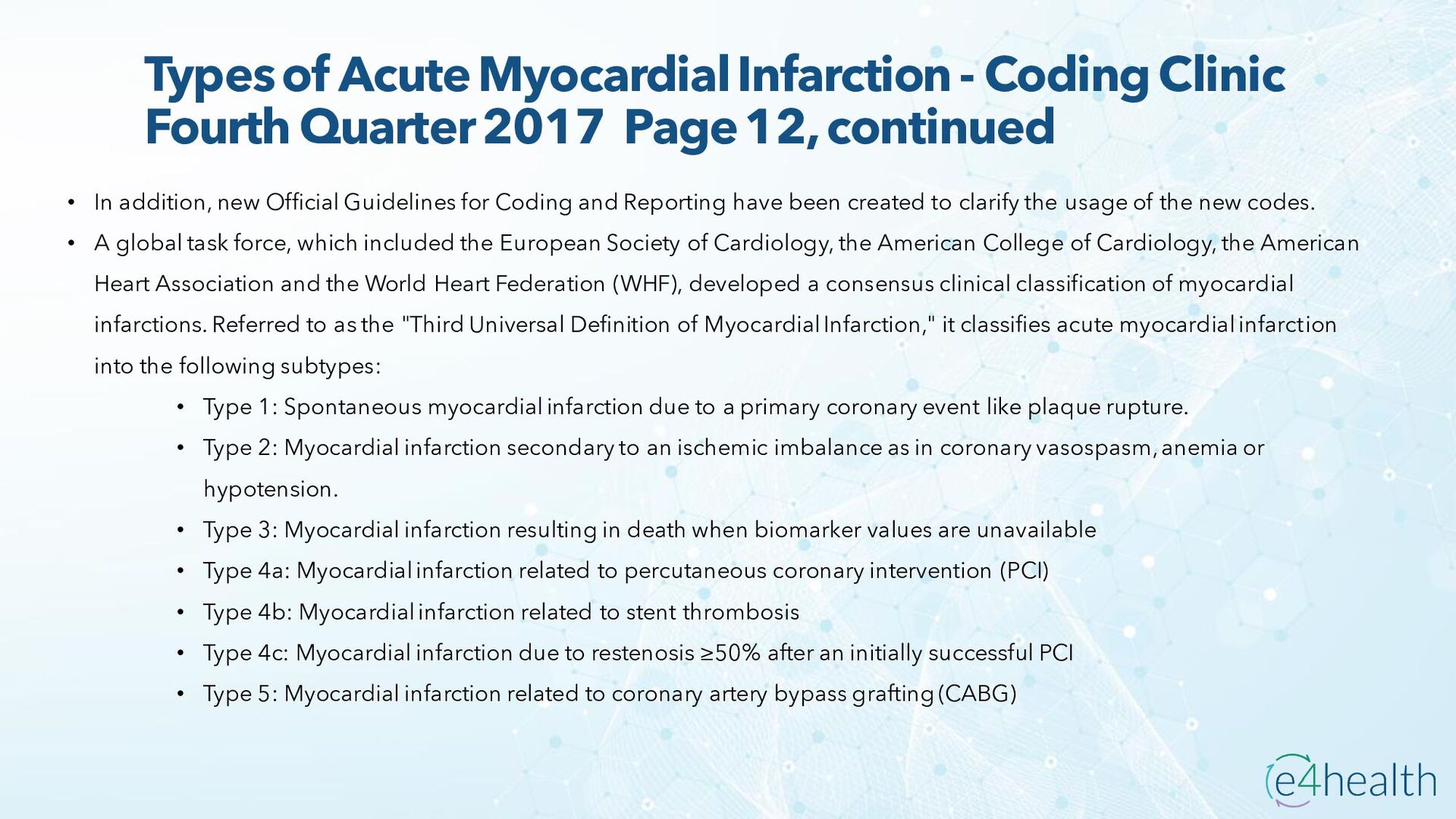
  24. Types of Acute Myocardial Infarction - Coding Clinic Fourth Quarter

    2017 Page 12, continued • In addition, new Official Guidelines for Coding and Reporting have been created to clarify the usage of the new codes. • A global task force, which included the European Society of Cardiology, the American College of Cardiology, the American Heart Association and the World Heart Federation (WHF), developed a consensus clinical classification of myocardial infarctions. Referred to as the "Third Universal Definition of Myocardial Infarction," it classifies acute myocardial infarction into the following subtypes: • Type 1: Spontaneous myocardial infarction due to a primary coronary event like plaque rupture. • Type 2: Myocardial infarction secondary to an ischemic imbalance as in coronary vasospasm, anemia or hypotension. • Type 3: Myocardial infarction resulting in death when biomarker values are unavailable • Type 4a: Myocardial infarction related to percutaneous coronary intervention (PCI) • Type 4b: Myocardial infarction related to stent thrombosis • Type 4c: Myocardial infarction due to restenosis ≥50% after an initially successful PCI • Type 5: Myocardial infarction related to coronary artery bypass grafting (CABG)
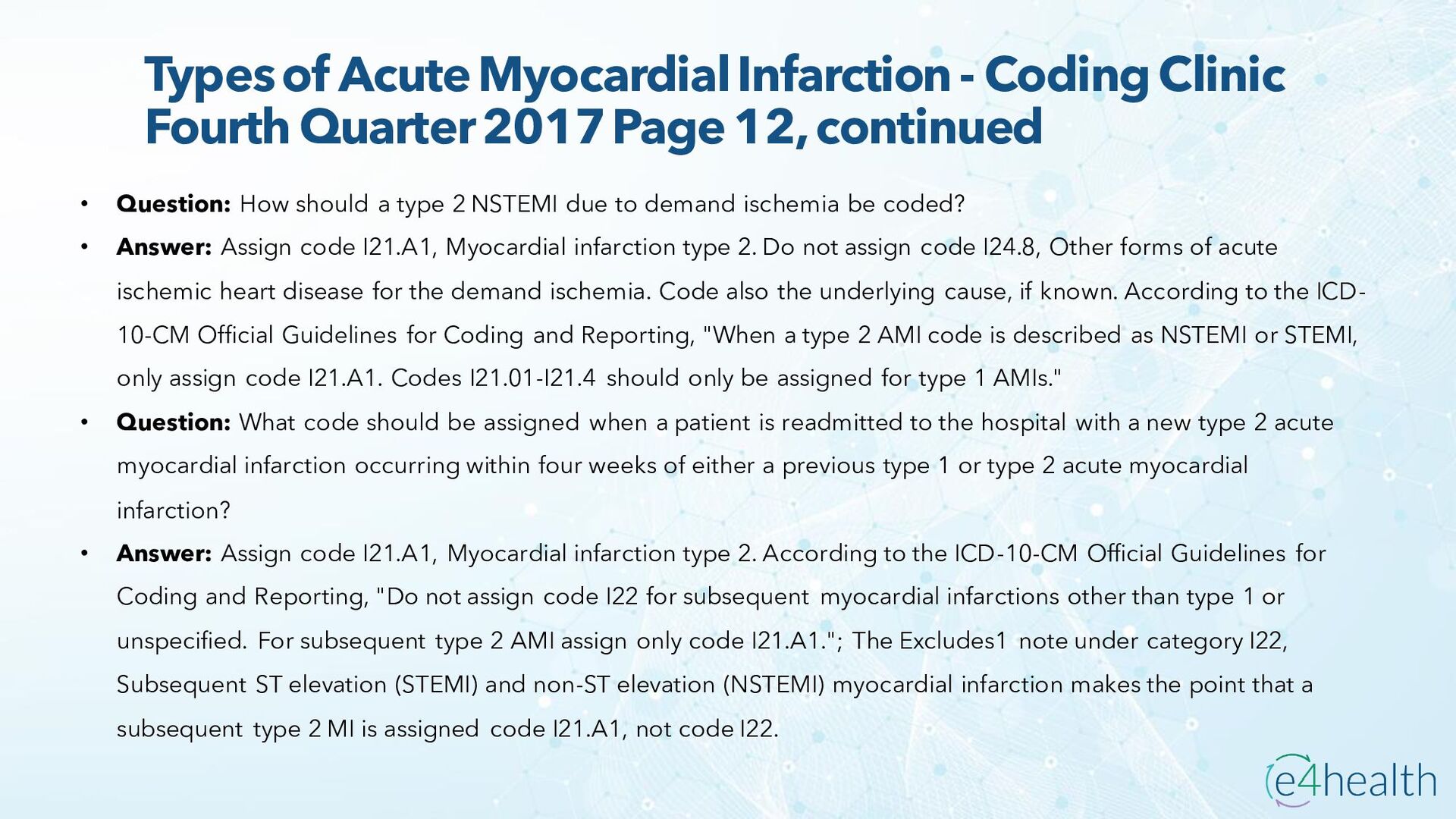
  25. Types of Acute Myocardial Infarction - Coding Clinic Fourth Quarter

    2017 Page 12, continued • Question: How should a type 2 NSTEMI due to demand ischemia be coded? • Answer: Assign code I21.A1, Myocardial infarction type 2. Do not assign code I24.8, Other forms of acute ischemic heart disease for the demand ischemia. Code also the underlying cause, if known. According to the ICD- 10-CM Official Guidelines for Coding and Reporting, "When a type 2 AMI code is described as NSTEMI or STEMI, only assign code I21.A1. Codes I21.01-I21.4 should only be assigned for type 1 AMIs." • Question: What code should be assigned when a patient is readmitted to the hospital with a new type 2 acute myocardial infarction occurring within four weeks of either a previous type 1 or type 2 acute myocardial infarction? • Answer: Assign code I21.A1, Myocardial infarction type 2. According to the ICD-10-CM Official Guidelines for Coding and Reporting, "Do not assign code I22 for subsequent myocardial infarctions other than type 1 or unspecified. For subsequent type 2 AMI assign only code I21.A1."; The Excludes1 note under category I22, Subsequent ST elevation (STEMI) and non-ST elevation (NSTEMI) myocardial infarction makes the point that a subsequent type 2 MI is assigned code I21.A1, not code I22.
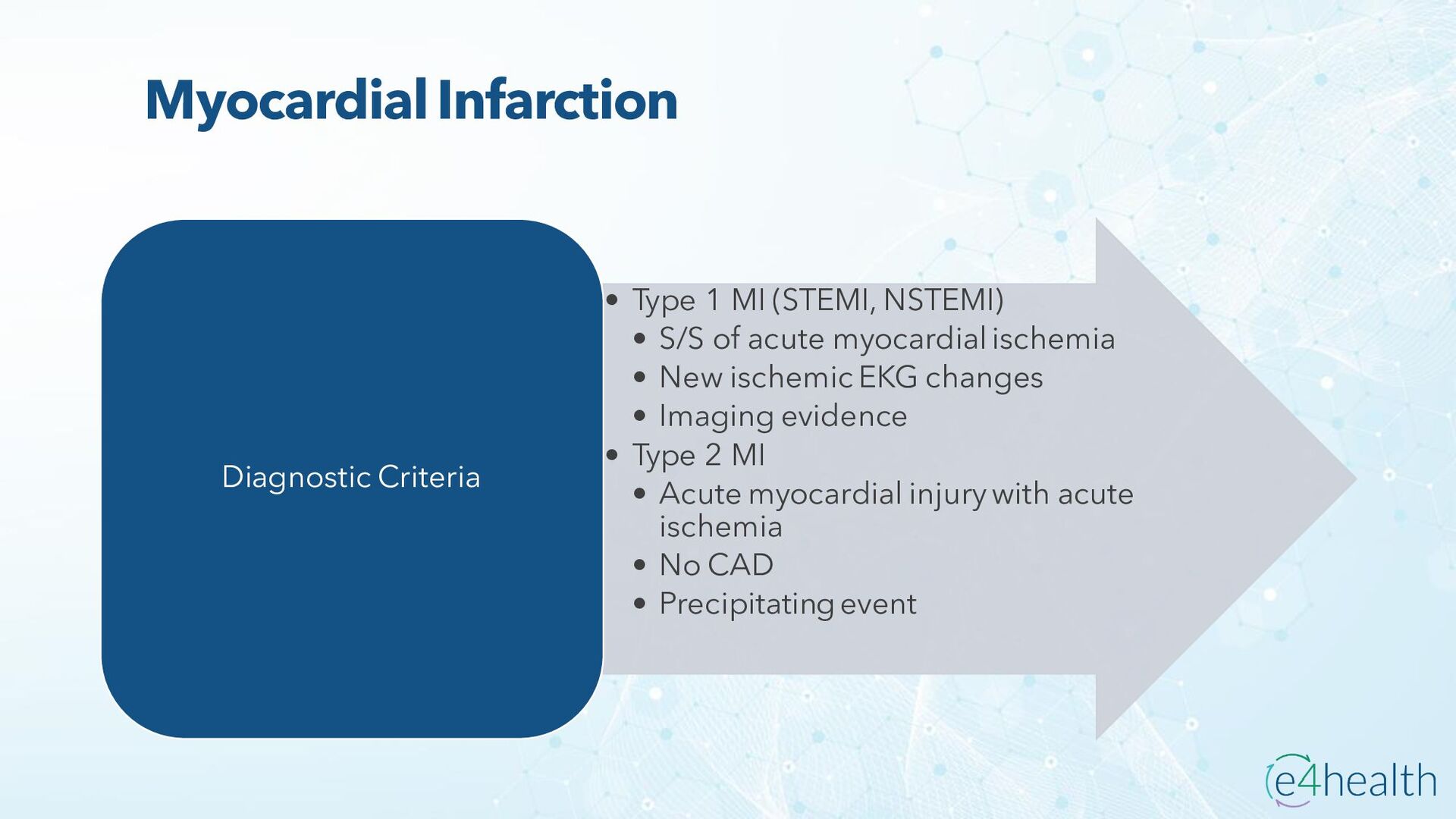
  26. Myocardial Infarction • Type 1 MI (STEMI, NSTEMI) • S/S

    of acute myocardial ischemia • New ischemic EKG changes • Imaging evidence • Type 2 MI • Acute myocardial injury with acute ischemia • No CAD • Precipitating event Diagnostic Criteria
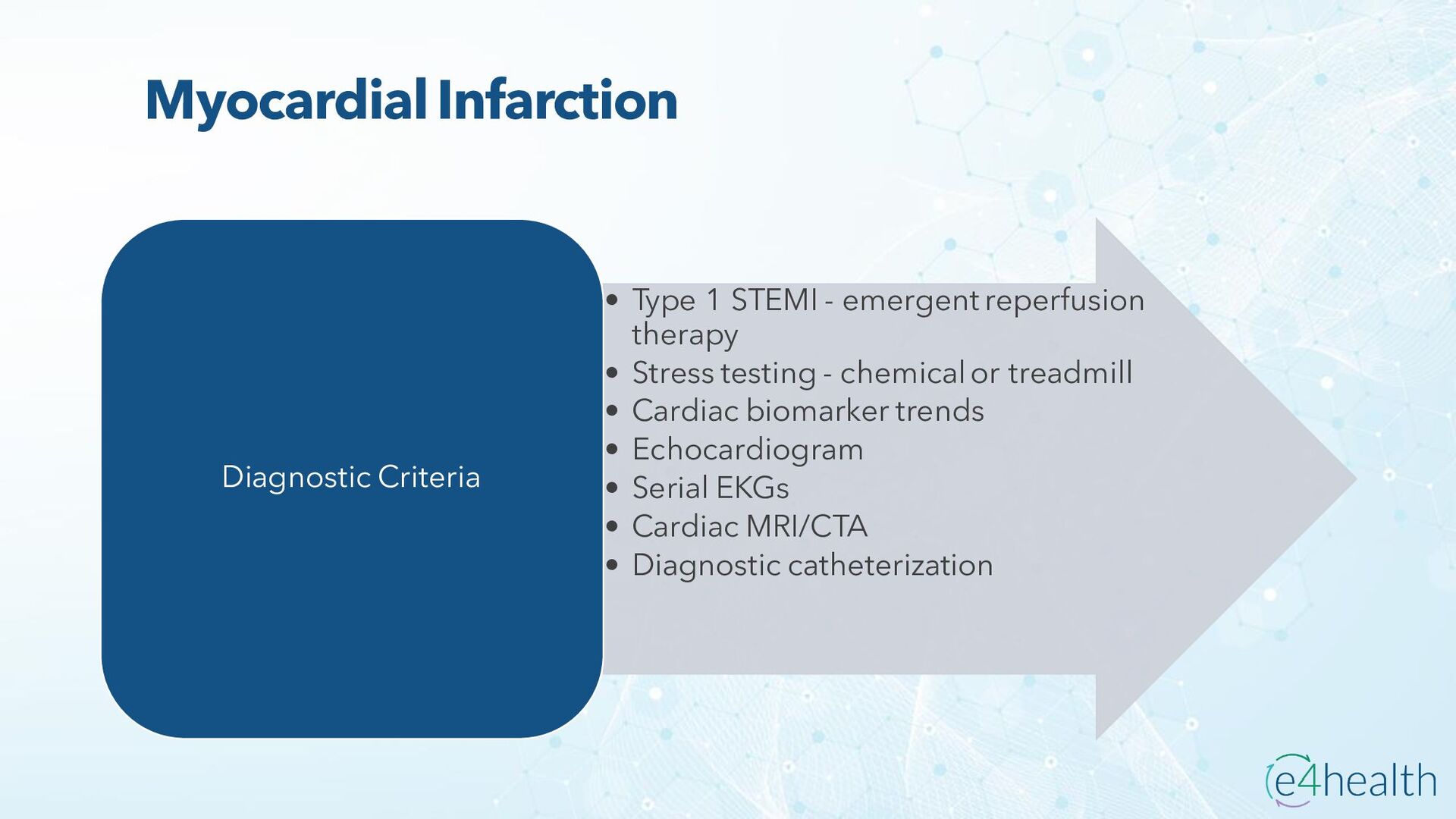
  27. Myocardial Infarction • Type 1 STEMI - emergent reperfusion therapy

    • Stress testing - chemical or treadmill • Cardiac biomarker trends • Echocardiogram • Serial EKGs • Cardiac MRI/CTA • Diagnostic catheterization Diagnostic Criteria
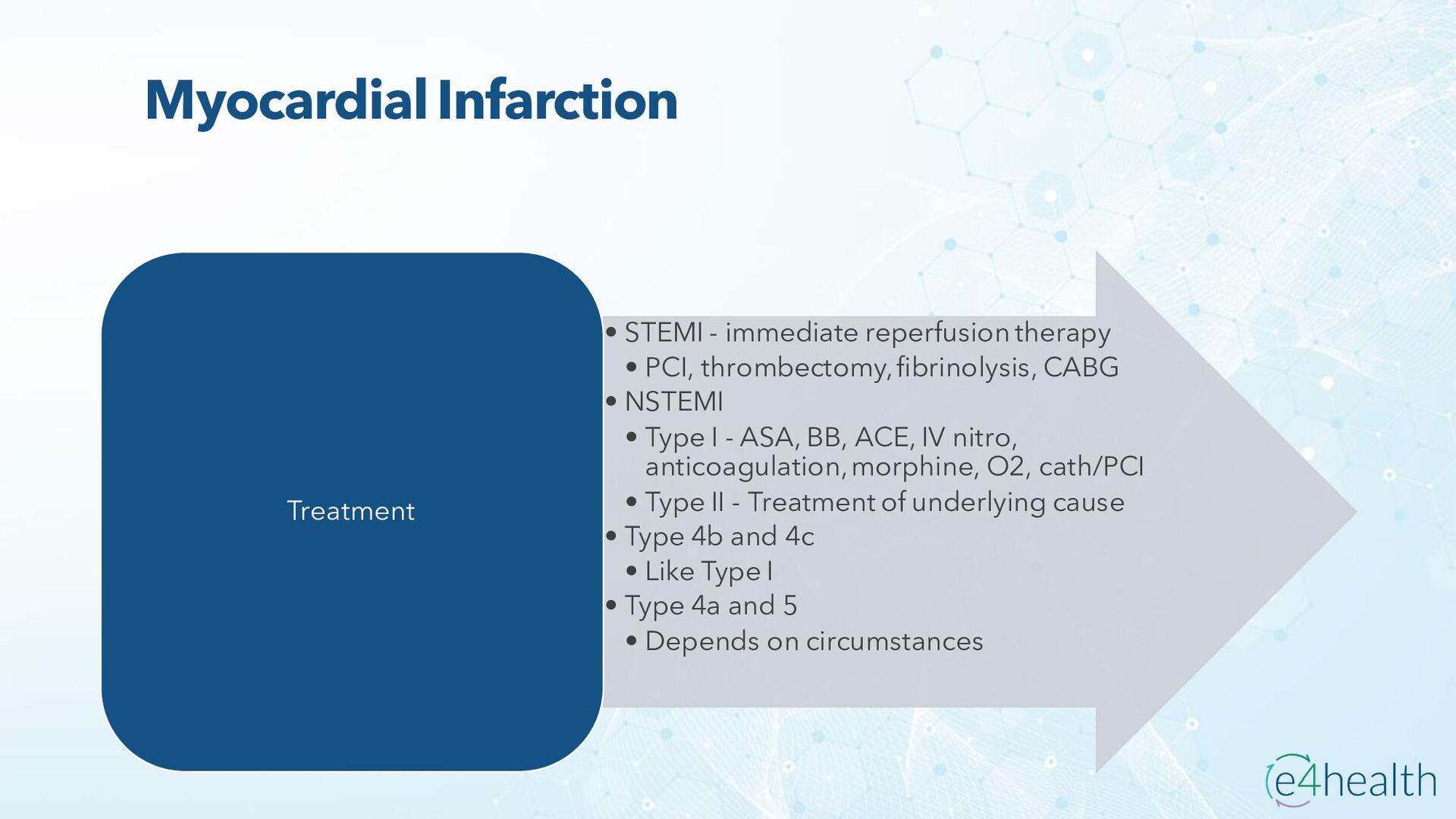
  28. Myocardial Infarction • STEMI - immediate reperfusion therapy • PCI,

    thrombectomy, fibrinolysis, CABG • NSTEMI • Type I - ASA, BB, ACE, IV nitro, anticoagulation, morphine, O2, cath/PCI • Type II - Treatment of underlying cause • Type 4b and 4c • Like Type I • Type 4a and 5 • Depends on circumstances Treatment
  29. Sequencing of Acute MI with Subsequent Infarction (Codes I22 and

    I21) - Coding Clinic Fourth Quarter 2012 Page 102 • Question: A patient presented with chest pain on exertion, and was found to have significant troponin elevation due to a non-ST elevation myocardial infarction (NSTEMI). Electrocardiograms showed sinus bradyarrhythmia with incomplete right bundle branch block, early repolarization, and no significant ST-T changes. Computed tomography coronary angiogram showed widely patent coronary arteries. The provider's final diagnostic statement listed, "Myocardial infarction with non-obstructive coronary arteries (MINOCA)." What is the correct code assignment for a diagnosis of MINOCA? • Answer: Assign code I21.4, Non-ST elevation (NSTEMI) myocardial infarction, for MINOCA, when the myocardial infarction is specified as NSTEMI. Code assignment will not be the same in all cases of MINOCA, as it will depend on the type of MI documented in the medical record by the provider.
  30. Sequencing of Acute MI with Subsequent Infarction (Codes I22 and

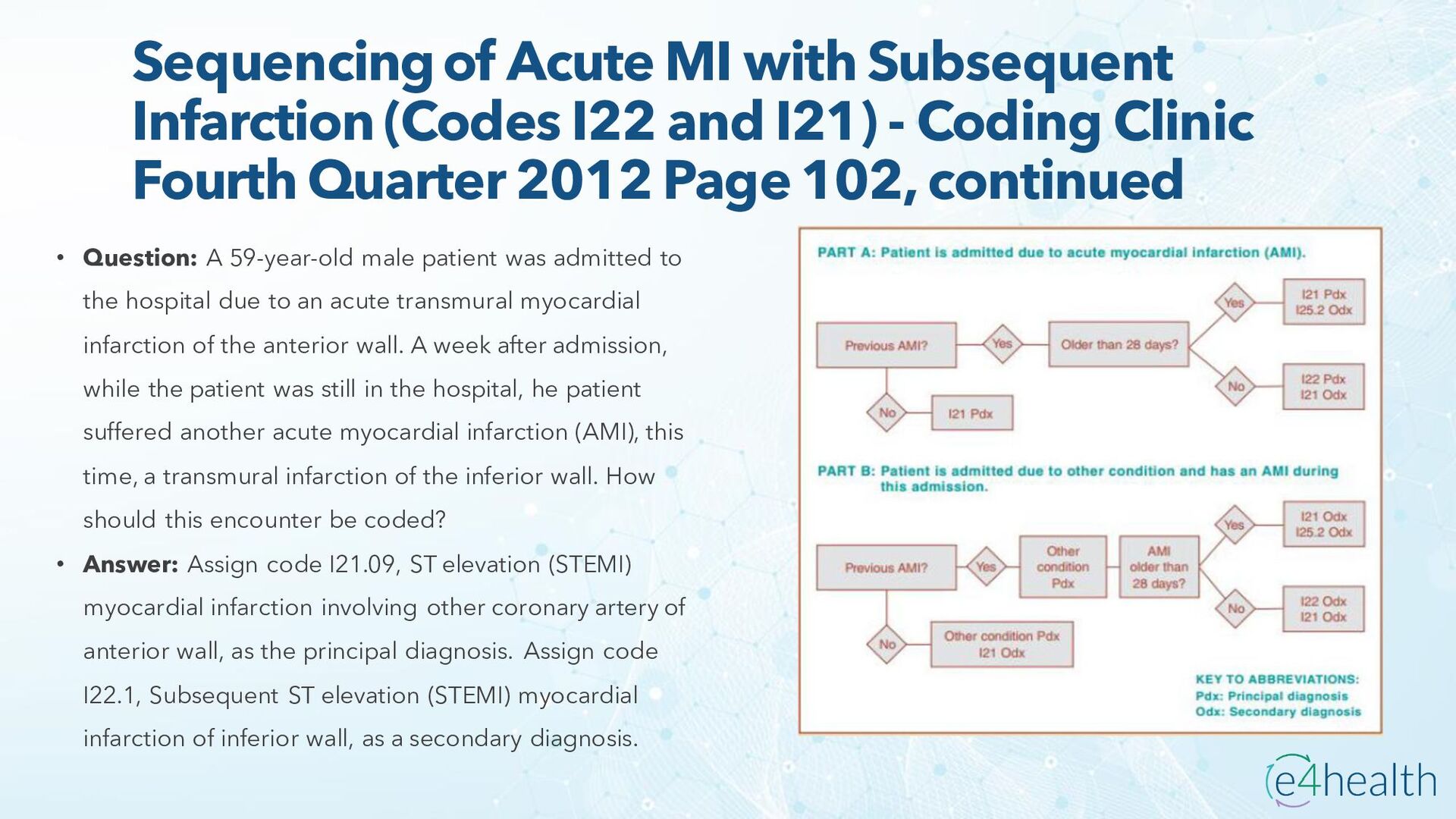
    I21) - Coding Clinic Fourth Quarter 2012 Page 102, continued • Question: A 59-year-old male patient was admitted to the hospital due to an acute transmural myocardial infarction of the anterior wall. A week after admission, while the patient was still in the hospital, he patient suffered another acute myocardial infarction (AMI), this time, a transmural infarction of the inferior wall. How should this encounter be coded? • Answer: Assign code I21.09, ST elevation (STEMI) myocardial infarction involving other coronary artery of anterior wall, as the principal diagnosis. Assign code I22.1, Subsequent ST elevation (STEMI) myocardial infarction of inferior wall, as a secondary diagnosis.
  31. Non-ST Elevation Myocardial Infarction Secondary to Stent Thrombus - Coding

    Clinic Second Quarter 2019 Page 32 • Question: A patient, who is status post coronary angioplasty with stent placement in the LAD two days prior, is readmitted for a non-ST elevation myocardial infarction (NSTEMI) due to thrombus in the stent. Based on the instructional notes under I21.A9, it appears that codes I21.A9, Other myocardial infarction type, T82.897A, Other specified complication of cardiac prosthetic devices, implants and grafts, initial encounter, and I97.89, Other post procedural complications and disorders of circulatory system, not elsewhere classified, should all be assigned. Code I97.190, Other postprocedural cardiac functional disturbances following cardiac surgery, also seems appropriate. What are the correct diagnosis codes and sequencing of an acute myocardial infarction (MI) due to stent thrombus following coronary angioplasty and stent placement? • Answer: Assign codes I97.190, Other postprocedural cardiac functional disturbances following cardiac surgery, T82.867A, Thrombosis due to cardiac prosthetic devices, implants and grafts, initial encounter, and I21.A9, Other myocardial infarction type. Code I97.190 is more specific to the postprocedural MI. • In this case, code I97.89, Other post procedural complications and disorders of circulatory system, not elsewhere classified, is generic and would not be assigned as an additional code.
  32. Non-ST elevated myocardial infarction and in-stent Restenosis - Coding Clinic

    Third Quarter 2021 page 6 • Question: A patient, who has known coronary artery disease (CAD) status post coronary artery intervention with stent insertion, is admitted due to acute non-ST elevated myocardial infarction (NSTEMI). Coronary angiography demonstrates multiple vessel CAD. The provider's final diagnostic statement lists, "Previously placed stent in the mid right coronary artery with a focal area of in-stent restenosis, which is the culprit lesion." Some coding professionals are interpreting "culprit lesion" as disease progression rather than a complication of the stent. How should this case be coded? • Answer: Assign codes T82.855A, Stenosis of coronary artery stent, initial encounter, I21.A9, Other myocardial infarction type, and I25.10, Atherosclerotic heart disease of native coronary artery without angina pectoris, for the NSTEMI caused by in-stent restenosis of the right coronary artery (culprit lesion) and CAD. • ICD-10-CM classifies stenosis or narrowing of a vessel involving a previously placed stent described as "within the stent" or "in-stent" restenosis, as a complication, unless specifically documented as due to disease progression. Documentation of "culprit lesion" should not be interpreted as disease progression without clarification from the provider.
  33. Non-ischemic myocardial injury - Coding clinic fourth quarter 2021 pages

    14-15 • Code I5A, Non-ischemic myocardial injury (non-traumatic), has been created to identify a non-traumatic, non-ischemic myocardial injury. The definition of a non-ischemic myocardial infarction (MI) was most recently updated in 2018. • According to the Fourth Universal Definition of Myocardial Infarction, an acute myocardial injury is characterized by the rise and/or fall of cardiac troponin levels with at least one value above the 99th percentile upper reference limit. A diagnosis of MI is reserved for patients with myocardial ischemia as the cause of myocardial injury, whether attributable to acute atherothrombosis (type 1 MI) or supply/demand mismatch without acute atherothrombosis (type 2 MI). Myocardial injury in the absence of ischemia is categorized as acute or chronic non-ischemic myocardial injury. Based on high sensitivity troponin tests, clinicians can now distinguish whether patients have suffered a non-ischemic myocardial injury versus one of the other MI subtypes. This new code will allow for the appropriate classification of these patients. • When assigning code I5A, sequence the underlying cause first, such as acute kidney failure, acute myocarditis, etc., if known and/or applicable. • Question: A patient presents to the Emergency Department after becoming progressively somnolent. Diagnostic workup revealed elevated troponin level and intermittent atrial fibrillation and the patient was admitted for further cardiology management. The patient never reported any chest pain; did not demonstrate electrocardiogram (ECG) changes; troponin levels stabilized; and at discharge, the provider diagnosed non-ischemic myocardial injury. How would non-ischemic myocardial injury be coded? • Answer: Assign code I5A, Non-ischemic myocardial injury (non-ischemic), for non-ischemic myocardial injury.
  34. Myocardial infarction and non-obstructive coronary artery - Coding Clinic Second

    Quarter 2023 page 29 • Question: A patient presented with chest pain on exertion, and was found to have significant troponin elevation due to a non-ST elevation myocardial infarction (NSTEMI). Electrocardiograms showed sinus bradyarrhythmia with incomplete right bundle branch block, early repolarization, and no significant ST-T changes. Computed tomography coronary angiogram showed widely patent coronary arteries. The provider's final diagnostic statement listed, "Myocardial infarction with non-obstructive coronary arteries (MINOCA)." What is the correct code assignment for a diagnosis of MINOCA? • Answer: Assign code I21.4, Non-ST elevation (NSTEMI) myocardial infarction, for MINOCA, when the myocardial infarction is specified as NSTEMI. Code assignment will not be the same in all cases of MINOCA, as it will depend on the type of MI documented in the medical record by the provider.
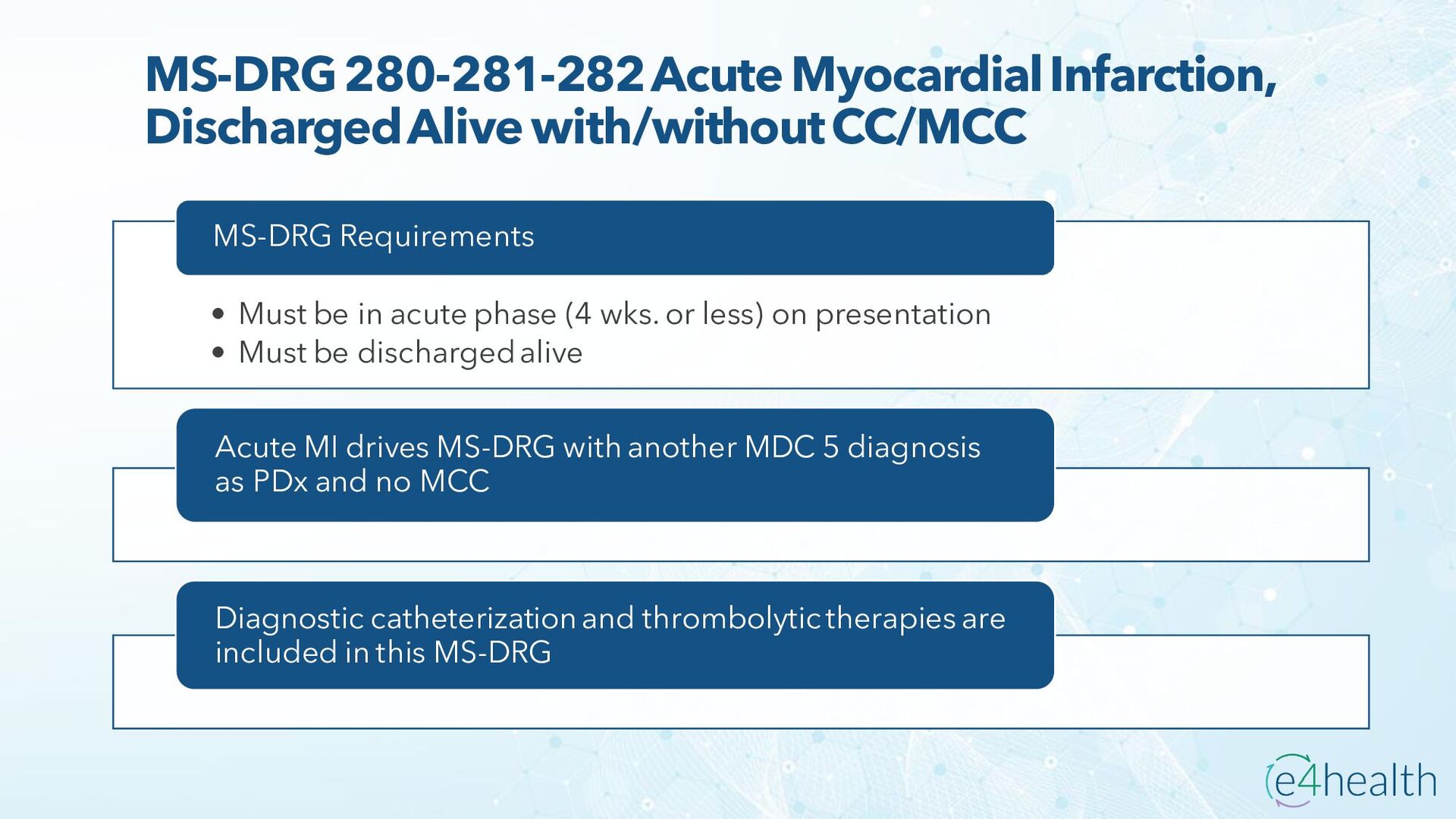
  35. MS-DRG 280-281-282 Acute Myocardial Infarction, Discharged Alive with/without CC/MCC •

    Must be in acute phase (4 wks. or less) on presentation • Must be discharged alive MS-DRG Requirements Acute MI drives MS-DRG with another MDC 5 diagnosis as PDx and no MCC Diagnostic catheterization and thrombolytic therapies are included in this MS-DRG
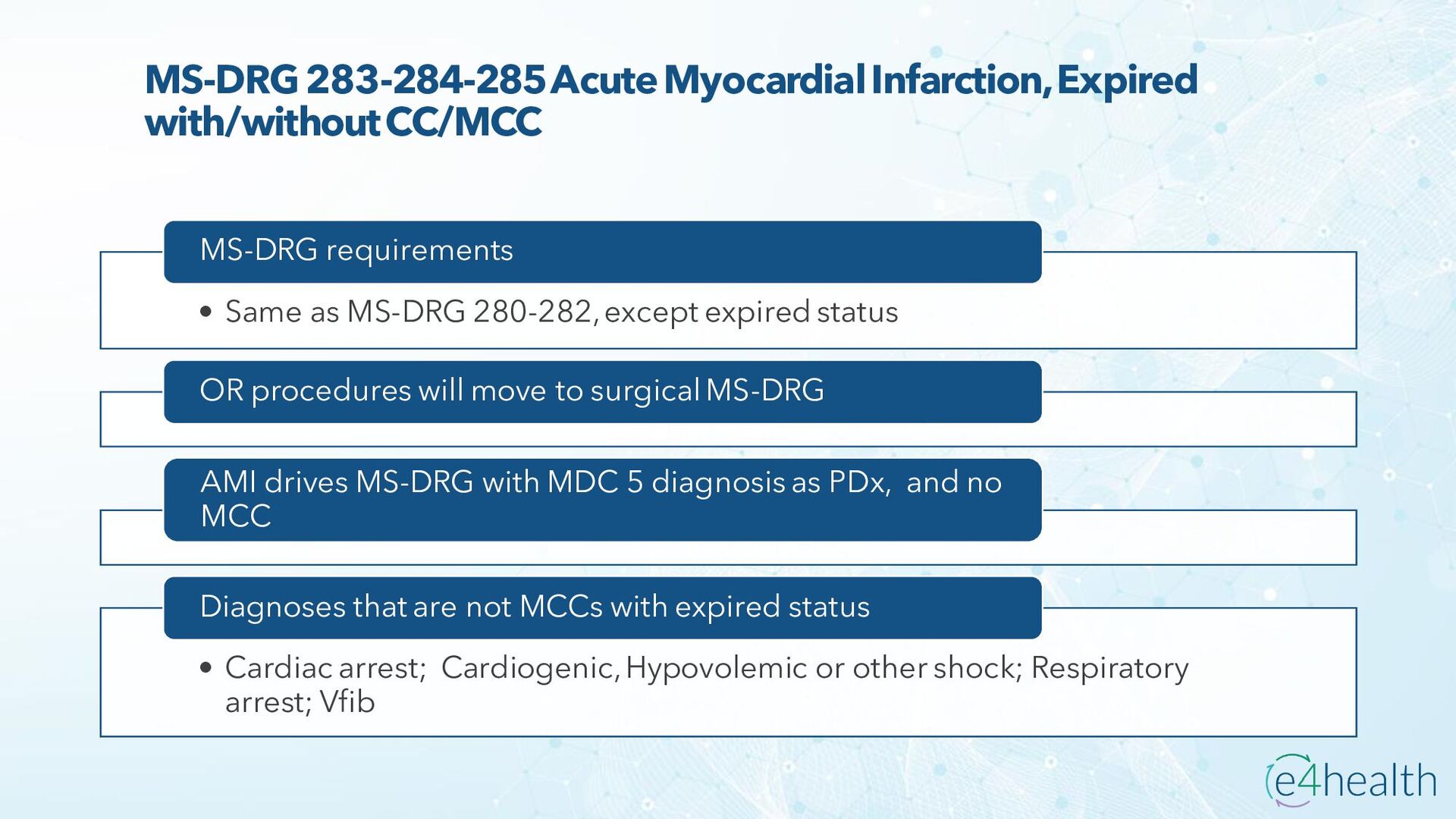
  36. MS-DRG 283-284-285 Acute Myocardial Infarction, Expired with/without CC/MCC • Same

    as MS-DRG 280-282, except expired status MS-DRG requirements OR procedures will move to surgical MS-DRG AMI drives MS-DRG with MDC 5 diagnosis as PDx, and no MCC • Cardiac arrest; Cardiogenic, Hypovolemic or other shock; Respiratory arrest; Vfib Diagnoses that are not MCCs with expired status
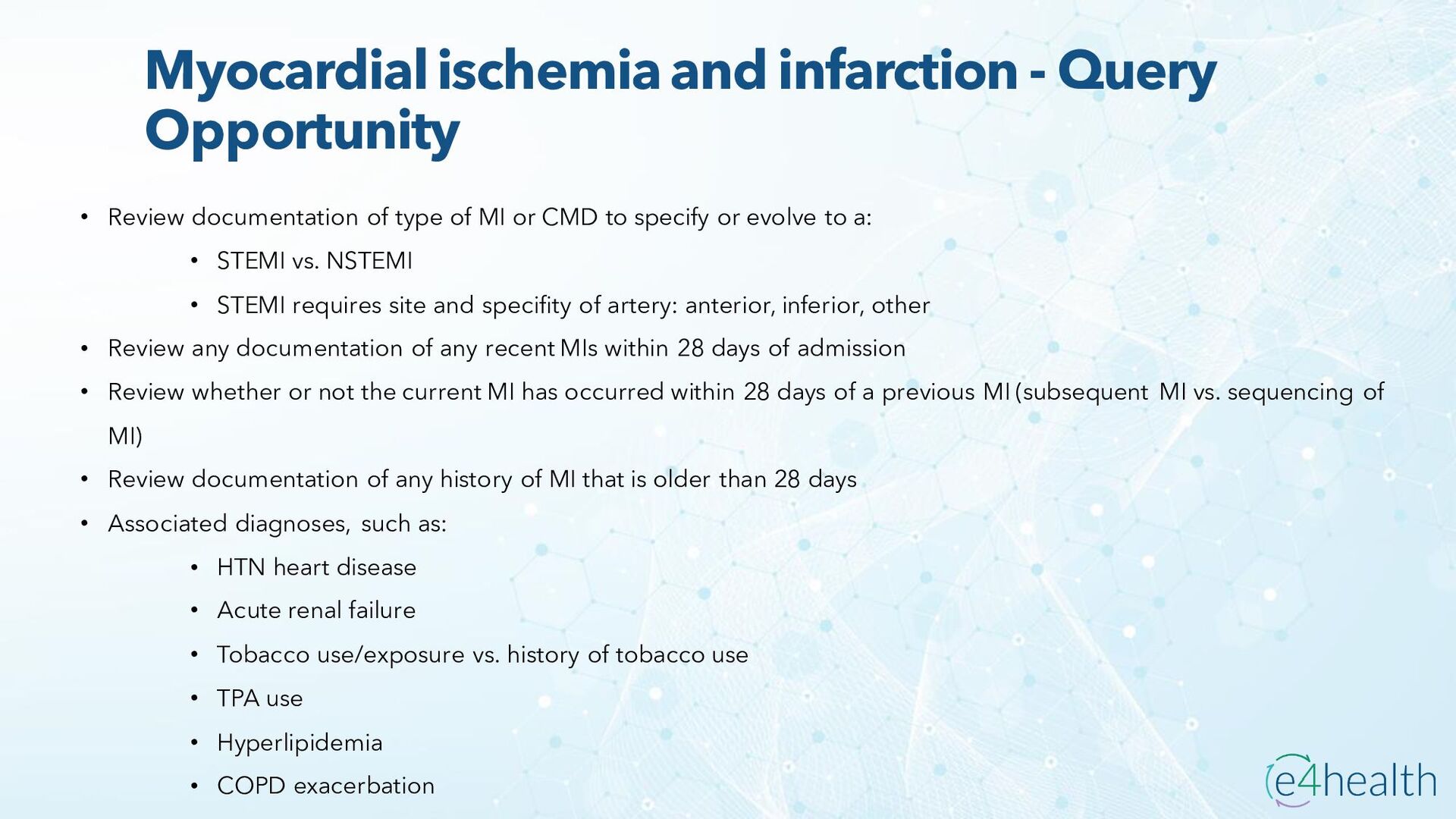
  37. Myocardial ischemia and infarction - Query Opportunity • Review documentation

    of type of MI or CMD to specify or evolve to a: • STEMI vs. NSTEMI • STEMI requires site and specifity of artery: anterior, inferior, other • Review any documentation of any recent MIs within 28 days of admission • Review whether or not the current MI has occurred within 28 days of a previous MI (subsequent MI vs. sequencing of MI) • Review documentation of any history of MI that is older than 28 days • Associated diagnoses, such as: • HTN heart disease • Acute renal failure • Tobacco use/exposure vs. history of tobacco use • TPA use • Hyperlipidemia • COPD exacerbation
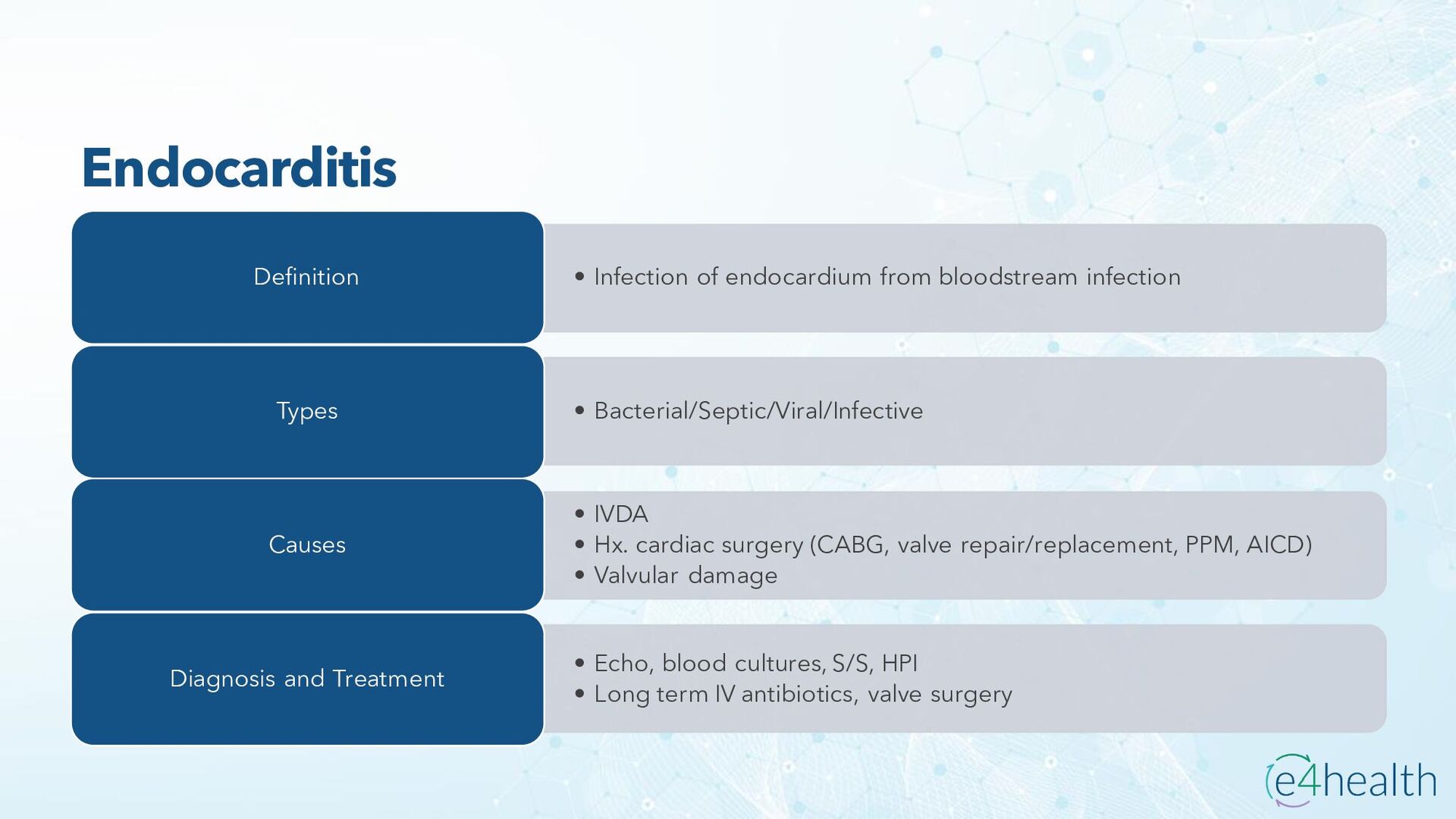
  38. Endocarditis • Infection of endocardium from bloodstream infection Definition •

    Bacterial/Septic/Viral/Infective Types • IVDA • Hx. cardiac surgery (CABG, valve repair/replacement, PPM, AICD) • Valvular damage Causes • Echo, blood cultures, S/S, HPI • Long term IV antibiotics, valve surgery Diagnosis and Treatment
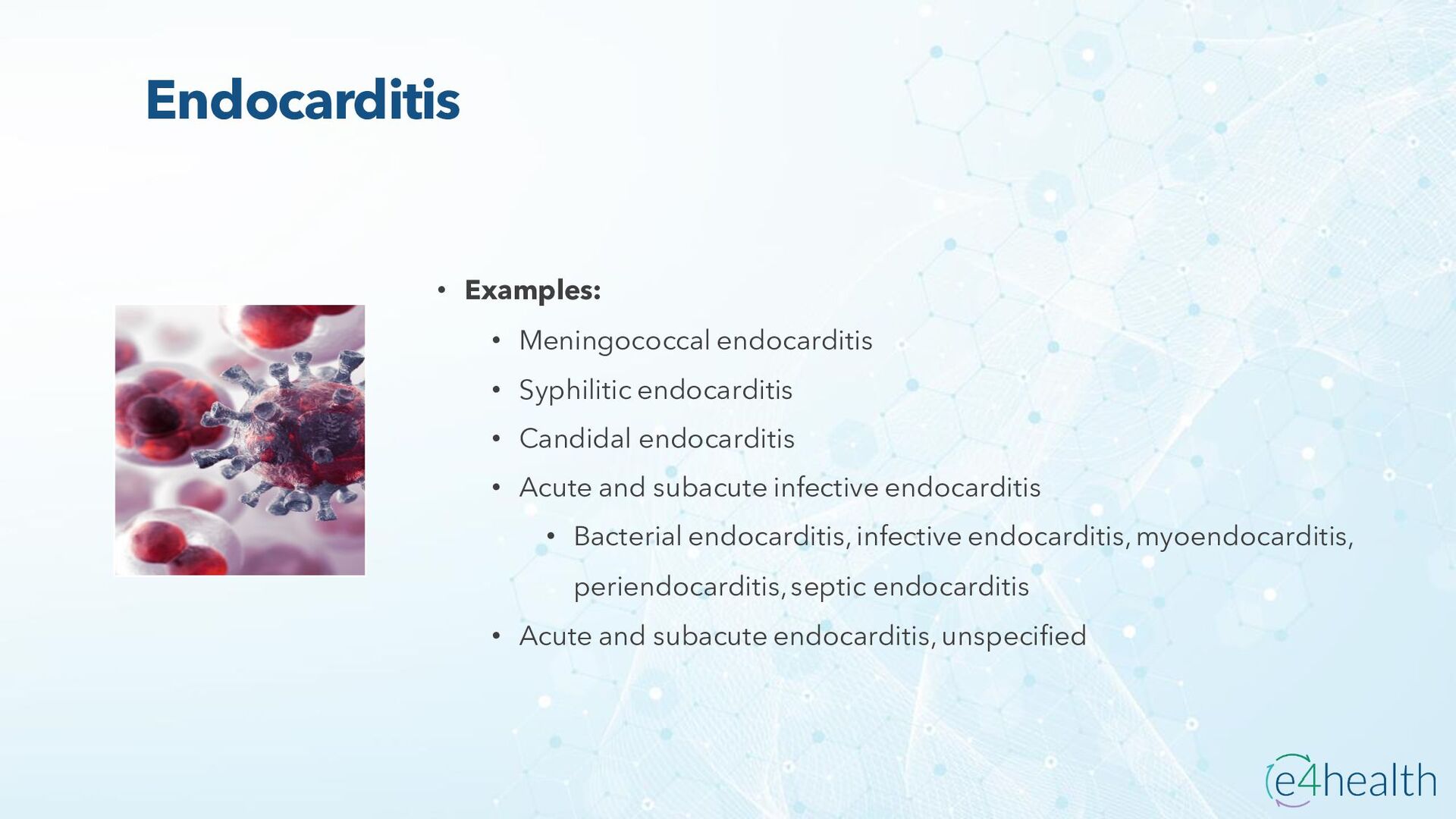
  39. Endocarditis • Examples: • Meningococcal endocarditis • Syphilitic endocarditis •

    Candidal endocarditis • Acute and subacute infective endocarditis • Bacterial endocarditis, infective endocarditis, myoendocarditis, periendocarditis, septic endocarditis • Acute and subacute endocarditis, unspecified
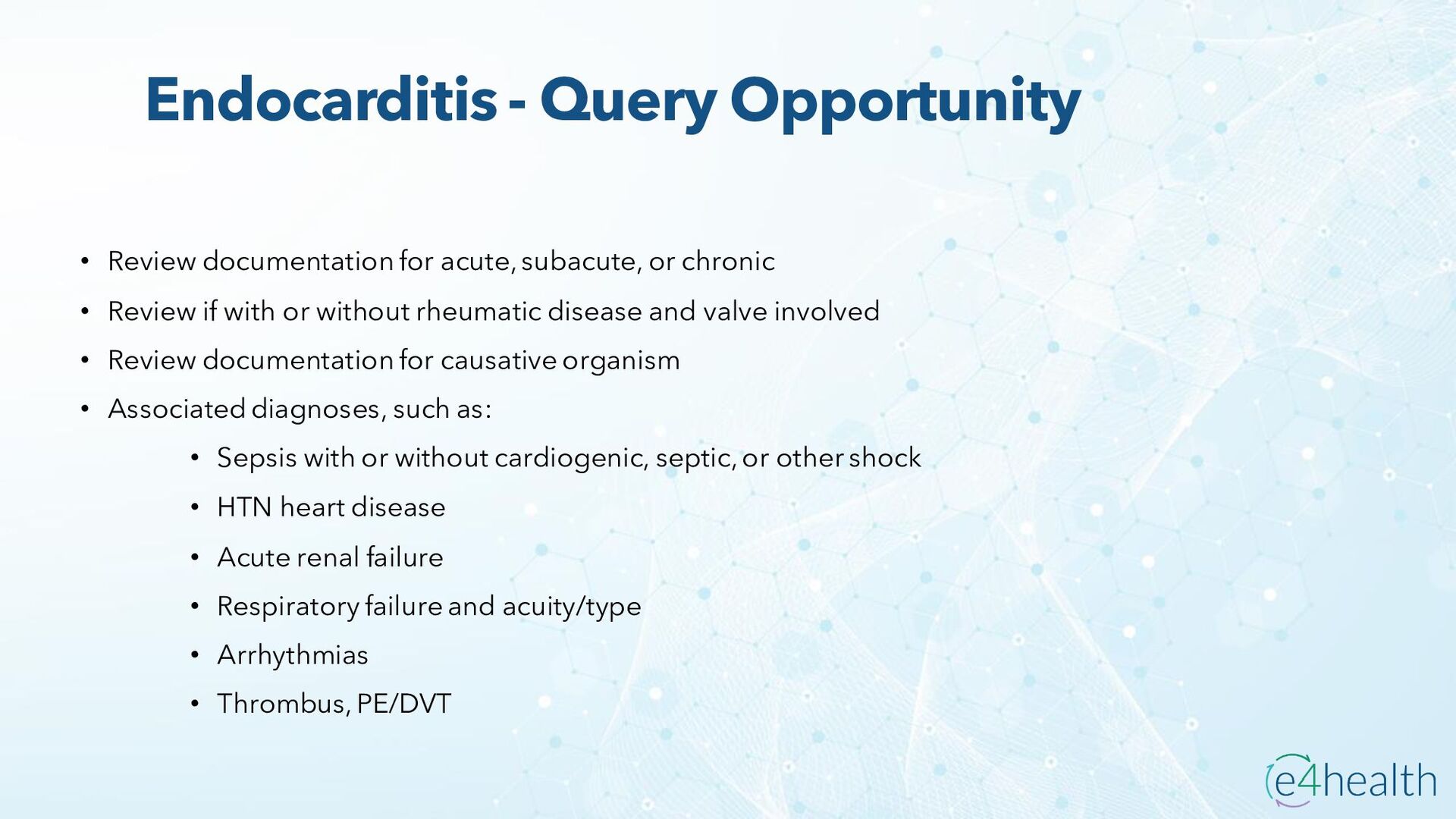
  40. Endocarditis - Query Opportunity • Review documentation for acute, subacute,

    or chronic • Review if with or without rheumatic disease and valve involved • Review documentation for causative organism • Associated diagnoses, such as: • Sepsis with or without cardiogenic, septic, or other shock • HTN heart disease • Acute renal failure • Respiratory failure and acuity/type • Arrhythmias • Thrombus, PE/DVT
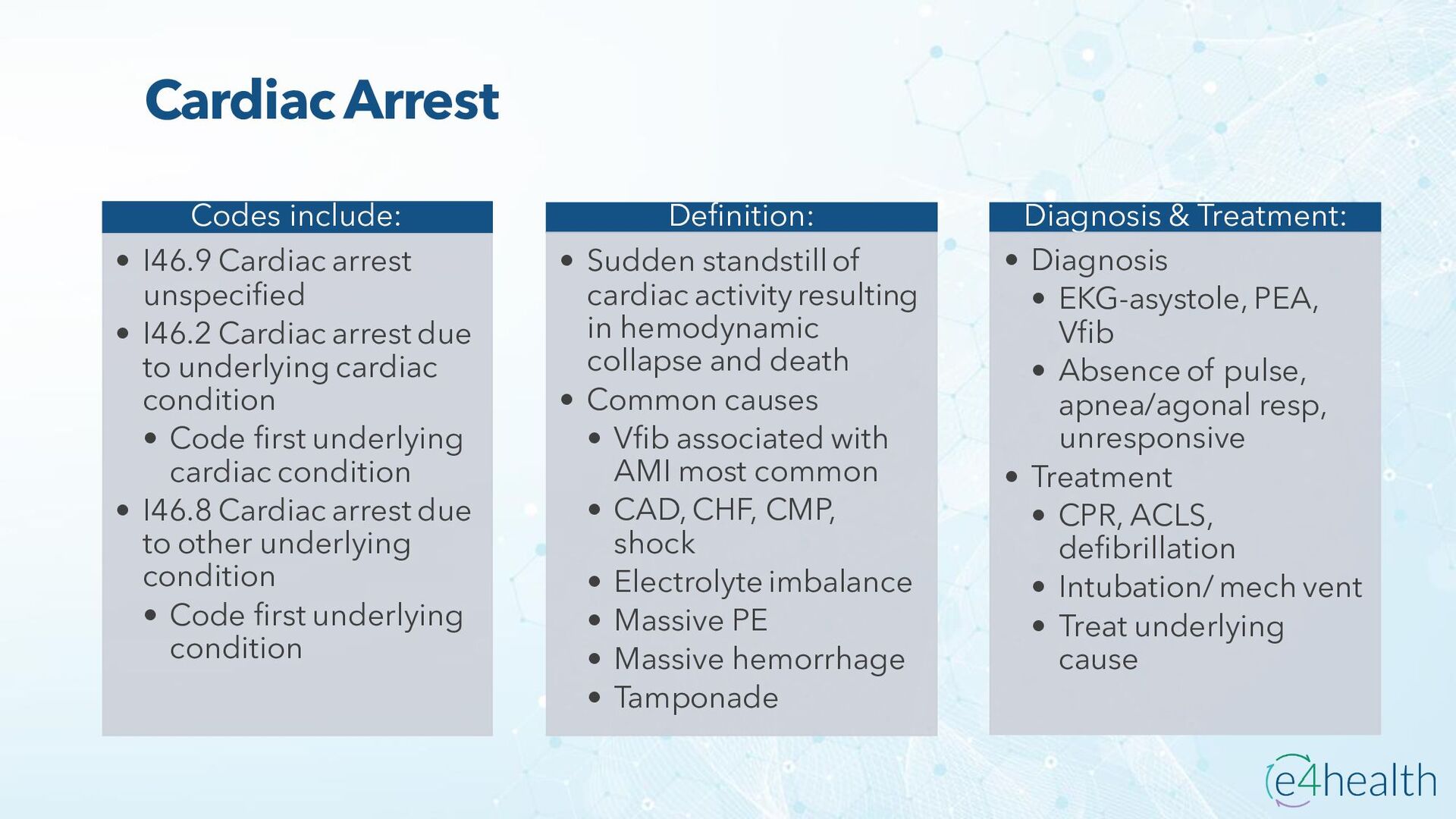
  41. Cardiac Arrest Codes include: • I46.9 Cardiac arrest unspecified •

    I46.2 Cardiac arrest due to underlying cardiac condition • Code first underlying cardiac condition • I46.8 Cardiac arrest due to other underlying condition • Code first underlying condition Definition: • Sudden standstill of cardiac activity resulting in hemodynamic collapse and death • Common causes • Vfib associated with AMI most common • CAD, CHF, CMP, shock • Electrolyte imbalance • Massive PE • Massive hemorrhage • Tamponade Diagnosis & Treatment: • Diagnosis • EKG-asystole, PEA, Vfib • Absence of pulse, apnea/agonal resp, unresponsive • Treatment • CPR, ACLS, defibrillation • Intubation/ mech vent • Treat underlying cause
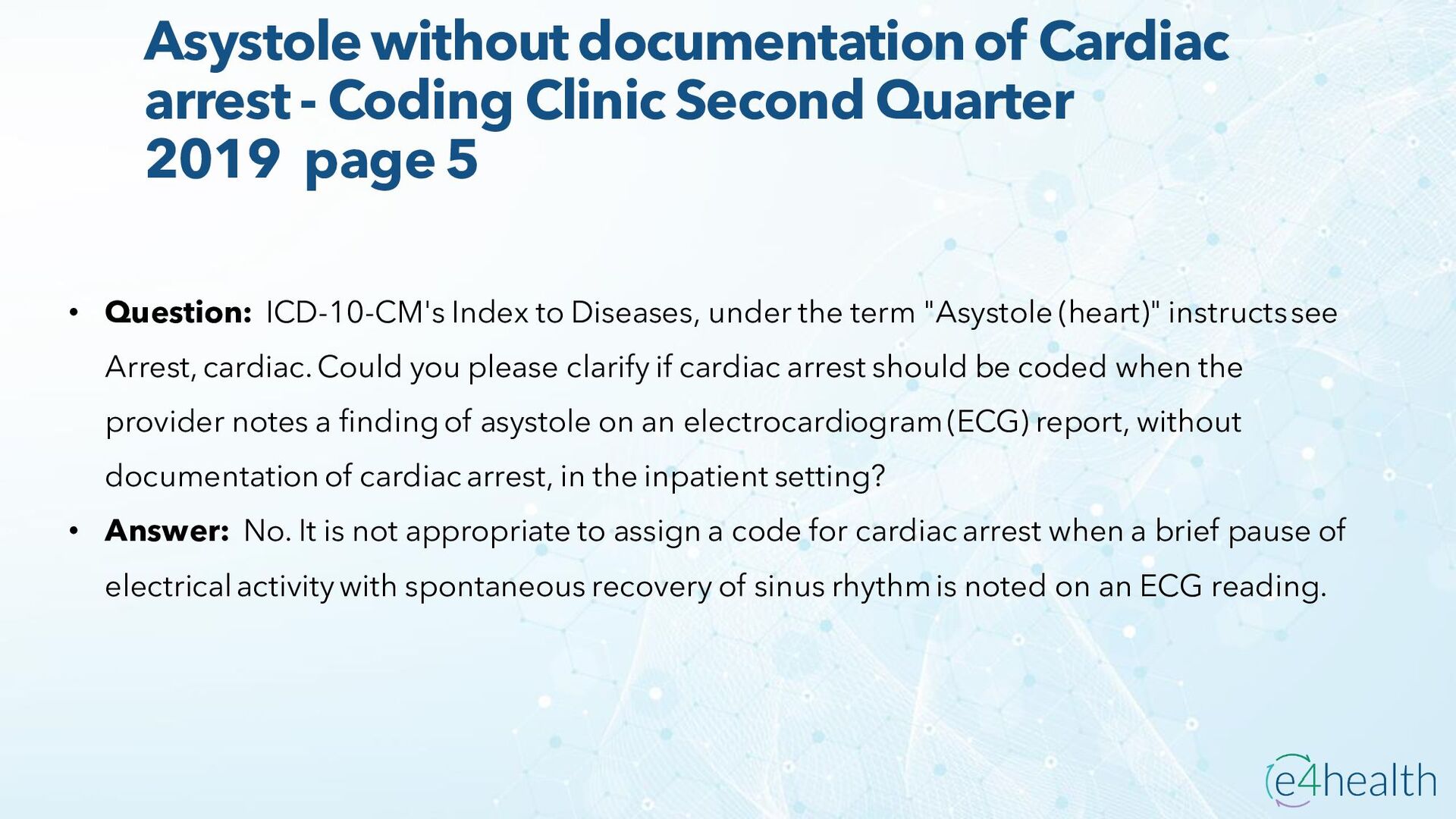
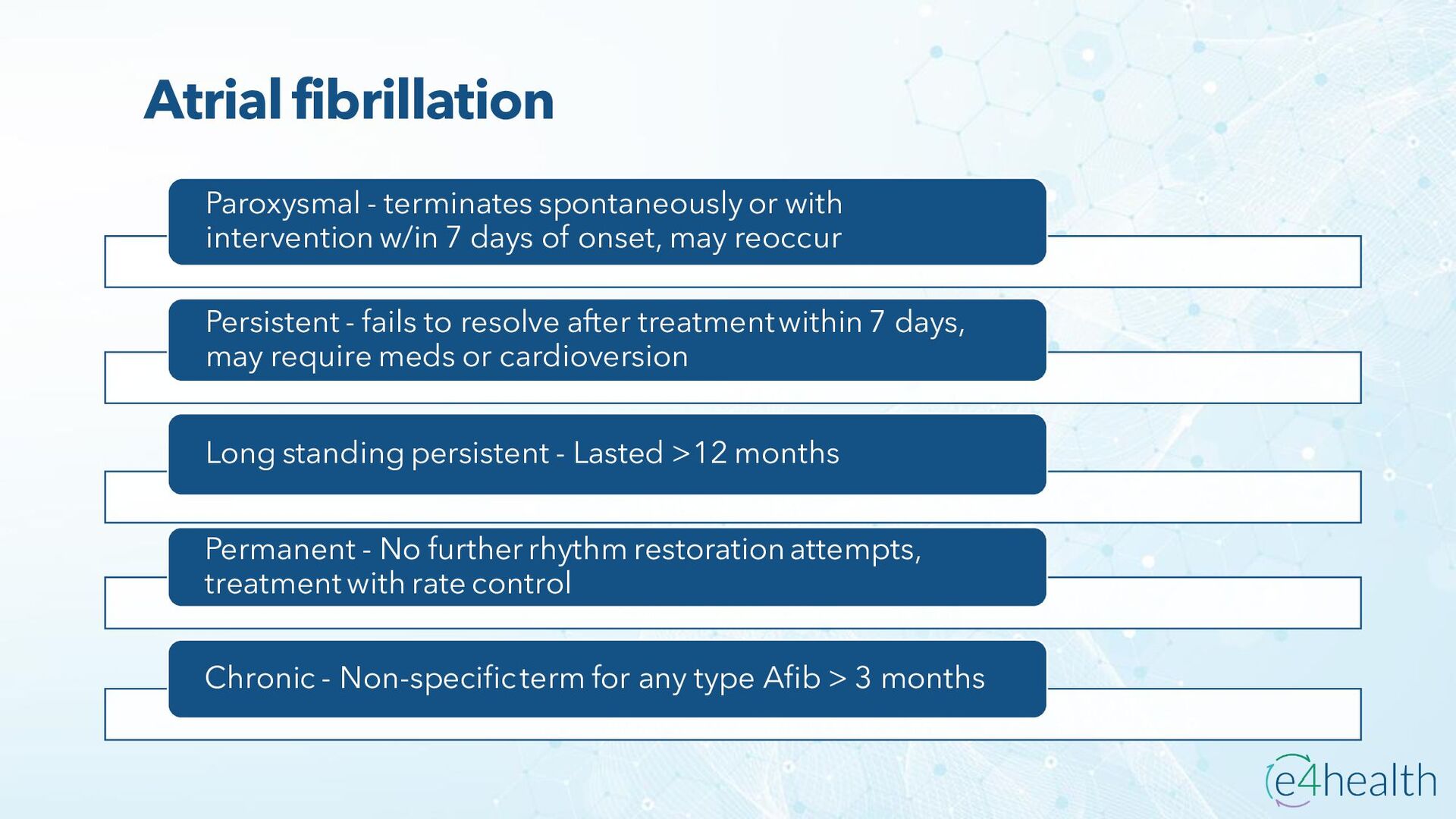
  42. Asystole without documentation of Cardiac arrest - Coding Clinic Second

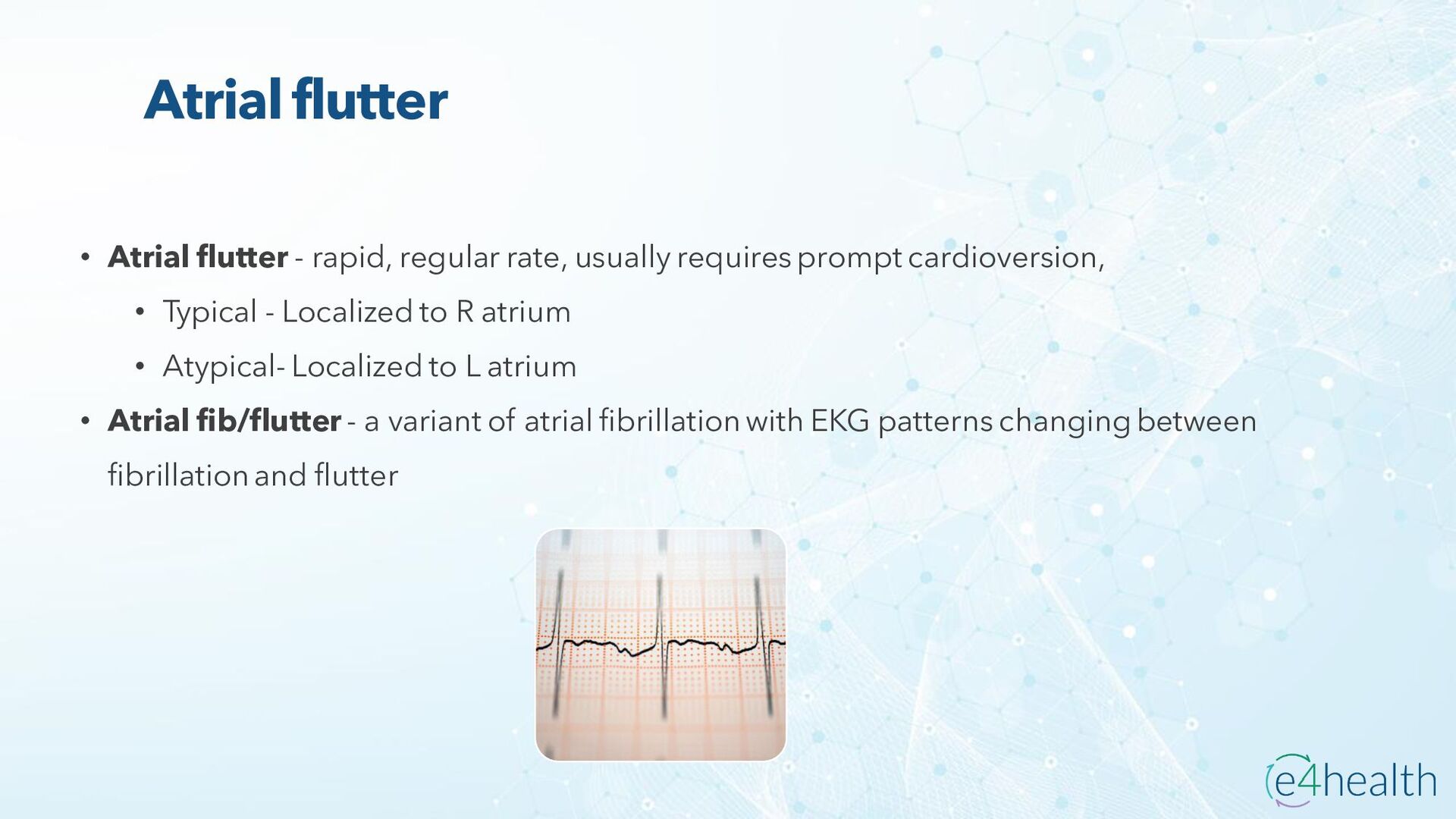
    Quarter 2019 page 5 • Question: ICD-10-CM's Index to Diseases, under the term "Asystole (heart)" instructs see Arrest, cardiac. Could you please clarify if cardiac arrest should be coded when the provider notes a finding of asystole on an electrocardiogram (ECG) report, without documentation of cardiac arrest, in the inpatient setting? • Answer: No. It is not appropriate to assign a code for cardiac arrest when a brief pause of electrical activity with spontaneous recovery of sinus rhythm is noted on an ECG reading.
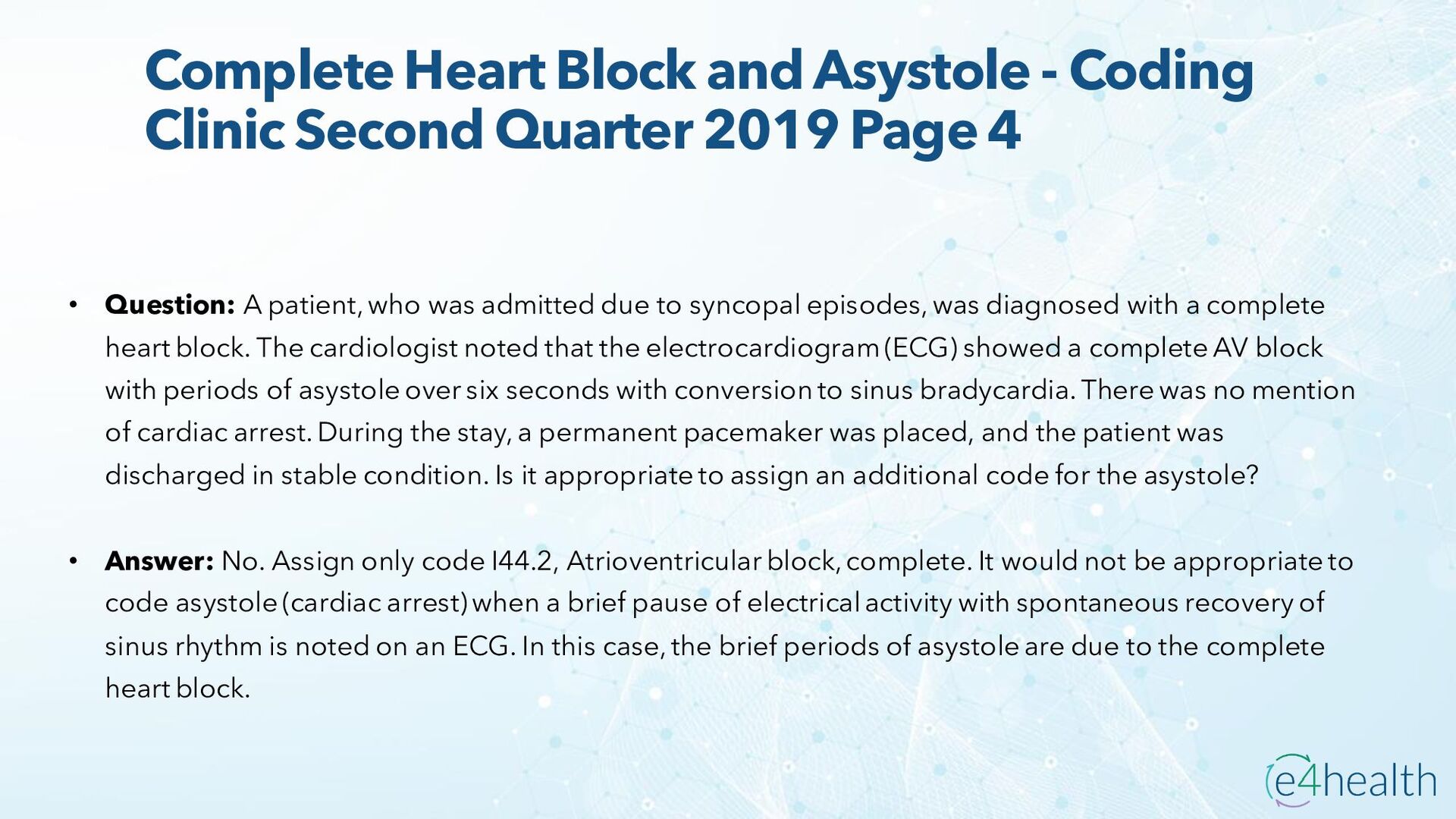
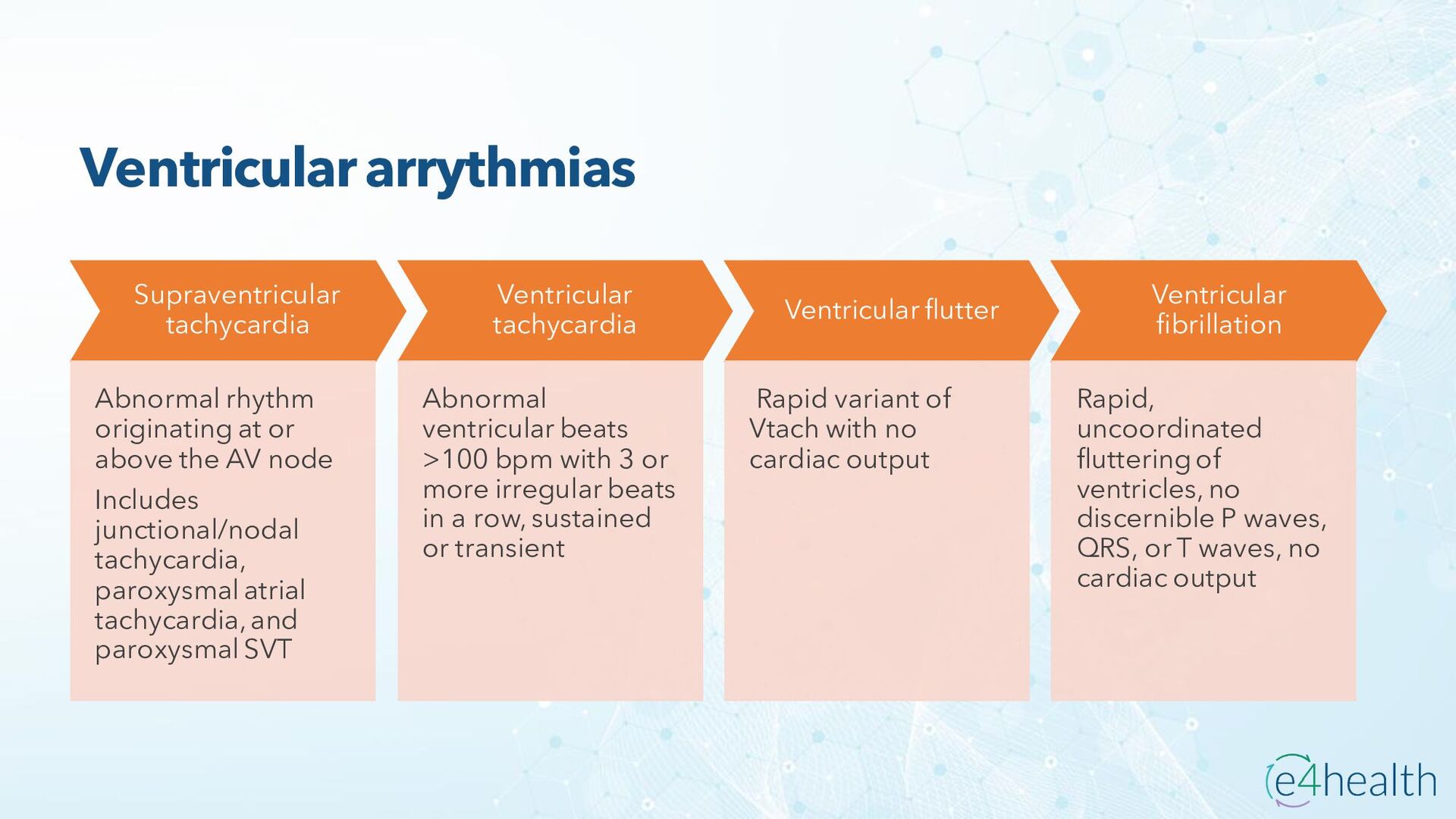
  43. Complete Heart Block and Asystole - Coding Clinic Second Quarter

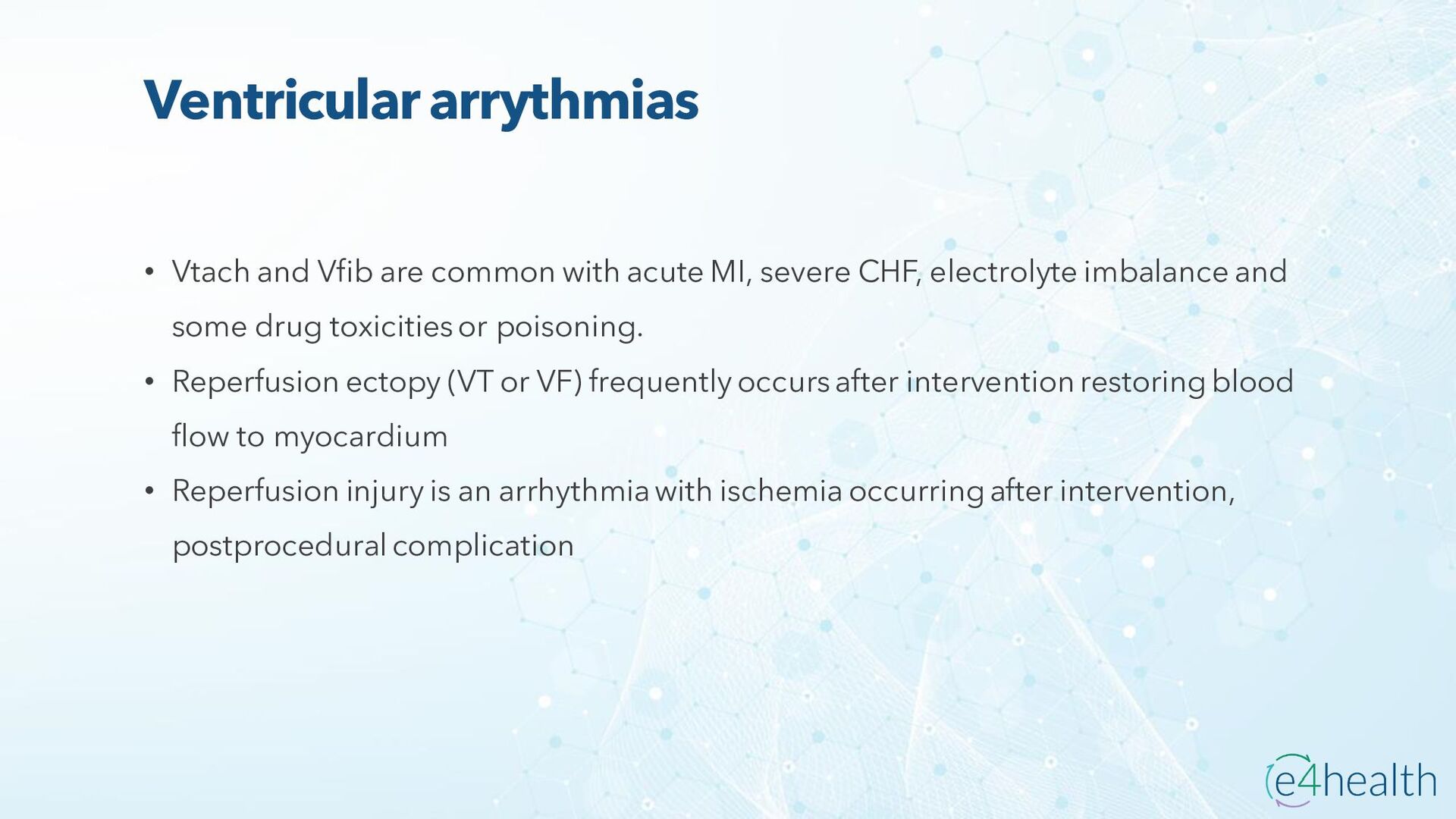
    2019 Page 4 • Question: A patient, who was admitted due to syncopal episodes, was diagnosed with a complete heart block. The cardiologist noted that the electrocardiogram (ECG) showed a complete AV block with periods of asystole over six seconds with conversion to sinus bradycardia. There was no mention of cardiac arrest. During the stay, a permanent pacemaker was placed, and the patient was discharged in stable condition. Is it appropriate to assign an additional code for the asystole? • Answer: No. Assign only code I44.2, Atrioventricular block, complete. It would not be appropriate to code asystole (cardiac arrest) when a brief pause of electrical activity with spontaneous recovery of sinus rhythm is noted on an ECG. In this case, the brief periods of asystole are due to the complete heart block.
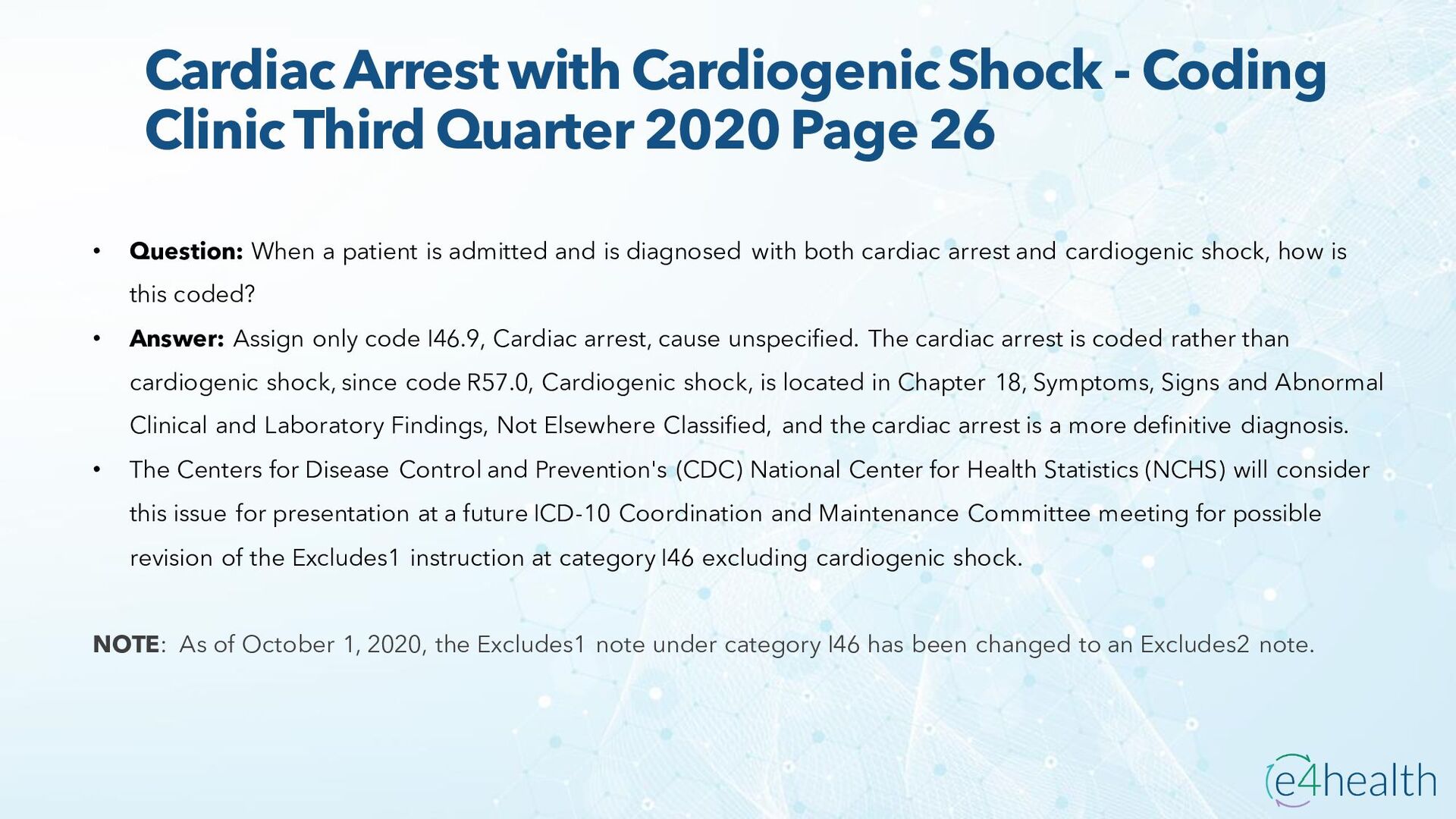
  44. Cardiac Arrest with Cardiogenic Shock - Coding Clinic Third Quarter

    2020 Page 26 • Question: When a patient is admitted and is diagnosed with both cardiac arrest and cardiogenic shock, how is this coded? • Answer: Assign only code I46.9, Cardiac arrest, cause unspecified. The cardiac arrest is coded rather than cardiogenic shock, since code R57.0, Cardiogenic shock, is located in Chapter 18, Symptoms, Signs and Abnormal Clinical and Laboratory Findings, Not Elsewhere Classified, and the cardiac arrest is a more definitive diagnosis. • The Centers for Disease Control and Prevention's (CDC) National Center for Health Statistics (NCHS) will consider this issue for presentation at a future ICD-10 Coordination and Maintenance Committee meeting for possible revision of the Excludes1 instruction at category I46 excluding cardiogenic shock. NOTE: As of October 1, 2020, the Excludes1 note under category I46 has been changed to an Excludes2 note.
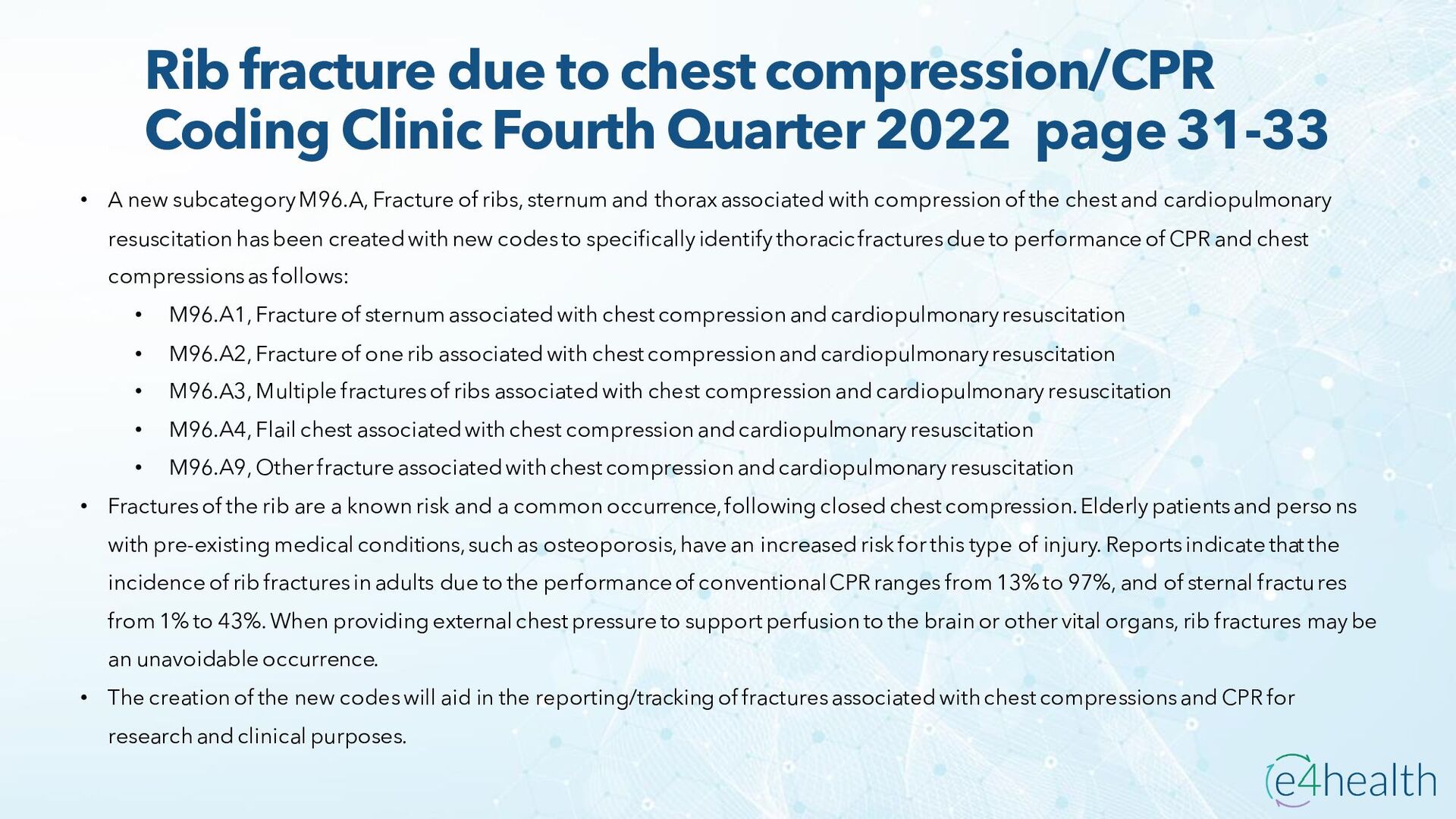
  45. Rib fracture due to chest compression/CPR Coding Clinic Fourth Quarter

    2022 page 31-33 • A new subcategory M96.A, Fracture of ribs, sternum and thorax associated with compression of the chest and cardiopulmonary resuscitation has been created with new codes to specifically identify thoracic fractures due to performance of CPR and chest compressions as follows: • M96.A1, Fracture of sternum associated with chest compression and cardiopulmonary resuscitation • M96.A2, Fracture of one rib associated with chest compression and cardiopulmonary resuscitation • M96.A3, Multiple fractures of ribs associated with chest compression and cardiopulmonary resuscitation • M96.A4, Flail chest associated with chest compression and cardiopulmonary resuscitation • M96.A9, Other fracture associated with chest compression and cardiopulmonary resuscitation • Fractures of the rib are a known risk and a common occurrence, following closed chest compression. Elderly patients and persons with pre-existing medical conditions, such as osteoporosis, have an increased risk for this type of injury. Reports indicate that the incidence of rib fractures in adults due to the performance of conventional CPR ranges from 13% to 97%, and of sternal fractures from 1% to 43%. When providing external chest pressure to support perfusion to the brain or other vital organs, rib fractures may be an unavoidable occurrence. • The creation of the new codes will aid in the reporting/tracking of fractures associated with chest compressions and CPR for research and clinical purposes.
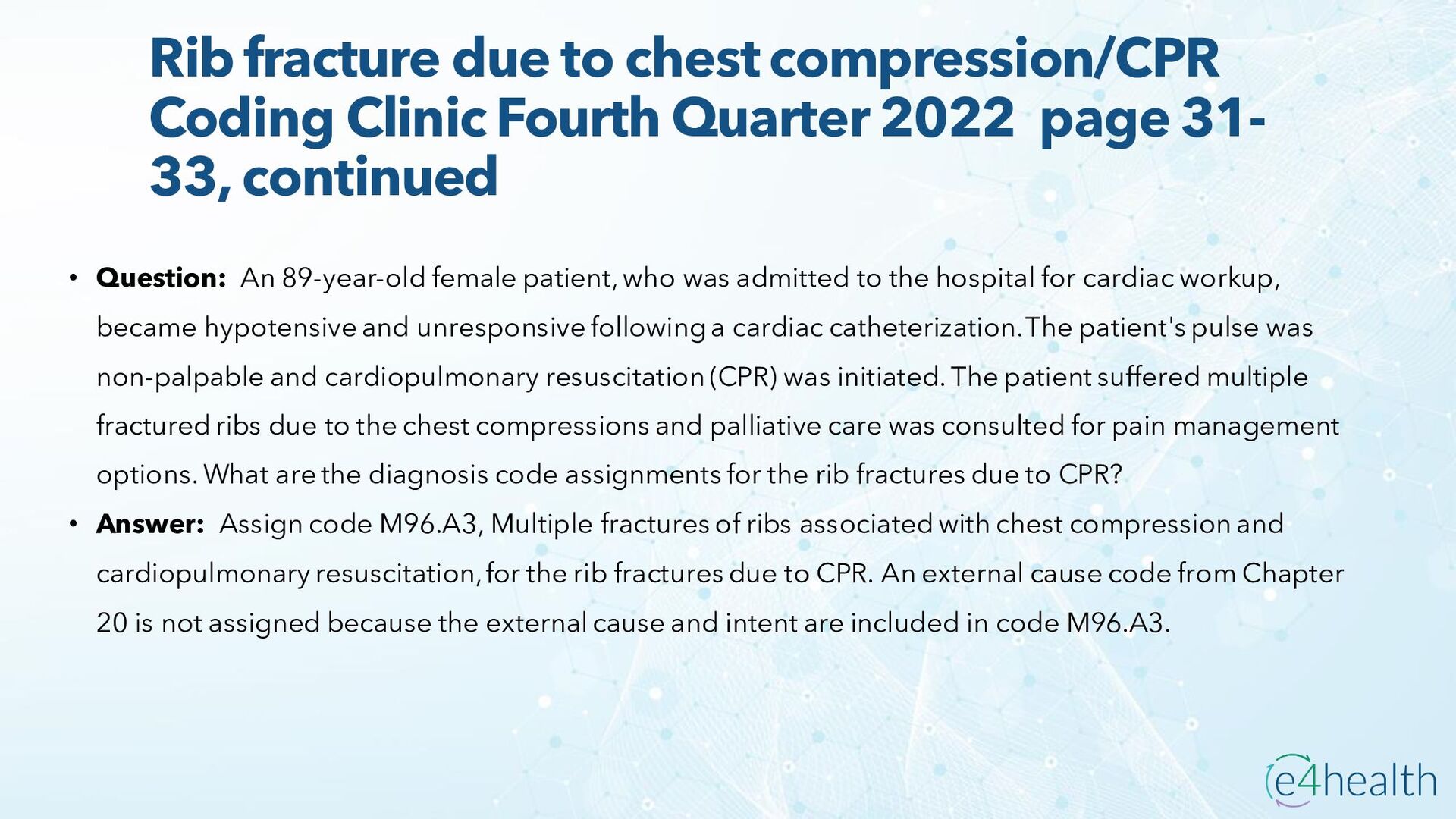
  46. Rib fracture due to chest compression/CPR Coding Clinic Fourth Quarter

    2022 page 31- 33, continued • Question: An 89-year-old female patient, who was admitted to the hospital for cardiac workup, became hypotensive and unresponsive following a cardiac catheterization. The patient's pulse was non-palpable and cardiopulmonary resuscitation (CPR) was initiated. The patient suffered multiple fractured ribs due to the chest compressions and palliative care was consulted for pain management options. What are the diagnosis code assignments for the rib fractures due to CPR? • Answer: Assign code M96.A3, Multiple fractures of ribs associated with chest compression and cardiopulmonary resuscitation, for the rib fractures due to CPR. An external cause code from Chapter 20 is not assigned because the external cause and intent are included in code M96.A3.
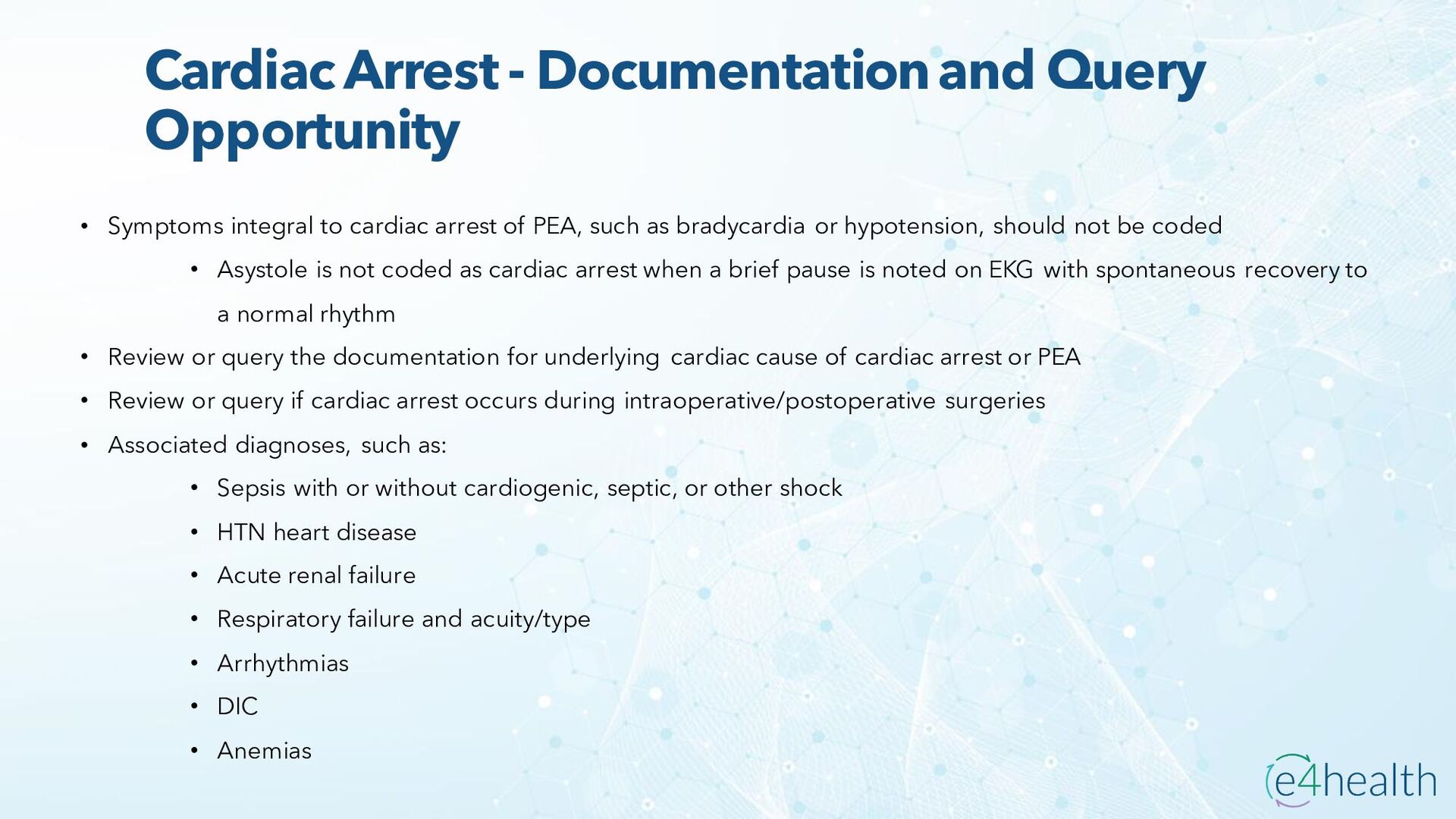
  47. Cardiac Arrest - Documentation and Query Opportunity • Symptoms integral

    to cardiac arrest of PEA, such as bradycardia or hypotension, should not be coded • Asystole is not coded as cardiac arrest when a brief pause is noted on EKG with spontaneous recovery to a normal rhythm • Review or query the documentation for underlying cardiac cause of cardiac arrest or PEA • Review or query if cardiac arrest occurs during intraoperative/postoperative surgeries • Associated diagnoses, such as: • Sepsis with or without cardiogenic, septic, or other shock • HTN heart disease • Acute renal failure • Respiratory failure and acuity/type • Arrhythmias • DIC • Anemias
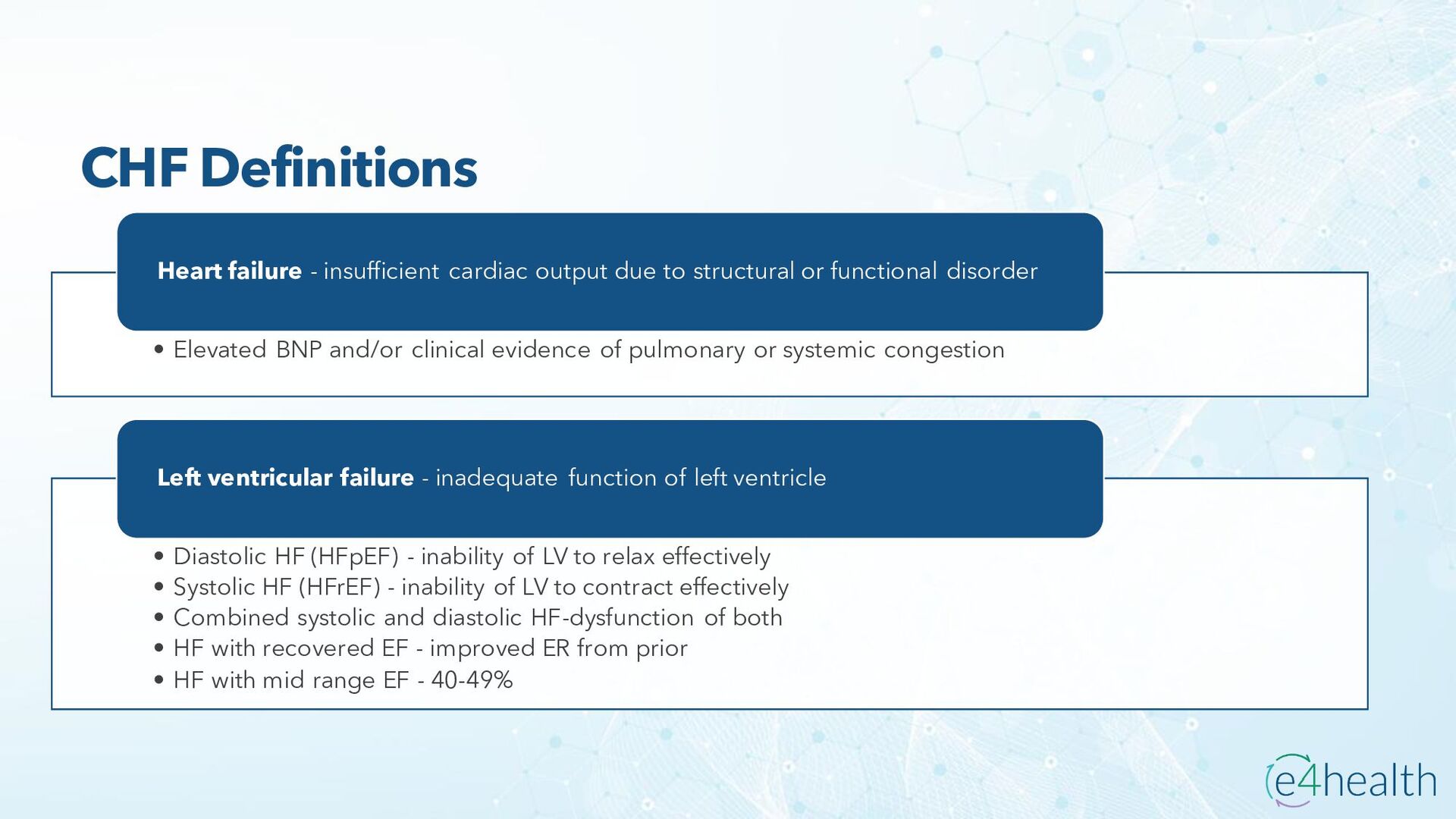
  48. CHF Definitions • Elevated BNP and/or clinical evidence of pulmonary

    or systemic congestion Heart failure - insufficient cardiac output due to structural or functional disorder • Diastolic HF (HFpEF) - inability of LV to relax effectively • Systolic HF (HFrEF) - inability of LV to contract effectively • Combined systolic and diastolic HF-dysfunction of both • HF with recovered EF - improved ER from prior • HF with mid range EF - 40-49% Left ventricular failure - inadequate function of left ventricle
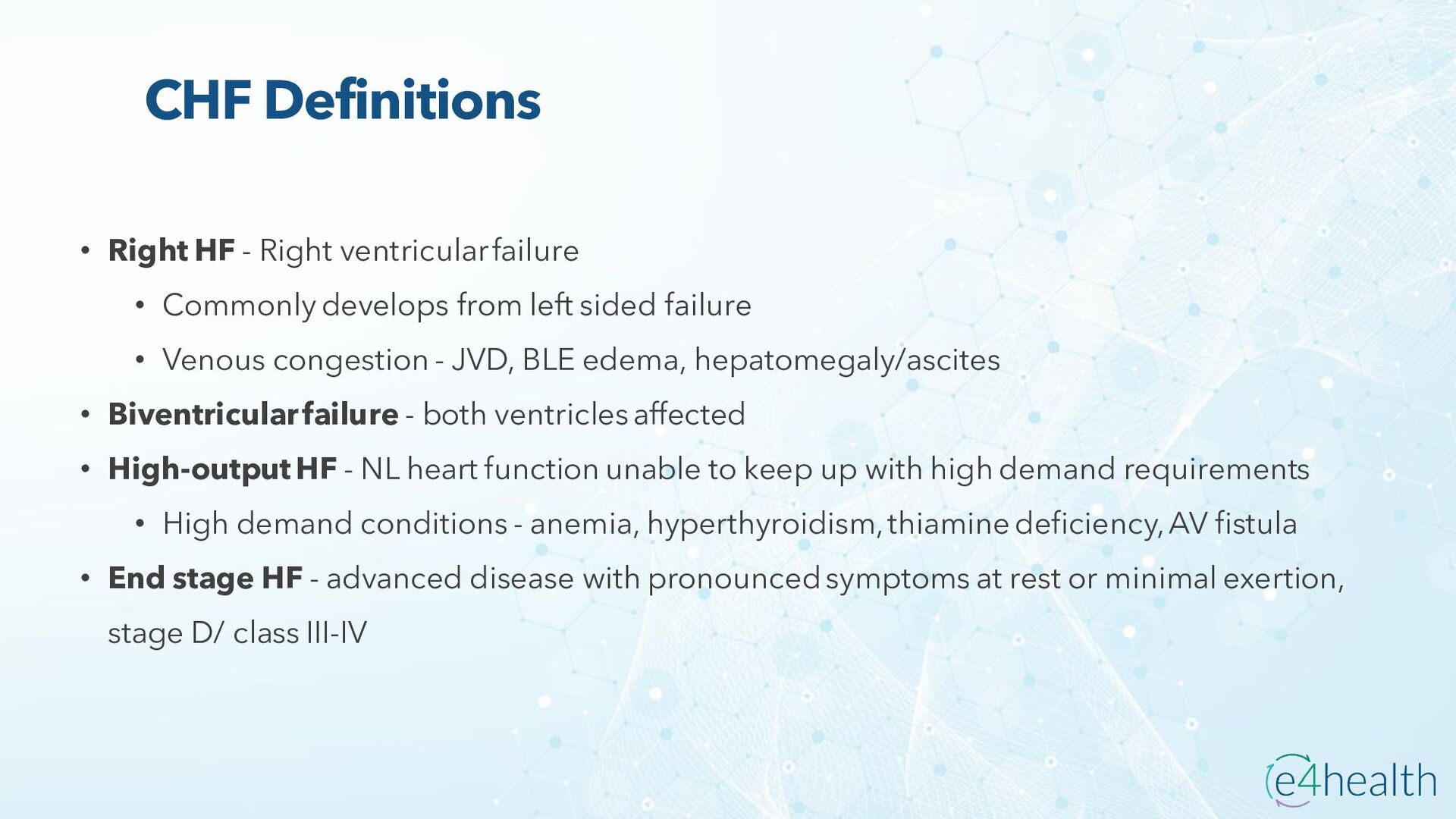
  49. CHF Definitions • Right HF - Right ventricular failure •

    Commonly develops from left sided failure • Venous congestion - JVD, BLE edema, hepatomegaly/ascites • Biventricular failure - both ventricles affected • High-output HF - NL heart function unable to keep up with high demand requirements • High demand conditions - anemia, hyperthyroidism, thiamine deficiency, AV fistula • End stage HF - advanced disease with pronounced symptoms at rest or minimal exertion, stage D/ class III-IV
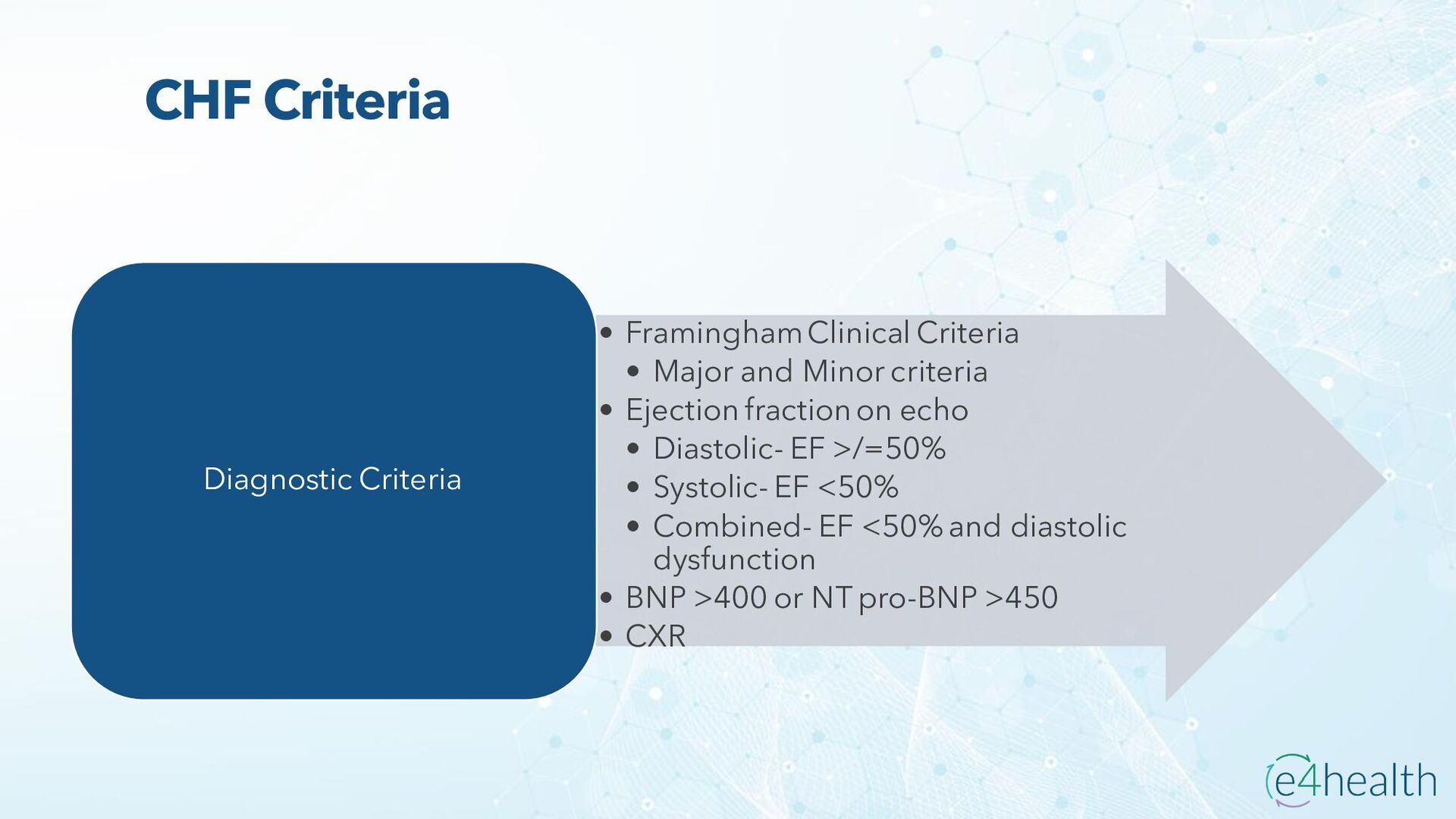
  50. CHF Criteria • Framingham Clinical Criteria • Major and Minor

    criteria • Ejection fraction on echo • Diastolic- EF >/=50% • Systolic- EF <50% • Combined- EF <50% and diastolic dysfunction • BNP >400 or NT pro-BNP >450 • CXR Diagnostic Criteria
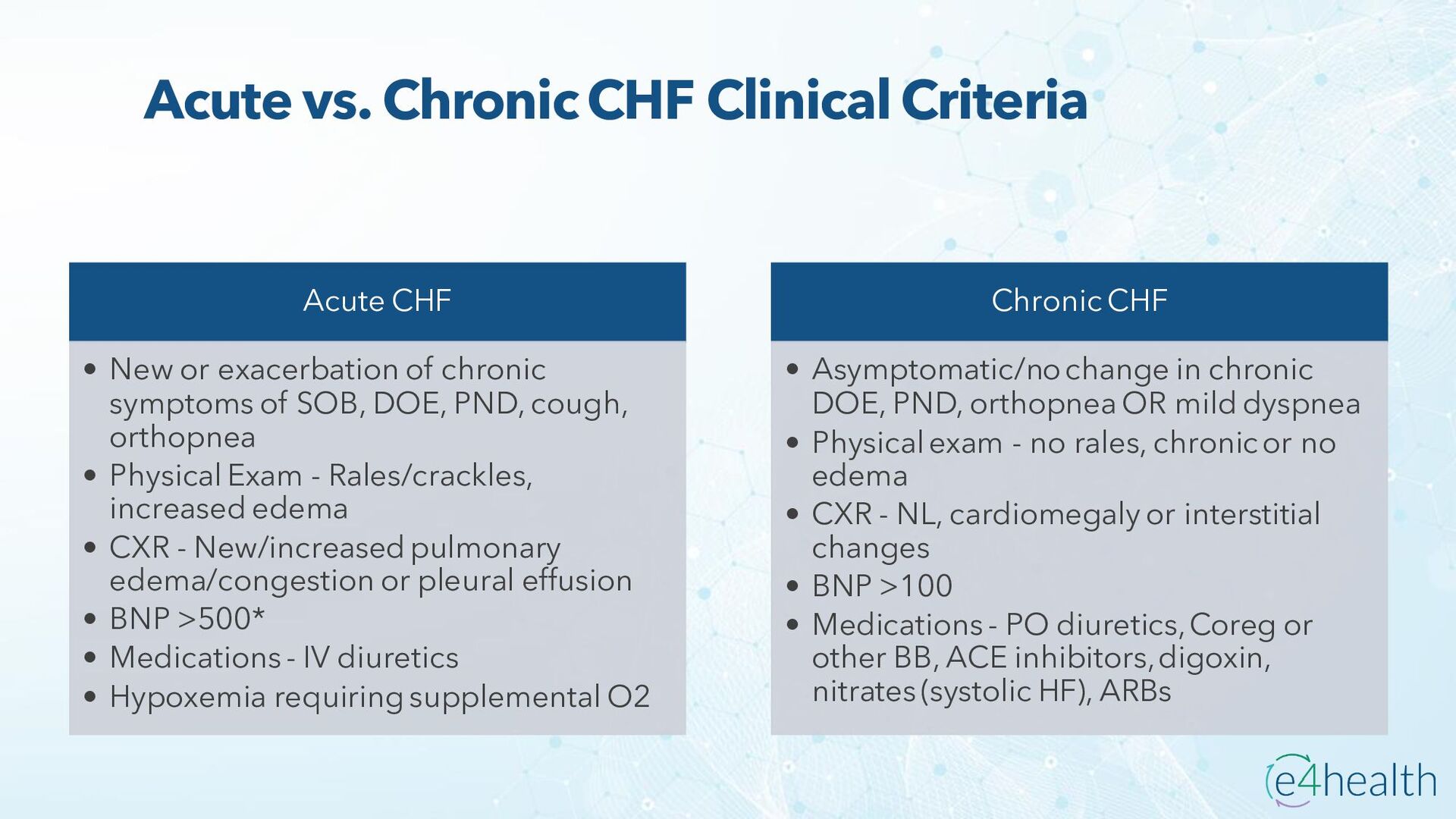
  51. Acute vs. Chronic CHF Clinical Criteria Acute CHF • New

    or exacerbation of chronic symptoms of SOB, DOE, PND, cough, orthopnea • Physical Exam - Rales/crackles, increased edema • CXR - New/increased pulmonary edema/congestion or pleural effusion • BNP >500* • Medications - IV diuretics • Hypoxemia requiring supplemental O2 Chronic CHF • Asymptomatic/no change in chronic DOE, PND, orthopnea OR mild dyspnea • Physical exam - no rales, chronic or no edema • CXR - NL, cardiomegaly or interstitial changes • BNP >100 • Medications - PO diuretics, Coreg or other BB, ACE inhibitors, digoxin, nitrates (systolic HF), ARBs
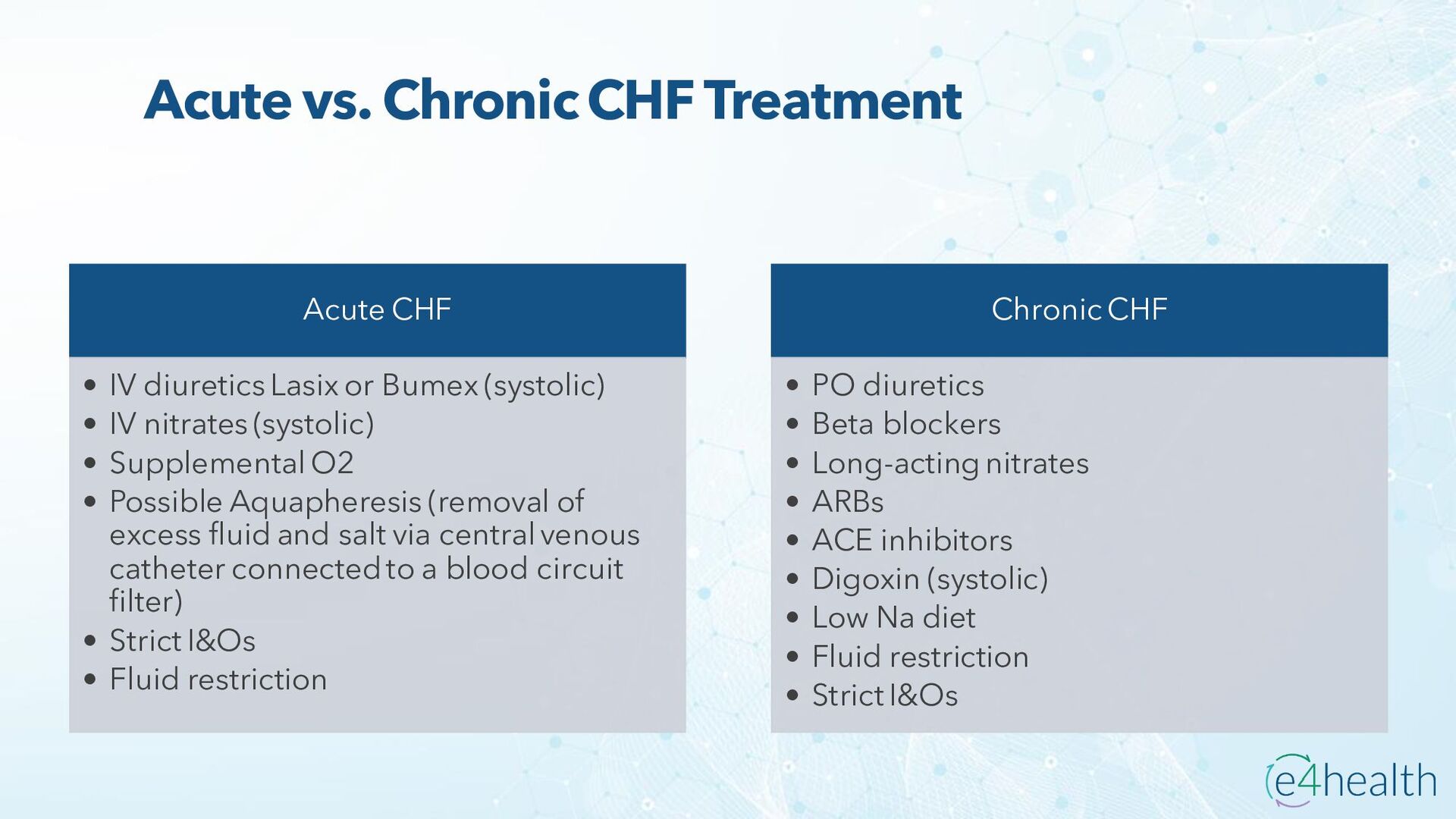
  52. Acute vs. Chronic CHF Treatment Acute CHF • IV diuretics

    Lasix or Bumex (systolic) • IV nitrates (systolic) • Supplemental O2 • Possible Aquapheresis (removal of excess fluid and salt via central venous catheter connected to a blood circuit filter) • Strict I&Os • Fluid restriction Chronic CHF • PO diuretics • Beta blockers • Long-acting nitrates • ARBs • ACE inhibitors • Digoxin (systolic) • Low Na diet • Fluid restriction • Strict I&Os

  53. Heart failure with mid-range or mildly reduced ejection fraction -

    Coding Clinic Third Quarter 2020 page 32 • Question: The patient, who has a history of heart failure, hypertension, and coronary artery disease, presents with ST-elevation myocardial infarction. As a secondary diagnosis, the provider recorded HFmrEF, meaning heart failure with mid-range or mildly reduced ejection fraction (EF). How should heart failure with midrange or mildly reduced EF be coded? • Answer: The ejection fraction indicates the amount of blood that is pumped out from the ventricle to the body during systole (the phase in which the heart muscle contracts). When a patient with a history of heart failure is described in terms of reduced ejection fraction (mid-range or mildly), assign a code for chronic systolic heart failure.
  54. Compensated, Decompensated, and Exacerbated Heart Failure • The terms “exacerbated”

    and “decompensated” indicate that there has been a flare- up (acute phase) of a chronic condition. • An acute exacerbation of a chronic condition (such as heart failure) is coded as acute on chronic. For example: • A patient with a known history of congestive heart failure is admitted with an exacerbation of diastolic congestive heart failure. Code I50.33, Acute on chronic diastolic (congestive) heart failure, is assigned.
  55. Heart failure with recovered ejection fraction - Coding Clinic Third

    Quarter 2020 page 32 • Question: The patient is an 82-year-old male with a history of congestive heart failure (CHF) and severe aortic stenosis status post transcatheter aortic valve replacement (TAVR). The provider documents chronic CHF with ejection fraction (EF) recovered from 35% to 55% following TAVR. According to new research, patients with a low ejection fraction can recover, and this is referred to as "recovered EF." We have been instructed to assign code I50.3-, Diastolic (congestive) heart failure, for patients with CHF and a recovered EF. What is the appropriate code assignment for chronic congestive heart failure with recovered EF? • Answer: Assign code I50.32, Chronic diastolic (congestive) heart failure, for a diagnosis of congestive heart failure with a recovered EF. Subcategory I50.3, Diastolic (congestive) heart failure, has inclusion terms for heart failure with normal ejection fraction.
  56. Acute CHF with diastolic or systolic dysfunction - Coding Clinic

    First Quarter 2017 page 46 • Question: How should acutely decompensated congestive heart failure with diastolic or systolic dysfunction be coded in ICD-10-CM? There is no longer an index entry for diastolic/systolic dysfunction. For example, a patient is admitted for treatment of acute congestive heart failure. The provider documents, "Acutely decompensated congestive heart failure with diastolic dysfunction." Can this be coded as acute diastolic congestive heart failure? • Answer: If the provider links acute congestive heart failure with diastolic dysfunction, assign code I50.31, Acute diastolic (congestive) heart failure, as the principal diagnosis. When the provider has linked either diastolic or systolic dysfunction with acute or chronic heart failure, it should be coded as "acute/chronic diastolic or systolic heart failure." If there is no provider documentation linking the two conditions, assign code I50.9, Heart failure, unspecified.
  57. Heart failure with pleural effusion - Coding Clinic Second Quarter

    2015 page 15-16 • Question: When assigning the ICD-10-CM code for heart failure, based on the Index, only code I50.9, Heart failure, unspecified, is reported. There are no instructions in the Index or Tabular at category I50, Heart failure, to assign code J91.8, Pleural effusion in other conditions classified elsewhere. However, there is an Excludes2 note at category J91, for pleural effusion in heart failure (I50) that indicates a code may be assigned. • Coding Clinic has previously advised that pleural effusion in congestive heart failure (CHF) is ordinarily minimal and not specifically addressed other than by more aggressive treatment of the underlying CHF. Is it appropriate to assign code J91.8, for pleural effusion due to CHF? How is pleural effusion in congestive heart failure coded? • Answer: Code J91.8, Pleural effusion in other conditions classified elsewhere, is assigned as a secondary code only if the condition is specifically evaluated or treated. Pleural effusion is commonly seen with congestive heart failure with or without pulmonary edema. Ordinarily the pleural effusion is minimal and is not specifically addressed other than by more aggressive treatment of the underlying congestive heart failure. In this situation it should not be coded. However, it is acceptable to report pleural effusion (J91.8) as an additional diagnosis if the condition requires either therapeutic intervention or diagnostic testing.
  58. Heart Failure - Documentation and Query Opportunity • Review or

    query the documentation for acuity and type • Review or query if heart failure is a complication of surgeries • Associated diagnoses, such as: • Hypertension heart and/or heart/kidney disease • Valvular diseases included • Rhematic heart disease: Endocarditis, pericarditis, myocarditis • Acute renal failure/Acute tubular failure • Non-compliance • Respiratory failure acuity/type
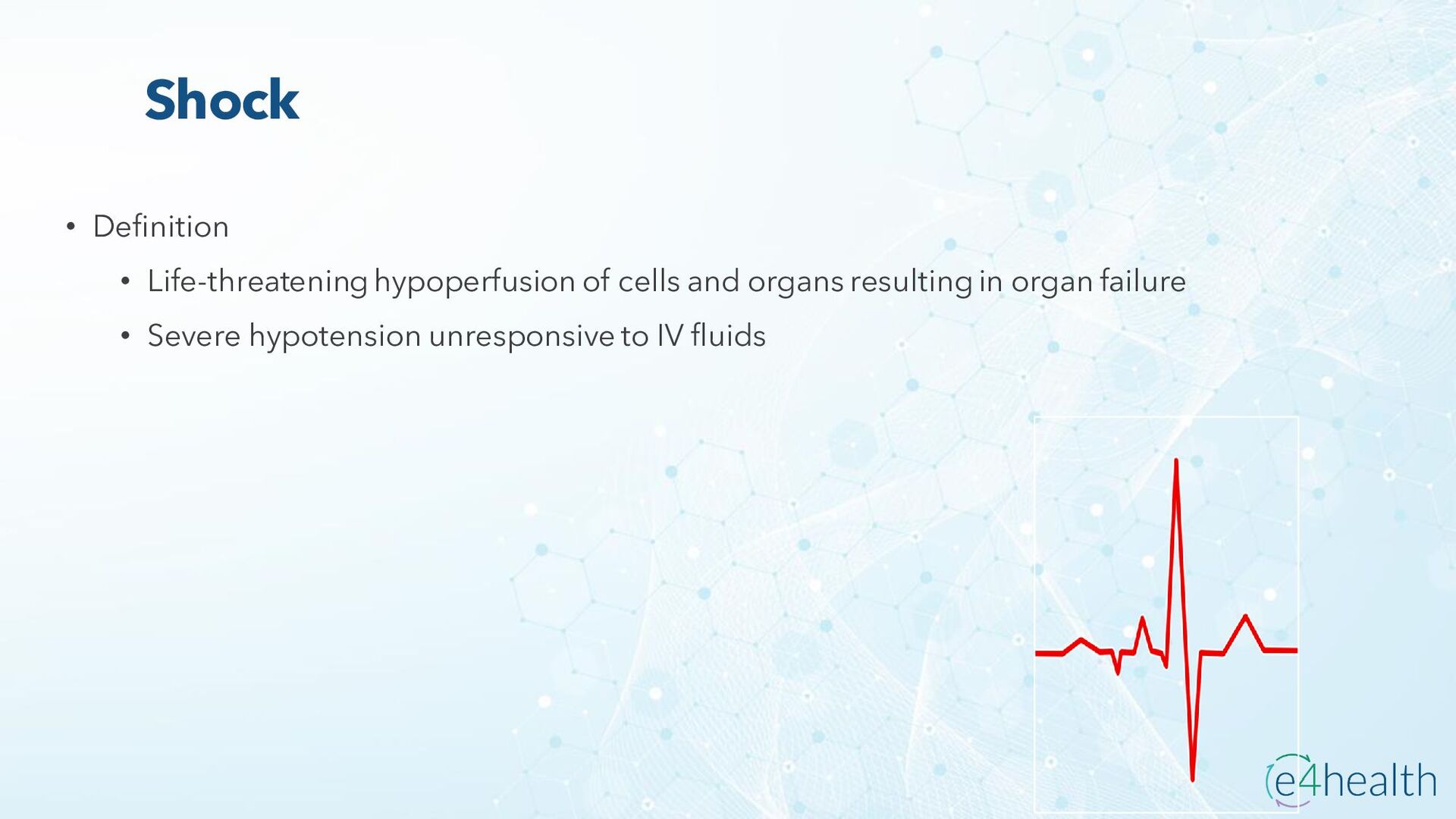
  59. Shock • Definition • Life-threatening hypoperfusion of cells and organs

    resulting in organ failure • Severe hypotension unresponsive to IV fluids
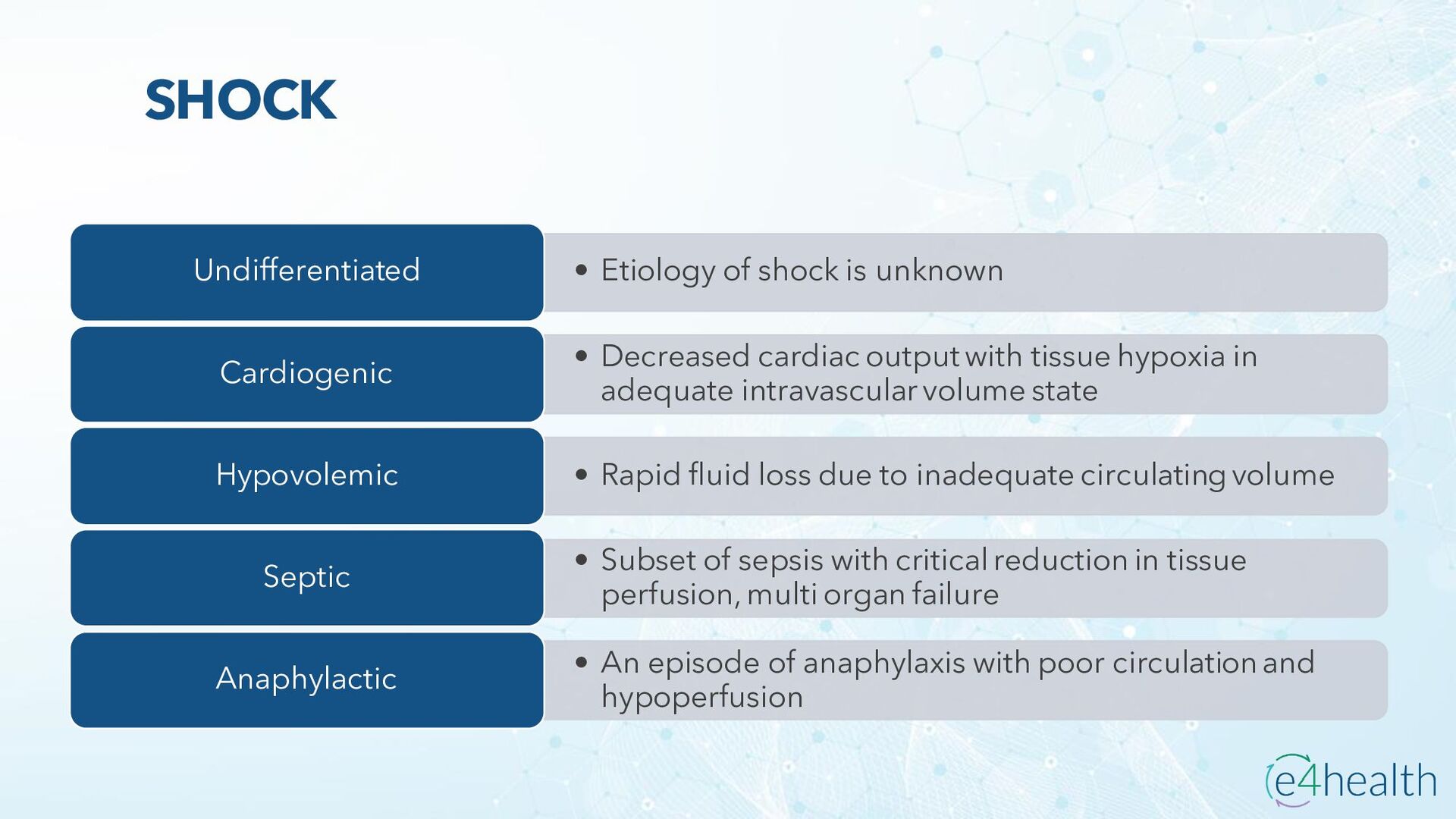
  60. SHOCK • Etiology of shock is unknown Undifferentiated • Decreased

    cardiac output with tissue hypoxia in adequate intravascular volume state Cardiogenic • Rapid fluid loss due to inadequate circulating volume Hypovolemic • Subset of sepsis with critical reduction in tissue perfusion, multi organ failure Septic • An episode of anaphylaxis with poor circulation and hypoperfusion Anaphylactic
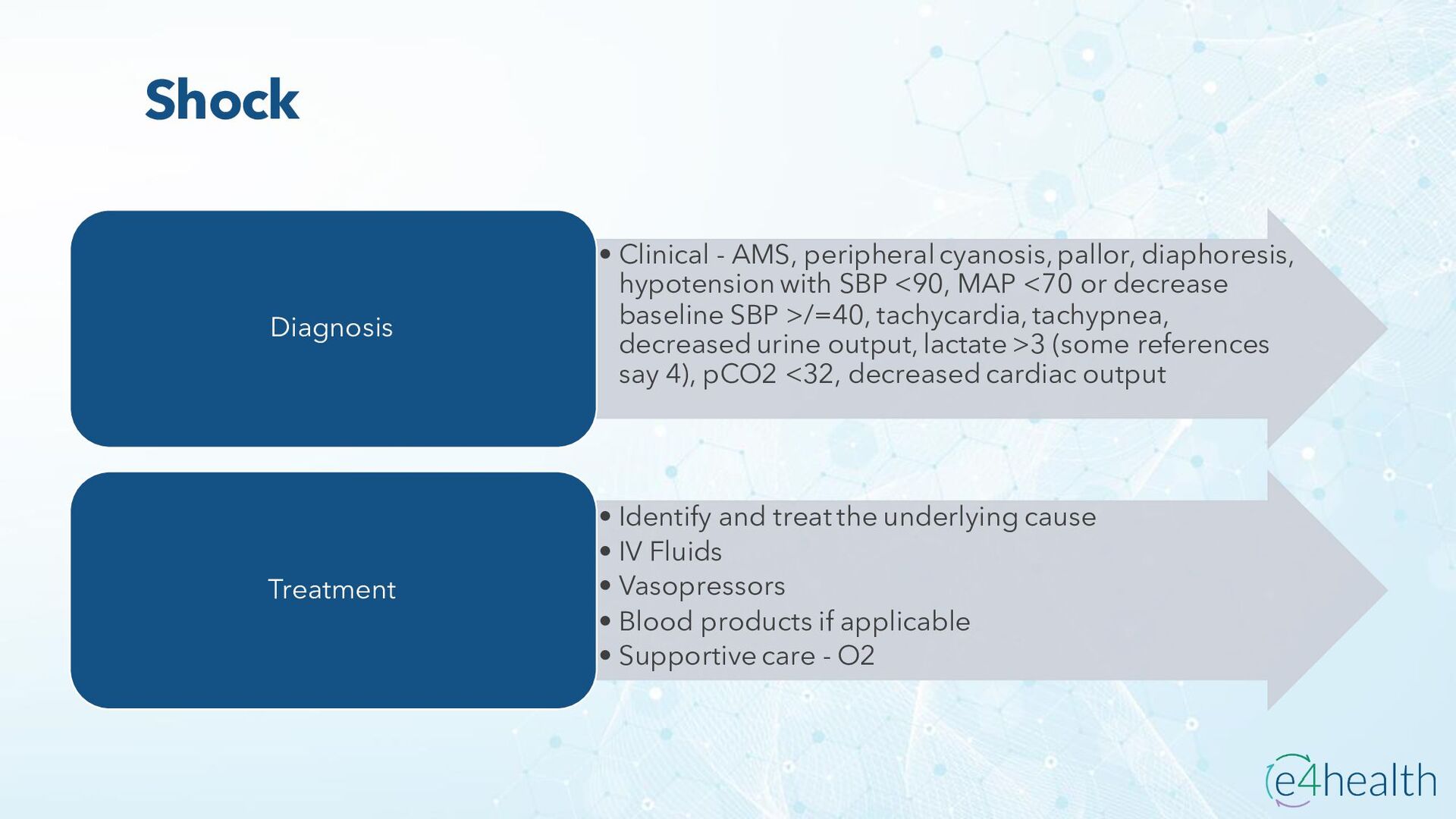
  61. Shock • Clinical - AMS, peripheral cyanosis, pallor, diaphoresis, hypotension

    with SBP <90, MAP <70 or decrease baseline SBP >/=40, tachycardia, tachypnea, decreased urine output, lactate >3 (some references say 4), pCO2 <32, decreased cardiac output Diagnosis • Identify and treat the underlying cause • IV Fluids • Vasopressors • Blood products if applicable • Supportive care - O2 Treatment
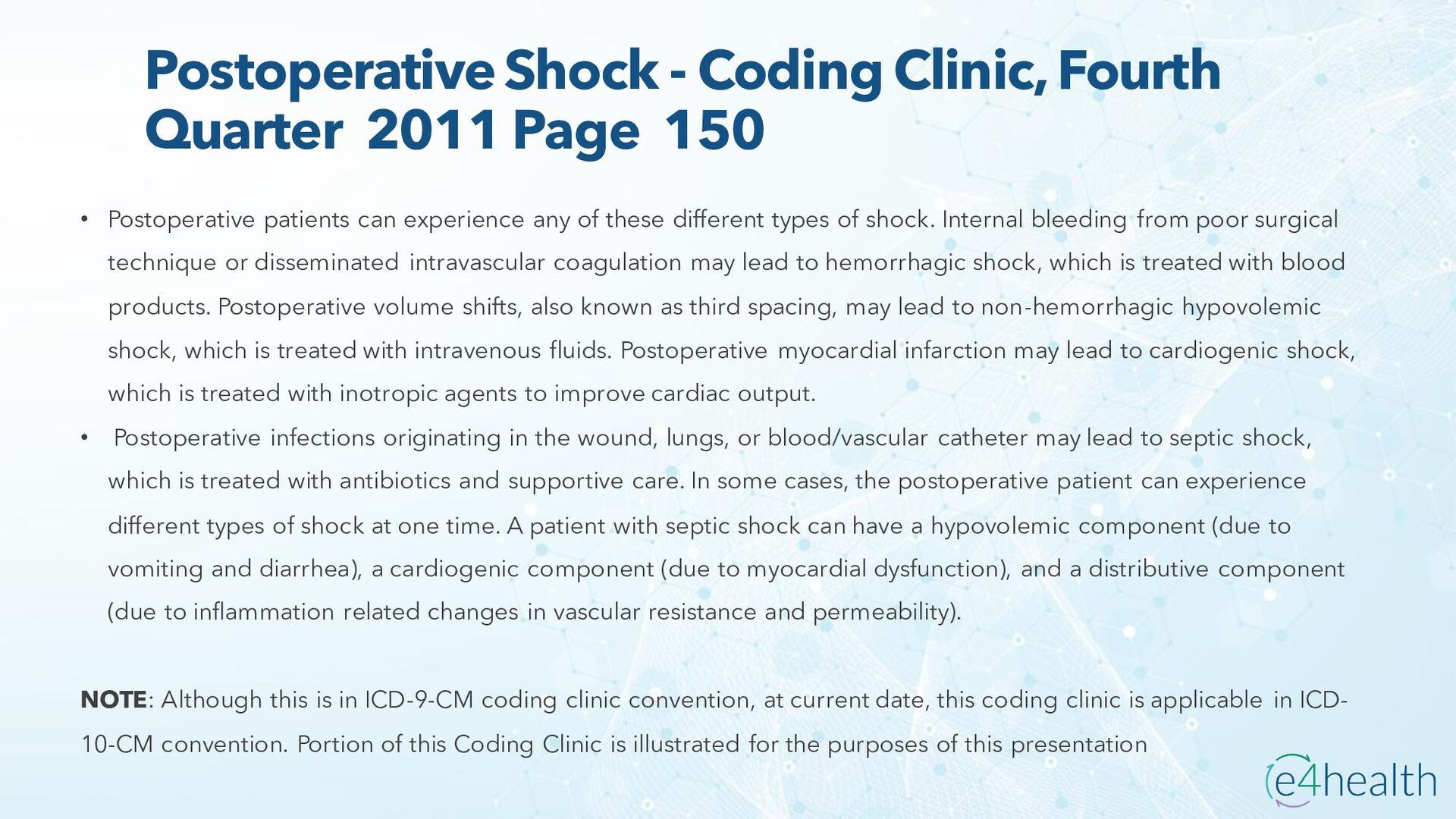
  62. Postoperative Shock - Coding Clinic, Fourth Quarter 2011 Page 150

    • Postoperative patients can experience any of these different types of shock. Internal bleeding from poor surgical technique or disseminated intravascular coagulation may lead to hemorrhagic shock, which is treated with blood products. Postoperative volume shifts, also known as third spacing, may lead to non-hemorrhagic hypovolemic shock, which is treated with intravenous fluids. Postoperative myocardial infarction may lead to cardiogenic shock, which is treated with inotropic agents to improve cardiac output. • Postoperative infections originating in the wound, lungs, or blood/vascular catheter may lead to septic shock, which is treated with antibiotics and supportive care. In some cases, the postoperative patient can experience different types of shock at one time. A patient with septic shock can have a hypovolemic component (due to vomiting and diarrhea), a cardiogenic component (due to myocardial dysfunction), and a distributive component (due to inflammation related changes in vascular resistance and permeability). NOTE: Although this is in ICD-9-CM coding clinic convention, at current date, this coding clinic is applicable in ICD- 10-CM convention. Portion of this Coding Clinic is illustrated for the purposes of this presentation
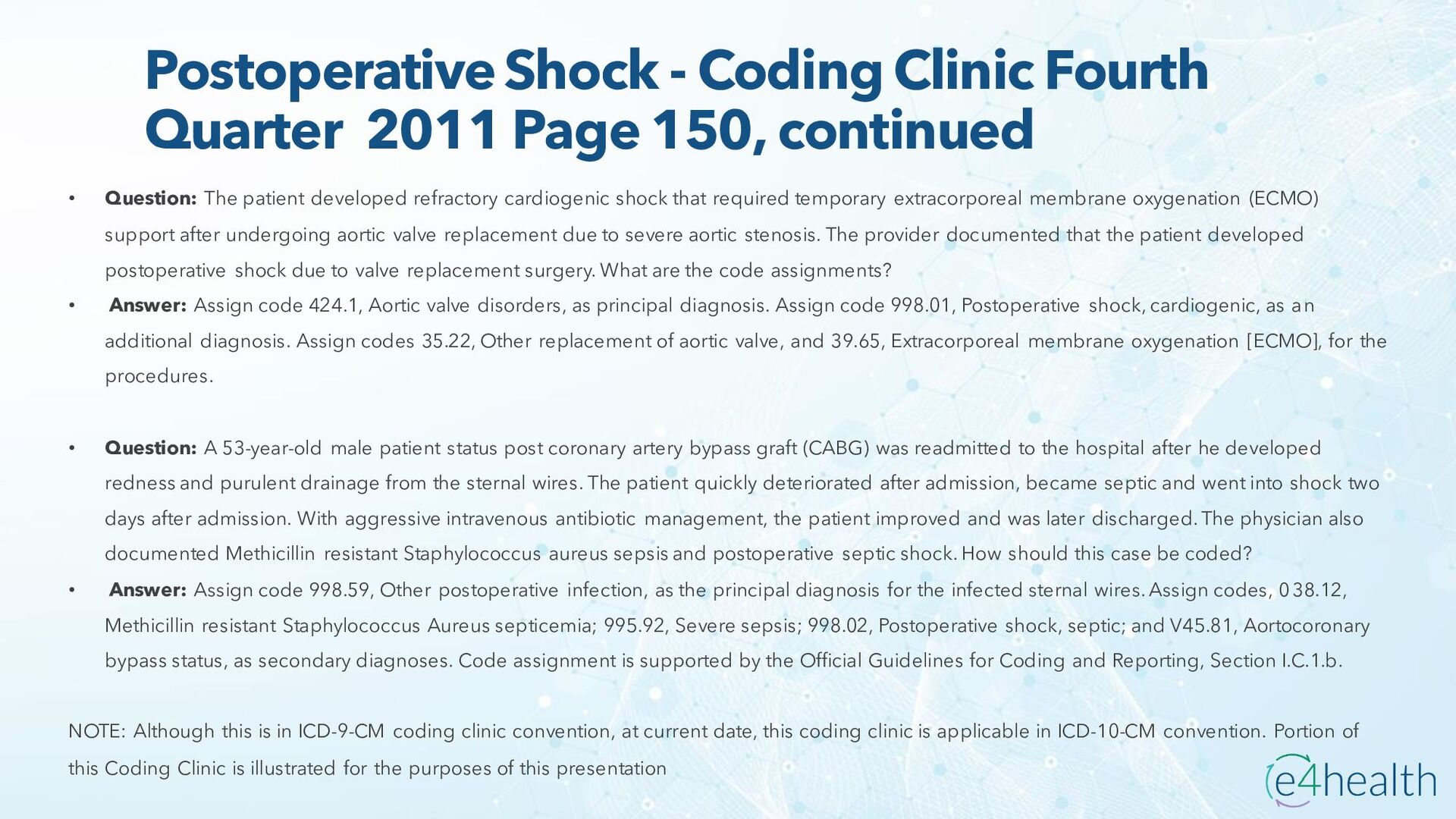
  63. Postoperative Shock - Coding Clinic Fourth Quarter 2011 Page 150,

    continued • Question: The patient developed refractory cardiogenic shock that required temporary extracorporeal membrane oxygenation (ECMO) support after undergoing aortic valve replacement due to severe aortic stenosis. The provider documented that the patient developed postoperative shock due to valve replacement surgery. What are the code assignments? • Answer: Assign code 424.1, Aortic valve disorders, as principal diagnosis. Assign code 998.01, Postoperative shock, cardiogenic, as an additional diagnosis. Assign codes 35.22, Other replacement of aortic valve, and 39.65, Extracorporeal membrane oxygenation [ECMO], for the procedures. • Question: A 53-year-old male patient status post coronary artery bypass graft (CABG) was readmitted to the hospital after he developed redness and purulent drainage from the sternal wires. The patient quickly deteriorated after admission, became septic and went into shock two days after admission. With aggressive intravenous antibiotic management, the patient improved and was later discharged. The physician also documented Methicillin resistant Staphylococcus aureus sepsis and postoperative septic shock. How should this case be coded? • Answer: Assign code 998.59, Other postoperative infection, as the principal diagnosis for the infected sternal wires. Assign codes, 038.12, Methicillin resistant Staphylococcus Aureus septicemia; 995.92, Severe sepsis; 998.02, Postoperative shock, septic; and V45.81, Aortocoronary bypass status, as secondary diagnoses. Code assignment is supported by the Official Guidelines for Coding and Reporting, Section I.C.1.b. NOTE: Although this is in ICD-9-CM coding clinic convention, at current date, this coding clinic is applicable in ICD-10-CM convention. Portion of this Coding Clinic is illustrated for the purposes of this presentation
  64. Hypovolemic Shock & Volume Depletion - Coding Clinic Second Quarter

    2019 Page 7 • Question: A patient was admitted with hypovolemic shock due to volume depletion as a result of persistent nausea and vomiting. There is an Excludes1 note at category E86-, Volume depletion that prevents the reporting of dehydration or volume depletion with code R57.1, Hypovolemic shock. Not every patient who presents with dehydration suffers hypovolemic shock. However, code R57.1 is classified in Chapter 18, Symptoms, Signs and Abnormal Findings. Since codes from Chapter 18 are not reported when a related definitive diagnosis has been established by the provider, how can the severity of illness be captured if code R57.1 cannot be reported with codes E86.0, Dehydration and E86.9, Volume depletion, unspecified? • Answer: When both dehydration or volume depletion and hypovolemic shock are documented and meet reporting requirements, assign only code R57.1, Hypovolemic shock. Code R57.1 should be assigned instead of codes E86.0 or E86.9, because code R57.1 better captures the clinical severity, and the Excludes1 note prohibits assignment of both codes together.
  65. Postprocedural vasoplegic circulatory shock Coding Clinic First Quarter 2021 pages

    13-14 • Question: A 71-year-old patient with multiple vessel coronary artery disease and severe aortic valve stenosis underwent coronary artery bypass graft (CABG) surgery and aortic valve replacement (AVR). Following surgery, the patient was diagnosed with postprocedural circulatory shock - primarily vasoplegia. The Alphabetic Index does not have entries for vasoplegic or circulatory shock. What is the correct ICD-10-CM code assignment for postprocedural vasoplegic circulatory shock? • Answer: Assign code T81.19XA, Other postprocedural shock, initial encounter, for vasoplegic circulatory shock following surgery. Assign additional codes for any manifestations present. • Postprocedural shock is classified to code T81.10-, and can be located in the Index to Diseases as follows: Shock postprocedural T81.10- specified type NEC T81.19 • Category I97, Intraoperative and postprocedural complications and disorders of the circulatory system, not elsewhere classified, is not appropriate when the complication is specifically indexed to a T code in chapter 19.
  66. Shock - Documentation and Query Opportunity • Review or query

    the type of shock and causative nature • Review or query if shock is a complication of surgeries • Associated diagnoses, such as: • Sepsis • HTN with or without heart failure and/or kidney involvement • Acute renal failure/Acute tubular failure • Peripheral necrosis and/or a complication of medication, such as vasopressin
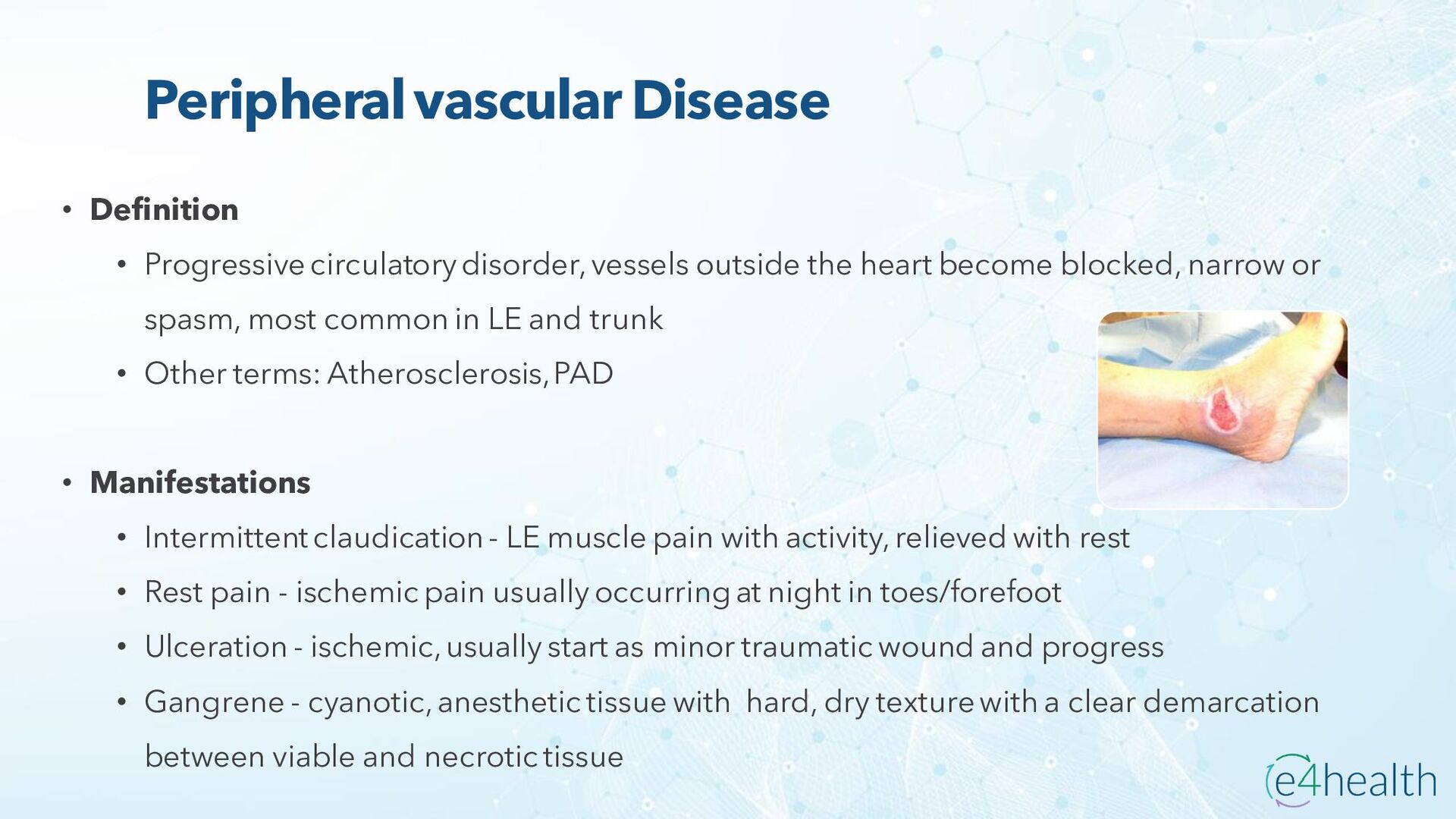
  67. Peripheral vascular Disease • Definition • Progressive circulatory disorder, vessels

    outside the heart become blocked, narrow or spasm, most common in LE and trunk • Other terms: Atherosclerosis, PAD • Manifestations • Intermittent claudication - LE muscle pain with activity, relieved with rest • Rest pain - ischemic pain usually occurring at night in toes/forefoot • Ulceration - ischemic, usually start as minor traumatic wound and progress • Gangrene - cyanotic, anesthetic tissue with hard, dry texture with a clear demarcation between viable and necrotic tissue
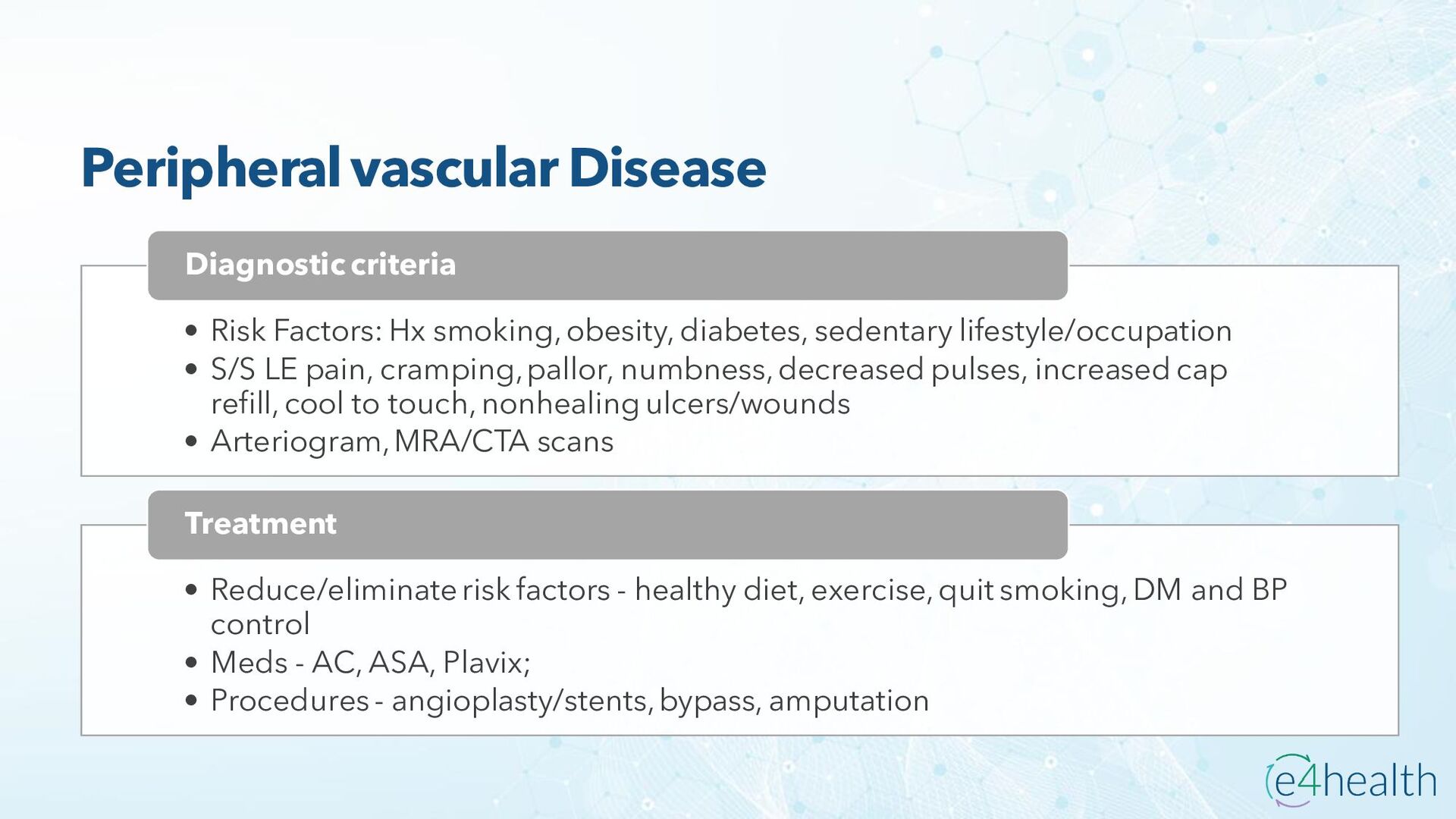
  68. Peripheral vascular Disease • Risk Factors: Hx smoking, obesity, diabetes,

    sedentary lifestyle/occupation • S/S LE pain, cramping, pallor, numbness, decreased pulses, increased cap refill, cool to touch, nonhealing ulcers/wounds • Arteriogram, MRA/CTA scans Diagnostic criteria • Reduce/eliminate risk factors - healthy diet, exercise, quit smoking, DM and BP control • Meds - AC, ASA, Plavix; • Procedures - angioplasty/stents, bypass, amputation Treatment
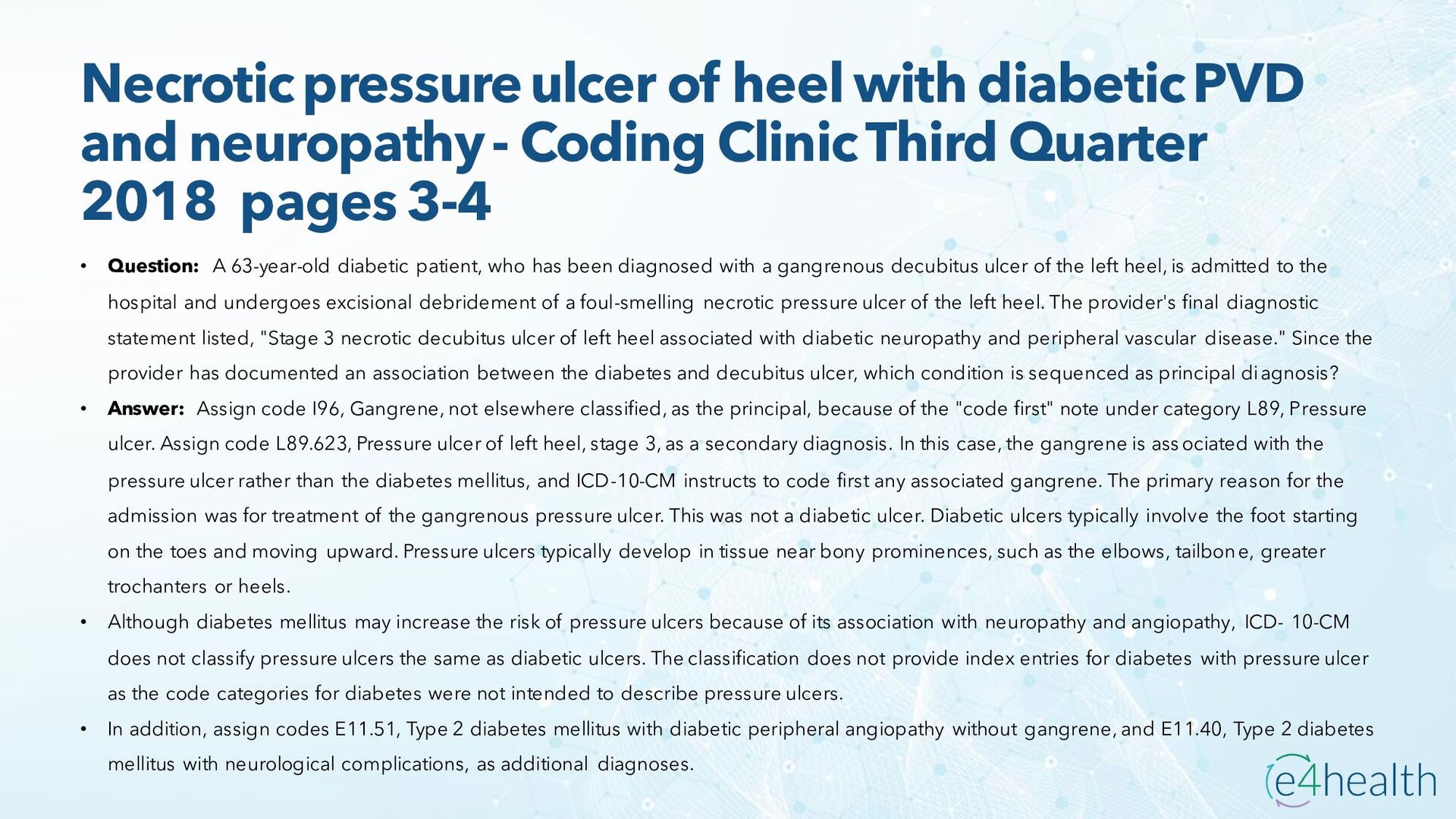
  69. Necrotic pressure ulcer of heel with diabetic PVD and neuropathy

    - Coding Clinic Third Quarter 2018 pages 3-4 • Question: A 63-year-old diabetic patient, who has been diagnosed with a gangrenous decubitus ulcer of the left heel, is admitted to the hospital and undergoes excisional debridement of a foul-smelling necrotic pressure ulcer of the left heel. The provider's final diagnostic statement listed, "Stage 3 necrotic decubitus ulcer of left heel associated with diabetic neuropathy and peripheral vascular disease." Since the provider has documented an association between the diabetes and decubitus ulcer, which condition is sequenced as principal diagnosis? • Answer: Assign code I96, Gangrene, not elsewhere classified, as the principal, because of the "code first" note under category L89, Pressure ulcer. Assign code L89.623, Pressure ulcer of left heel, stage 3, as a secondary diagnosis. In this case, the gangrene is associated with the pressure ulcer rather than the diabetes mellitus, and ICD-10-CM instructs to code first any associated gangrene. The primary reason for the admission was for treatment of the gangrenous pressure ulcer. This was not a diabetic ulcer. Diabetic ulcers typically involve the foot starting on the toes and moving upward. Pressure ulcers typically develop in tissue near bony prominences, such as the elbows, tailbone, greater trochanters or heels. • Although diabetes mellitus may increase the risk of pressure ulcers because of its association with neuropathy and angiopathy, ICD- 10-CM does not classify pressure ulcers the same as diabetic ulcers. The classification does not provide index entries for diabetes with pressure ulcer as the code categories for diabetes were not intended to describe pressure ulcers. • In addition, assign codes E11.51, Type 2 diabetes mellitus with diabetic peripheral angiopathy without gangrene, and E11.40, Type 2 diabetes mellitus with neurological complications, as additional diagnoses.
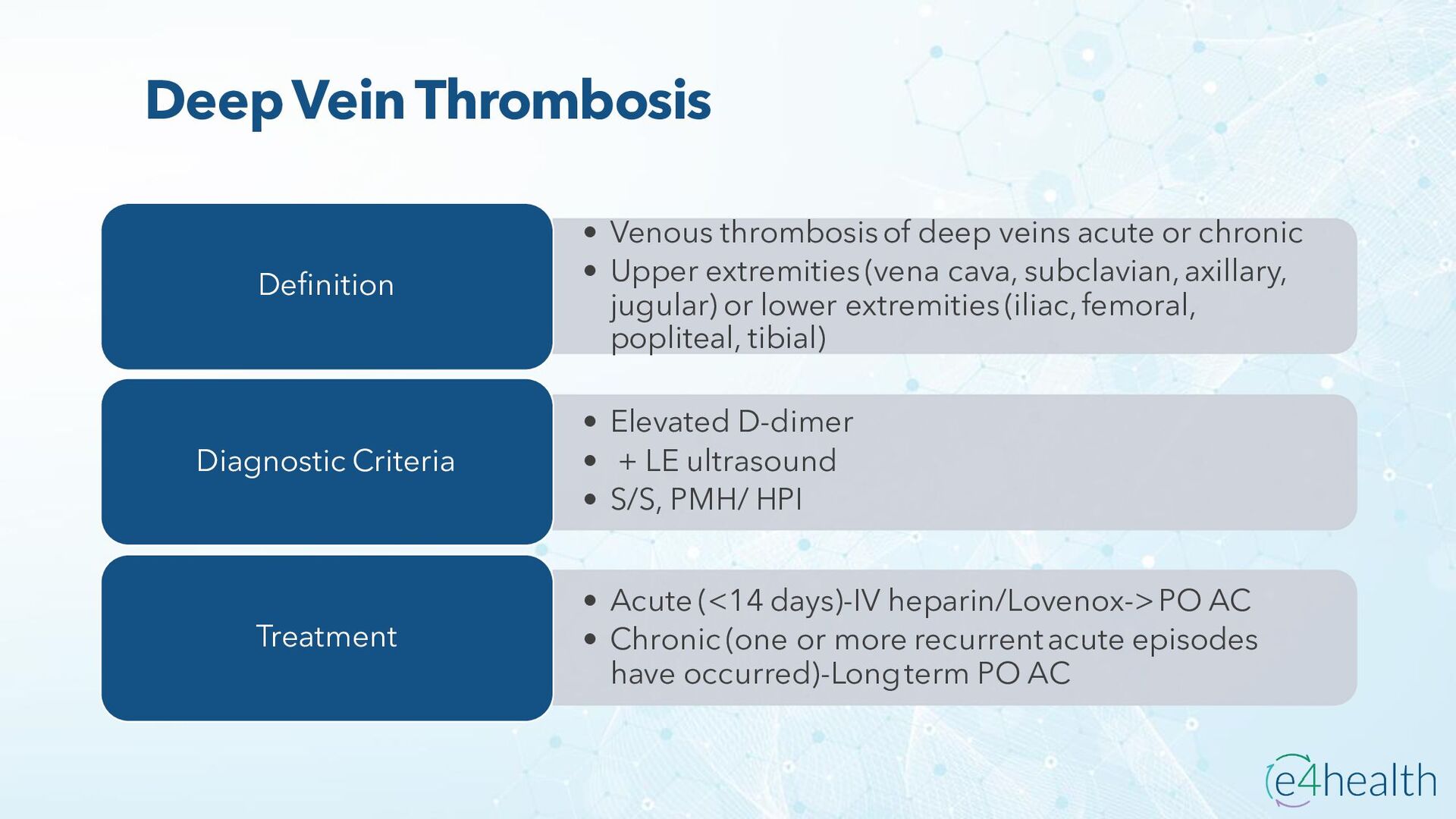
  70. Deep Vein Thrombosis • Venous thrombosis of deep veins acute

    or chronic • Upper extremities (vena cava, subclavian, axillary, jugular) or lower extremities (iliac, femoral, popliteal, tibial) Definition • Elevated D-dimer • + LE ultrasound • S/S, PMH/ HPI Diagnostic Criteria • Acute (<14 days)-IV heparin/Lovenox-> PO AC • Chronic (one or more recurrent acute episodes have occurred)-Long term PO AC Treatment
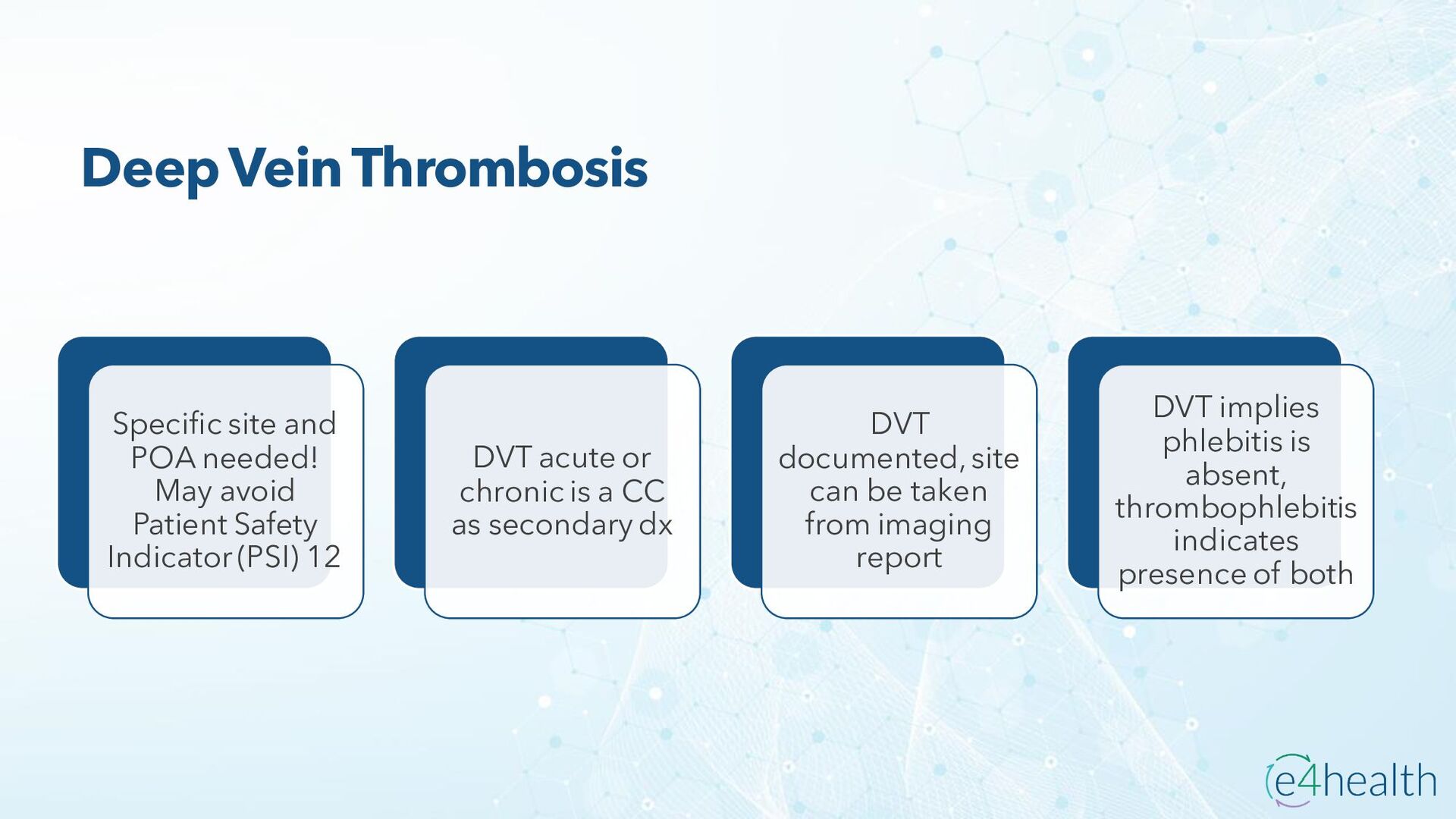
  71. Deep Vein Thrombosis Specific site and POA needed! May avoid

    Patient Safety Indicator (PSI) 12 DVT acute or chronic is a CC as secondary dx DVT documented, site can be taken from imaging report DVT implies phlebitis is absent, thrombophlebitis indicates presence of both
  72. History of recurrent DVT - Coding Clinic Second Quarter 2020

    pages 20-21 • Question: A 79-year-old patient presents for a follow-up visit for multiple conditions, including personal history of recurrent deep vein thrombosis (DVT) of the lower extremity. The patient was initially anticoagulated with Coumadin but was switched to Xarelto®. • Some coding professionals at our facility feel that a diagnosis of history of recurrent DVT in a patient on anticoagulation therapy should be coded as a chronic DVT. However, other coding professionals believe that history of recurrent DVT without any further specification should be reported with the default code assignment of acute DVT. What is the appropriate code assignment for personal history of recurrent deep vein thrombosis of the lower extremity? • Answer: Based on the health record documentation, assign codes Z86.718, Personal history of other venous thrombosis and embolism, and Z79.01, Long term (current) use of anticoagulants, for history of recurrent deep vein thrombosis of the lower extremity on long term use of anticoagulant medication. In this case, the patient presented for a follow-up visit and had no evidence of an acute, current or recurrent DVT nor complications from the thrombus. Chronic DVT is a thrombus that is one month to several months old and usually involves symptoms, such as chronic swelling, ulceration, cellulitis, or other complication. Recurrent DVT indicates the condition has occurred more than once. The provider would need to document recurrent or chronic DVT, to code it as such.
  73. Chronic venous embolism and thrombosis - Coding Clinic First Quarter

    2011 page 20 • Question: A patient with a documented "history of deep vein thrombosis" is receiving Coumadin. Should this be coded as V12.51, Personal history of venous thrombosis and embolism, or a code from category 453 for chronic deep vein thrombosis (DVT)? • Answer: Either code may be appropriate depending on the circumstances. Query the physician for clarification whether the Coumadin is being given prophylactically to prevent recurrence of DVT or as treatment for chronic DVT. The patient may not have active disease but is being managed because of susceptibility for recurrence. Unfortunately, "history" as used in physician documentation can be a vague term that can have different meanings. According to the Official Guidelines for Coding and Reporting, "personal history codes explain a patient's past medical condition that no longer exists and is not receiving any treatment, but that has the potential for recurrence, and therefore may require monitoring."
  74. History of DVT - Coding Clinic First Quarter 2011 pages

    20-21 • Question: Coders are assigning a code for history of deep vein thrombosis (DVT) if the patient is on Coumadin maintenance to prevent disease recurrence. However, if a patient has a Greenfield filter, would you code history of DVT or the active disease? • Answer: Either a personal history code or code for active disease may be appropriate. Query the physician for clarification. A patient with a Greenfield filter may have acute, chronic or recurrent DVT, or the DVT may resolve over time. If the DVT has resolved, it may be reported as personal history of venous thrombosis and embolism. The patient may not have active disease but is being managed because of susceptibility for recurrence.
  75. Peripheral Vascular Disease - Documentation and Query Opportunity • Review

    or query for DVT or PE and/or if post-operative complication or history of • Review for comorbid causative diagnoses, such as diabetes, arteriosclerosis • Associated diagnoses, such as: • Peripheral ulcers • Diabetic ulcers • Non-healing ulcers
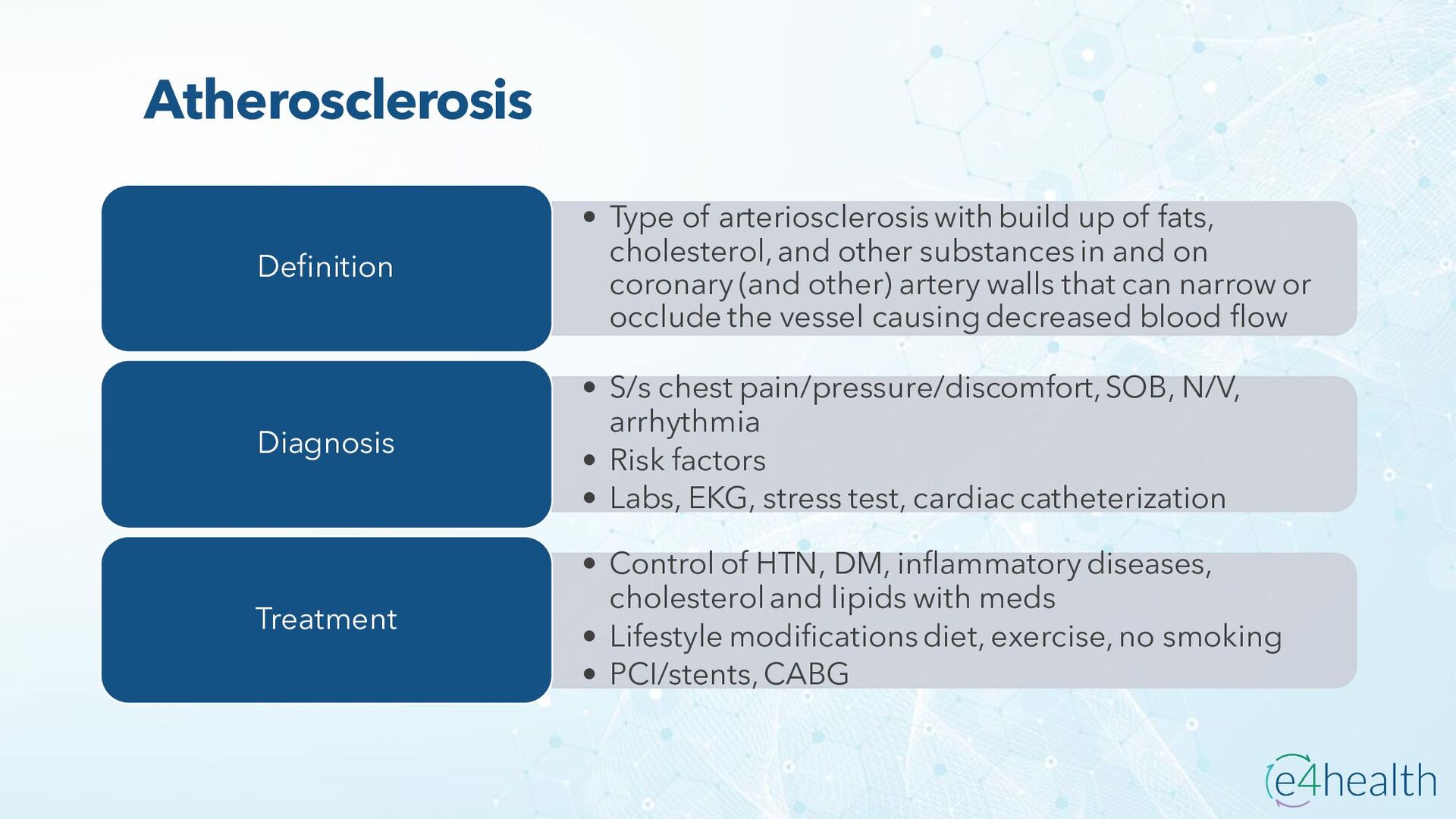
  76. Atherosclerosis • Type of arteriosclerosis with build up of fats,

    cholesterol, and other substances in and on coronary (and other) artery walls that can narrow or occlude the vessel causing decreased blood flow Definition • S/s chest pain/pressure/discomfort, SOB, N/V, arrhythmia • Risk factors • Labs, EKG, stress test, cardiac catheterization Diagnosis • Control of HTN, DM, inflammatory diseases, cholesterol and lipids with meds • Lifestyle modifications diet, exercise, no smoking • PCI/stents, CABG Treatment
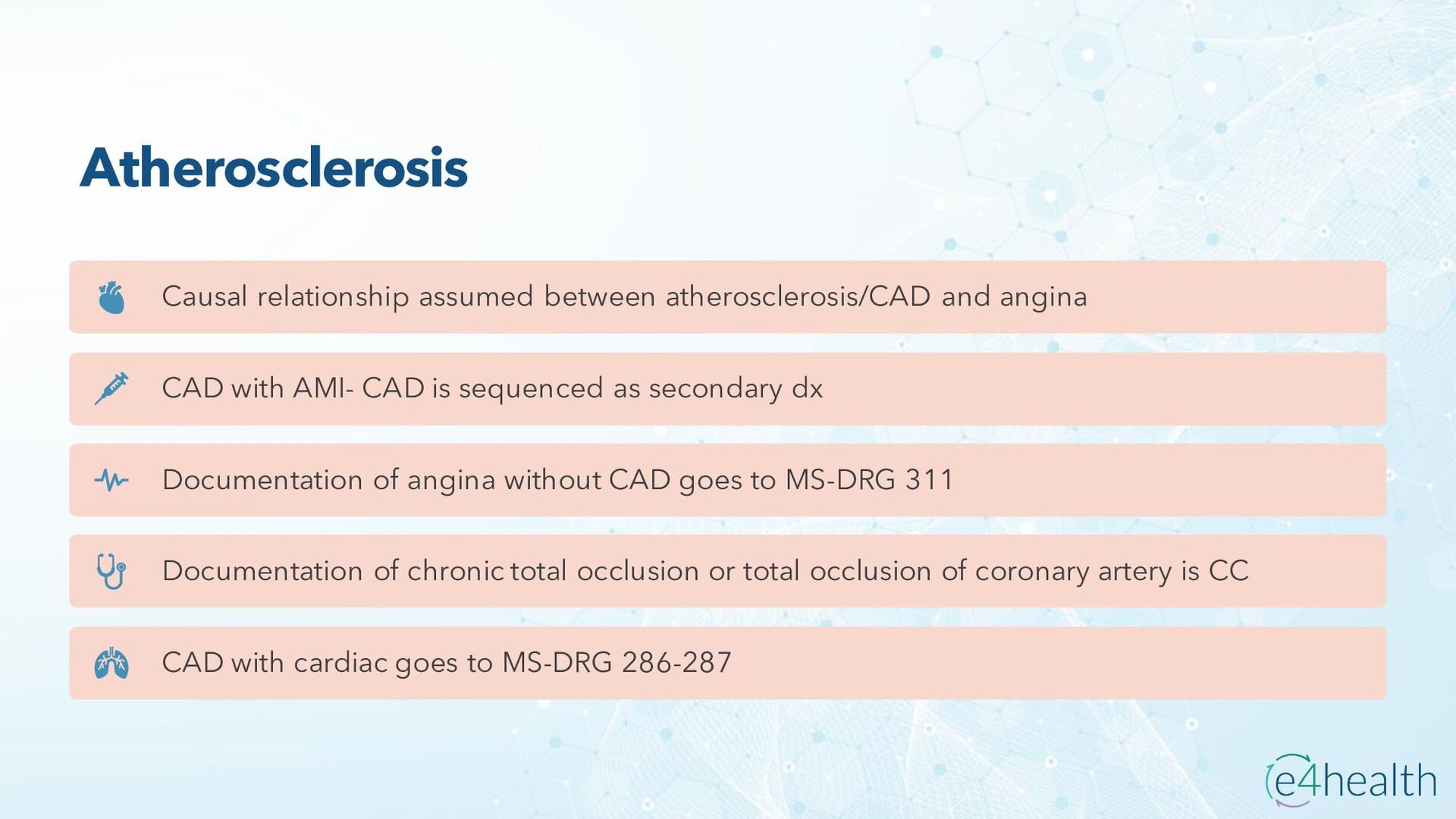
  77. Atherosclerosis Causal relationship assumed between atherosclerosis/CAD and angina CAD with

    AMI- CAD is sequenced as secondary dx Documentation of angina without CAD goes to MS-DRG 311 Documentation of chronic total occlusion or total occlusion of coronary artery is CC CAD with cardiac goes to MS-DRG 286-287
  78. Acute Myocardial Infarction and Chronic Total Occlusion - Coding Clinic

    Third Quarter 2018 Page 5 • Question: The patient has been diagnosed with an acute myocardial infarction (AMI) and chronic total occlusion of the coronary artery. There is an excludes1 note at code I25.82, Chronic total occlusion of coronary artery, which excludes "acute coronary occlusion with myocardial infarction (I21.-, I22.-)." However, in this case, the occlusion and myocardial infarction are in different arteries. Is it acceptable to assign a code for both the acute MI and the chronic total occlusion? • Answer: In this case, it is appropriate to assign a code for the acute MI along with code I25.82, Chronic total occlusion of coronary artery. Since the chronic total occlusion of the coronary artery and the acute MI occurred in different vessels, they are not related. The Official Guidelines for Coding and Reporting regarding the Excludes1 notes states, "An exception to the Excludes1 definition is the circumstance when the two conditions are unrelated to each other."
  79. Diabetes with Peripheral Angiopathy - Coding Clinic Second Quarter 2018

    Page 7 • Question: The ICD-10-CM provides a combination code for diabetes with peripheral angiopathy. Coding professionals would like to know what constitutes "diabetic peripheral angiopathy" and if peripheral arteriosclerosis or peripheral vascular disease in a diabetic patient is considered peripheral angiopathy? • Answer: Yes, peripheral arteriosclerosis is a type of angiopathy. Peripheral arteriosclerosis, peripheral vascular disease and peripheral arterial disease in a diabetic patient should be linked and coded as "diabetic peripheral angiopathy."
  80. Arteriosclerosis - Documentation and Query opportunity • Review or query

    for limb gangrene and/or if post-operative complication or history of • Review for comorbid causative diagnoses, such as diabetes • Associated diagnoses, such as: • Diabetic ulcers • Non-healing ulcers • Hypertension with or without heart or kidney involvement • DVT or PE
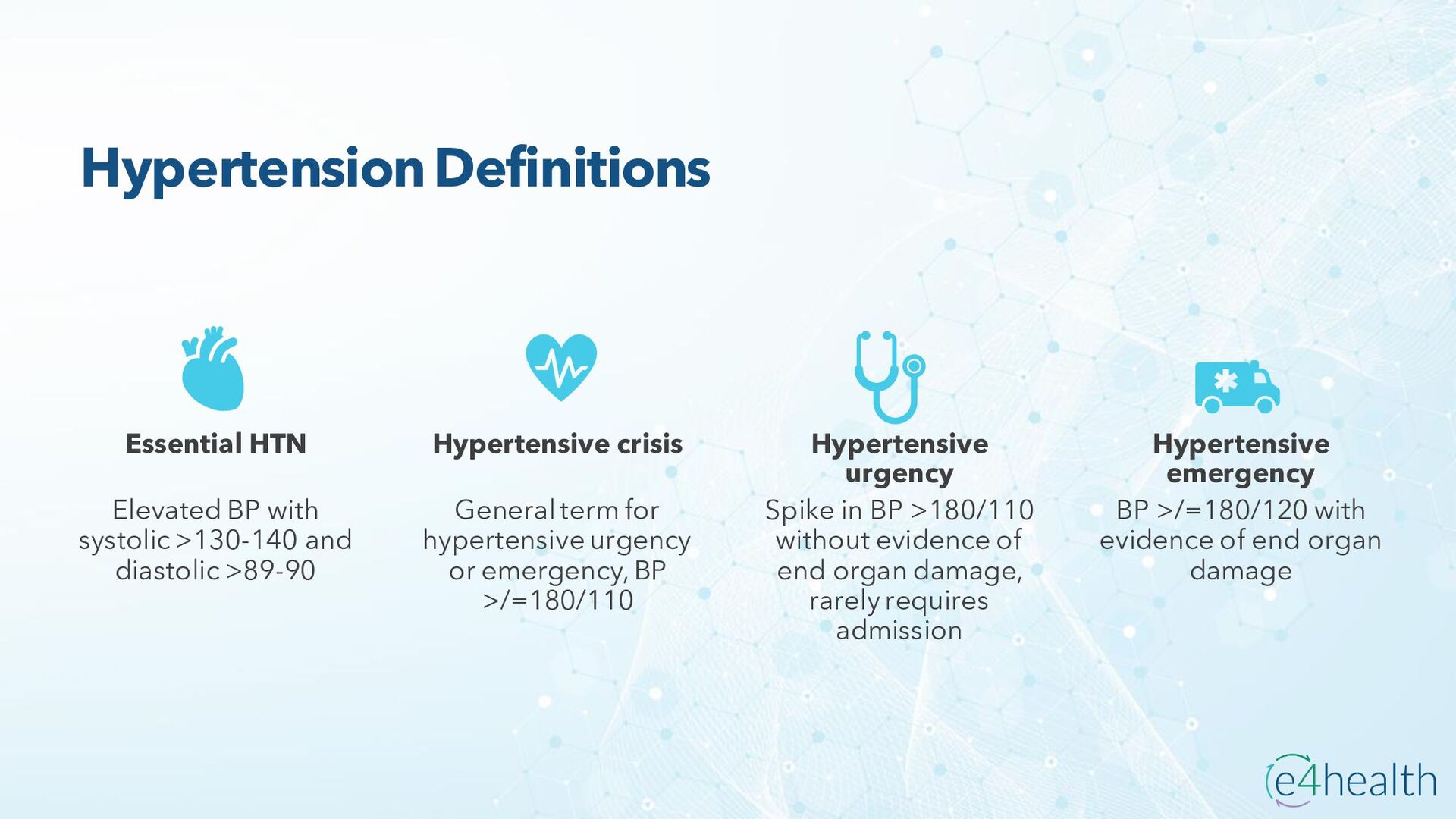
  81. Hypertension Definitions Essential HTN Elevated BP with systolic >130-140 and

    diastolic >89-90 Hypertensive crisis General term for hypertensive urgency or emergency, BP >/=180/110 Hypertensive urgency Spike in BP >180/110 without evidence of end organ damage, rarely requires admission Hypertensive emergency BP >/=180/120 with evidence of end organ damage
  82. Hypertensive Crisis, Urgency and Emergency - Coding Clinic Fourth Quarter

    2016 Page 26 • A new category has been created to describe hypertensive crisis. Codes in this new category differentiate hypertensive urgency (I16.0), hypertensive emergency (I16.1), and hypertensive crisis, unspecified (I16.9). The American Academy of Pediatrics requested detailed codes to track patients who present with clinically significant hypertension that requires immediate treatment. • A hypertensive crisis (urgency or emergency) occurs when blood pressure elevates rapidly and severely enough to potentially cause organ damage. Patients may present with symptoms of acute headache, shortness of breath, epistaxis, or marked anxiety. Immediate evaluation is needed to assess organ function, and determine appropriate treatment. • A hypertensive emergency occurs when blood pressure is severely elevated and results in organ damage. The condition can also occur at lower levels in patients whose blood pressure had not previously been high. Serious consequences of uncontrolled hypertension include stroke, loss of consciousness, memory loss, acute myocardial infarction, angina, aortic dissection, damage to the eyes and kidneys, and pulmonary edema. During pregnancy, eclampsia can also develop along with a hypertensive emergency.
  83. Hypertensive Crisis, Urgency and Emergency Coding Clinic Fourth Quarter 2016

    Page 26, continued • Although uncommon in children, a sudden severe increase in blood pressure or exceptionally high blood pressure requires immediate intervention to prevent harmful consequences. The National Heart, Lung, and Blood Institute defines hypertensive urgencies and emergencies in children as a systolic blood pressure greater than 99th percentile for age and sex, along with associated symptoms such as headache (urgency) or seizure (emergency). While approximately one in three adults have hypertension, the prevalence of hypertension is children is estimated to be upwards of 3% with higher values associated with certain chronic diseases. • The ICD-10-CM Official Guidelines for Coding and Reporting state, "Assign a code from category I16, Hypertensive crisis, for documented hypertensive urgency, hypertensive emergency or unspecified hypertensive crisis. Code also any identified hypertensive disease (I10-I15). The sequencing is based on the reason for the encounter." • Please note that hypertension documented as accelerated or malignant, but not as hypertensive crisis, urgency, or emergency, is assigned code I10, Essential (primary) hypertension, per the Alphabetic Index instructions.
  84. Hypertension • Diagnosis • Persistently elevated BP • Presence of

    organ damage • Emergency: BP >/= 180/120 AND end organ damage • Urgency: BP >180/110, NO end organ damage • Treatment • Hypertensive urgency • Controlled drop in BP, PO meds (lisinopril, metoprolol, losartan) • Hypertensive emergency • Immediate reduction in BP with cont. infusion and/or IVP meds, A-line
  85. History of (Resolved) Diabetes Mellitus and Hypertension - Coding Clinic

    First Quarter 2020 Page 12 • Question: A patient underwent bariatric surgery due to morbid obesity, hypertension and type 2 diabetes mellitus. Because of the surgery, the patient had lost a significant amount of weight. The provider documented that the patient was no longer diabetic or hypertensive and discontinued medication. There are no documented manifestations of these conditions in the health record. Would it be appropriate to code these conditions when the provider states "history of" or "resolved"? • Answer: Assign codes Z86.39, Personal history of other endocrine, nutritional and metabolic disease, and Z86.79, Personal history of other diseases of circulatory system, when the provider has documented these conditions are resolved and there are no manifestations of diabetes or hypertension. "History of" can have two different meanings (e.g., chronic condition or the condition no longer exists). In this case, history codes are assigned because the provider has documented that diabetes and hypertension have resolved and are no longer being treated (medication was discontinued). If the documentation is not clear whether the patient still has the condition, query the provider for clarification.
  86. Hypertension with Diabetic Nephropathy and Chronic Kidney Disease Coding Clinic

    Third Quarter 2019 Page 3 • Question: The patient presented for renal transplantation due to end stage renal disease (ESRD), and the provider's final diagnostic statement listed, "ESRD due to diabetic nephropathy on dialysis, diabetic retinopathy, diabetic peripheral neuropathy, and hypertension."; The Official Guidelines for Coding and Reporting (I.C.9.a.2.) state, "CKD should not be coded as hypertensive if the provider indicates the CKD is not related to the hypertension."; In this case, since the provider documented ESRD due to diabetic nephropathy, would this statement be sufficient to indicate that the CKD is not related to hypertension? ; • Answer: When the patient has diabetes, hypertension and chronic kidney disease (CKD) and the provider documents CKD due to diabetes or diabetic CKD, diabetic nephropathy or other similar terminology a causal relationship is indicated, and denotes the CKD is not related to the hypertension. In this case, assign a code for diabetic chronic kidney disease. Do not assign a code for hypertensive CKD, as the hypertension would be coded separately. • In addition, it would be redundant to assign codes for both diabetic nephropathy (E11.21) and diabetic chronic kidney disease (E11.22) as diabetic chronic kidney disease is a more specific condition.
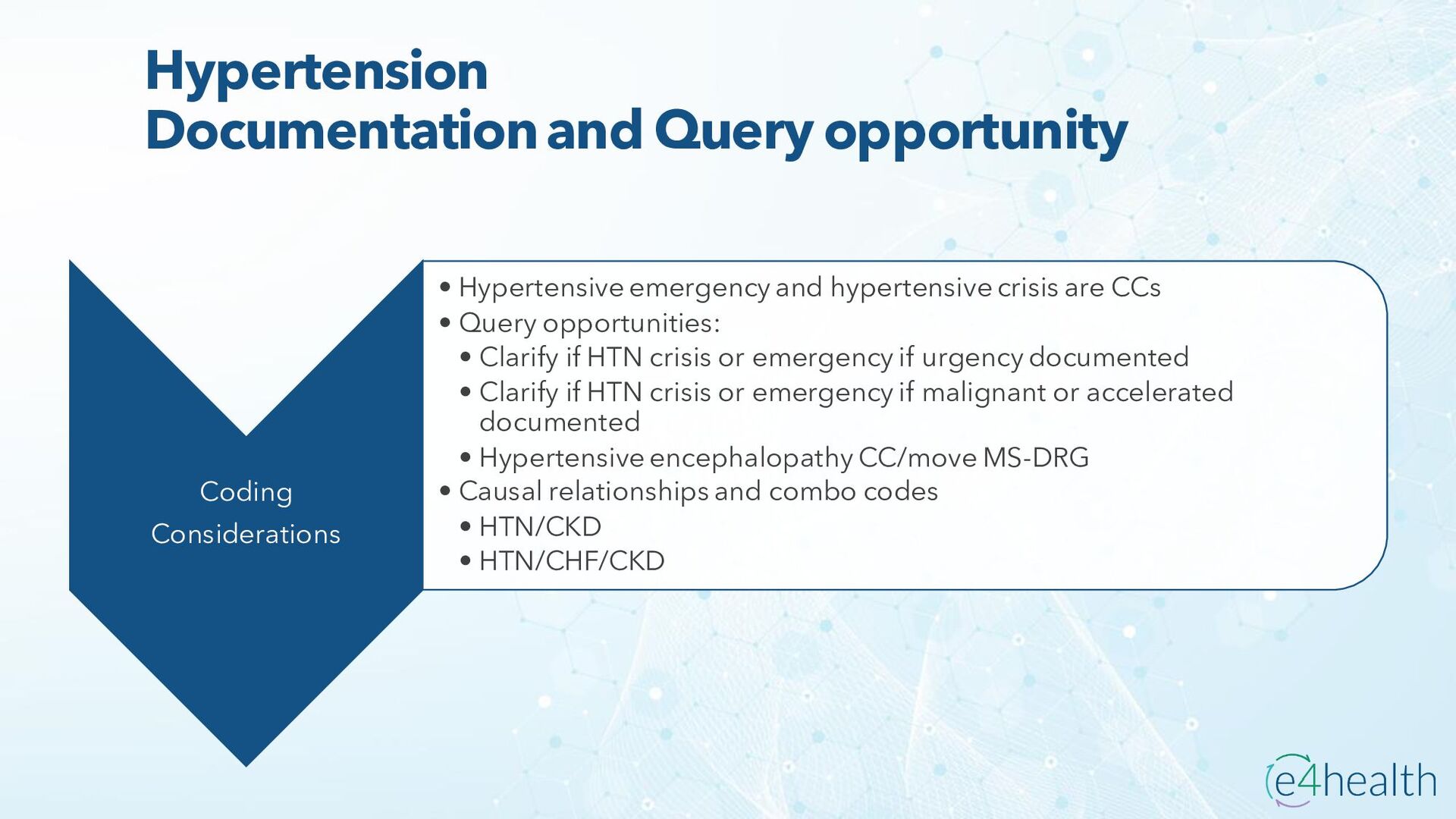
  87. Hypertension Documentation and Query opportunity Coding Considerations • Hypertensive emergency

    and hypertensive crisis are CCs • Query opportunities: • Clarify if HTN crisis or emergency if urgency documented • Clarify if HTN crisis or emergency if malignant or accelerated documented • Hypertensive encephalopathy CC/move MS-DRG • Causal relationships and combo codes • HTN/CKD • HTN/CHF/CKD
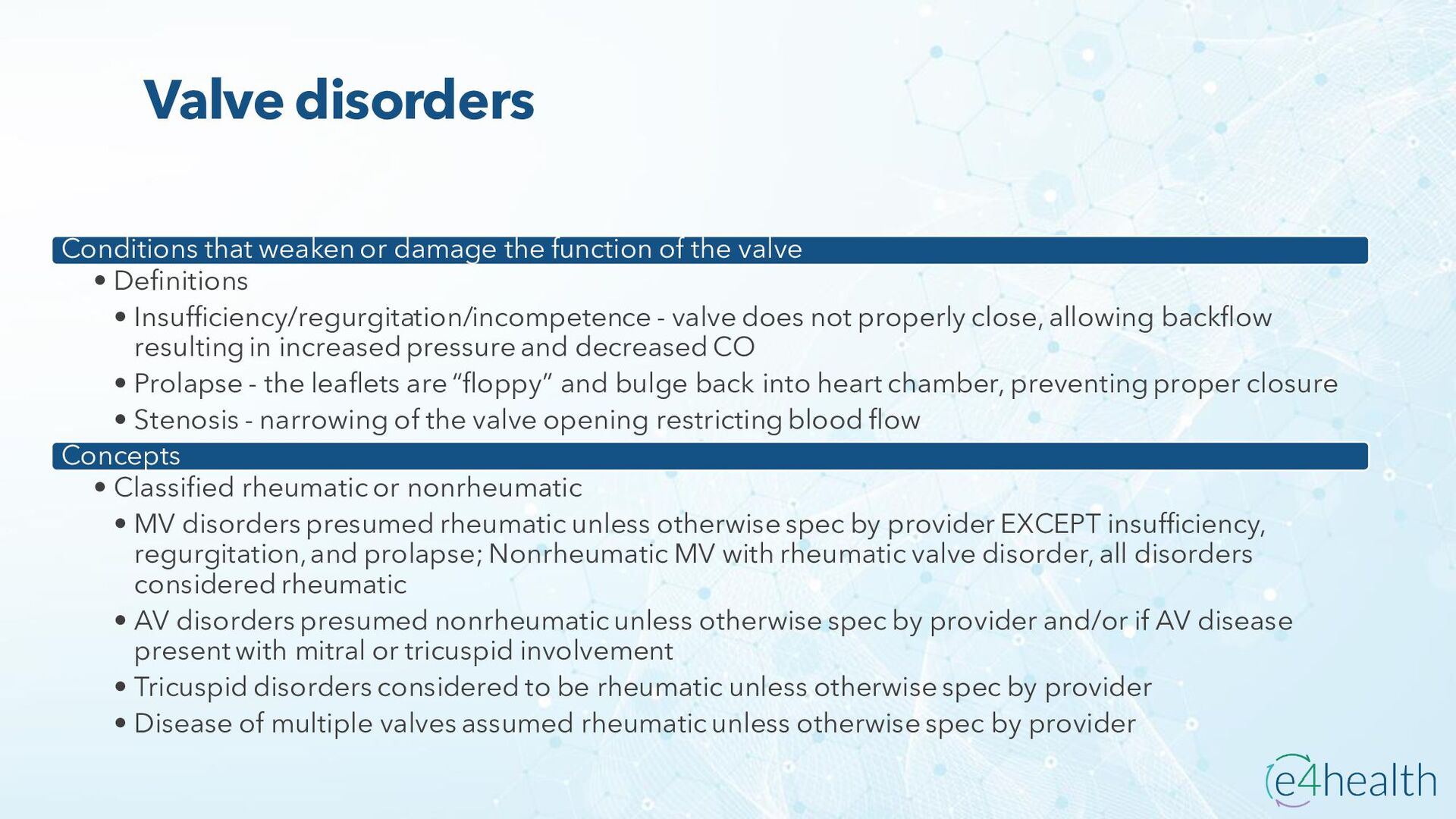
  88. Valve disorders Conditions that weaken or damage the function of

    the valve • Definitions • Insufficiency/regurgitation/incompetence - valve does not properly close, allowing backflow resulting in increased pressure and decreased CO • Prolapse - the leaflets are “floppy” and bulge back into heart chamber, preventing proper closure • Stenosis - narrowing of the valve opening restricting blood flow Concepts • Classified rheumatic or nonrheumatic • MV disorders presumed rheumatic unless otherwise spec by provider EXCEPT insufficiency, regurgitation, and prolapse; Nonrheumatic MV with rheumatic valve disorder, all disorders considered rheumatic • AV disorders presumed nonrheumatic unless otherwise spec by provider and/or if AV disease present with mitral or tricuspid involvement • Tricuspid disorders considered to be rheumatic unless otherwise spec by provider • Disease of multiple valves assumed rheumatic unless otherwise spec by provider
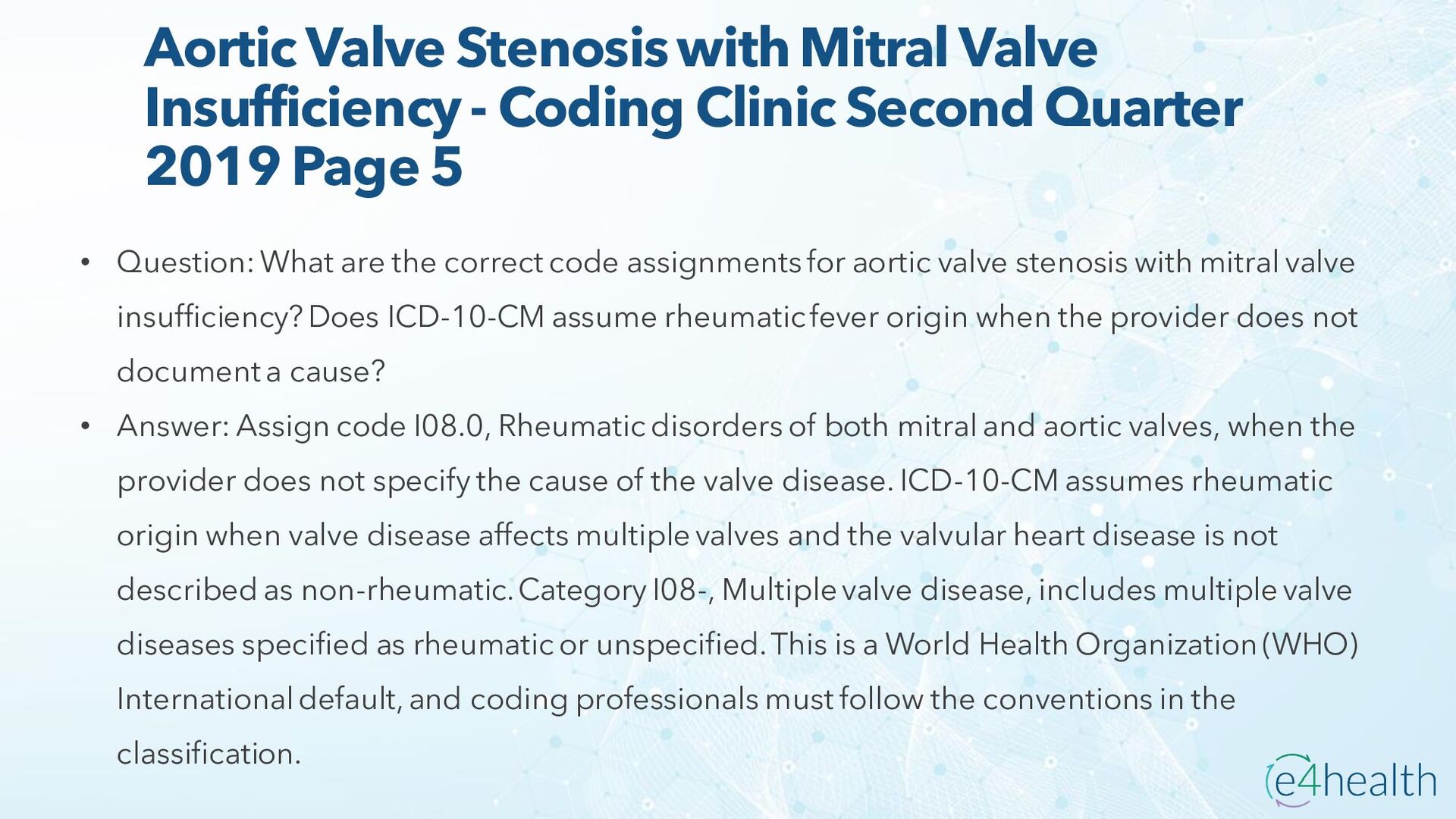
  89. Aortic Valve Stenosis with Mitral Valve Insufficiency - Coding Clinic

    Second Quarter 2019 Page 5 • Question: What are the correct code assignments for aortic valve stenosis with mitral valve insufficiency? Does ICD-10-CM assume rheumatic fever origin when the provider does not document a cause? • Answer: Assign code I08.0, Rheumatic disorders of both mitral and aortic valves, when the provider does not specify the cause of the valve disease. ICD-10-CM assumes rheumatic origin when valve disease affects multiple valves and the valvular heart disease is not described as non-rheumatic. Category I08-, Multiple valve disease, includes multiple valve diseases specified as rheumatic or unspecified. This is a World Health Organization (WHO) International default, and coding professionals must follow the conventions in the classification.
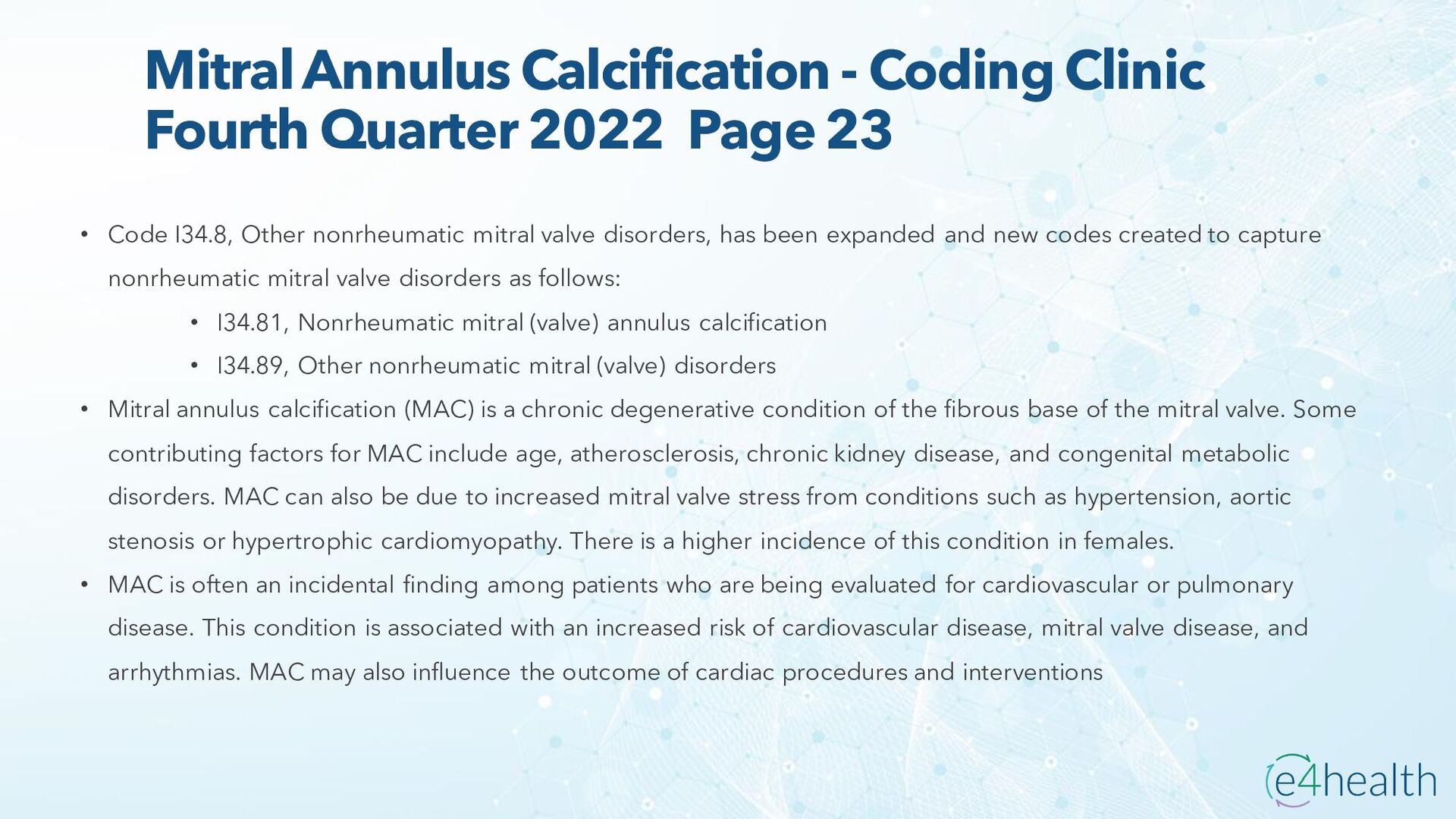
  90. Mitral Annulus Calcification - Coding Clinic Fourth Quarter 2022 Page

    23 • Code I34.8, Other nonrheumatic mitral valve disorders, has been expanded and new codes created to capture nonrheumatic mitral valve disorders as follows: • I34.81, Nonrheumatic mitral (valve) annulus calcification • I34.89, Other nonrheumatic mitral (valve) disorders • Mitral annulus calcification (MAC) is a chronic degenerative condition of the fibrous base of the mitral valve. Some contributing factors for MAC include age, atherosclerosis, chronic kidney disease, and congenital metabolic disorders. MAC can also be due to increased mitral valve stress from conditions such as hypertension, aortic stenosis or hypertrophic cardiomyopathy. There is a higher incidence of this condition in females. • MAC is often an incidental finding among patients who are being evaluated for cardiovascular or pulmonary disease. This condition is associated with an increased risk of cardiovascular disease, mitral valve disease, and arrhythmias. MAC may also influence the outcome of cardiac procedures and interventions
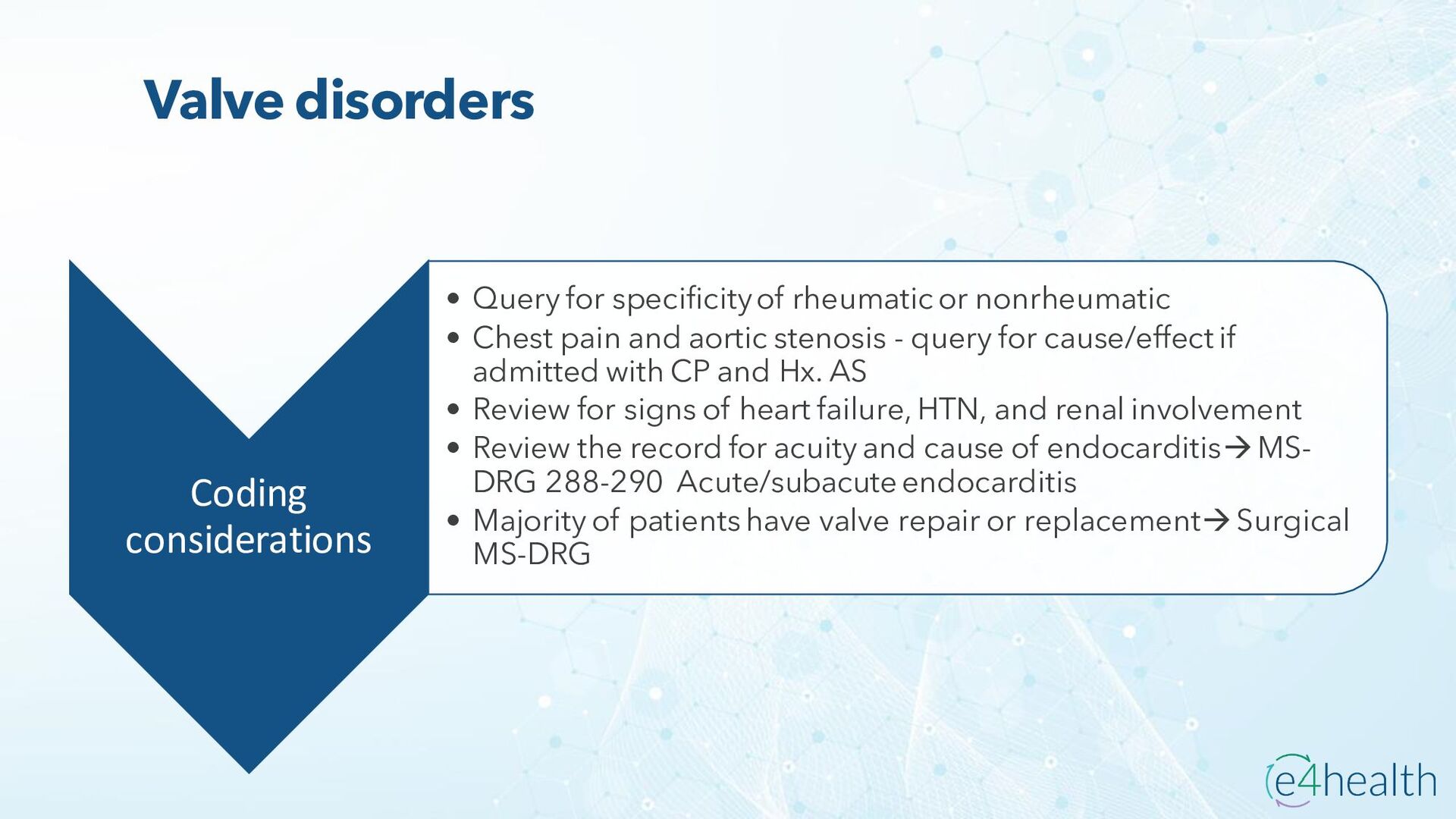
  91. Valve disorders Coding considerations • Query for specificity of rheumatic

    or nonrheumatic • Chest pain and aortic stenosis - query for cause/effect if admitted with CP and Hx. AS • Review for signs of heart failure, HTN, and renal involvement • Review the record for acuity and cause of endocarditis→MS- DRG 288-290 Acute/subacute endocarditis • Majority of patients have valve repair or replacement→Surgical MS-DRG
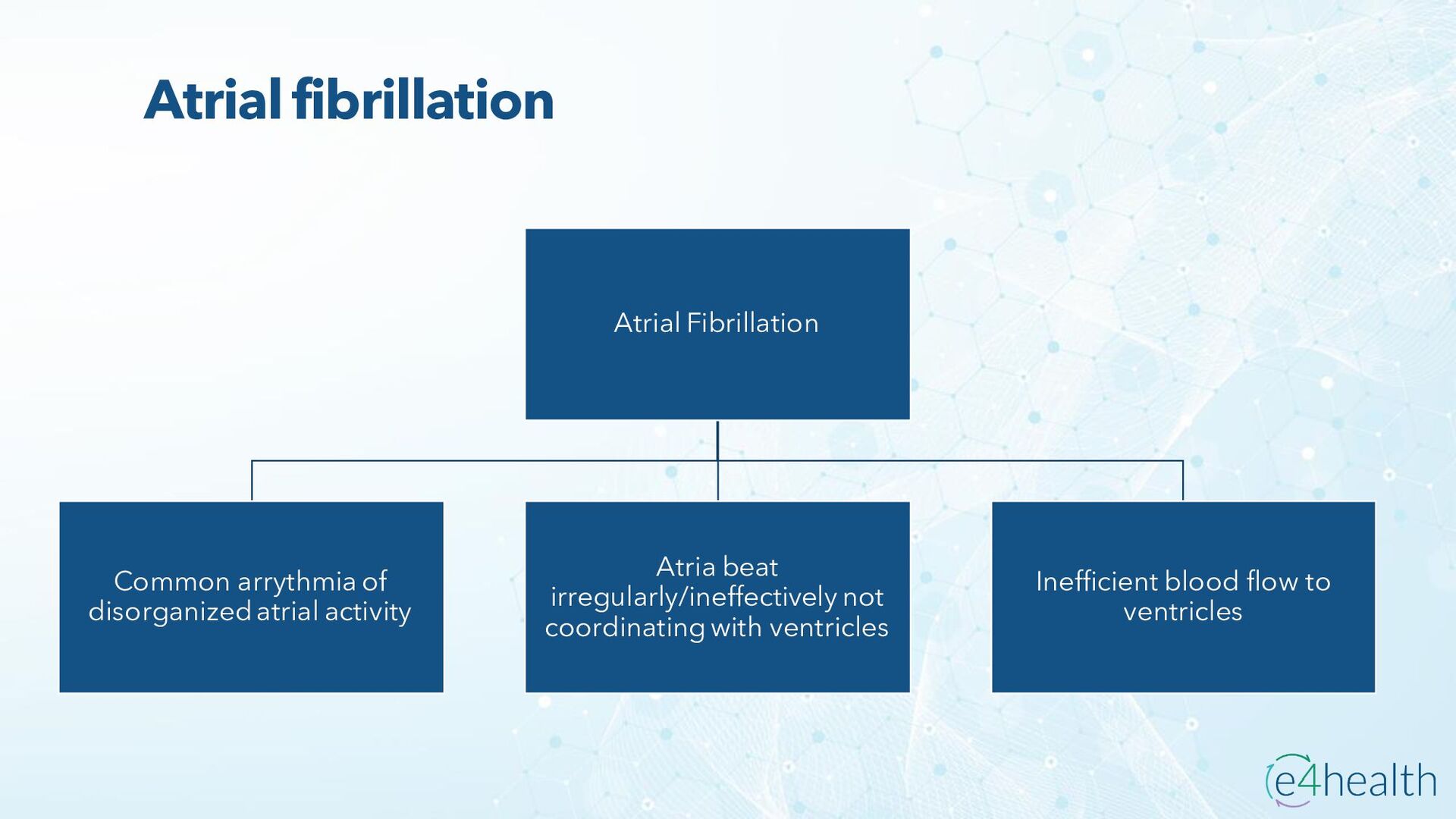
  92. Atrial fibrillation Atrial Fibrillation Common arrythmia of disorganized atrial activity

    Atria beat irregularly/ineffectively not coordinating with ventricles Inefficient blood flow to ventricles
  93. Atrial fibrillation Paroxysmal - terminates spontaneously or with intervention w/in

    7 days of onset, may reoccur Persistent - fails to resolve after treatment within 7 days, may require meds or cardioversion Long standing persistent - Lasted >12 months Permanent - No further rhythm restoration attempts, treatment with rate control Chronic - Non-specific term for any type Afib > 3 months
  94. Atrial flutter • Atrial flutter - rapid, regular rate, usually

    requires prompt cardioversion, • Typical - Localized to R atrium • Atypical- Localized to L atrium • Atrial fib/flutter - a variant of atrial fibrillation with EKG patterns changing between fibrillation and flutter
  95. Ventricular arrythmias Supraventricular tachycardia Abnormal rhythm originating at or above

    the AV node Includes junctional/nodal tachycardia, paroxysmal atrial tachycardia, and paroxysmal SVT Ventricular tachycardia Abnormal ventricular beats >100 bpm with 3 or more irregular beats in a row, sustained or transient Ventricular flutter Rapid variant of Vtach with no cardiac output Ventricular fibrillation Rapid, uncoordinated fluttering of ventricles, no discernible P waves, QRS, or T waves, no cardiac output
  96. Ventricular arrythmias • Vtach and Vfib are common with acute

    MI, severe CHF, electrolyte imbalance and some drug toxicities or poisoning. • Reperfusion ectopy (VT or VF) frequently occurs after intervention restoring blood flow to myocardium • Reperfusion injury is an arrhythmia with ischemia occurring after intervention, postprocedural complication
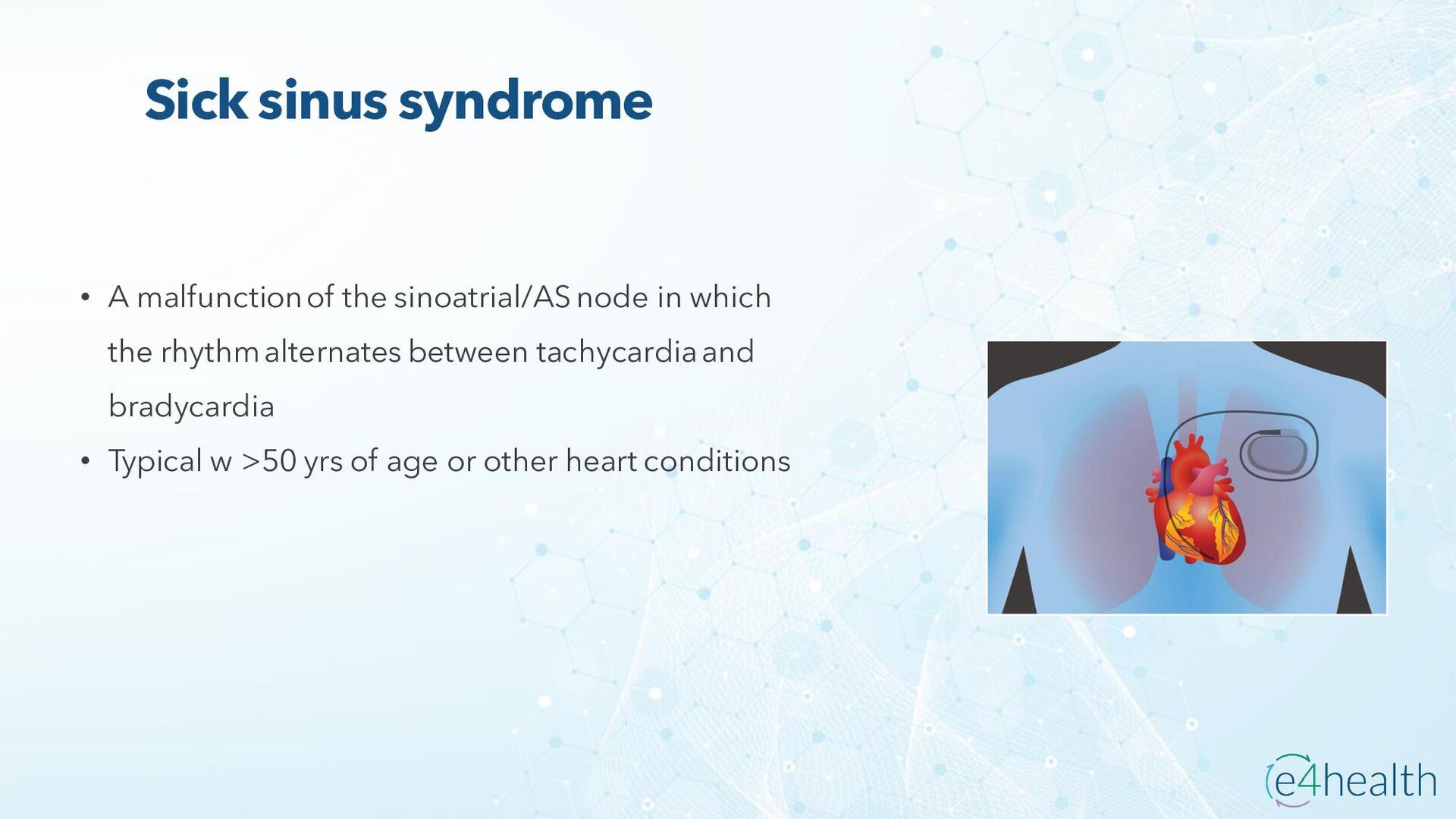
  97. Sick sinus syndrome • A malfunction of the sinoatrial/AS node

    in which the rhythm alternates between tachycardia and bradycardia • Typical w >50 yrs of age or other heart conditions
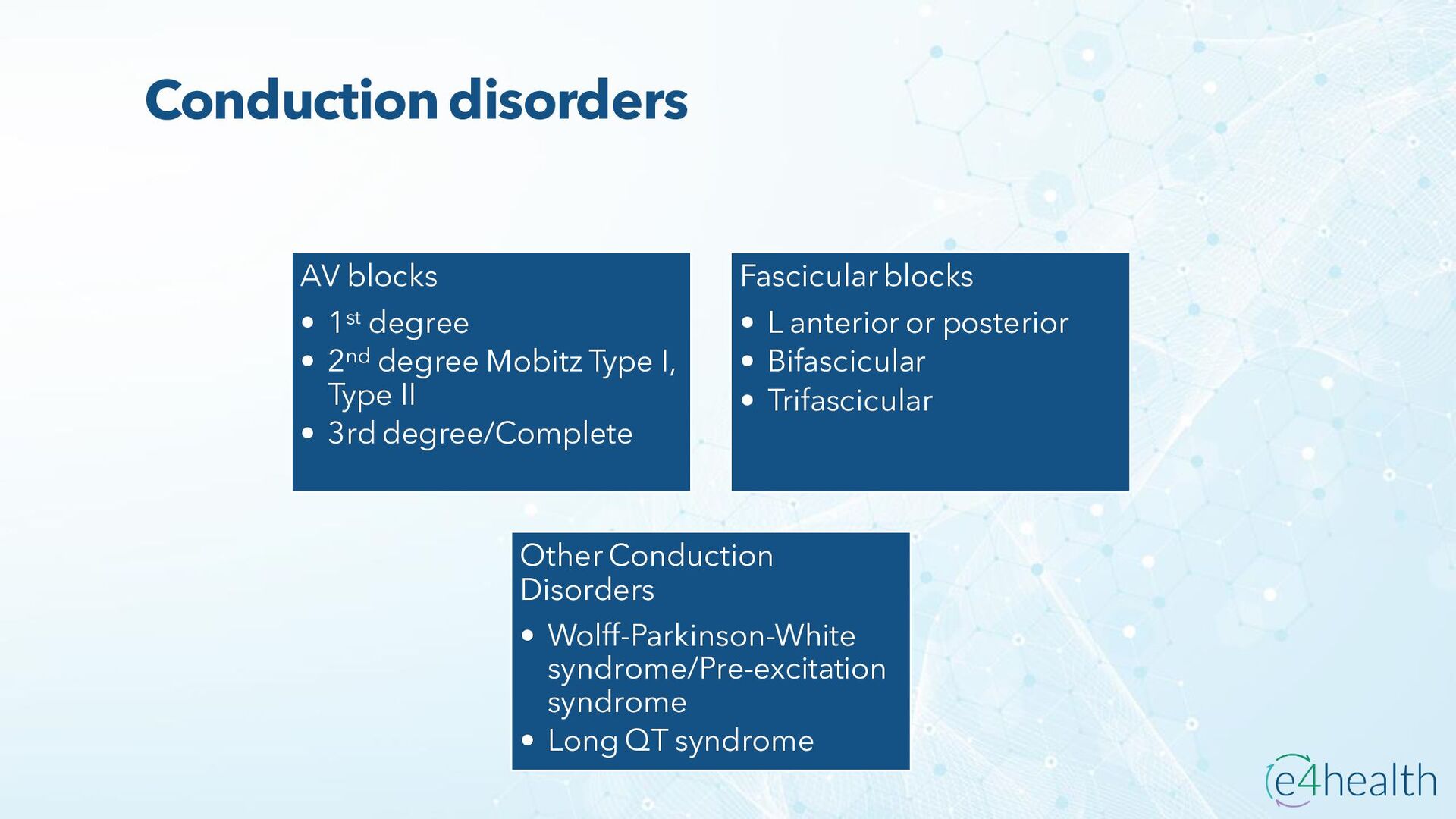
  98. Conduction disorders AV blocks • 1st degree • 2nd degree

    Mobitz Type I, Type II • 3rd degree/Complete Fascicular blocks • L anterior or posterior • Bifascicular • Trifascicular Other Conduction Disorders • Wolff-Parkinson-White syndrome/Pre-excitation syndrome • Long QT syndrome
  99. Arrythmias and Conduction disorders • Typical symptoms are palpitations, tachycardia,

    SOB, fatigue, weakness, dizziness, syncope, or angina • Arrhythmias or conduction disorders are confirmed by EKG • Other testing may include stress test, echo, Holter monitoring as an output, or cardiac cath or EPS • Risk factors: CAD, HTN, rheumatic valve disease, OSA, acute MI, post op cardiac/other surgery, hyperthyroidism, COPD, intense emotions/stress, alcohol, abnormal electrolytes, medications Diagnostic Criteria
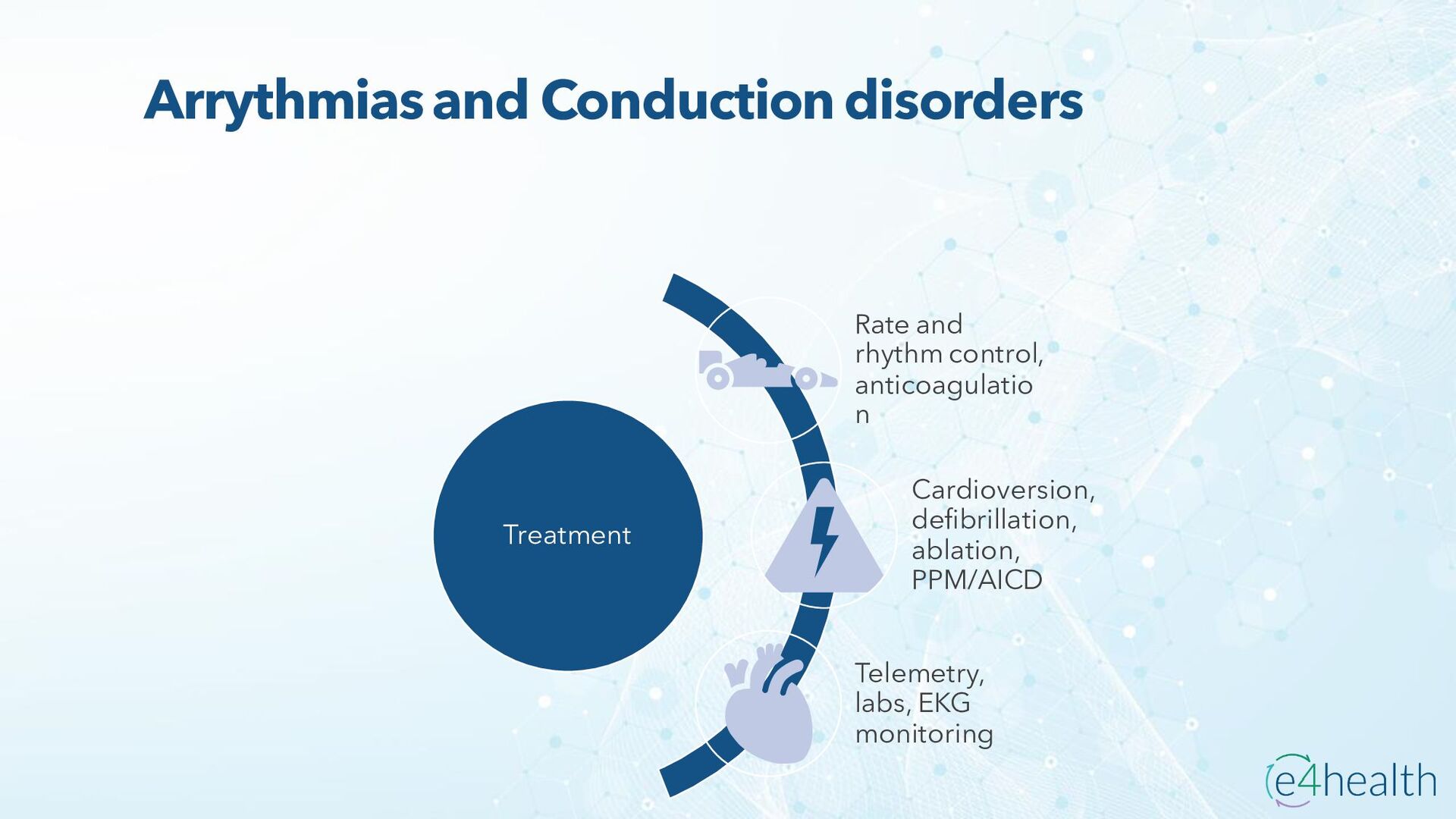
  100. Arrythmias and Conduction disorders Treatment Rate and rhythm control, anticoagulatio

    n Cardioversion, defibrillation, ablation, PPM/AICD Telemetry, labs, EKG monitoring
  101. Arrythmias and Conduction disorders Coding Considerations • Afib specified as

    chronic, permanent, persistent, and long- standing persistent provides a CC • Unspecified or paroxysmal Afib are non-CCs, any diagnosis of Afib is an HCC • SVT (includes PAT) and Vtach are CCs • Vflutter is an MCC, Vfib is an MCC only if discharged alive • 3rd degree/complete AV block, bifascicular and trifascicular blocks are CCs
  102. Atrial fibrillation - Coding Clinic Fourth Quarter 2019 page 7

    • Codes in category I48, Atrial fibrillation and flutter, were expanded and the following new codes created to provide unique codes to describe the different types of atrial fibrillation (AF). • I48.11 Longstanding persistent atrial fibrillation • I48.19 Other persistent atrial fibrillation • I48.20 Chronic atrial fibrillation, unspecified • I48.21 Permanent atrial fibrillation • Atrial fibrillation (AF) is a common cause of an abnormal, irregular heartbeat. The heart wall does not move normally in atrial fibrillation, so there is a risk of blood clots forming in the heart, and risk of thromboembolism, including thromboembolic stroke. AF is typically treated by electrical or pharmacological cardioversion.
  103. Atrial fibrillation - Coding Clinic Fourth Quarter 2019 page 7,

    continued • Persistent atrial fibrillation describes AF that does not terminate within seven days, or that requires repeat pharmacological or electrical cardioversion. Longstanding persistent atrial fibrillation (I48.11) is persistent and continuous AF lasting longer than one year. • Permanent atrial fibrillation (I48.21) is persistent or longstanding persistent atrial fibrillation where cardioversion cannot or will not be performed or is not indicated. • Chronic atrial fibrillation, unspecified (I48.20) may refer to any persistent, longstanding persistent, or permanent atrial fibrillation. However, in clinical practice, use of one of the more specific descriptive terms is preferred over the use of the nonspecific term chronic AF. • Chronic persistent AF has no widely accepted clinical definition or meaning. Assign code I48.19, Other persistent atrial fibrillation, for chronic persistent AF
  104. Sick Sinus Syndrome Controlled with Implanted Cardiac Device - Coding

    Clinic First Quarter 2019 Page 33 • Question: If a physician sees a patient (in any setting) and evaluates the patient's sick sinus syndrome (SSS) or other significant heart rhythm abnormality, is it appropriate to assign a code for the specific condition in addition to the code for the presence of the cardiac device (i.e., pacemaker, automatic cardioverter/defibrillator (AICD), cardiac resynchronization pacemaker (CRT-P), or bi-ventricular defibrillator (CRT-D)? • Answer: Yes, it is appropriate to code the specific condition and the presence of the cardiac device. For example, assign codes I49.5, Sick sinus syndrome, and Z95.0, Presence of cardiac pacemaker. The SSS is still present and is a reportable chronic condition. Although the pacemaker is controlling the heart rate, it does not cure SSS and the condition is still being managed/monitored.
  105. Sick Sinus Syndrome Controlled with Implanted Cardiac Device - Coding

    Clinic First Quarter 2019 Page 33, continued • According to the inpatient, Official Guidelines for Coding and Reporting: For reporting purposes, the definition for "other diagnoses" is interpreted as additional conditions that affect patient care in terms of requiring: • clinical evaluation; or • therapeutic treatment; or • diagnostic procedures; or • extended length of hospital stay; or • increased nursing care and/or monitoring. • The Official Guidelines for Coding and Reporting for outpatient services IV.I. & J states, "Code all documented conditions that coexist at the time of the encounter/visit and require or affect patient care treatment or management. Do not code conditions that were previously treated and no longer exist. However, history codes (categories Z80-Z87) may be used as secondary codes if the historical condition or family history has an impact on current care or influences treatment."
  106. Sinus Bradycardia with Premature Ventricular Contractions - Coding Clinic Second

    Quarter 2020 Page 23 • Question: A patient presented with palpitations and presyncope symptoms, which he experienced while going from a sitting to standing position. The provider diagnosed sinus bradycardia and multiple premature ventricular contractions. Code I49.3, Ventricular premature depolarization, cannot be assigned with code R00.1, Bradycardia, unspecified, based on the Excludes1 note at category I49-, Other cardiac arrhythmias. However, there is an Excludes 2 note at category R00-, Abnormalities of heartbeat, which allows the reporting of codes in that category with specified arrhythmias (I47-I49). Should codes for sinus bradycardia and premature ventricular contractions be assigned together? • Answer: Assign both code I49.3, Ventricular premature depolarization, and code R00.1, Bradycardia, unspecified. Although there is an Excludes1 note at category I49-, Other cardiac arrhythmias, for sinus bradycardia, these are distinct (unrelated) cardiac conditions, which can exist independently. In order to convey the complete clinical picture, code both conditions.
  107. Ventricular fibrillation - Coding Clinic Second Quarter 2022 page 14-15

    • Question: A patient is admitted for multiple medical conditions and is status post automatic implantable cardioverter defibrillator (AICD) placement, for ventricular fibrillation. The cardiologist's documentation states, "Ventricular fibrillation remains quiet no flares no symptoms no firings of the AICD." Would ventricular fibrillation be considered a chronic condition that always meets reporting requirements? Previously published Coding Clinic advice clarified that for hospital reporting, it is appropriate to assign a code for a specific cardiac condition that is being controlled by the presence of a cardiac device. Would it be appropriate to report ventricular fibrillation in a patient who is status post AICD placement, if the condition did not occur during the admission? • Answer: It would not be appropriate to assign a code for ventricular fibrillation (VF) in this scenario. However, codes Z86.79, Personal history of other disease of the circulatory system, and Z95.810, Presence of automatic (implantable) cardiac defibrillator, may be assigned to capture the presence of an AICD, in a patient with a history of ventricular fibrillation. • VF is an acute life-threatening condition that should only be reported when it is documented to occur during the admission. In this case, the patient is being followed by a cardiologist; however, he is not currently experiencing VF and the AICD is not firing. This is a different situation from a patient presenting to the Emergency Department because the device is firing due to the occurrence of VF. The advice previously published in Coding Clinic First Quarter 2019, pages 33-34, only applied to sick sinus syndrome (SSS), as it is a chronic condition, in which the device (pacemaker) is constantly functioning to increase the heart rate.
  108. Cardiac arrythmias and Conduction disorders - Query opportunity • Review

    for the specificity of type of arrythmia or conduction disorder • Review and/or query if inherent to surgery vs. post-op complication • Associated conditions, such as: • Electrolyte imbalances • Hypotension/shock • Acute renal failure • Falls, as POA of Yes or No
  109. Angina Unstable angina •Accelerated, crescendo, intermediate coronary syndrome, pre-infarction syndrome

    Angina pectoris with documented spasm •Prinzmetal, spasm-induced, variant Refractory angina pectoris •Long-lasting symptoms due to reversible ischemia with no relief with treatment Other forms of angina pectoris •Stable Angina pectoris, unspecified Acute coronary thrombosis no resulting in myocardial infarction Other forms of acute ischemic heart disease Acute ischemic heart disease, unspecified
  110. Angina Definition •Precordial discomfort due to transient myocardial ischemia without

    infarction •Etiologies include physical exertion or psychological state •Diagnosis based on EKG, symptoms, myocardial imaging Types •Stable - follows consistent pattern for 2 months •Unstable - no pattern occurs at rest or exertion, may lead to MI •Variant (with spasm)/Prinzmetal’s - Rare, caused by spasm not blockage •Refractory - long-lasting symptoms (for >3 months) due to established reversible ischaemia, which cannot be controlled by escalating medical therapy with the use of 2nd- and 3rd-line pharmacological agents, bypass grafting, or stenting Treatment •Meds - nitrates, antiplatelets, beta blockers, CCBs, ACE inhibitors, statins •Serial EKGs, telemetry monitoring, cardiac biomarkers, supplemental O2
  111. Angina Coding Considerations • Causal relationship between angina and CAD

    • With diagnostic cardiac cath - MS-DRG 286-287 • Documentation of ACS codes to unstable angina • Additional codes note • Query opportunities • Unstable angina with evidence of myocardial injury and ischemia ? MI
  112. Syncope Definitions • Sudden transient loss of consciousness with return

    baseline and no sequela • Near syncope - lightheadedness, sensation of fainting w no LOC • Psychogenic pseudosyncope - appearance of LOC and absence of movements • Carotid sinus syncope/hypersensitivity - stimulation of carotid sinus results in syncope • Orthostatic hypotension - sudden drop in BP upon standing • Neurogenic syncope - abnormal/exaggerated autonomic response to stimuli
  113. Syncope • No specific criteria except + LOC, pt. usually

    asymptomatic on evaluation • Vitals, length LOC, PMH/HPI, EKG, telemetry, labs, stress test, echo, carotid u/s, CT head, tilt table Diagnostic criteria • Identify and treat underlying cause - most common orthostatic hypotension or arrhythmia Treatment
  114. Syncope Coding Considerations • Symptom code • Underlying cause sequenced

    as PDx • Look for treatment focused on a “suspected” diagnosis (most common orthostatic hypotension, arrhythmia)
  115. Dehydration and acute kidney injury - Coding Clinic First Quarter

    2019 page 12 • Question: A patient is admitted after an episode of unresponsiveness secondary to syncope and urinary tract infection (UTI). The focus of treatment was directed at the syncope (CT of the head, cardiac work-up, etc.). During the admission, it is noted that the patient also had mild acute kidney injury (AKI) that was treated with intravenous hydration. The provider's discharge diagnosis is syncope secondary to dehydration and AKI. Should AKI always be sequenced as the principal diagnosis, when a patient presents with an acute kidney injury and dehydration? • Answer: The sequencing of dehydration and acute kidney injury (acute renal failure) should be based on the reason for the admission. Query the physician regarding the principal reason that the patient was admitted, if the reason for the admission is not clearly documented. There is no rule that acute kidney injury should always be sequenced first.
  116. Chest pain Types: Precordial pain Intercostal pain Other chest pain

    Chest pain, unspecified TIPS: Etiology sequenced as Principal Diagnosis *Always query if not specified* Cardiac, GERD, PE, costochondritis will change MS-DRG Cardiac catheterization performed also changes MS-DRG
  117. Cardiomyopathy Definition • Disease of heart muscle preventing proper function

    • Reduced EF, +/- structural changes, presence of chronic diseases or conditions (HTN, MI, chronic arrhythmias, valvular disease, obesity, thyroid disease, diabetes, alcoholism, nutritional deficiencies, stimulant abuse, infections, connective tissue disorders, amyloidosis, sarcoidosis, chemo or radiation therapy, or pregnancy)
  118. Cardiomyopathy Types • Alcoholic • Constrictive • Thickening and/or calcification

    resulting in decreased filling • Associated with pericarditis or other pericardial disease, trauma, prior cardiac surgery • Dilated • Enlarged or dilated ventricle resulting in ineffective pumping • Causes include CAD/MI/ischemic heart disease, obesity HTN, DM, amyloidosis, infections, thyroid disease, sequelae chemo/radiation, drugs, alcohol • Due to drugs or external agents • Hypertrophic, non-obstructive • LV hypertrophy without outflow obstruction
  119. Cardiomyopathy Types • Hypertrophic obstructive (Idiopathic hypertrophic subaortic stenosis: IHSS)

    • LV hypertrophy, typically intraventricular septum, with outflow obstruction • Considered an inherited genetic condition, may lead to sudden cardiac death • Idiopathic • Cause undetermined • Restrictive • Rigid, non-dilated ventricle resulting in severe diastolic dysfunction and decreased filling due to impaired myocardial relaxation • Takotsubo syndrome, stress induced • Temporary weakening of heart muscle triggered by great emotional or physiologic stress, not by CAD, more frequent in women
  120. Cardiomyopathy • DOE, SOB at rest, LE edema, abdominal distention,

    anasarca, cough while lying flat, fatigue, weakness, irregular heartbeats, chest discomfort/pressure, syncope/dizziness • Echo, CXR, EKG, cardiac cath, stress test, cardiac CT/MRI/MRA S/S and Diagnosis • Depends on type - reduction of risk factors for prevention of progression • Meds - Diuretics, BP meds, chronotropic (rate) and inotropic (force of contraction) meds like Digoxin or Coreg • Procedures – AICD, PPM, ablation, VAD, transplant Treatment
  121. Cardiomyopathy Query opportunities • As principal diagnosis • Diagnosed this

    admit? Evidence of CHF present? Query if appropriate for CHF as PDx • Query if: • Specificity of type • Presence of reduced EF without structural changes or symptoms • Presence of structural changes without symptoms • Presence of associated chronic diseases • Demand ischemia/Type II MI with s/s of CHF
  122. MS-DRG 314-315-316 Other Circulatory system Diagnosis with/without CC/MCC • Many

    complication codes fall under this MS-DRG • Complications, other specified, of cardiac and vascular prosthetic devices, implants and grafts • Infection/inflammatory reaction due to cardiac and vascular device, implant and graft • Infection, other and unspecified, due to central venous catheter • Mechanical complication of other vascular device, implant, and graft
  123. References • AHA ICD-10-CM and ICD-10-PCS Coding Handbook • ICD-10-PCS:

    An Applied Approach 2023 • Cengage: 3-2-1 CODE IT! • 3M training guide for MDC 5 https://ahswca3meapp01.cernerasp.com/reference2/index.html?file=cdi.ref&RepId=1 • Davies A, Fox K, Galassi AR, Banai S, Ylä-Herttuala S, Lüscher TF. Management of refractory angina: an update. Eur Heart J. 2021 Jan 20;42(3):269-283. doi: 10.1093/eurheartj/ehaa820. PMID: 33367764 • Pinson, R., & Tang, C. (2021). 2022 CDI Pocket Guide (15th ed.). Pinson & Tang LLC • Prescott, L., & Manz, J. (2021). 2022 ACDIS Pocket Guide. HCPro, a division of Simplify Compliance LLC • Shock - Critical Care Medicine - Merck Manuals Professional Edition • Acute Myocardial Infarction (MI) - Cardiovascular Disorders - Merck Manuals Professional Edition • Infective Endocarditis - Cardiovascular Disorders - Merck Manuals Professional Edition • Coronary Microvascular Disease (MVD) | American Heart Association