Upgrade to Pro — share decks privately, control downloads, hide ads and more …

Overcoming Logging Challenges for Cloud Native ...

Sponsored · SiteGround - Reliable hosting with speed, security, and support you can count on.

Overcoming Logging Challenges for Cloud Native Applications at Scale

Logging is not that easy as it looks and when dealing with a Cloud Native environment where applications runs at scale and likely applications generate their own logging format, do log analysis becomes a challenge.

The following presentation was given at Open Source Summit Europe 2017 (Prague) and it have a strong focus on Kubernetes and Docker specifically.

Avatar for Eduardo Silva

Eduardo Silva

October 23, 2017
Tweet

More Decks by Eduardo Silva

Other Decks in Technology

Transcript

  1. /about • SW Engineer at Treasure Data • Maintainer of

    Fluent Bit (a Fluentd ecosystem project) #C #Kubernetes #CloudNative #Linux #Performance #Scalability
  2. Logging • Standalone Applications ◦ Writes to a log file

    ◦ Writes to local logging service ◦ Writes to a remote logging service
  3. Distributed Systems • Considerations ◦ “Application” might be composed by

    multiple services ◦ Services might run in multiple Nodes/Hosts ◦ Applications & Services might scale (likely on demand)
  4. Distributed Systems • From a Logging perspective ◦ Log Sources

    might be many ◦ Applications and Services have their own “Logging way” ◦ Logs requires identity: origin + metadata
  5. Distributed Systems • What is Cloud Native ? ◦ “It’s

    about Scale and Resilience...” • Cloud Native Logging ? ◦ New challenges
  6. Cloud Native Logging • Requirements ◦ Consume logs in many

    ways (sources) ◦ Structure log records (more than human readable) ◦ Enrich logs (identity) ◦ Deliver logs to a central or multiple places for Analysis
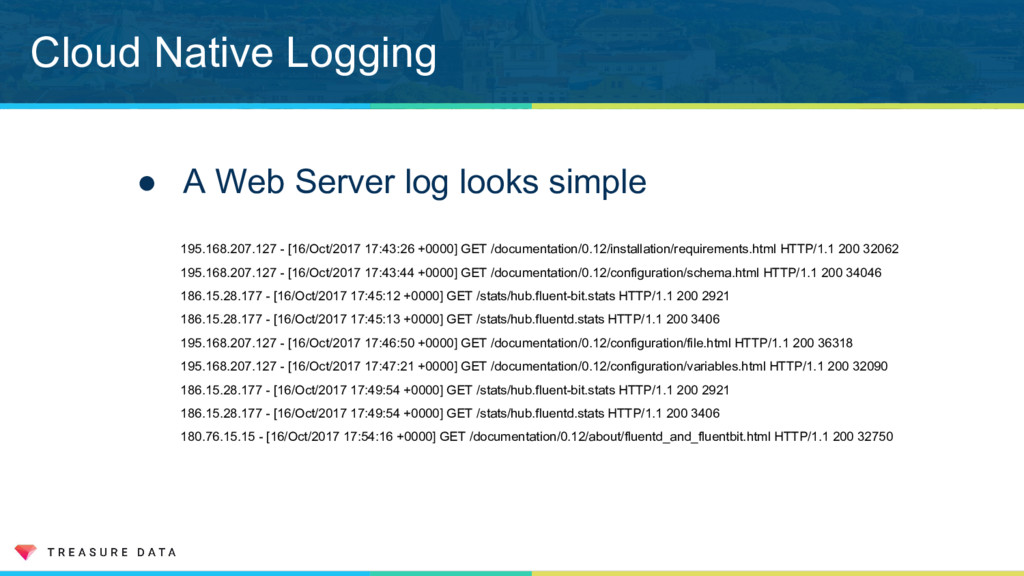
  7. Cloud Native Logging • A Web Server log looks simple

    195.168.207.127 - [16/Oct/2017 17:43:26 +0000] GET /documentation/0.12/installation/requirements.html HTTP/1.1 200 32062 195.168.207.127 - [16/Oct/2017 17:43:44 +0000] GET /documentation/0.12/configuration/schema.html HTTP/1.1 200 34046 186.15.28.177 - [16/Oct/2017 17:45:12 +0000] GET /stats/hub.fluent-bit.stats HTTP/1.1 200 2921 186.15.28.177 - [16/Oct/2017 17:45:13 +0000] GET /stats/hub.fluentd.stats HTTP/1.1 200 3406 195.168.207.127 - [16/Oct/2017 17:46:50 +0000] GET /documentation/0.12/configuration/file.html HTTP/1.1 200 36318 195.168.207.127 - [16/Oct/2017 17:47:21 +0000] GET /documentation/0.12/configuration/variables.html HTTP/1.1 200 32090 186.15.28.177 - [16/Oct/2017 17:49:54 +0000] GET /stats/hub.fluent-bit.stats HTTP/1.1 200 2921 186.15.28.177 - [16/Oct/2017 17:49:54 +0000] GET /stats/hub.fluentd.stats HTTP/1.1 200 3406 180.76.15.15 - [16/Oct/2017 17:54:16 +0000] GET /documentation/0.12/about/fluentd_and_fluentbit.html HTTP/1.1 200 32750
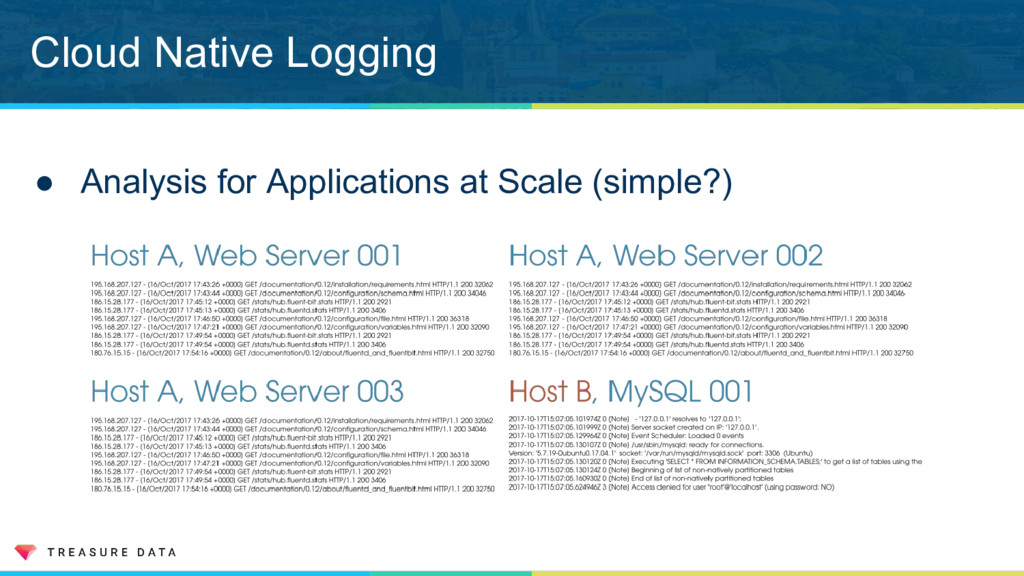
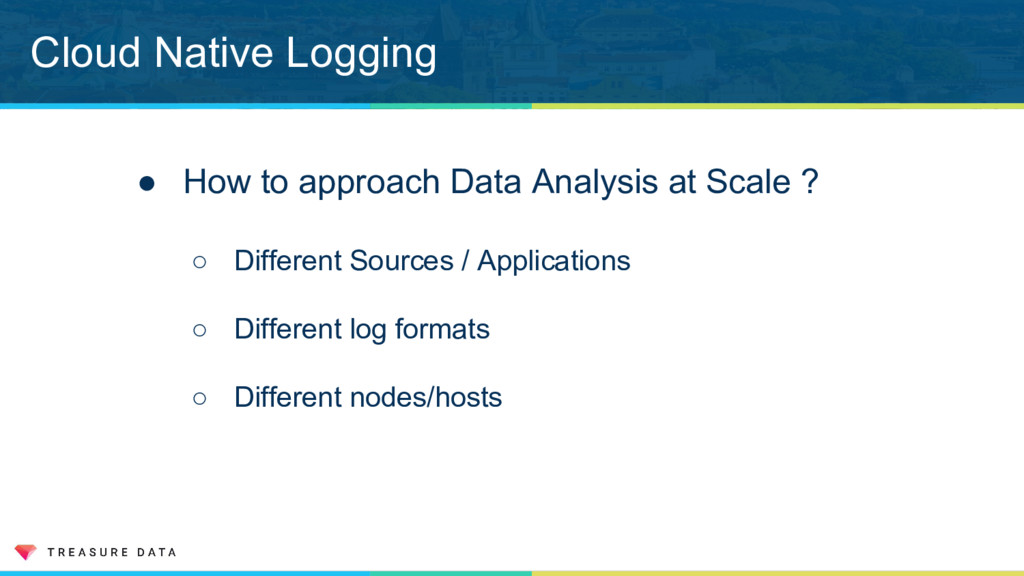
  8. Cloud Native Logging • How to approach Data Analysis at

    Scale ? ◦ Different Sources / Applications ◦ Different log formats ◦ Different nodes/hosts
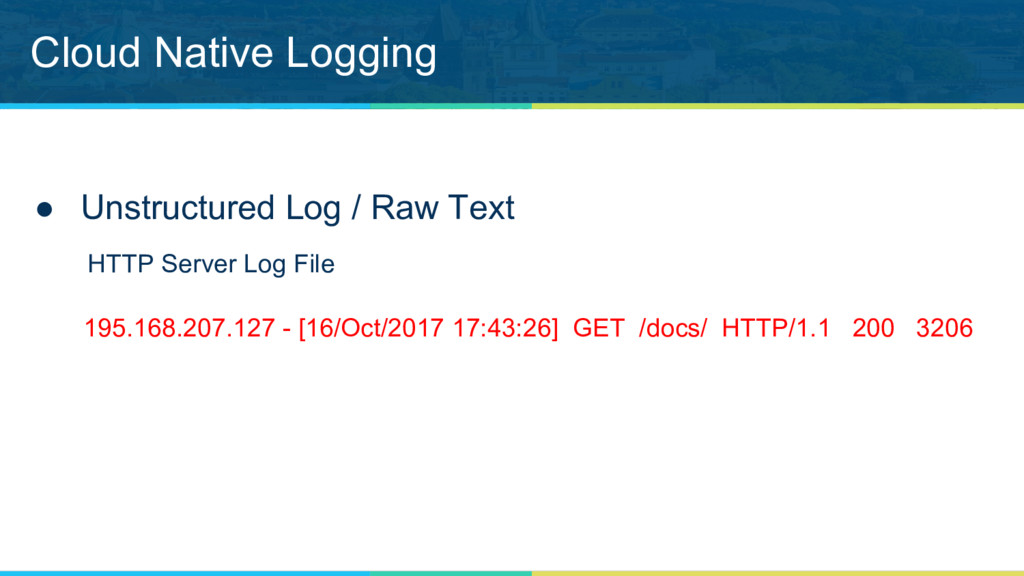
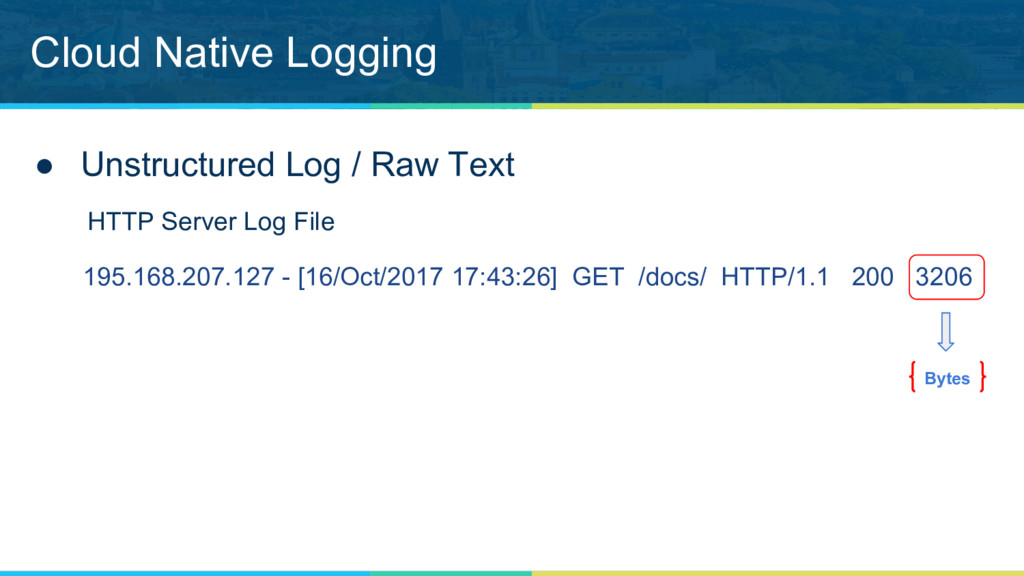
  9. Cloud Native Logging • Unstructured Log / Raw Text HTTP

    Server Log File 195.168.207.127 - [16/Oct/2017 17:43:26] GET /docs/ HTTP/1.1 200 3206
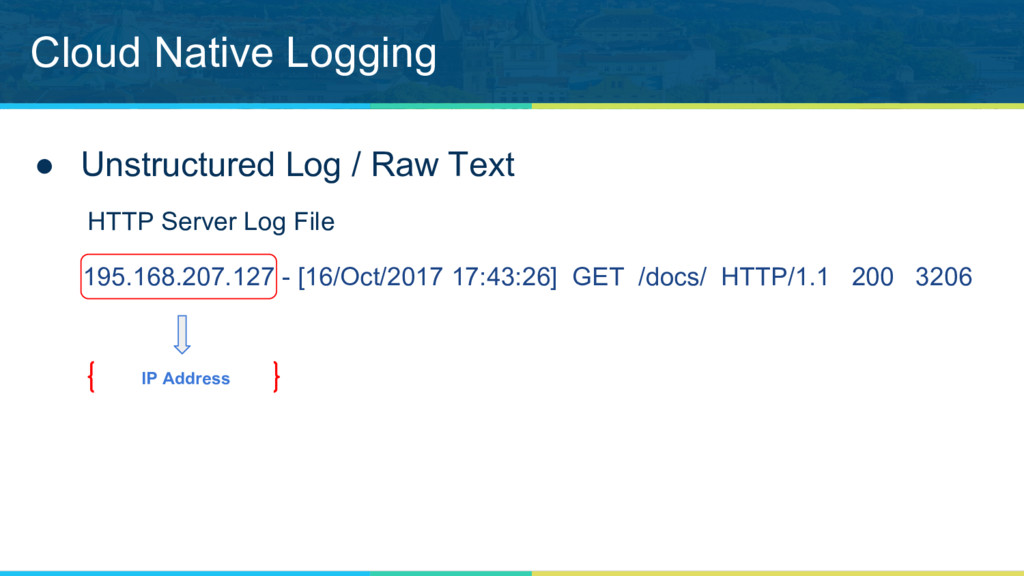
  10. Cloud Native Logging • Unstructured Log / Raw Text HTTP

    Server Log File 195.168.207.127 - [16/Oct/2017 17:43:26] GET /docs/ HTTP/1.1 200 3206 IP Address
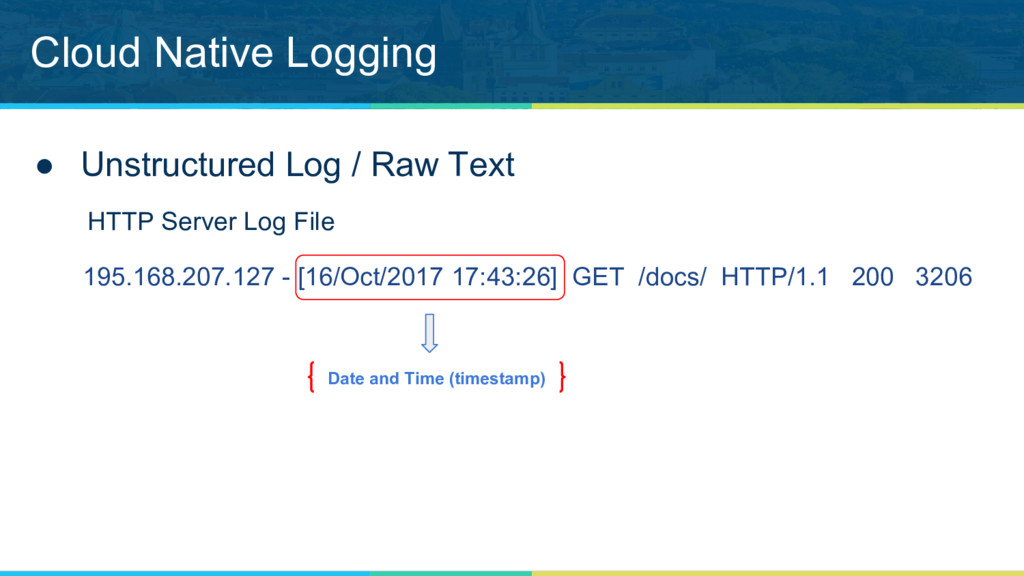
  11. Cloud Native Logging • Unstructured Log / Raw Text HTTP

    Server Log File 195.168.207.127 - [16/Oct/2017 17:43:26] GET /docs/ HTTP/1.1 200 3206 Date and Time (timestamp)
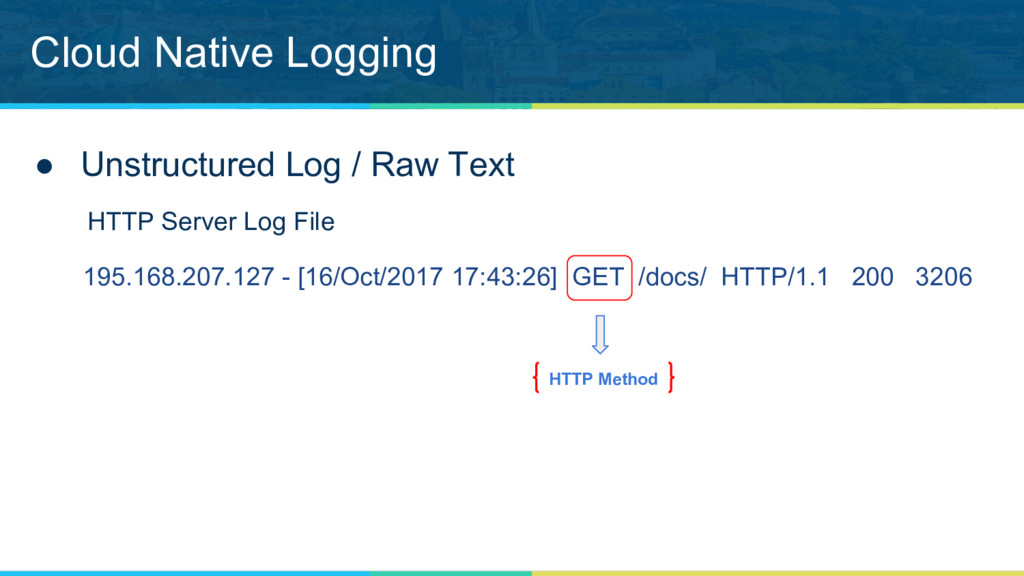
  12. Cloud Native Logging • Unstructured Log / Raw Text HTTP

    Server Log File 195.168.207.127 - [16/Oct/2017 17:43:26] GET /docs/ HTTP/1.1 200 3206 HTTP Method
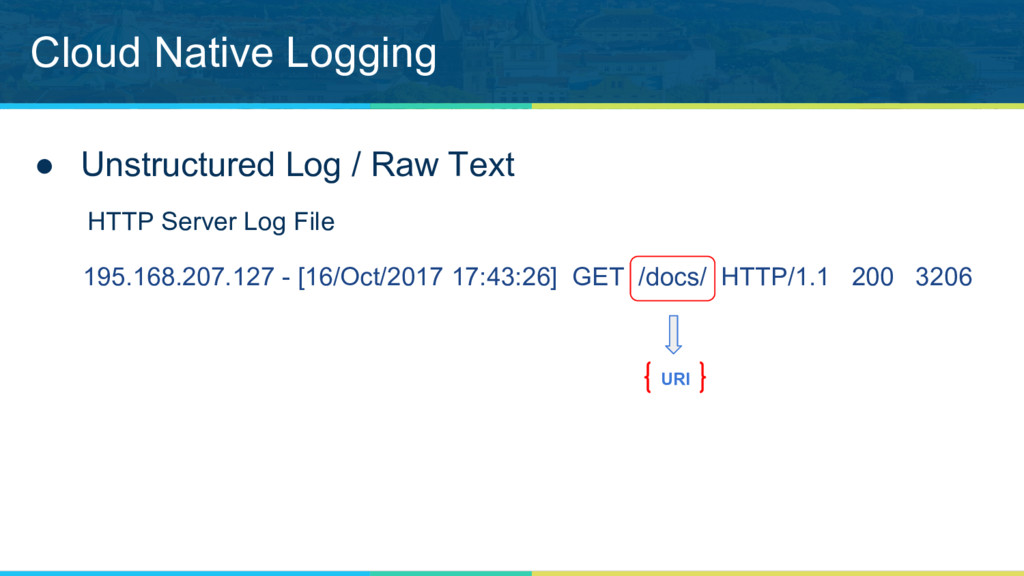
  13. Cloud Native Logging • Unstructured Log / Raw Text HTTP

    Server Log File 195.168.207.127 - [16/Oct/2017 17:43:26] GET /docs/ HTTP/1.1 200 3206 URI
  14. 195.168.207.127 - [16/Oct/2017 17:43:26] GET /docs/ HTTP/1.1 200 3206 Cloud

    Native Logging • Unstructured Log / Raw Text HTTP Server Log File Protocol
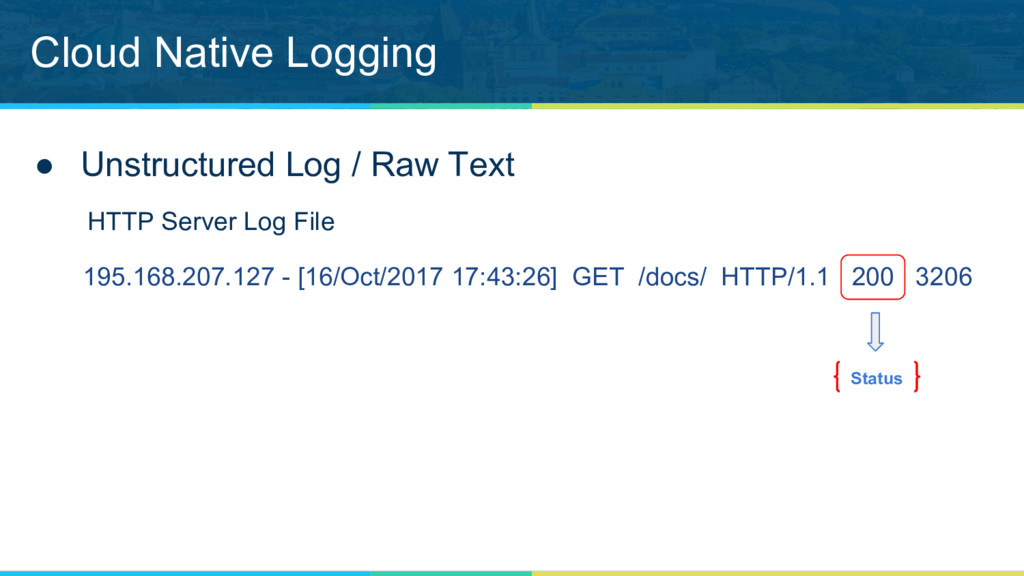
  15. Cloud Native Logging • Unstructured Log / Raw Text HTTP

    Server Log File 195.168.207.127 - [16/Oct/2017 17:43:26] GET /docs/ HTTP/1.1 200 3206 Status
  16. Cloud Native Logging • Unstructured Log / Raw Text HTTP

    Server Log File 195.168.207.127 - [16/Oct/2017 17:43:26] GET /docs/ HTTP/1.1 200 3206 Bytes
  17. Cloud Native Logging • Unstructured Log / Raw Text HTTP

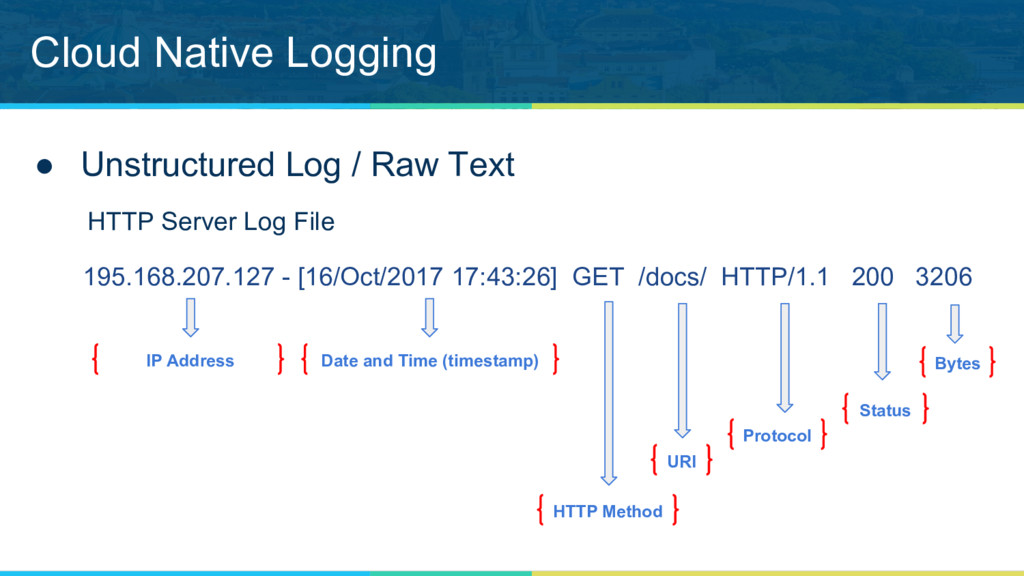
    Server Log File 195.168.207.127 - [16/Oct/2017 17:43:26] GET /docs/ HTTP/1.1 200 3206 IP Address Date and Time (timestamp) HTTP Method URI Protocol Status Bytes
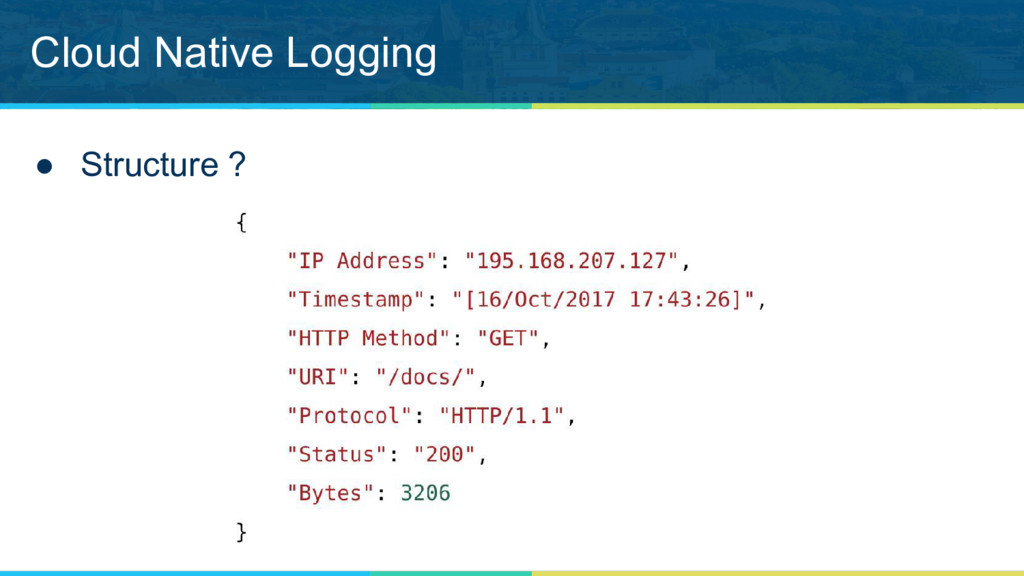
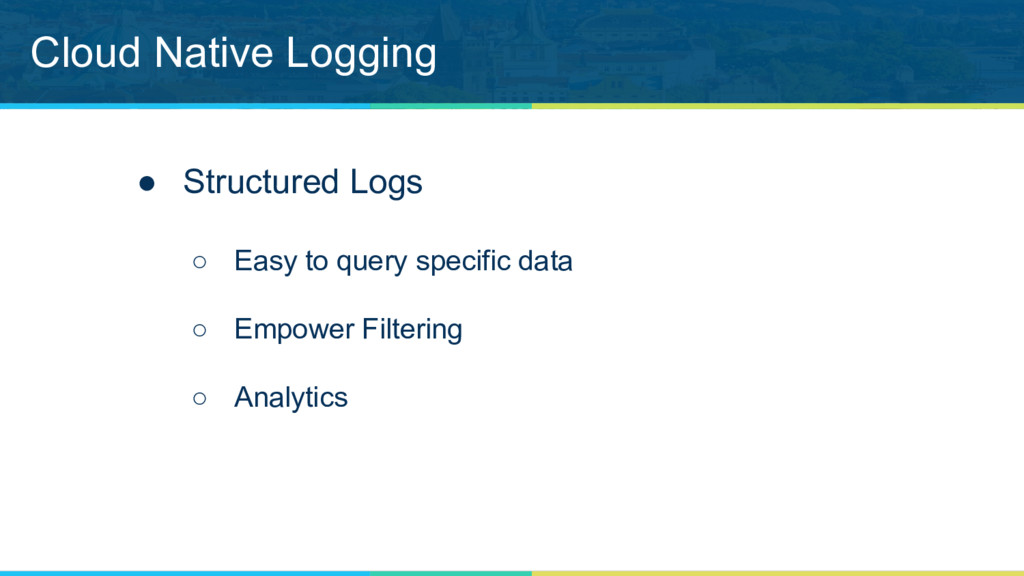
  18. Cloud Native Logging • Structured Logs ◦ Easy to query

    specific data ◦ Empower Filtering ◦ Analytics
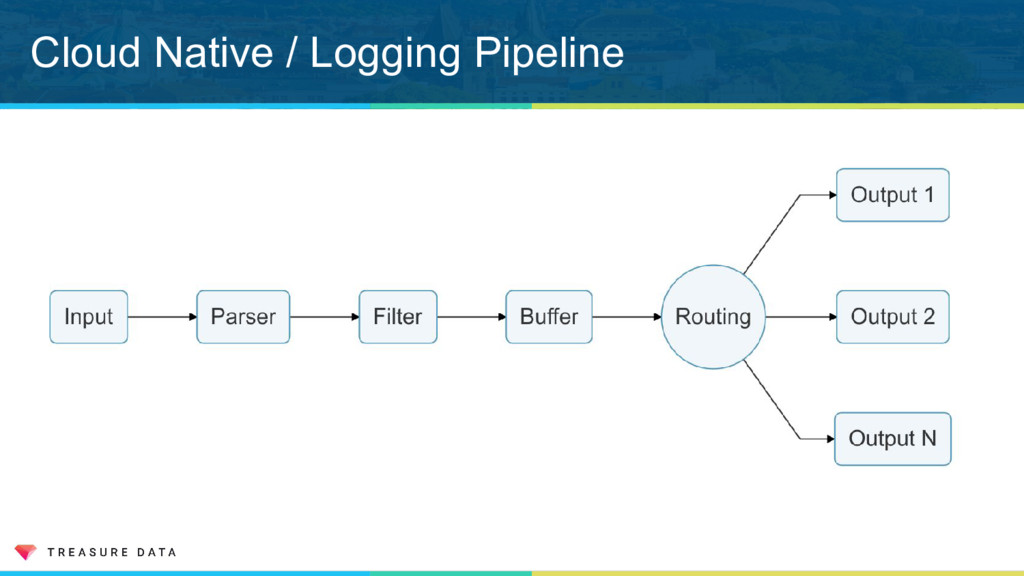
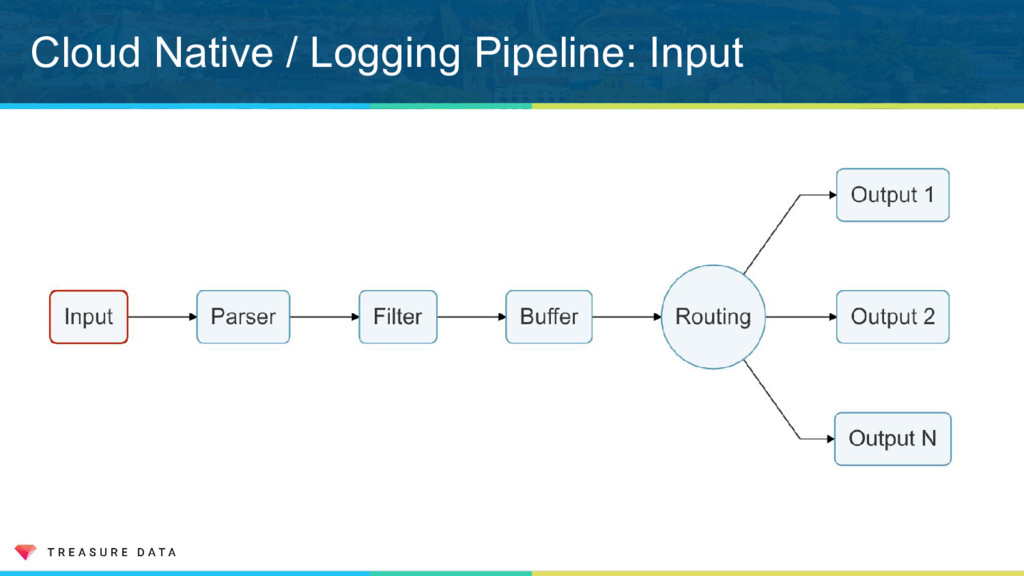
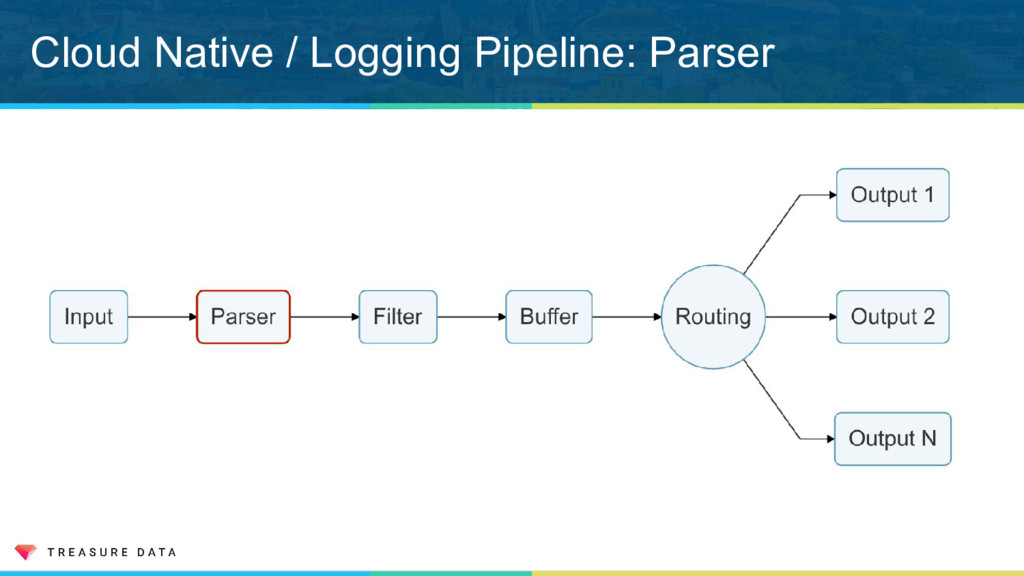
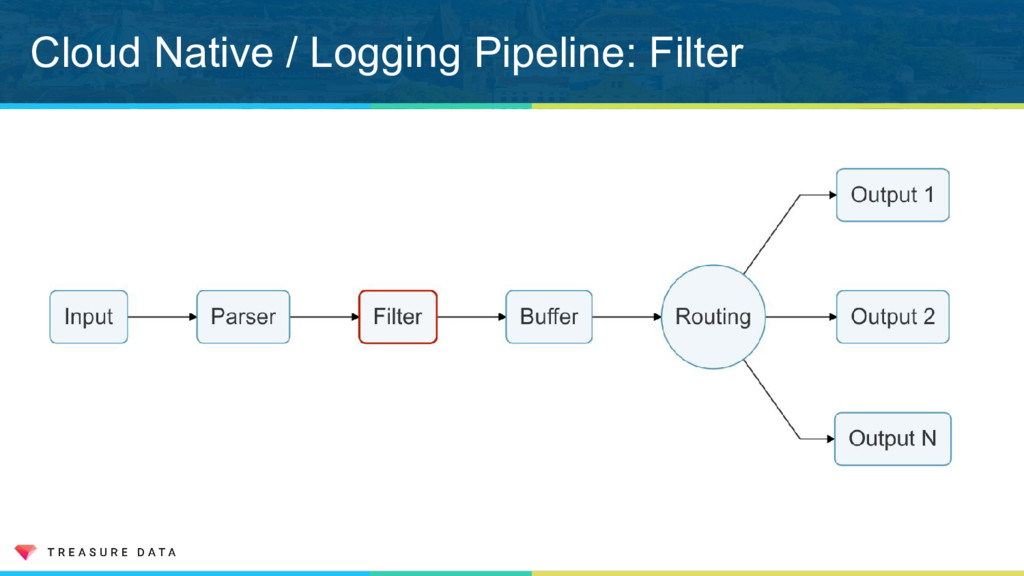
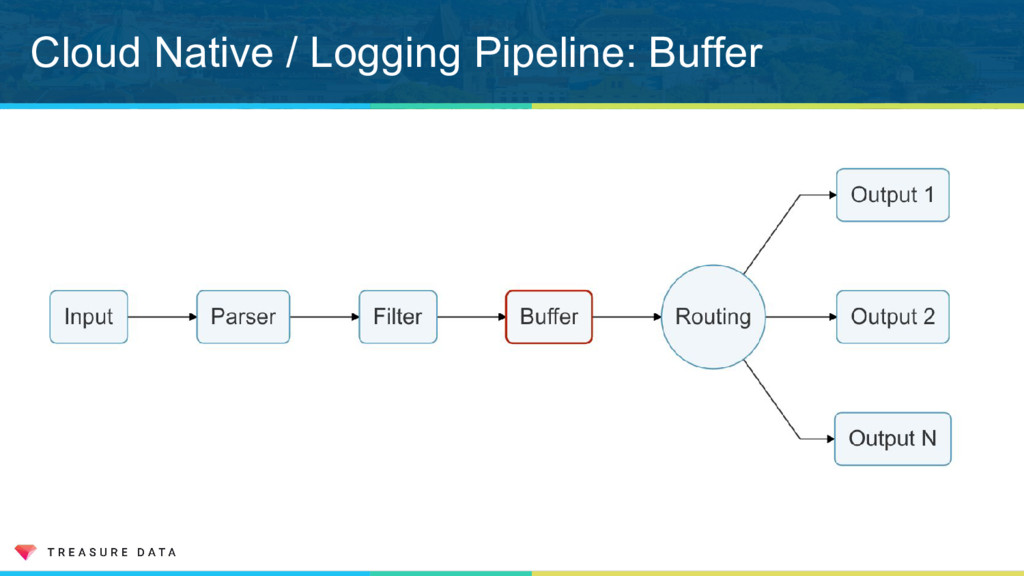
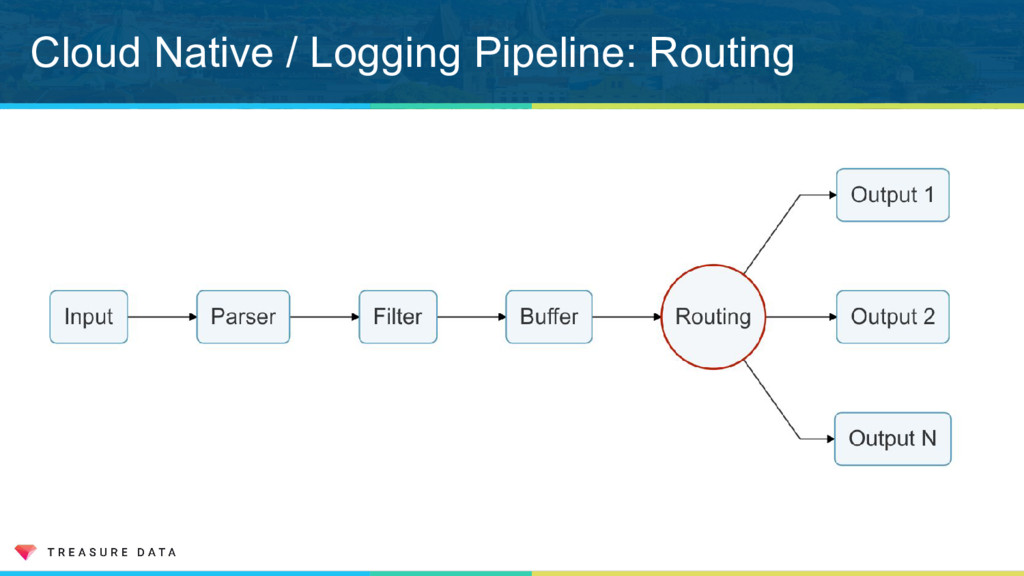
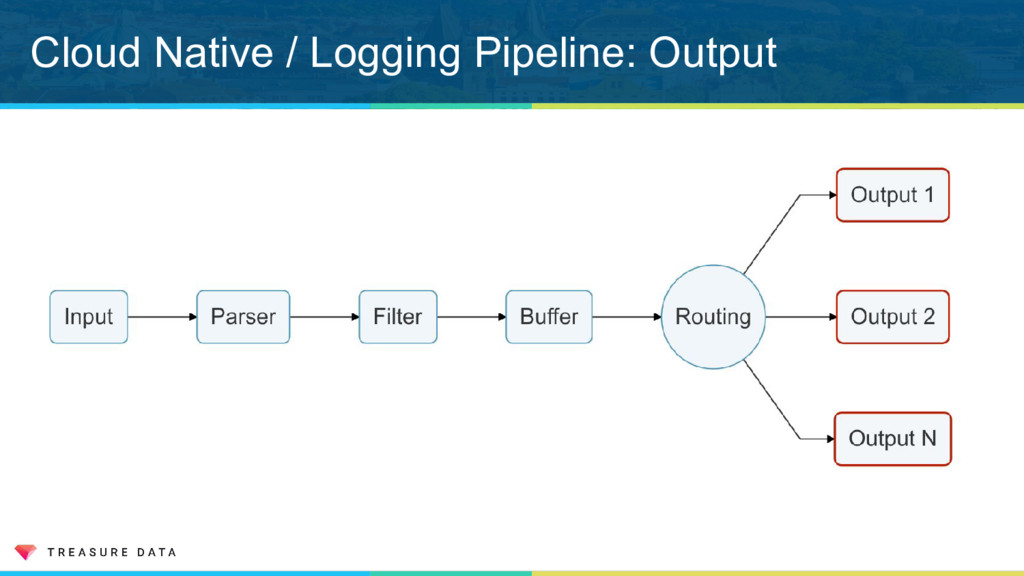
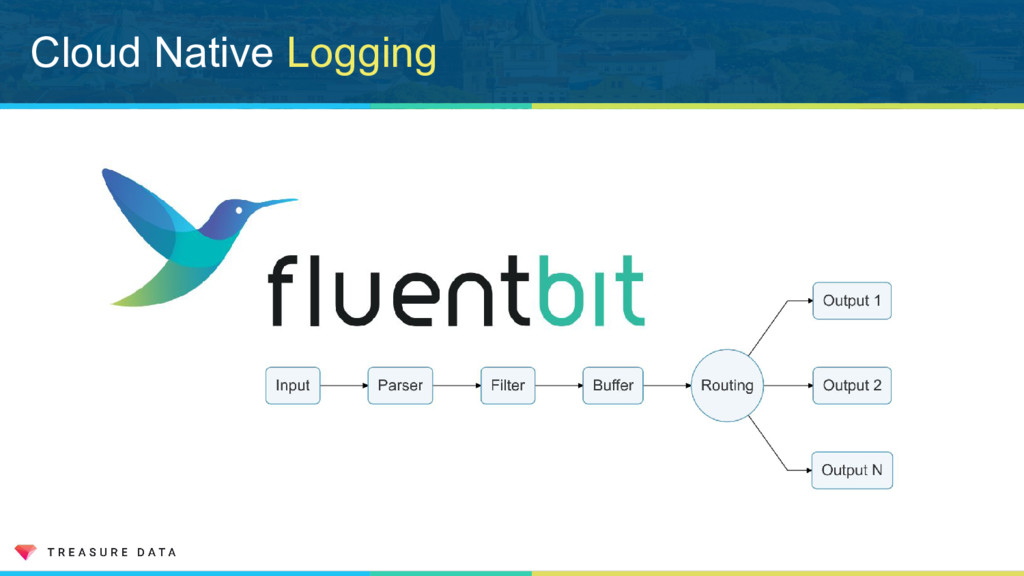
  19. Cloud Native Logging • Logging Pipeline • Aware of Distributed

    Applications • Strategies for Applications at Scale • Unstructured to Structured Logs • Centralize logs in Backends
  20. Cloud Native Logging • CNCF Project • More than 700

    plugins! • Reliable and Secure • Built-in Reliability • Written in Ruby + C
  21. Cloud Native Logging • Feedback: Fluentd is a Cloud Native

    Project, but ◦ “Sometimes we need something lightweight” ◦ “Performance is good, but can we make it better ?” ◦ “I wish features A, B, C…”
  22. Cloud Native Logging • Fluent Bit Highlights ◦ Written in

    C language ◦ Pluggable Architecture (more than 35 plugins) ◦ Async I/O, Event Driven, SSL/TLS, Monitoring...
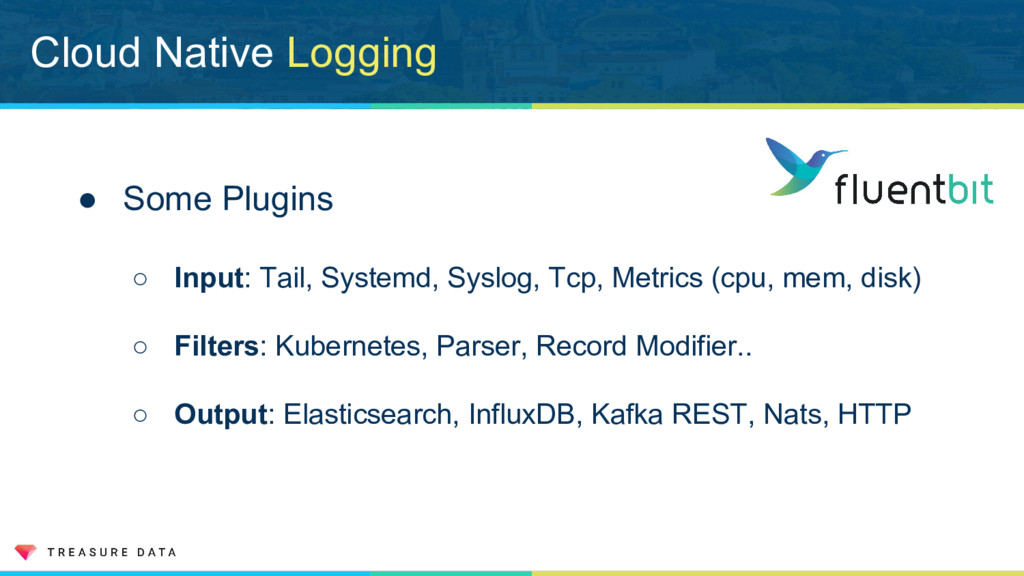
  23. Cloud Native Logging • Some Plugins ◦ Input: Tail, Systemd,

    Syslog, Tcp, Metrics (cpu, mem, disk) ◦ Filters: Kubernetes, Parser, Record Modifier.. ◦ Output: Elasticsearch, InfluxDB, Kafka REST, Nats, HTTP
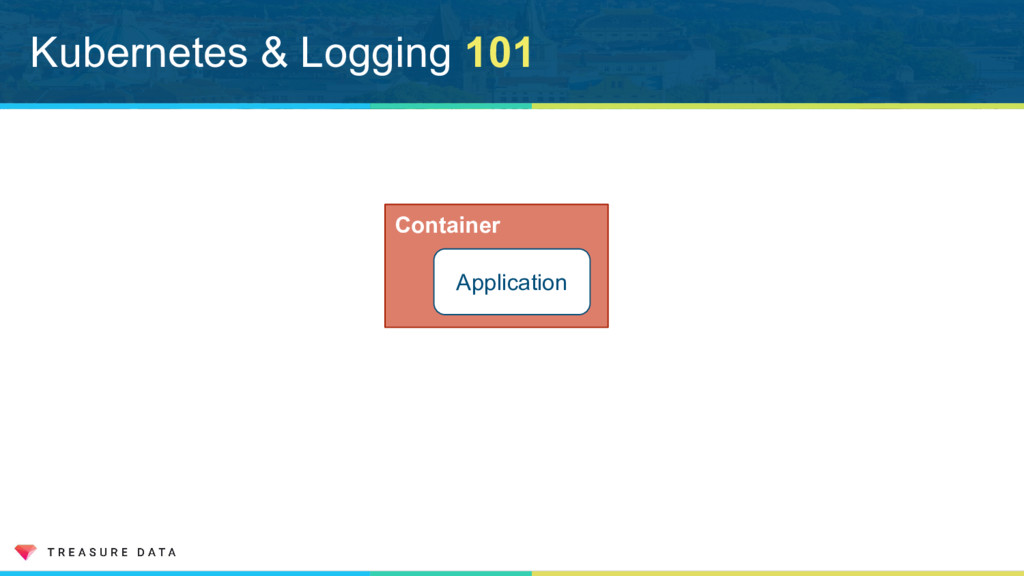
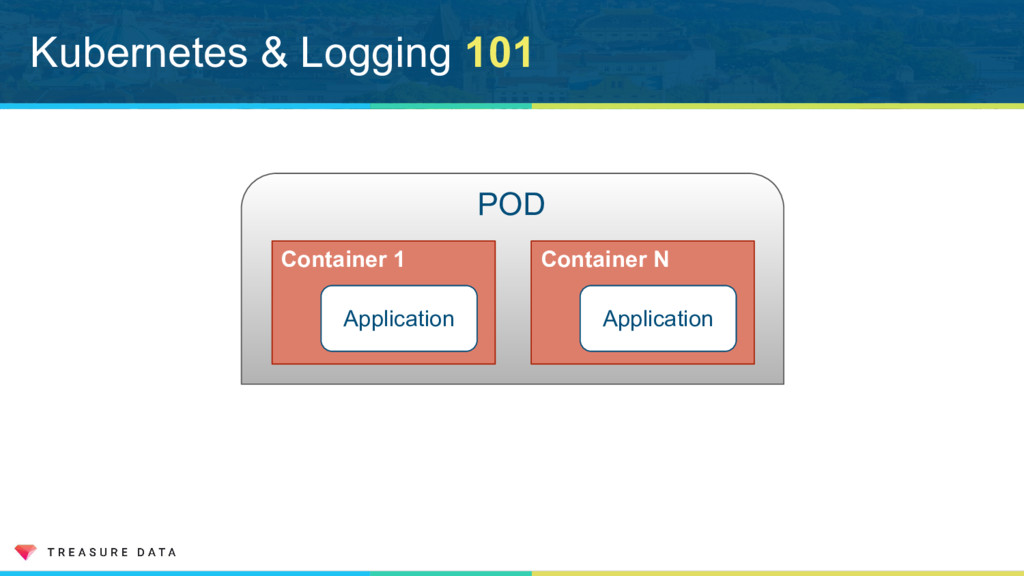
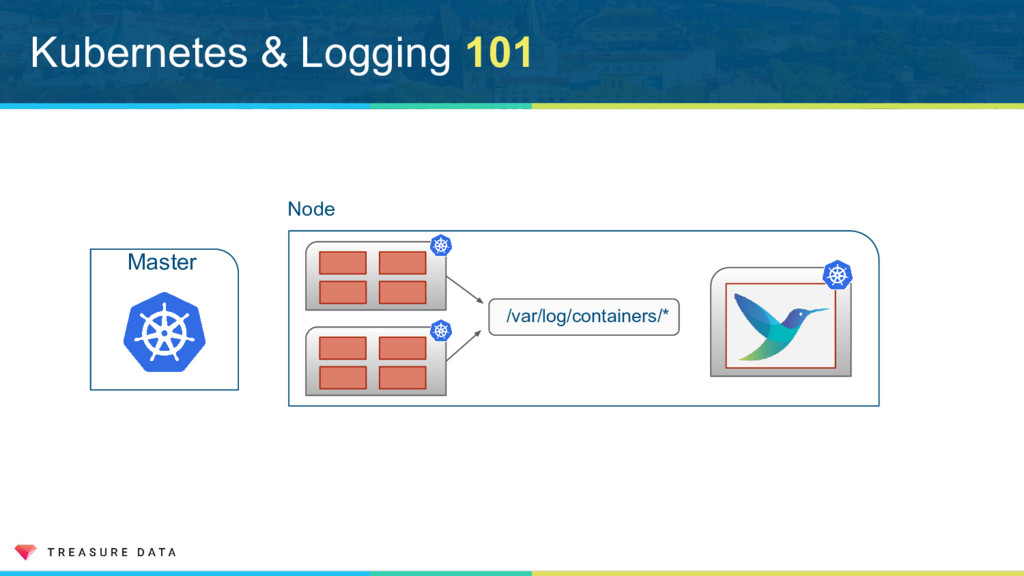
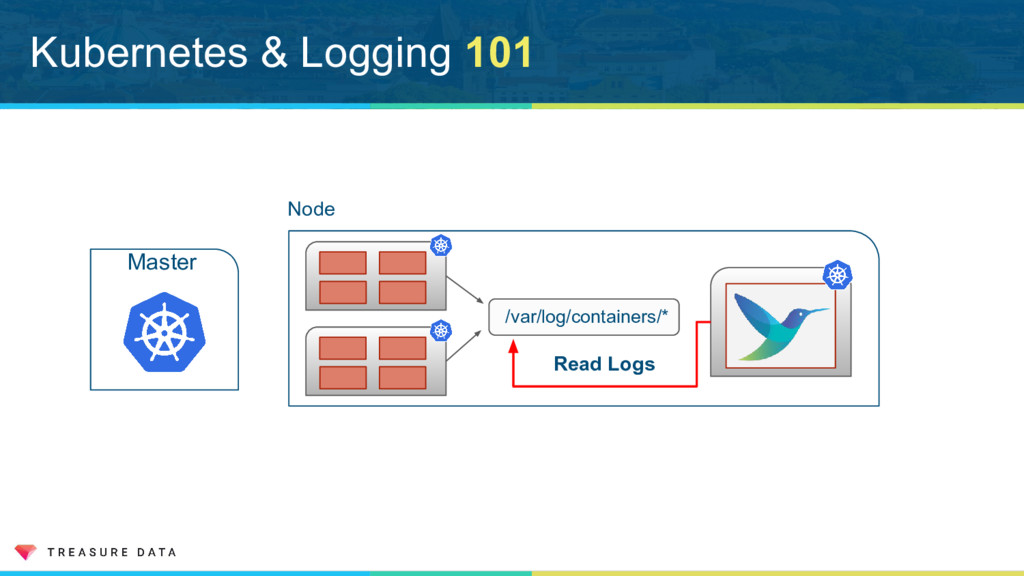
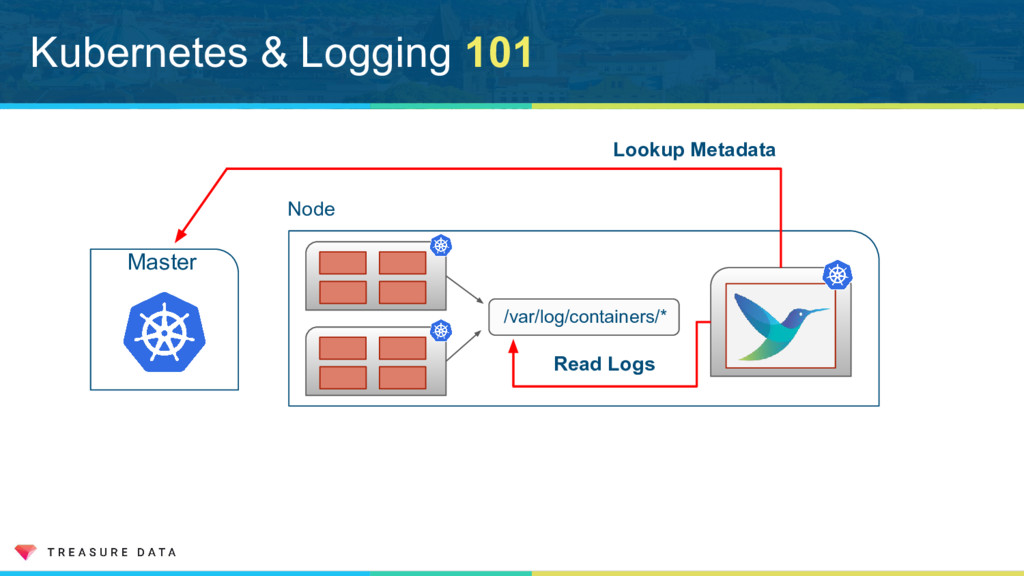
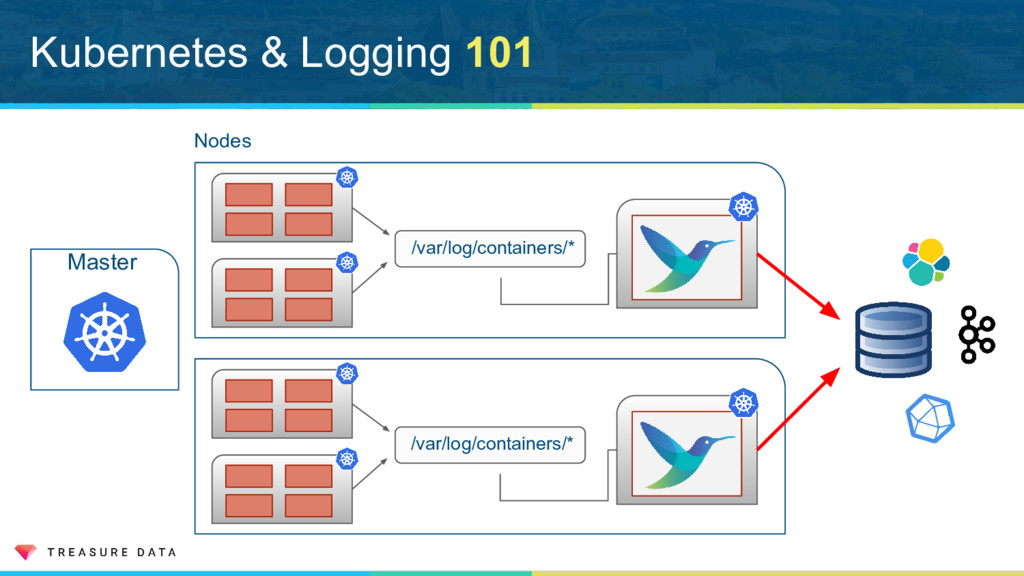
  24. Kubernetes & Logging 101 Application Container 1 Application Container N

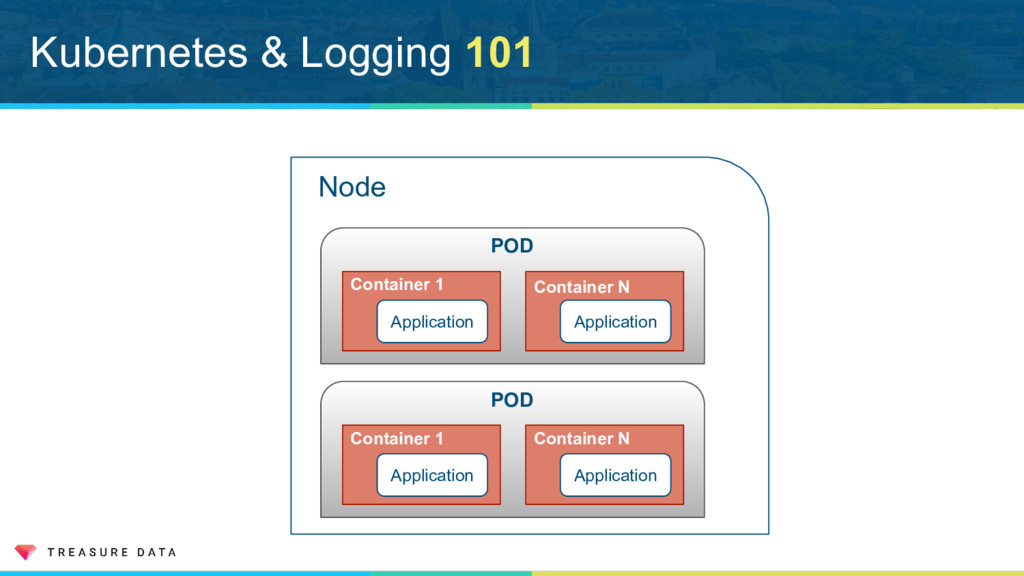
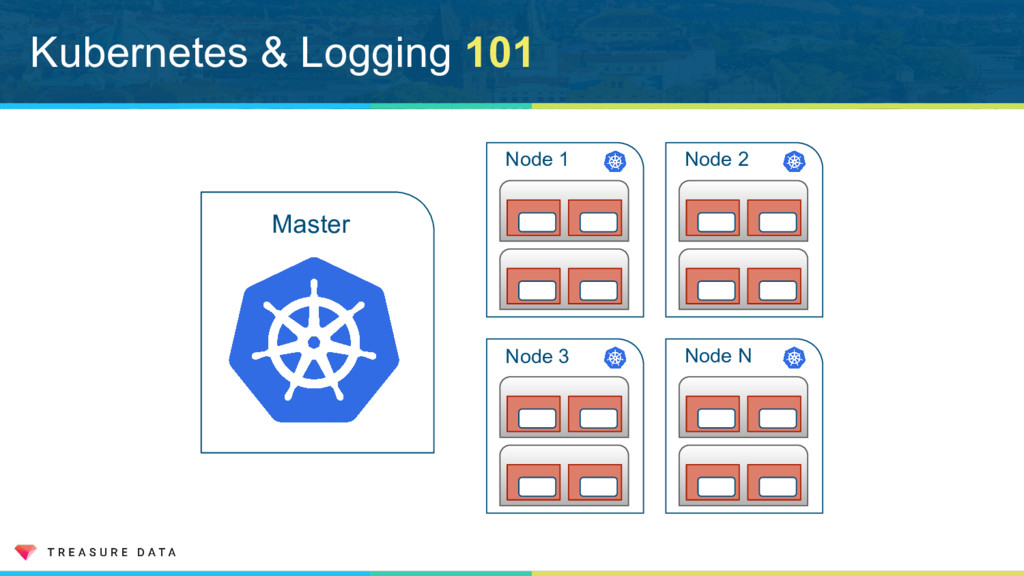
    POD Application Container 1 Application Container N POD Node
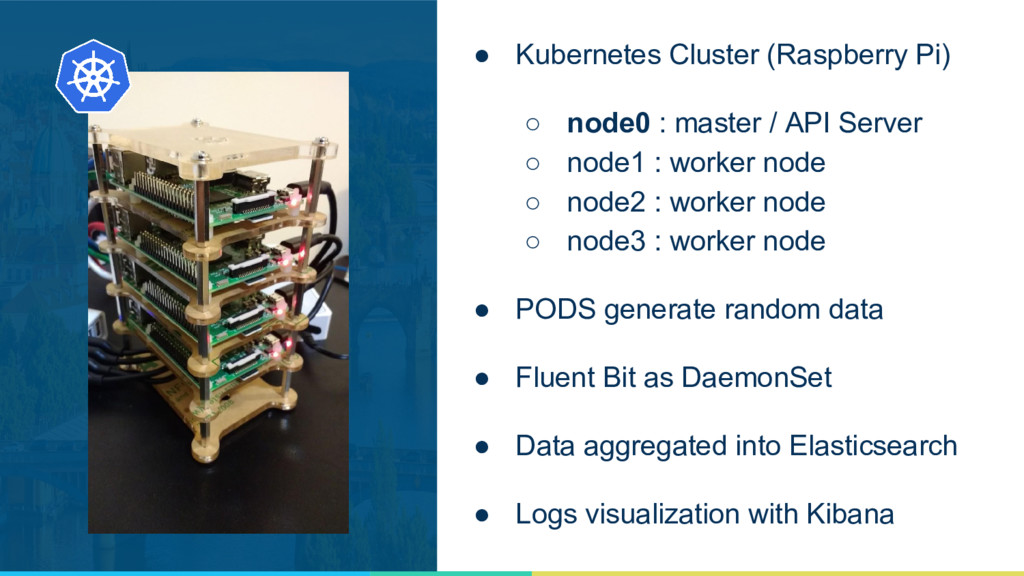
  25. • Kubernetes Cluster (Raspberry Pi) ◦ node0 : master /

    API Server ◦ node1 : worker node ◦ node2 : worker node ◦ node3 : worker node • PODS generate random data • Fluent Bit as DaemonSet • Data aggregated into Elasticsearch • Logs visualization with Kibana