Upgrade to Pro — share decks privately, control downloads, hide ads and more …

Serious Games for Food Waste Reduction

Serious Games for Food Waste Reduction

Serious games are frequently proposed as tools for sustainability education, yet food-waste
interventions often struggle to connect game activity with defensible evidence of real-world change.
Existing studies commonly measure engagement, awareness, or intention, while baseline food-waste
measurement, direct behavioral indicators, environmental conversion, and longitudinal follow-up
remain inconsistent. This doctoral research addresses that limitation by developing an evidence-
grounded methodology for designing and evaluating serious games for household food-waste
reduction. The research combines three strands: a measurement framework for assessing the
evidence quality of food-waste serious games, an infrastructure-aware analysis of municipal collection
contexts, and an empirical study of how adults attribute responsibility and control in household food-
waste situations. Together, these strands will guide the design of a future intervention by linking
behavioral targets to feasible mechanics, telemetry, and evaluation claims. The planned validation
strategy is staged rather than outcome-inflated: a literature-based framework application will identify
evidence gaps; municipal data will define deployment constraints; a vignette-based survey will examine
attribution, perceived behavioral control, intention, and self-reported practices; and a subsequent
prototype/pilot will test feasibility, usability, learning indicators, behavioral proxies, and follow-up
procedures. The expected contribution is a claim-bounded design and evaluation pathway for serious
games in a domain where behavior change depends on both personal agency and contextual
opportunity

Avatar for Ezequiel dos Santos

Ezequiel dos Santos

June 23, 2026

More Decks by Ezequiel dos Santos

Other Decks in Education

Transcript

  1. Funded by the European Union. Views and opinions expressed are

    however those of the author(s) only and do not necessarily reflect those of the European Union or the European Education and Culture Executive Agency (EACEA). Neither the European Union nor EACEA can be held responsible for them. Grant Agreement Number: 101124674 From serious games to measurable food-waste reduction Ezequiel França dos Santos¹²³ Cláudia Sevivas¹² Vítor Hugo Mendes da Costa Carvalho³⁴ ¹ IADE – Faculty of Design, Technology and Communication, European University, Lisbon, Portugal ² UNIDCOM/IADE – Research Unit in Design and Communication, Lisbon, Portugal ³ 2Ai – School of Technology, Polytechnic Institute of Cávado and Ave (IPCA), 4750-810 Barcelos, Portugal ⁴ LASI – Associate Laboratory of Intelligent Systems, 4800-058 Guimarães, Portugal
  2. Funded by the European Union. Views and opinions expressed are

    however those of the author(s) only and do not necessarily reflect those of the European Union or the European Education and Culture Executive Agency (EACEA). Neither the European Union nor EACEA can be held responsible for them. Grant Agreement Number: 101124674 • Food waste is large and measurable: UNEP estimates 1.05 billion tonnes in 2022, with households responsible for 60%. • Household waste is behavioral and systemic: planning, storage, labels, packages, schedules, and uncertainty interact. • The PhD question is not only whether games engage users, but whether they can support measurable waste reduction. • Scope: consumer and household food waste, while SG-FLW keeps the wider food loss and waste measurement chain explicit. Problem and Scope
  3. Funded by the European Union. Views and opinions expressed are

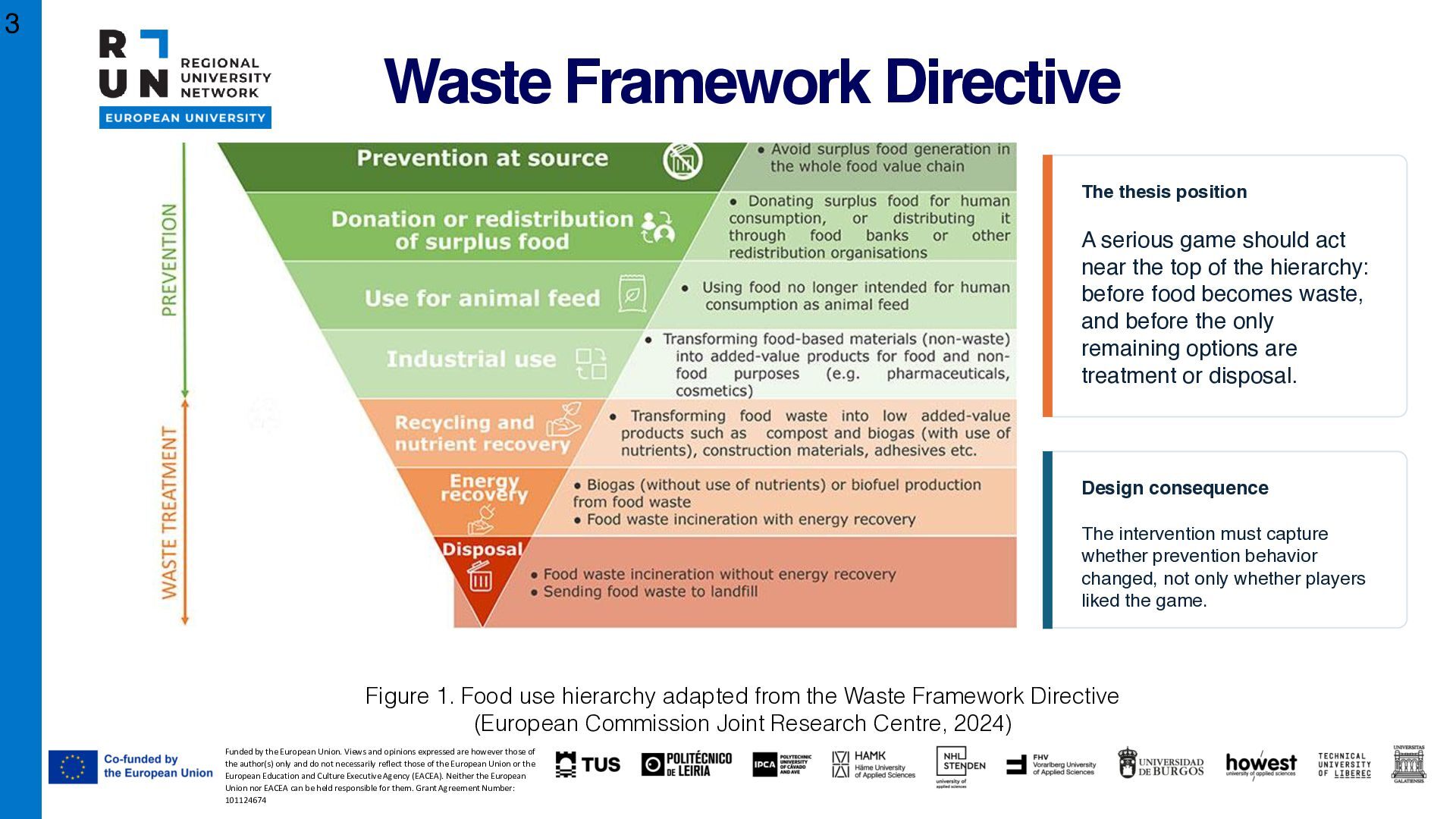
    however those of the author(s) only and do not necessarily reflect those of the European Union or the European Education and Culture Executive Agency (EACEA). Neither the European Union nor EACEA can be held responsible for them. Grant Agreement Number: 101124674 3 The thesis position A serious game should act near the top of the hierarchy: before food becomes waste, and before the only remaining options are treatment or disposal. Design consequence The intervention must capture whether prevention behavior changed, not only whether players liked the game. Figure 1. Food use hierarchy adapted from the Waste Framework Directive (European Commission Joint Research Centre, 2024) Waste Framework Directive
  4. Funded by the European Union. Views and opinions expressed are

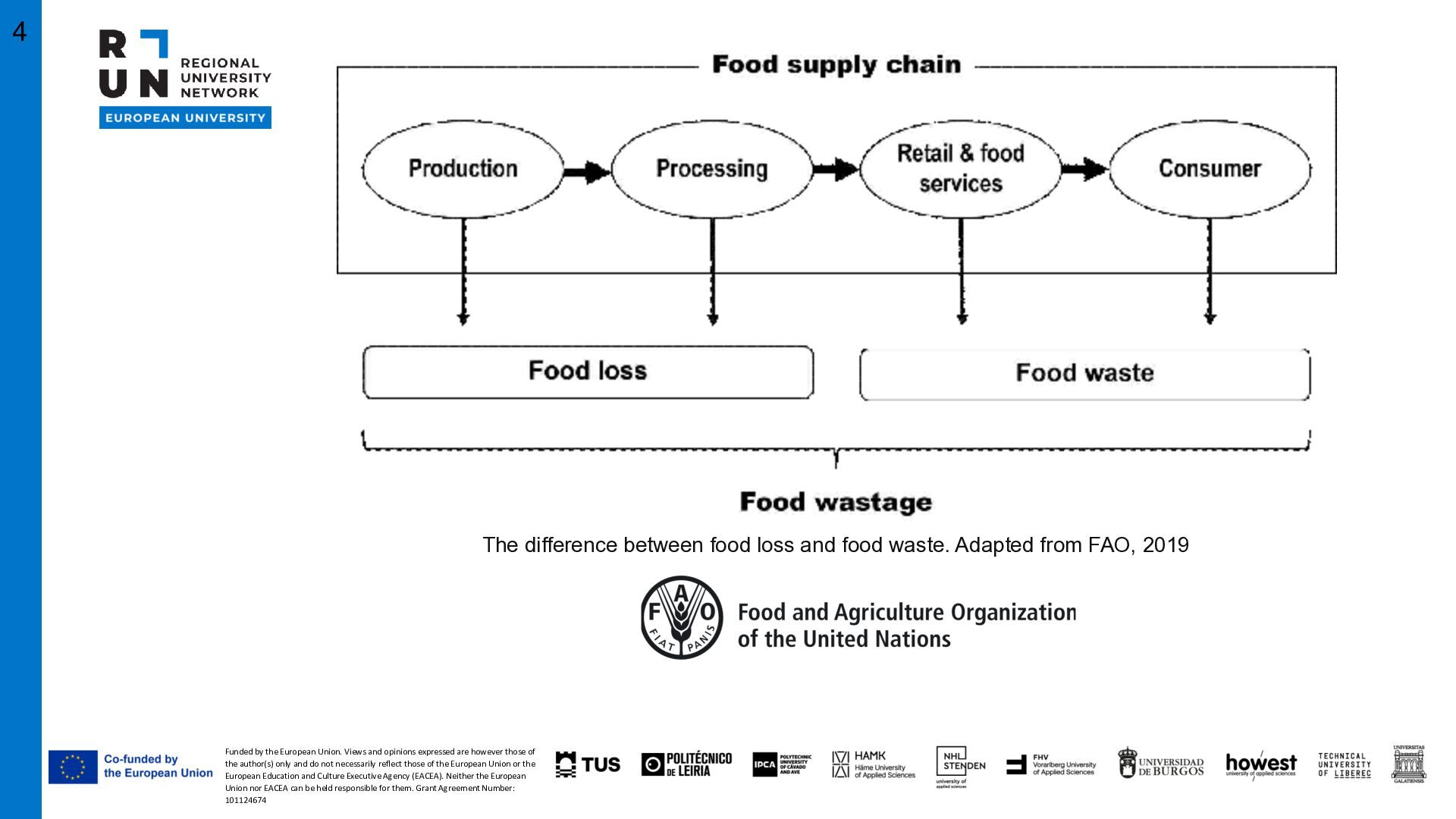
    however those of the author(s) only and do not necessarily reflect those of the European Union or the European Education and Culture Executive Agency (EACEA). Neither the European Union nor EACEA can be held responsible for them. Grant Agreement Number: 101124674 4 The difference between food loss and food waste. Adapted from FAO, 2019
  5. Funded by the European Union. Views and opinions expressed are

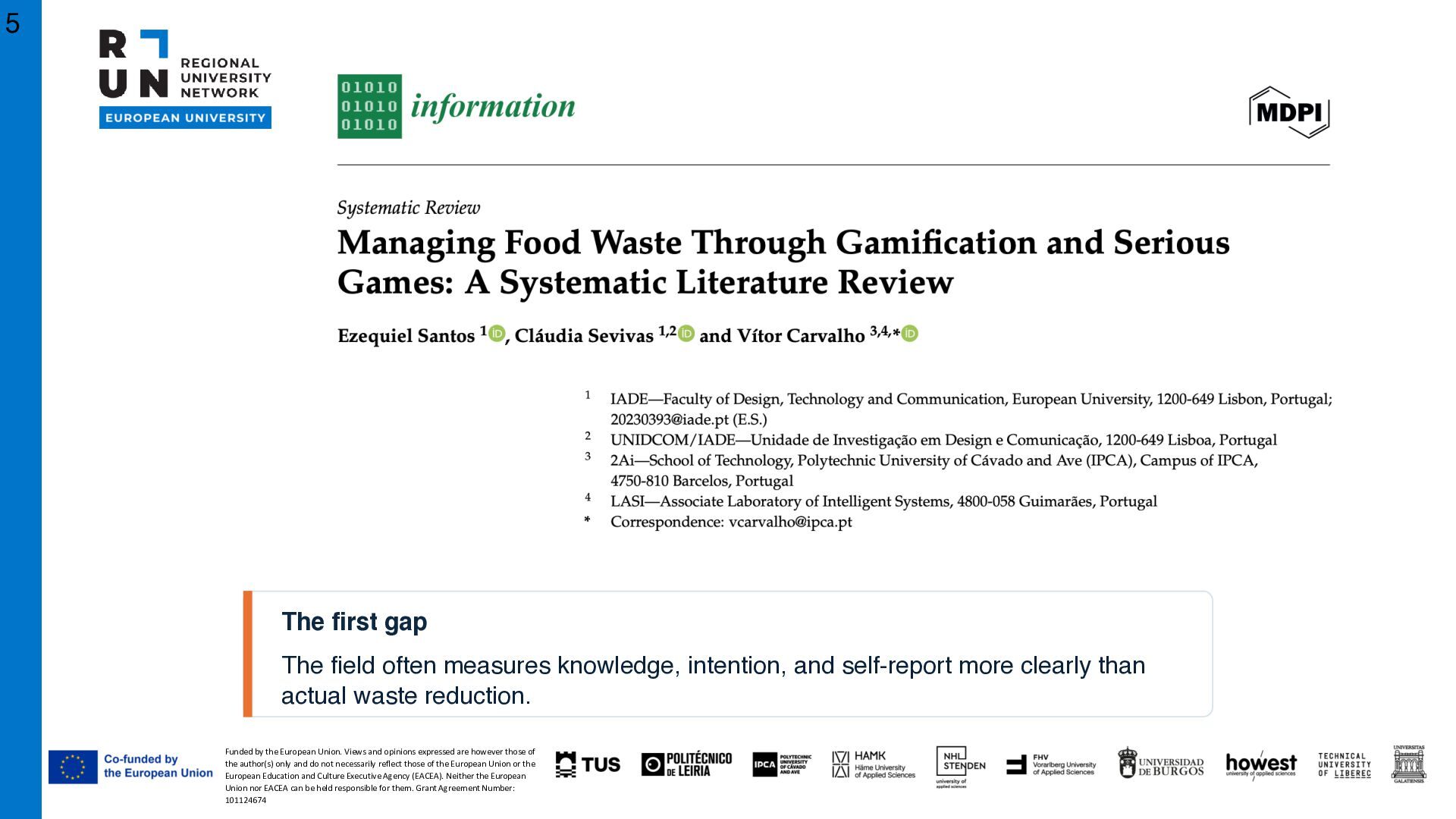
    however those of the author(s) only and do not necessarily reflect those of the European Union or the European Education and Culture Executive Agency (EACEA). Neither the European Union nor EACEA can be held responsible for them. Grant Agreement Number: 101124674 5 The first gap The field often measures knowledge, intention, and self-report more clearly than actual waste reduction.
  6. Funded by the European Union. Views and opinions expressed are

    however those of the author(s) only and do not necessarily reflect those of the European Union or the European Education and Culture Executive Agency (EACEA). Neither the European Union nor EACEA can be held responsible for them. Grant Agreement Number: 101124674 • Mapped how gamification and serious games address household food waste. • The field uses apps, serious games, educational platforms, installations, feedback, challenges, and tracking. • Most evidence is easier to compare for awareness, knowledge, engagement, intentions, and self-reported practices. • The review creates the first PhD pivot: stronger measurement is needed before claiming sustained food-waste reduction. Completed: Systematic Literature Review
  7. Funded by the European Union. Views and opinions expressed are

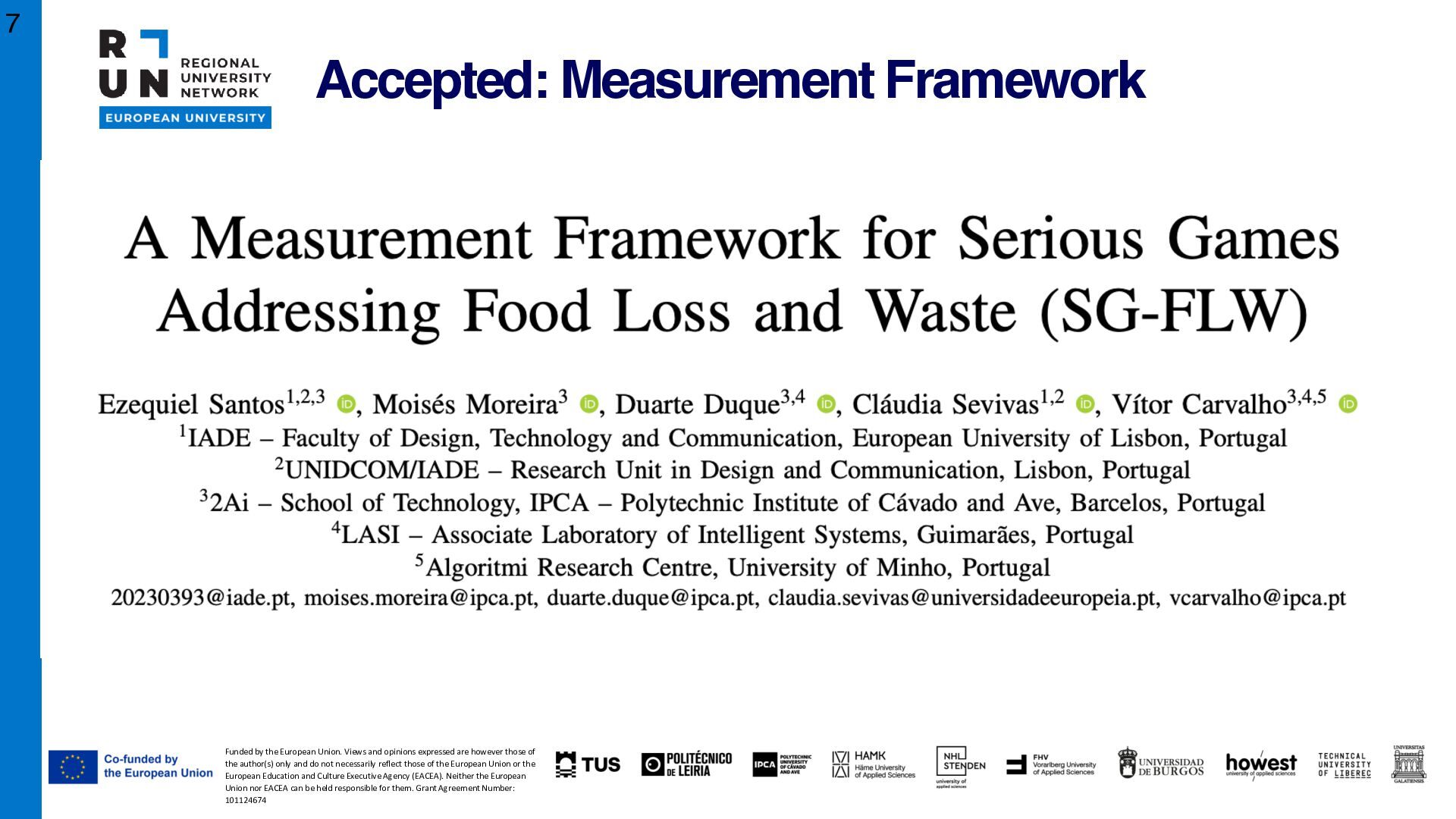
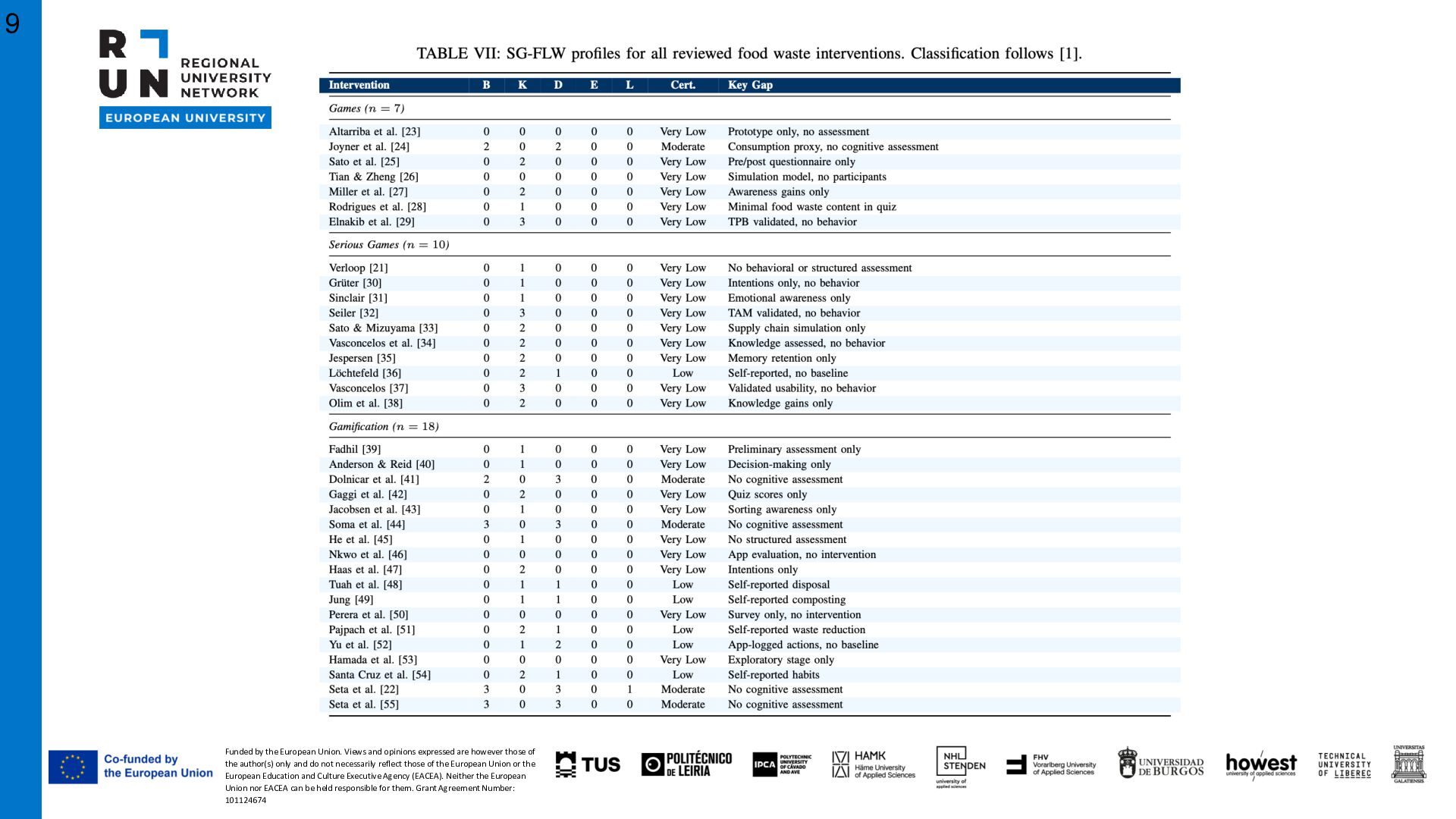
    however those of the author(s) only and do not necessarily reflect those of the European Union or the European Education and Culture Executive Agency (EACEA). Neither the European Union nor EACEA can be held responsible for them. Grant Agreement Number: 101124674 7 Accepted: Measurement Framework
  8. Funded by the European Union. Views and opinions expressed are

    however those of the author(s) only and do not necessarily reflect those of the European Union or the European Education and Culture Executive Agency (EACEA). Neither the European Union nor EACEA can be held responsible for them. Grant Agreement Number: 101124674 8
  9. Funded by the European Union. Views and opinions expressed are

    however those of the author(s) only and do not necessarily reflect those of the European Union or the European Education and Culture Executive Agency (EACEA). Neither the European Union nor EACEA can be held responsible for them. Grant Agreement Number: 101124674 9
  10. Funded by the European Union. Views and opinions expressed are

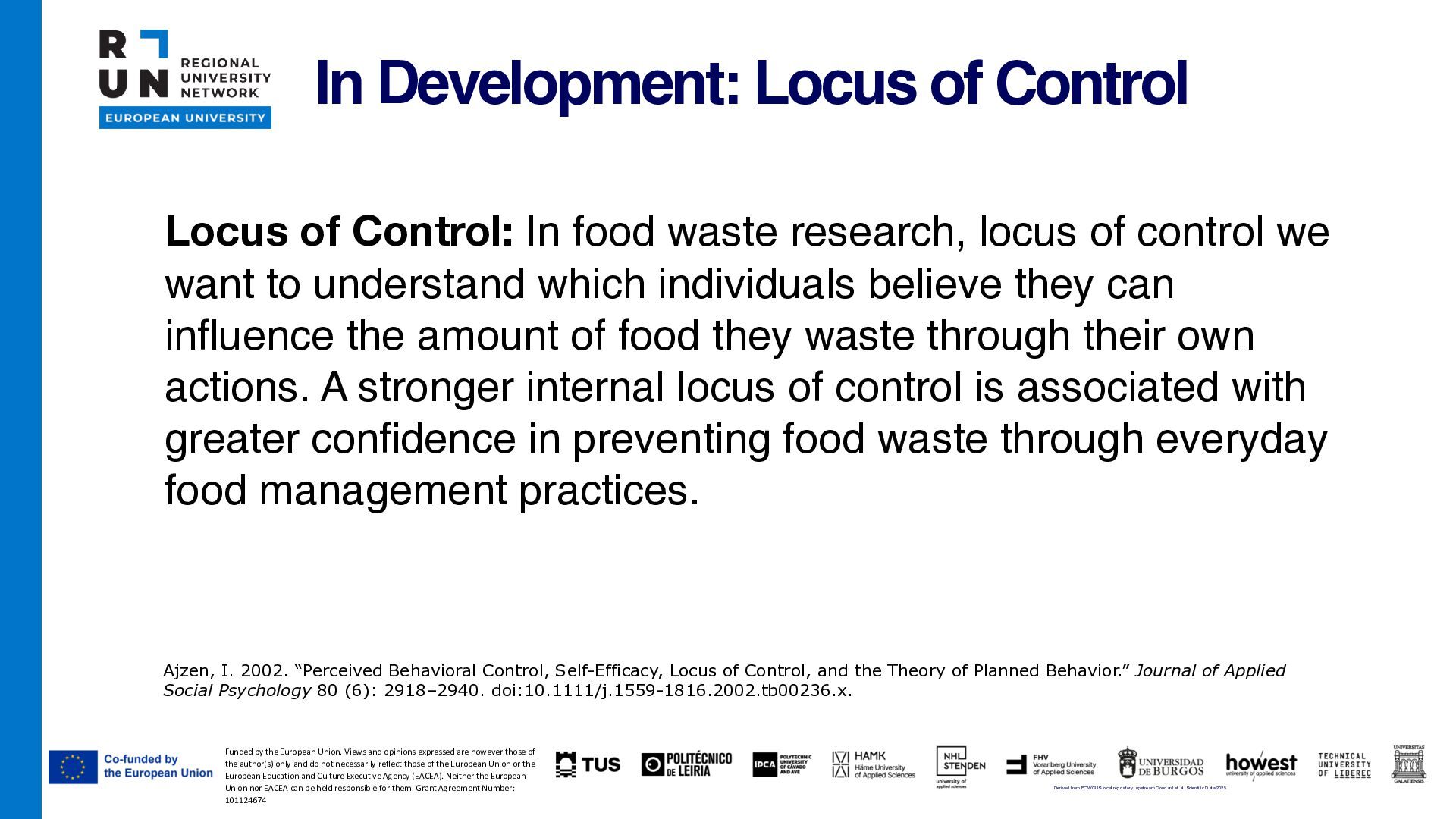
    however those of the author(s) only and do not necessarily reflect those of the European Union or the European Education and Culture Executive Agency (EACEA). Neither the European Union nor EACEA can be held responsible for them. Grant Agreement Number: 101124674 Derived from FOWCUS local repository; upstream Coudard et al. Scientific Data 2025. In Development: Locus of Control Locus of Control: In food waste research, locus of control we want to understand which individuals believe they can influence the amount of food they waste through their own actions. A stronger internal locus of control is associated with greater confidence in preventing food waste through everyday food management practices. Ajzen, I. 2002. “Perceived Behavioral Control, Self-Efficacy, Locus of Control, and the Theory of Planned Behavior.” Journal of Applied Social Psychology 80 (6): 2918–2940. doi:10.1111/j.1559-1816.2002.tb00236.x.
  11. Funded by the European Union. Views and opinions expressed are

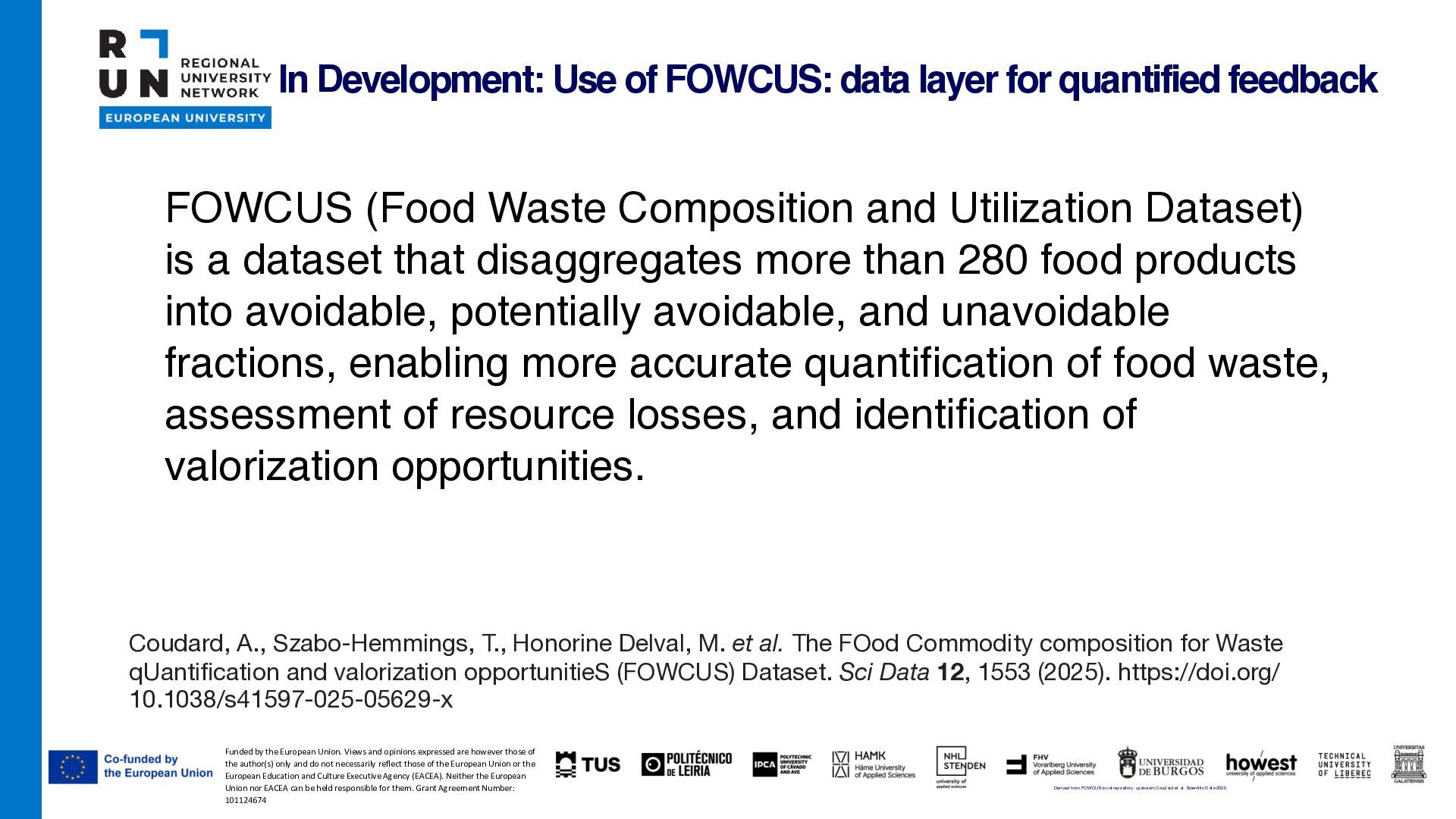
    however those of the author(s) only and do not necessarily reflect those of the European Union or the European Education and Culture Executive Agency (EACEA). Neither the European Union nor EACEA can be held responsible for them. Grant Agreement Number: 101124674 Derived from FOWCUS local repository; upstream Coudard et al. Scientific Data 2025. In Development: Use of FOWCUS: data layer for quantified feedback FOWCUS (Food Waste Composition and Utilization Dataset) is a dataset that disaggregates more than 280 food products into avoidable, potentially avoidable, and unavoidable fractions, enabling more accurate quantification of food waste, assessment of resource losses, and identification of valorization opportunities. Coudard, A., Szabo-Hemmings, T., Honorine Delval, M. et al. The FOod Commodity composition for Waste qUanti fi cation and valorization opportunitieS (FOWCUS) Dataset. Sci Data 12, 1553 (2025). https://doi.org/ 10.1038/s41597-025-05629-x
  12. Funded by the European Union. Views and opinions expressed are

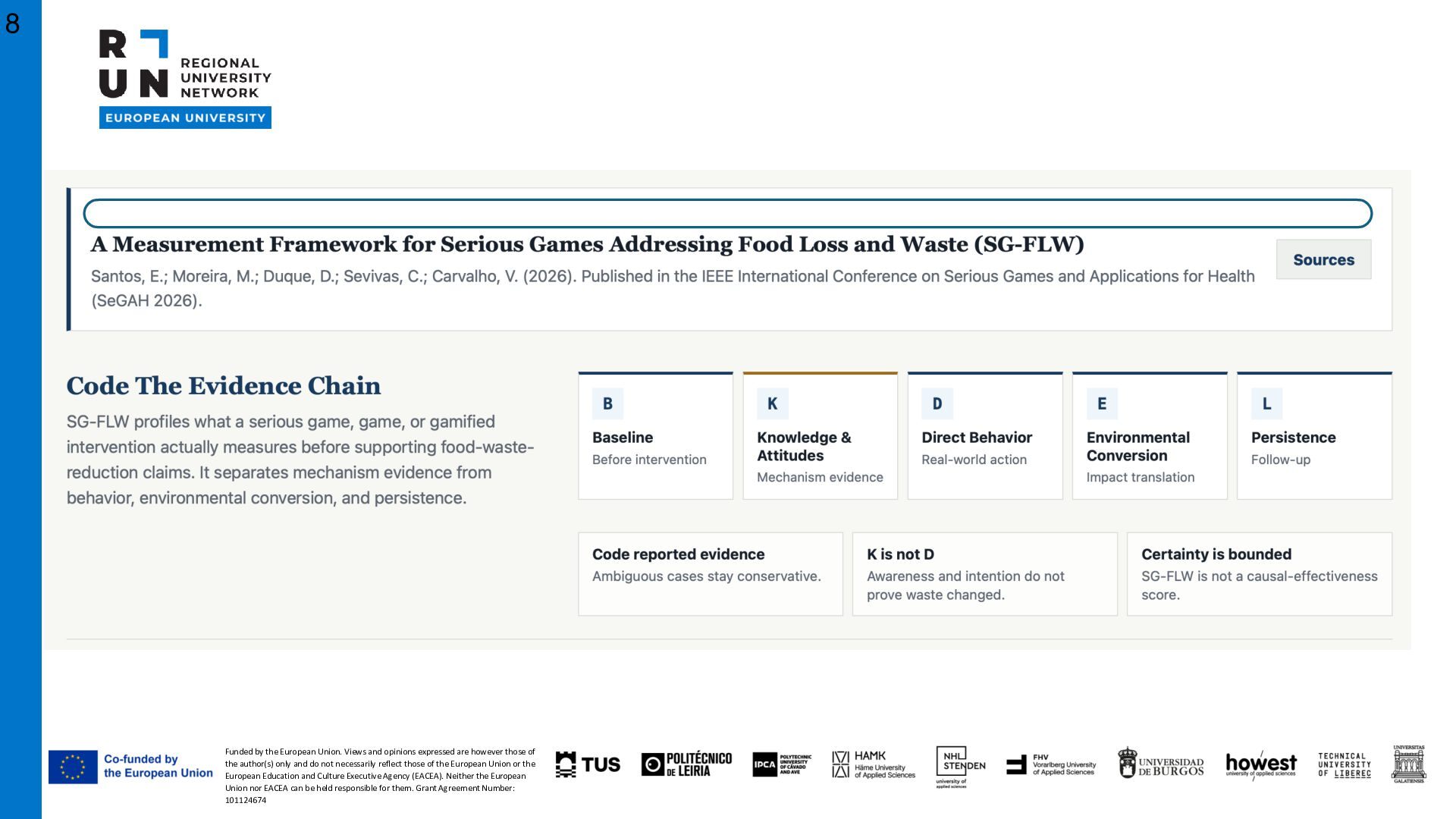
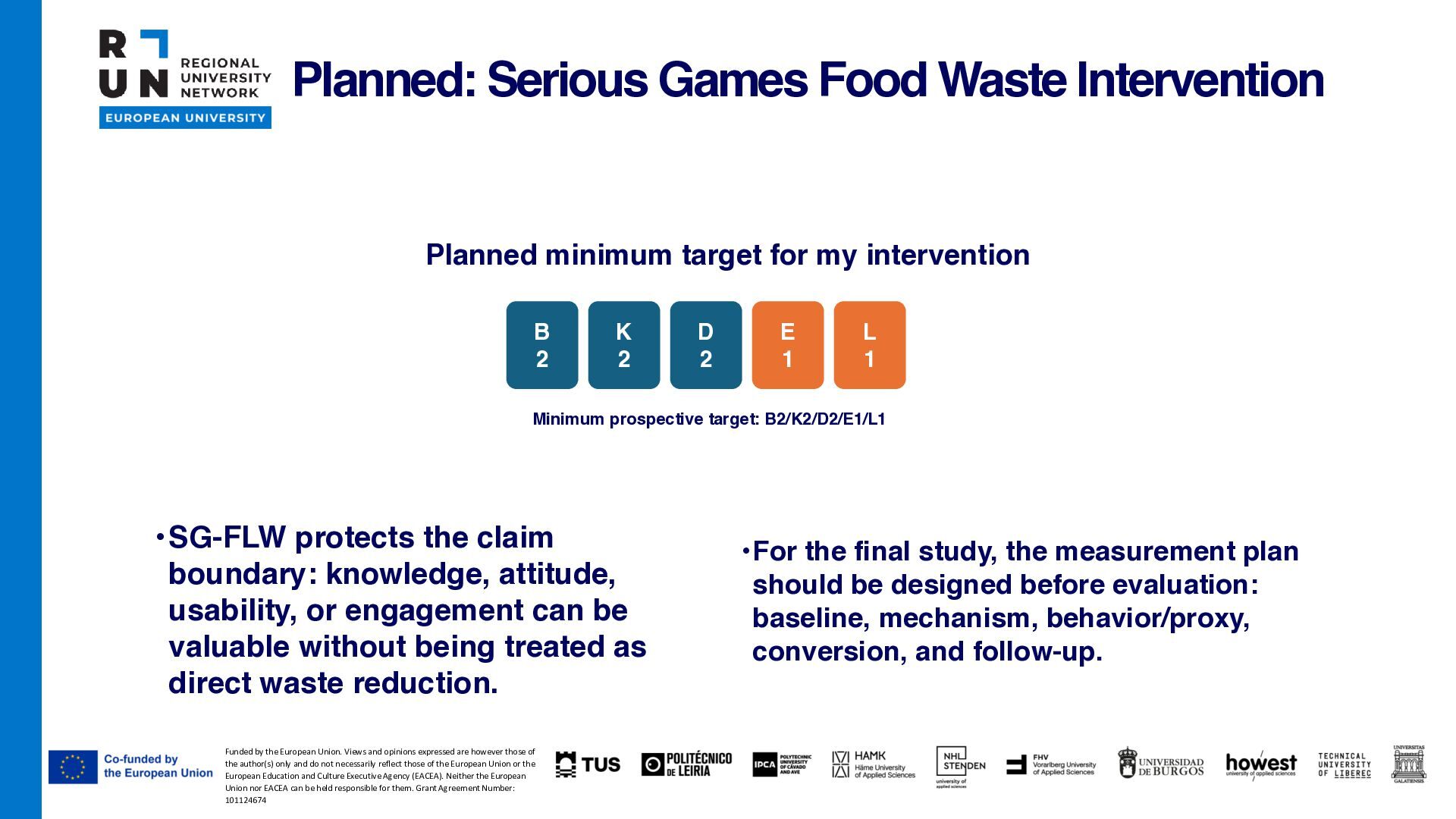
    however those of the author(s) only and do not necessarily reflect those of the European Union or the European Education and Culture Executive Agency (EACEA). Neither the European Union nor EACEA can be held responsible for them. Grant Agreement Number: 101124674 •For the final study, the measurement plan should be designed before evaluation: baseline, mechanism, behavior/proxy, conversion, and follow-up. •SG-FLW protects the claim boundary: knowledge, attitude, usability, or engagement can be valuable without being treated as direct waste reduction. Planned: Serious Games Food Waste Intervention Planned minimum target for my intervention B 2 K 2 D 2 E 1 L 1 Minimum prospective target: B2/K2/D2/E1/L1