Upgrade to Pro — share decks privately, control downloads, hide ads and more …

No More "Someone Else’s Problem", Tackling Tech...

No More "Someone Else’s Problem", Tackling Tech Debt at Scale

When 50+ Android engineers contribute to a rapidly growing codebase, technical debt and executing migrations becomes an organizational challenge.
At Qonto, we transformed our tech debt management by moving from vague group responsibility to empowering teams with a way to visualize and prioritize their debt, turning "someone should fix this" into "we’re on it."
In this talk, you'll learn how we:
- Built a first prototype in just one month with a single engineer without any new new tools, just clever use of existing
- Integrated it into our day-to-day processes, making tech health a routine
- Designed a Health Score that teams actually want to improve
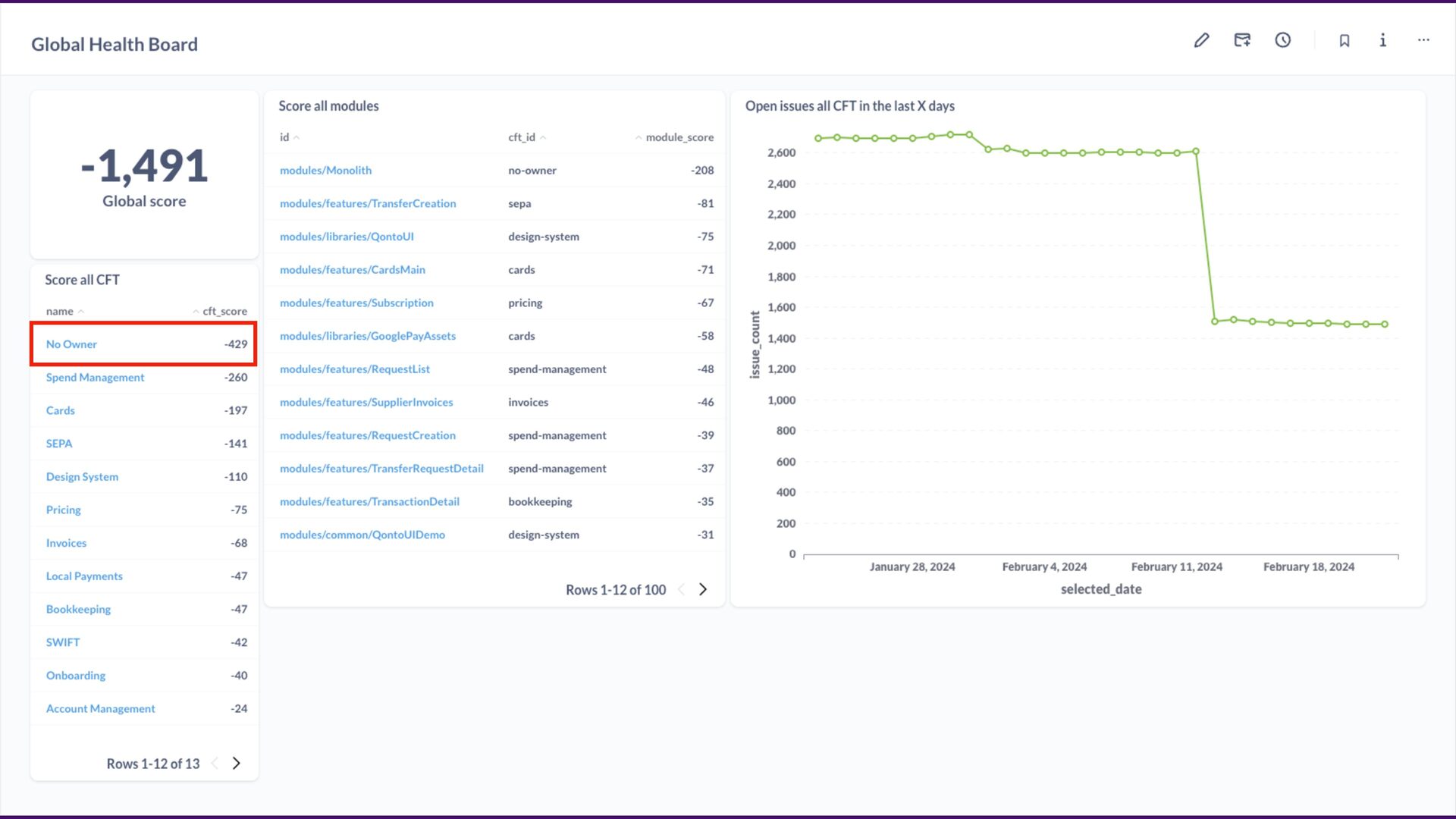
- Orchestrated large-scale migrations with real-time tracking, no more guessing “are we there yet?”
- Made debt reduction engaging with intuitive tooling and team-specific dashboards
- Expanded the playbook to tackle dependency updates, flaky tests, and beyond

We’ll also share hard-earned lessons and take a sneak peek at what's next.
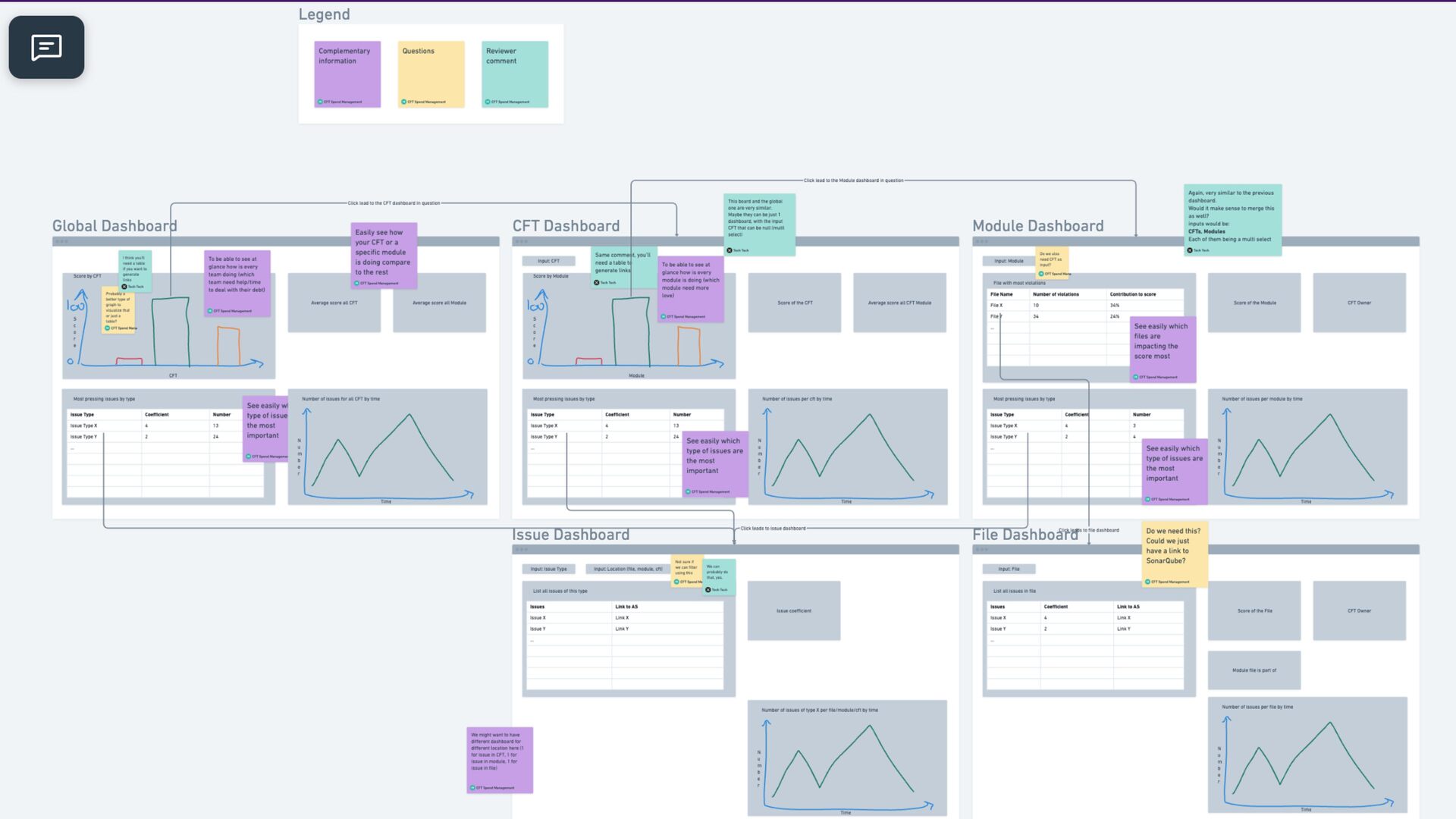
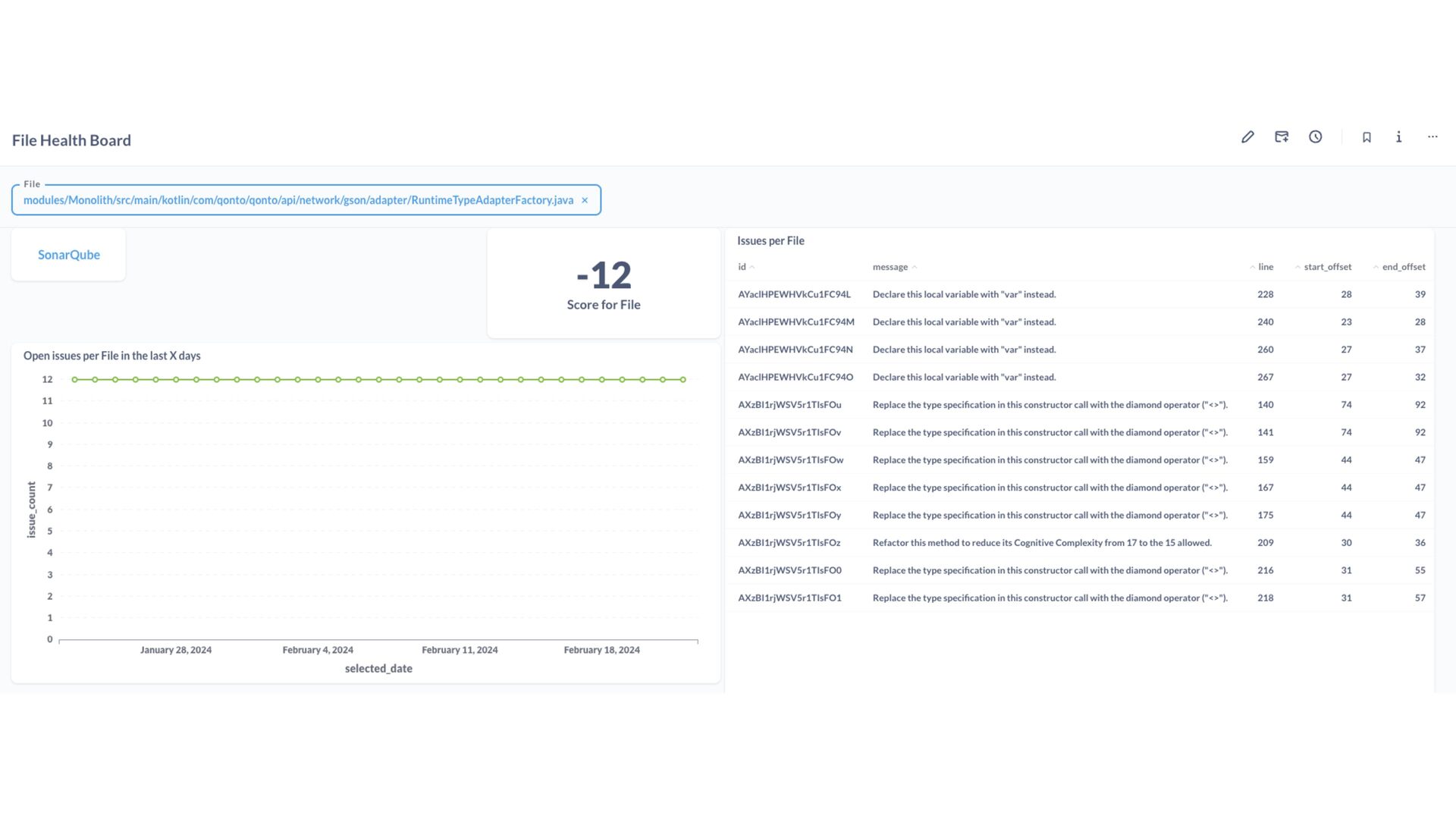
Join us to see how teams like yours can cut tech debt while boosting ownership, starting with what’s already in your toolkit.

Avatar for Florian Mierzejewski

Florian Mierzejewski

January 08, 2025

More Decks by Florian Mierzejewski

Other Decks in Programming
Transcript

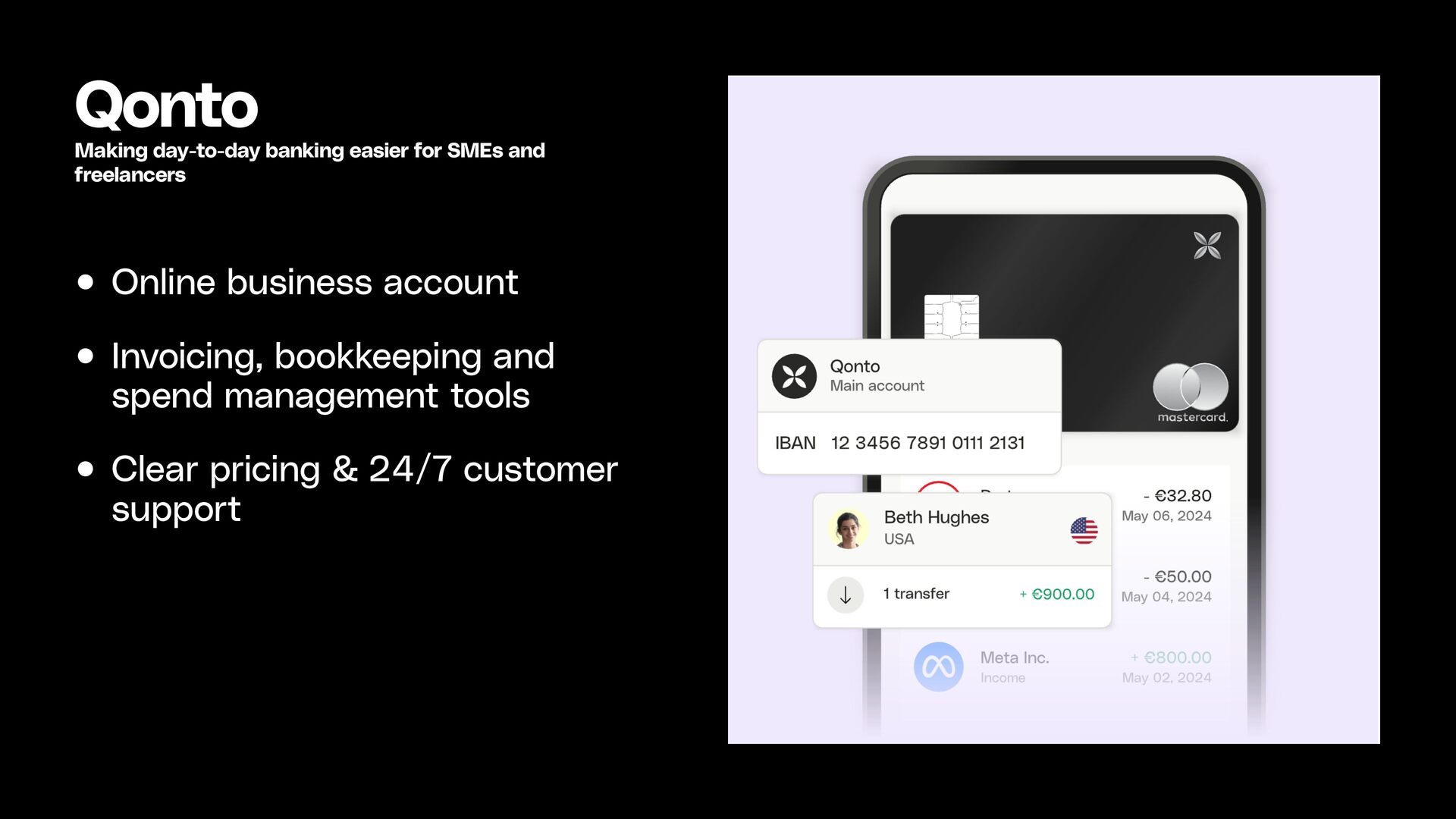
  1. Qonto Making day-to-day banking easier for SMEs and freelancers •

    Online business account • Invoicing, bookkeeping and spend management tools • Clear pricing & 24/7 customer support
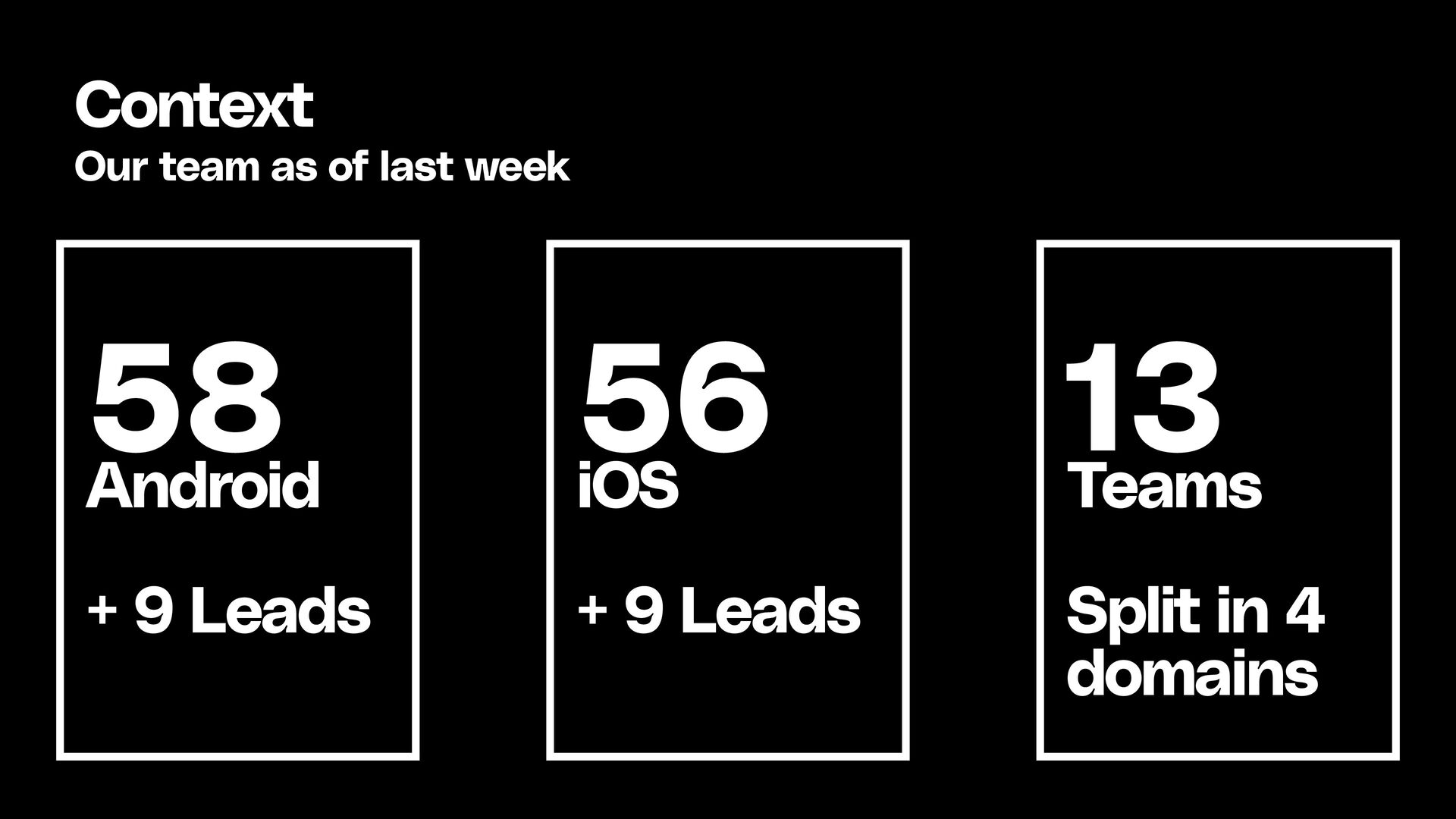
  2. Context Our team as of last week 58 Android 56

    iOS 13 Teams + 9 Leads + 9 Leads Split in 4 domains
  3. Context Scaling Up • Not a start-up anymore • But

    also far from Big Tech • Slowly hitting scaling issues →
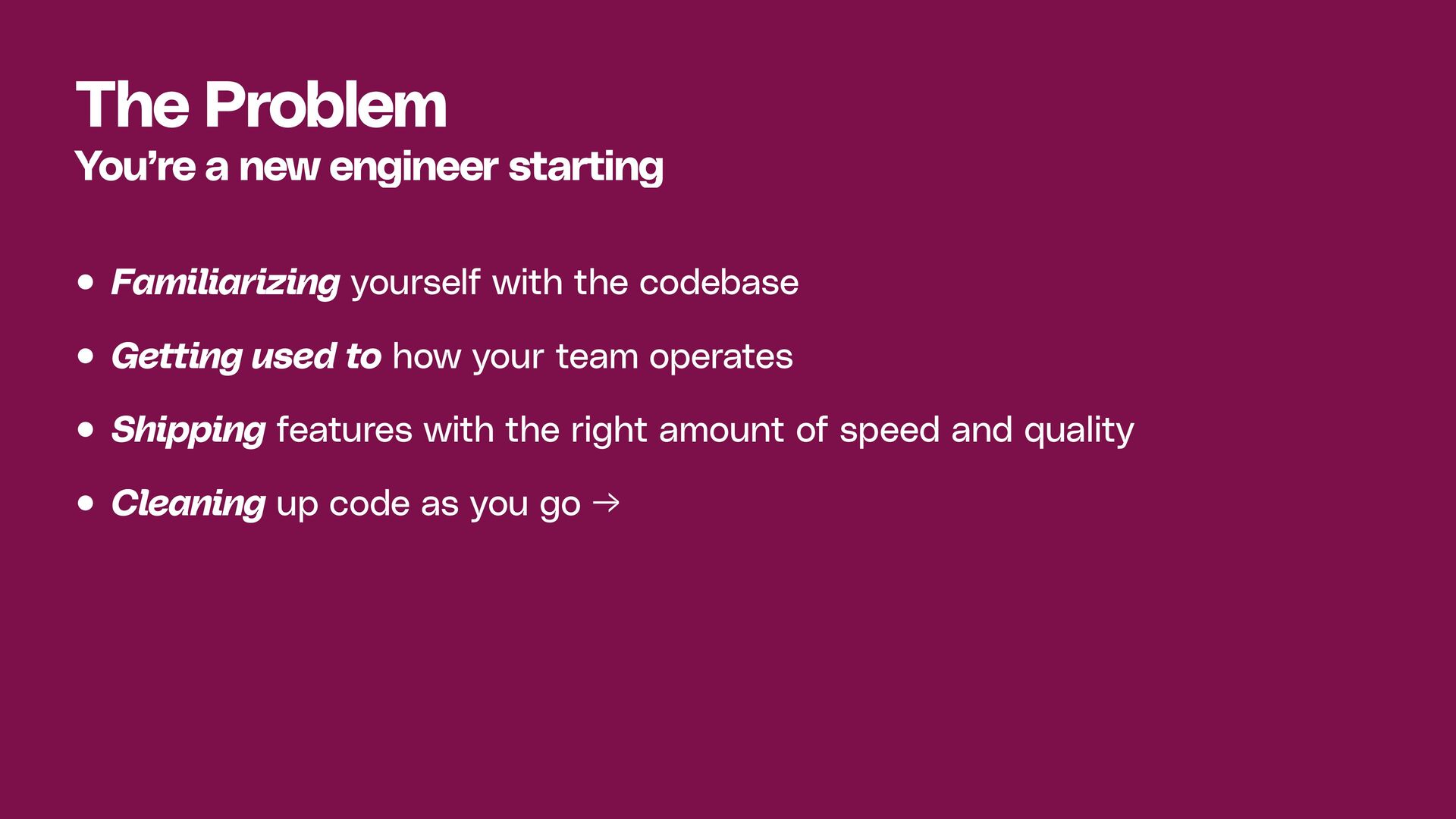
  4. The Problem You’re a new engineer starting • Familiarizing yourself

    with the codebase • Getting used to how your team operates • Shipping features with the right amount of speed and quality • Cleaning up code as you go →
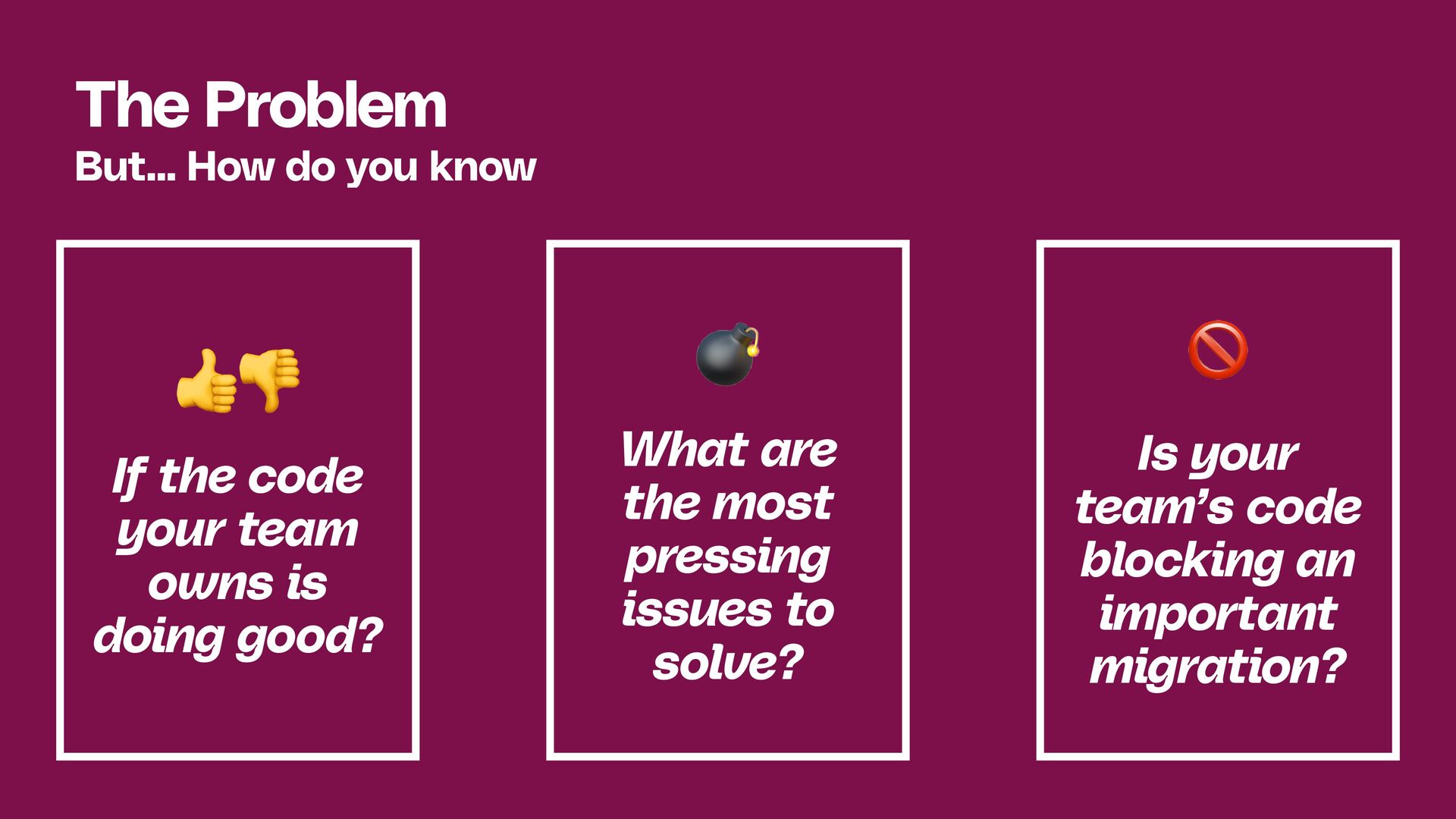
  5. The Problem But… How do you know 👍👎 If the

    code your team owns is doing good? 💣 🚫 What are the most pressing issues to solve? Is your team’s code blocking an important migration?
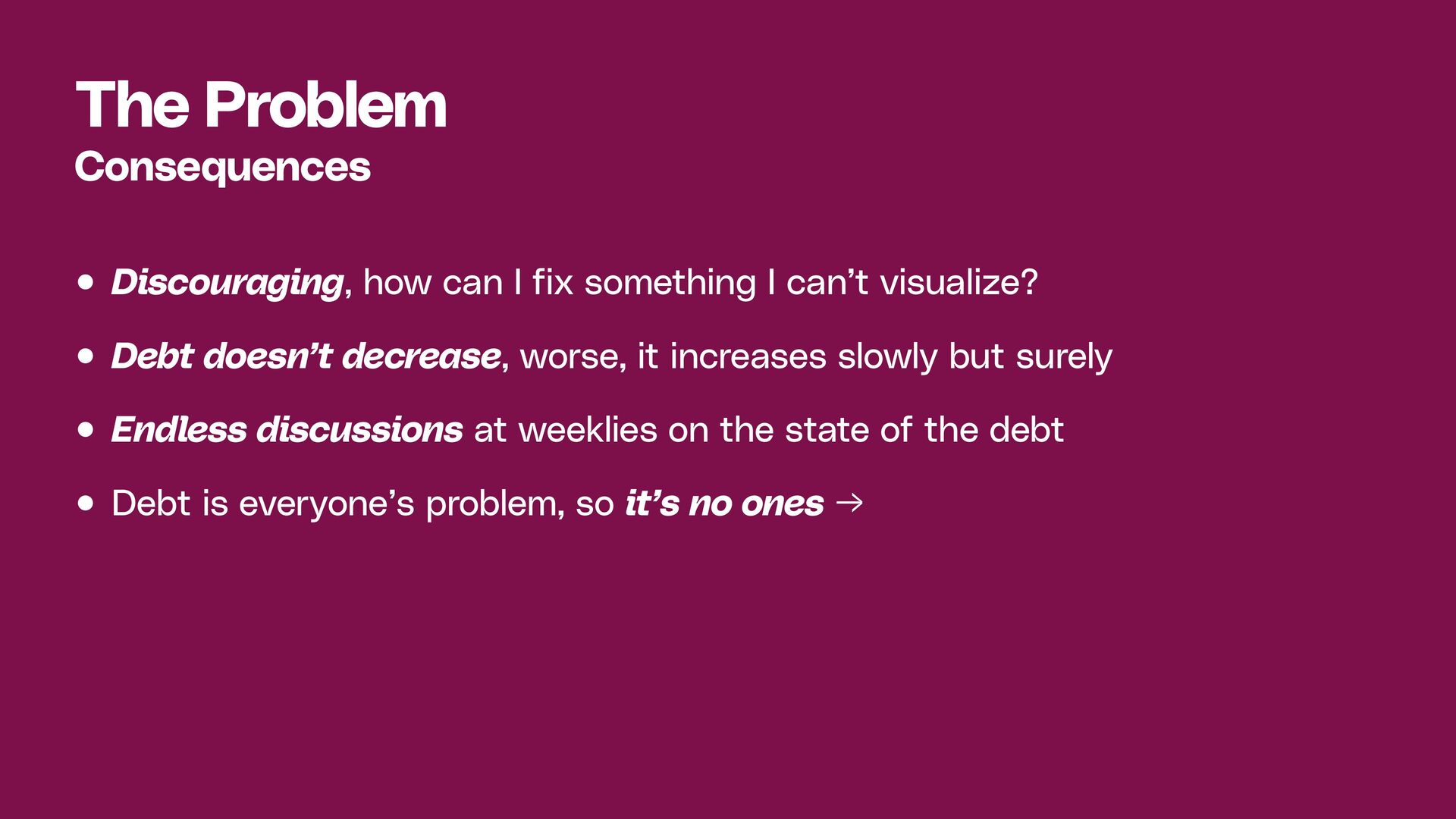
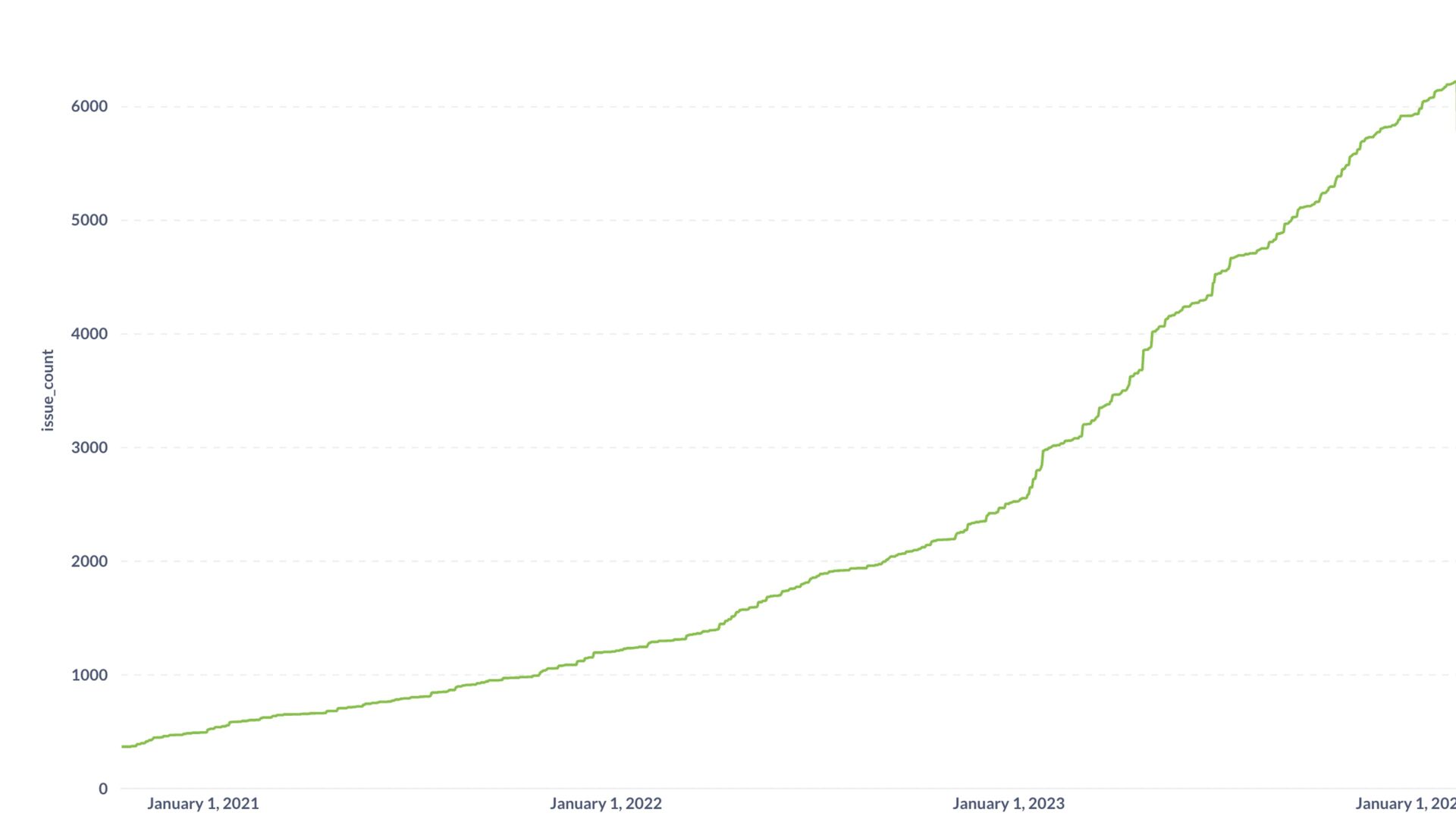
  6. The Problem Consequences • Discouraging, how can I fix something

    I can’t visualize? • Debt doesn’t decrease, worse, it increases slowly but surely • Endless discussions at weeklies on the state of the debt • Debt is everyone’s problem, so it’s no ones →
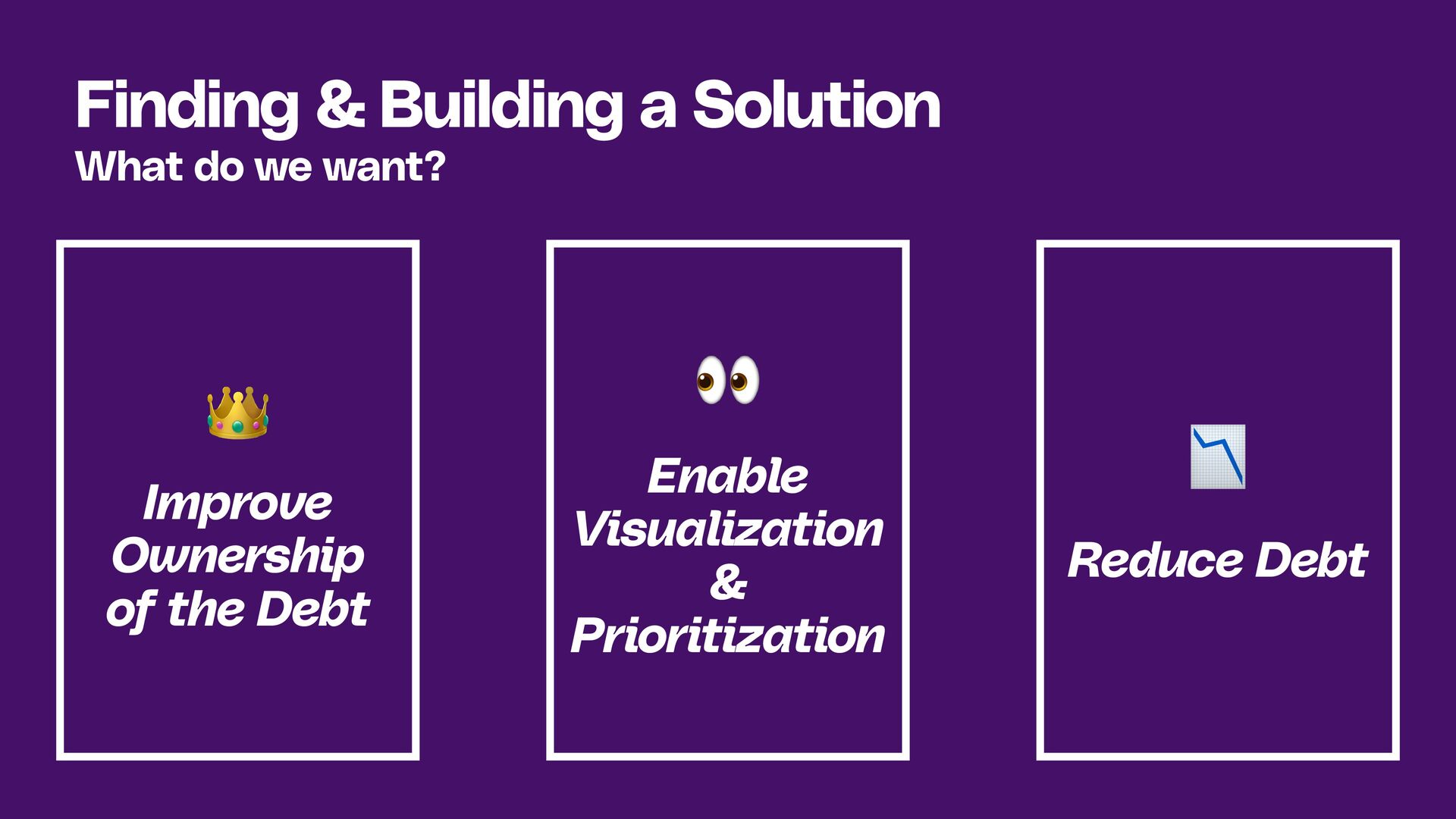
  7. Finding & Building a Solution What do we want? 👑

    Improve Ownership of the Debt 👀 Enable Visualization & Prioritization 📉 Reduce Debt
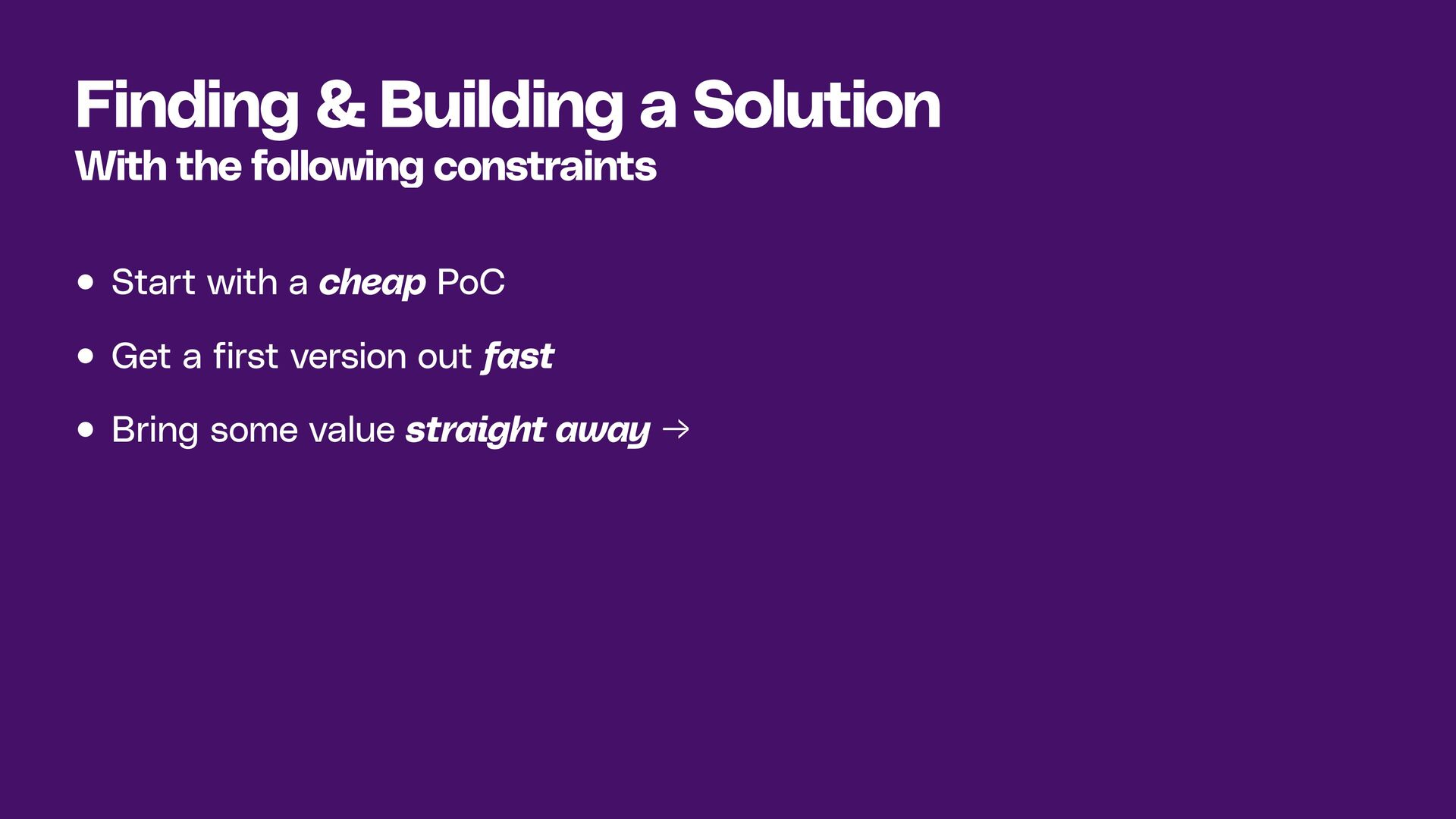
  8. Finding & Building a Solution With the following constraints •

    Start with a cheap PoC • Get a first version out fast • Bring some value straight away →
  9. Ownership Who owns what? • 20% of our modules do

    not have an Owner • Our Monolith has no owner but contains 23% of our codebase ➡ Not the goal of this initiative to fix every ownership issue ➡ Start with what we have and make the lack of ownership visible
  10. Metrics Where do we get our debt data from? •

    Start with the output of our Static Analysis tooling: → Detekt, Android Lint, Custom Rules • Solution should be flexible enough to allow other types of debt
  11. Metrics Where do we get our debt data from? •

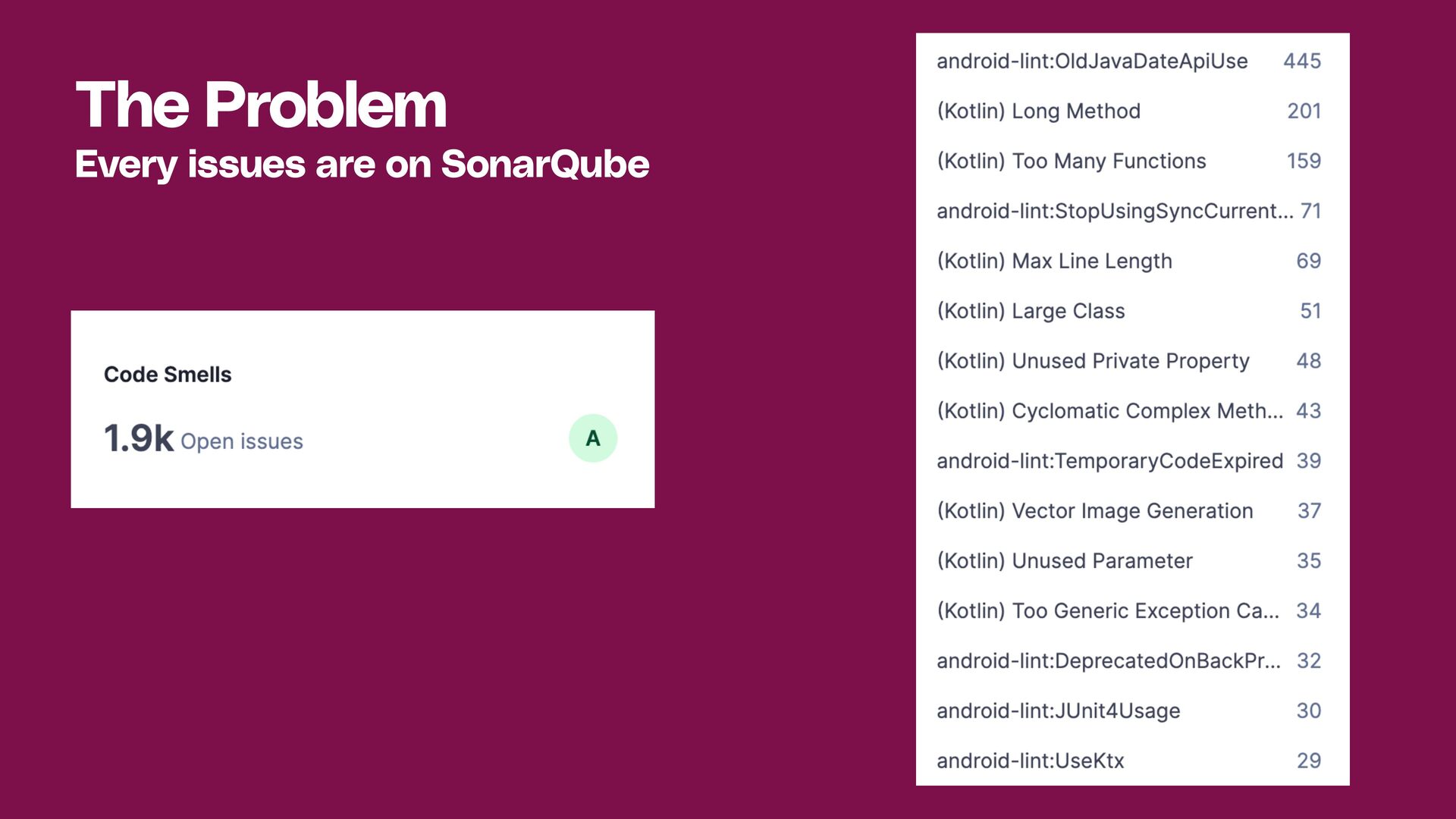
    🔴 Option 1: Custom tooling ➡ See for instance Code Health Score: How Slack Tracks and Manages Code Tech Debt at Scale - Valera Zakharov ➡ Too much upfront e ort & cost, we want to start small and bring value fast • 🟢 Option 2: Use the SonarQube API ➡ We already pay for it and has all the data we need ff ➡ Issues from our custom Lint and Detekt rules are already reported
  12. Visualization Where do we display that data? • 🔴 Option

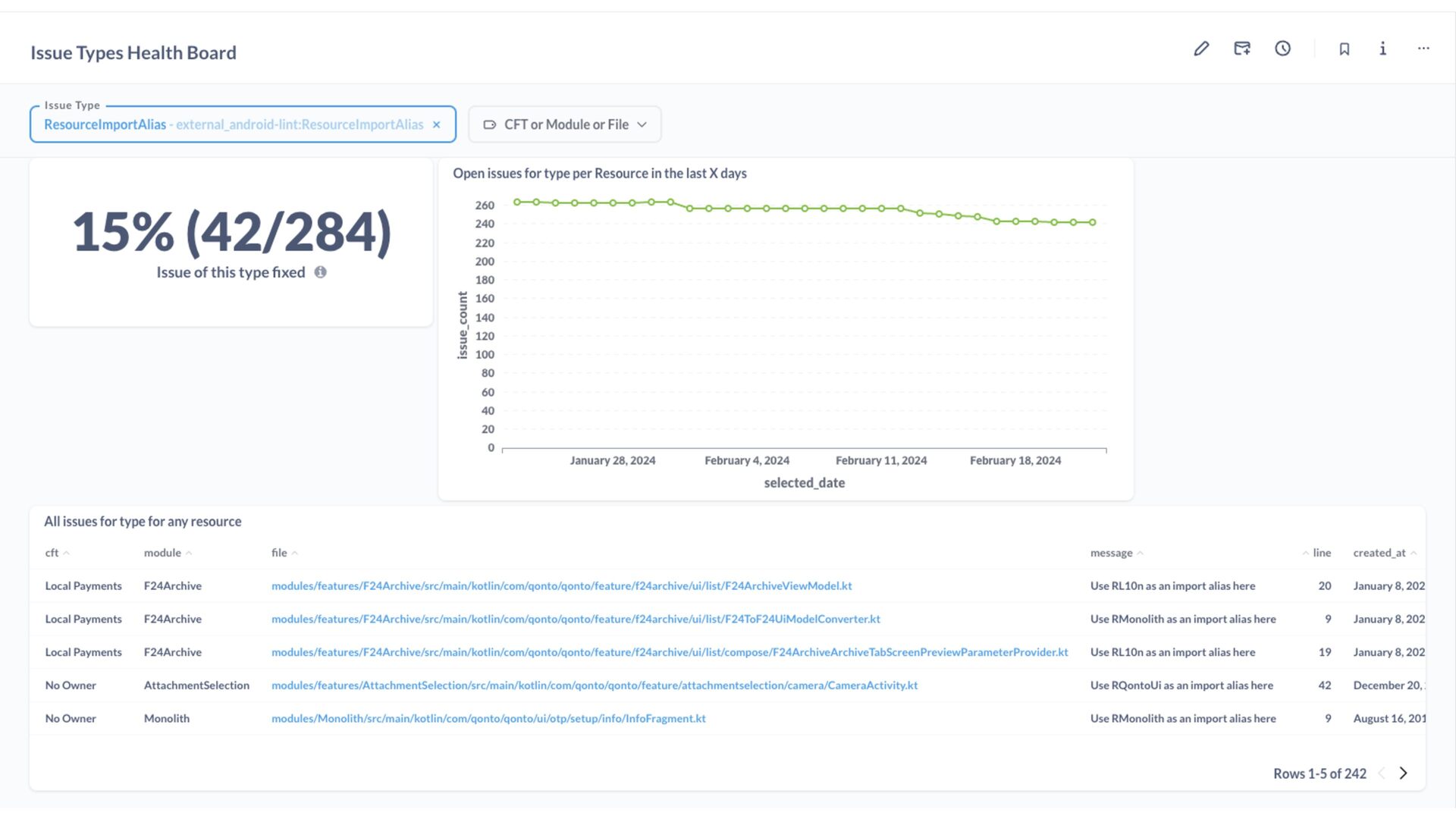
    1: Notion ➡ Our go-to tool, at the time was not handling graphs ➡ Would need some extra synchronisation between our DB and Notion • 🟢 Option 2: Metabase ➡ Already connected to our DB ➡ Really good at data visualization in general
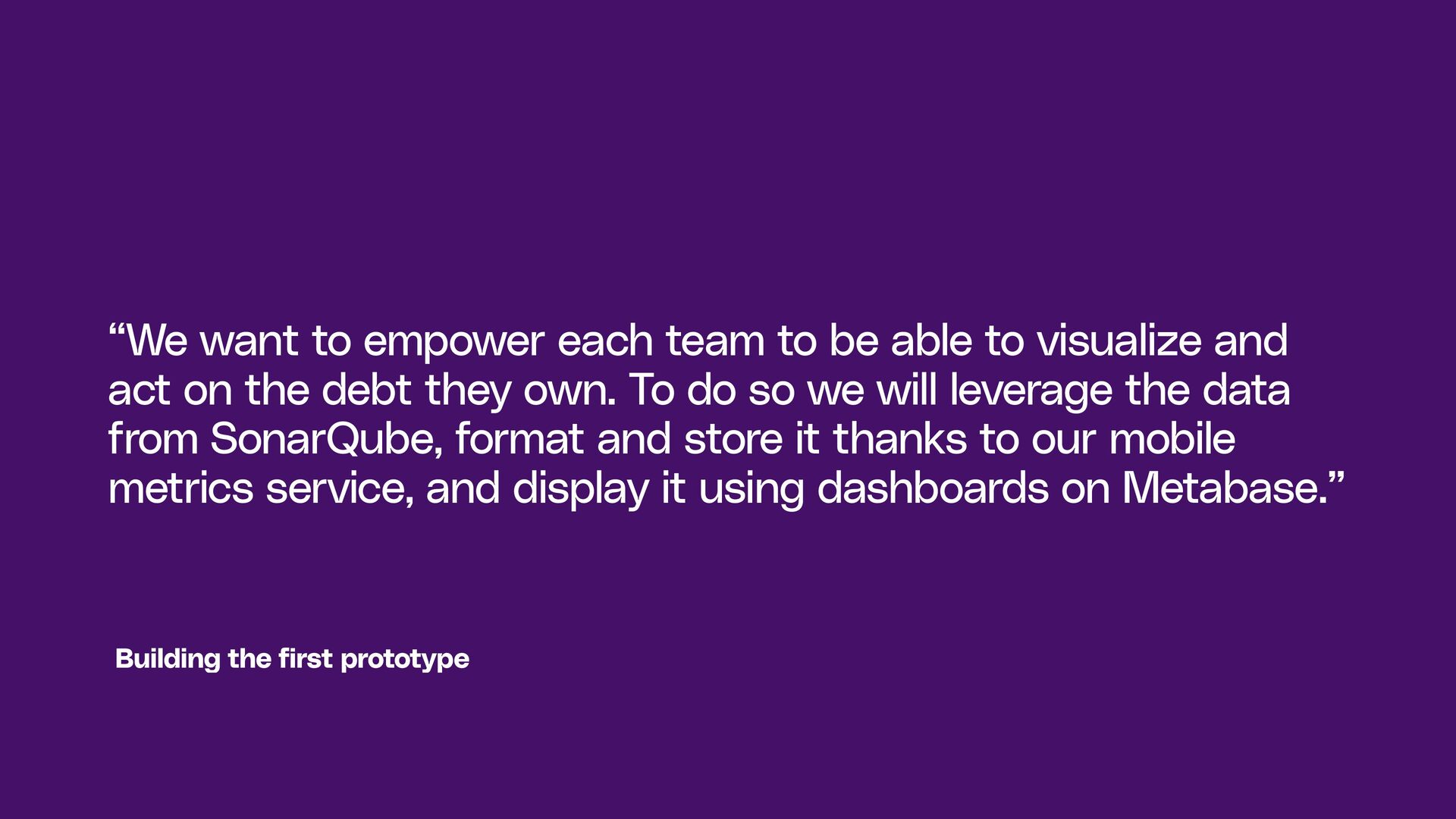
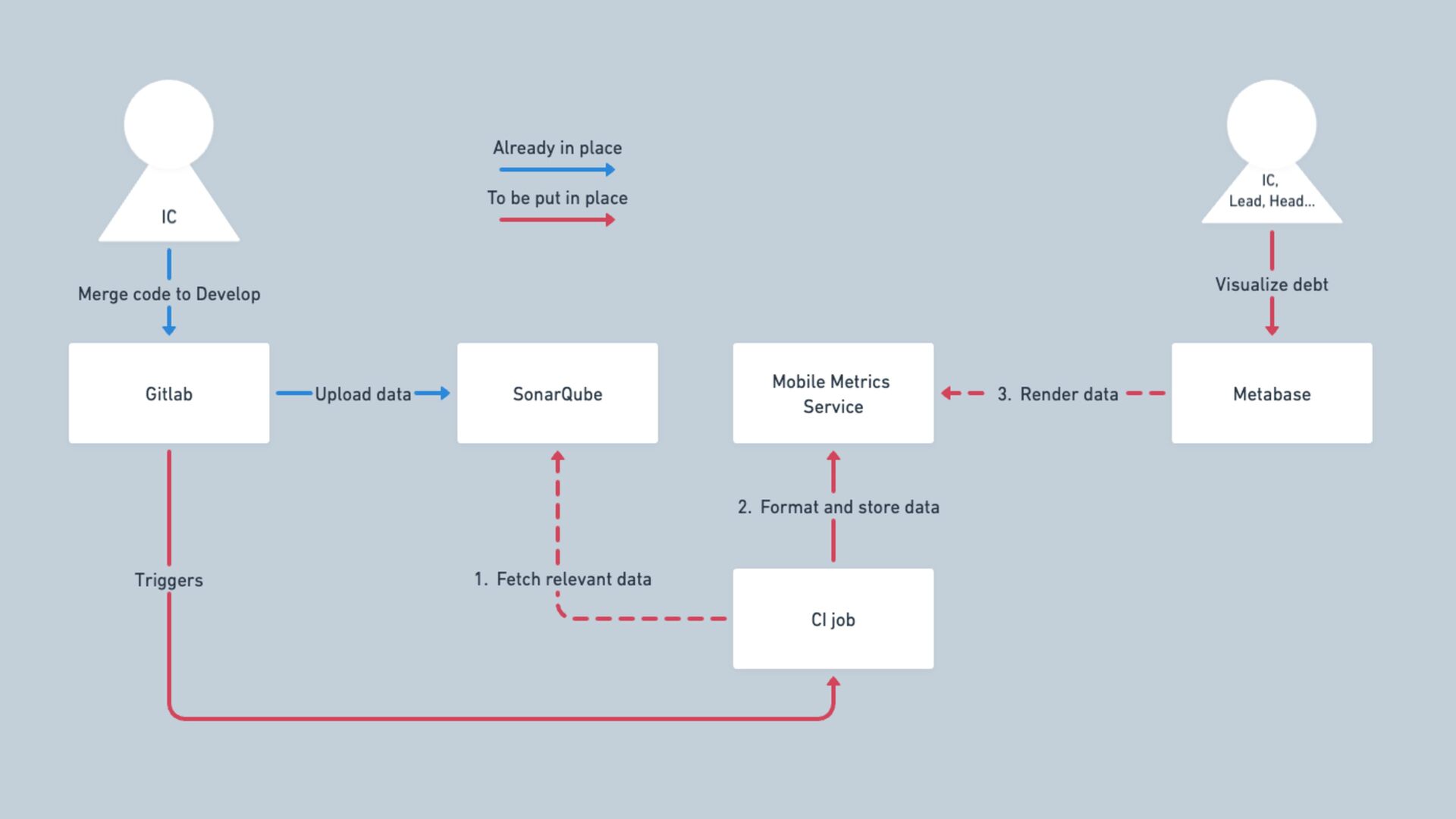
  13. “We want to empower each team to be able to

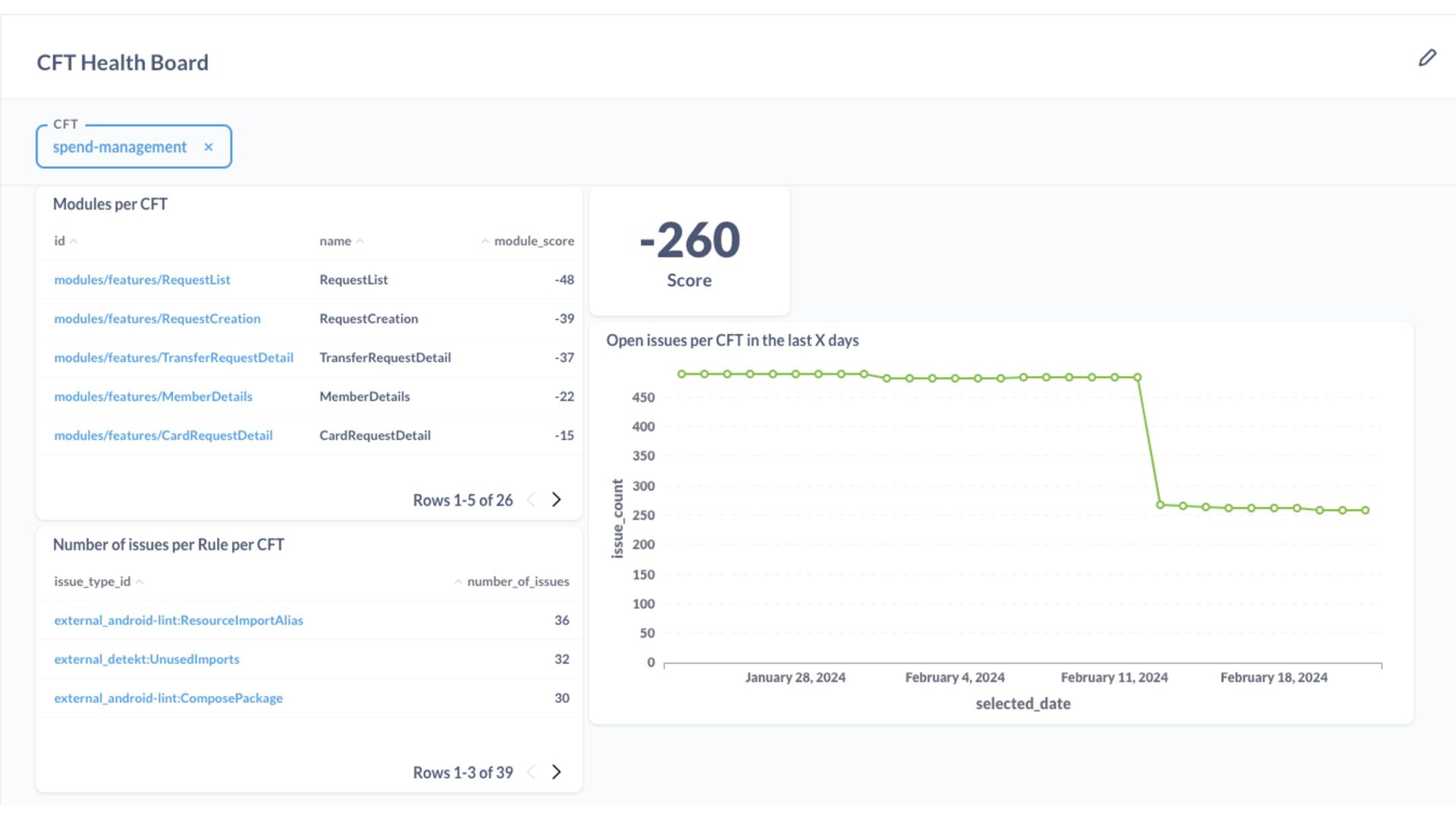
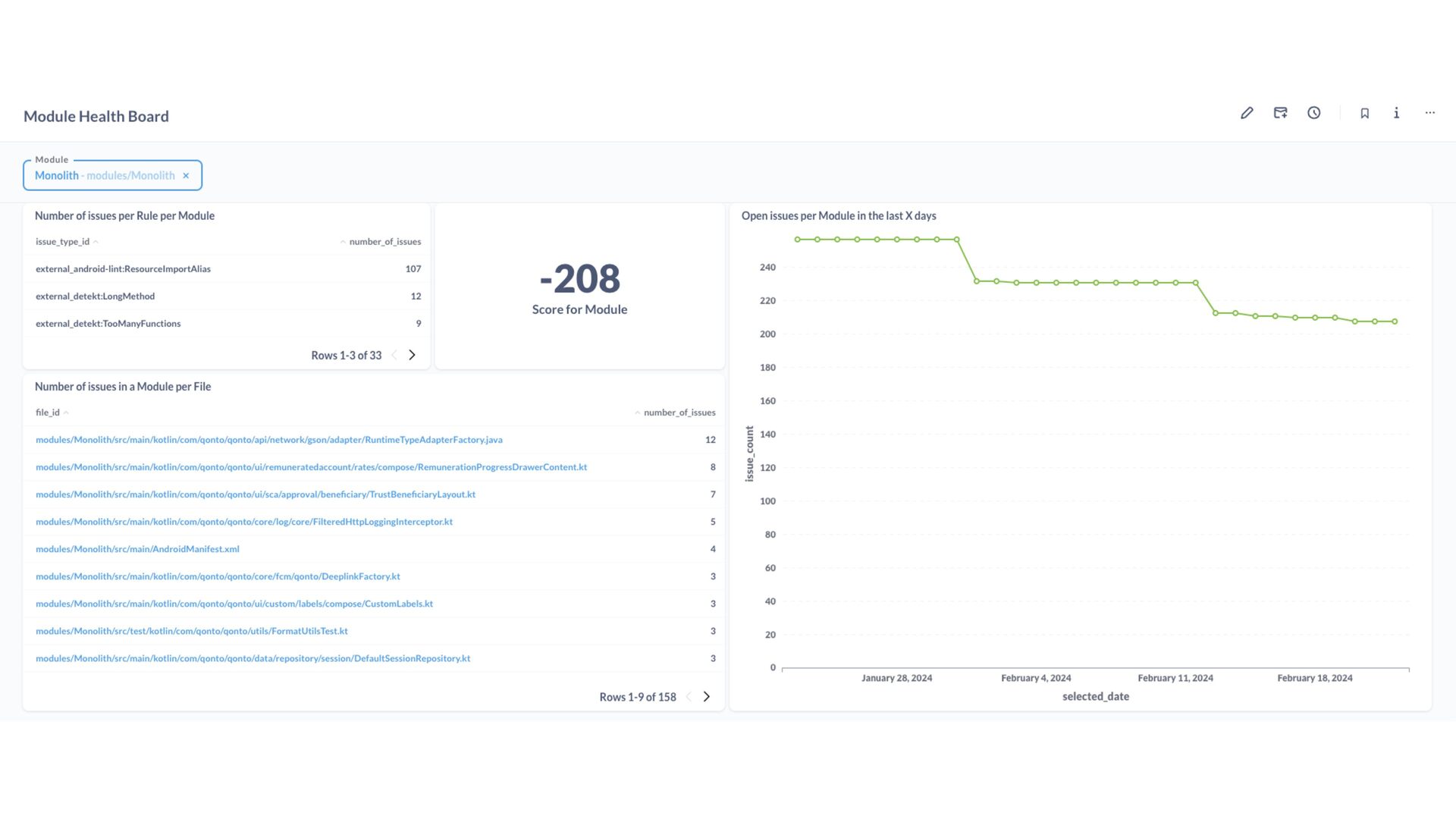
    visualize and act on the debt they own. To do so we will leverage the data from SonarQube, format and store it thanks to our mobile metrics service, and display it using dashboards on Metabase.” Building the first prototype
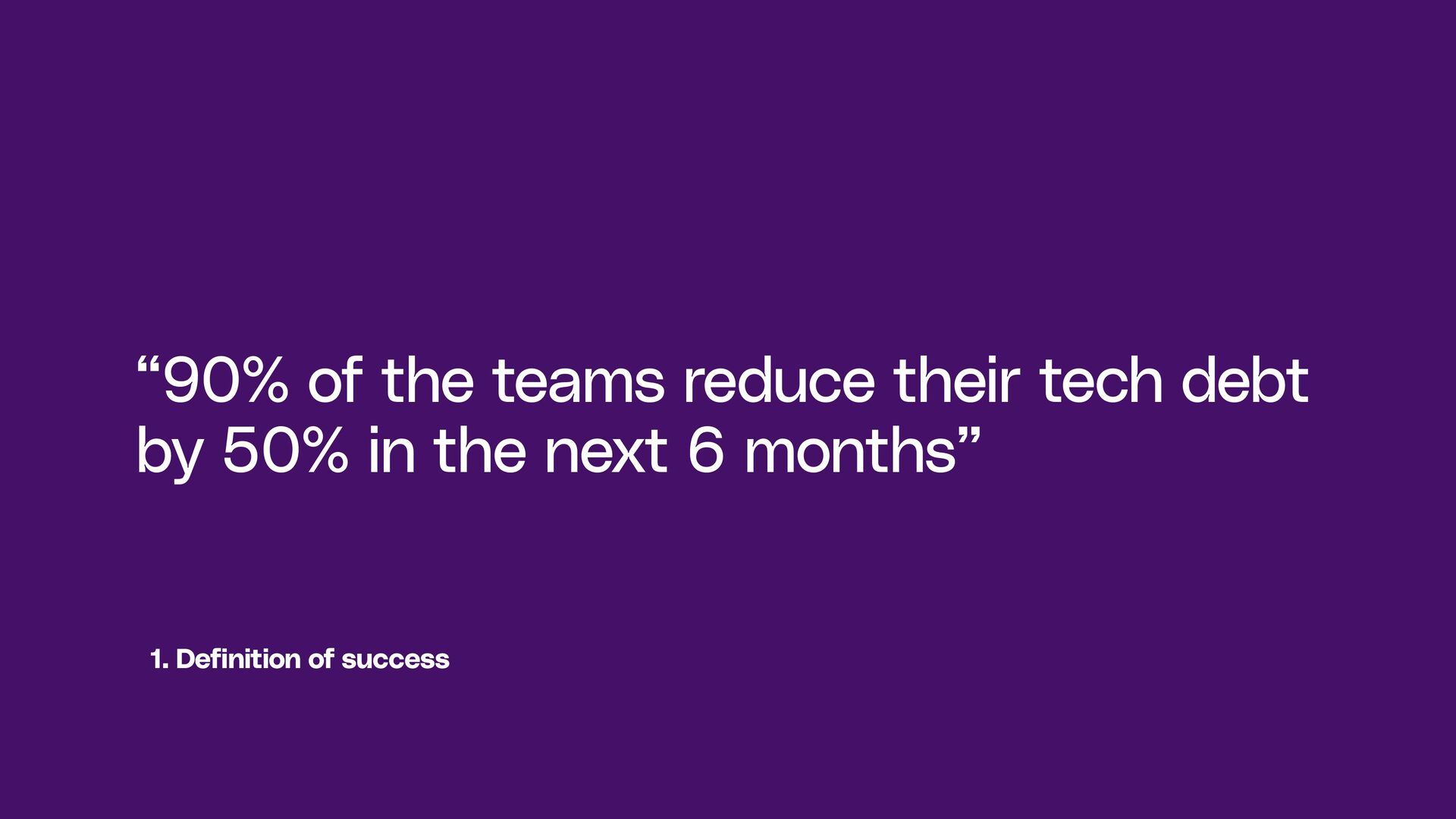
  14. “90% of the teams reduce their tech debt by 50%

    in the next 6 months” 1. Definition of success
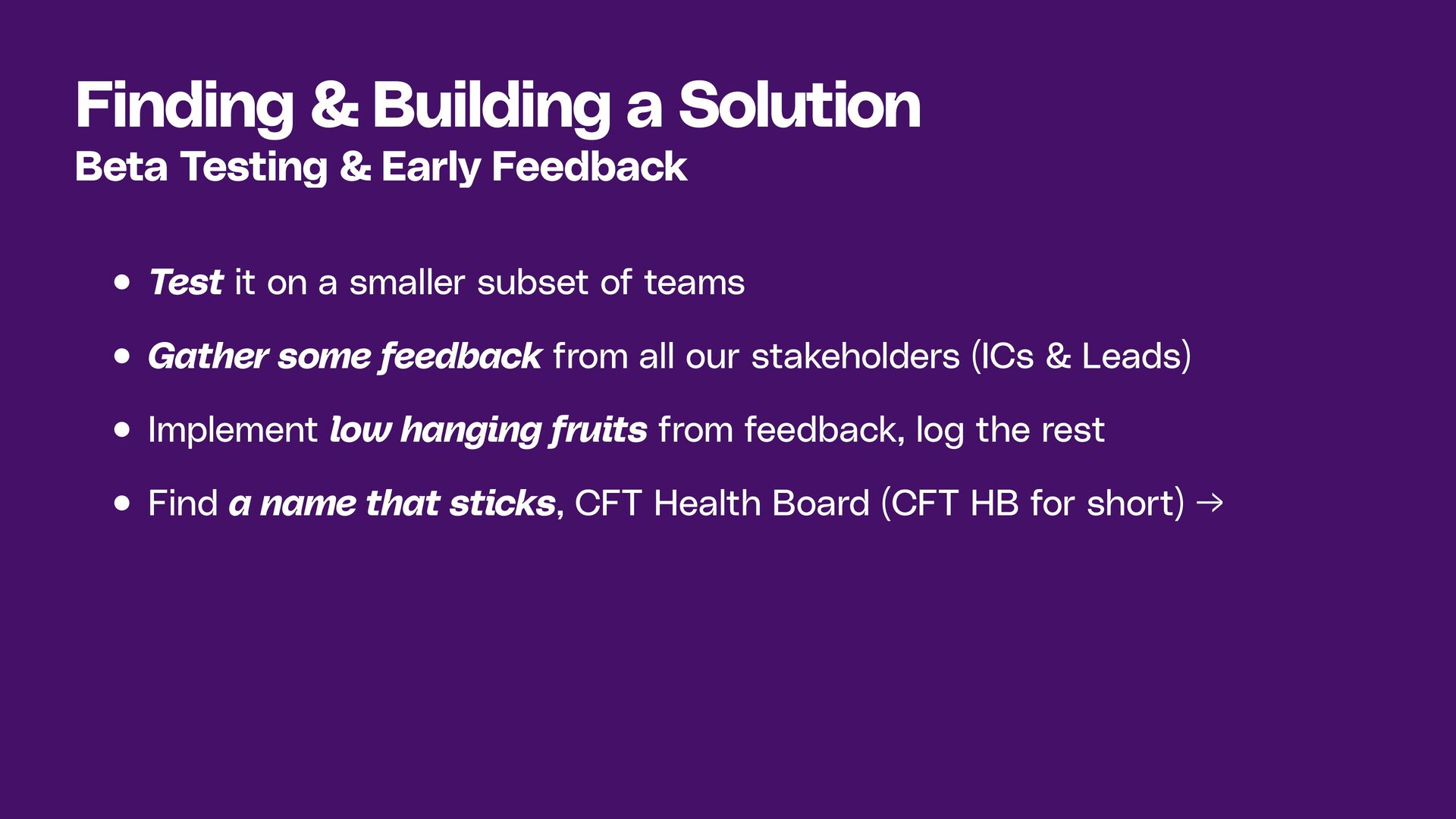
  15. Finding & Building a Solution Beta Testing & Early Feedback

    • Test it on a smaller subset of teams • Gather some feedback from all our stakeholders (ICs & Leads) • Implement low hanging fruits from feedback, log the rest • Find a name that sticks, CFT Health Board (CFT HB for short) →
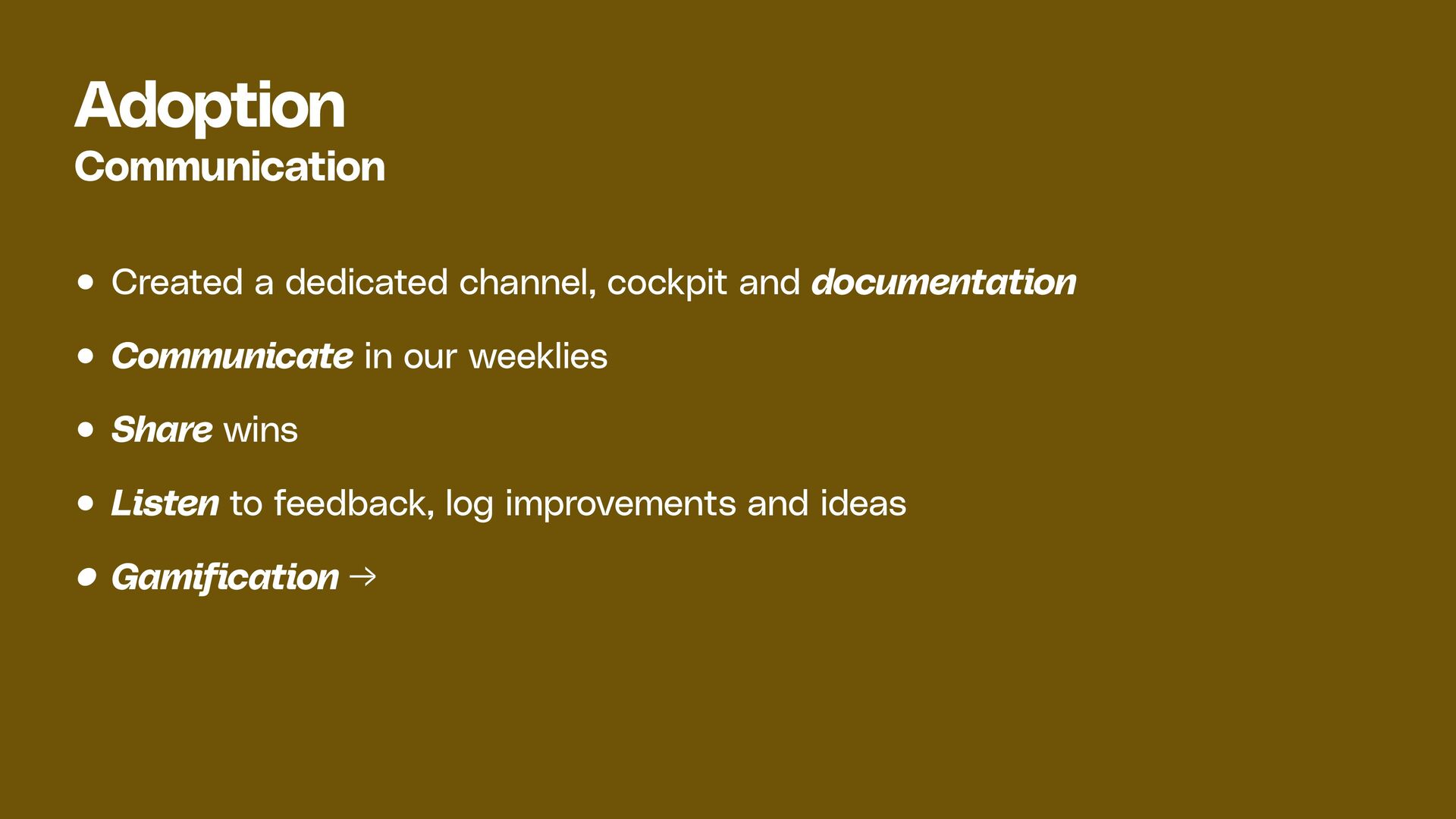
  16. Adoption Communication • Created a dedicated channel, cockpit and documentation

    • Communicate in our weeklies • Share wins • Listen to feedback, log improvements and ideas • Gamification →
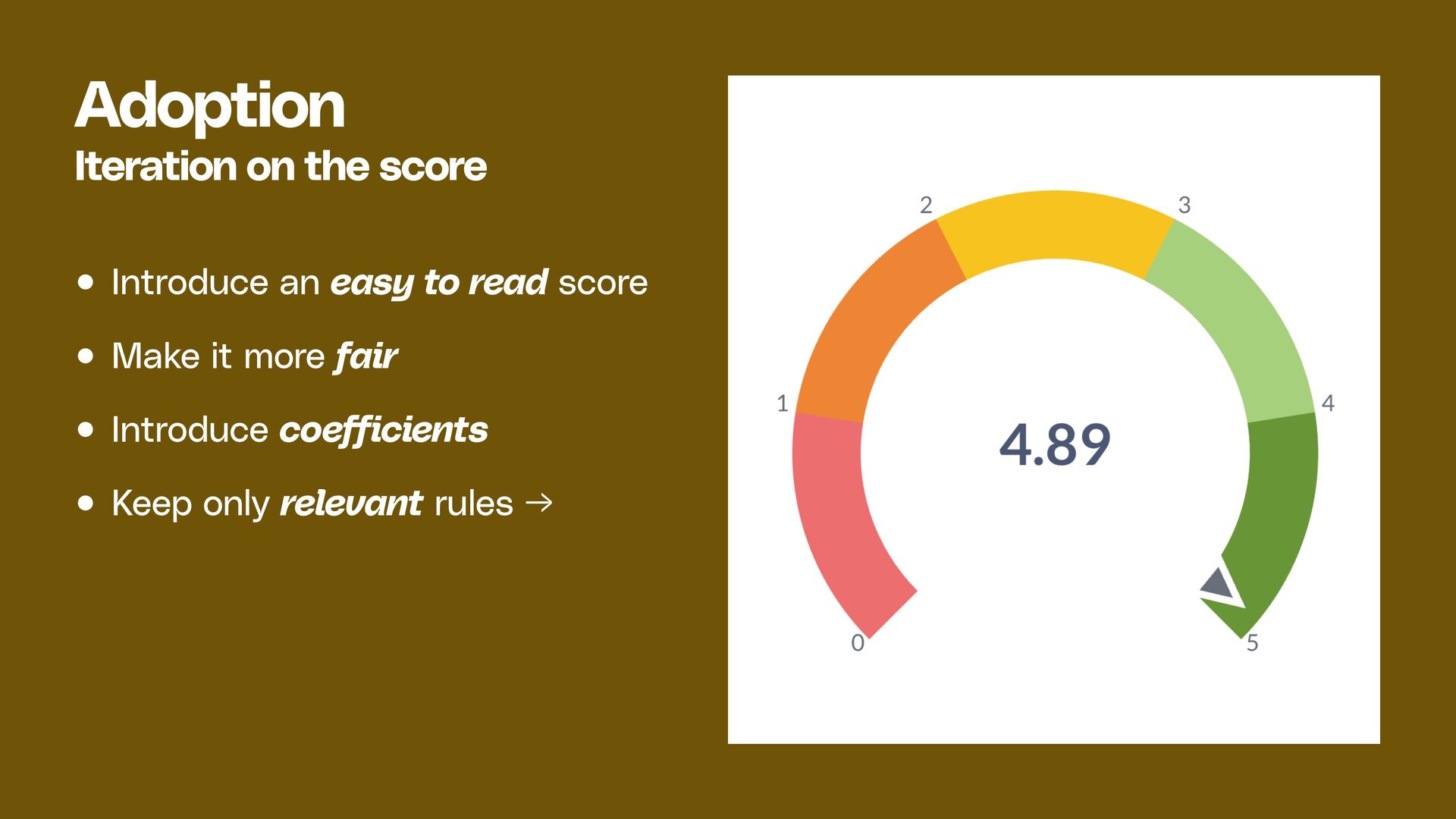
  17. Adoption Iteration on the score • Introduce an easy to

    read score • Make it more fair • Introduce coefficients • Keep only relevant rules →
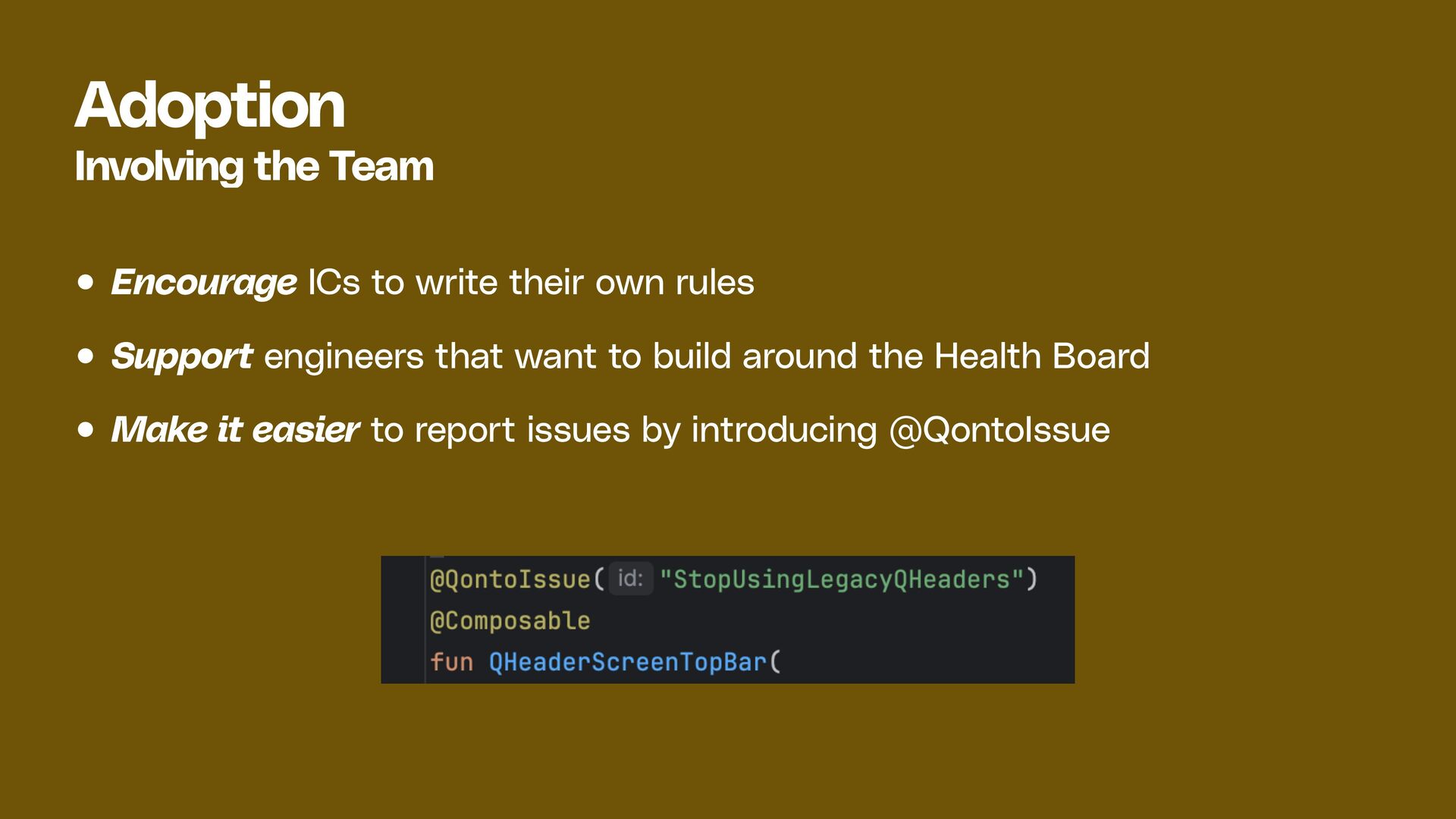
  18. Adoption Involving the Team • Encourage ICs to write their

    own rules • Support engineers that want to build around the Health Board • Make it easier to report issues by introducing @QontoIssue
  19. “90% of the teams reduce their tech debt by 50%

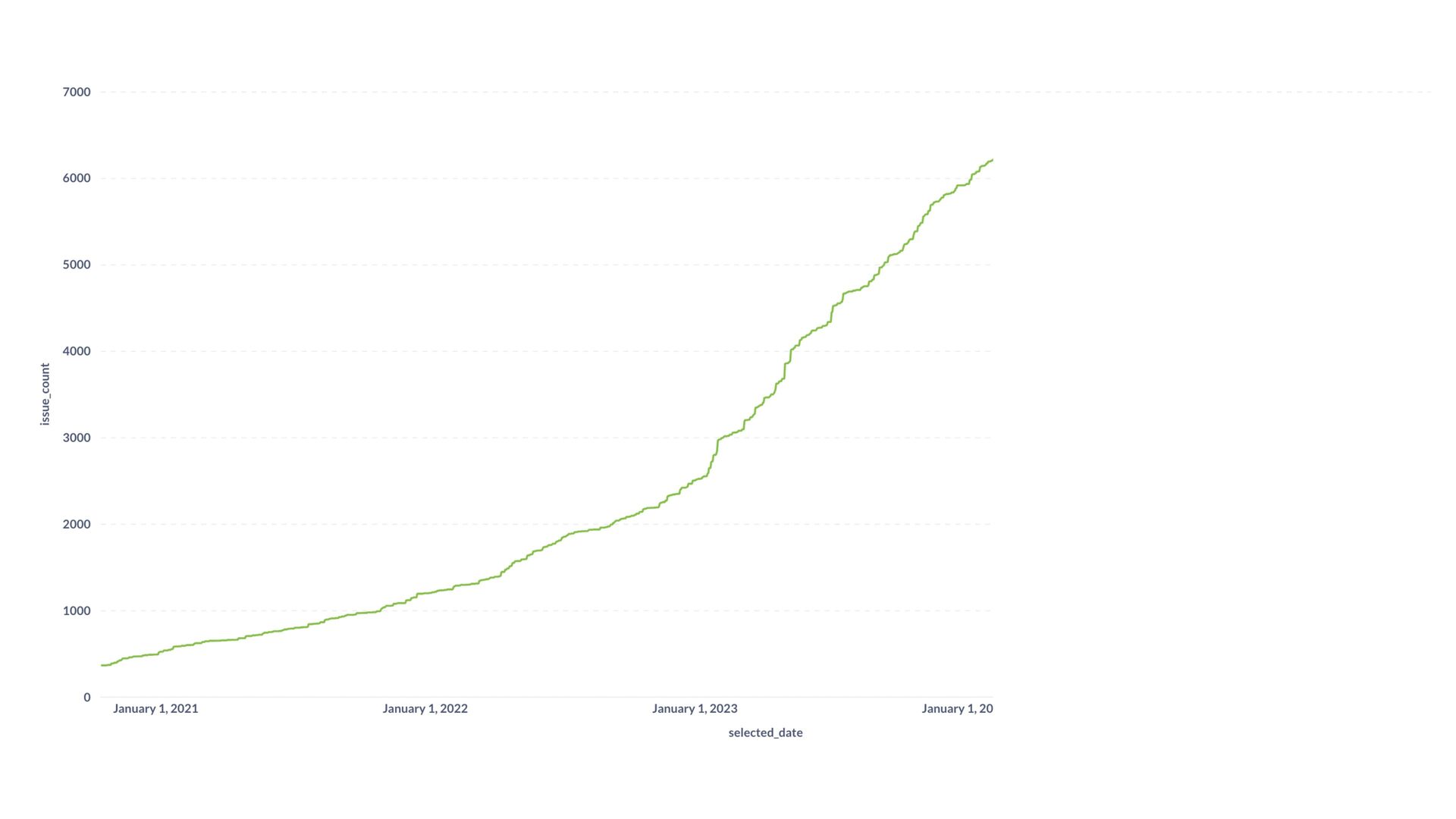
    in the next 6 months” 🟢 Less than 3 months in
  20. Learnings What Worked • Iteration is key → Start small,

    see if the value is there, build on top • Don’t underestimate small features that reduce friction → “See in AS” button is engineer’s favorite feature of the Health Board • Keep it positive & avoid blame → Use the score as an indicator that a team needs support
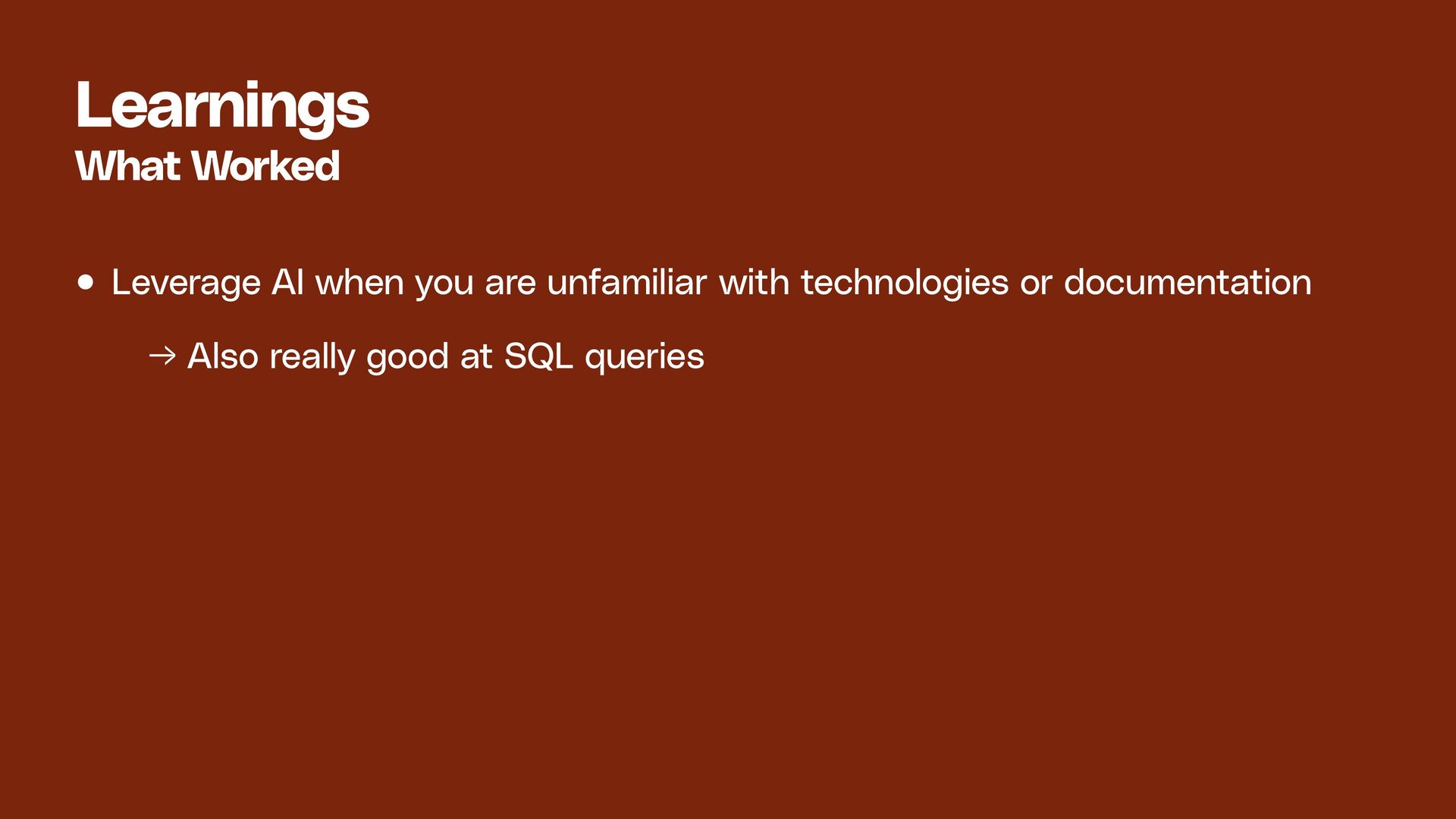
  21. Learnings What Worked • Leverage AI when you are unfamiliar

    with technologies or documentation → Also really good at SQL queries
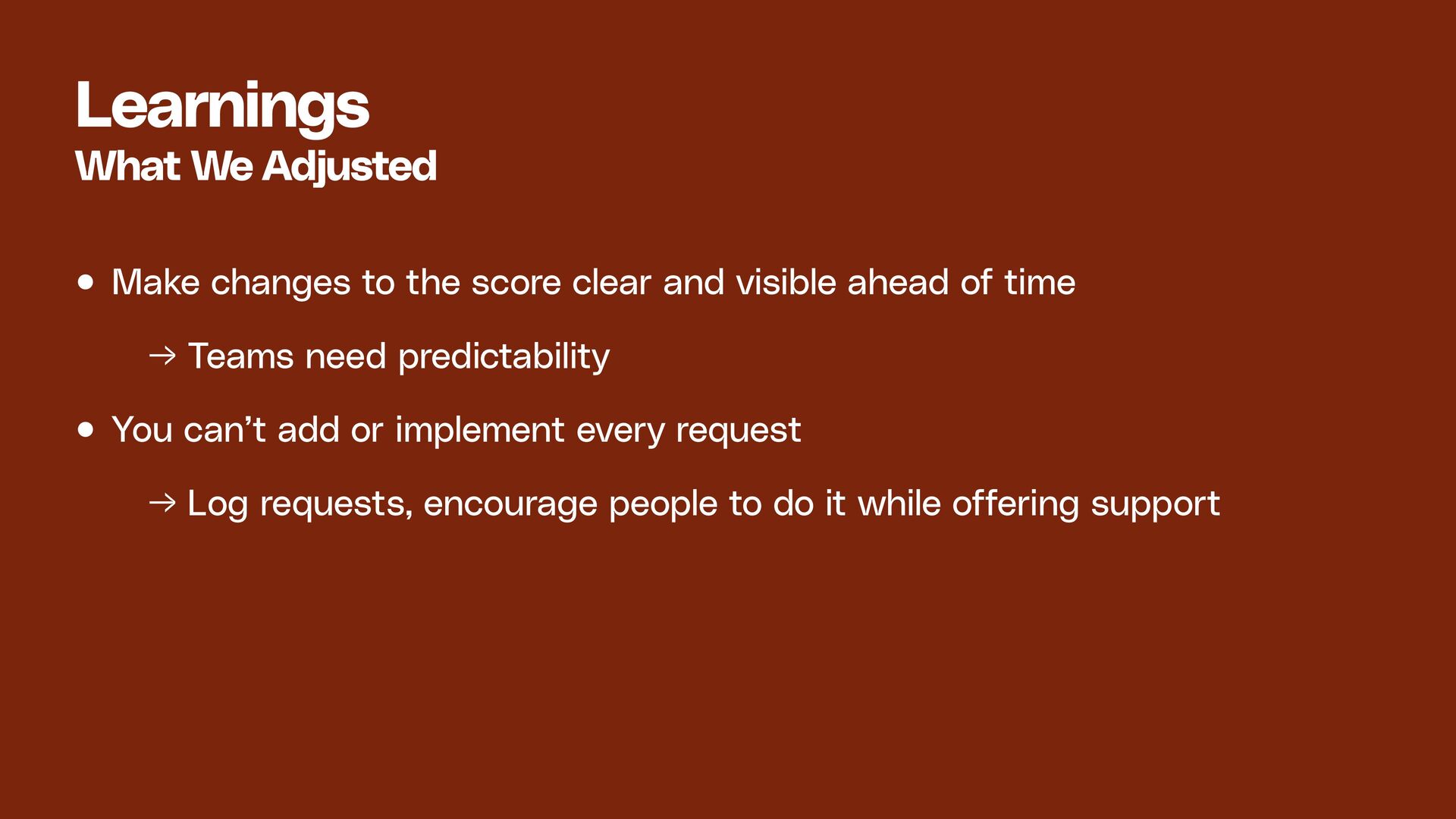
  22. Learnings What We Adjusted • Make changes to the score

    clear and visible ahead of time → Teams need predictability • You can’t add or implement every request → Log requests, encourage people to do it while offering support
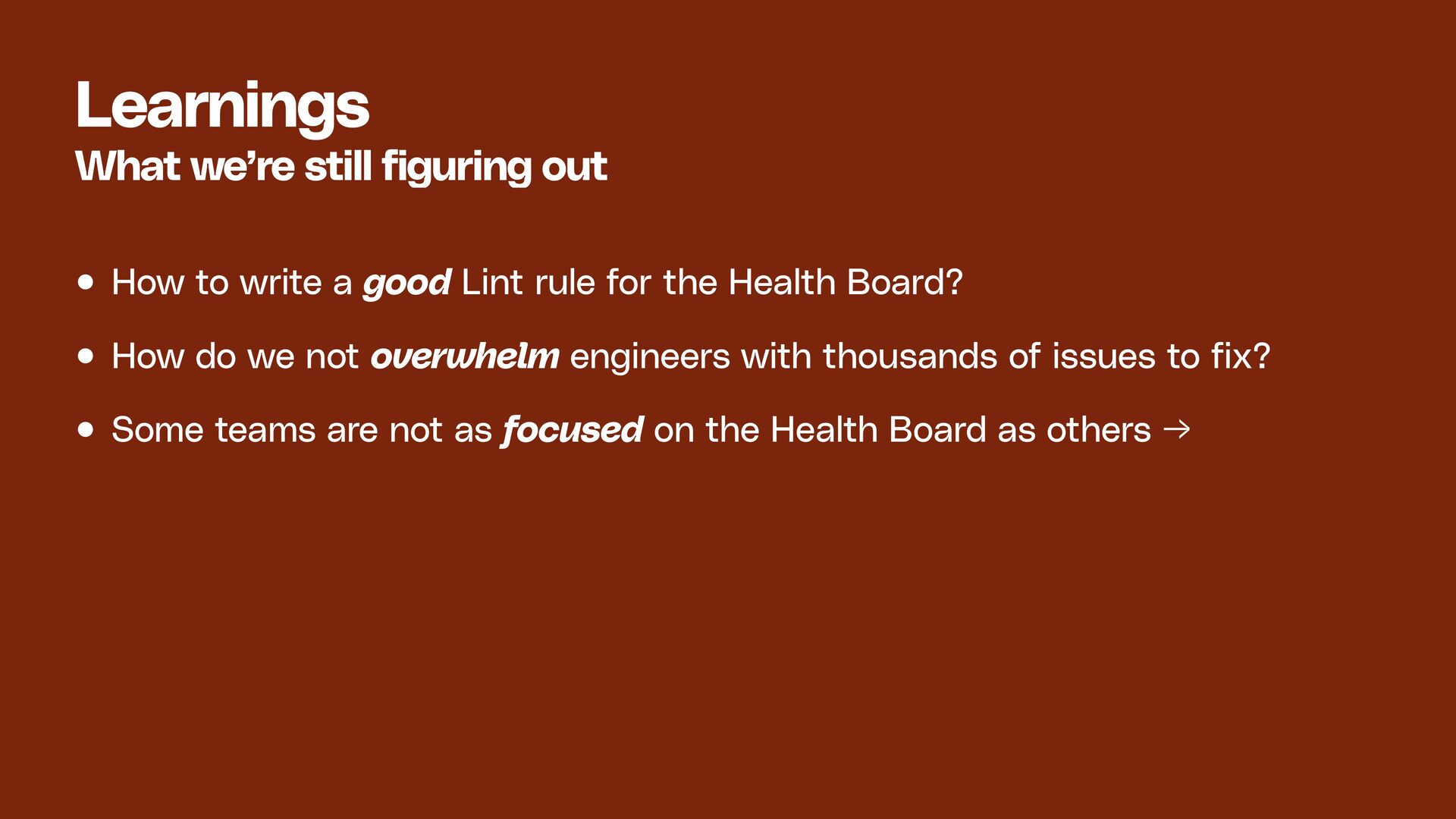
  23. Learnings What we’re still figuring out • How to write

    a good Lint rule for the Health Board? • How do we not overwhelm engineers with thousands of issues to fix? • Some teams are not as focused on the Health Board as others →
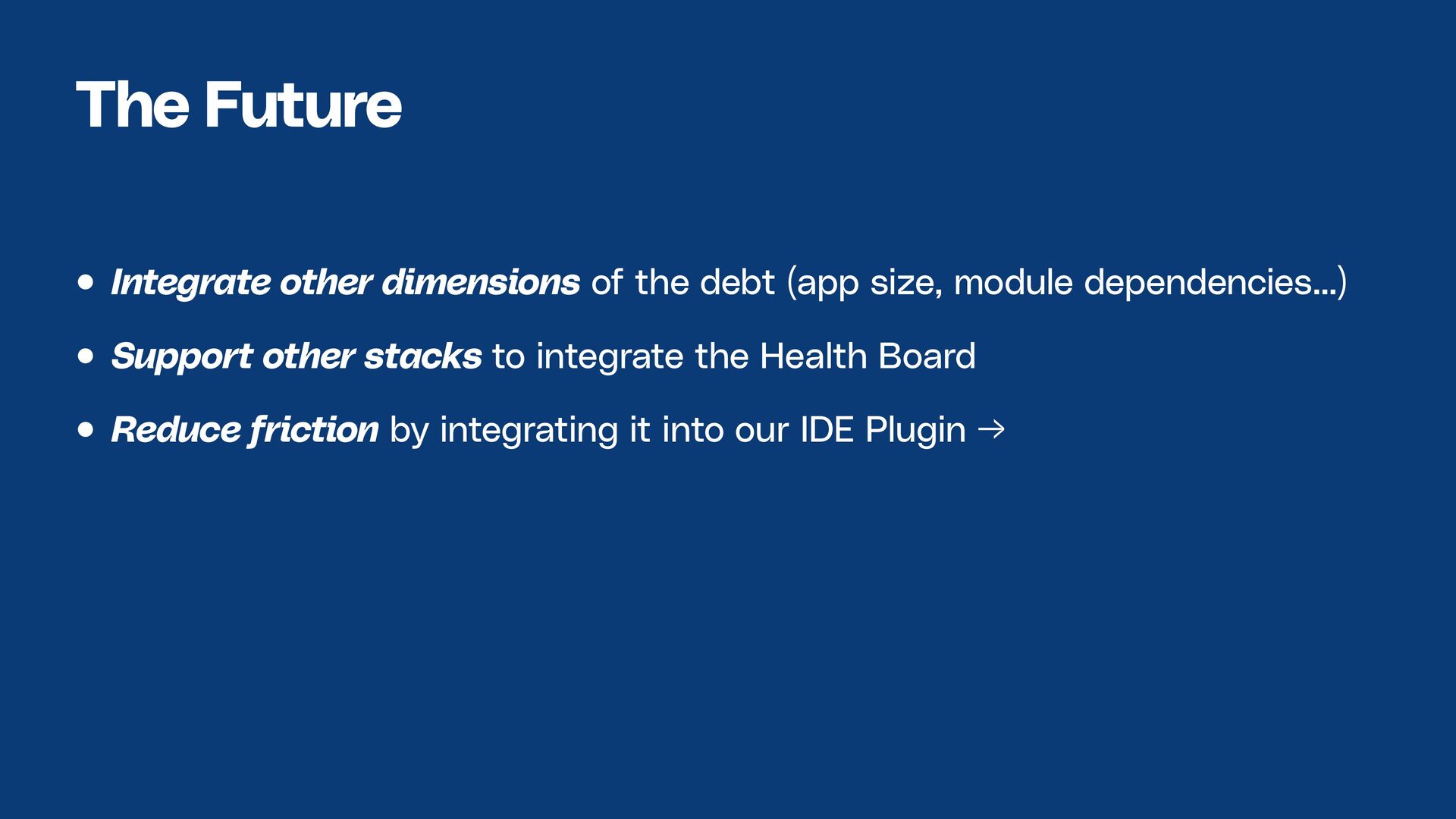
  24. The Future • Integrate other dimensions of the debt (app

    size, module dependencies…) • Support other stacks to integrate the Health Board • Reduce friction by integrating it into our IDE Plugin →
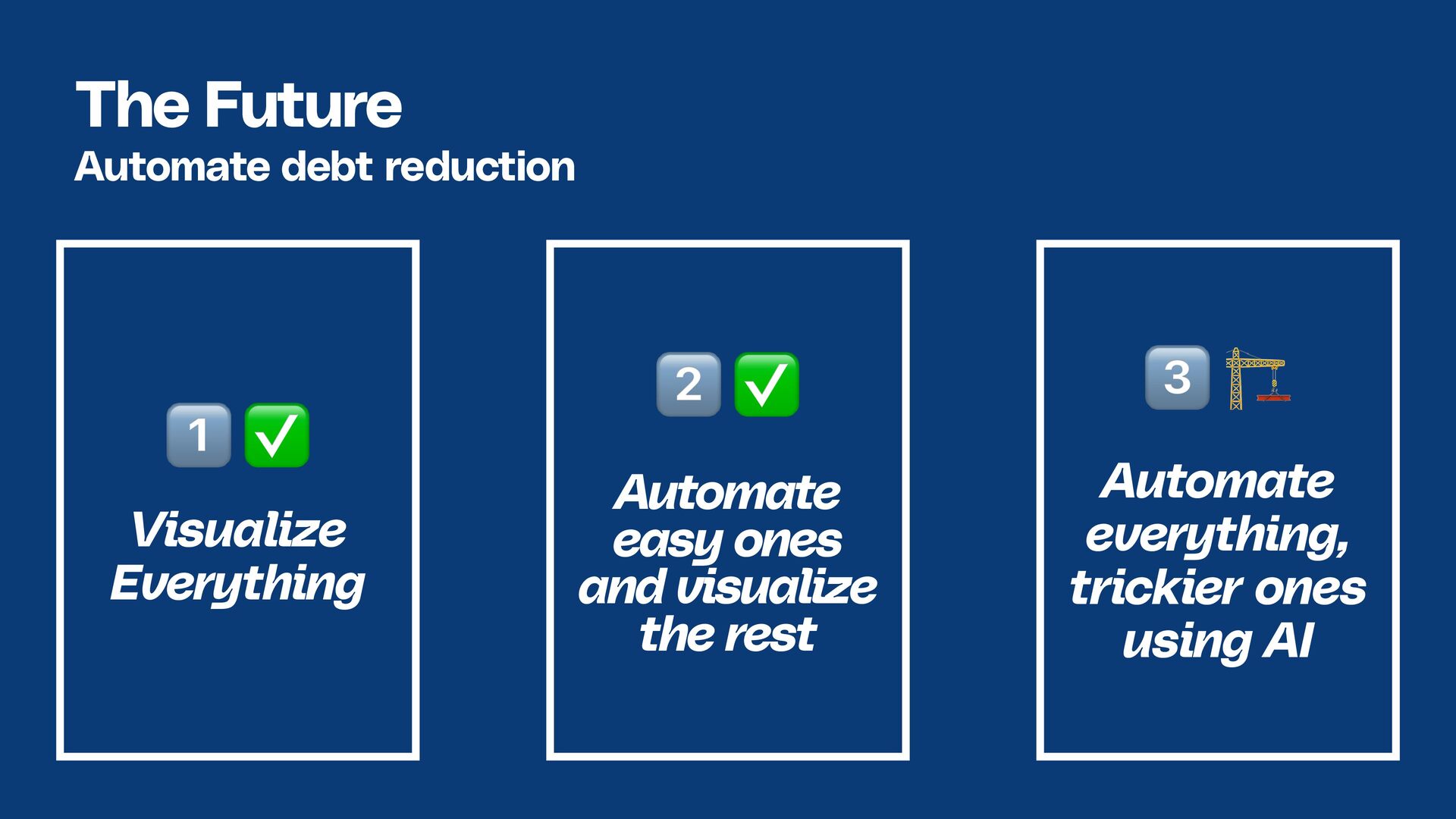
  25. The Future Automate debt reduction 1⃣ ✅ Visualize Everything 2⃣

    ✅ 3⃣ 🏗 Automate easy ones and visualize the rest Automate everything, trickier ones using AI
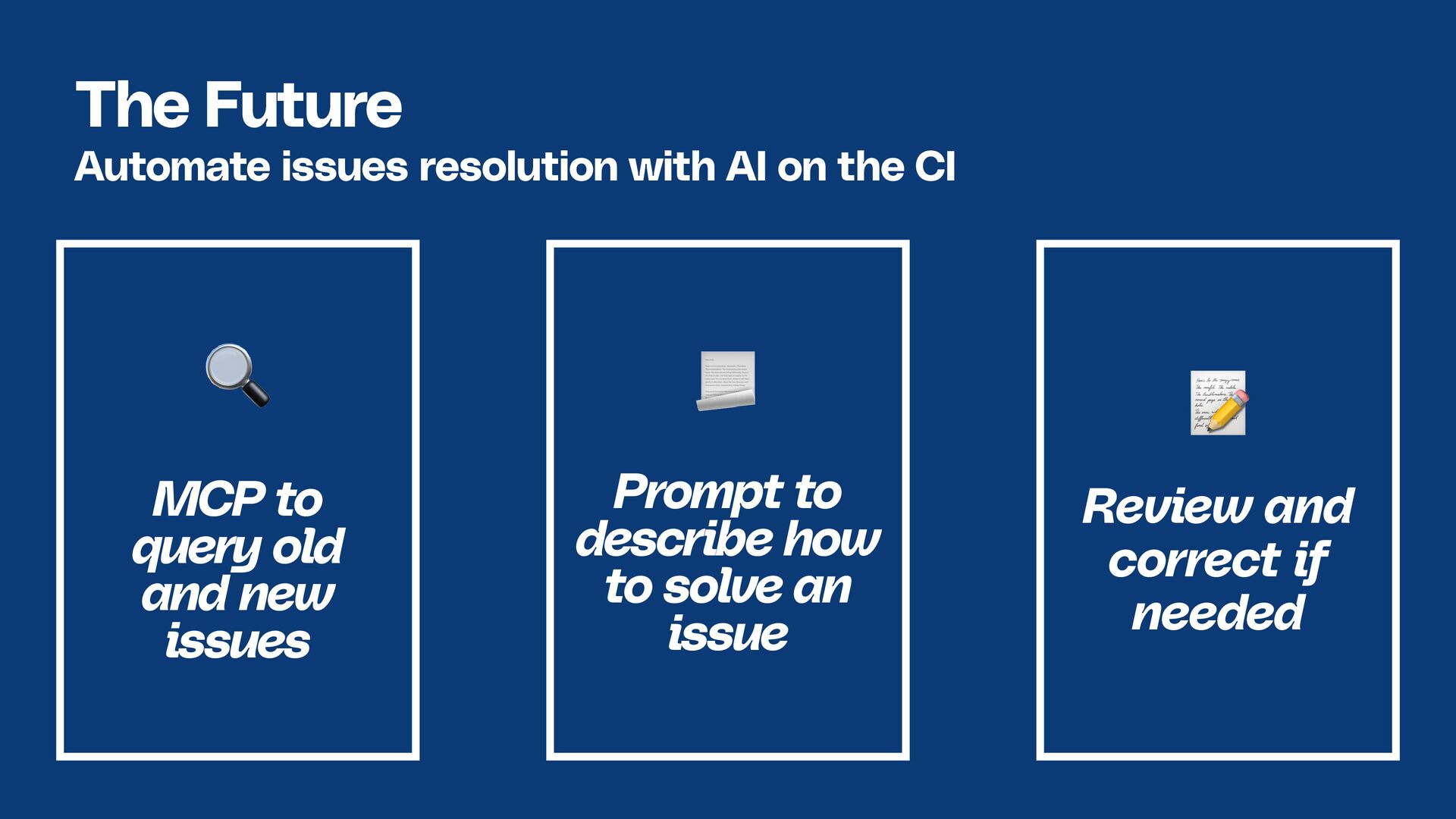
  26. The Future Automate issues resolution with AI on the CI

    🔍 📃 📝 MCP to query old and new issues Prompt to describe how to solve an issue Review and correct if needed
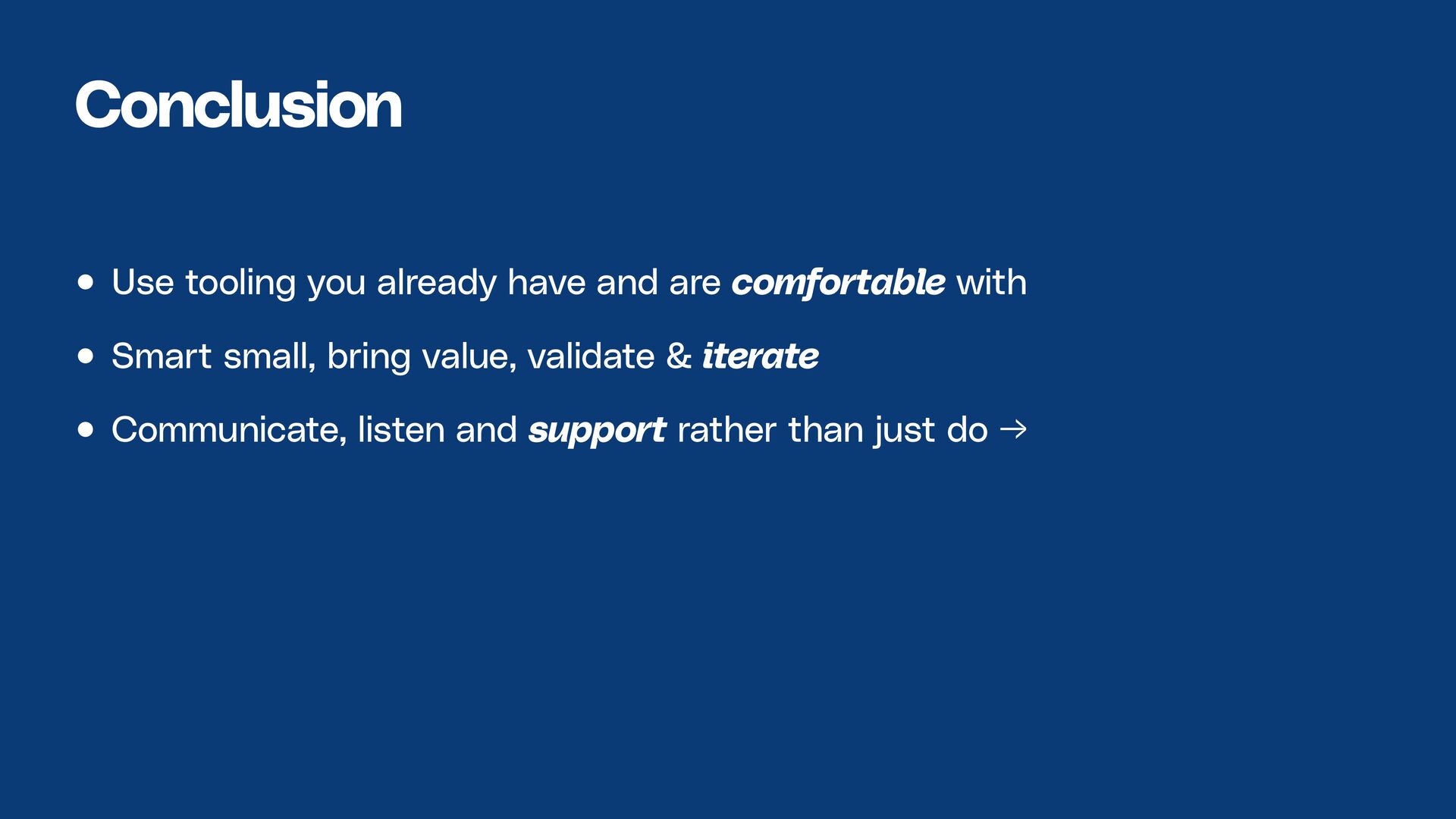
  27. Conclusion • Use tooling you already have and are comfortable

    with • Smart small, bring value, validate & iterate • Communicate, listen and support rather than just do →