Upgrade to Pro — share decks privately, control downloads, hide ads and more …

NeOnc Technologies Holdings: Pioneering a New E...

Sponsored · Ship Features Fearlessly Turn features on and off without deploys. Used by thousands of Ruby developers. →
Avatar for Himanshu Kale Himanshu Kale
September 17, 2025

NeOnc Technologies Holdings: Pioneering a New Era in Brain Cancer Treatment with NASDAQ Listing

NeOnc Technologies Holdings: Pioneering a New Era in Brain Cancer Treatment with NASDAQ Listing

Avatar for Himanshu Kale

Himanshu Kale

September 17, 2025

More Decks by Himanshu Kale

Other Decks in Business

Transcript

  1. W W W . H E A LT H C

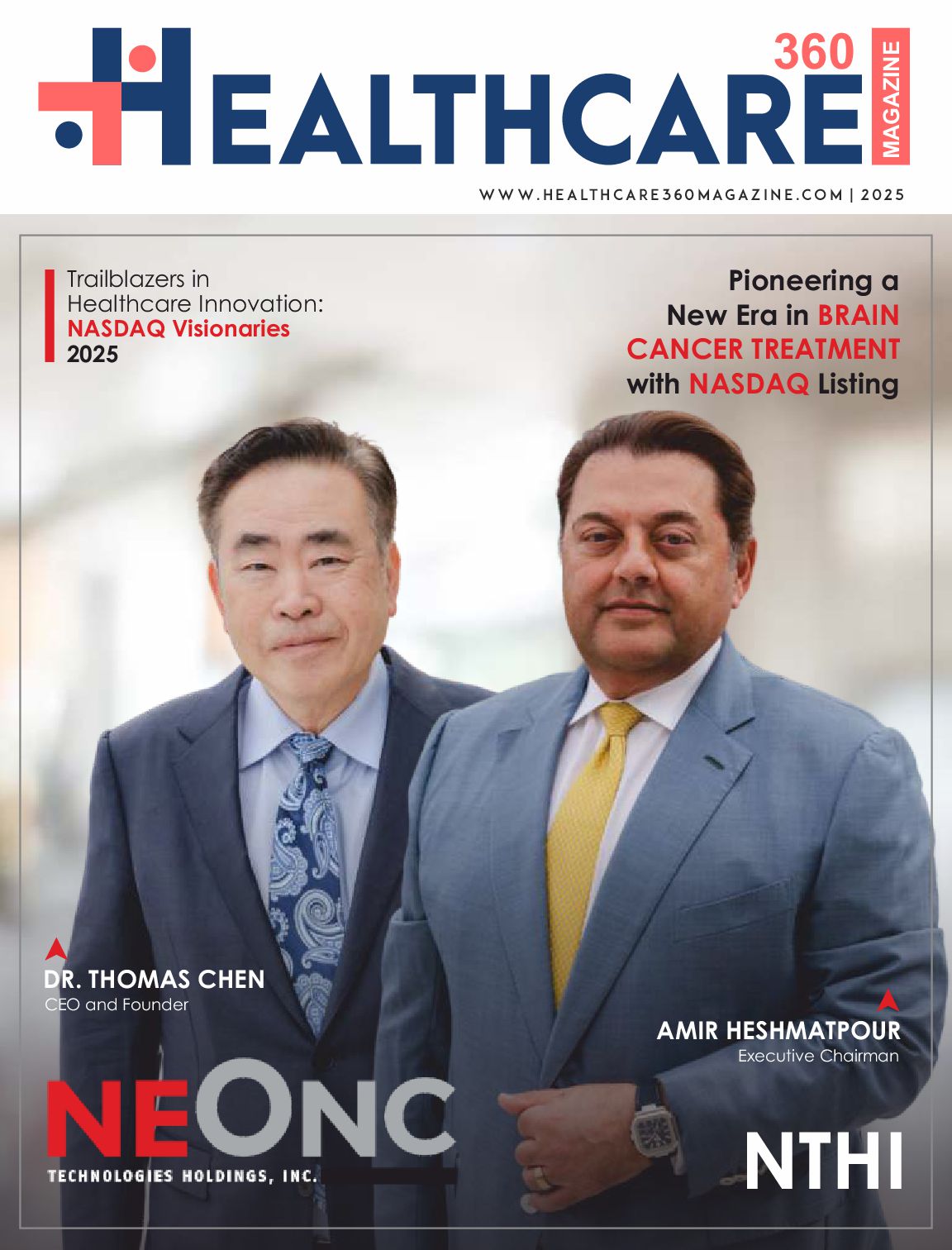
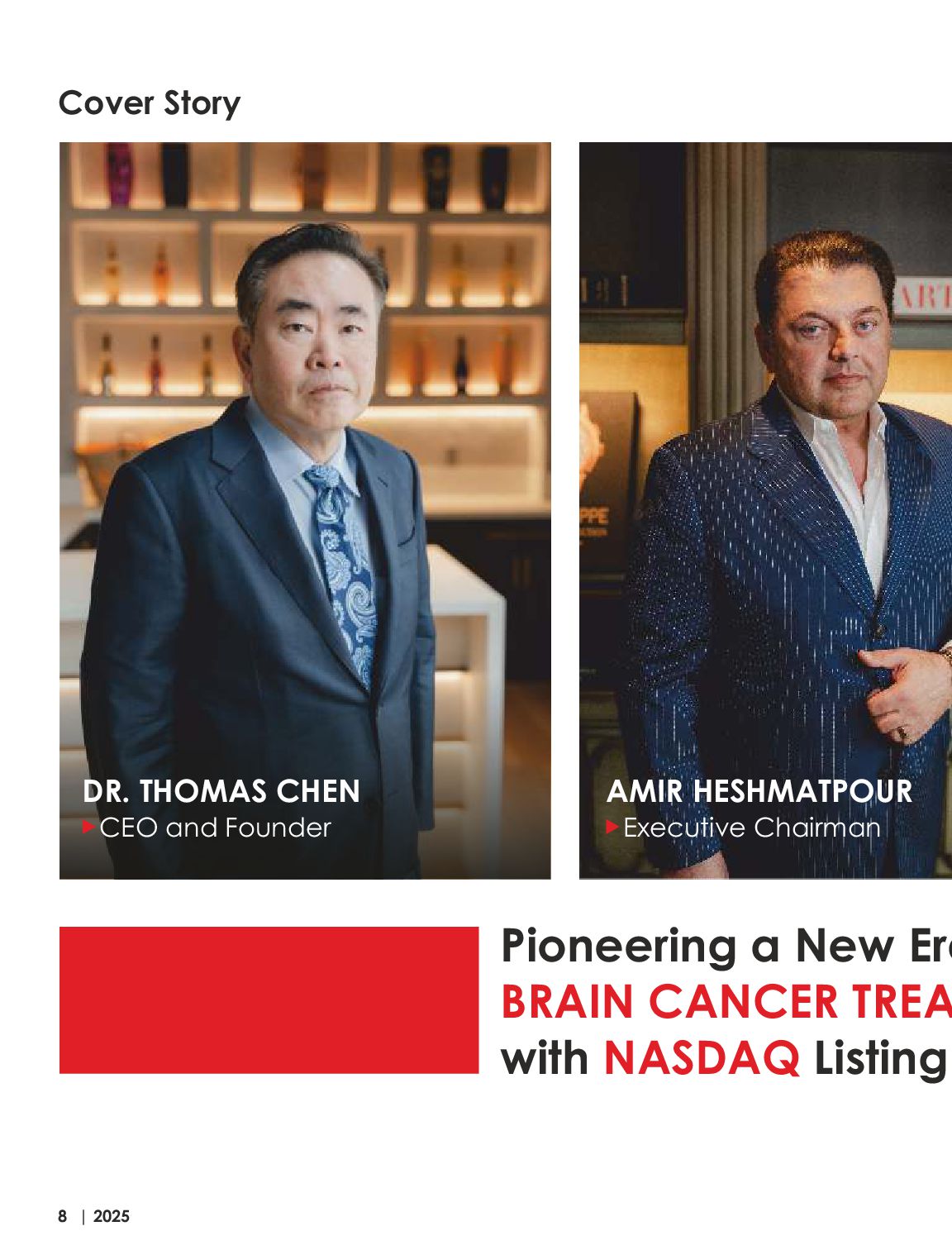
    A RE 36 0 M AG A Z I N E . C O M | 2 02 5 360 MAGAZINE Trailblazers in Healthcare Innovation: NASDAQ Visionaries 2025 Pioneering a New Era in BRAIN CANCER TREATMENT with Listing NASDAQ DR. THOMAS CHEN CEO and Founder AMIR HESHMATPOUR Executive Chairman NTHI
  2. 360 MAGAZINE How about showcasing your products to 90,000+ C-suite

    Subscribers? To get recent updates of our magazines [email protected] S U B S C R I B E
  3. EVA N. FROM EDITORS DESK Celebrating Healthcare Excellence! Dear readers,

    It gives me great pleasure to welcome you to the latest edition of Healthcare360 Magazine, titled “Trailblazers in Healthcare Innovation: NASDAQ Visionaries 2025.” This special issue is a celebration of the remarkable leaders and companies driving groundbreaking advancements in the healthcare industry—the visionaries who are shaping the future of medicine, biotechnology, and patient care. The healthcare sector stands at a transformative crossroads, where technological advancements, innovative therapies, and data-driven insights are revolutionizing the way we approach health and wellness. The companies and leaders featured in this issue have not only embraced this change but have become the architects of a more efficient, accessible, and patient-focused healthcare ecosystem. From cutting-edge biotech firms leveraging AI to improve drug discovery to telehealth pioneers enhancing patient engagement, their stories are a testament to the power of vision and determination. What sets these NASDAQ-listed trailblazers apart is not just their ability to innovate but also their resilience in navigating the complexities of a highly regulated and rapidly evolving industry. Their unwavering commitment to improving global health outcomes, backed by strategic leadership and technological excellence, has positioned them at the forefront of healthcare innovation. In this issue, you will discover inspiring profiles of CEOs, researchers, and healthcare entrepreneurs whose strategic decisions and bold leadership have led to transformative breakthroughs. We delve into how they are harnessing the potential of big data, personalized medicine, and advanced therapeutics to tackle some of the most pressing healthcare challenges of our time. On the cover of this issue, we have featured NeOnc Technologies Holdings. For twelve years, the company has dedicated itself to developing groundbreaking drug delivery systems and targeted therapies designed to significantly improve patient outcomes. Thank you for joining us on this journey through the future of healthcare innovation. We hope you find this issue informative, inspiring, and thought-provoking.
  4. CONTENTS NeOnc Technologies Holdings 08. Pioneering a New Era in

    Brain Cancer Treatment with NASDAQ Listing Health Research What’s Stopping You from Overeating? Scientists Found the Answer 26. 18. Conquering First Day Jitters 34. Health Tech CRISPR and the Future of Genetic Medicine
  5. Pioneering a New Era BRAIN CANCER TREA with Listing NASDAQ

    DR. THOMAS CHEN CEO and Founder AMIR HESHMATPOUR Executive Chairman Cover Story | 2025 8
  6. a in ATMENT Technologies' mission of delivering innovative solutions to

    patients battling debilitating CNS diseases. A Synergetic Leadership in Driving Innovation Amir Heshmatpour, serving as Executive Chairman of NeOnc Technologies, dedicates his efforts to strategic growth, financial oversight, and global expansion. Simultaneously, Dr. Thomas Chen, the company's CEO and Founder, spearheads scientific research, innovation, and clinical advancements. This complementary leadership structure, characterized by a balance between scientific excellence and robust business execution, has been instrumental in NeOnc Technologies' ability to successfully bridge the gap between groundbreaking research and commercial success. The synergy between Heshmatpour's strategic vision and Chen's scientific expertise has enabled NeOnc Technologies to navigate the complex landscape of biotech innovation, fostering a pathway from laboratory discoveries to tangible patient benefits. This dual leadership approach underscores the company's commitment to both scientific rigor and sustainable growth, positioning NeOnc Technologies as a leader in the development of novel CNS disease therapies. The landscape of healthcare is in a state of perpetual evolution, driven by relentless innovation and a desire to improve patient outcomes. As we move through 2025, the NASDAQ platform serves as a vital barometer for these advancements, showcasing the "Trailblazers in Healthcare Innovation: NASDAQ Visionaries 2025." This spotlight illuminates the individuals and companies that are not just adapting to the changing healthcare environment, but actively shaping its future. NeOnc Technologies Holdings embarked on a journey to the NASDAQ Global Market fueled by a resolute vision: to transform the landscape of brain cancer and central nervous system (CNS) disease treatment. For twelve years, the company dedicated itself to developing groundbreaking drug delivery systems and targeted therapies designed to significantly improve patient outcomes. Revolutionizing CNS Therapies NeOnc’s listing on the NASDAQ Global Market on March 26th, under the ticker symbol NTHI, signified a crucial milestone. This achievement grants the company heightened visibility, expanded access to capital, and the opportunity to forge strategic partnerships. These resources will enable the company to accelerate its growth, broaden its clinical trial initiatives, and expedite regulatory approvals on a global scale. This listing represents a significant step towards realizing NeOnc NeOnc TECHNOLOGIES HOLDINGS www.healthcare360magazine.com | 9
  7. BEYOND SURVIVAL RATES At NeOnc Technologies, the patient remains the

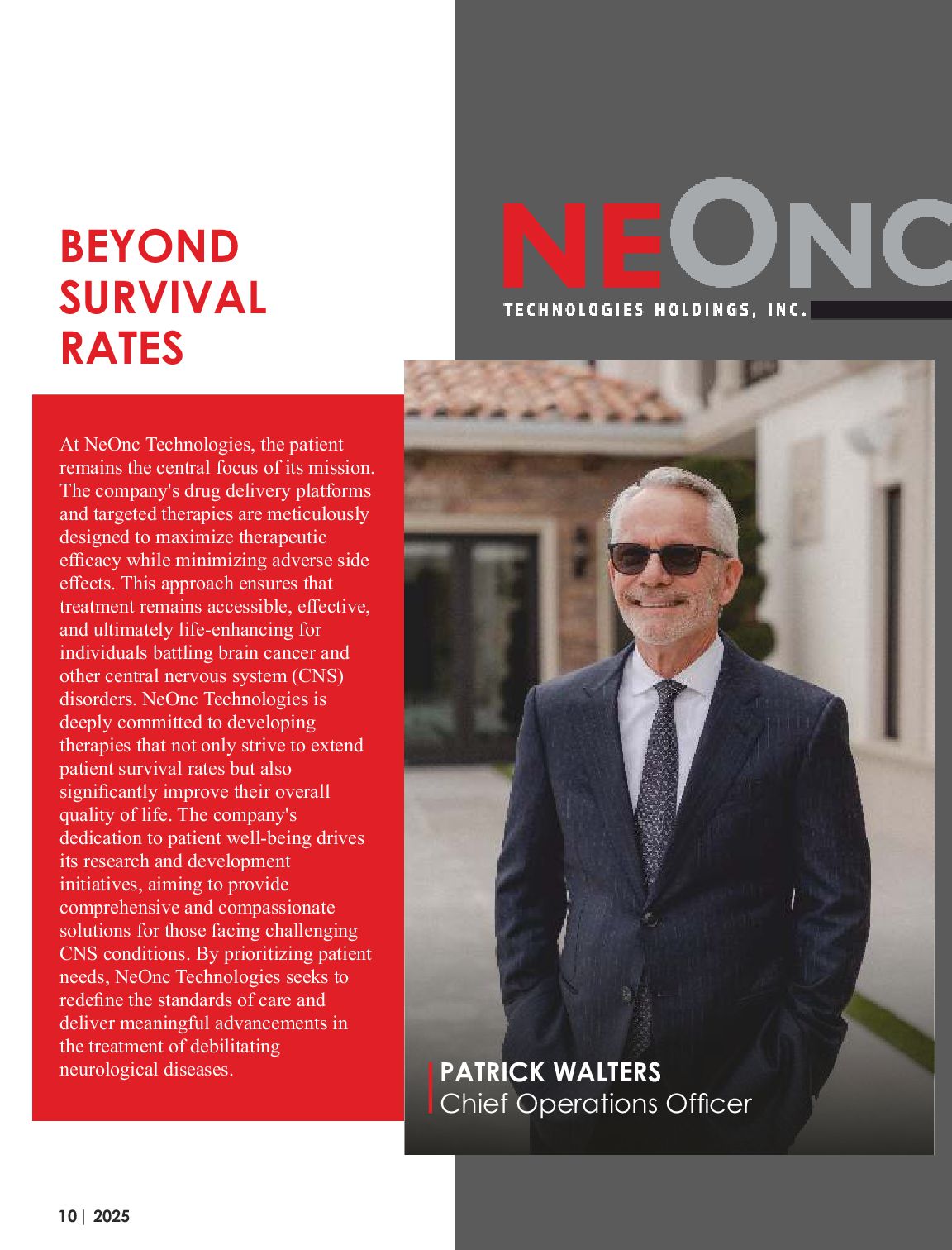
    central focus of its mission. The company's drug delivery platforms and targeted therapies are meticulously designed to maximize therapeutic efficacy while minimizing adverse side effects. This approach ensures that treatment remains accessible, effective, and ultimately life-enhancing for individuals battling brain cancer and other central nervous system (CNS) disorders. NeOnc Technologies is deeply committed to developing therapies that not only strive to extend patient survival rates but also significantly improve their overall quality of life. The company's dedication to patient well-being drives its research and development initiatives, aiming to provide comprehensive and compassionate solutions for those facing challenging CNS conditions. By prioritizing patient needs, NeOnc Technologies seeks to redefine the standards of care and deliver meaningful advancements in the treatment of debilitating neurological diseases. PATRICK WALTERS Chief Operations Ofcer | 2025 10
  8. These technological and therapeutic advancements underscore NeOnc Technologies' unwavering commitment

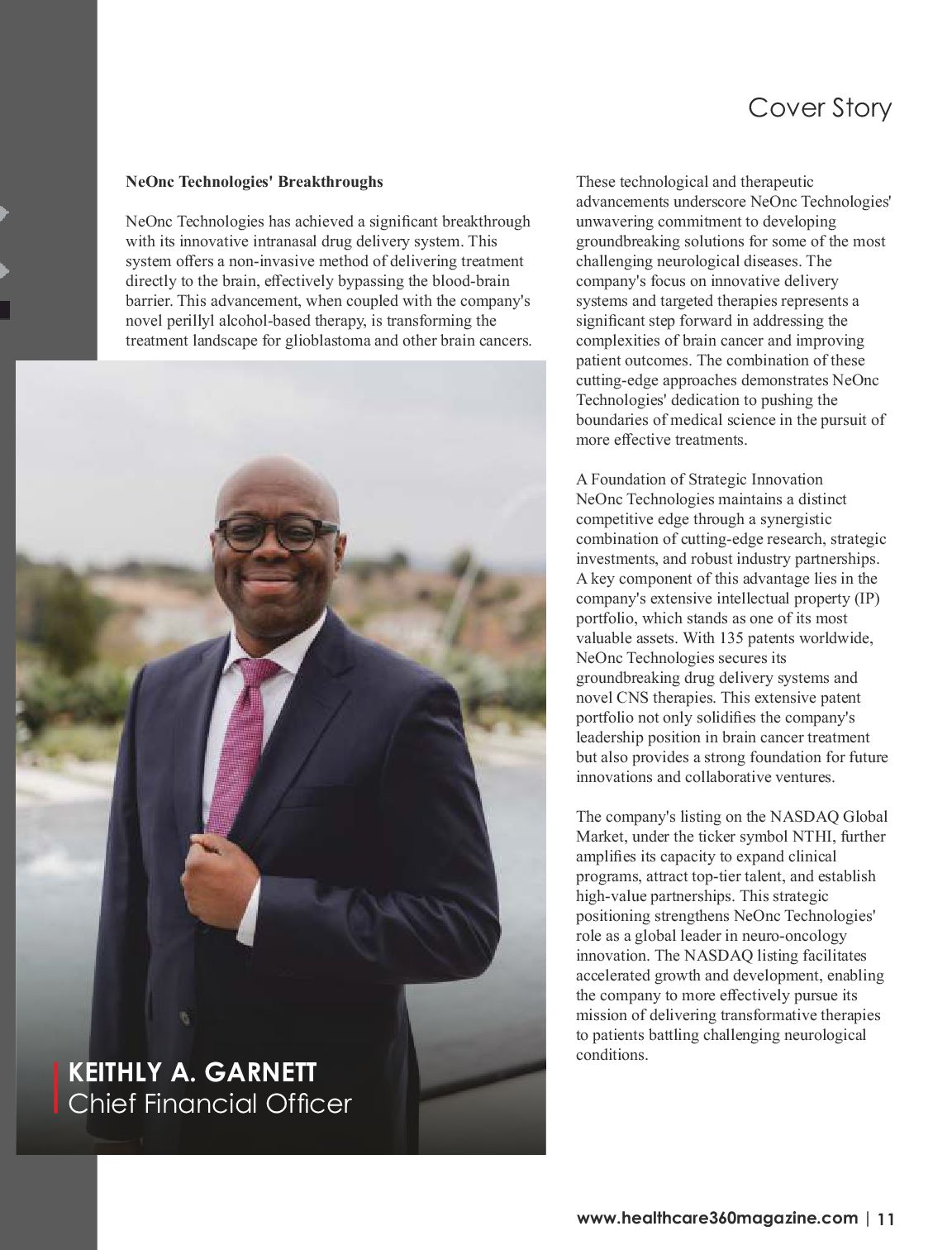
    to developing groundbreaking solutions for some of the most challenging neurological diseases. The company's focus on innovative delivery systems and targeted therapies represents a significant step forward in addressing the complexities of brain cancer and improving patient outcomes. The combination of these cutting-edge approaches demonstrates NeOnc Technologies' dedication to pushing the boundaries of medical science in the pursuit of more effective treatments. A Foundation of Strategic Innovation NeOnc Technologies maintains a distinct competitive edge through a synergistic combination of cutting-edge research, strategic investments, and robust industry partnerships. A key component of this advantage lies in the company's extensive intellectual property (IP) portfolio, which stands as one of its most valuable assets. With 135 patents worldwide, NeOnc Technologies secures its groundbreaking drug delivery systems and novel CNS therapies. This extensive patent portfolio not only solidifies the company's leadership position in brain cancer treatment but also provides a strong foundation for future innovations and collaborative ventures. The company's listing on the NASDAQ Global Market, under the ticker symbol NTHI, further amplifies its capacity to expand clinical programs, attract top-tier talent, and establish high-value partnerships. This strategic positioning strengthens NeOnc Technologies' role as a global leader in neuro-oncology innovation. The NASDAQ listing facilitates accelerated growth and development, enabling the company to more effectively pursue its mission of delivering transformative therapies to patients battling challenging neurological conditions. NeOnc Technologies' Breakthroughs NeOnc Technologies has achieved a significant breakthrough with its innovative intranasal drug delivery system. This system offers a non-invasive method of delivering treatment directly to the brain, effectively bypassing the blood-brain barrier. This advancement, when coupled with the company's novel perillyl alcohol-based therapy, is transforming the treatment landscape for glioblastoma and other brain cancers. KEITHLY A. GARNETT Chief Financial Ofcer Cover Story www.healthcare360magazine.com | 11
  9. From Lab to Market Dr. Thomas Chen provides NeOnc Technologies

    with scientific vision, clinical expertise, and research leadership. Simultaneously, Amir Heshmatpour focuses on strategic growth, financial management, and corporate expansion. This complementary partnership ensures that scientific breakthroughs are effectively translated into commercial success. This collaborative approach benefits both patients, who gain access to innovative therapies, and stakeholders, who see the value of their investment realized. The synergy between Dr. Chen's scientific acumen and Mr. Heshmatpour's business strategy allows NeOnc Technologies to navigate the complex landscape of biotech development, driving innovation while maintaining a focus on sustainable growth and patient-centric outcomes. This balanced leadership structure is pivotal to the company's ability to achieve its mission of delivering transformative treatments for neurological diseases. Worldwide Reach NeOnc Technologies' global expansion strategy emphasizes the establishment of strategic partnerships with leading hospitals, research institutions, and regulatory agencies across North America, Europe, and select emerging markets. By adapting its therapies to the unique characteristics of regional healthcare landscapes, the company aims to ensure wider accessibility and enhance regulatory efficiency. This approach facilitates the seamless integration of NeOnc Technologies' innovative treatments into diverse healthcare systems worldwide. The company's focus on building strong collaborative relationships enables it to navigate the complexities of international markets and accelerate the delivery of its therapies to patients in need. This tailored approach to global expansion demonstrates NeOnc Technologies' commitment to making its groundbreaking CNS therapies available to a broad patient population, regardless of geographical location. THE POWER OF COLLABORATION Collaborations are considered integral to NeOnc Technologies' success. The company's work with the USC Stevens Center for Innovation has played a pivotal role in advancing its research initiatives. Furthermore, strategic partnerships with leading neuro- oncologists and prominent biotech firms have proven instrumental in facilitating the company's progression towards clinical validation and subsequent commercialization. These collaborative efforts enable NeOnc Technologies to leverage external expertise and resources, accelerating the development and delivery of its innovative CNS therapies. The company recognizes the value of synergistic partnerships in navigating the complexities of drug development and bringing groundbreaking treatments to patients. By fostering strong collaborations, NeOnc Technologies strengthens its capacity to achieve its mission of transforming the landscape of brain cancer and neurological disease treatment. Cover Story www.healthcare360magazine.com | 13
  10. Real-World Impact NeOnc Technologies places a strong emphasis on translational

    research, aiming to transform laboratory discoveries into clinically viable and accessible treatments. The company's commercialization strategy is designed to ensure that scientific breakthroughs translate into real-world impact, all while prioritizing affordability and scalability. This approach enables NeOnc Technologies to efficiently move its innovative therapies from the research phase to widespread patient access. By focusing on the practical application of its scientific advancements, the company strives to make a meaningful difference in the lives of individuals battling brain cancer and other CNS disorders. The integration of translational research and strategic commercialization underscores NeOnc Technologies' commitment to delivering effective and accessible solutions to those in need. Accelerating Approvals NeOnc Technologies engages proactively with global regulatory agencies, employing a strategic approach to accelerate the approval process. This approach leverages adaptive trial designs, the integration of real-world data, and strategic collaborations. The company maintains its commitment to upholding the highest safety and efficacy standards throughout the regulatory process. By utilizing these innovative methods, NeOnc Technologies aims to streamline the path to market for its groundbreaking CNS therapies. The company's proactive engagement with regulatory bodies facilitates efficient communication and ensures compliance with international standards. This strategic focus on regulatory affairs enables NeOnc Technologies to bring its life-changing treatments to patients more quickly while maintaining rigorous adherence to safety protocols. Redefining the Future of CNS Disease Treatment NeOnc Technologies aims to redefine the treatment paradigm for brain cancer and central nervous system (CNS) diseases. The company seeks to establish a legacy of safer, more effective, and accessible treatment options. Their focus on drug delivery innovation extends beyond oncology, with the potential to impact neurology, neurodegenerative diseases, and mental health treatments. NeOnc Technologies is particularly focused on intranasal and nano-based drug delivery platforms, which hold the promise of dramatically improving drug efficacy while minimizing systemic side effects. The company positions itself at the forefront of this innovation, pioneering new treatment modalities for a wide range of brain disorders. They are striving to change the future of brain disorder treatments. Cover Story | 2025 14
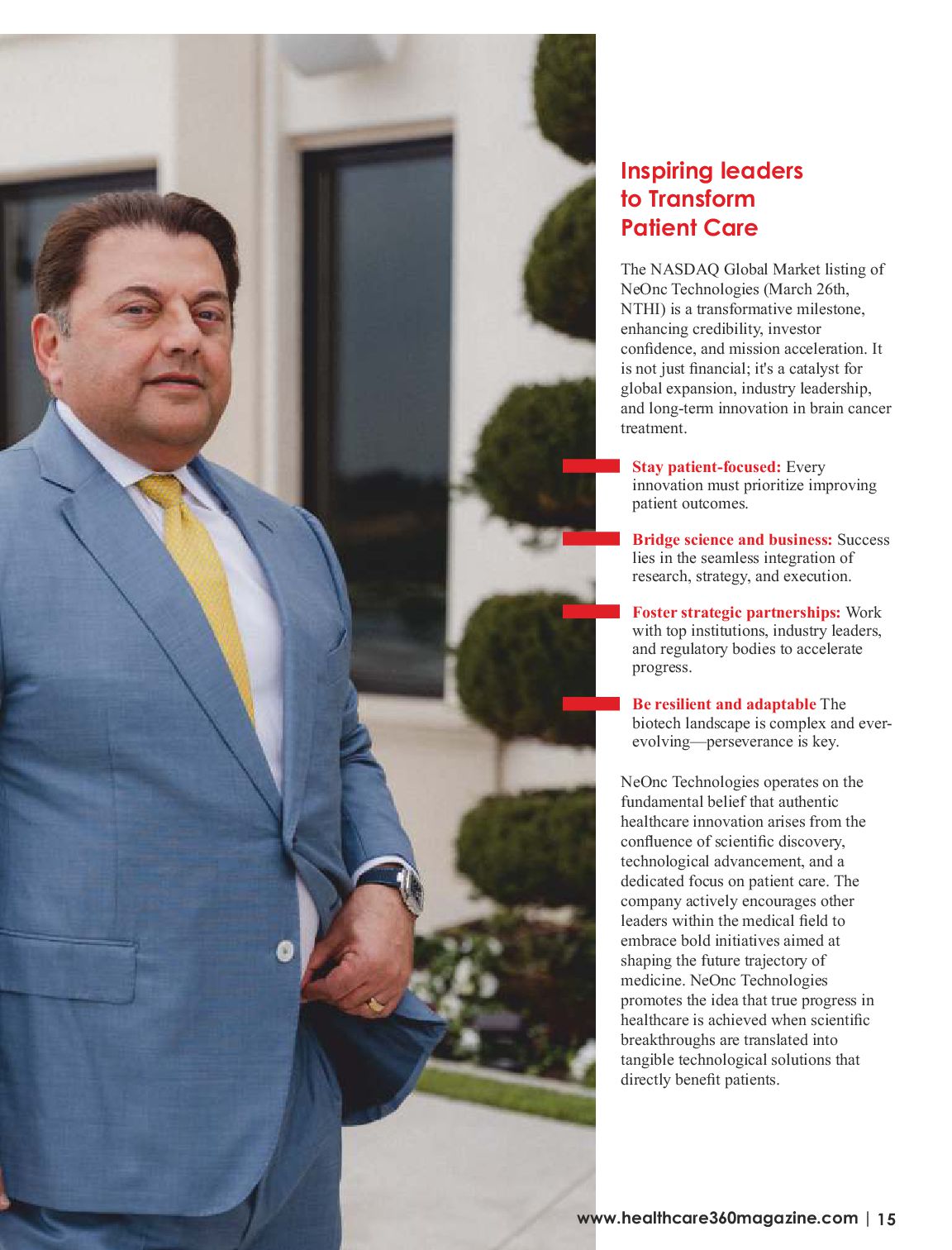
  11. Inspiring leaders to Transform Patient Care The NASDAQ Global Market

    listing of NeOnc Technologies (March 26th, NTHI) is a transformative milestone, enhancing credibility, investor confidence, and mission acceleration. It is not just financial; it's a catalyst for global expansion, industry leadership, and long-term innovation in brain cancer treatment. NeOnc Technologies operates on the fundamental belief that authentic healthcare innovation arises from the confluence of scientific discovery, technological advancement, and a dedicated focus on patient care. The company actively encourages other leaders within the medical field to embrace bold initiatives aimed at shaping the future trajectory of medicine. NeOnc Technologies promotes the idea that true progress in healthcare is achieved when scientific breakthroughs are translated into tangible technological solutions that directly benefit patients. Stay patient-focused: Every innovation must prioritize improving patient outcomes. Bridge science and business: Success lies in the seamless integration of research, strategy, and execution. Foster strategic partnerships: Work with top institutions, industry leaders, and regulatory bodies to accelerate progress. Be resilient and adaptable The biotech landscape is complex and ever- evolving—perseverance is key. www.healthcare360magazine.com | 15
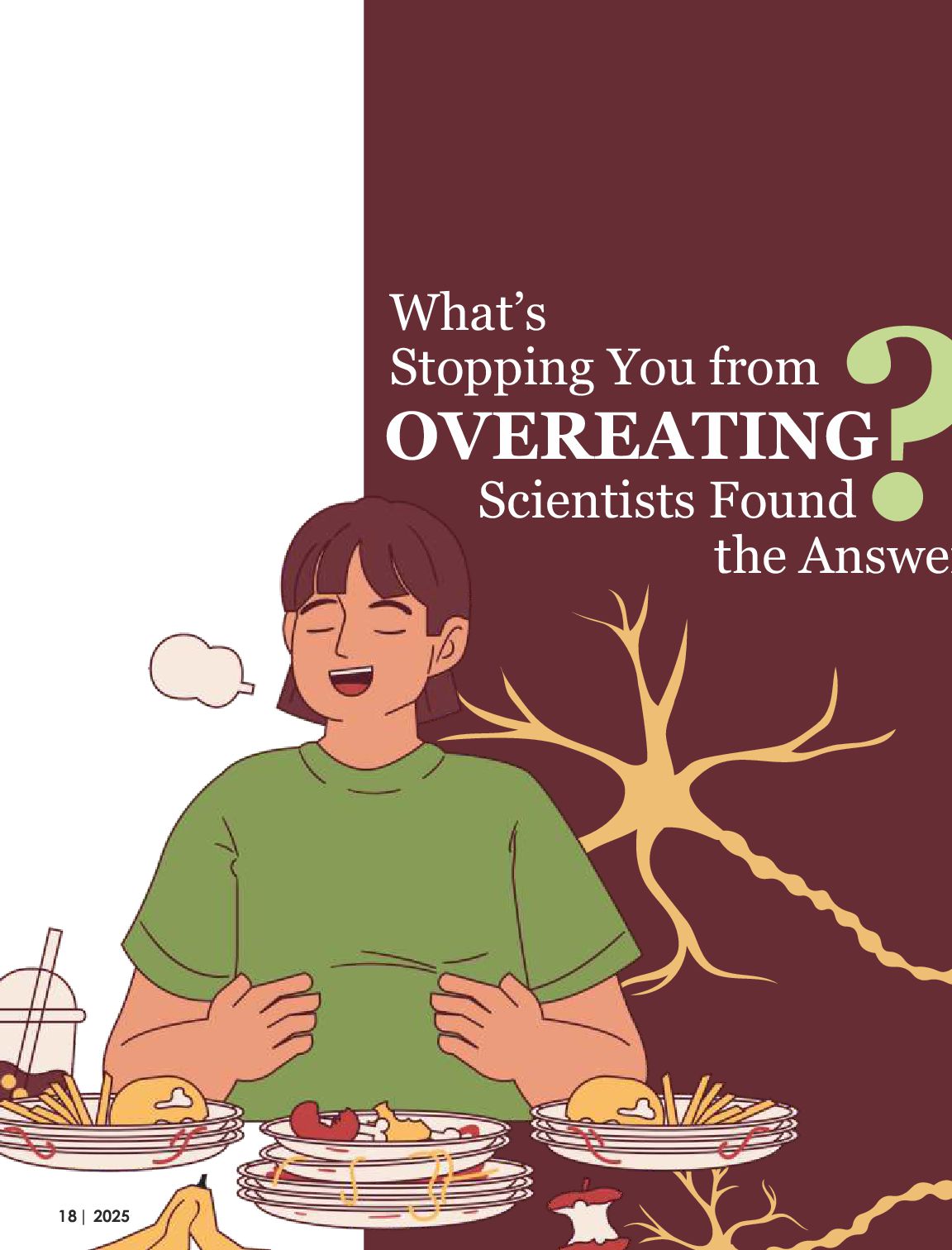
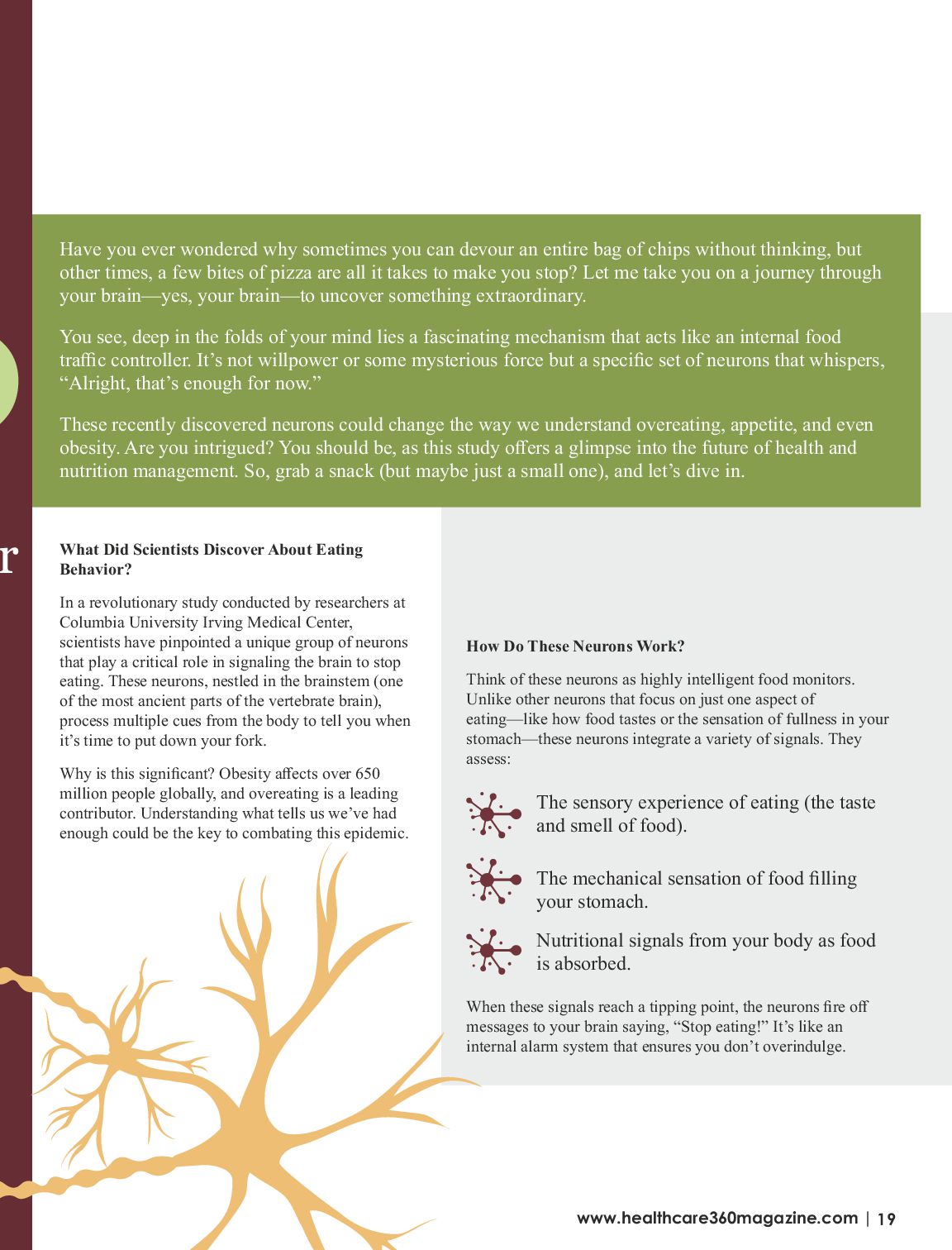
  12. r ? How Do These Neurons Work? Think of these

    neurons as highly intelligent food monitors. Unlike other neurons that focus on just one aspect of eating—like how food tastes or the sensation of fullness in your stomach—these neurons integrate a variety of signals. They assess: What Did Scientists Discover About Eating Behavior? In a revolutionary study conducted by researchers at Columbia University Irving Medical Center, scientists have pinpointed a unique group of neurons that play a critical role in signaling the brain to stop eating. These neurons, nestled in the brainstem (one of the most ancient parts of the vertebrate brain), process multiple cues from the body to tell you when it’s time to put down your fork. Why is this significant? Obesity affects over 650 million people globally, and overeating is a leading contributor. Understanding what tells us we’ve had enough could be the key to combating this epidemic. Have you ever wondered why sometimes you can devour an entire bag of chips without thinking, but other times, a few bites of pizza are all it takes to make you stop? Let me take you on a journey through your brain—yes, your brain—to uncover something extraordinary. You see, deep in the folds of your mind lies a fascinating mechanism that acts like an internal food traffic controller. It’s not willpower or some mysterious force but a specific set of neurons that whispers, “Alright, that’s enough for now.” These recently discovered neurons could change the way we understand overeating, appetite, and even obesity. Are you intrigued? You should be, as this study offers a glimpse into the future of health and nutrition management. So, grab a snack (but maybe just a small one), and let’s dive in. When these signals reach a tipping point, the neurons fire off messages to your brain saying, “Stop eating!” It’s like an internal alarm system that ensures you don’t overindulge. The sensory experience of eating (the taste and smell of food). The mechanical sensation of food filling your stomach. Nutritional signals from your body as food is absorbed. www.healthcare360magazine.com | 19
  13. Why Is This Discovery So Groundbreaking? Most appetite-related studies focus

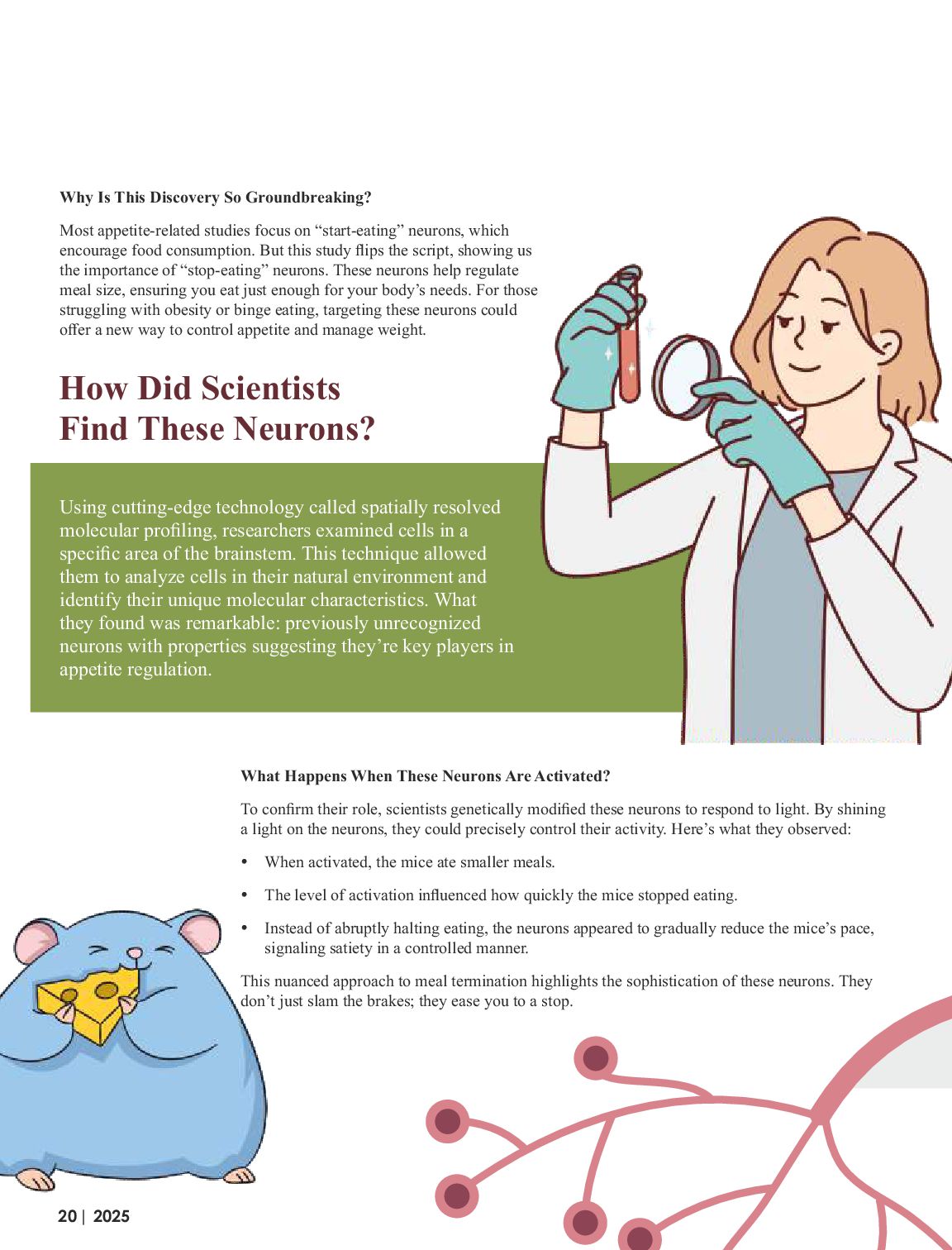
    on “start-eating” neurons, which encourage food consumption. But this study flips the script, showing us the importance of “stop-eating” neurons. These neurons help regulate meal size, ensuring you eat just enough for your body’s needs. For those struggling with obesity or binge eating, targeting these neurons could offer a new way to control appetite and manage weight. What Happens When These Neurons Are Activated? To confirm their role, scientists genetically modified these neurons to respond to light. By shining a light on the neurons, they could precisely control their activity. Here’s what they observed: Ÿ When activated, the mice ate smaller meals. Ÿ The level of activation influenced how quickly the mice stopped eating. Ÿ Instead of abruptly halting eating, the neurons appeared to gradually reduce the mice’s pace, signaling satiety in a controlled manner. This nuanced approach to meal termination highlights the sophistication of these neurons. They don’t just slam the brakes; they ease you to a stop. How Did Scientists Find These Neurons? Using cutting-edge technology called spatially resolved molecular profiling, researchers examined cells in a specific area of the brainstem. This technique allowed them to analyze cells in their natural environment and identify their unique molecular characteristics. What they found was remarkable: previously unrecognized neurons with properties suggesting they’re key players in appetite regulation. | 2025 20
  14. Do Humans Have These Neurons Too? Here’s the exciting part:

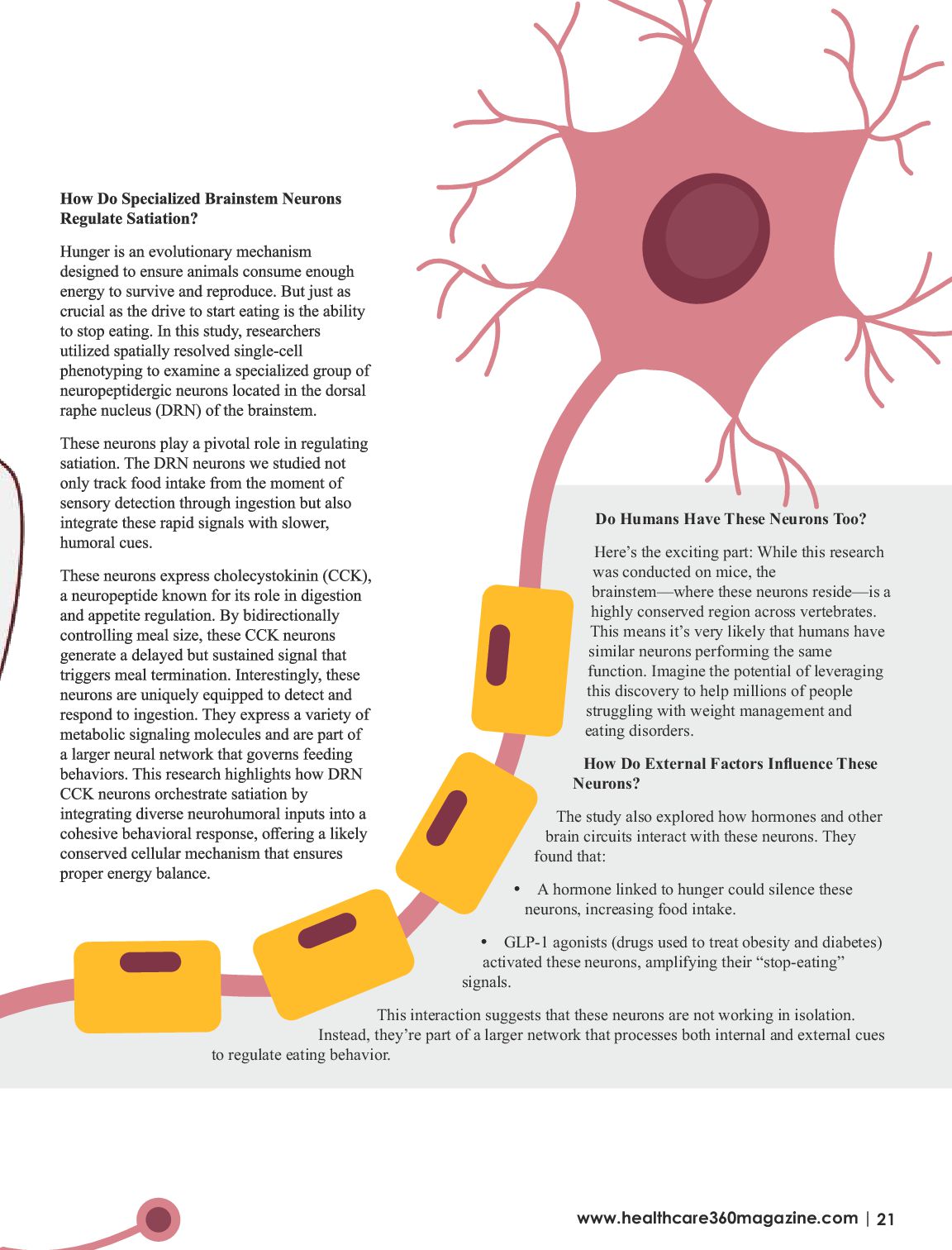
    While this research was conducted on mice, the brainstem—where these neurons reside—is a highly conserved region across vertebrates. This means it’s very likely that humans have similar neurons performing the same function. Imagine the potential of leveraging this discovery to help millions of people struggling with weight management and eating disorders. How Do External Factors Influence These Neurons? The study also explored how hormones and other brain circuits interact with these neurons. They found that: Ÿ A hormone linked to hunger could silence these neurons, increasing food intake. Ÿ GLP-1 agonists (drugs used to treat obesity and diabetes) activated these neurons, amplifying their “stop-eating” signals. This interaction suggests that these neurons are not working in isolation. Instead, they’re part of a larger network that processes both internal and external cues to regulate eating behavior. www.healthcare360magazine.com | 21
  15. This discovery isn’t just a scientific breakthrough; it’s a potential

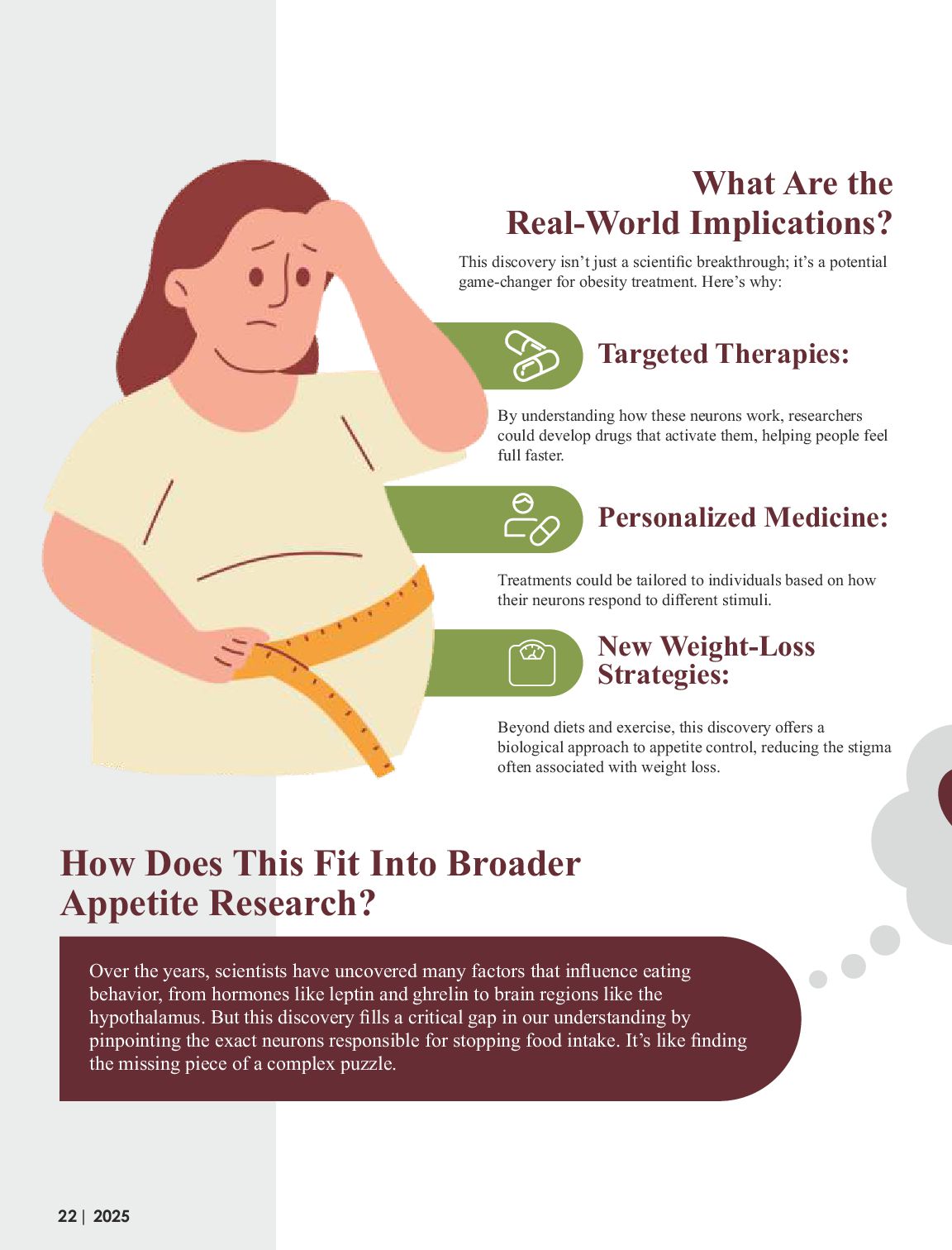
    game-changer for obesity treatment. Here’s why: What Are the Real-World Implications? Targeted Therapies: By understanding how these neurons work, researchers could develop drugs that activate them, helping people feel full faster. Personalized Medicine: Treatments could be tailored to individuals based on how their neurons respond to different stimuli. New Weight-Loss Strategies: Beyond diets and exercise, this discovery offers a biological approach to appetite control, reducing the stigma often associated with weight loss. Over the years, scientists have uncovered many factors that influence eating behavior, from hormones like leptin and ghrelin to brain regions like the hypothalamus. But this discovery fills a critical gap in our understanding by pinpointing the exact neurons responsible for stopping food intake. It’s like finding the missing piece of a complex puzzle. How Does This Fit Into Broader Appetite Research? | 2025 22
  16. What Are the Next Steps? The journey doesn’t end here.

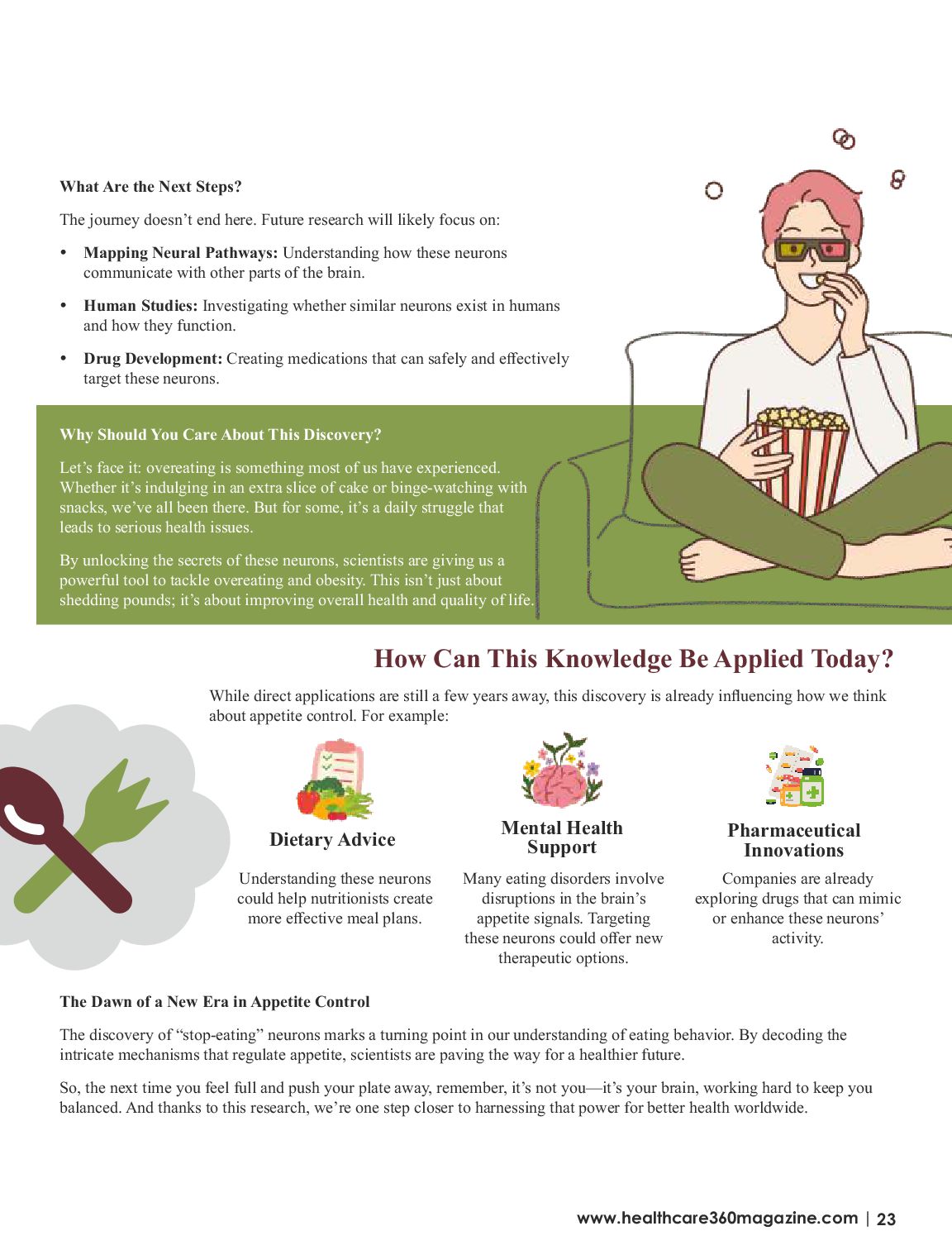
    Future research will likely focus on: Ÿ Mapping Neural Pathways: Understanding how these neurons communicate with other parts of the brain. Ÿ Human Studies: Investigating whether similar neurons exist in humans and how they function. Ÿ Drug Development: Creating medications that can safely and effectively target these neurons. While direct applications are still a few years away, this discovery is already influencing how we think about appetite control. For example: Why Should You Care About This Discovery? Let’s face it: overeating is something most of us have experienced. Whether it’s indulging in an extra slice of cake or binge-watching with snacks, we’ve all been there. But for some, it’s a daily struggle that leads to serious health issues. By unlocking the secrets of these neurons, scientists are giving us a powerful tool to tackle overeating and obesity. This isn’t just about shedding pounds; it’s about improving overall health and quality of life. The Dawn of a New Era in Appetite Control The discovery of “stop-eating” neurons marks a turning point in our understanding of eating behavior. By decoding the intricate mechanisms that regulate appetite, scientists are paving the way for a healthier future. So, the next time you feel full and push your plate away, remember, it’s not you—it’s your brain, working hard to keep you balanced. And thanks to this research, we’re one step closer to harnessing that power for better health worldwide. How Can This Knowledge Be Applied Today? Dietary Advice Understanding these neurons could help nutritionists create more effective meal plans. Mental Health Support Many eating disorders involve disruptions in the brain’s appetite signals. Targeting these neurons could offer new therapeutic options. Pharmaceutical Innovations Companies are already exploring drugs that can mimic or enhance these neurons’ activity. www.healthcare360magazine.com | 23
  17. PR PRThe Future Of Genetic Medicine – Are We Playing

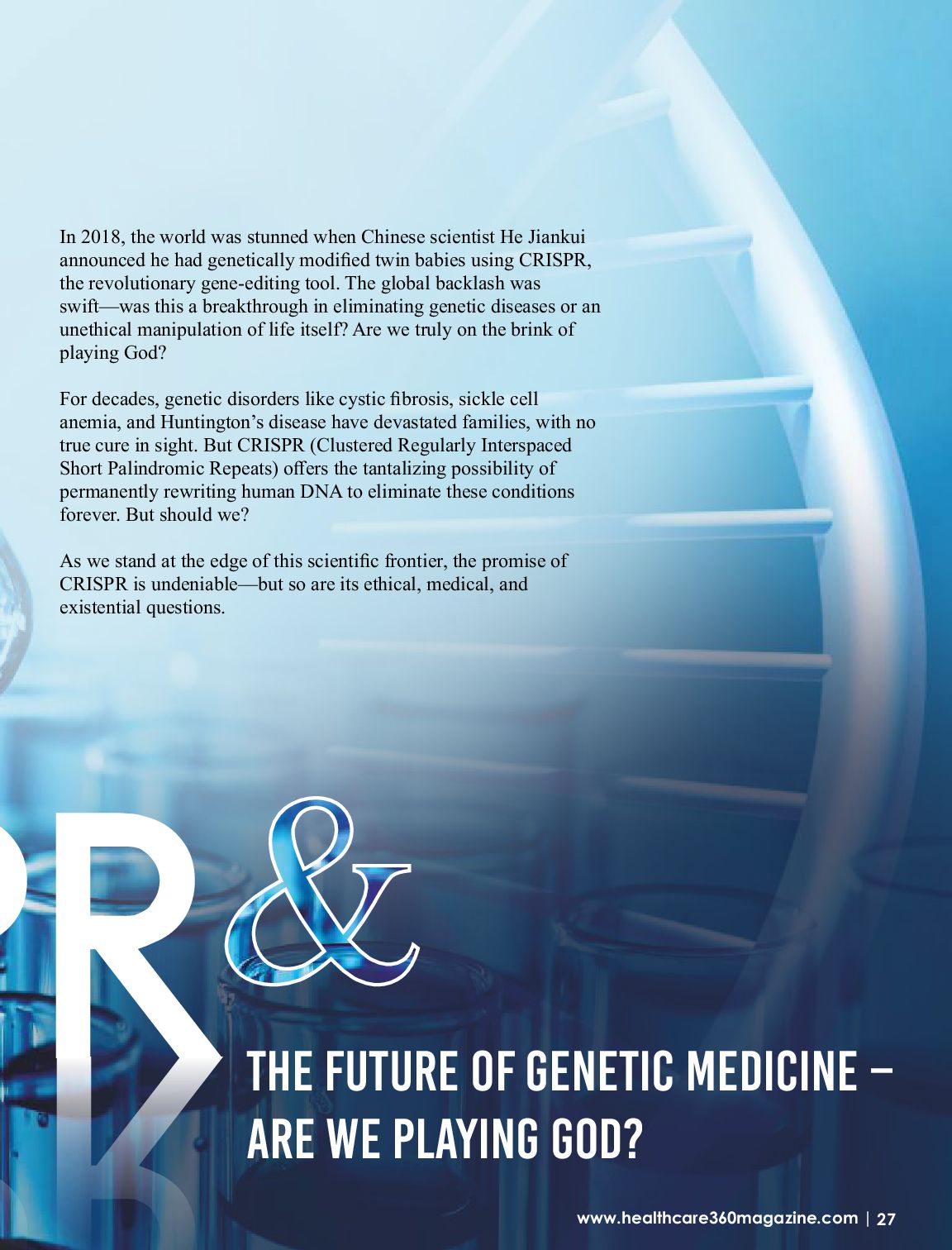
    God? In 2018, the world was stunned when Chinese scientist He Jiankui announced he had genetically modified twin babies using CRISPR, the revolutionary gene-editing tool. The global backlash was swift—was this a breakthrough in eliminating genetic diseases or an unethical manipulation of life itself? Are we truly on the brink of playing God? For decades, genetic disorders like cystic fibrosis, sickle cell anemia, and Huntington’s disease have devastated families, with no true cure in sight. But CRISPR (Clustered Regularly Interspaced Short Palindromic Repeats) offers the tantalizing possibility of permanently rewriting human DNA to eliminate these conditions forever. But should we? As we stand at the edge of this scientific frontier, the promise of CRISPR is undeniable—but so are its ethical, medical, and existential questions. www.healthcare360magazine.com | 27
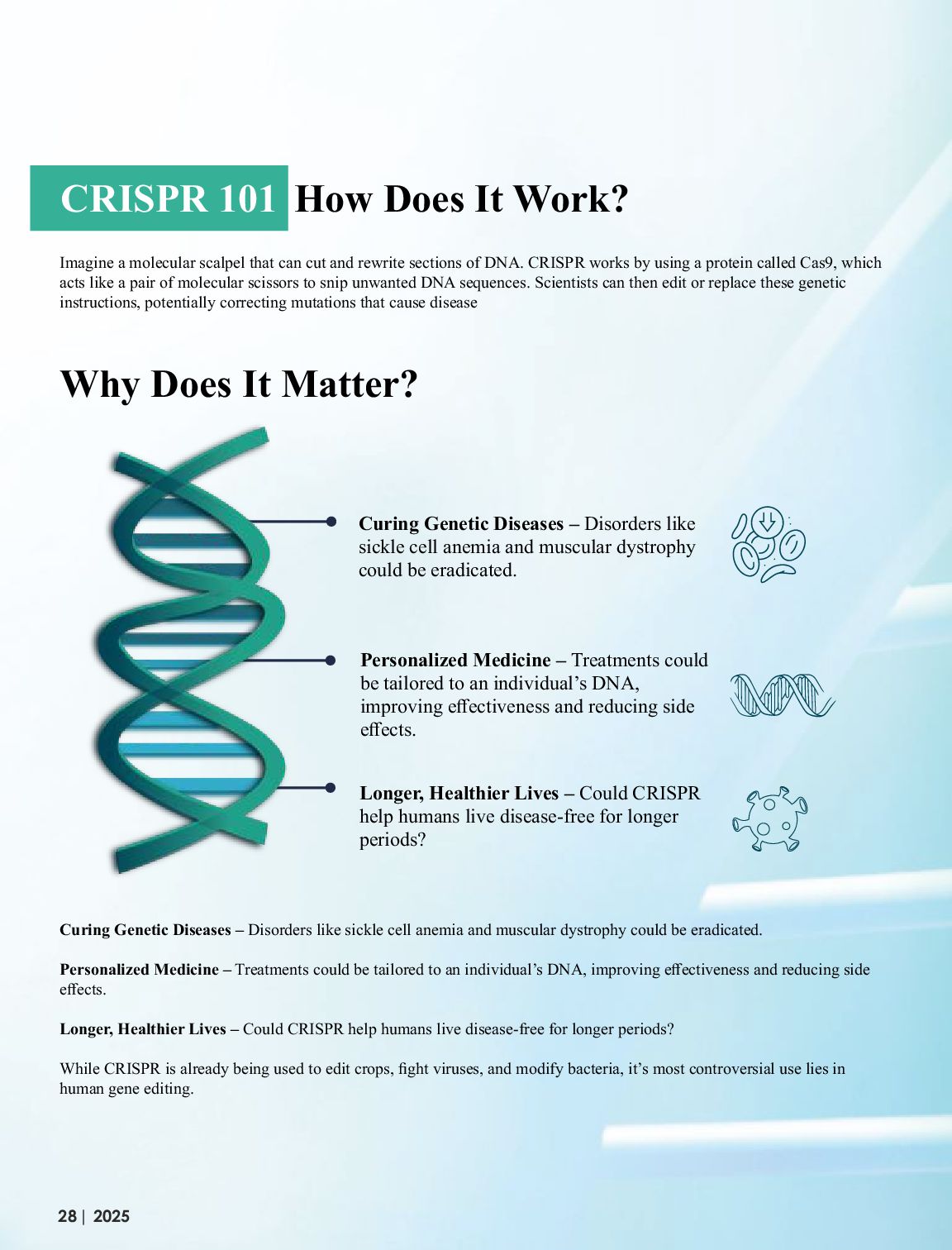
  18. How Does It Work? CRISPR 101 Imagine a molecular scalpel

    that can cut and rewrite sections of DNA. CRISPR works by using a protein called Cas9, which acts like a pair of molecular scissors to snip unwanted DNA sequences. Scientists can then edit or replace these genetic instructions, potentially correcting mutations that cause disease Why Does It Matter? Curing Genetic Diseases – Disorders like sickle cell anemia and muscular dystrophy could be eradicated. Personalized Medicine – Treatments could be tailored to an individual’s DNA, improving effectiveness and reducing side effects. Longer, Healthier Lives – Could CRISPR help humans live disease-free for longer periods? Curing Genetic Diseases – Disorders like sickle cell anemia and muscular dystrophy could be eradicated. Personalized Medicine – Treatments could be tailored to an individual’s DNA, improving effectiveness and reducing side effects. Longer, Healthier Lives – Could CRISPR help humans live disease-free for longer periods? While CRISPR is already being used to edit crops, fight viruses, and modify bacteria, it’s most controversial use lies in human gene editing. | 2025 28
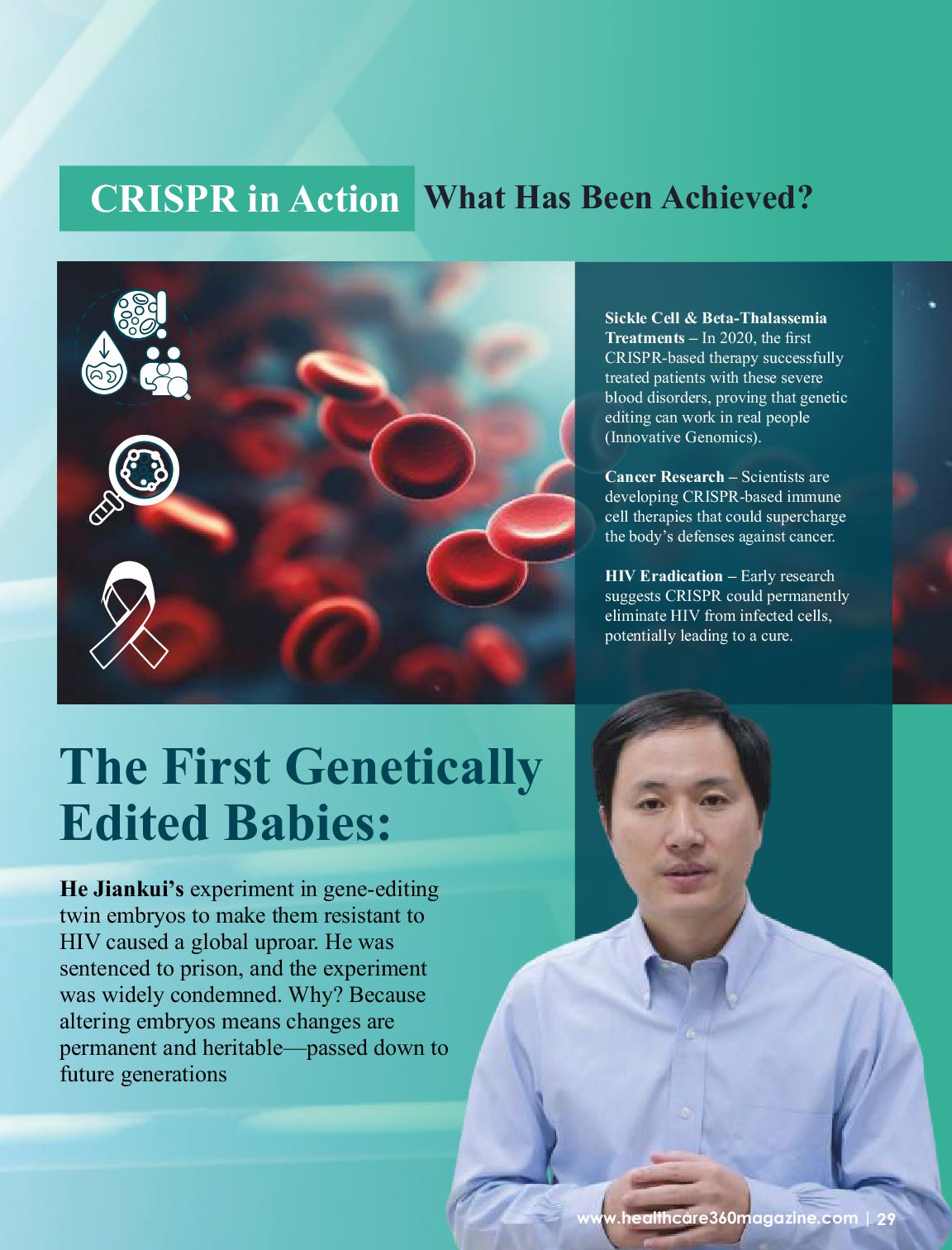
  19. What Has Been Achieved? CRISPR in Action He Jiankui’s experiment

    in gene-editing twin embryos to make them resistant to HIV caused a global uproar. He was sentenced to prison, and the experiment was widely condemned. Why? Because altering embryos means changes are permanent and heritable—passed down to future generations Sickle Cell & Beta-Thalassemia Treatments – In 2020, the first CRISPR-based therapy successfully treated patients with these severe blood disorders, proving that genetic editing can work in real people (Innovative Genomics). Cancer Research – Scientists are developing CRISPR-based immune cell therapies that could supercharge the body’s defenses against cancer. HIV Eradication – Early research suggests CRISPR could permanently eliminate HIV from infected cells, potentially leading to a cure. The First Genetically Edited Babies: www.healthcare360magazine.com | 29
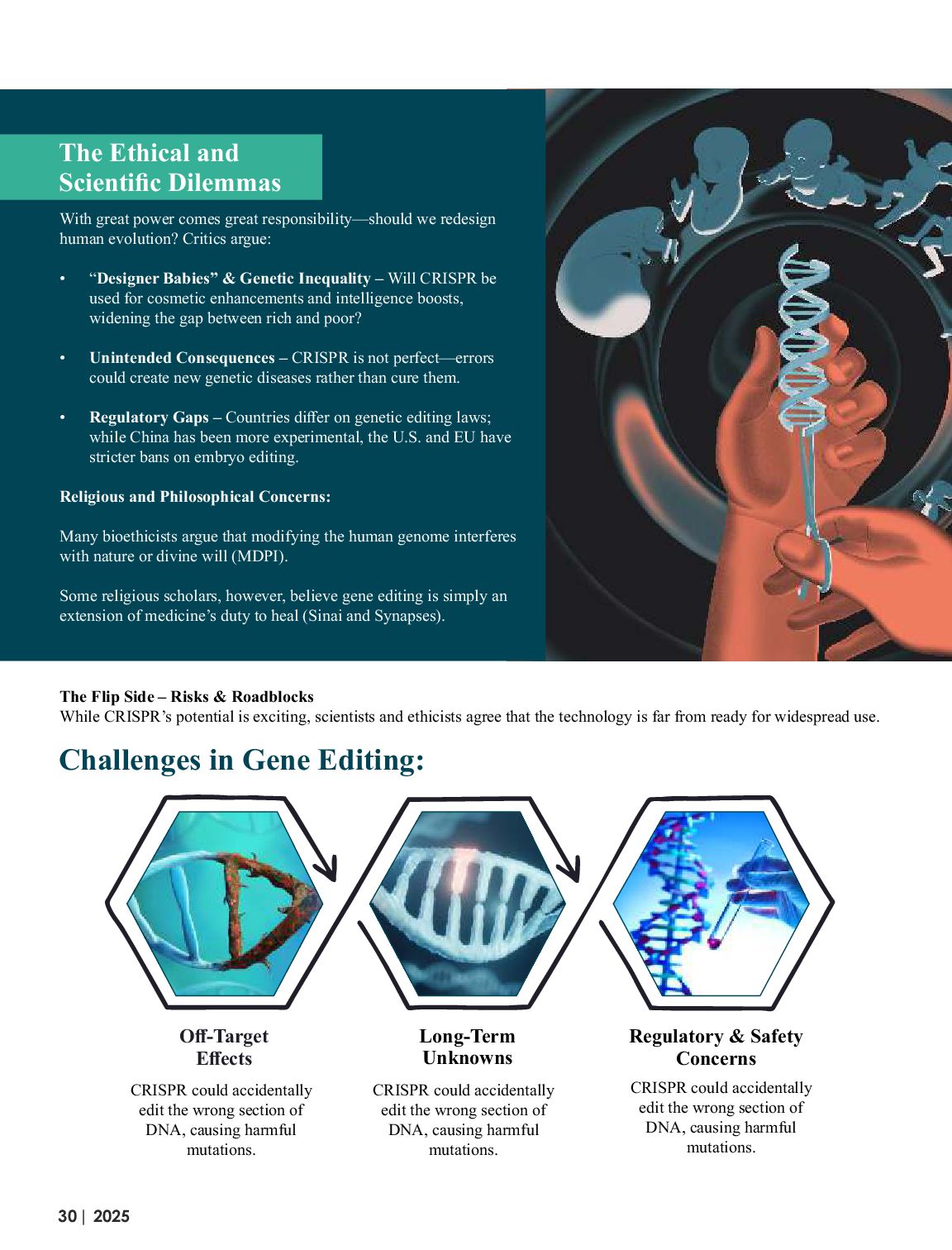
  20. With great power comes great responsibility—should we redesign human evolution?

    Critics argue: • “Designer Babies” & Genetic Inequality – Will CRISPR be used for cosmetic enhancements and intelligence boosts, widening the gap between rich and poor? • Unintended Consequences – CRISPR is not perfect—errors could create new genetic diseases rather than cure them. • Regulatory Gaps – Countries differ on genetic editing laws; while China has been more experimental, the U.S. and EU have stricter bans on embryo editing. Religious and Philosophical Concerns: Many bioethicists argue that modifying the human genome interferes with nature or divine will (MDPI). Some religious scholars, however, believe gene editing is simply an extension of medicine’s duty to heal (Sinai and Synapses). The Ethical and Scientific Dilemmas The Flip Side – Risks & Roadblocks While CRISPR’s potential is exciting, scientists and ethicists agree that the technology is far from ready for widespread use. Challenges in Gene Editing: Off-Target Effects Long-Term Unknowns Regulatory & Safety Concerns CRISPR could accidentally edit the wrong section of DNA, causing harmful mutations. CRISPR could accidentally edit the wrong section of DNA, causing harmful mutations. CRISPR could accidentally edit the wrong section of DNA, causing harmful mutations. | 2025 30
  21. The Verdict – Where Do We Go From Here? As

    CRISPR technology advances, we must ask ourselves: Are we truly playing God, or are we simply taking control of our own biology? What’s Next? Safer CRISPR Alternatives – New gene-editing tools like prime editing promise even greater accuracy and fewer risks. Stronger Ethical Frameworks – Global organizations are working to establish clear guidelines on what gene editing should and should not be used for. The Future of Medicine? – Experts predict that within 10-20 years, gene editing could become as common as vaccinations today (Futurism). Should We Edit Life Itself? The power to edit DNA is the power to reshape human destiny. Some see CRISPR as the next step in medical evolution, while others warn of its unintended consequences. What do you think? Should we embrace CRISPR’s potential, or is it a dangerous step too far? Join the debate in the comments below! www.healthcare360magazine.com | 31
  22. Introduction: For kids of all ages, the annual "first day

    jitters" can bring with it a mixture of excitement and anxiety as the school year draws near. These butterflies you get before you go back to school are quite natural. They could be caused by the prospect of meeting new people, strange teachers, or having to get used to a new schedule. We'll go over five practical methods in this extensive guide to help pupils get over their "first day jitters" and begin the school year with self-assurance and excitement. 1. Familiarize Yourself with the Environment: First Day Jitters Tip #1: One of the main sources of anxiety on the first day of school is the unknown environment. To ease these jitters, take a tour of the school before the official start date. Familiarize yourself with classrooms, the cafeteria, and important facilities like the library and restroom. Knowing where everything is located can make the first day feel less overwhelming. First Day Jitters Tip #2: Attend any orientation sessions or open houses offered by the school. These events provide an opportunity to meet teachers, see classrooms, and possibly connect with future classmates. The more familiar you become with the school setting, the more at ease you'll feel on the first day. centered mindset. By incorporating practices such as deep-breathing exercises and positive visualization, you not only navigate the first day with composure but also equip yourself with invaluable tools for managing stress throughout the school year. As we explore the art of mindfulness, consider it a roadmap to a serene mental space that transforms the first day from anxiety-inducing to empowering. First Day Jitters Tip #5: Incorporate mindfulness and relaxation techniques into your routine leading up to the first day. Deep-breathing exercises, meditation, or simple mindfulness practices can help calm nerves and center your focus. These techniques can be particularly effective in moments of heightened anxiety, allowing you to regain control of your emotions. First Day Jitters Tip #6: Visualize a positive first day experience. Picture yourself confidently navigating the hallways, engaging in friendly conversations, and successfully completing any tasks that come your way. Visualization can help create a positive mindset and reduce the fear associated with the unknown. 4. Prepare and Organize: First Day Jitters Tip #7: Pack your bag and organize your school supplies the night before. Knowing that you are well-prepared can alleviate stress on the first day. Make a checklist of items you need, such as notebooks, pens, and any necessary paperwork. This proactive approach ensures a smooth start and minimizes the risk of forgetting essential items. First Day Jitters Tip #8: Lay out your outfit the night before to avoid any last-minute wardrobe dilemmas. Feeling confident in your appearance 2. Connect with Peers: Navigating the first day of school is not a solo journey; it's a collective experience shared with peers. Recognizing the power of connection, this section emphasizes proactive steps to turn potential classmates into familiar faces. Beyond the class rosters, taking the initiative to connect with peers before the school year officially begins lays the foundation for a supportive social network. In the following paragraphs, we explore the significance of forging early connections through meet-ups and shared interests, ensuring that the first day is not just a sea of new faces but a community of potential friends ready to embark on the school year together. First Day Jitters Tip #3: Reach out to classmates before the school year begins. Many schools share class rosters in advance, allowing you to identify and connect with future peers. Consider organizing a small get- together or virtual meet-up with classmates. Establishing connections beforehand can turn unfamiliar faces into friendly ones on the first day. First Day Jitters Tip #4: Join extracurricular activities or clubs that align with your interests. This is an excellent way to meet like-minded individuals who share your passions. Having familiar faces in various settings, such as classrooms or after- school activities, can significantly reduce first-day anxiety. 3. Practice Mindfulness and Relaxation Techniques: In the whirlwind of "first day jitters," finding moments of tranquility becomes a powerful tool for emotional resilience. This section delves into the realm of mindfulness and relaxation techniques, offering a holistic approach to calm the nerves and cultivate a | 2025 36
  23. can positively impact your overall mood and boost your self-assurance

    on the first day. 5. Establish a Support System: First Day Jitters Tip #9: Share your feelings with someone you trust, whether it's a friend, family member, or mentor. Expressing your concerns and discussing your expectations can provide valuable insights and reassurance. Often, those who have experienced their fair share of first-day jitters can offer practical advice and encouragement. of excitement and readiness by utilising these five techniques: getting to know the surroundings, making connections with peers, engaging in mindfulness practices, planning ahead and organising, and creating a support network. Recall that feeling a little nervous is normal, but if you have the correct attitude and take proactive steps, you'll be ready to face the first day of school with positivity and confidence. Seize the chance for fresh starts, new friendships, and educational opportunities that the academic year offers. First Day Jitters Tip #10: Identify a buddy or mentor at school, especially if you're entering a new grade or school level. Having someone familiar to lean on during the first day can provide a sense of security and companionship. This support system can help ease the transition and make the day more enjoyable. Conclusion: Everybody has experienced the "first day jitters" that come with the beginning of a new school year. You may turn those butterflies into a sense www.healthcare360magazine.com | 37