Share
Embed
Custom Software Solutions for Modern Businesses
Learn how custom software solutions help businesses automate tasks, connect systems, improve security, and scale. Explore Ambient Infotech's digital solutions.
Sophia Harper
October 26, 2026
Transcript
6 slides
-
Custom Software Solutions for Modern Businesses Introduction Modern businesses rely
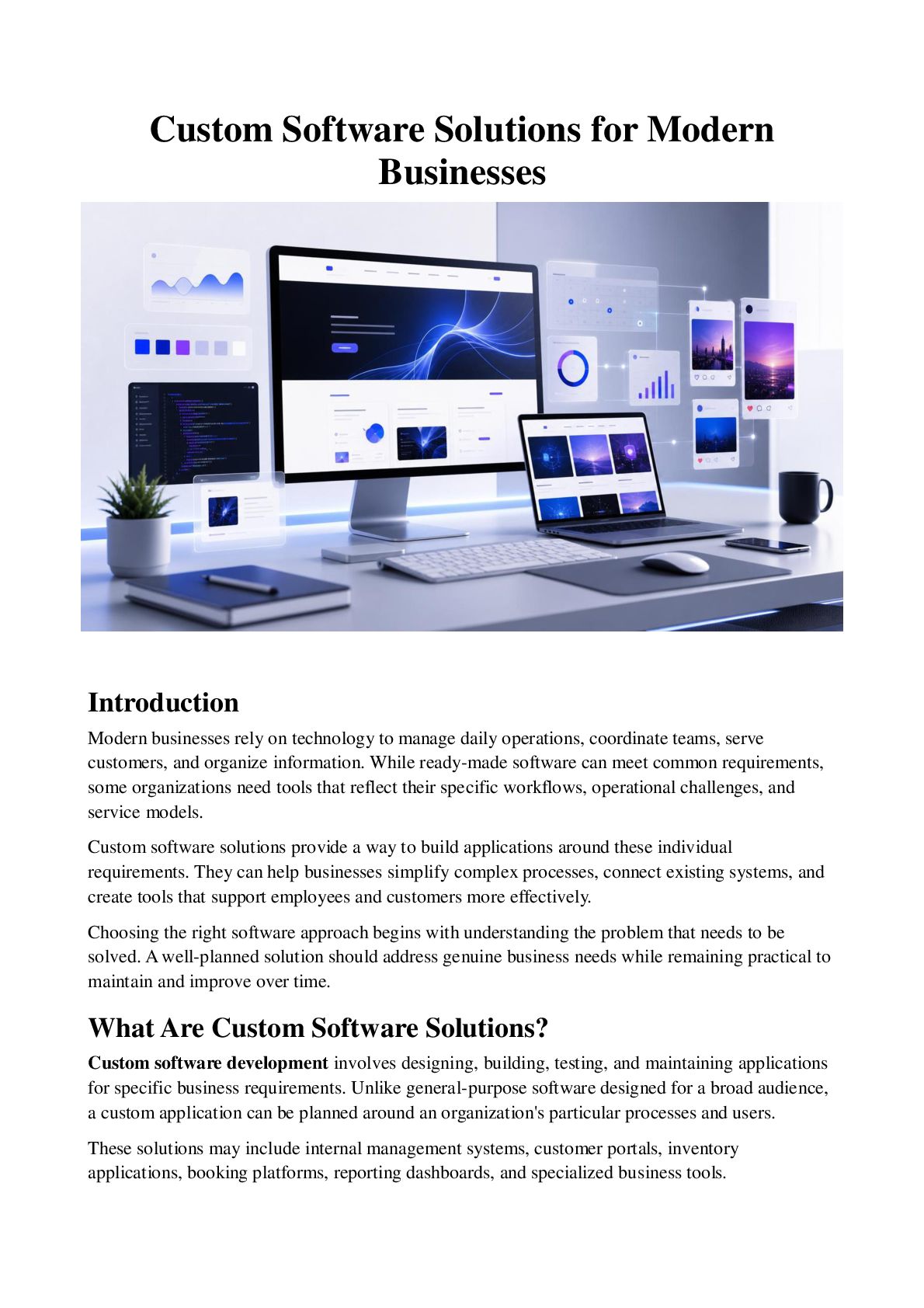
on technology to manage daily operations, coordinate teams, serve customers, and organize information. While ready-made software can meet common requirements, some organizations need tools that reflect their specific workflows, operational challenges, and service models. Custom software solutions provide a way to build applications around these individual requirements. They can help businesses simplify complex processes, connect existing systems, and create tools that support employees and customers more effectively. Choosing the right software approach begins with understanding the problem that needs to be solved. A well-planned solution should address genuine business needs while remaining practical to maintain and improve over time. What Are Custom Software Solutions? Custom software development involves designing, building, testing, and maintaining applications for specific business requirements. Unlike general-purpose software designed for a broad audience, a custom application can be planned around an organization's particular processes and users. These solutions may include internal management systems, customer portals, inventory applications, booking platforms, reporting dashboards, and specialized business tools. -
For example, a distribution company may require an inventory system
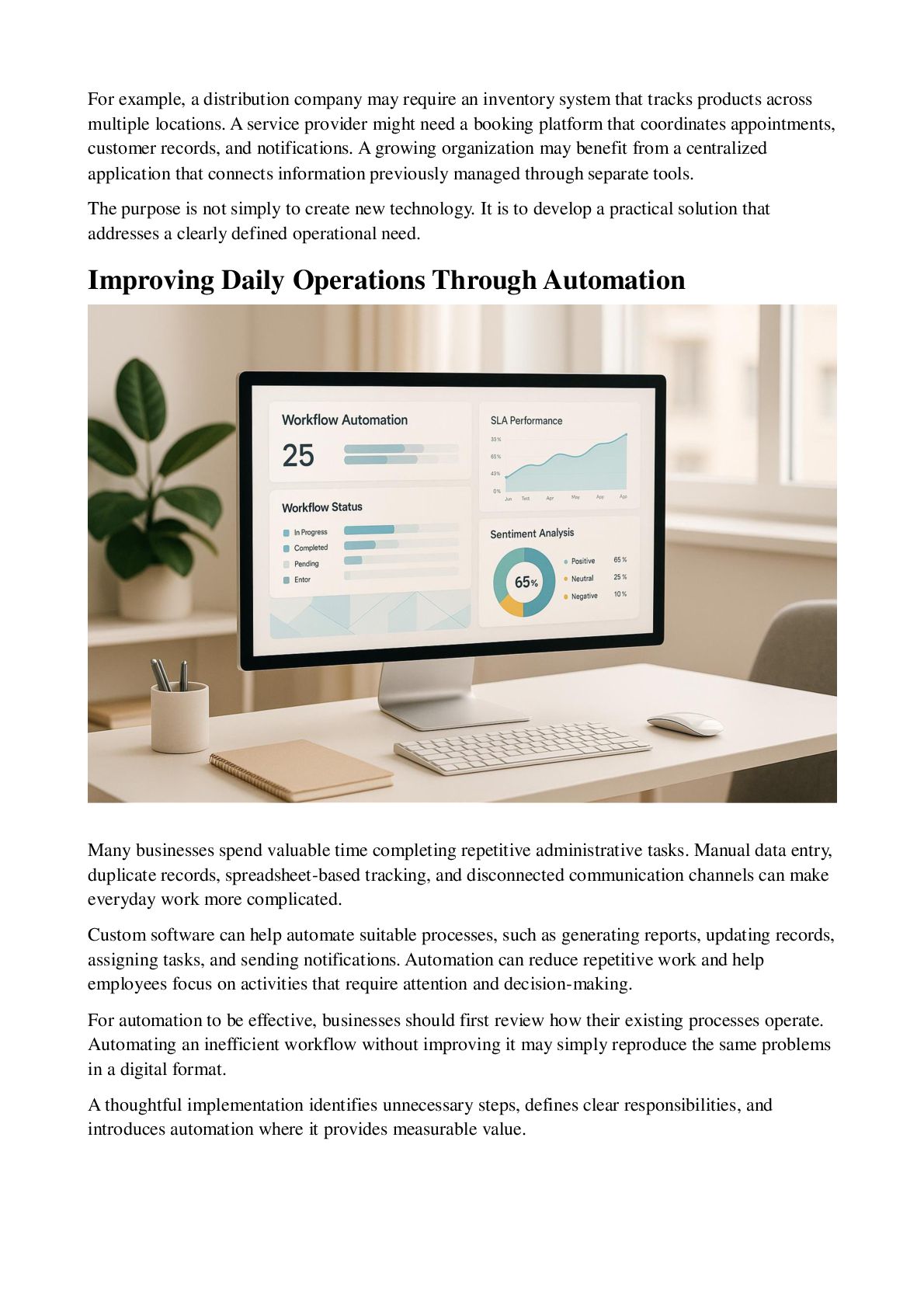
that tracks products across multiple locations. A service provider might need a booking platform that coordinates appointments, customer records, and notifications. A growing organization may benefit from a centralized application that connects information previously managed through separate tools. The purpose is not simply to create new technology. It is to develop a practical solution that addresses a clearly defined operational need. Improving Daily Operations Through Automation Many businesses spend valuable time completing repetitive administrative tasks. Manual data entry, duplicate records, spreadsheet-based tracking, and disconnected communication channels can make everyday work more complicated. Custom software can help automate suitable processes, such as generating reports, updating records, assigning tasks, and sending notifications. Automation can reduce repetitive work and help employees focus on activities that require attention and decision-making. For automation to be effective, businesses should first review how their existing processes operate. Automating an inefficient workflow without improving it may simply reproduce the same problems in a digital format. A thoughtful implementation identifies unnecessary steps, defines clear responsibilities, and introduces automation where it provides measurable value. -
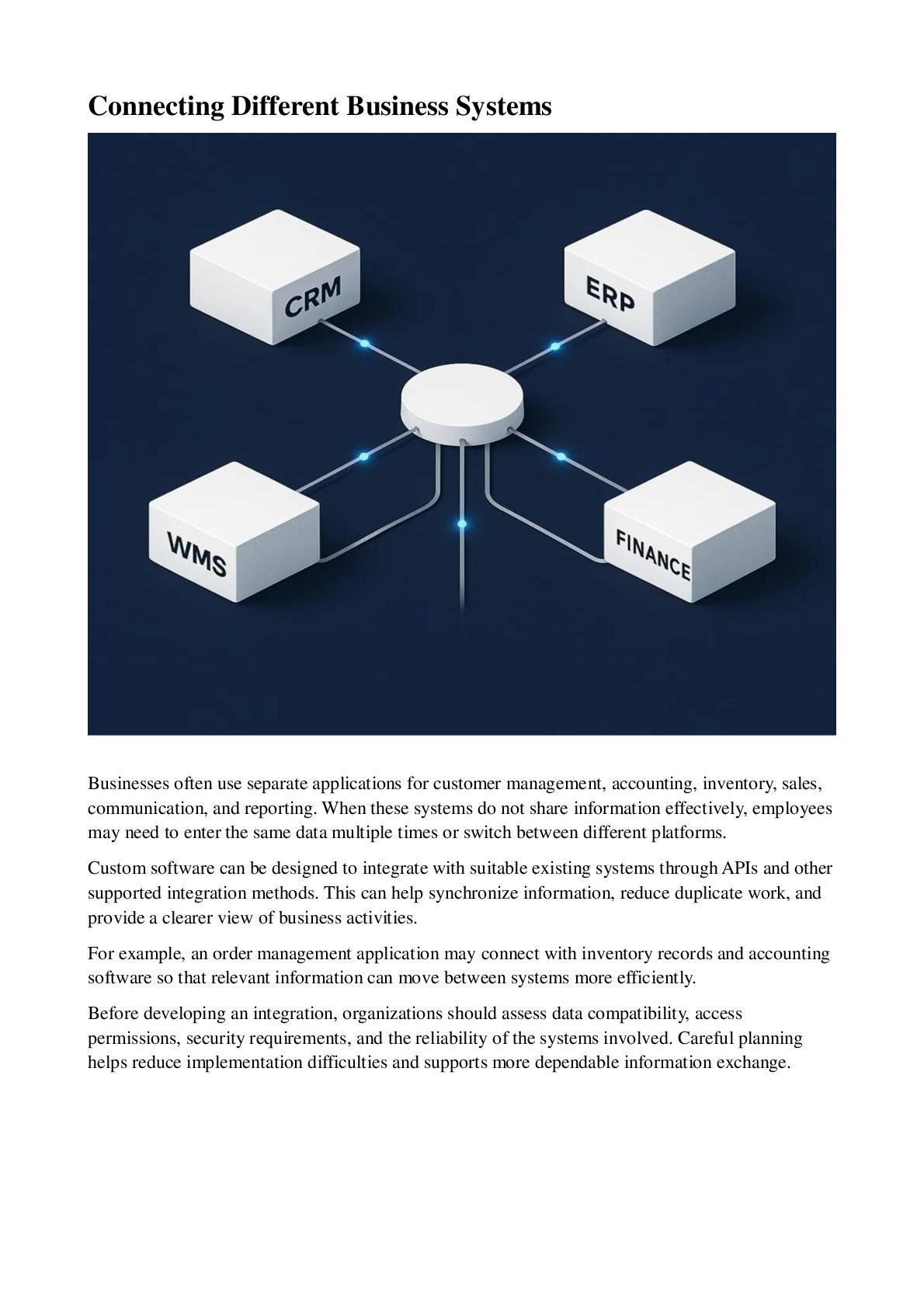
Connecting Different Business Systems Businesses often use separate applications for
customer management, accounting, inventory, sales, communication, and reporting. When these systems do not share information effectively, employees may need to enter the same data multiple times or switch between different platforms. Custom software can be designed to integrate with suitable existing systems through APIs and other supported integration methods. This can help synchronize information, reduce duplicate work, and provide a clearer view of business activities. For example, an order management application may connect with inventory records and accounting software so that relevant information can move between systems more efficiently. Before developing an integration, organizations should assess data compatibility, access permissions, security requirements, and the reliability of the systems involved. Careful planning helps reduce implementation difficulties and supports more dependable information exchange. -
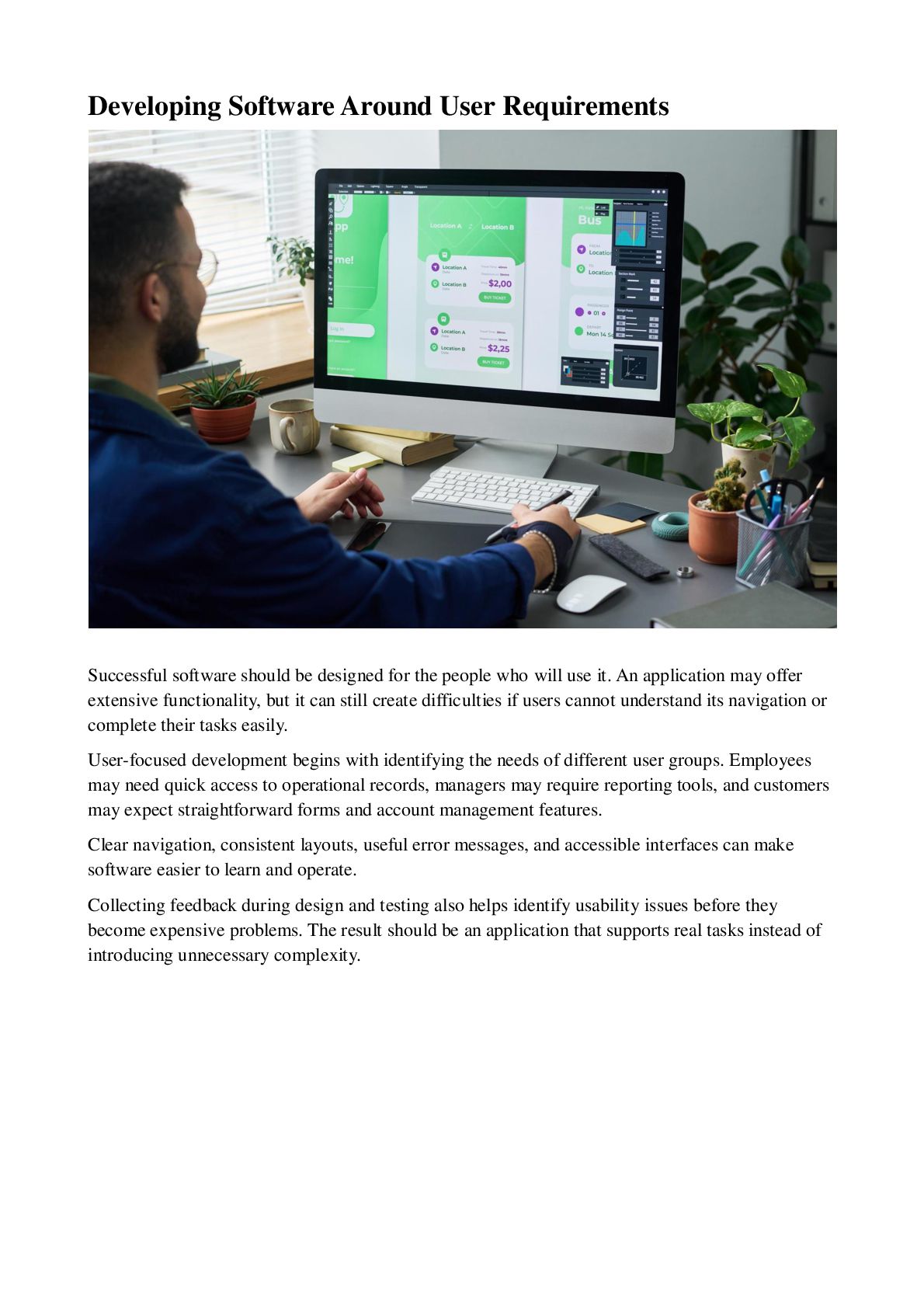
Developing Software Around User Requirements Successful software should be designed
for the people who will use it. An application may offer extensive functionality, but it can still create difficulties if users cannot understand its navigation or complete their tasks easily. User-focused development begins with identifying the needs of different user groups. Employees may need quick access to operational records, managers may require reporting tools, and customers may expect straightforward forms and account management features. Clear navigation, consistent layouts, useful error messages, and accessible interfaces can make software easier to learn and operate. Collecting feedback during design and testing also helps identify usability issues before they become expensive problems. The result should be an application that supports real tasks instead of introducing unnecessary complexity. -
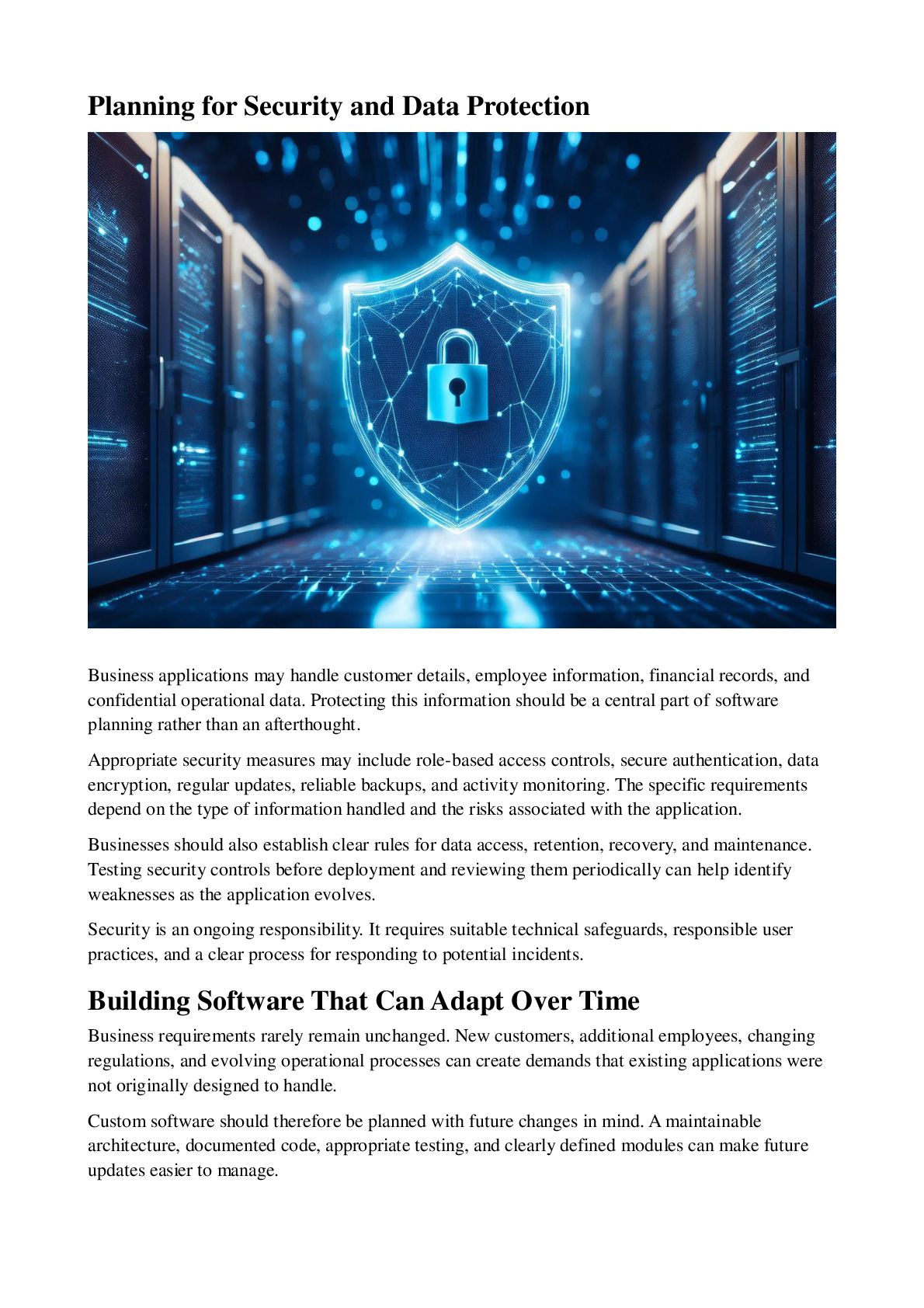
Planning for Security and Data Protection Business applications may handle
customer details, employee information, financial records, and confidential operational data. Protecting this information should be a central part of software planning rather than an afterthought. Appropriate security measures may include role-based access controls, secure authentication, data encryption, regular updates, reliable backups, and activity monitoring. The specific requirements depend on the type of information handled and the risks associated with the application. Businesses should also establish clear rules for data access, retention, recovery, and maintenance. Testing security controls before deployment and reviewing them periodically can help identify weaknesses as the application evolves. Security is an ongoing responsibility. It requires suitable technical safeguards, responsible user practices, and a clear process for responding to potential incidents. Building Software That Can Adapt Over Time Business requirements rarely remain unchanged. New customers, additional employees, changing regulations, and evolving operational processes can create demands that existing applications were not originally designed to handle. Custom software should therefore be planned with future changes in mind. A maintainable architecture, documented code, appropriate testing, and clearly defined modules can make future updates easier to manage. -
Businesses should consider which features are essential at launch and
which can be introduced later. Starting with a clearly scoped first release allows teams to validate the solution before investing in more complex functionality. Long-term planning should also account for hosting, technical support, maintenance costs, performance monitoring, and future integrations. These considerations help organizations understand the full commitment involved in owning and operating a software application. Choosing the Right Software Development Approach Custom development is not automatically the best choice for every business problem. Ready-made applications may be more practical when standard features already meet most requirements and can be configured without extensive changes. Custom solutions become worth evaluating when existing products cannot support important workflows, require complicated workarounds, or lack necessary integrations. Before starting a project, businesses should define their objectives, document essential features, identify intended users, establish a realistic budget, and agree on measurable success criteria. It is also useful to evaluate the development team's communication, technical experience, testing practices, documentation, and approach to ongoing support. Clear expectations and regular reviews help stakeholders identify risks and make informed decisions throughout the project. Ambient Infotech and Digital Solutions Finding an appropriate technology approach requires an understanding of business processes, user expectations, and long-term operational needs. A suitable digital solution should address specific challenges without introducing unnecessary complexity. Ambient Infotech provides digital solutions for businesses exploring ways to strengthen their technology capabilities and online operations. Organizations can visit the company's official website to learn more about its services and available digital solutions. Conclusion Custom software solutions can help modern businesses address specialized requirements, simplify repetitive work, connect different systems, and improve the way employees and customers interact with digital tools. The most effective projects begin with a clearly defined problem and follow a structured approach to planning, development, testing, security, and maintenance. Businesses should evaluate custom development alongside ready-made alternatives and select the option that best fits their requirements and resources. With realistic expectations and ongoing attention to software quality, organizations can develop practical applications that support their operations today and remain adaptable as their needs change.