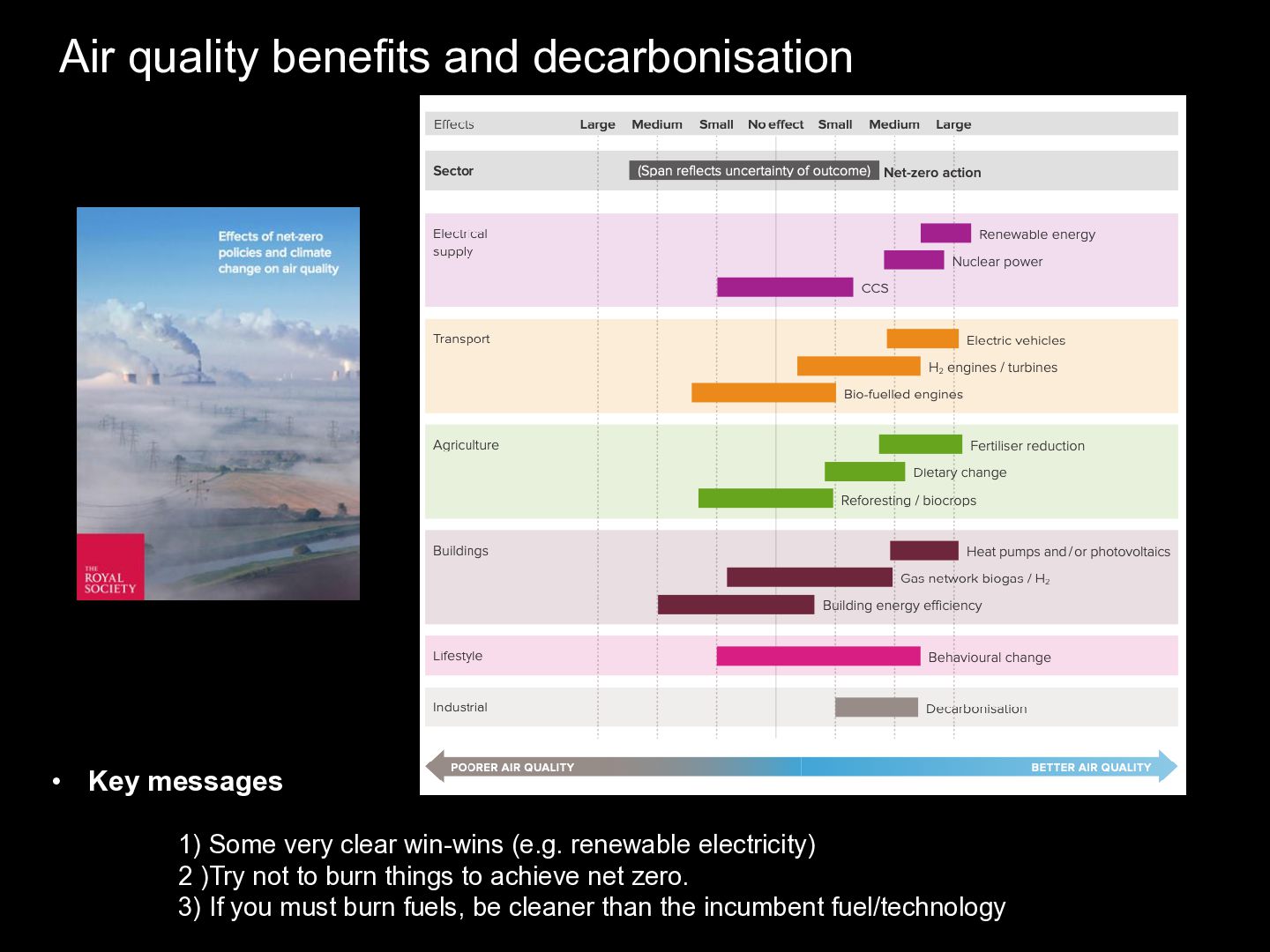
very clear win-wins (e.g. renewable electricity) 2 )Try not to burn things to achieve net zero. 3) If you must burn fuels, be cleaner than the incumbent fuel/technology
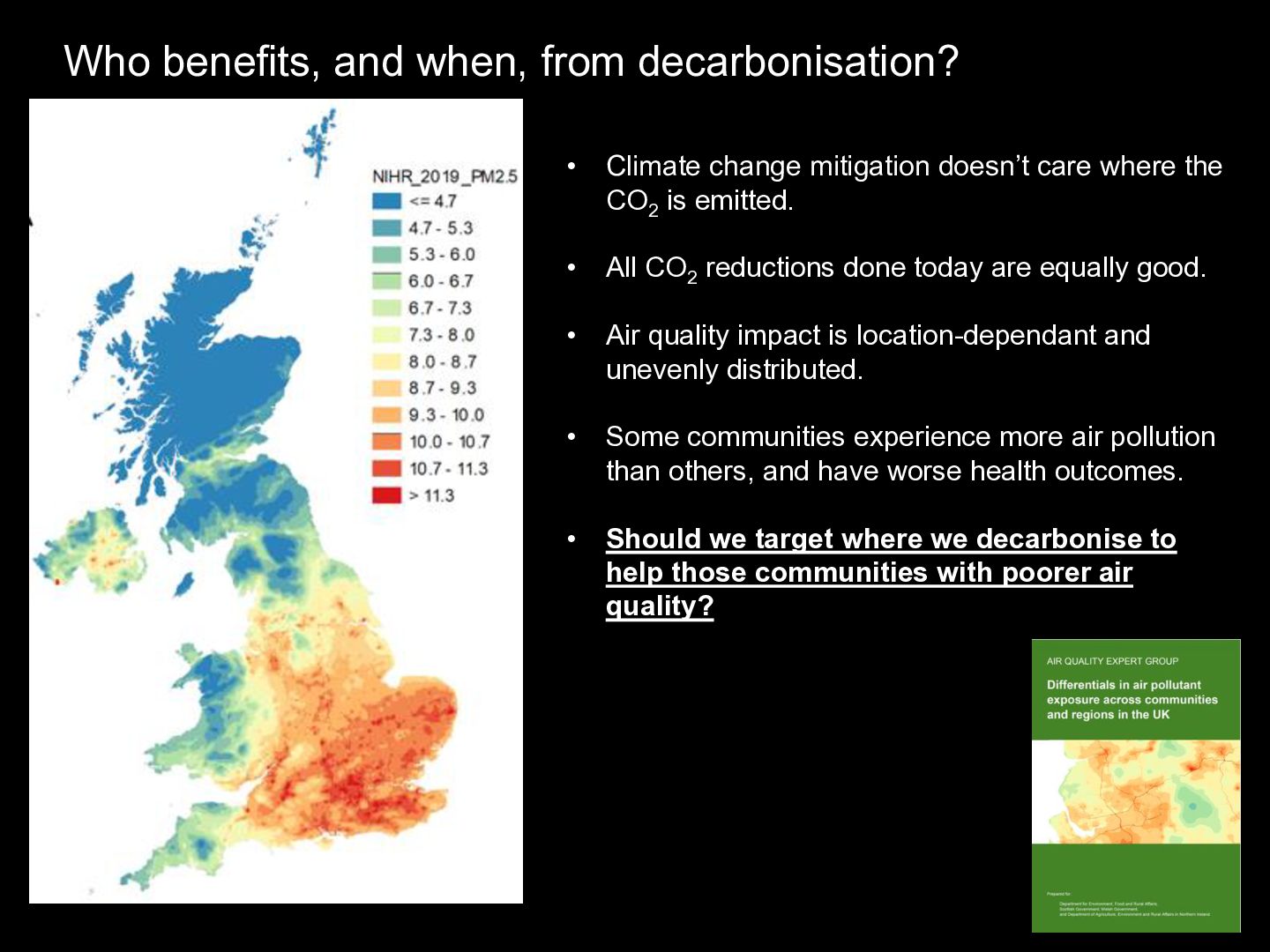
doesn’t care where the CO2 is emitted. • All CO2 reductions done today are equally good. • Air quality impact is location-dependant and unevenly distributed. • Some communities experience more air pollution than others, and have worse health outcomes. • Should we target where we decarbonise to help those communities with poorer air quality?
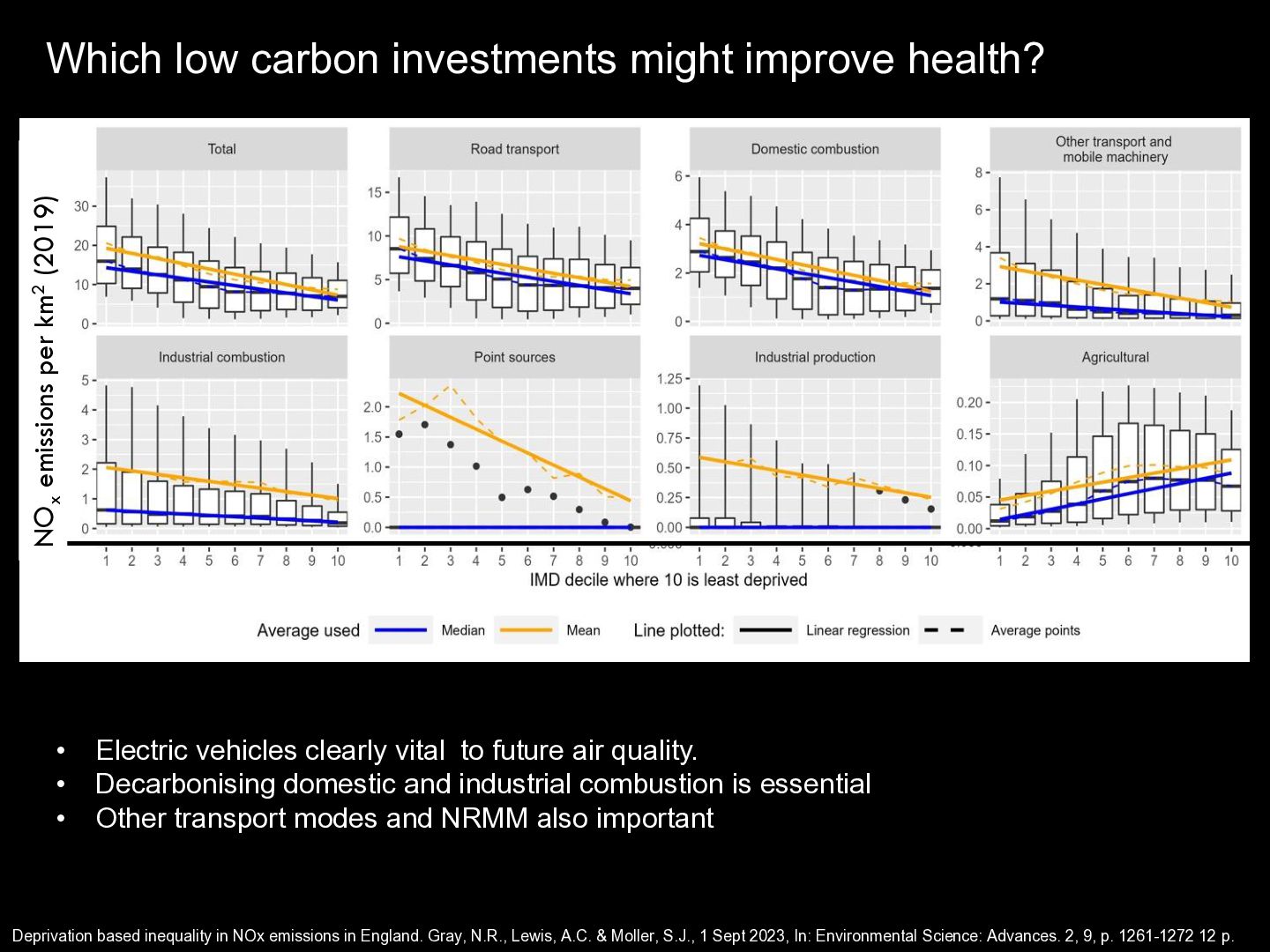
km2 (2019) Inequalities in air quality– NO2 • • • Electric vehicles clearly vital to future air quality. Decarbonising domestic and industrial combustion is essential Other transport modes and NRMM also important Deprivation based inequality in NOx emissions in England. Gray, N.R., Lewis, A.C. & Moller, S.J., 1 Sept 2023, In: Environmental Science: Advances. 2, 9, p. 1261-1272 12 p.
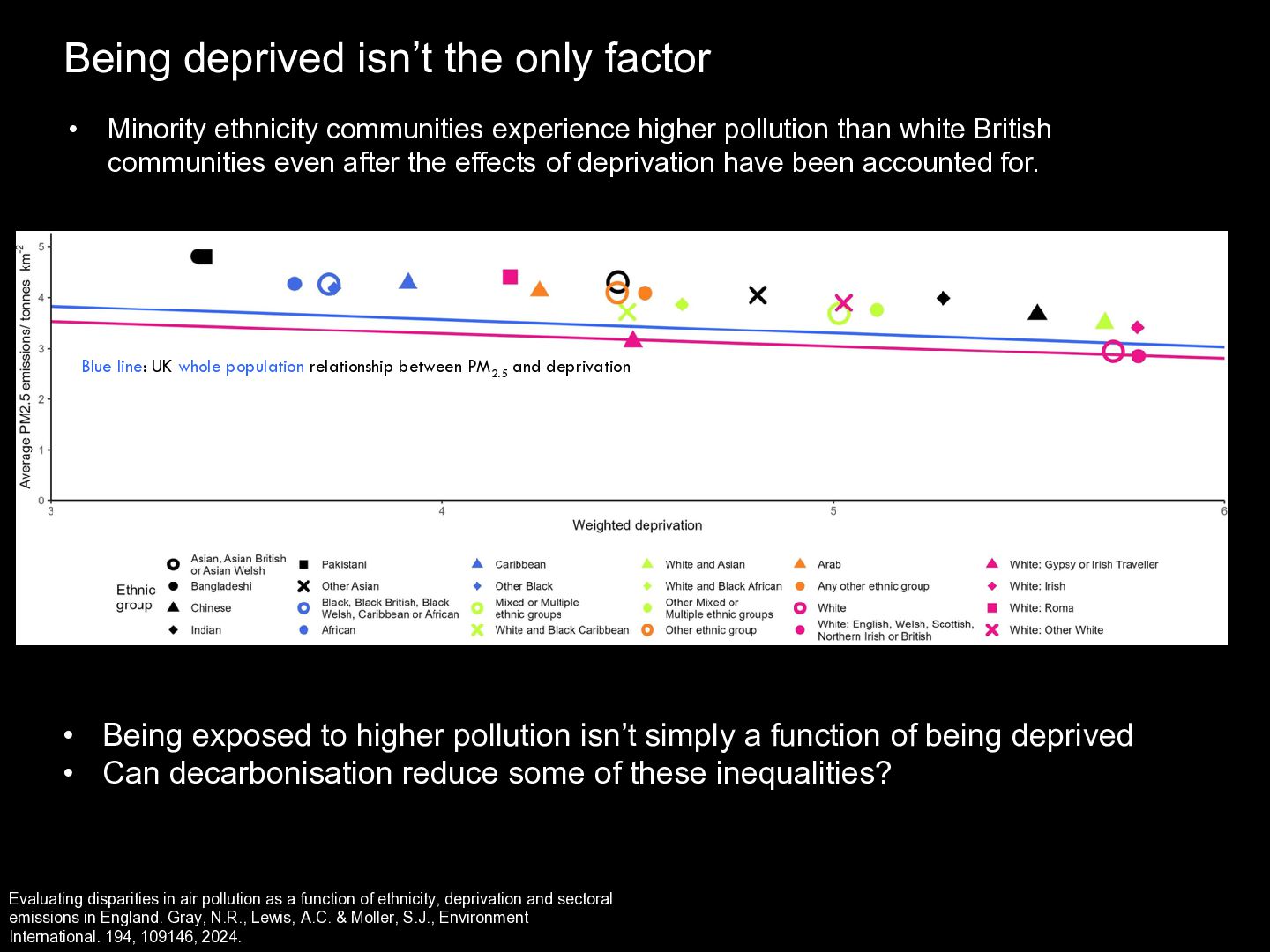
experience higher pollution than white British communities even after the effects of deprivation have been accounted for. Blue line: UK whole population relationship between PM2.5 and deprivation • Being exposed to higher pollution isn’t simply a function of being deprived • Can decarbonisation reduce some of these inequalities? Evaluating disparities in air pollution as a function of ethnicity, deprivation and sectoral emissions in England. Gray, N.R., Lewis, A.C. & Moller, S.J., Environment International. 194, 109146, 2024.
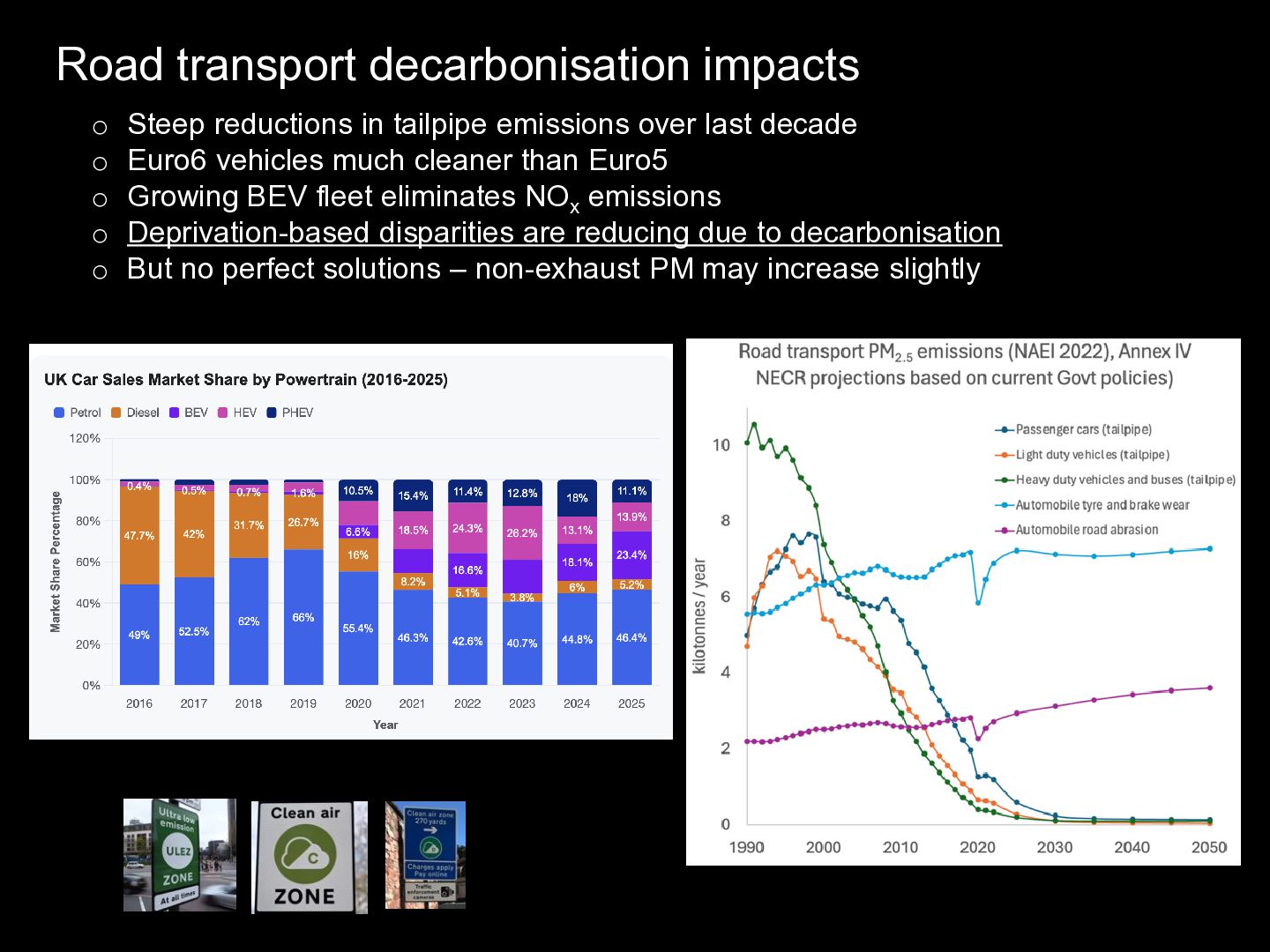
transport decarbonisation impacts o Changing rapidly, and now much lower tailpipe emissions Road transport changes o Steep reductions in tailpipe emissions over last decade o Friction-related emissions remain with BEVs / Fuel cells o Euro6 vehicles much cleaner than Euro5 o Growing BEV fleet eliminates NOx emissions o Deprivation-based disparities are reducing due to decarbonisation o But no perfect solutions – non-exhaust PM may increase slightly
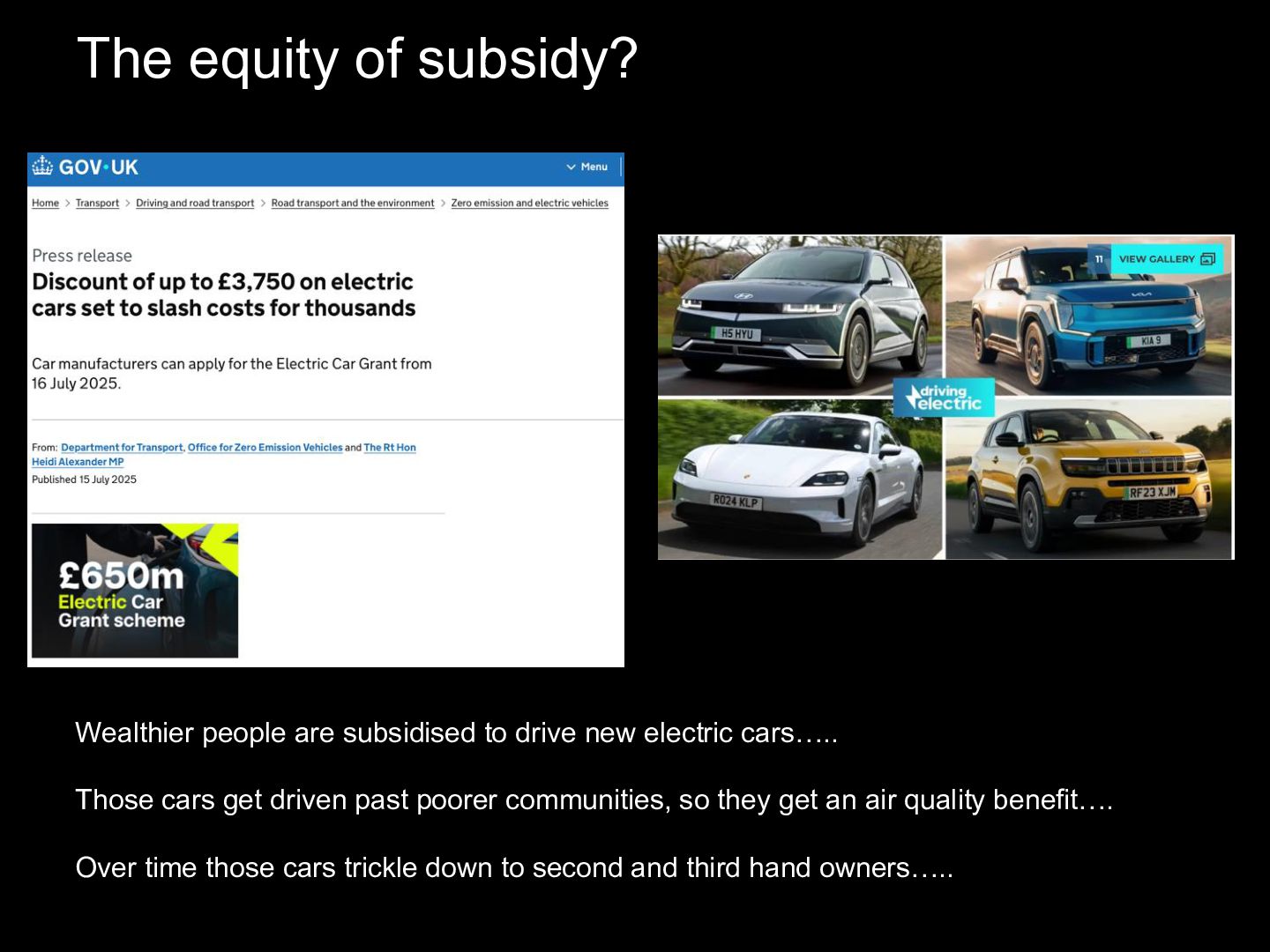
new electric cars….. Those cars get driven past poorer communities, so they get an air quality benefit…. Over time those cars trickle down to second and third hand owners…..
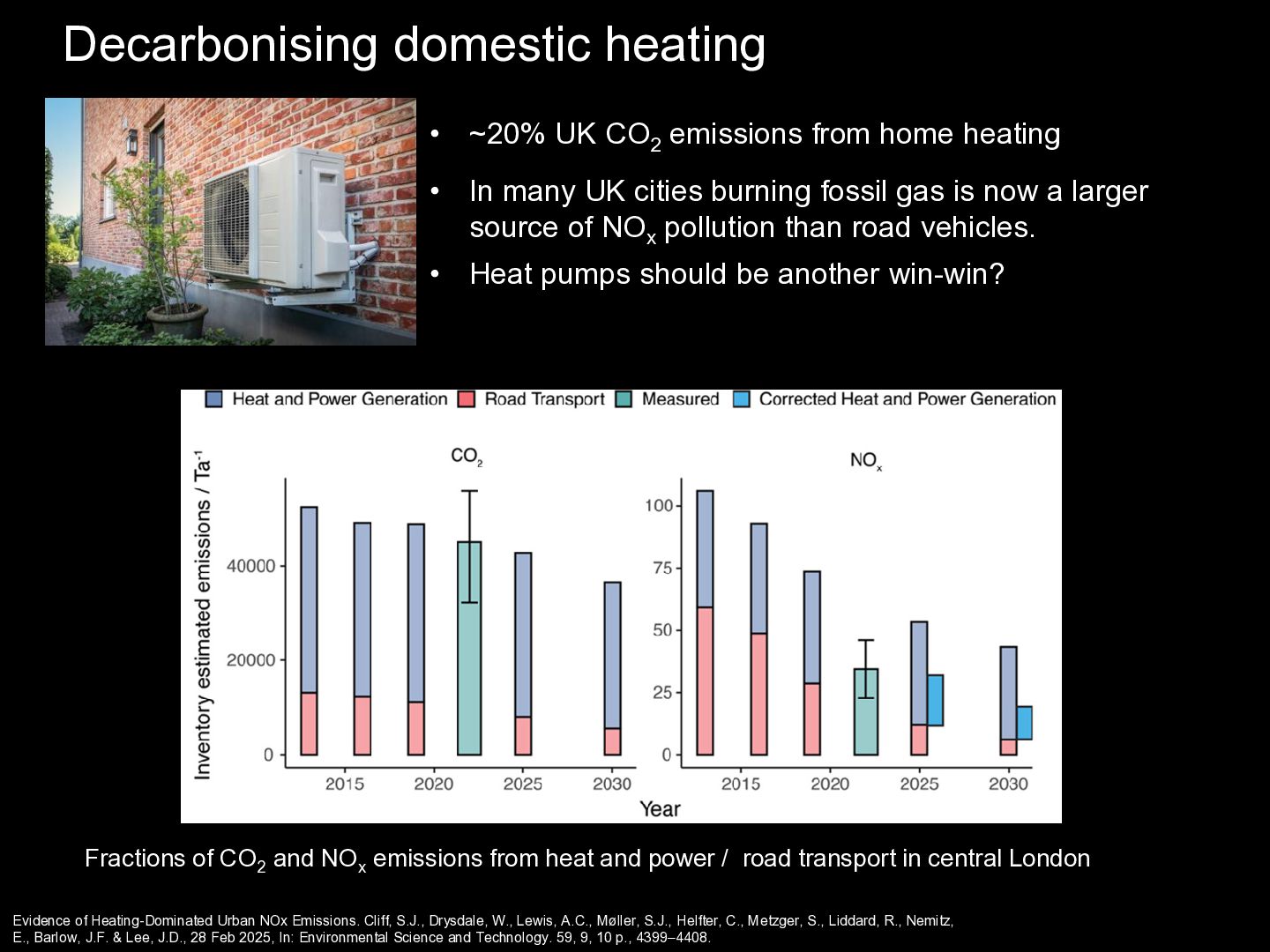
heating • In many UK cities burning fossil gas is now a larger source of NOx pollution than road vehicles. • Heat pumps should be another win-win? Fractions of CO2 and NOx emissions from heat and power / road transport in central London Evidence of Heating-Dominated Urban NOx Emissions. Cliff, S.J., Drysdale, W., Lewis, A.C., Møller, S.J., Helfter, C., Metzger, S., Liddard, R., Nemitz, E., Barlow, J.F. & Lee, J.D., 28 Feb 2025, In: Environmental Science and Technology. 59, 9, 10 p., 4399–4408.
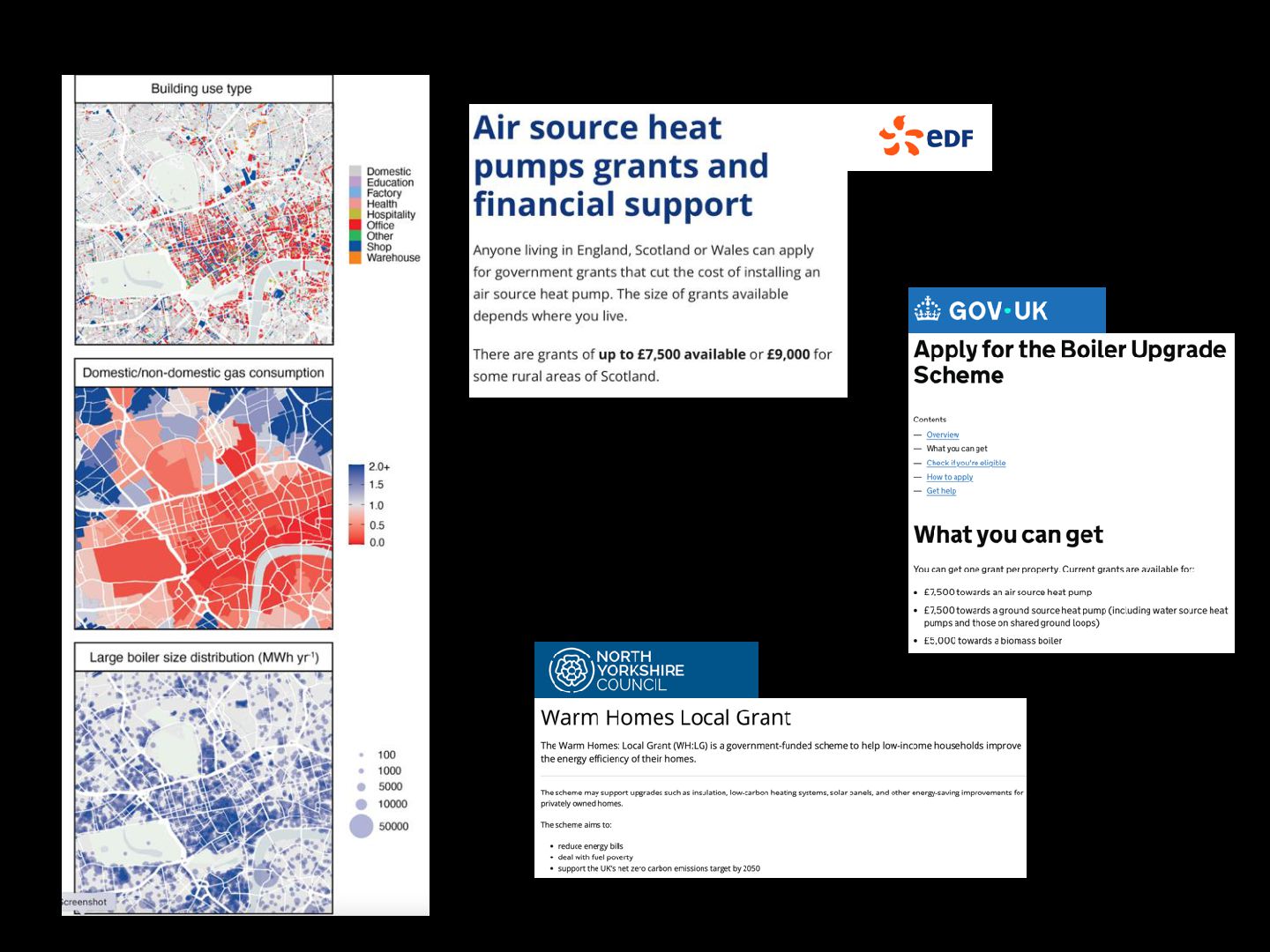
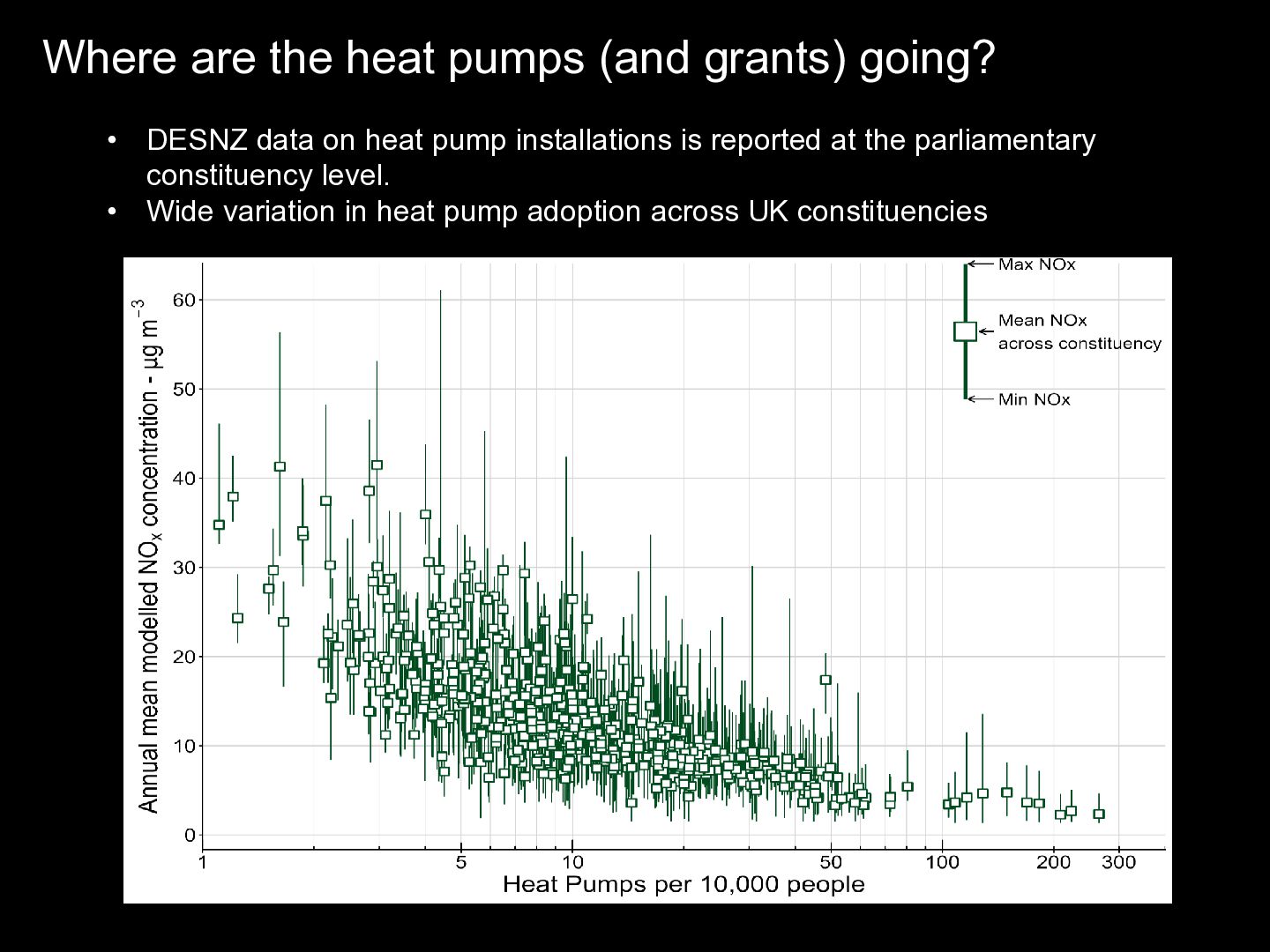
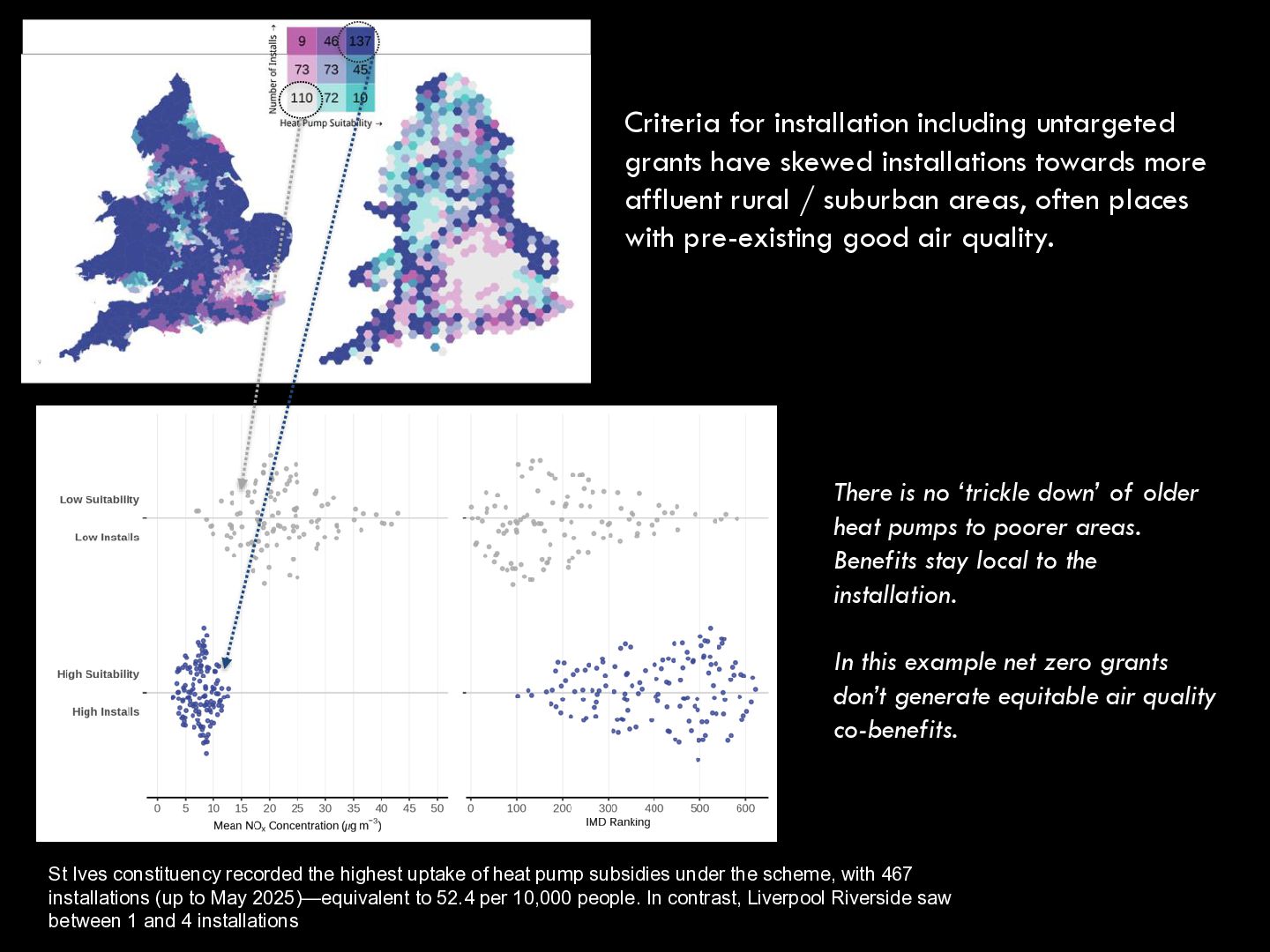
more affluent rural / suburban areas, often places with pre-existing good air quality. There is no ‘trickle down’ of older heat pumps to poorer areas. Benefits stay local to the installation. In this example net zero grants don’t generate equitable air quality co-benefits. St Ives constituency recorded the highest uptake of heat pump subsidies under the scheme, with 467 installations (up to May 2025)—equivalent to 52.4 per 10,000 people. In contrast, Liverpool Riverside saw between 1 and 4 installations
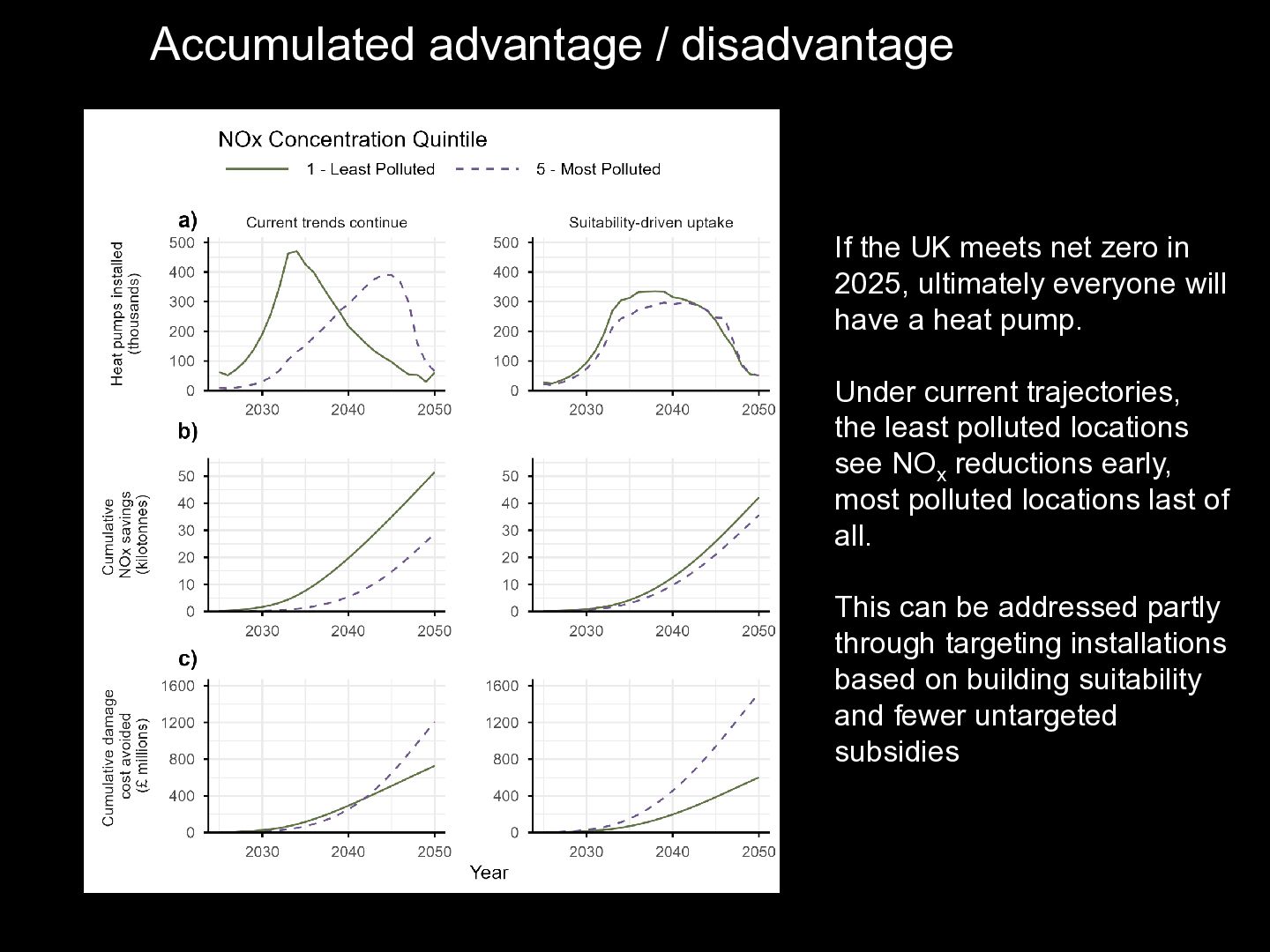
in 2025, ultimately everyone will have a heat pump. Under current trajectories, the least polluted locations see NOx reductions early, most polluted locations last of all. This can be addressed partly through targeting installations based on building suitability and fewer untargeted subsidies
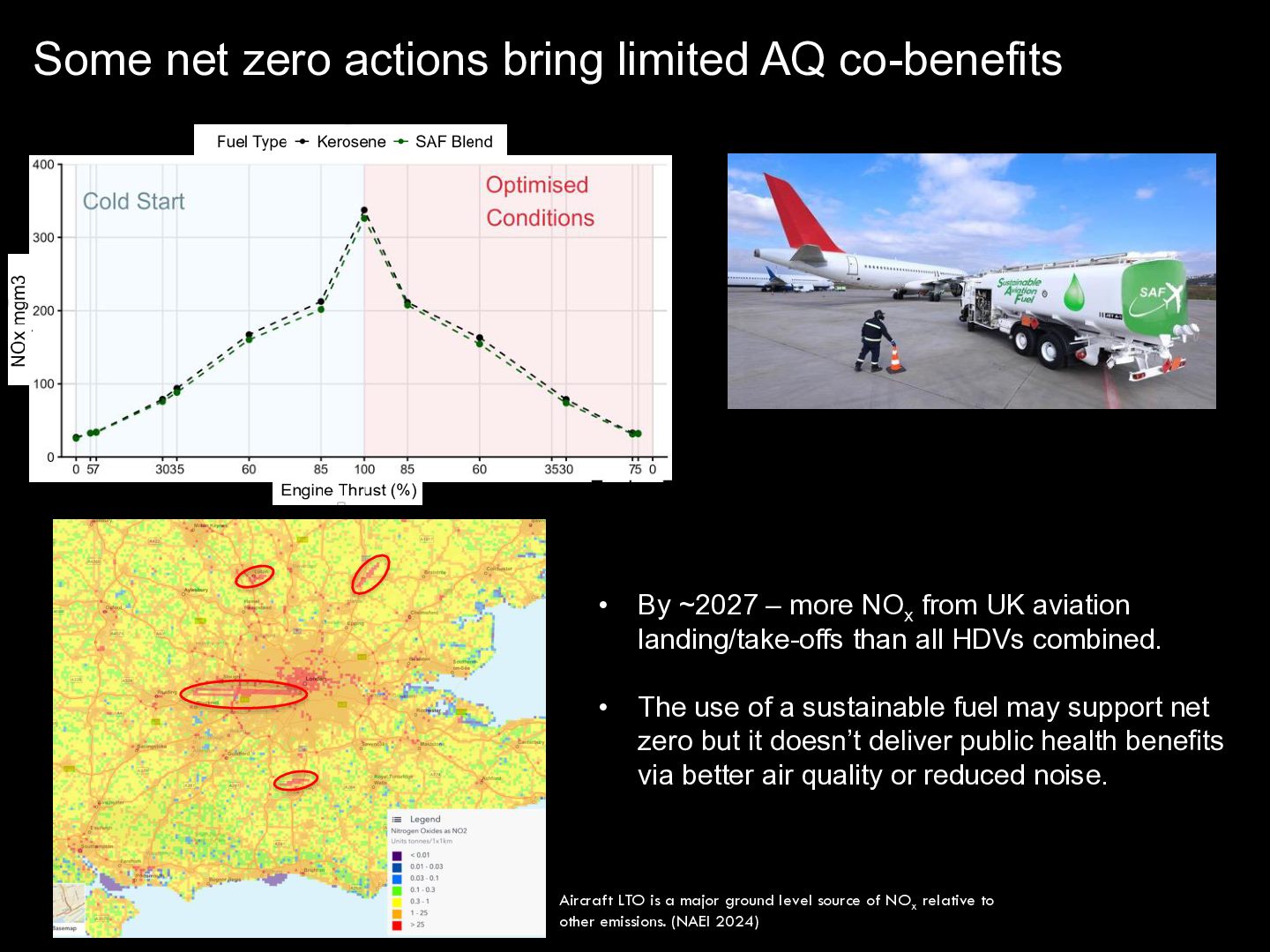
~2027 – more NOx from UK aviation landing/take-offs than all HDVs combined. • The use of a sustainable fuel may support net zero but it doesn’t deliver public health benefits via better air quality or reduced noise. Aircraft LTO is a major ground level source of NOx relative to other emissions. (NAEI 2024)
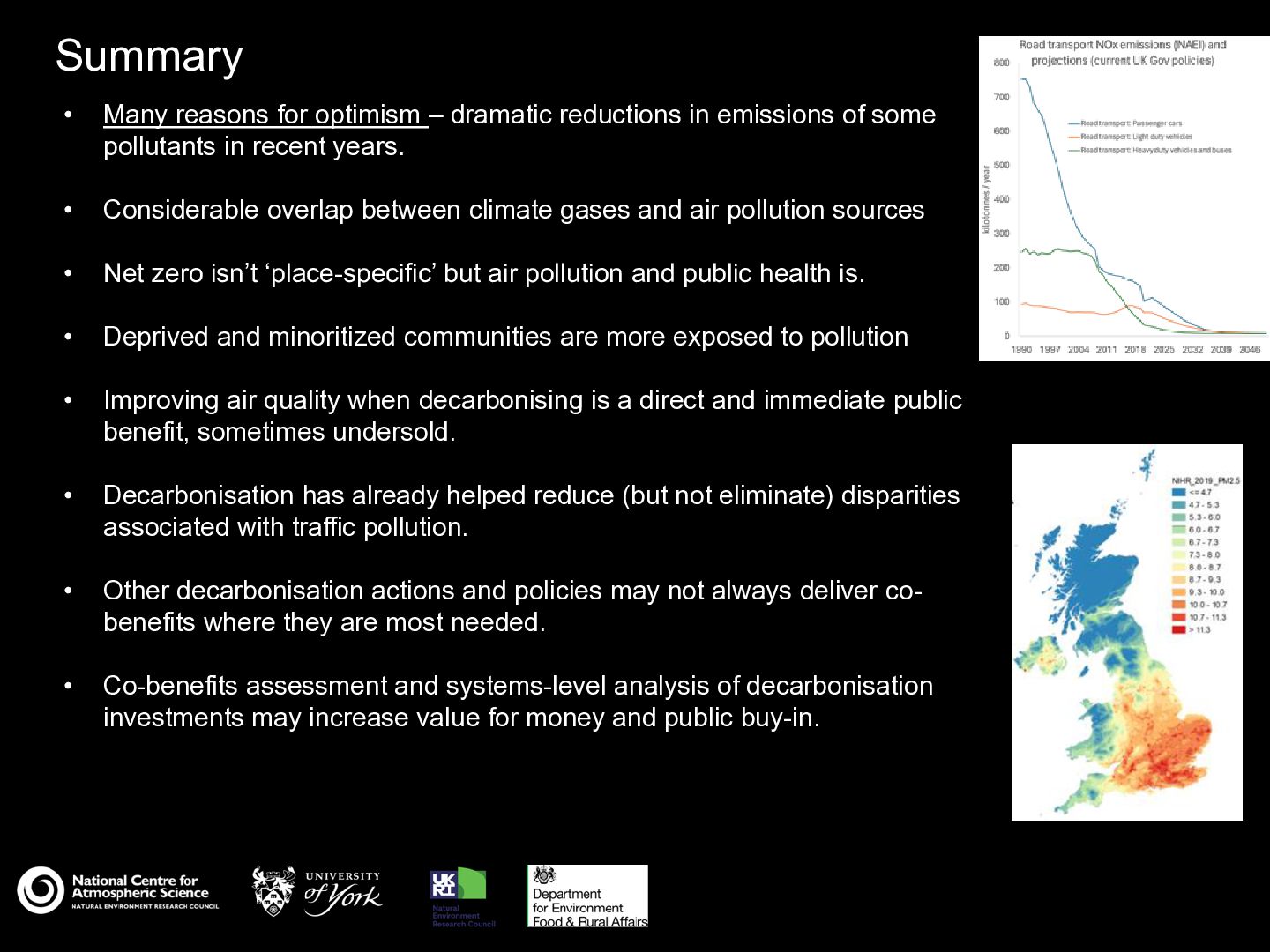
emissions of some pollutants in recent years. • Considerable overlap between climate gases and air pollution sources • Net zero isn’t ‘place-specific’ but air pollution and public health is. • Deprived and minoritized communities are more exposed to pollution • Improving air quality when decarbonising is a direct and immediate public benefit, sometimes undersold. • Decarbonisation has already helped reduce (but not eliminate) disparities associated with traffic pollution. • Other decarbonisation actions and policies may not always deliver cobenefits where they are most needed. • Co-benefits assessment and systems-level analysis of decarbonisation investments may increase value for money and public buy-in.


 iesevents
 jacobian
 vanstee
 bkeepers
 kimpetersen
 philnash
 tammyeverts
 akademiya2063
 jct
 rasmusluckow
 mfonobong
 keathley
 addyosmani