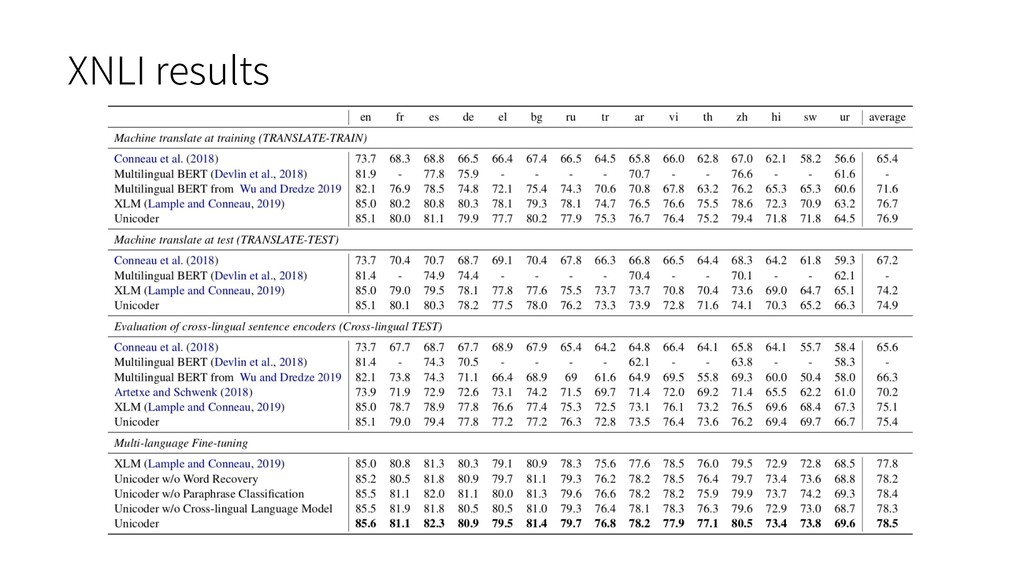
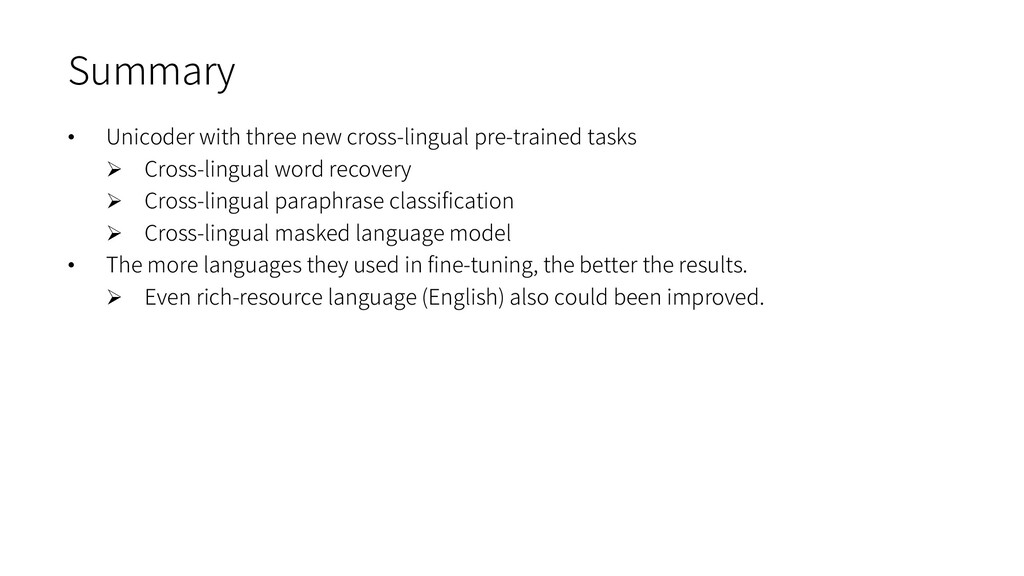
multilingual BERT and XLM. Ø Three new cross-lingual pre-trained tasks are proposed. Ø On the XNLI dataset, new SOTA results are achieved • A cross-lingual question answering (XQA) datasets is build. Ø This can be used as a new cross-lingual benchmark datasets. • They verify that by fine-tuning multiple languages together, significant improvements can be obtained.
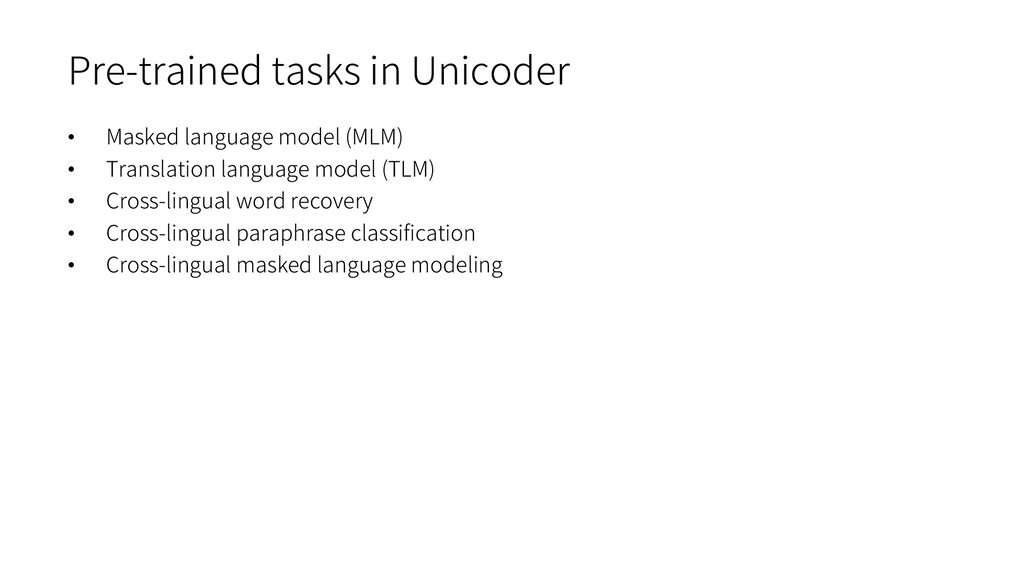
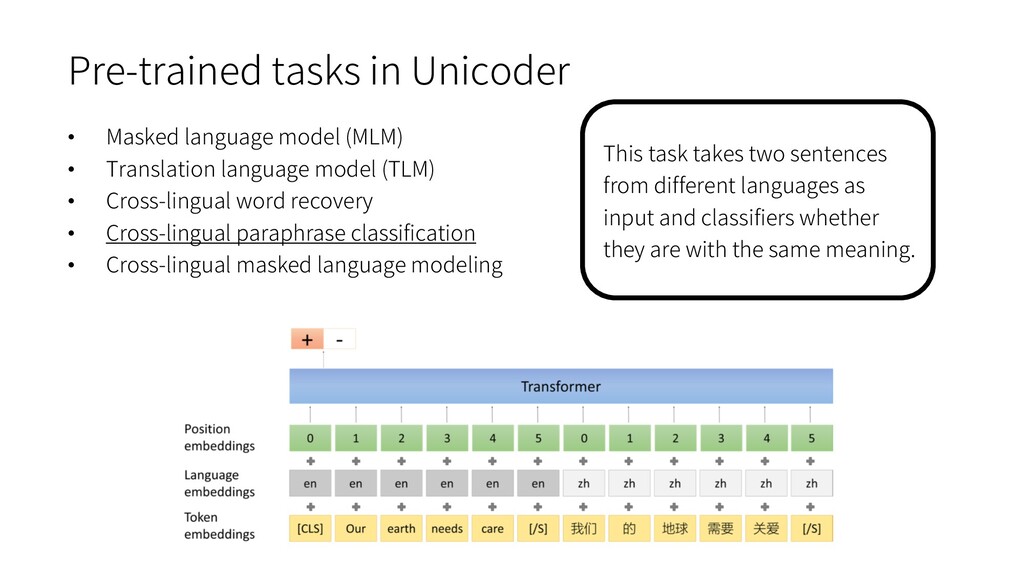
Translation language model (TLM) • Cross-lingual word recovery • Cross-lingual paraphrase classification • Cross-lingual masked language modeling This task takes two sentences from different languages as input and classifiers whether they are with the same meaning.
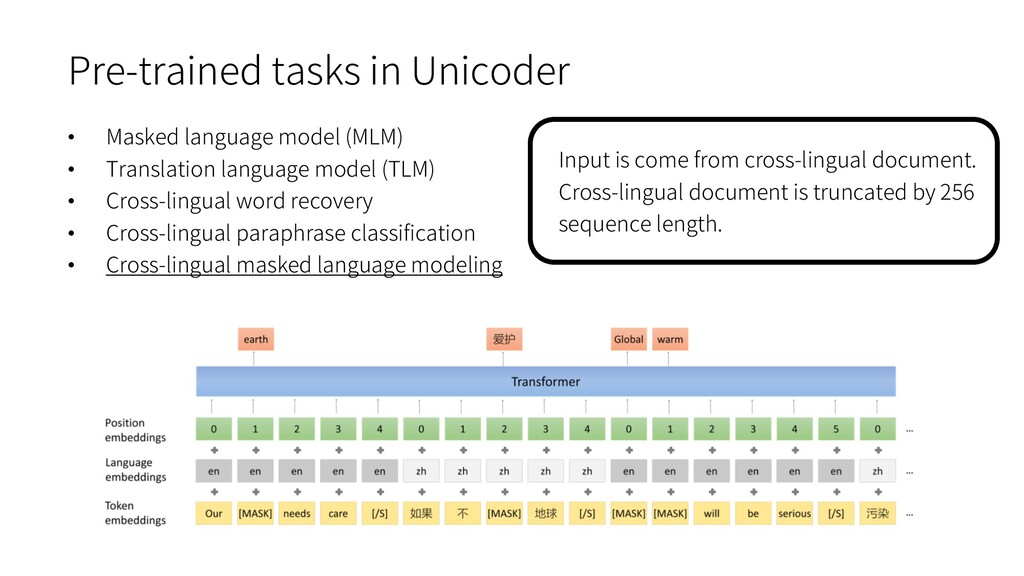
Translation language model (TLM) • Cross-lingual word recovery • Cross-lingual paraphrase classification • Cross-lingual masked language modeling Input is come from cross-lingual document. Cross-lingual document is truncated by 256 sequence length.
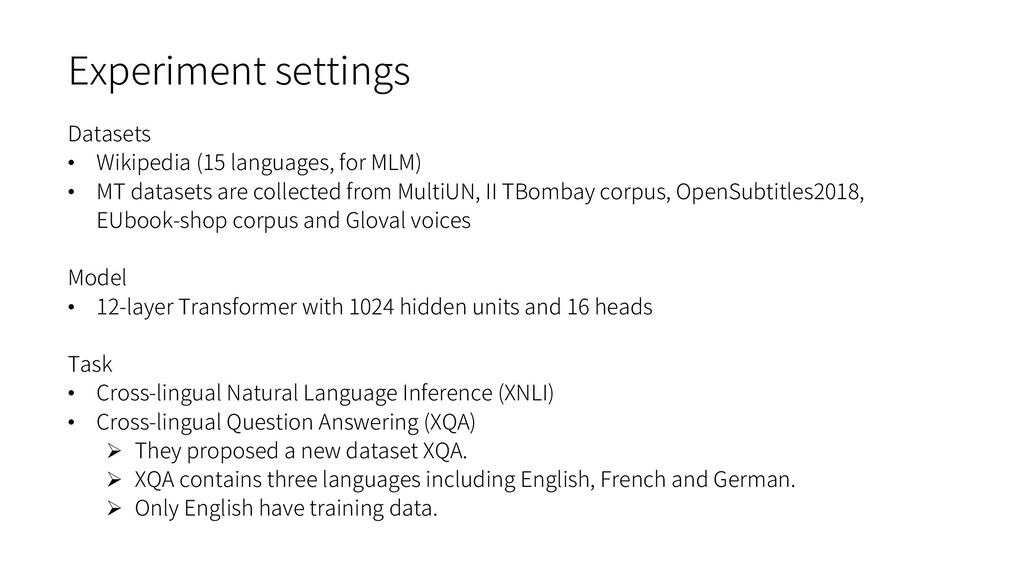
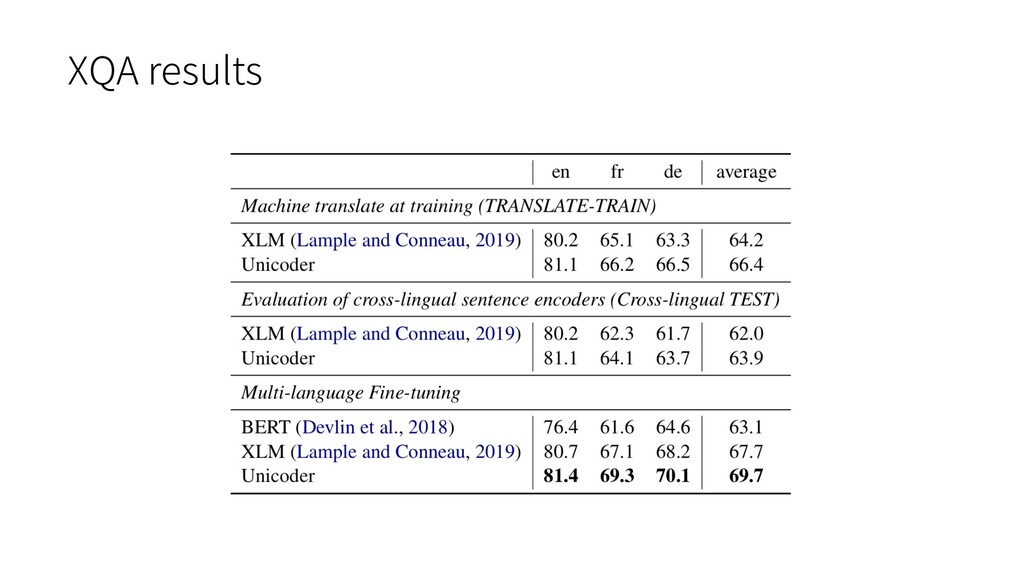
are collected from MultiUN, II TBombay corpus, OpenSubtitles2018, EUbook-shop corpus and Gloval voices Model • 12-layer Transformer with 1024 hidden units and 16 heads Task • Cross-lingual Natural Language Inference (XNLI) • Cross-lingual Question Answering (XQA) Ø They proposed a new dataset XQA. Ø XQA contains three languages including English, French and German. Ø Only English have training data. Experiment settings
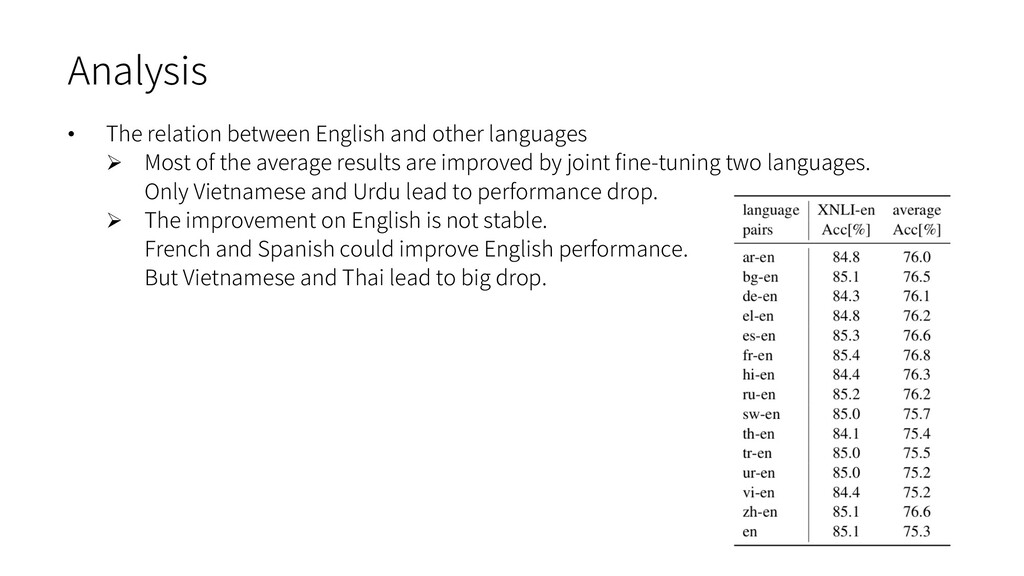
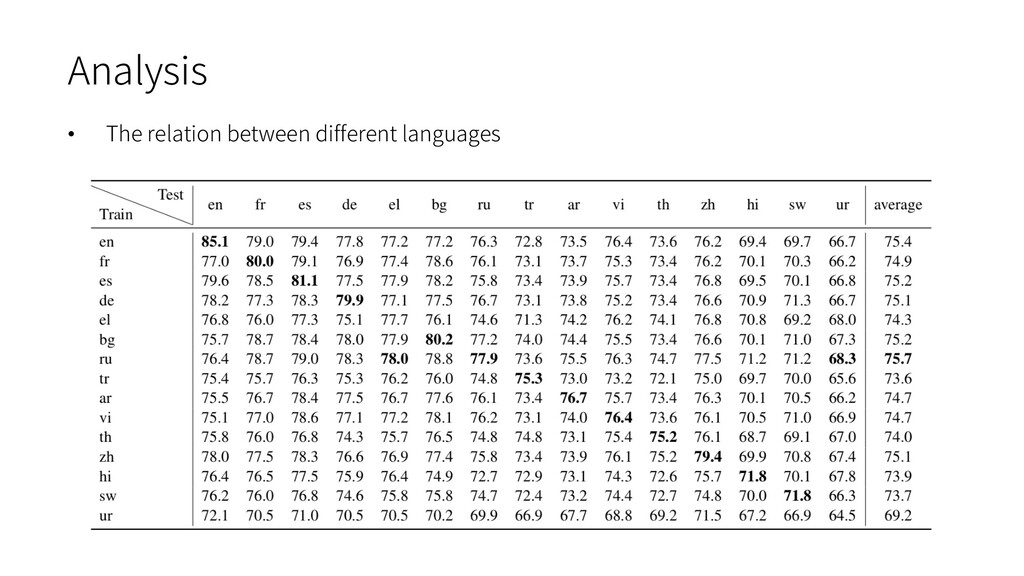
Most of the average results are improved by joint fine-tuning two languages. Only Vietnamese and Urdu lead to performance drop. Ø The improvement on English is not stable. French and Spanish could improve English performance. But Vietnamese and Thai lead to big drop.
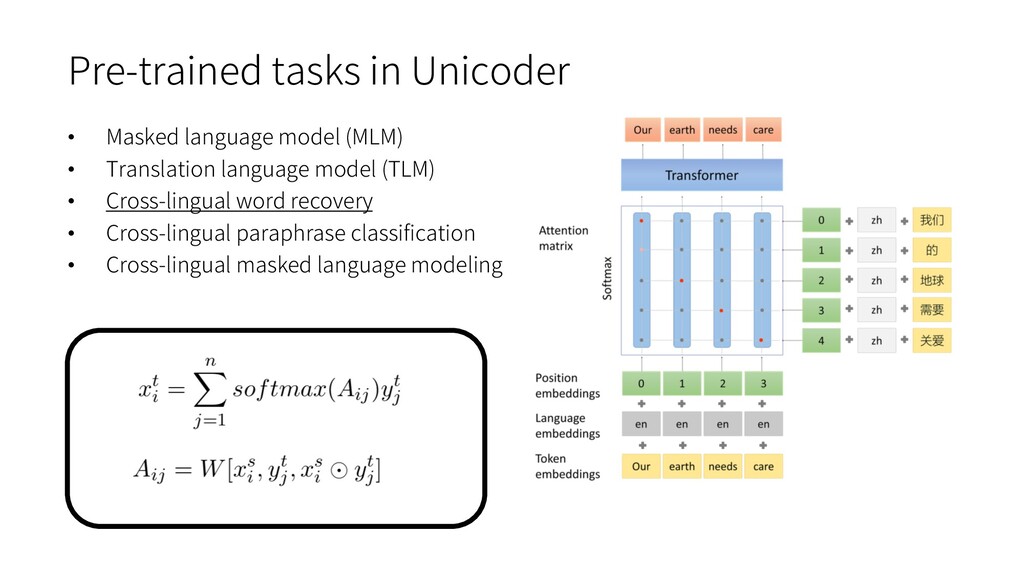
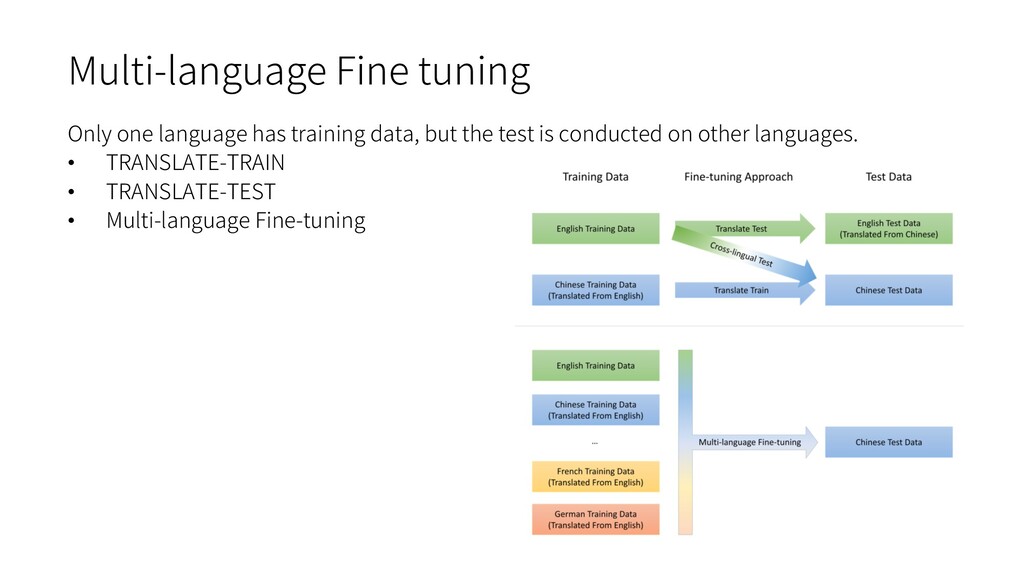
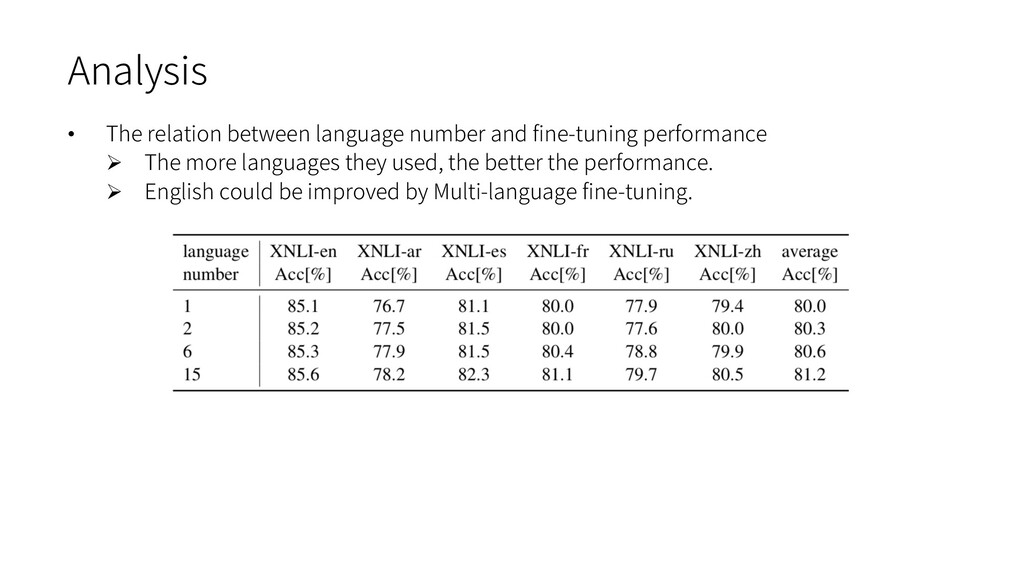
Cross-lingual word recovery Ø Cross-lingual paraphrase classification Ø Cross-lingual masked language model • The more languages they used in fine-tuning, the better the results. Ø Even rich-resource language (English) also could been improved.


 ikumi193
 occhi
occhi
 kakehashi
 tanakaseiya
 aoto
aoto
 oikon48
 recruitengineers
 ymiya55
 htan
htan
 kairim0
 junkifurukawa
 shisyu_gaku
 ipullrank
 tammyeverts
 inesmontani
 lauravandoore
 tamaranovitovic
 raygrieselhuber
 eileencodes
 katarinadahlin
 chrisshort
 moore
moore
 reverentgeek
 stephenakadiri