Brief overview: Basics of wind energy 3. Challenges facing micro wind turbines 4. Technical resilience & hard facts 5. Hybrid energy systems 6. Case studies 7. Summary & key takeaways
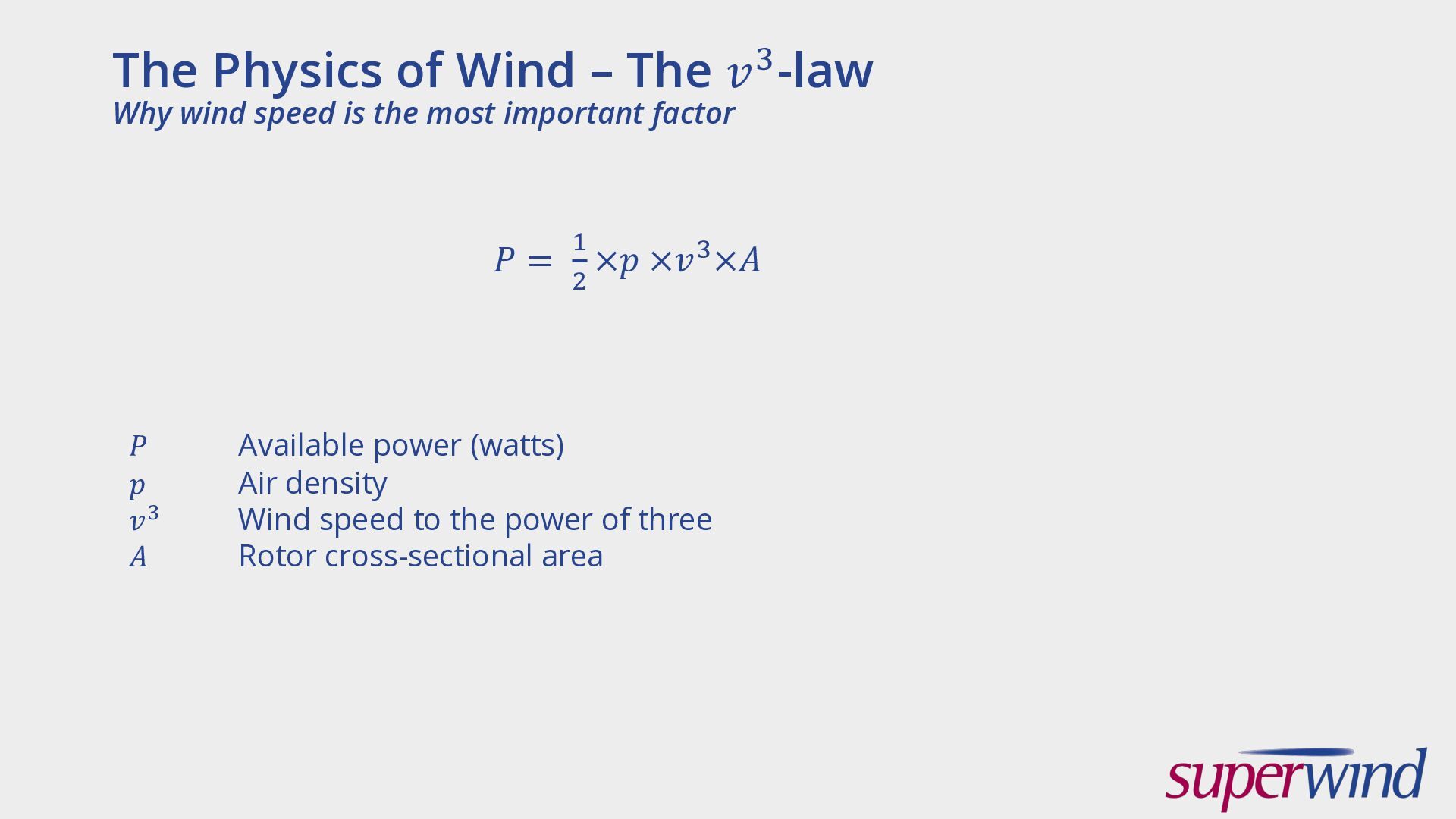
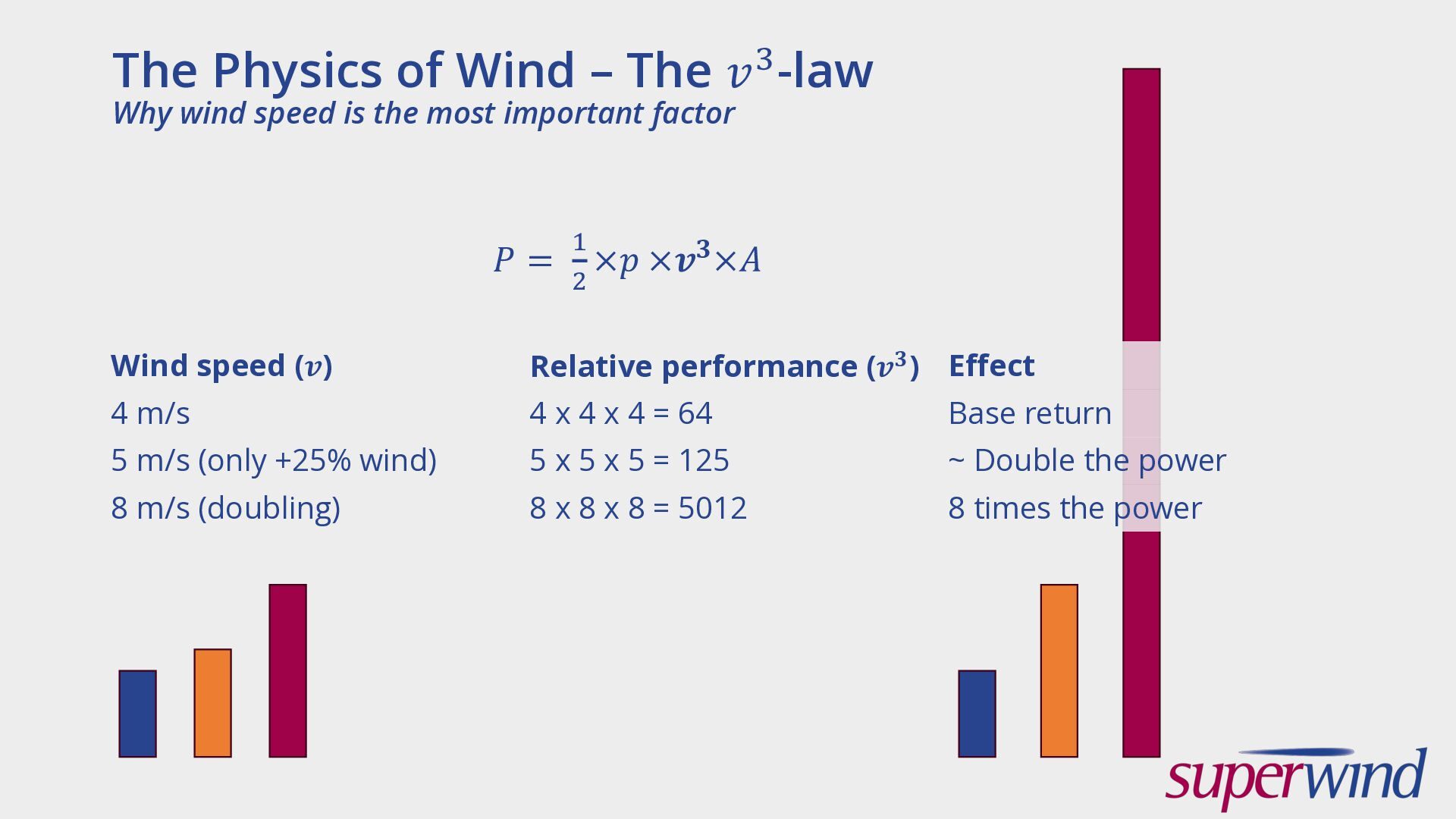
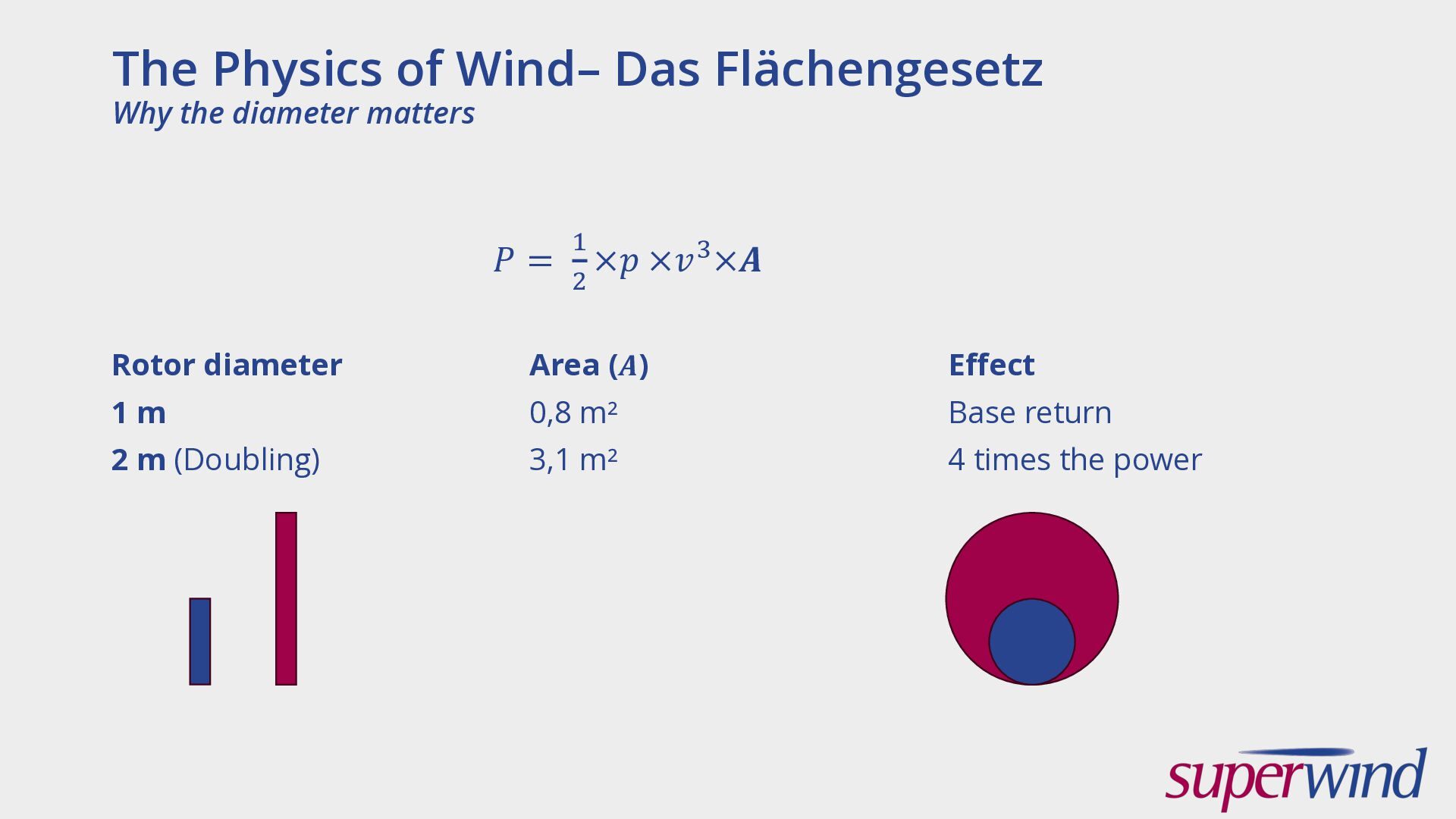
𝑝 Air density 𝑣! Wind speed to the power of three 𝐴 Rotor cross-sectional area The Physics of Wind – The 𝑣!-law Why wind speed is the most important factor
performance (𝒗𝟑) Effect 4 m/s 4 x 4 x 4 = 64 Base return 5 m/s (only +25% wind) 5 x 5 x 5 = 125 ~ Double the power 8 m/s (doubling) 8 x 8 x 8 = 5012 8 times the power The Physics of Wind – The 𝑣!-law Why wind speed is the most important factor
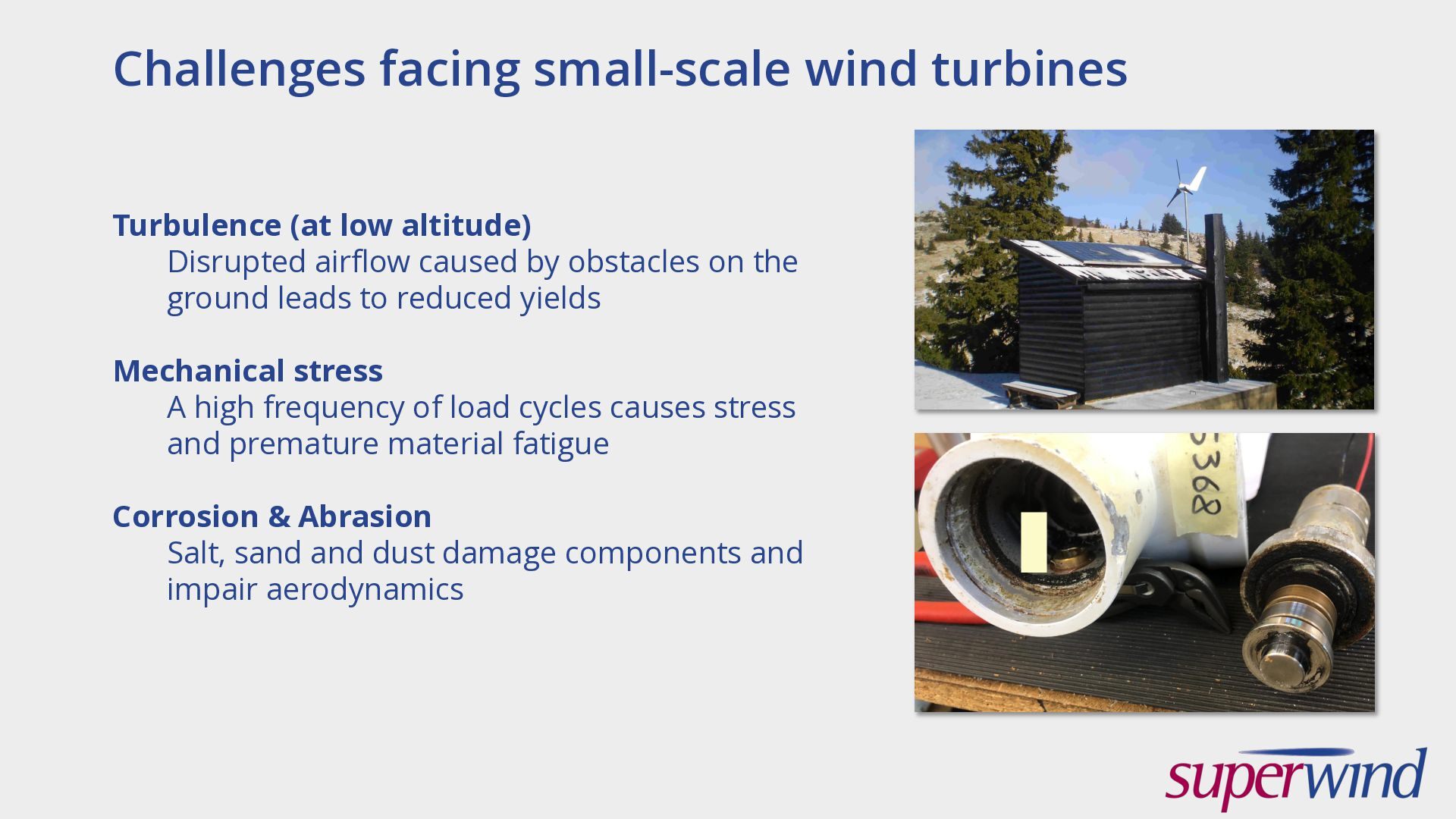
airflow caused by obstacles on the ground leads to reduced yields Mechanical stress A high frequency of load cycles causes stress and premature material fatigue Corrosion & Abrasion Salt, sand and dust damage components and impair aerodynamics
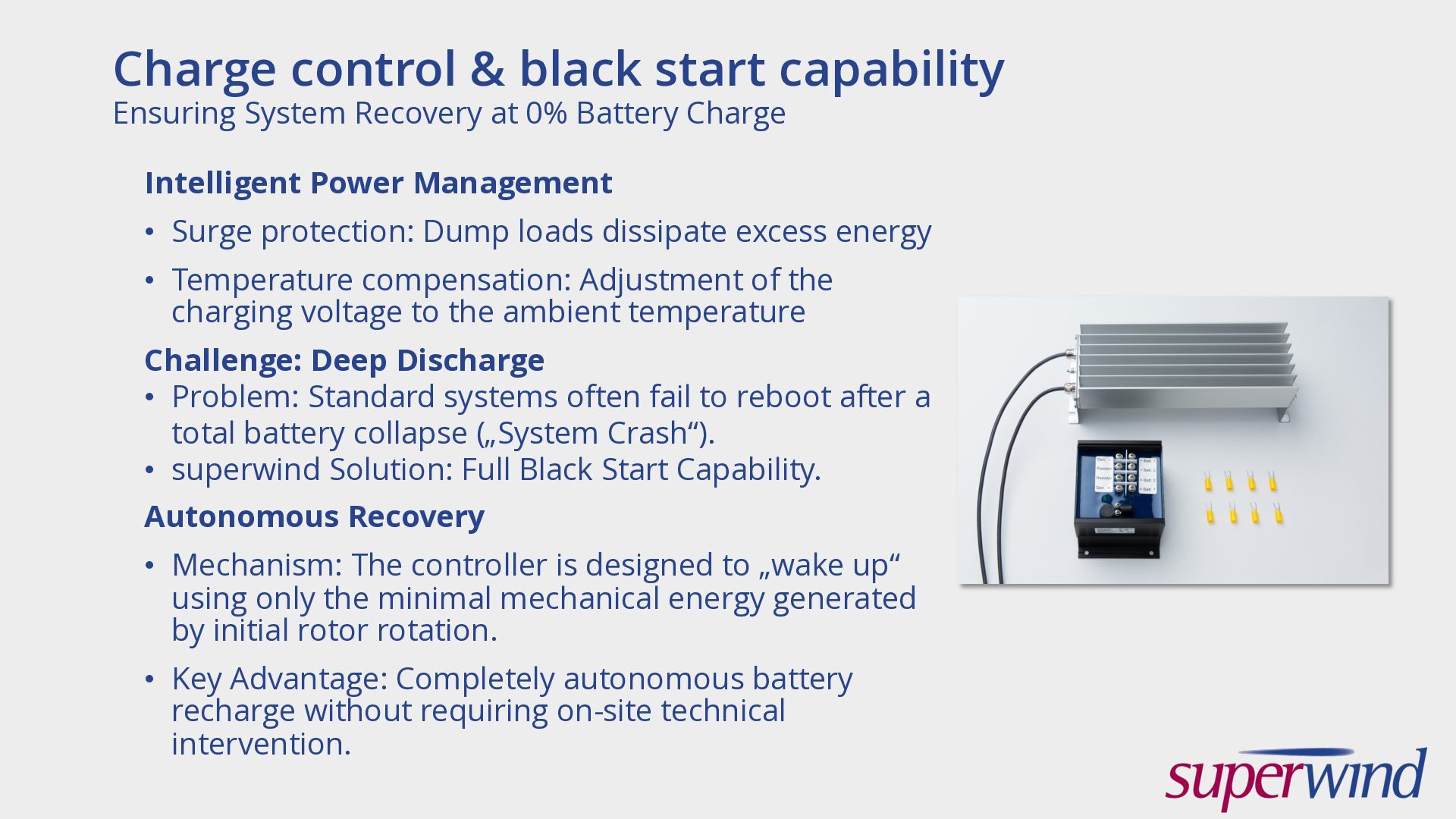
0% Battery Charge Intelligent Power Management • Surge protection: Dump loads dissipate excess energy • Temperature compensation: Adjustment of the charging voltage to the ambient temperature Challenge: Deep Discharge • Problem: Standard systems often fail to reboot after a total battery collapse („System Crash“). • superwind Solution: Full Black Start Capability. Autonomous Recovery • Mechanism: The controller is designed to „wake up“ using only the minimal mechanical energy generated by initial rotor rotation. • Key Advantage: Completely autonomous battery recharge without requiring on-site technical intervention.
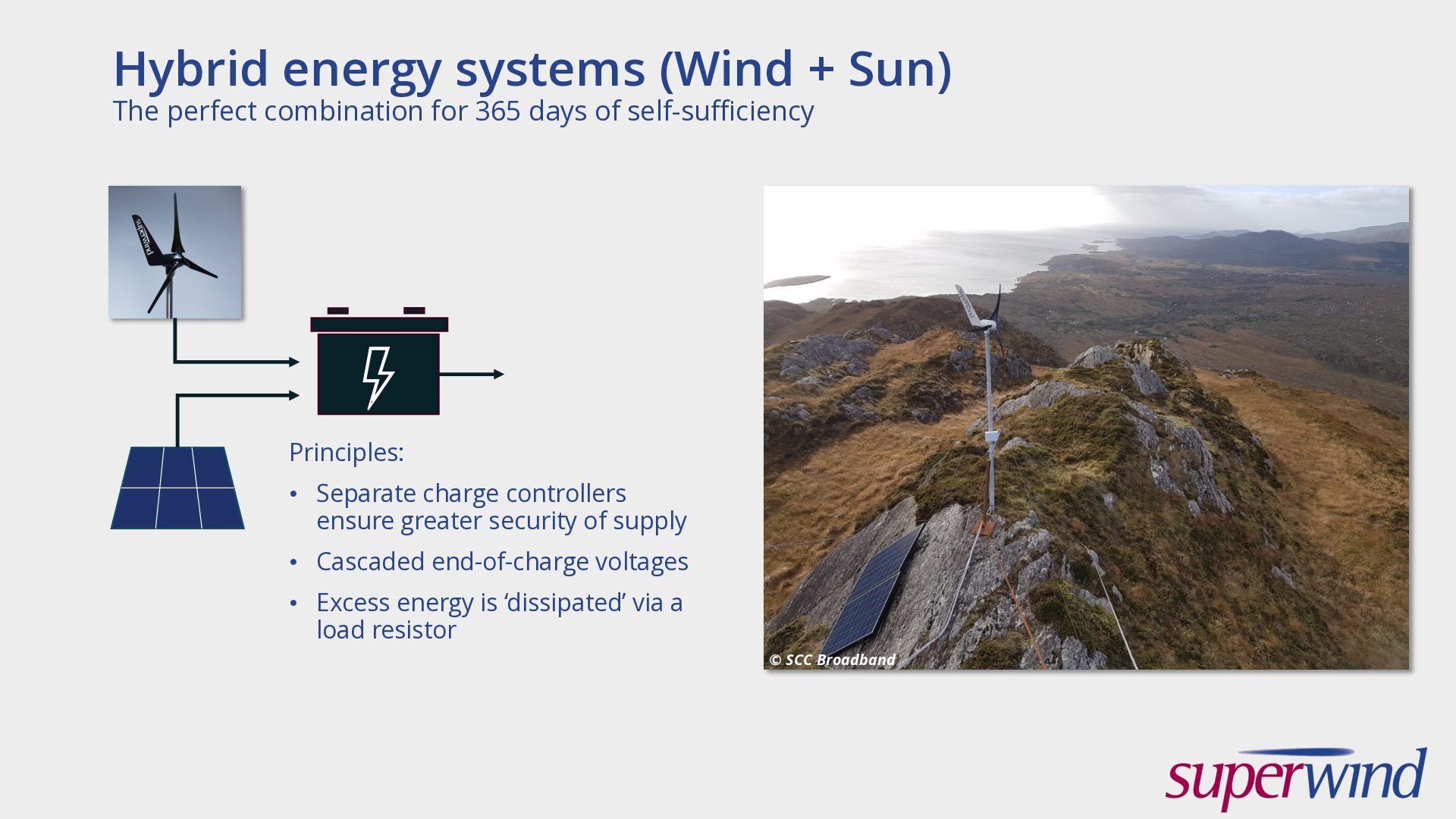
security of supply • Cascaded end-of-charge voltages • Excess energy is ‘dissipated’ via a load resistor Hybrid energy systems (Wind + Sun) The perfect combination for 365 days of self-sufficiency
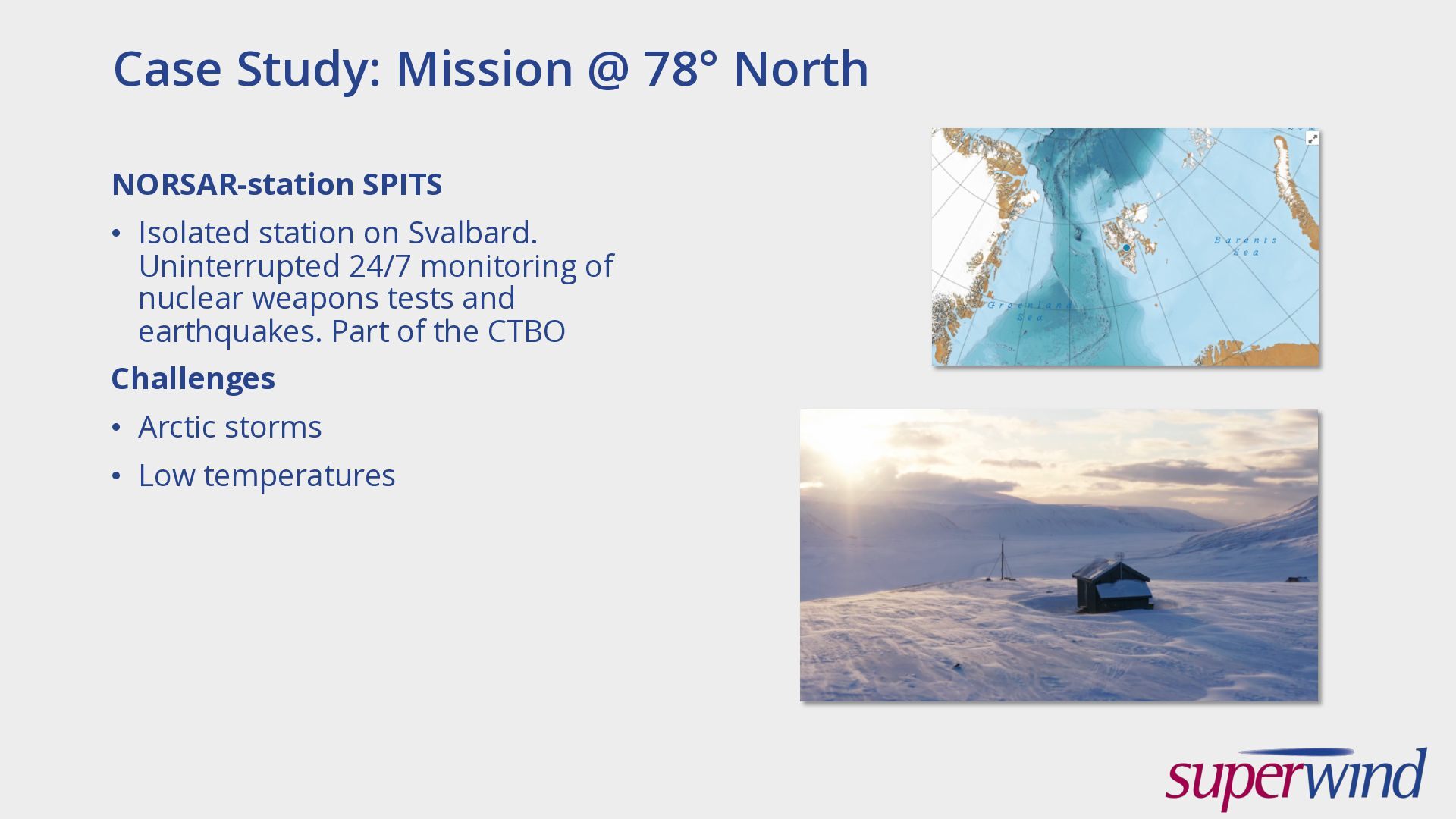
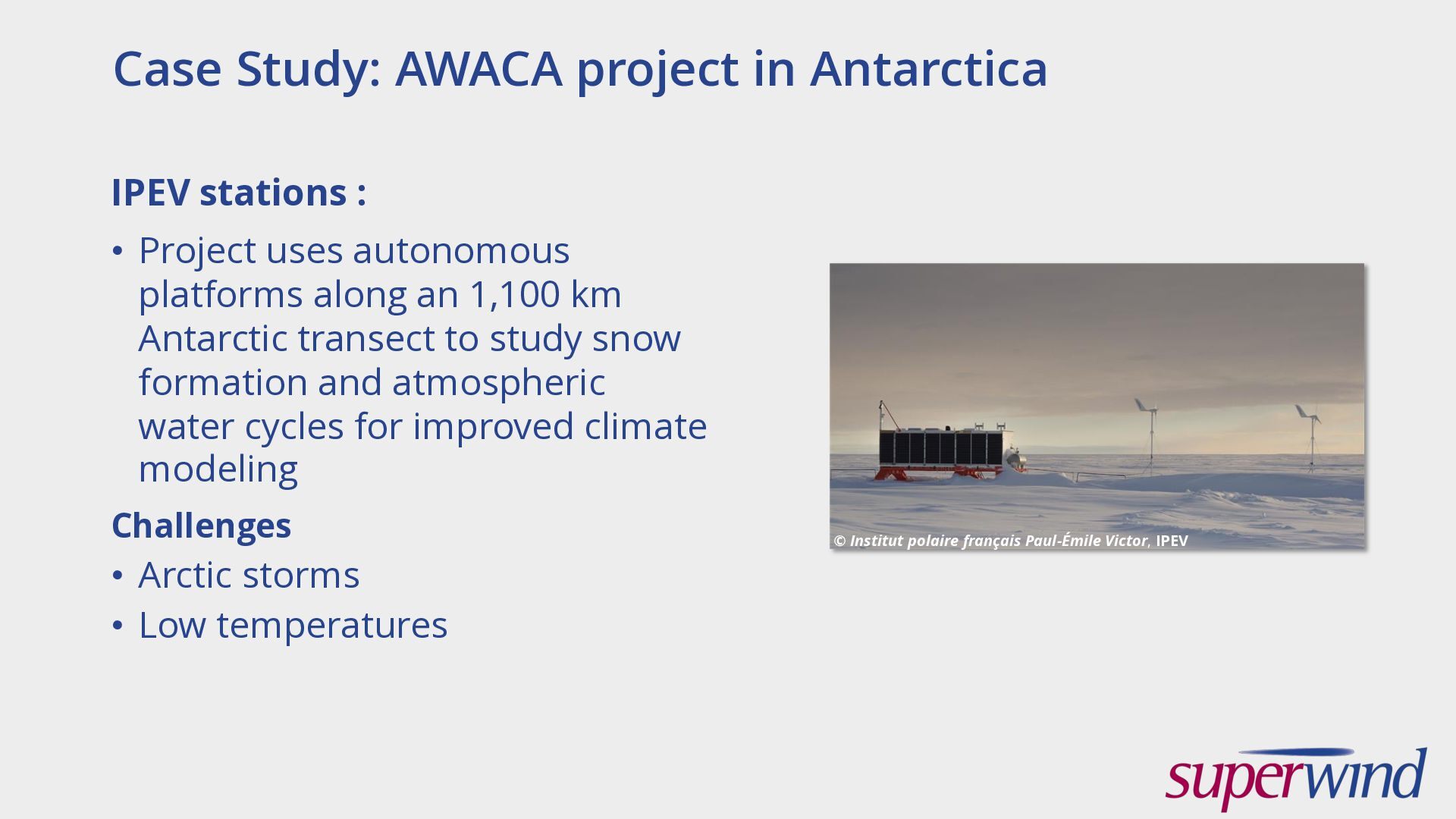
station on Svalbard. Uninterrupted 24/7 monitoring of nuclear weapons tests and earthquakes. Part of the CTBO Challenges • Arctic storms • Low temperatures
specialized solution • Wind Potential: Full performance requires adequate average wind speeds; site assessment is non-negotiable Physics-Based Decisions • Realistic Yields: Understanding physical principles (e.g., power curve) prevents poor investment decisions • Expectation Management: Aligning site data with turbine specifications for long-term success True Cost-Effectiveness • Beyond CAPEX: Real value is defined by minimized O&M (Operation & Maintenance) • Strategic Resilience: Durable technology is the only way to avoid cost- intensive service calls to remote/polar locations Summary & Key Takeaways Resilience as the Standard for Self-Sufficient Energy
• Survival: Mechanical pitch system for extreme wind loads Operational resilience • Autonomy: Full Black Start capability from 0% battery charge. • Reliability: Autonomous restart without human intervention Service resilience : • Longevity: Designed for 20+ years of operational life • Maintainability: Forward-thinking construction ensures repairability Summary & Key Takeaways Resilience as the Standard for Self-Sufficient Energy


 ipfevents
.jpg) lychee1223
lychee1223
 trycycle
 jarvist
 peterdesmet
 shumpei777
 tagtag
 syuchimu
 institutdelelevage
 estie
estie
 xspa2012
 szymonslowik
 tammyeverts
 addyosmani
 sugarenia
 greggifford
 maggiecrowley
 tmiket
 geshan
 techseoconnect
 lauravandoore
 ipullrank
 aleyda

![www.superwind.com [email protected] superwind FROM THE NORTH TO THE SOUTH ©](https://files.speakerdeck.com/presentations/8b11b40272ef40309044805d1b683804/slide_24.jpg)