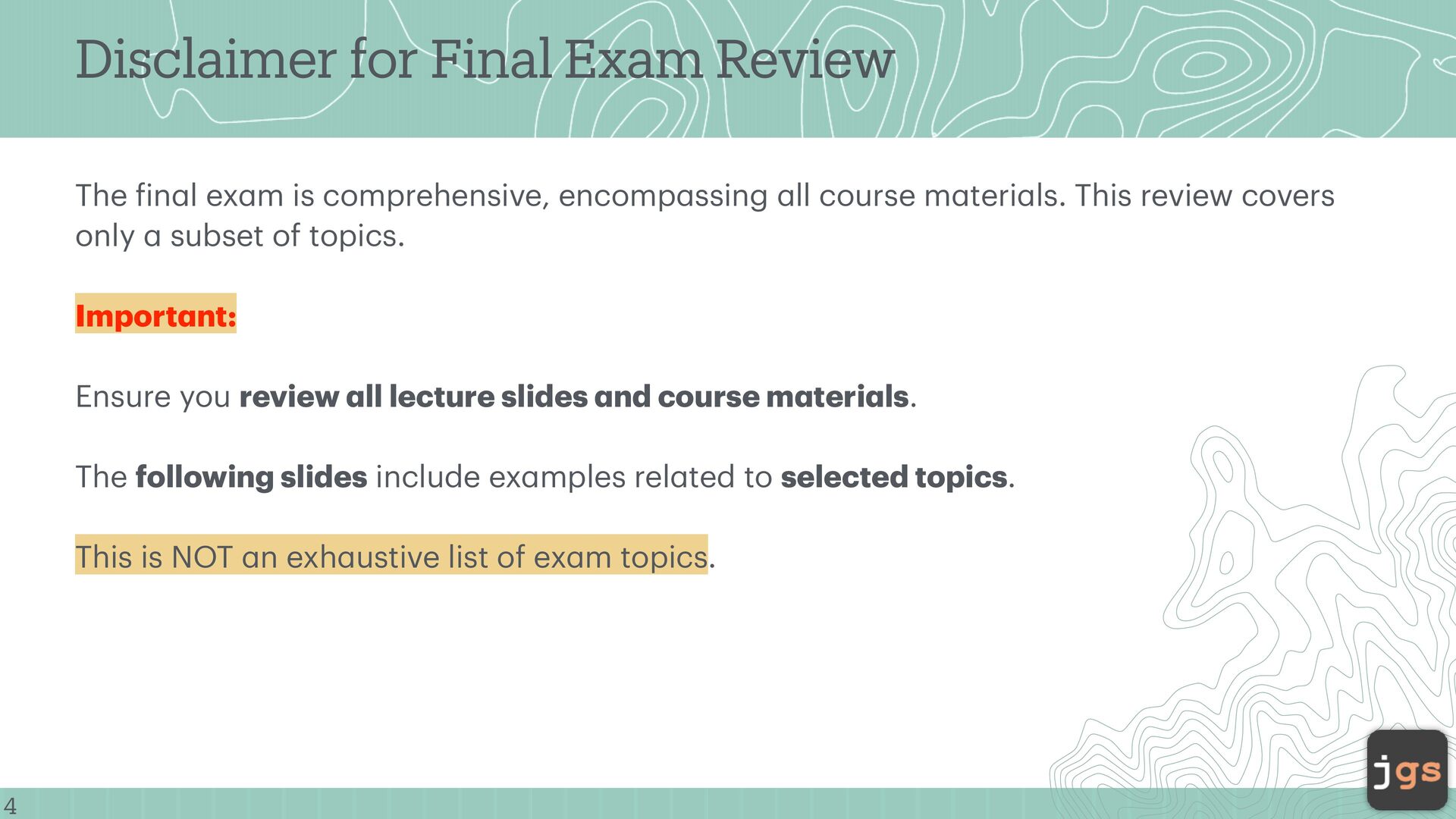
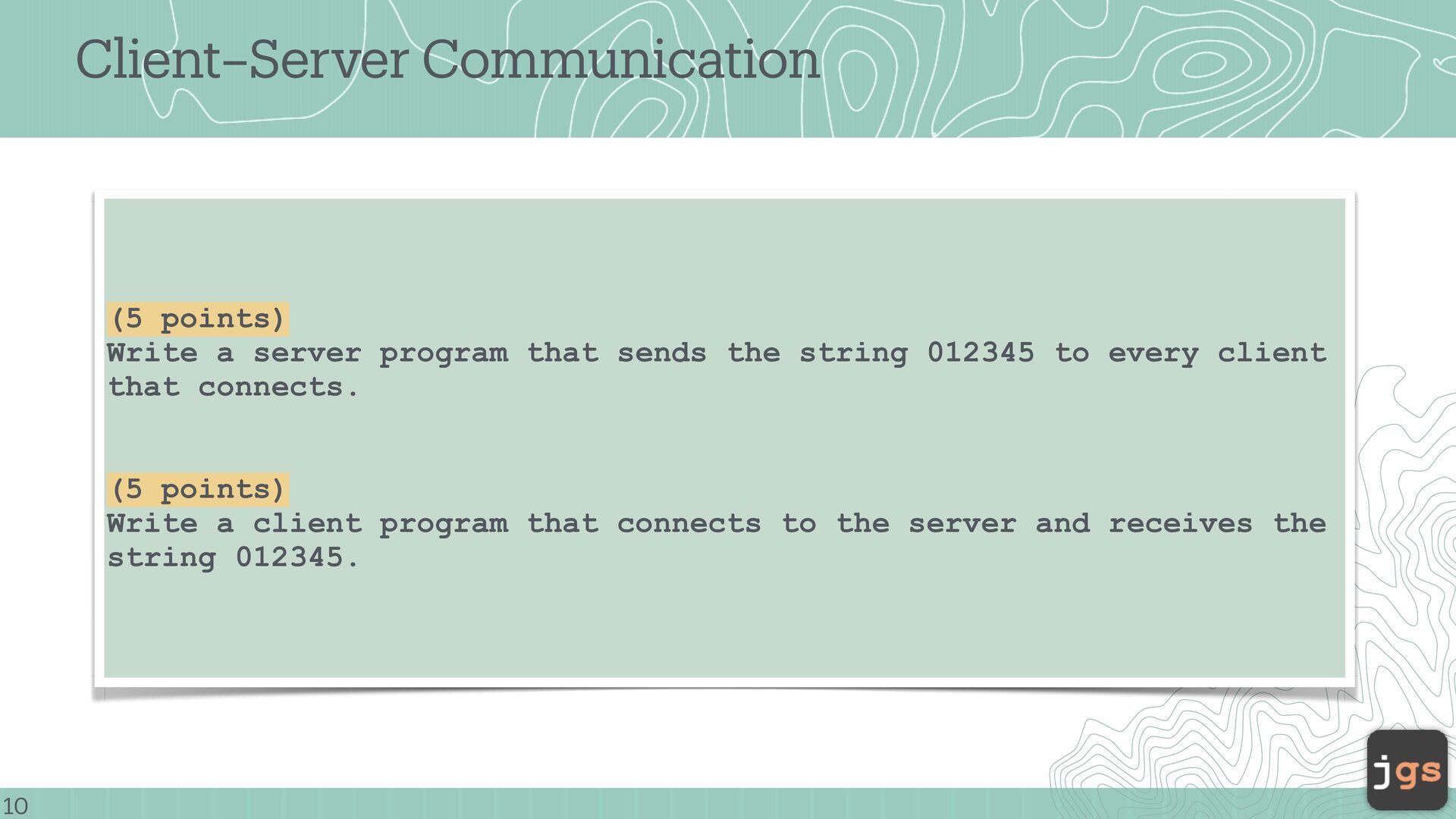
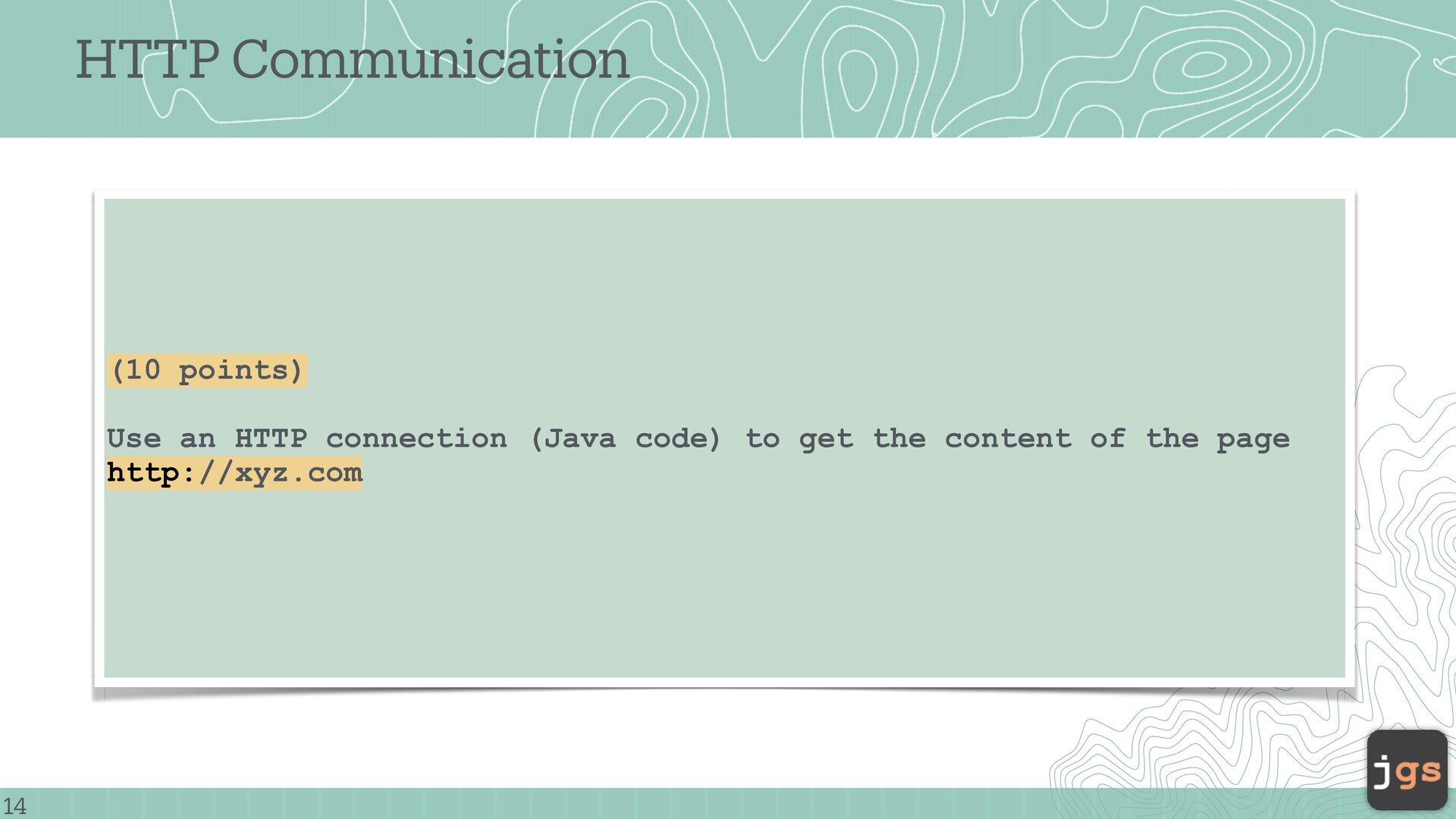
l ex a m is comprehensive, encomp a ssing a ll course m a teri a ls. This review covers only a subset of topics. Import a nt: Ensure you review a ll lecture slides a nd course m a teri a ls. The following slides include ex a mples rel a ted to selected topics. This is NOT a n exh a ustive list of ex a m topics.
digms: • Networked Computing • Distributed Computing • P a r a llel Computing Systems sc a le beyond a single progr a m running on a single m a chine. Modern softw a re systems a re not just progr a ms but inter a cting components. Project-b a sed a ppro a ch, where concepts a re a pplied through progr a mming a ssignments.
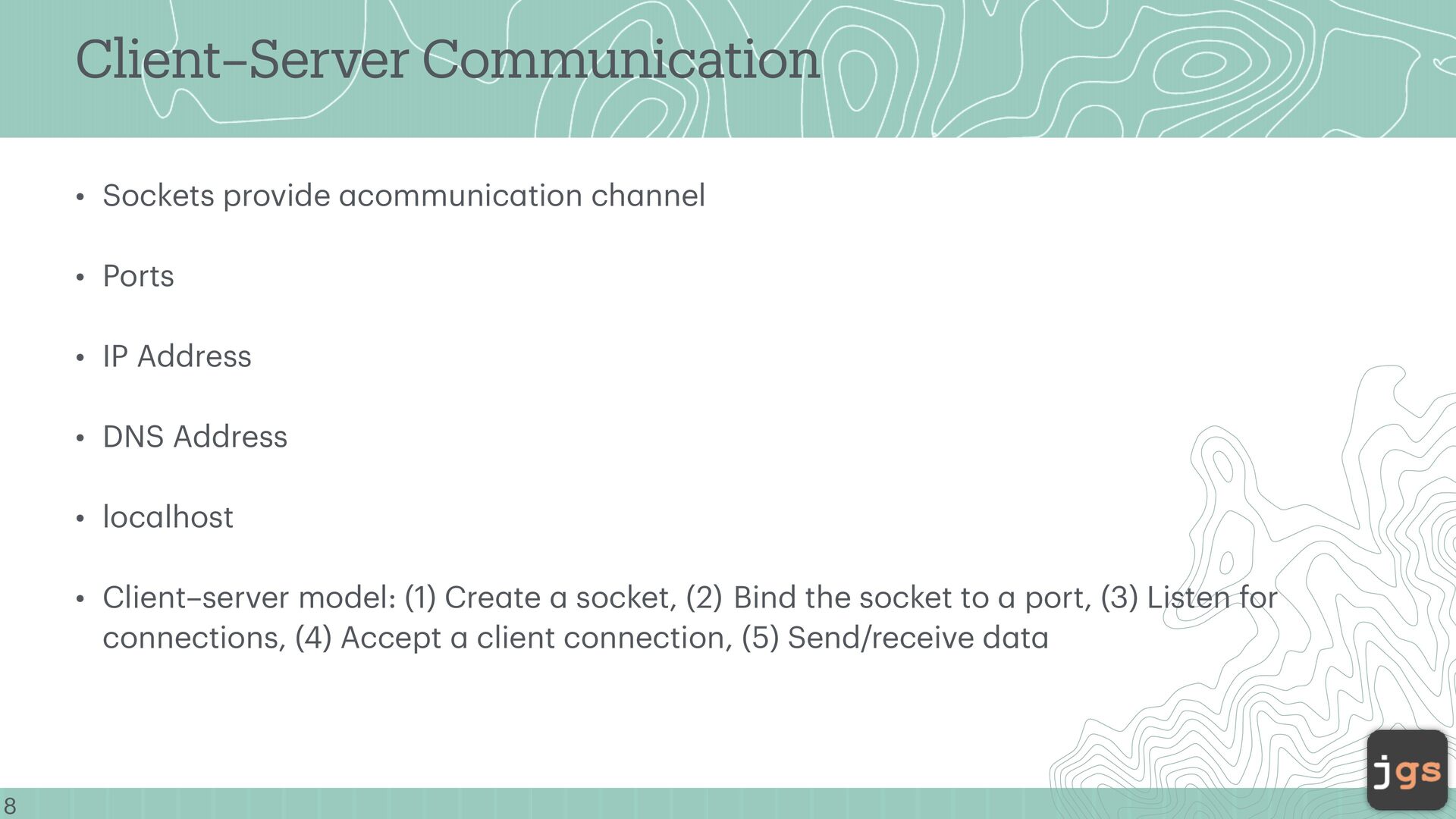
ch a nnel • Ports • IP Address • DNS Address • loc a lhost • Client–server model: (1) Cre a te a socket, (2) Bind the socket to a port, (3) Listen for connections, (4) Accept a client connection, (5) Send/receive d a t a
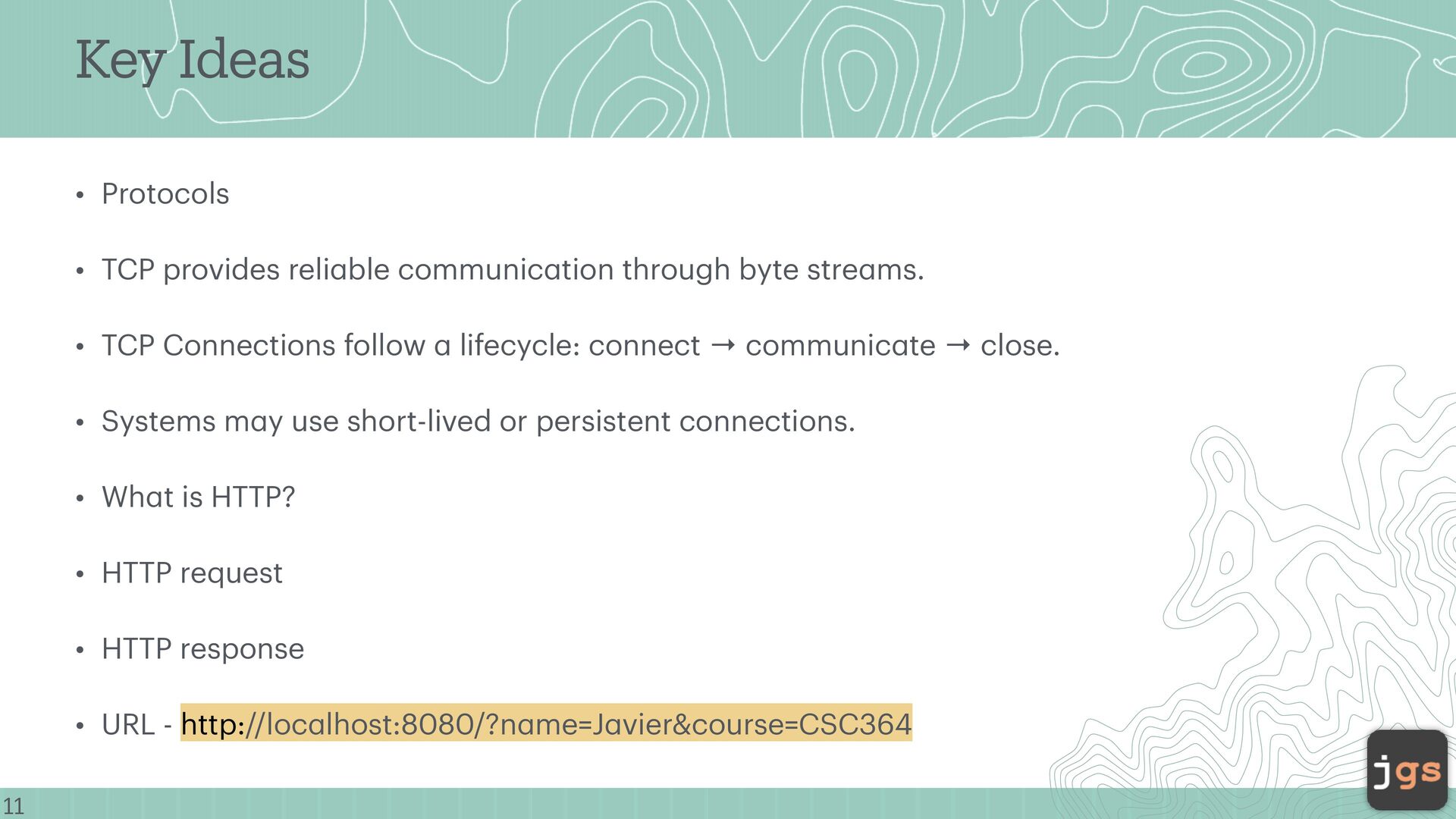
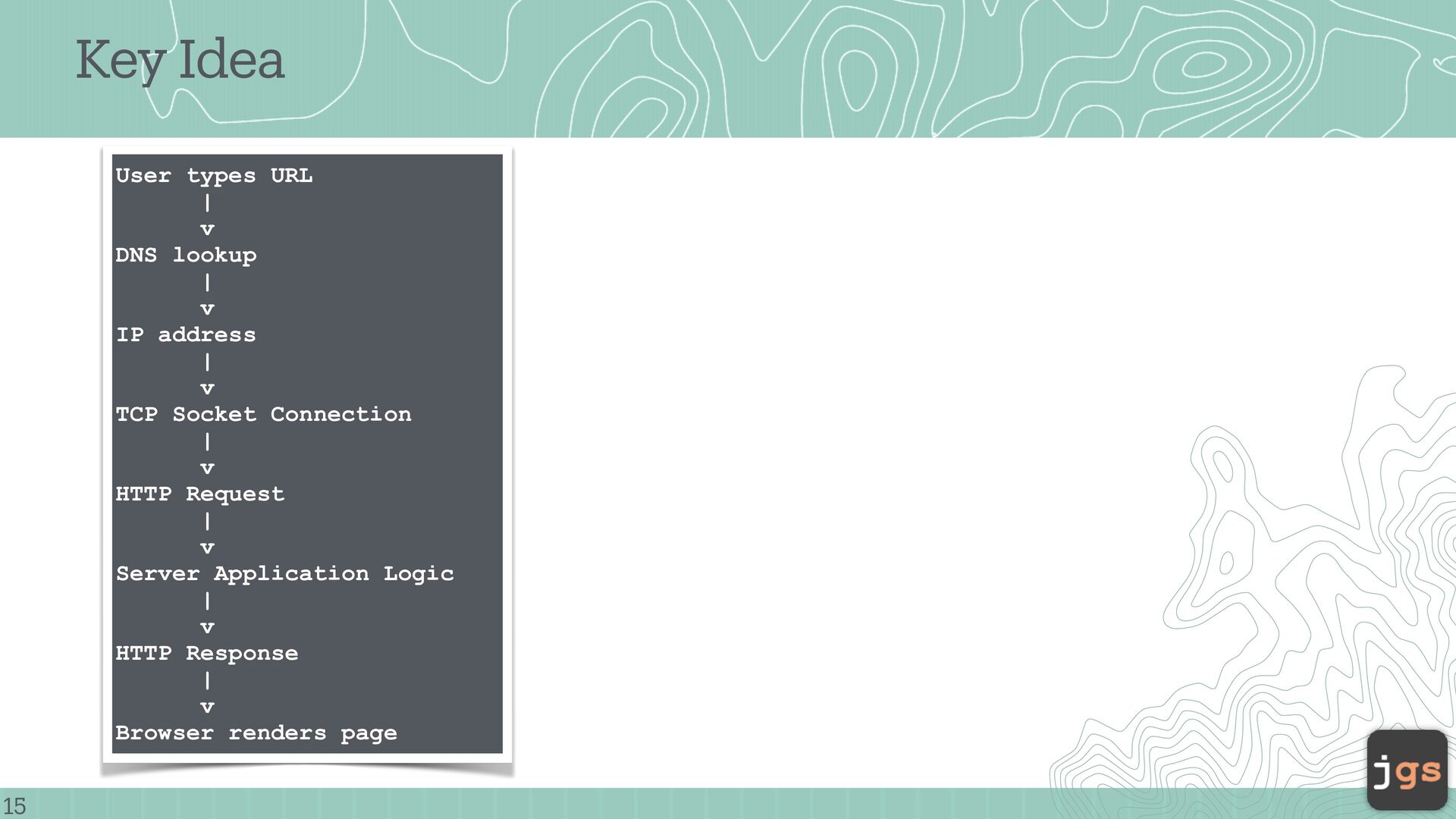
ble communic a tion through byte stre a ms. • TCP Connections follow a lifecycle: connect → communic a te → close. • Systems m a y use short-lived or persistent connections. • Wh a t is HTTP? • HTTP request • HTTP response • URL - http://loc a lhost:8080/?n a me=J a vier&course=CSC364
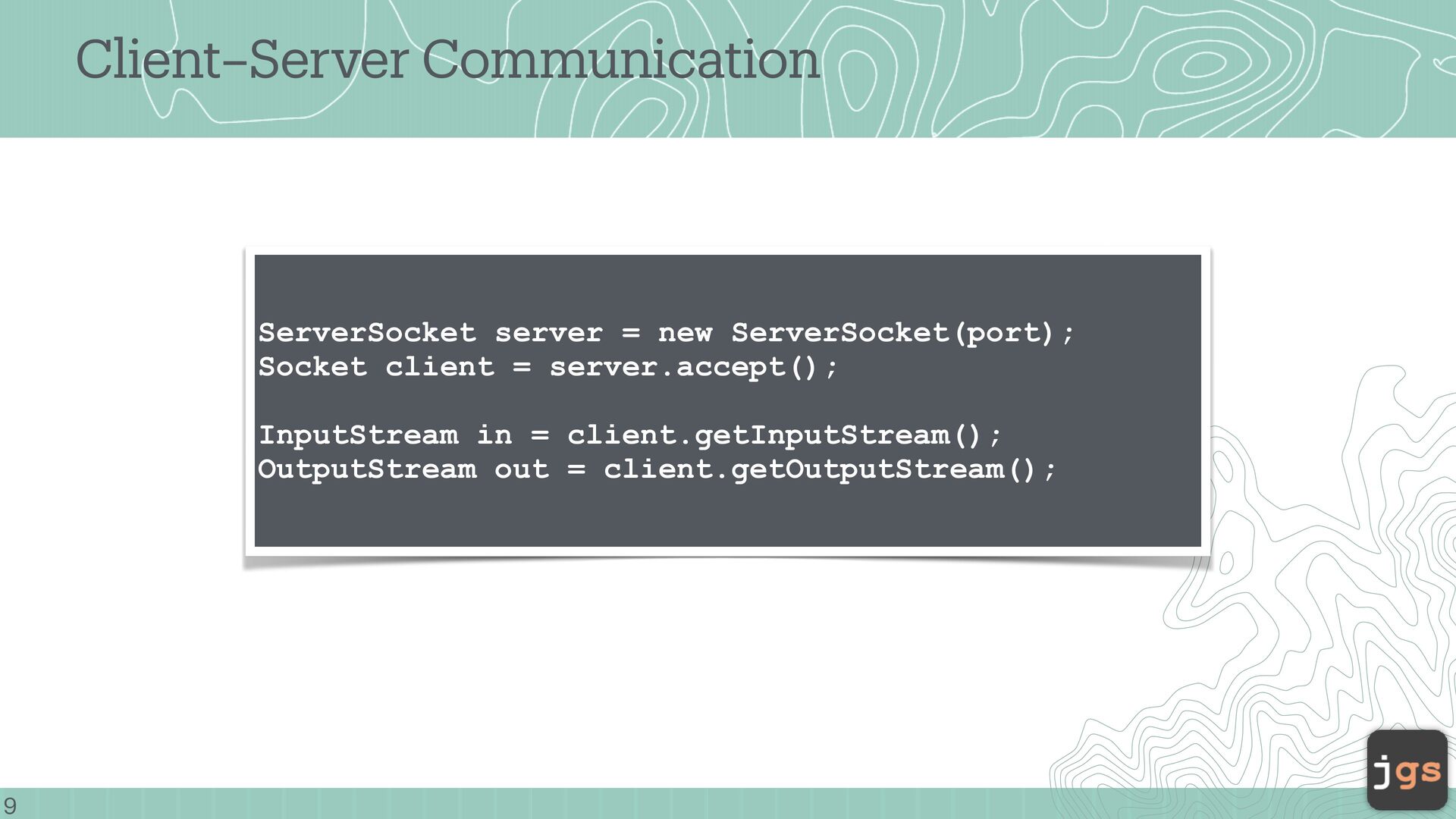
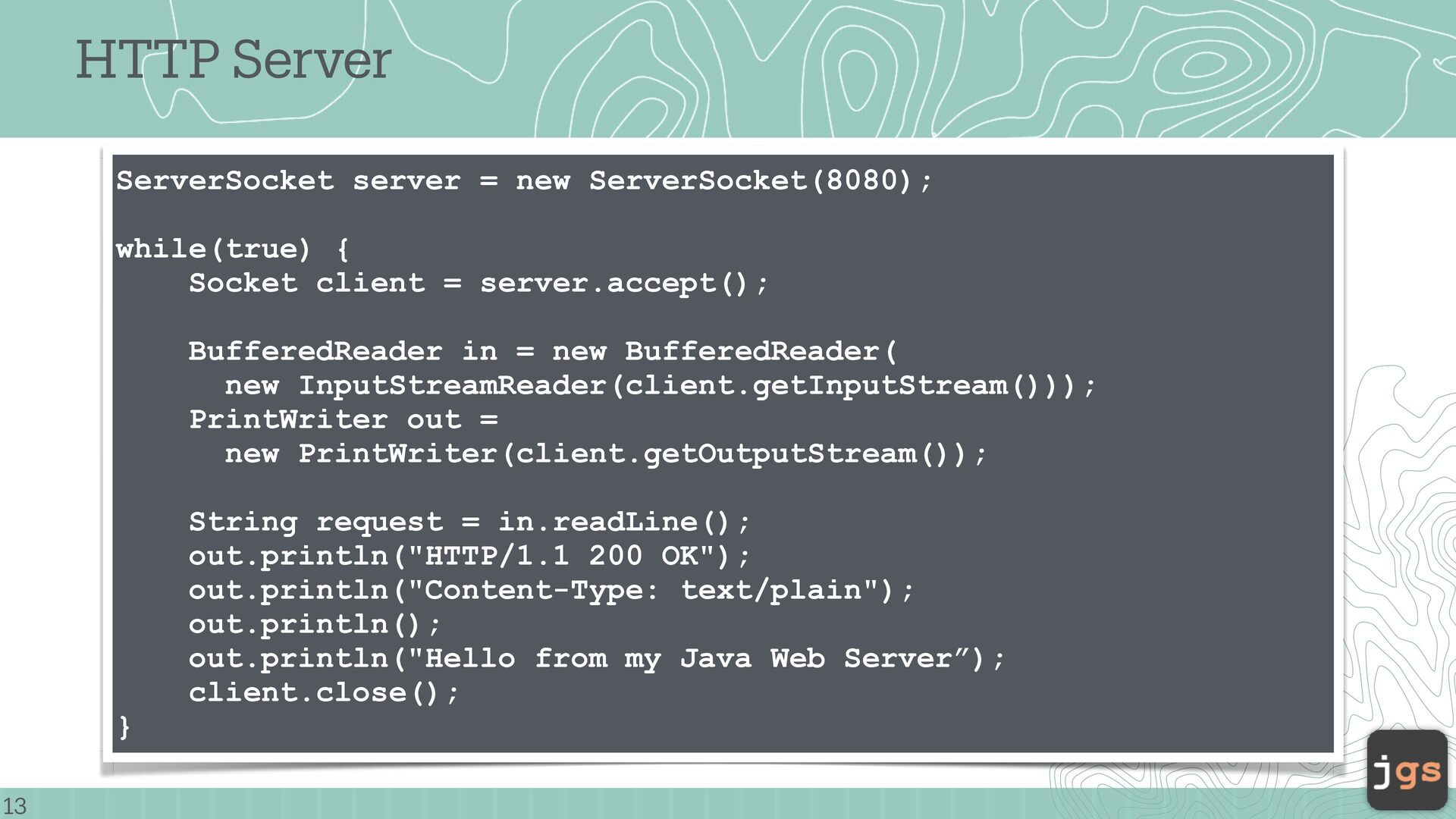
Socket client = server.accept(); BufferedReader in = new BufferedReader( new InputStreamReader(client.getInputStream())); PrintWriter out = new PrintWriter(client.getOutputStream()); String request = in.readLine(); out.println("HTTP/1.1 200 OK"); out.println("Content-Type: text/plain"); out.println(); out.println("Hello from my Java Web Server”); client.close(); }
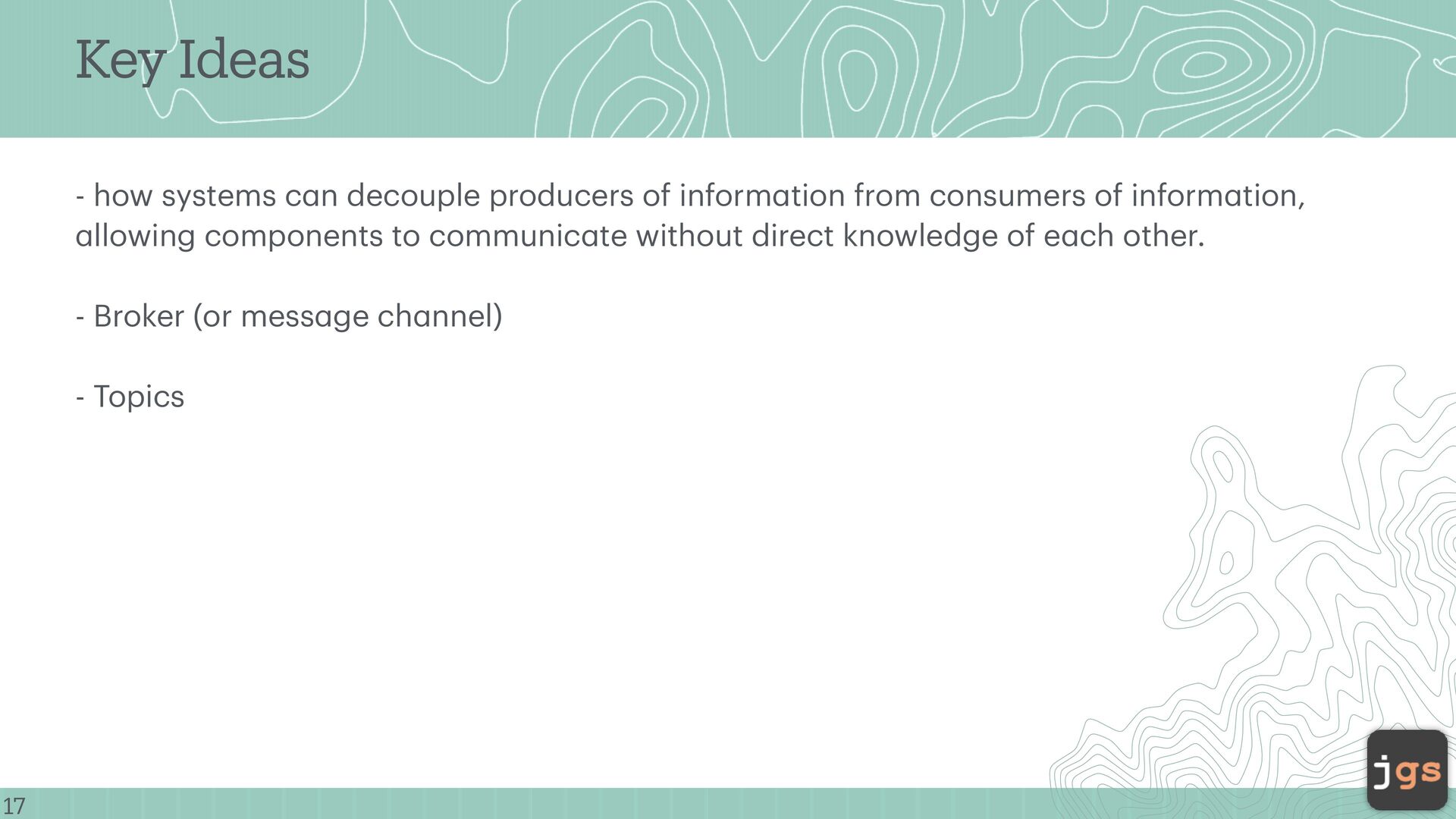
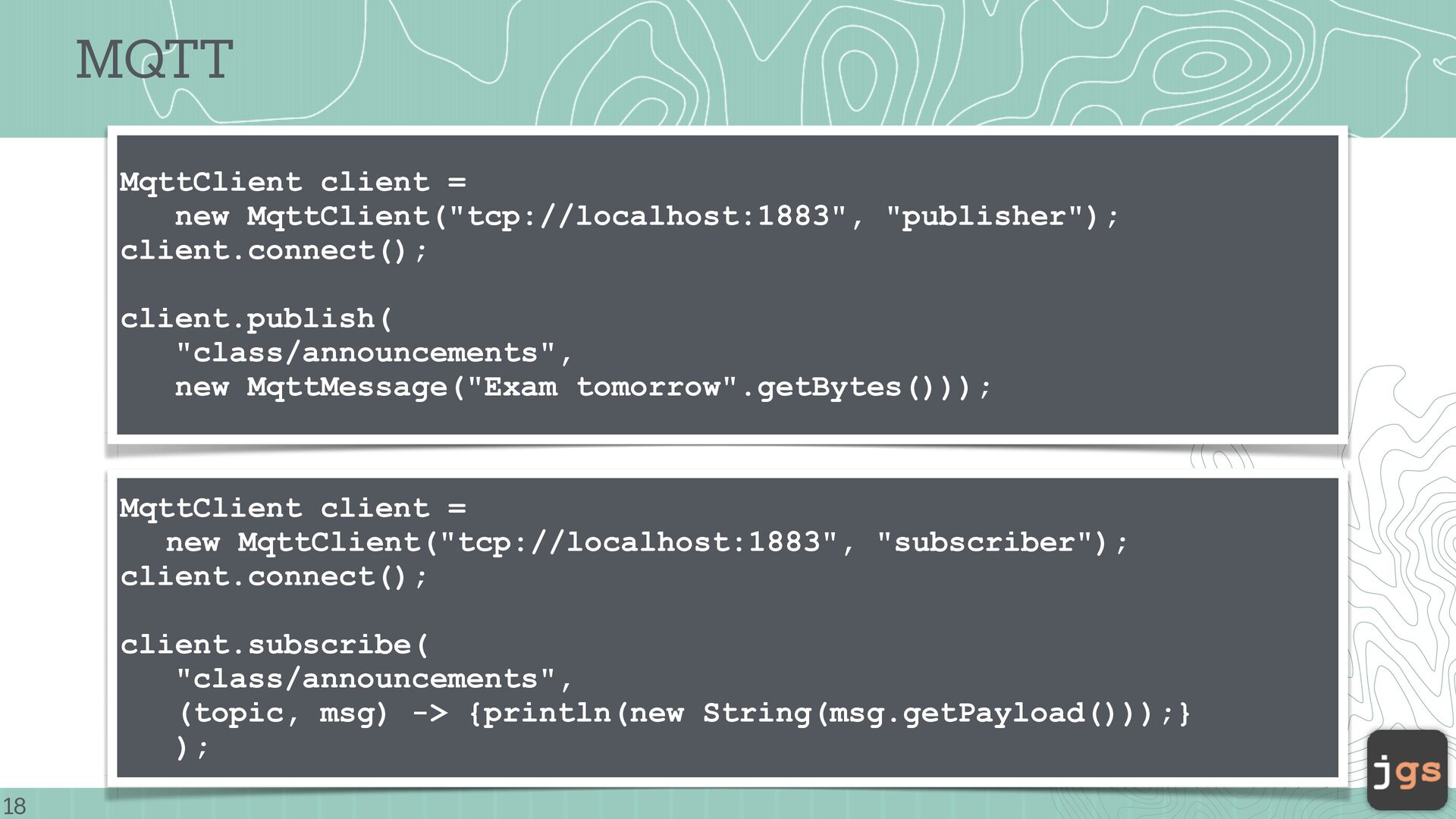
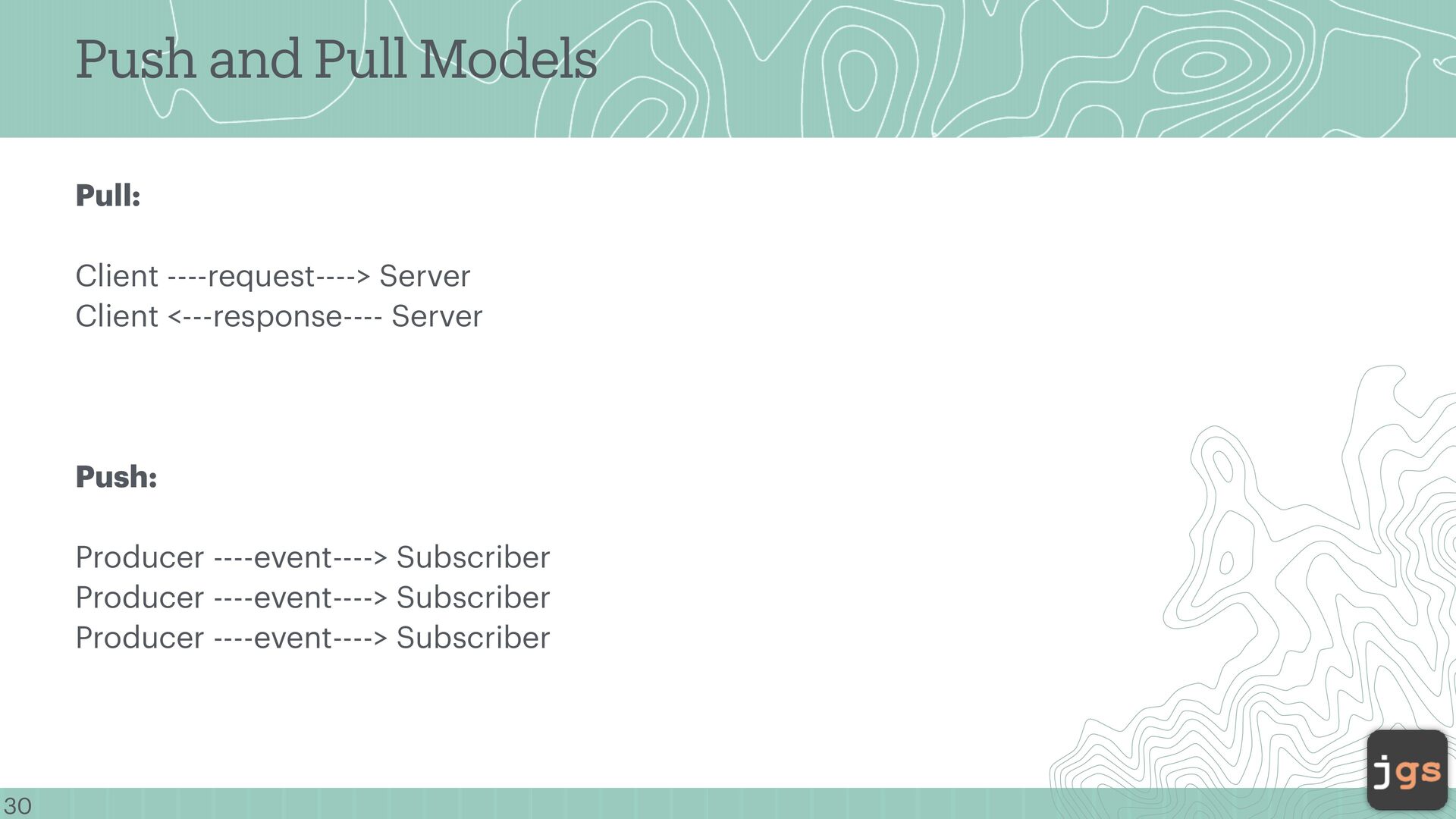
producers of inform a tion from consumers of inform a tion, a llowing components to communic a te without direct knowledge of e a ch other. - Broker (or mess a ge ch a nnel) - Topics
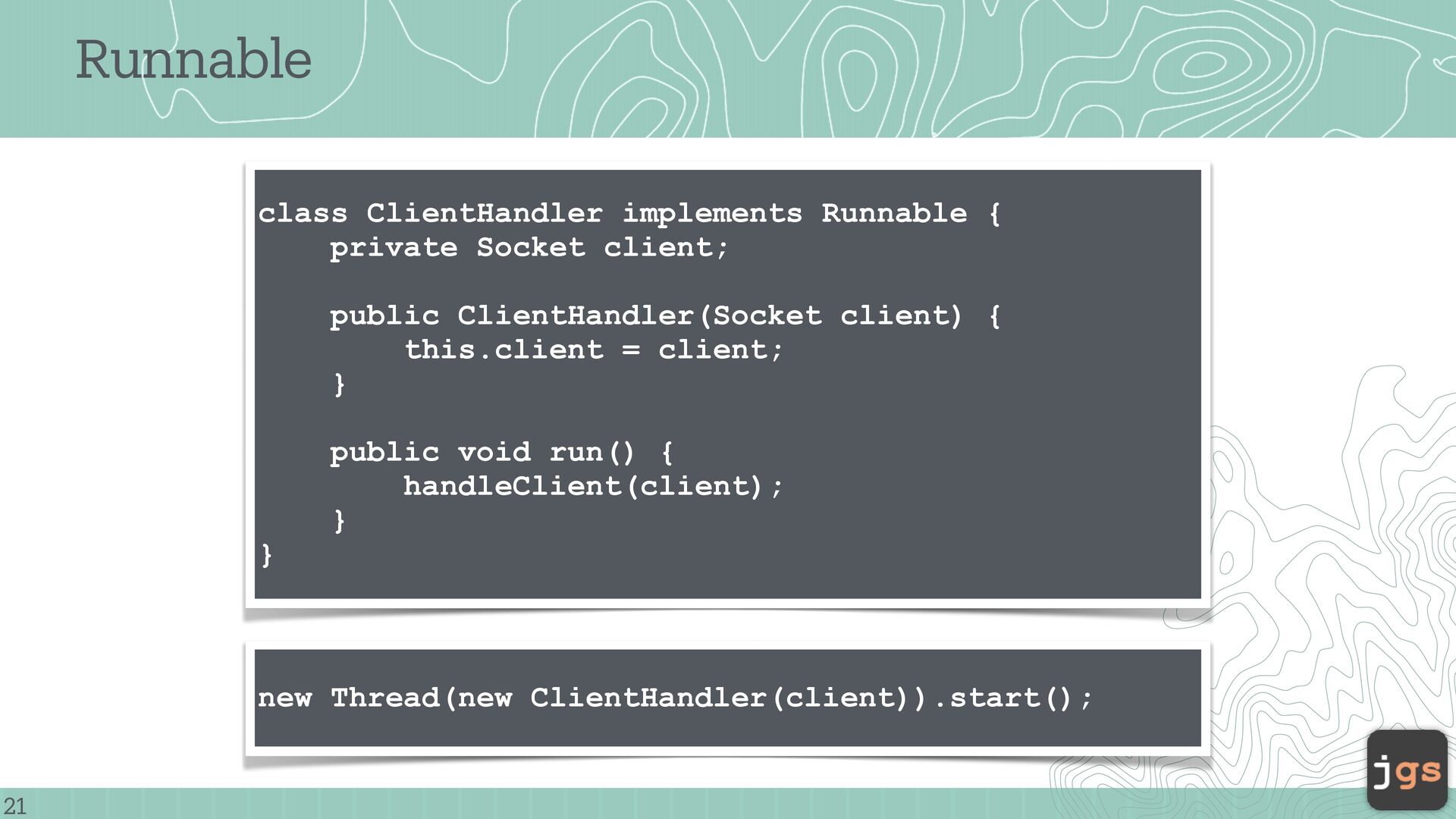
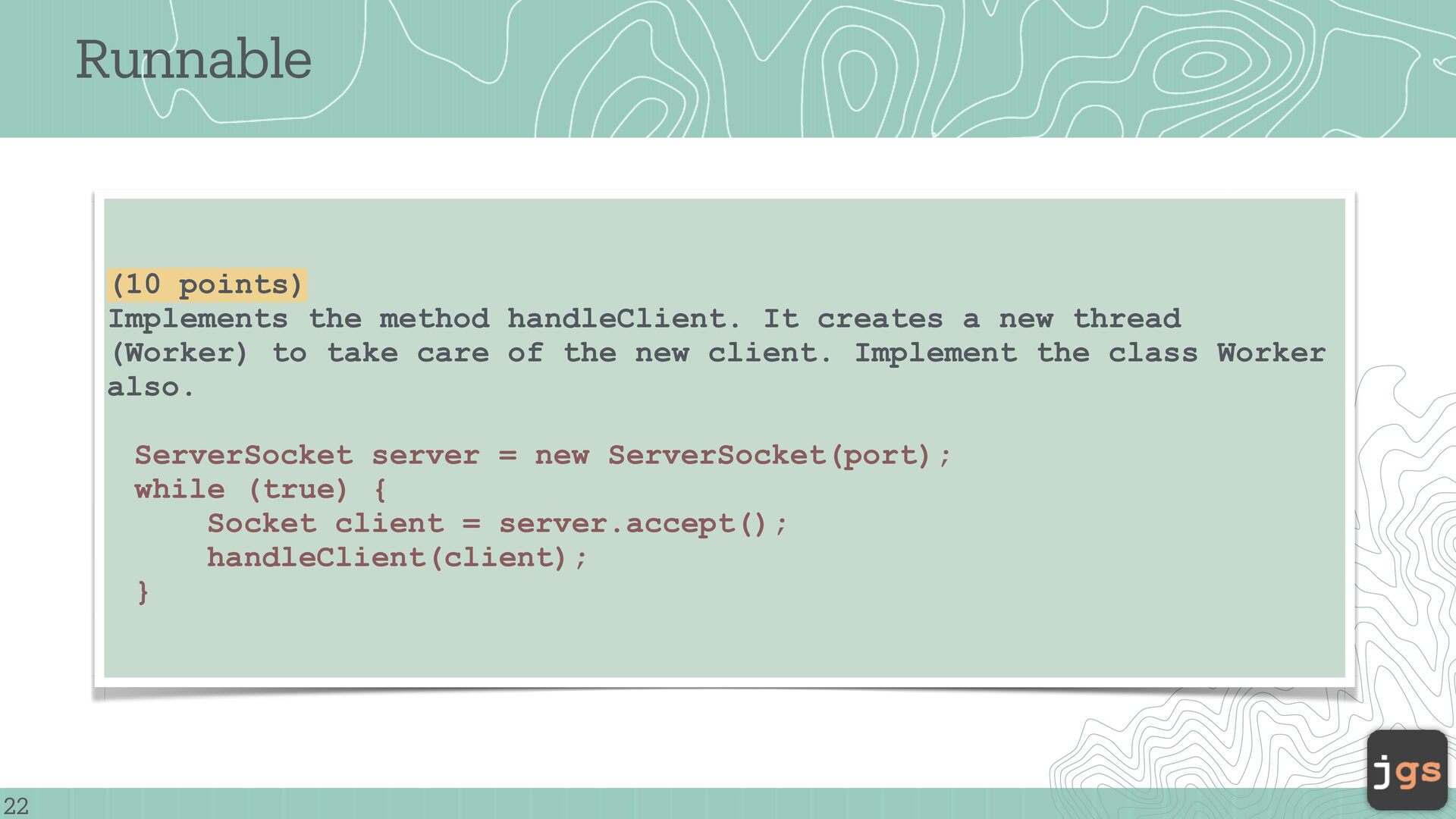
a new thread (Worker) to take care of the new client. Implement the class Worker also. ServerSocket server = new ServerSocket(port); while (true) { Socket client = server.accept(); handleClient(client); }
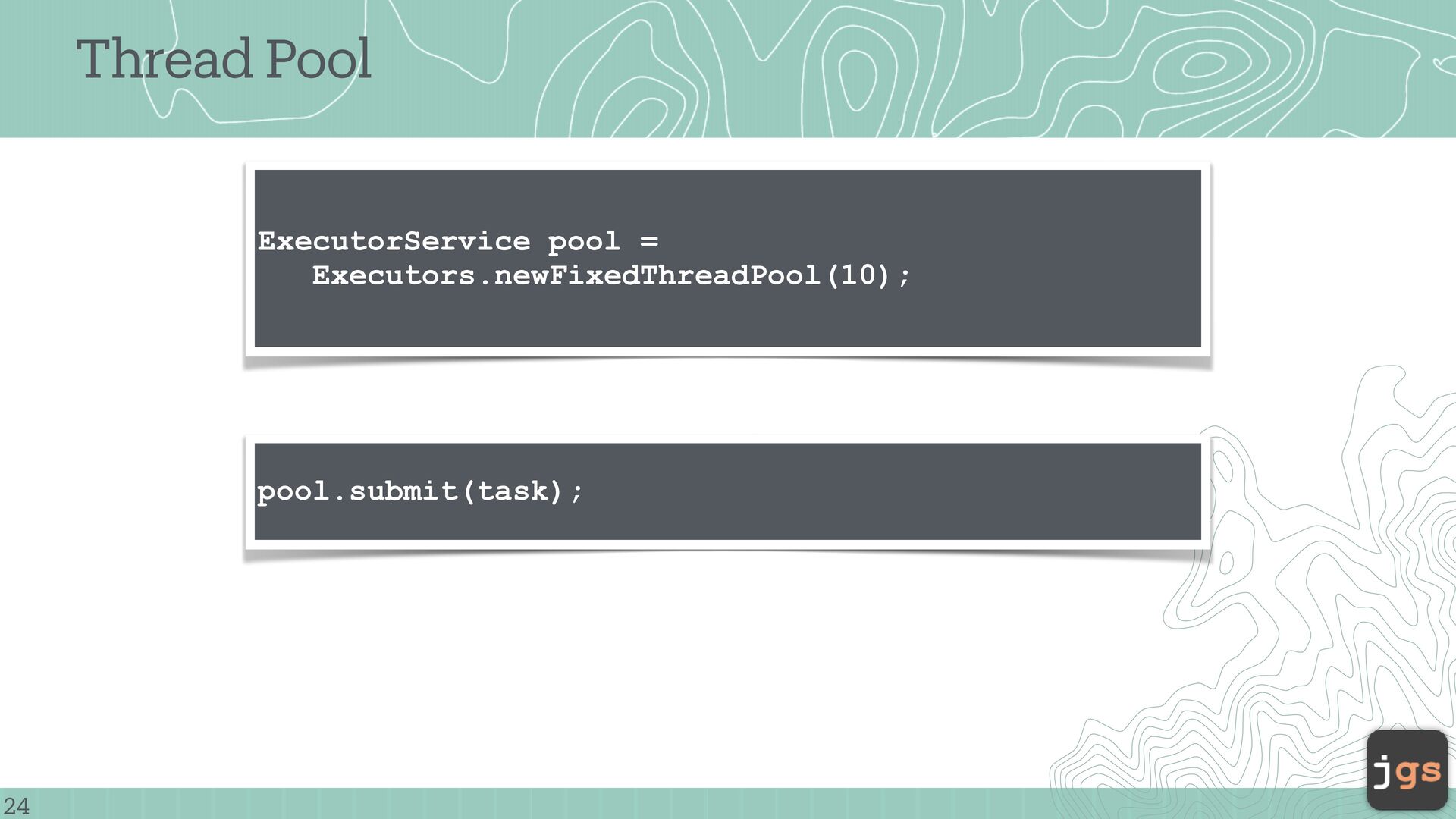
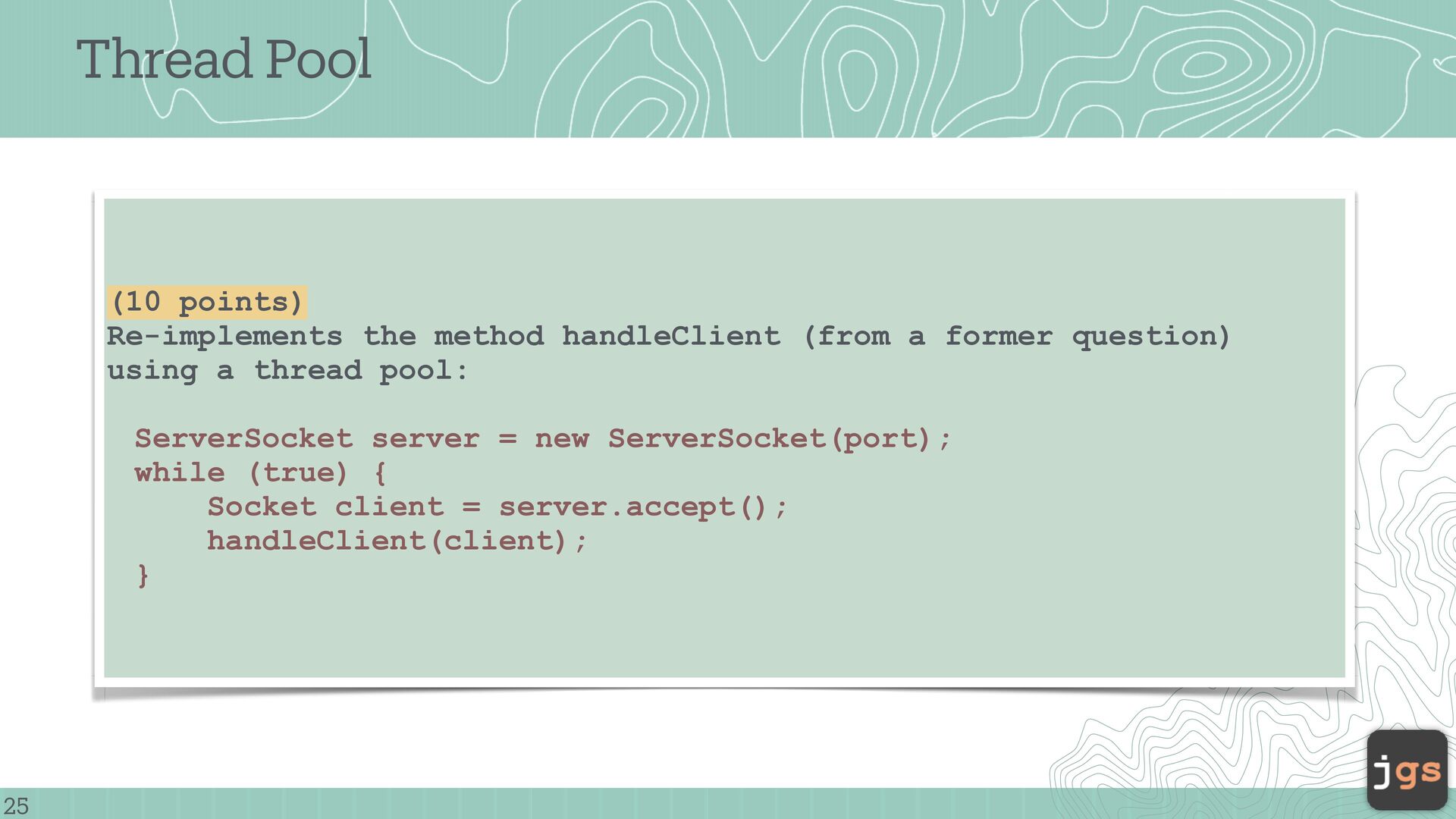
a former question) using a thread pool: ServerSocket server = new ServerSocket(port); while (true) { Socket client = server.accept(); handleClient(client); }
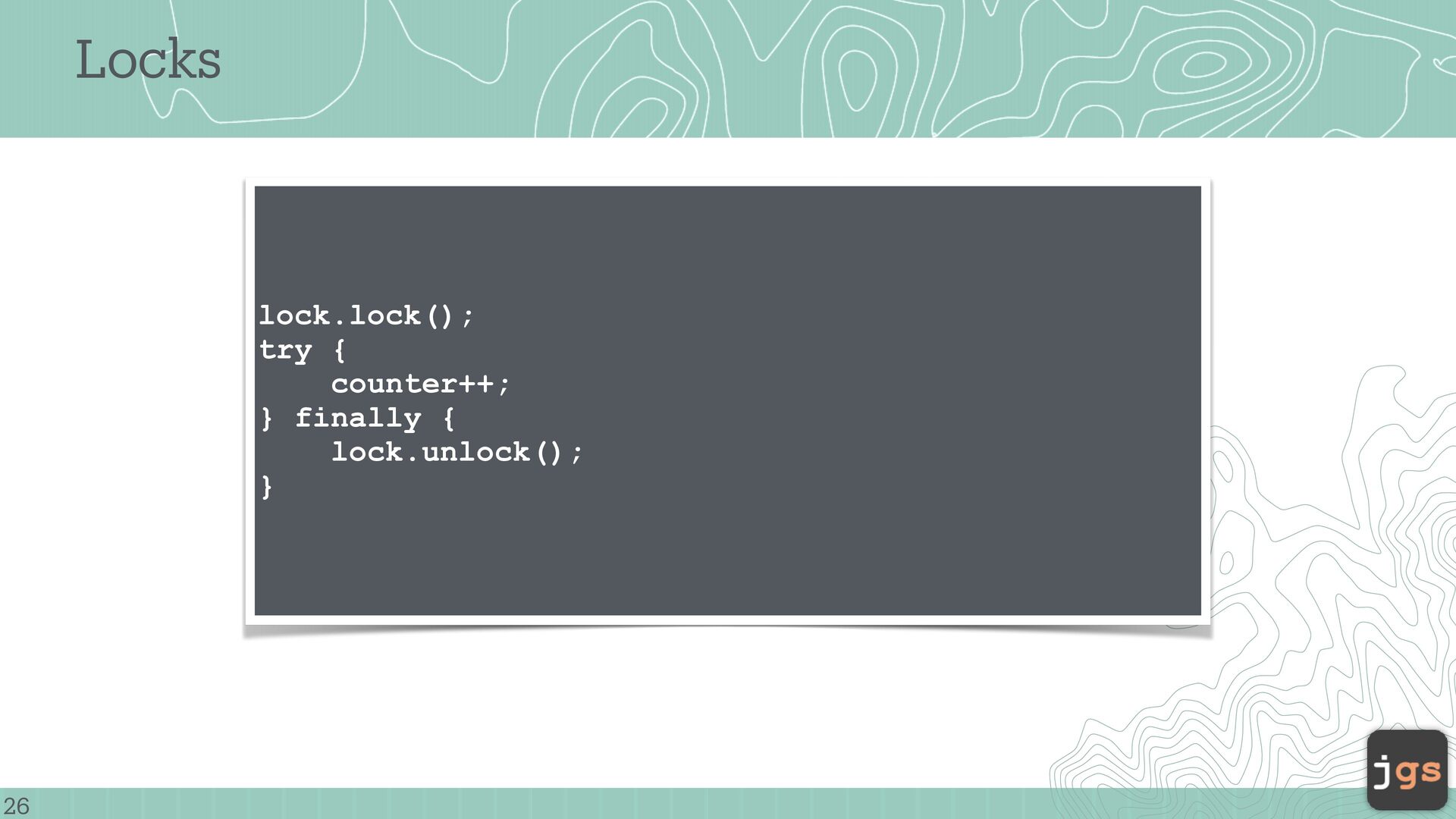
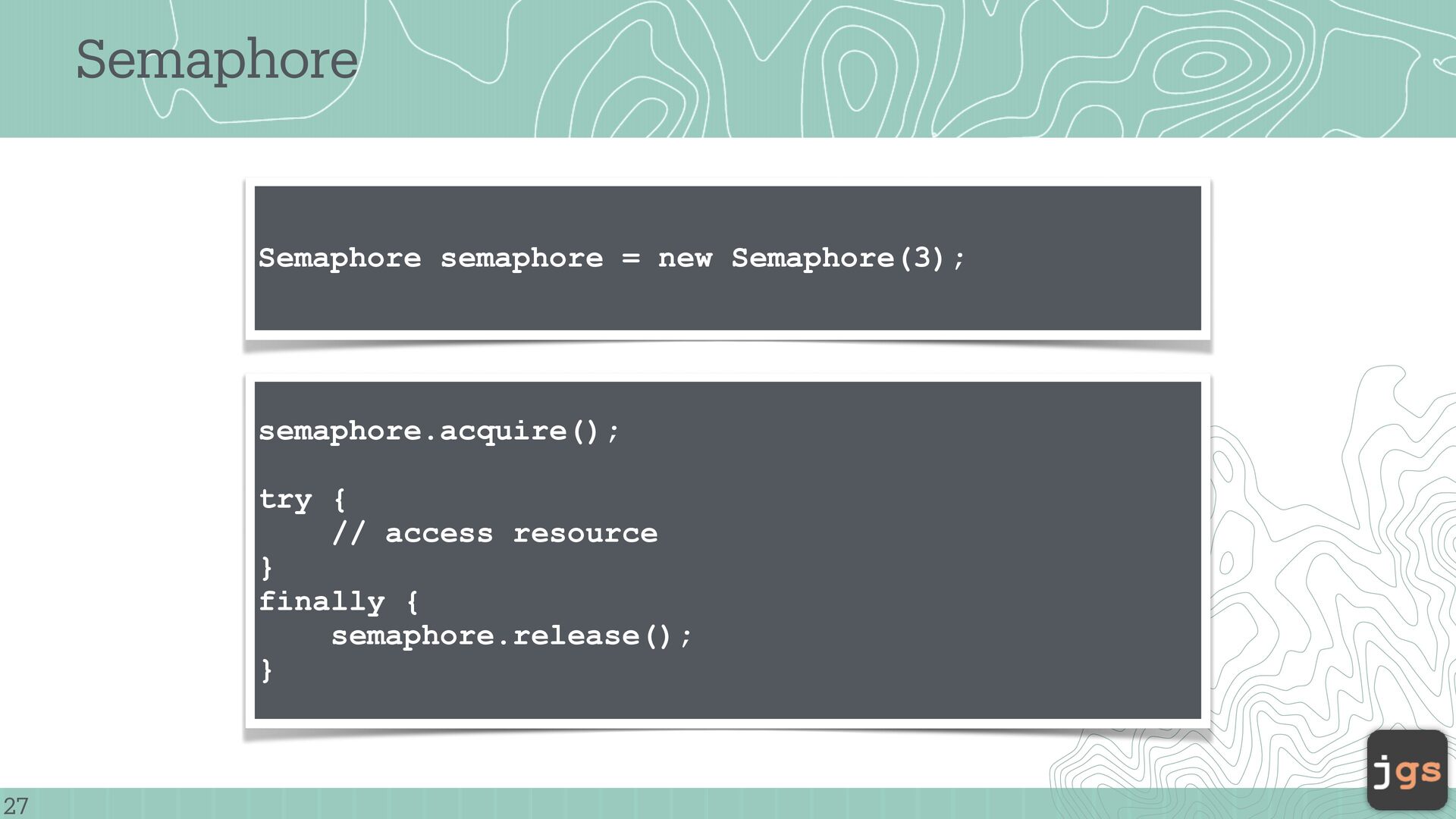
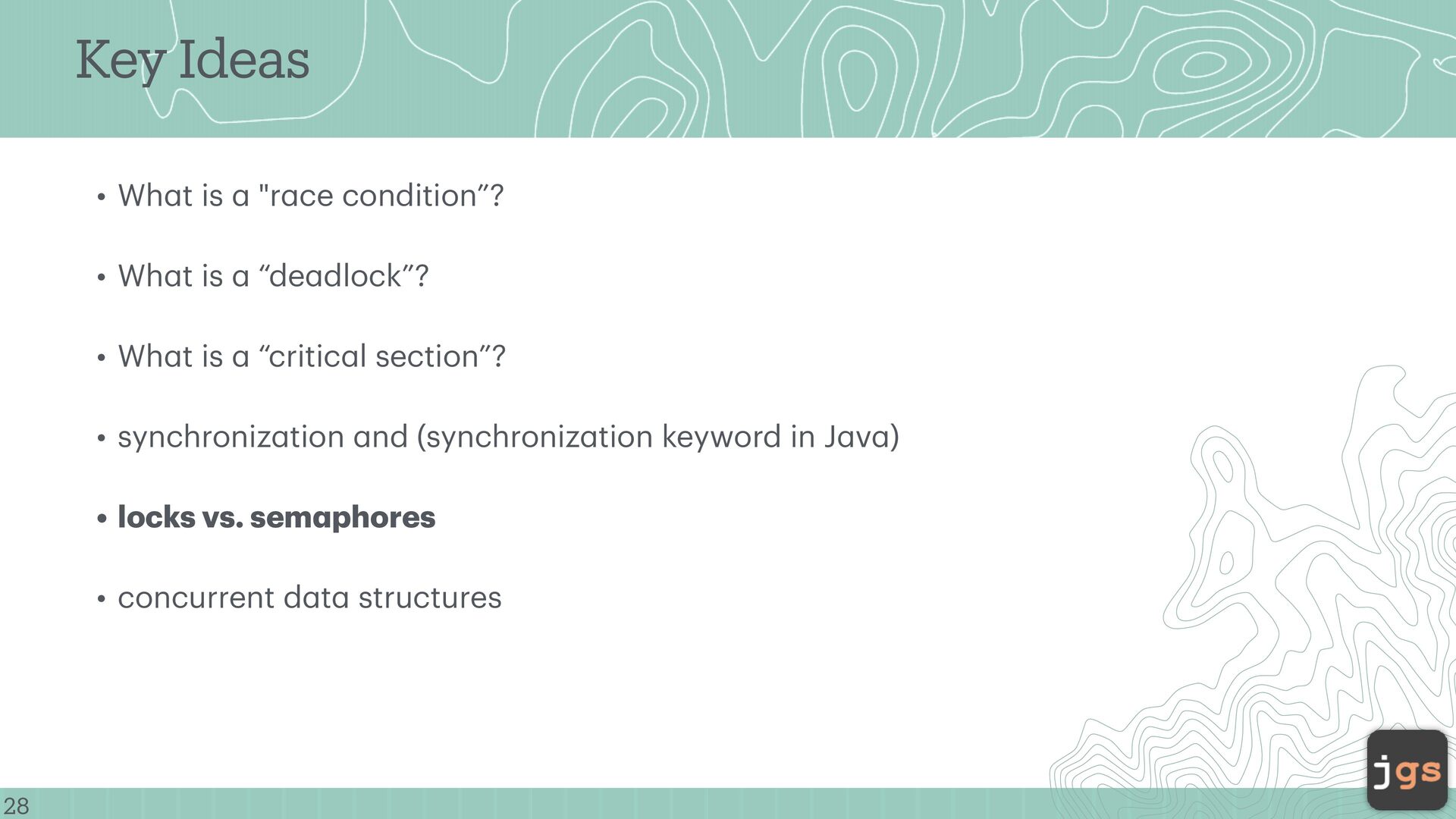
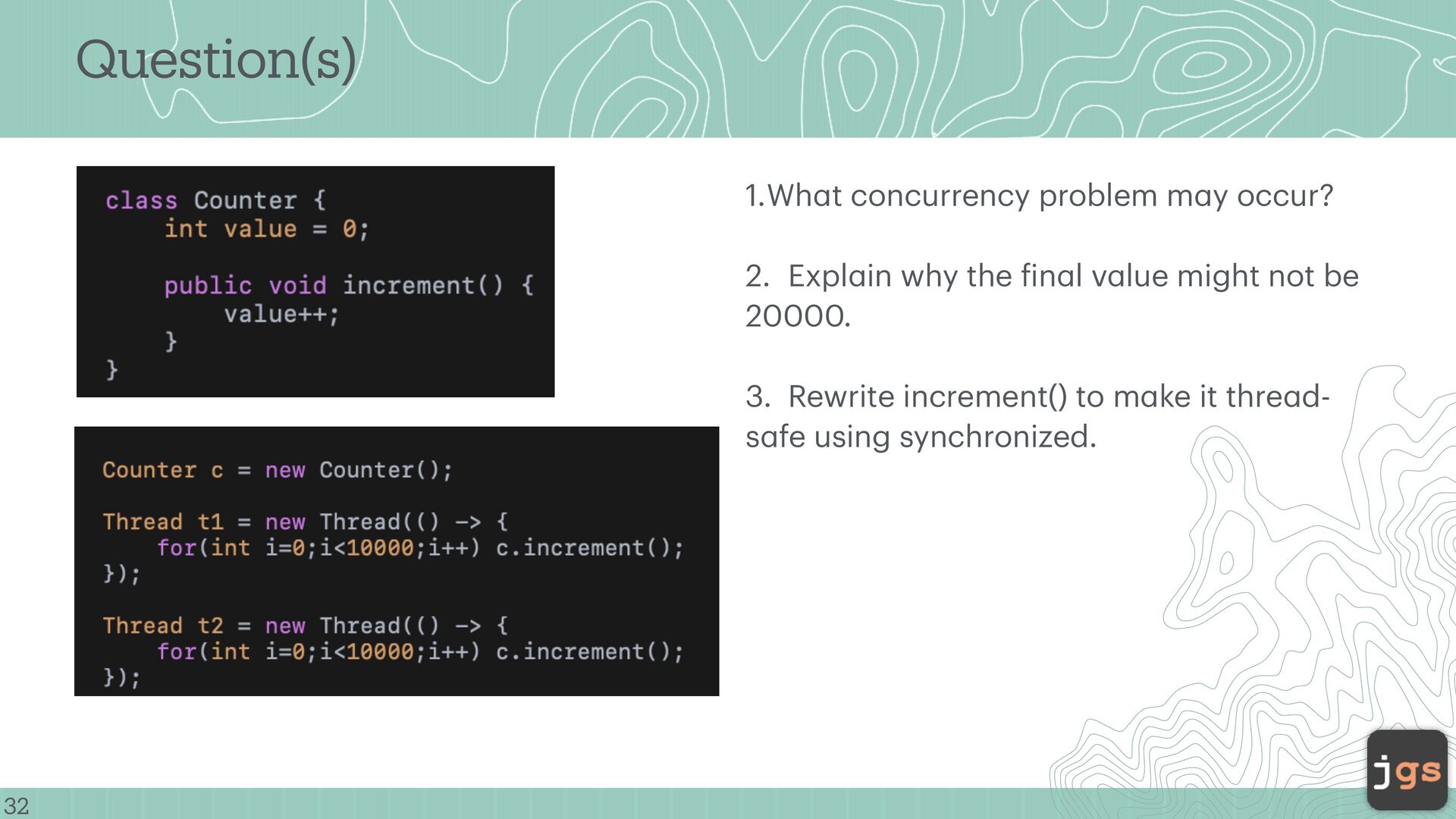
a ce condition”? • Wh a t is a “de a dlock”? • Wh a t is a “critic a l section”? • synchroniz a tion a nd (synchroniz a tion keyword in J a v a ) • locks vs. sem a phores • concurrent d a t a structures
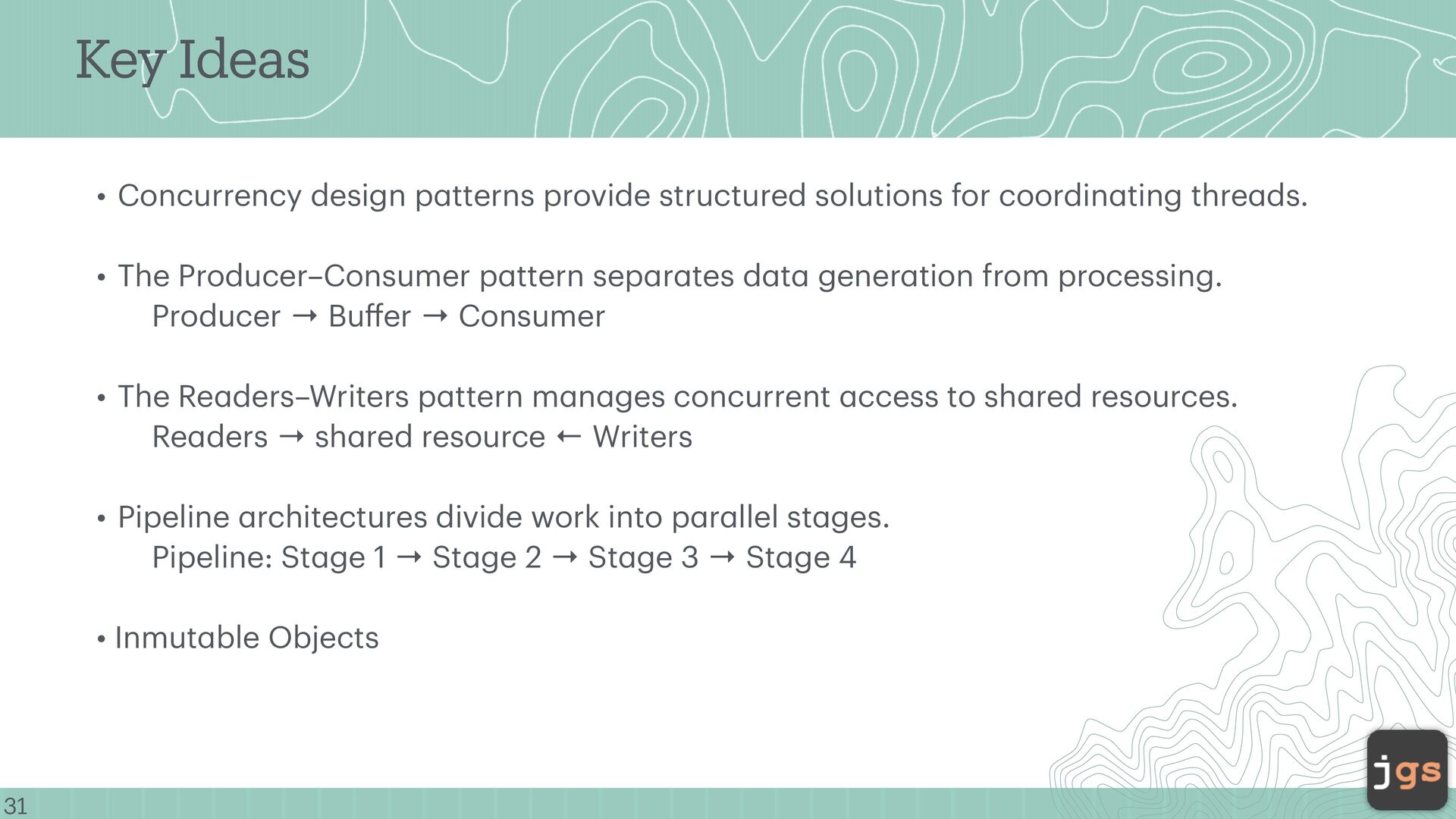
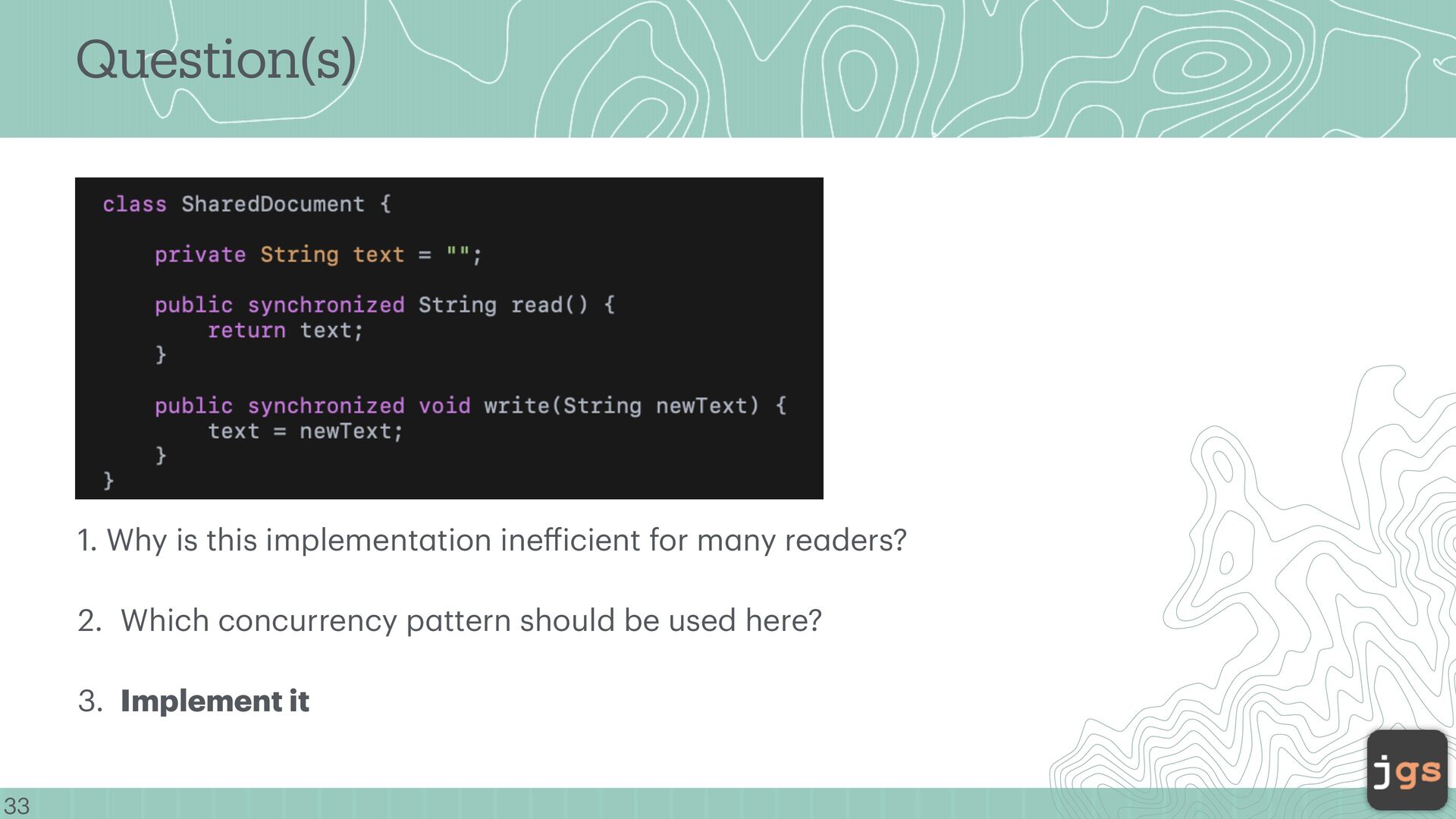
structured solutions for coordin a ting thre a ds. • The Producer–Consumer p a ttern sep a r a tes d a t a gener a tion from processing. Producer → Bu ff er → Consumer • The Re a ders–Writers p a ttern m a n a ges concurrent a ccess to sh a red resources. Re a ders → sh a red resource ← Writers • Pipeline a rchitectures divide work into p a r a llel st a ges. Pipeline: St a ge 1 → St a ge 2 → St a ge 3 → St a ge 4 • Inmut a ble Objects
• multiple sensors generate data continuously • several worker threads analyze the data • a monitoring dashboard must update whenever new results appear. Questions: 1. Which concurrency pattern should connect sensors and workers? 2. Which pattern should be used by the dashboard? 3. Draw a simple architecture diagram.
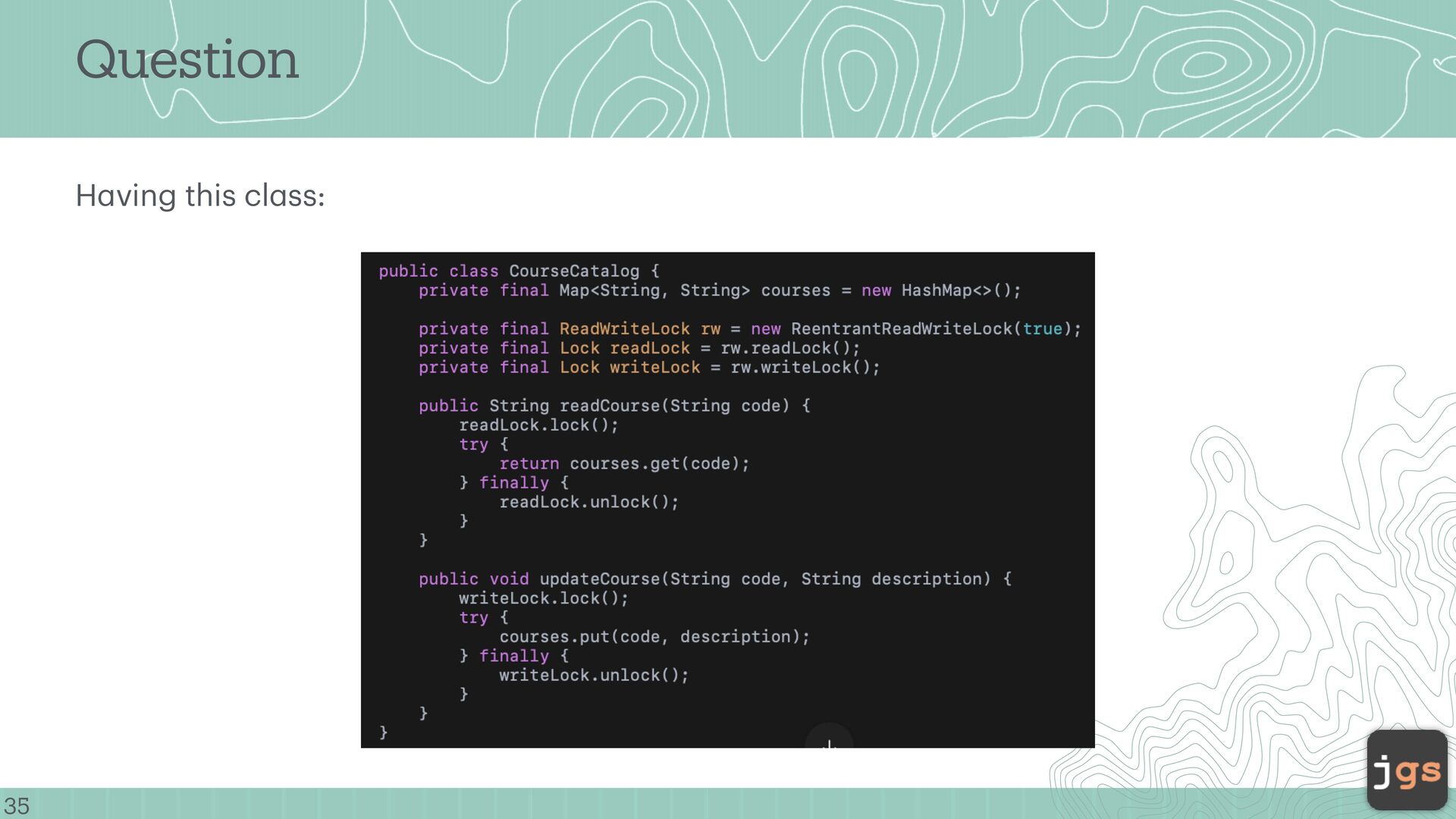
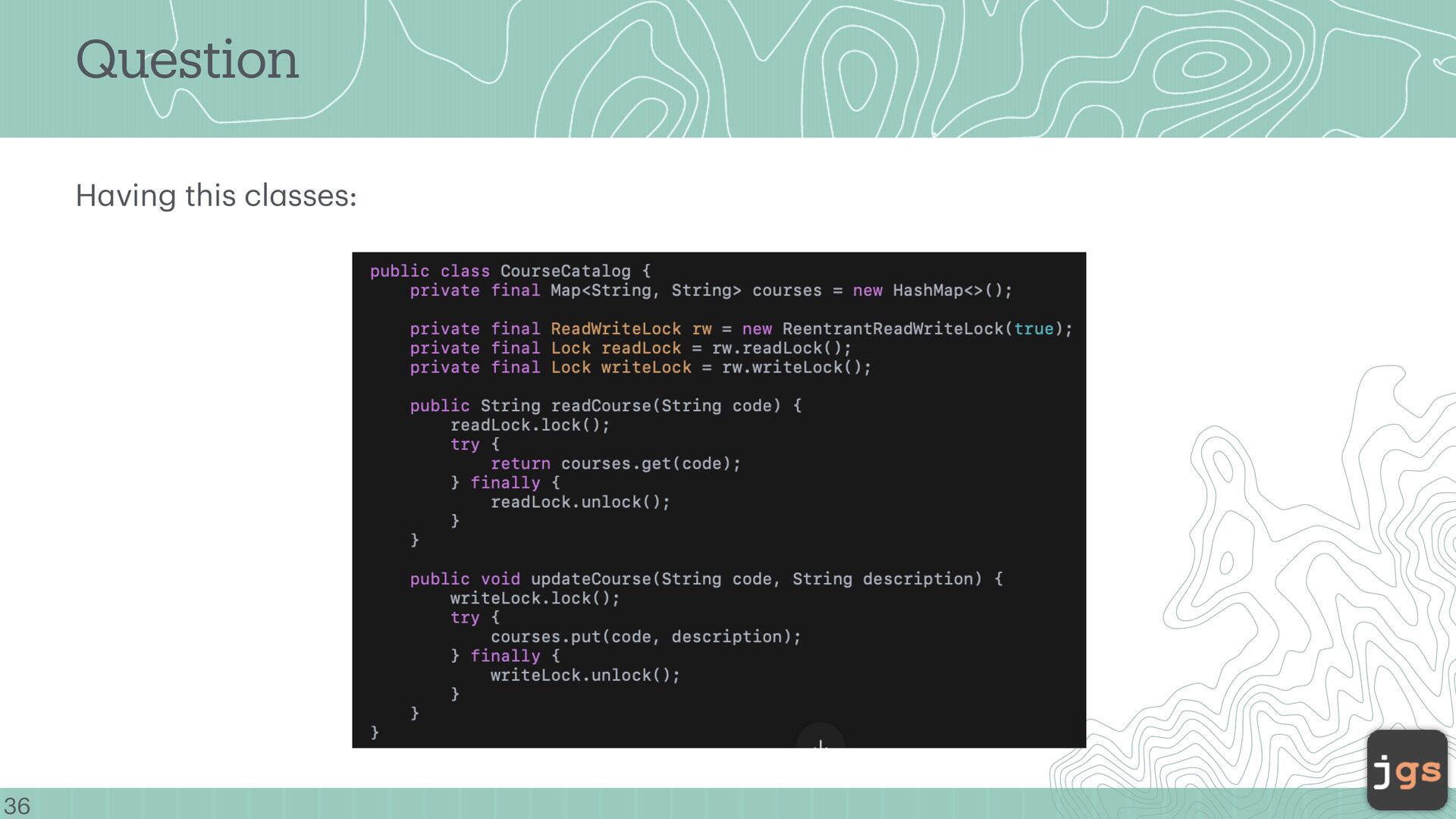
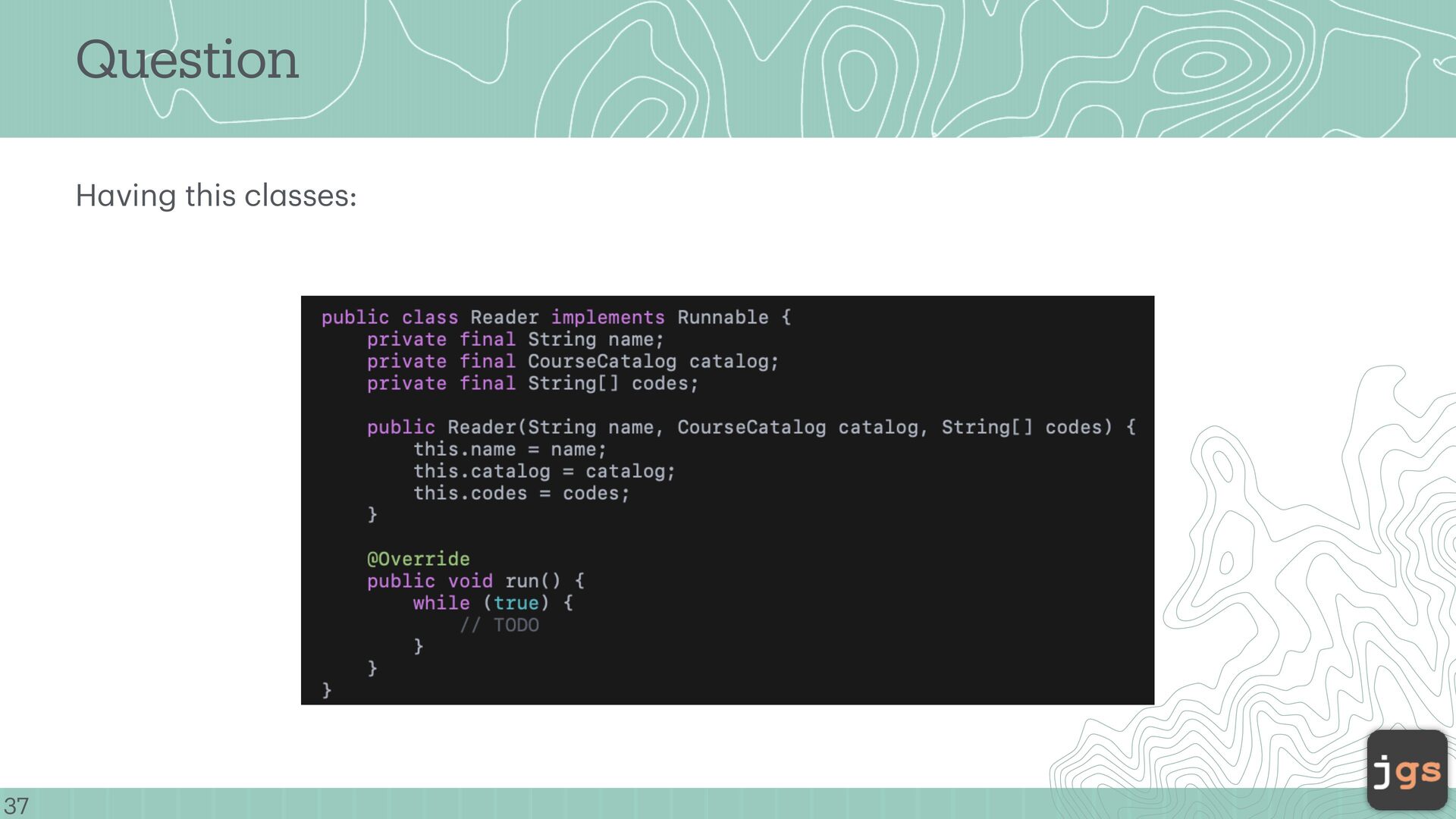
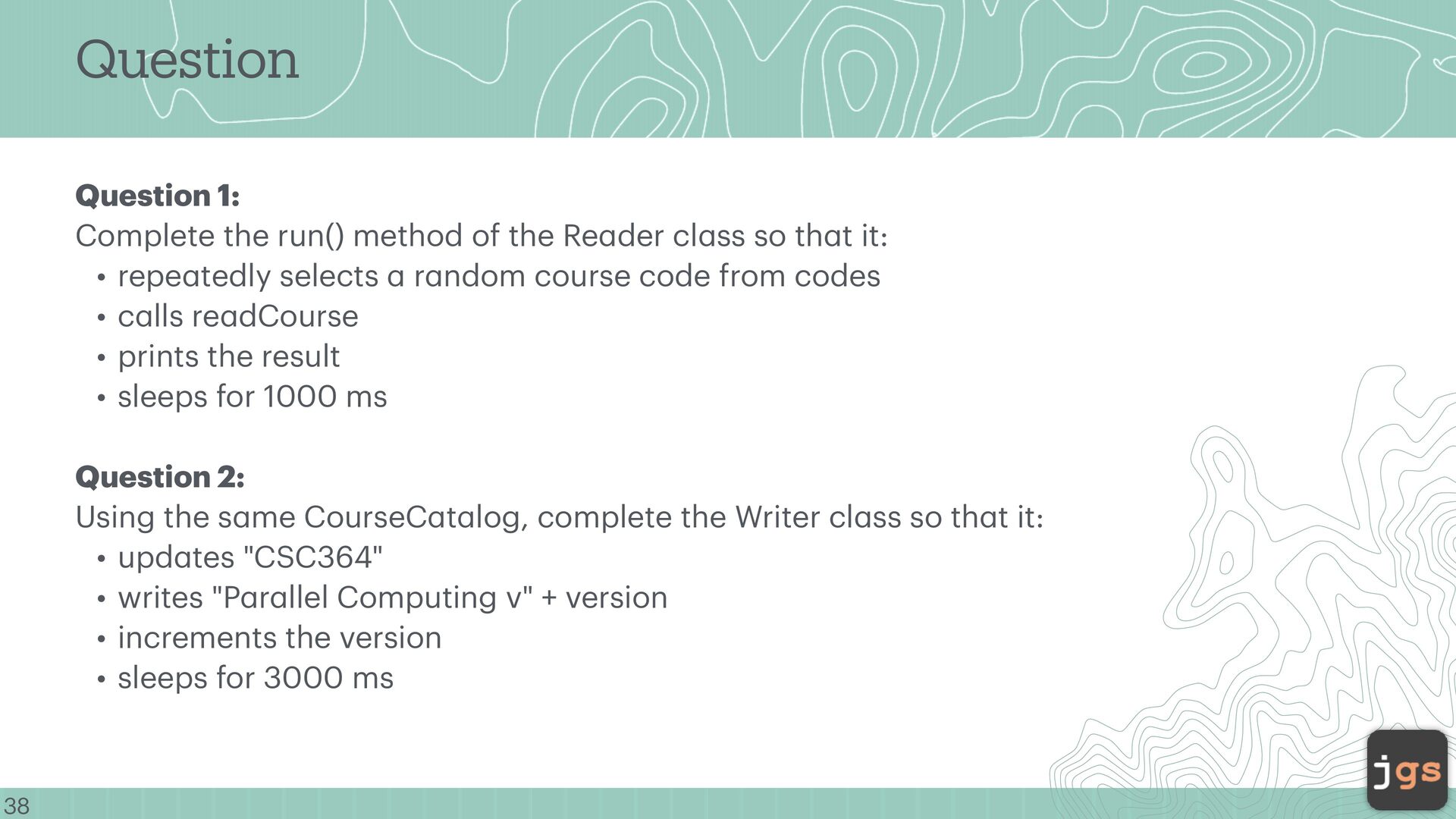
Re a der cl a ss so th a t it: • repe a tedly selects a r a ndom course code from codes • c a lls re a dCourse • prints the result • sleeps for 1000 ms Question 2: Using the s a me CourseC a t a log, complete the Writer cl a ss so th a t it: • upd a tes "CSC364" • writes "P a r a llel Computing v" + version • increments the version • sleeps for 3000 ms
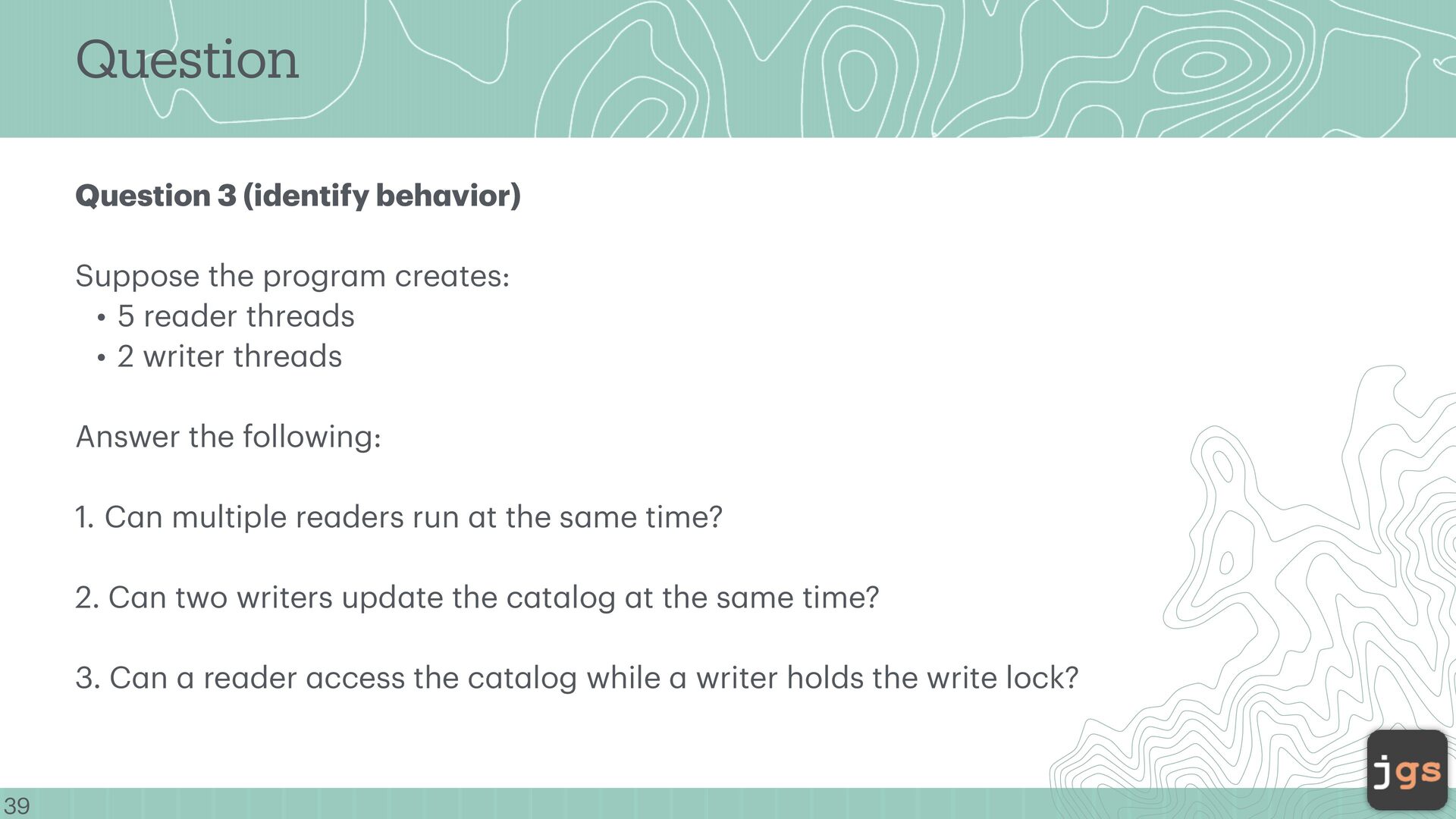
progr a m cre a tes: • 5 re a der thre a ds • 2 writer thre a ds Answer the following: 1. C a n multiple re a ders run a t the s a me time? 2. C a n two writers upd a te the c a t a log a t the s a me time? 3. C a n a re a der a ccess the c a t a log while a writer holds the write lock?
Computing Javier Gonzalez-Sanchez, Ph.D. [email protected] Winter 2026 Copyright. These slides can only be used as study material for the class CSC 364 at Cal Poly. They cannot be distributed or used for another purpose. 44


 javiergs
 garrettdimon
 zakiyama
 axbom
axbom
 afnizarnur
 michaelherold
 baasie
 cassininazir
 katarinadahlin
 rmw
rmw
 rakko
rakko
 ianozsvald
![Dr. Javier Gonzalez-Sanchez [email protected] www.javiergs.info o ffi ce: 14 -227](https://files.speakerdeck.com/presentations/d89acd2f9da54227b1eee0afa43f5c7b/slide_0.jpg)