Share
Embed
Transcript
22 slides
-
CSC 3100 Fundamentals of Software Engineering Lecture 15. Test-Driven Development
Dr. Javier Gonzalez-Sanchez [email protected] www.javiergs.phd ffi o ce: 14 -227 -
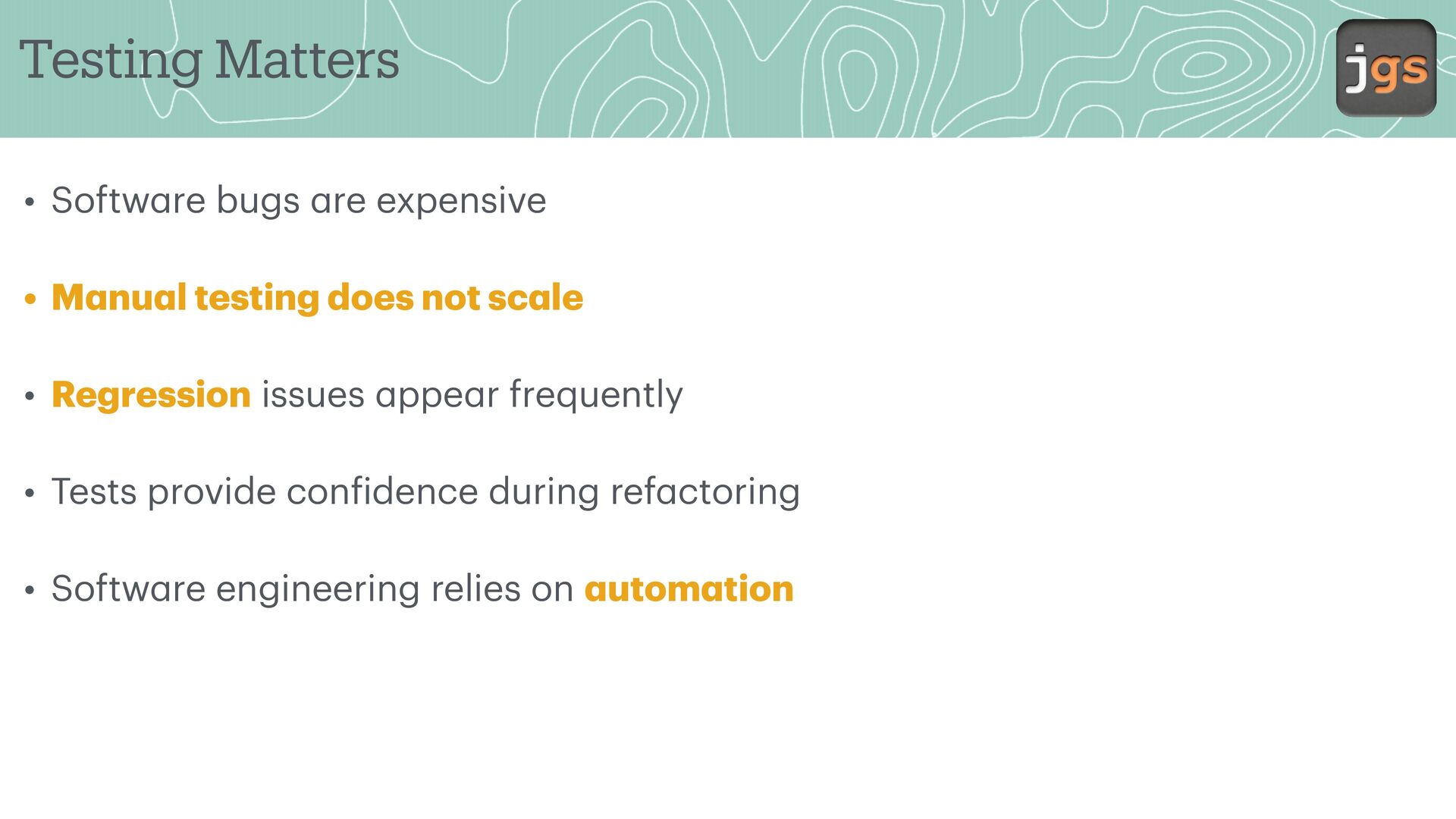
Testing Matters • Softw re bugs re expensive • M
nu l testing does not sc le • Regression issues ppe r frequently • Tests provide con idence during ref ctoring a a a a a a f a a a a a • Softw re engineering relies on utom tion -
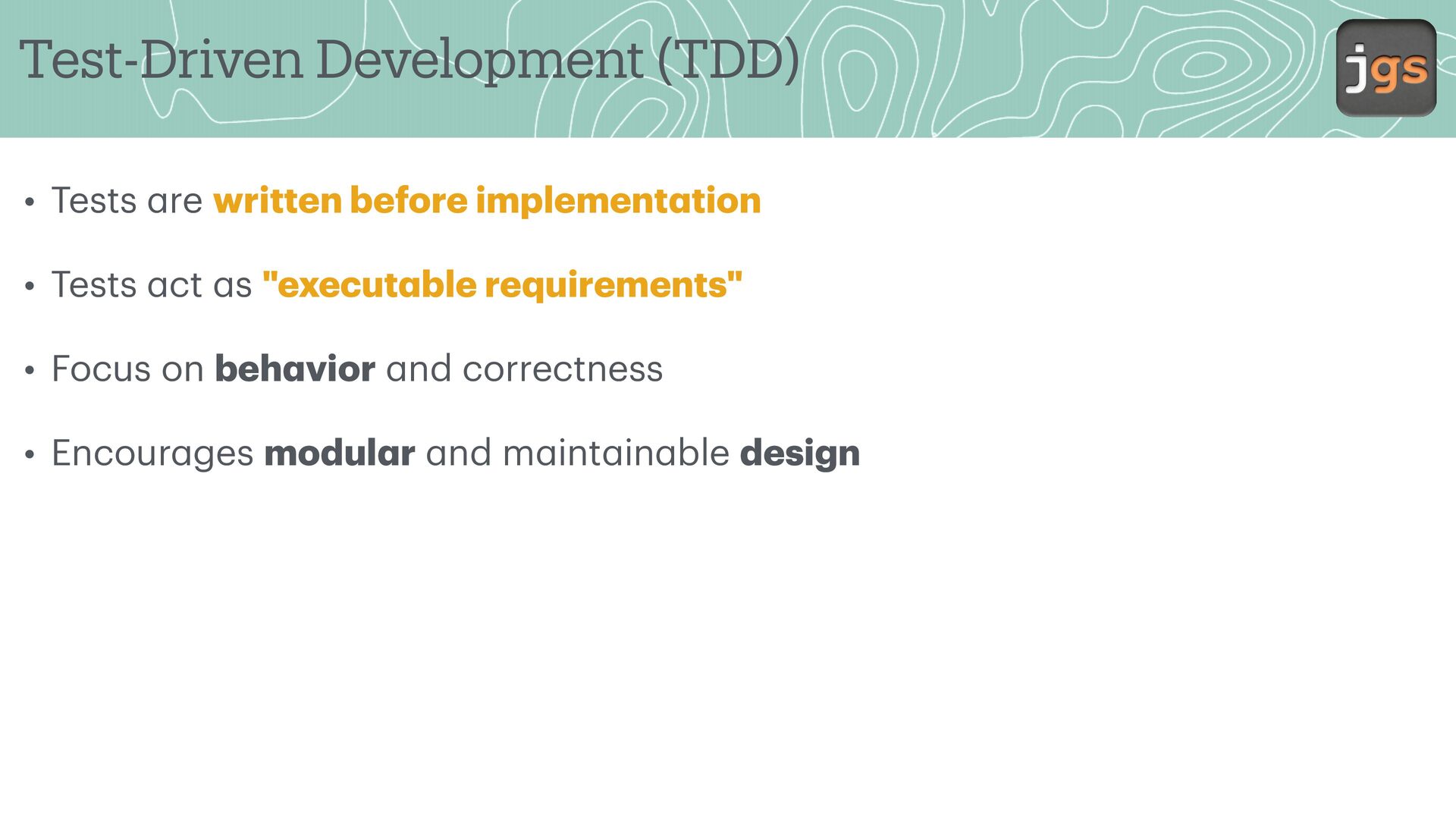
Test-Driven Development (TDD) • Tests re written before implement tion
• Tests ct s "execut ble requirements" • Focus on beh vior nd correctness a a a a a a a a a a a a a • Encour ges modul r nd m int in ble design -
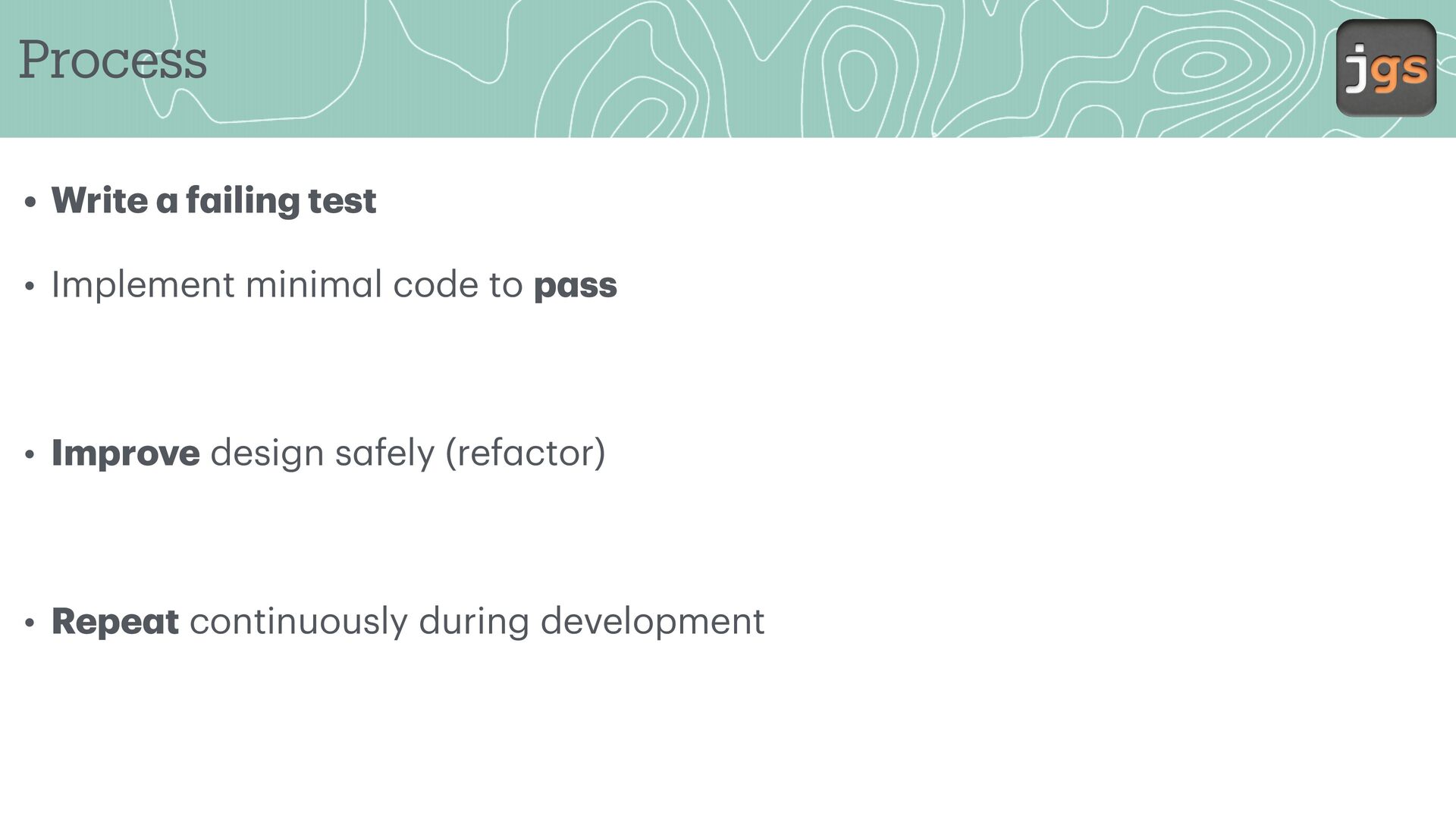
Process • Write f iling test • Implement minim l
code to p ss • Improve design s fely (ref ctor) a a a a a a a • Repe t continuously during development -
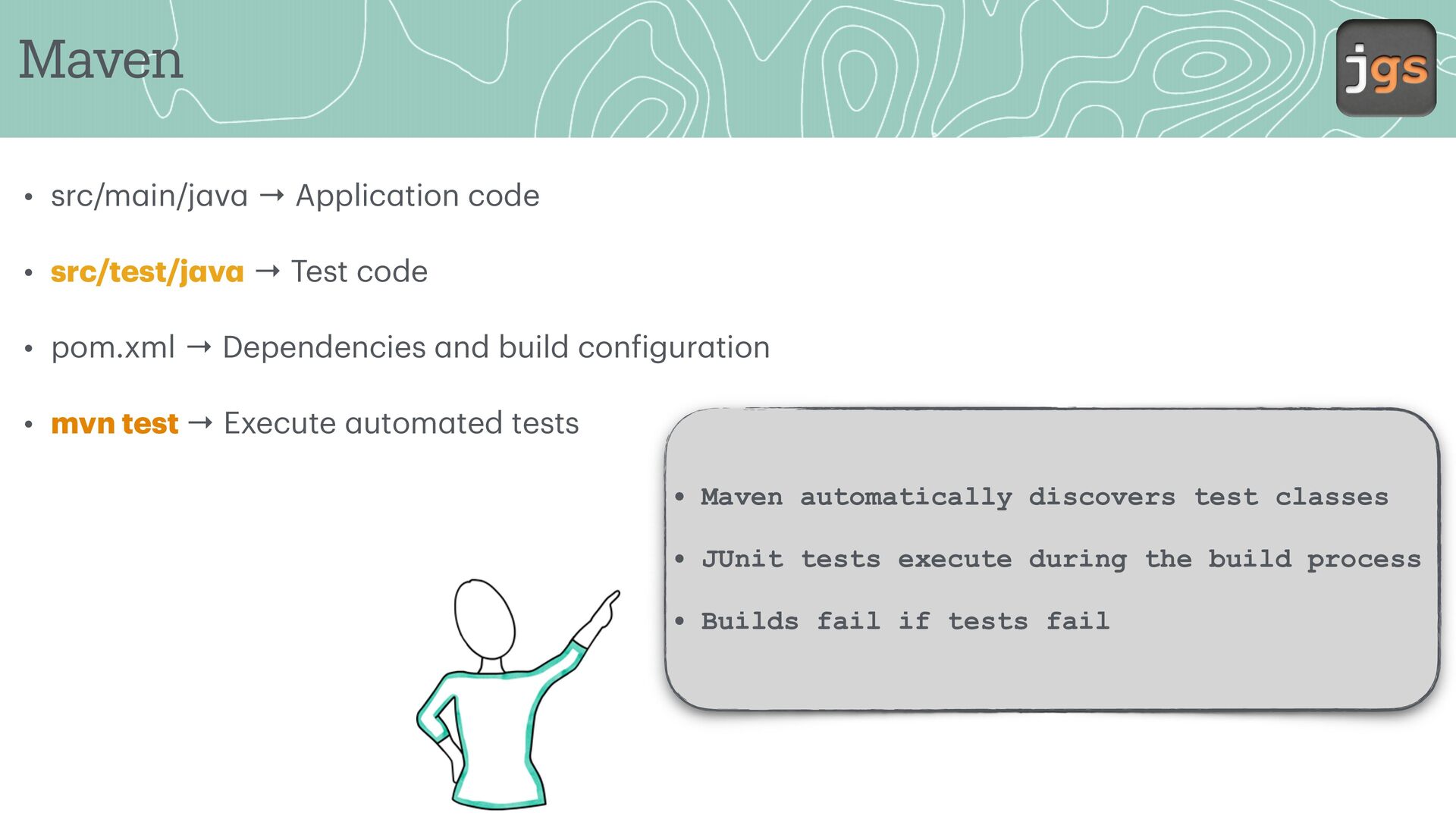
Maven • src/m in/j v → Applic tion code •
src/test/j v → Test code • pom.xml → Dependencies nd build con igur tion • mvn test → Execute utom ted tests • Maven automatically discovers test classes • JUnit tests execute during the build process a f a a a a a a a a a • Builds fail if tests fail -
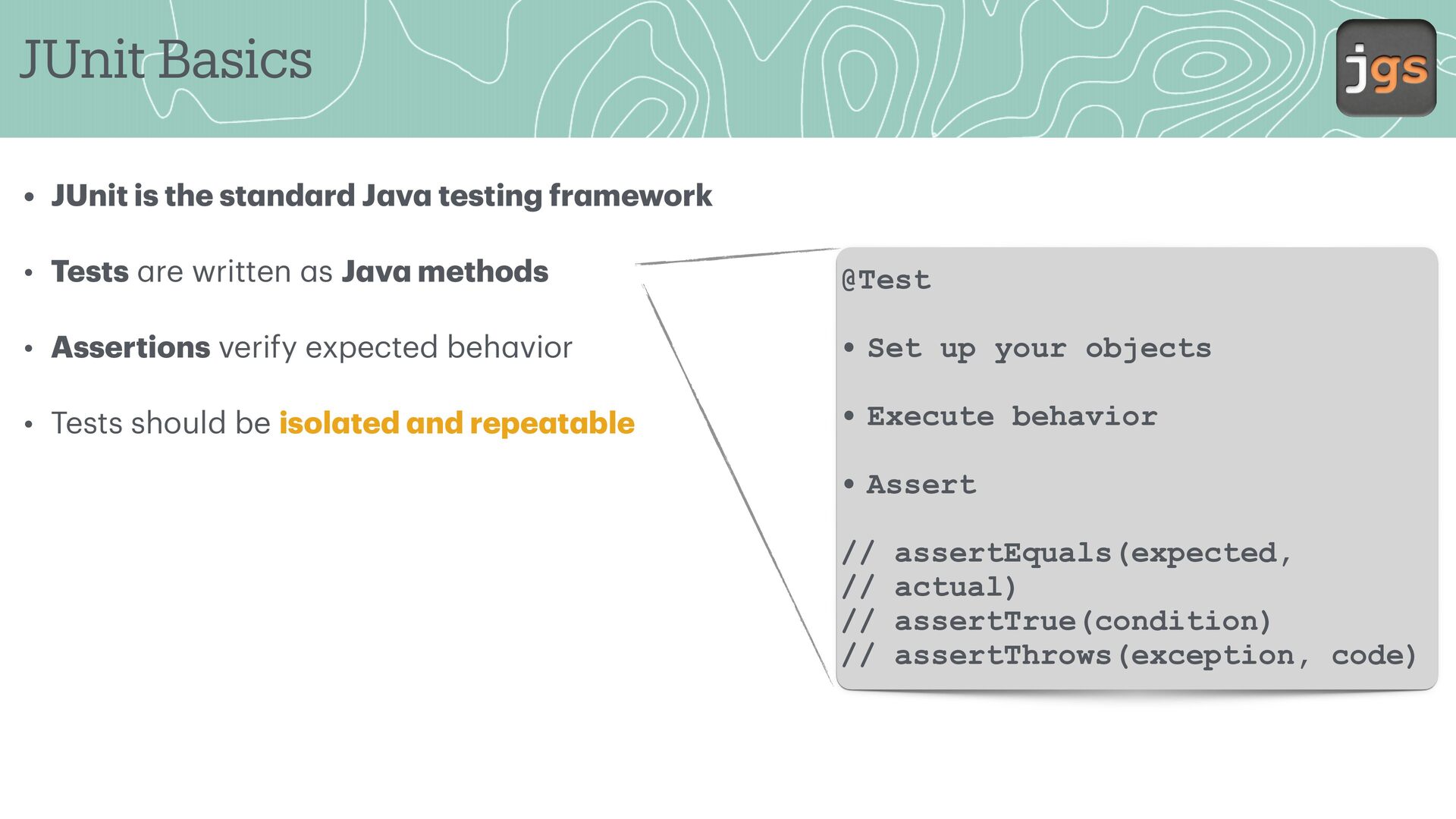
JUnit Basics • JUnit is the st nd rd J
v testing fr mework • Tests re written s J v methods @Test • Assertions verify expected beh vior • Set up your objects • Tests should be isol ted nd repe t ble • Execute behavior • Assert a a a a a a a a a a a a a a // assertEquals(expected, // actual) // assertTrue(condition) // assertThrows(exception, code) -
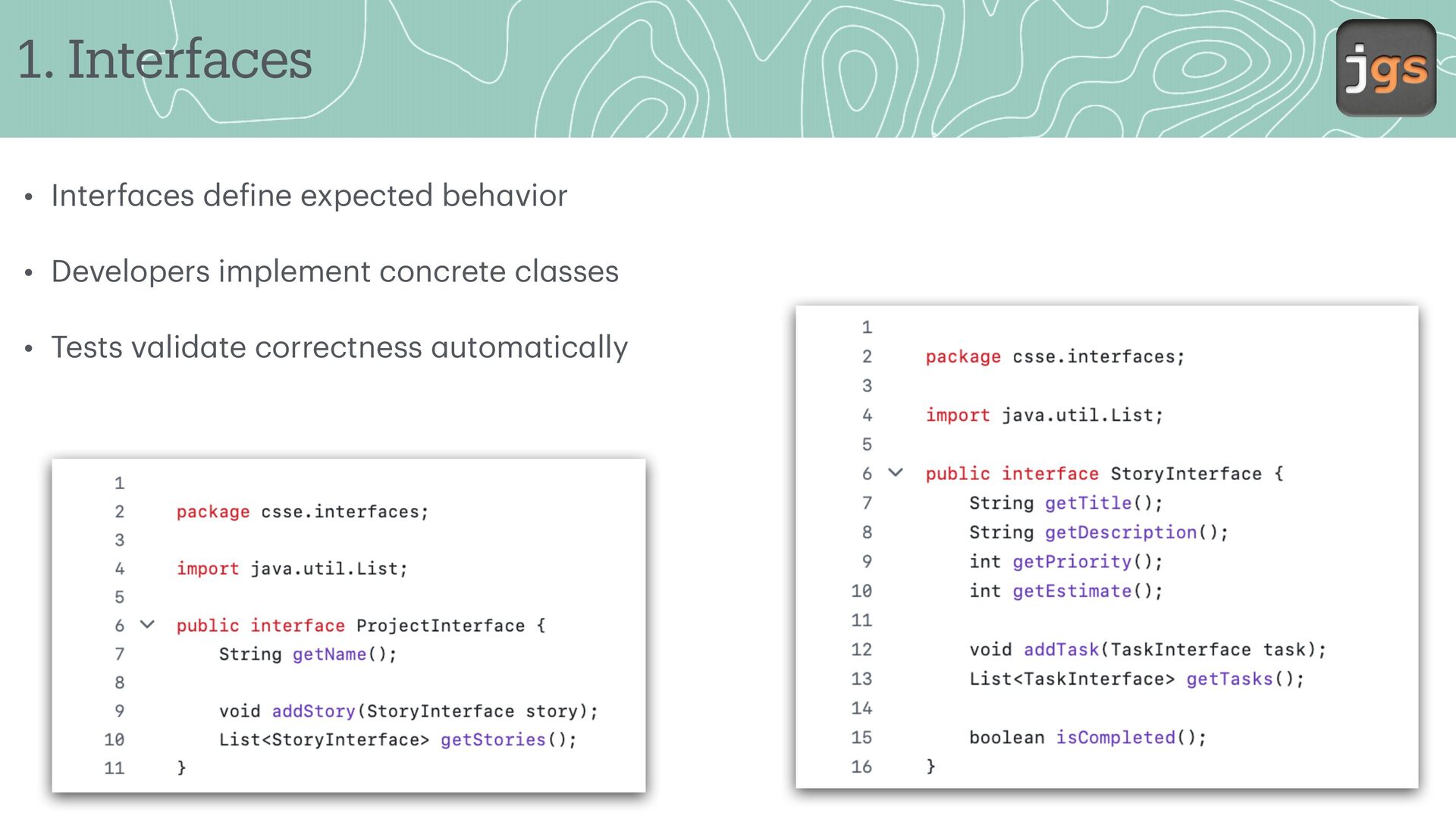
1. Interfaces • Interf ces de ine expected beh vior
• Developers implement concrete cl sses a a a a a f a a a • Tests v lid te correctness utom tic lly -
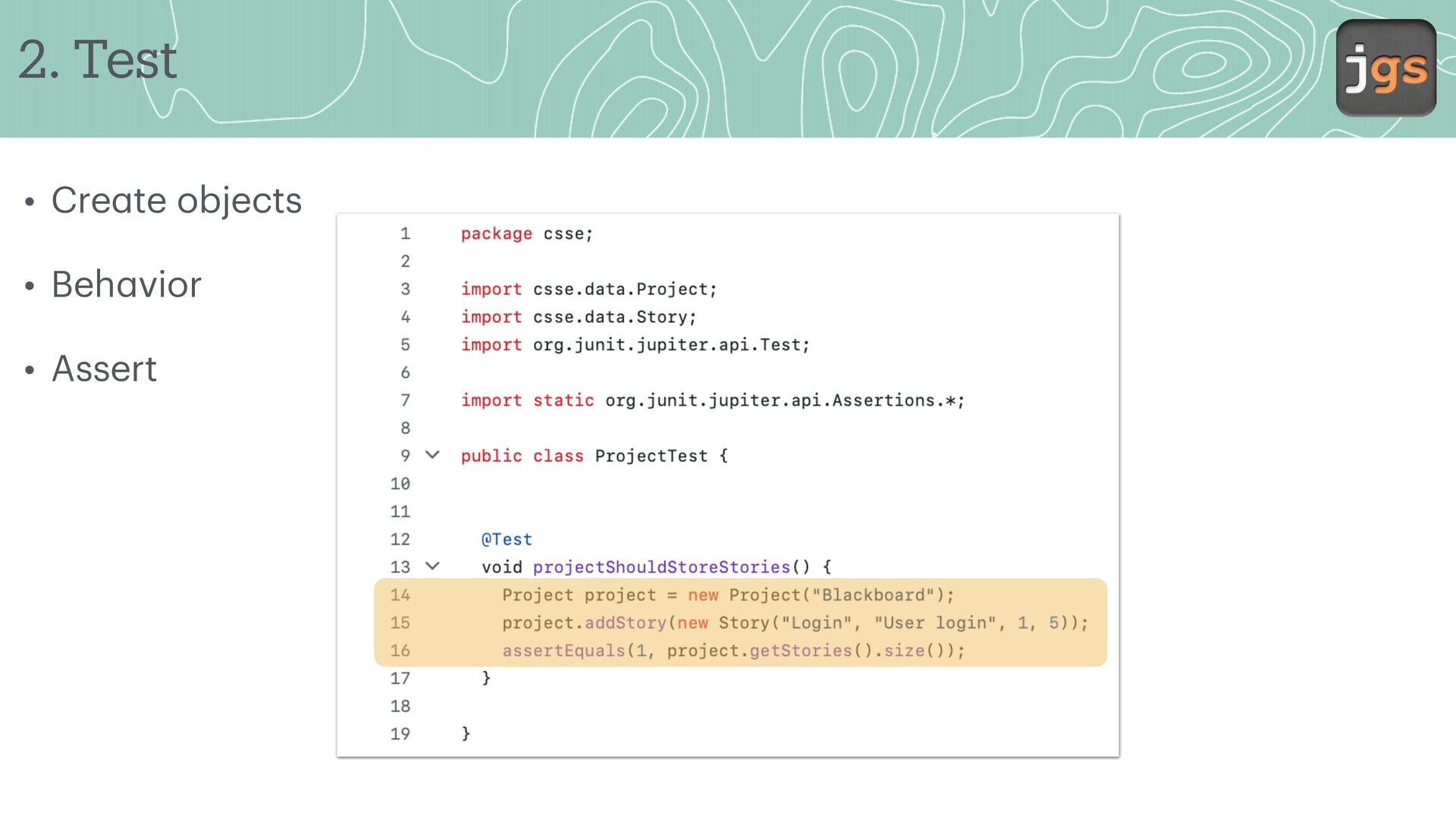
2. Test • Cre te objects • Beh vior a
a • Assert -
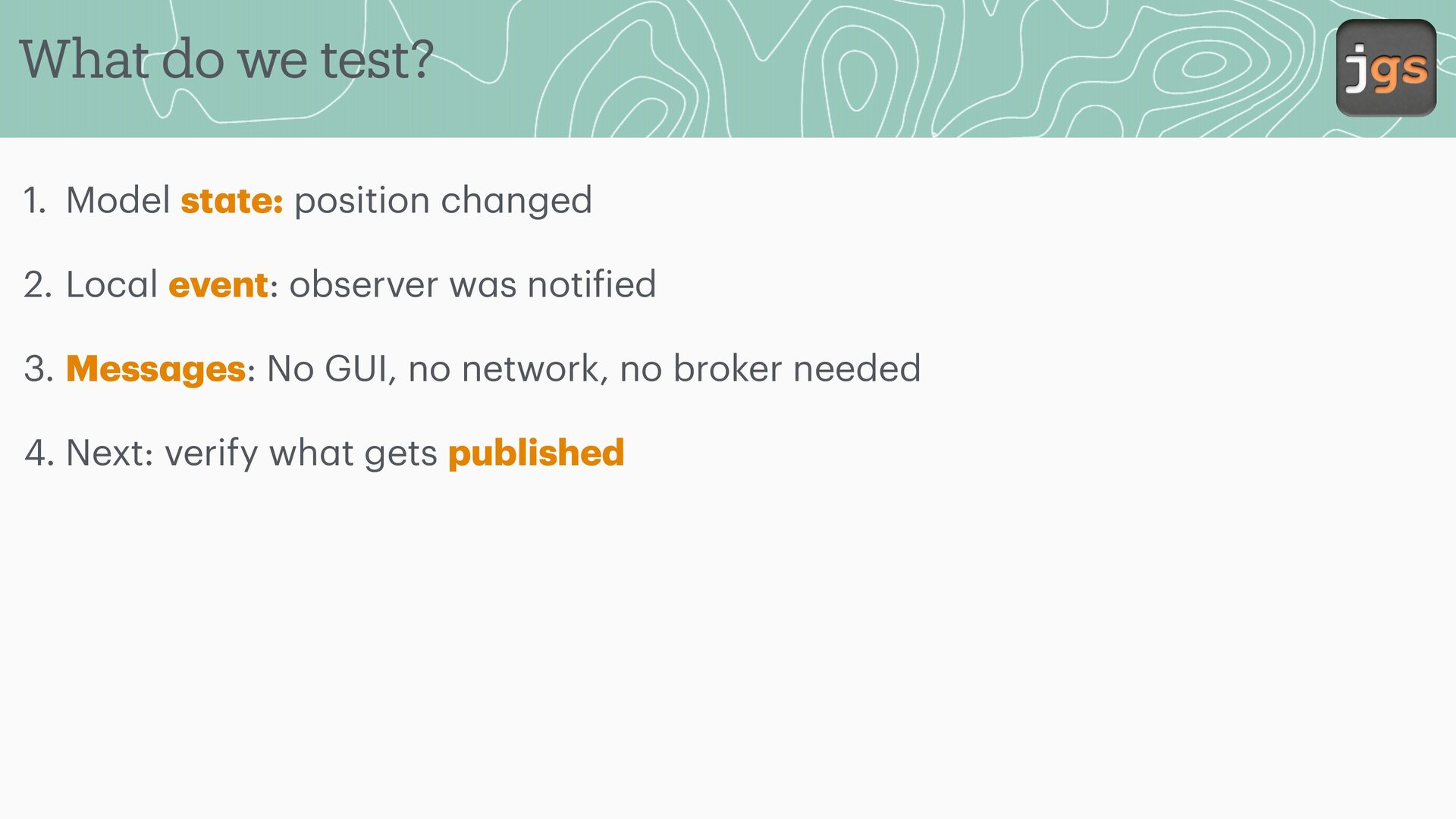
What do we test? 1. Model st te: position ch
nged 2. Loc l event: observer w s noti ied 3. Mess ges: No GUI, no network, no broker needed f a a a a a a 4. Next: verify wh t gets published -
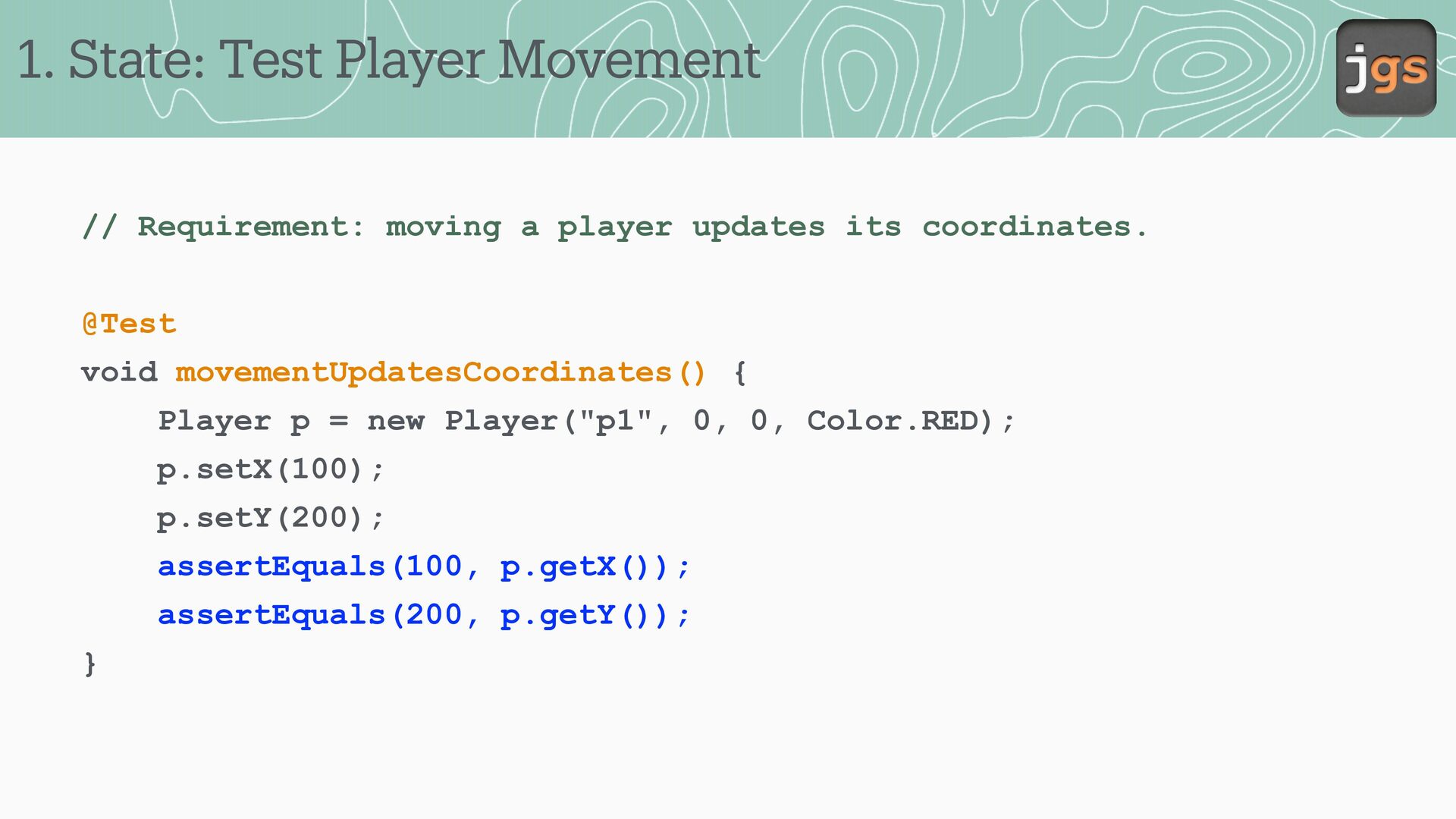
1. State: Test Player Movement // Requirement: moving a player
updates its coordinates. @Test void movementUpdatesCoordinates() { Player p = new Player("p1", 0, 0, Color.RED); p.setX(100); p.setY(200); assertEquals(100, p.getX()); assertEquals(200, p.getY()); } -
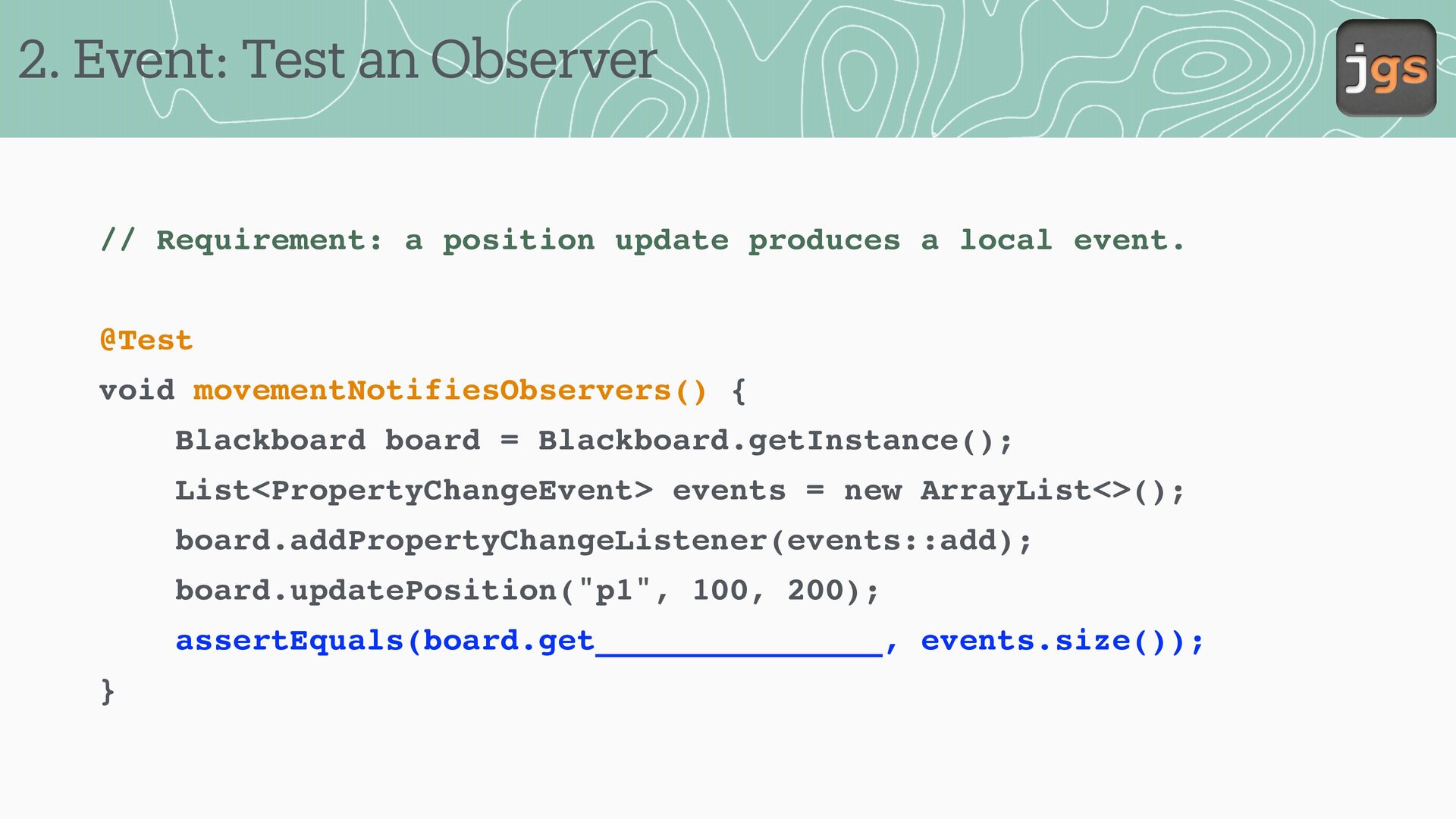
2. Event: Test an Observer // Requirement: a position update
produces a local event. @Test void movementNotifiesObservers() { Blackboard board = Blackboard.getInstance(); List<PropertyChangeEvent> events = new ArrayList<>(); board.addPropertyChangeListener(events::add); board.updatePosition("p1", 100, 200); assertEquals(board.get_______________, events.size()); } -
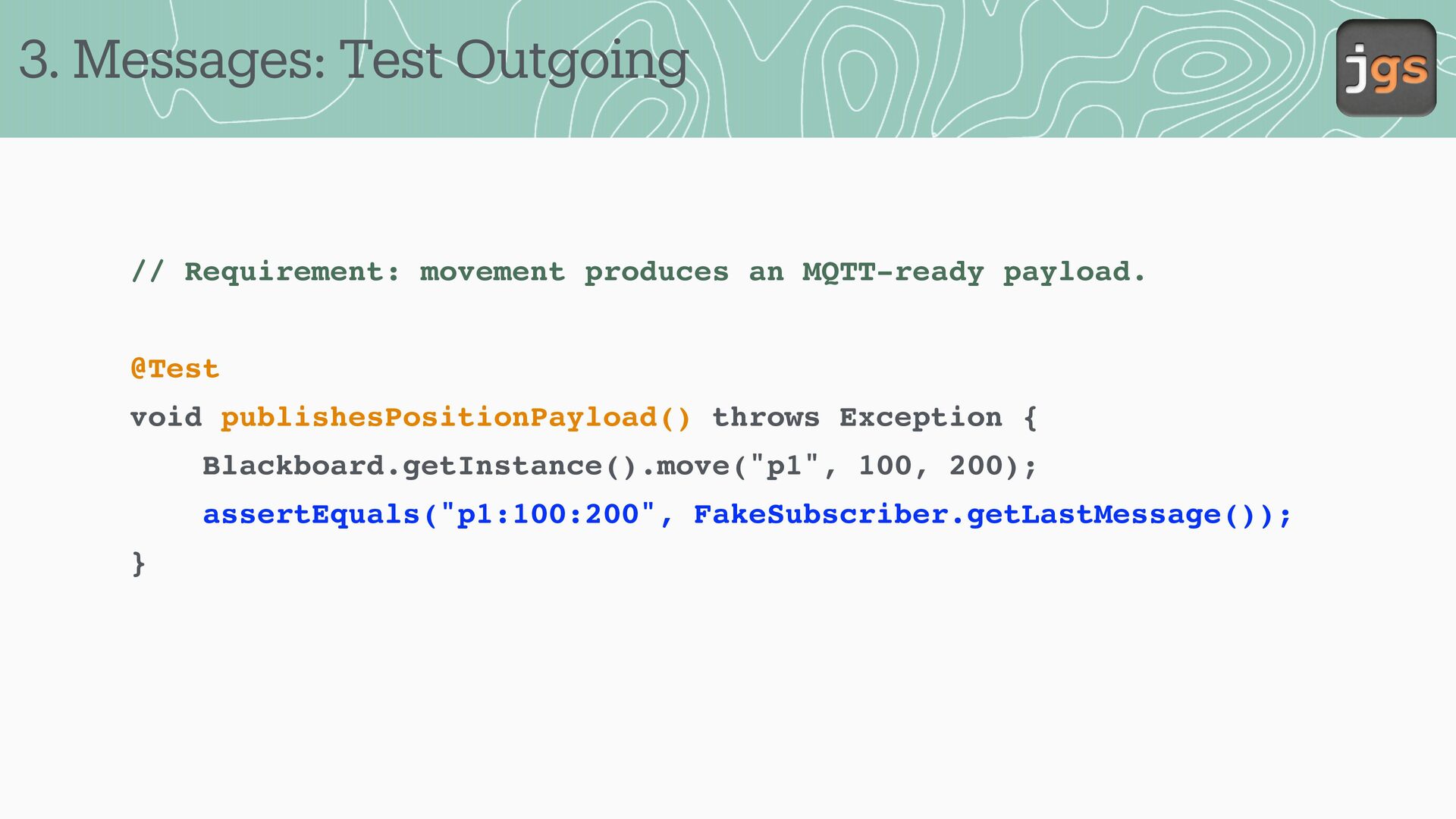
3. Messages: Test Outgoing // Requirement: movement produces an MQTT-ready
payload. @Test void publishesPositionPayload() throws Exception { Blackboard.getInstance().move("p1", 100, 200); assertEquals("p1:100:200", FakeSubscriber.getLastMessage()); } -
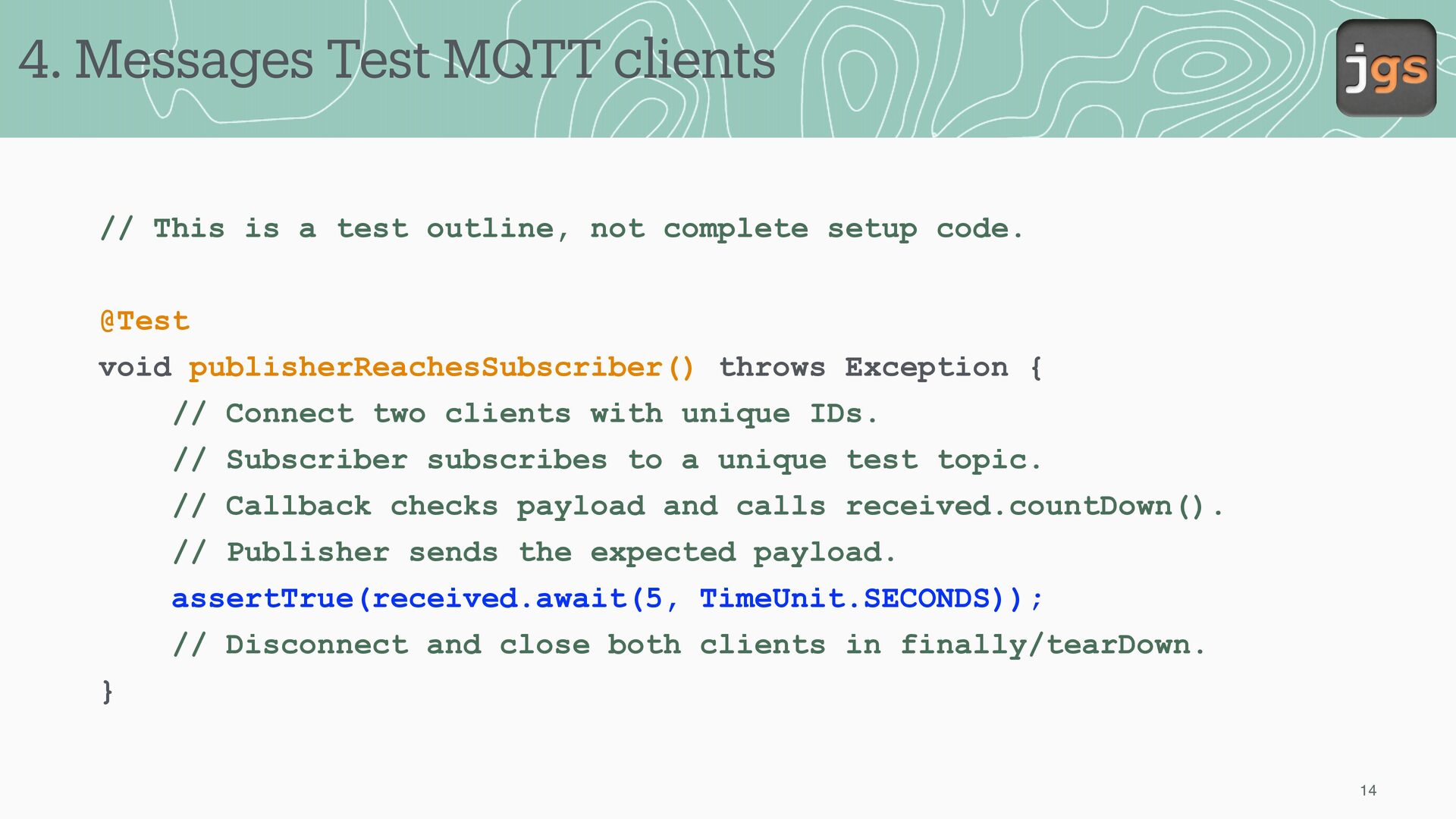
4. Messages Test MQTT clients // This is a test
outline, not complete setup code. @Test void publisherReachesSubscriber() throws Exception { // Connect two clients with unique IDs. // Subscriber subscribes to a unique test topic. // Callback checks payload and calls received.countDown(). // Publisher sends the expected payload. assertTrue(received.await(5, TimeUnit.SECONDS)); // Disconnect and close both clients in finally/tearDown. } 14 -
CSC 3100 Fundamentals of Software Engineering Javier Gonzalez-Sanchez, Ph.D. [email protected]
Fall 2026 Copyright Notice. These slides are provided exclusively for educational use in CSC 3100 within the California State University system. Redistribution or use for any other purpose is prohibited without prior written permission.