Finding TF binding sites SNP’s and linkage analysis Quality Value HMM …. Not much practical neural network approach before 2012 AFAIK Brief Bioinform. 2006;7(1):86-112. doi:10.1093/bib/bbk007
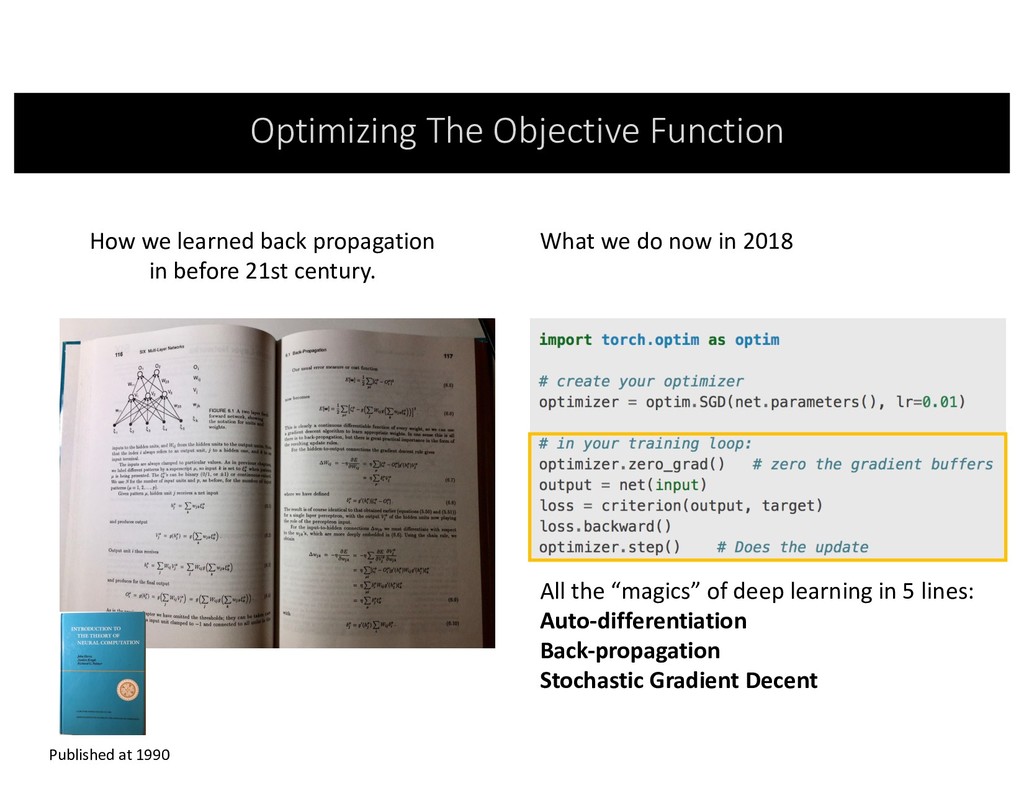
before 21st century. What we do now in 2018 All the “magics” of deep learning in 5 lines: Auto-differentiation Back-propagation Stochastic Gradient Decent Published at 1990
the model Apply model on the test set Re-train model if necessary Evaluation training result, training set / validation set Train model Build model (typical multiple layer NN + nonlinear activation) Gather training dataset, clean up data
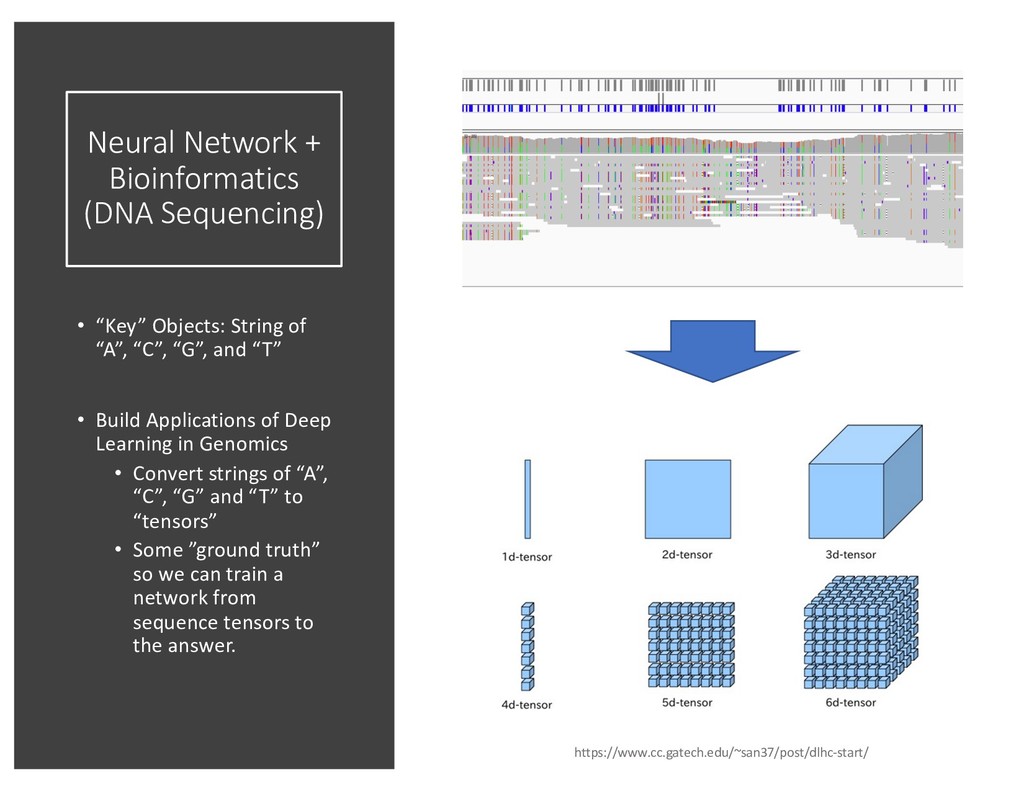
of “A”, “C”, “G”, and “T” • Build Applications of Deep Learning in Genomics • Convert strings of “A”, “C”, “G” and “T” to “tensors” • Some ”ground truth” so we can train a network from sequence tensors to the answer. https://www.cc.gatech.edu/~san37/post/dlhc-start/
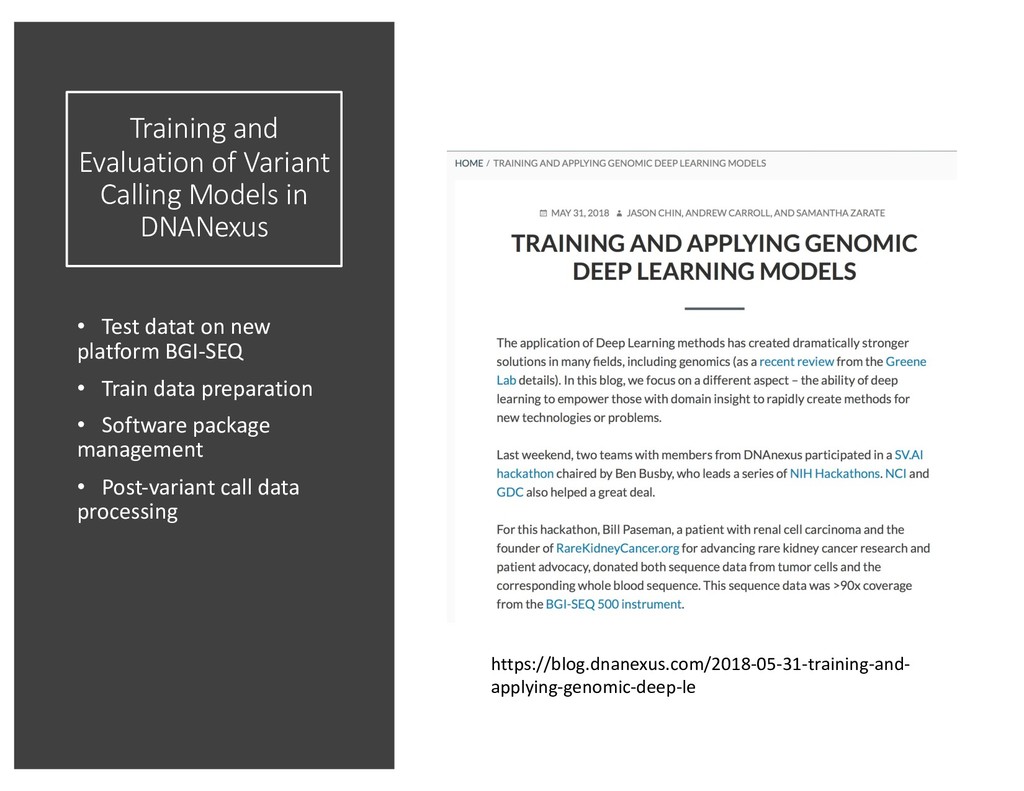
Test datat on new platform BGI-SEQ • Train data preparation • Software package management • Post-variant call data processing https://blog.dnanexus.com/2018-05-31-training-and- applying-genomic-deep-le
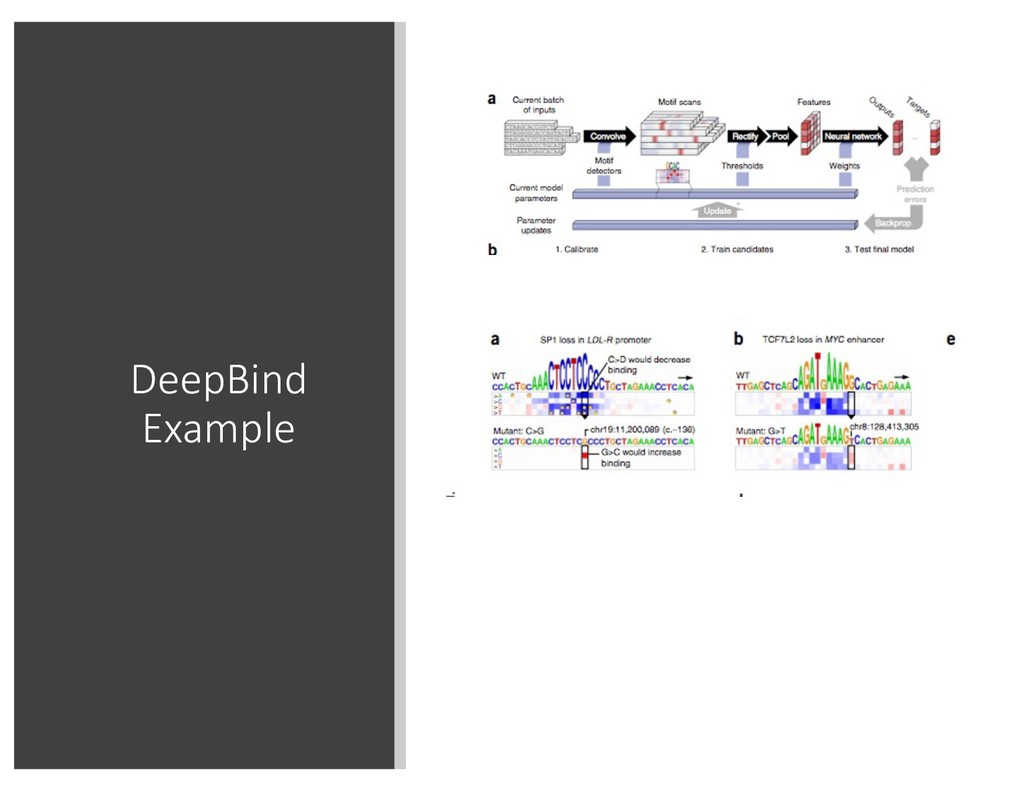
experiments, e.g., transcription factor binding with ChIPS-eq, or chromatin accessibility asset (ATAC-seq). Want to know: sequence features in the reference that corresponding determine the experiment measurement outcome Input tensor: “One-hot encoding” of candidate regions of the reference genome
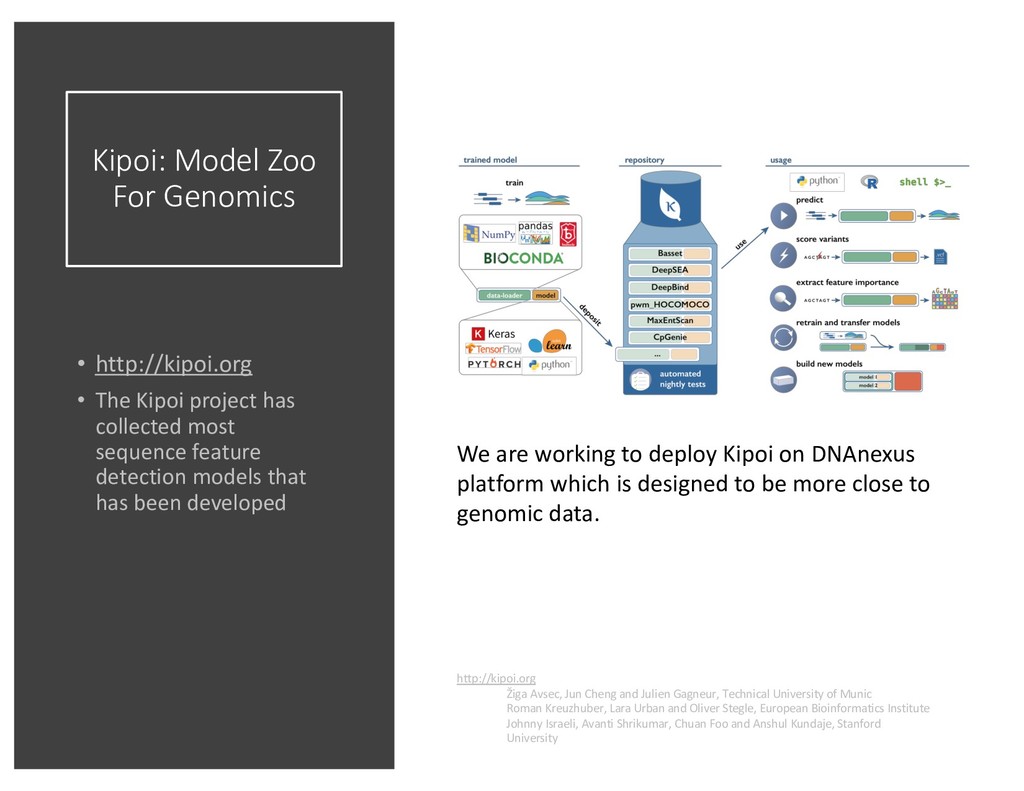
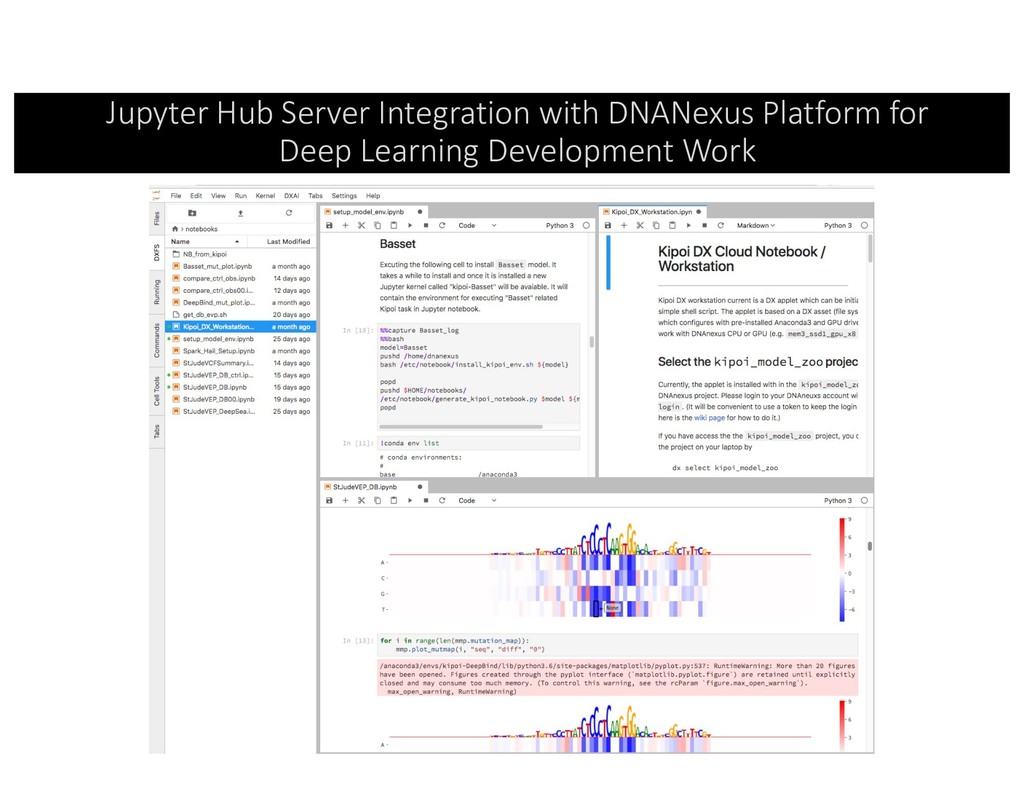
project has collected most sequence feature detection models that has been developed We are working to deploy Kipoi on DNAnexus platform which is designed to be more close to genomic data. http://kipoi.org Žiga Avsec, Jun Cheng and Julien Gagneur, Technical University of Munic Roman Kreuzhuber, Lara Urban and Oliver Stegle, European Bioinformatics Institute Johnny Israeli, Avanti Shrikumar, Chuan Foo and Anshul Kundaje, Stanford University
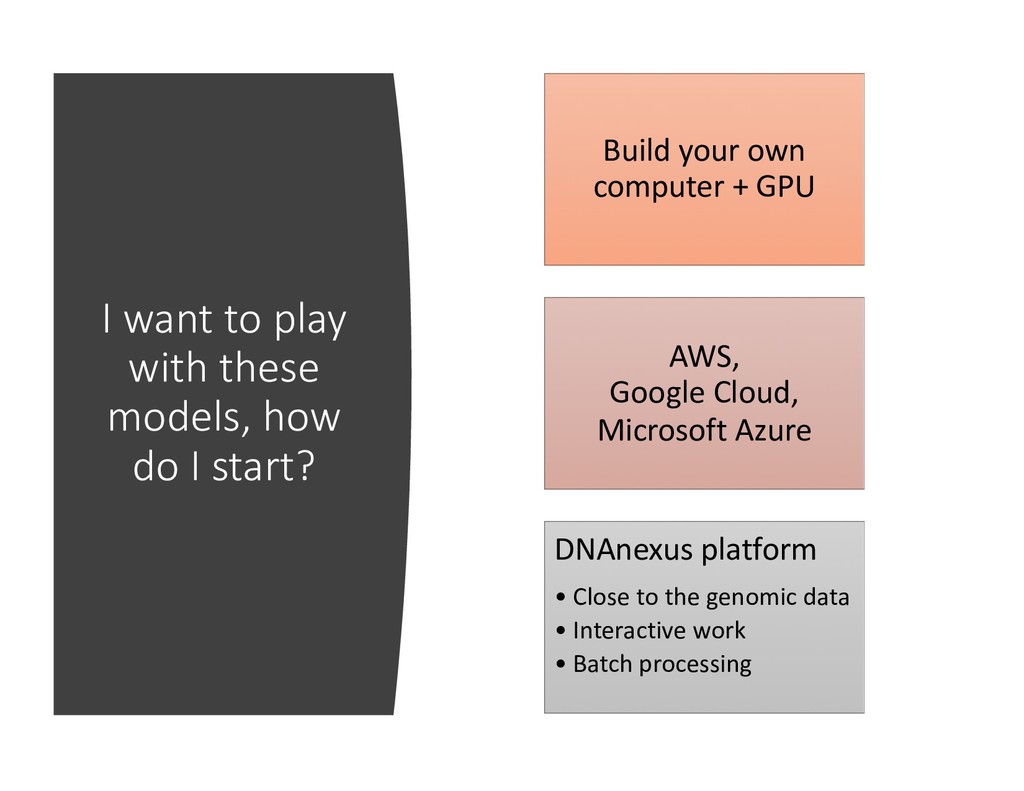
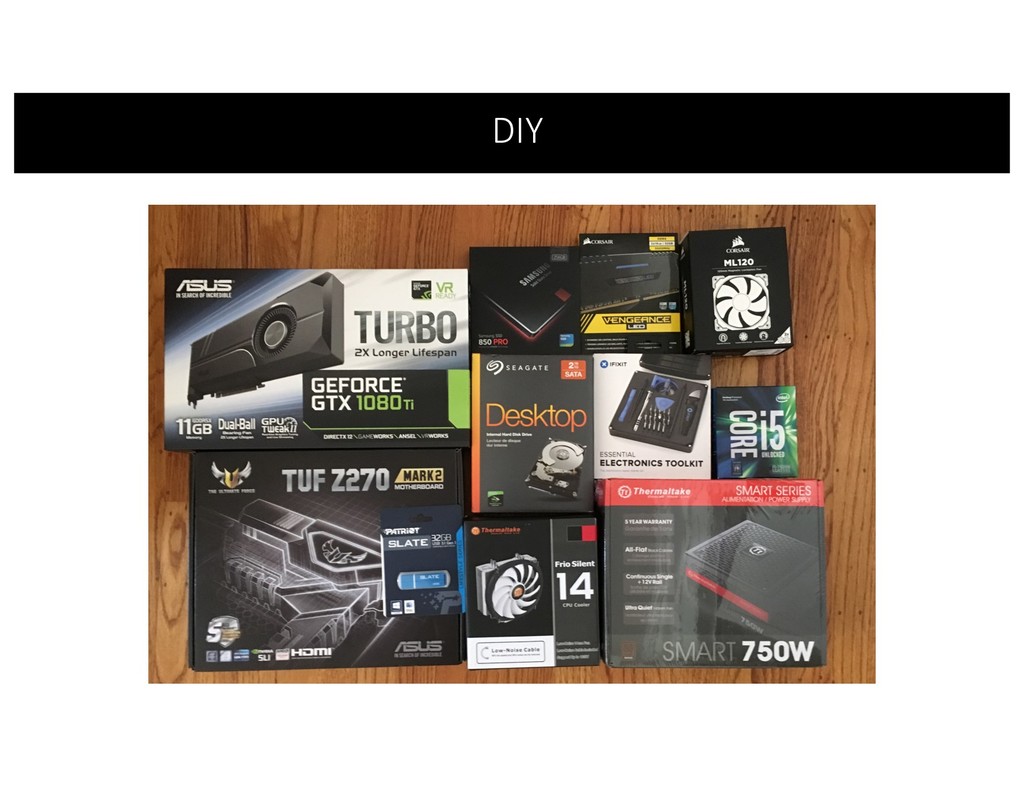
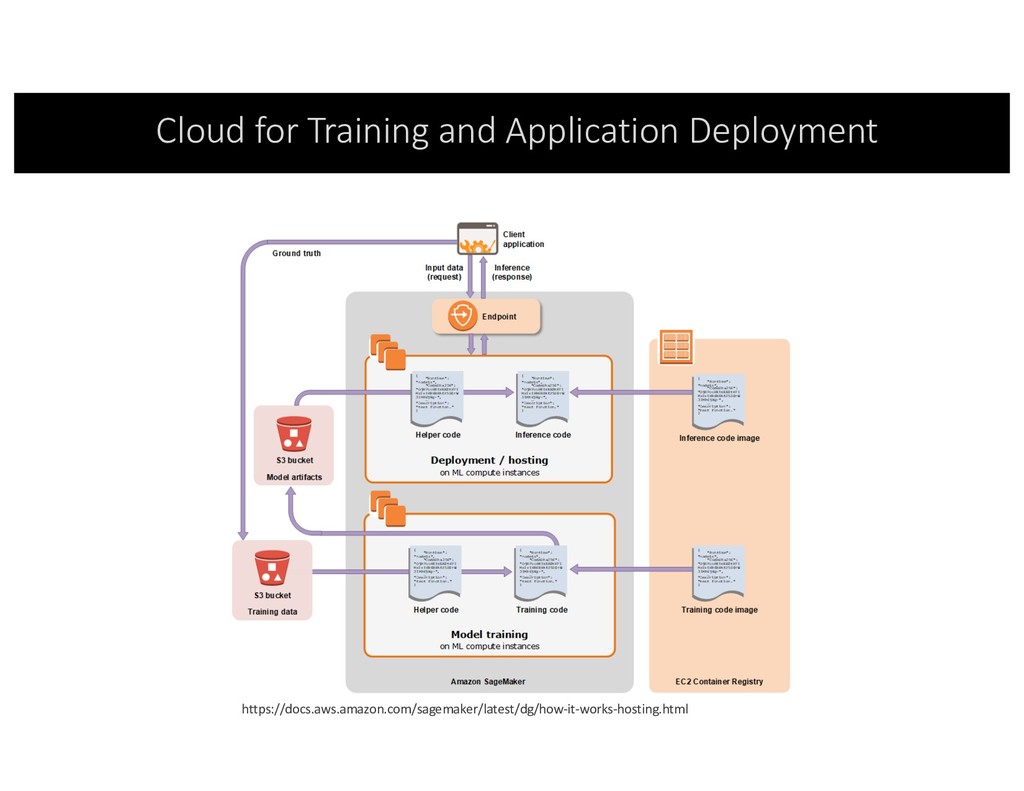
start? Build your own computer + GPU AWS, Google Cloud, Microsoft Azure DNAnexus platform • Close to the genomic data • Interactive work • Batch processing


 jchin
jchin
 akasan
 institutdelelevage
 estie
estie
 okana2ki
.jpeg) arthur1
arthur1
 salt2
salt2
 sshimizu2006
 trycycle
 takusamar
 twada
twada
 mraible
 madoxten
 lara
lara
 erikaheidi
 iamctodd
 tammyeverts
 malarkey
 davidcarrasco
 holman
 aleyda
 michaelherold