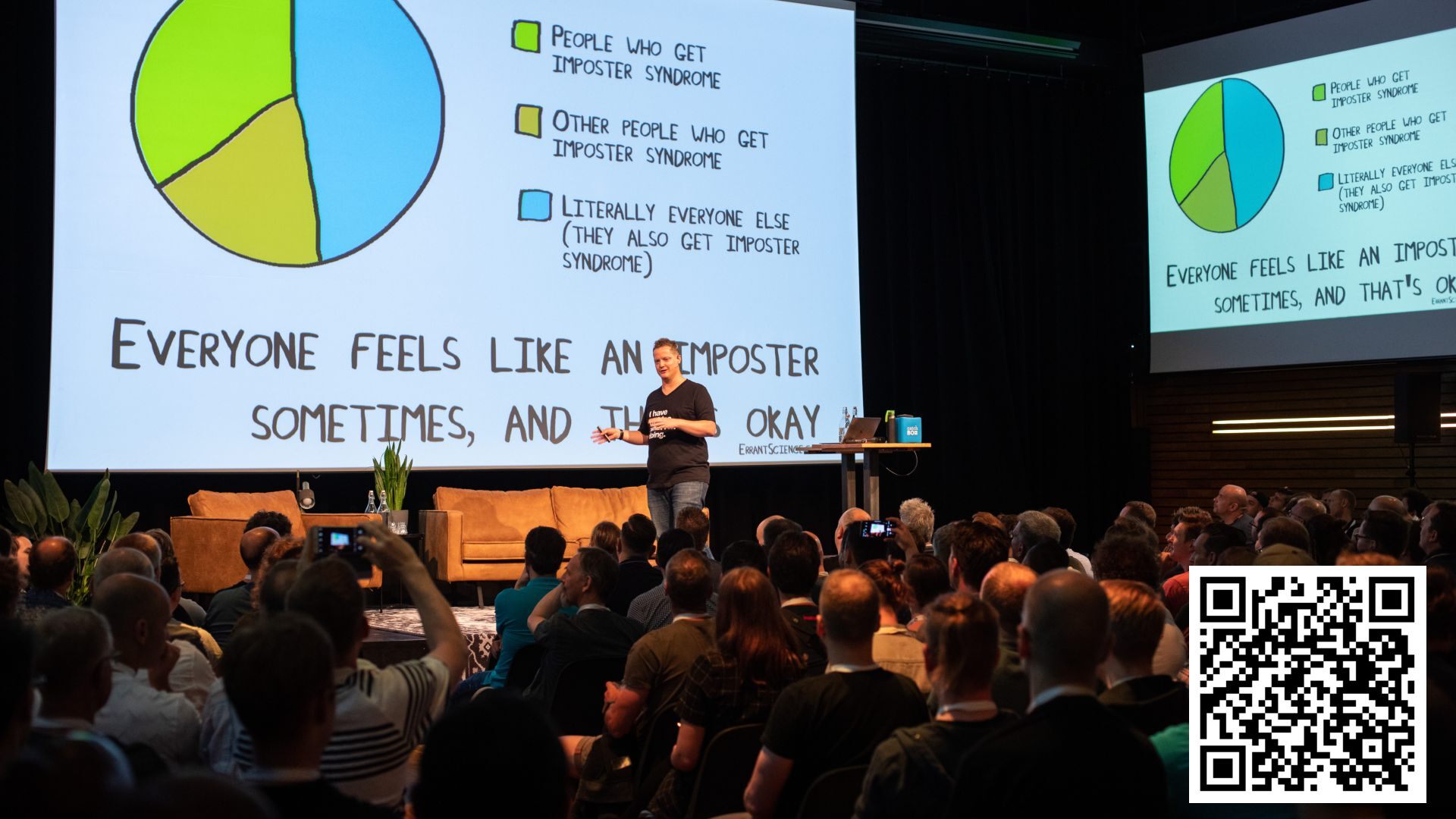
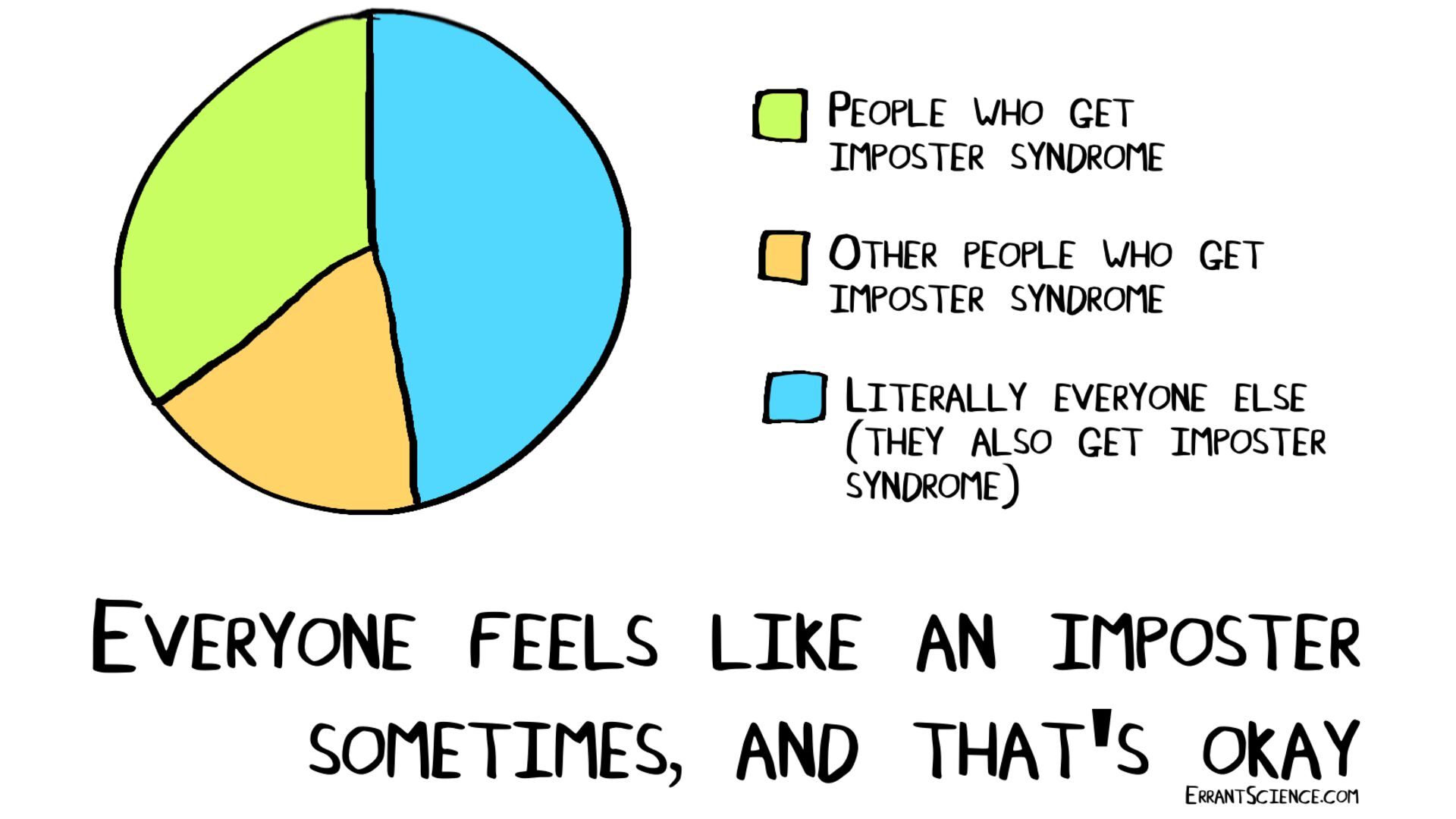
Impostor syndrome is often framed as a personal failing: a lack of confidence; a mindset problem. But what if the problem isn't you?
You’re not inexperienced. You’re not lazy. You're not bad at your job. The issue is that no one’s real experience matches the cloud-native stories told in public.
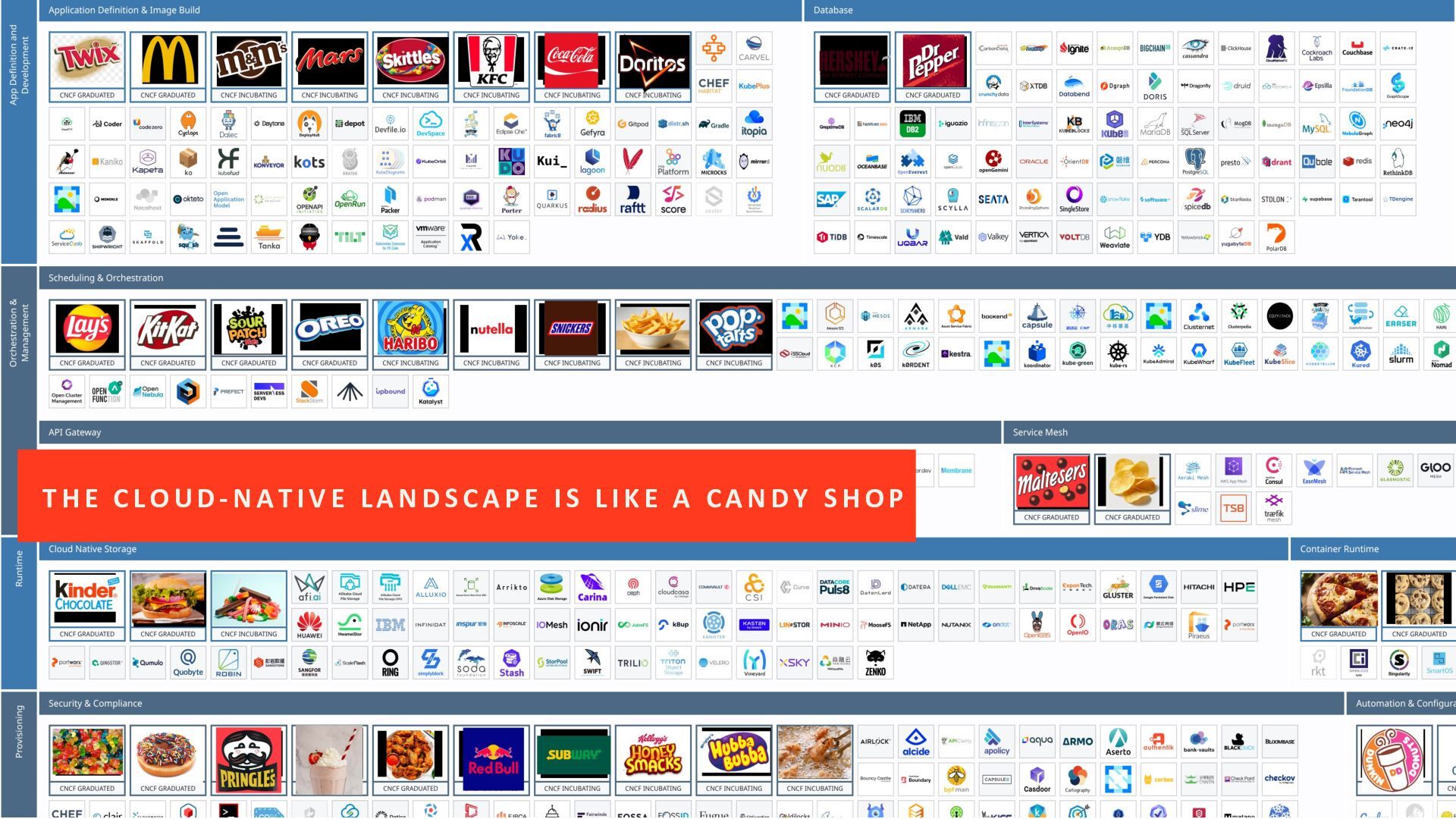
We are surrounded by a narrative of effortless success: platforms that scale cleanly, teams that “just adopt Kubernetes,” architectures that assume infinite time, talent, and budget. Conference talks are polished. Case studies are sanitized. Failure is implied to be a personal shortcoming.
Privately, most practitioners are struggling. Technology is complex and brittle. Upgrades are painful. On-call is exhausting.
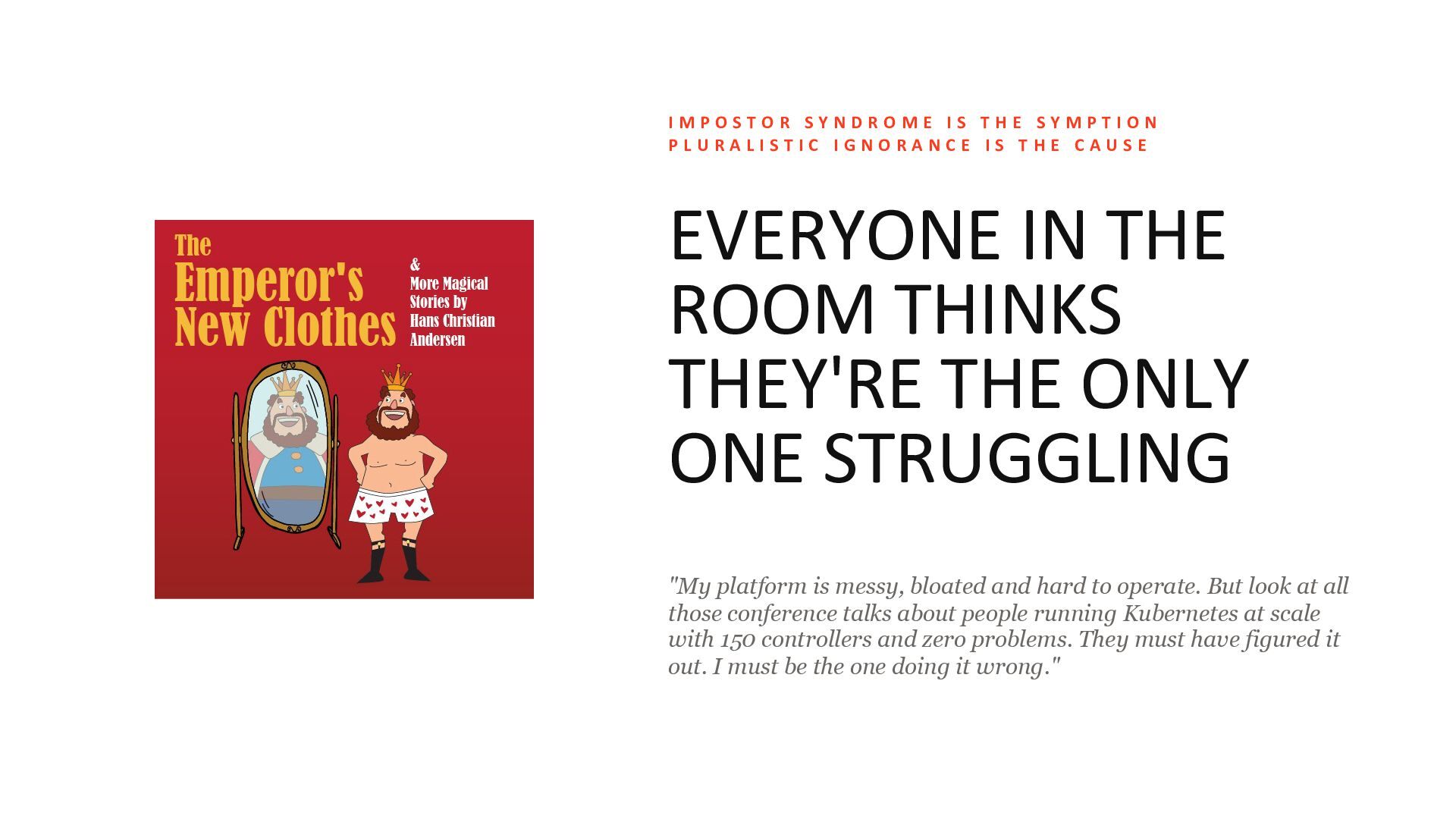
This talk argues that what we’re experiencing isn’t just impostor syndrome — it’s pluralistic ignorance amplified by burnout. Everyone is struggling, but no one admits it, because admitting feels like failure. So we stay quiet, internalize the gap, blame ourselves, and push past our limits.
In this talk, I want to say the quiet part out loud and break that silence together.
This talk is for everyone who's tired of pretending and who wants honesty instead of hype. We’ll explore how hype fuels self-doubt, why feeling “behind” is often realism, and why collective honesty—not more expertise—is what the cloud-native ecosystem is missing.
If you’ve ever thought “everyone else seems to have this figured out” — this talk is for you.


 jpiscaer
 akitoshiga
 mohab1
 namiki64
 takuroabe
 yahonda
 tsukina_7mochi
 takahashim
 yut0naga1_fa
 4o1sobblue
 ivry_presentationmaterials
 usanchuu
 teamlab
 jakevdp
 seathinner
 samanthasiow
 lcolladotor
 axbom
 nikkihalliwell
 jmmastey
 addyosmani
 auna
 aarron
 sugarenia
 lara