Reducing inertia in organizations is the key to a successful DevOps transition
Looking at your organizational structure is key to removing inertia in the organization around a agile/scrum initiative. In this presentation we'll look at an ideal 'fairytale' as a dot on the horizon.
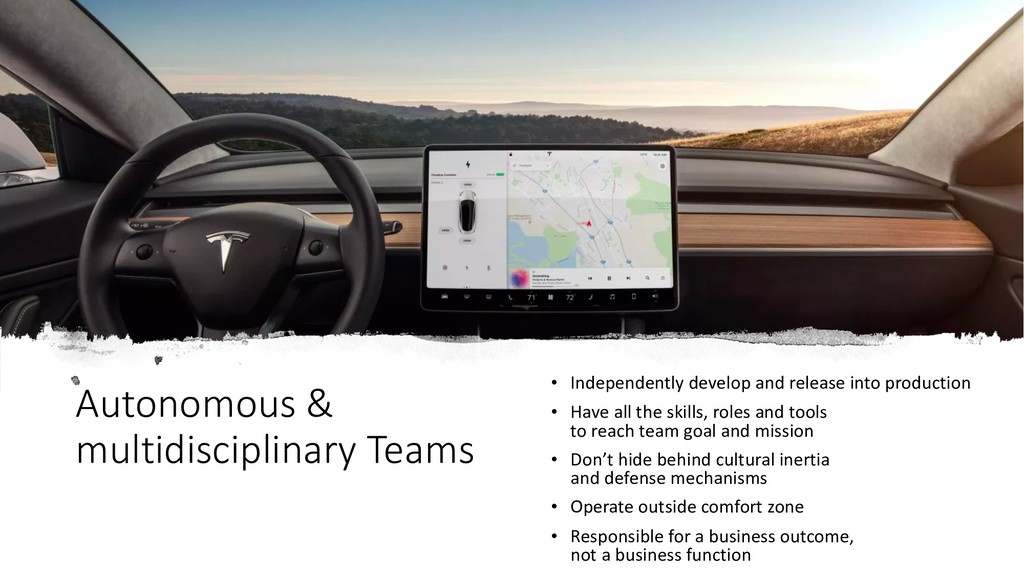
production • Have all the skills, roles and tools to reach team goal and mission • Don’t hide behind cultural inertia and defense mechanisms • Operate outside comfort zone • Responsible for a business outcome, not a business function
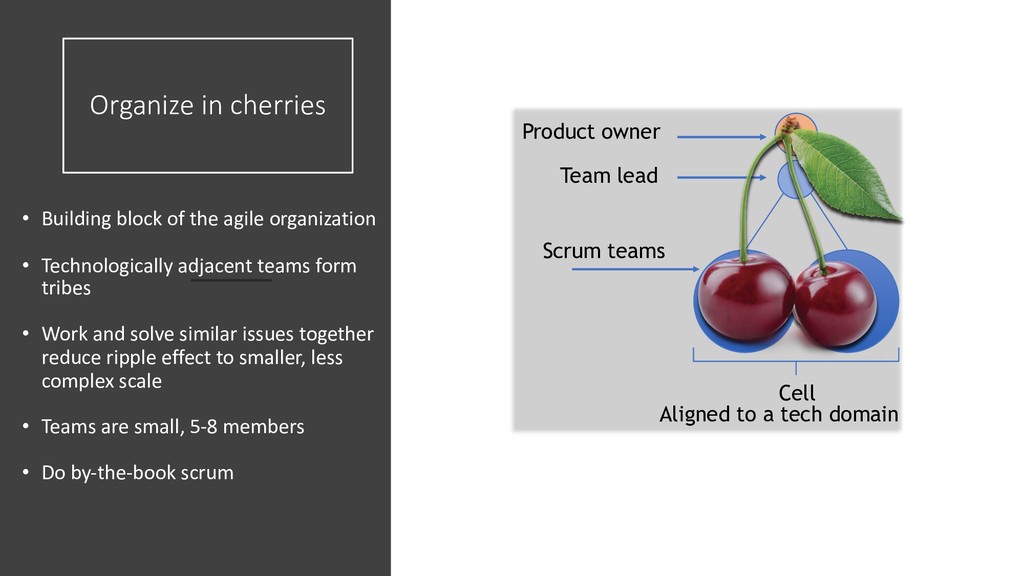
• Technologically adjacent teams form tribes • Work and solve similar issues together reduce ripple effect to smaller, less complex scale • Teams are small, 5-8 members • Do by-the-book scrum Scrum teams Cell Team lead Product owner Aligned to a tech domain
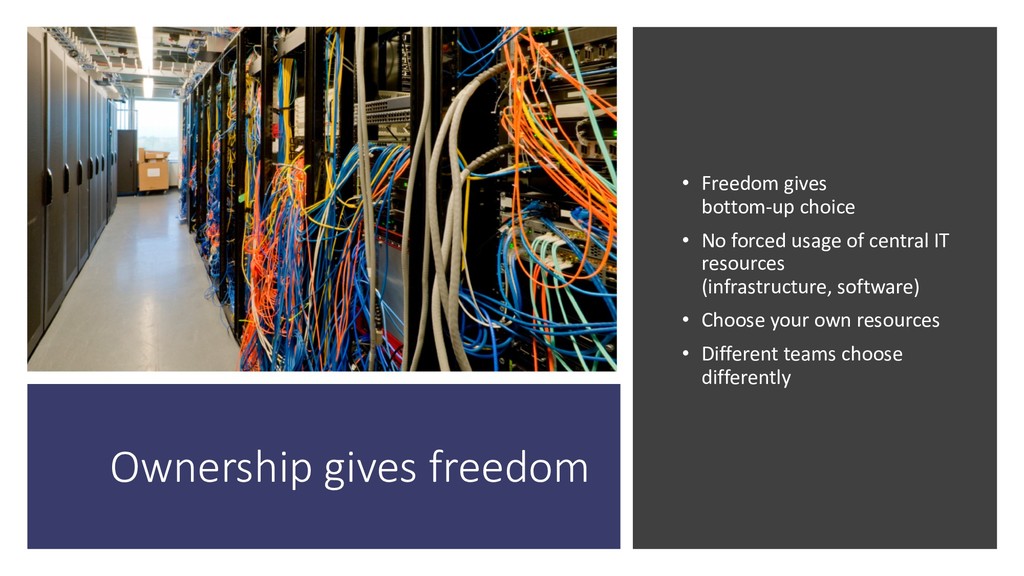
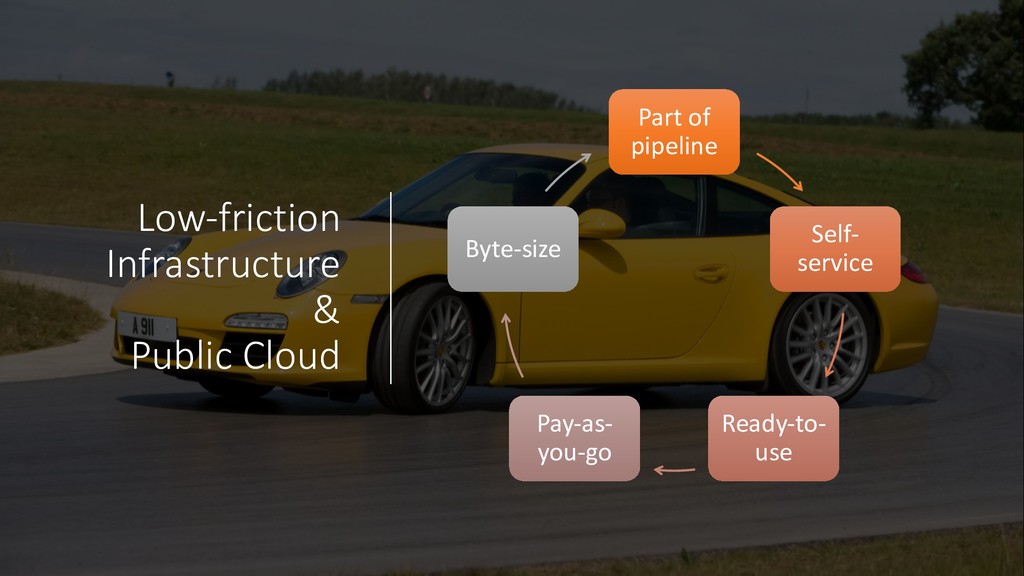
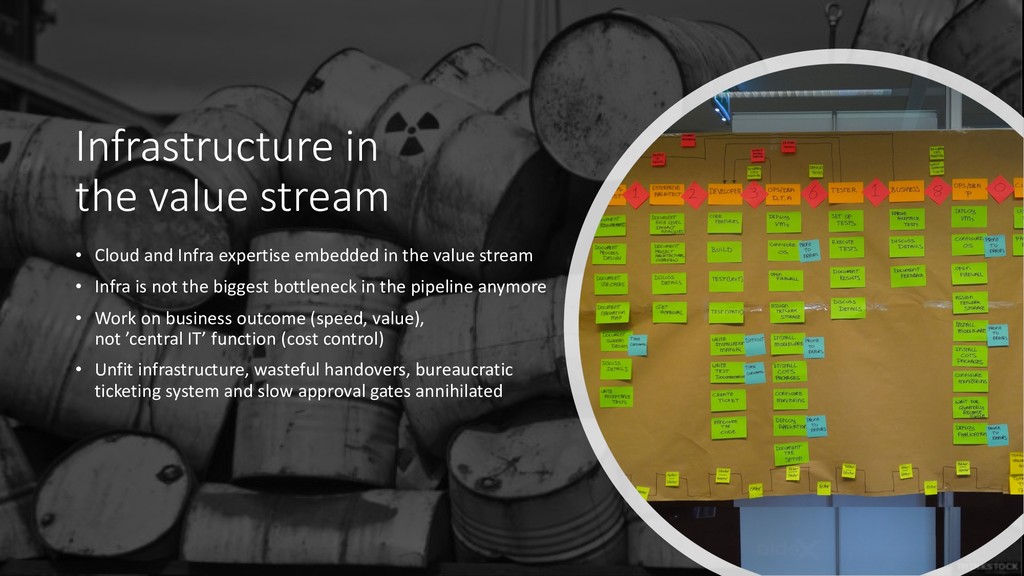
embedded in the value stream • Infra is not the biggest bottleneck in the pipeline anymore • Work on business outcome (speed, value), not ’central IT’ function (cost control) • Unfit infrastructure, wasteful handovers, bureaucratic ticketing system and slow approval gates annihilated
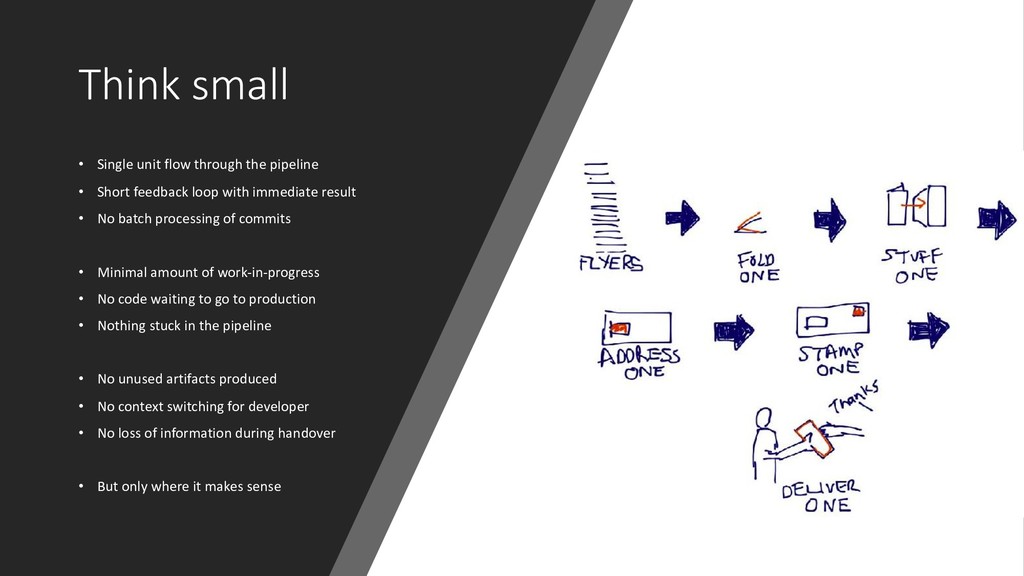
Short feedback loop with immediate result • No batch processing of commits • Minimal amount of work-in-progress • No code waiting to go to production • Nothing stuck in the pipeline • No unused artifacts produced • No context switching for developer • No loss of information during handover • But only where it makes sense
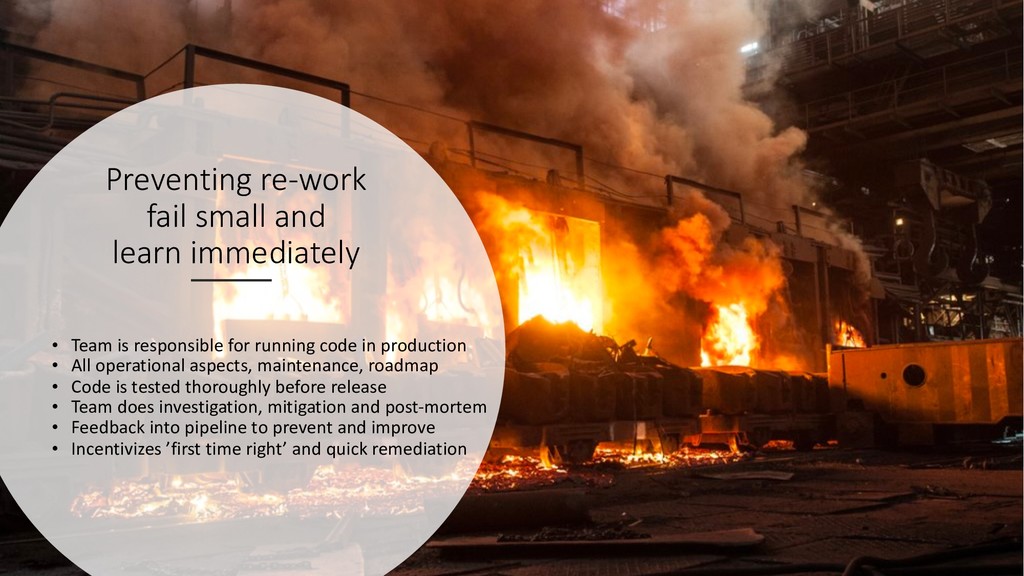
responsible for running code in production • All operational aspects, maintenance, roadmap • Code is tested thoroughly before release • Team does investigation, mitigation and post-mortem • Feedback into pipeline to prevent and improve • Incentivizes ’first time right’ and quick remediation
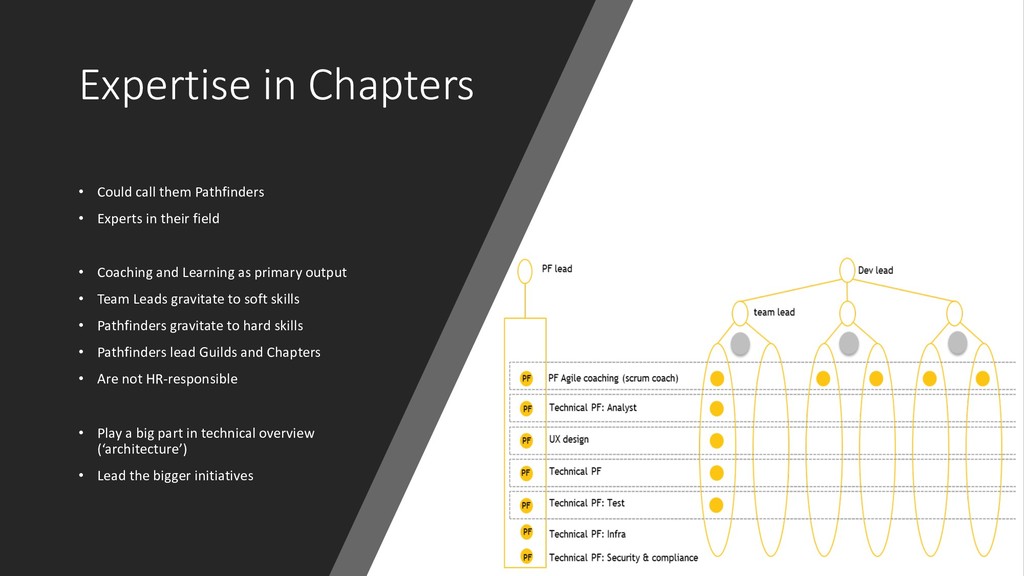
in their field • Coaching and Learning as primary output • Team Leads gravitate to soft skills • Pathfinders gravitate to hard skills • Pathfinders lead Guilds and Chapters • Are not HR-responsible • Play a big part in technical overview (‘architecture’) • Lead the bigger initiatives
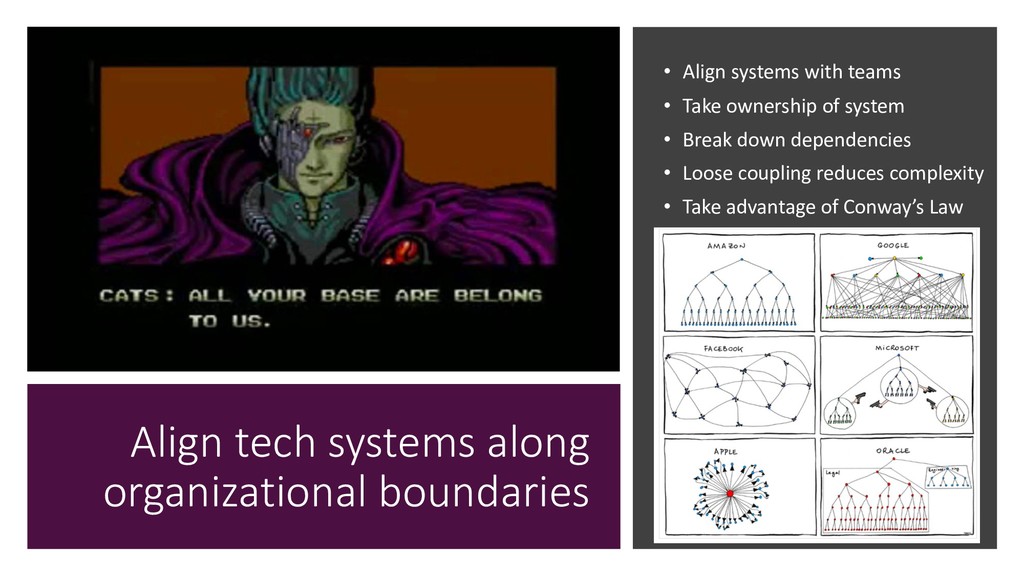
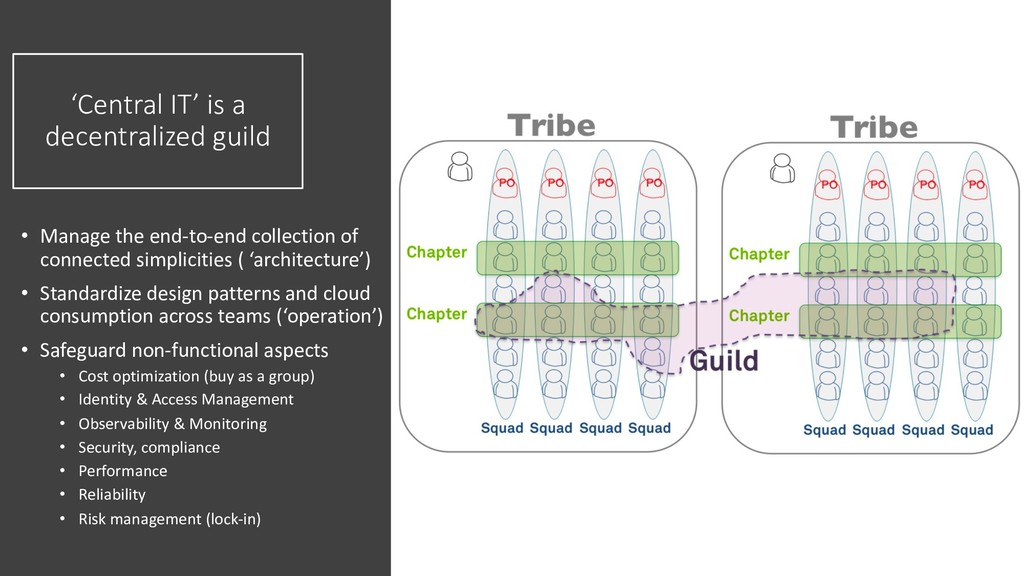
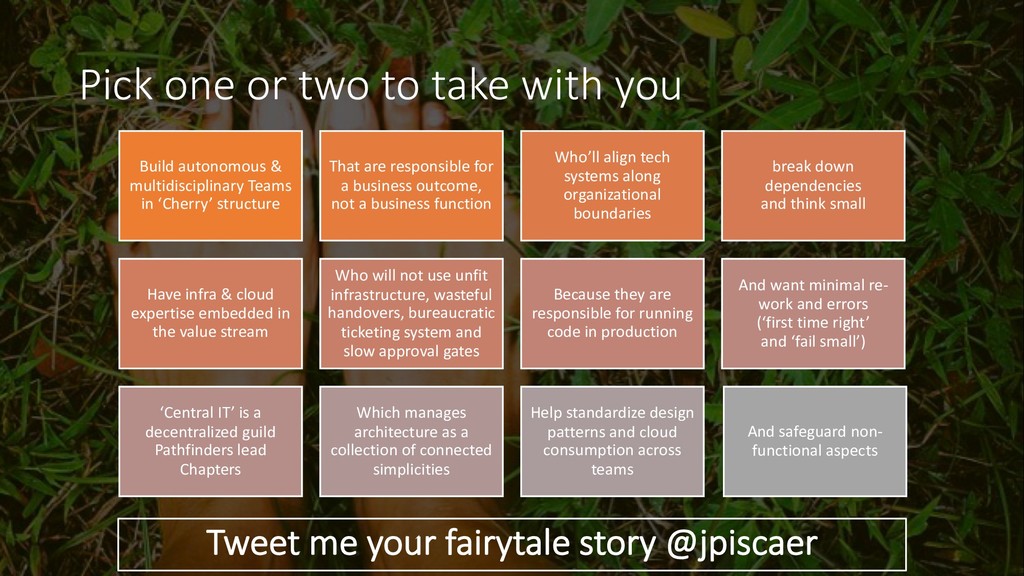
& multidisciplinary Teams in ‘Cherry’ structure That are responsible for a business outcome, not a business function Who’ll align tech systems along organizational boundaries break down dependencies and think small Have infra & cloud expertise embedded in the value stream Who will not use unfit infrastructure, wasteful handovers, bureaucratic ticketing system and slow approval gates Because they are responsible for running code in production And want minimal re- work and errors (‘first time right’ and ‘fail small’) ‘Central IT’ is a decentralized guild Pathfinders lead Chapters Which manages architecture as a collection of connected simplicities Help standardize design patterns and cloud consumption across teams And safeguard non- functional aspects Tweet me your fairytale story @jpiscaer


 jpiscaer
 greenmidori
 pfn
pfn
 satomasahiro2005
 nealle
 koukihosaka
 shogo4131
 keeg
keeg
 yut0naga1_fa
 carta_engineering
 ykanoh
 taketakekaho
 kneath
 techseoconnect
 auna
auna
 palkan
 lauravandoore
 codingconduct
 inesmontani
 nwiizo
 chriscoyier
 bcantrill
 sugarenia
 sferik