Upgrade to Pro — share decks privately, control downloads, hide ads and more …

How Can I Reduce Swelling After a Dental Injury...

How Can I Reduce Swelling After a Dental Injury Before My Appointment?

Learn how to reduce swelling after a dental injury before your appointment with practical, step-by-step guidance. This comprehensive guide covers immediate actions like gentle rinsing and cold compress application, over-the-counter medications, natural home remedies, dietary and lifestyle adjustments, and warning signs that require urgent care. It also highlights the importance of professional evaluation, featuring St Leonards Green Dental for expert support. Whether you’re managing minor trauma or preparing for a dentist visit, these tips help minimize discomfort, prevent complications, and support faster recovery.

Avatar for Juniper Wren

Juniper Wren

April 09, 2026

Other Decks in Business

Transcript

  1. How Can I Reduce Swelling After a Dental Injury Before

    My Appointment? Dental injuries can happen unexpectedly—from sports accidents, falls, or even biting down on something hard. While some injuries are minor, swelling often develops as your body responds to trauma, indicating inflammation and fluid accumulation in the affected area. Managing this swelling effectively before your dental appointment can make the healing process smoother, reduce discomfort, and prevent further complications. Early care is crucial, but it’s also important to seek professional evaluation for any dental injury. For instance, if you’re in the St Leonards area, St Leonards Green Dental offers expert dental assessment and treatment, ensuring that any swelling, bruising, or tissue damage is properly addressed. While home remedies and immediate measures can help reduce discomfort temporarily, professional guidance from a trusted clinic like St Leonards Green Dental can ensure the injury is treated safely and effectively. 1. Immediate Actions to Minimize Swelling 1.1 Rinse Your Mouth Gently
  2. After a dental injury, it’s vital to keep the area

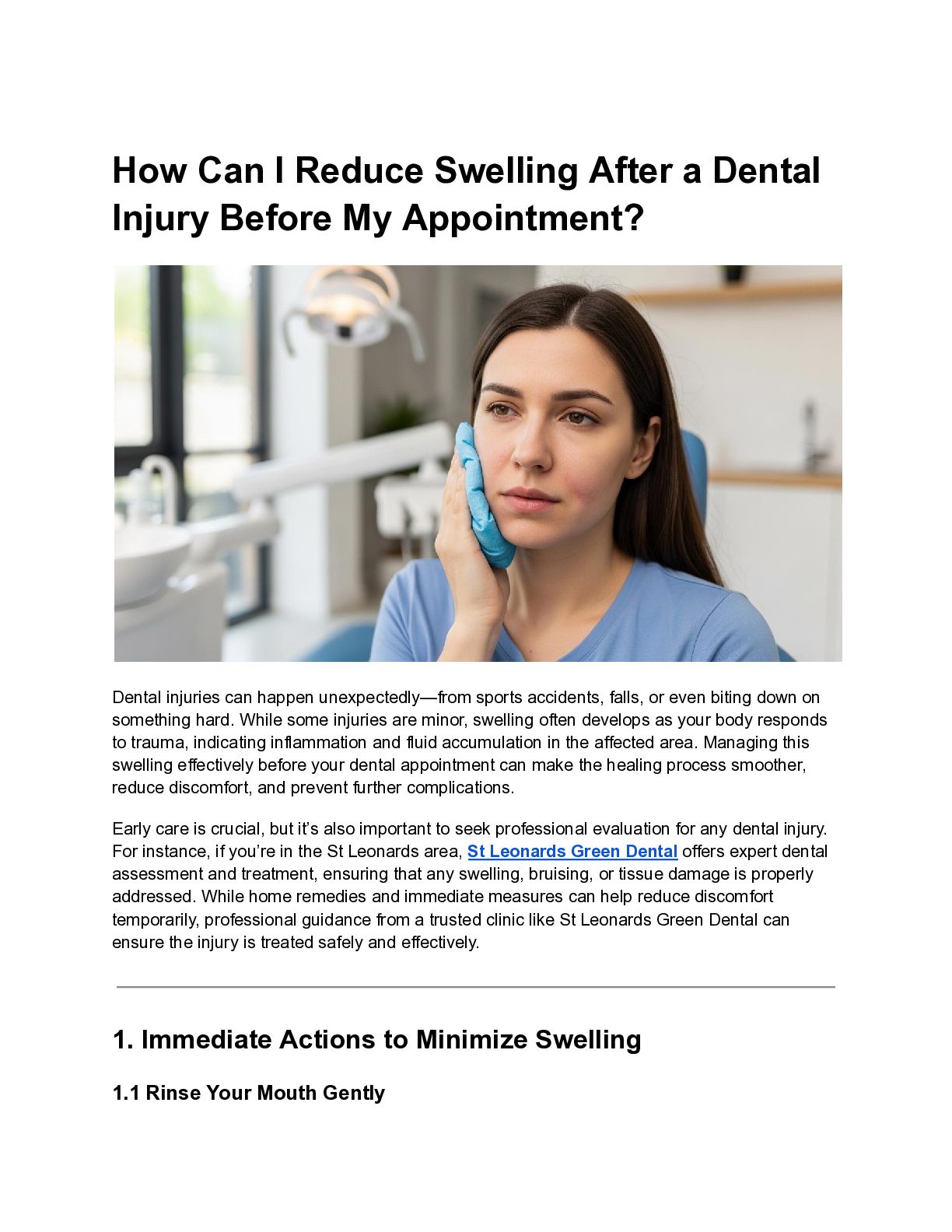
    clean. Rinse your mouth gently with lukewarm saltwater. This helps remove debris, reduce bacterial growth, and lower the risk of infection. Mix half a teaspoon of salt in a glass of warm water and swish it around your mouth for 30–60 seconds, then spit it out. Avoid harsh mouthwashes or vigorous rinsing, which could worsen tissue trauma. 1.2 Apply a Cold Compress Cold therapy is one of the most effective ways to reduce swelling. Here’s how to do it safely: •​ Wrap an ice pack or a bag of frozen vegetables in a thin towel. •​ Apply the compress to the outside of the affected cheek or jaw for 10–15 minutes at a time. •​ Rest for 10–15 minutes and repeat as necessary. Important: Never apply ice directly to the skin, as it may cause frostbite. Cold therapy helps constrict blood vessels, reducing fluid accumulation and numbing discomfort. 2. Over-the-Counter Remedies and Medications 2.1 Anti-Inflammatory Medications Non-steroidal anti-inflammatory drugs (NSAIDs), such as ibuprofen or naproxen, can help manage swelling and pain. Follow dosage instructions carefully and consult your pharmacist if you have medical conditions or allergies. These medications work by reducing inflammation and lowering the body’s pain response, providing temporary relief until your dental appointment. 2.2 Topical Gels or Ointments For localized relief, topical gels like benzocaine or clove oil can be applied carefully to the injured area. These provide temporary numbness and comfort. Always follow the instructions on the product label, and avoid overuse, especially in children. 3. Lifestyle Adjustments to Reduce Swelling 3.1 Head Elevation
  3. Keeping your head elevated, especially while sleeping or resting, helps

    reduce fluid accumulation in the affected area. Use extra pillows to maintain an upright position, which can decrease swelling and discomfort overnight. 3.2 Dietary Considerations What you eat after a dental injury can influence swelling: •​ Opt for soft foods such as yogurt, mashed potatoes, or smoothies. •​ Avoid crunchy, hard, or spicy foods that may irritate the injured area. •​ Stay hydrated with cold liquids, which can soothe inflammation. 3.3 Avoiding Certain Habits Certain behaviors can worsen swelling or delay healing: •​ Refrain from smoking, as it reduces blood flow and slows recovery. •​ Avoid alcohol, which can increase inflammation. •​ Steer clear of hot beverages that may aggravate pain or swelling. 4. When to Seek Urgent Care While minor swelling can be managed at home, certain signs indicate a more serious issue: •​ Excessive or persistent bleeding. •​ Severe, throbbing pain not relieved by over-the-counter medications. •​ Loose, chipped, or knocked-out teeth. •​ Signs of infection: pus, fever, or spreading redness. If any of these occur, seek urgent dental care rather than waiting for a routine appointment. Professional intervention can prevent complications and promote proper healing. 5. Incorporating Professional Dental Support Even with careful home management, a dental injury requires professional evaluation. Clinics like St Leonards Green Dental provide comprehensive care, including assessment of tissue damage, X-rays, and specialized treatment to reduce inflammation and prevent long-term complications. Consulting a professional ensures that swelling is not masking a more serious issue such as a fracture, deep infection, or internal tissue damage. Home remedies work best as a temporary solution, complementing expert care for optimal recovery.
  4. 6. Natural and Home Remedies In addition to cold therapy

    and medications, certain gentle home remedies can help manage swelling: •​ Cold Tea Bags: Tannins in black tea can reduce inflammation. Apply a cooled, damp tea bag to the affected area for 10 minutes. •​ Aloe Vera: Known for soothing properties, apply a small amount of pure aloe gel to the gum area. •​ Honey: With antibacterial and anti-inflammatory properties, a thin layer can be applied carefully to reduce irritation. These remedies should be used cautiously and never replace professional care. 7. Long-Term Considerations Monitoring swelling and healing over time is crucial: •​ Keep a diary noting changes in swelling, pain, or color of the injured area. •​ Note any triggers that worsen discomfort, such as certain foods or activities. •​ Bring this information to your dentist; it helps in diagnosis and treatment planning. Preparing questions for your appointment ensures you get the most out of professional advice, covering pain management, long-term healing, and preventive measures. 8. Prevention Tips for Future Dental Injuries While accidents happen, prevention can reduce risk: •​ Wear mouthguards during sports or high-risk activities. •​ Avoid chewing hard or sharp objects like ice, hard candy, or pens. •​ Maintain proper oral hygiene to prevent infections that could complicate minor injuries. Adopting these precautions can minimize the severity of future injuries and reduce swelling risk.
  5. Conclusion Swelling after a dental injury can be uncomfortable and

    concerning, but prompt, careful care can make a significant difference before your dental appointment. Immediate measures like gentle rinsing, cold compresses, and anti-inflammatory medications help manage discomfort, while lifestyle adjustments and natural remedies support the healing process. Remember, these are temporary measures, and professional evaluation is crucial to ensure proper treatment and prevent complications. Clinics like St Leonards Green Dental provide expert care, complementing your home efforts for faster recovery and peace of mind. By following these steps and remaining observant, you can reduce swelling, protect your oral health, and prepare for a smooth, effective dental visit.