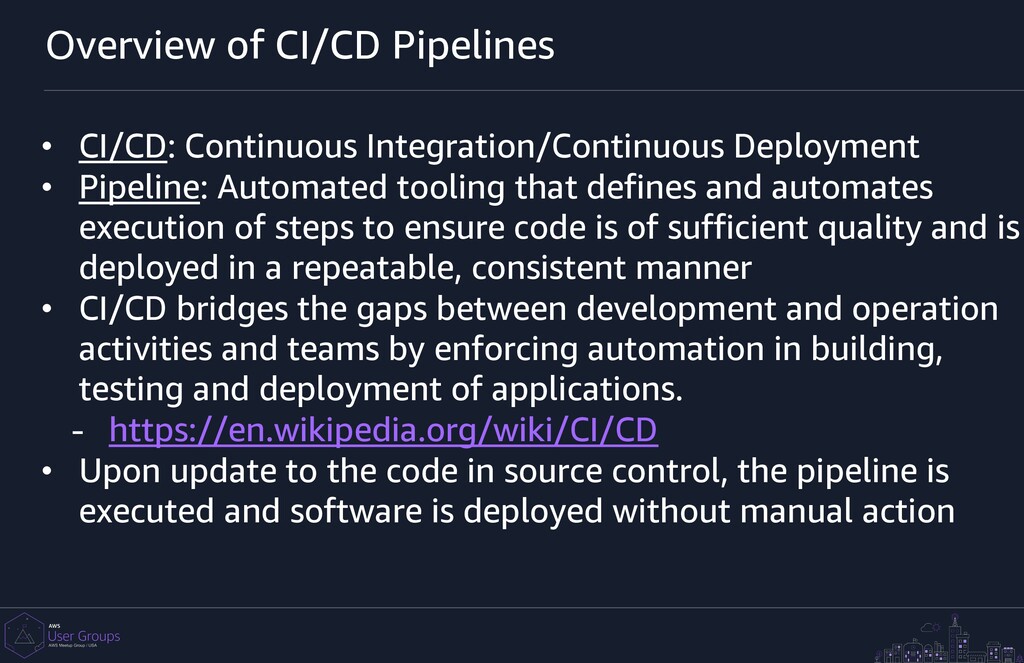
Deployment • Pipeline: Automated tooling that defines and automates execution of steps to ensure code is of sufficient quality and is deployed in a repeatable, consistent manner • CI/CD bridges the gaps between development and operation activities and teams by enforcing automation in building, testing and deployment of applications. - https://en.wikipedia.org/wiki/CI/CD • Upon update to the code in source control, the pipeline is executed and software is deployed without manual action
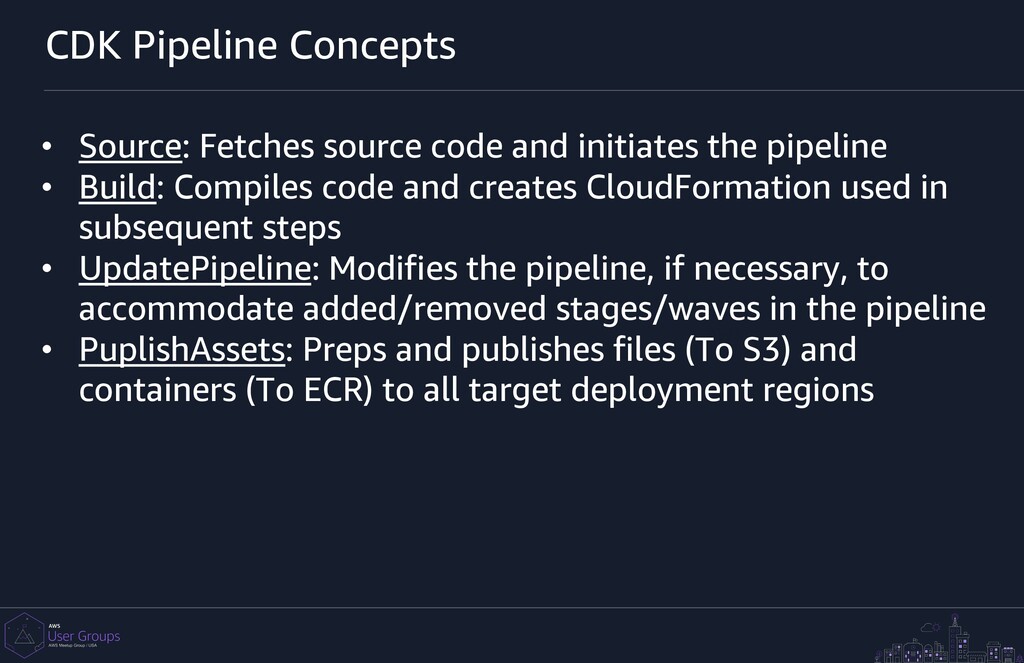
and initiates the pipeline • Build: Compiles code and creates CloudFormation used in subsequent steps • UpdatePipeline: Modifies the pipeline, if necessary, to accommodate added/removed stages/waves in the pipeline • PuplishAssets: Preps and publishes files (To S3) and containers (To ECR) to all target deployment regions
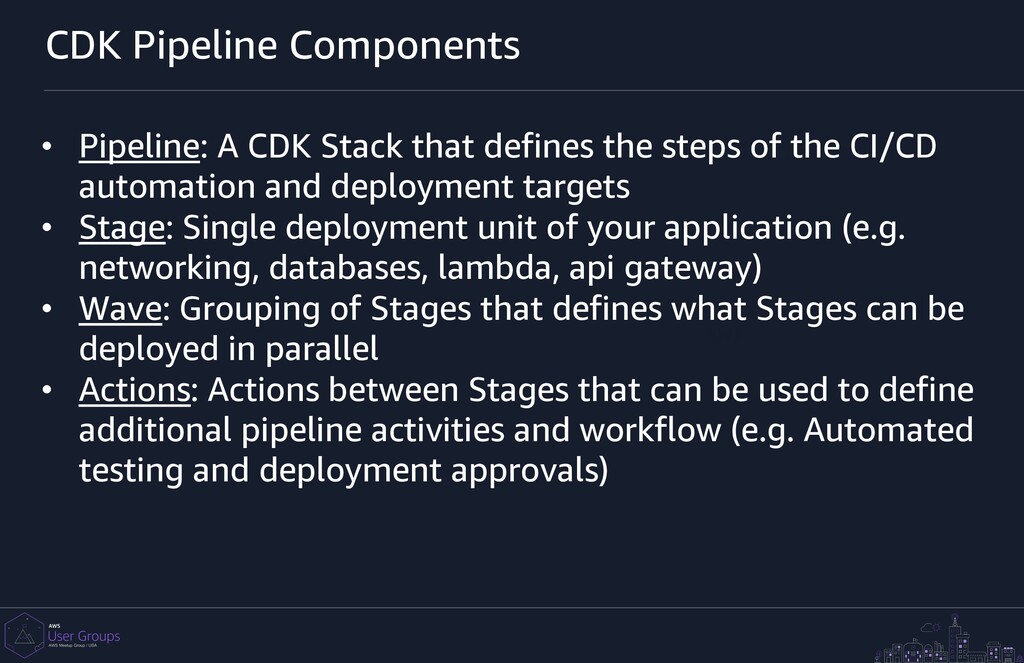
that defines the steps of the CI/CD automation and deployment targets • Stage: Single deployment unit of your application (e.g. networking, databases, lambda, api gateway) • Wave: Grouping of Stages that defines what Stages can be deployed in parallel • Actions: Actions between Stages that can be used to define additional pipeline activities and workflow (e.g. Automated testing and deployment approvals)
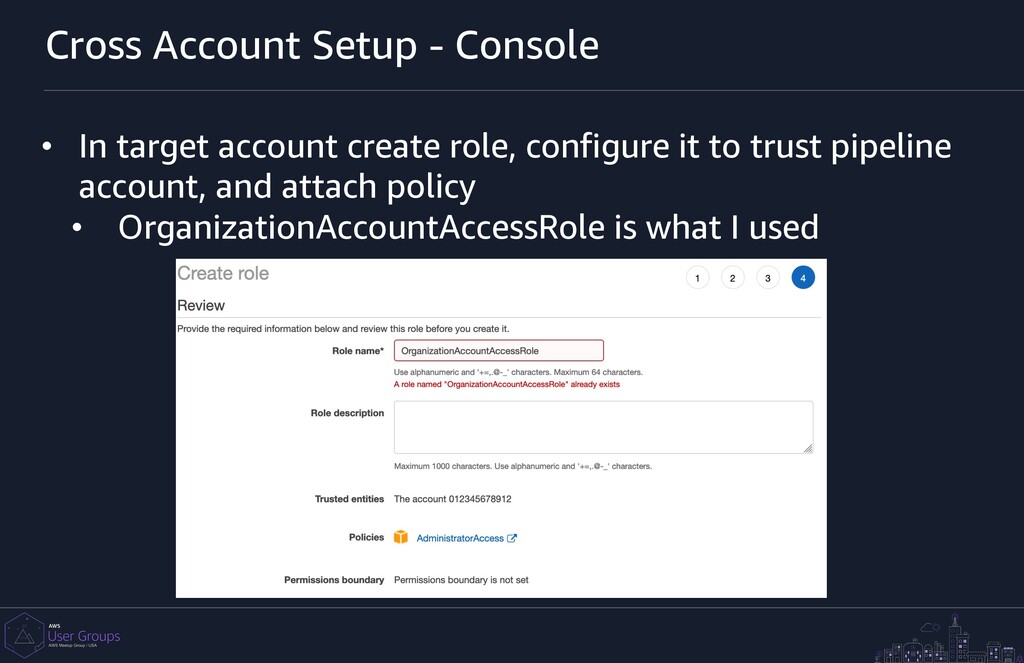
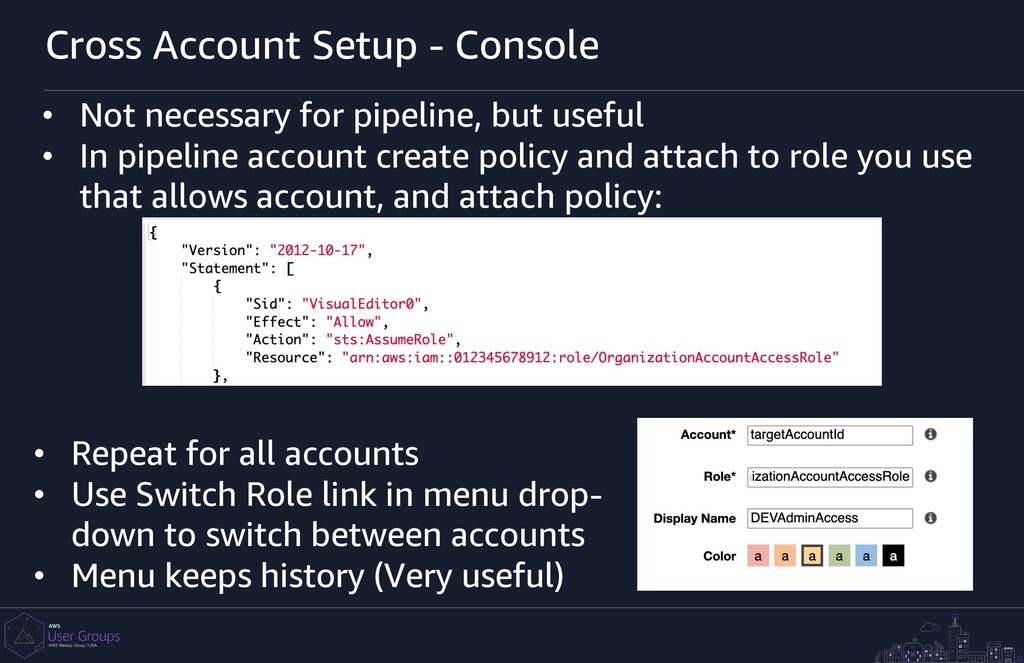
for pipeline, but useful • In pipeline account create policy and attach to role you use that allows account, and attach policy: • Repeat for all accounts • Use Switch Role link in menu drop- down to switch between accounts • Menu keeps history (Very useful)
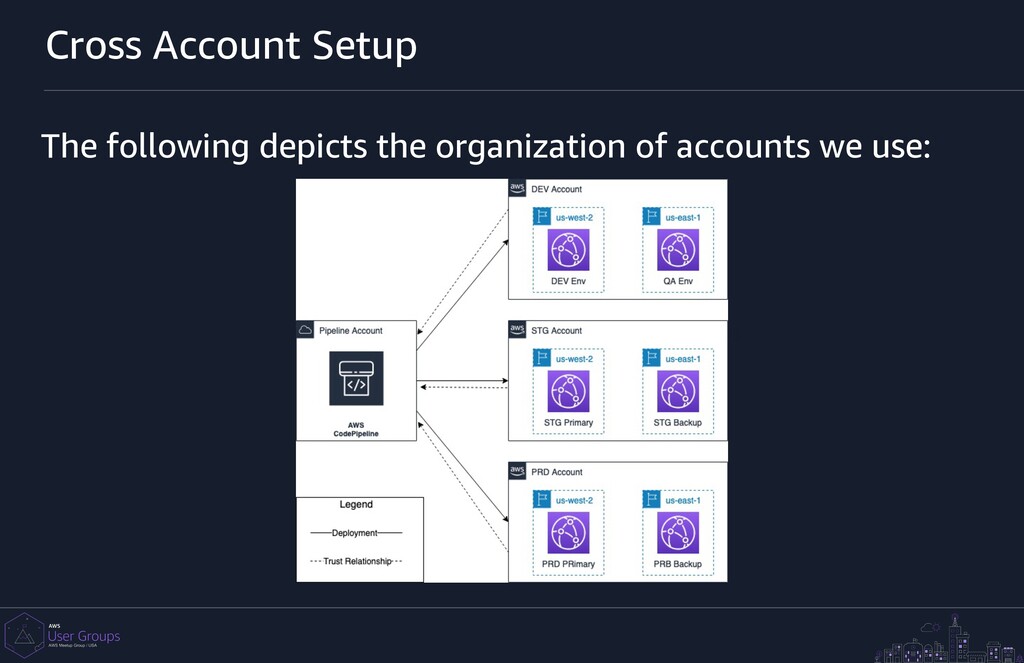
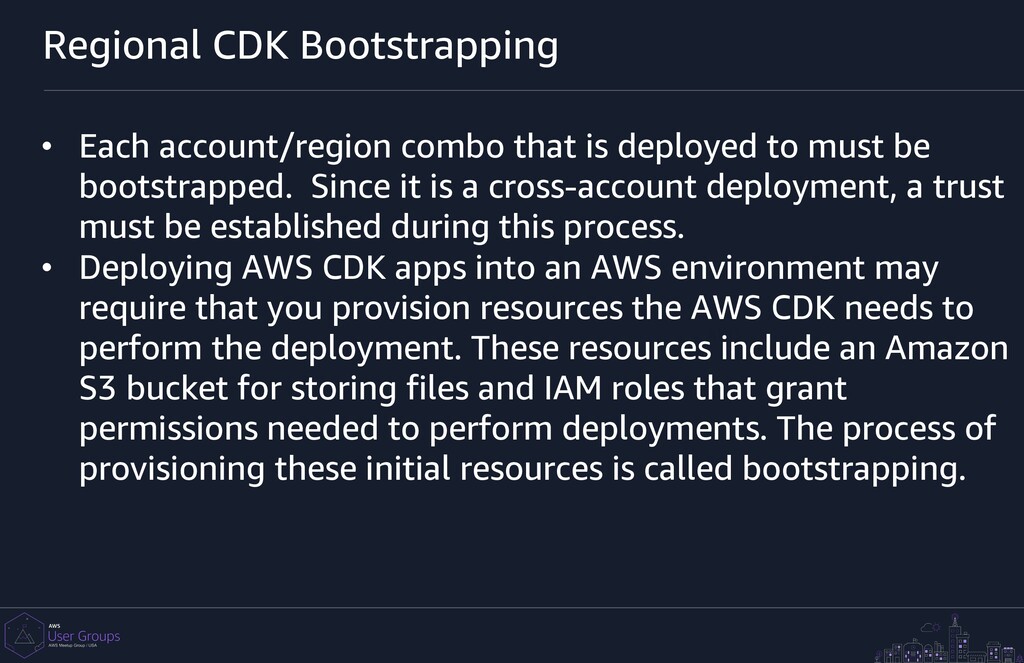
that is deployed to must be bootstrapped. Since it is a cross-account deployment, a trust must be established during this process. • Deploying AWS CDK apps into an AWS environment may require that you provision resources the AWS CDK needs to perform the deployment. These resources include an Amazon S3 bucket for storing files and IAM roles that grant permissions needed to perform deployments. The process of provisioning these initial resources is called bootstrapping.
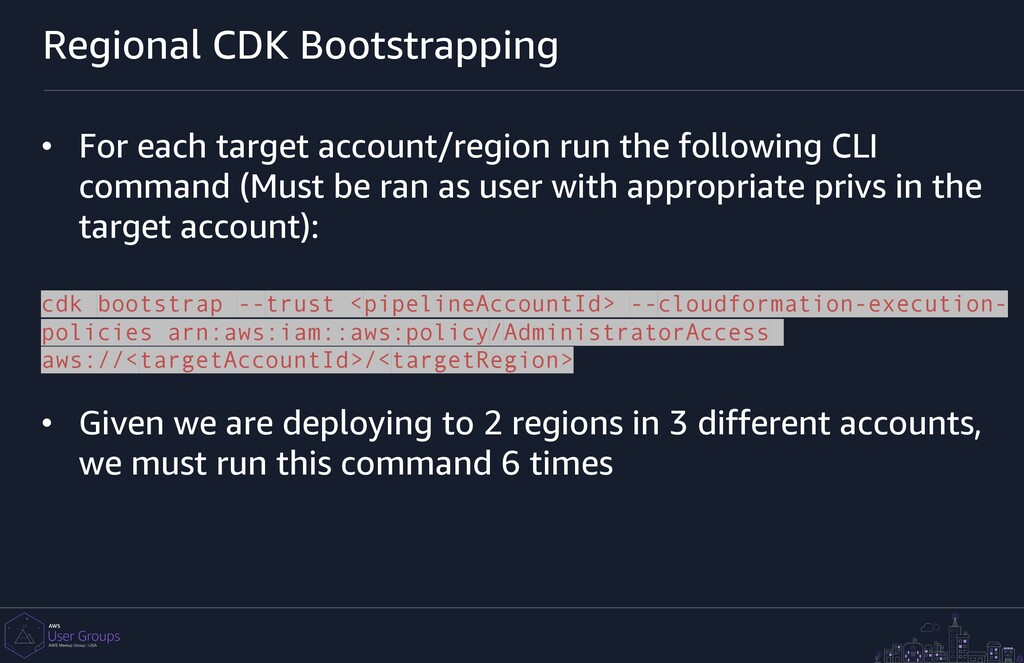
account/region run the following CLI command (Must be ran as user with appropriate privs in the target account): cdk bootstrap --trust <pipelineAccountId> --cloudformation-execution- policies arn:aws:iam::aws:policy/AdministratorAccess aws://<targetAccountId>/<targetRegion> • Given we are deploying to 2 regions in 3 different accounts, we must run this command 6 times
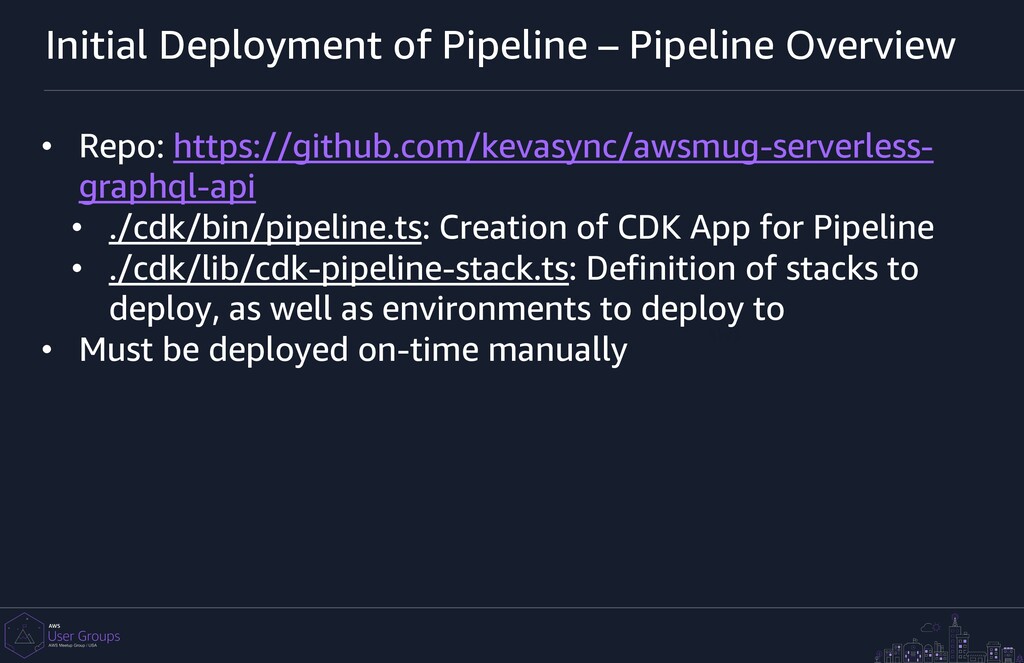
• Repo: https://github.com/kevasync/awsmug-serverless- graphql-api • ./cdk/bin/pipeline.ts: Creation of CDK App for Pipeline • ./cdk/lib/cdk-pipeline-stack.ts: Definition of stacks to deploy, as well as environments to deploy to • Must be deployed on-time manually
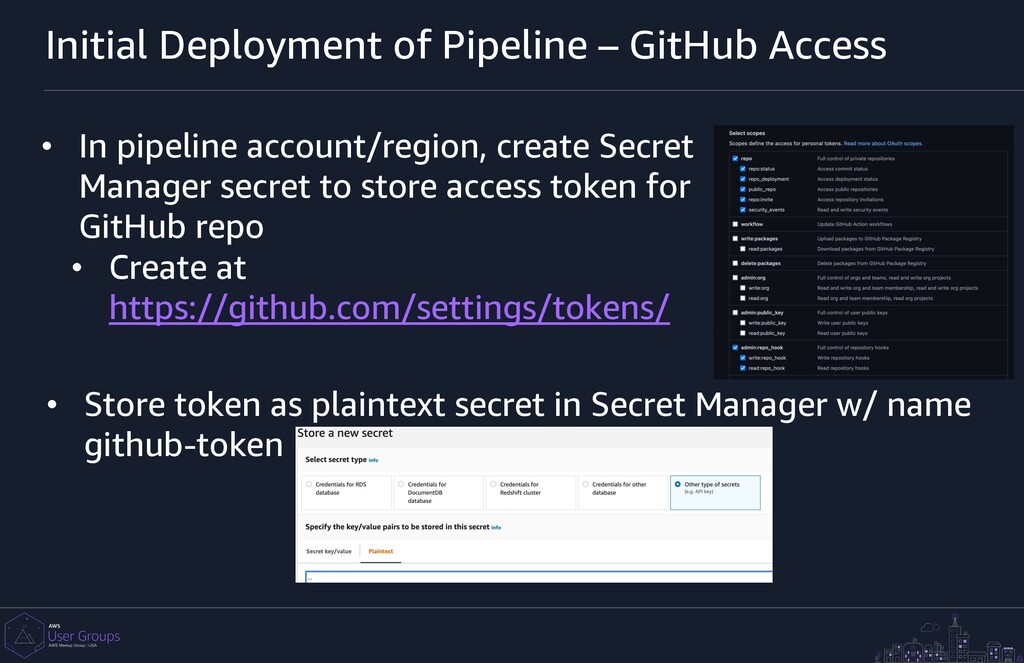
• In pipeline account/region, create Secret Manager secret to store access token for GitHub repo • Create at https://github.com/settings/tokens/ • Store token as plaintext secret in Secret Manager w/ name github-token
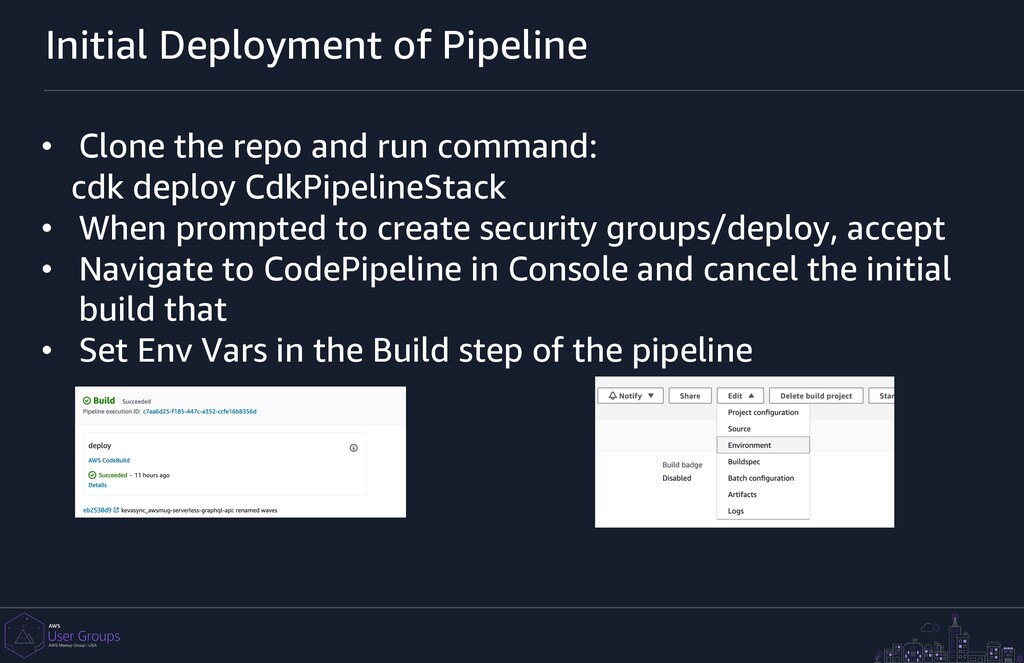
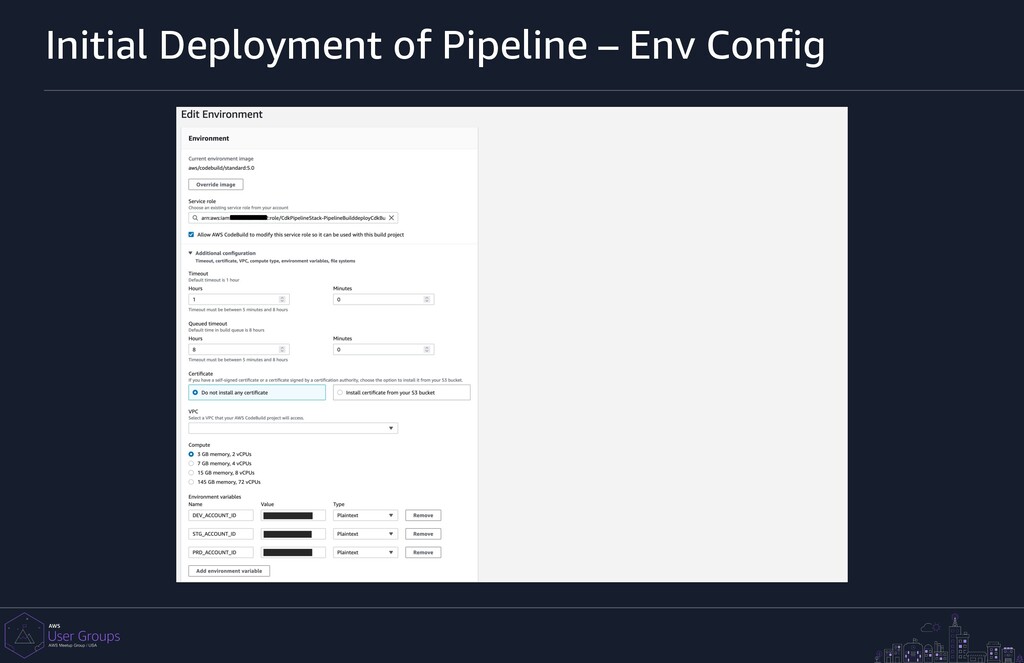
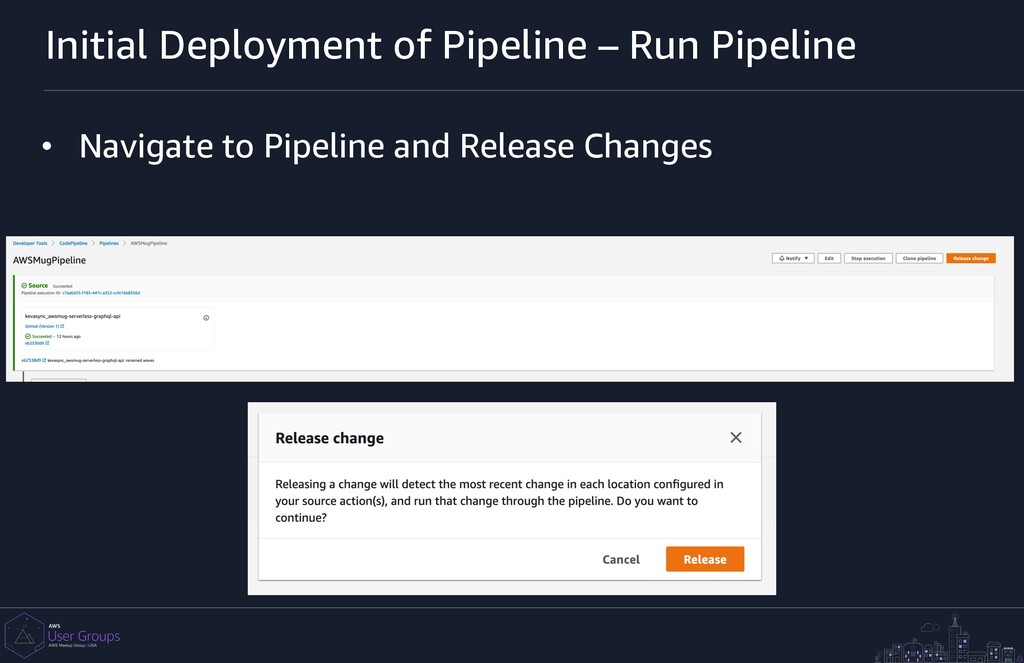
repo and run command: cdk deploy CdkPipelineStack • When prompted to create security groups/deploy, accept • Navigate to CodePipeline in Console and cancel the initial build that • Set Env Vars in the Build step of the pipeline
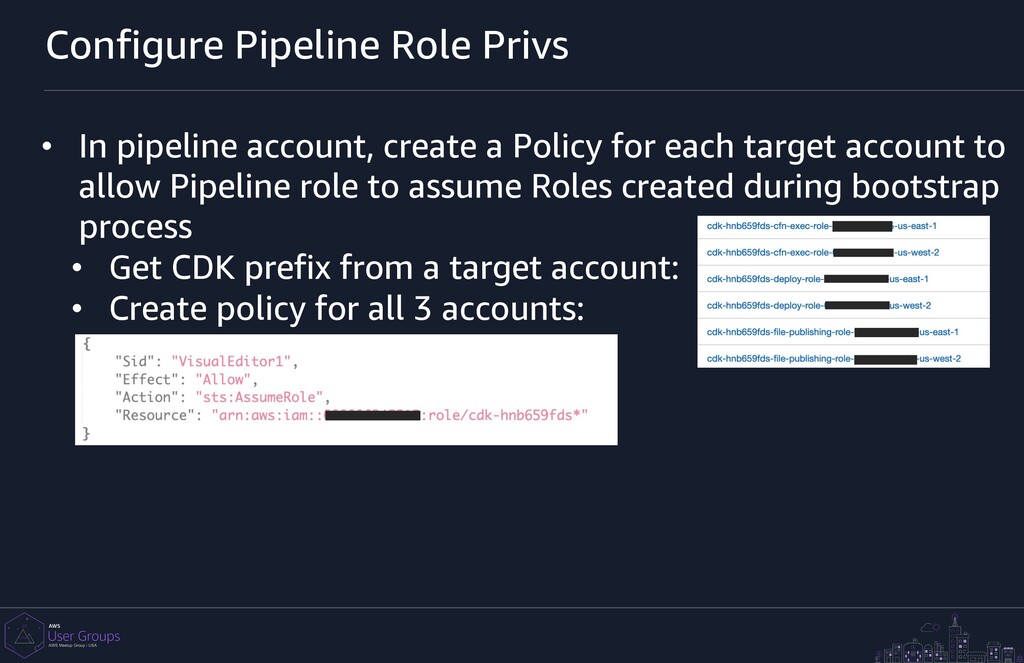
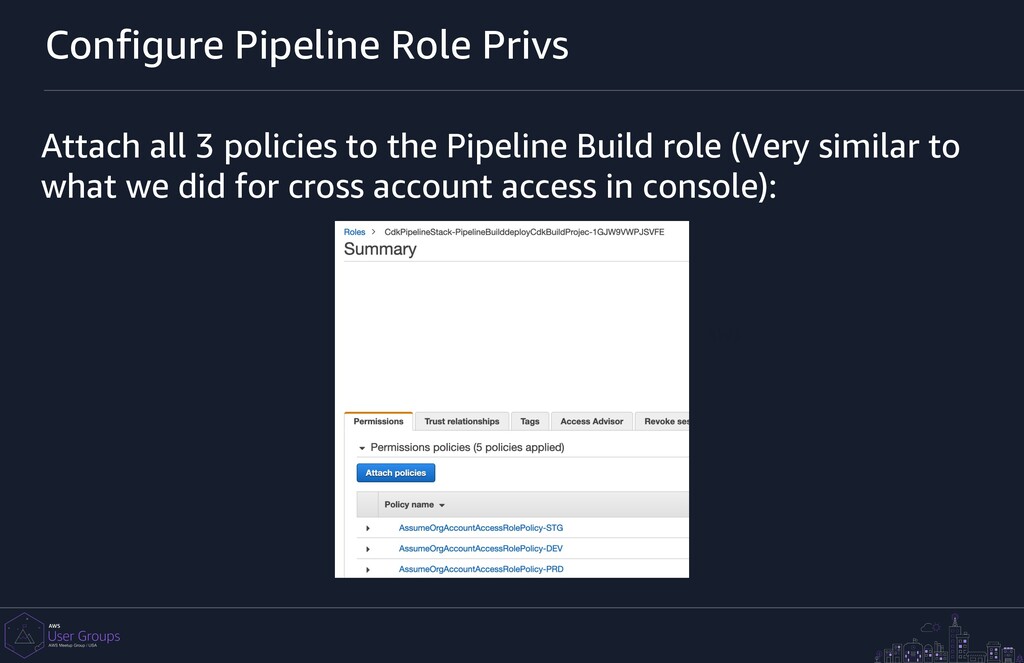
account, create a Policy for each target account to allow Pipeline role to assume Roles created during bootstrap process • Get CDK prefix from a target account: • Create policy for all 3 accounts:
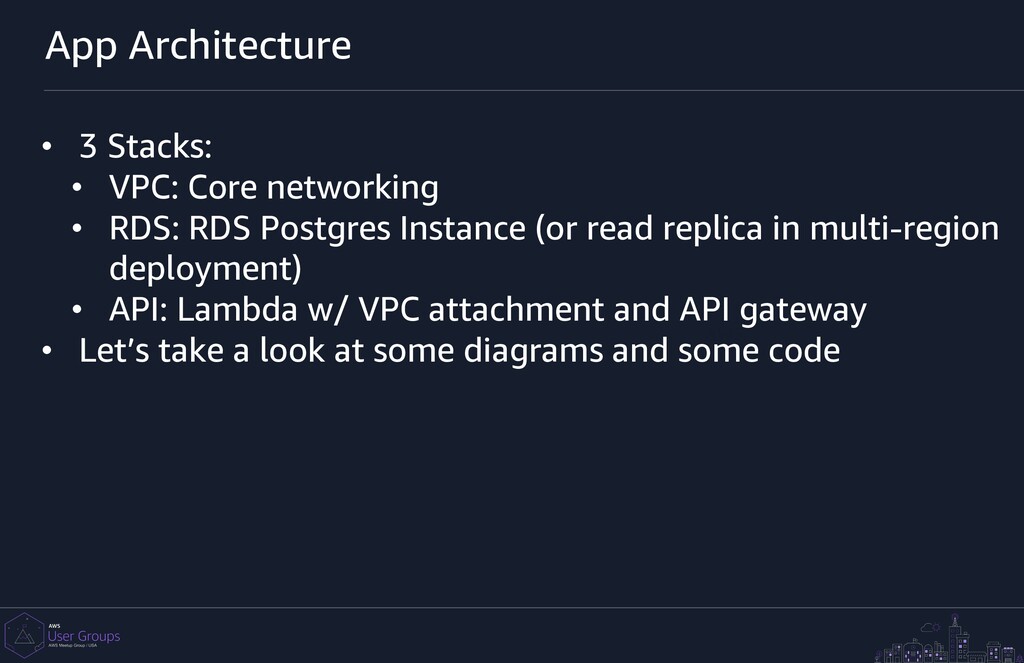
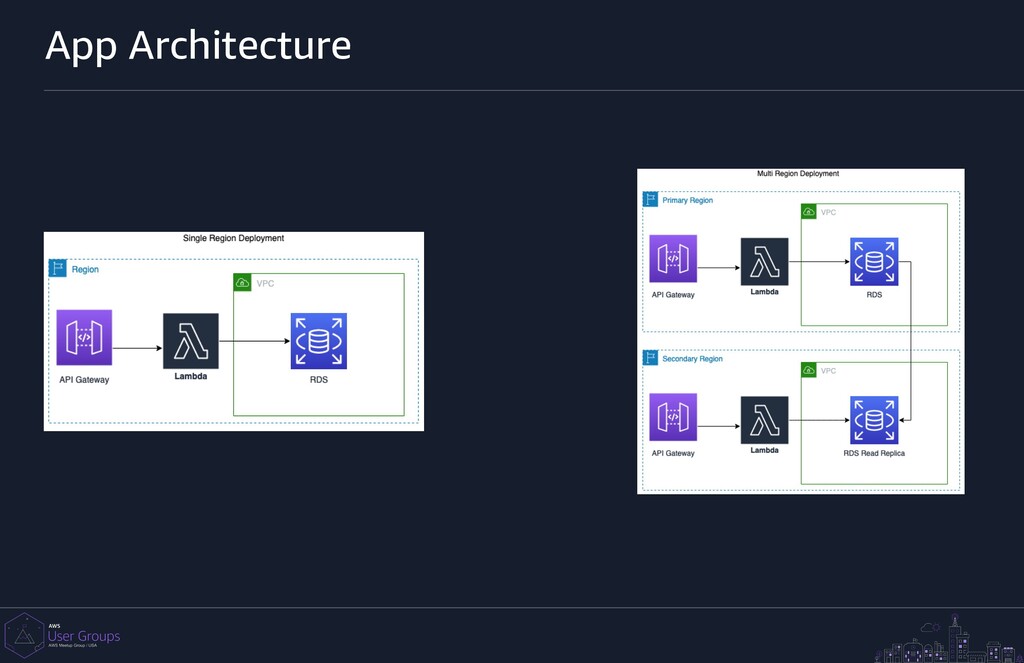
Core networking • RDS: RDS Postgres Instance (or read replica in multi-region deployment) • API: Lambda w/ VPC attachment and API gateway • Let’s take a look at some diagrams and some code
infra across accounts and regions be aware of secrets and encryption • To use Secret Manager secrets across accounts, specific policies on the secret must be set • This is cumbersome • To use secrets across regions in the same account, Secret Manager secret replication is ideal • When encrypting in multiple accounts/regions, KMS keys must be managed. • Each account/region has it’s own master keys, which is used in many instances as the default KMS key to encrypt with
different RDS instances takes a long time • Waves can be used to deploy multiple stages in parallel • In this example: • DEV and QA • PRD and STG Primary • PRD and STG Secondary
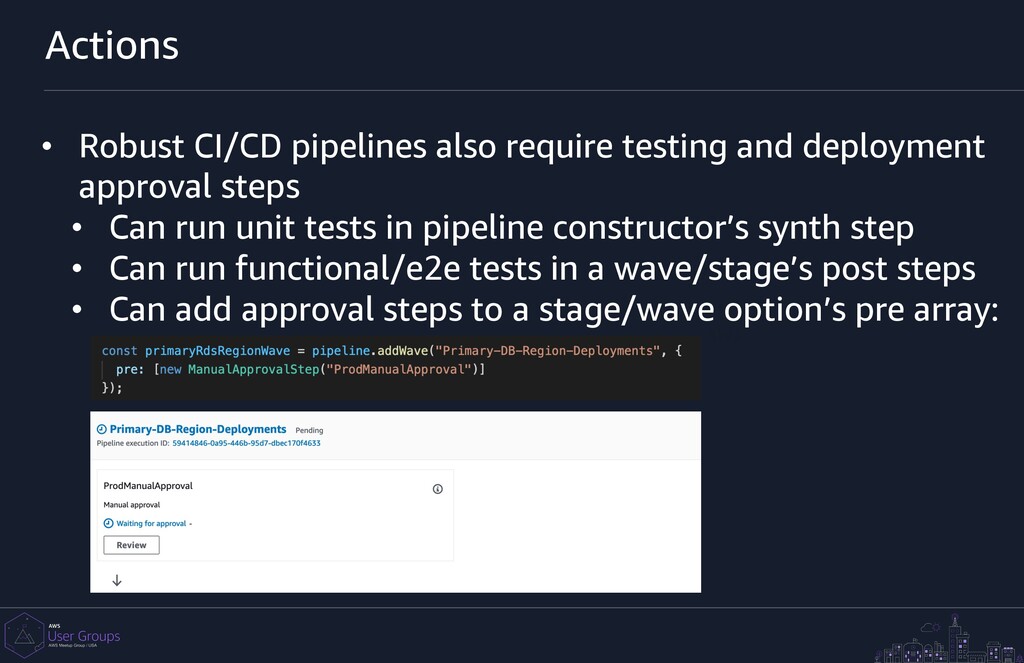
testing and deployment approval steps • Can run unit tests in pipeline constructor’s synth step • Can run functional/e2e tests in a wave/stage’s post steps • Can add approval steps to a stage/wave option’s pre array:
is deployed independently to each account/region • This allows each to be updated separately • You will need to go CloudFormation in each account/region and delete the stacks when you want to clean up the resources • Explore nested stacks if this behavior is not acceptable
connect on LinkedIn • Upcoming Meetups: • November 10th: From MVP to Production w/ Serverless Chris Gradwohl Full Stack Engineer and AWS Serverless Architect at Courier • December: CI/CD using Trunk Based Development Austin Loveless Full Stack/DevOps Engineer at Stuzo AWS Community Hero


 kevasync
 y0hgi
y0hgi
 puhitaku
 jozono
 kaminashi
 yahonda
 prog893
 teamlab
 kairim0
 bitkey
 ivry_presentationmaterials
 jtakeda
 codmoninc
 skoyamalab
 deanohume
 keavy
keavy
 techseoconnect
 signer
 rkendrick25
 charlesmeaden
 carmenintech
 cassininazir
 morganepeng
 tammyeverts
 samanthasiow