Upgrade to Pro — share decks privately, control downloads, hide ads and more …

How Swift's Type System Guides AI Agents

How Swift's Type System Guides AI Agents

When AI agents write code, compiler feedback is critical to quality. Swift’s type system expresses information that most other languages leave out of their types (such as error possibilities and data race safety), giving the compiler more to feed back to the agent. This talk explores how Swift’s type system gives AI agents an advantage.

Avatar for Yuta Koshizawa

Yuta Koshizawa

April 14, 2026

More Decks by Yuta Koshizawa

Other Decks in Programming

Transcript

  1. Yuta Koshizawa • @koher • Qoncept, Inc. • try! Swi3

    Tokyo 2016 Speaker • Author of "Heart of Swi3" • Swi3 Zoomin' Organizer
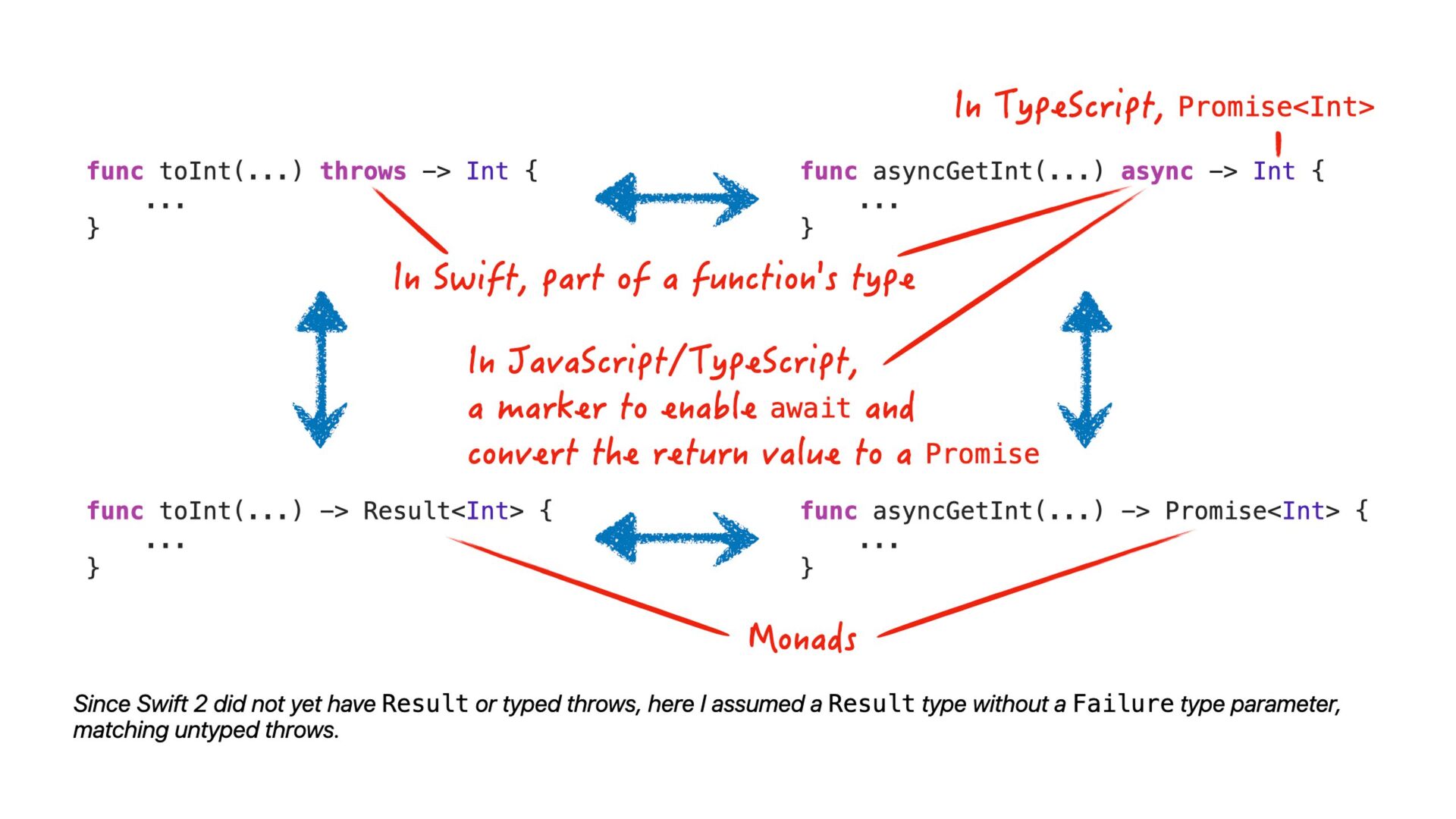
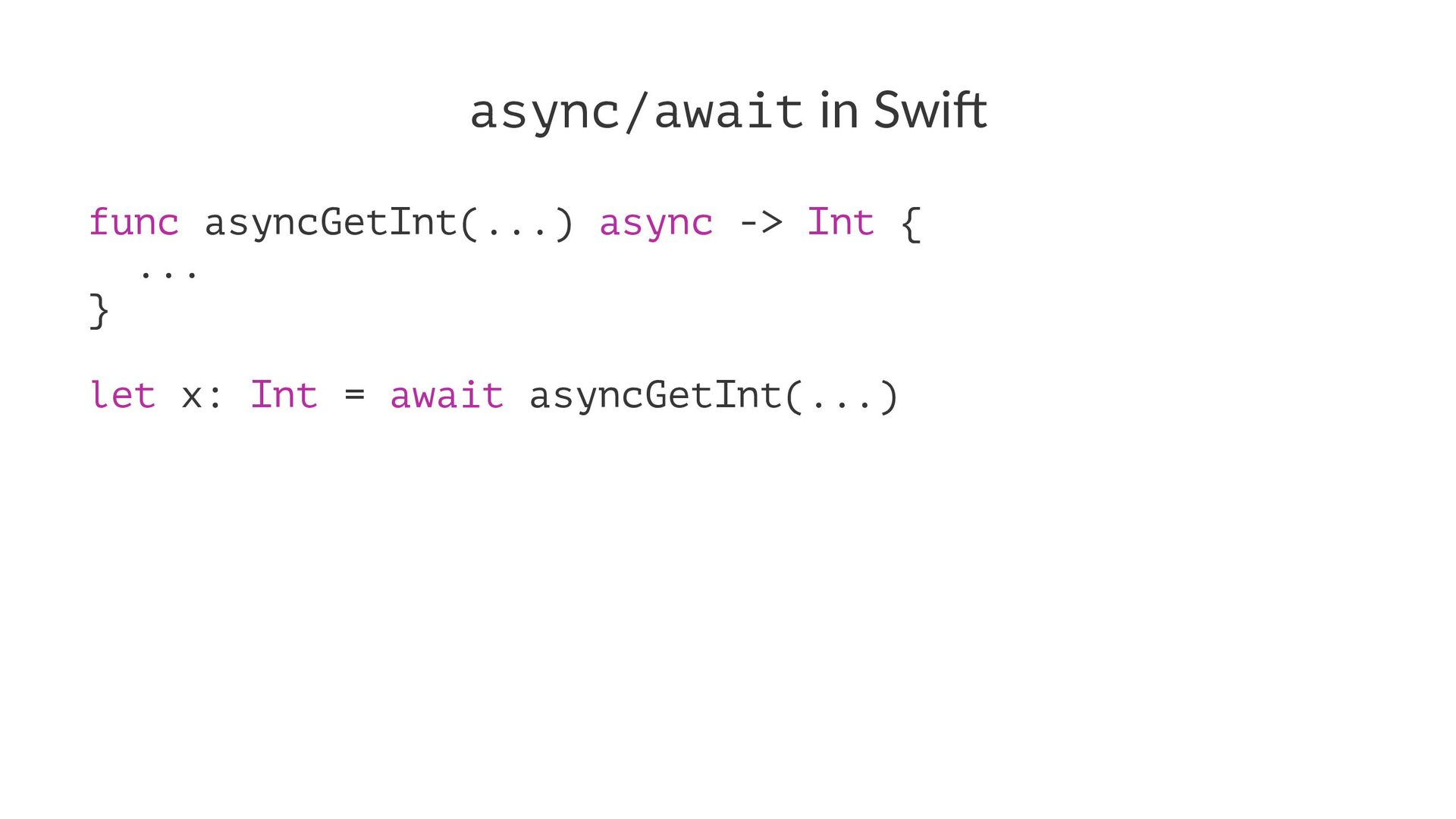
  2. async/await in Swi& func asyncGetInt(...) async -> Int { ...

    } let x: Int = await asyncGetInt(...)
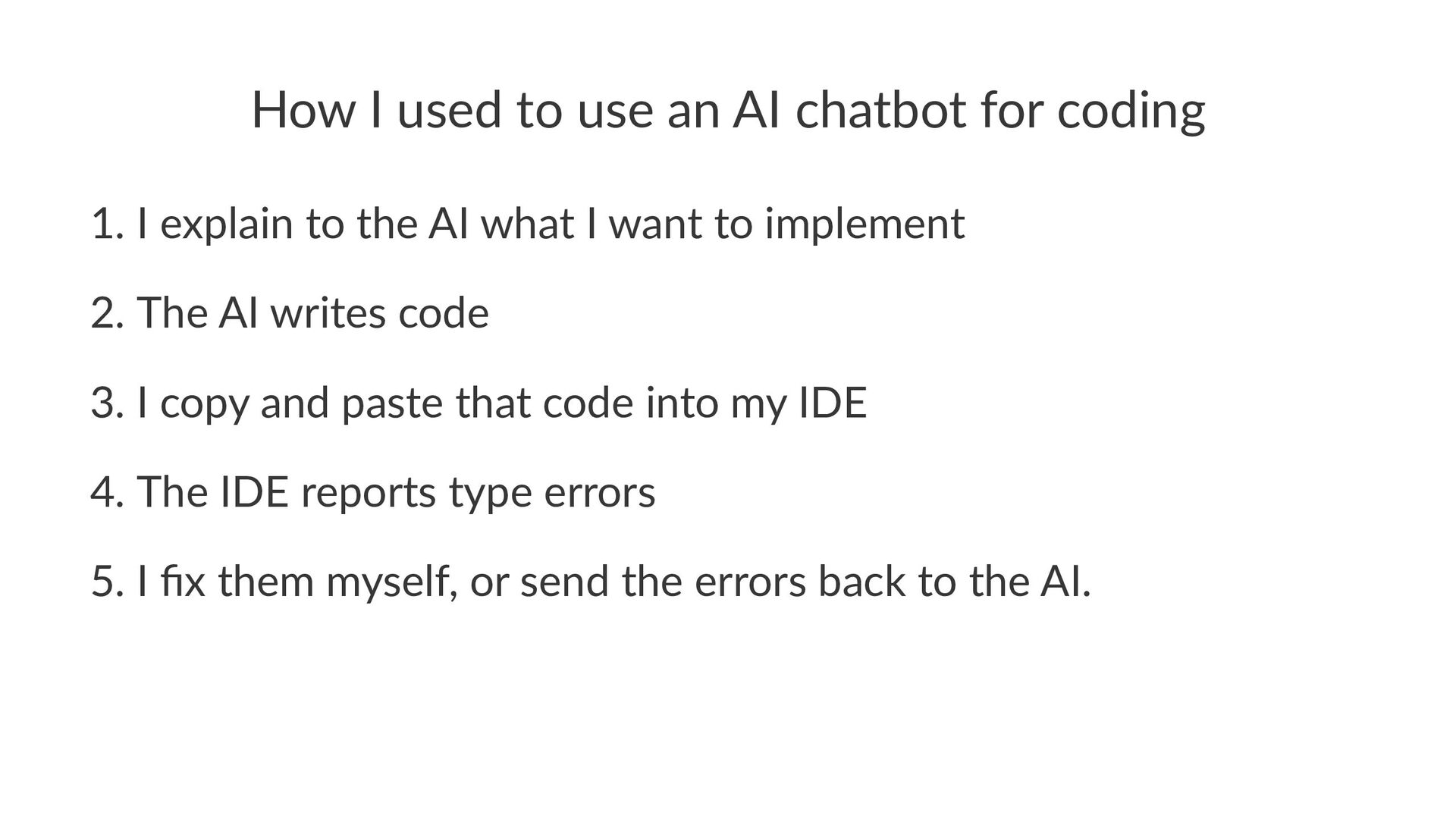
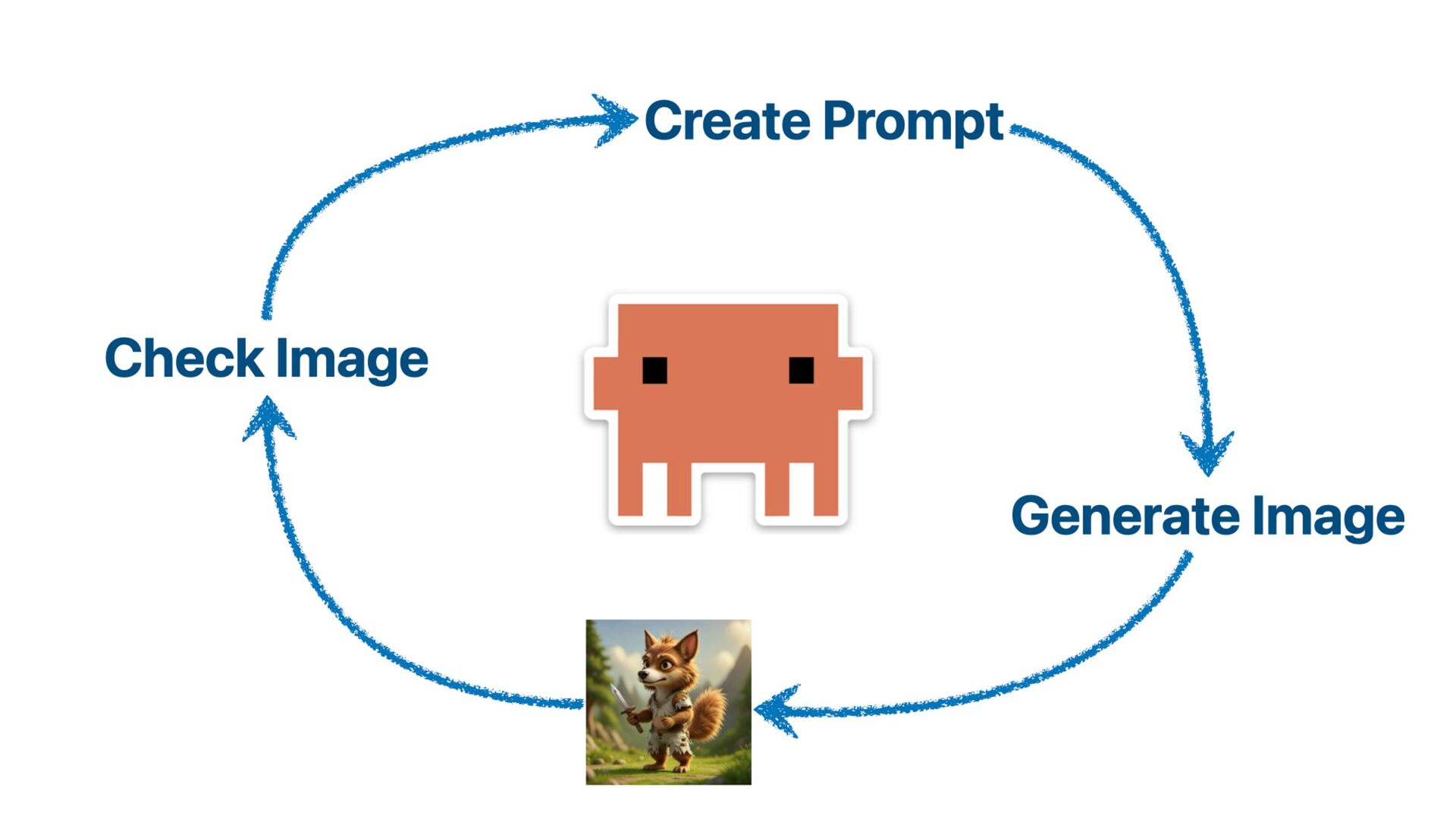
  3. How I used to use an AI chatbot for coding

    1. I explain to the AI what I want to implement 2. The AI writes code 3. I copy and paste that code into my IDE 4. The IDE reports type errors 5. I fix them myself, or send the errors back to the AI.
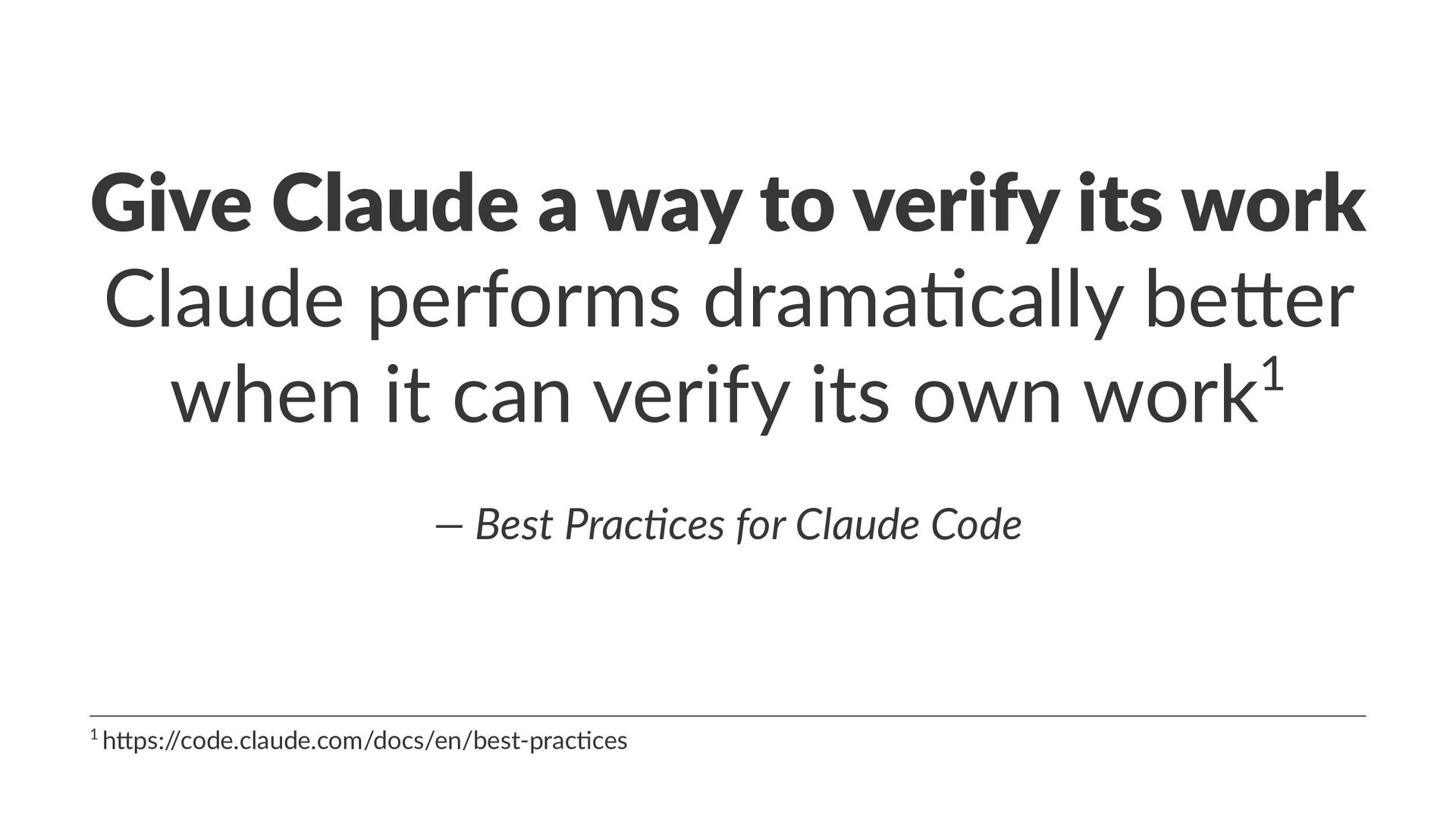
  4. Give Claude a way to verify its work Claude performs

    drama.cally be2er when it can verify its own work1 — Best Prac+ces for Claude Code 1 h$ps:/ /code.claude.com/docs/en/best-prac7ces
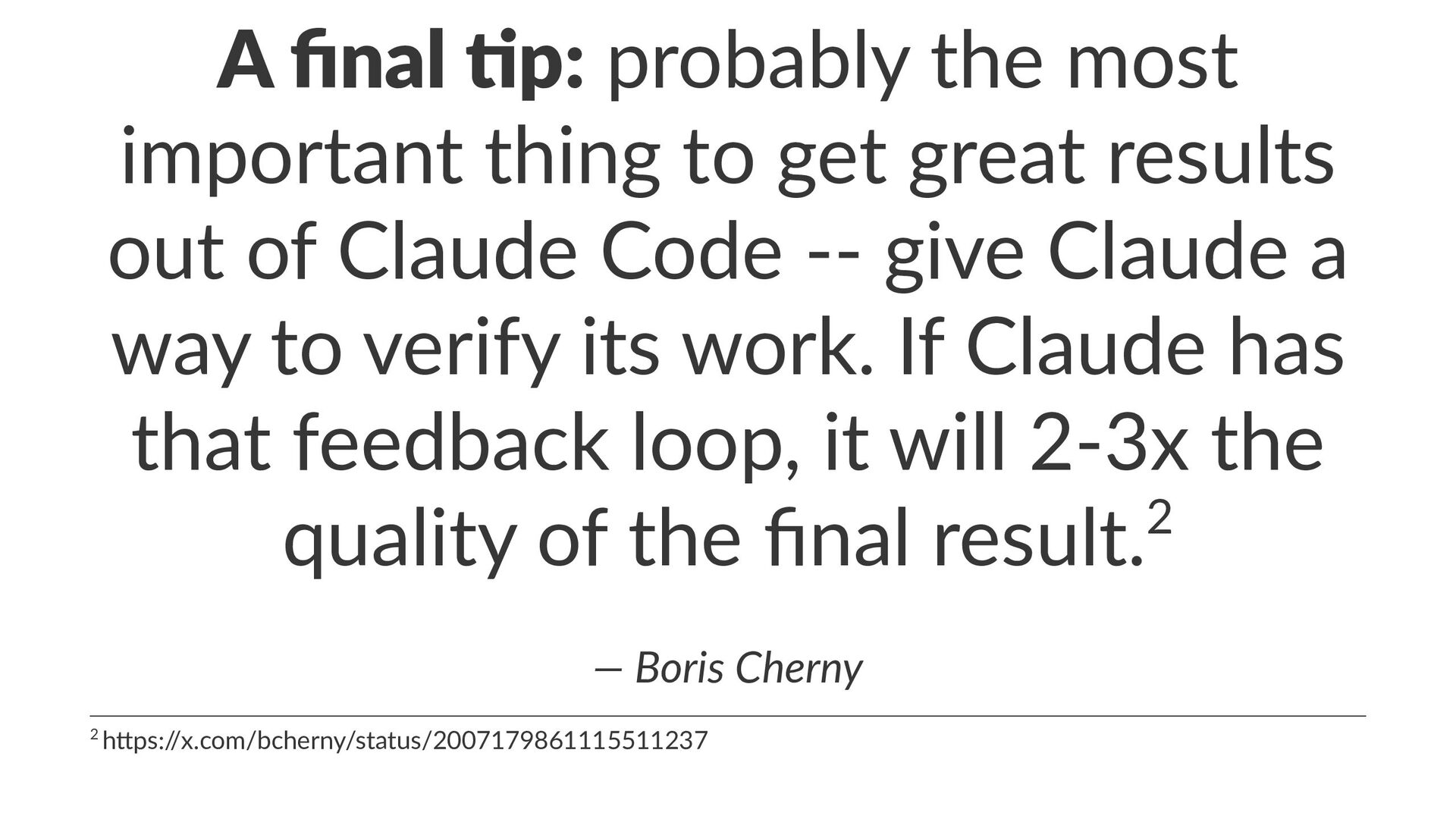
  5. A final 'p: probably the most important thing to get

    great results out of Claude Code -- give Claude a way to verify its work. If Claude has that feedback loop, it will 2-3x the quality of the final result.2 — Boris Cherny 2 h$ps:/ /x.com/bcherny/status/2007179861115511237
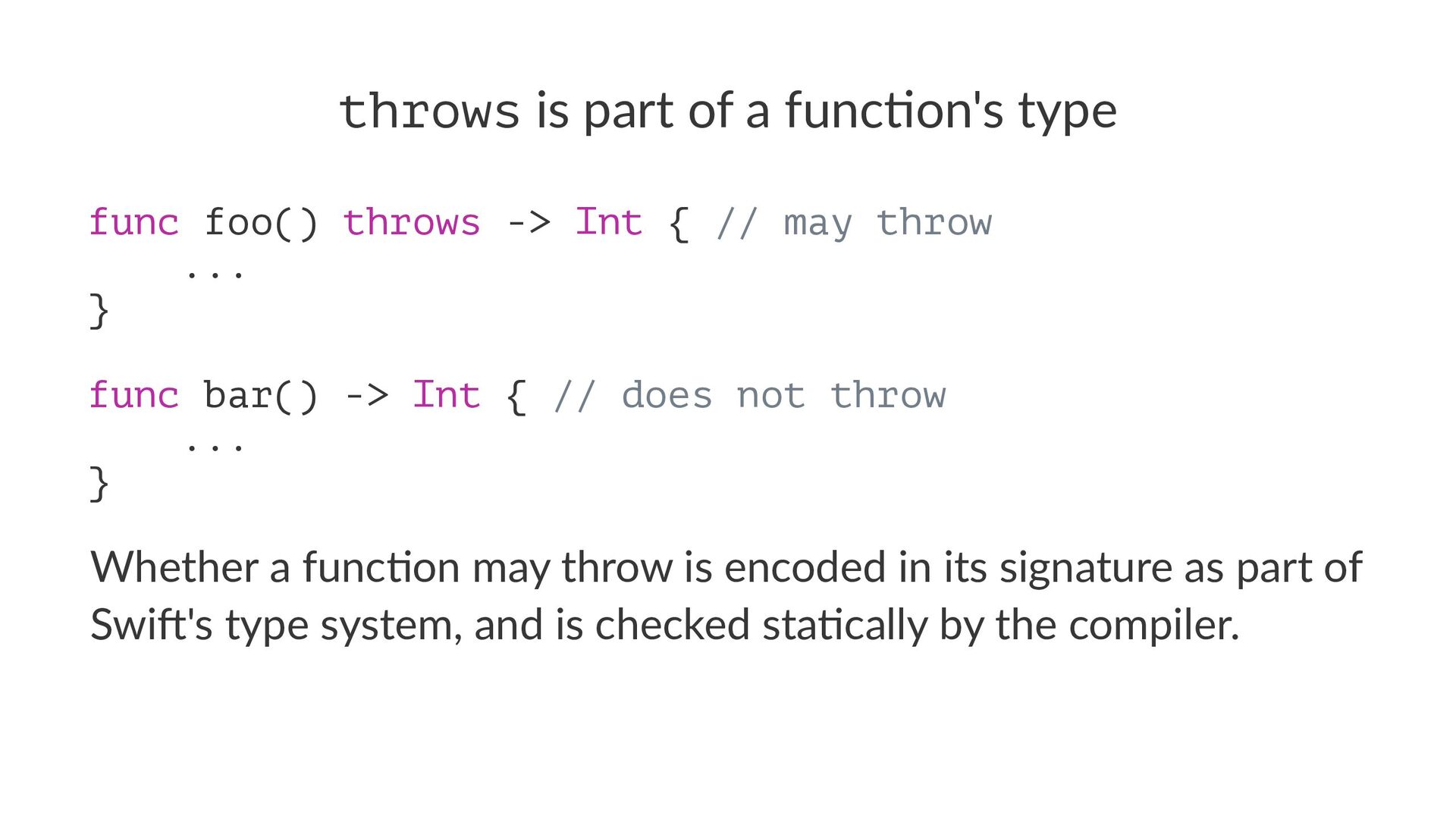
  6. throws is part of a func-on's type func foo() throws

    -> Int { // may throw ... } func bar() -> Int { // does not throw ... } Whether a func,on may throw is encoded in its signature as part of Swi7's type system, and is checked sta,cally by the compiler.
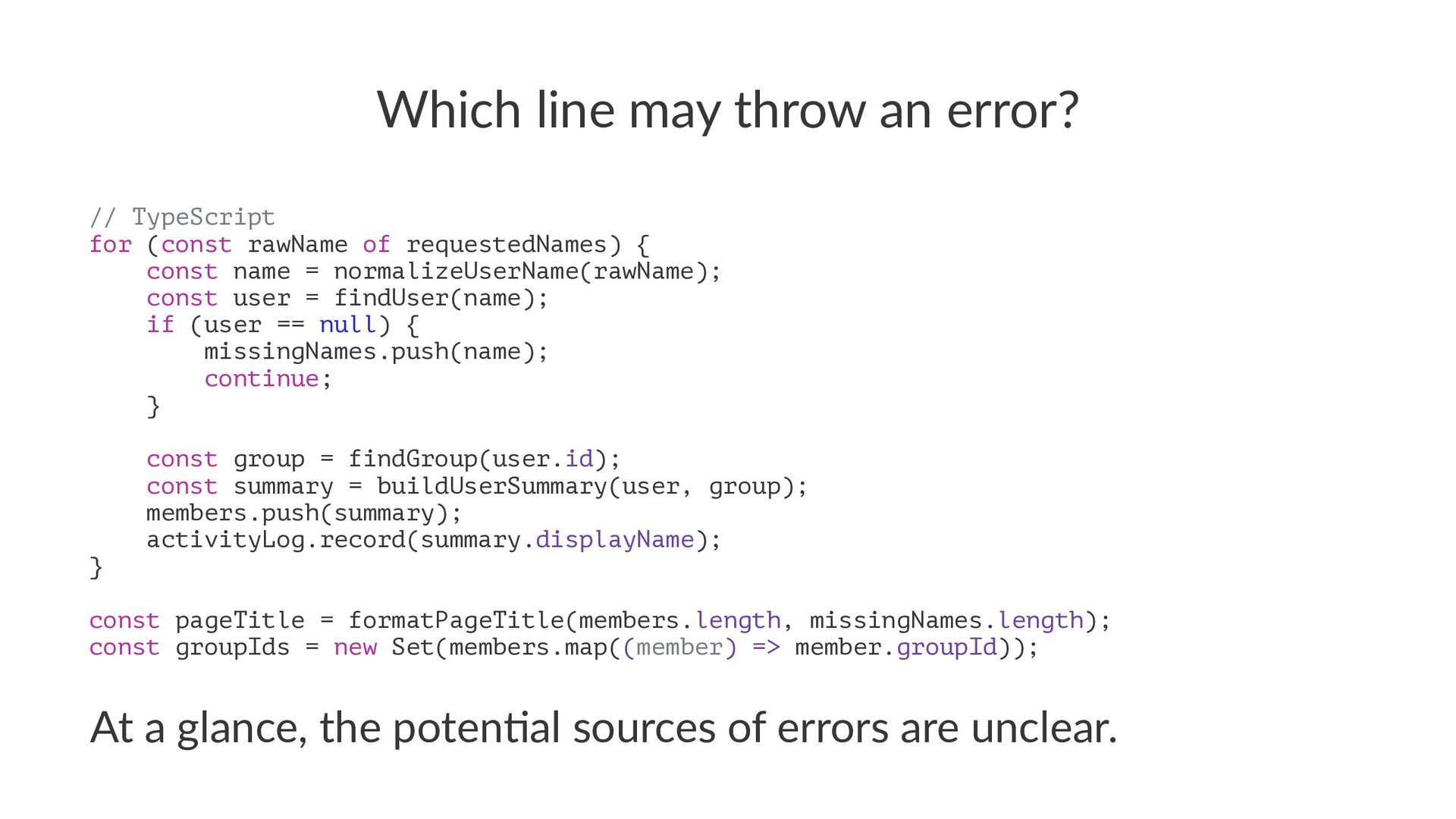
  7. Which line may throw an error? // TypeScript for (const

    rawName of requestedNames) { const name = normalizeUserName(rawName); const user = findUser(name); if (user == null) { missingNames.push(name); continue; } const group = findGroup(user.id); const summary = buildUserSummary(user, group); members.push(summary); activityLog.record(summary.displayName); } const pageTitle = formatPageTitle(members.length, missingNames.length); const groupIds = new Set(members.map((member) => member.groupId)); At a glance, the poten.al sources of errors are unclear.
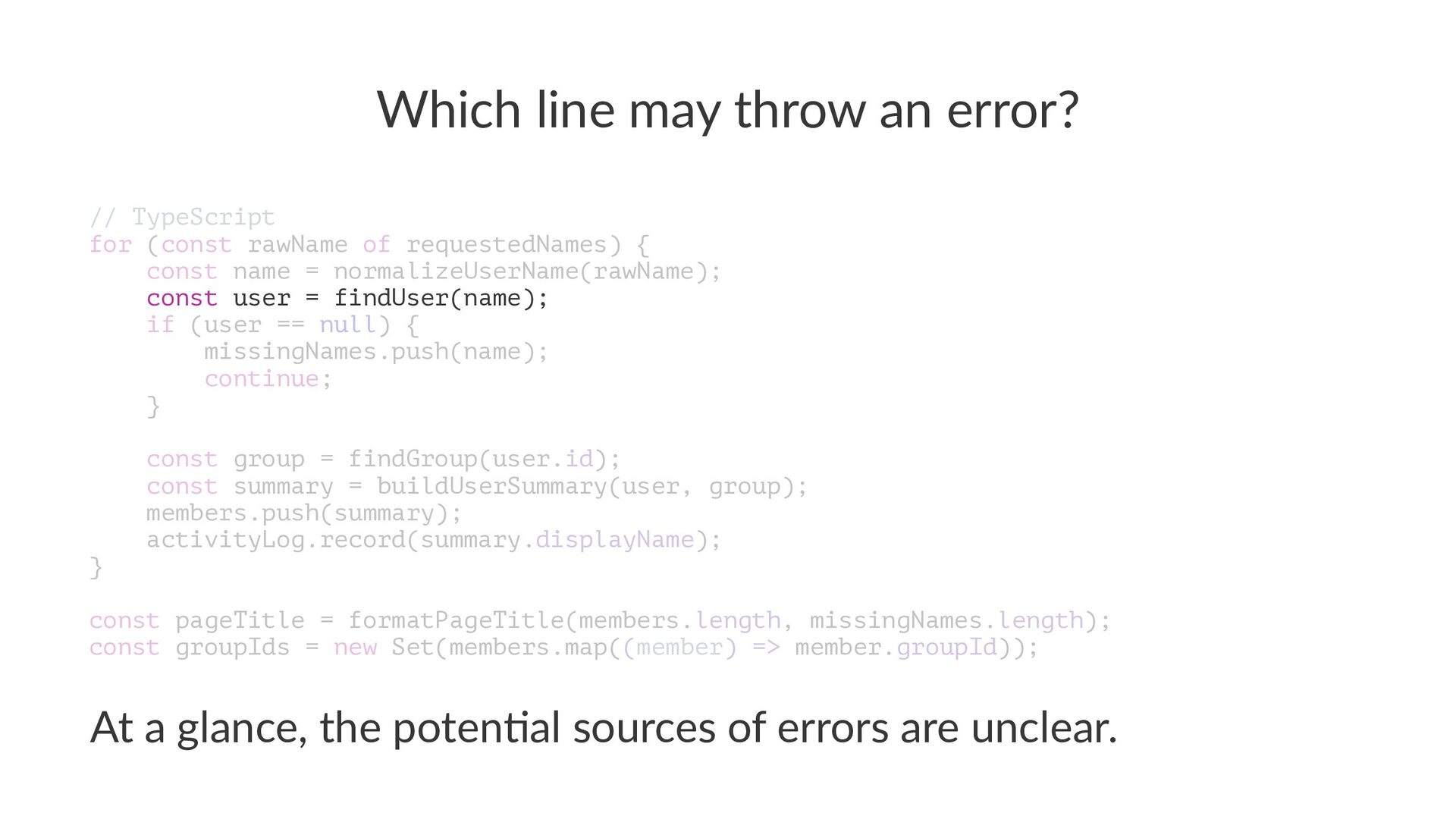
  8. Which line may throw an error? // TypeScript for (const

    rawName of requestedNames) { const name = normalizeUserName(rawName); const user = findUser(name); if (user == null) { missingNames.push(name); continue; } const group = findGroup(user.id); const summary = buildUserSummary(user, group); members.push(summary); activityLog.record(summary.displayName); } const pageTitle = formatPageTitle(members.length, missingNames.length); const groupIds = new Set(members.map((member) => member.groupId)); At a glance, the poten.al sources of errors are unclear.
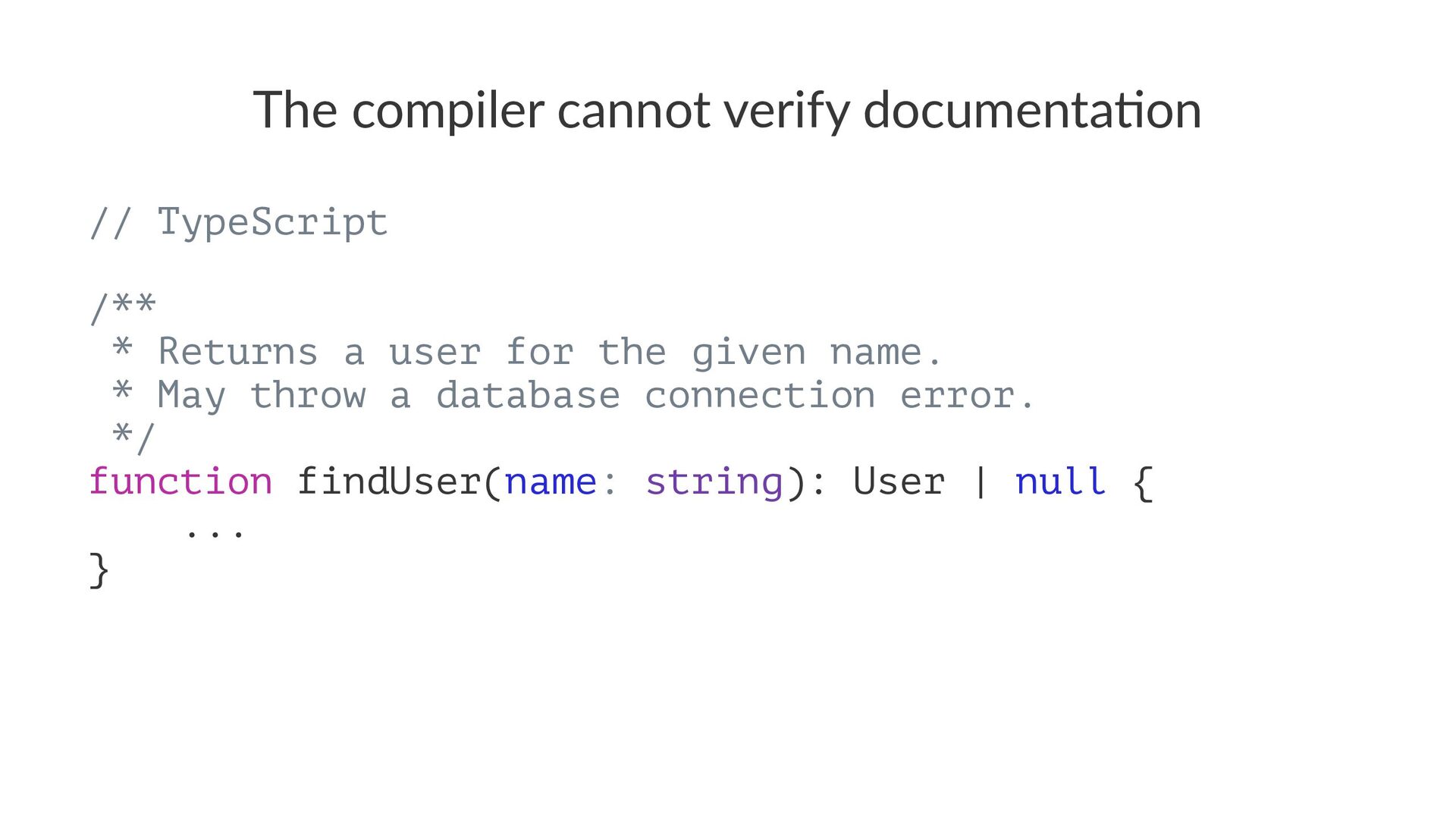
  9. The compiler cannot verify documenta4on // TypeScript /** * Returns

    a user for the given name. * May throw a database connection error. */ function findUser(name: string): User | null { ... }
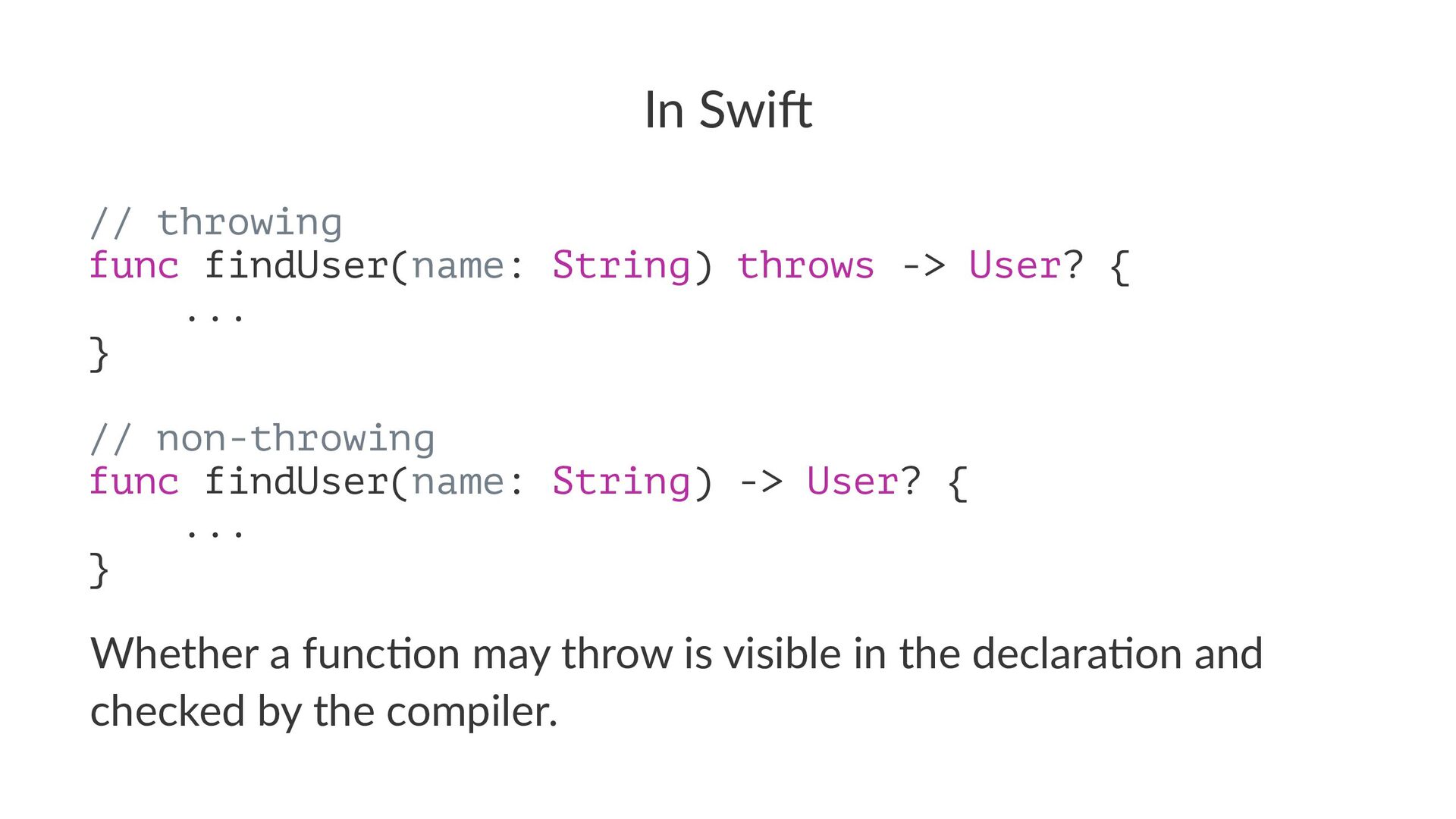
  10. In Swi' // throwing func findUser(name: String) throws -> User?

    { ... } // non-throwing func findUser(name: String) -> User? { ... } Whether a func,on may throw is visible in the declara,on and checked by the compiler.
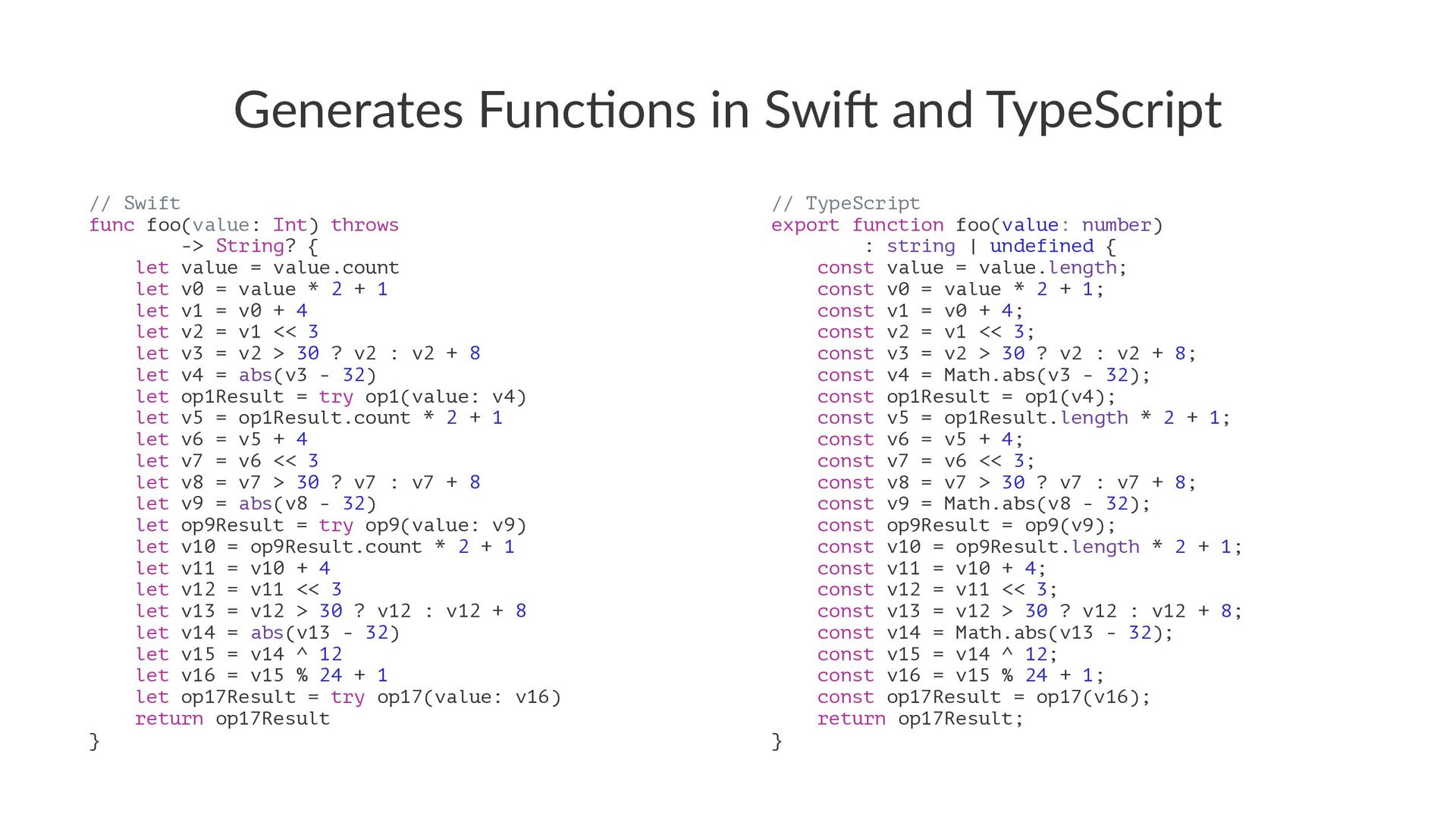
  11. Generates Func,ons in Swi1 and TypeScript // Swift func foo(value:

    Int) throws -> String? { let value = value.count let v0 = value * 2 + 1 let v1 = v0 + 4 let v2 = v1 << 3 let v3 = v2 > 30 ? v2 : v2 + 8 let v4 = abs(v3 - 32) let op1Result = try op1(value: v4) let v5 = op1Result.count * 2 + 1 let v6 = v5 + 4 let v7 = v6 << 3 let v8 = v7 > 30 ? v7 : v7 + 8 let v9 = abs(v8 - 32) let op9Result = try op9(value: v9) let v10 = op9Result.count * 2 + 1 let v11 = v10 + 4 let v12 = v11 << 3 let v13 = v12 > 30 ? v12 : v12 + 8 let v14 = abs(v13 - 32) let v15 = v14 ^ 12 let v16 = v15 % 24 + 1 let op17Result = try op17(value: v16) return op17Result } // TypeScript export function foo(value: number) : string | undefined { const value = value.length; const v0 = value * 2 + 1; const v1 = v0 + 4; const v2 = v1 << 3; const v3 = v2 > 30 ? v2 : v2 + 8; const v4 = Math.abs(v3 - 32); const op1Result = op1(v4); const v5 = op1Result.length * 2 + 1; const v6 = v5 + 4; const v7 = v6 << 3; const v8 = v7 > 30 ? v7 : v7 + 8; const v9 = Math.abs(v8 - 32); const op9Result = op9(v9); const v10 = op9Result.length * 2 + 1; const v11 = v10 + 4; const v12 = v11 << 3; const v13 = v12 > 30 ? v12 : v12 + 8; const v14 = Math.abs(v13 - 32); const v15 = v14 ^ 12; const v16 = v15 % 24 + 1; const op17Result = op17(v16); return op17Result; }
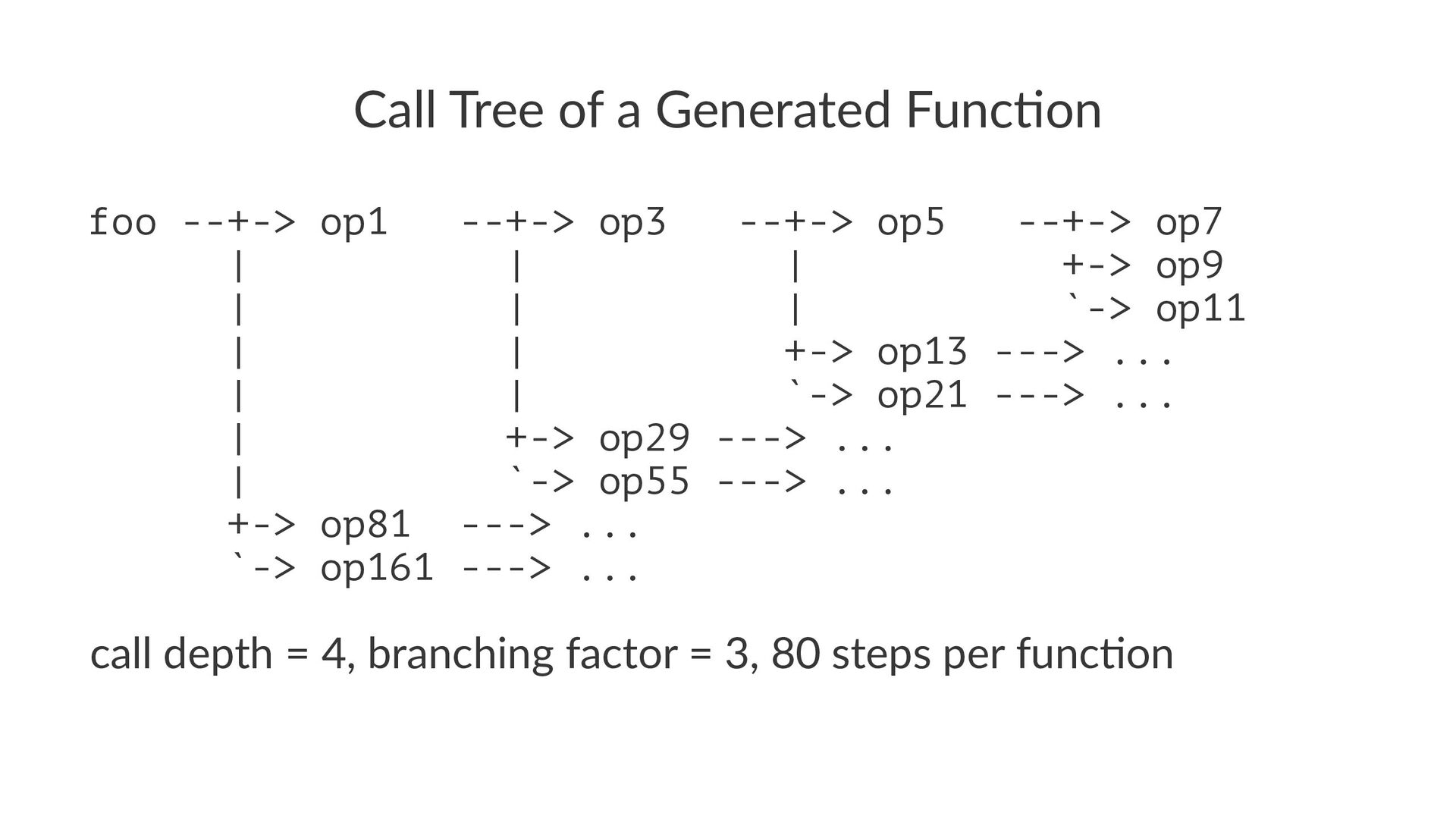
  12. Call Tree of a Generated Func1on foo --+-> op1 --+->

    op3 --+-> op5 --+-> op7 | | | +-> op9 | | | `-> op11 | | +-> op13 ---> ... | | `-> op21 ---> ... | +-> op29 ---> ... | `-> op55 ---> ... +-> op81 ---> ... `-> op161 ---> ... call depth = 4, branching factor = 3, 80 steps per func9on
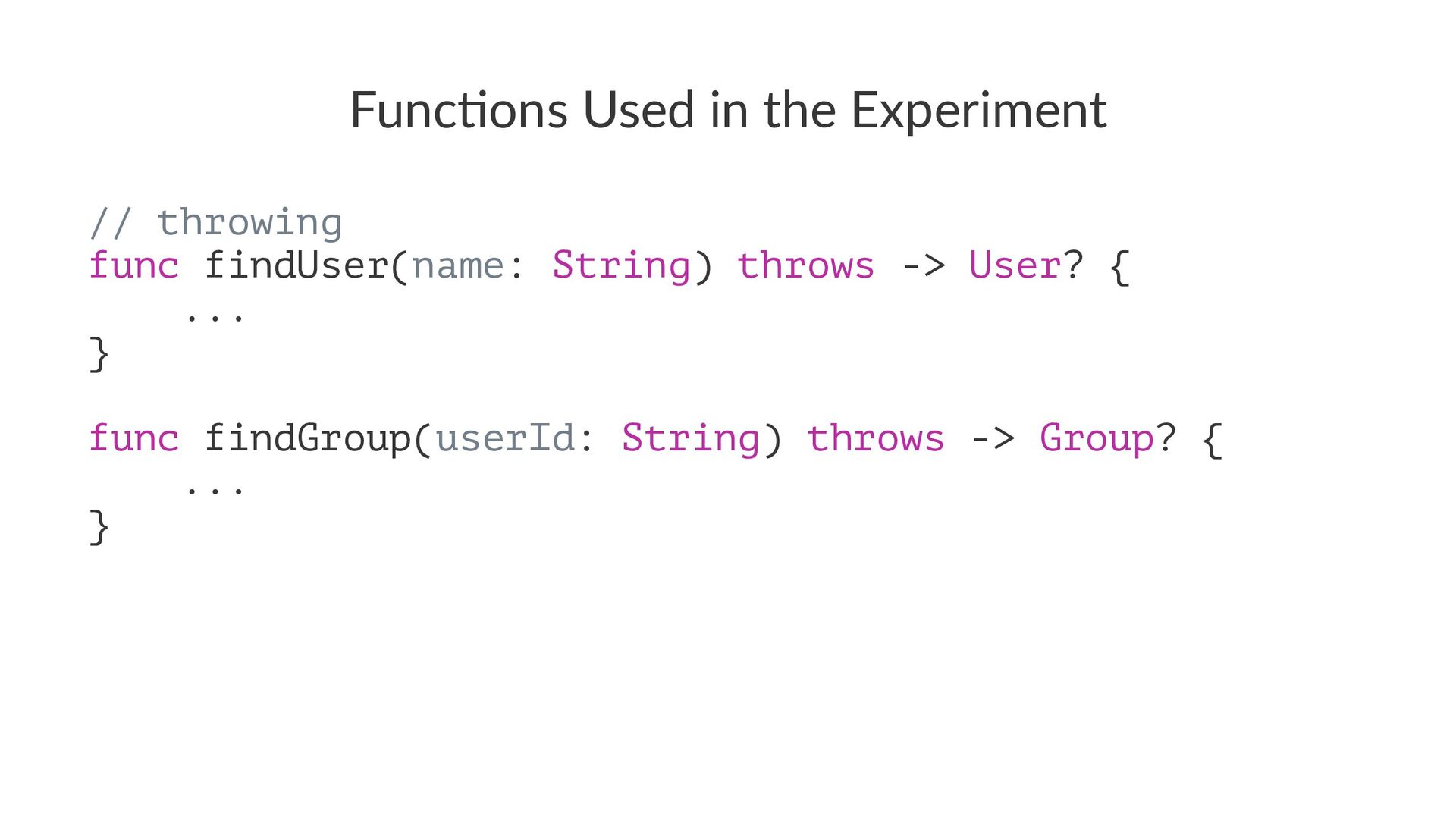
  13. Func%ons Used in the Experiment // throwing func findUser(name: String)

    throws -> User? { ... } func findGroup(userId: String) throws -> Group? { ... }
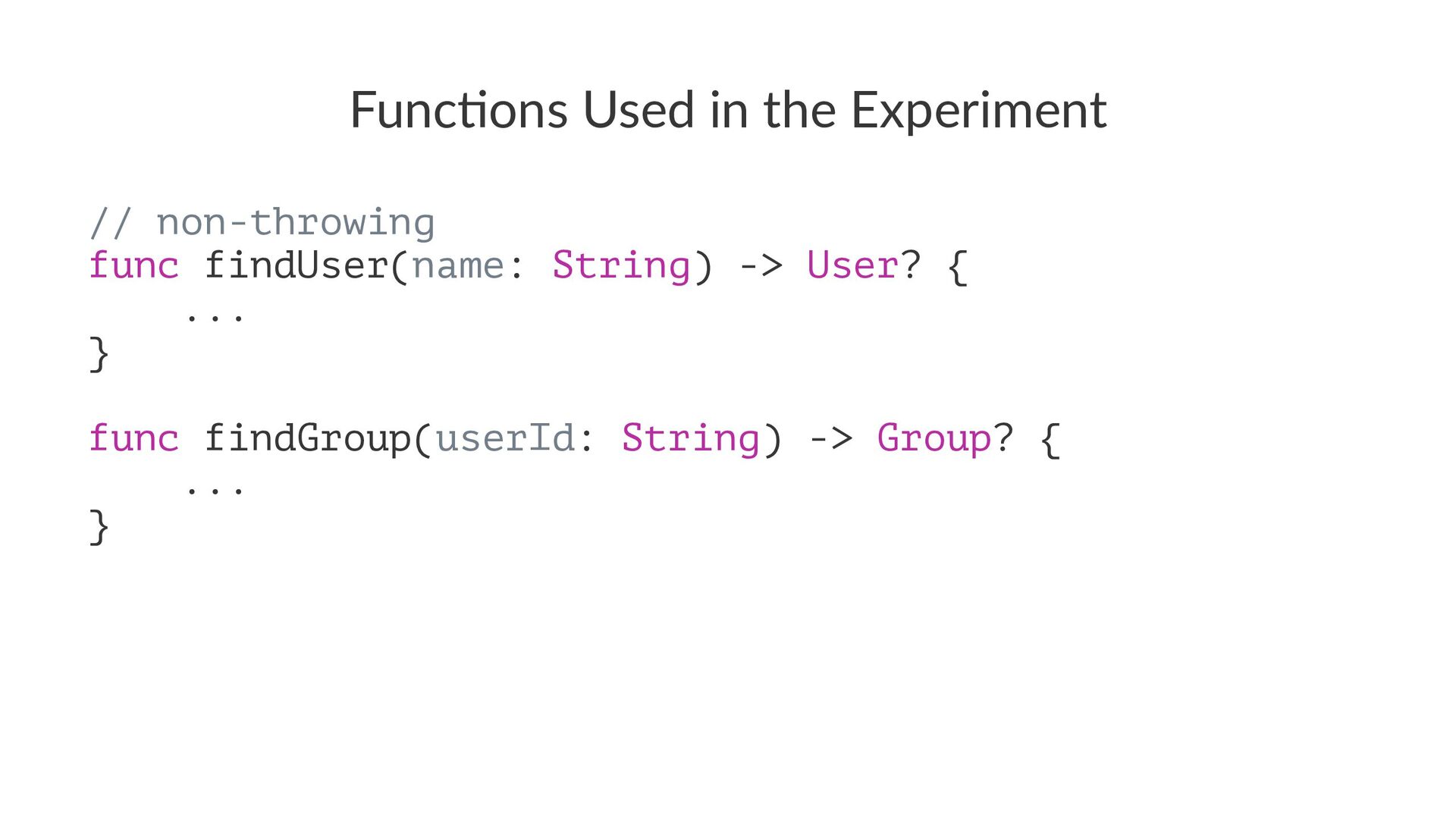
  14. Func%ons Used in the Experiment // non-throwing func findUser(name: String)

    -> User? { ... } func findGroup(userId: String) -> Group? { ... }
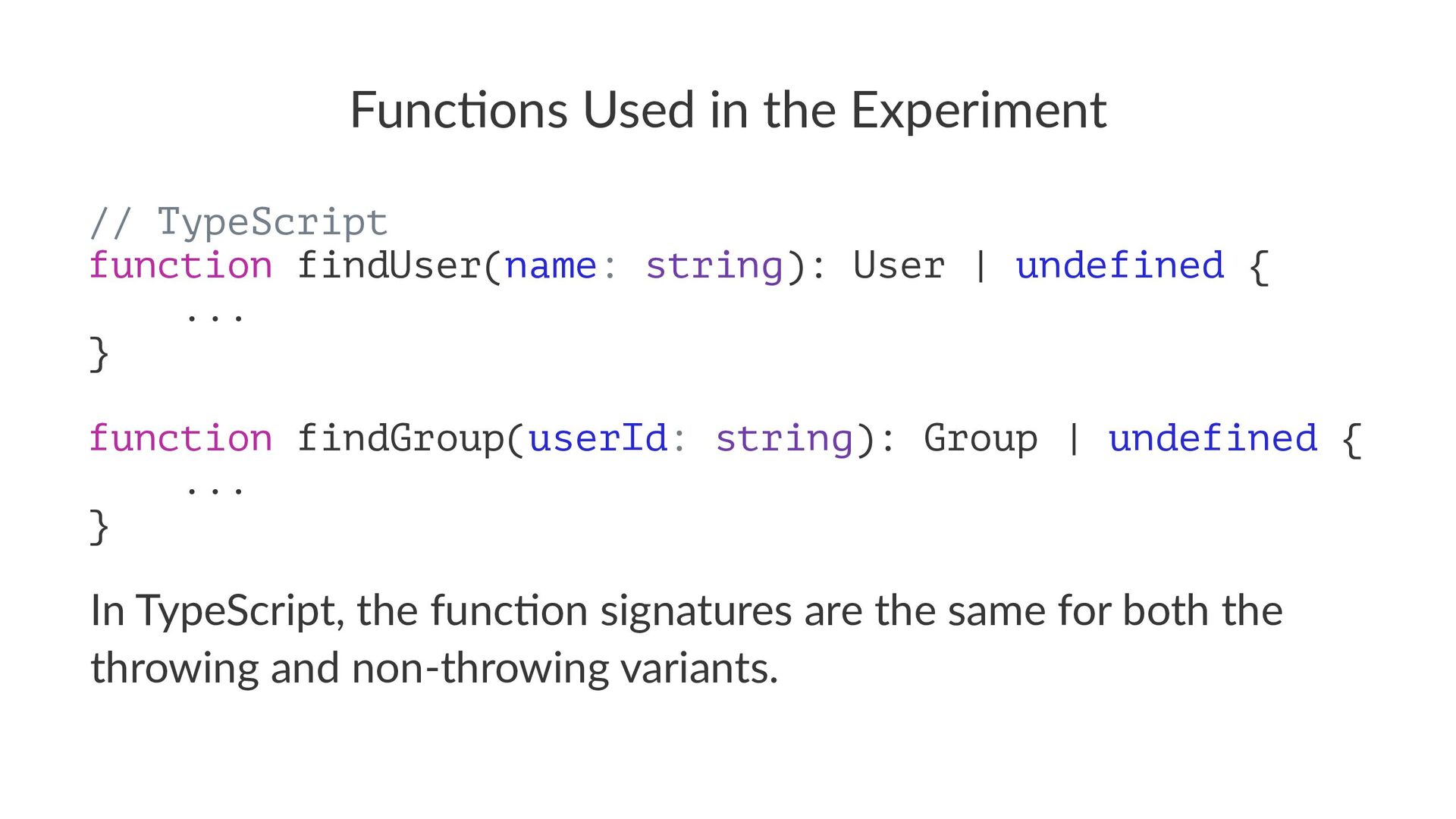
  15. Func%ons Used in the Experiment // TypeScript function findUser(name: string):

    User | undefined { ... } function findGroup(userId: string): Group | undefined { ... } In TypeScript, the func1on signatures are the same for both the throwing and non-throwing variants.
  16. Experiment Prompt Implement a func-on listBelongingGroups(userNames: [String]). This func-on should

    sa-sfy the following specifica-on: 1. For each user name in the given array, retrieve the user using findUser(name:). 2. If the user is found, retrieve the group that the user belongs to using findGroup(userId:). 3. If a user or a group is not found, skip that element and con>nue processing the rest.
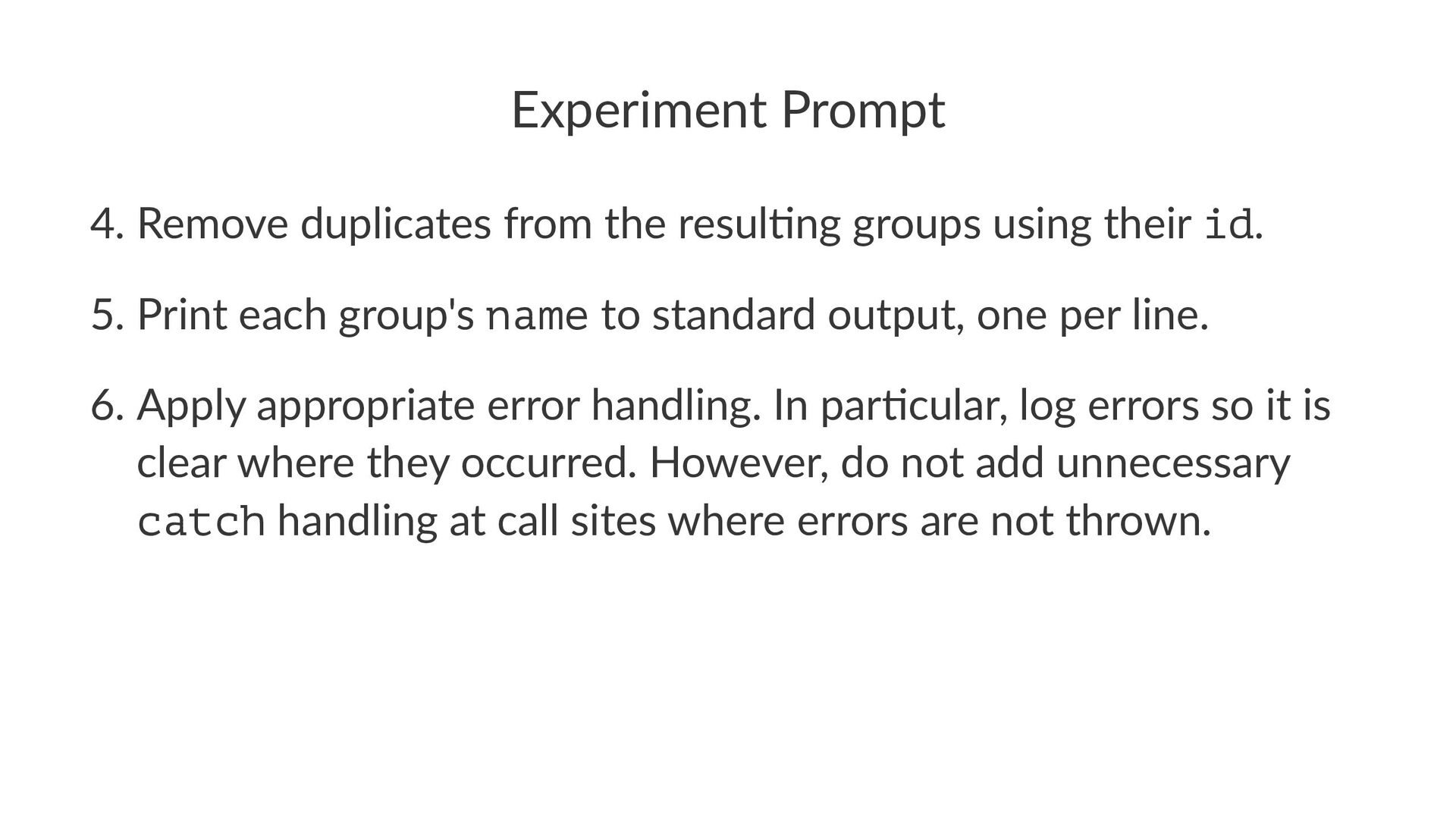
  17. Experiment Prompt 4. Remove duplicates from the resul5ng groups using

    their id. 5. Print each group's name to standard output, one per line. 6. Apply appropriate error handling. In par5cular, log errors so it is clear where they occurred. However, do not add unnecessary catch handling at call sites where errors are not thrown.
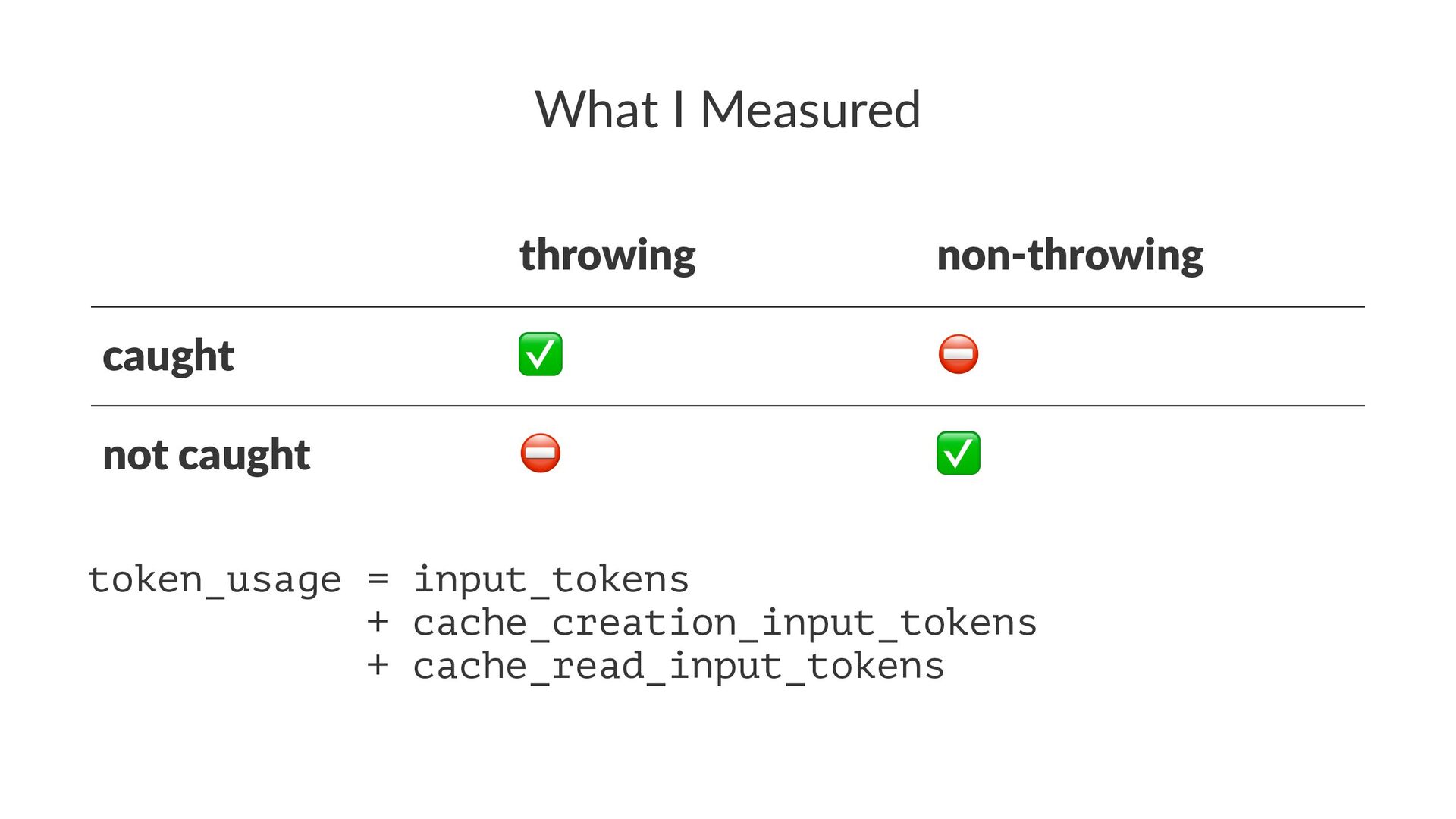
  18. What I Measured throwing non-throwing caught ✅ ⛔ not caught

    ⛔ ✅ token_usage = input_tokens + cache_creation_input_tokens + cache_read_input_tokens
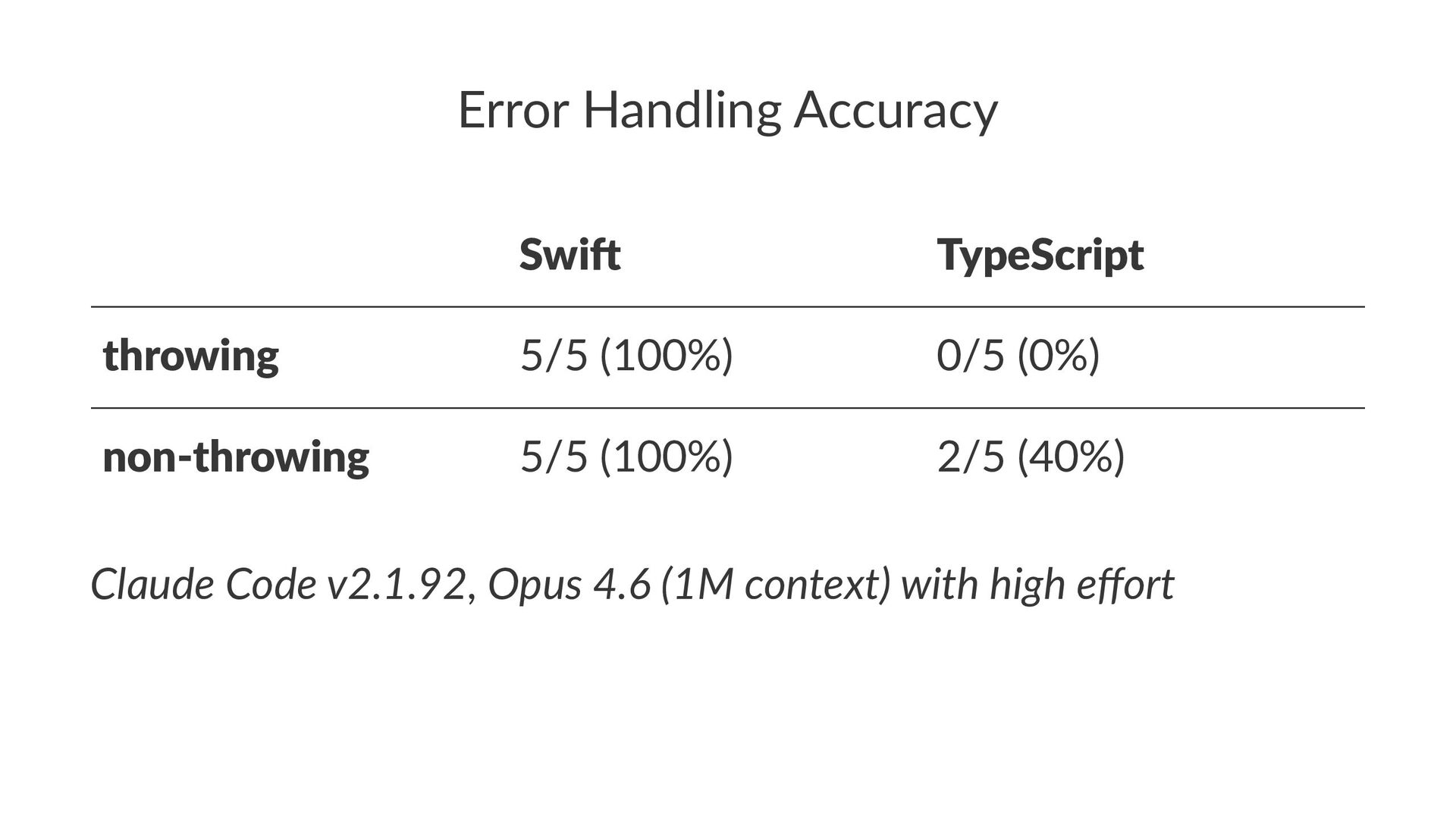
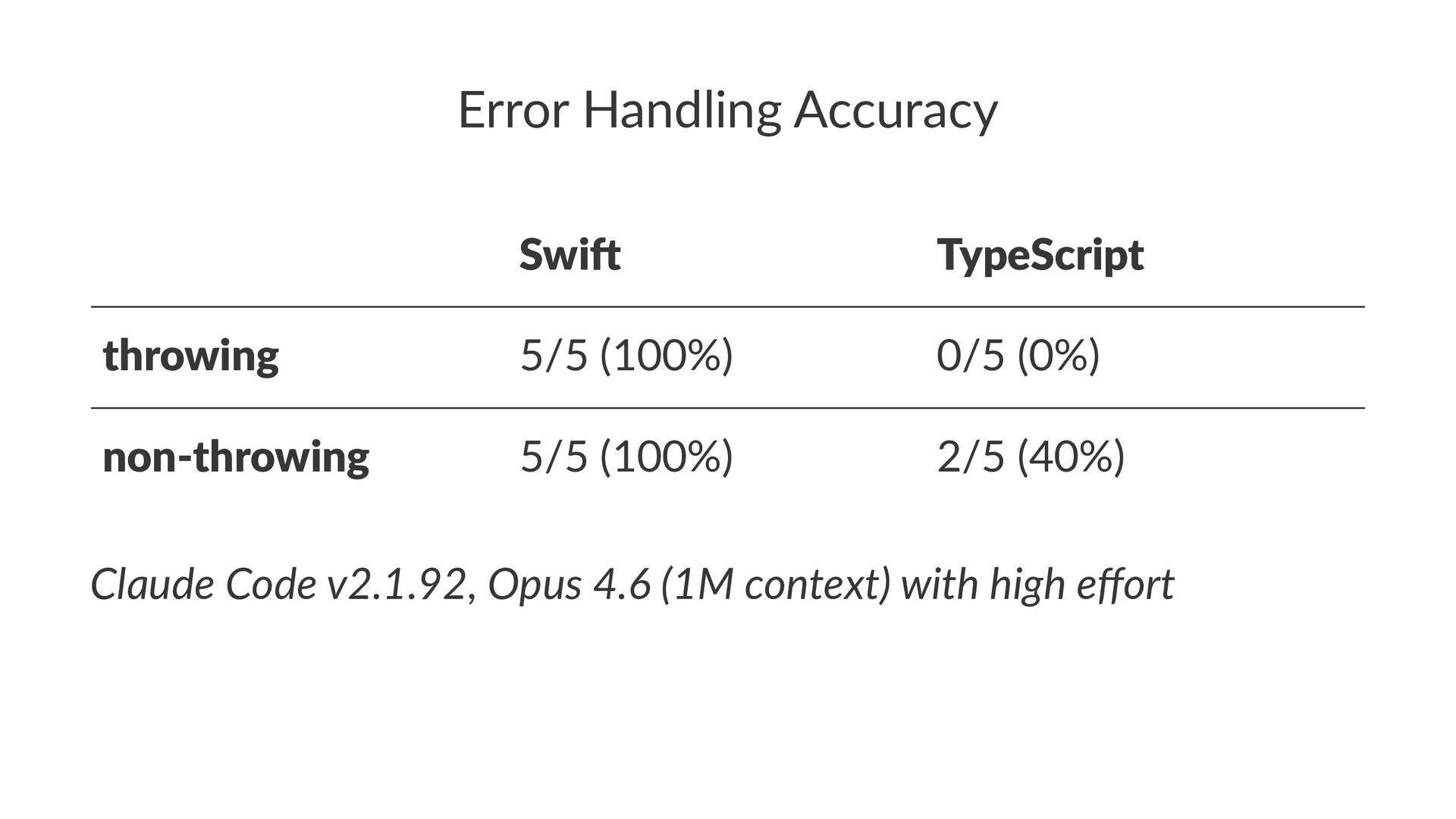
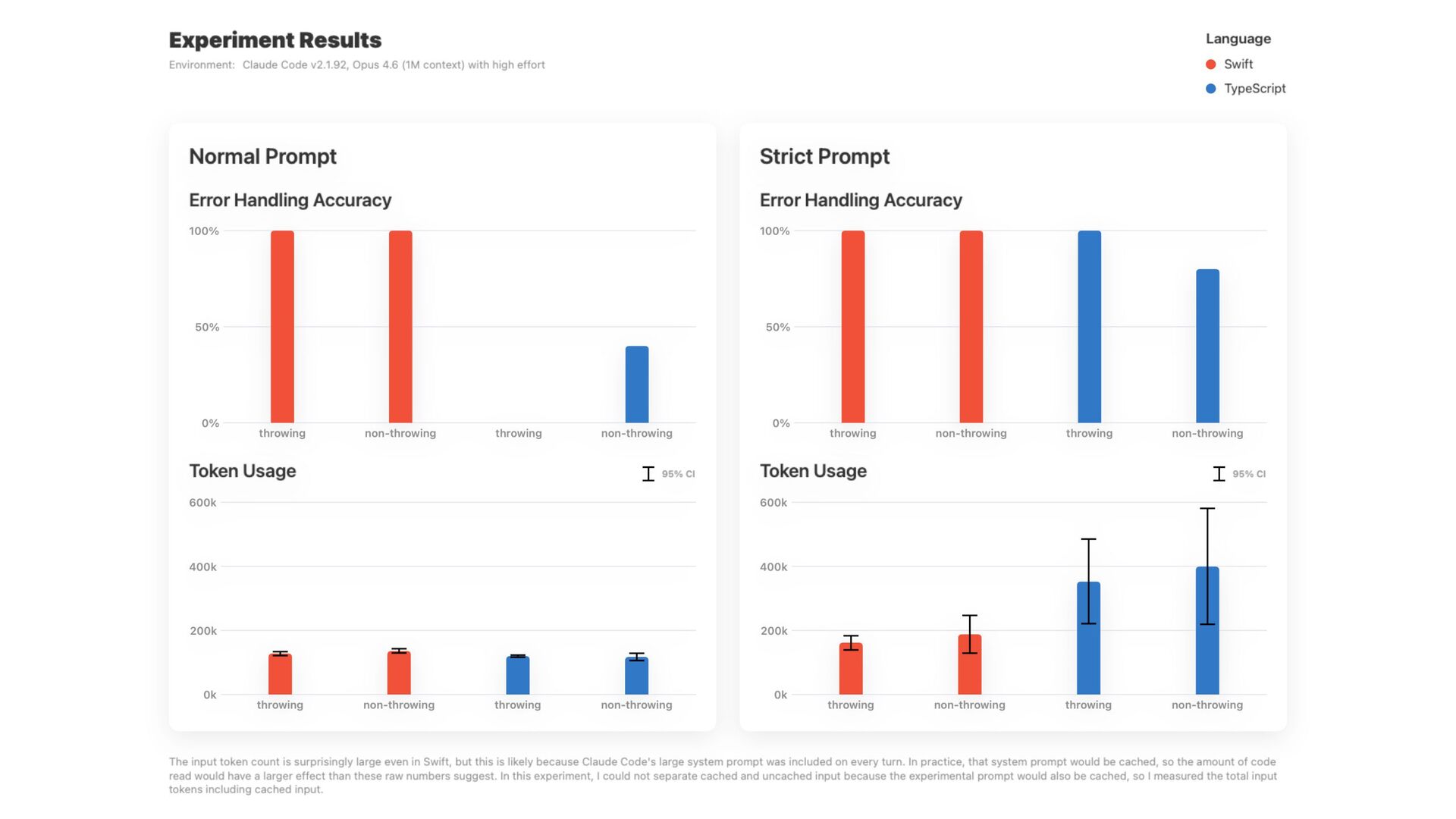
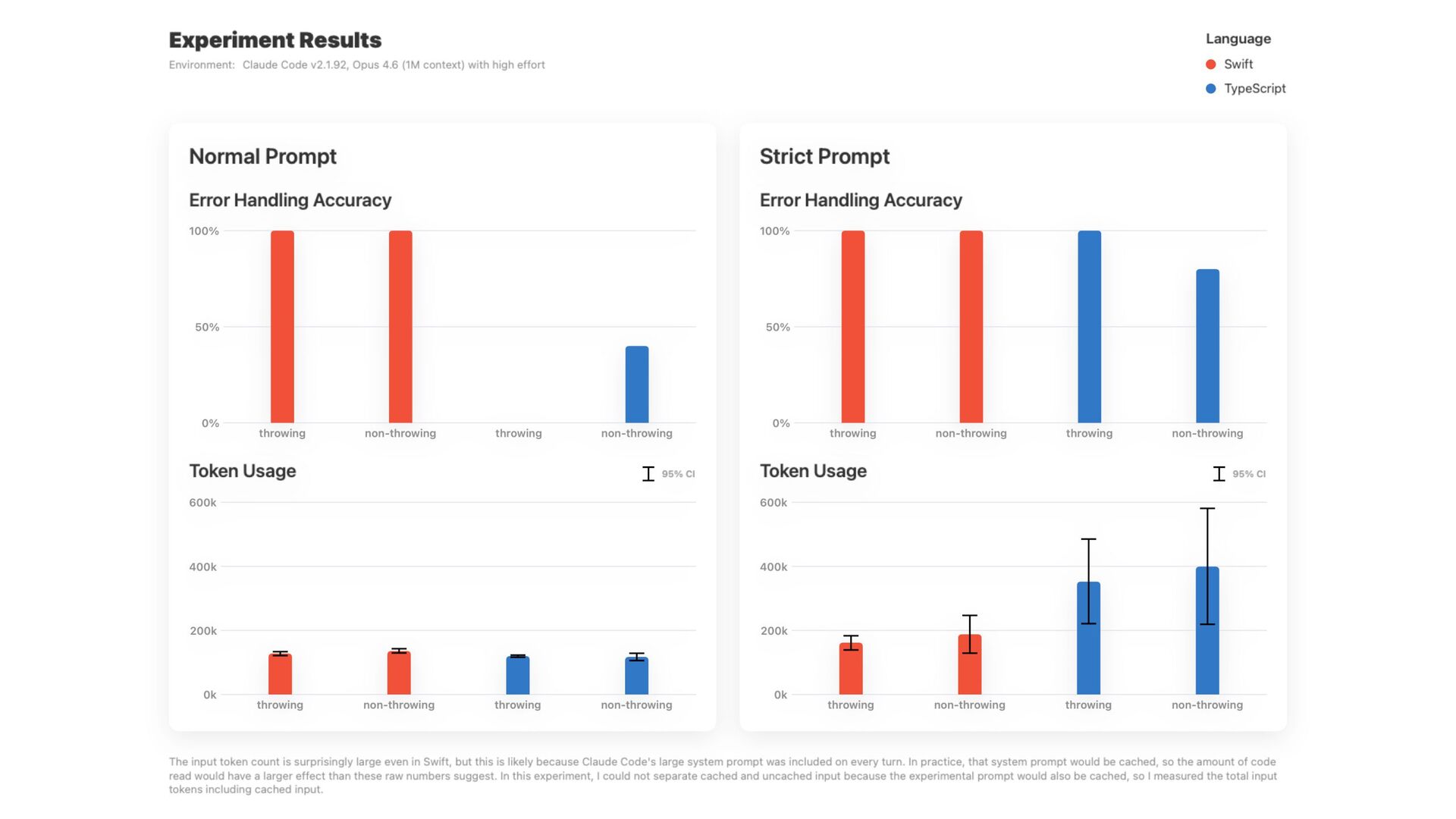
  19. Error Handling Accuracy Swi$ TypeScript throwing 5/5 (100%) 0/5 (0%)

    non-throwing 5/5 (100%) 2/5 (40%) Claude Code v2.1.92, Opus 4.6 (1M context) with high effort
  20. Generated Code func listBelongingGroups(userNames: [String]) { var seenGroupIds: Set<String> =

    [] var groups: [Group] = [] for name in userNames { let user: User? do { user = try findUser(name: name) } catch { print("Error finding user '\(name)': \(error)") continue } guard let user else { continue } let group: Group? do { group = try findGroup(userId: user.id) } catch { print("Error finding group for user '\(user.name)': \(error)") continue } guard let group else { continue } if seenGroupIds.insert(group.id).inserted { groups.append(group) } } for group in groups { print(group.name) } } import { findUser } from "./findUser"; import { findGroup } from "./findGroup"; import type { Group } from "./types"; export function listBelongingGroups(userNames: string[]): void { const groups = new Map<string, Group>(); for (const name of userNames) { let user; try { user = findUser(name); } catch (error) { console.log(`Error finding user for name "${name}": ${error}`); continue; } if (user === undefined) { continue; } let group; try { group = findGroup(user.id); } catch (error) { console.log(`Error finding group for user "${user.id}": ${error}`); continue; } if (group === undefined) { continue; } if (!groups.has(group.id)) { groups.set(group.id, group); } } for (const group of groups.values()) { console.log(group.name); } }
  21. Error Handling Accuracy Swi$ TypeScript throwing 5/5 (100%) 0/5 (0%)

    non-throwing 5/5 (100%) 2/5 (40%) Claude Code v2.1.92, Opus 4.6 (1M context) with high effort
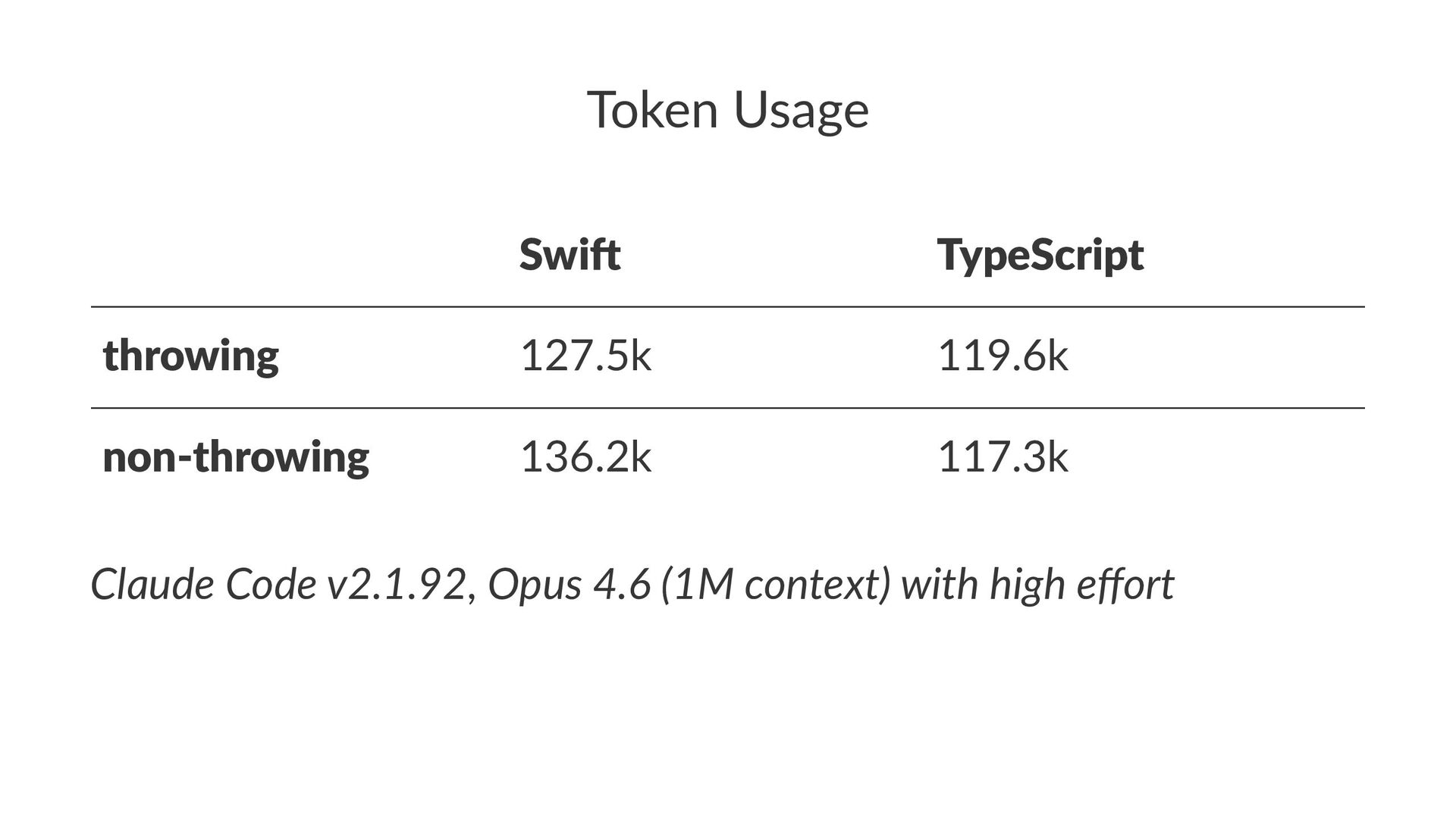
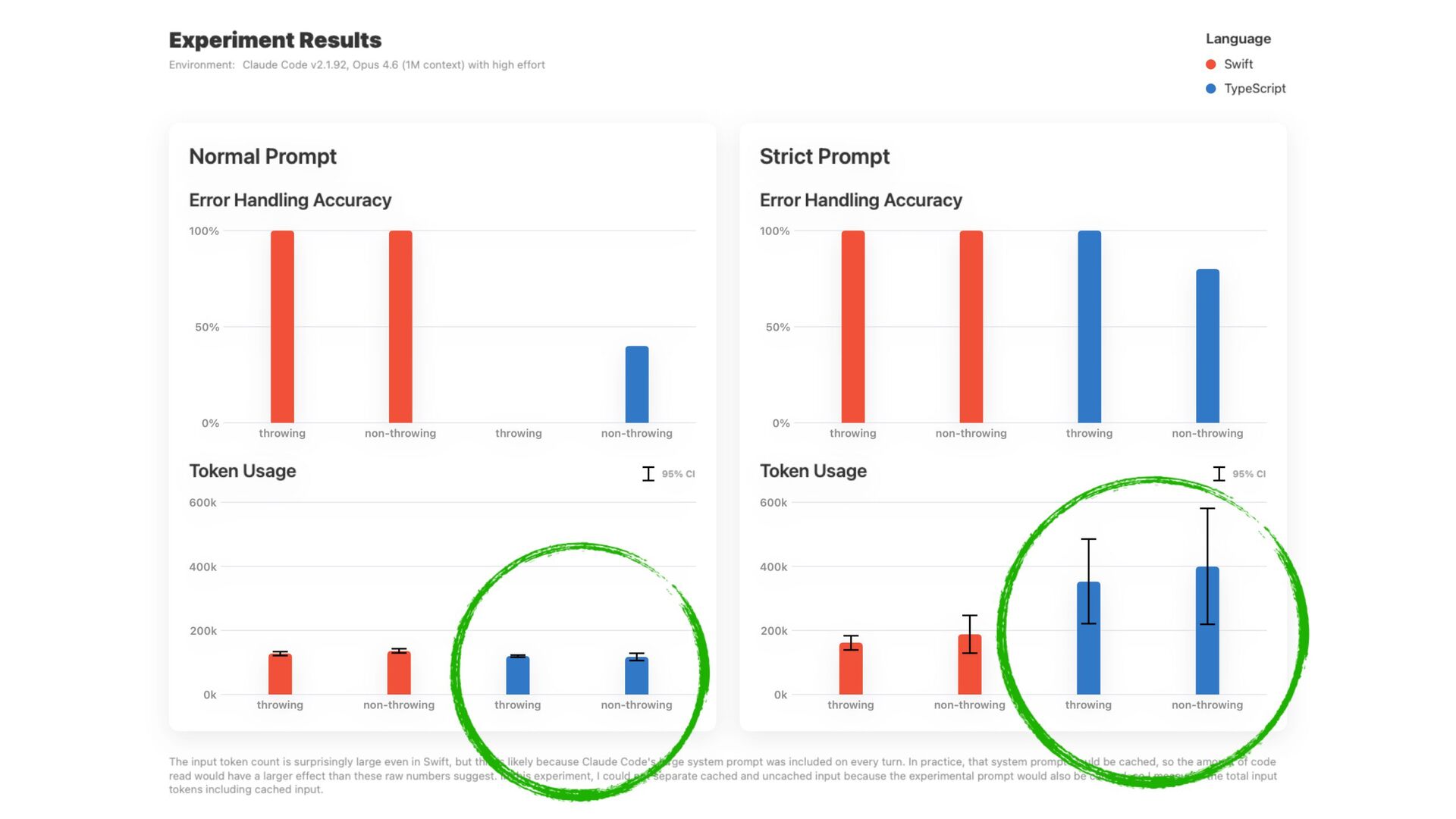
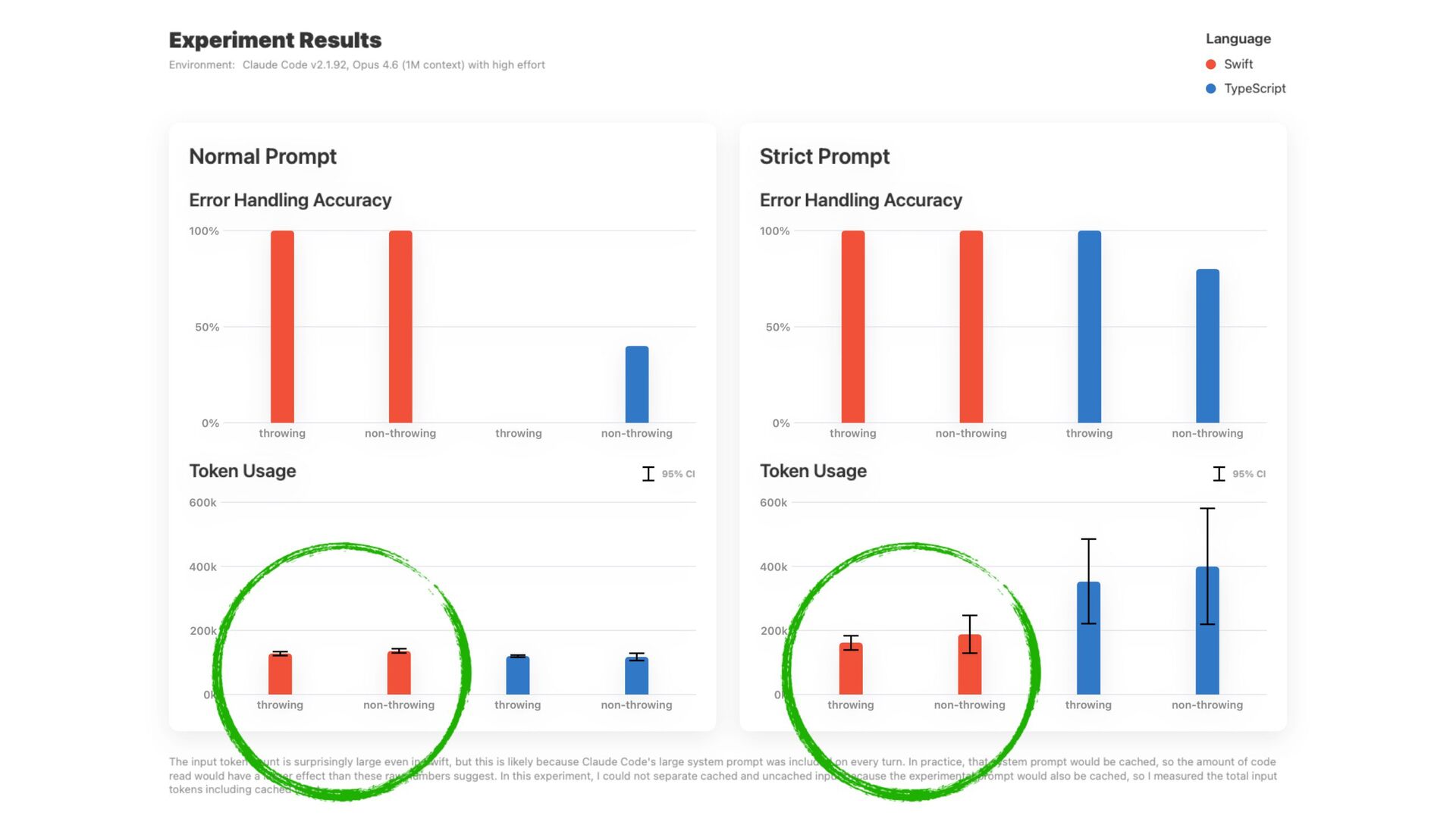
  22. Token Usage Swi$ TypeScript throwing 127.5k 119.6k non-throwing 136.2k 117.3k

    Claude Code v2.1.92, Opus 4.6 (1M context) with high effort
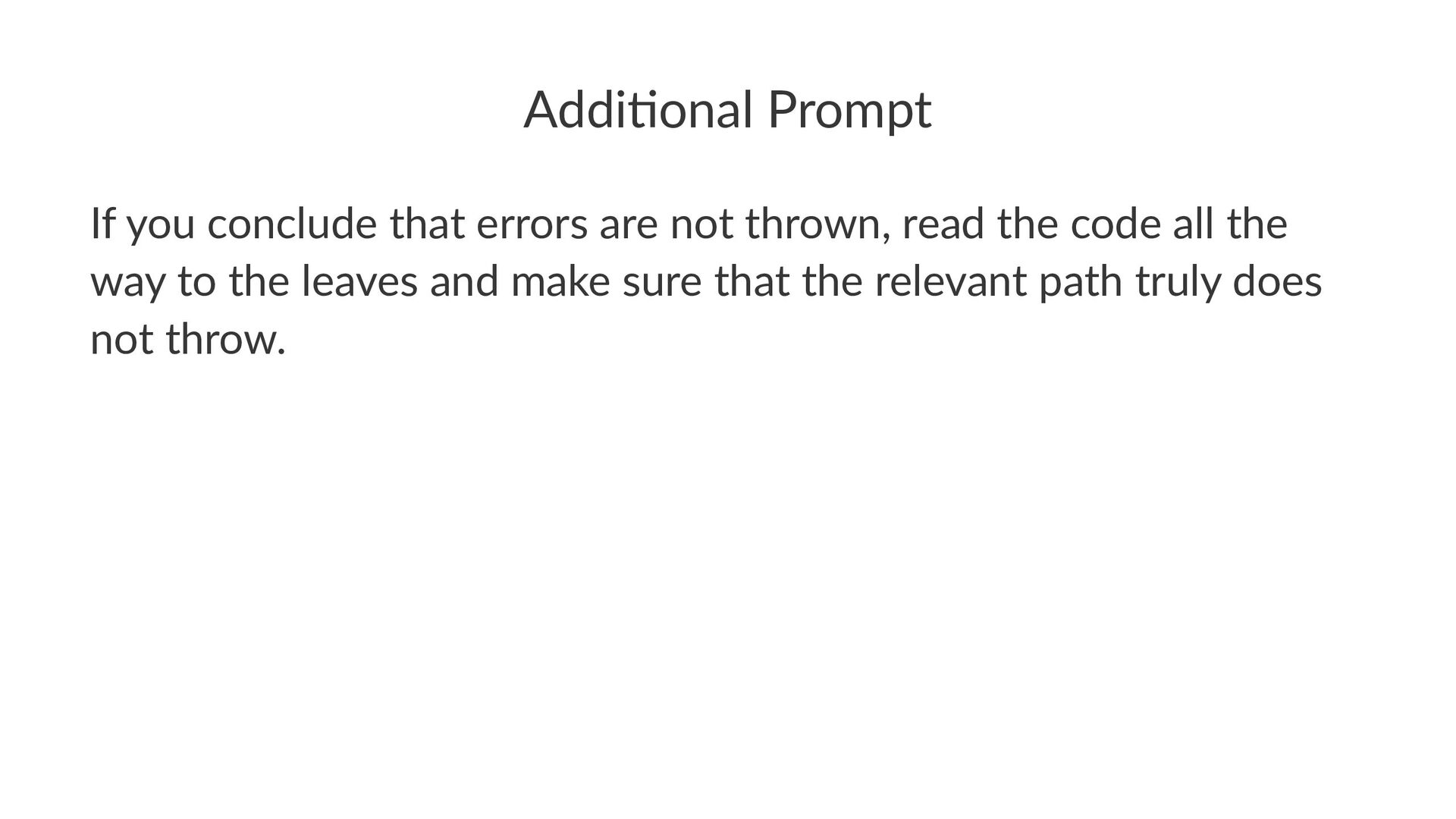
  23. Addi$onal Prompt If you conclude that errors are not thrown,

    read the code all the way to the leaves and make sure that the relevant path truly does not throw.
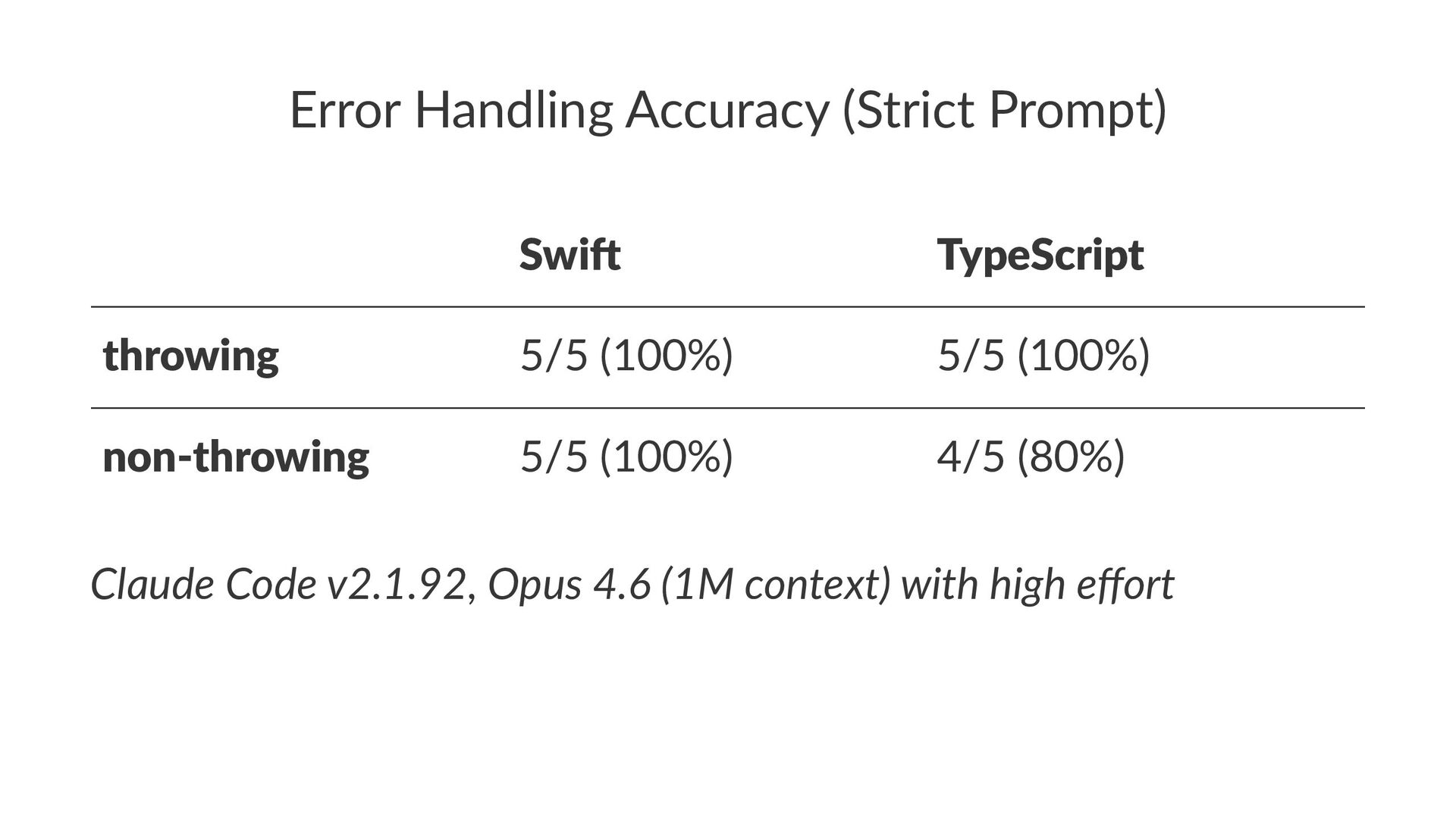
  24. Error Handling Accuracy (Strict Prompt) Swi$ TypeScript throwing 5/5 (100%)

    5/5 (100%) non-throwing 5/5 (100%) 4/5 (80%) Claude Code v2.1.92, Opus 4.6 (1M context) with high effort
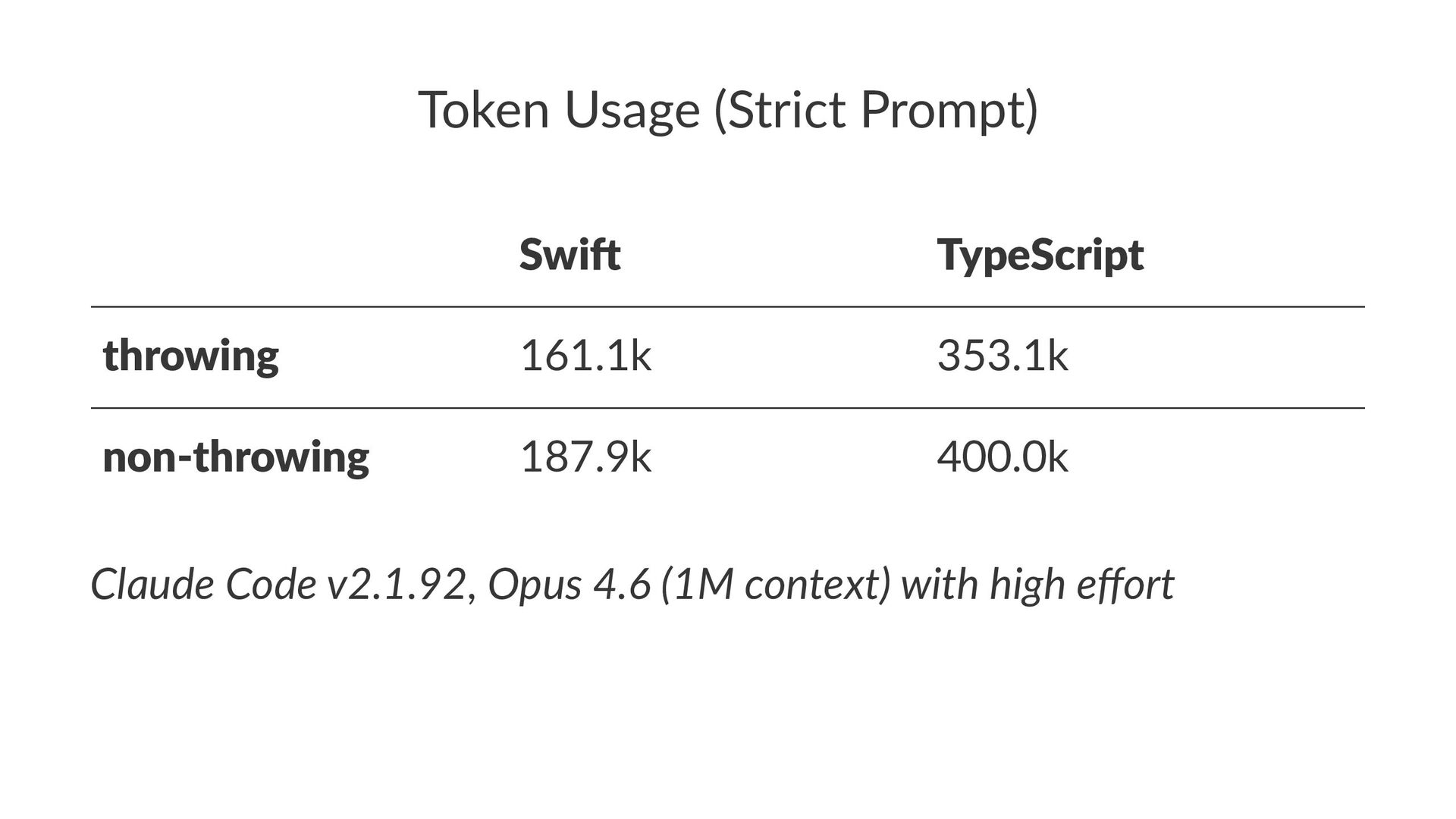
  25. Token Usage (Strict Prompt) Swi$ TypeScript throwing 161.1k 353.1k non-throwing

    187.9k 400.0k Claude Code v2.1.92, Opus 4.6 (1M context) with high effort