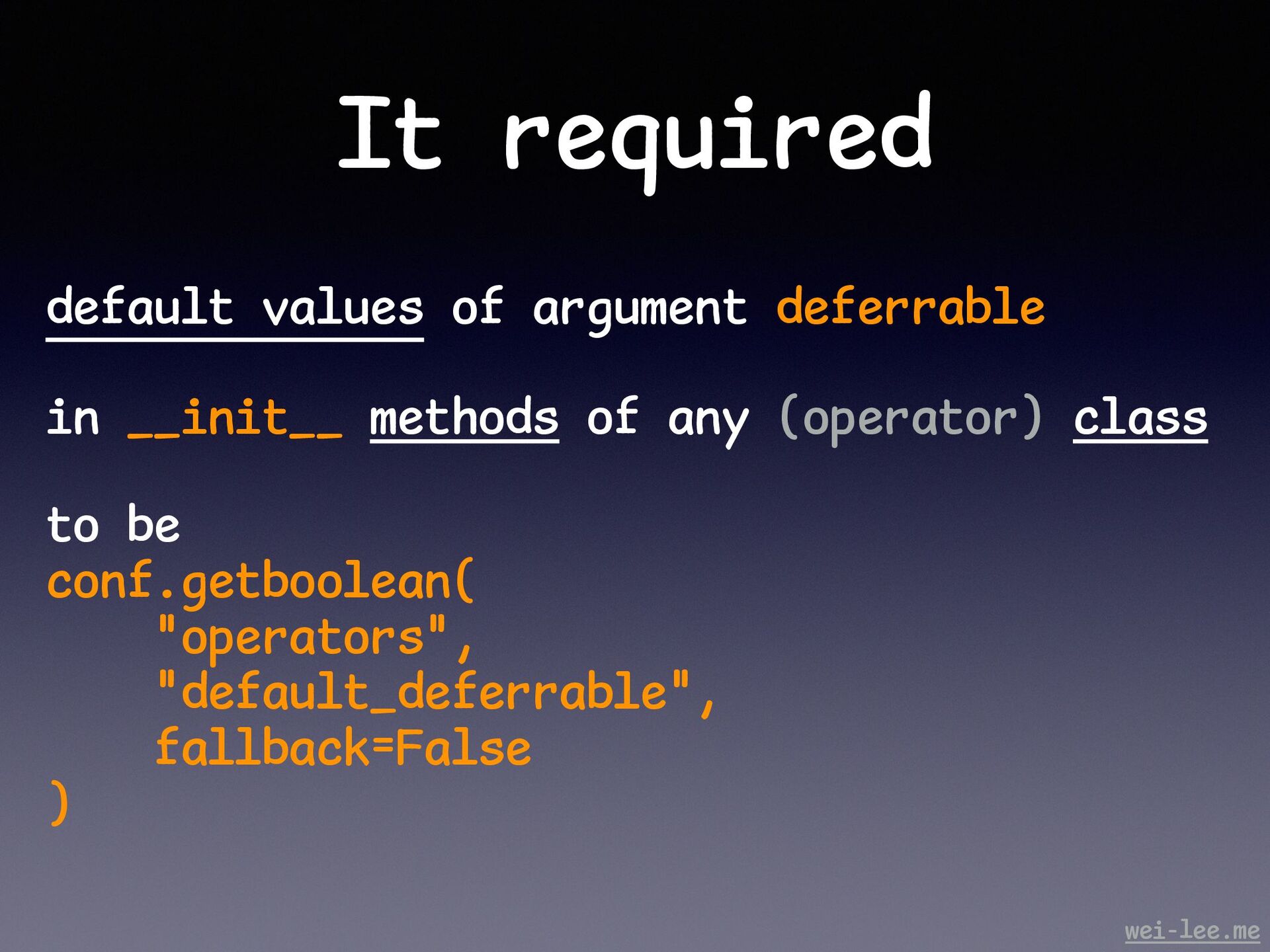
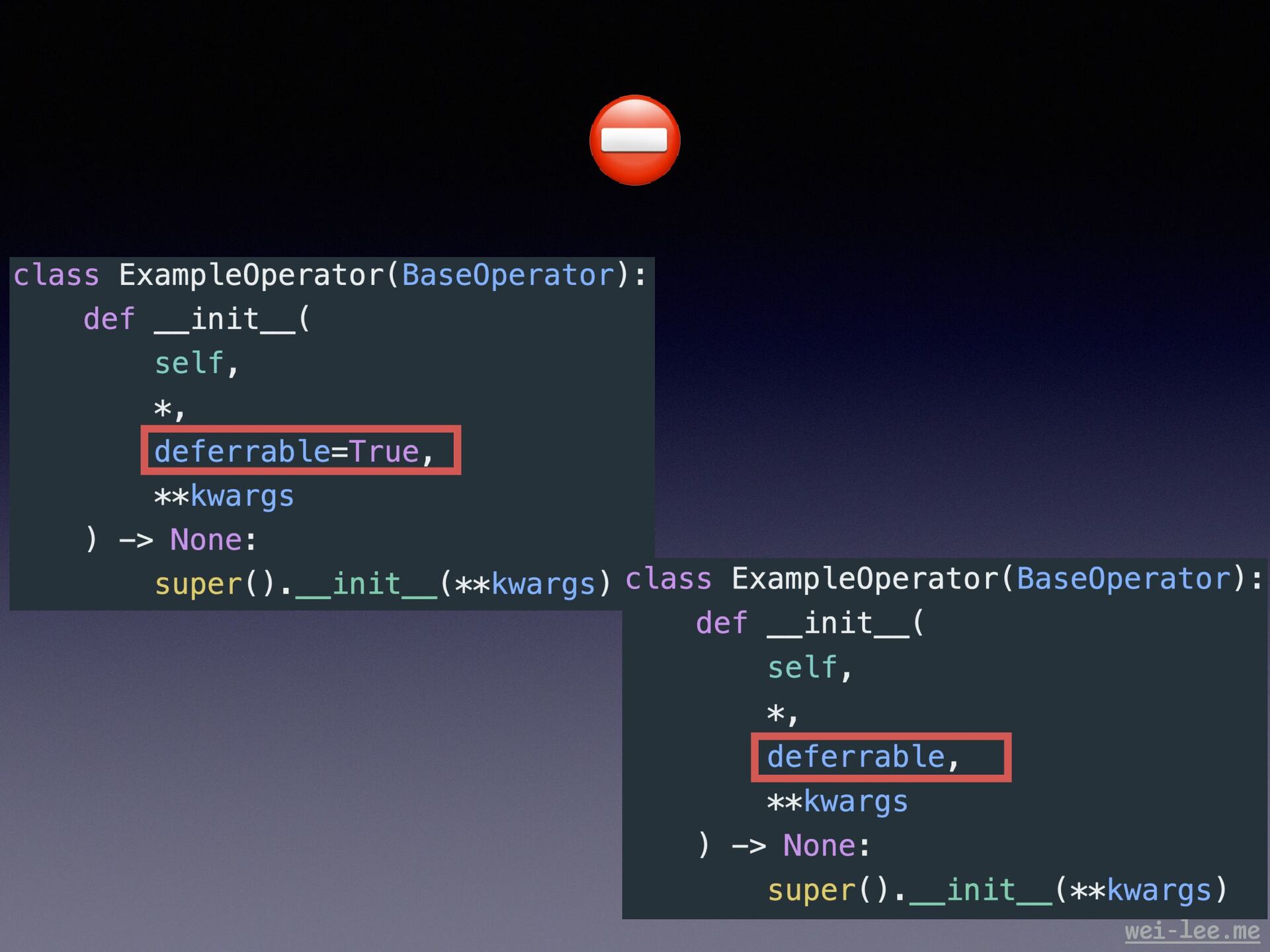
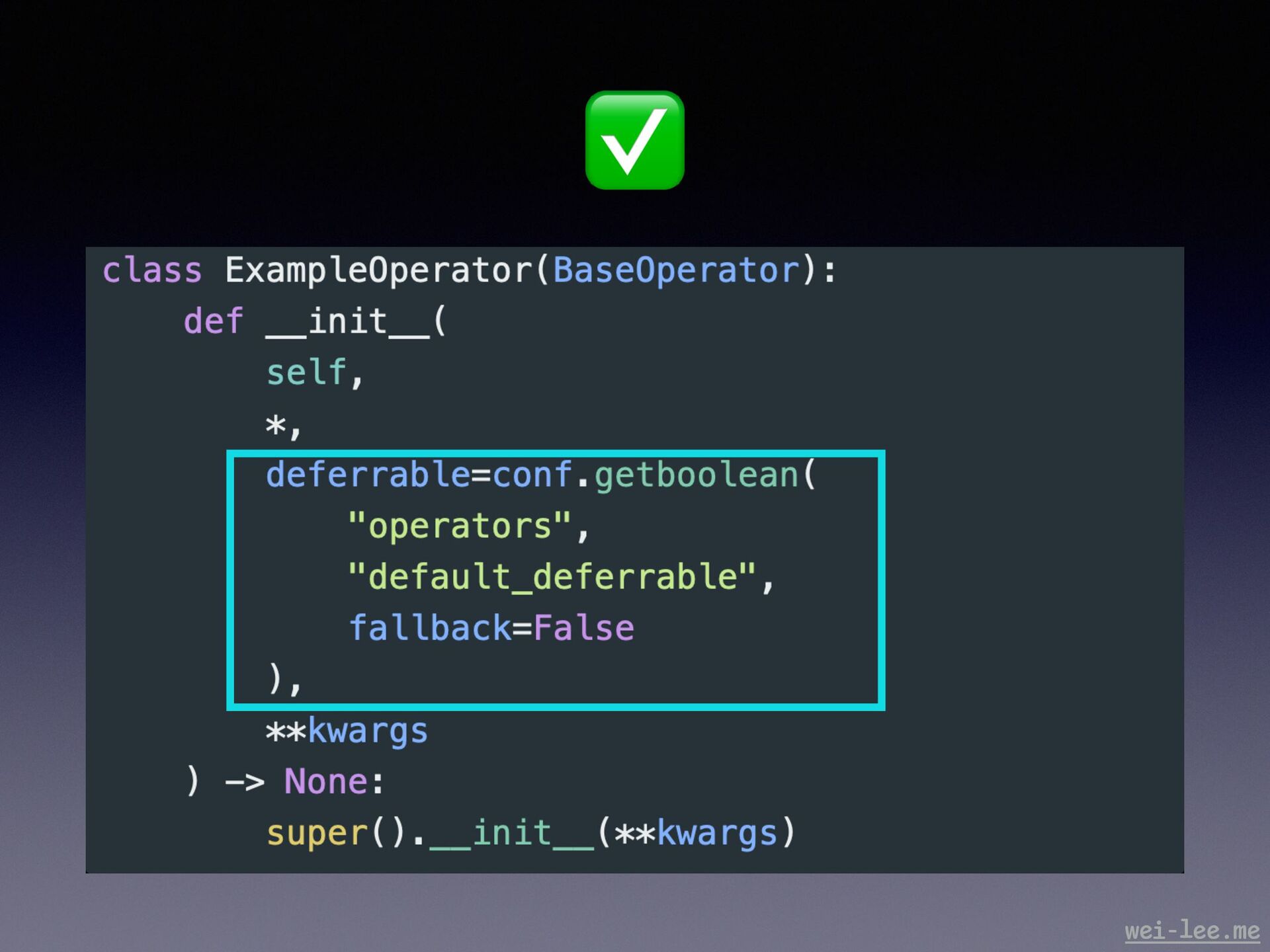
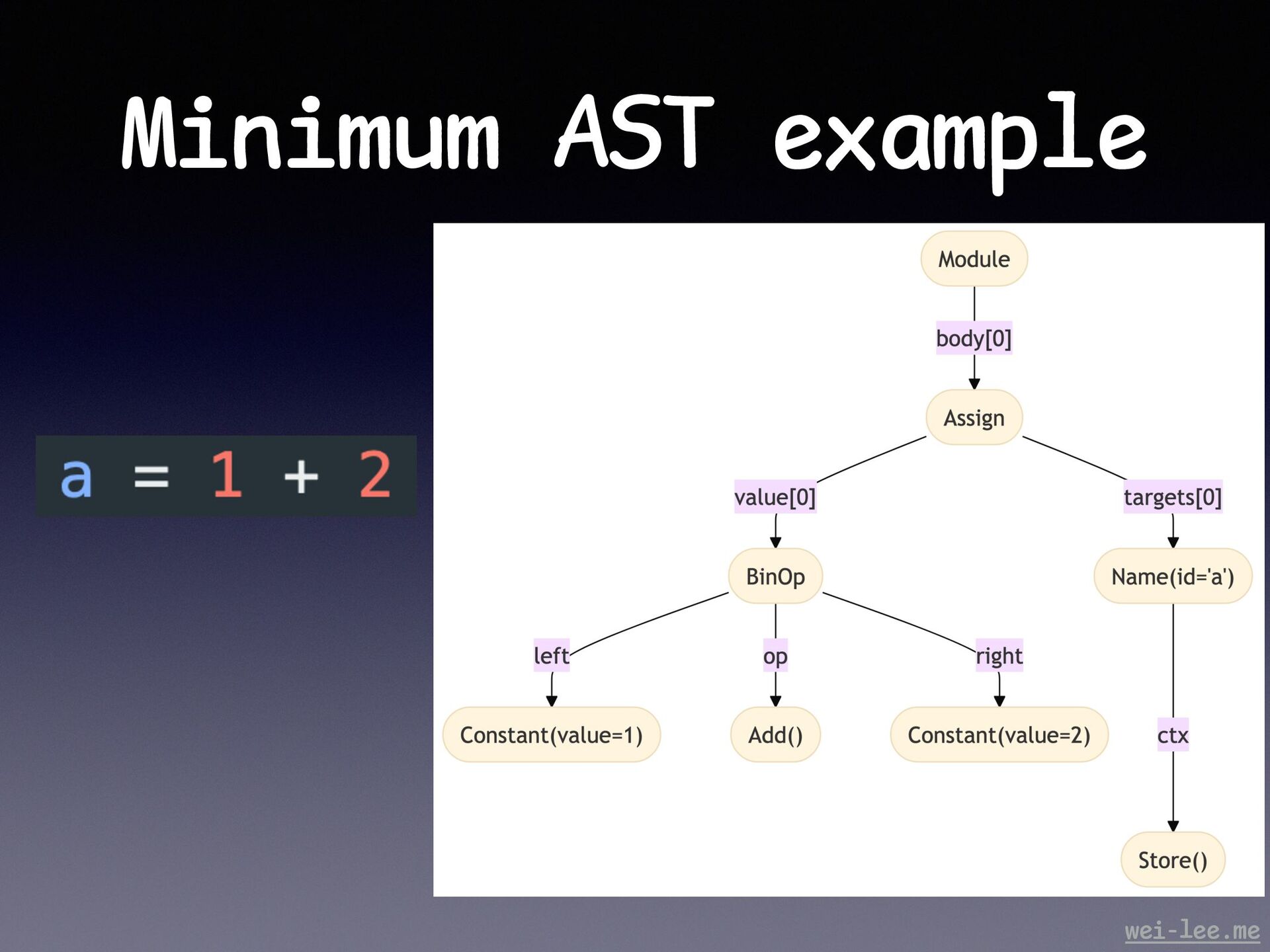
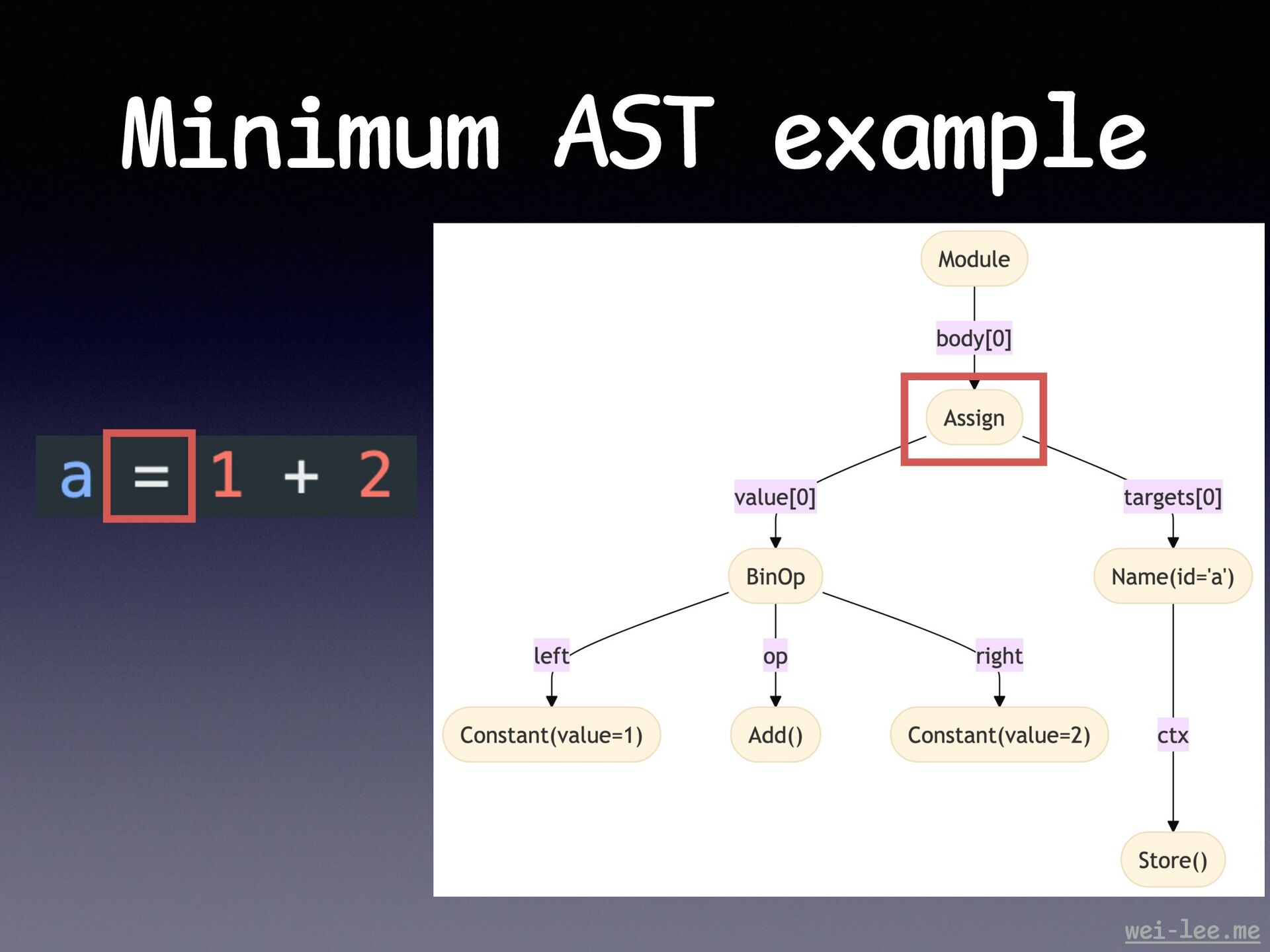
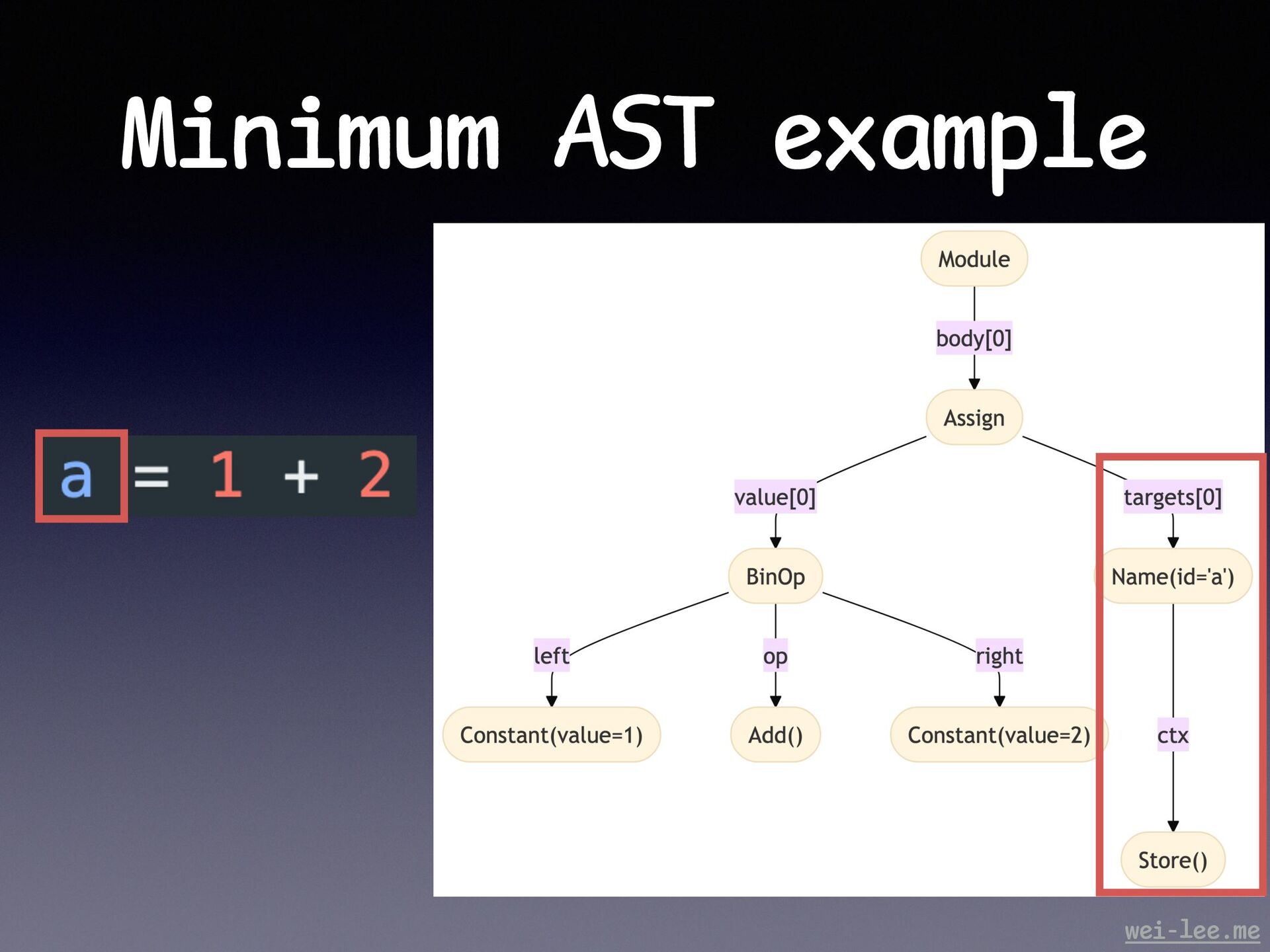
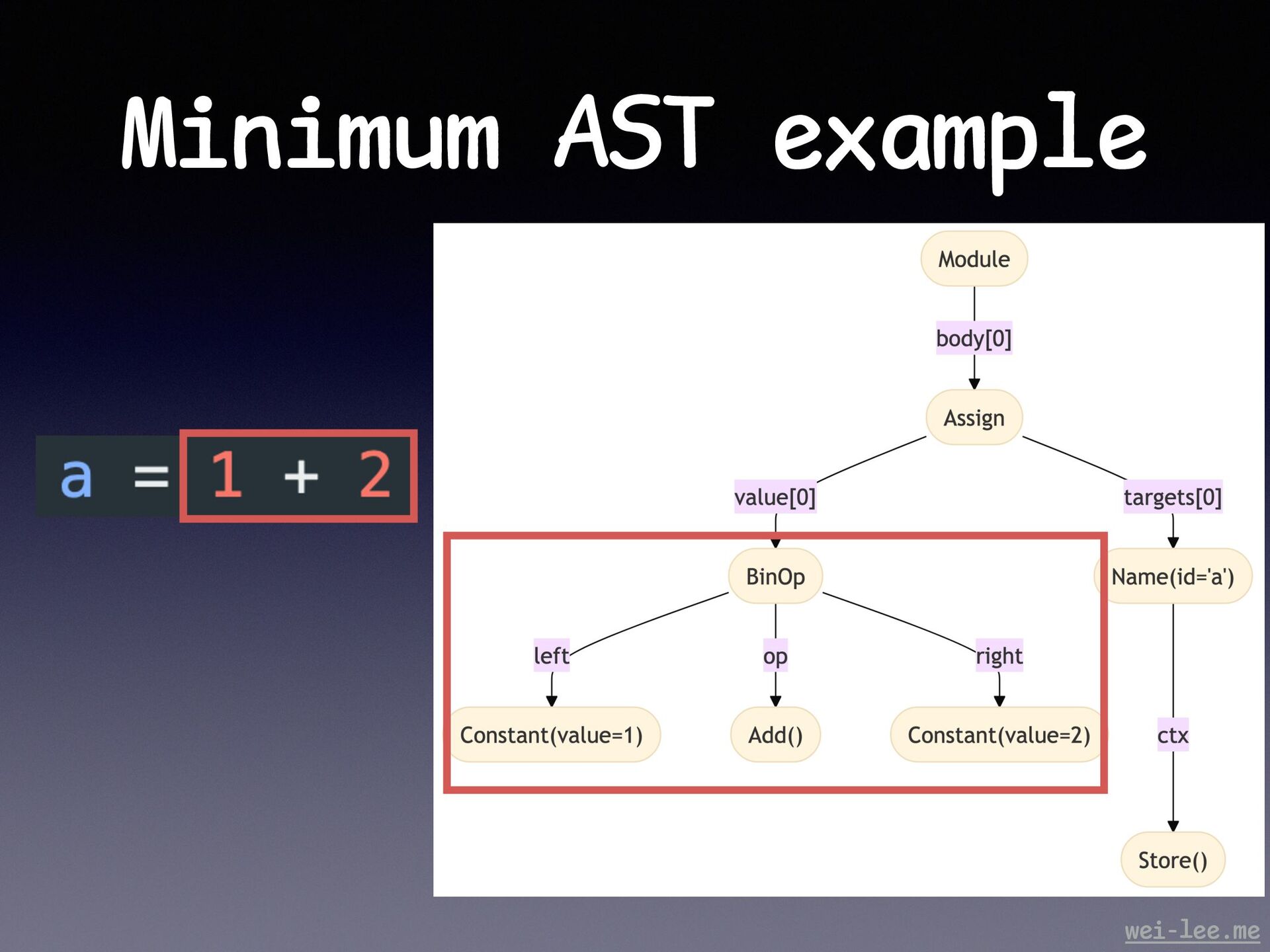
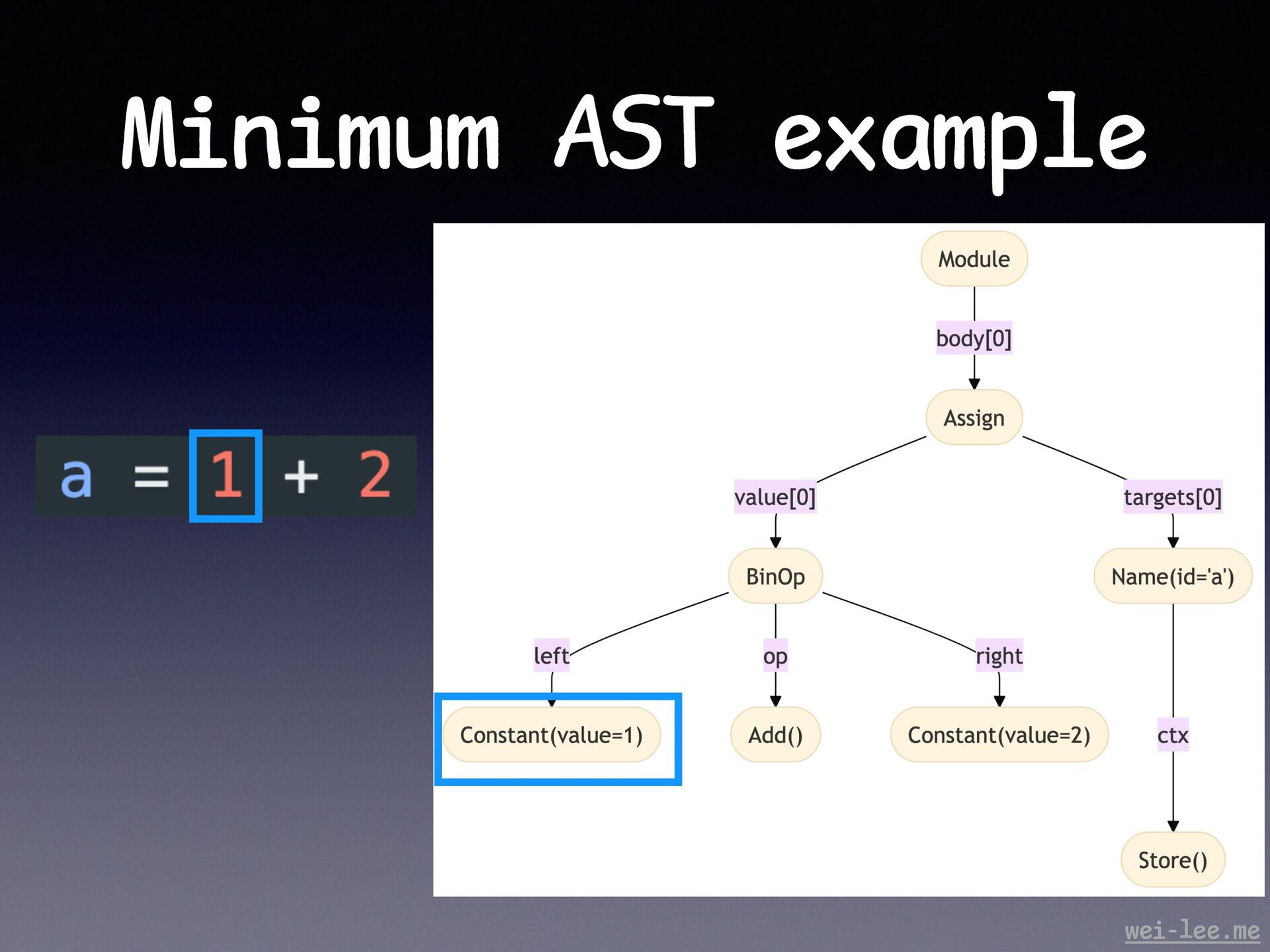
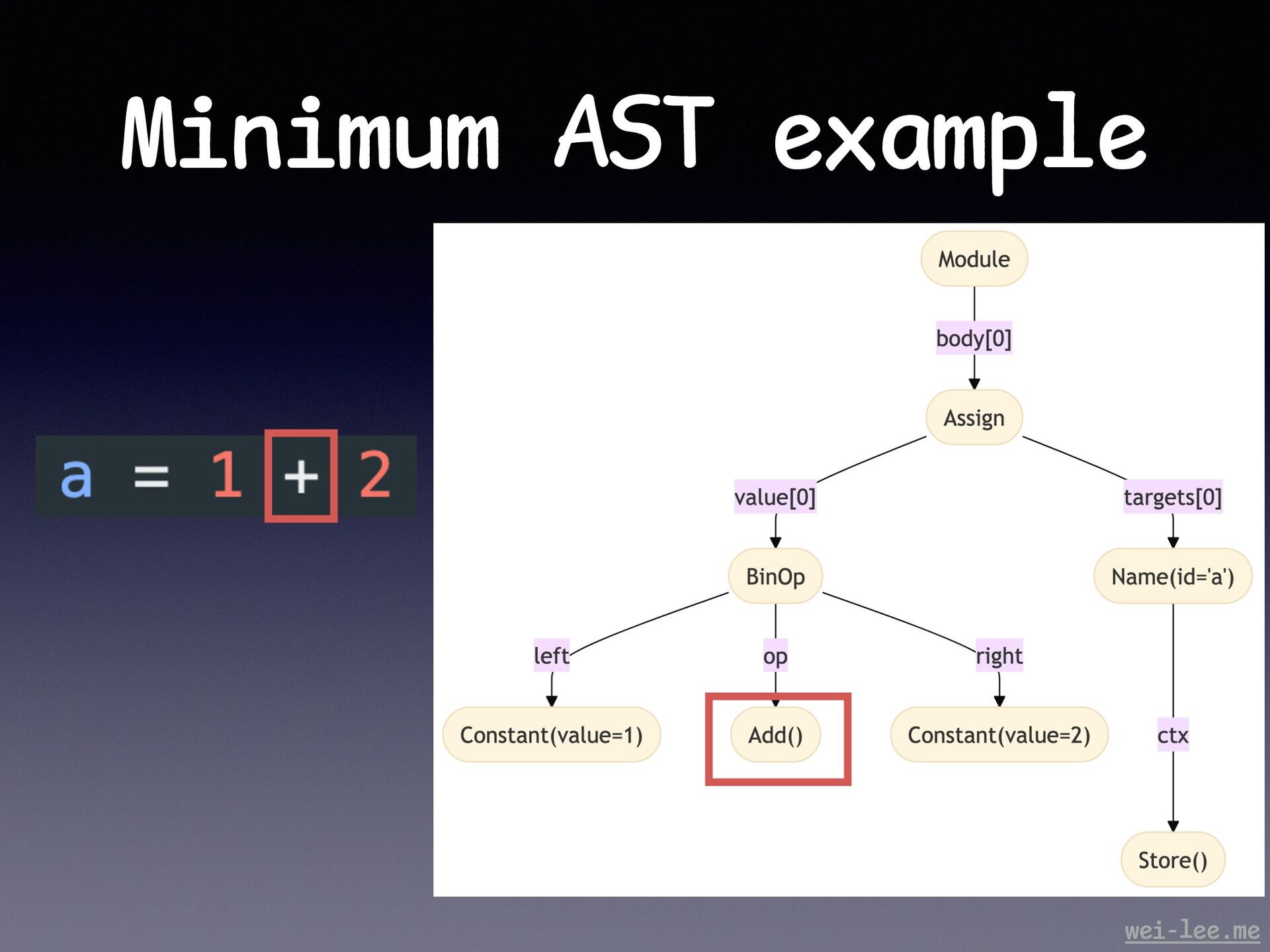
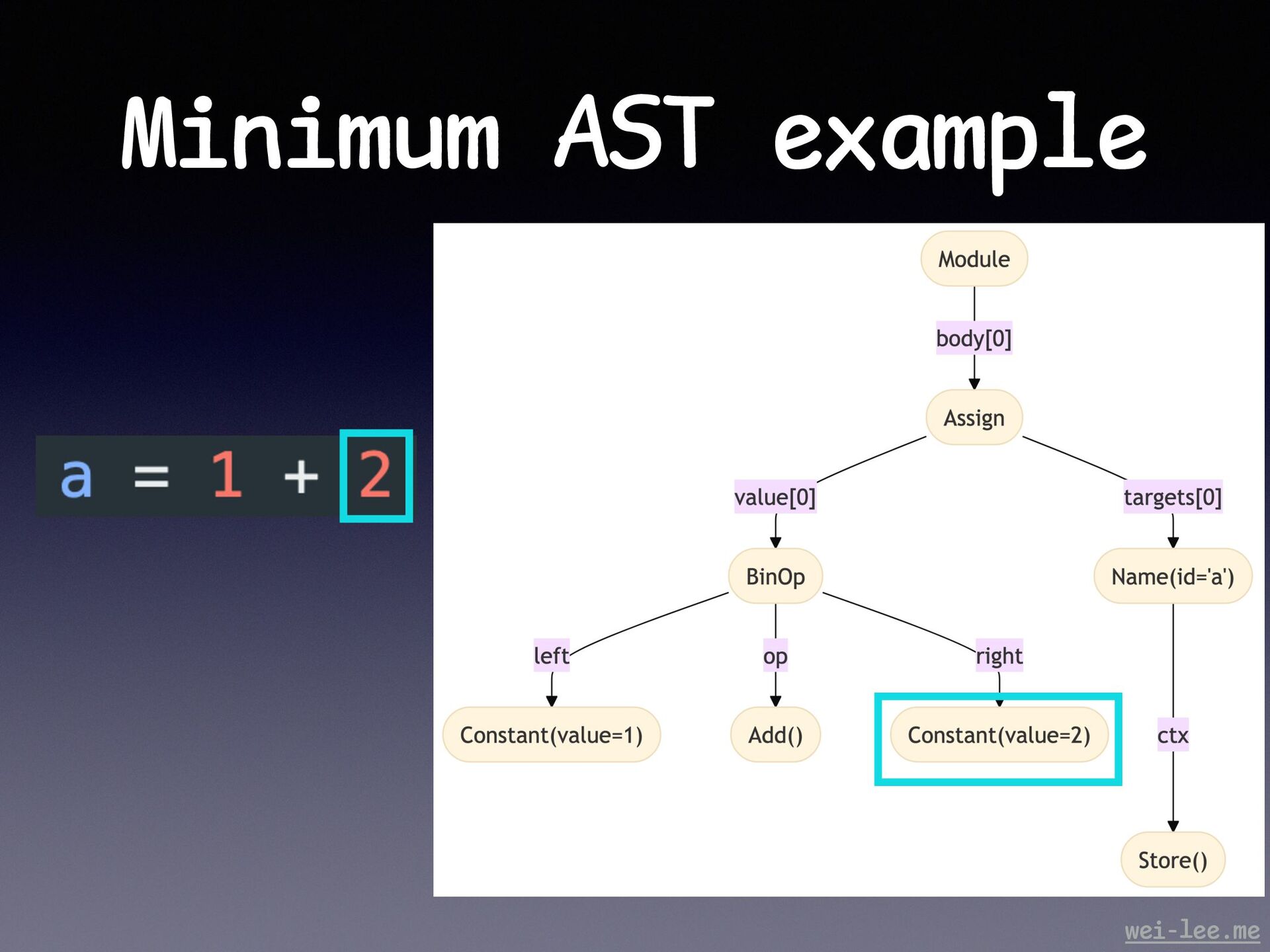
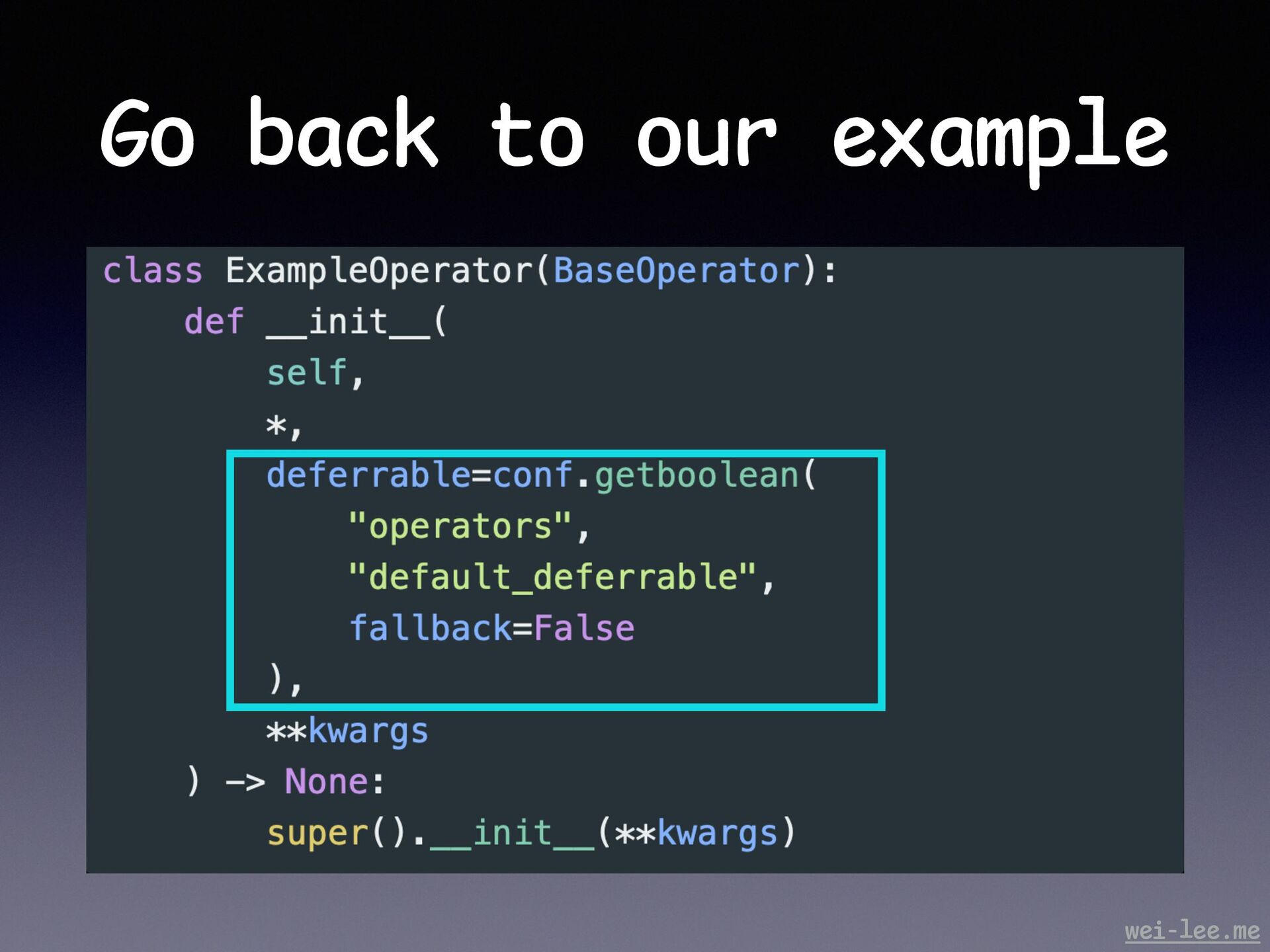
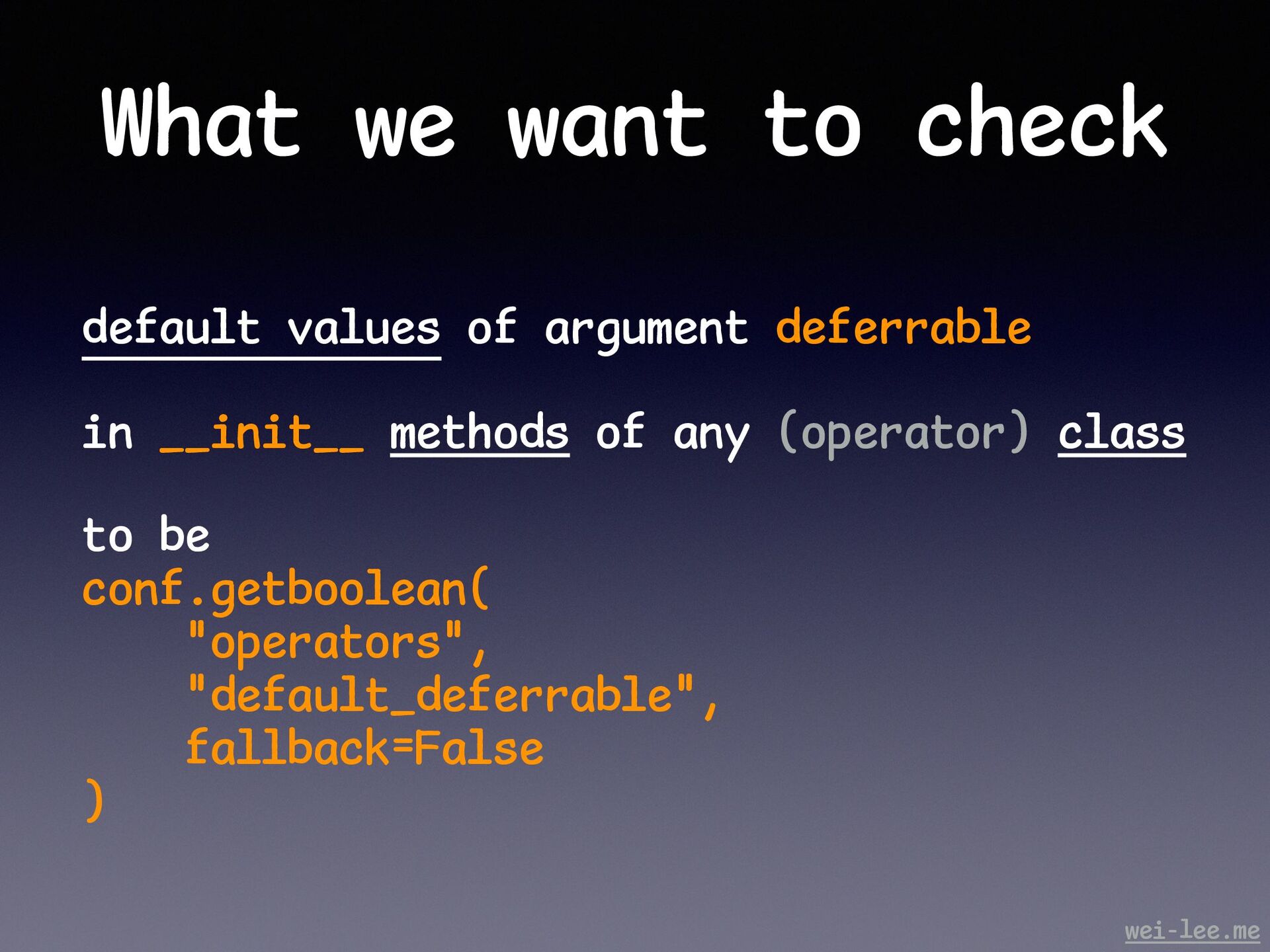
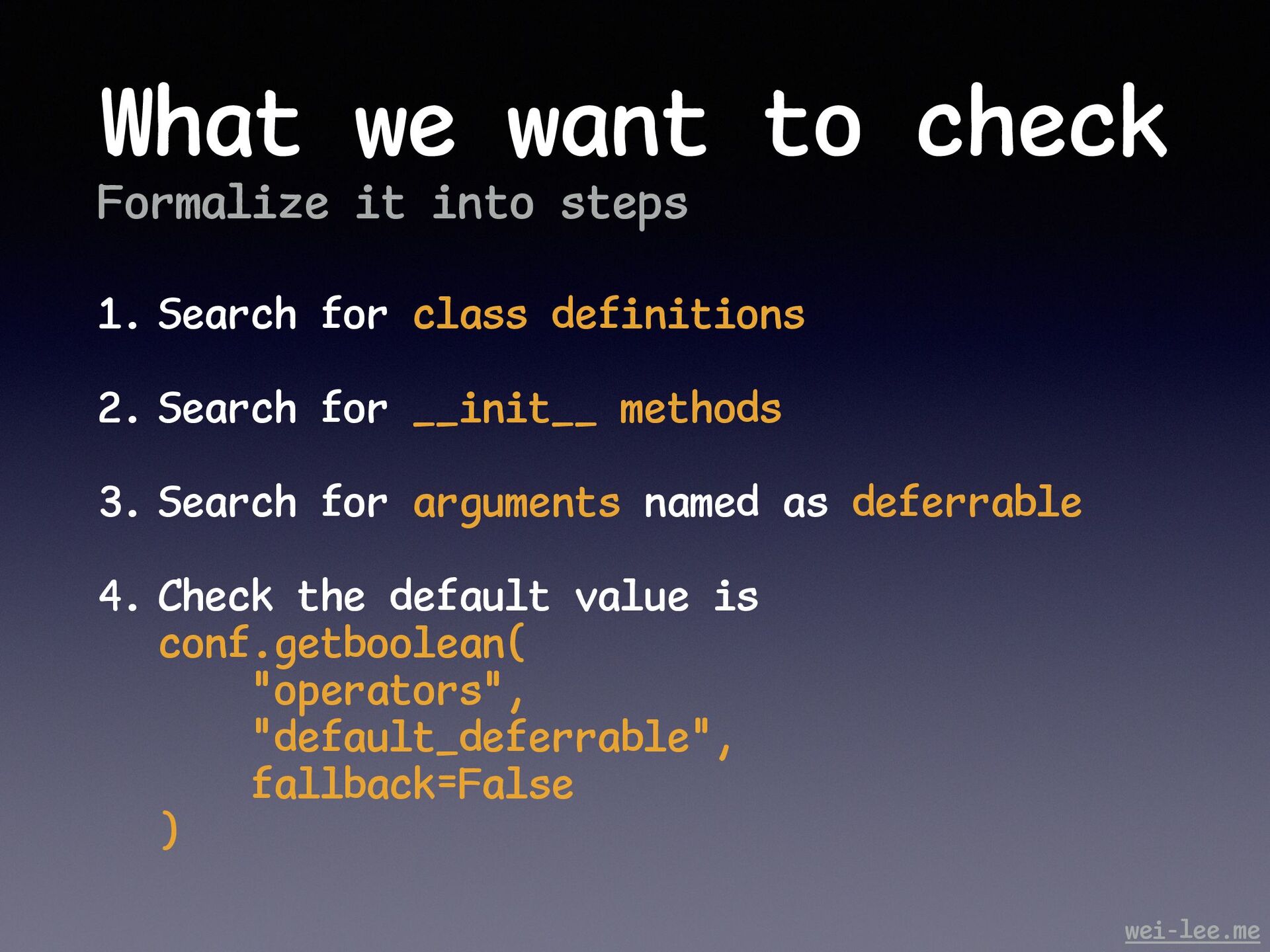
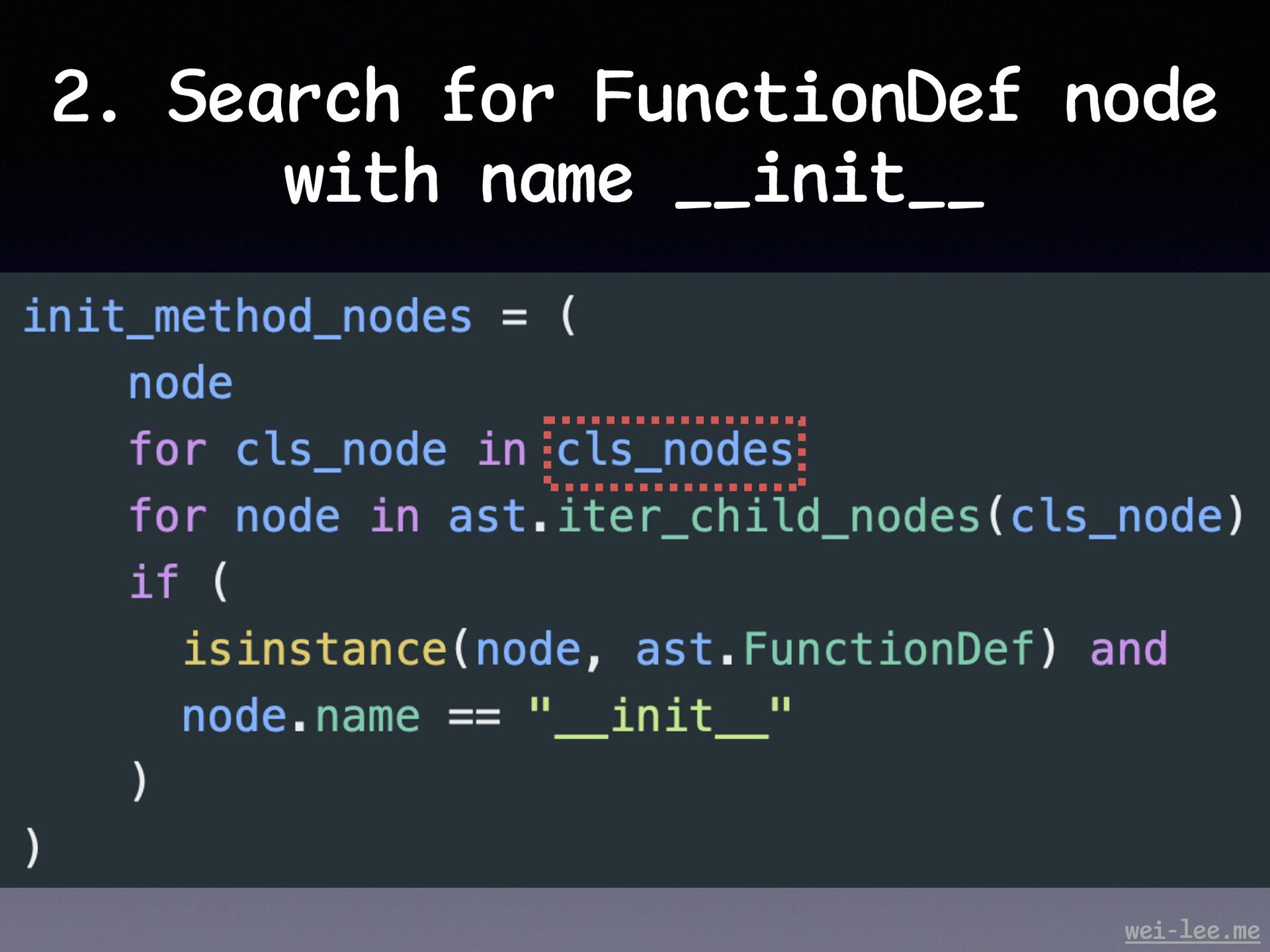
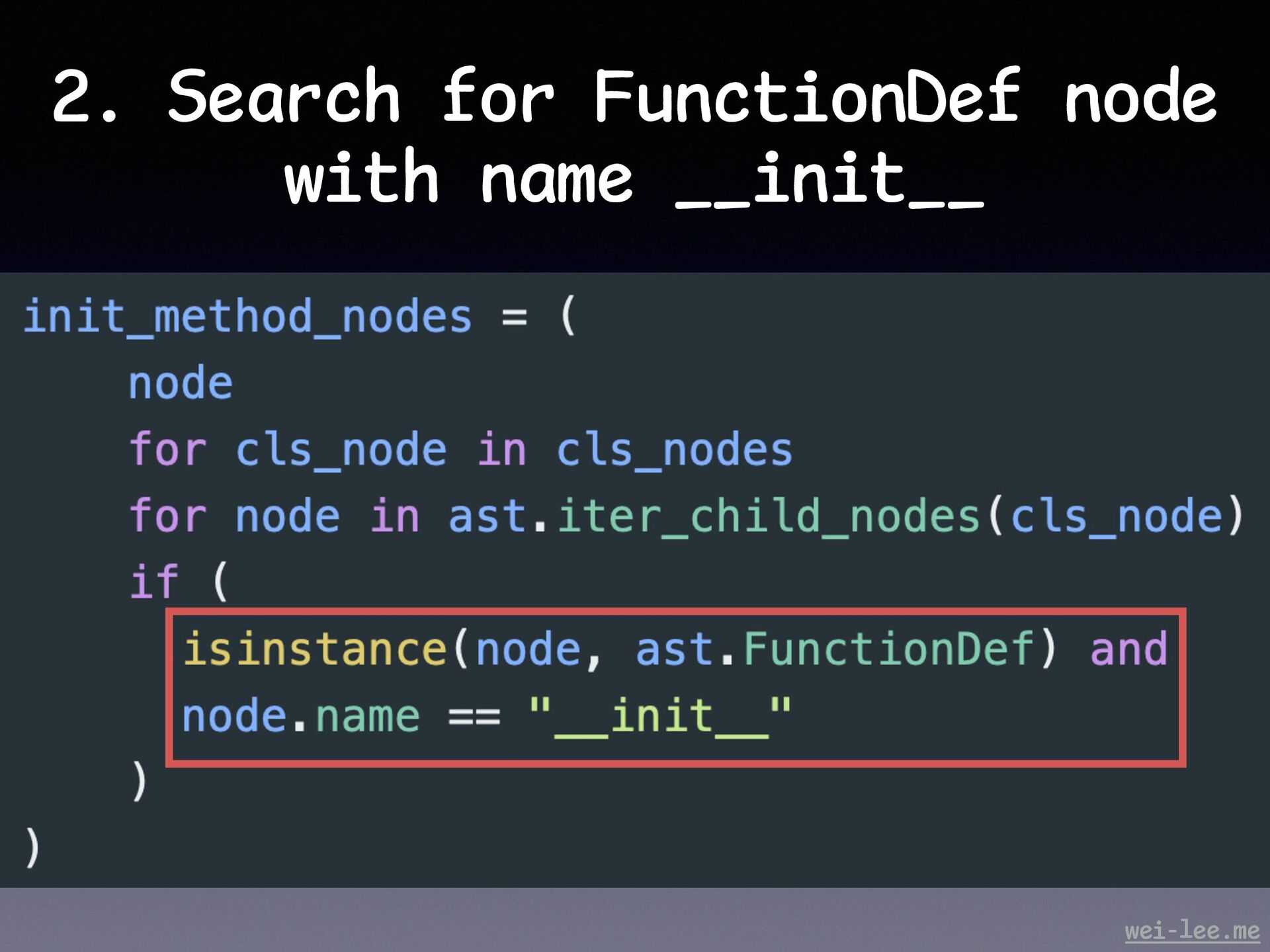
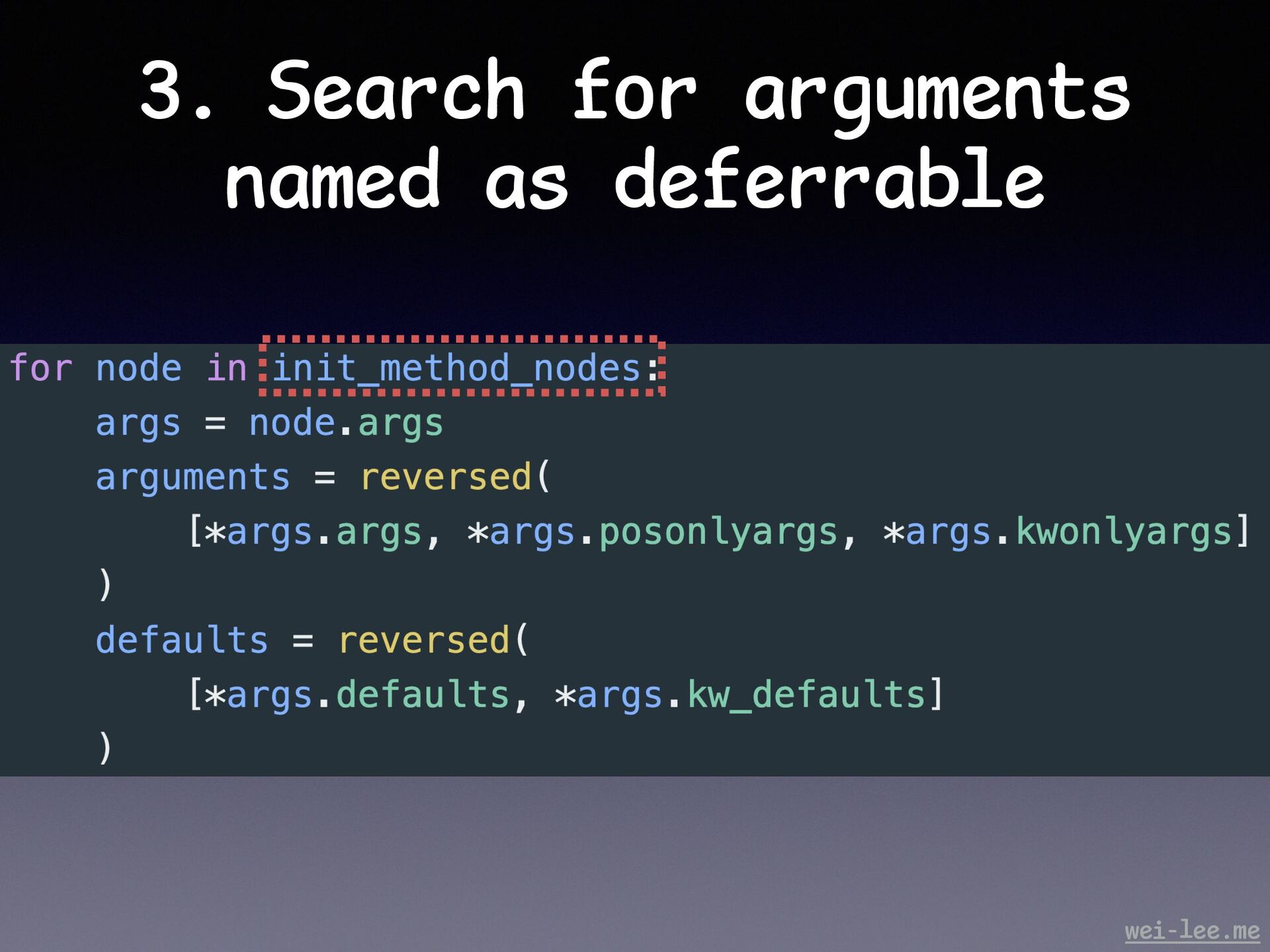
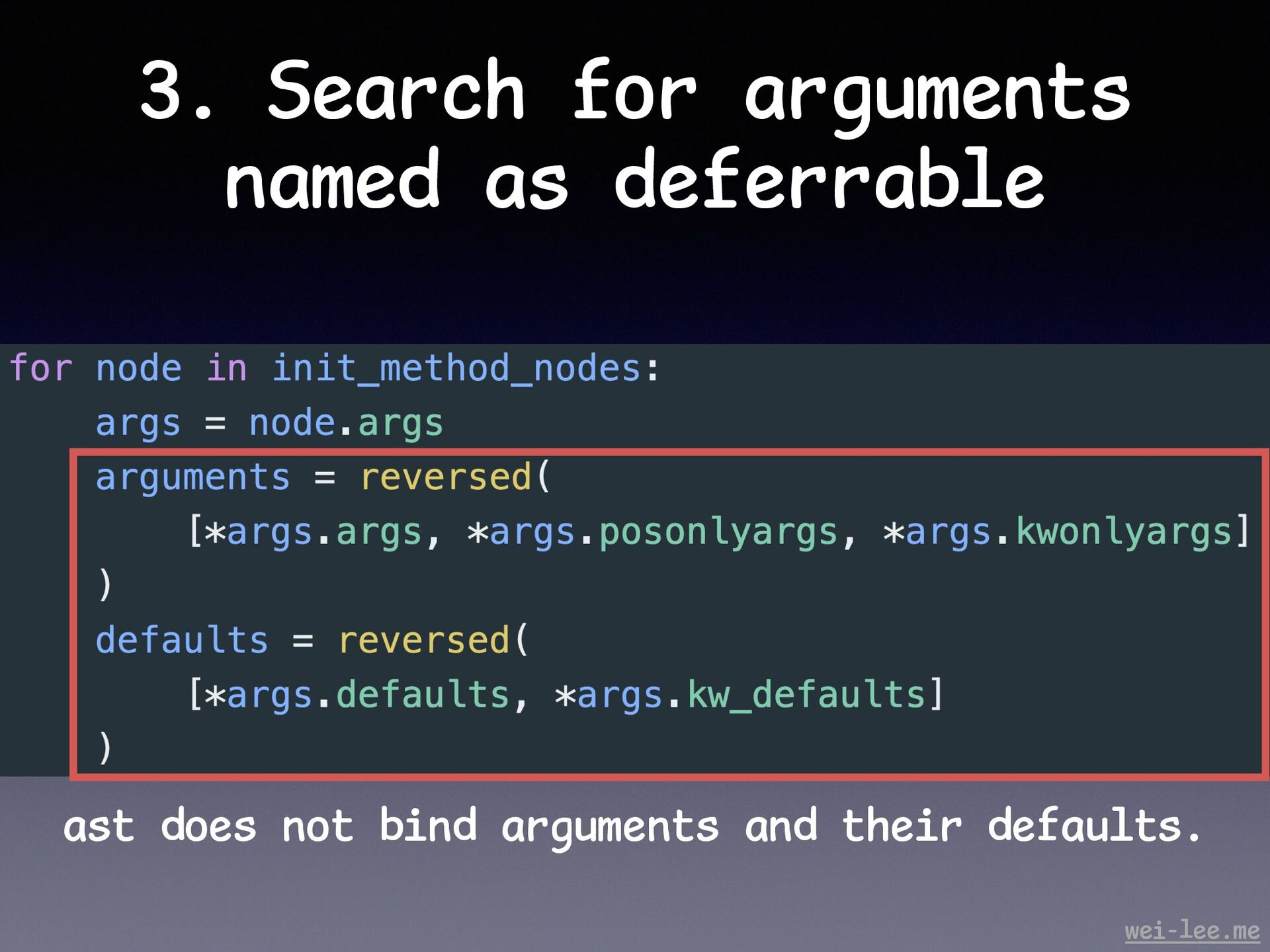
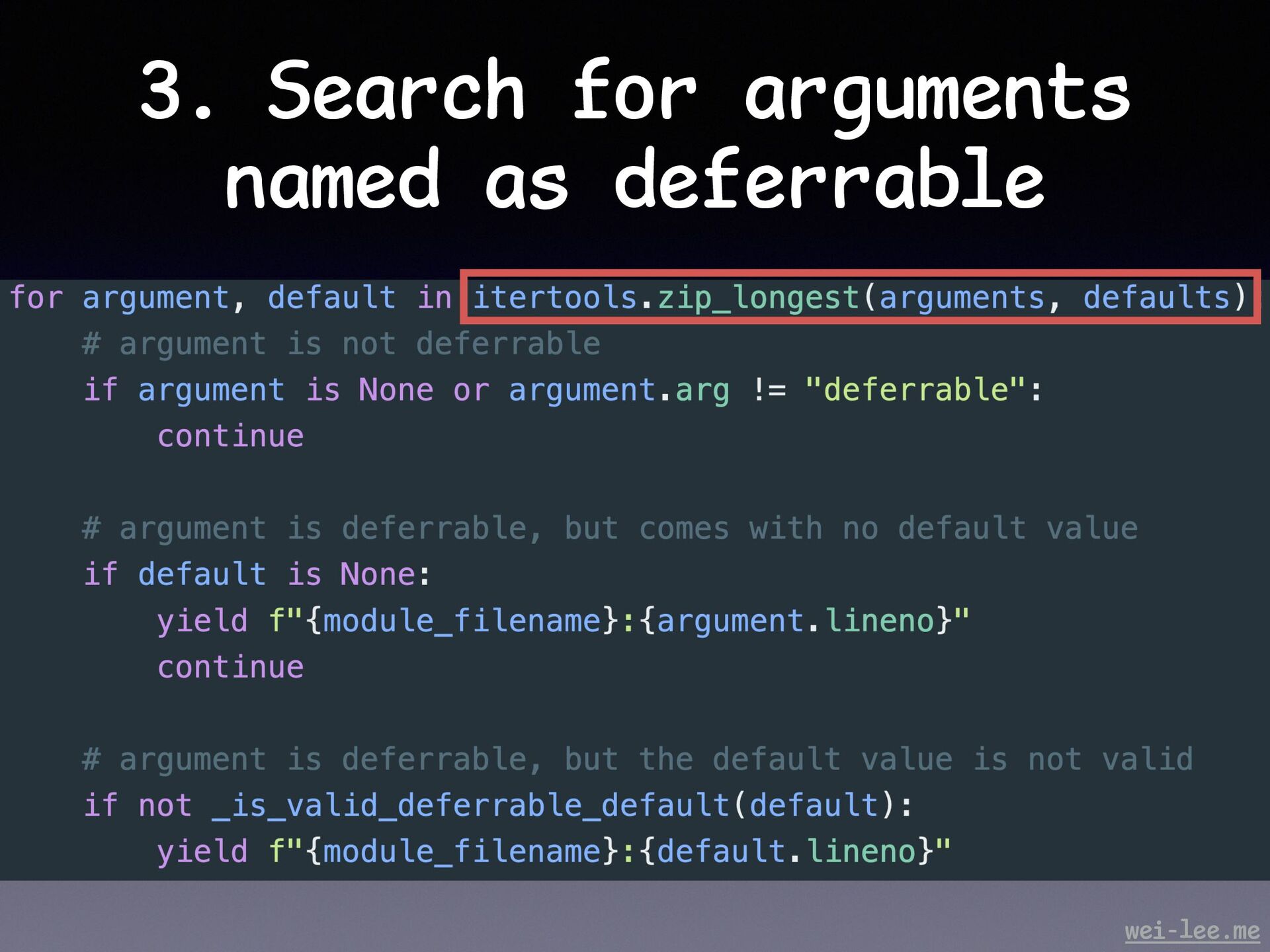
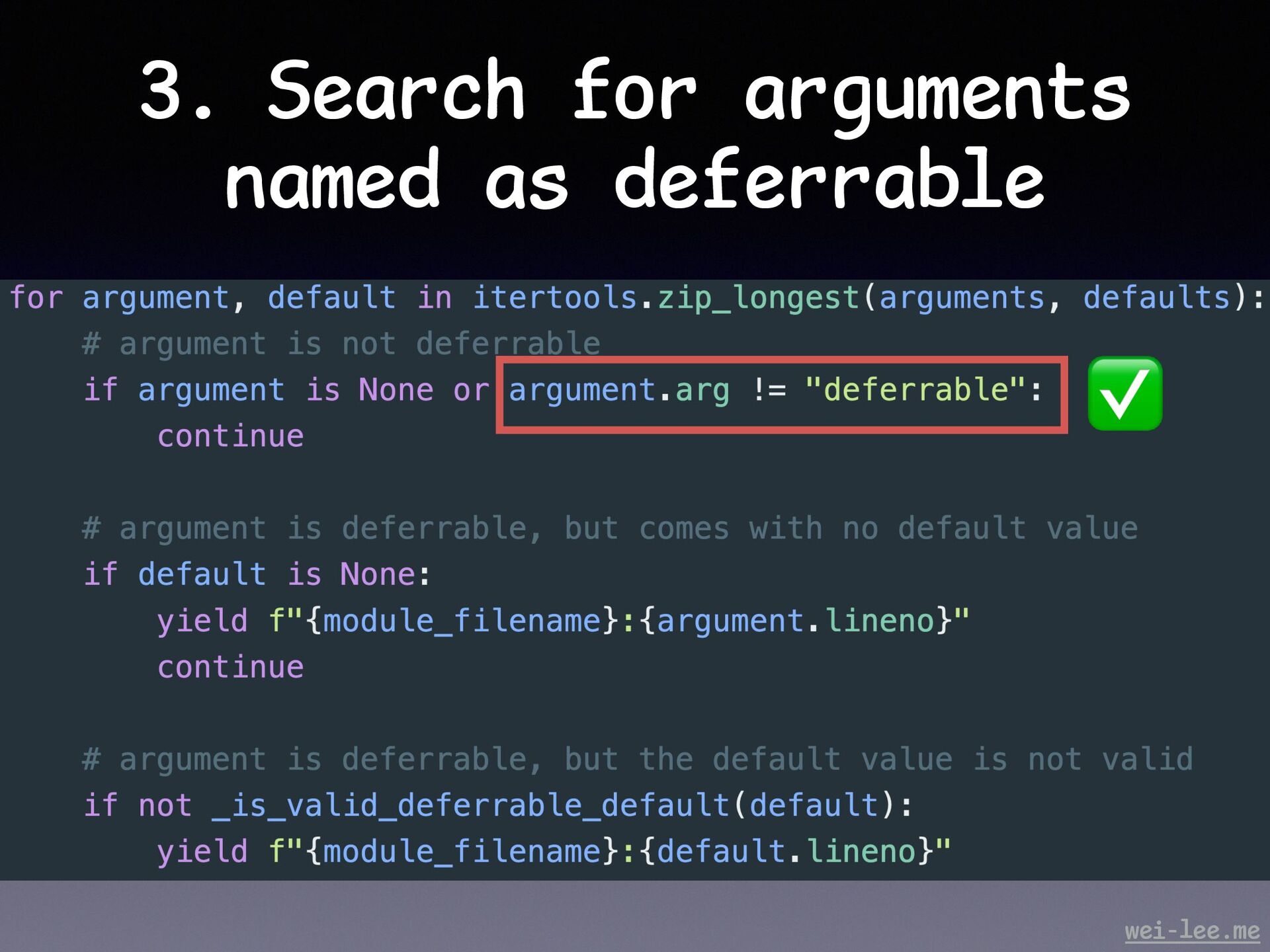
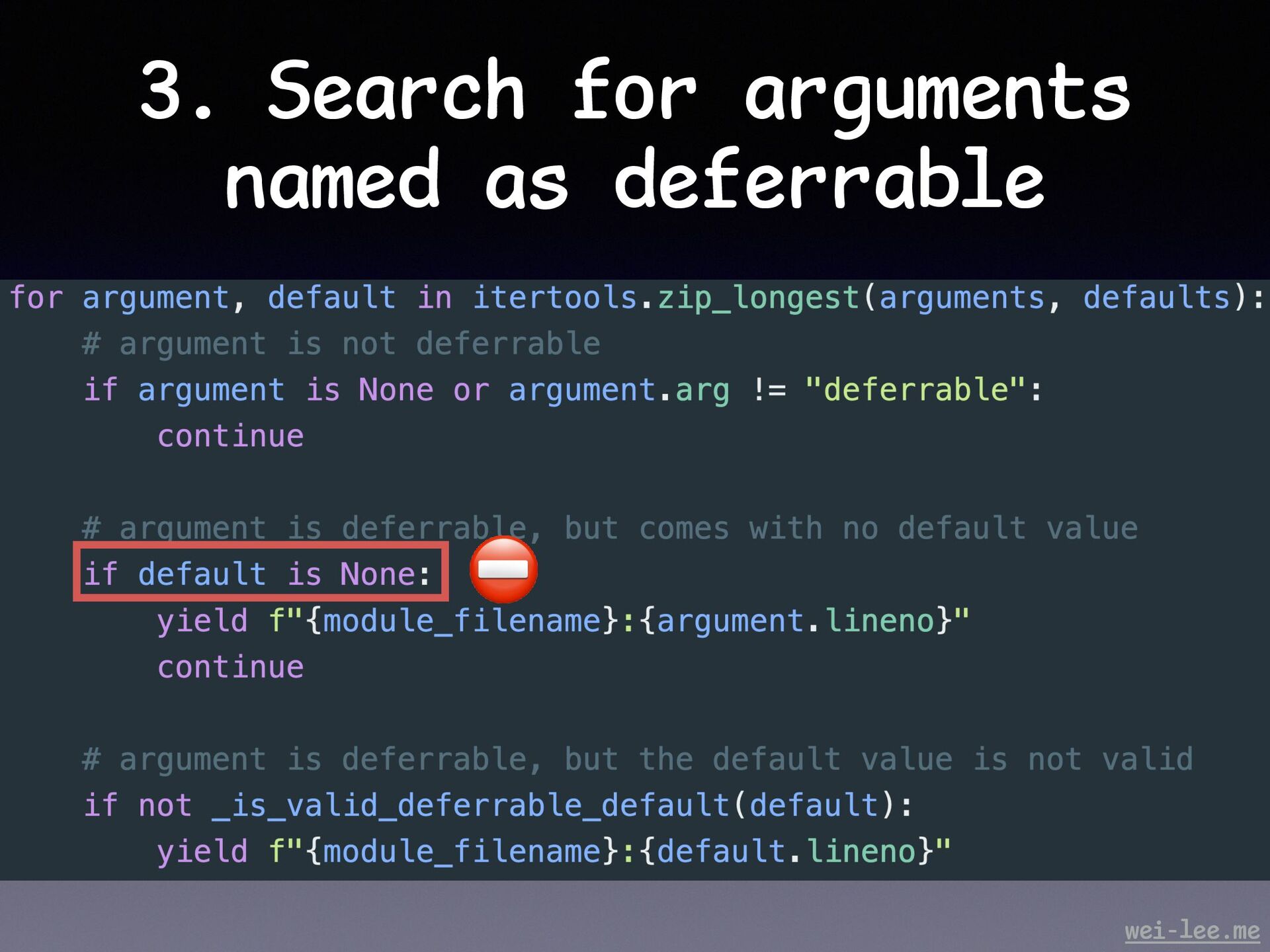
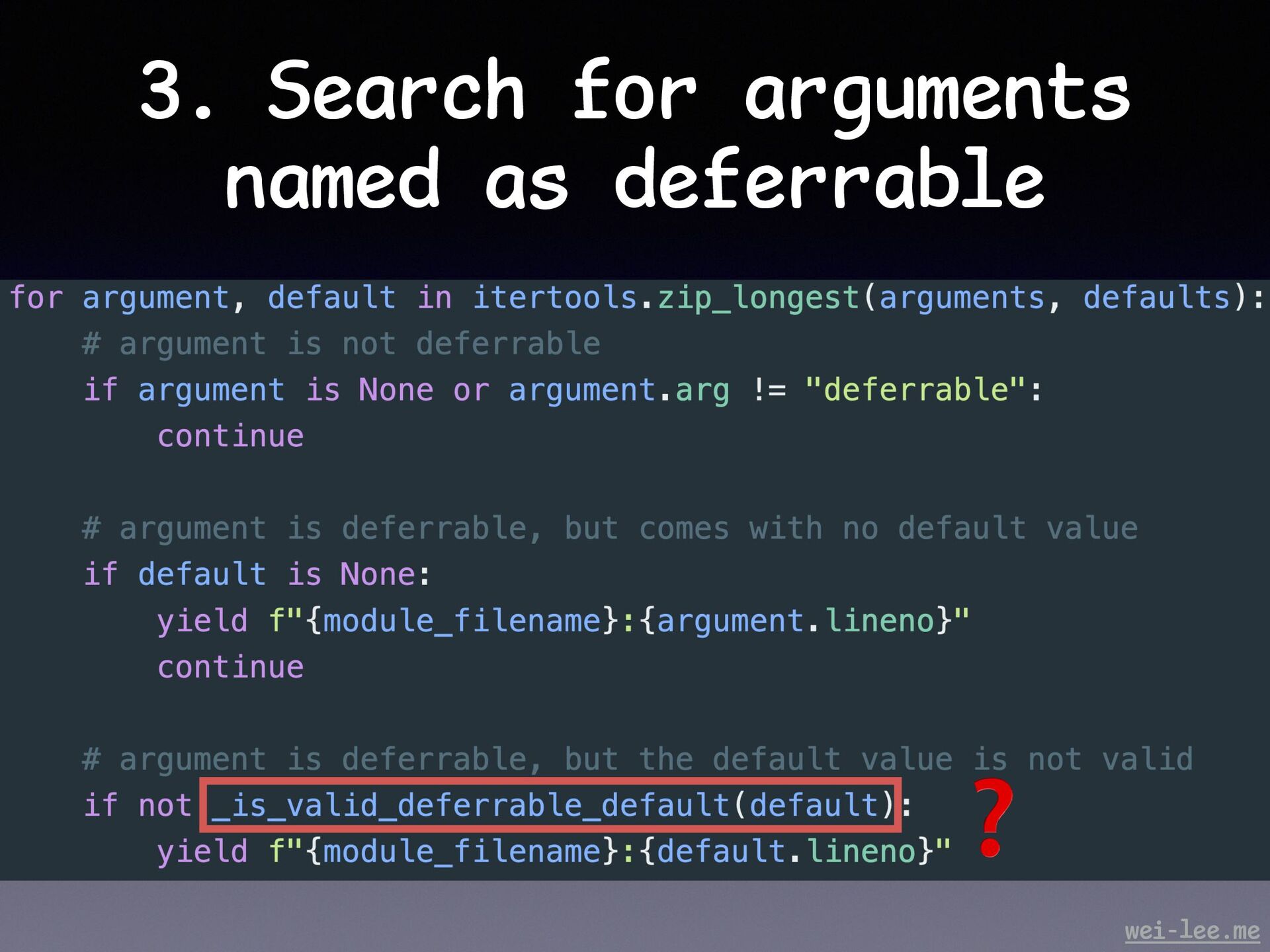
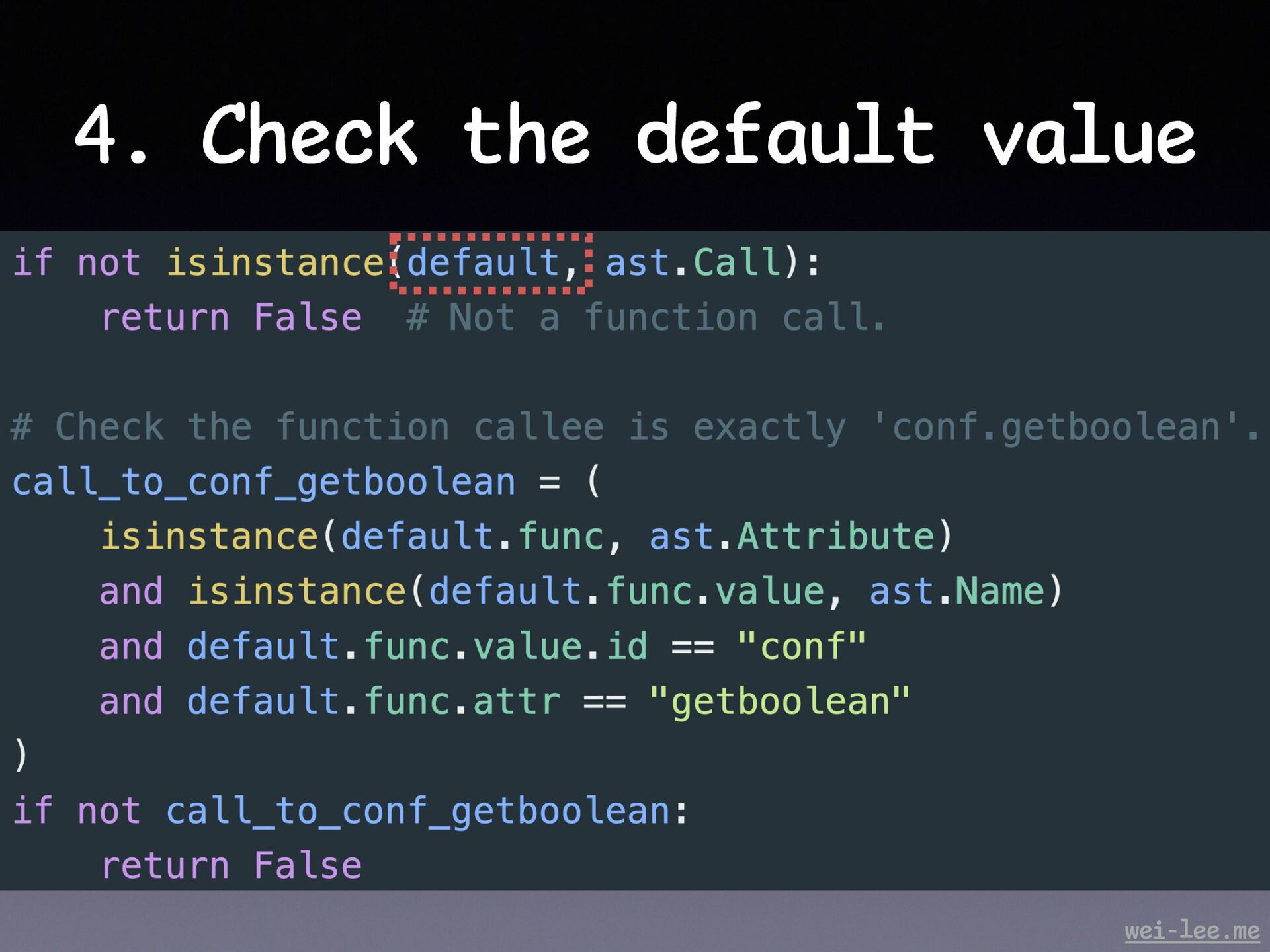
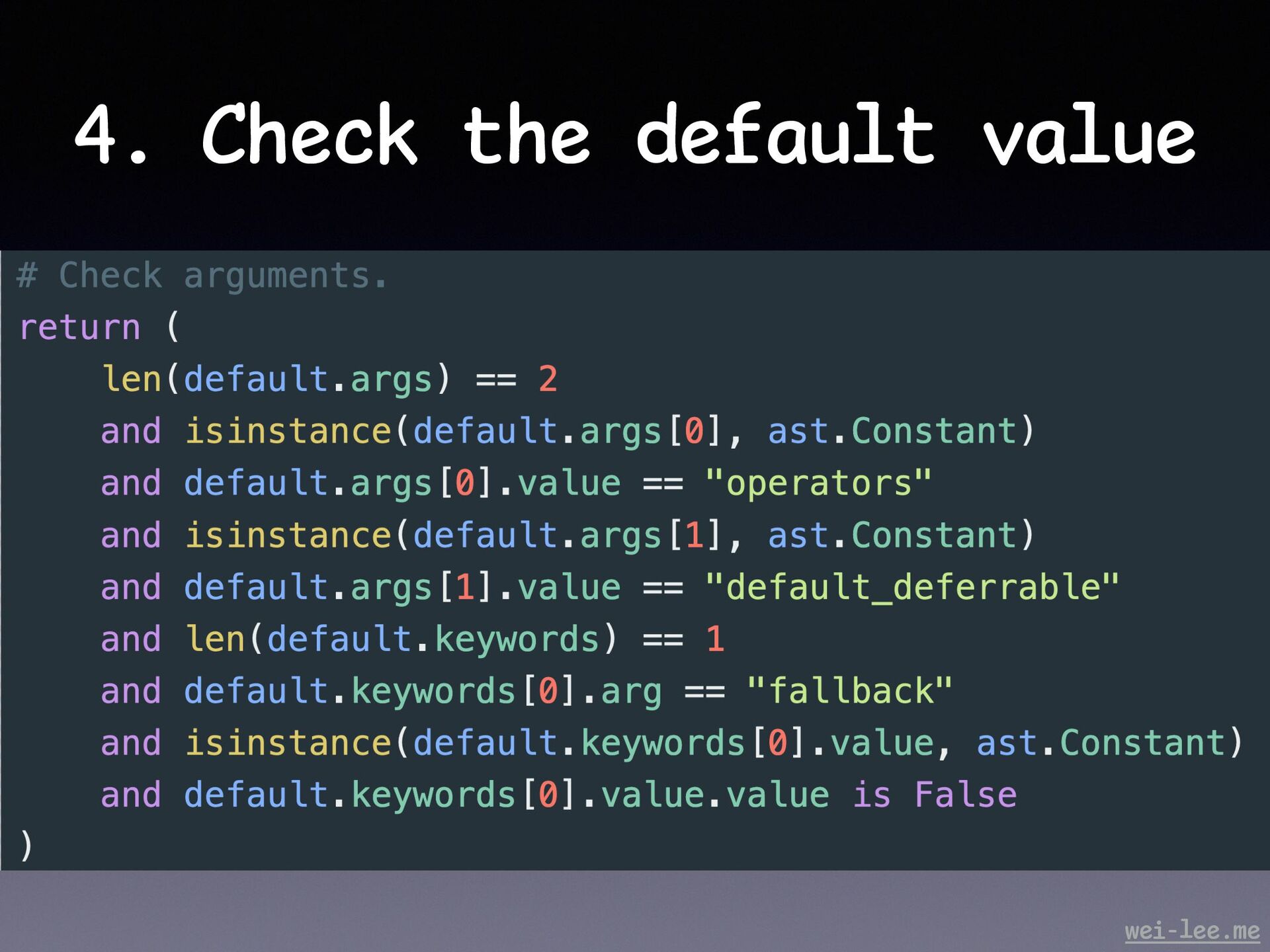
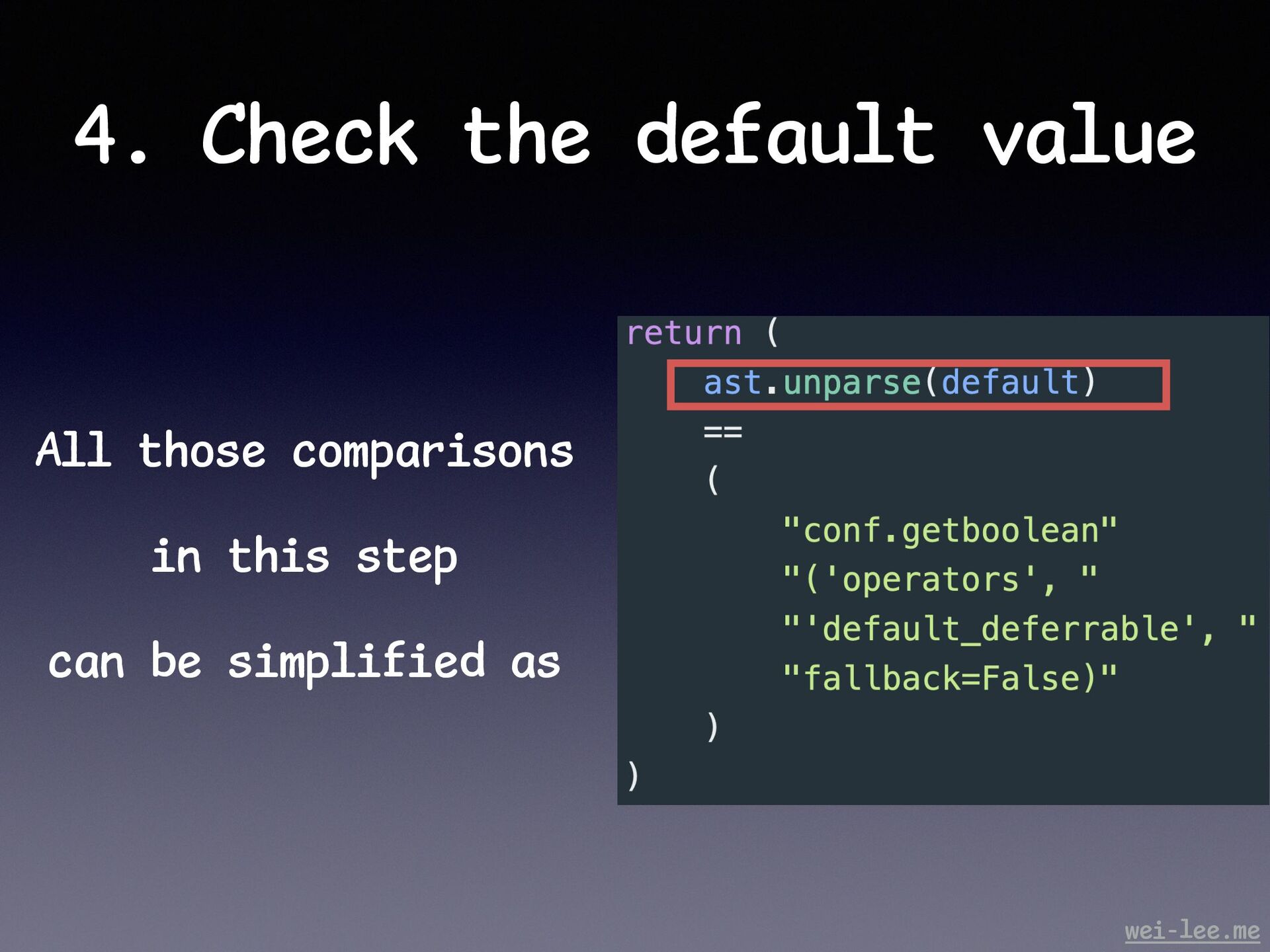
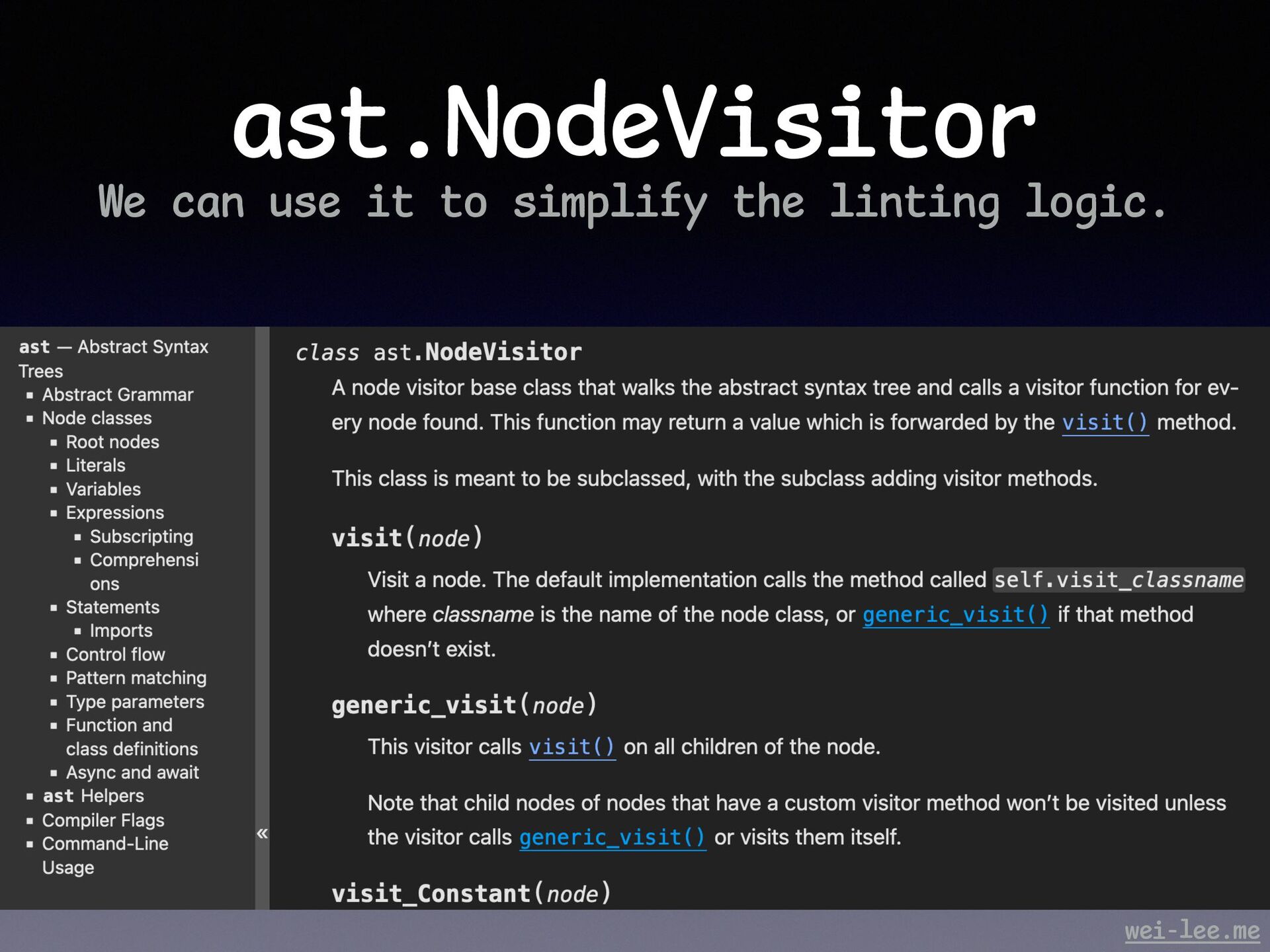
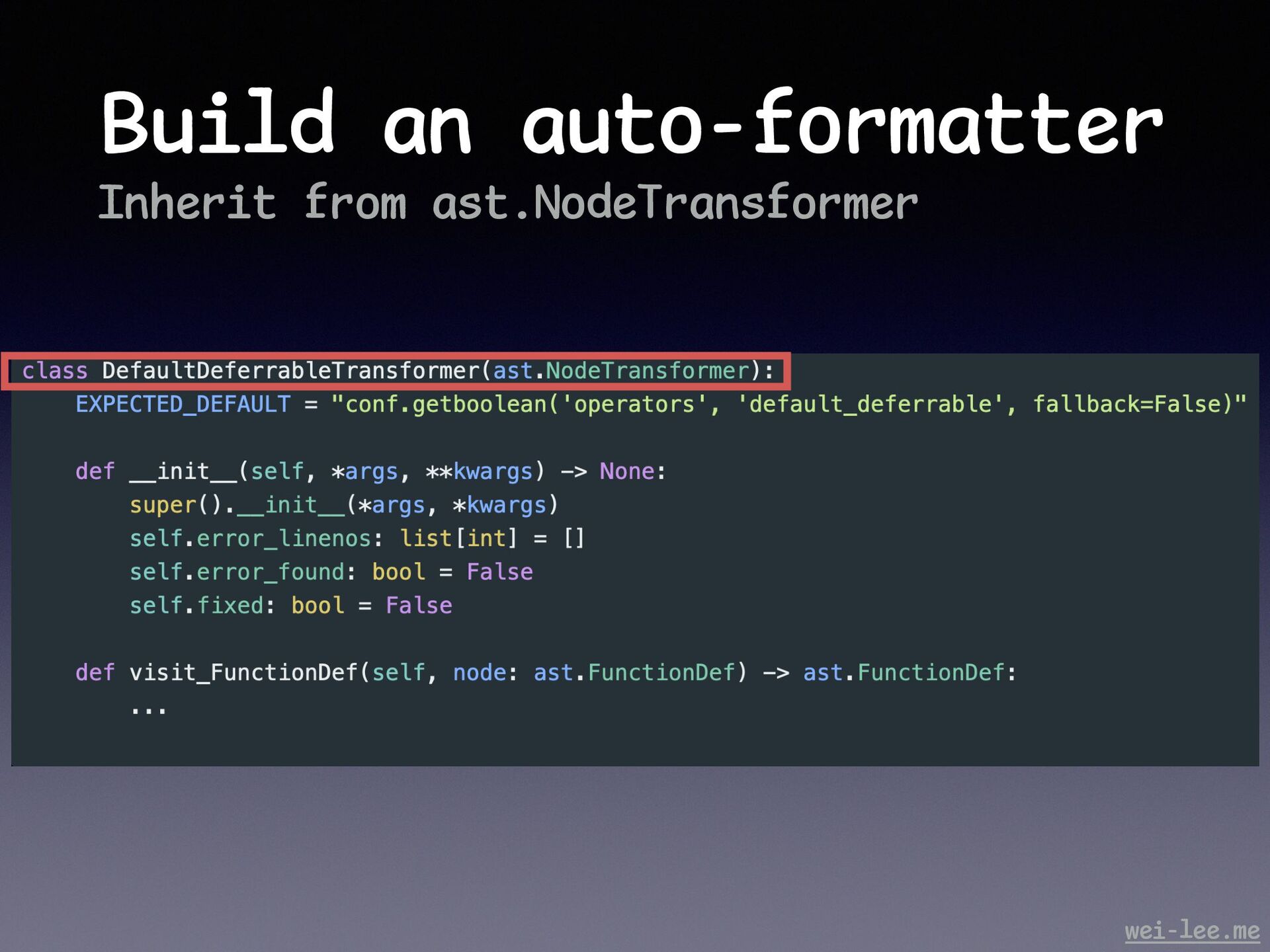
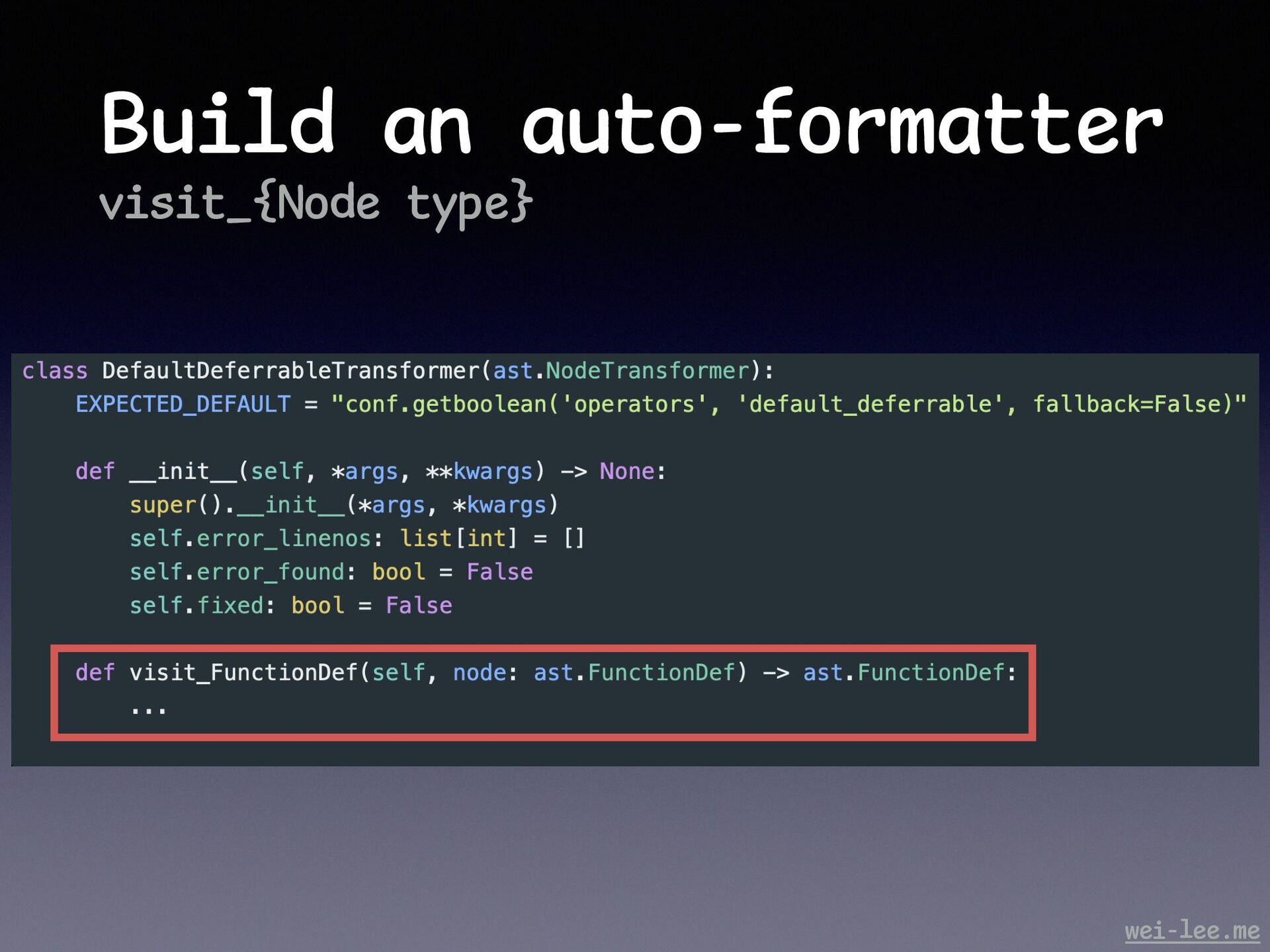
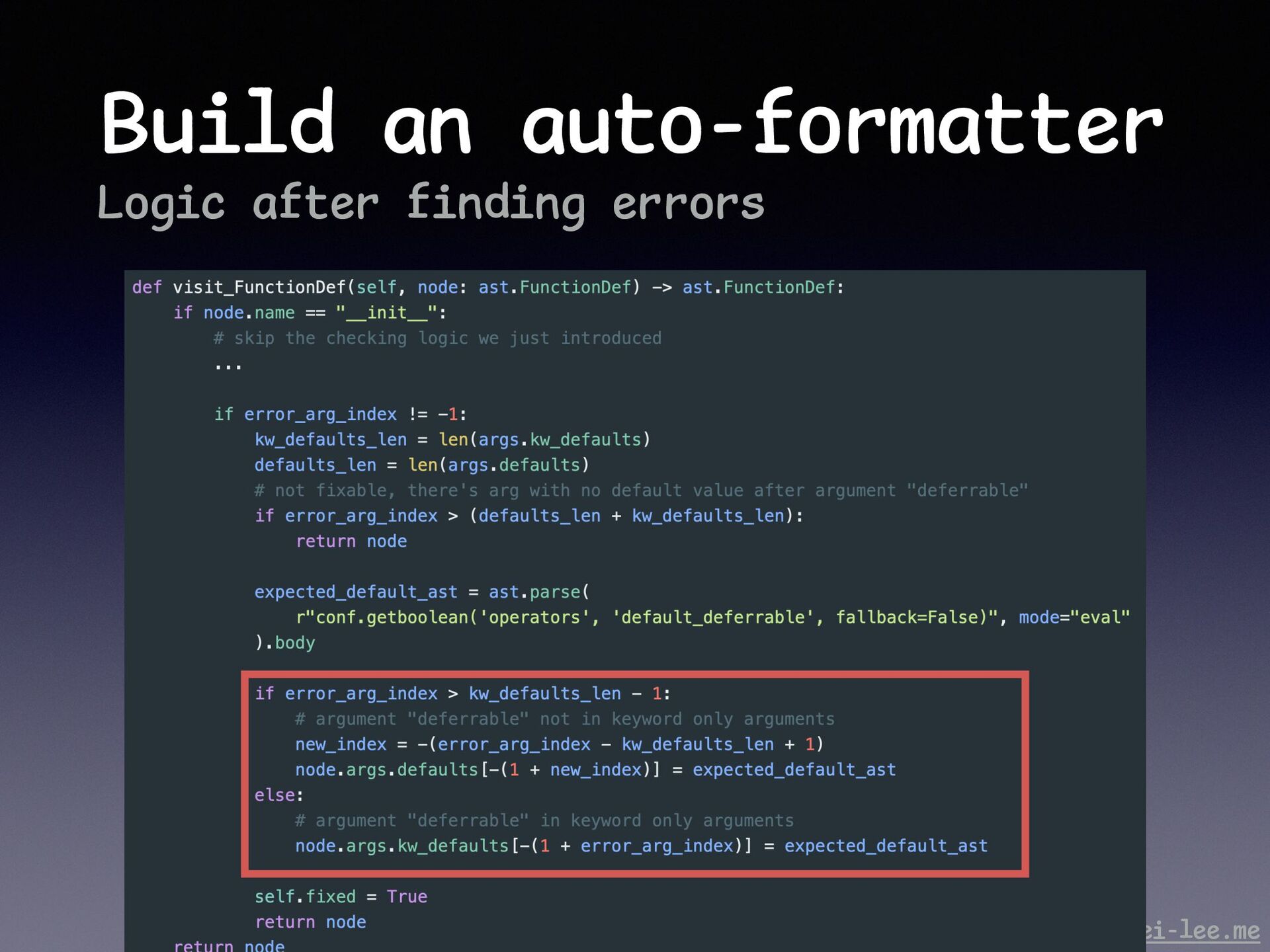
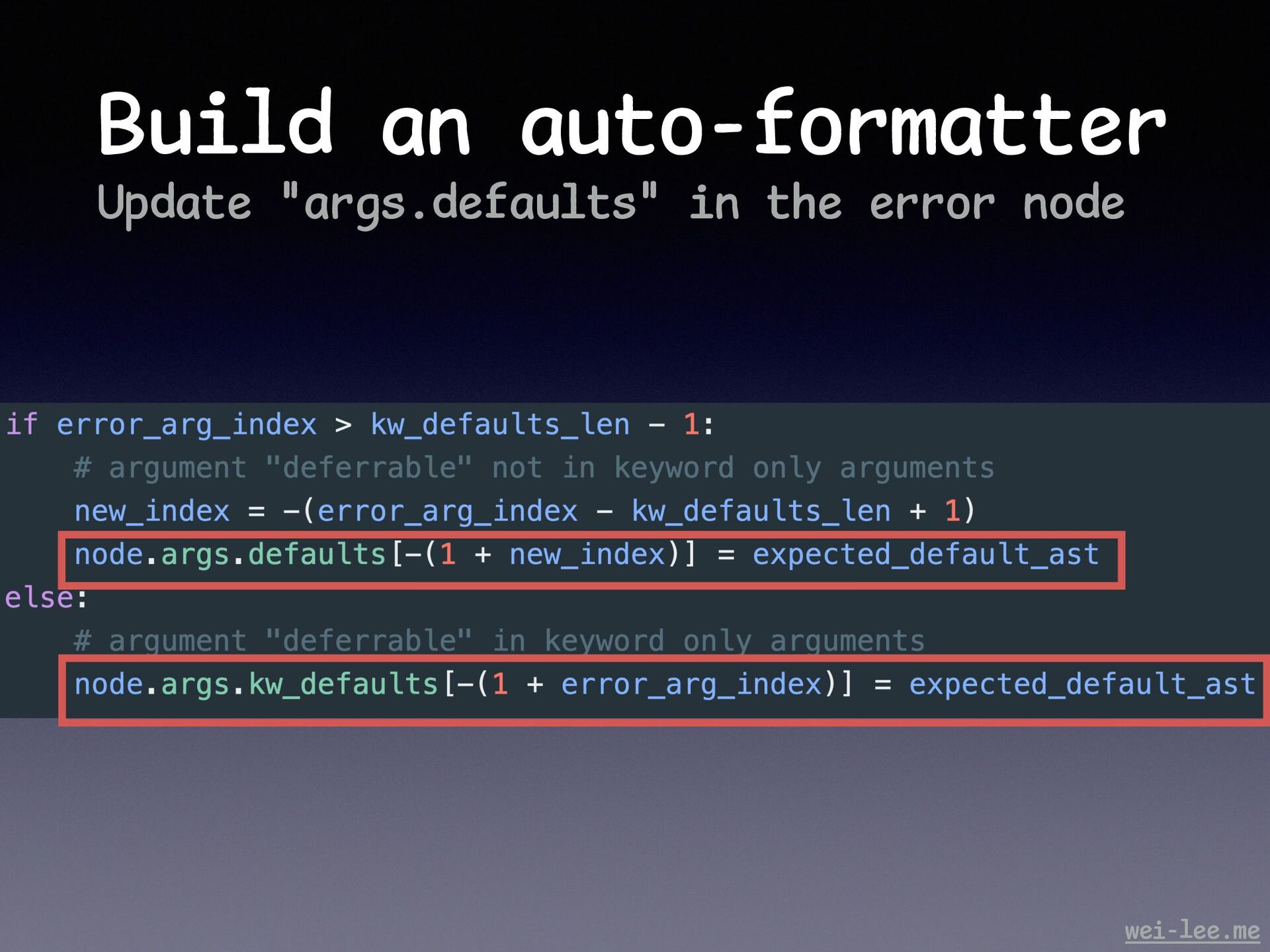
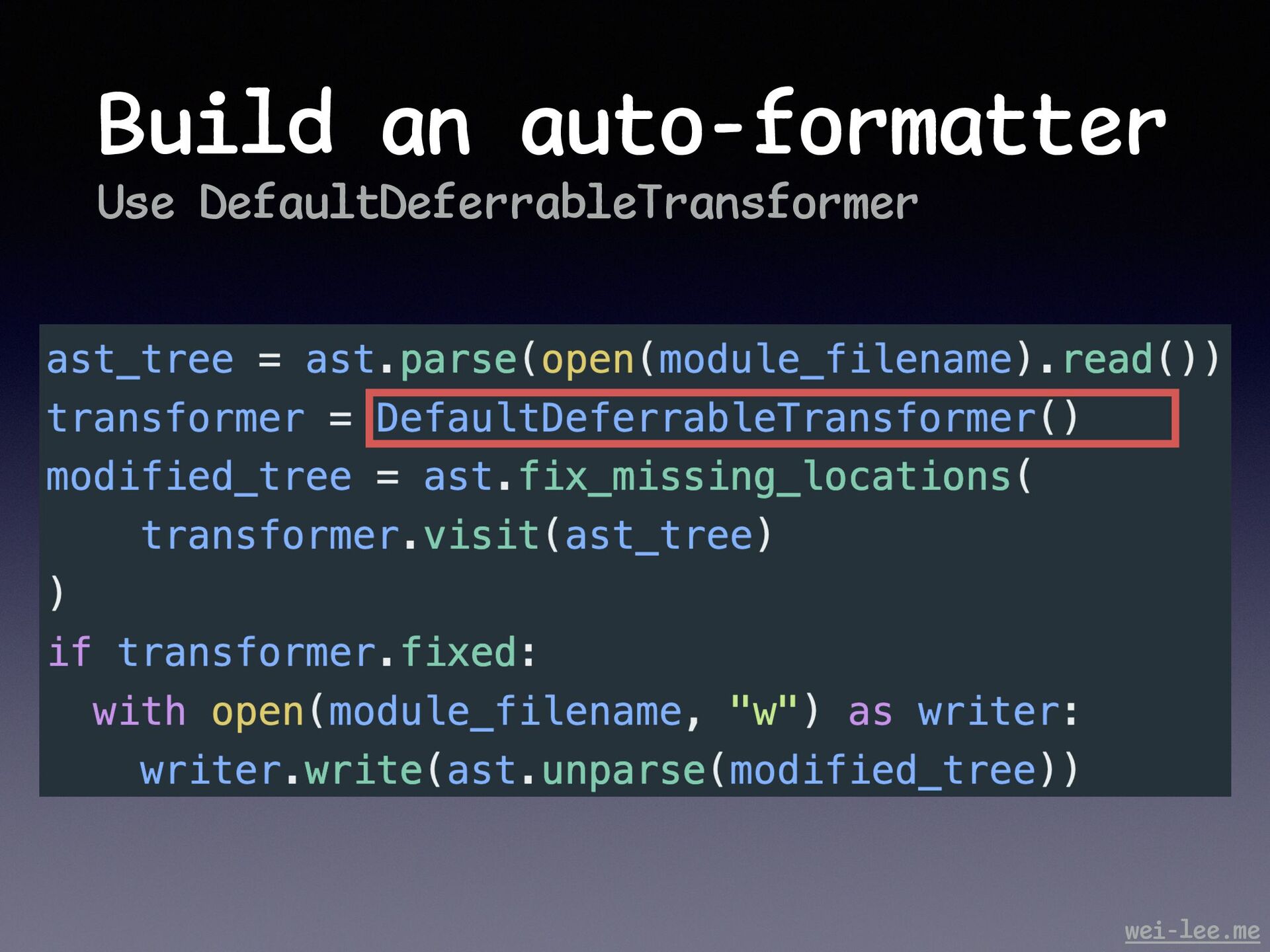
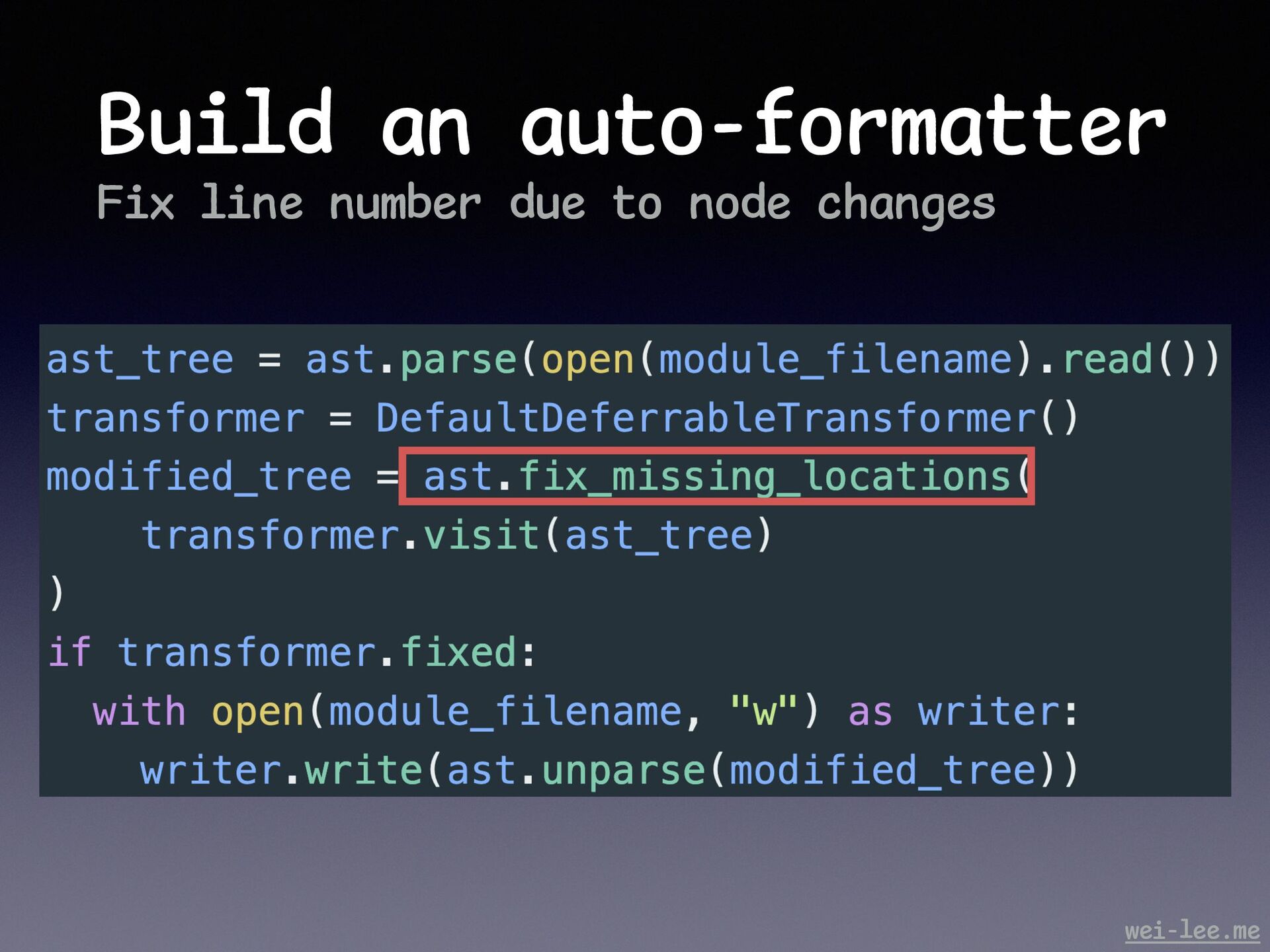
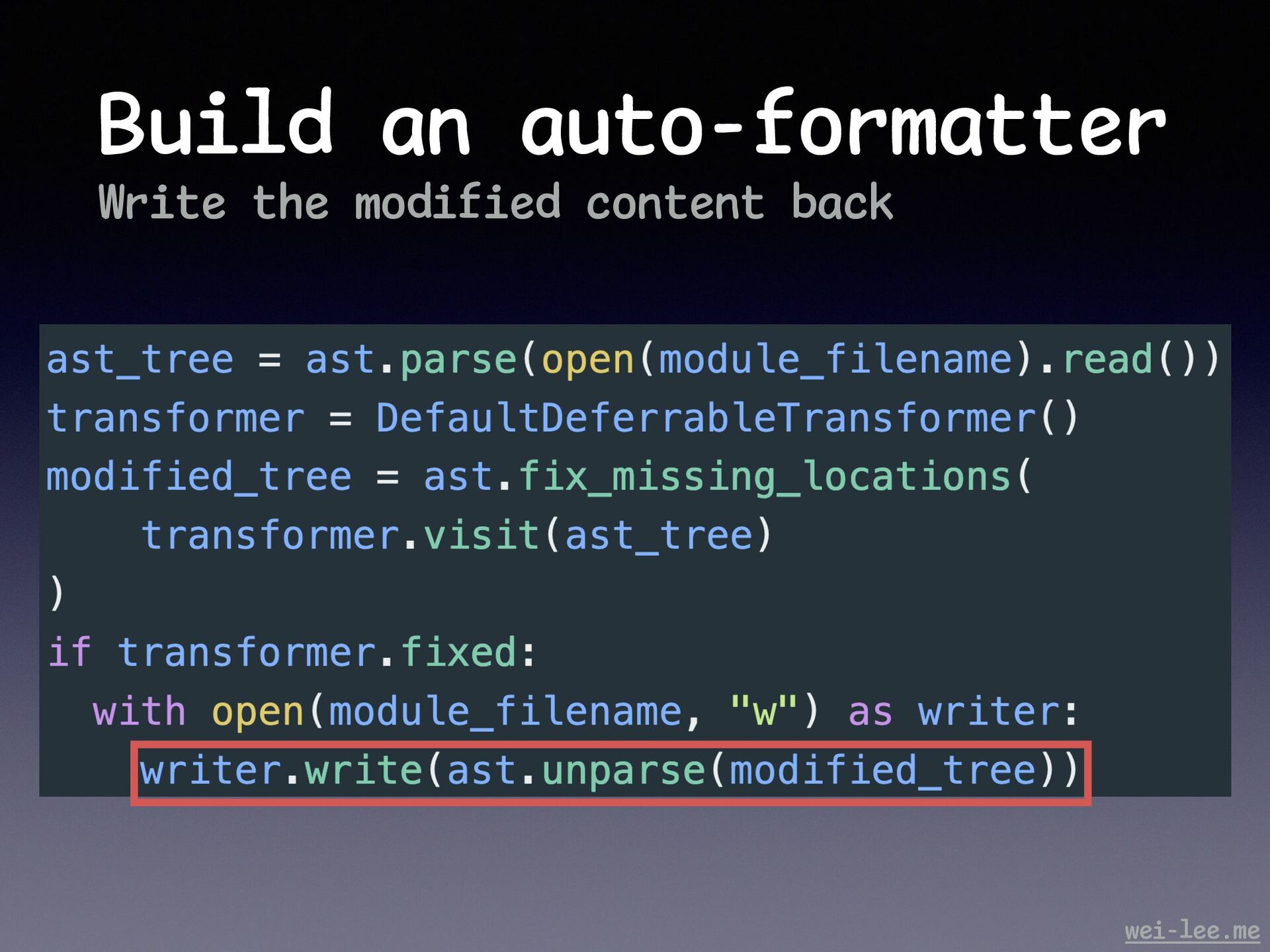
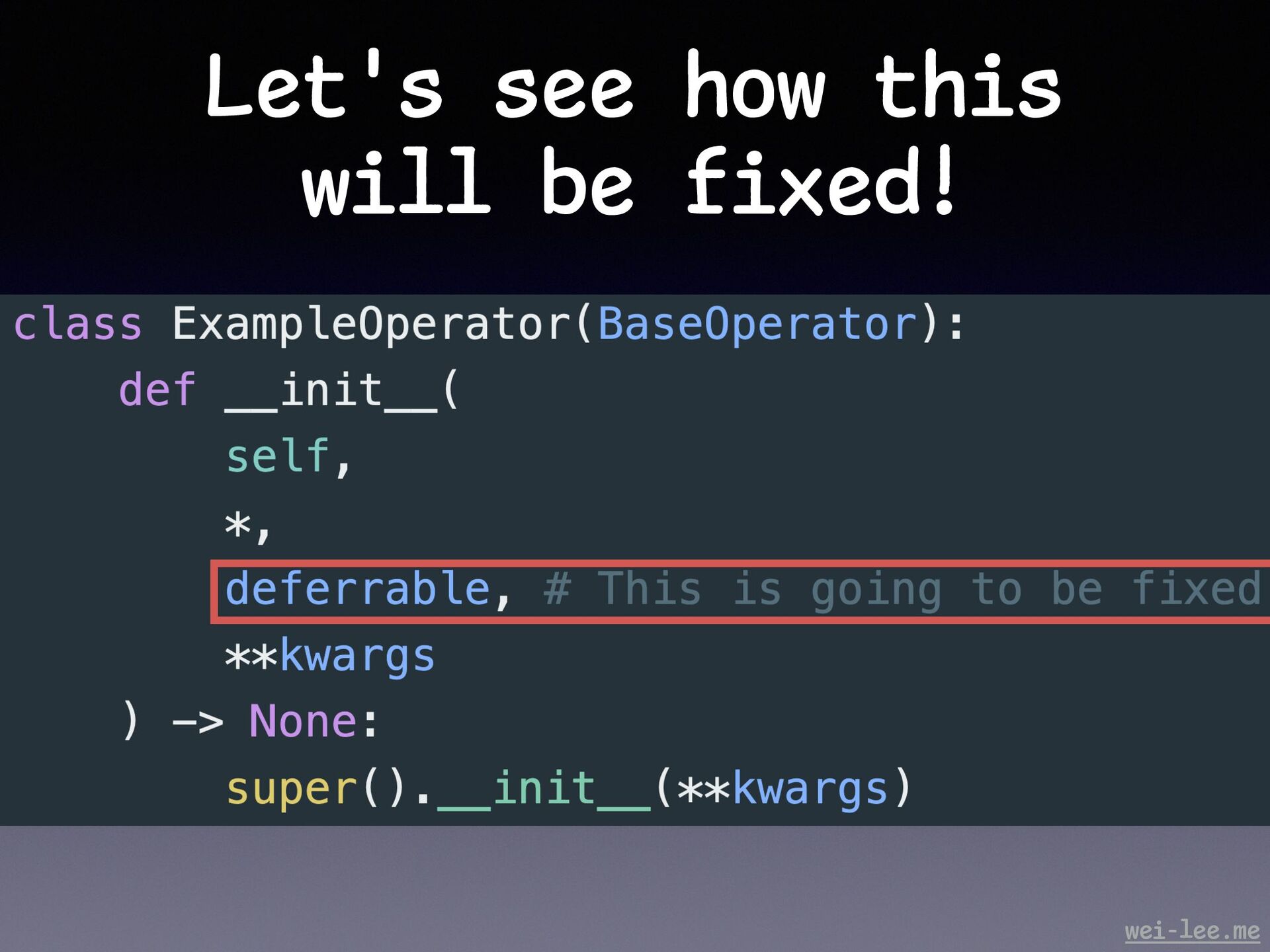
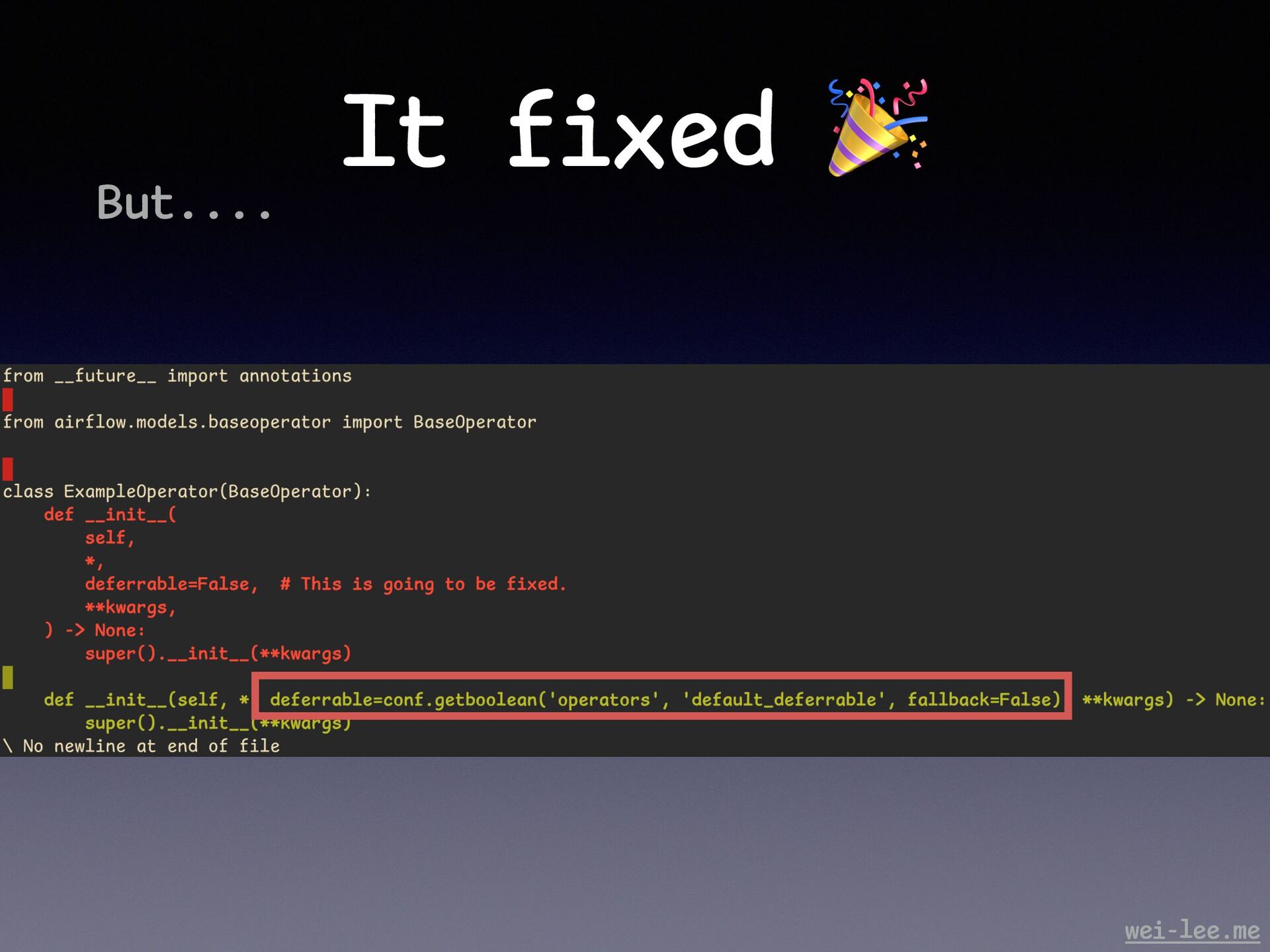
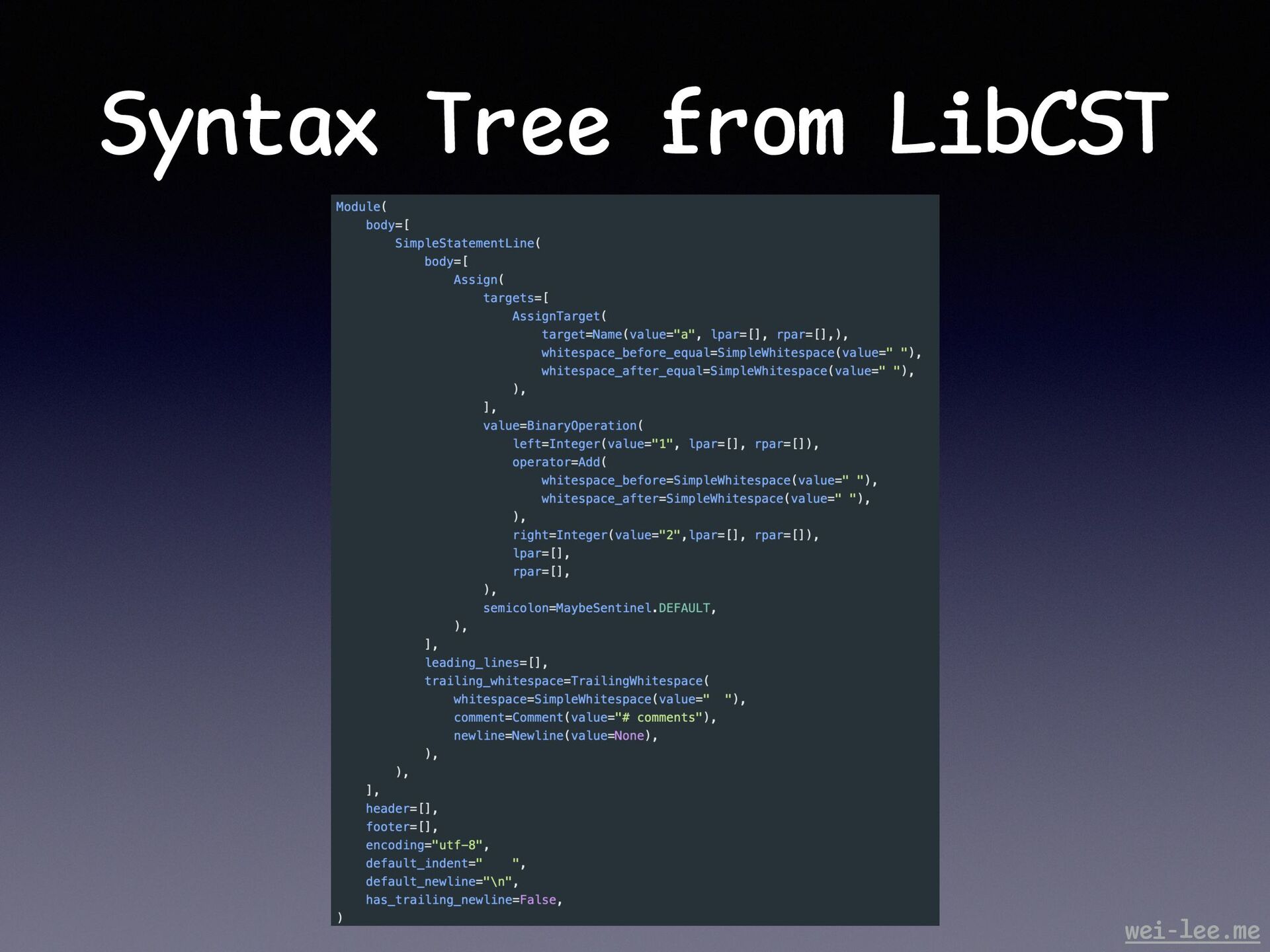
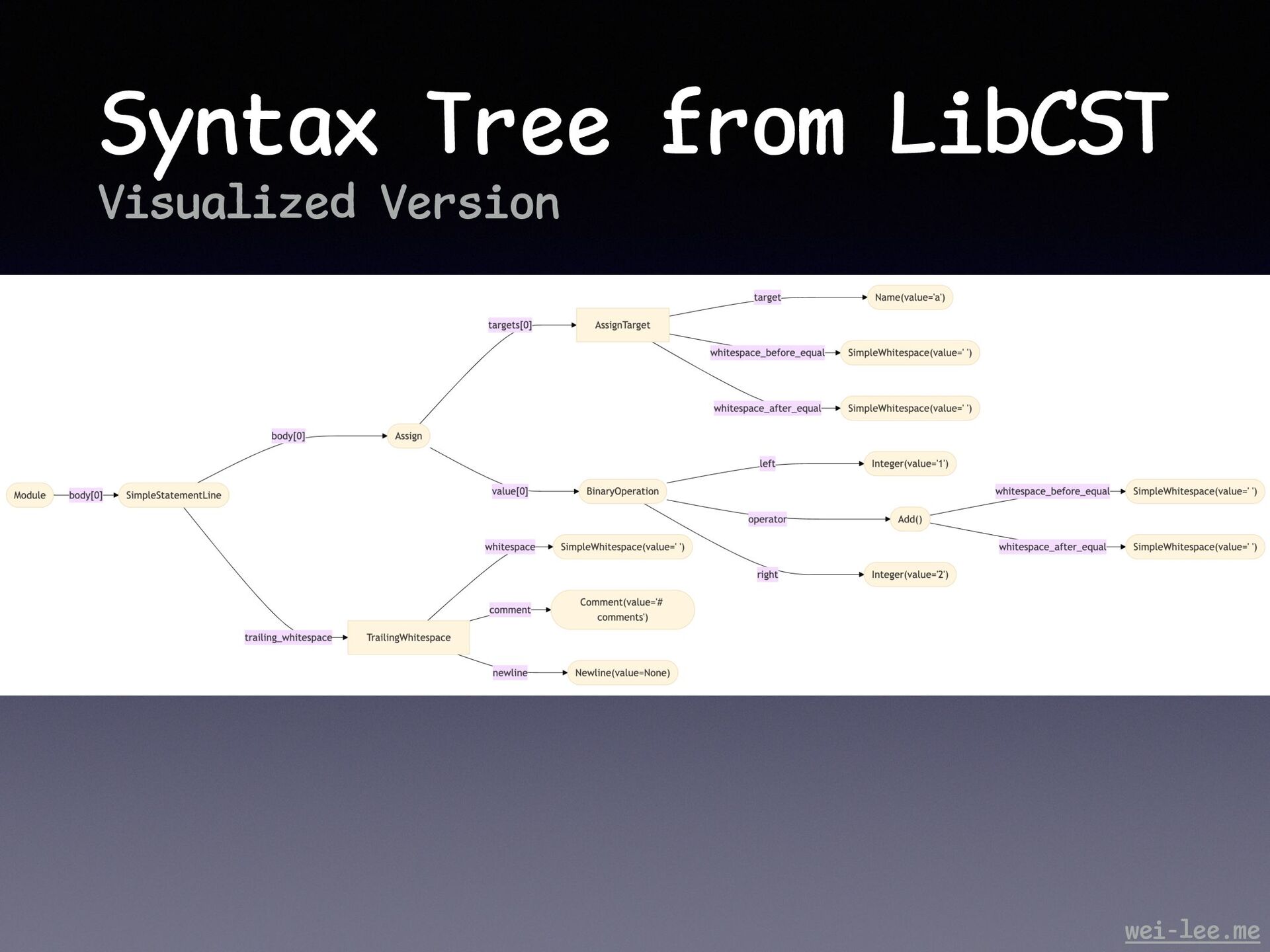
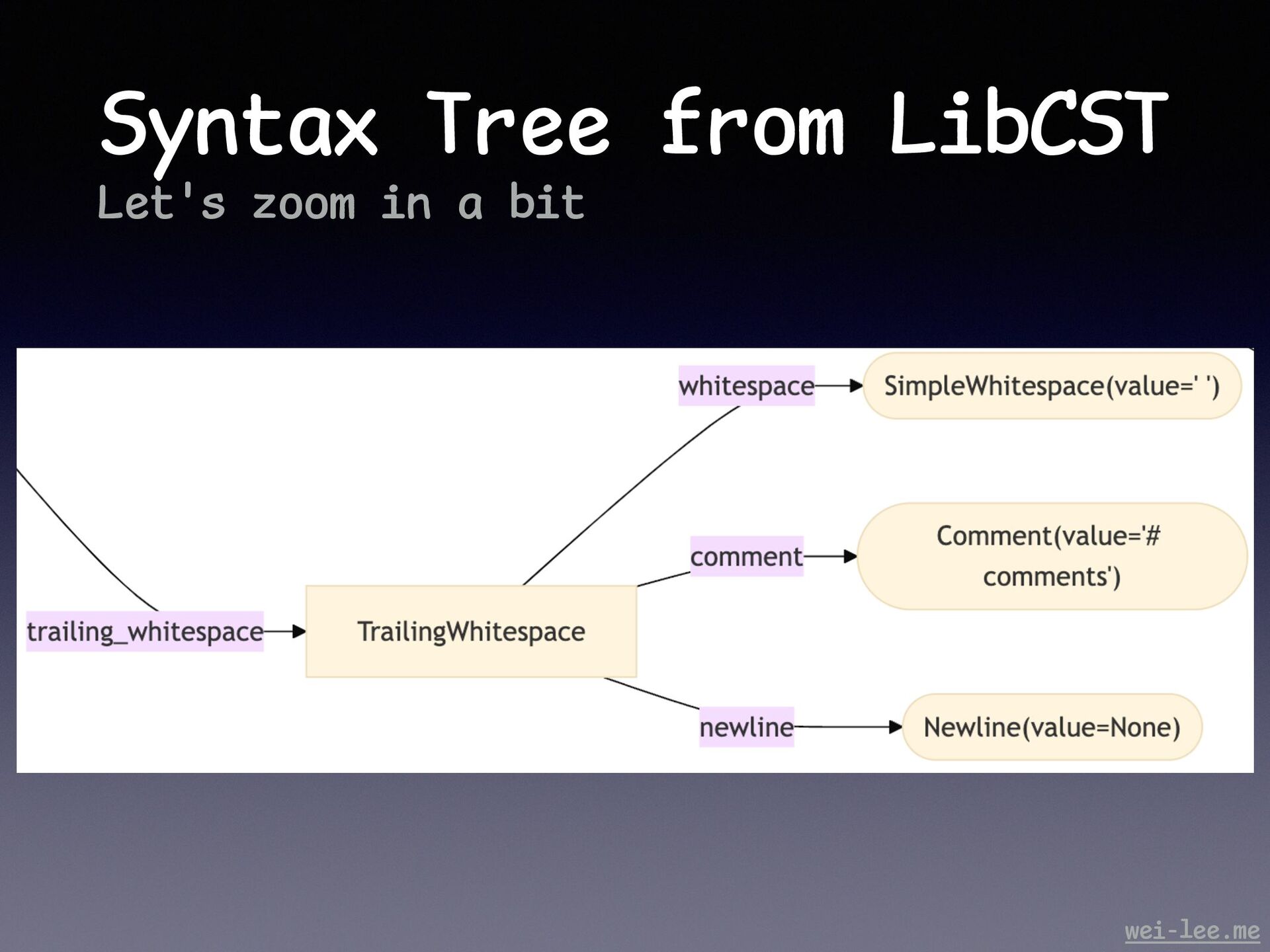
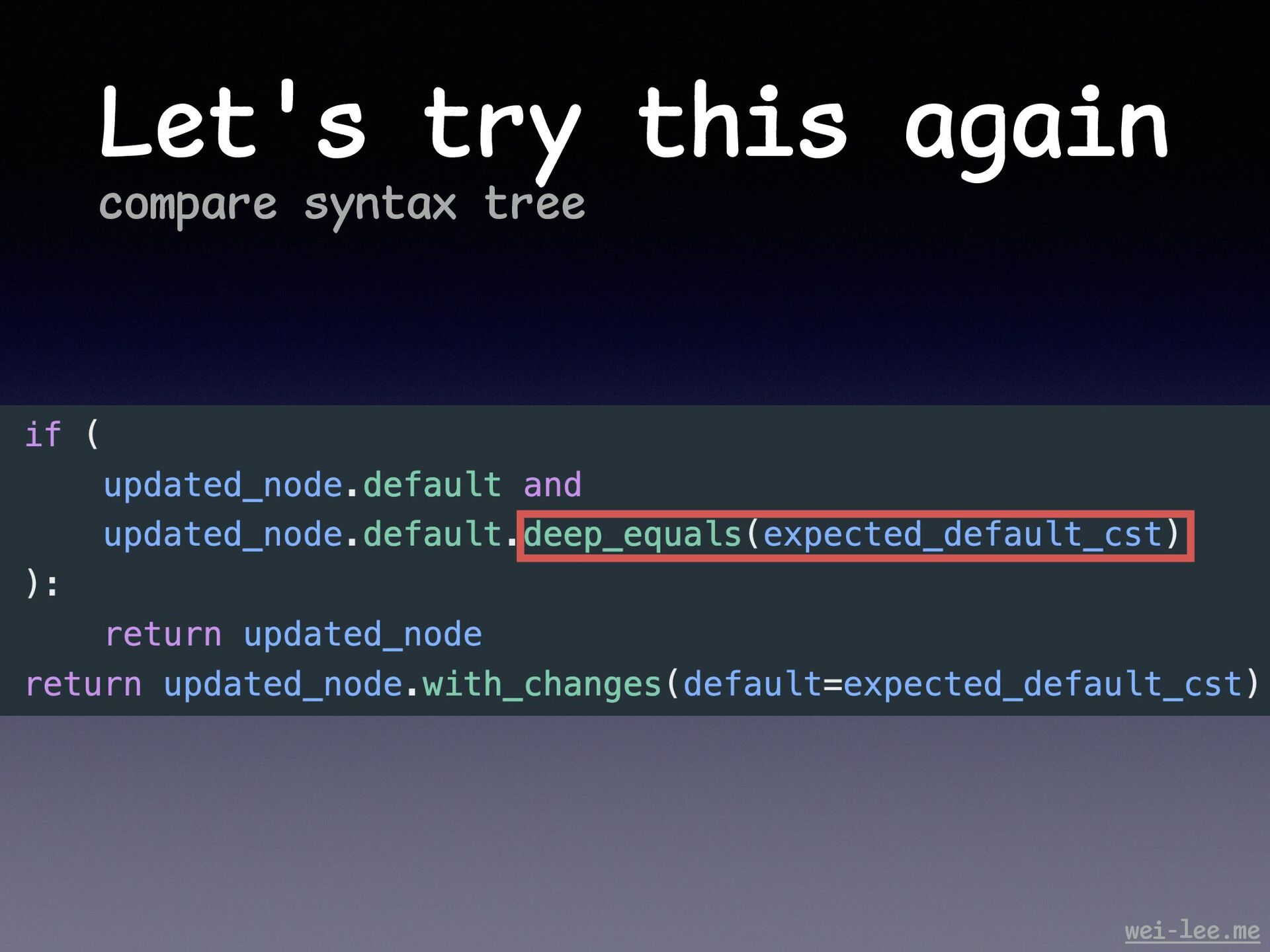
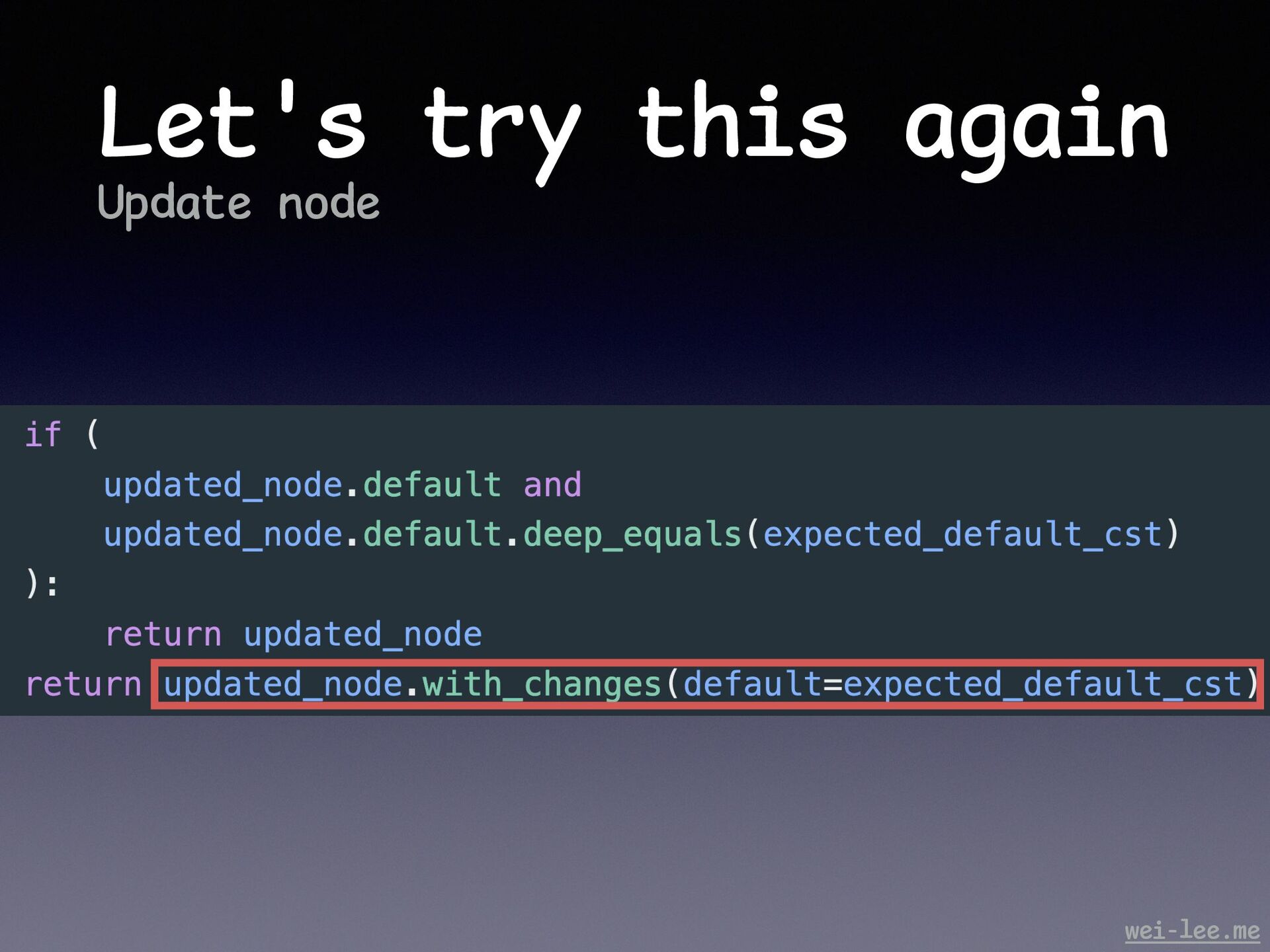
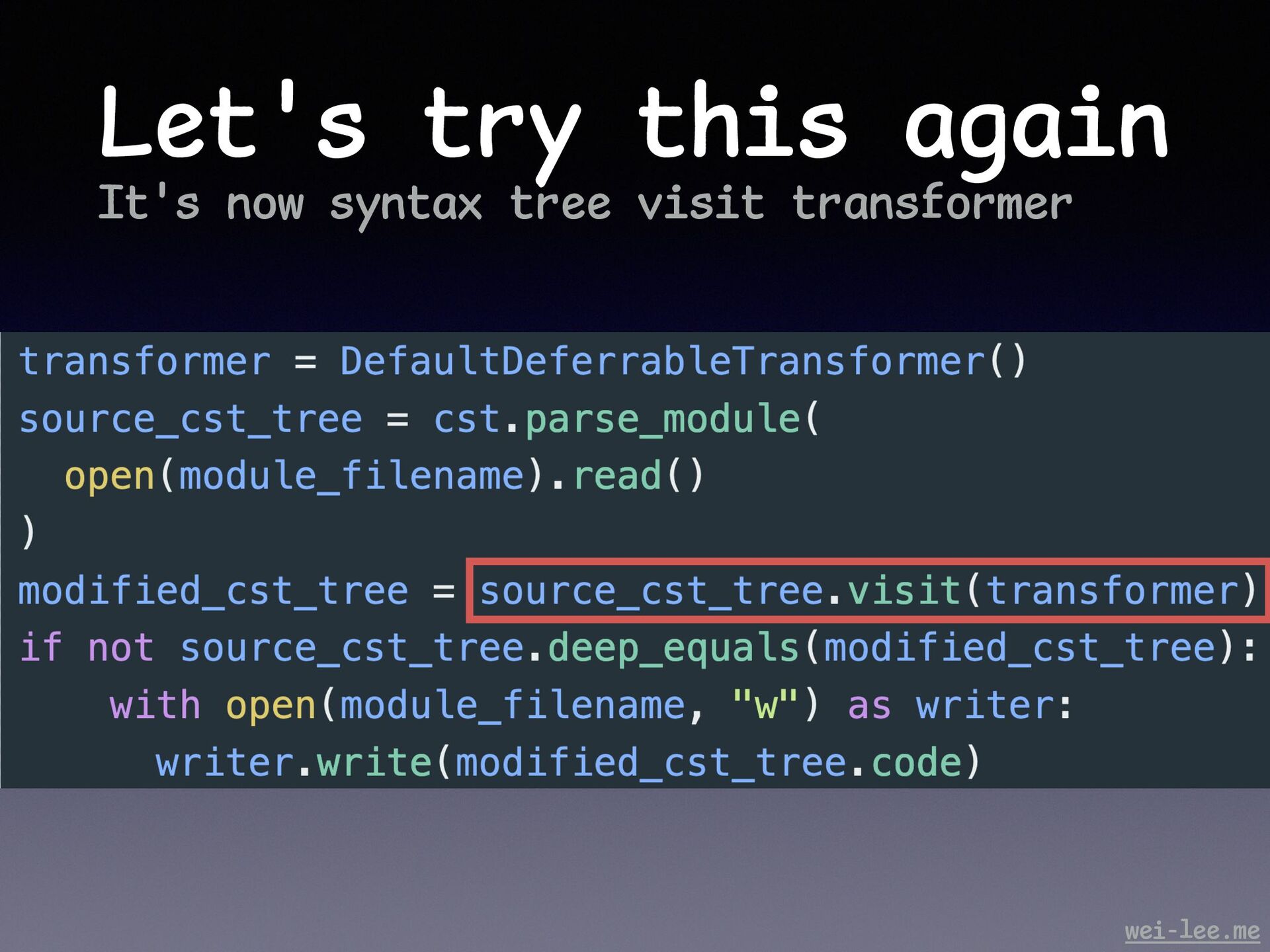
definitions 2. Search for __init__ methods 3. Search for arguments named as deferrable 4. Check the default value is conf.getboolean( "operators", "default_deferrable", fallback=False ) Formalize it into steps
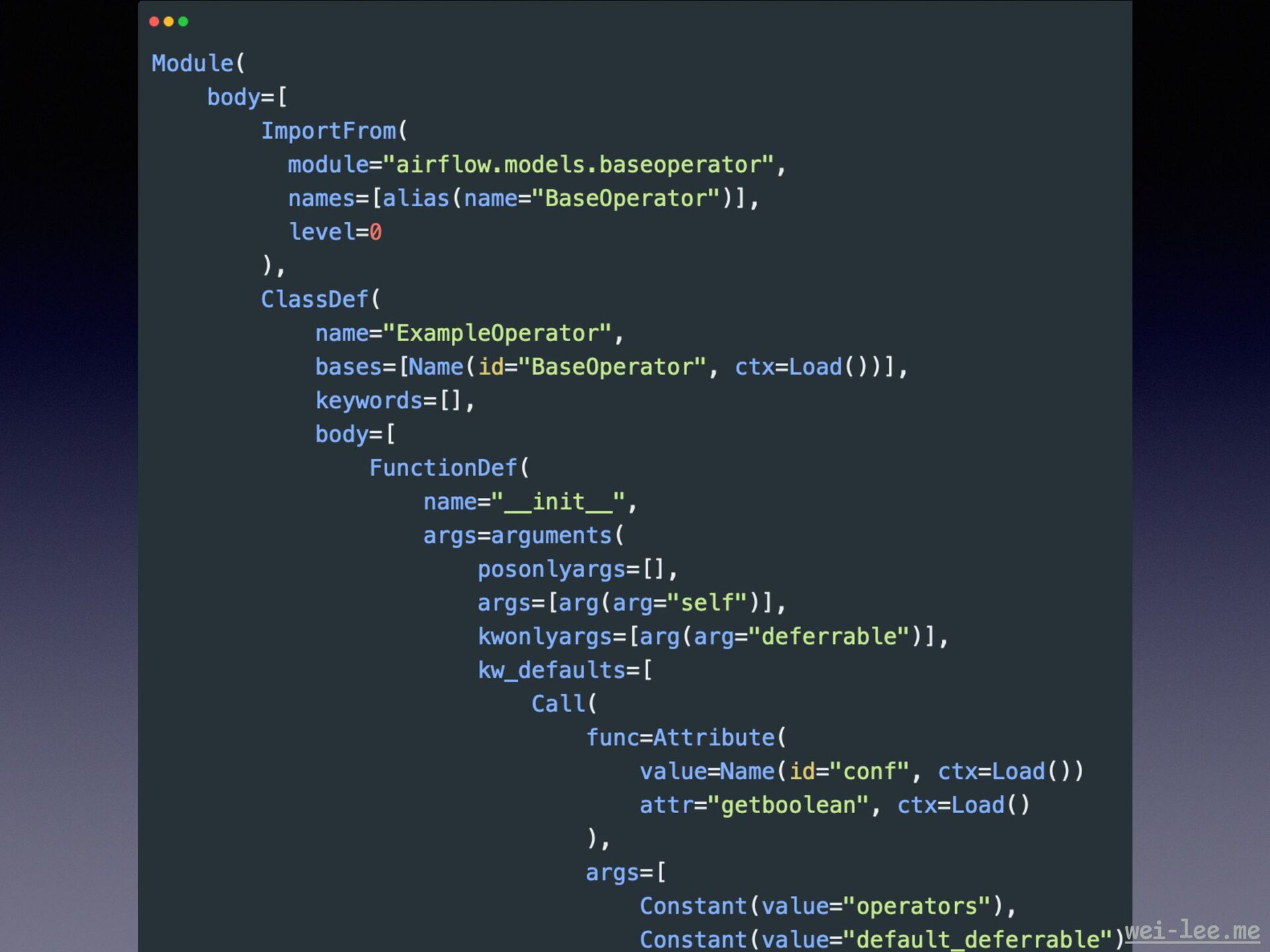
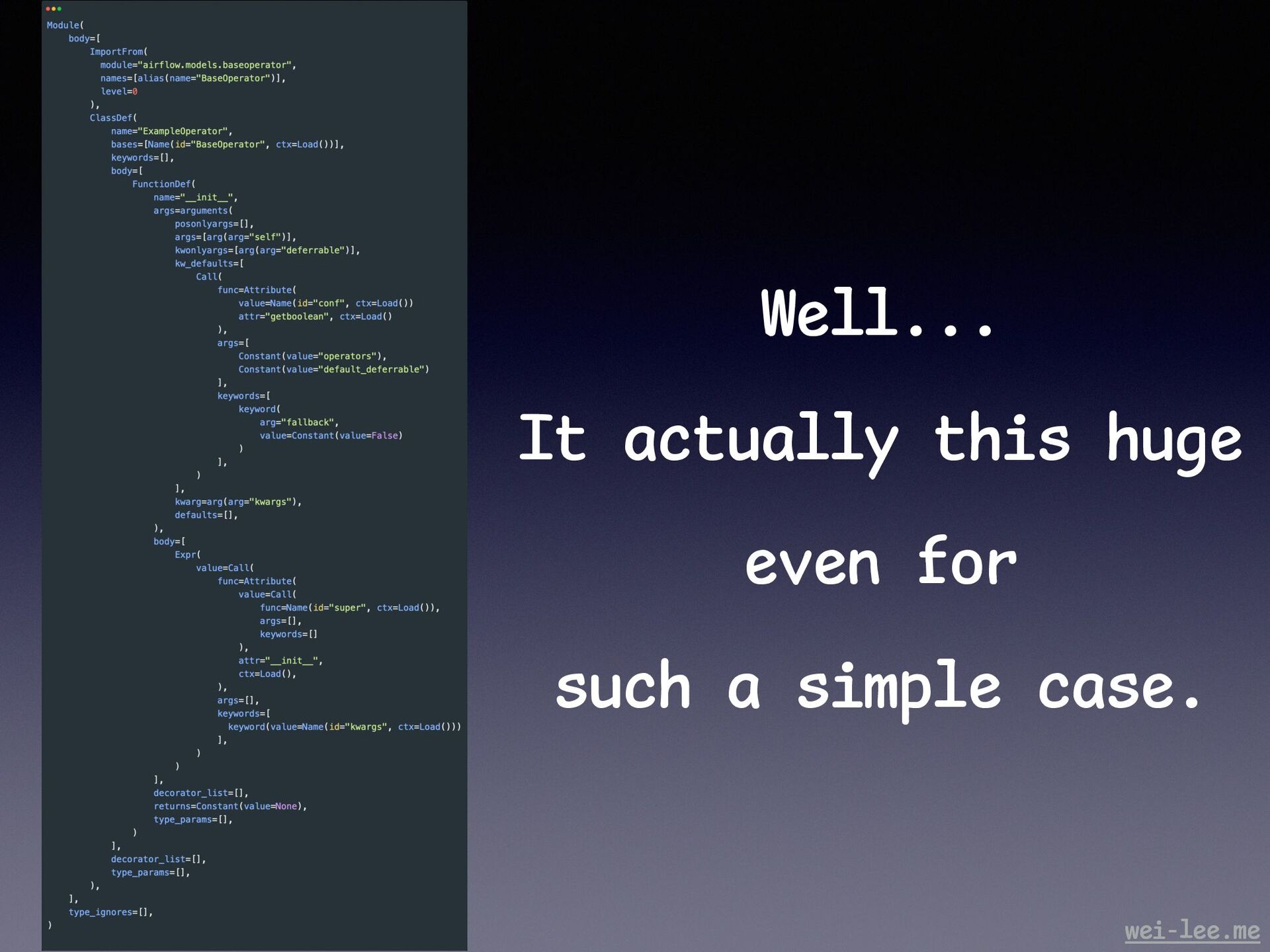
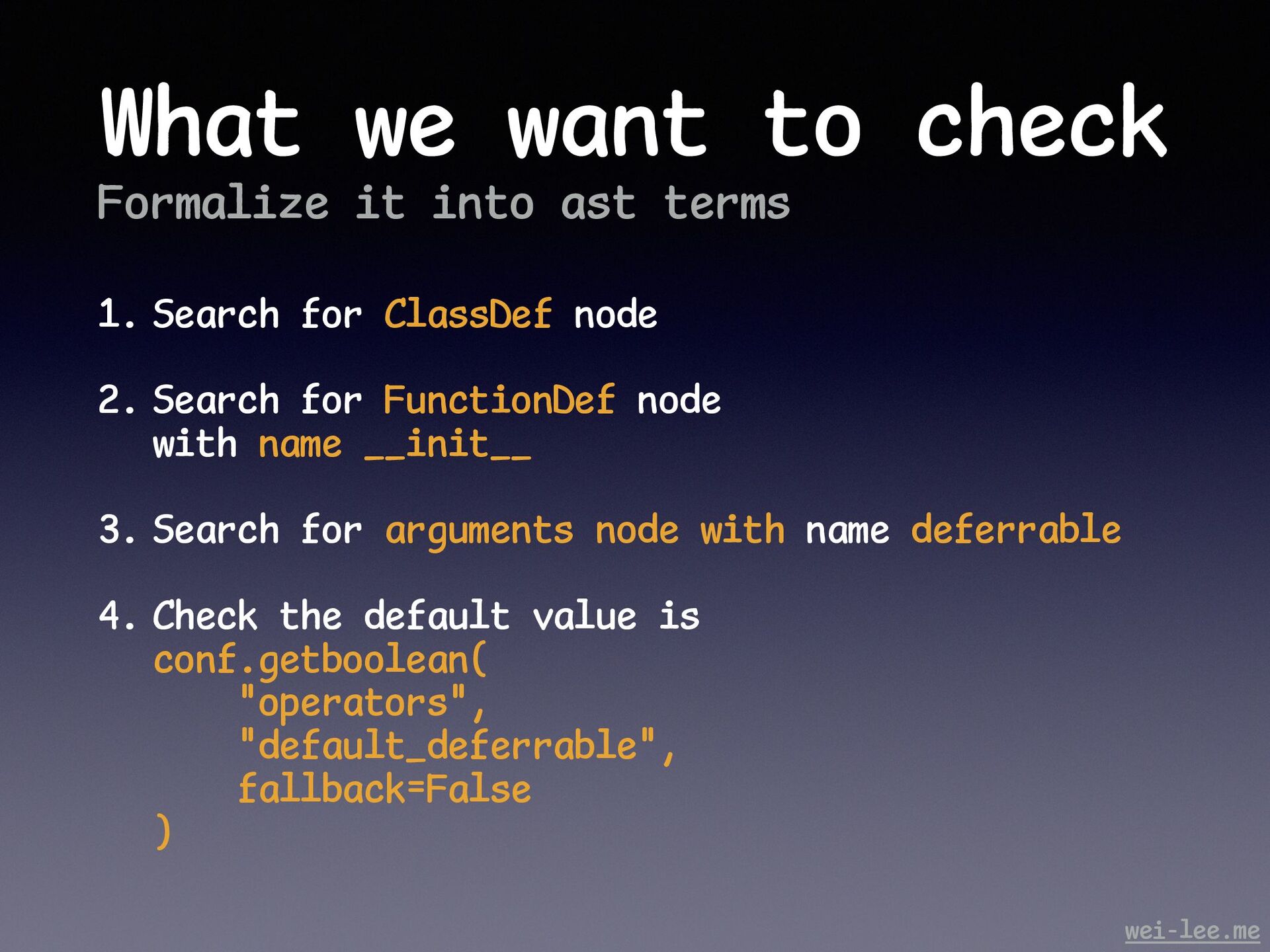
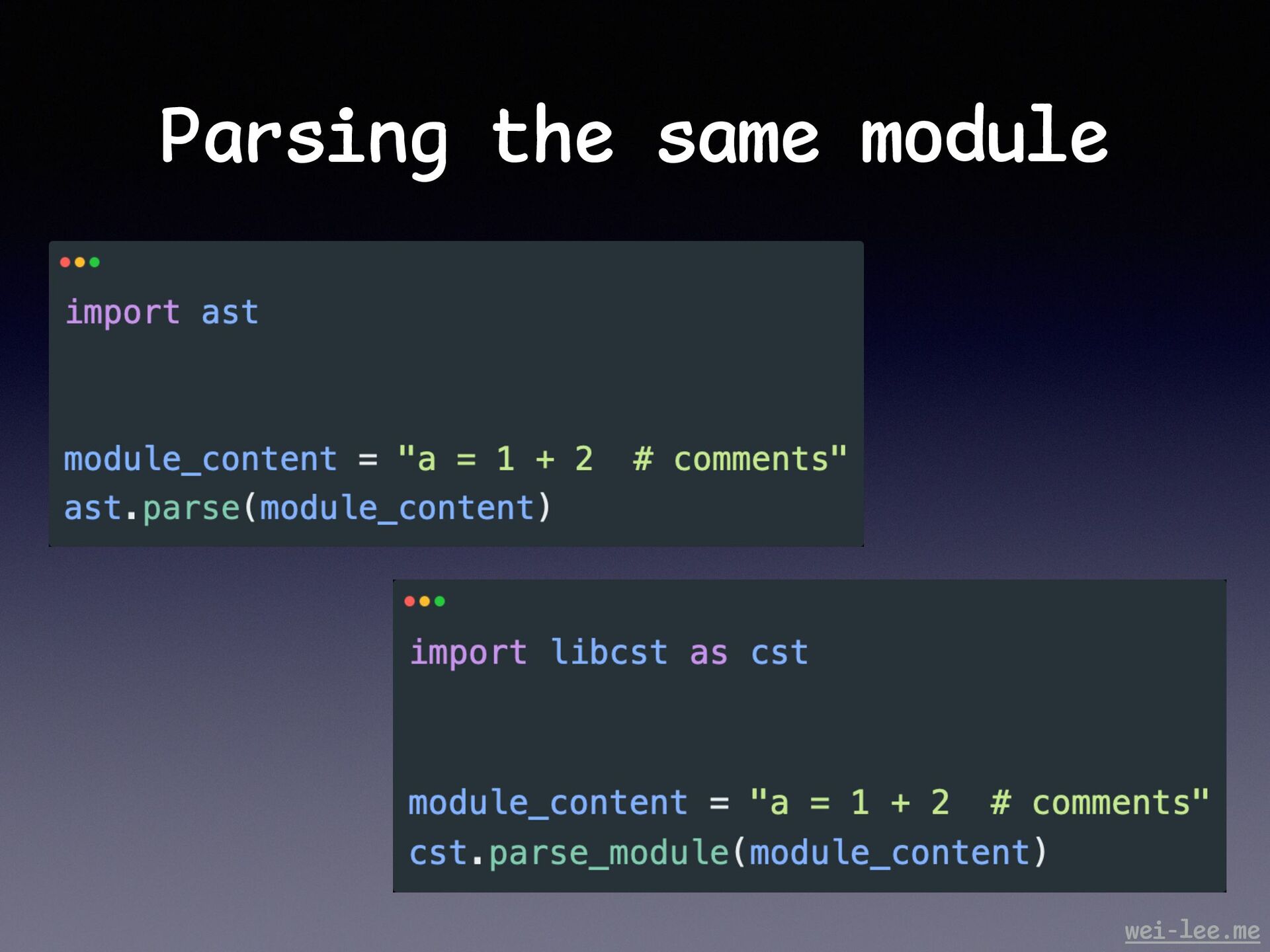
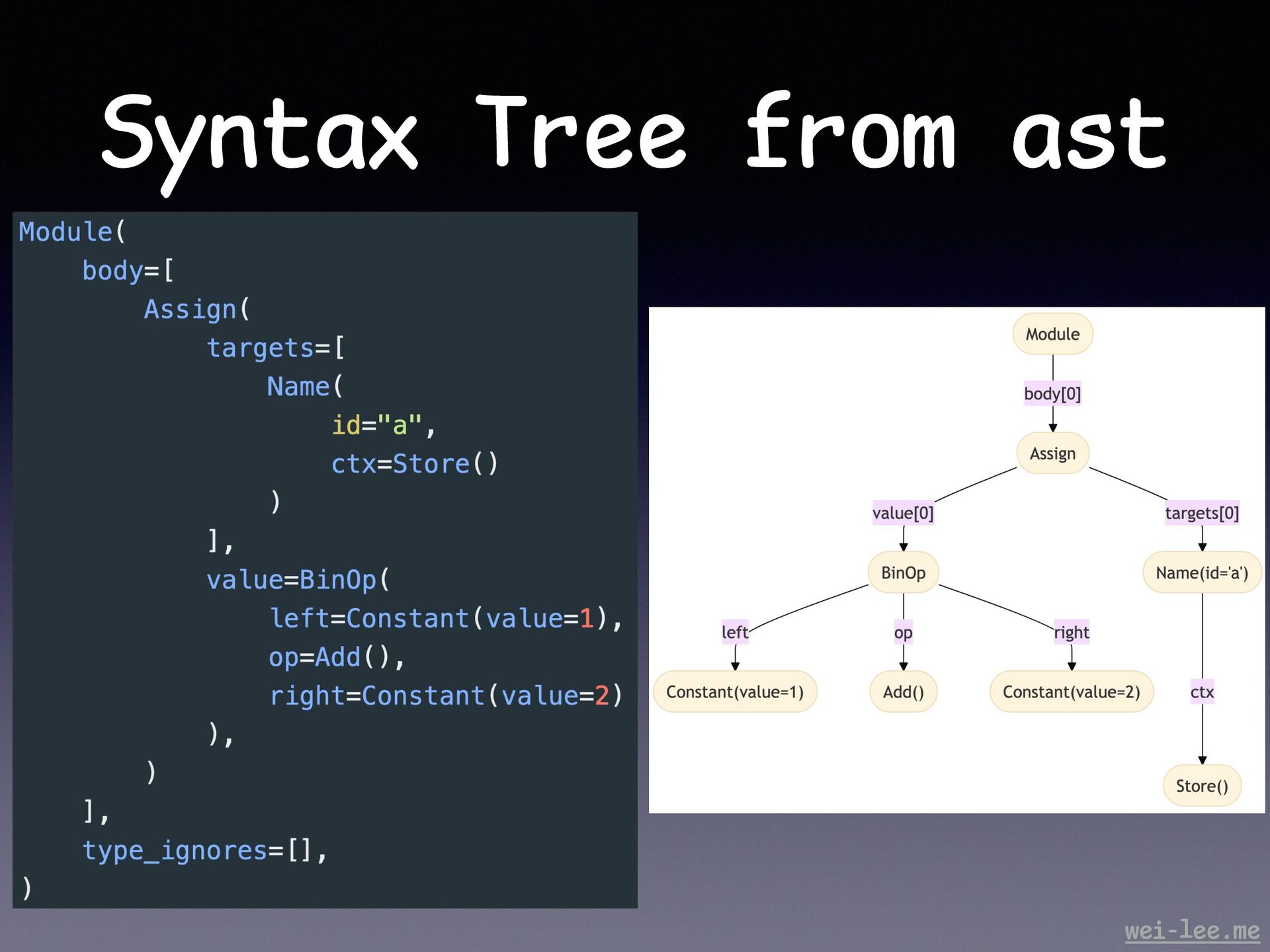
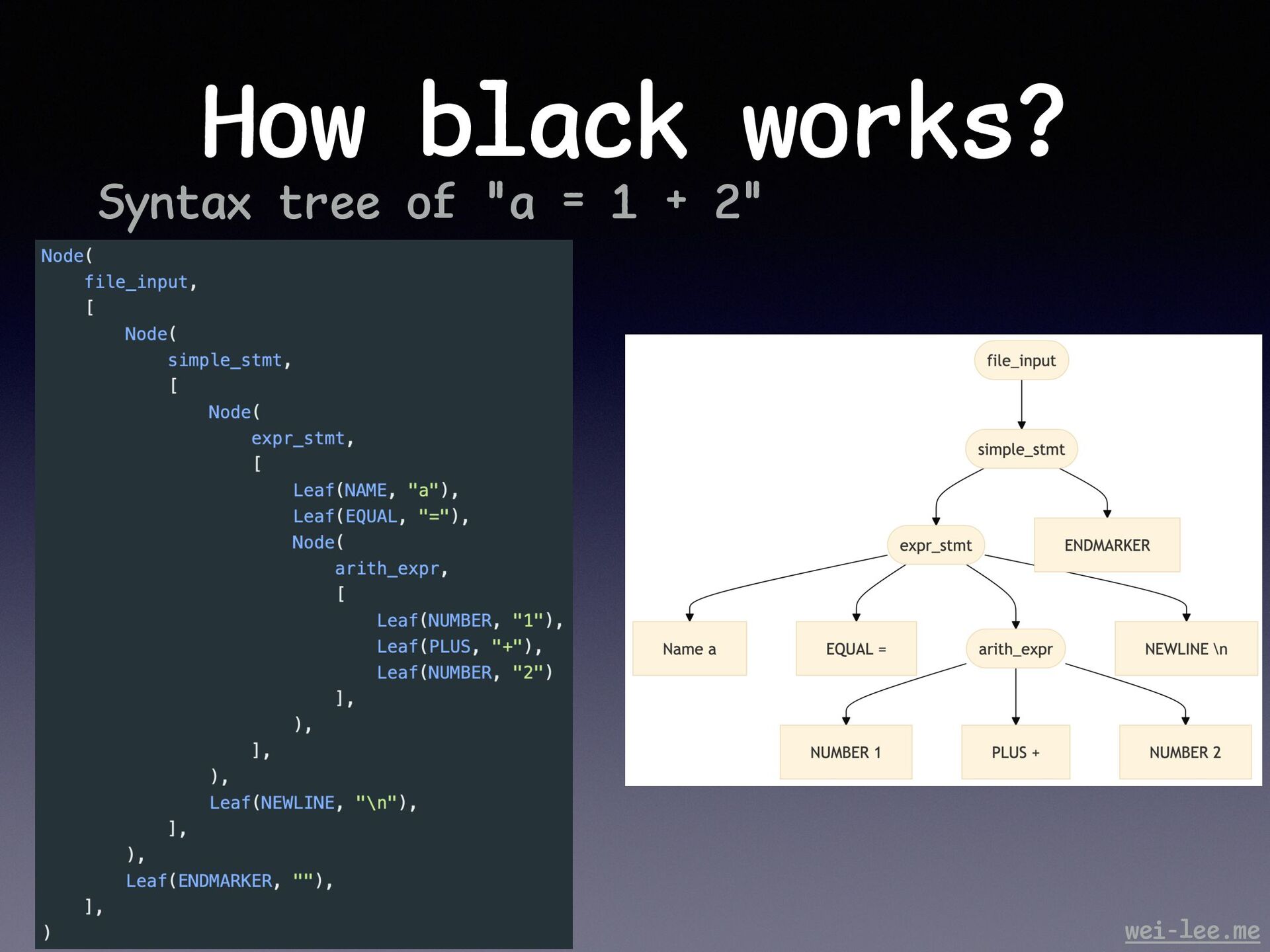
node 2. Search for FunctionDef node with name __init__ 3. Search for arguments node with name deferrable 4. Check the default value is conf.getboolean( "operators", "default_deferrable", fallback=False ) Formalize it into ast terms
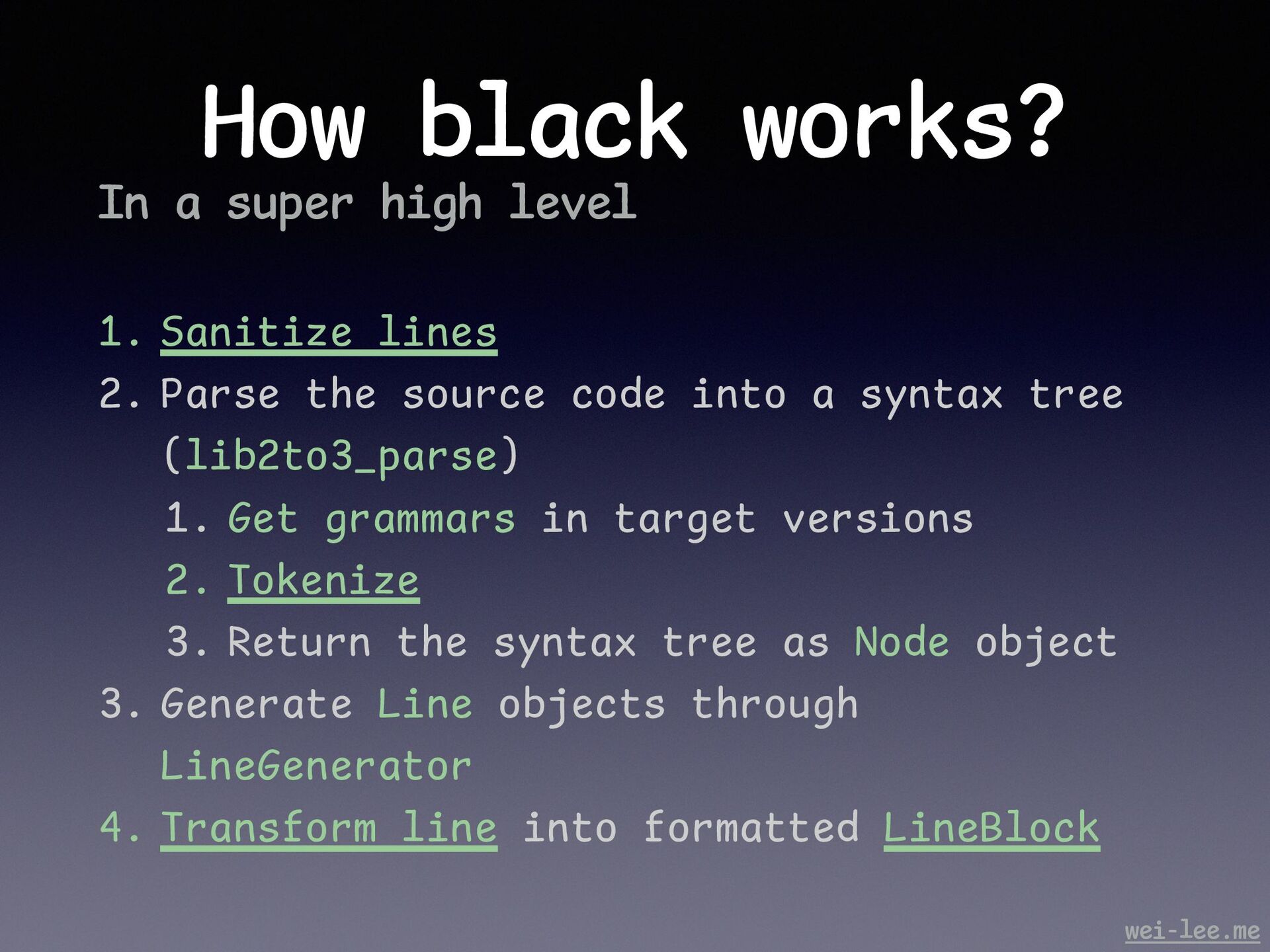
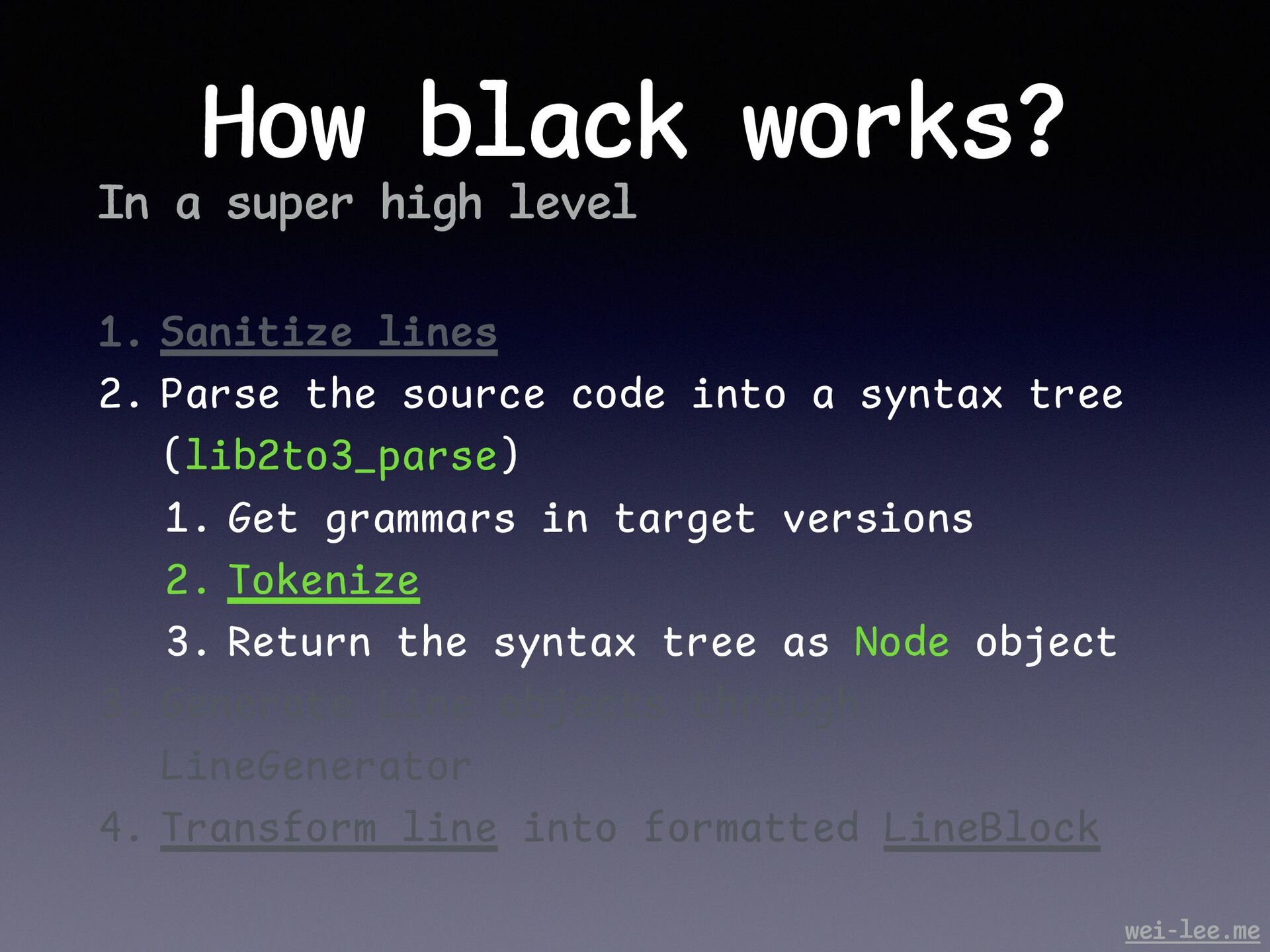
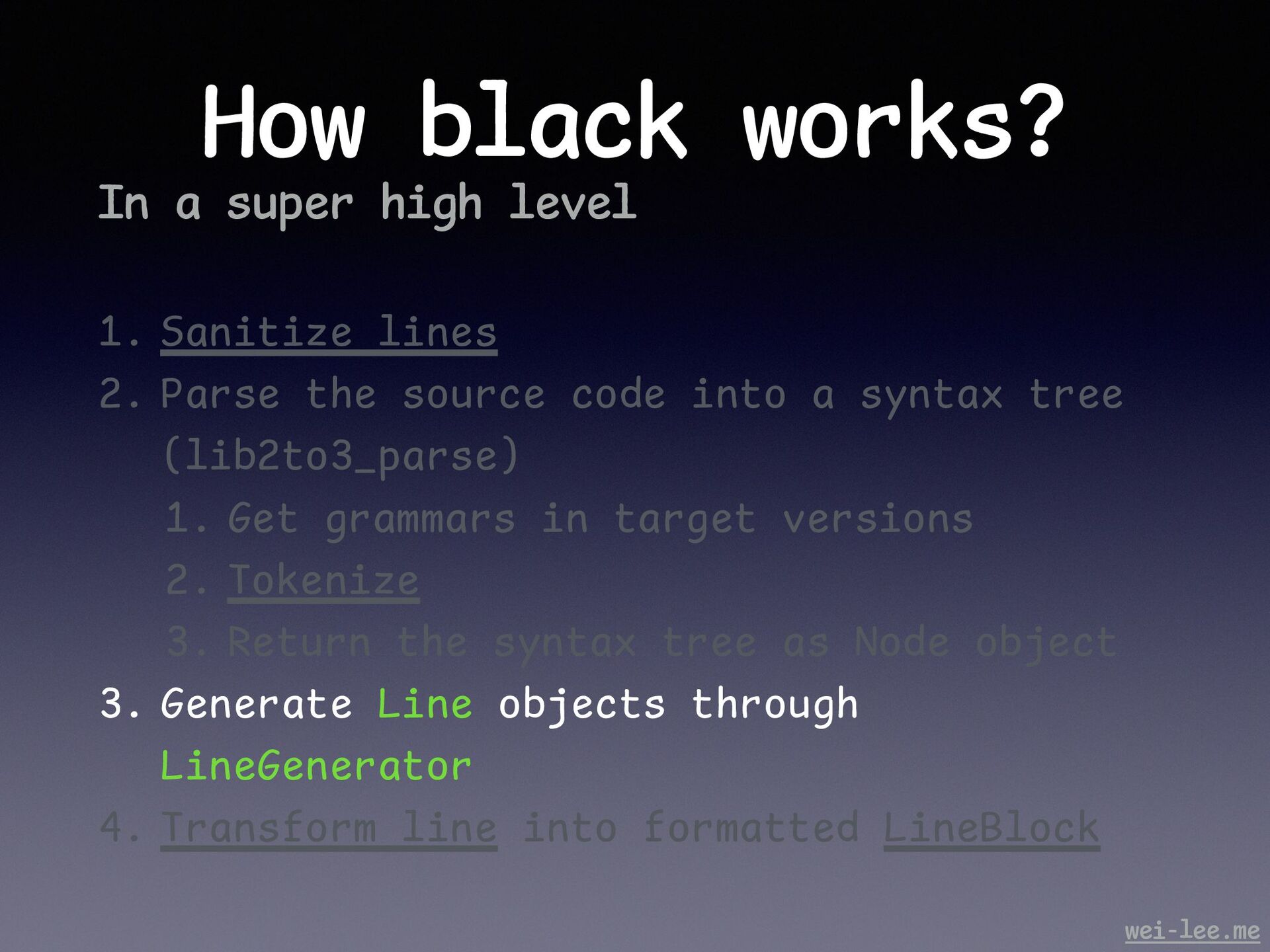
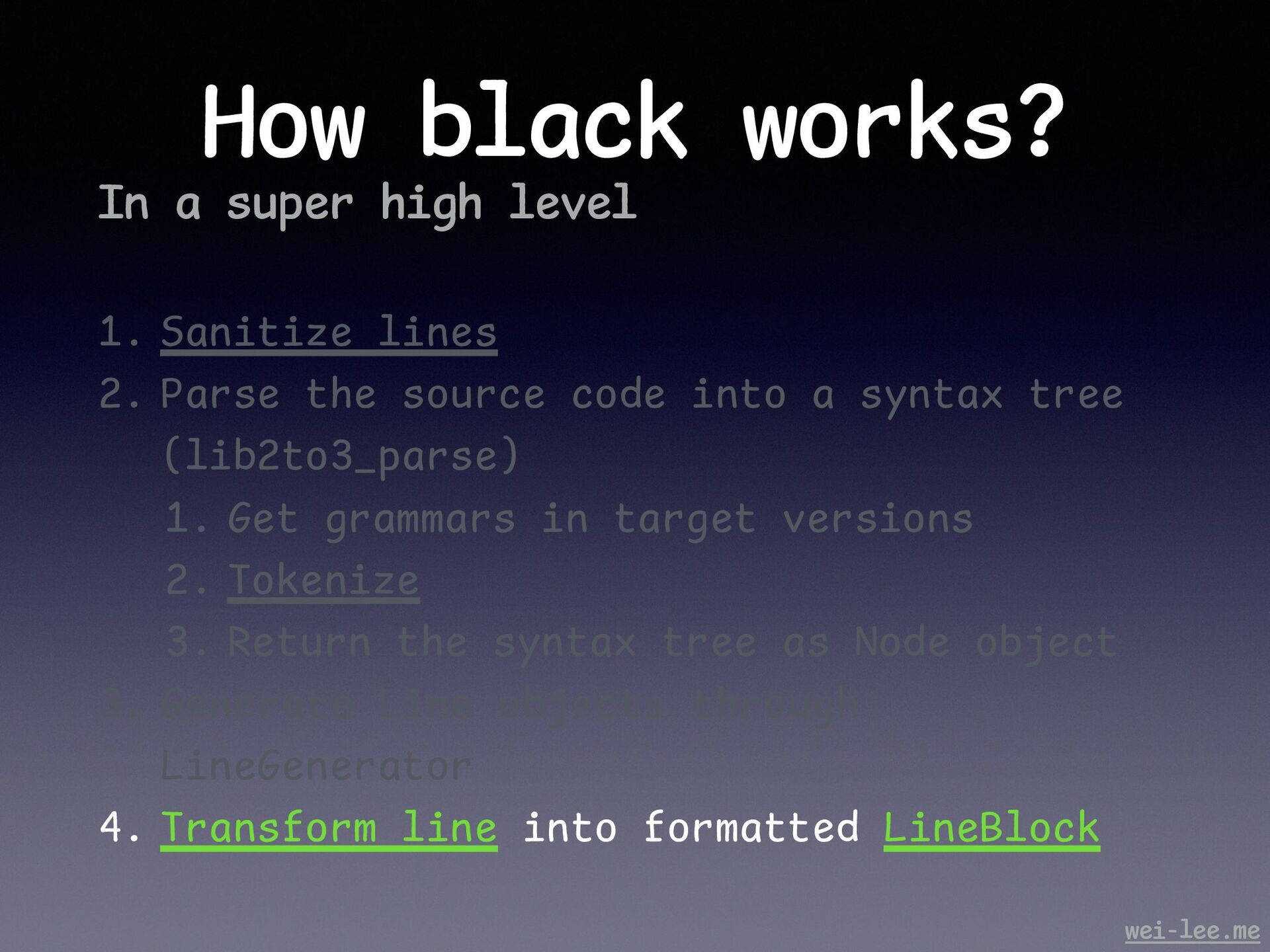
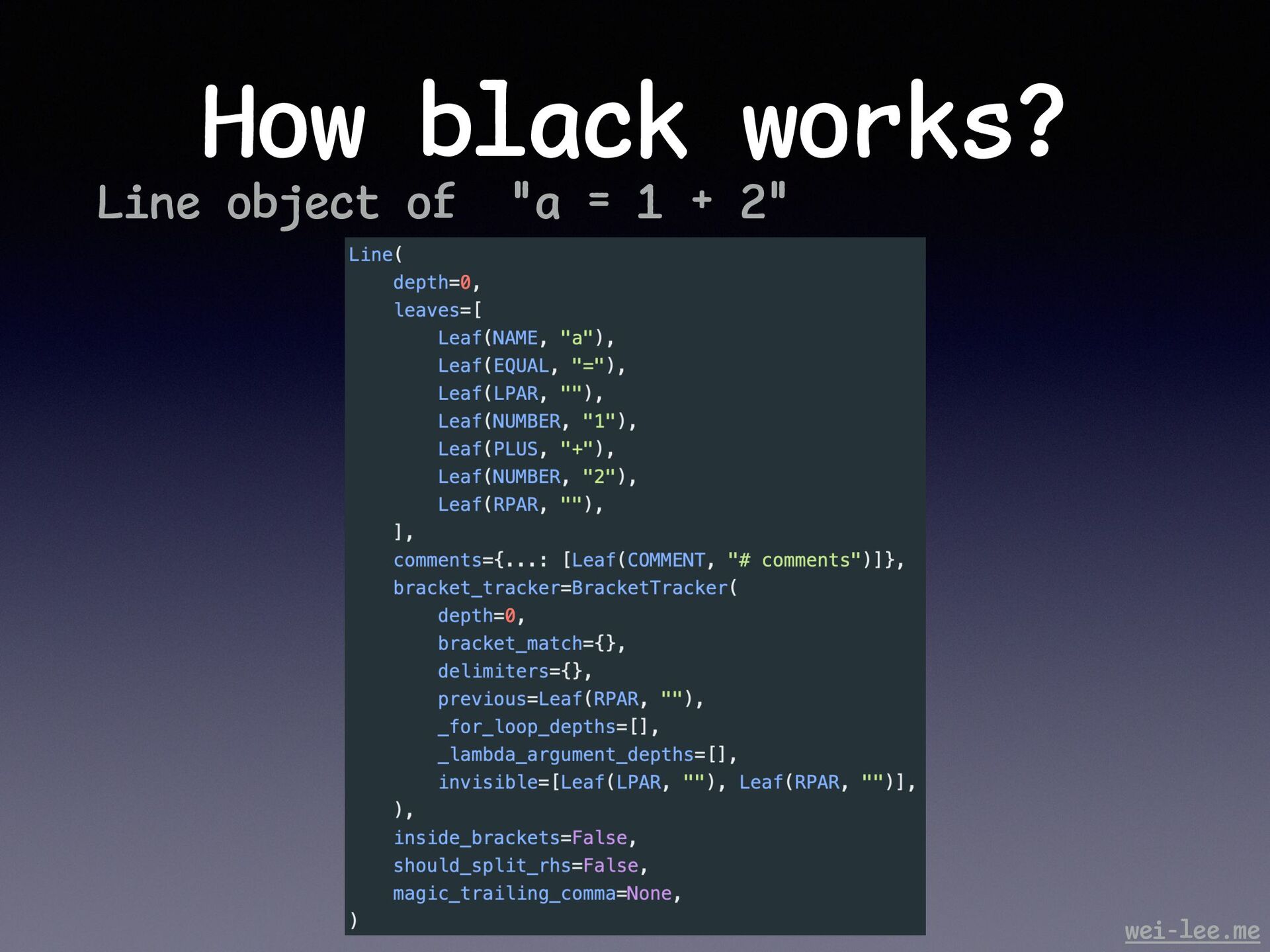
source code into a syntax tree (lib2to3_parse) 1. Get grammars in target versions 2. Tokenize 3. Return the syntax tree as Node object 3. Generate Line objects through LineGenerator 4. Transform line into formatted LineBlock In a super high level
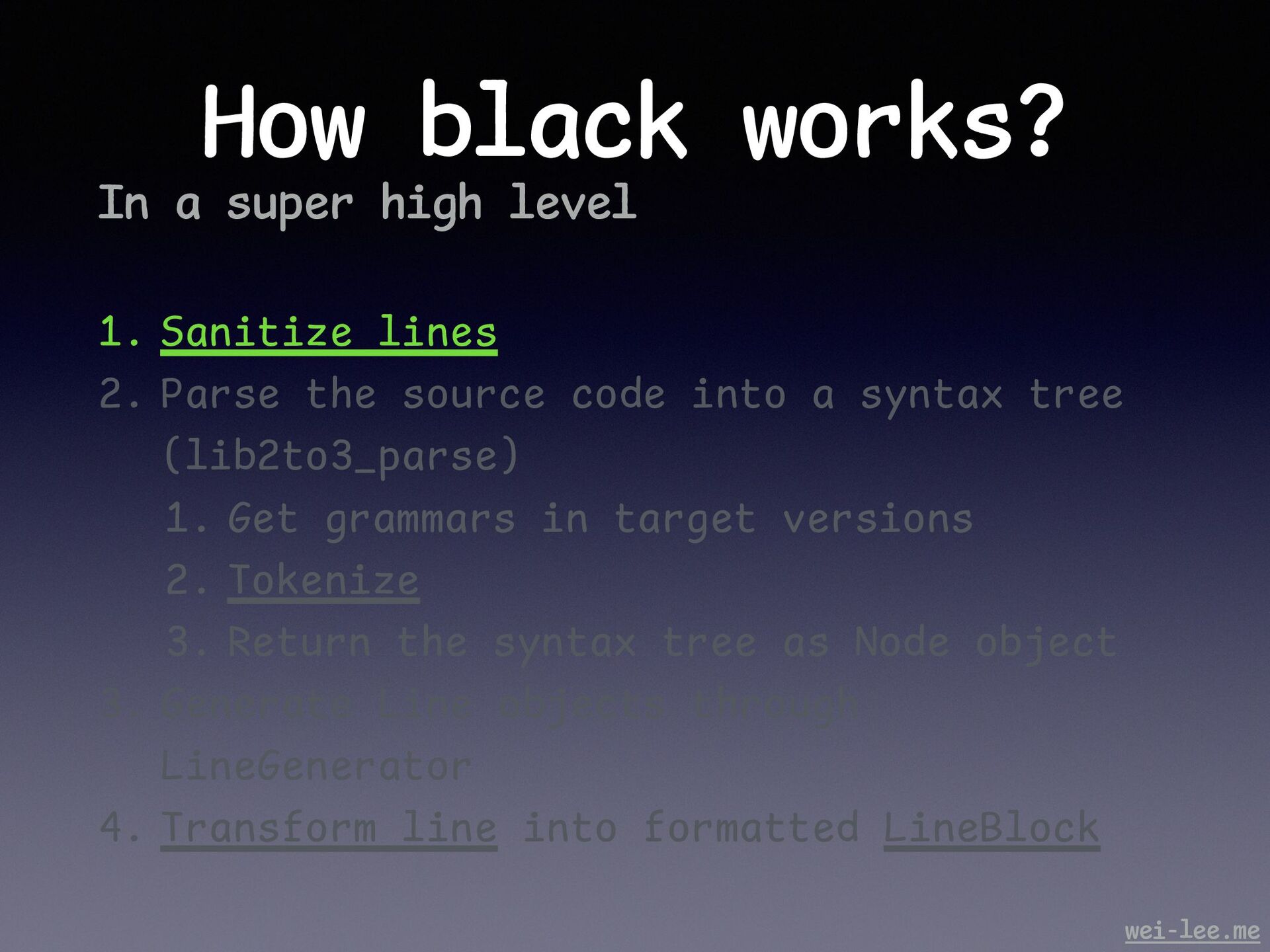
source code into a syntax tree (lib2to3_parse) 1. Get grammars in target versions 2. Tokenize 3. Return the syntax tree as Node object 3. Generate Line objects through LineGenerator 4. Transform line into formatted LineBlock In a super high level
source code into a syntax tree (lib2to3_parse) 1. Get grammars in target versions 2. Tokenize 3. Return the syntax tree as Node object 3. Generate Line objects through LineGenerator 4. Transform line into formatted LineBlock In a super high level
source code into a syntax tree (lib2to3_parse) 1. Get grammars in target versions 2. Tokenize 3. Return the syntax tree as Node object 3. Generate Line objects through LineGenerator 4. Transform line into formatted LineBlock In a super high level
source code into a syntax tree (lib2to3_parse) 1. Get grammars in target versions 2. Tokenize 3. Return the syntax tree as Node object 3. Generate Line objects through LineGenerator 4. Transform line into formatted LineBlock In a super high level
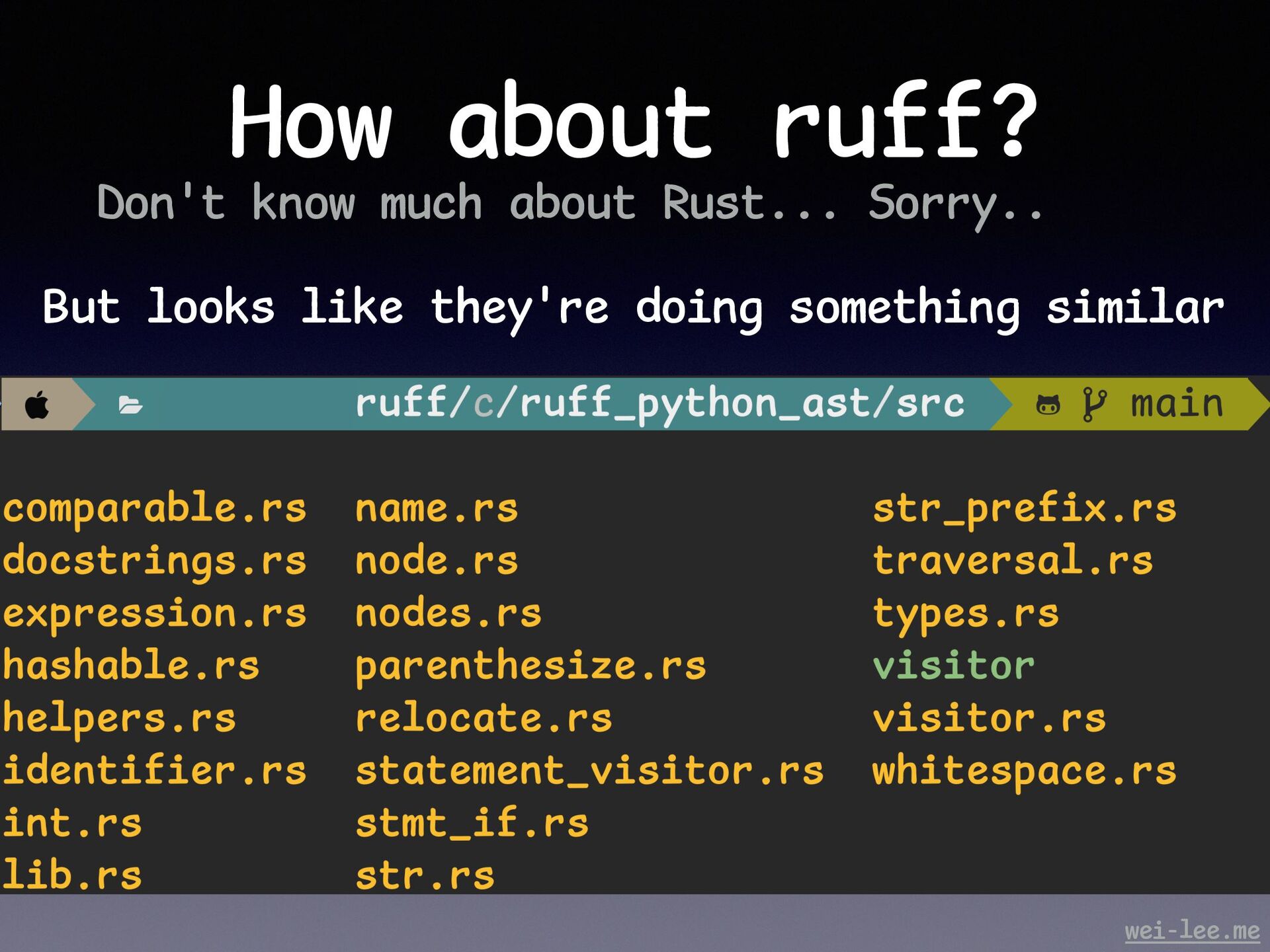
Extremely Fast Python Linter and Code Formatter, Written in Rust • Łukasz Langa - Life Is Better Painted Black, or: How to Stop Worrying and Embrace Auto- Formatting • Cheuk Ting Ho - Reformating your code without AI - let's see how a formatter works


 leew
leew
 akihisaikeda
 har1101
 rshindo
 ryu1013
 marcoroth
 xleitix
 sylph01
 kasacchiful
 yukikurage
 minodriven
 chobishiba
 katarinadahlin
 gurzu
gurzu
 trallard
 427marketing
 sarafernandez
 jnunemaker
 inesmontani
 codingconduct
 tenderlove
 reverentgeek
 akademiya2063