Upgrade to Pro — share decks privately, control downloads, hide ads and more …

Biomass Briquette Machine for Converting Waste ...

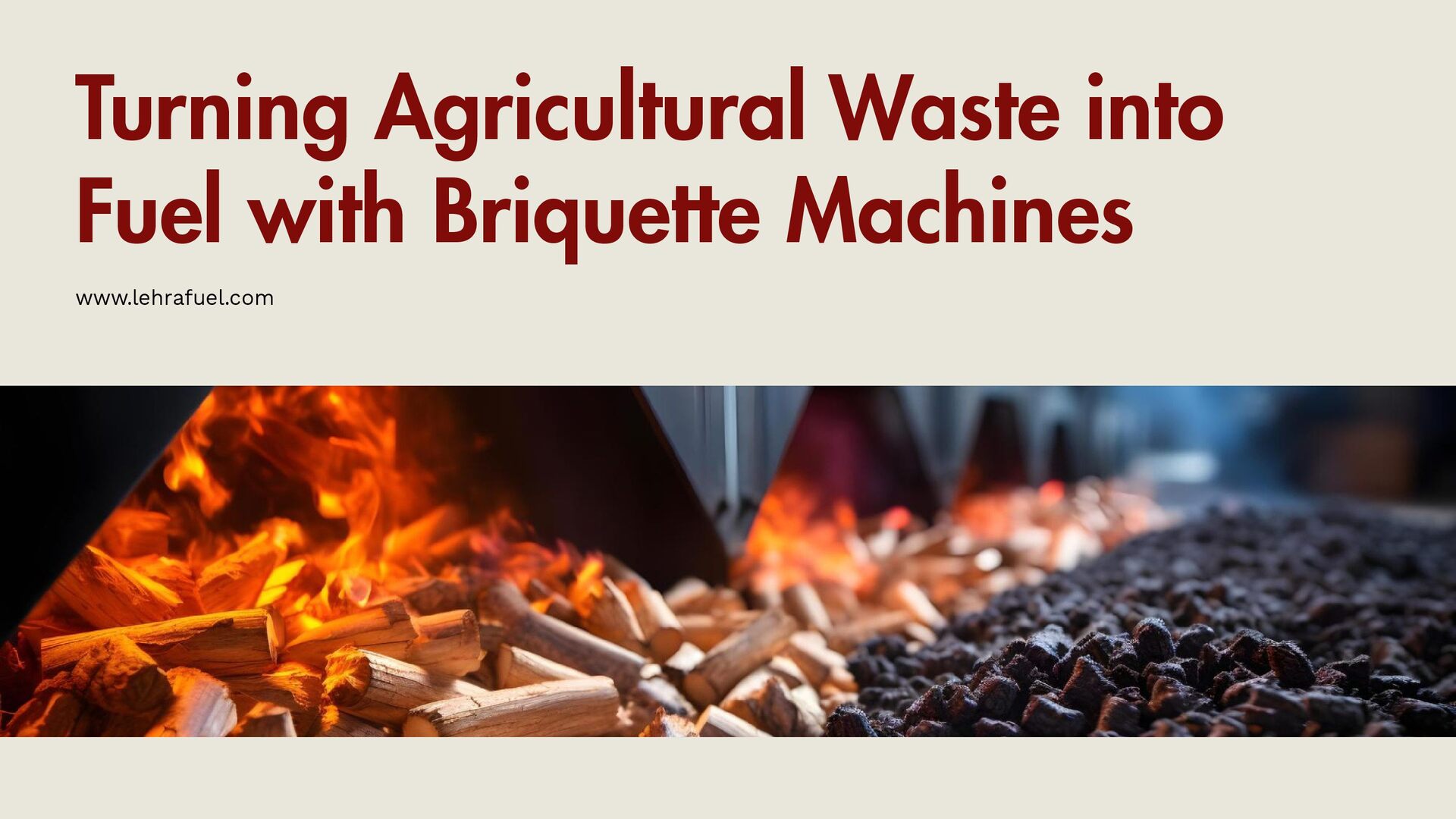
Biomass Briquette Machine for Converting Waste into Energy

A Biomass Briquette Machine helps transform underutilized agricultural residues into a valuable fuel resource. Properly processed biomass can provide an alternative to loose residues for suitable energy applications. By considering raw material quality, moisture content, processing requirements, and market demand, businesses can develop practical biomass fuel production systems.

Lehra Fuel Tech Pvt. Ltd.

October 29, 2026

Transcript

7 slides
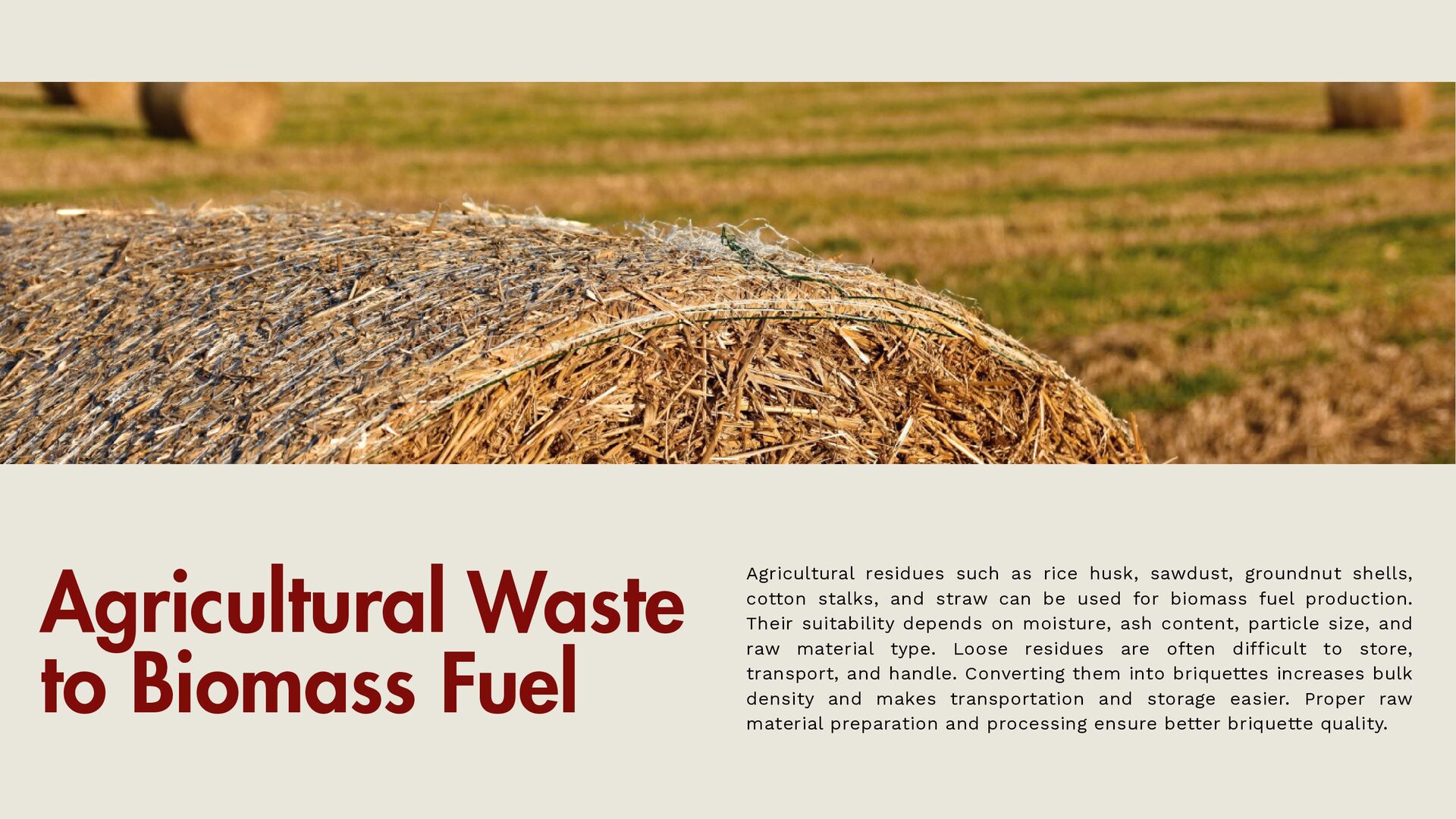
  1. Agricultural Waste to Biomass Fuel Agricultural residues such as rice

    husk, sawdust, groundnut shells, cotton stalks, and straw can be used for biomass fuel production. Their suitability depends on moisture, ash content, particle size, and raw material type. Loose residues are often difficult to store, transport, and handle. Converting them into briquettes increases bulk density and makes transportation and storage easier. Proper raw material preparation and processing ensure better briquette quality.
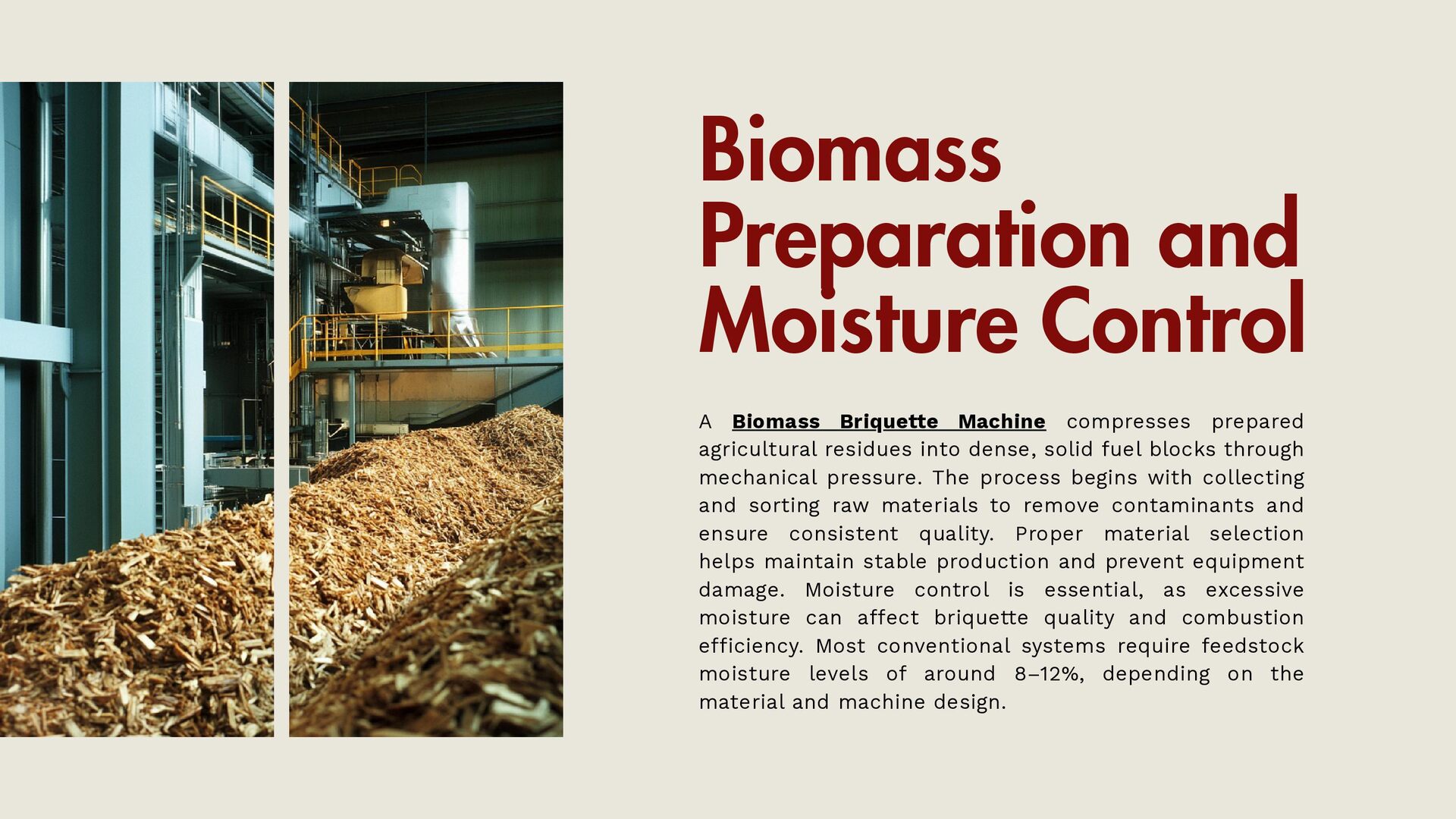
  2. Biomass Preparation and Moisture Control A Biomass Briquette Machine compresses

    prepared agricultural residues into dense, solid fuel blocks through mechanical pressure. The process begins with collecting and sorting raw materials to remove contaminants and ensure consistent quality. Proper material selection helps maintain stable production and prevent equipment damage. Moisture control is essential, as excessive moisture can affect briquette quality and combustion efficiency. Most conventional systems require feedstock moisture levels of around 8–12%, depending on the material and machine design.
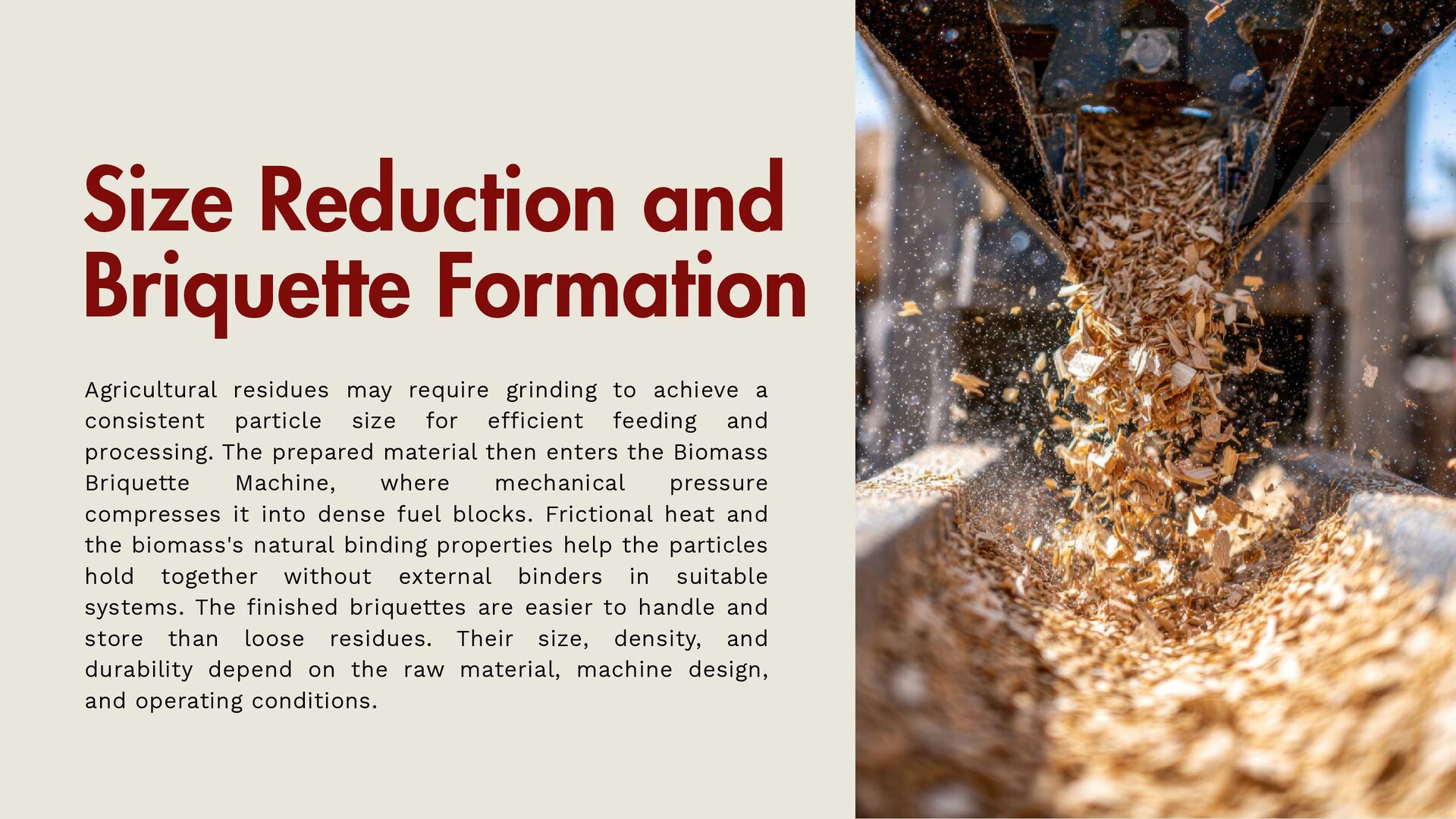
  3. Size Reduction and Briquette Formation Agricultural residues may require grinding

    to achieve a consistent particle size for efficient feeding and processing. The prepared material then enters the Biomass Briquette Machine, where mechanical pressure compresses it into dense fuel blocks. Frictional heat and the biomass's natural binding properties help the particles hold together without external binders in suitable systems. The finished briquettes are easier to handle and store than loose residues. Their size, density, and durability depend on the raw material, machine design, and operating conditions. 04
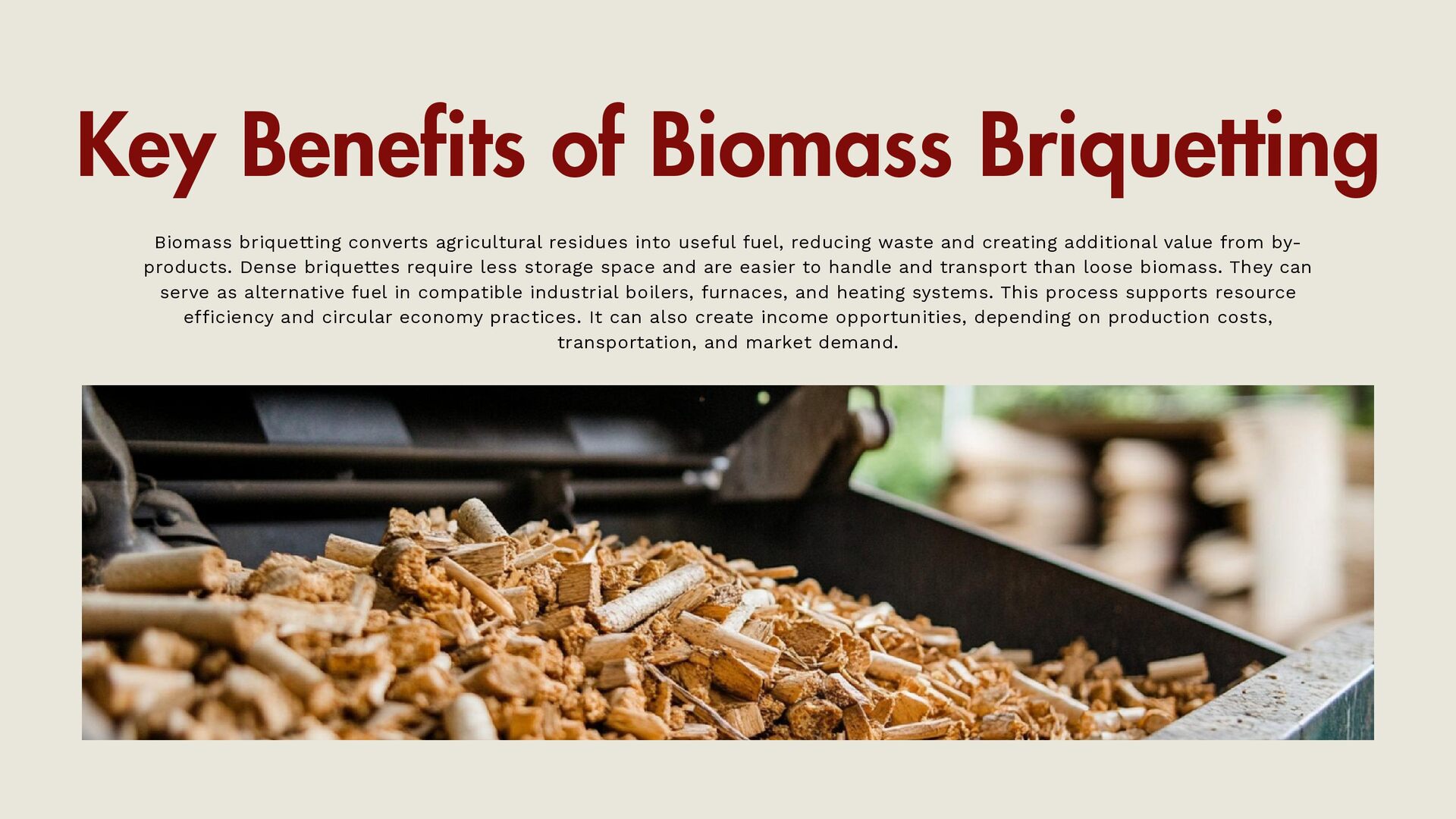
  4. Key Benefits of Biomass Briquetting Biomass briquetting converts agricultural residues

    into useful fuel, reducing waste and creating additional value from byproducts. Dense briquettes require less storage space and are easier to handle and transport than loose biomass. They can serve as alternative fuel in compatible industrial boilers, furnaces, and heating systems. This process supports resource efficiency and circular economy practices. It can also create income opportunities, depending on production costs, transportation, and market demand.
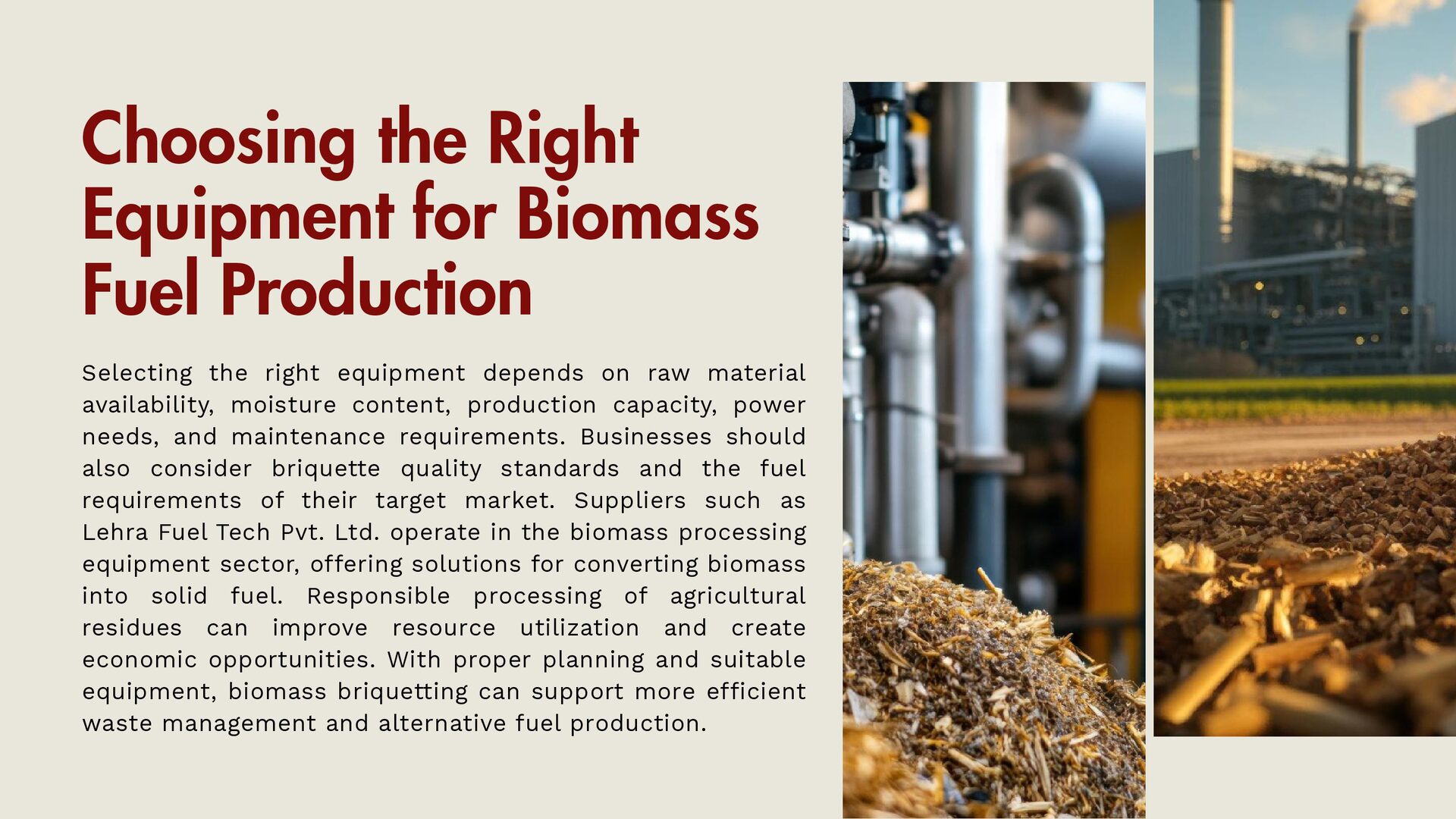
  5. Choosing the Right Equipment for Biomass Fuel Production Selecting the

    right equipment depends on raw material availability, moisture content, production capacity, power needs, and maintenance requirements. Businesses should also consider briquette quality standards and the fuel requirements of their target market. Suppliers such as Lehra Fuel Tech Pvt. Ltd. operate in the biomass processing equipment sector, offering solutions for converting biomass into solid fuel. Responsible processing of agricultural residues can improve resource utilization and create economic opportunities. With proper planning and suitable equipment, biomass briquetting can support more efficient waste management and alternative fuel production.

More Decks by Lehra Fuel Tech Pvt. Ltd.

Other Decks in Business