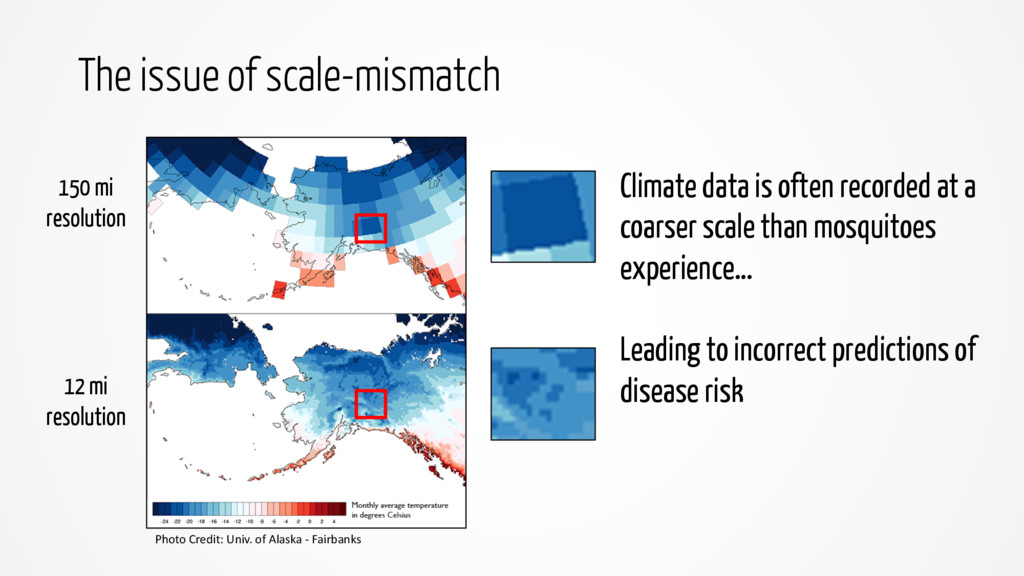
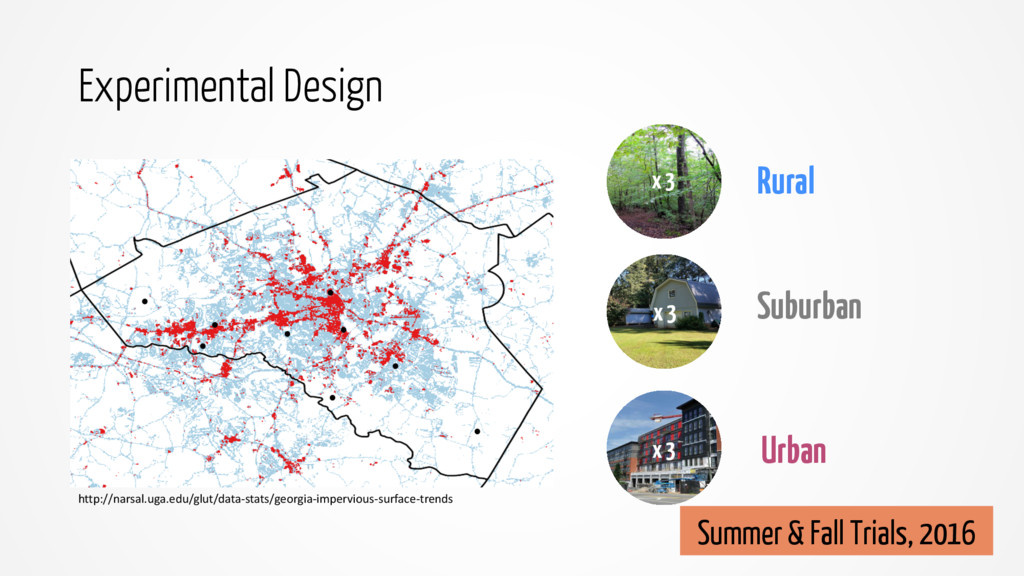
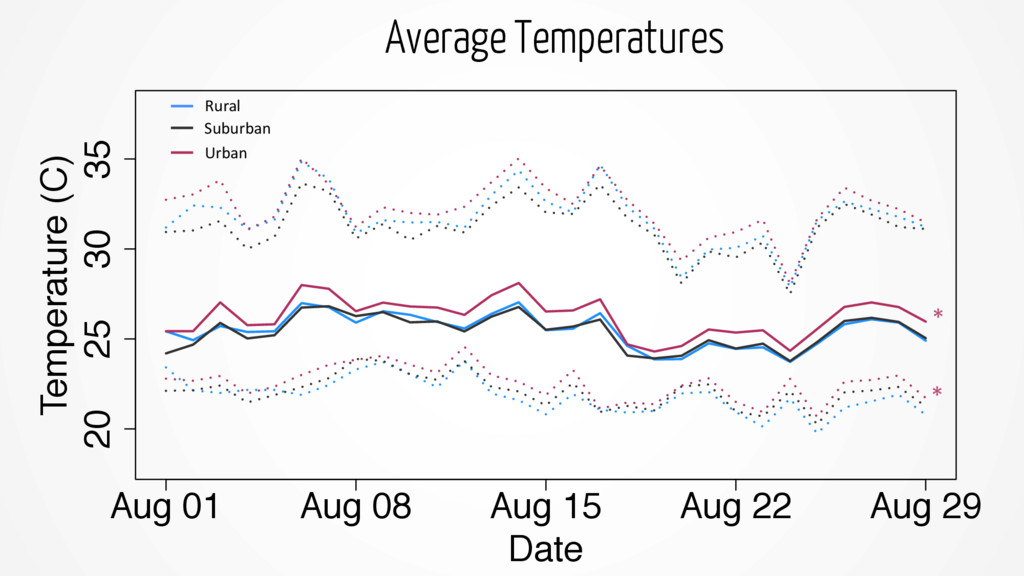
Photo Credit: Univ. of Alaska - Fairbanks Climate data is often recorded at a coarser scale than mosquitoes experience… Leading to incorrect predictions of disease risk
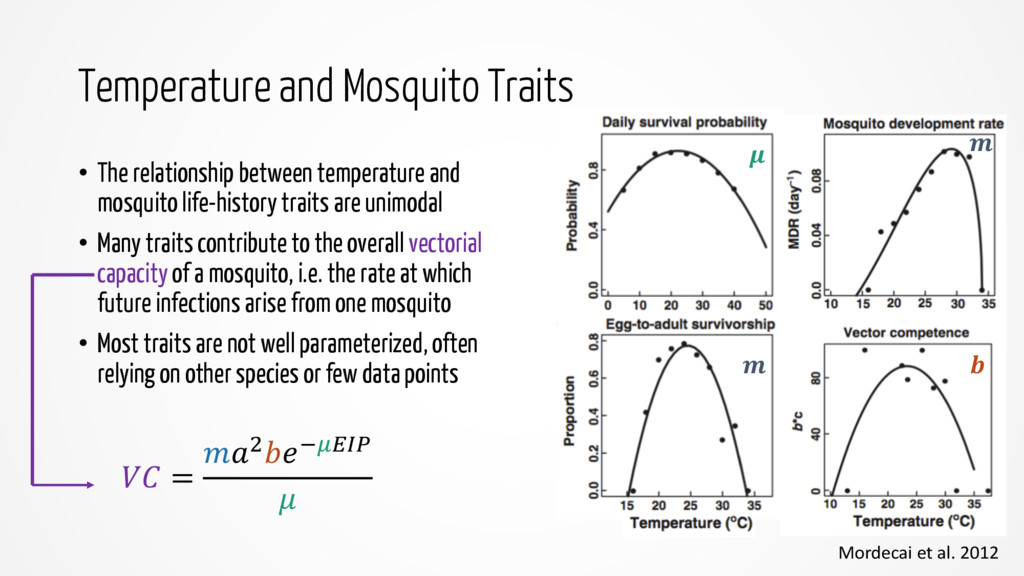
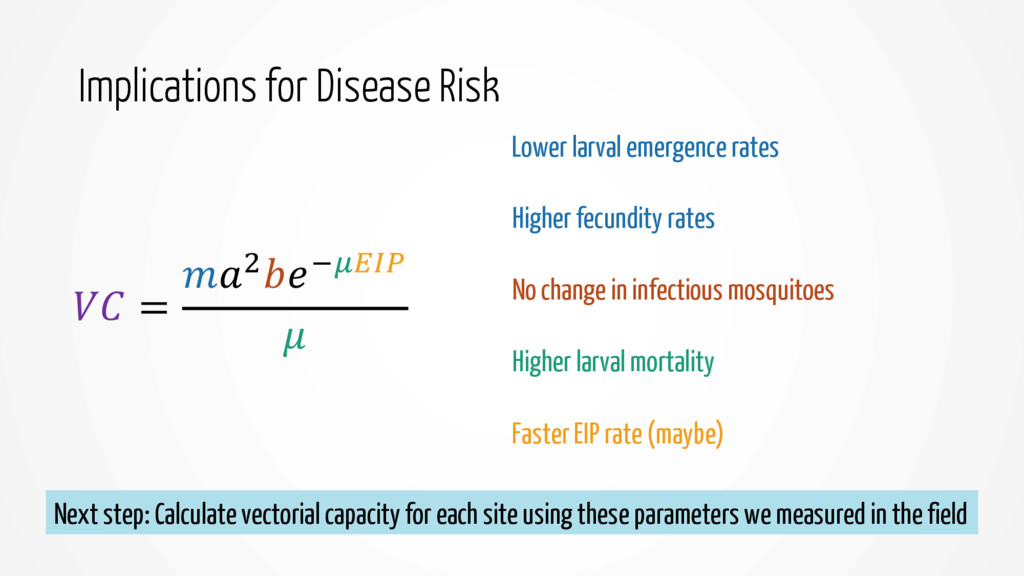
mosquito life-history traits are unimodal • Many traits contribute to the overall vectorial capacity of a mosquito, i.e. the rate at which future infections arise from one mosquito • Most traits are not well parameterized, often relying on other species or few data points Mordecai et al. 2012 !" = $%&'()*+,- . / 0 1 0
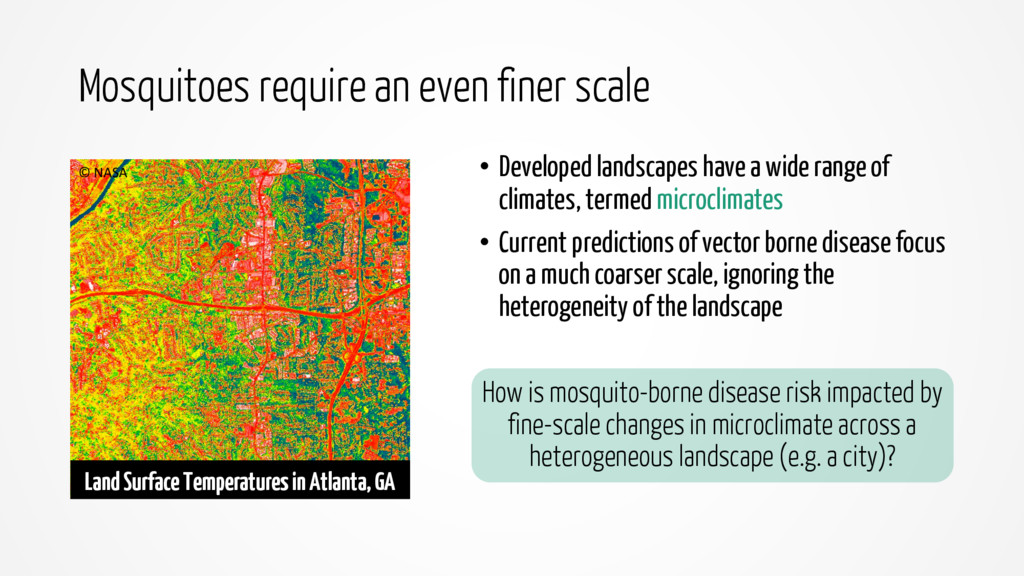
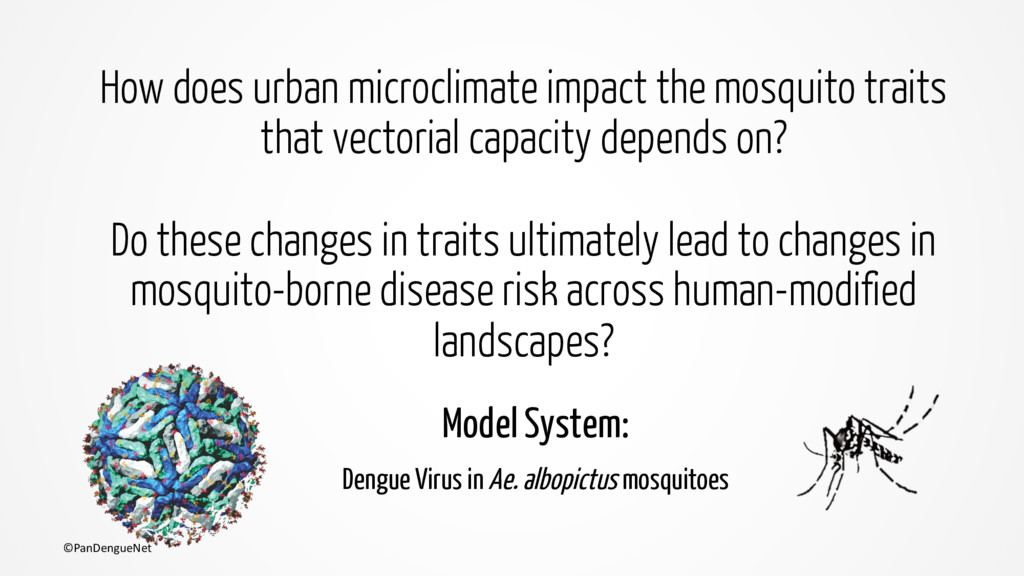
does urban microclimate impact the mosquito traits that vectorial capacity depends on? Do these changes in traits ultimately lead to changes in mosquito-borne disease risk across human-modified landscapes?
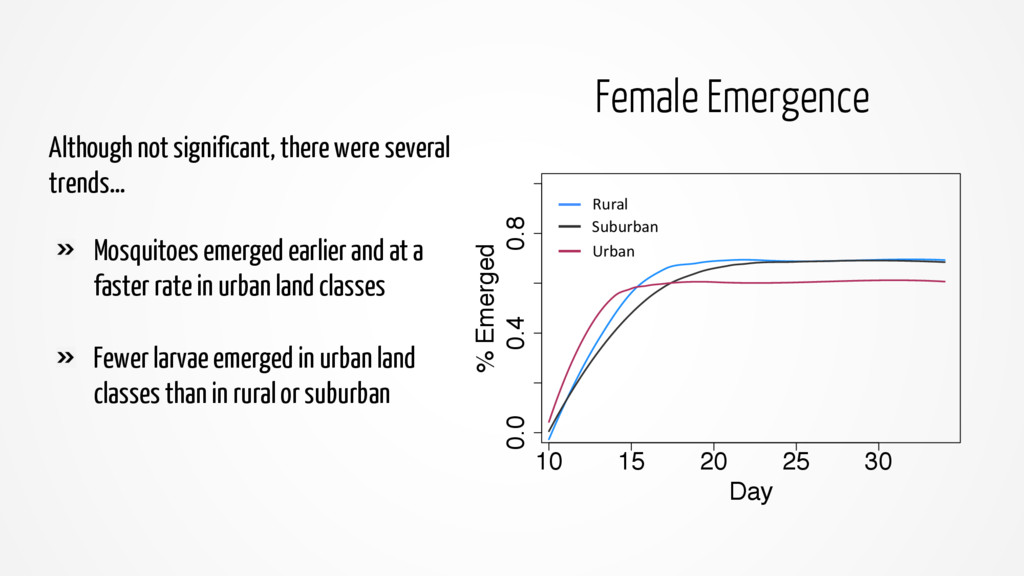
Day % Emerged Rural Suburban Urban Mosquitoes emerged earlier and at a faster rate in urban land classes Fewer larvae emerged in urban land classes than in rural or suburban Although not significant, there were several trends…
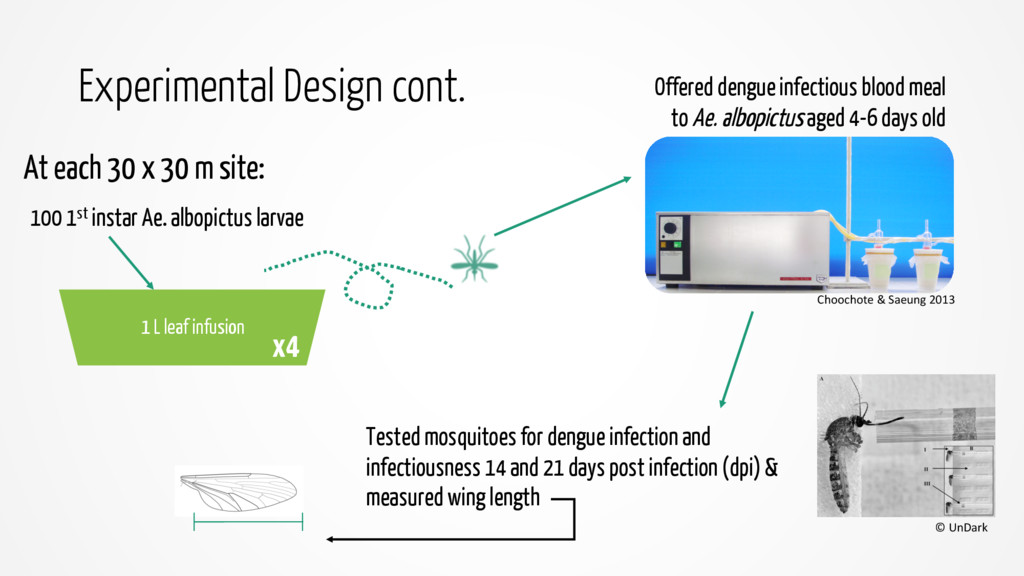
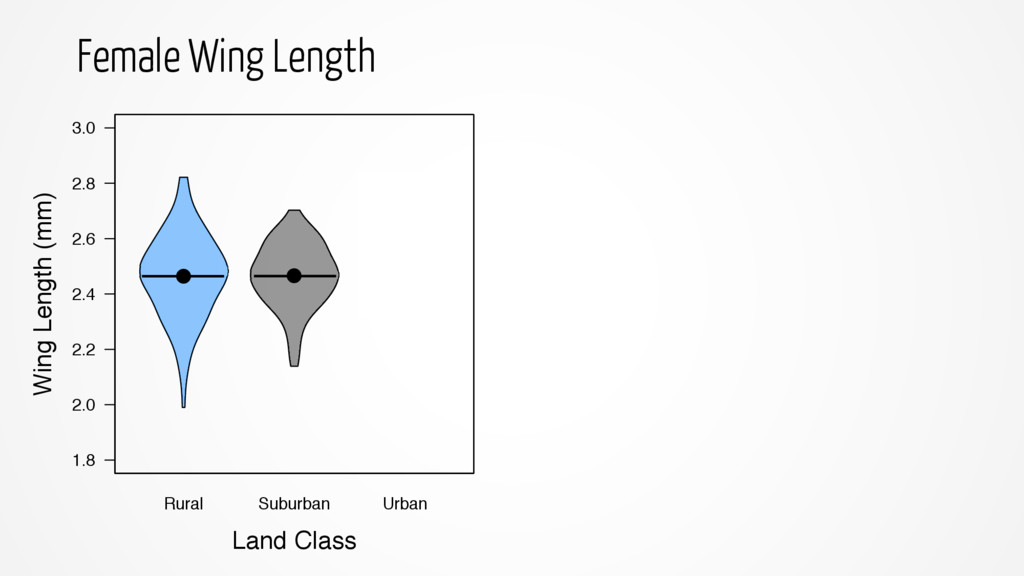
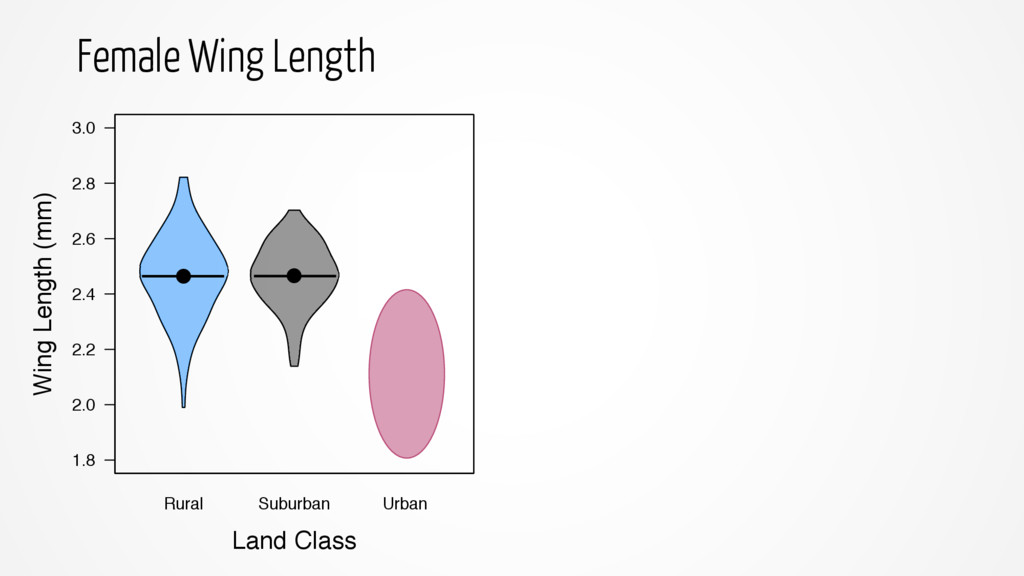
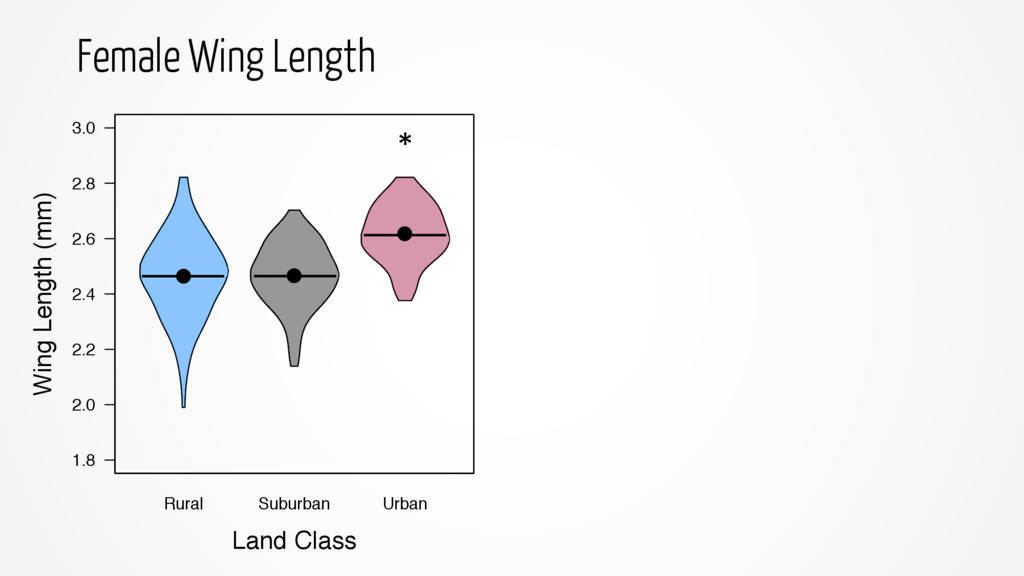
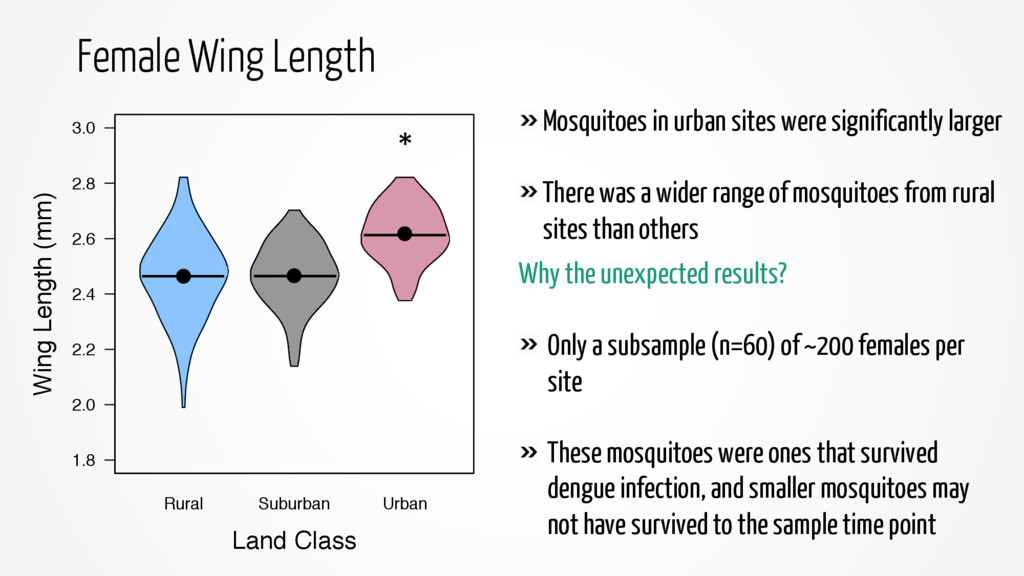
Length (mm) • • • Rural Suburban Urban Female Wing Length * Mosquitoes in urban sites were significantly larger There was a wider range of mosquitoes from rural sites than others Why the unexpected results? Only a subsample (n=60) of ~200 females per site These mosquitoes were ones that survived dengue infection, and smaller mosquitoes may not have survived to the sample time point
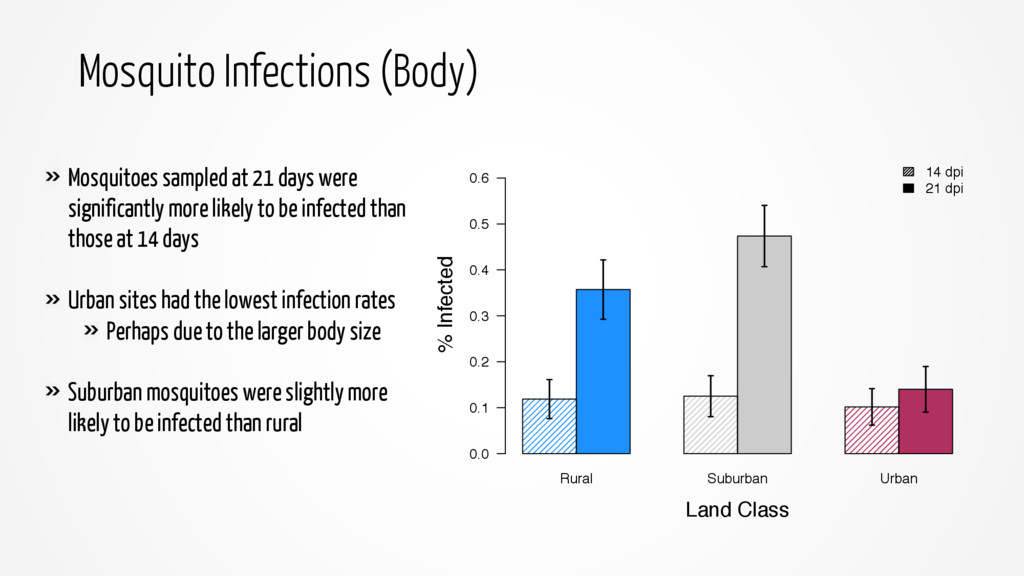
Class % Infected 0.0 0.1 0.2 0.3 0.4 0.5 0.6 14 dpi 21 dpi Mosquitoes sampled at 21 days were significantly more likely to be infected than those at 14 days Urban sites had the lowest infection rates Perhaps due to the larger body size Suburban mosquitoes were slightly more likely to be infected than rural
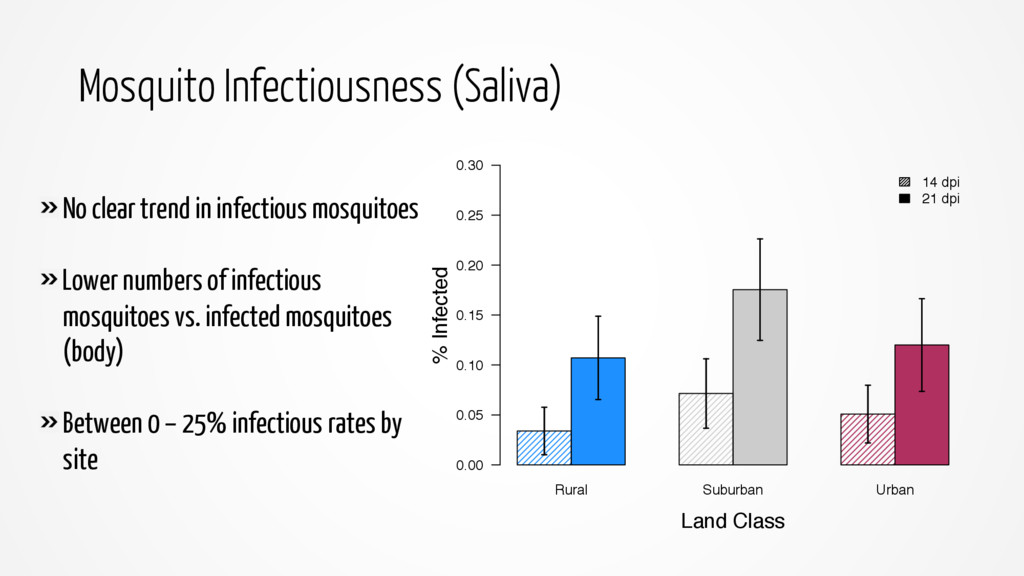
Class % Infected 0.00 0.05 0.10 0.15 0.20 0.25 0.30 14 dpi 21 dpi No clear trend in infectious mosquitoes Lower numbers of infectious mosquitoes vs. infected mosquitoes (body) Between 0 – 25% infectious rates by site
emergence rates Higher fecundity rates No change in infectious mosquitoes Higher larval mortality Faster EIP rate (maybe) Next step: Calculate vectorial capacity for each site using these parameters we measured in the field


 rikkabotan7
 institutdelelevage
 sishi
 beale
 kzmssk
 ayatokanada
 hisaokatsumi
 izumiyama_lab
 tomonom
 koide3
 sishi2026
 jonoalderson
 addyosmani
 michielstock
 productmarketing
 coloredviolet
 lara
 inesmontani
 jakevdp
 aleyda
 dougneiner
 szymonslowik
 geoffreycrofte