Upgrade to Pro — share decks privately, control downloads, hide ads and more …

The Science of Metal Corrosion Process

The Science of Metal Corrosion Process

Corrosion is the gradual deterioration of materials, typically metals, through chemical or electrochemical reactions with their environment. This natural process occurs when metals like iron, steel, copper, and aluminum react with substances such as oxygen, water, acids, or salts, leading to the formation of oxides, hydroxides, or other compounds

Avatar for Nichem Solution

Nichem Solution

January 20, 2026

Other Decks in Business

Transcript

  1. Corrosion Overview • • Gradual degradation of metals due to

    chemical or electrochemical reactions • • Causes economic loss and safety hazards • • Impacts infrastructure, vehicles, pipelines, and appliances
  2. What is Corrosion? • • Chemical or electrochemical deterioration of

    metals • • Involves oxidation-reduction (redox) reactions • • Driven by oxygen, moisture, salts, acids, and pollutants
  3. Rust vs Corrosion • • Rust is specific to iron

    and steel • • Corrosion affects many metals and alloys • • Rust is one form of corrosion
  4. Types of Corrosion • • Uniform corrosion • • Galvanic

    corrosion • • Pitting corrosion • • Crevice corrosion • • Intergranular corrosion • • Stress corrosion cracking
  5. Uniform & Galvanic Corrosion • • Uniform: Even material loss

    over surface • • Predictable and manageable • • Galvanic: Occurs between dissimilar metals in electrolyte
  6. Localized Corrosion • • Pitting corrosion creates small but dangerous

    holes • • Crevice corrosion occurs in shielded gaps • • Often hard to detect early
  7. Advanced Corrosion Mechanisms • • Intergranular corrosion along grain boundaries

    • • Stress corrosion cracking under stress and harsh environment • • Can cause sudden failures
  8. Factors Influencing Corrosion • • Environmental conditions: humidity, salt, pollutants

    • • Material properties and coatings • • Mechanical stress and poor design
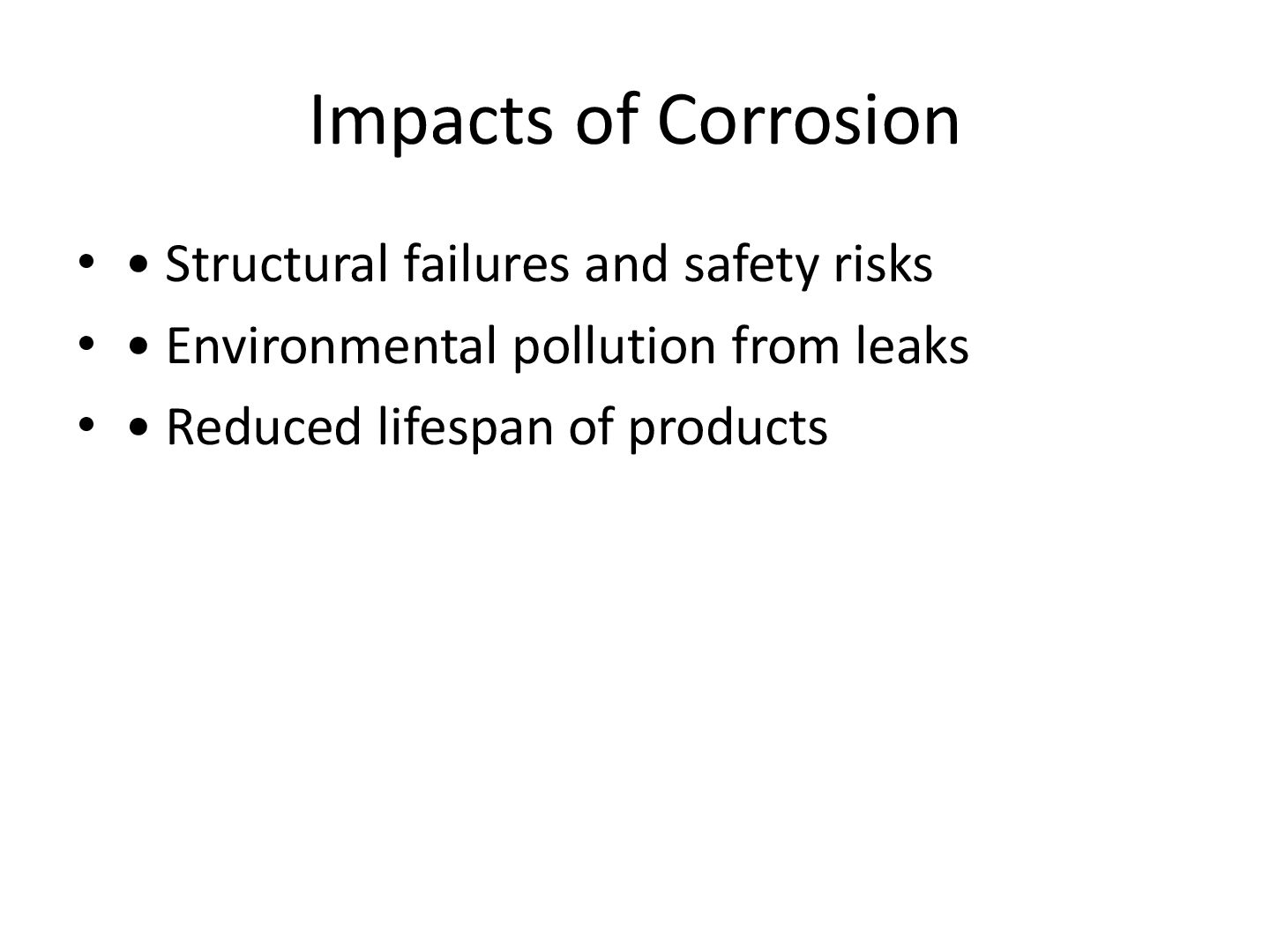
  9. Impacts of Corrosion • • Structural failures and safety risks

    • • Environmental pollution from leaks • • Reduced lifespan of products
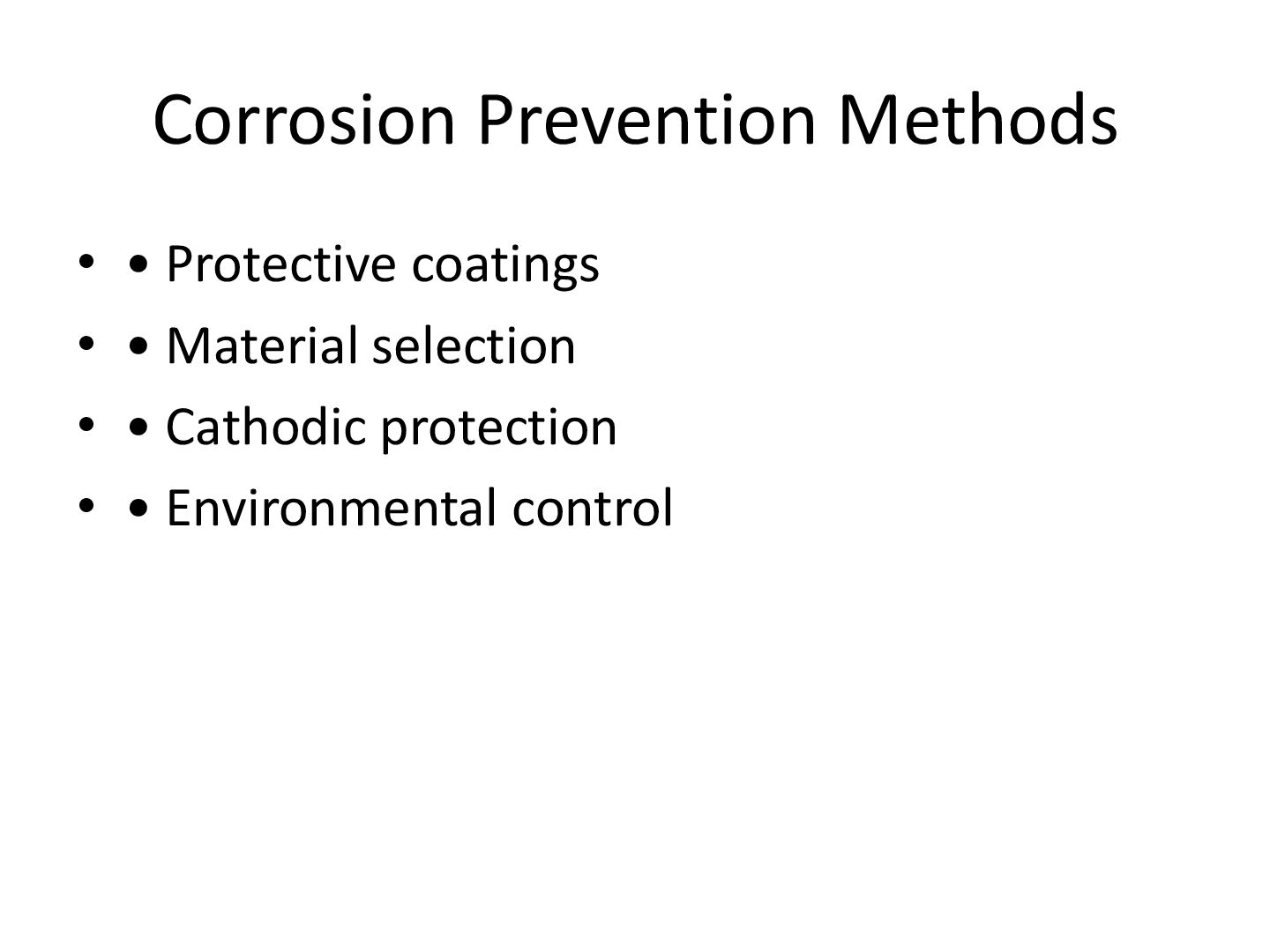
  10. Corrosion Prevention Methods • • Protective coatings • • Material

    selection • • Cathodic protection • • Environmental control
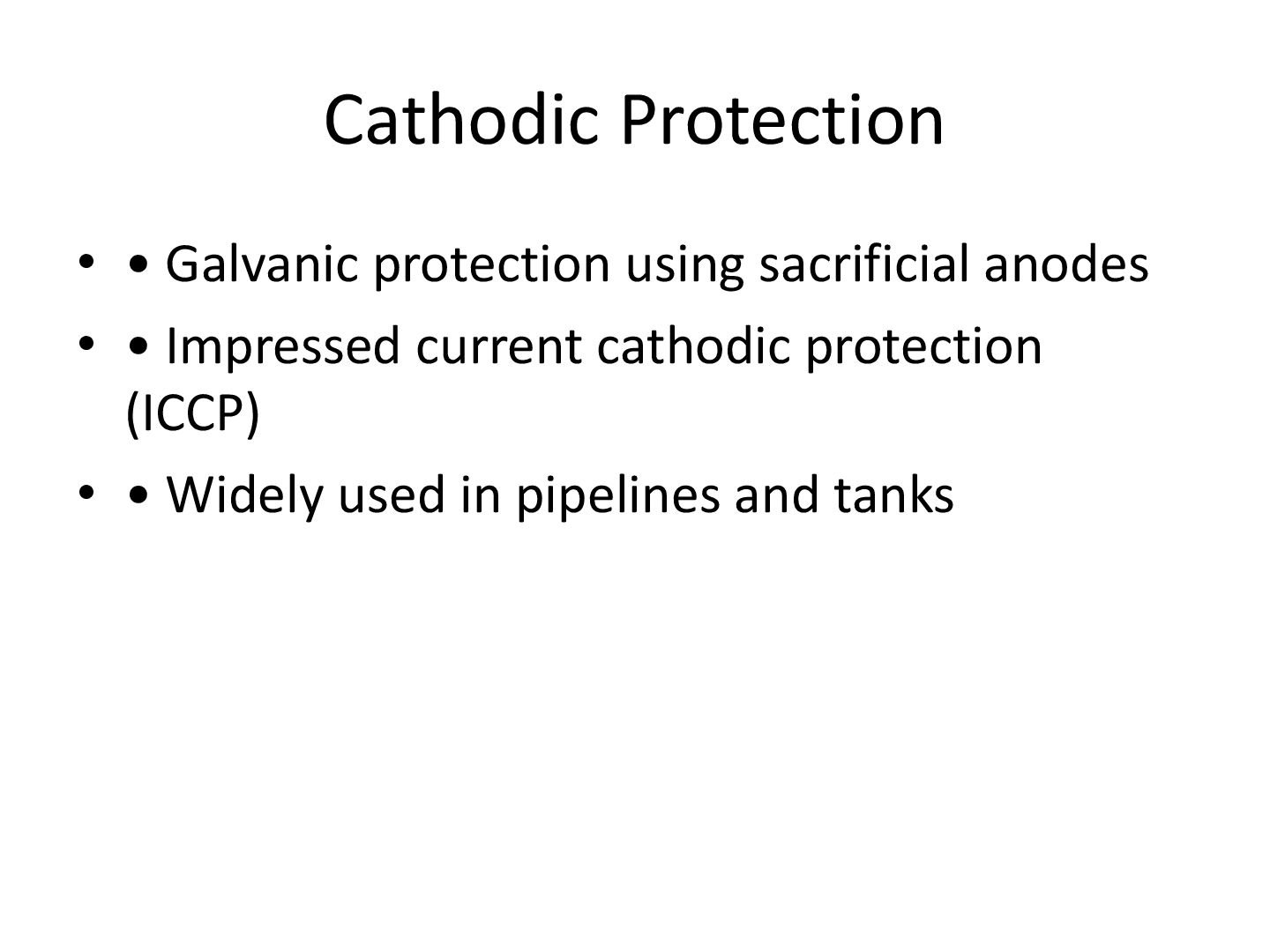
  11. Cathodic Protection • • Galvanic protection using sacrificial anodes •

    • Impressed current cathodic protection (ICCP) • • Widely used in pipelines and tanks
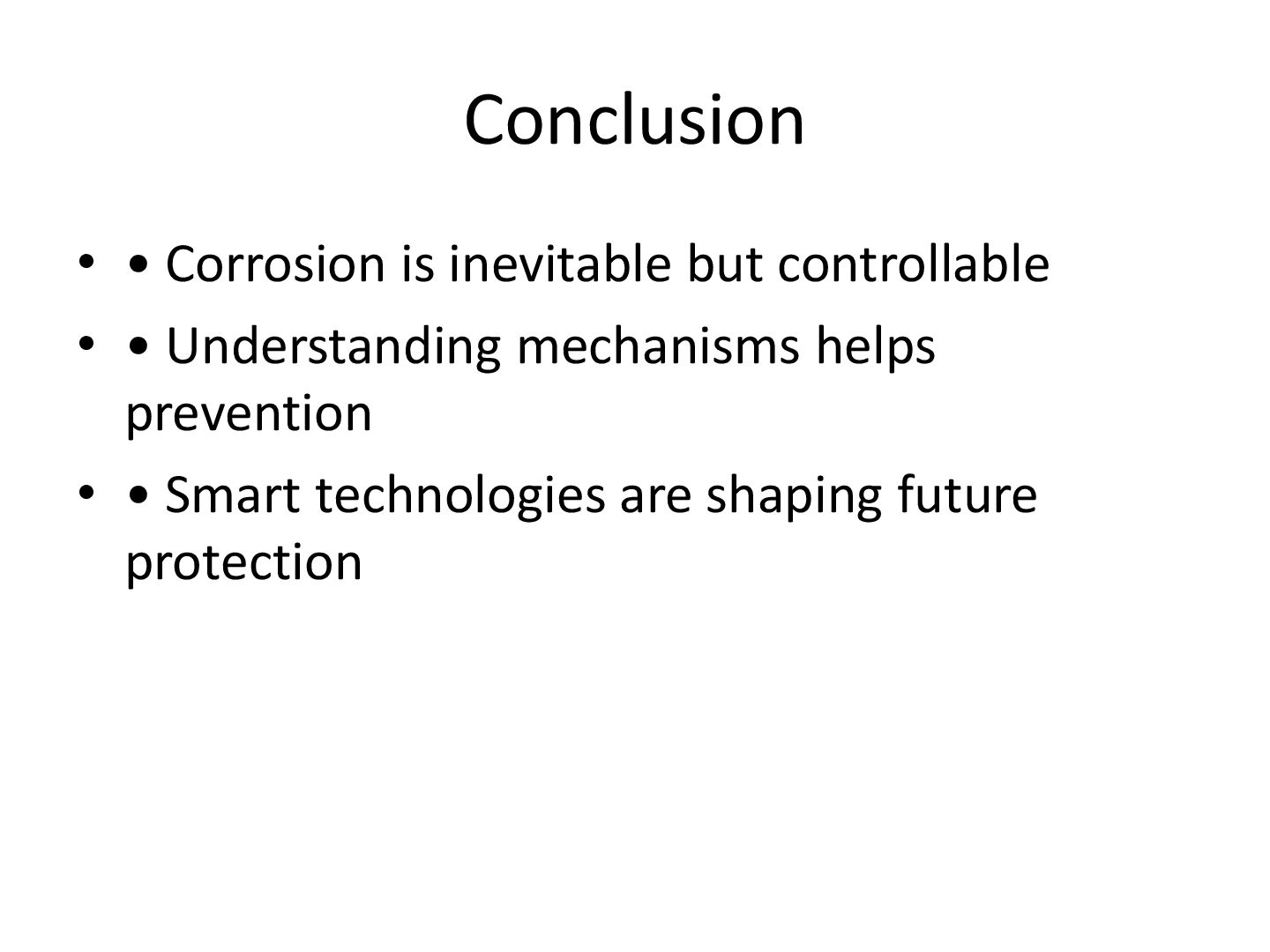
  12. Conclusion • • Corrosion is inevitable but controllable • •

    Understanding mechanisms helps prevention • • Smart technologies are shaping future protection