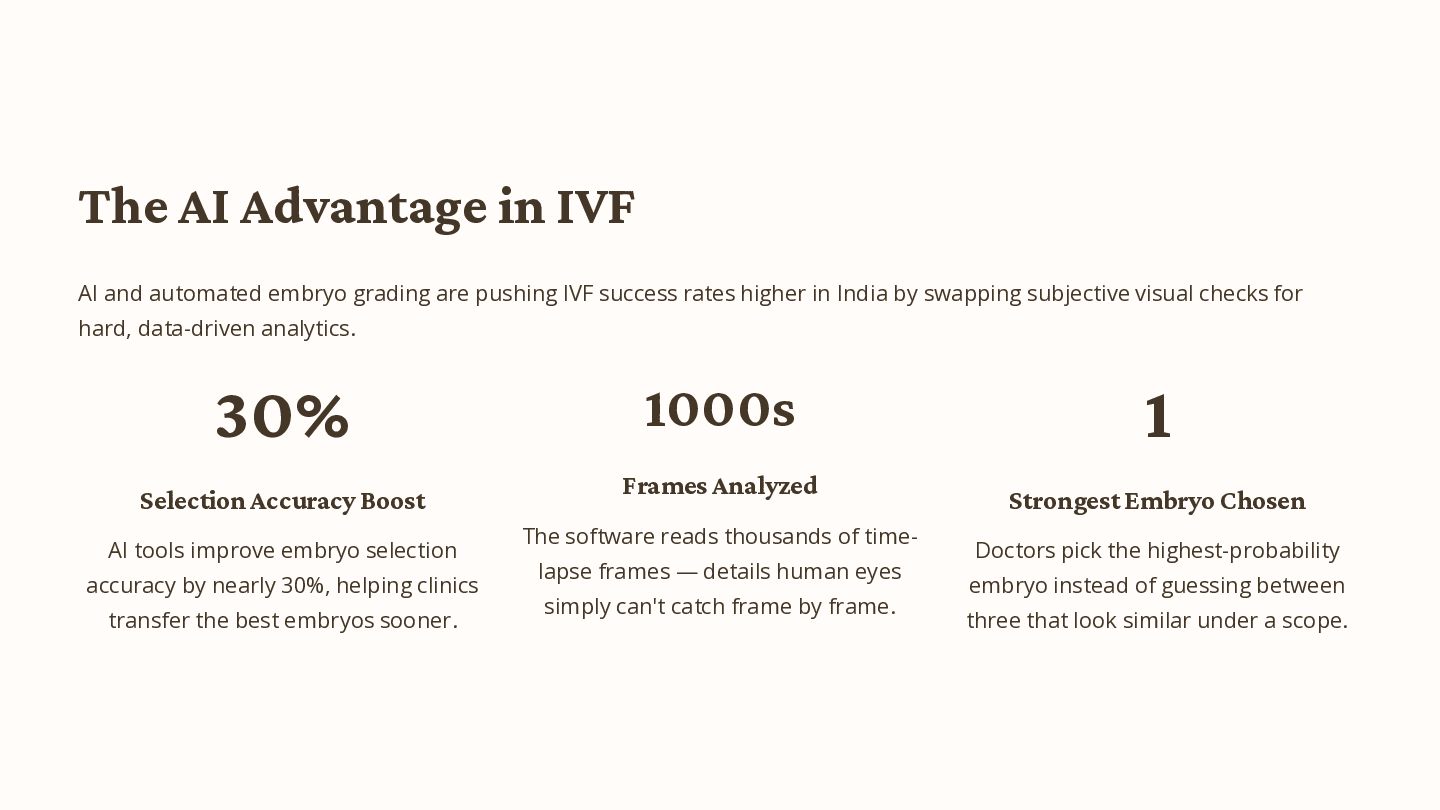
are pushing IVF success rates higher in India by swapping subjective visual checks for hard, data-driven analytics. 30% Selection Accuracy Boost AI tools improve embryo selection accuracy by nearly 30%, helping clinics transfer the best embryos sooner. 1000s Frames Analyzed The software reads thousands of time- lapse frames — details human eyes simply can't catch frame by frame. 1 Strongest Embryo Chosen Doctors pick the highest-probability embryo instead of guessing between three that look similar under a scope.
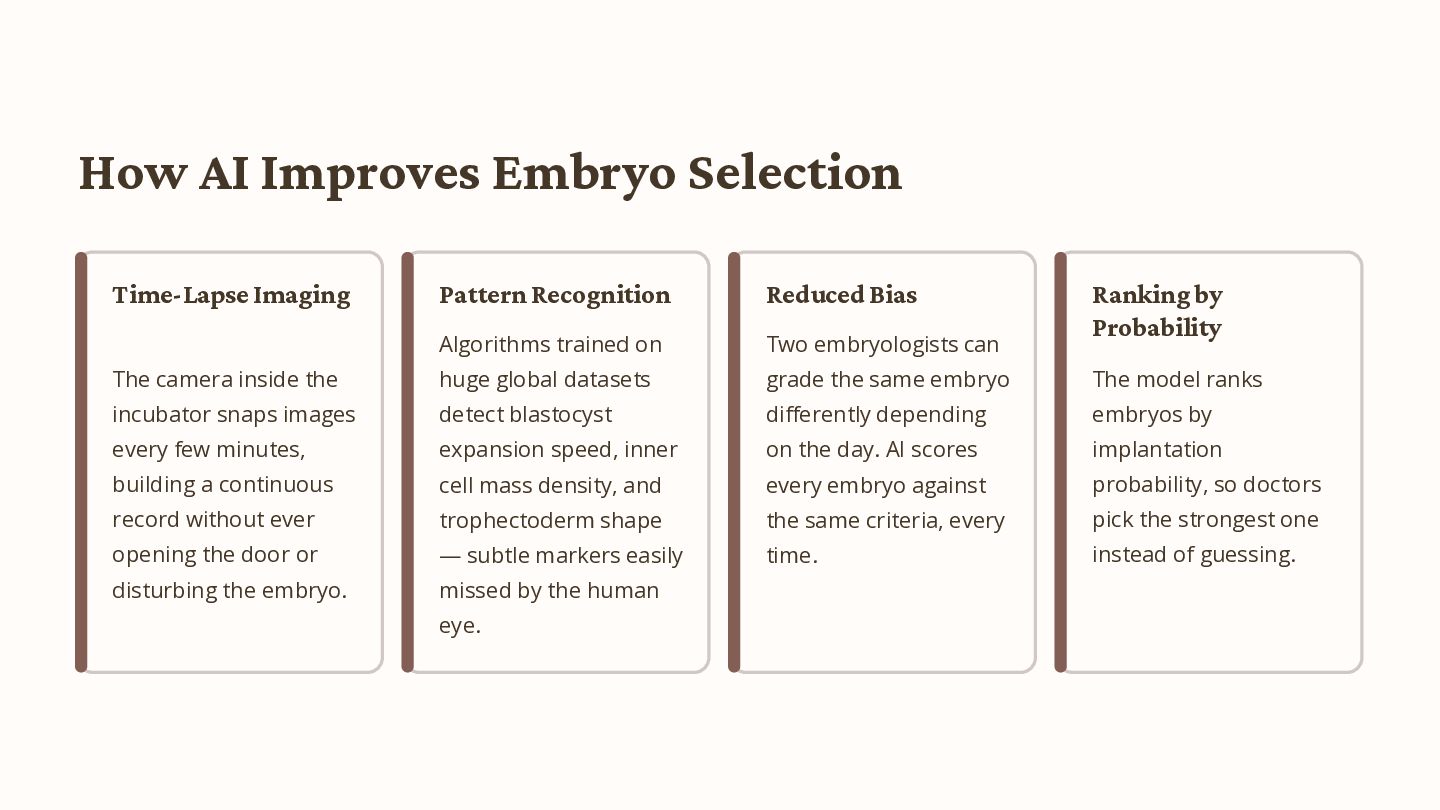
the incubator snaps images every few minutes, building a continuous record without ever opening the door or disturbing the embryo. Pattern Recognition Algorithms trained on huge global datasets detect blastocyst expansion speed, inner cell mass density, and trophectoderm shape — subtle markers easily missed by the human eye. Reduced Bias Two embryologists can grade the same embryo differently depending on the day. AI scores every embryo against the same criteria, every time. Ranking by Probability The model ranks embryos by implantation probability, so doctors pick the strongest one instead of guessing.
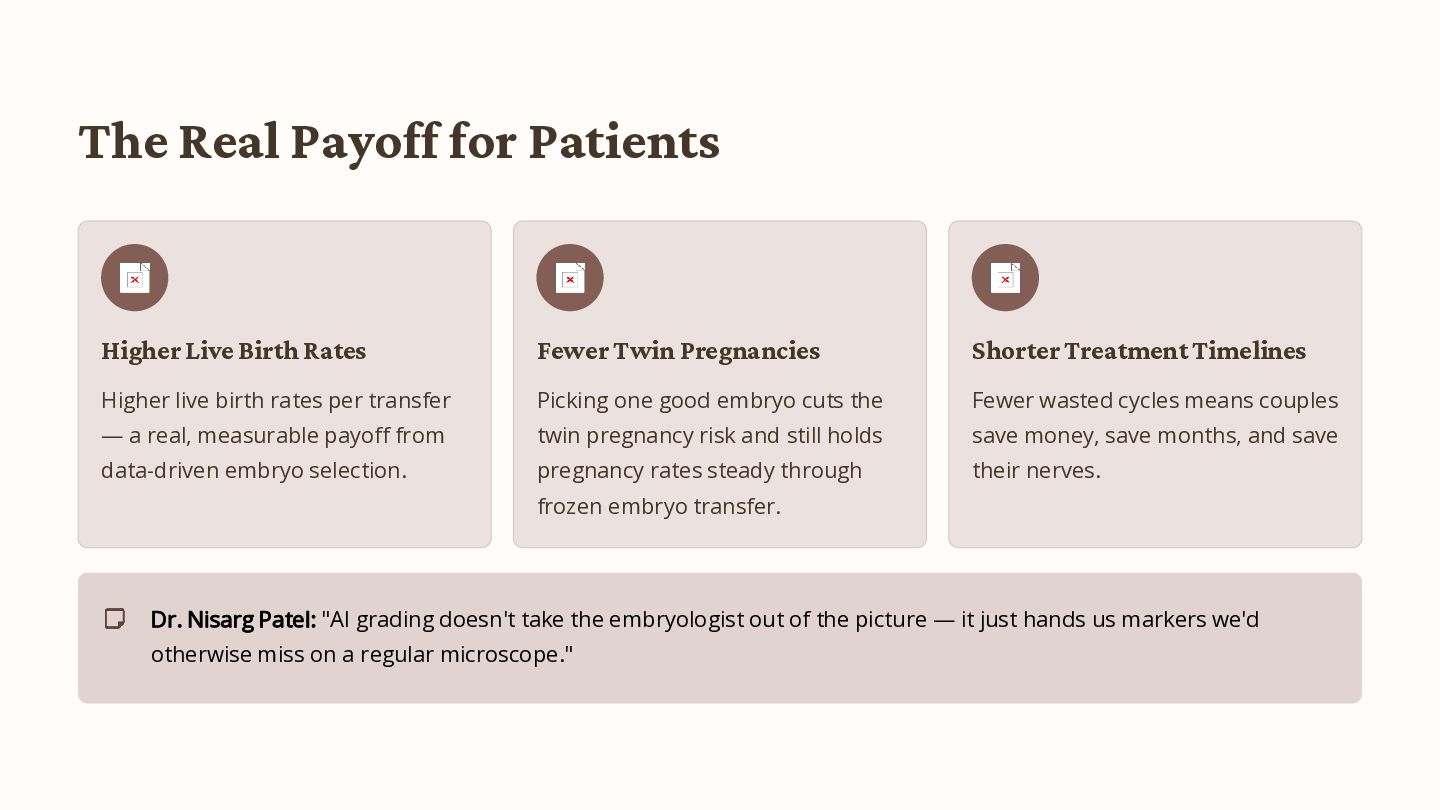
live birth rates per transfer — a real, measurable payoff from data-driven embryo selection. Fewer Twin Pregnancies Picking one good embryo cuts the twin pregnancy risk and still holds pregnancy rates steady through frozen embryo transfer. Shorter Treatment Timelines Fewer wasted cycles means couples save money, save months, and save their nerves. Dr. Nisarg Patel: "AI grading doesn't take the embryologist out of the picture — it just hands us markers we'd otherwise miss on a regular microscope."
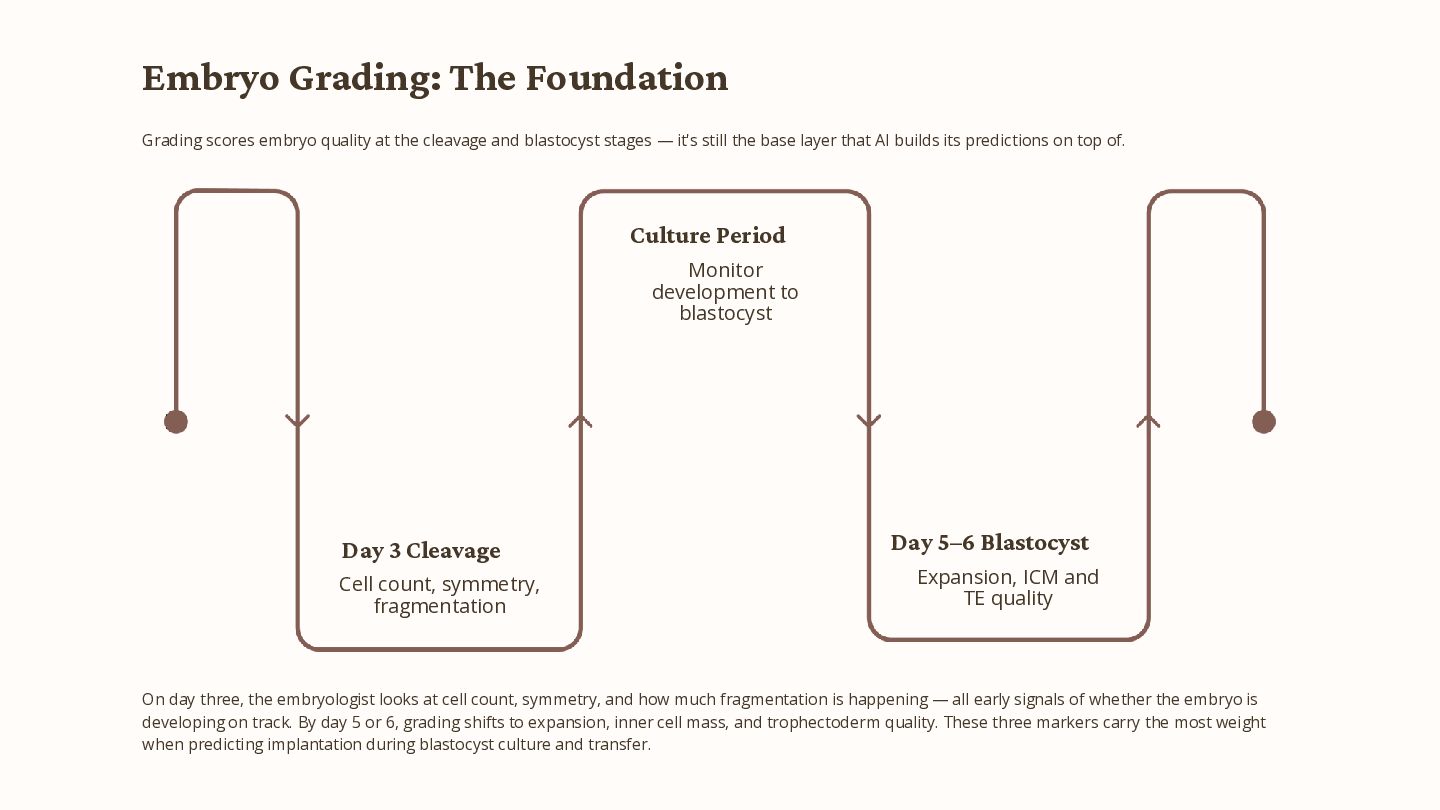
cleavage and blastocyst stages — it's still the base layer that AI builds its predictions on top of. Day 3 Cleavage Cell count, symmetry, fragmentation Day 5–6 Blastocyst Expansion, ICM and TE quality Culture Period Monitor development to blastocyst On day three, the embryologist looks at cell count, symmetry, and how much fragmentation is happening — all early signals of whether the embryo is developing on track. By day 5 or 6, grading shifts to expansion, inner cell mass, and trophectoderm quality. These three markers carry the most weight when predicting implantation during blastocyst culture and transfer.
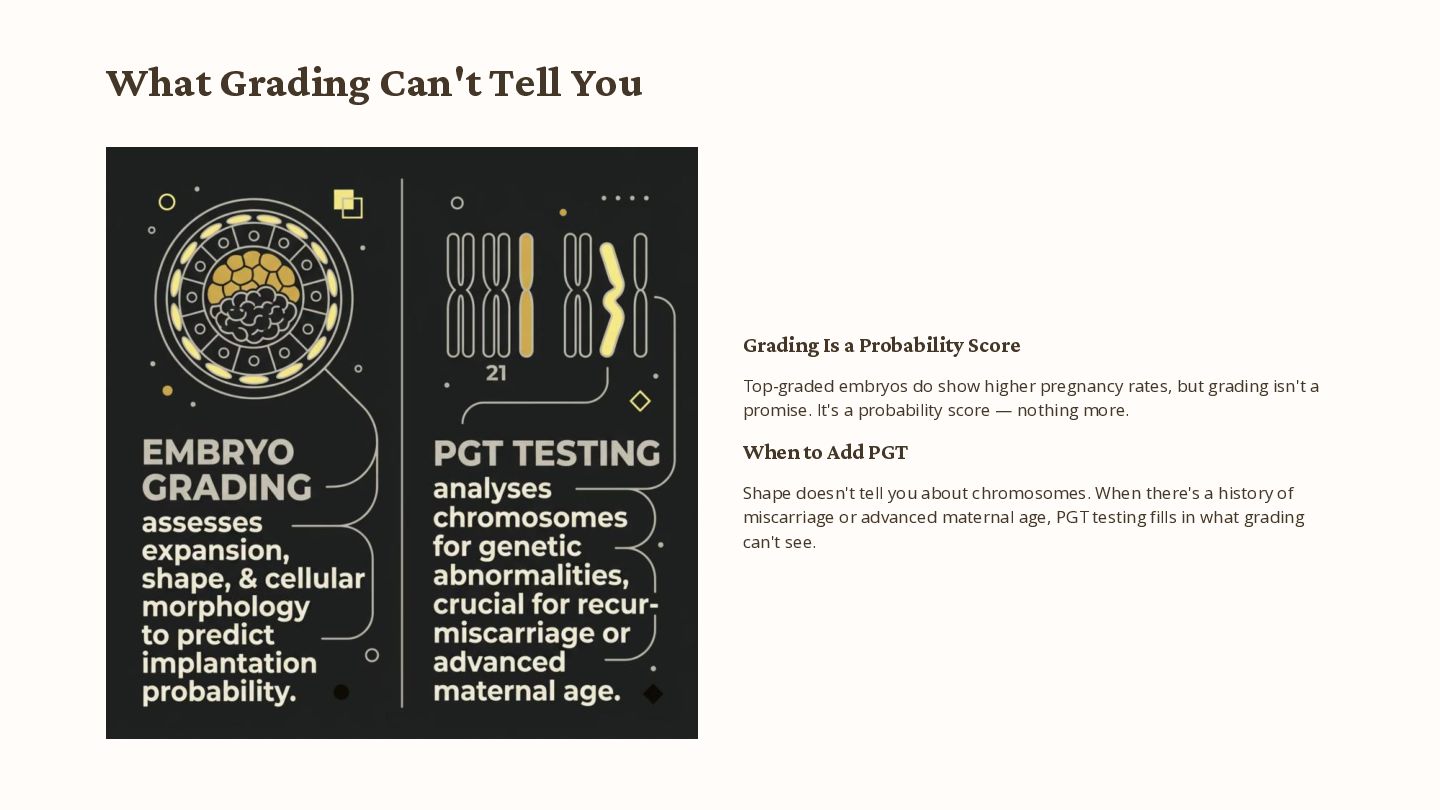
Top-graded embryos do show higher pregnancy rates, but grading isn't a promise. It's a probability score — nothing more. When to Add PGT Shape doesn't tell you about chromosomes. When there's a history of miscarriage or advanced maternal age, PGT testing fills in what grading can't see.
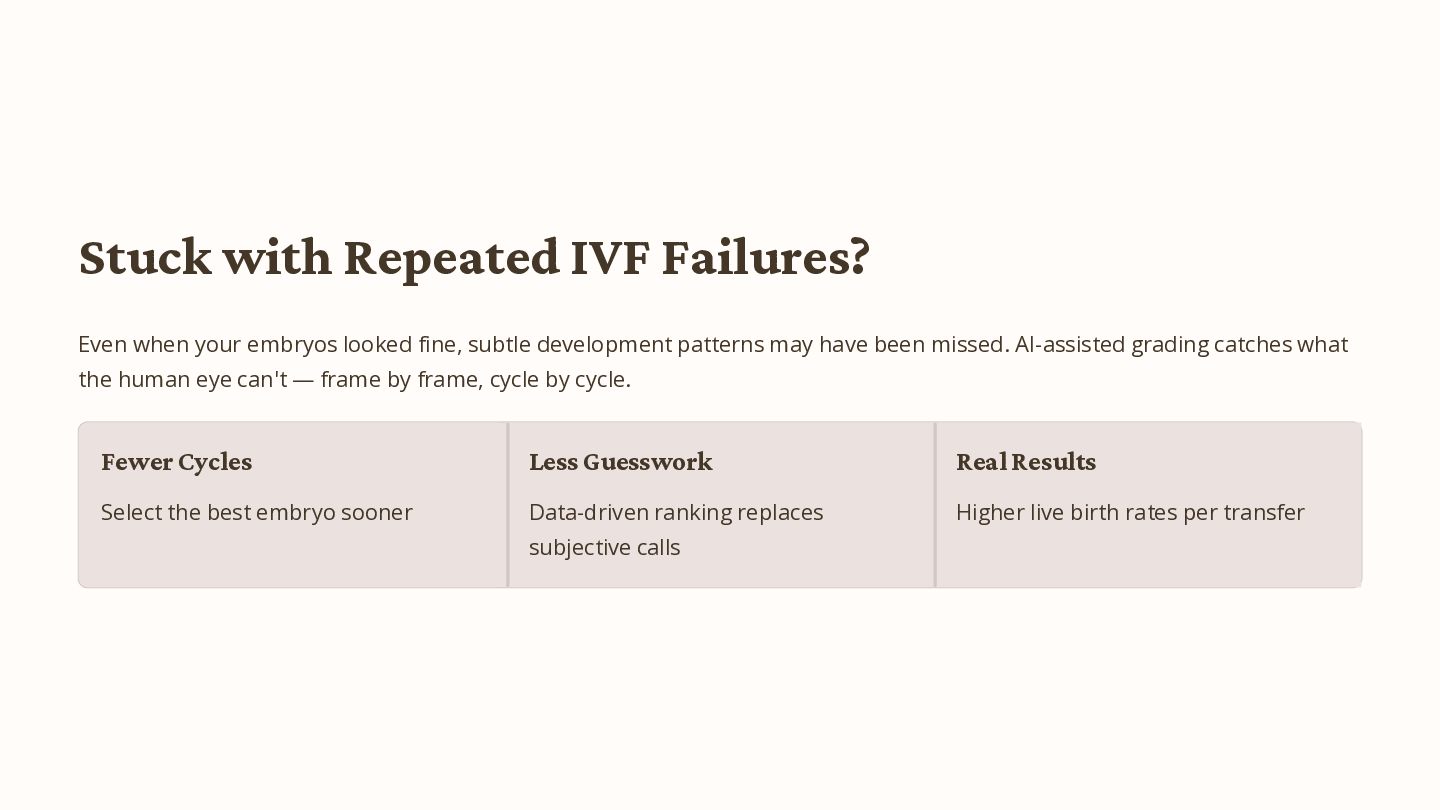
fine, subtle development patterns may have been missed. AI-assisted grading catches what the human eye can't — frame by frame, cycle by cycle. Fewer Cycles Select the best embryo sooner Less Guesswork Data-driven ranking replaces subjective calls Real Results Higher live birth rates per transfer
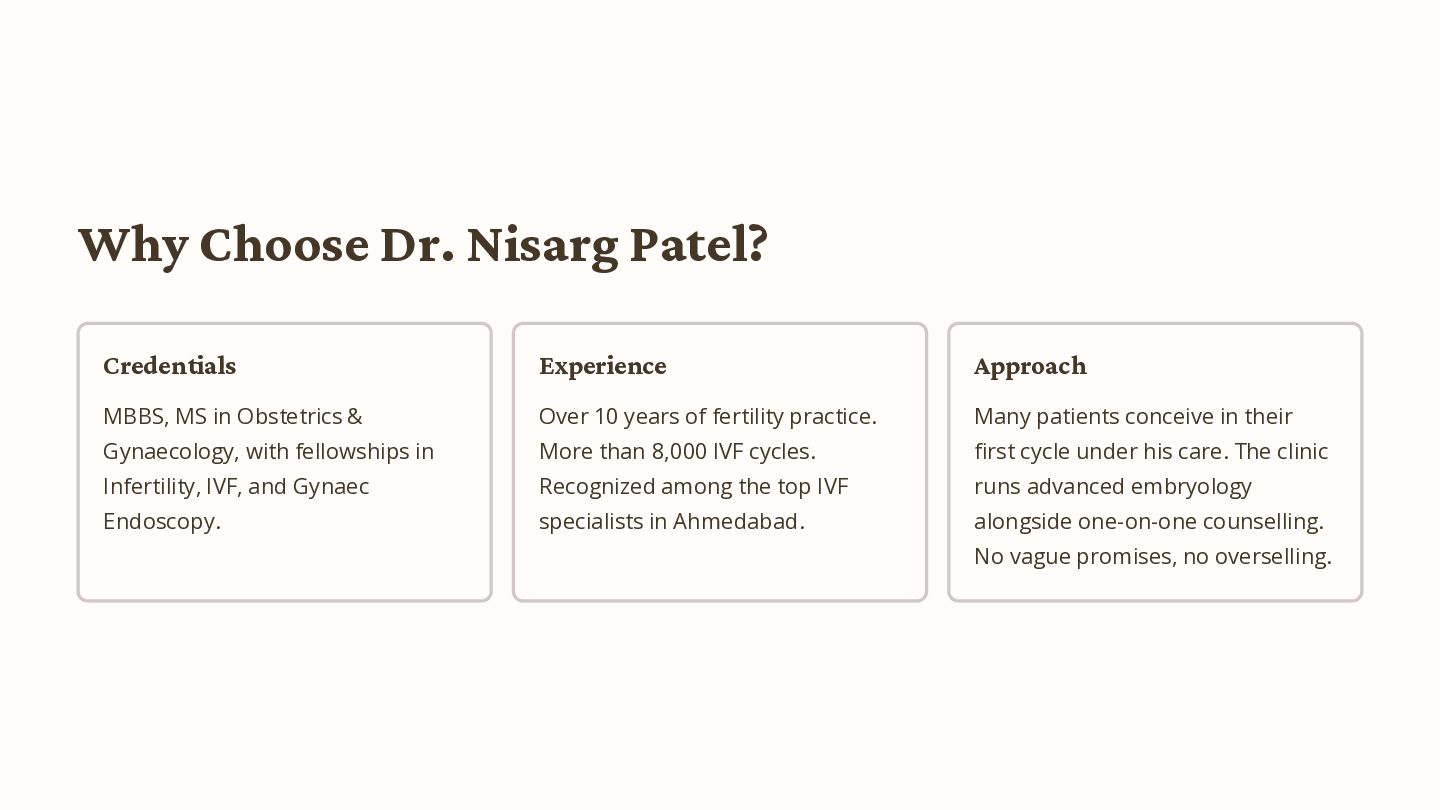
& Gynaecology, with fellowships in Infertility, IVF, and Gynaec Endoscopy. Experience Over 10 years of fertility practice. More than 8,000 IVF cycles. Recognized among the top IVF specialists in Ahmedabad. Approach Many patients conceive in their first cycle under his care. The clinic runs advanced embryology alongside one-on-one counselling. No vague promises, no overselling.
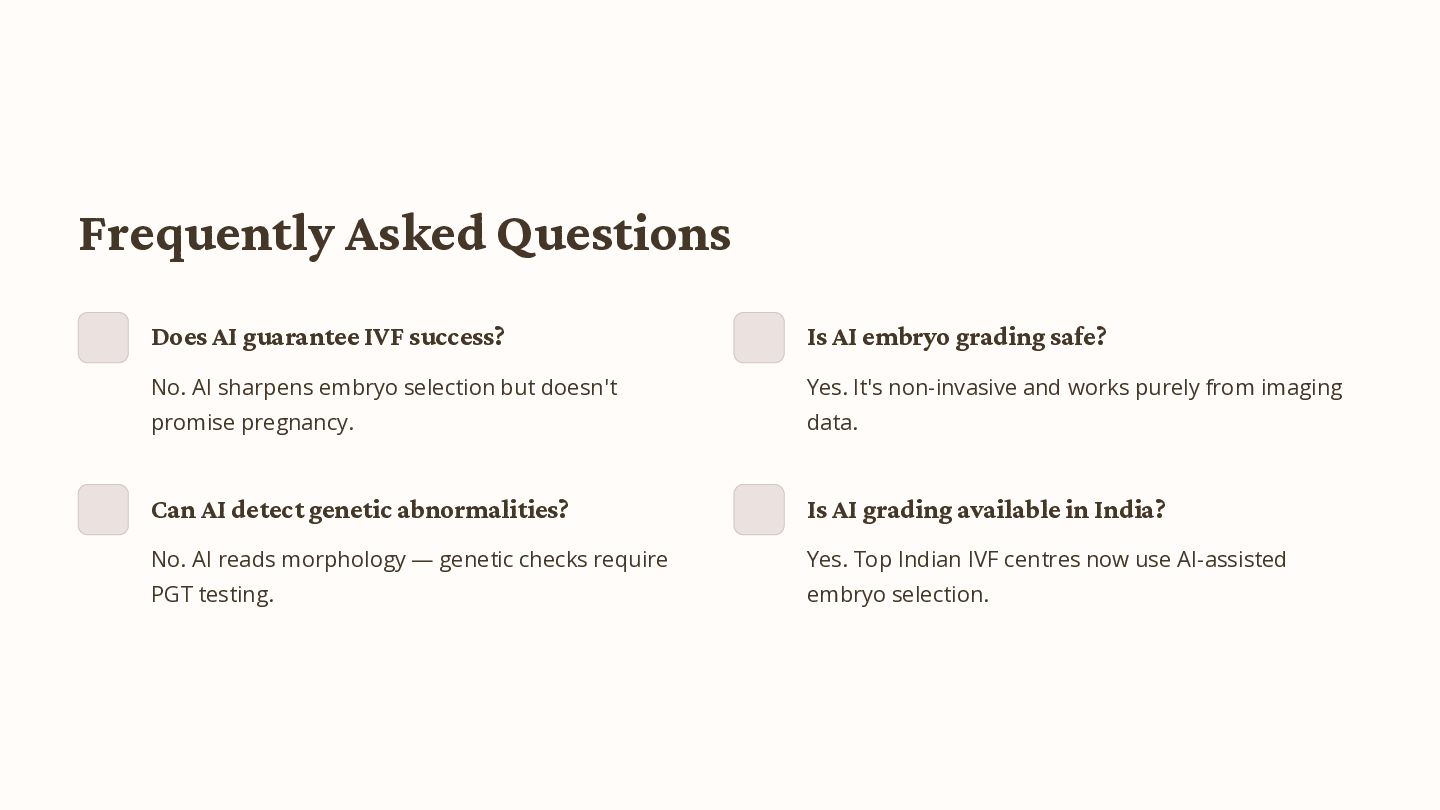
sharpens embryo selection but doesn't promise pregnancy. Is AI embryo grading safe? Yes. It's non-invasive and works purely from imaging data. Can AI detect genetic abnormalities? No. AI reads morphology — genetic checks require PGT testing. Is AI grading available in India? Yes. Top Indian IVF centres now use AI-assisted embryo selection.
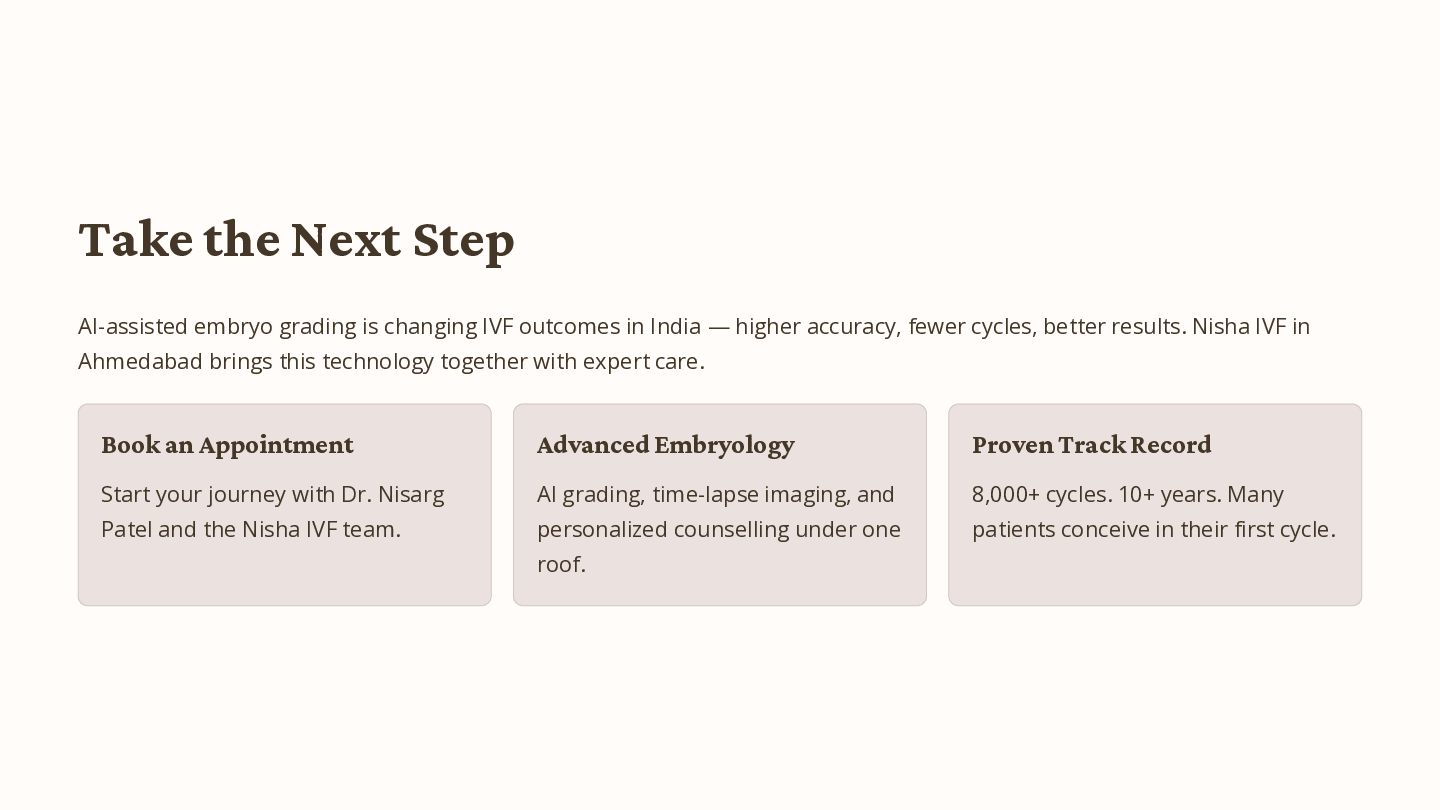
outcomes in India — higher accuracy, fewer cycles, better results. Nisha IVF in Ahmedabad brings this technology together with expert care. Book an Appointment Start your journey with Dr. Nisarg Patel and the Nisha IVF team. Advanced Embryology AI grading, time-lapse imaging, and personalized counselling under one roof. Proven Track Record 8,000+ cycles. 10+ years. Many patients conceive in their first cycle.


 charlesmeaden
 cargoodrich
 aleyda
 speedyindexteam
 rosshudgens
 kizawa2020
 decabbit
 clarasoteras
 alexgalinos
 wjessup
 palkan
 tamaranovitovic
 eileencodes
 bermonpainter
 livdayseo
 techseoconnect
 leimatthew05
 bethany
 schroneko
 marketingsoph
 reverentgeek