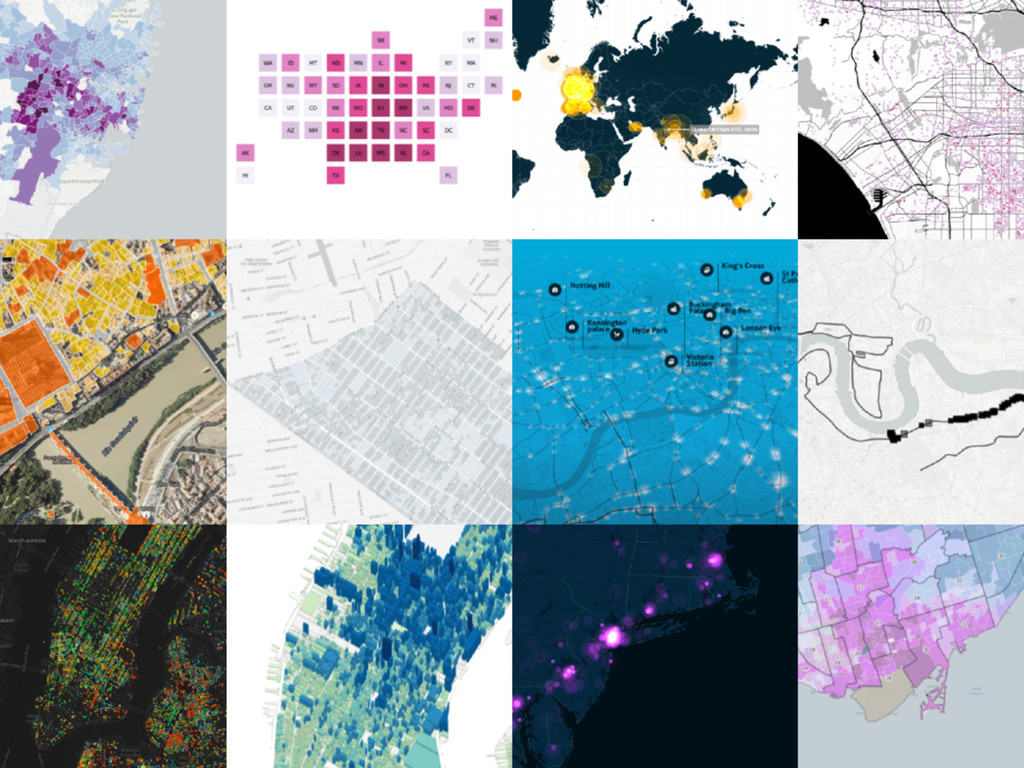
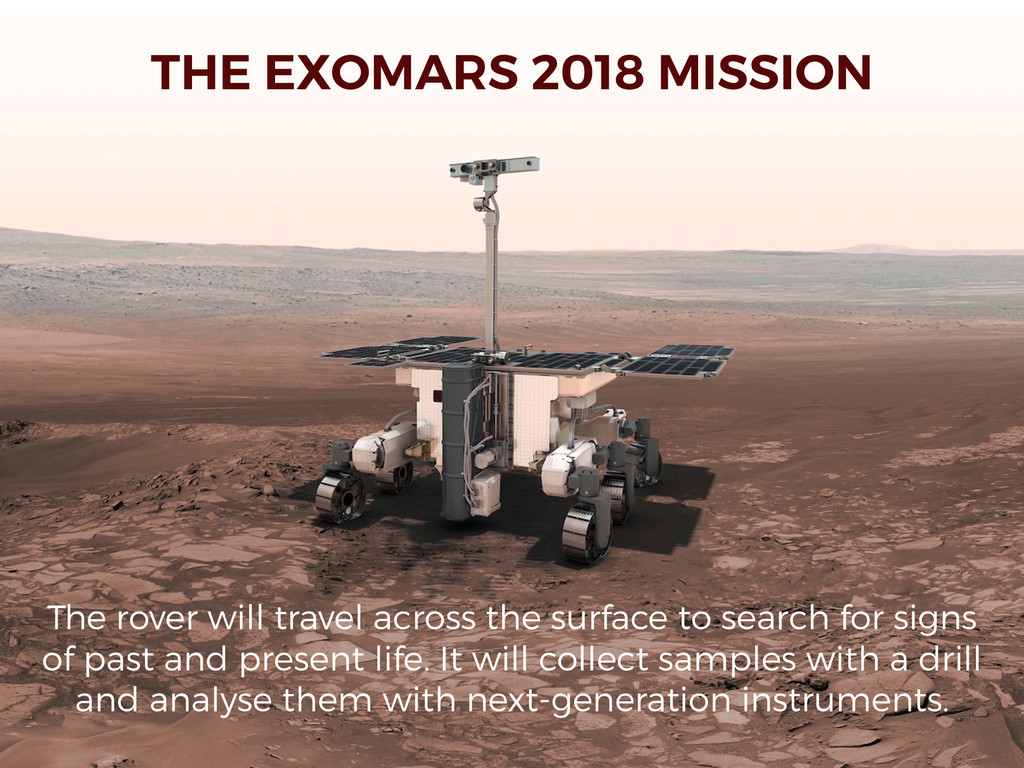
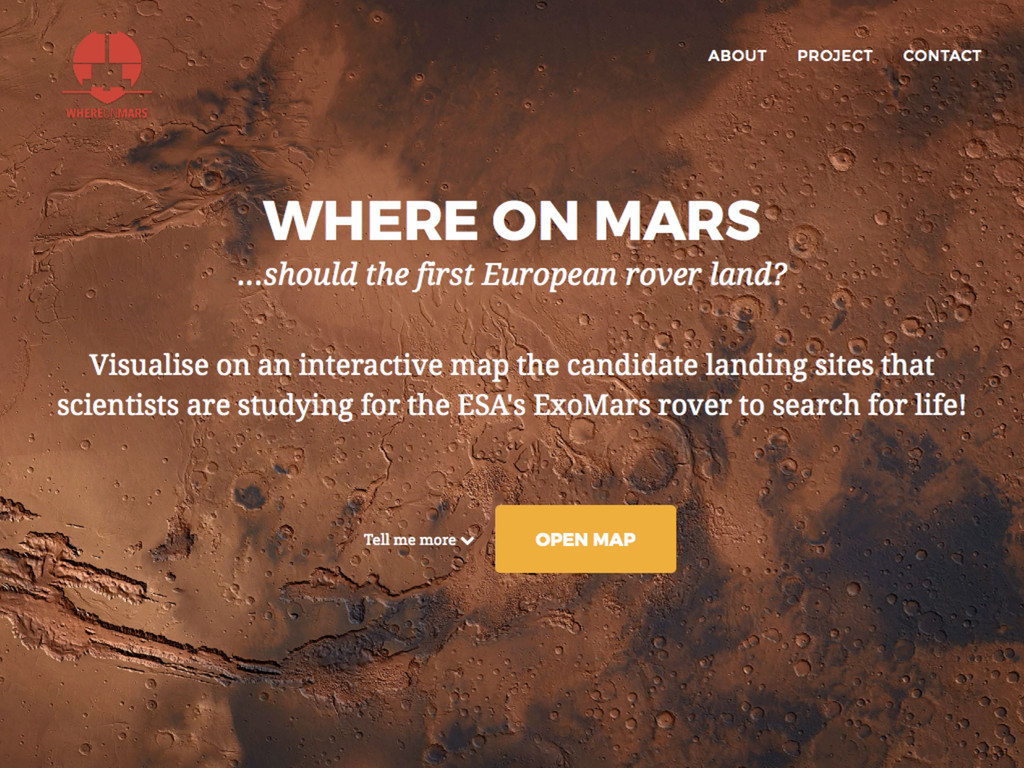
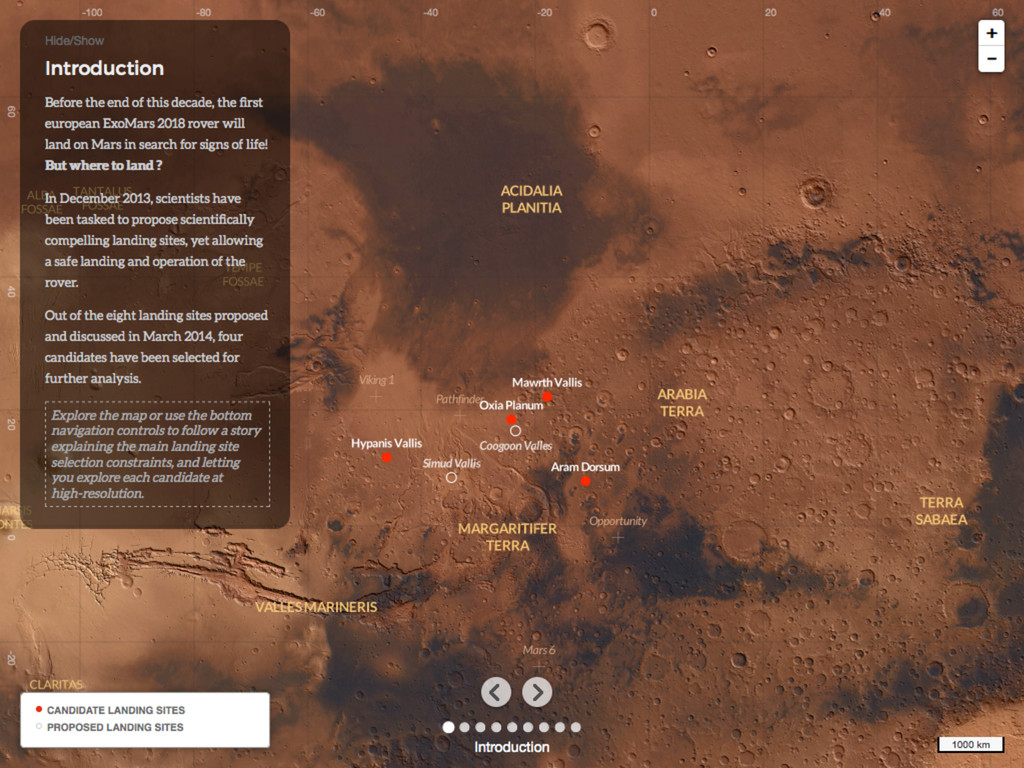
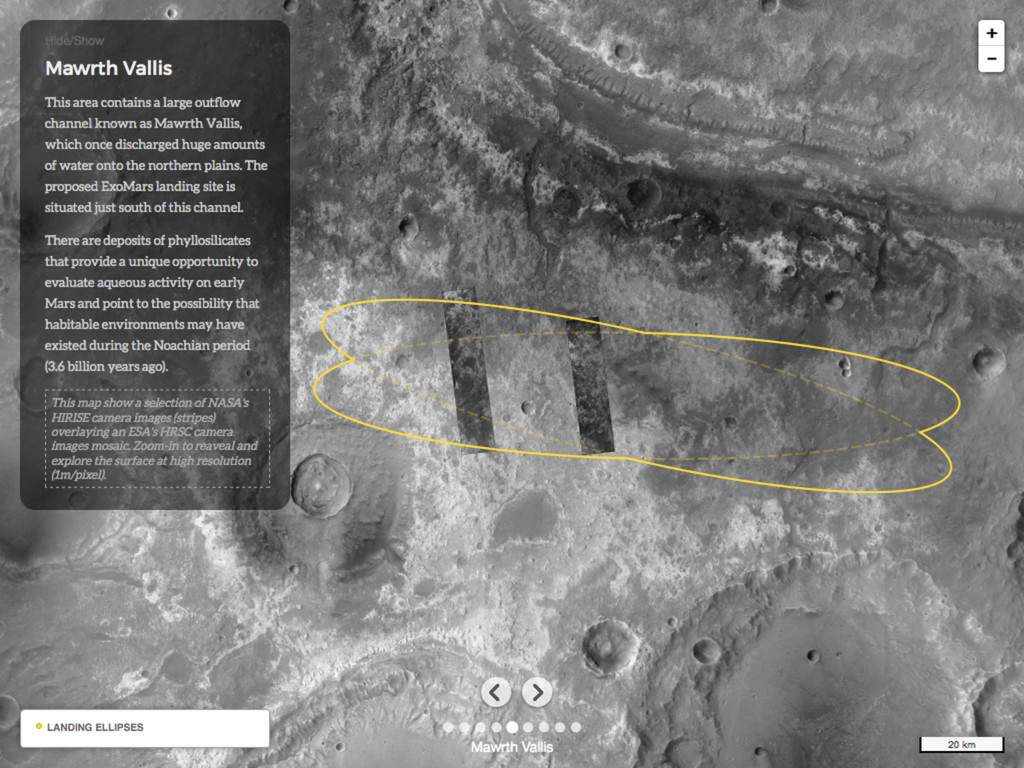
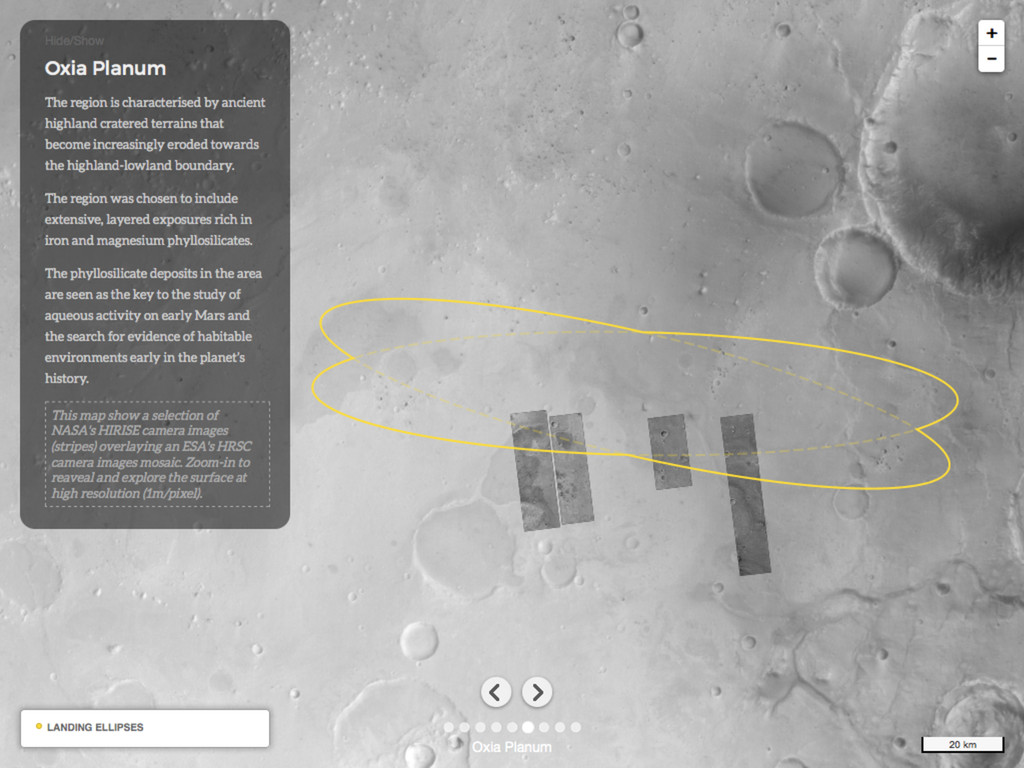
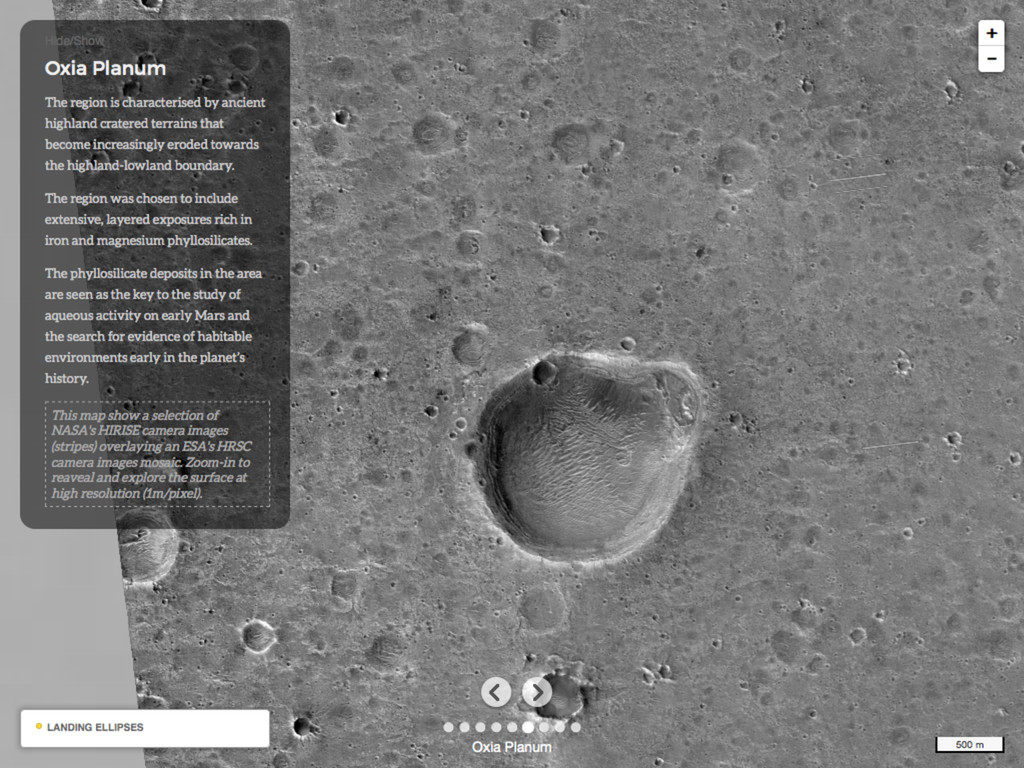
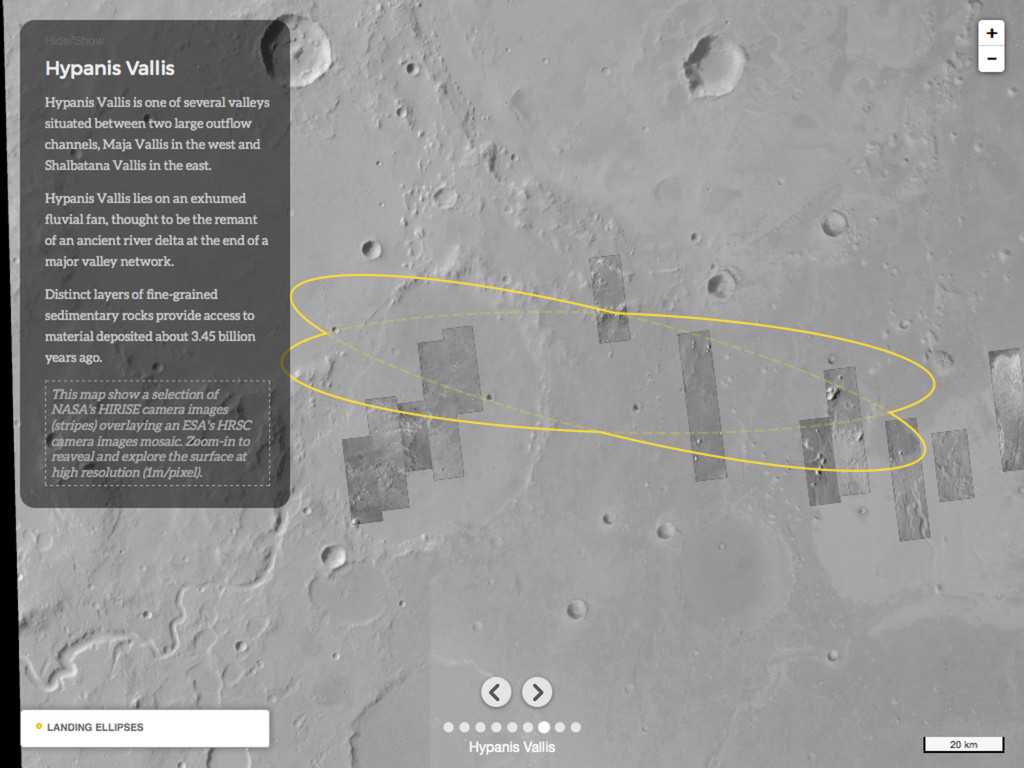
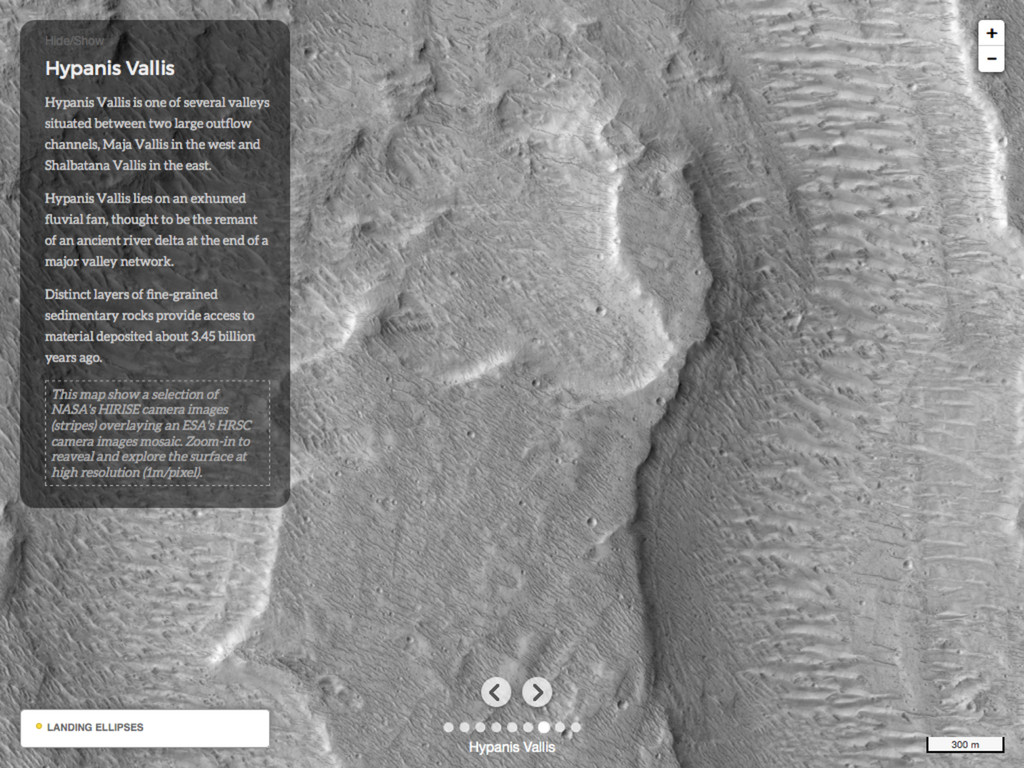
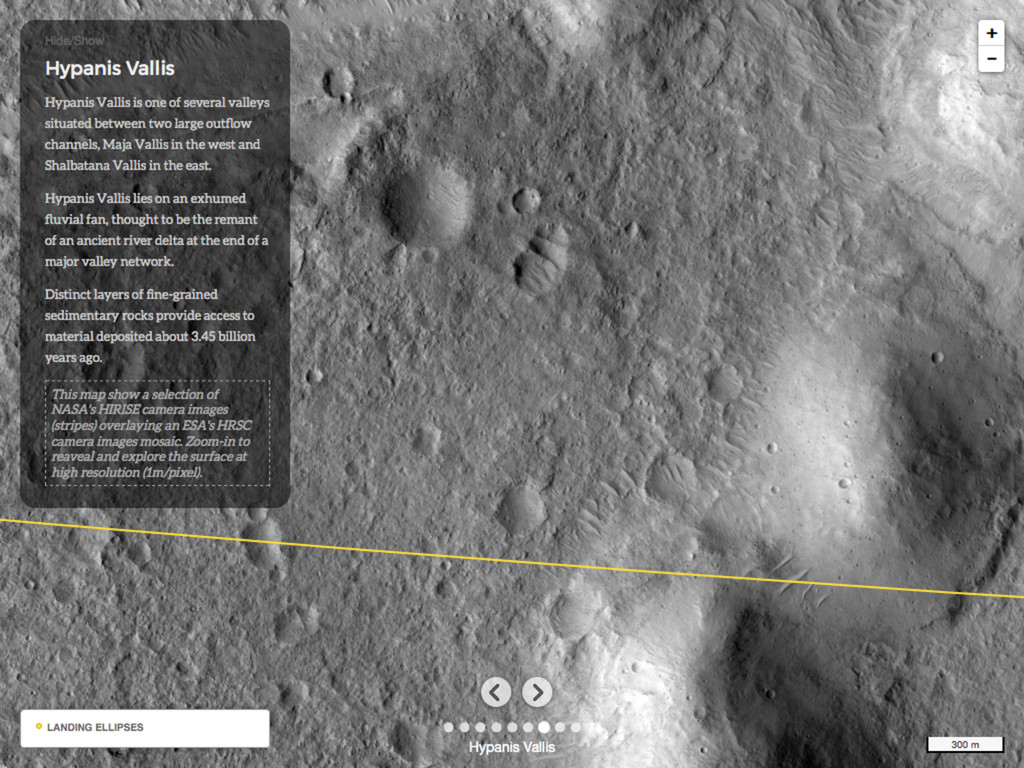
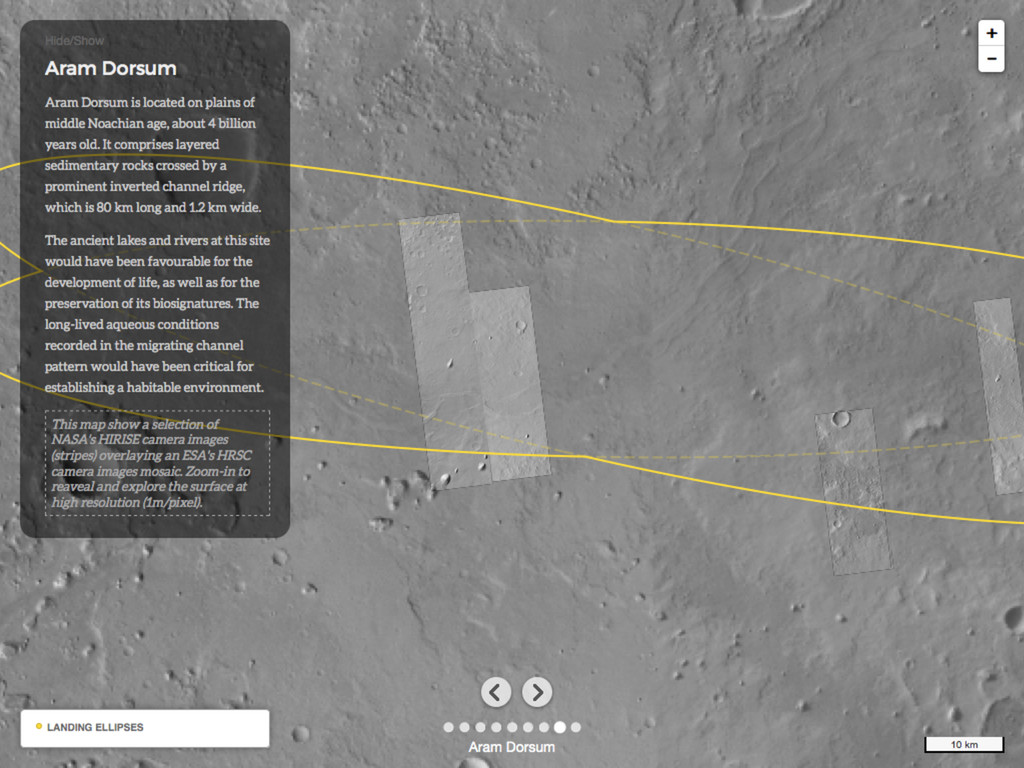
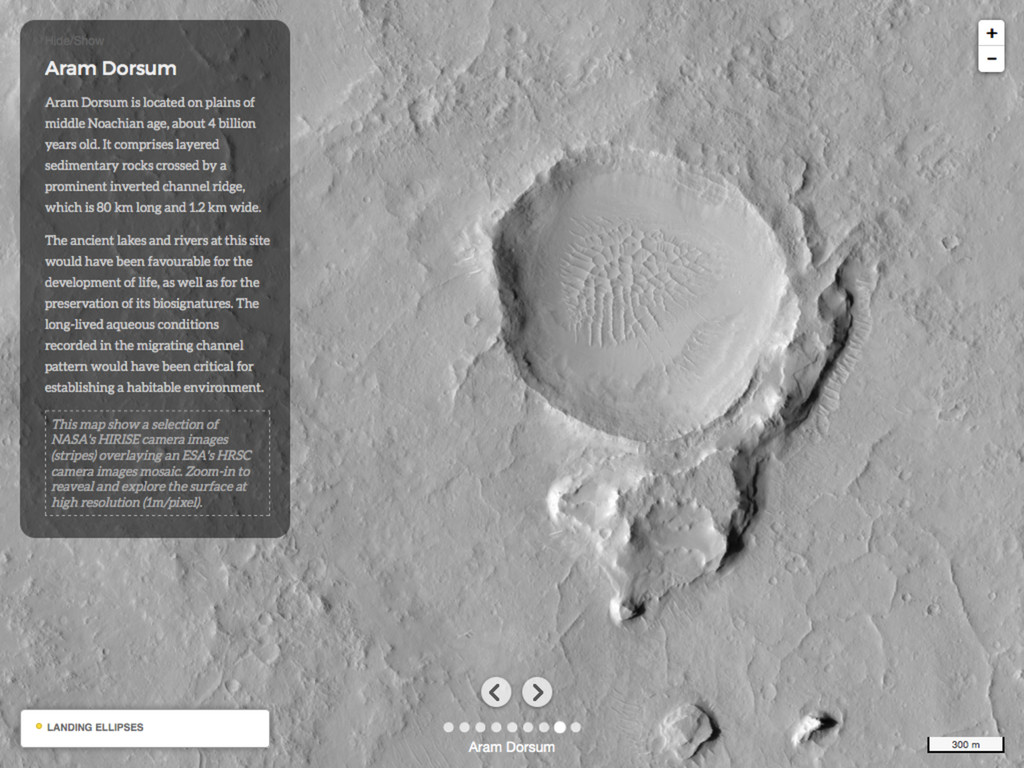
interactive map of the ESA's ExoMars 2018 rover candidates landing site for the general public. • The project started as an ESA's ESAC Trainee Project done in close collaboration with the CartoDB team based in Madrid and New York. • CartoBD is an online free and commercial platform/tool to easily visualise and analyse data on a map (cartodb.com).
web mapping technologies applied to Planetary Science data and geospatial information. To increase public awareness of the ExoMars 2018 mission, and more generally of the scientific and robotic exploration of Mars. TECHNOLOGICAL EDUCATIONAL
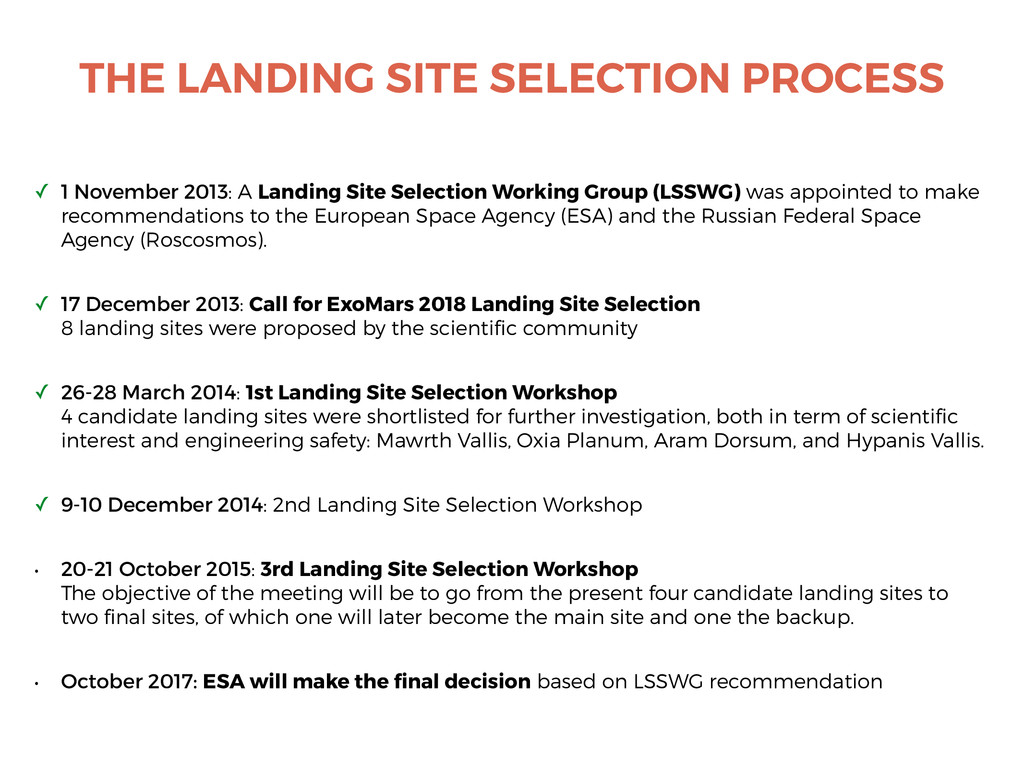
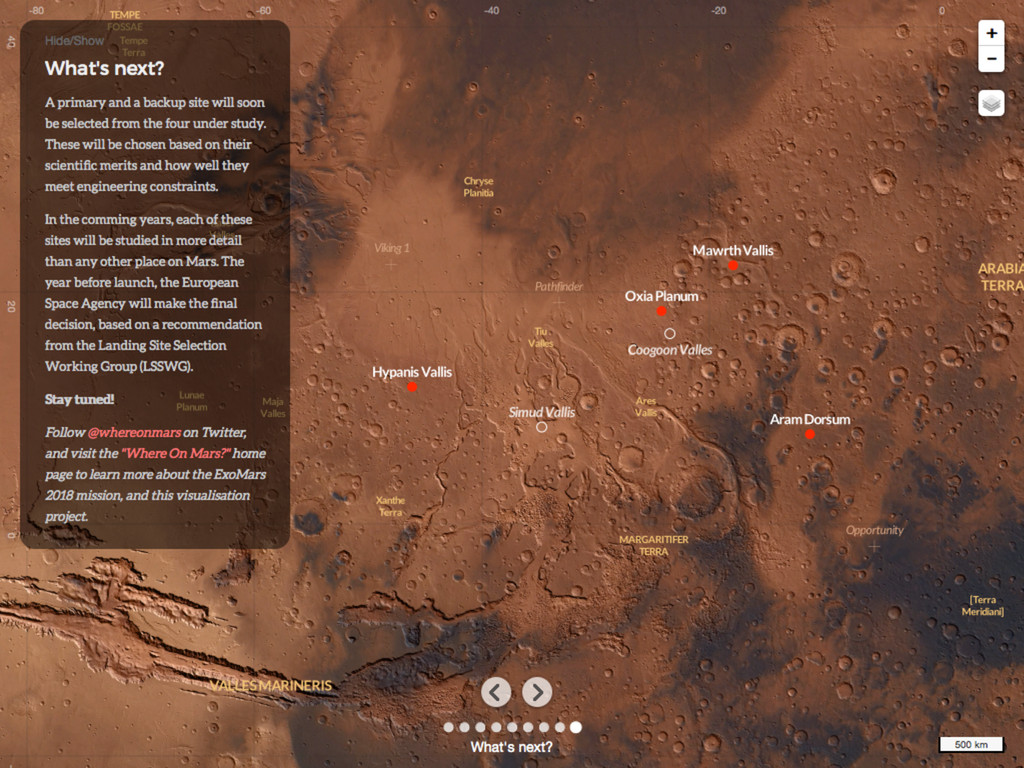
Landing Site Selection Working Group (LSSWG) was appointed to make recommendations to the European Space Agency (ESA) and the Russian Federal Space Agency (Roscosmos). ✓ 17 December 2013: Call for ExoMars 2018 Landing Site Selection 8 landing sites were proposed by the scientific community ✓ 26-28 March 2014: 1st Landing Site Selection Workshop 4 candidate landing sites were shortlisted for further investigation, both in term of scientific interest and engineering safety: Mawrth Vallis, Oxia Planum, Aram Dorsum, and Hypanis Vallis. ✓ 9-10 December 2014: 2nd Landing Site Selection Workshop • 20-21 October 2015: 3rd Landing Site Selection Workshop The objective of the meeting will be to go from the present four candidate landing sites to two final sites, of which one will later become the main site and one the backup. • October 2017: ESA will make the final decision based on LSSWG recommendation
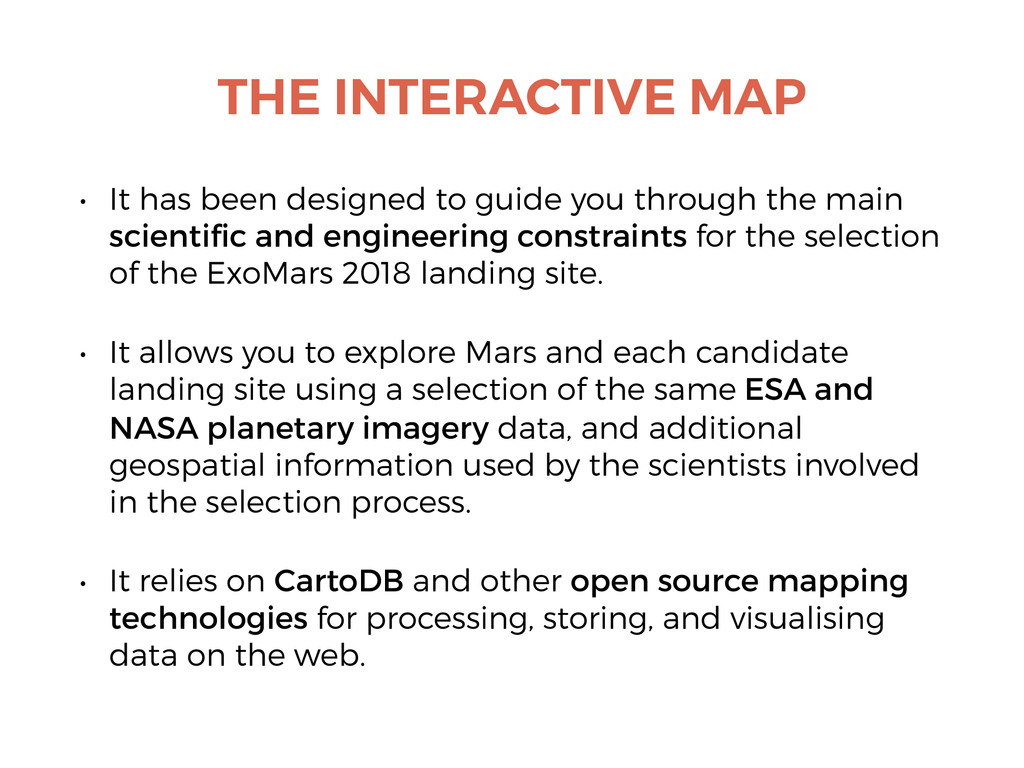
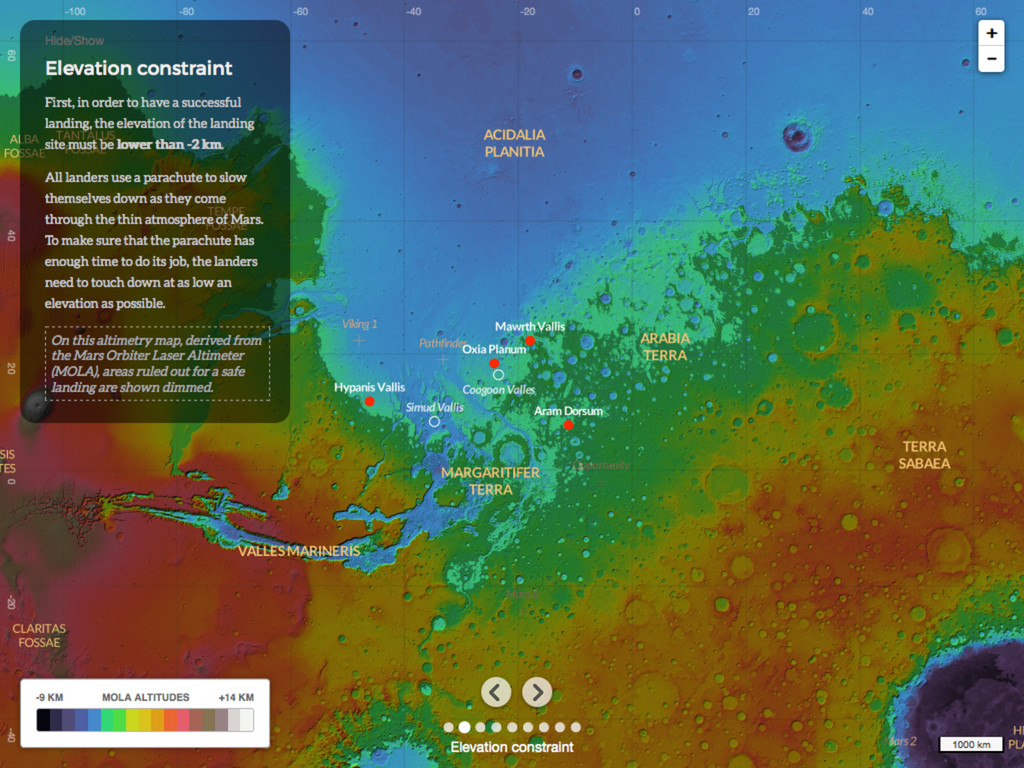
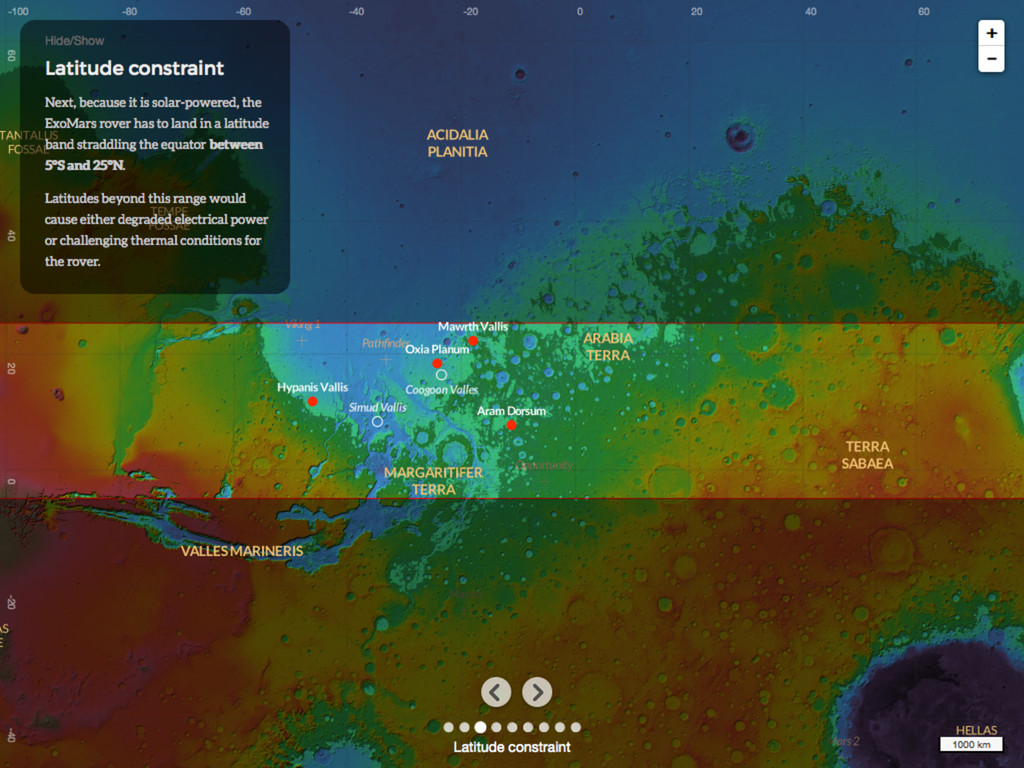
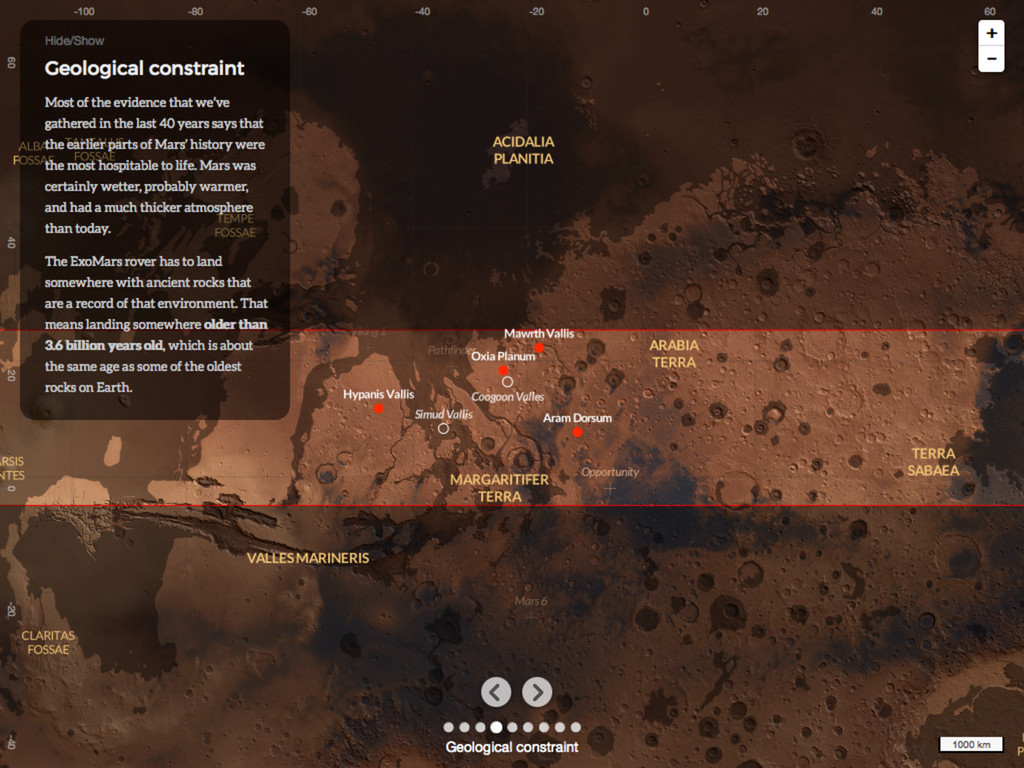
you through the main scientific and engineering constraints for the selection of the ExoMars 2018 landing site. • It allows you to explore Mars and each candidate landing site using a selection of the same ESA and NASA planetary imagery data, and additional geospatial information used by the scientists involved in the selection process. • It relies on CartoDB and other open source mapping technologies for processing, storing, and visualising data on the web.
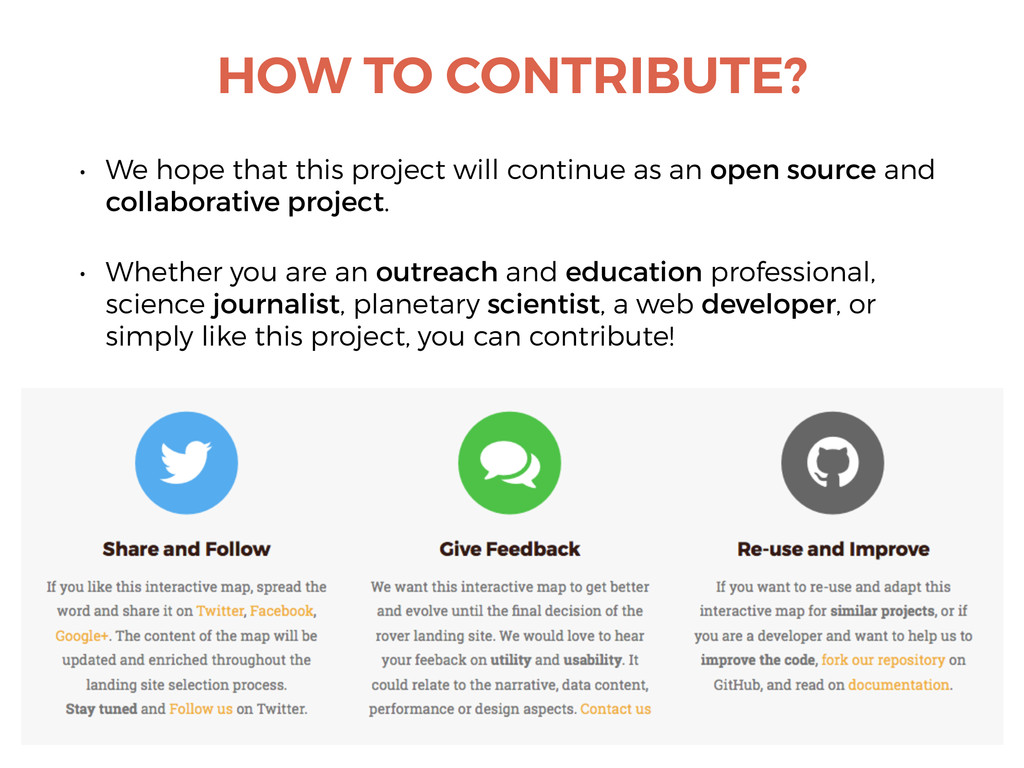
continue as an open source and collaborative project. • Whether you are an outreach and education professional, science journalist, planetary scientist, a web developer, or simply like this project, you can contribute!


 brainpadpr
 trycycle
 lychee1223
 signer
 tsoh
 institutdelelevage
 sshimizu2006
 xspa2012
 konakalab
 tasusu
 ykiyota
 kimpetersen
 tammyeverts
 oripsolob
 pwiseman
 inesmontani
 apolaine
 jnunemaker
 marketingsoph
 codingconduct
 madoxten
 varn