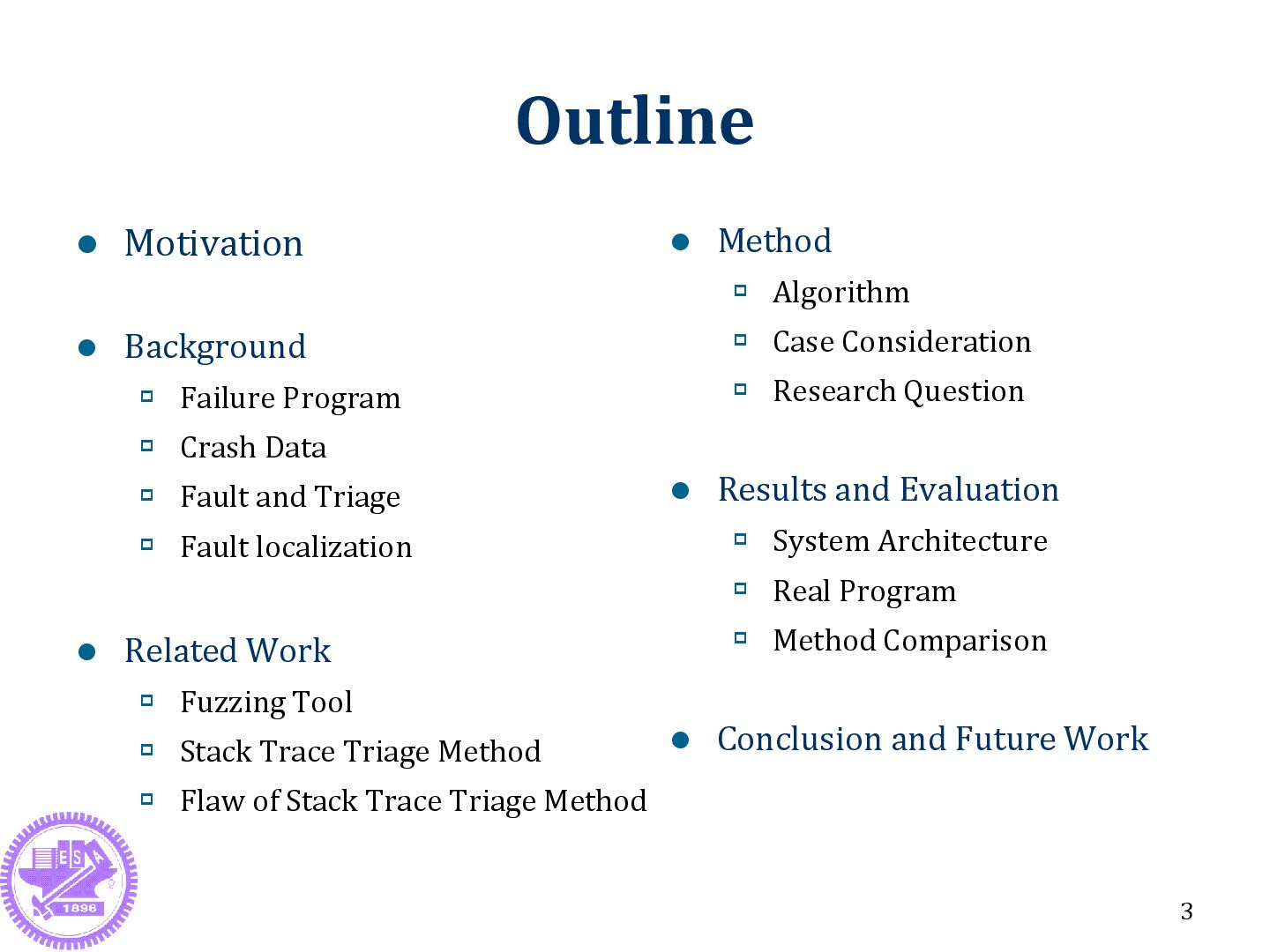
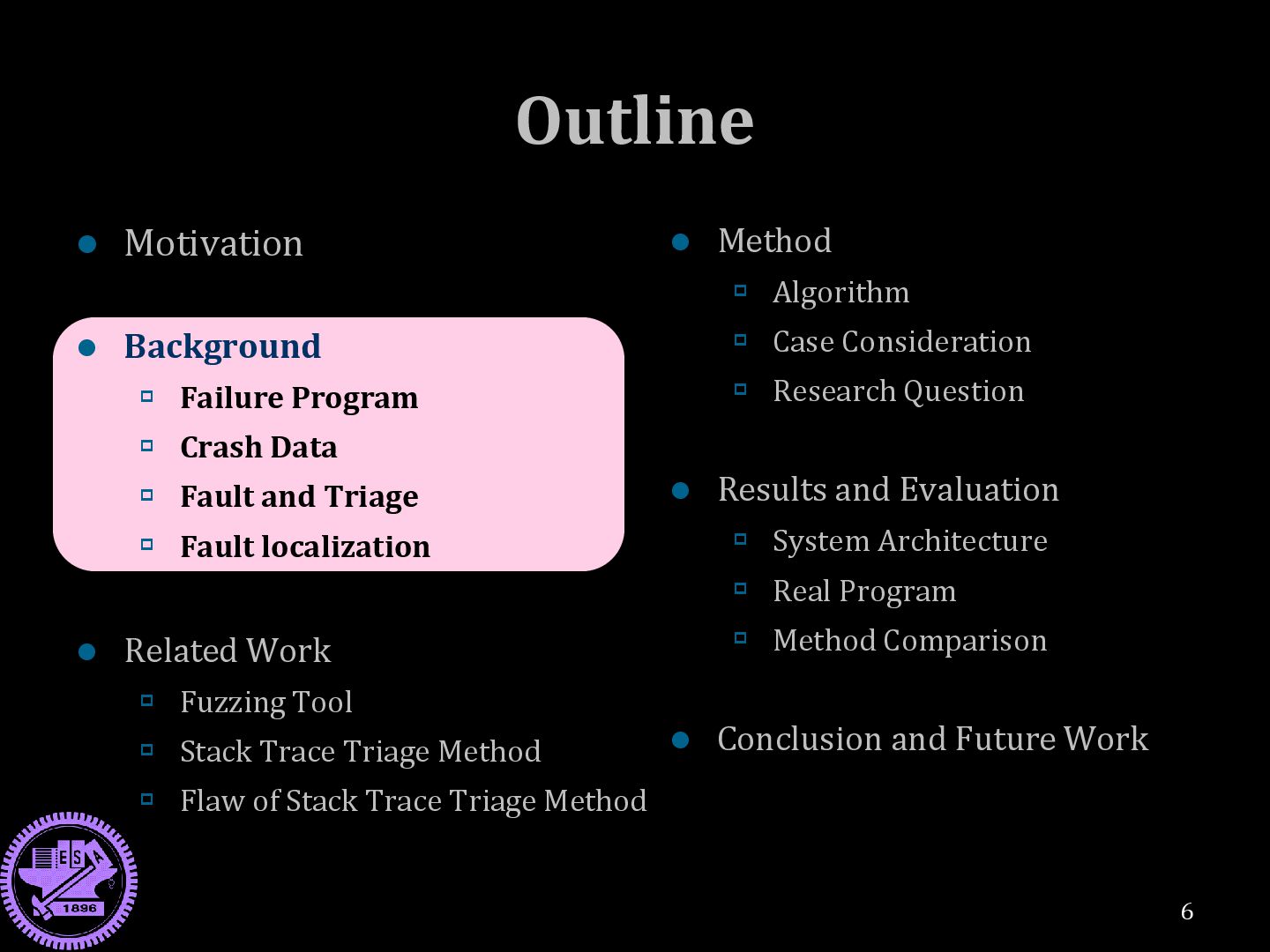
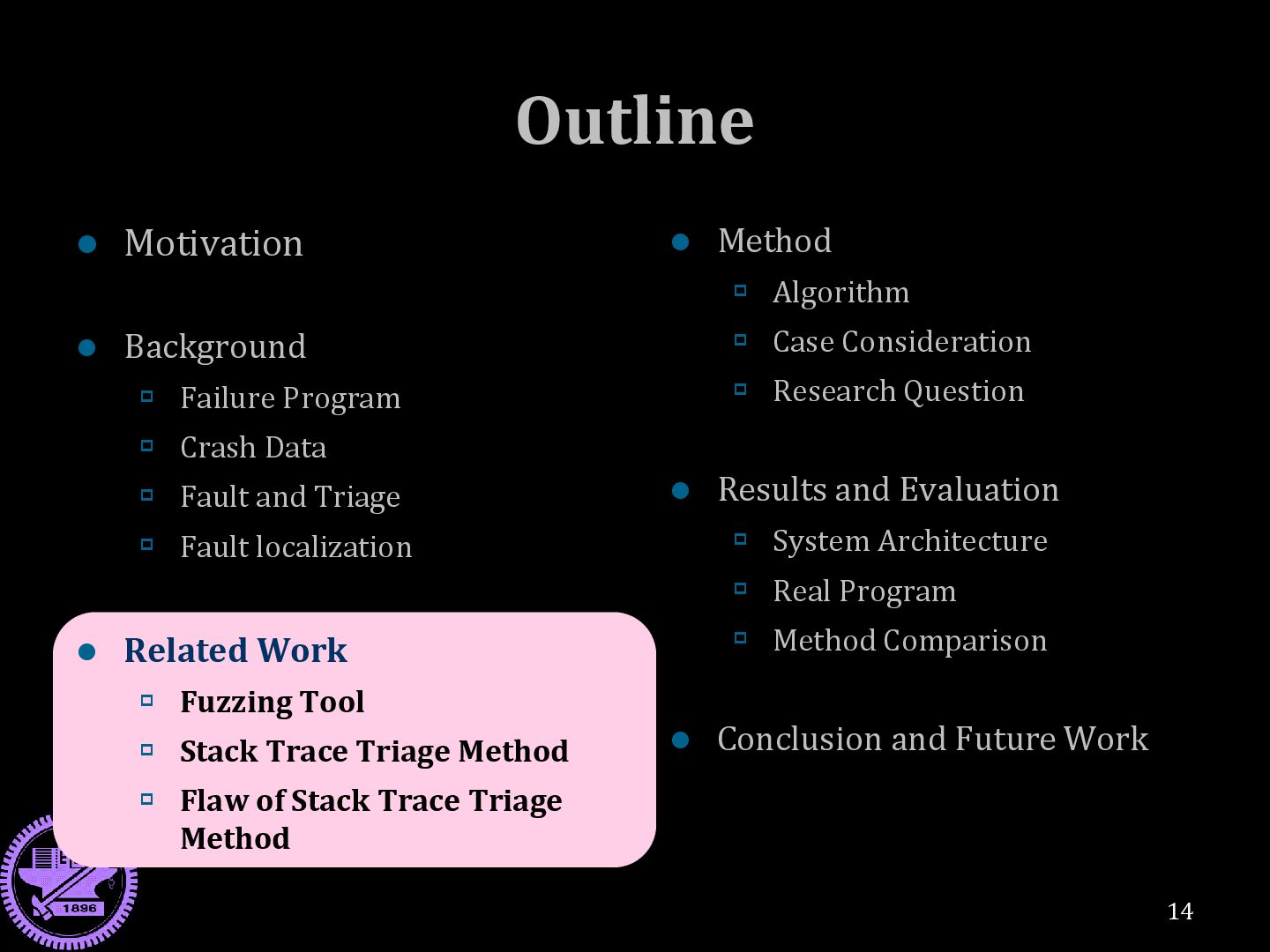
Data Fault and Triage Fault localization Related Work Fuzzing Tool Stack Trace Triage Method Flaw of Stack Trace Triage Method 3 Method Algorithm Case Consideration Research Question Results and Evaluation System Architecture Real Program Method Comparison Conclusion and Future Work
Data Fault and Triage Fault localization Related Work Fuzzing Tool Stack Trace Triage Method Flaw of Stack Trace Triage Method 4 Method Algorithm Case Consideration Research Question Results and Evaluation System Architecture Real Program Method Comparison Conclusion and Future Work
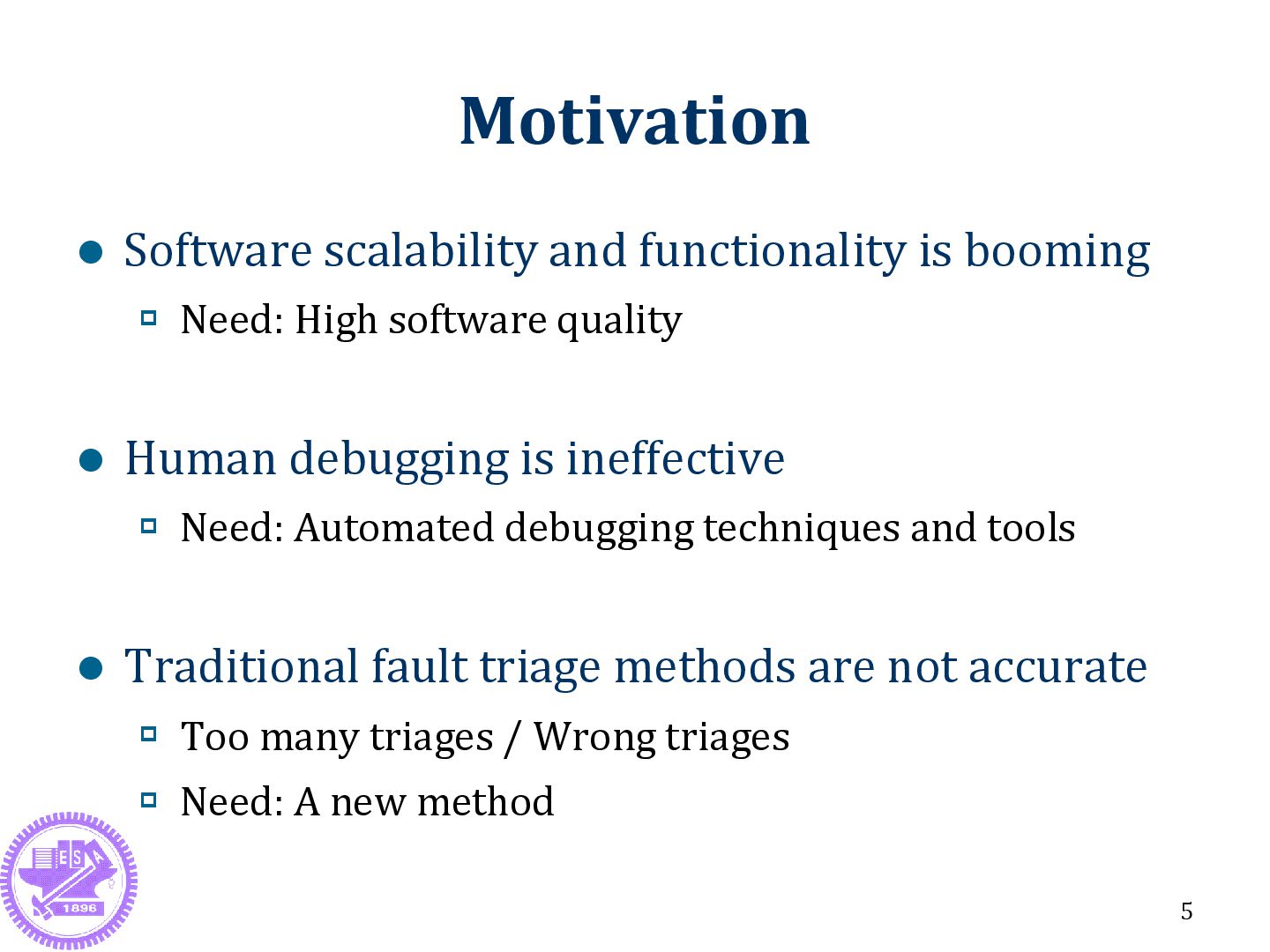
High software quality Human debugging is ineffective Need: Automated debugging techniques and tools Traditional fault triage methods are not accurate Too many triages / Wrong triages Need: A new method 5
Data Fault and Triage Fault localization Related Work Fuzzing Tool Stack Trace Triage Method Flaw of Stack Trace Triage Method 6 Method Algorithm Case Consideration Research Question Results and Evaluation System Architecture Real Program Method Comparison Conclusion and Future Work
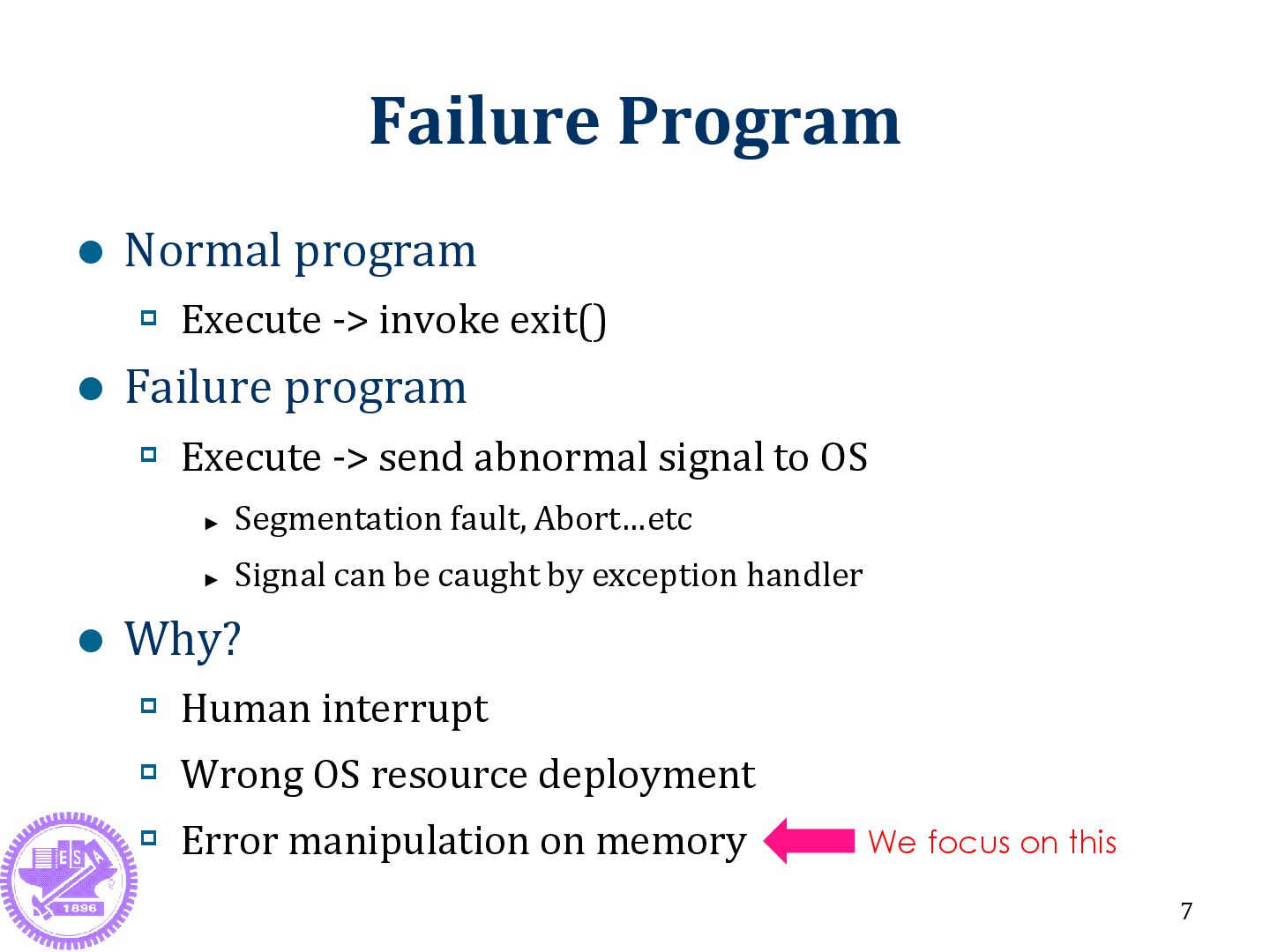
Failure program Execute -> send abnormal signal to OS ► Segmentation fault, Abort…etc ► Signal can be caught by exception handler Why? Human interrupt Wrong OS resource deployment Error manipulation on memory 7 We focus on this
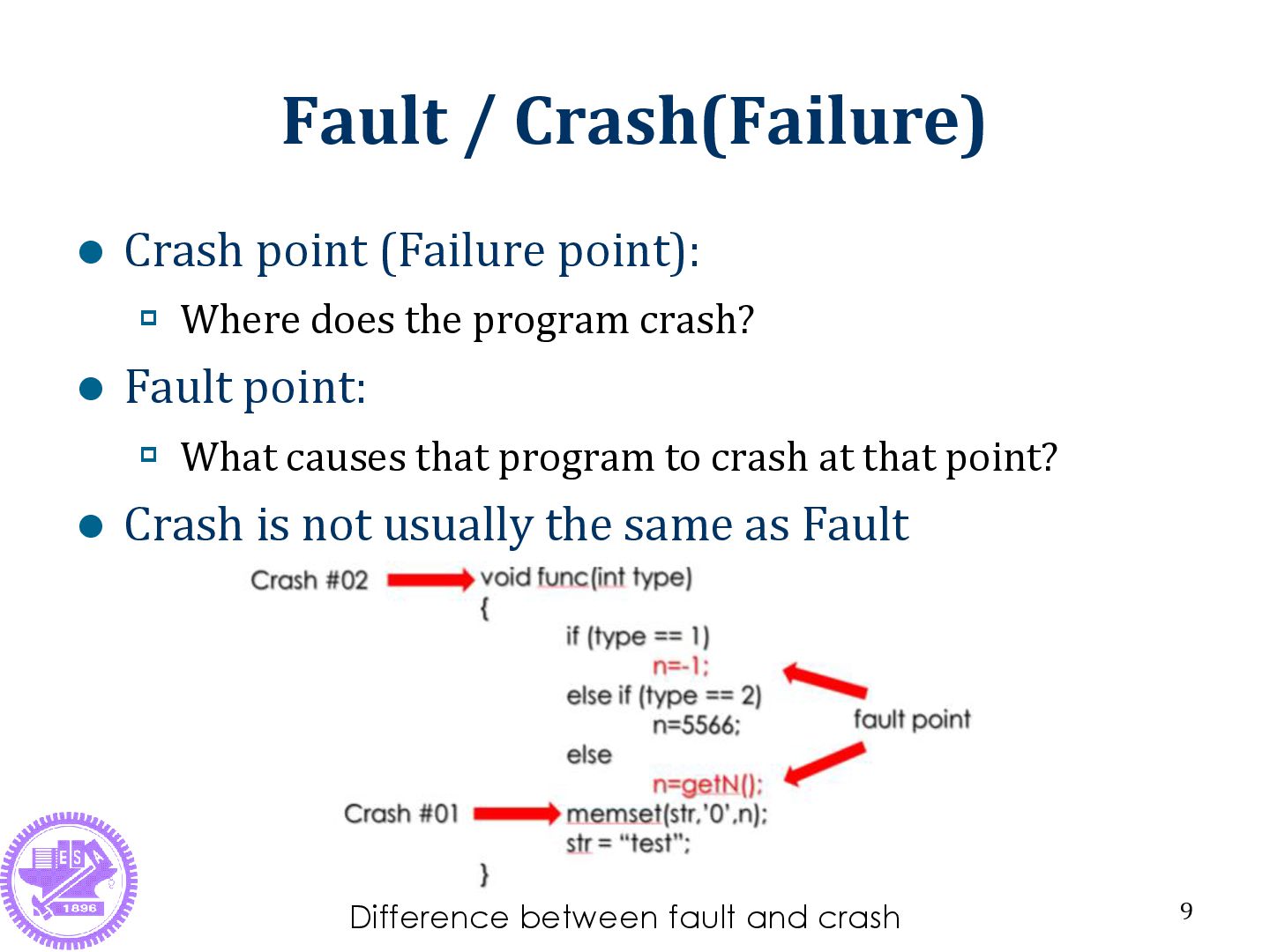
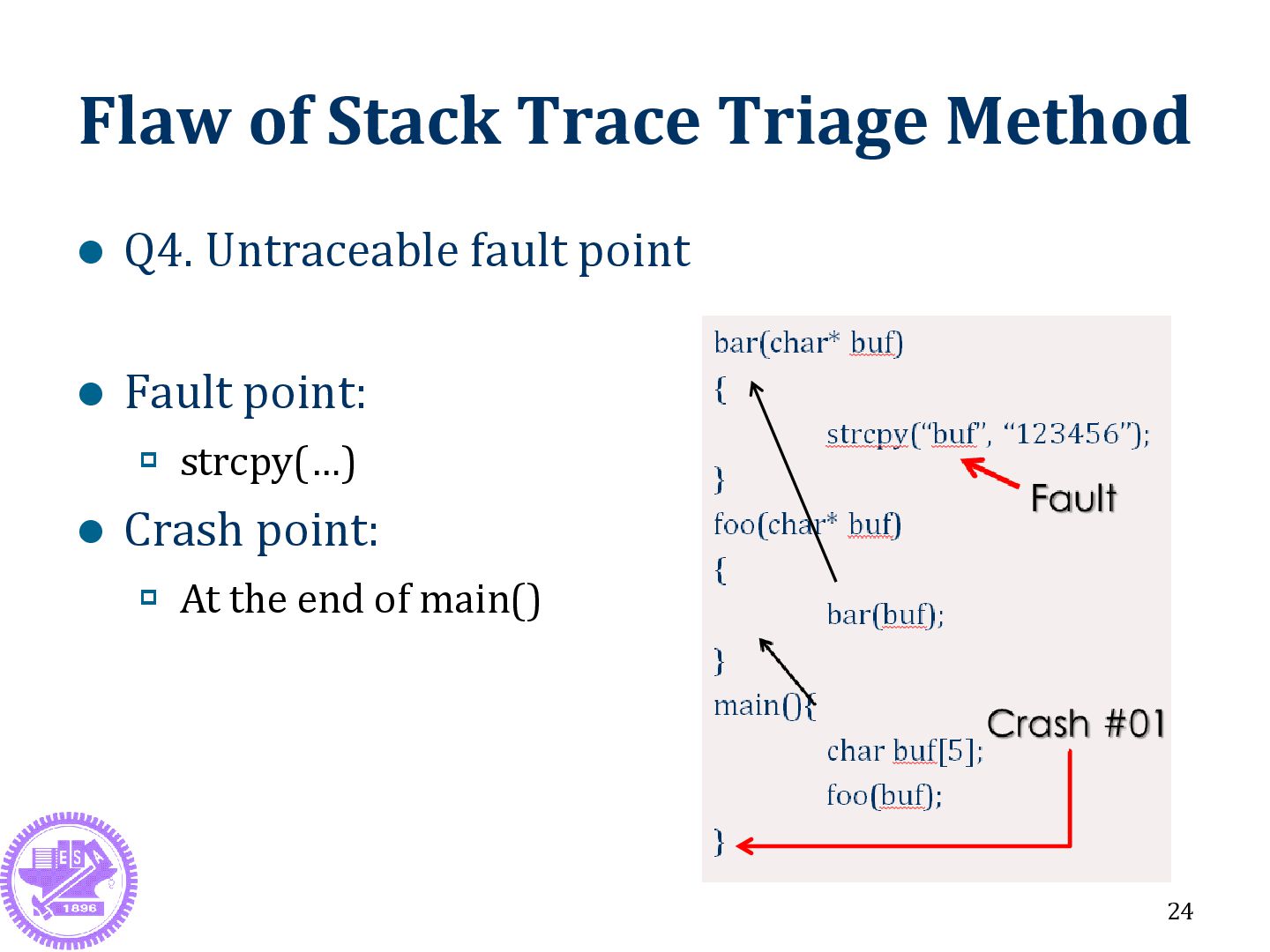
does the program crash? Fault point: What causes that program to crash at that point? Crash is not usually the same as Fault 9 Difference between fault and crash
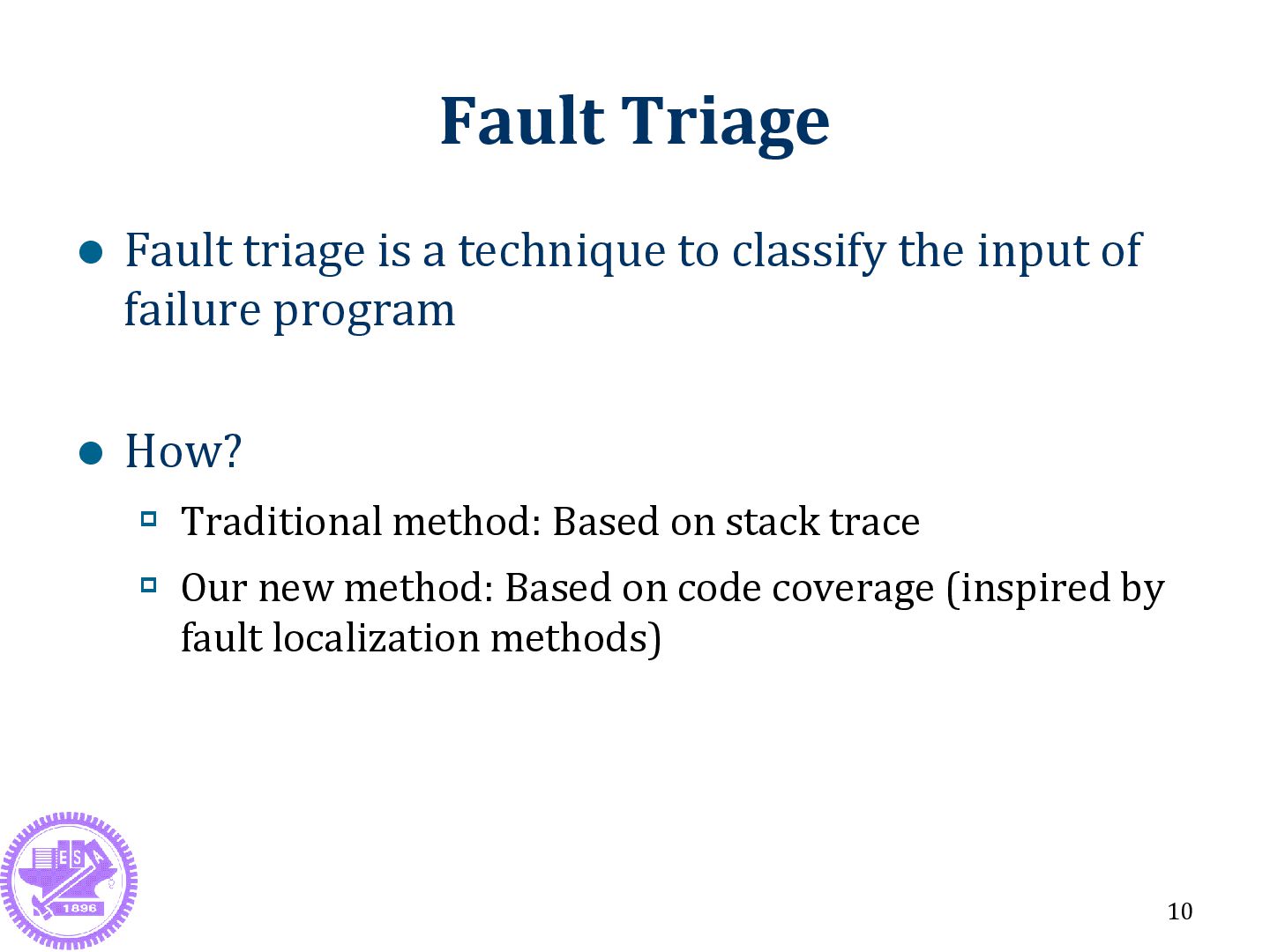
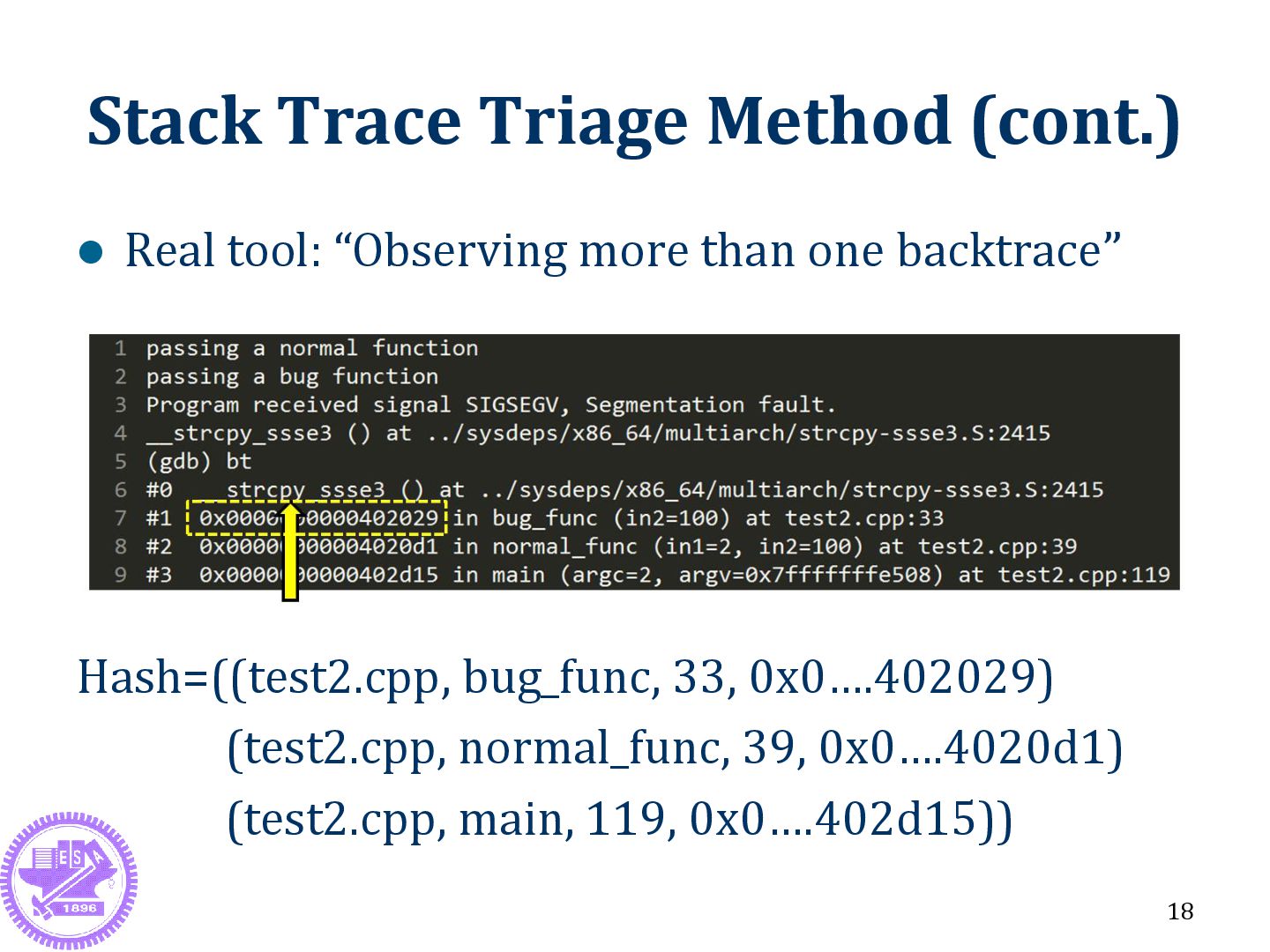
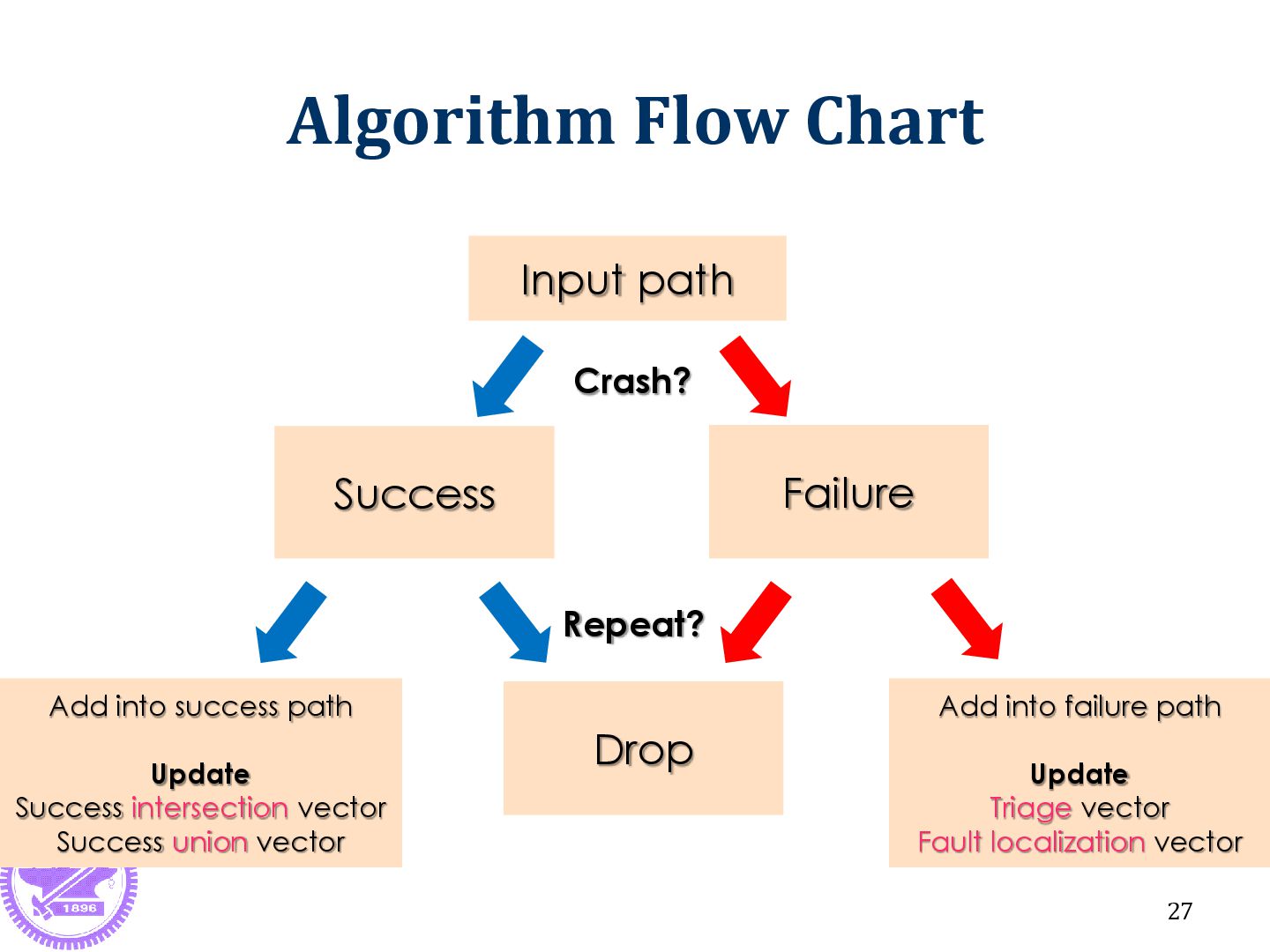
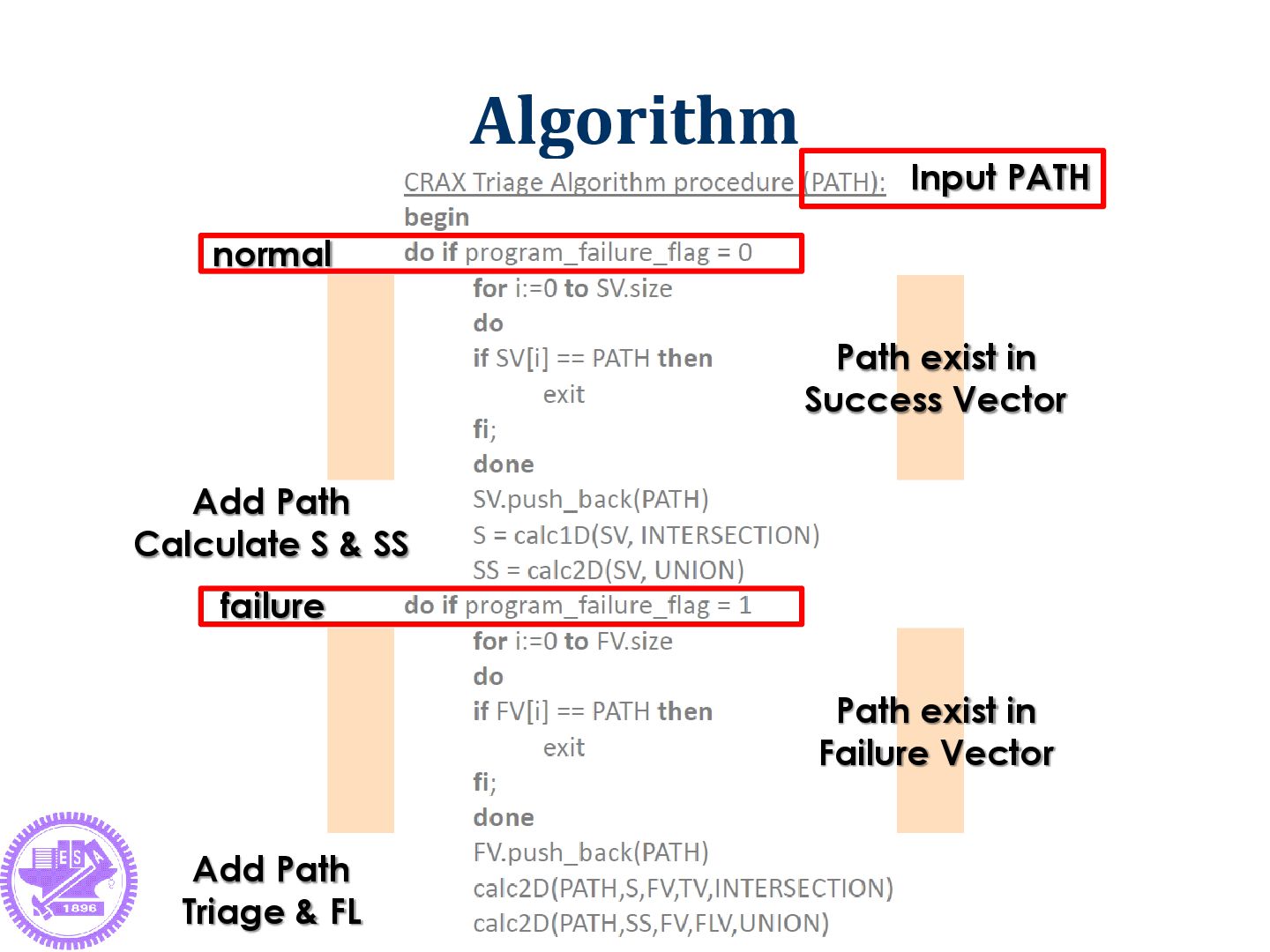
the input of failure program How? Traditional method: Based on stack trace Our new method: Based on code coverage (inspired by fault localization methods) 10
Data Fault and Triage Fault localization Related Work Fuzzing Tool Stack Trace Triage Method Flaw of Stack Trace Triage Method 14 Method Algorithm Case Consideration Research Question Results and Evaluation System Architecture Real Program Method Comparison Conclusion and Future Work
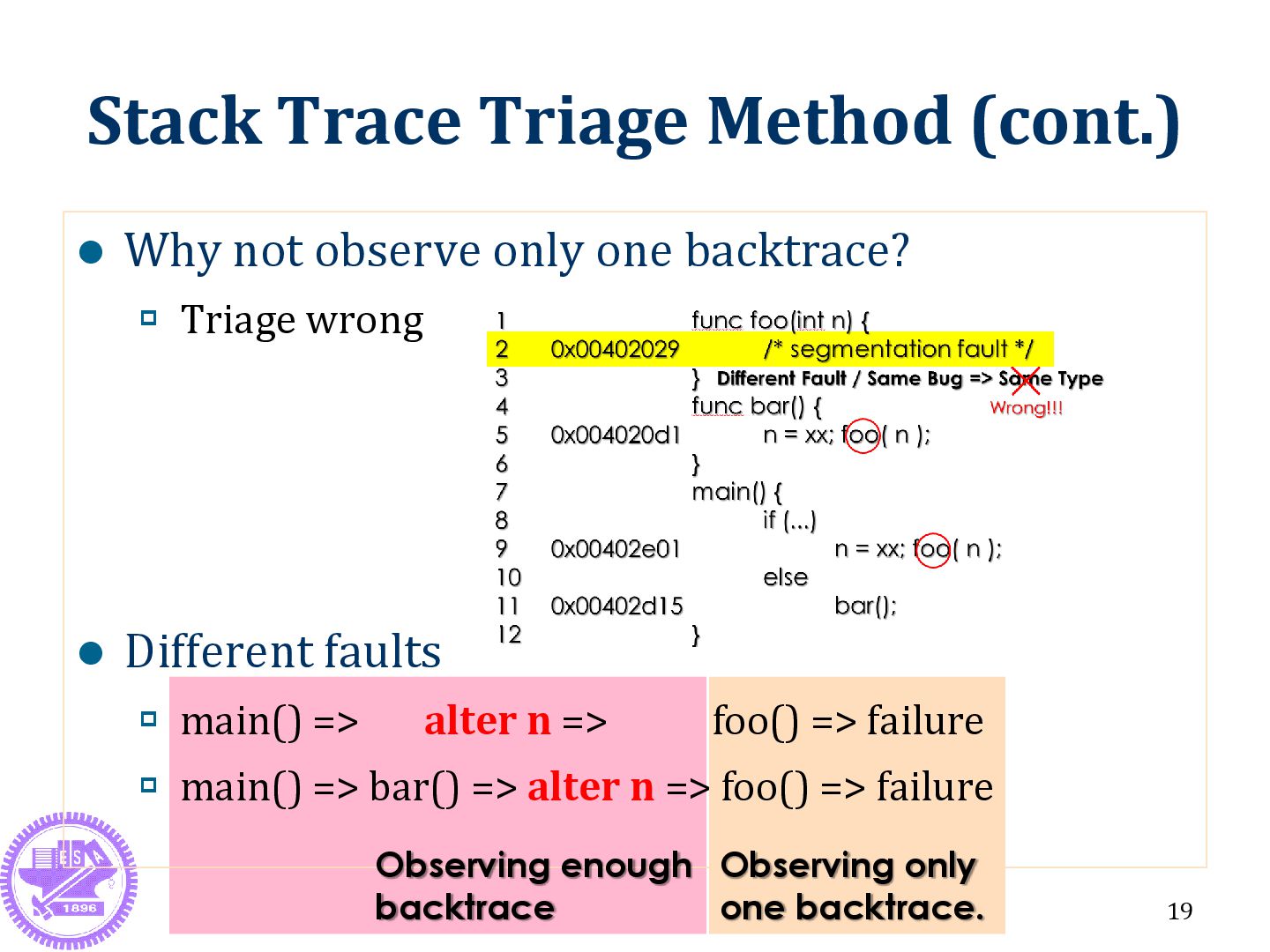
one backtrace? Triage wrong Different faults main() => alter n => foo() => failure main() => bar() => alter n => foo() => failure 19 Observing only one backtrace. Observing enough backtrace
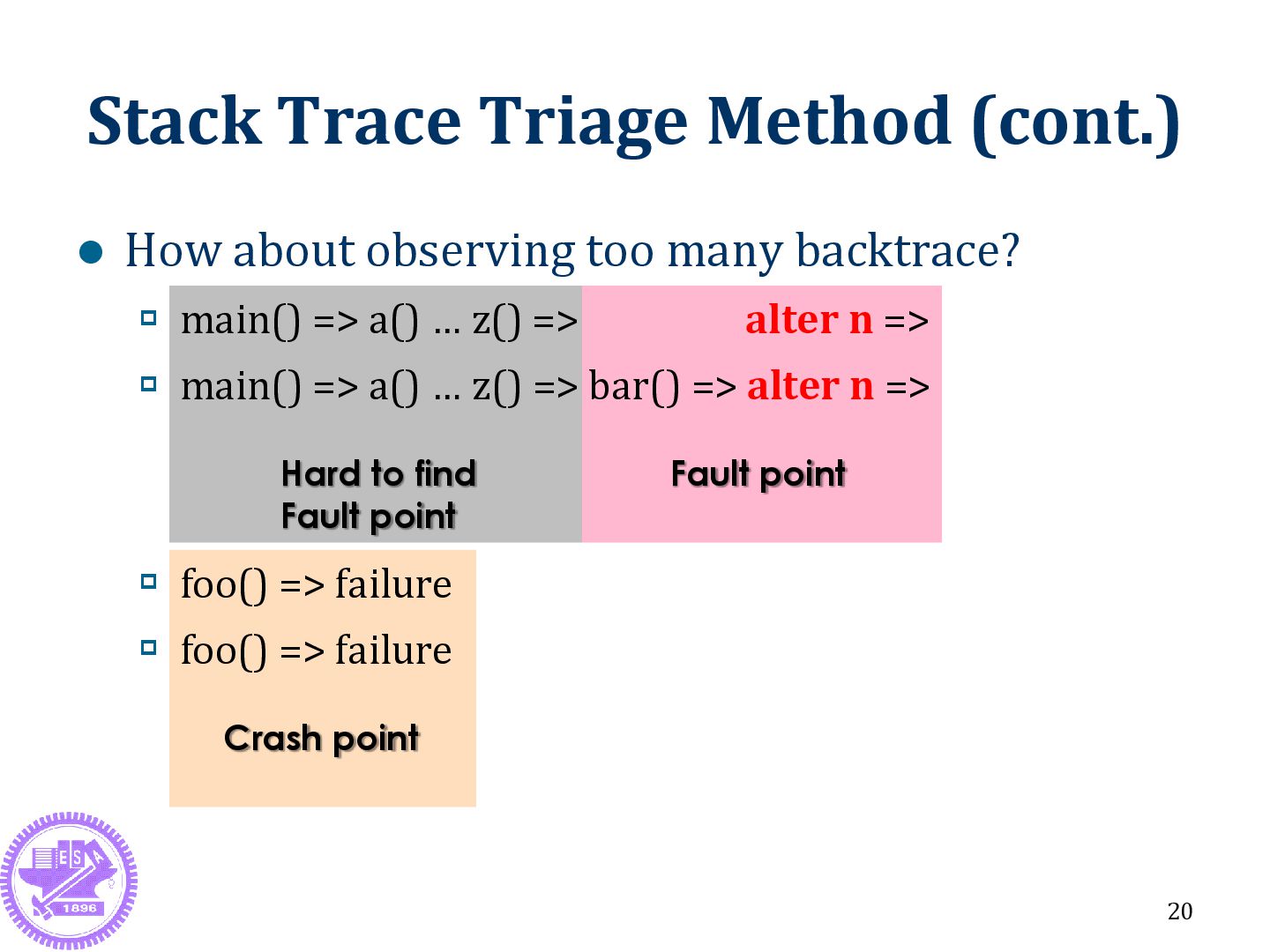
Hard to find Fault point How about observing too many backtrace? main() => a() … z() => alter n => main() => a() … z() => bar() => alter n => foo() => failure foo() => failure
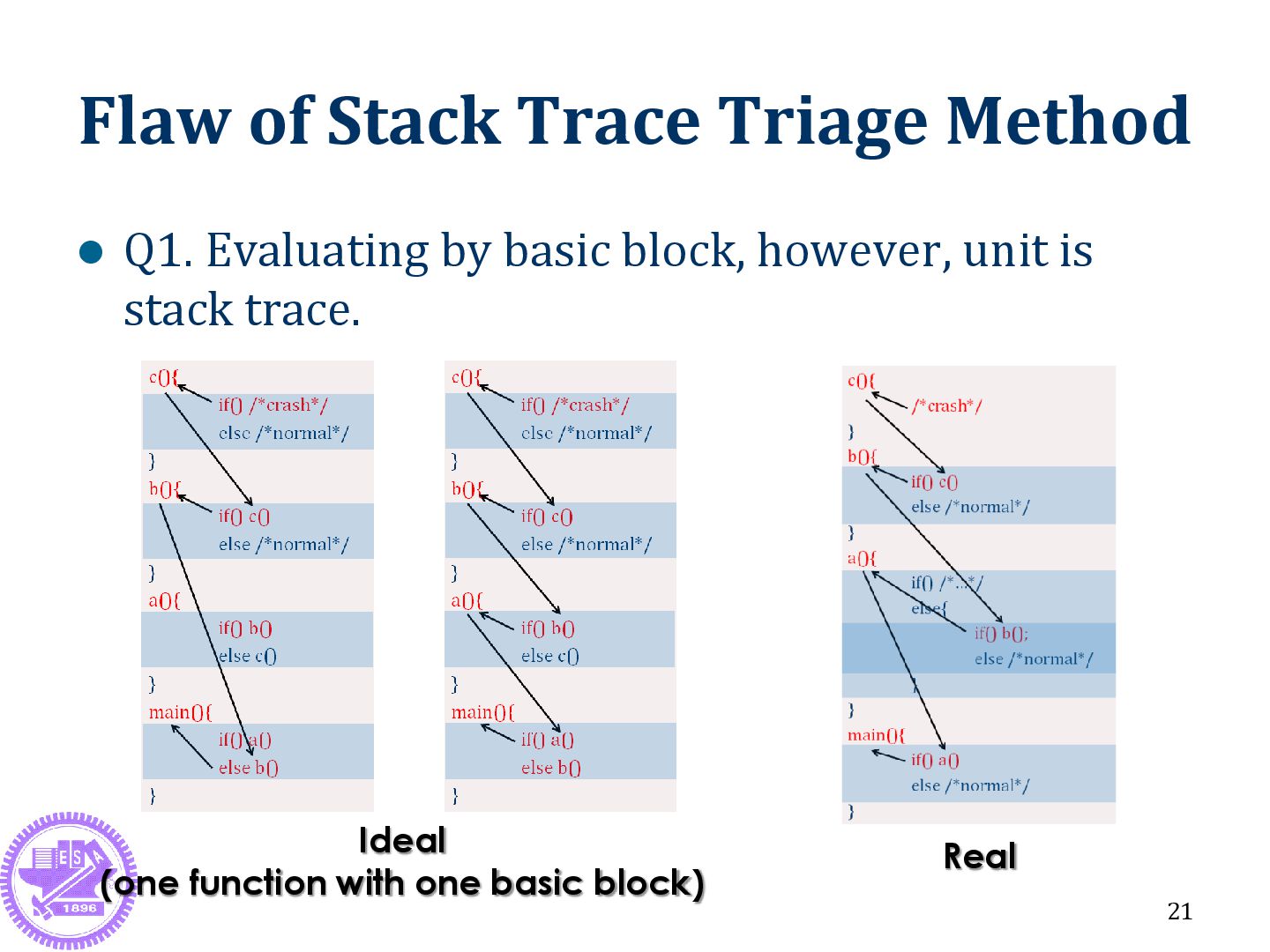
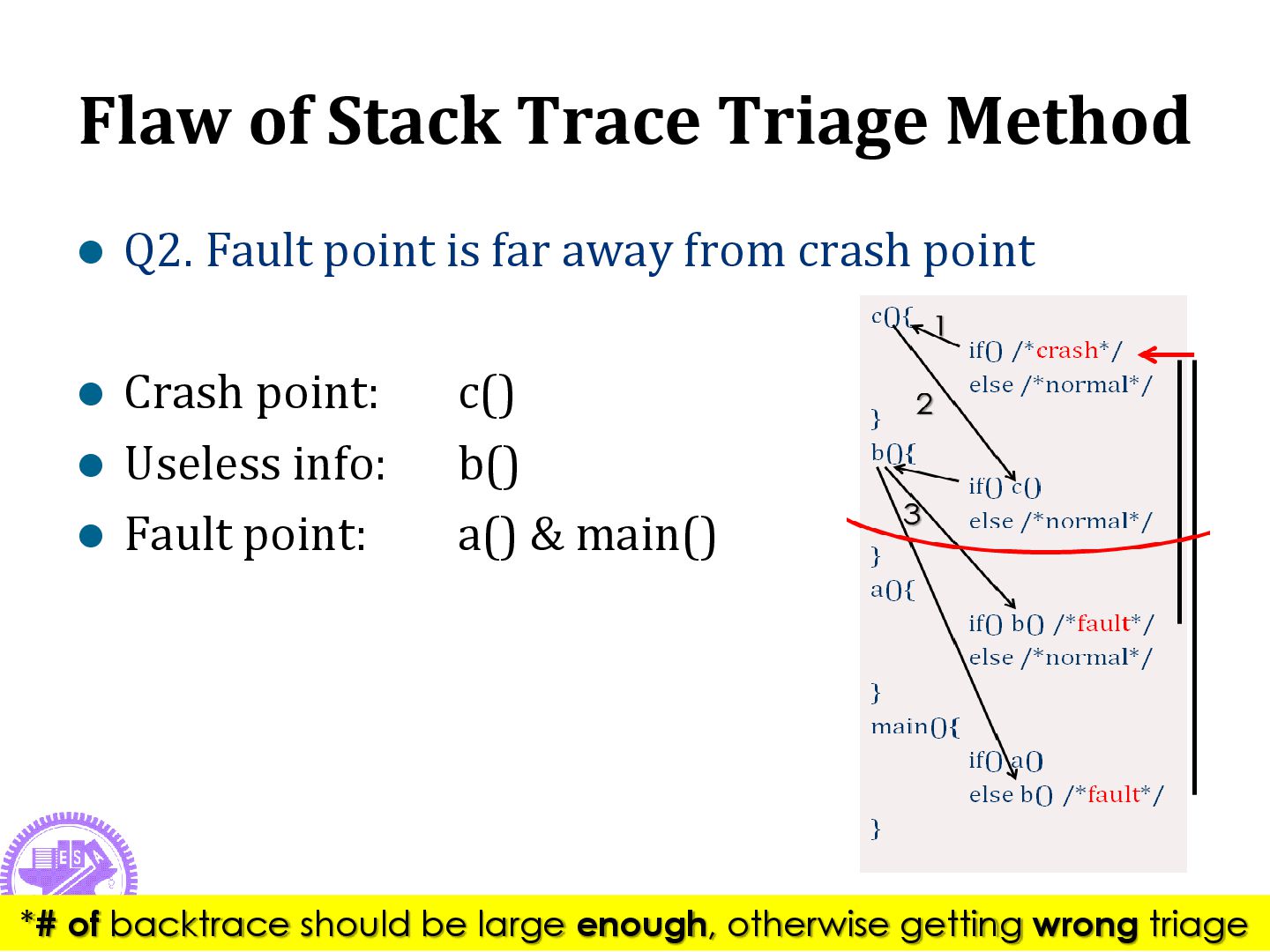
is far away from crash point Crash point: c() Useless info: b() Fault point: a() & main() 22 *# of backtrace should be large enough, otherwise getting wrong triage
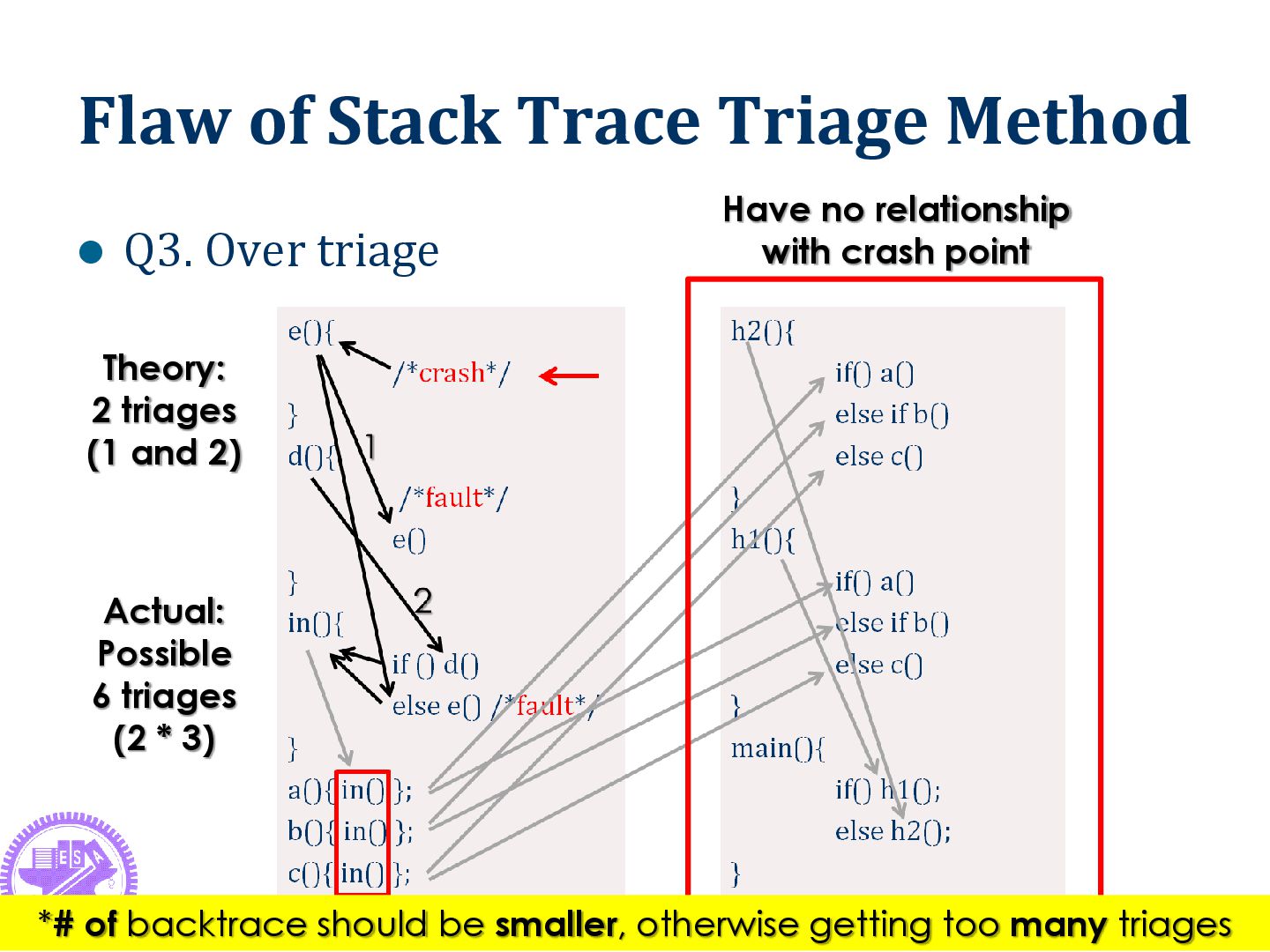
23 Have no relationship with crash point Theory: 2 triages (1 and 2) Actual: Possible 6 triages (2 * 3) *# of backtrace should be smaller, otherwise getting too many triages
Data Fault and Triage Fault localization Related Work Fuzzing Tool Stack Trace Triage Method Flaw of Stack Trace Triage Method 25 Method Algorithm Case Consideration Research Question Results and Evaluation System Architecture Real Program Method Comparison Conclusion and Future Work
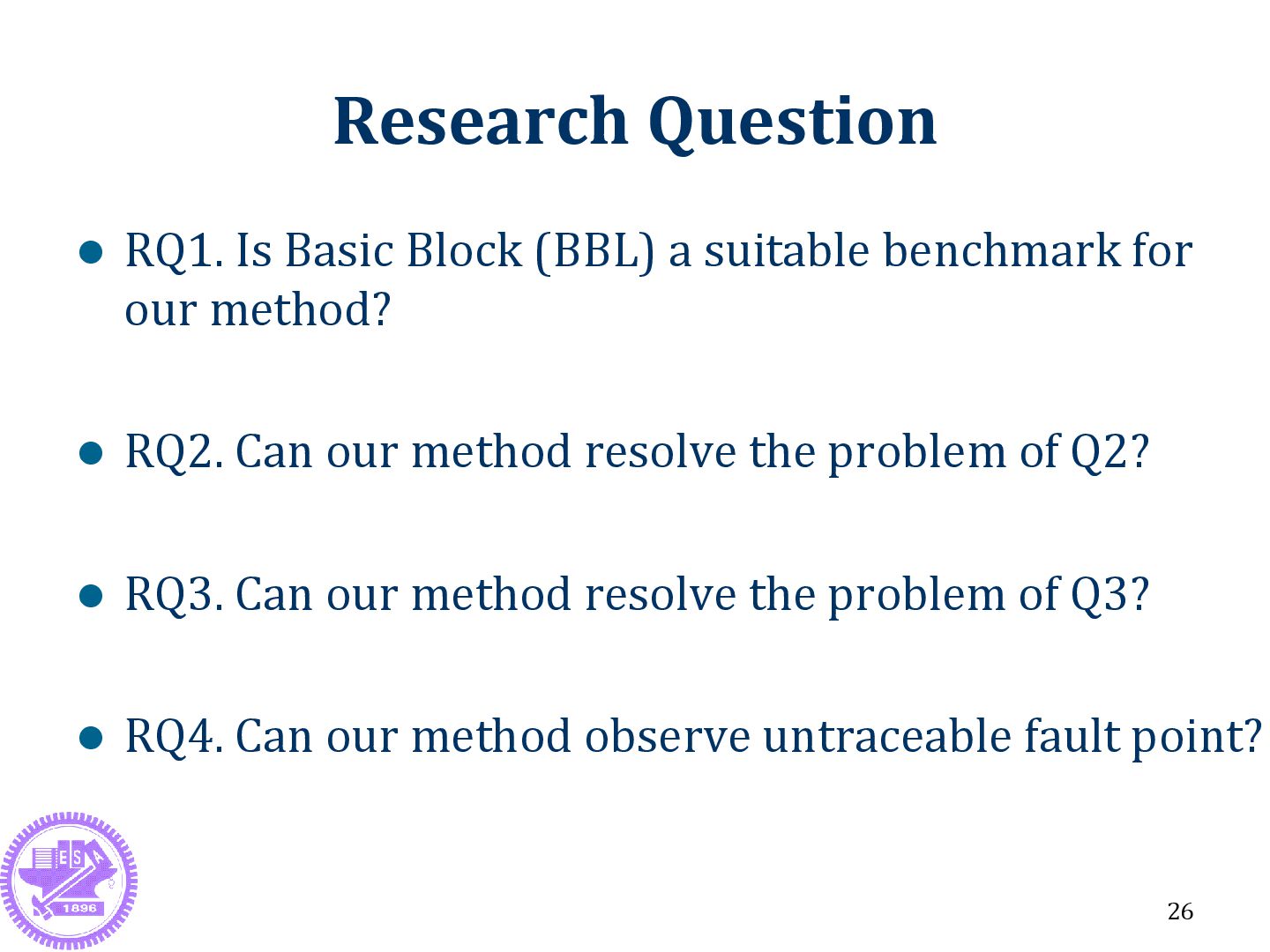
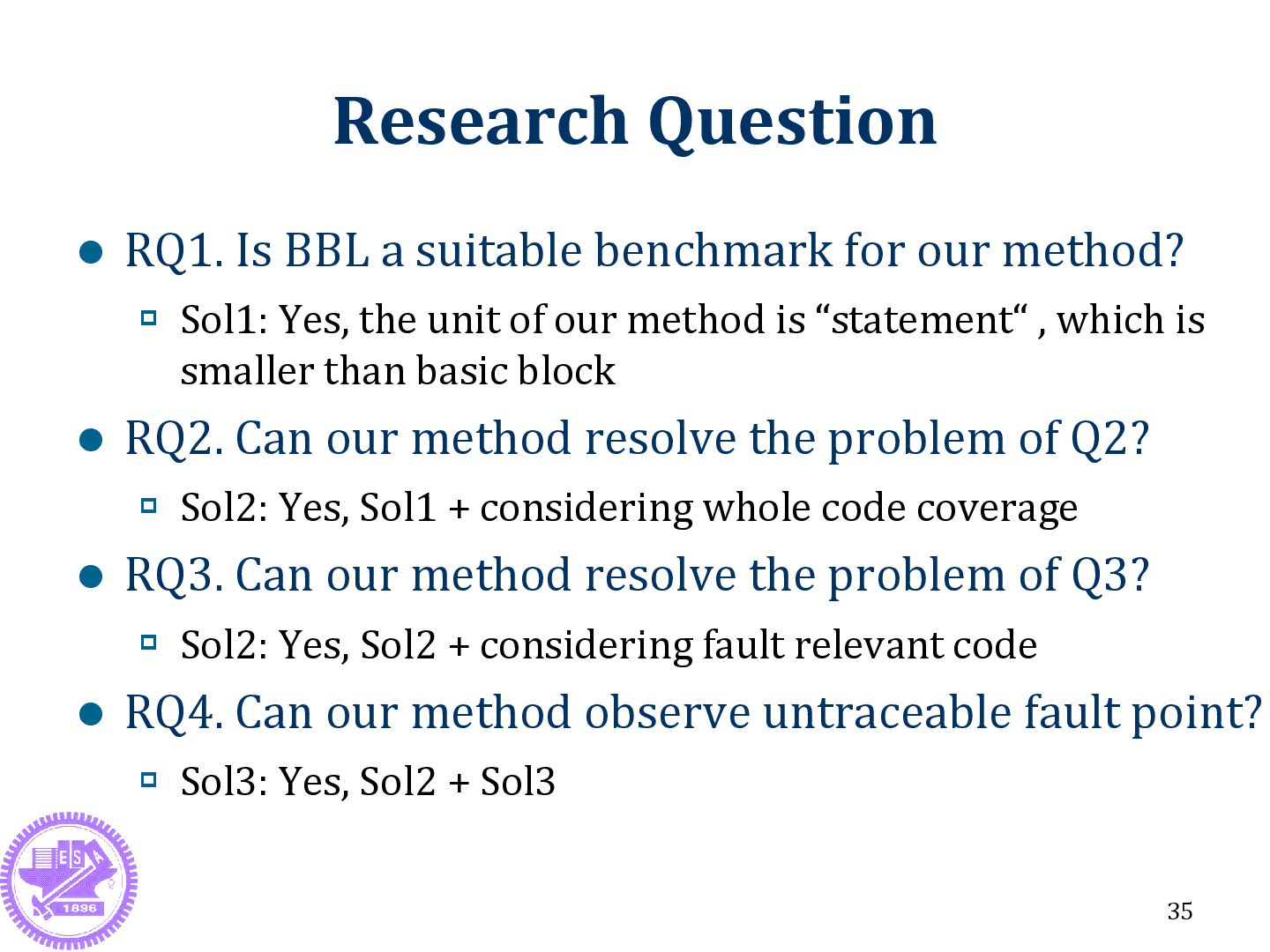
benchmark for our method? RQ2. Can our method resolve the problem of Q2? RQ3. Can our method resolve the problem of Q3? RQ4. Can our method observe untraceable fault point? 26
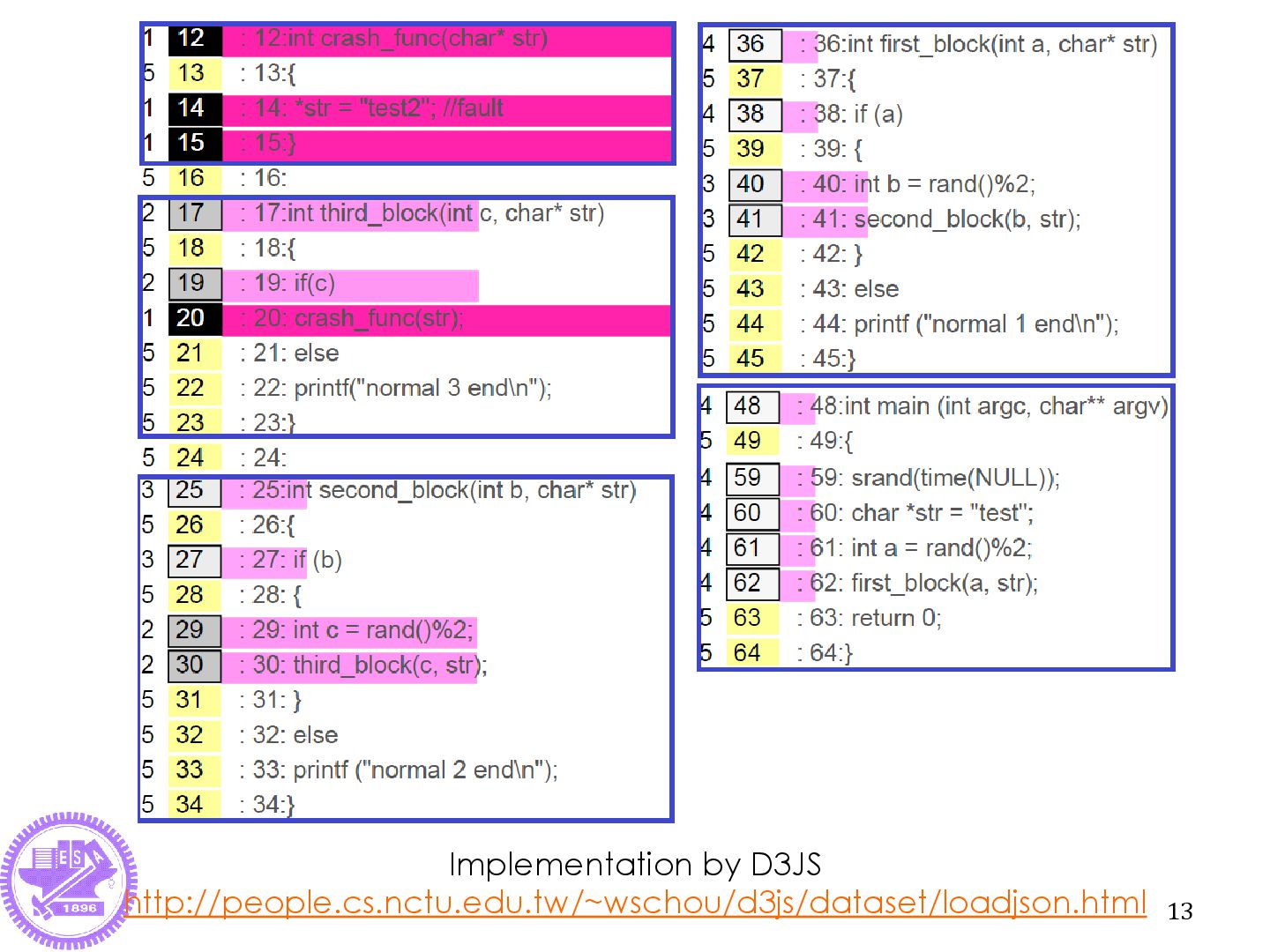
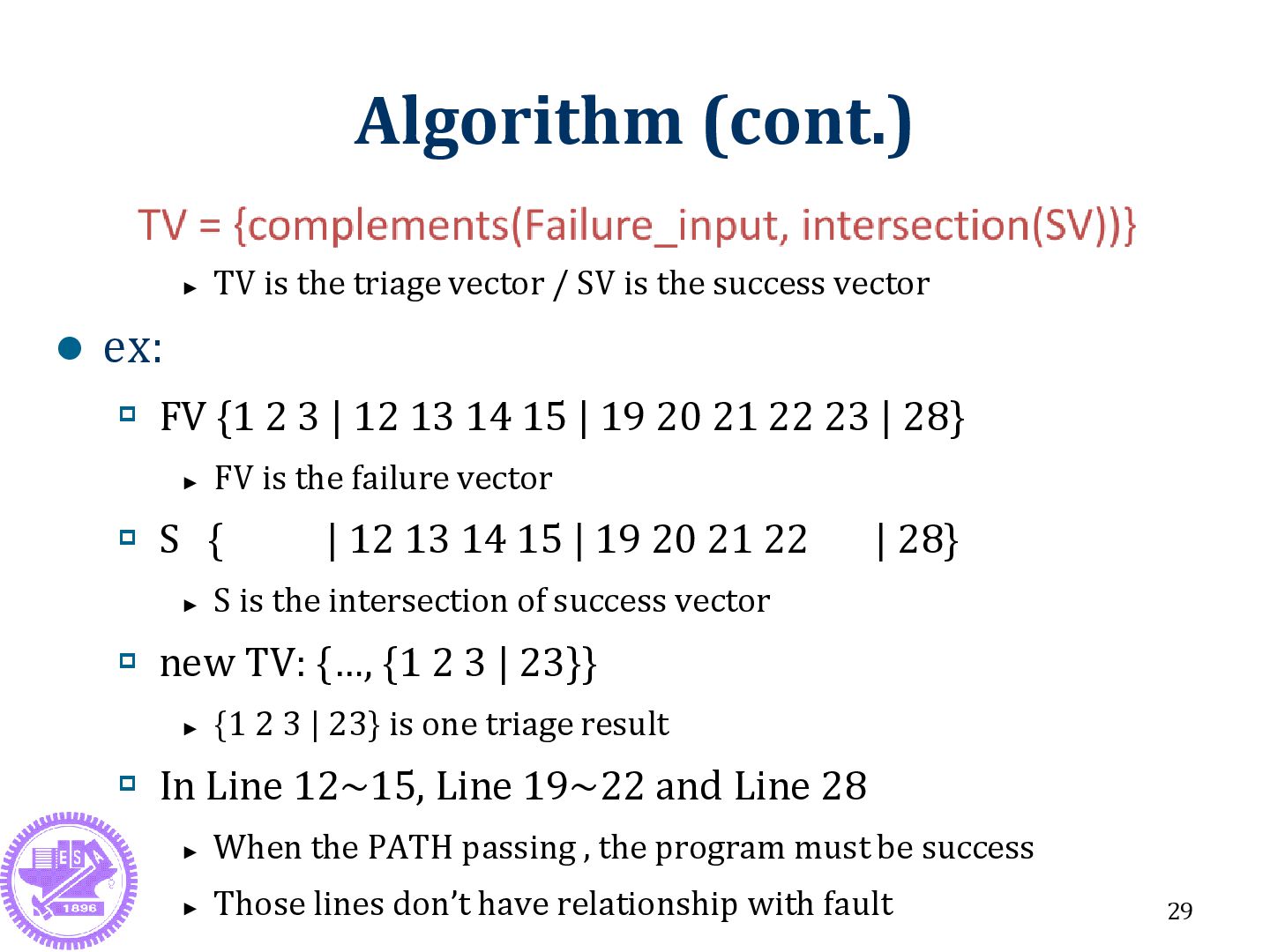
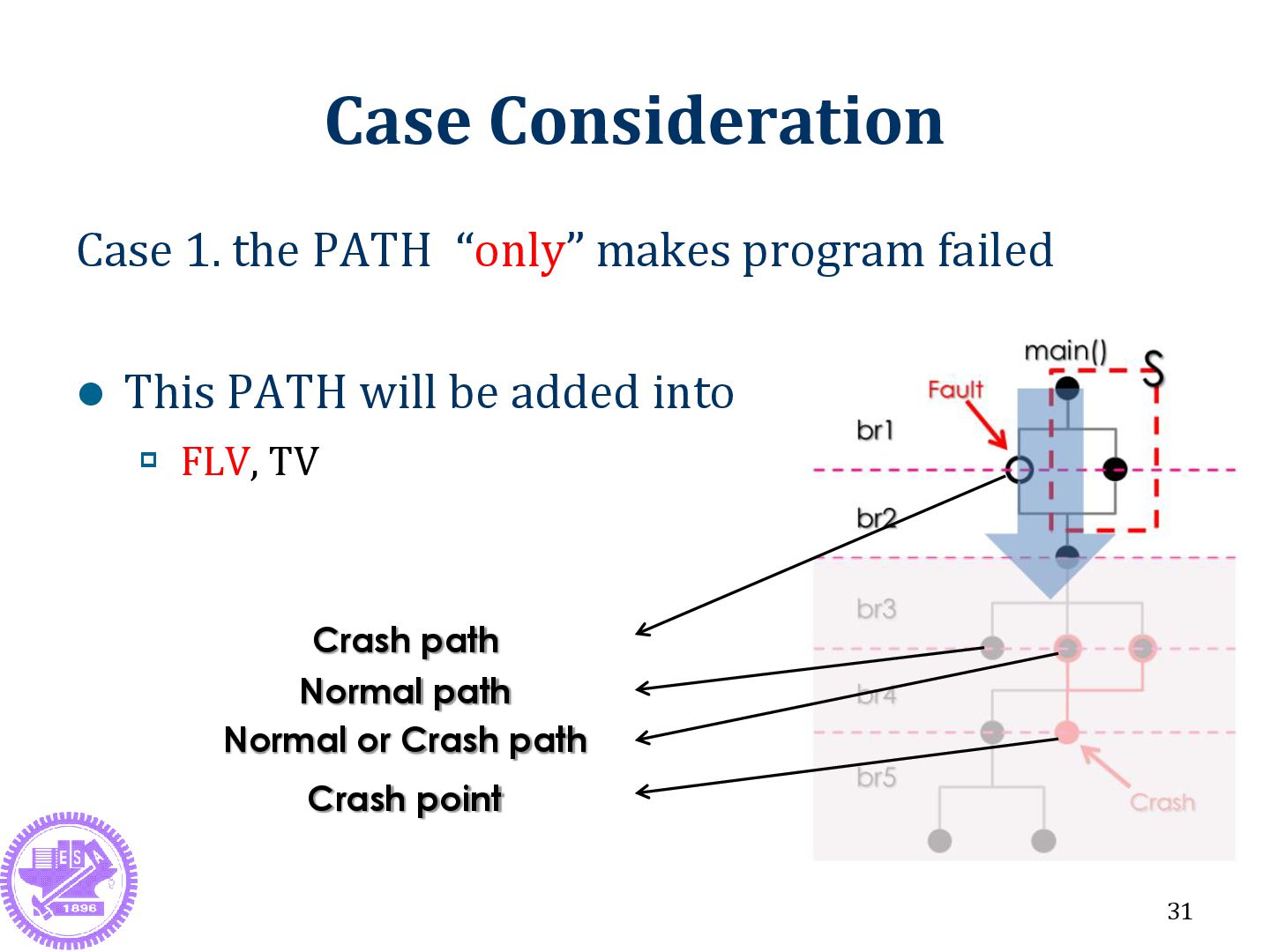
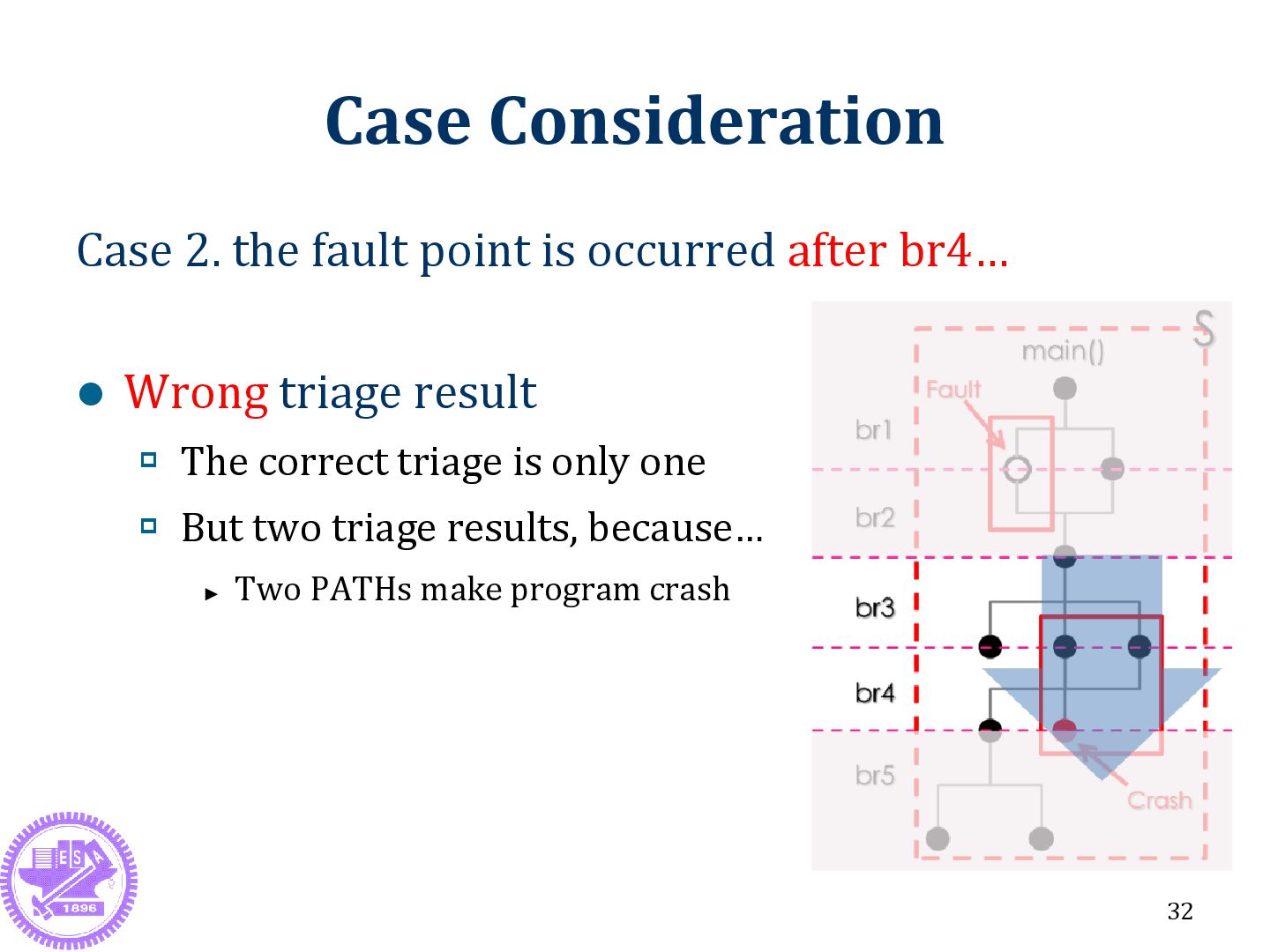
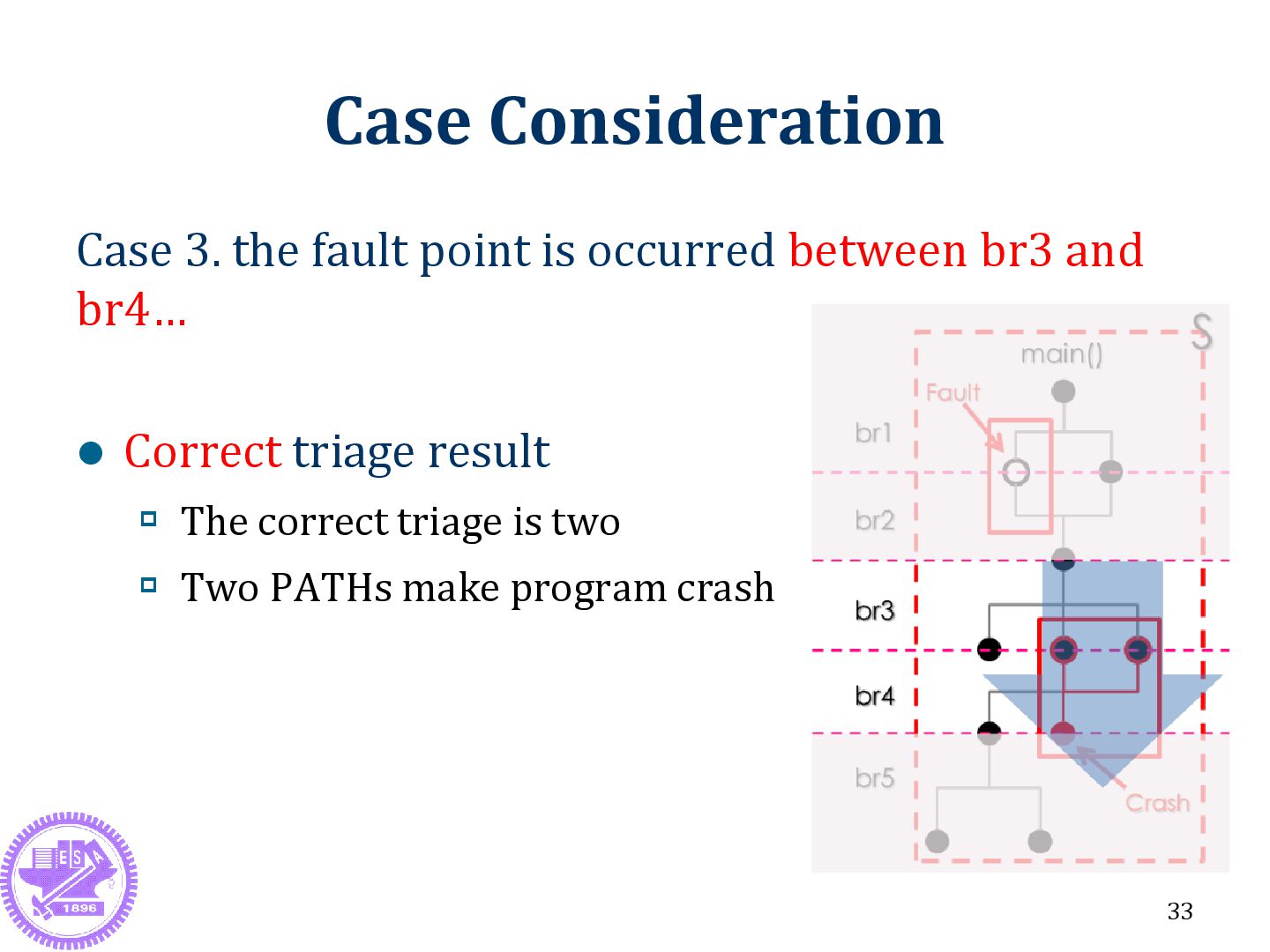
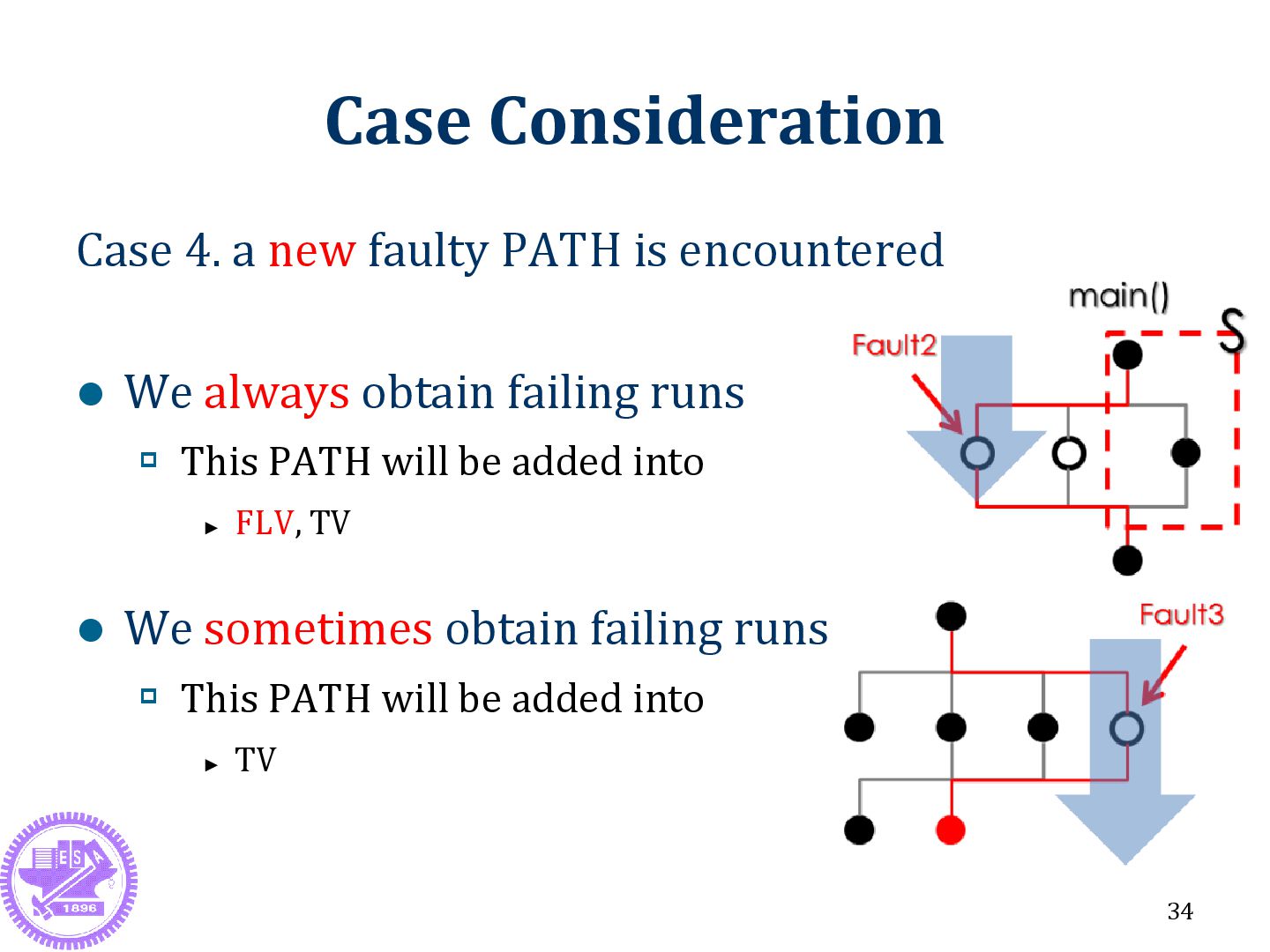
is the success vector ex: FV {1 2 3 | 12 13 14 15 | 19 20 21 22 23 | 28} ► FV is the failure vector S { | 12 13 14 15 | 19 20 21 22 | 28} ► S is the intersection of success vector new TV: {…, {1 2 3 | 23}} ► {1 2 3 | 23} is one triage result In Line 12~15, Line 19~22 and Line 28 ► When the PATH passing , the program must be success ► Those lines don’t have relationship with fault 29
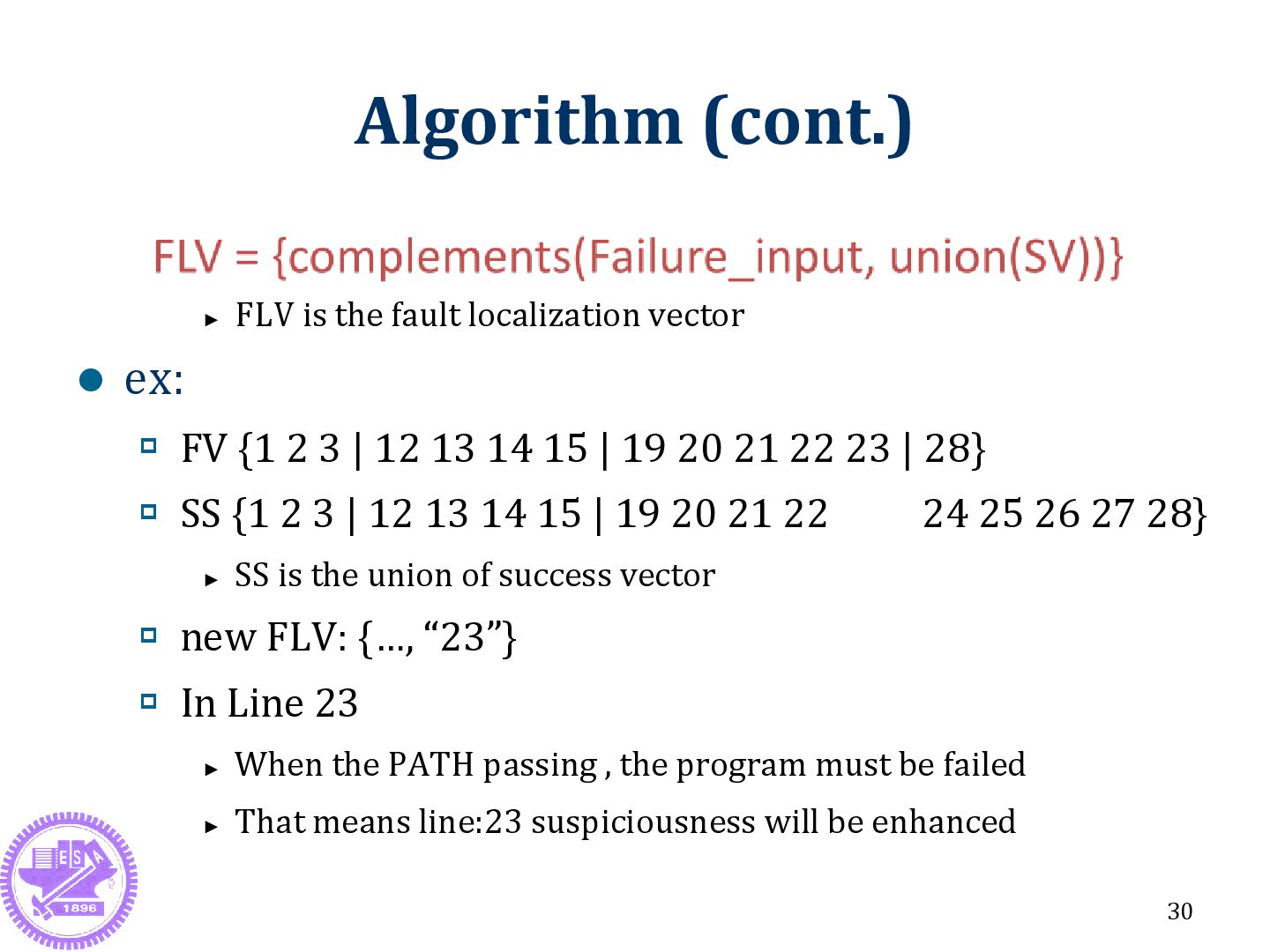
ex: FV {1 2 3 | 12 13 14 15 | 19 20 21 22 23 | 28} SS {1 2 3 | 12 13 14 15 | 19 20 21 22 24 25 26 27 28} ► SS is the union of success vector new FLV: {…, “23”} In Line 23 ► When the PATH passing , the program must be failed ► That means line:23 suspiciousness will be enhanced 30
our method? Sol1: Yes, the unit of our method is “statement“ , which is smaller than basic block RQ2. Can our method resolve the problem of Q2? Sol2: Yes, Sol1 + considering whole code coverage RQ3. Can our method resolve the problem of Q3? Sol2: Yes, Sol2 + considering fault relevant code RQ4. Can our method observe untraceable fault point? Sol3: Yes, Sol2 + Sol3 35
Data Fault and Triage Fault localization Related Work Fuzzing Tool Stack Trace Triage Method Flaw of Stack Trace Triage Method 36 Method Algorithm Case Consideration Research Question Results and Evaluation System Architecture Real Program Method Comparison Conclusion and Future Work
Data Fault and Triage Fault localization Related Work Fuzzing Tool Stack Trace Triage Method Flaw of Stack Trace Triage Method 43 Method Algorithm Case Consideration Research Question Results and Evaluation System Architecture Real Program Method Comparison Conclusion and Future Work
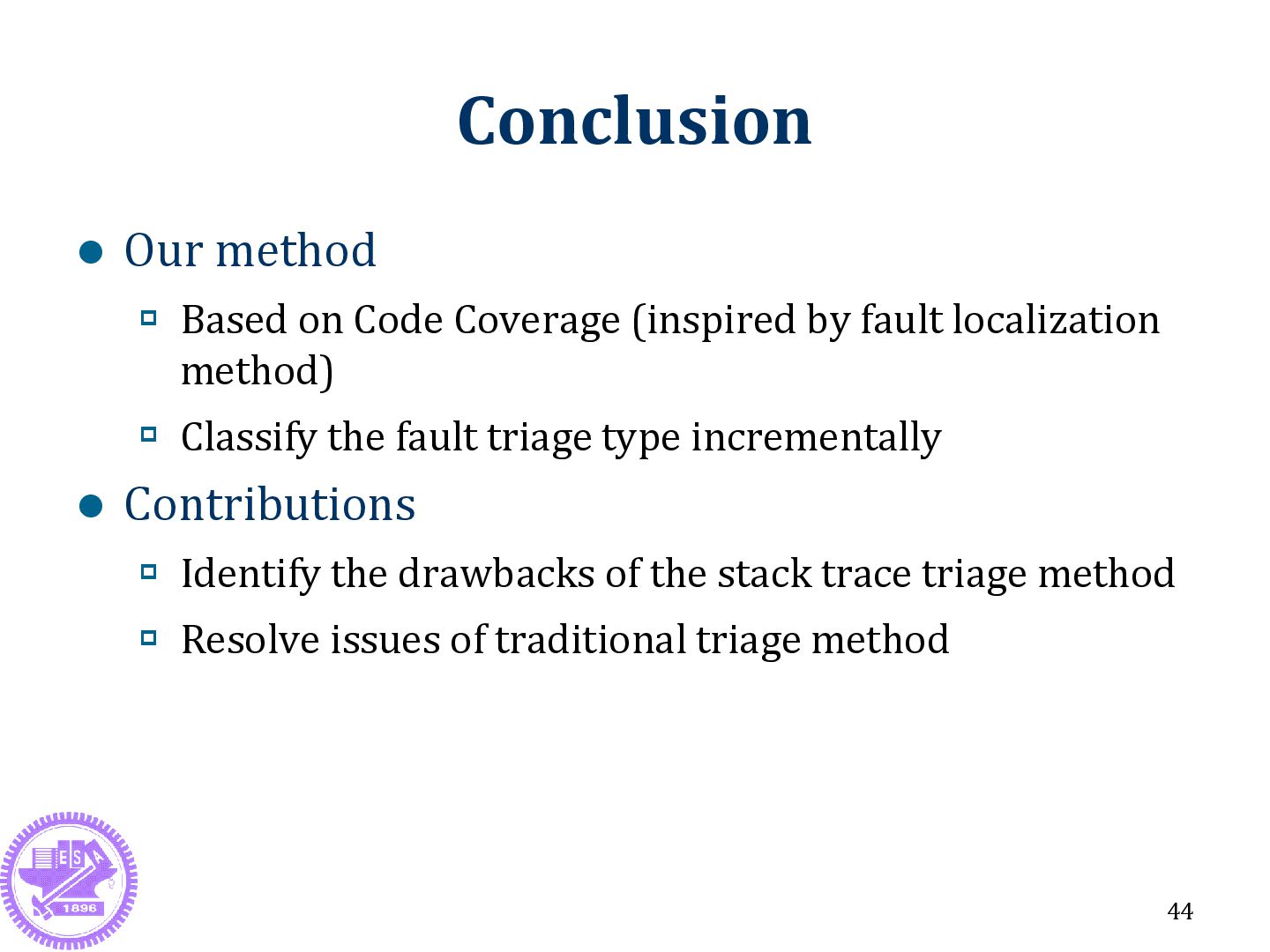
by fault localization method) Classify the fault triage type incrementally Contributions Identify the drawbacks of the stack trace triage method Resolve issues of traditional triage method 44


 note35
 institutdelelevage
 pomcho555
 rikkabotan7
 sishi
sishi
 yumaichikawa
 tkng
tkng
 izumiyama_lab
 ayatokanada
 analokmaus
 badams
 jlugia
 rasmusluckow
 rkendrick25
 427marketing
 cassininazir
 oripsolob
 pwiseman
 skipperchong
 bkeepers
 sergeychernyshev
 holman