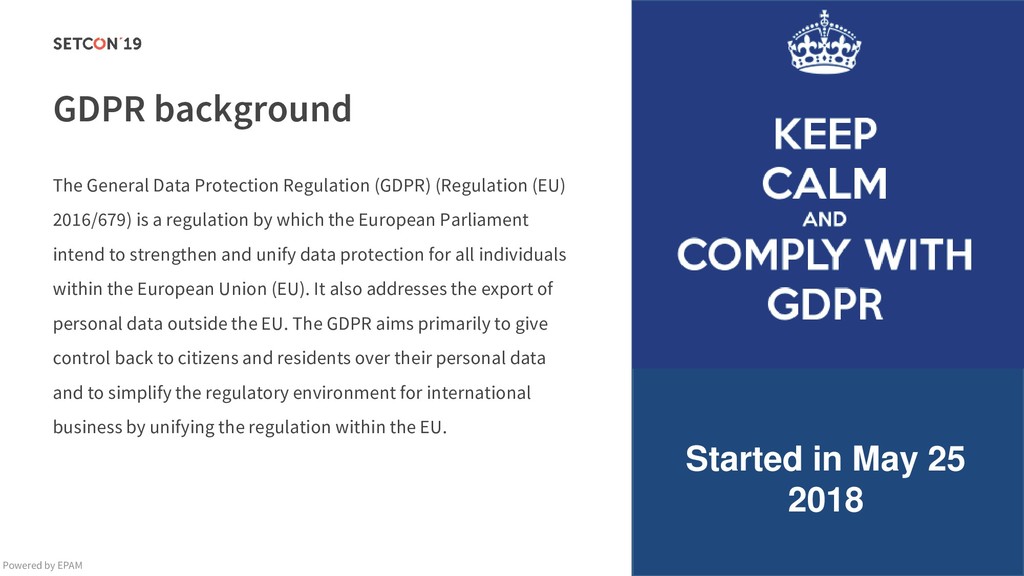
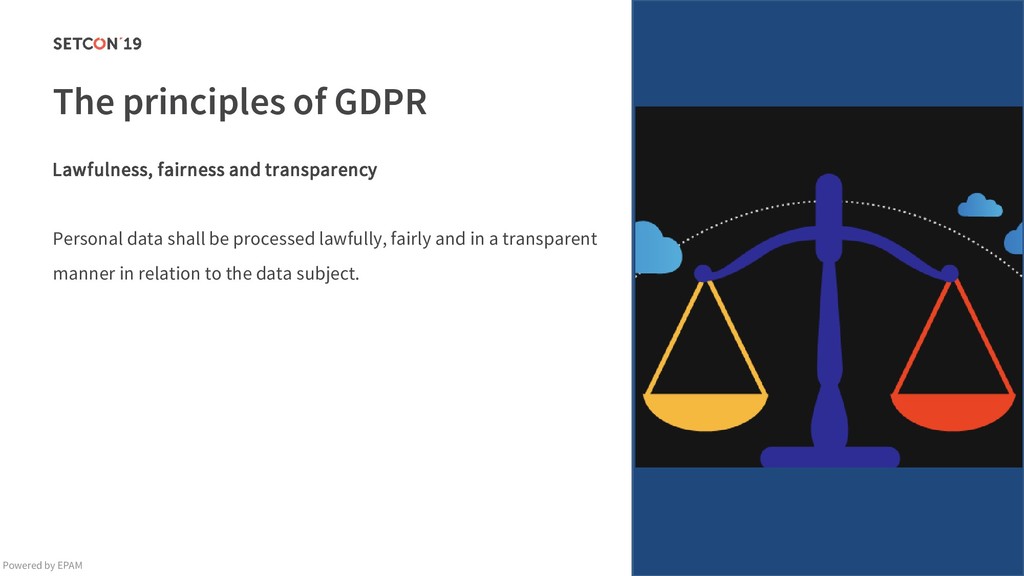
2016/679) is a regulation by which the European Parliament intend to strengthen and unify data protection for all individuals within the European Union (EU). It also addresses the export of personal data outside the EU. The GDPR aims primarily to give control back to citizens and residents over their personal data and to simplify the regulatory environment for international business by unifying the regulation within the EU. Powered by EPAM Started in May 25 2018
Regulation (Regulation (EU) 2016/679) became enforceable on the territory of EU. Every company is represented in European countries MUST comply with presented regulations. Powered by EPAM
it will apply to the processing of personal data by controllers and processors in the EU, regardless of whether the processing takes place in the EU or not. The GDPR will also apply to the processing of personal data of data subjects in the EU by a controller or processor not established in the EU, where the activities relate to: offering goods or services to EU citizens (irrespective of whether payment is required) and the monitoring of behavior that takes place within the EU. Non-Eu businesses processing the data of EU citizens will also have to appoint a representative in the EU. Powered by EPAM
4% of annual global turnover for breaching GDPR or €20 Million. This is the maximum fine that can be imposed for the most serious infringements e.g.not having sufficient customer consent to process data or violating the core of Privacy by Design concepts. There is a tiered approach to fines e.g. a company can be fined 2% for not having their records in order, not notifying the supervising authority and data subject about a breach or not conducting impact assessment. It is important to note that these rules apply to both controllers and processors -- meaning 'clouds' will not be exempt from GDPR enforcement. Powered by EPAM
‘Data Subject’, that can be used to directly or indirectly identify the person. It can be anything from a name, a photo, an email address, bank details, posts on social networking websites, medical information, or a computer IP address. Powered by EPAM
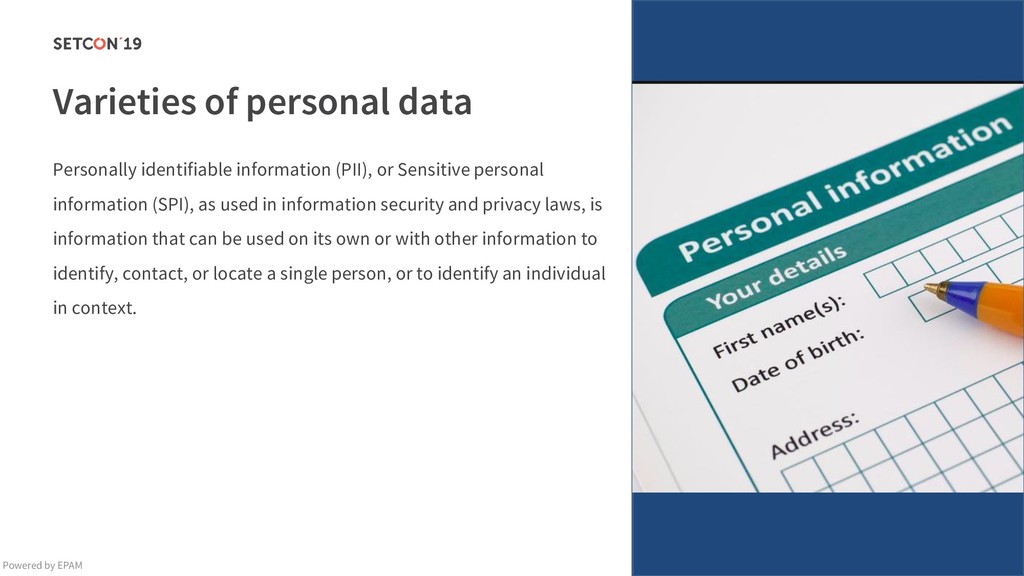
personal information (SPI), as used in information security and privacy laws, is information that can be used on its own or with other information to identify, contact, or locate a single person, or to identify an individual in context. Powered by EPAM
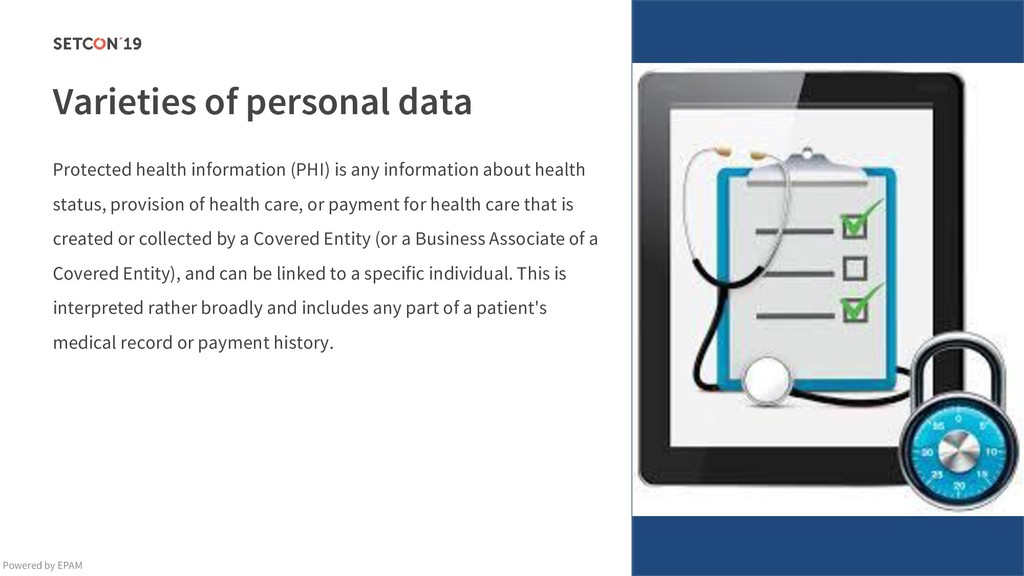
information about health status, provision of health care, or payment for health care that is created or collected by a Covered Entity (or a Business Associate of a Covered Entity), and can be linked to a specific individual. This is interpreted rather broadly and includes any part of a patient's medical record or payment history. Powered by EPAM
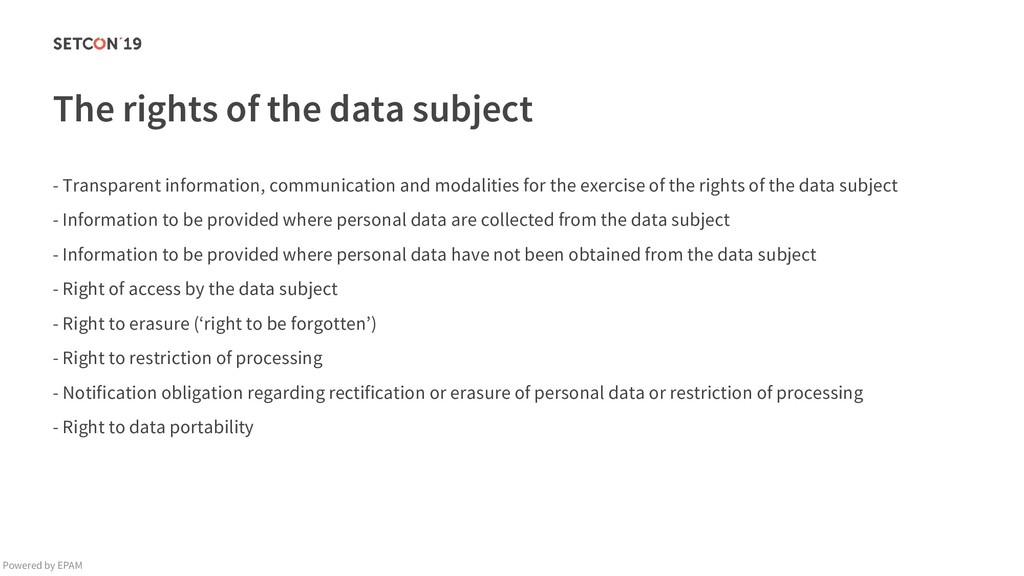
and modalities for the exercise of the rights of the data subject - Information to be provided where personal data are collected from the data subject - Information to be provided where personal data have not been obtained from the data subject - Right of access by the data subject - Right to erasure (‘right to be forgotten’) - Right to restriction of processing - Notification obligation regarding rectification or erasure of personal data or restriction of processing - Right to data portability Powered by EPAM
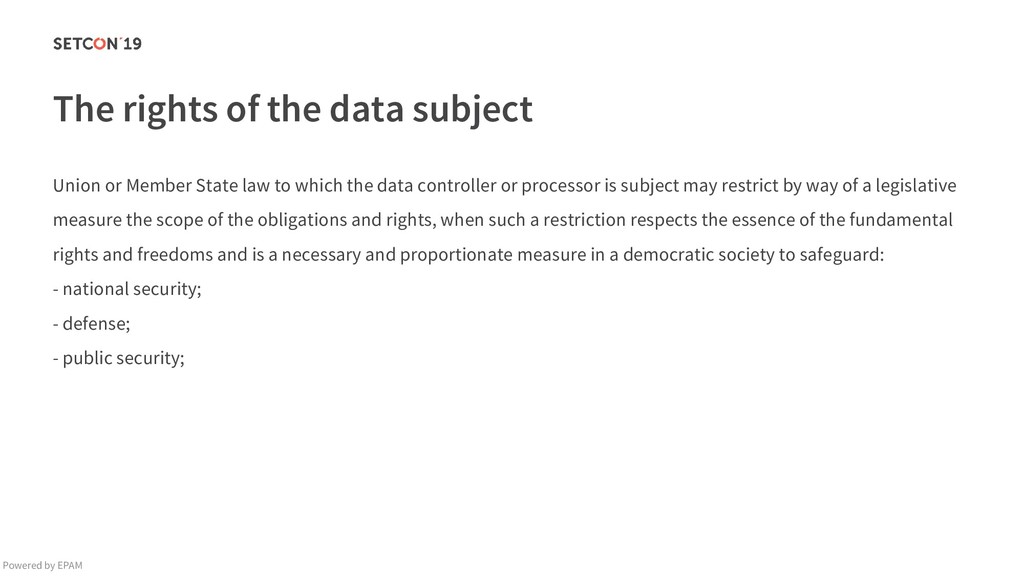
law to which the data controller or processor is subject may restrict by way of a legislative measure the scope of the obligations and rights, when such a restriction respects the essence of the fundamental rights and freedoms and is a necessary and proportionate measure in a democratic society to safeguard: - national security; - defense; - public security; Powered by EPAM
collected for specified, explicit and legitimate purposes and not further processed in a manner that is incompatible with those purposes. Powered by EPAM
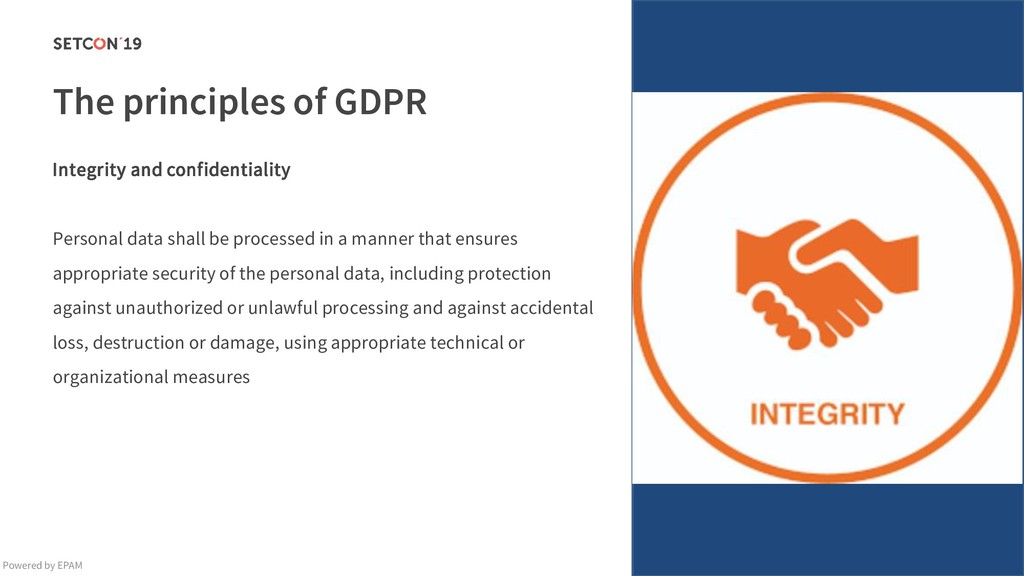
be processed in a manner that ensures appropriate security of the personal data, including protection against unauthorized or unlawful processing and against accidental loss, destruction or damage, using appropriate technical or organizational measures Powered by EPAM
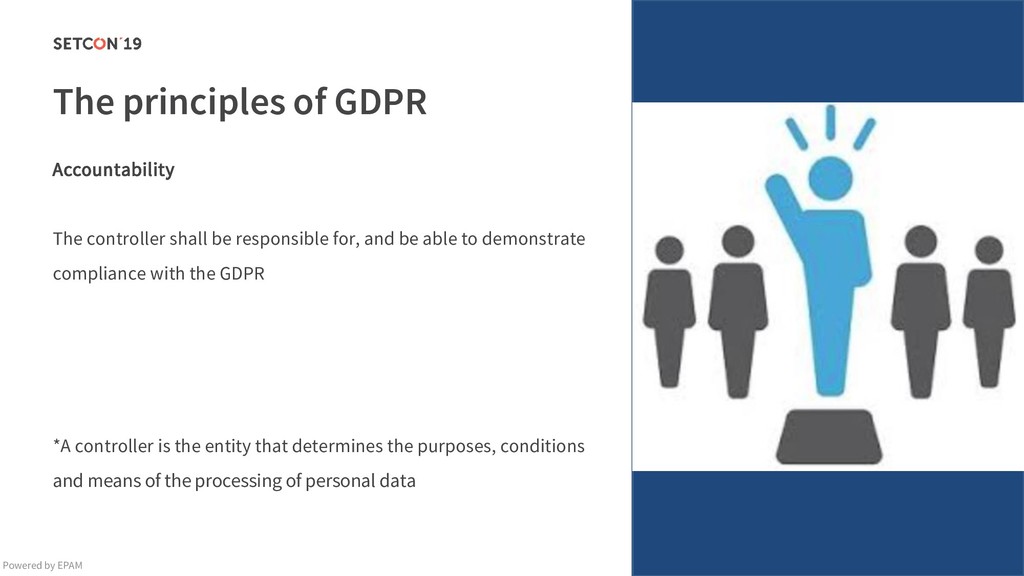
for, and be able to demonstrate compliance with the GDPR *A controller is the entity that determines the purposes, conditions and means of the processing of personal data Powered by EPAM
Agreement or Statement of Work Must be written consent from customer for access to PII Must contains a list of agreed security measures for protection of PII Powered by EPAM
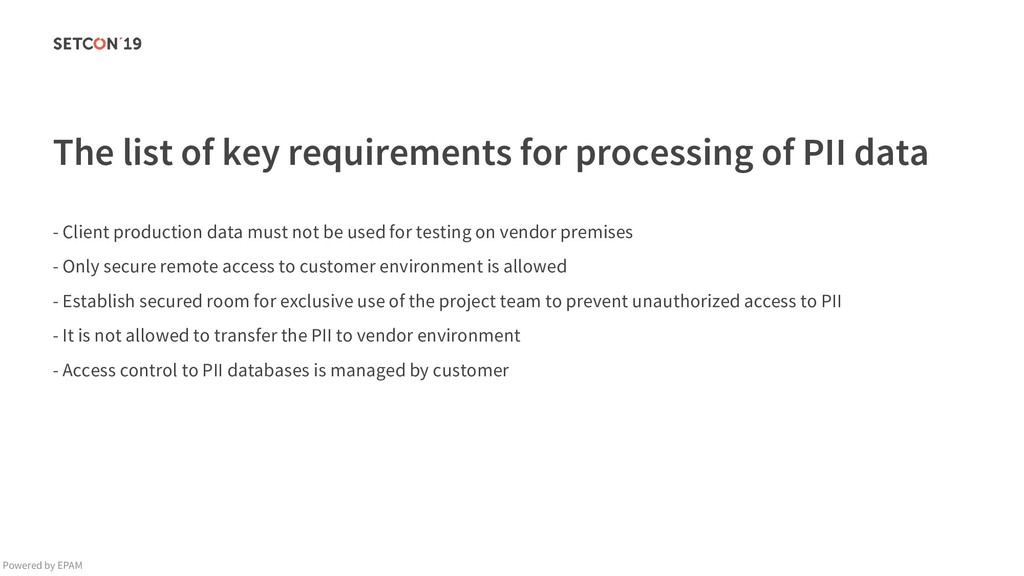
- Client production data must not be used for testing on vendor premises - Only secure remote access to customer environment is allowed - Establish secured room for exclusive use of the project team to prevent unauthorized access to PII - It is not allowed to transfer the PII to vendor environment - Access control to PII databases is managed by customer Powered by EPAM
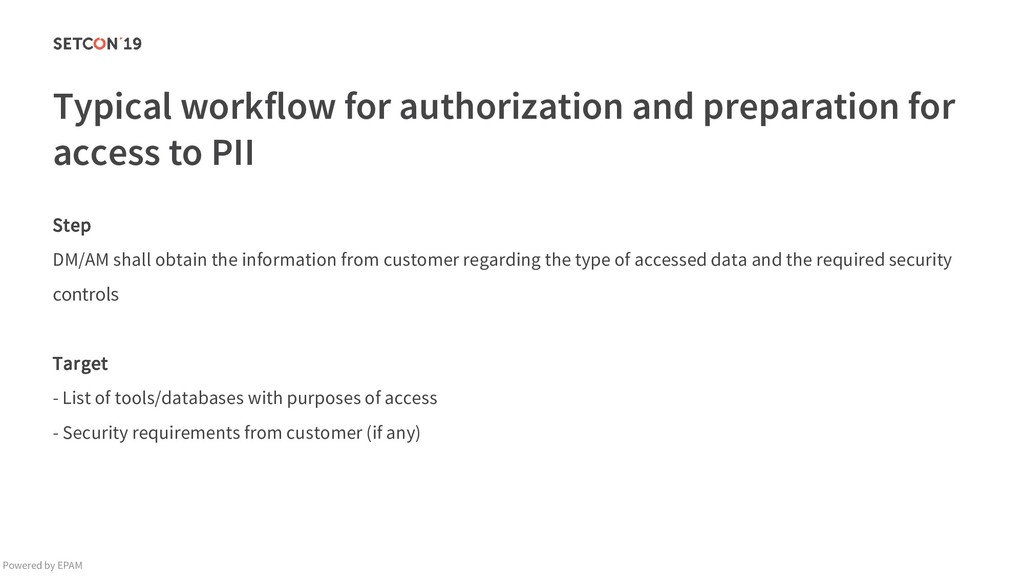
Step DM/AM shall obtain the information from customer regarding the type of accessed data and the required security controls Target - List of tools/databases with purposes of access - Security requirements from customer (if any) Powered by EPAM
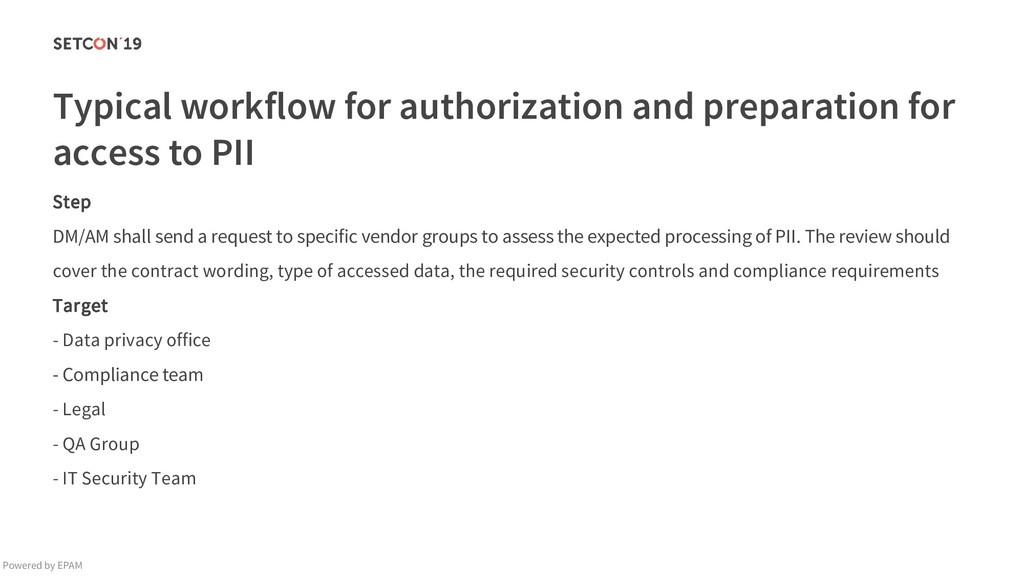
Step DM/AM shall send a request to specific vendor groups to assess the expected processing of PII. The review should cover the contract wording, type of accessed data, the required security controls and compliance requirements Target - Data privacy office - Compliance team - Legal - QA Group - IT Security Team Powered by EPAM
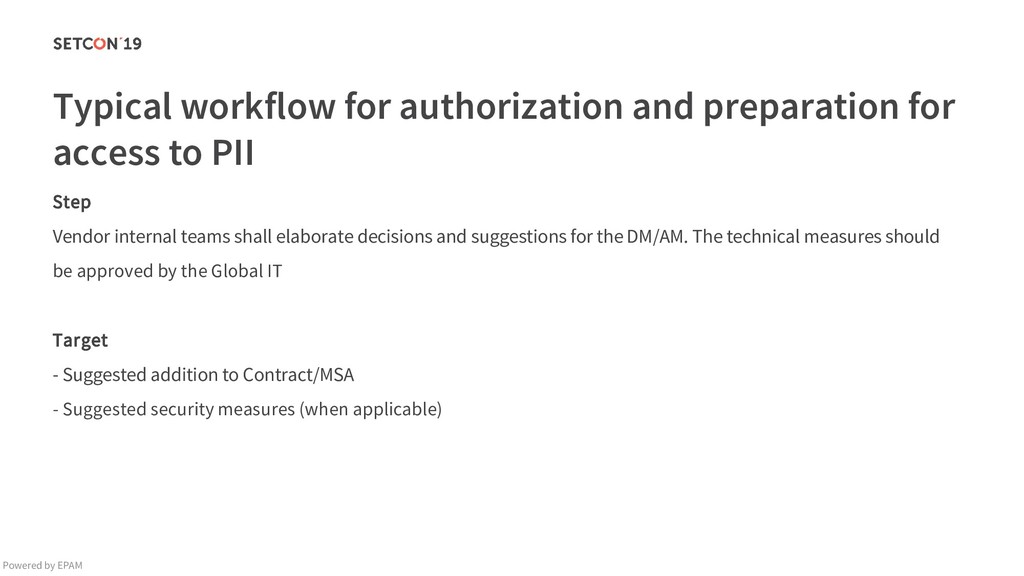
Step Vendor internal teams shall elaborate decisions and suggestions for the DM/AM. The technical measures should be approved by the Global IT Target - Suggested addition to Contract/MSA - Suggested security measures (when applicable) Powered by EPAM
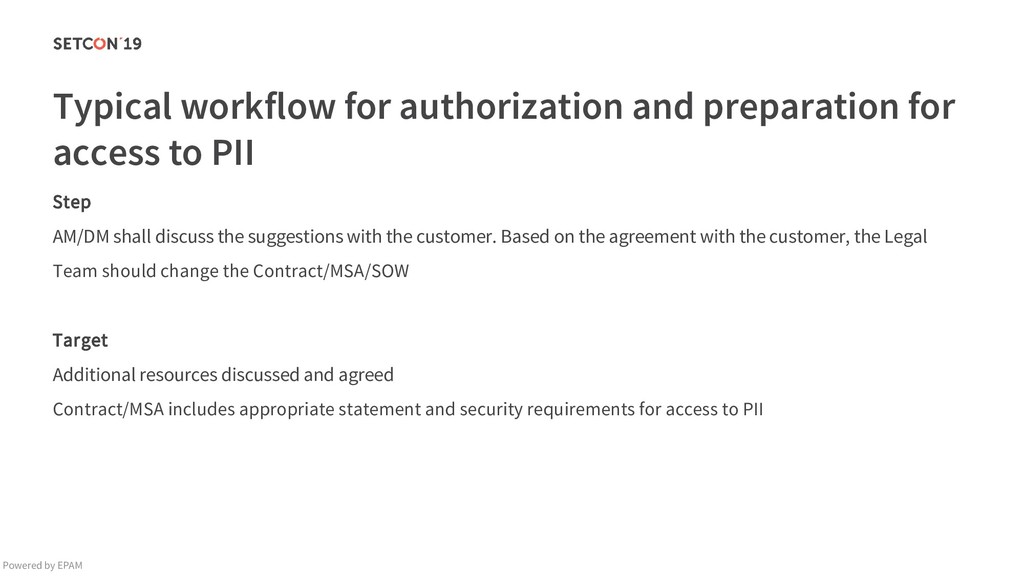
Step AM/DM shall discuss the suggestions with the customer. Based on the agreement with the customer, the Legal Team should change the Contract/MSA/SOW Target Additional resources discussed and agreed Contract/MSA includes appropriate statement and security requirements for access to PII Powered by EPAM
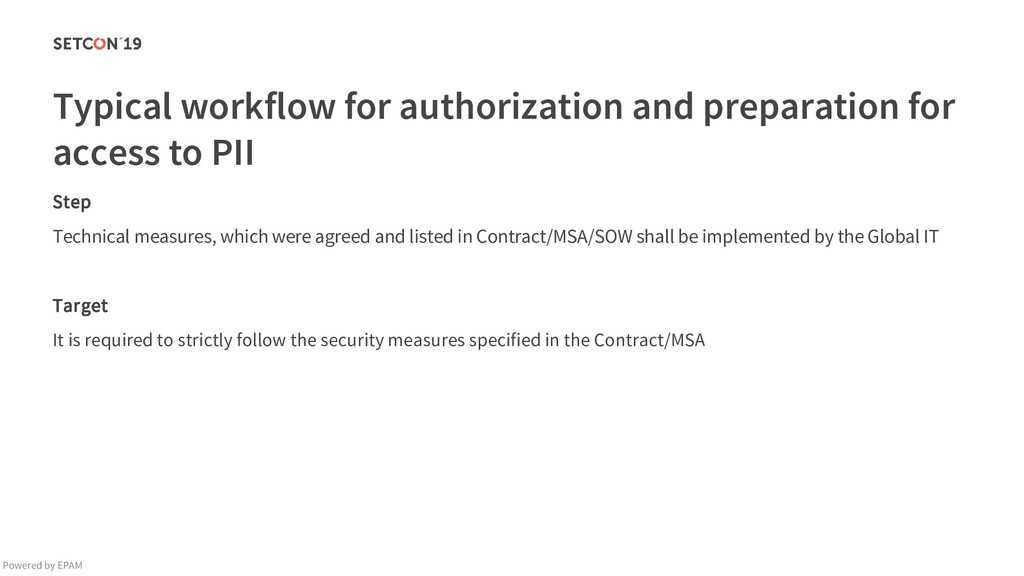
Step Technical measures, which were agreed and listed in Contract/MSA/SOW shall be implemented by the Global IT Target It is required to strictly follow the security measures specified in the Contract/MSA Powered by EPAM
to provide us with PII originating in the EU and has not provided any security controls or will not agree to pay for any additional security controls. Is this ok? Does this mean we don’t have to do anything? Powered by EPAM
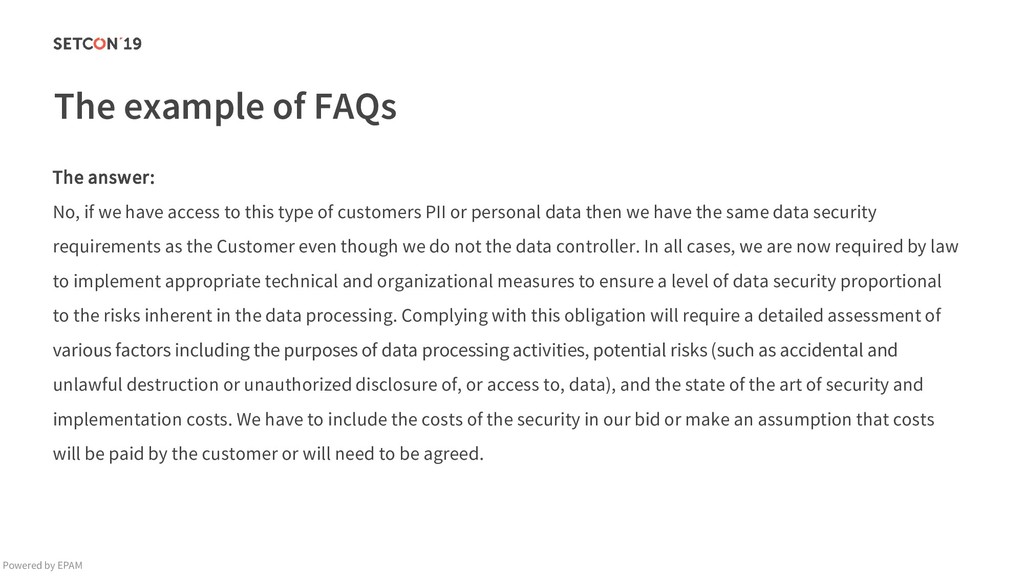
access to this type of customers PII or personal data then we have the same data security requirements as the Customer even though we do not the data controller. In all cases, we are now required by law to implement appropriate technical and organizational measures to ensure a level of data security proportional to the risks inherent in the data processing. Complying with this obligation will require a detailed assessment of various factors including the purposes of data processing activities, potential risks (such as accidental and unlawful destruction or unauthorized disclosure of, or access to, data), and the state of the art of security and implementation costs. We have to include the costs of the security in our bid or make an assumption that costs will be paid by the customer or will need to be agreed. Powered by EPAM


 parshuto
 keeg
 prog893
 yamanoku
 raspython3
 yu23ki14
 pfn
 teamlab
 akhino
 kakehashi
 ivry_presentationmaterials
 yazm
 tessaabrams
 malarkey
 keithpitt
 aleyda
 charlesmeaden
 maltzj
 ryanjones
 elsirapls
 davetheseo
 axbom
 codingconduct
 wjessup