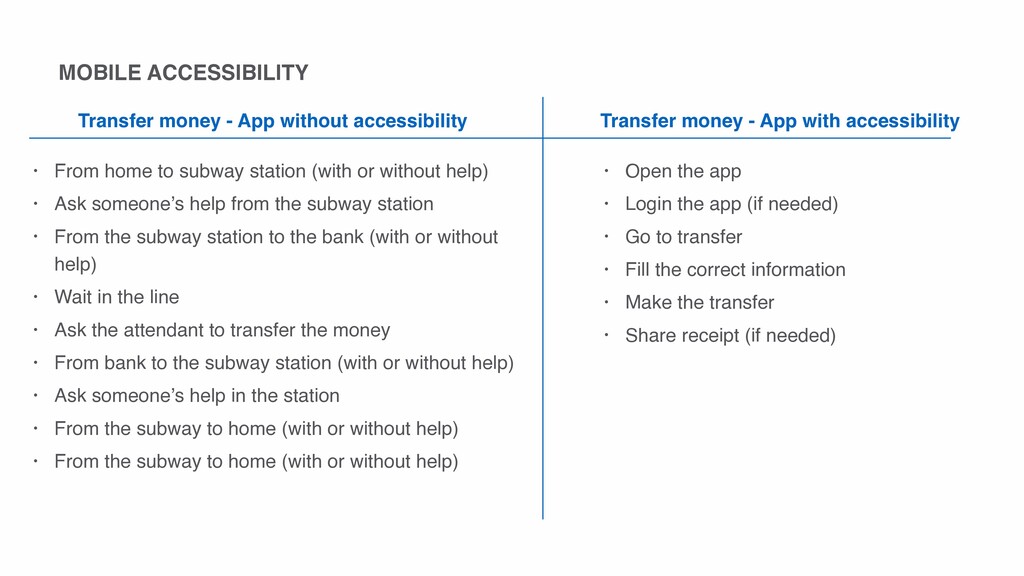
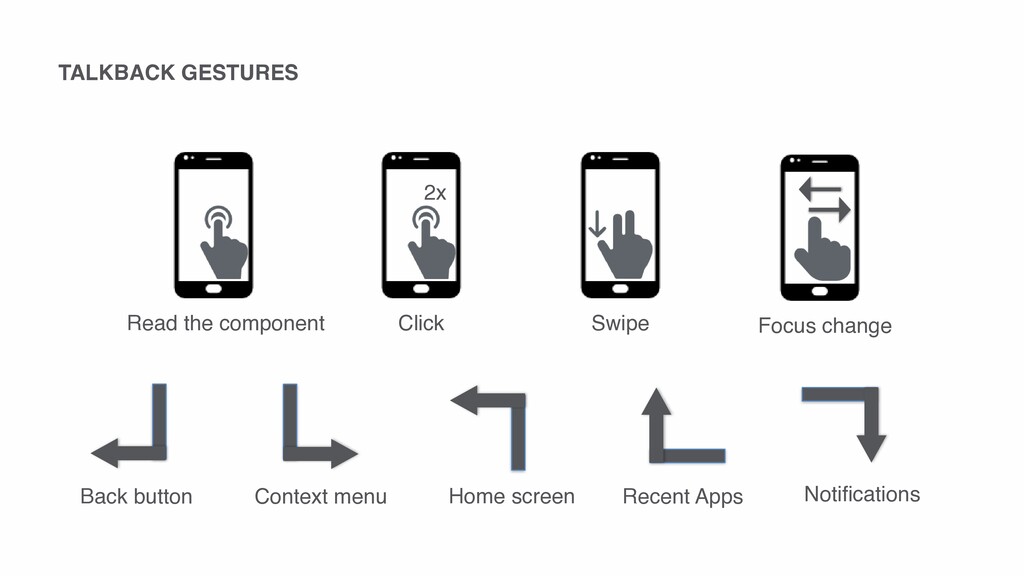
without help ) • Ask someone’s help from the subway station • From the subway station to the bank (with or without help ) • Wait in the lin e • Ask the attendant to transfer the mone y • From bank to the subway station (with or without help ) • Ask someone’s help in the statio n • From the subway to home (with or without help ) • From the subway to home (with or without help) • Open the ap p • Login the app (if needed ) • Go to transfe r • Fill the correct informatio n • Make the transfe r • Share receipt (if needed) Transfer money - App without accessibility Transfer money - App with accessibility
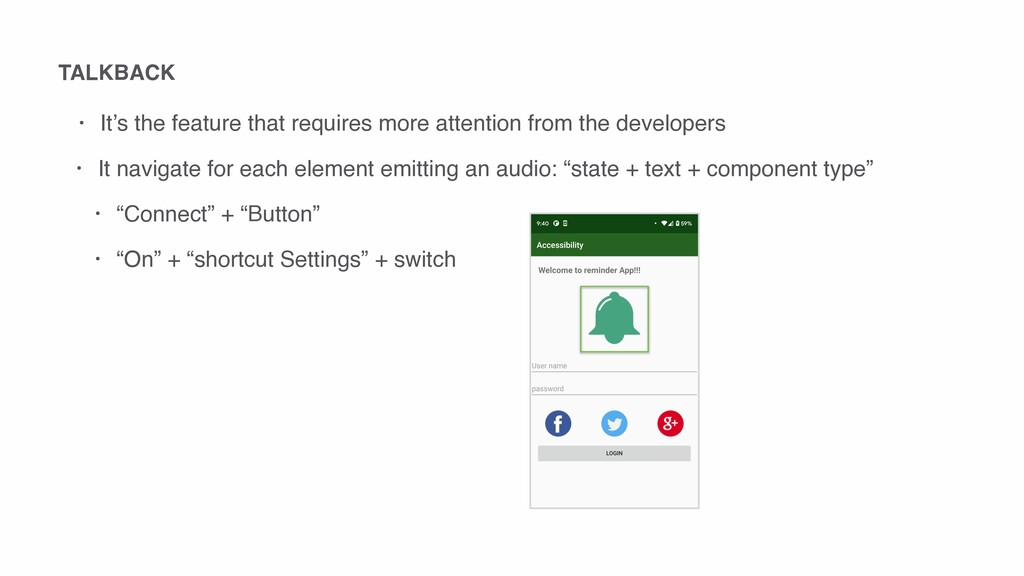
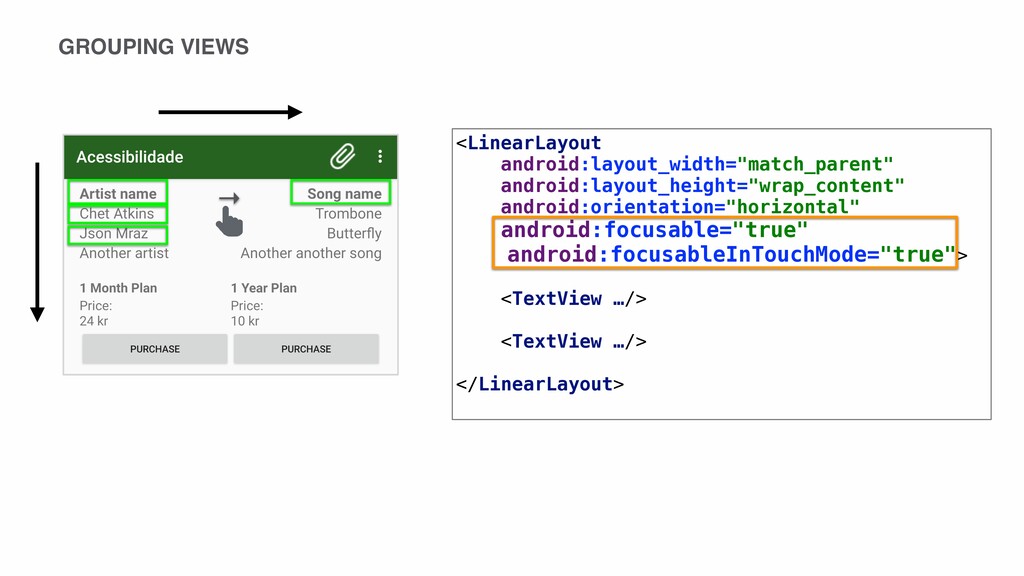
the developer s • It navigate for each element emitting an audio: “state + text + component type ” • “Connect” + “Button ” • “On” + “shortcut Settings” + switch
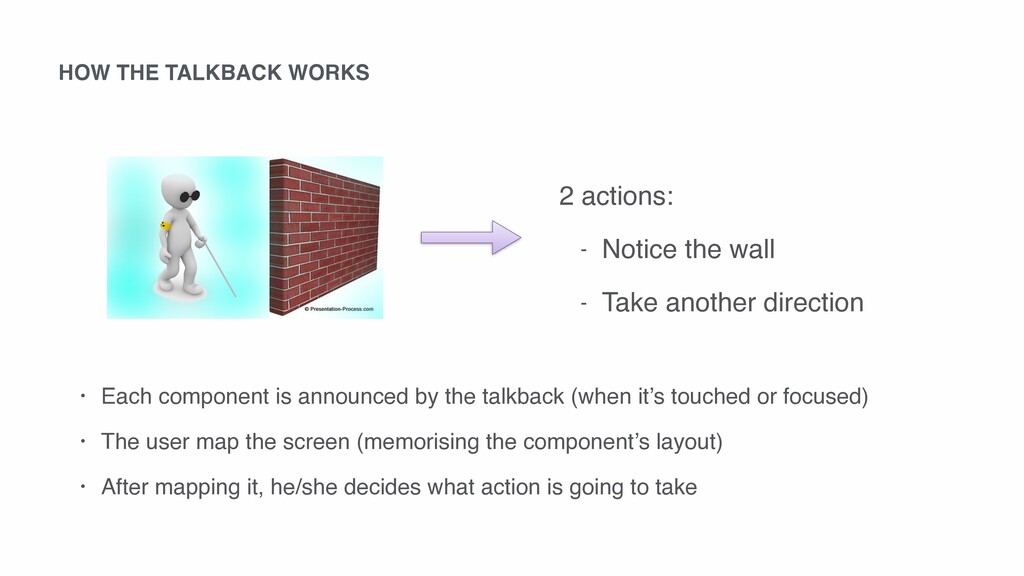
the talkback (when it’s touched or focused ) • The user map the screen (memorising the component’s layout ) • After mapping it, he/she decides what action is going to take 2 actions : - Notice the wal l - Take another direction
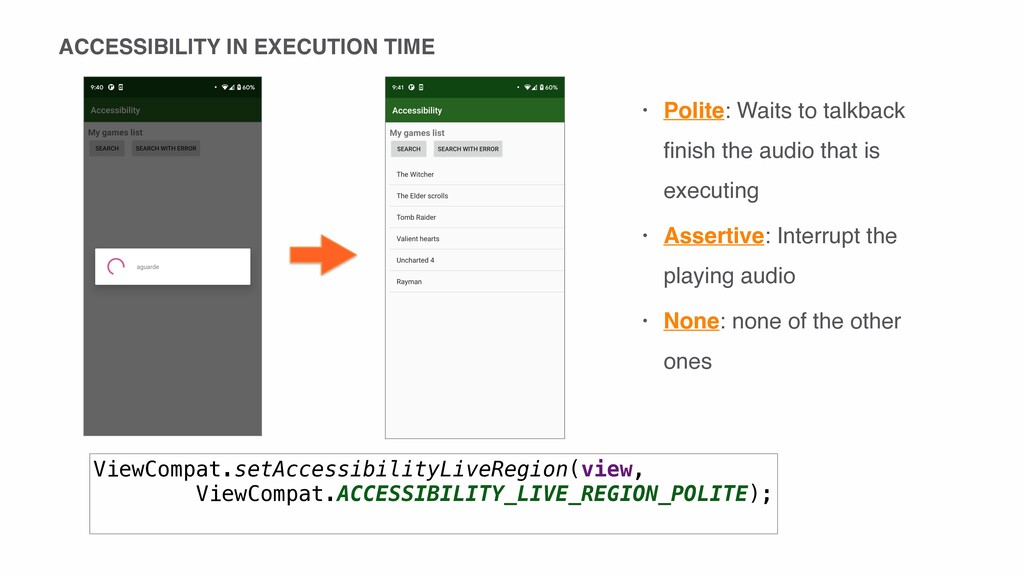
nish the audio that is executin g • Assertive: Interrupt the playing audi o • None: none of the other one s ViewCompat.setAccessibilityLiveRegion(view, ViewCompat.ACCESSIBILITY_LIVE_REGION_POLITE);
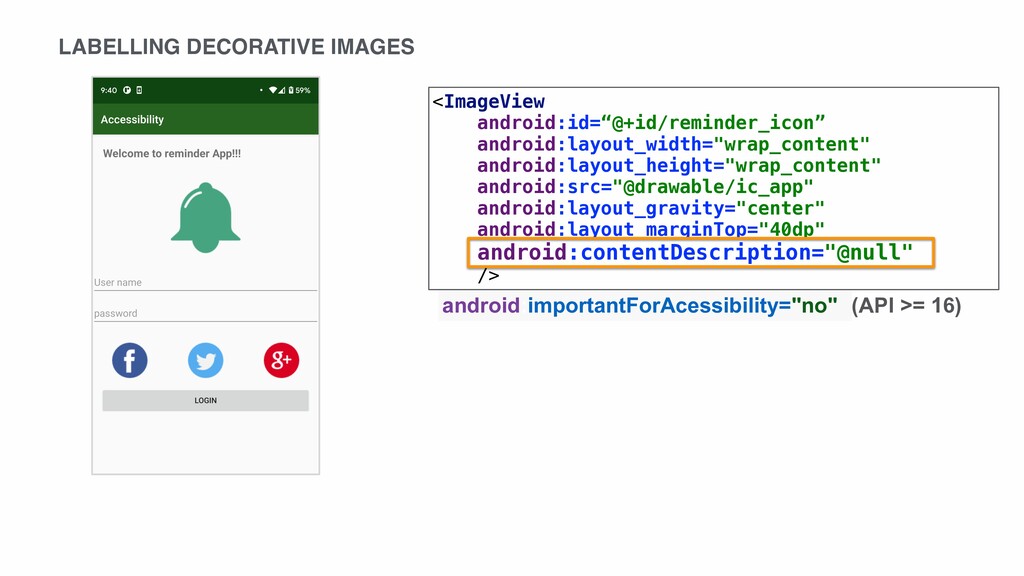
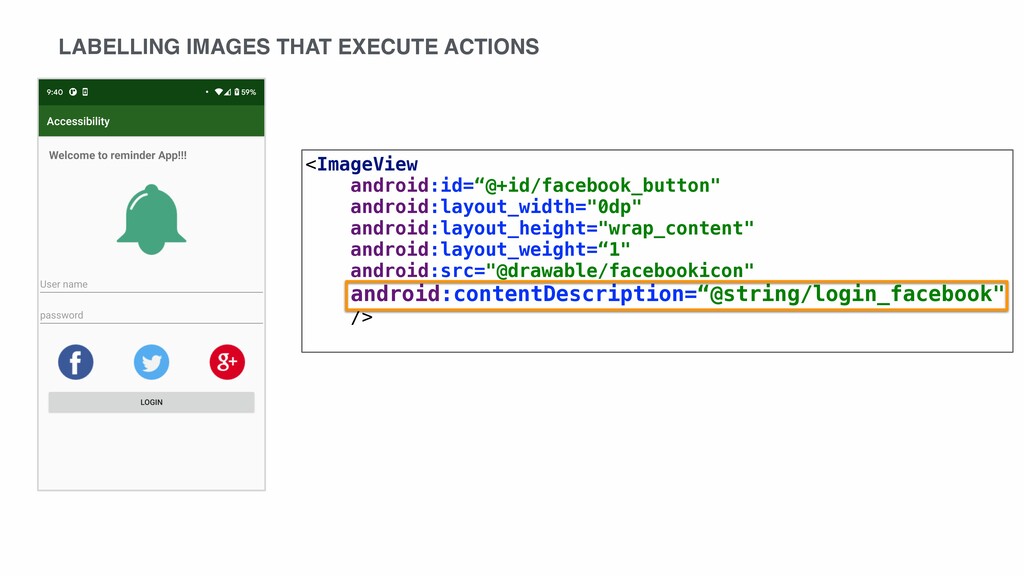
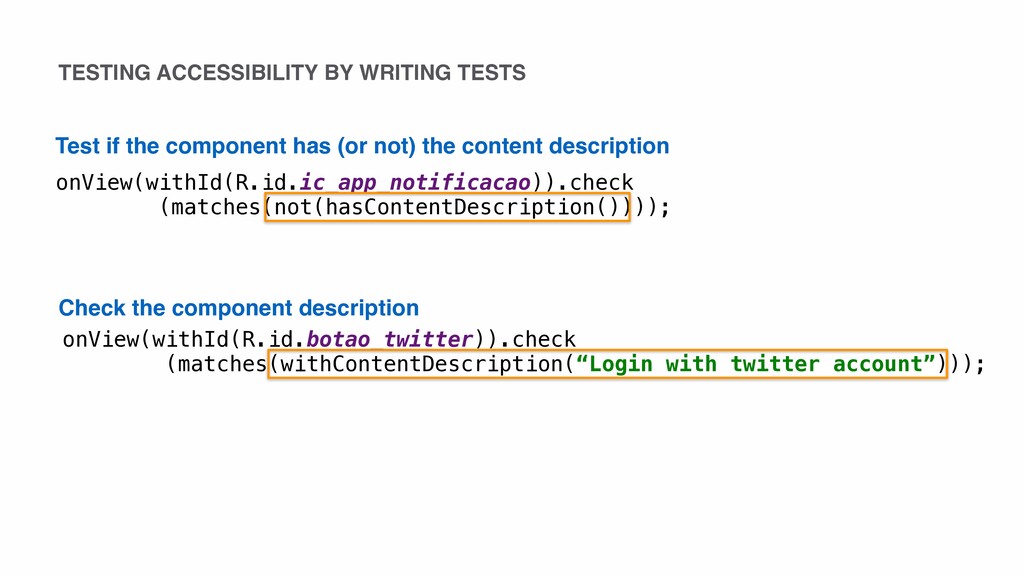
component has (or not) the content description onView(withId(R.id.botao_twitter)).check (matches(withContentDescription(“Login with twitter account”))); Check the component description
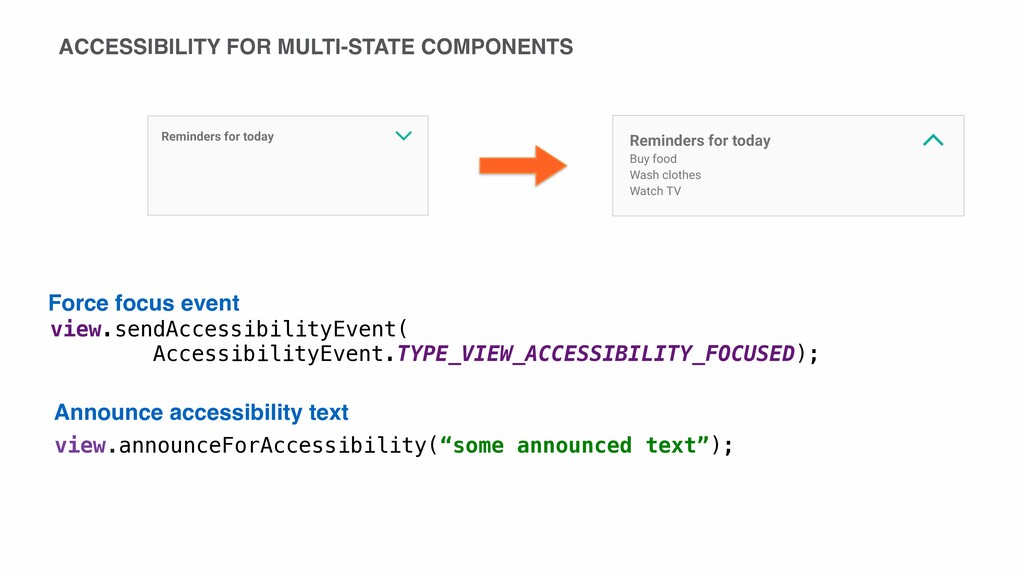
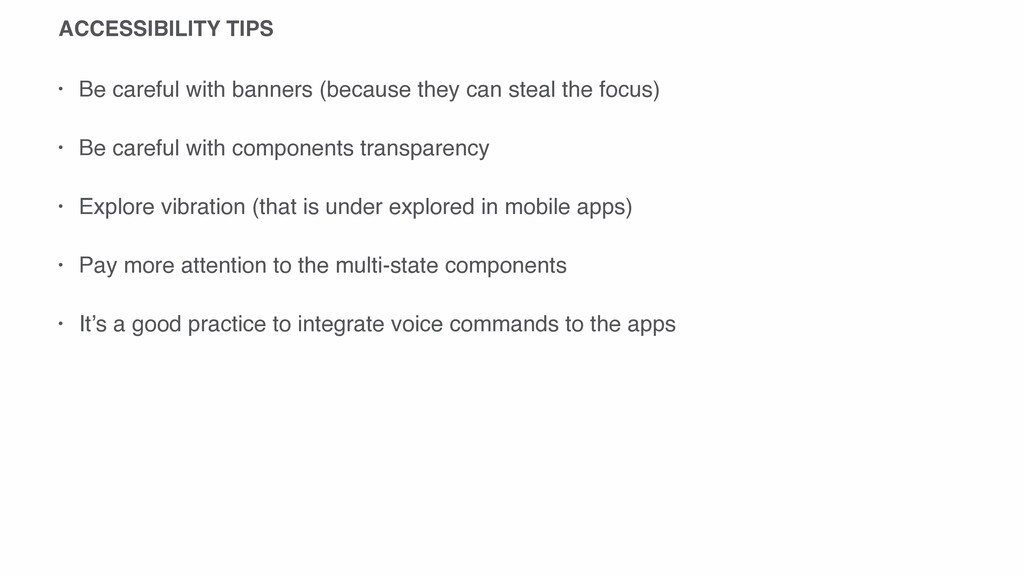
steal the focus ) • Be careful with components transparency • Explore vibration (that is under explored in mobile apps) • Pay more attention to the multi-state component s • It’s a good practice to integrate voice commands to the app s
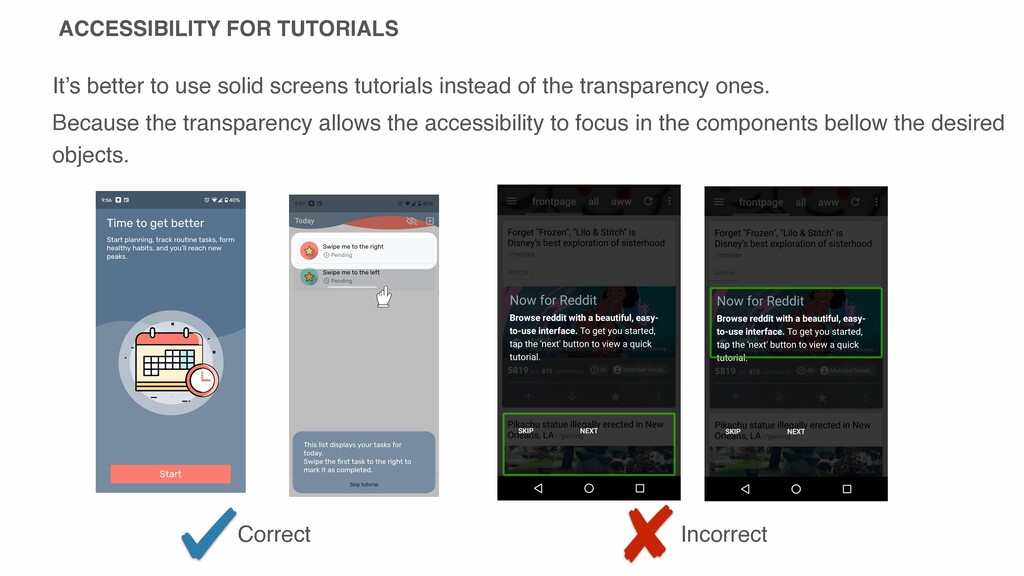
instead of the transparency ones . Because the transparency allows the accessibility to focus in the components bellow the desired objects. Incorrect Correct


 paulacr
 nealle
 recruitengineers
 terapyon
 mhrtech
 willnet
 namiki64
 4o1sobblue
 prog893
 takanorip
 sansantech
 puhitaku
 shogo4131
 marcduiker
 reverentgeek
 stephaniewalter
 aleyda
 techseoconnect
 nonsquared
 danielanewman
 tammyeverts
 denniskardys
 michielstock