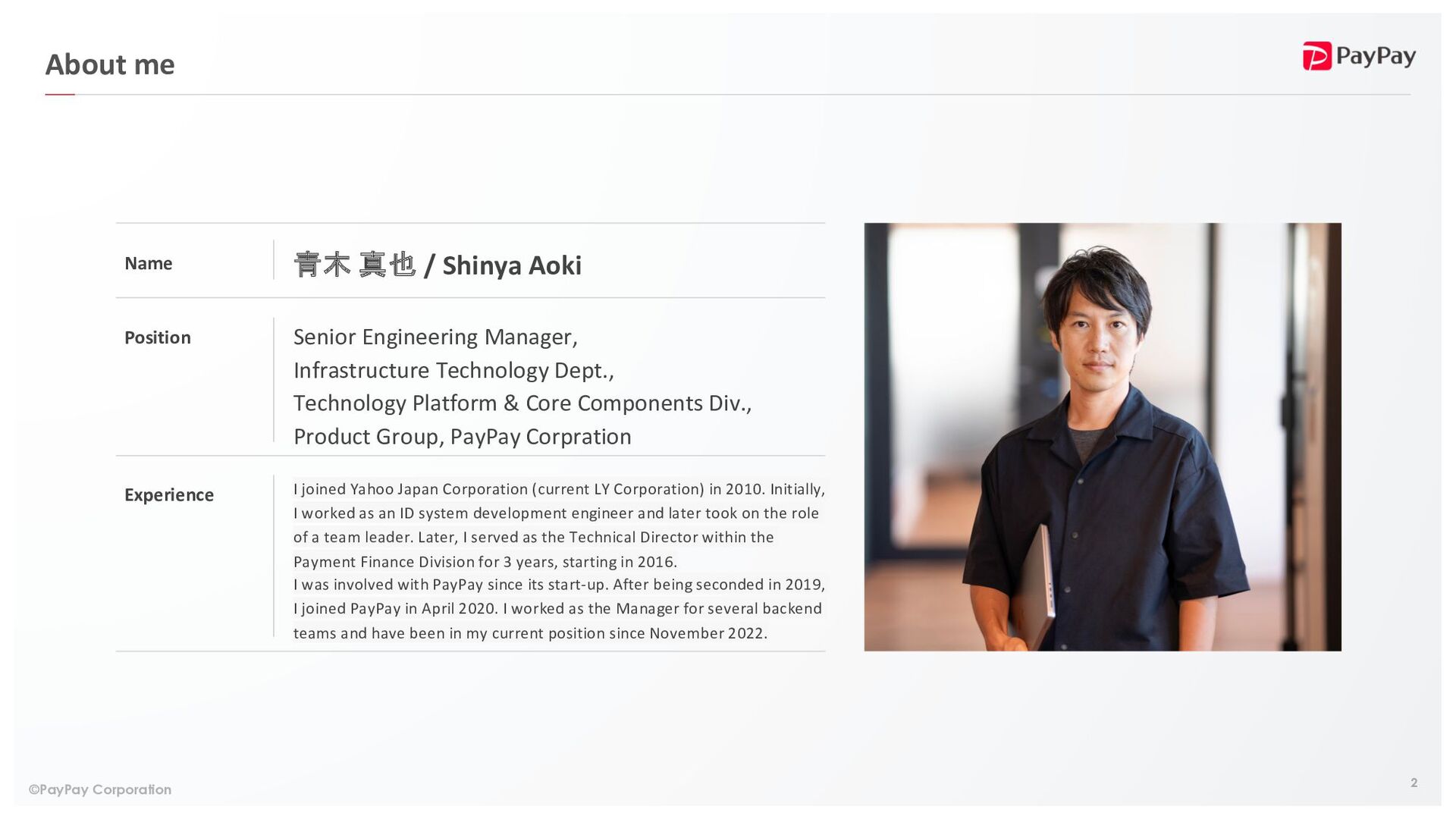
Shinya Aoki Name Position Experience Senior Engineering Manager, Infrastructure Technology Dept., Technology Platform & Core Components Div., Product Group, PayPay Corpration I joined Yahoo Japan Corporation (current LY Corporation) in 2010. Initially, I worked as an ID system development engineer and later took on the role of a team leader. Later, I served as the Technical Director within the Payment Finance Division for 3 years, starting in 2016. I was involved with PayPay since its start-up. After being seconded in 2019, I joined PayPay in April 2020. I worked as the Manager for several backend teams and have been in my current position since November 2022.
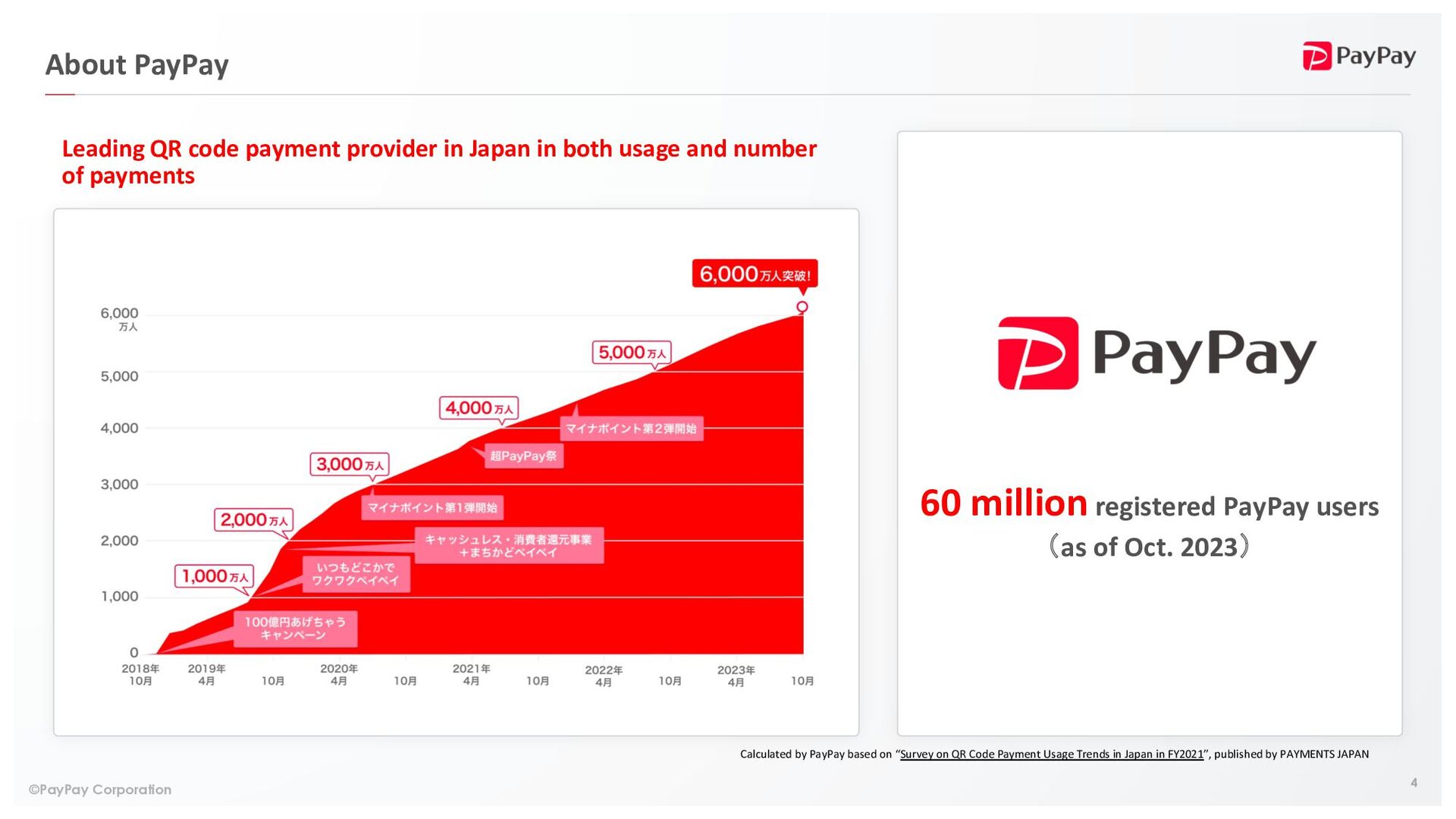
PayPay users (as of Oct. 2023) Calculated by PayPay based on “Survey on QR Code Payment Usage Trends in Japan in FY2021”, published by PAYMENTS JAPAN Leading QR code payment provider in Japan in both usage and number of payments
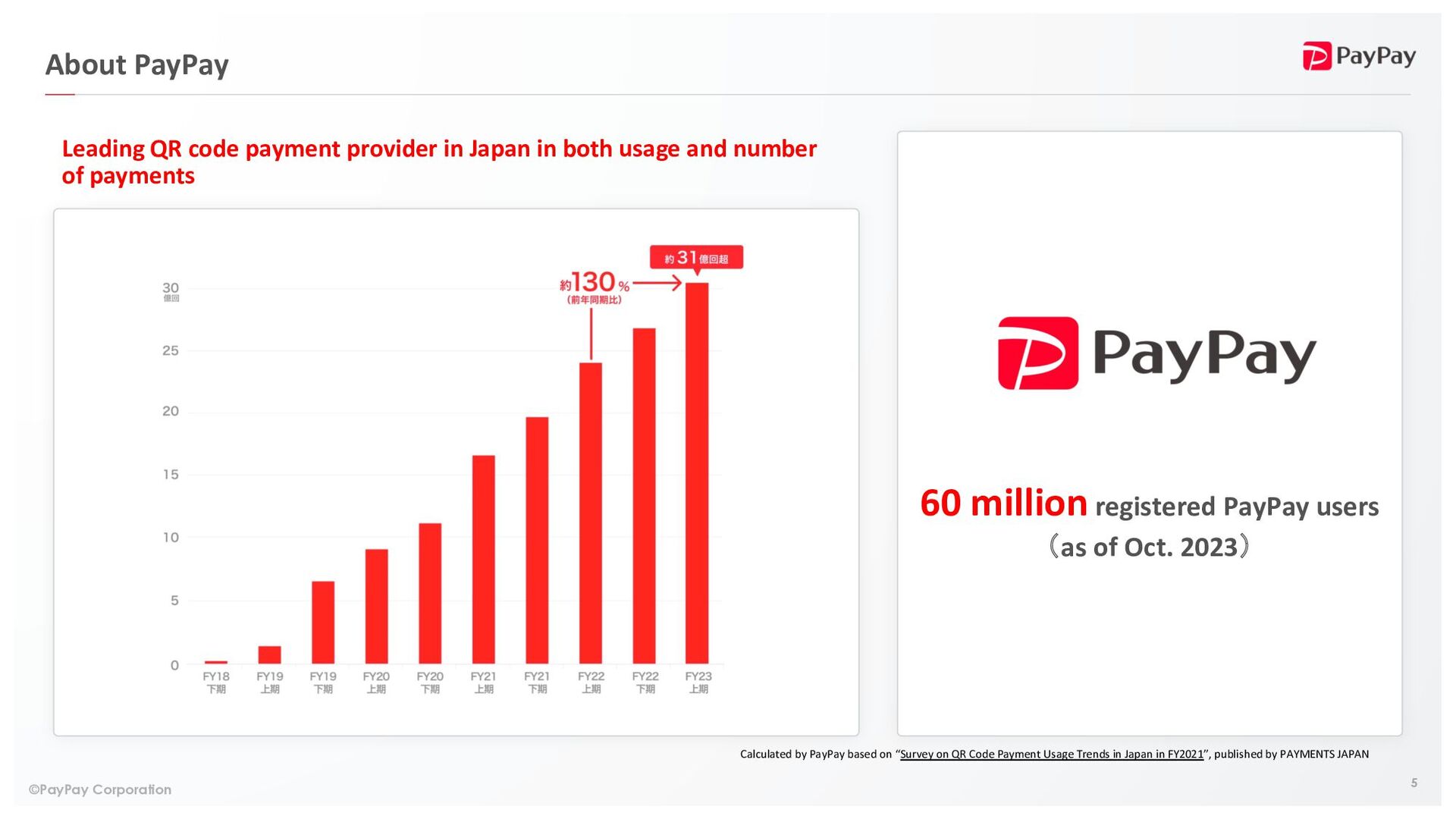
PayPay users (as of Oct. 2023) Calculated by PayPay based on “Survey on QR Code Payment Usage Trends in Japan in FY2021”, published by PAYMENTS JAPAN Leading QR code payment provider in Japan in both usage and number of payments
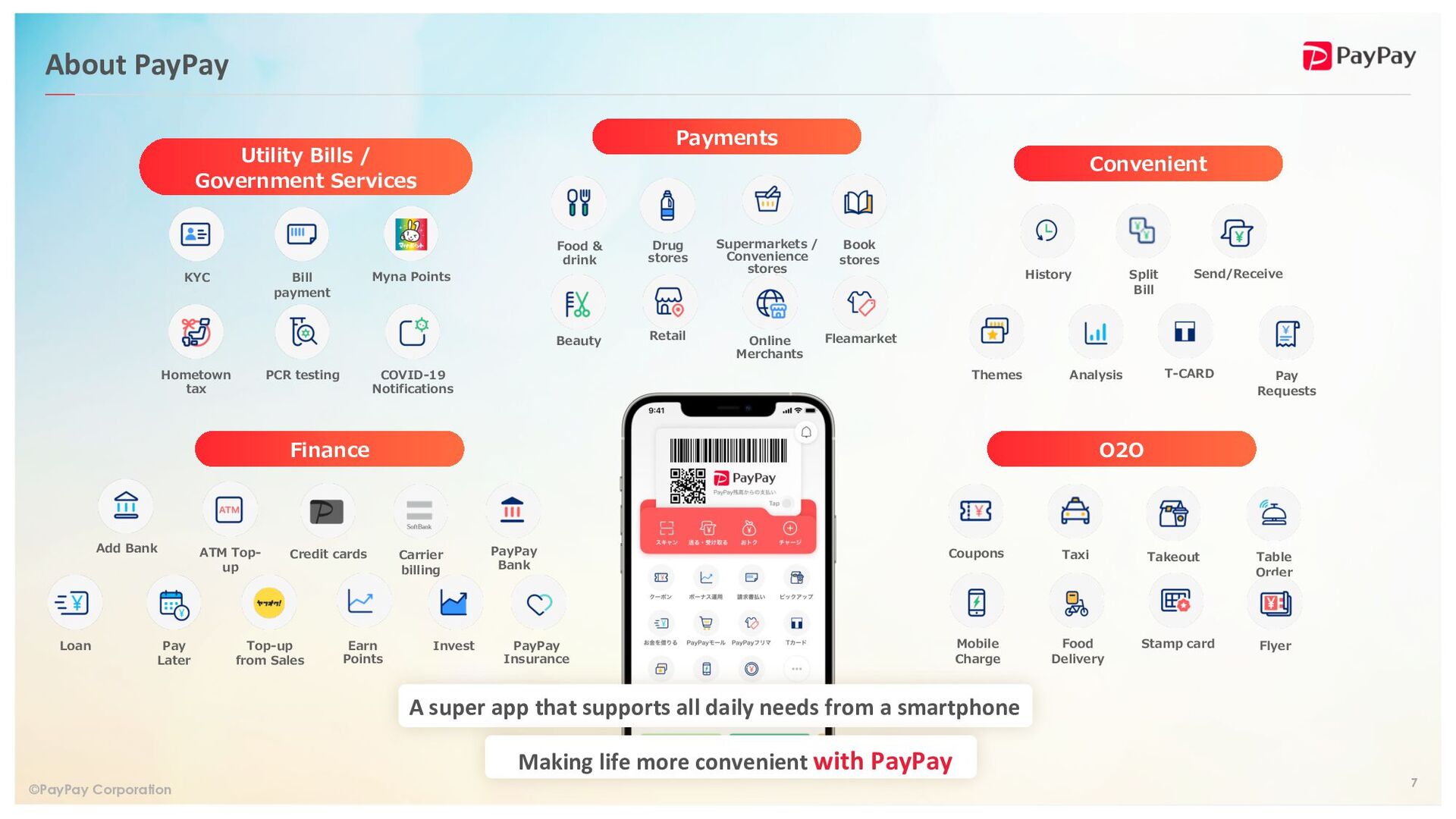
Utility Bills / Government Services Convenient Food & drink Supermarkets / Convenience stores Drug stores Book stores Online Merchants Beauty Retail History Split Bill Themes Analysis Send/Receive T-CARD Bill payment KYC Hometown tax PCR testing COVID-19 Notifications Myna Points Fleamarket Top-up from Sales Add Bank PayPay Bank Carrier billing Credit cards ATM Top- up Pay Later Loan Earn Points Invest PayPay Insurance Food Delivery Coupons Takeout Taxi Table Order Mobile Charge Stamp card Pay Requests Flyer A super app that supports all daily needs from a smartphone Making life more convenient with PayPay
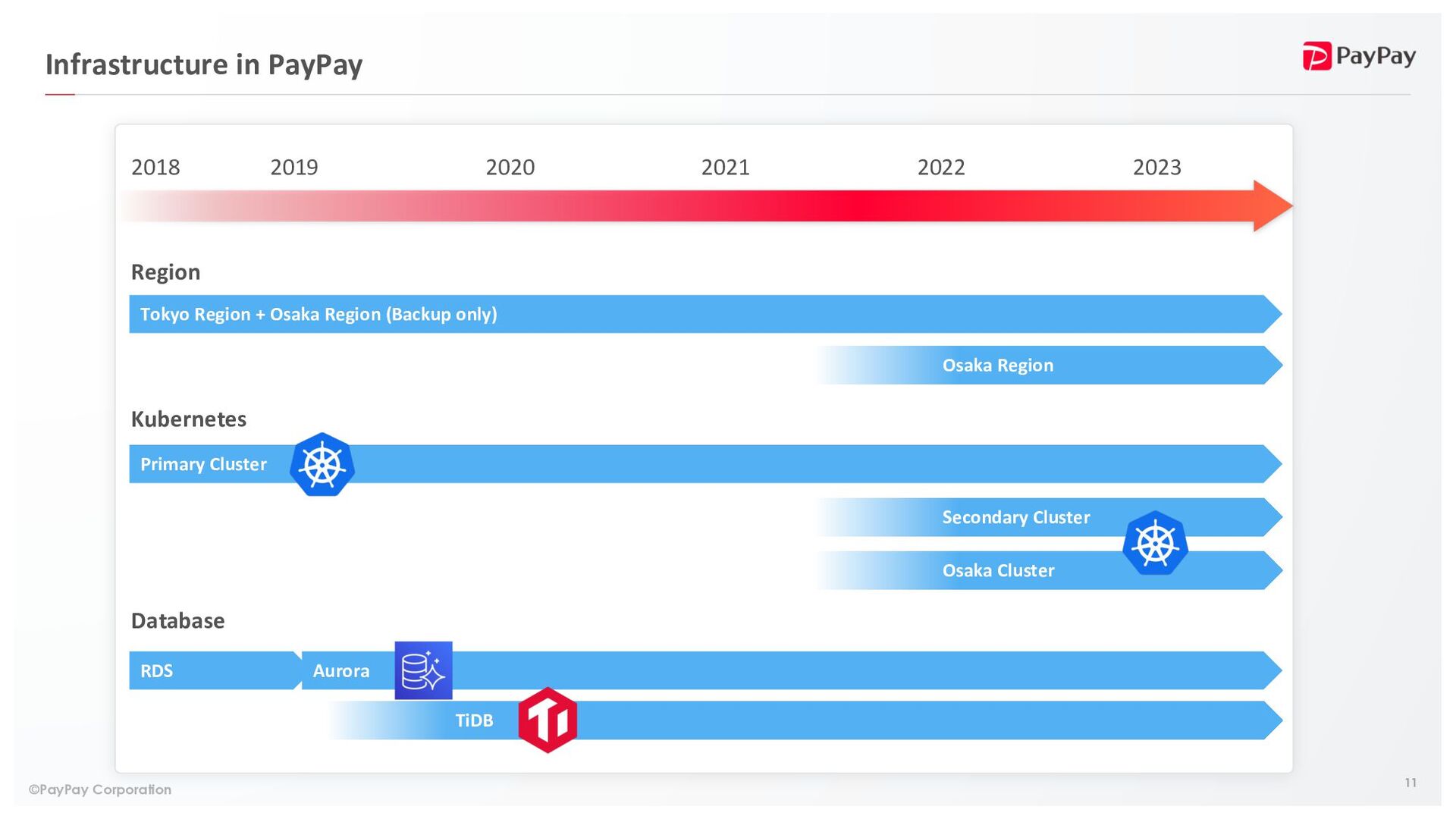
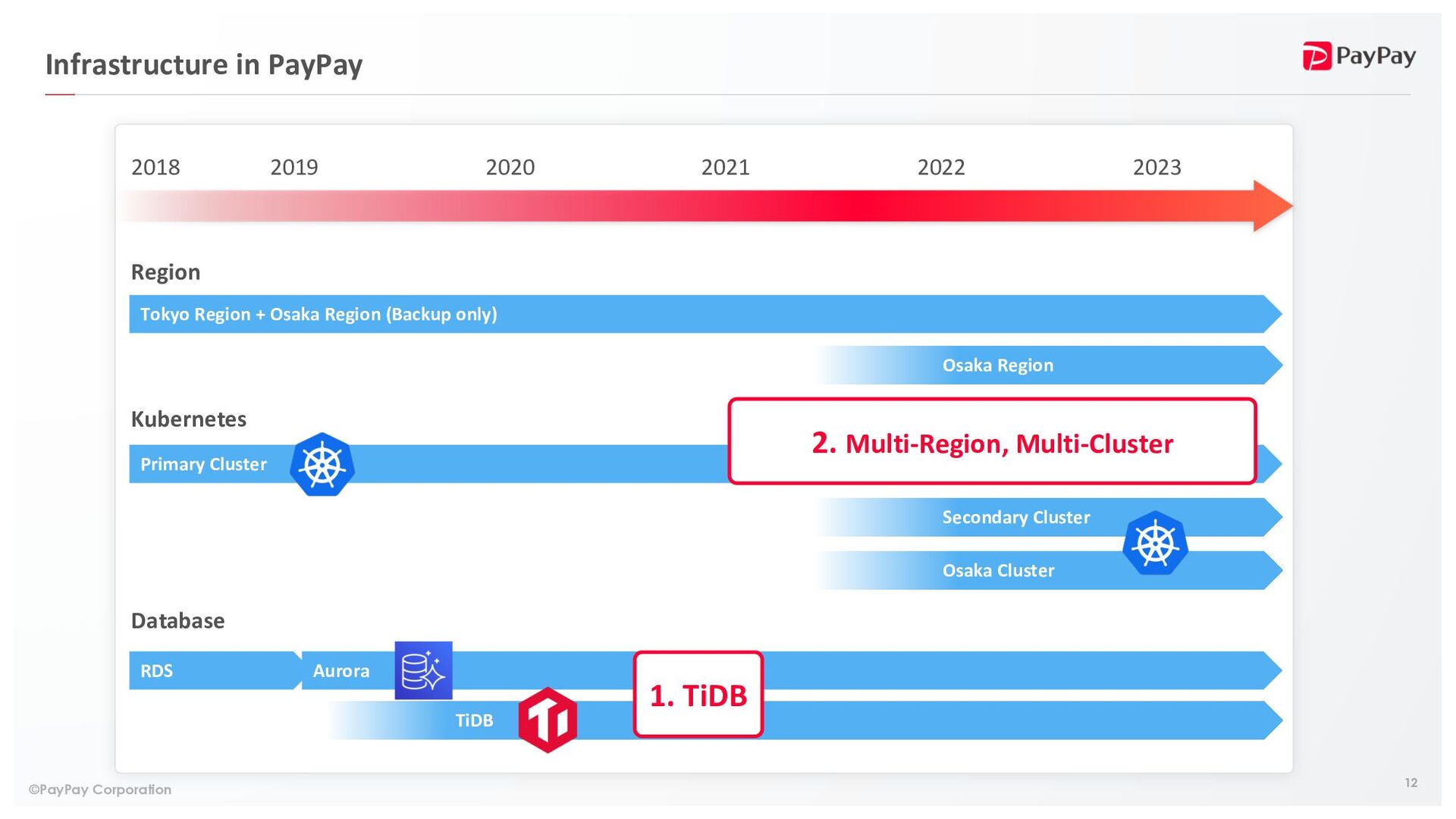
2020 2021 2022 2023 Region Kubernetes Database Tokyo Region + Osaka Region (Backup only) Osaka Region Primary Cluster Osaka Cluster Secondary Cluster TiDB RDS Aurora
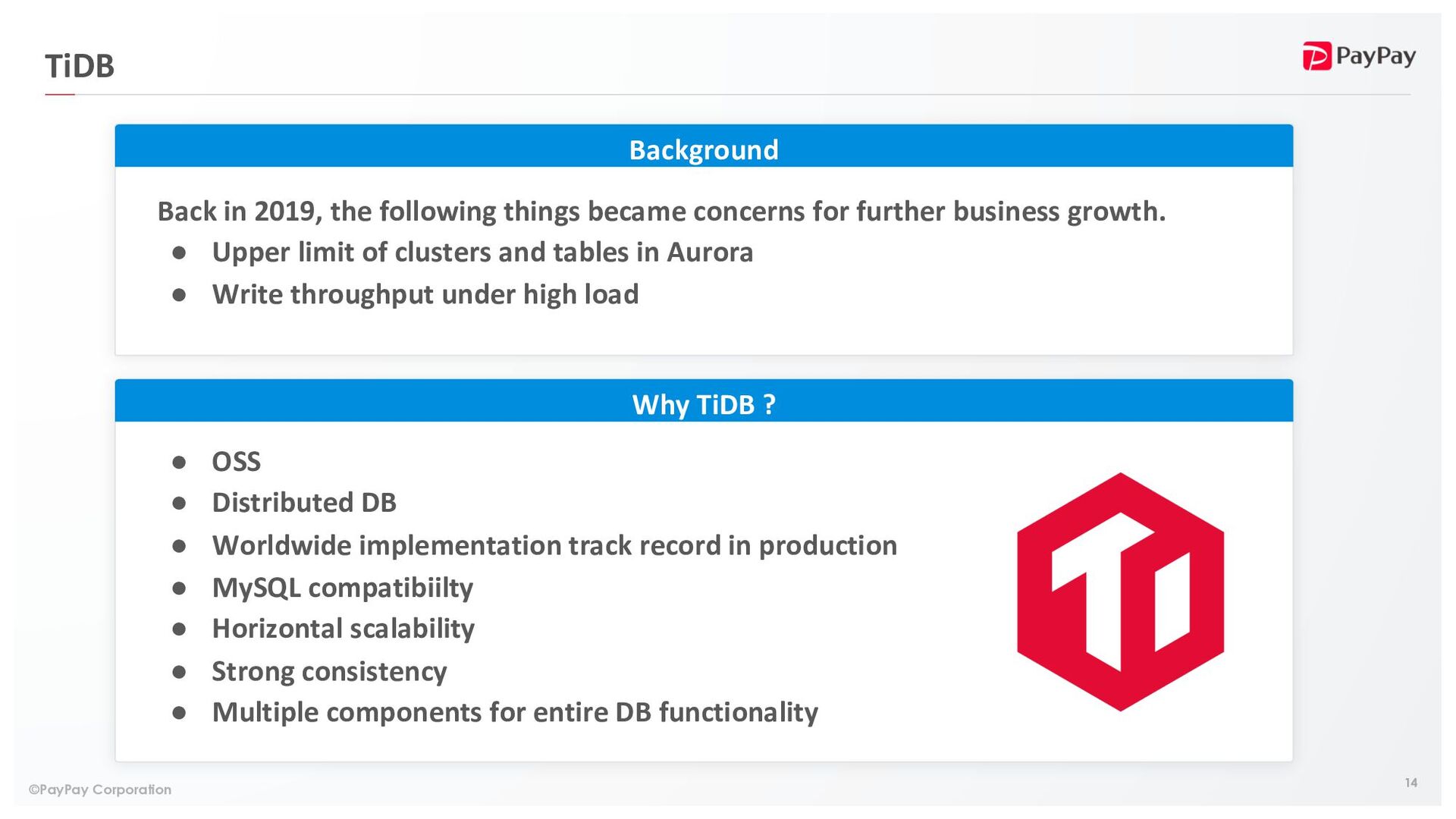
OSS • Distributed DB • Worldwide implementation track record in production • MySQL compatibiilty • Horizontal scalability • Strong consistency • Multiple components for entire DB functionality Background Back in 2019, the following things became concerns for further business growth. • Upper limit of clusters and tables in Aurora • Write throughput under high load
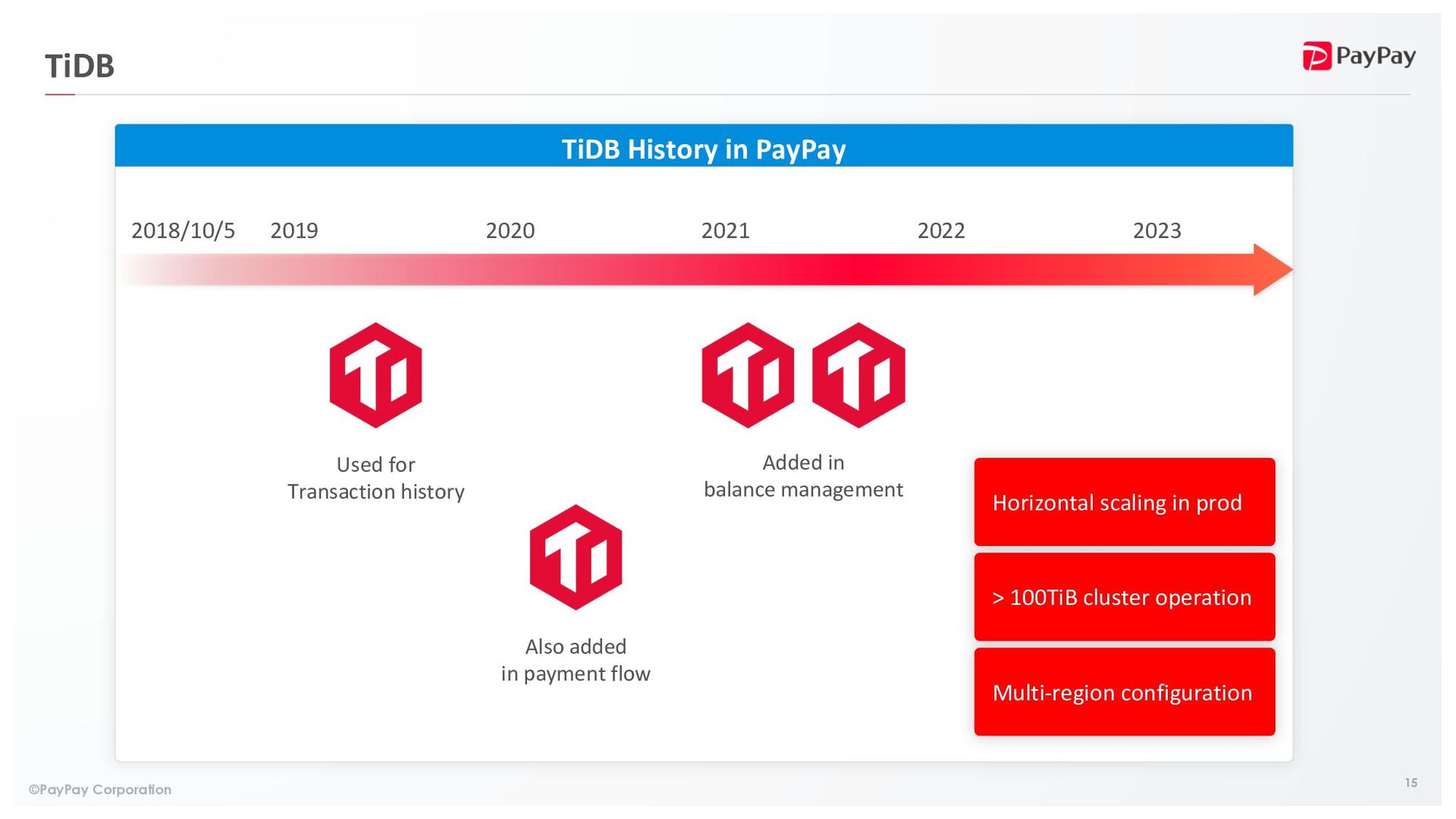
2018/10/5 2019 2020 2021 2022 2023 Used for Transaction history Also added in payment flow Added in balance management > 100TiB cluster operation Multi-region configuration Horizontal scaling in prod
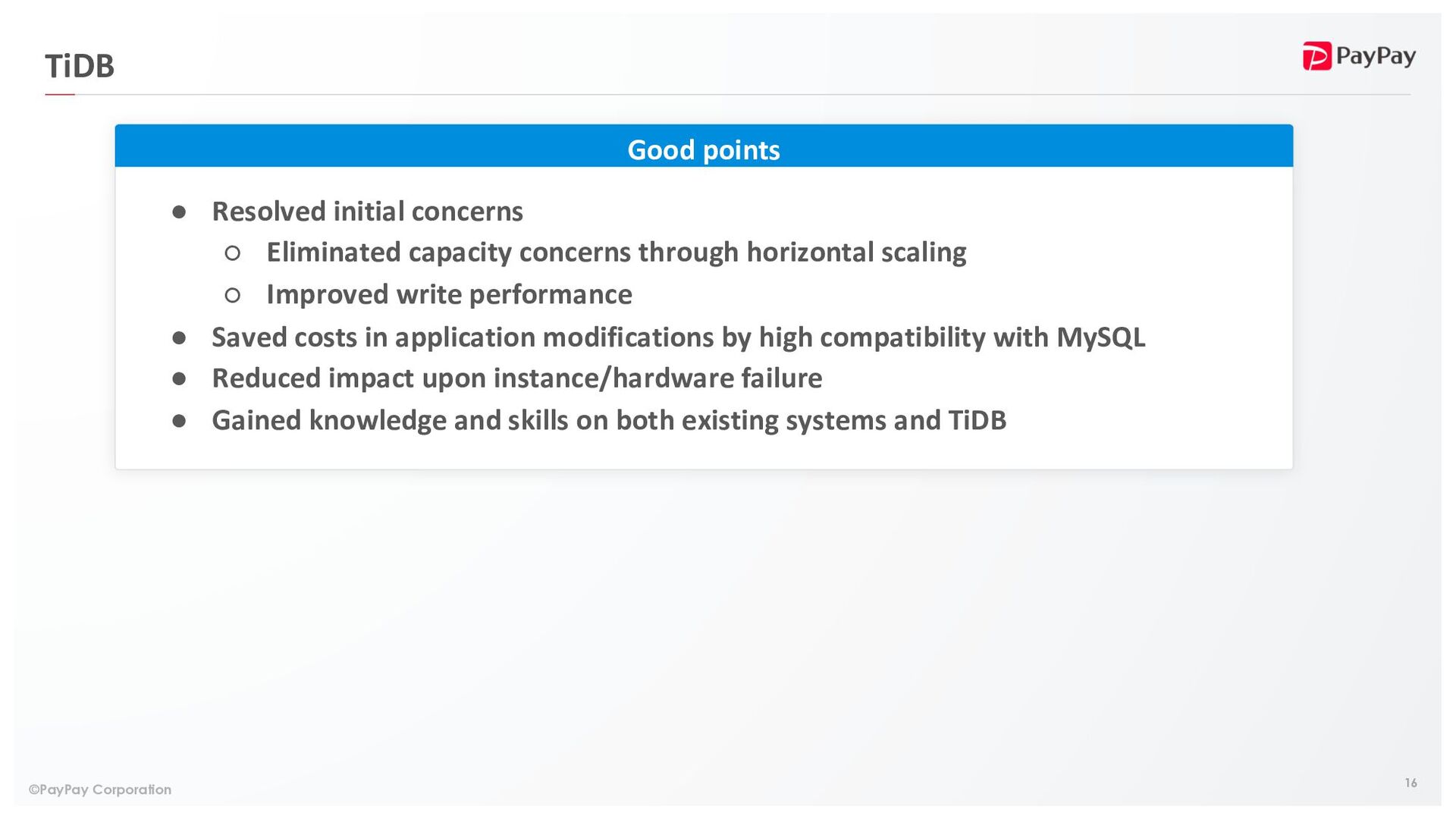
initial concerns ◦ Eliminated capacity concerns through horizontal scaling ◦ Improved write performance • Saved costs in application modifications by high compatibility with MySQL • Reduced impact upon instance/hardware failure • Gained knowledge and skills on both existing systems and TiDB
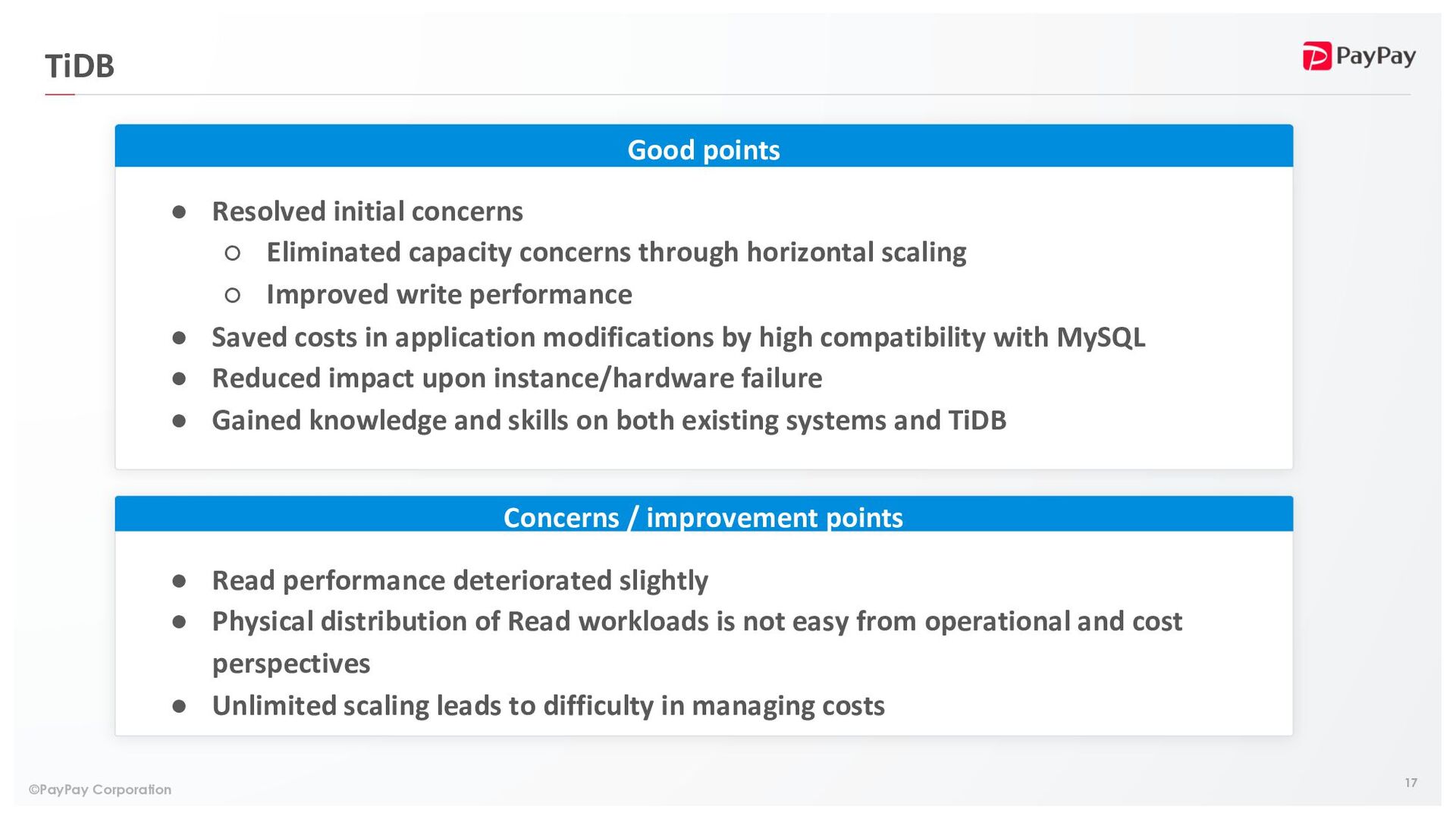
• Read performance deteriorated slightly • Physical distribution of Read workloads is not easy from operational and cost perspectives • Unlimited scaling leads to difficulty in managing costs Good points • Resolved initial concerns ◦ Eliminated capacity concerns through horizontal scaling ◦ Improved write performance • Saved costs in application modifications by high compatibility with MySQL • Reduced impact upon instance/hardware failure • Gained knowledge and skills on both existing systems and TiDB
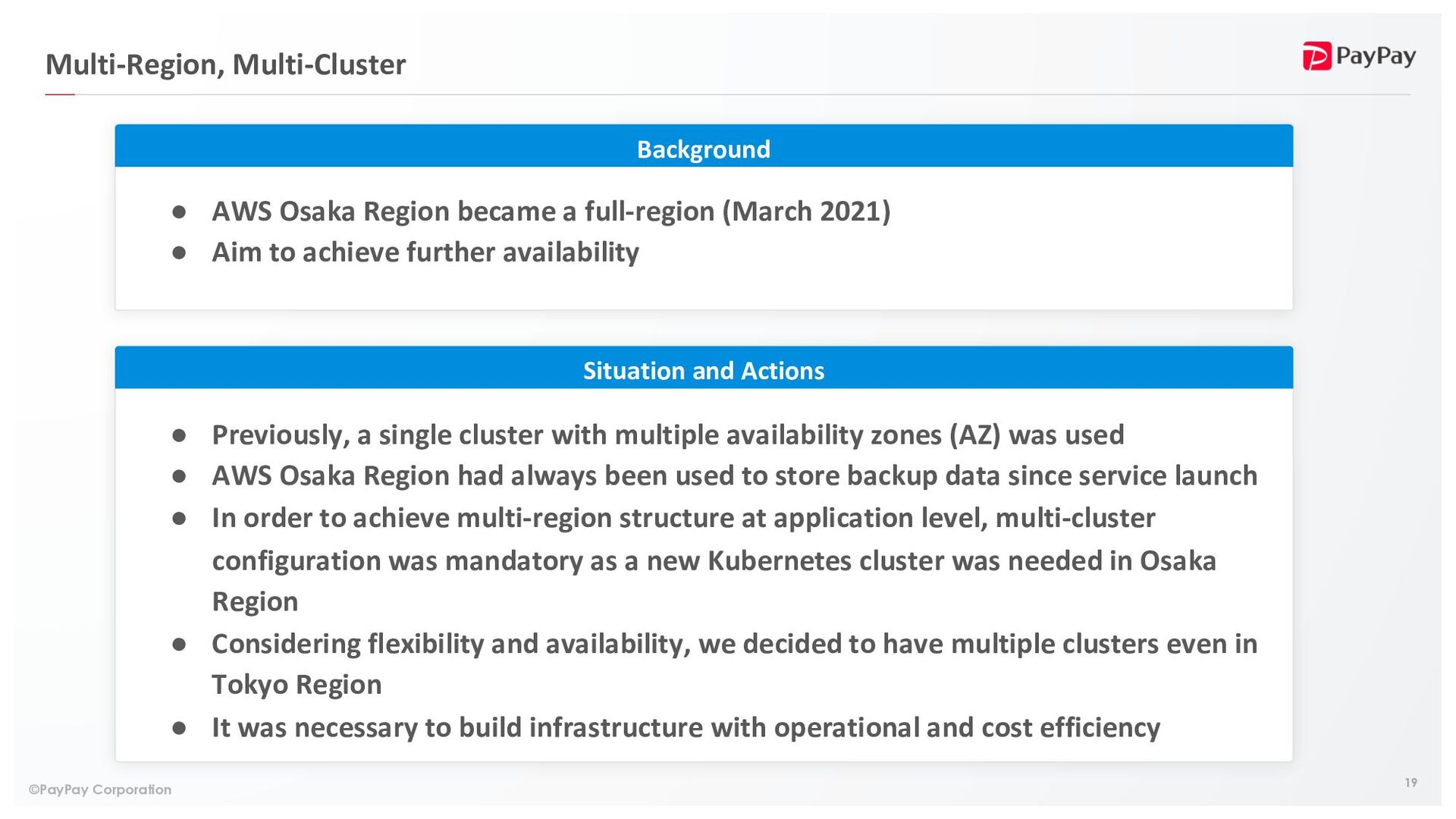
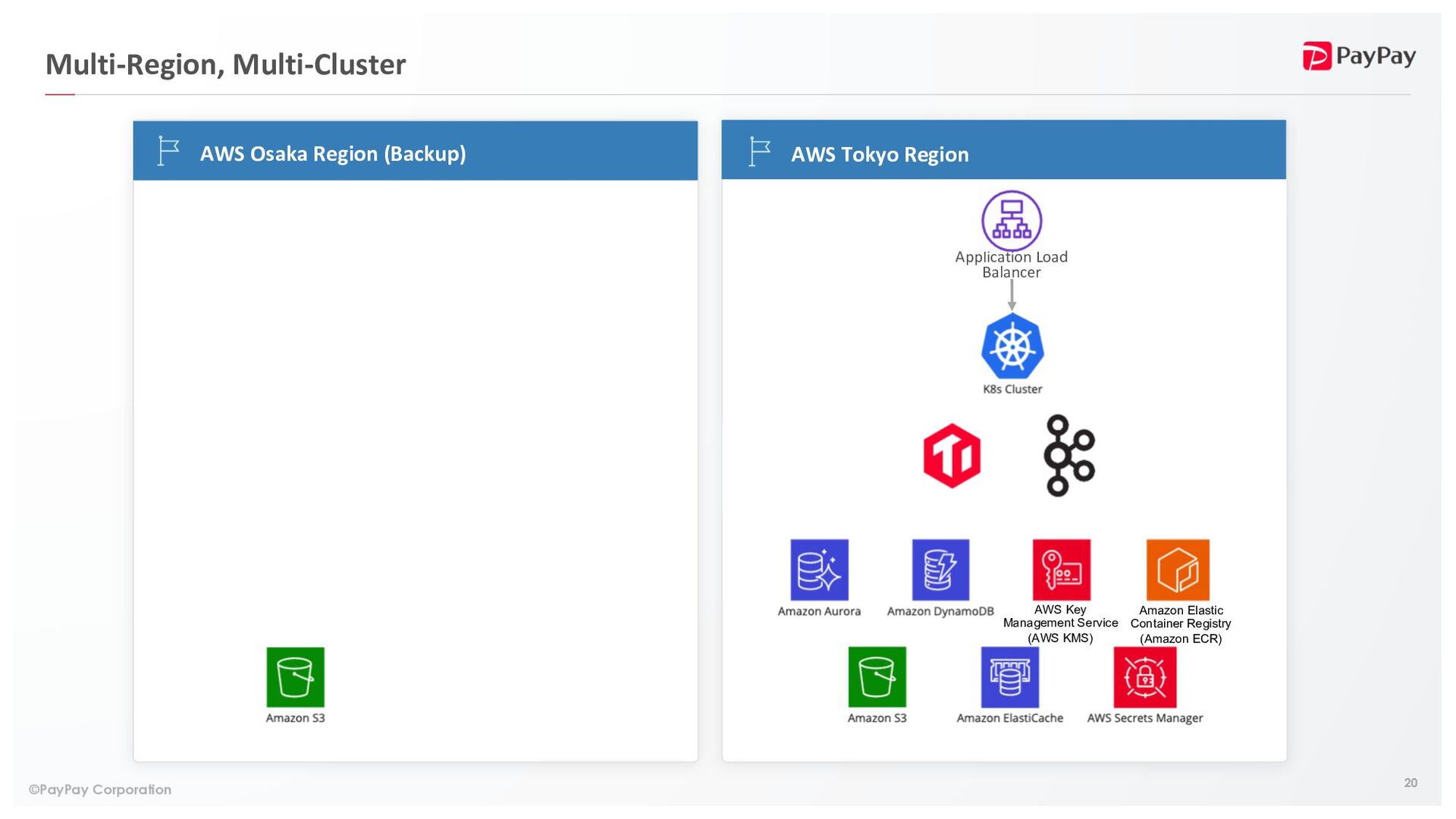
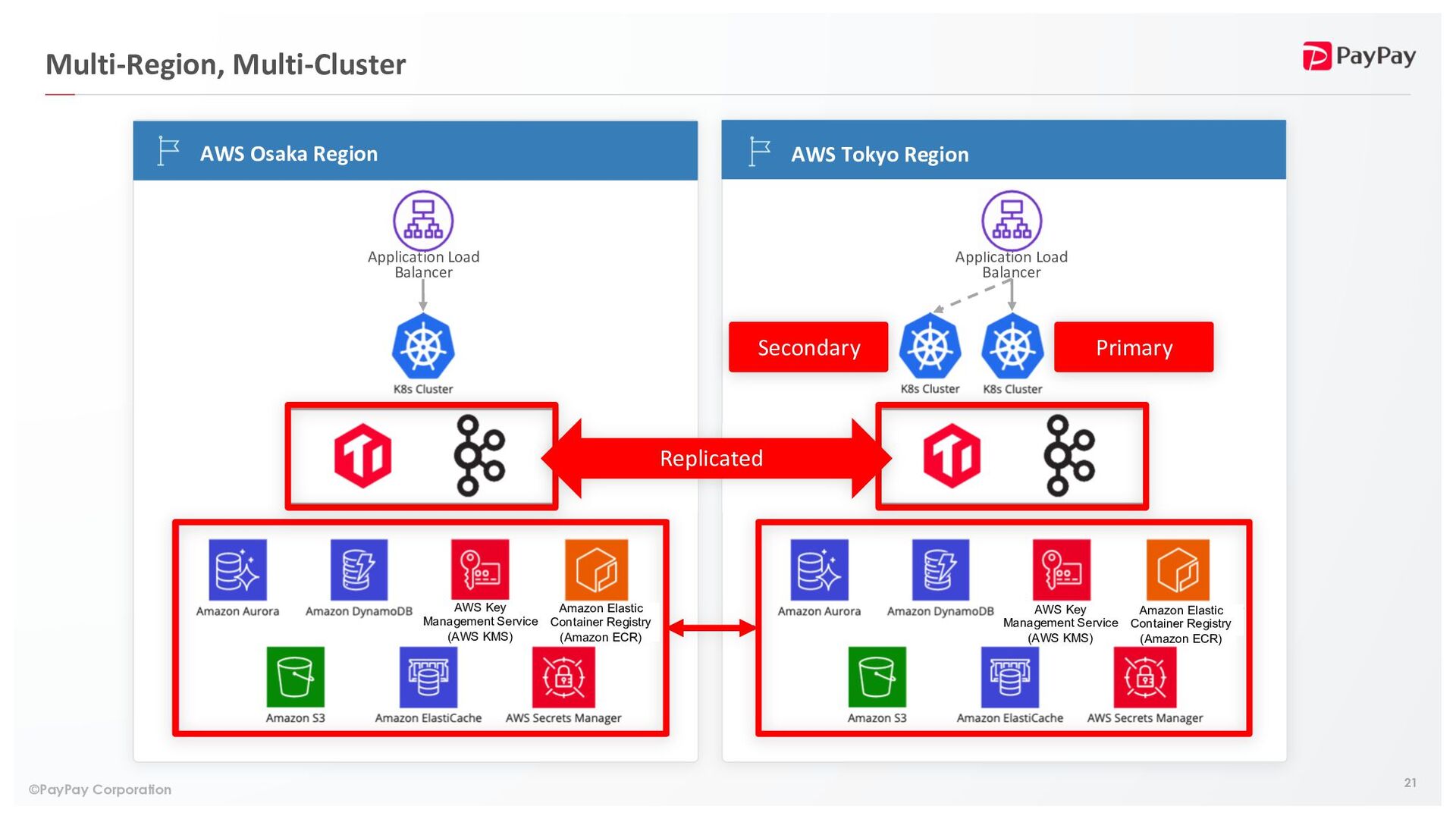
• Previously, a single cluster with multiple availability zones (AZ) was used • AWS Osaka Region had always been used to store backup data since service launch • In order to achieve multi-region structure at application level, multi-cluster configuration was mandatory as a new Kubernetes cluster was needed in Osaka Region • Considering flexibility and availability, we decided to have multiple clusters even in Tokyo Region • It was necessary to build infrastructure with operational and cost efficiency Background • AWS Osaka Region became a full-region (March 2021) • Aim to achieve further availability
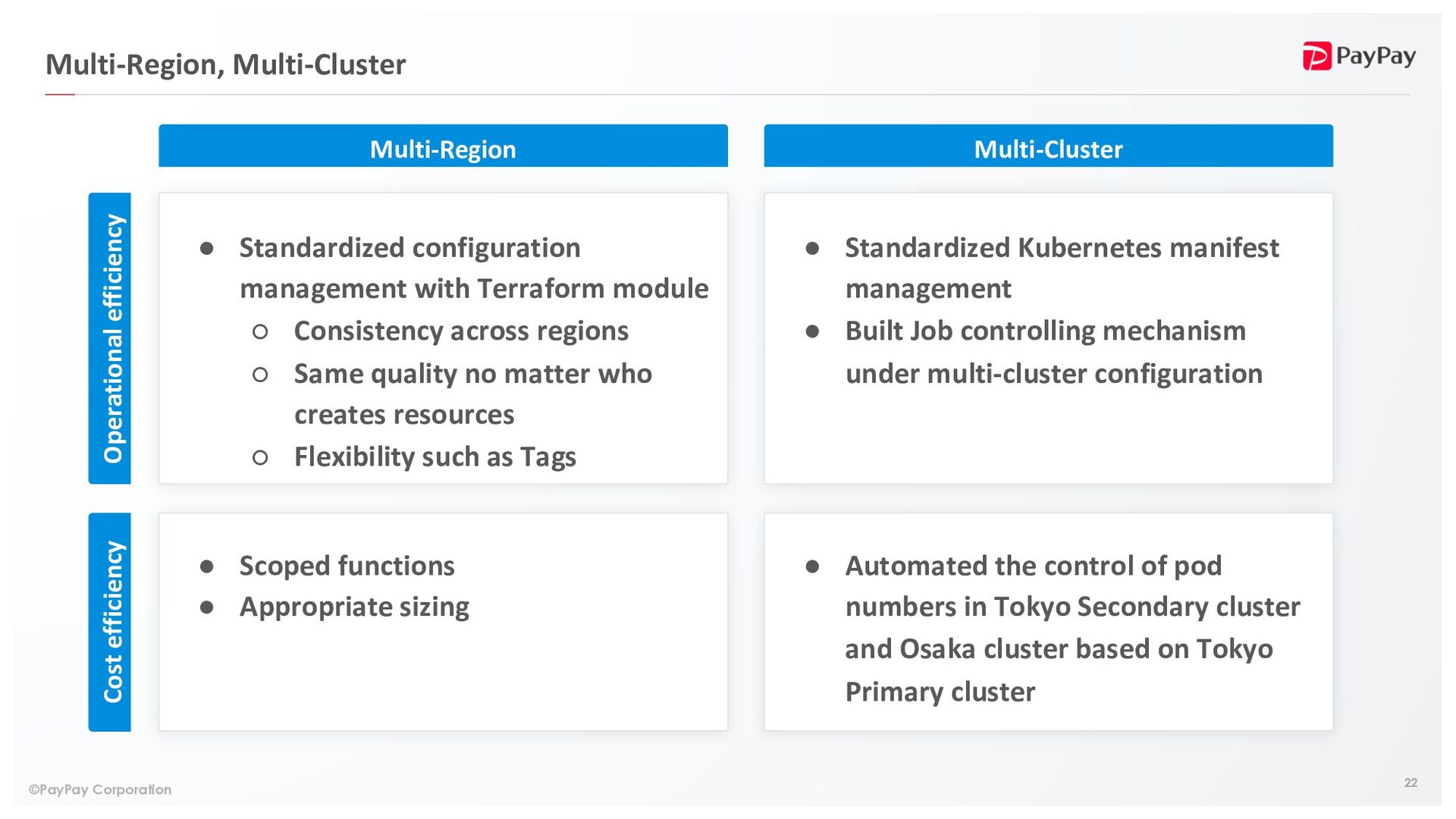
Scoped functions • Appropriate sizing Multi-Region • Standardized configuration management with Terraform module ◦ Consistency across regions ◦ Same quality no matter who creates resources ◦ Flexibility such as Tags • Automated the control of pod numbers in Tokyo Secondary cluster and Osaka cluster based on Tokyo Primary cluster Multi-Cluster • Standardized Kubernetes manifest management • Built Job controlling mechanism under multi-cluster configuration Operational efficiency
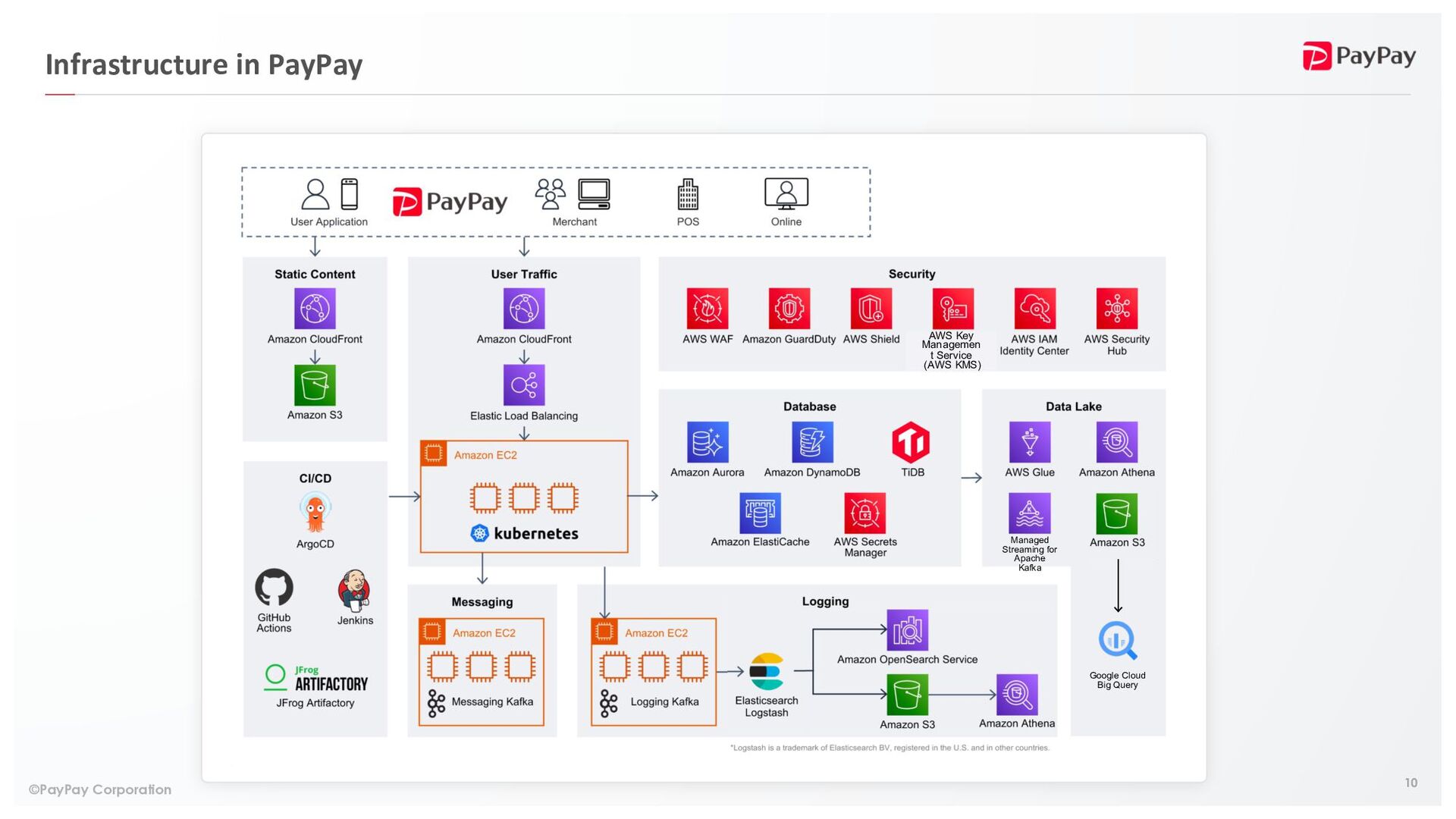
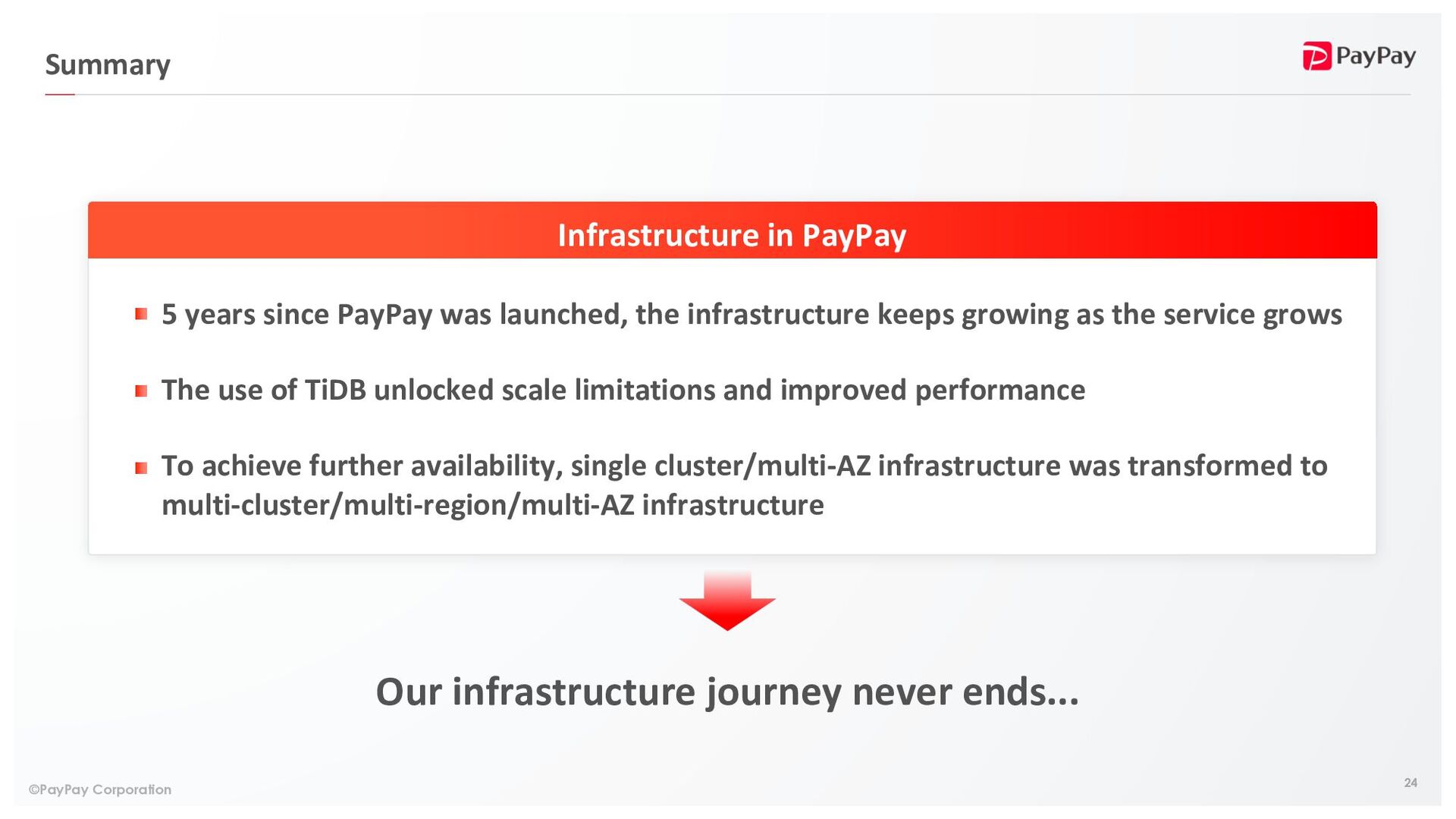
was launched, the infrastructure keeps growing as the service grows The use of TiDB unlocked scale limitations and improved performance To achieve further availability, single cluster/multi-AZ infrastructure was transformed to multi-cluster/multi-region/multi-AZ infrastructure Infrastructure in PayPay Our infrastructure journey never ends...
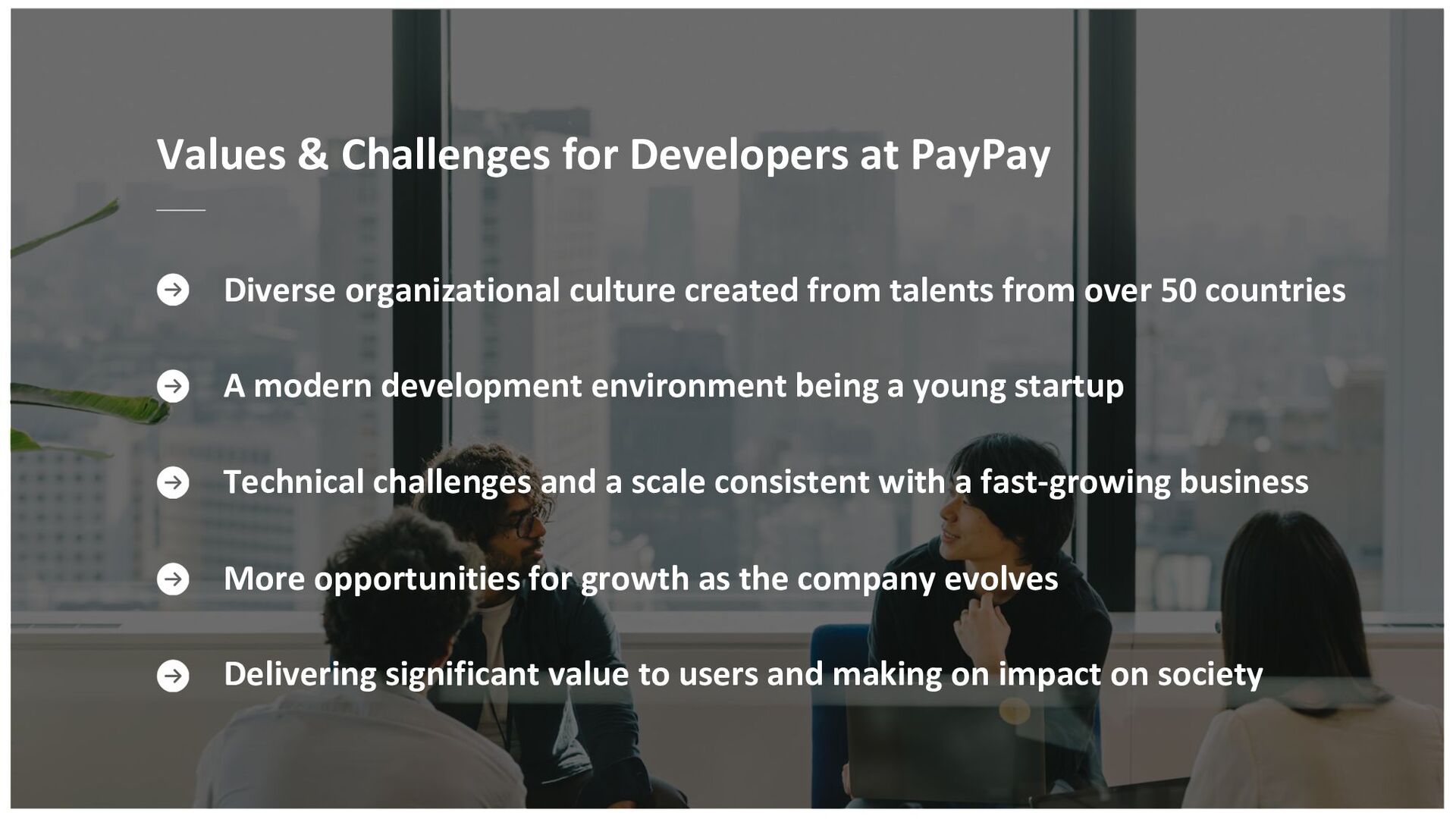
talents from over 50 countries A modern development environment being a young startup Technical challenges and a scale consistent with a fast-growing business More opportunities for growth as the company evolves Delivering significant value to users and making on impact on society Values & Challenges for Developers at PayPay


 paypaycorporation
 shogo4131
 colopl
 baseballyama
 glaforge
 yokawasa
 toru_kubota
 kakehashi
 tsuchikazu
 junkifurukawa
 ufried
 recruitengineers
 codmoninc
 auna
auna
 addyosmani
 aleyda
 kastner
 mclloyd
 tamaranovitovic
 mayunak
 akashhashmi
 tammyeverts
 baasie
 mfonobong
 szymonslowik