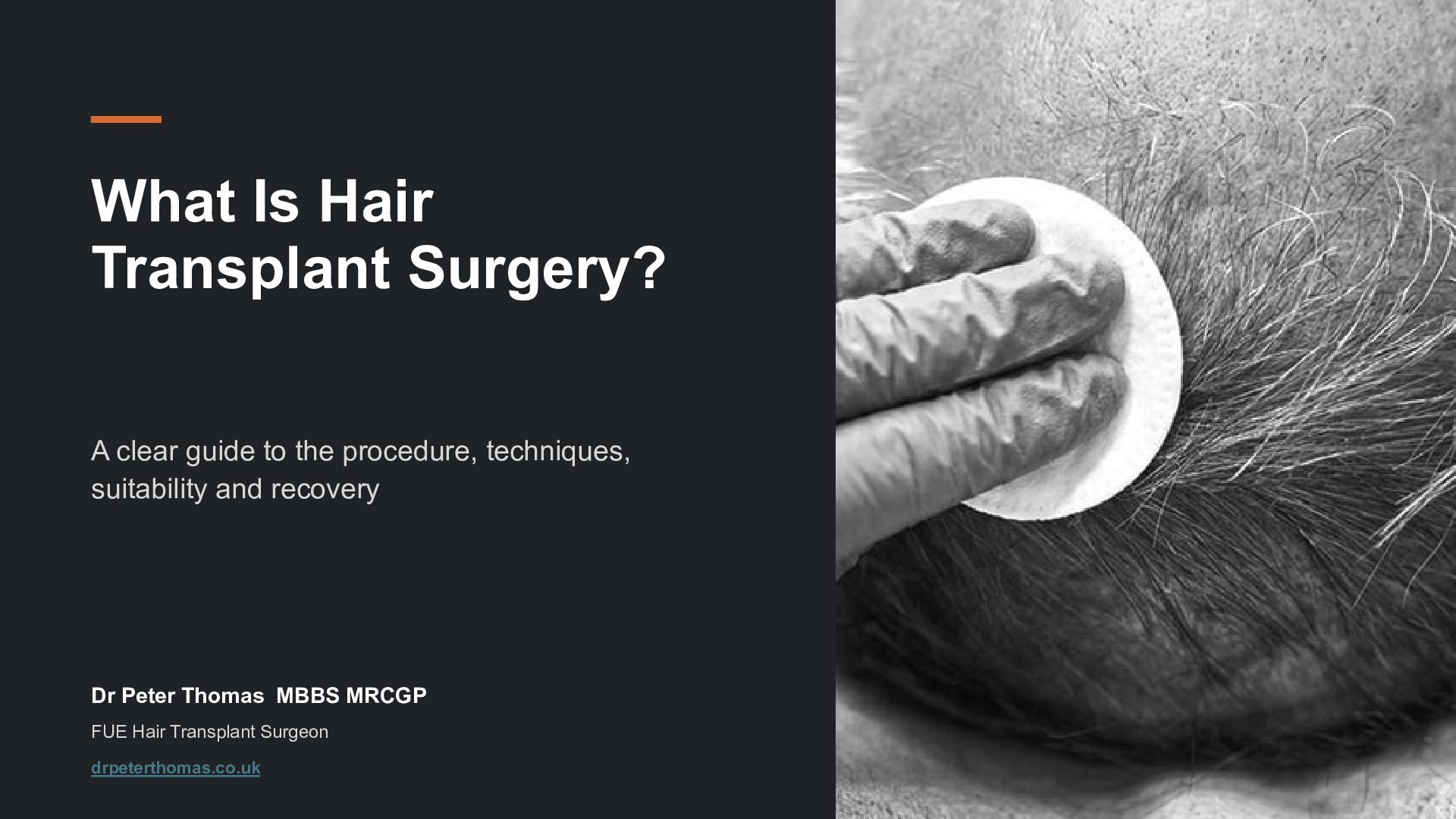
Dr Thomas gives an outline of what hair transplant surgery involves, why it is an option for some, how it works, and the different methods. More information at drpeterthomas.co.uk
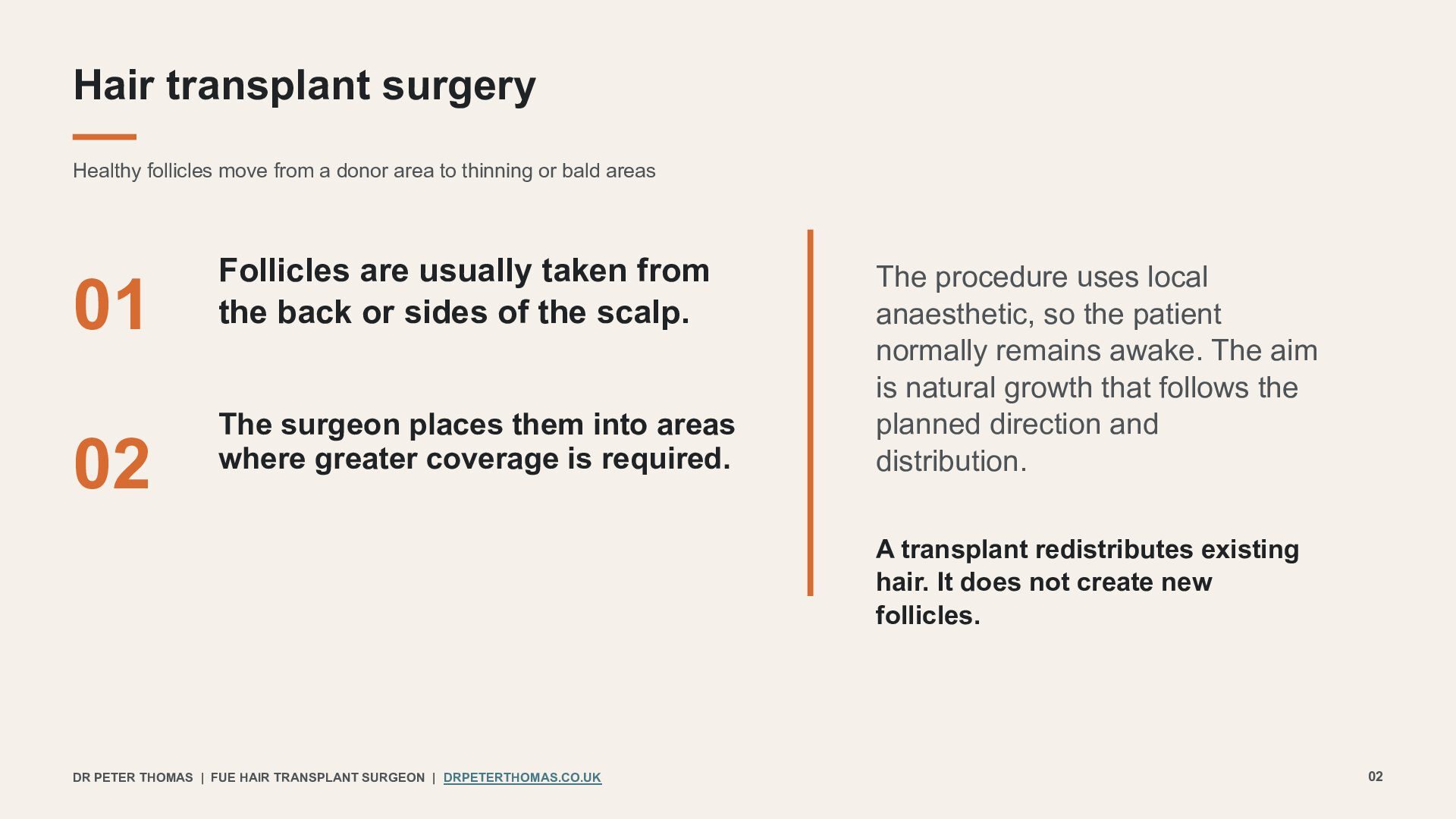
to thinning or bald areas 01 02 Follicles are usually taken from the back or sides of the scalp. The surgeon places them into areas where greater coverage is required. The procedure uses local anaesthetic, so the patient normally remains awake. The aim is natural growth that follows the planned direction and distribution. A transplant redistributes existing hair. It does not create new follicles. DR PETER THOMAS | FUE HAIR TRANSPLANT SURGEON | DRPETERTHOMAS.CO.UK 02
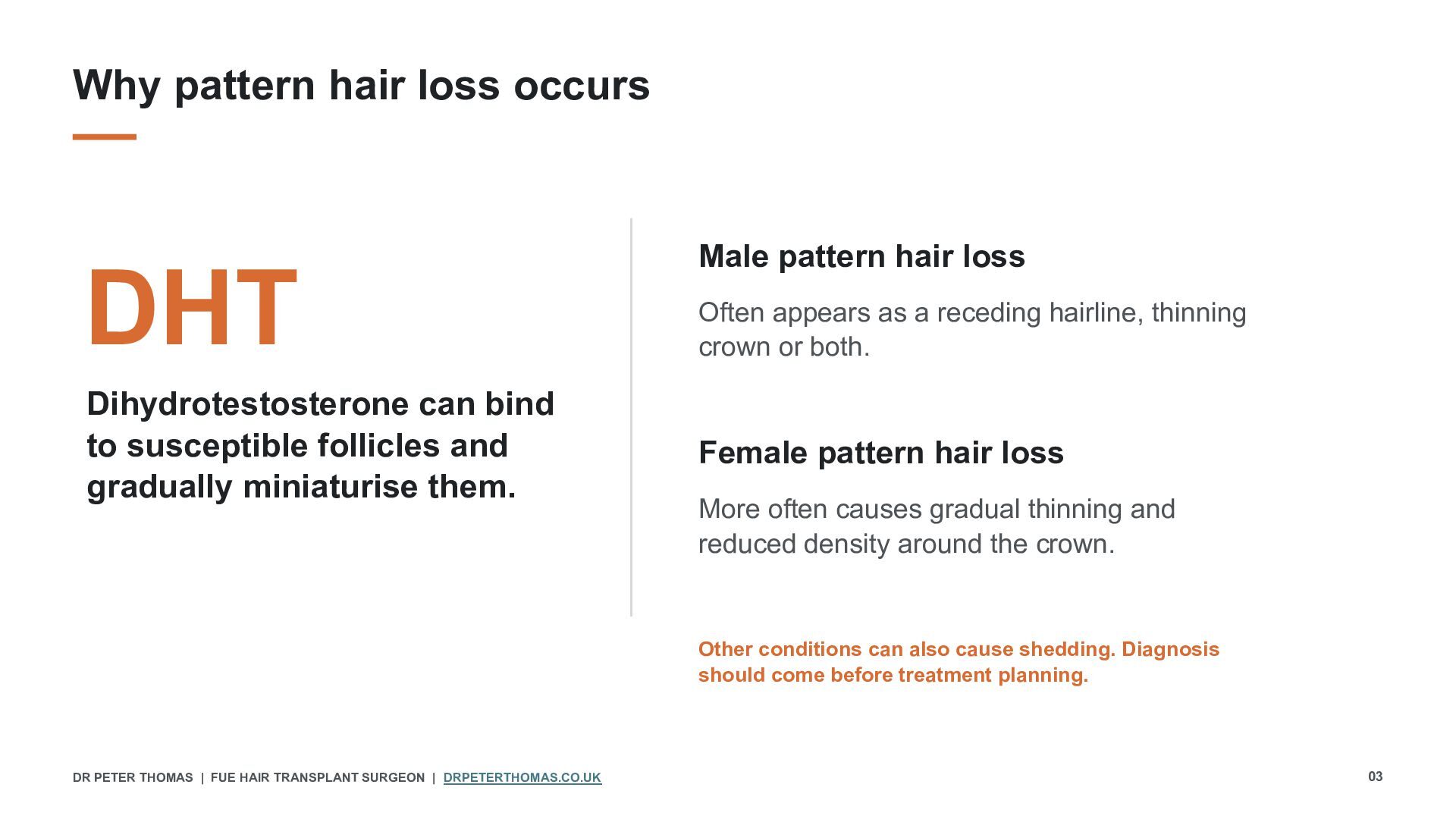
susceptible follicles and gradually miniaturise them. Male pattern hair loss Often appears as a receding hairline, thinning crown or both. Female pattern hair loss More often causes gradual thinning and reduced density around the crown. Other conditions can also cause shedding. Diagnosis should come before treatment planning. DR PETER THOMAS | FUE HAIR TRANSPLANT SURGEON | DRPETERTHOMAS.CO.UK 03
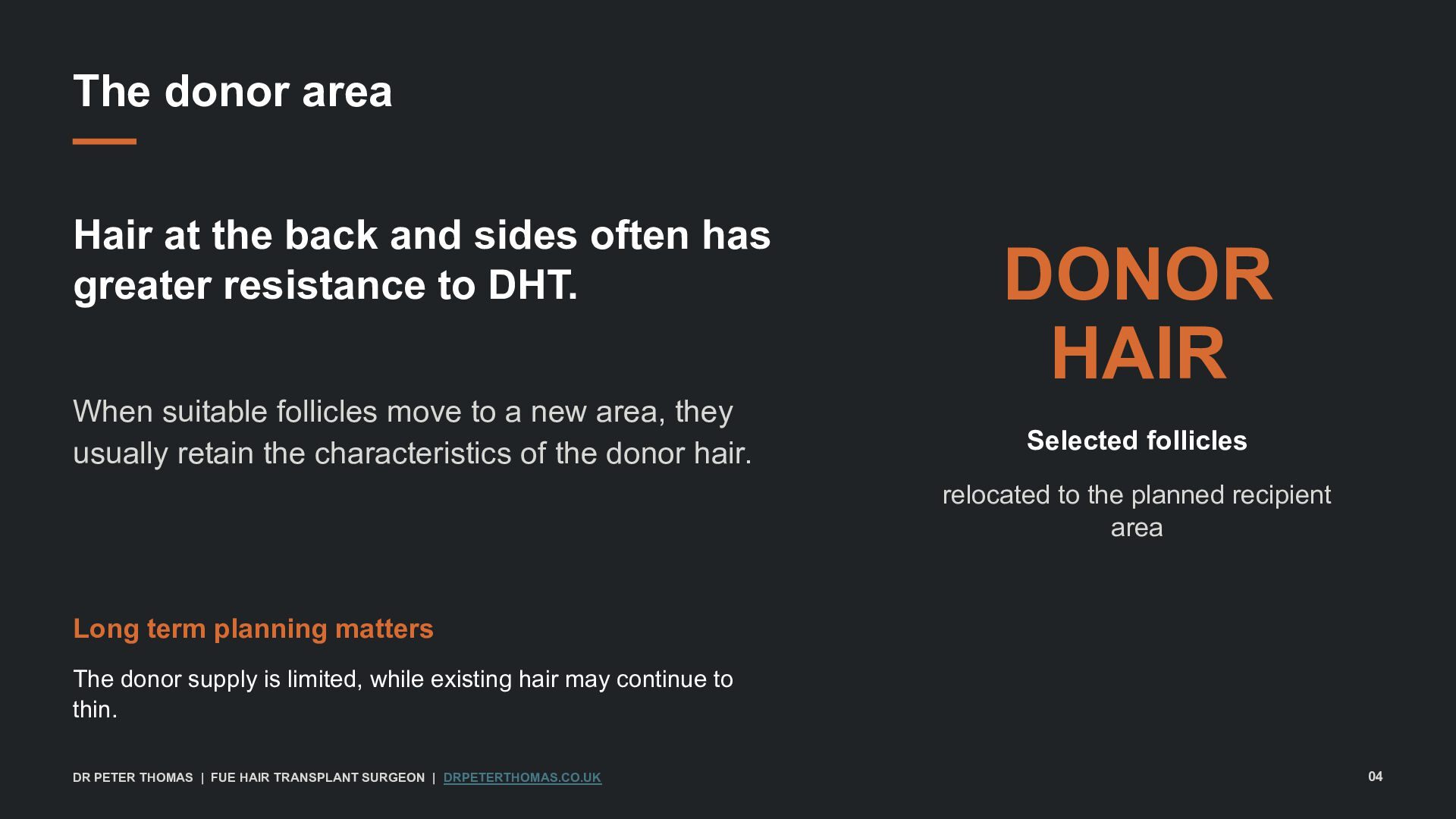
has greater resistance to DHT. When suitable follicles move to a new area, they usually retain the characteristics of the donor hair. DONOR HAIR Selected follicles relocated to the planned recipient area Long term planning matters The donor supply is limited, while existing hair may continue to thin. DR PETER THOMAS | FUE HAIR TRANSPLANT SURGEON | DRPETERTHOMAS.CO.UK 04
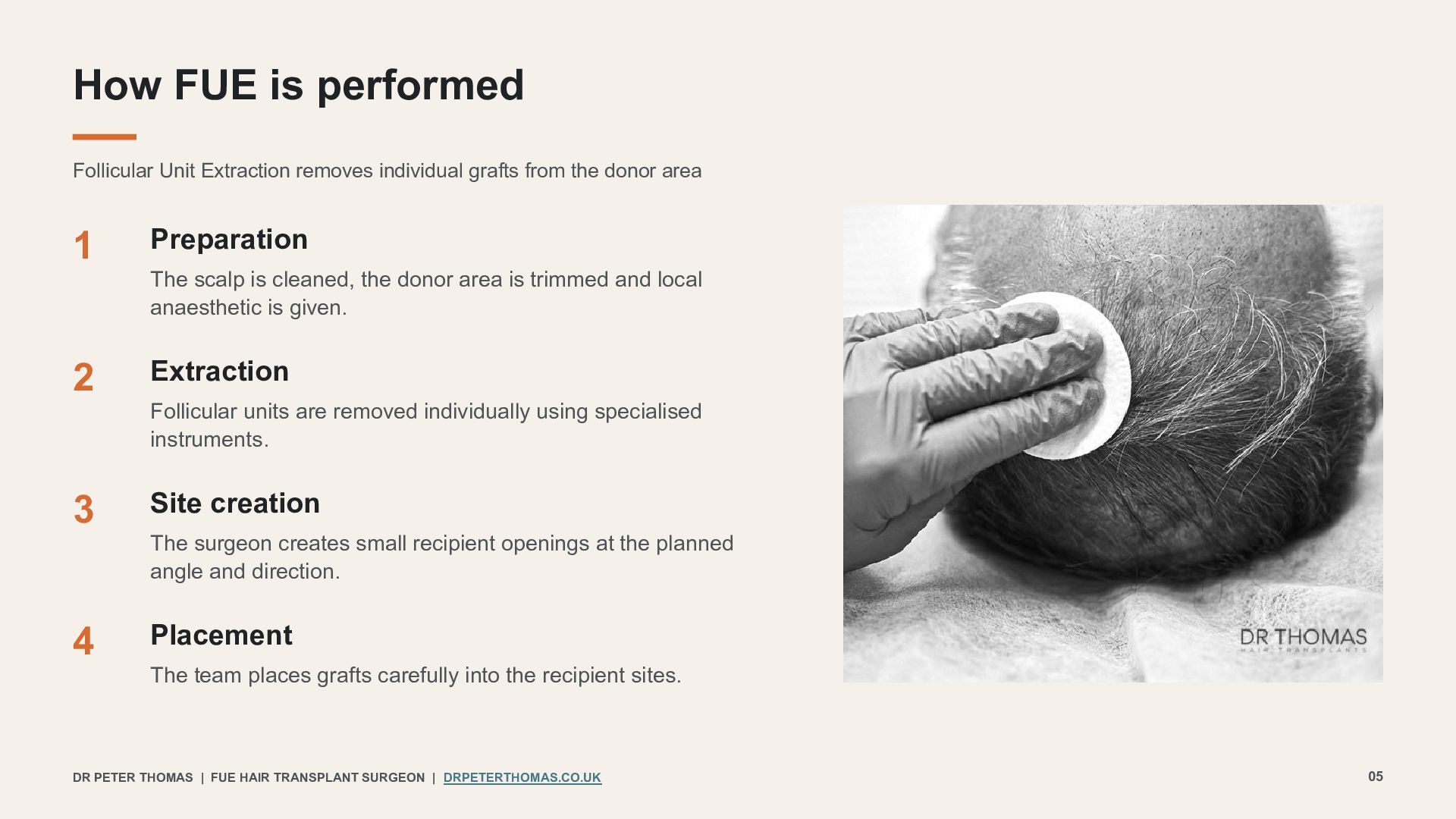
from the donor area 1 Preparation The scalp is cleaned, the donor area is trimmed and local anaesthetic is given. 2 Extraction Follicular units are removed individually using specialised instruments. 3 Site creation The surgeon creates small recipient openings at the planned angle and direction. 4 Placement The team places grafts carefully into the recipient sites. DR PETER THOMAS | FUE HAIR TRANSPLANT SURGEON | DRPETERTHOMAS.CO.UK 05
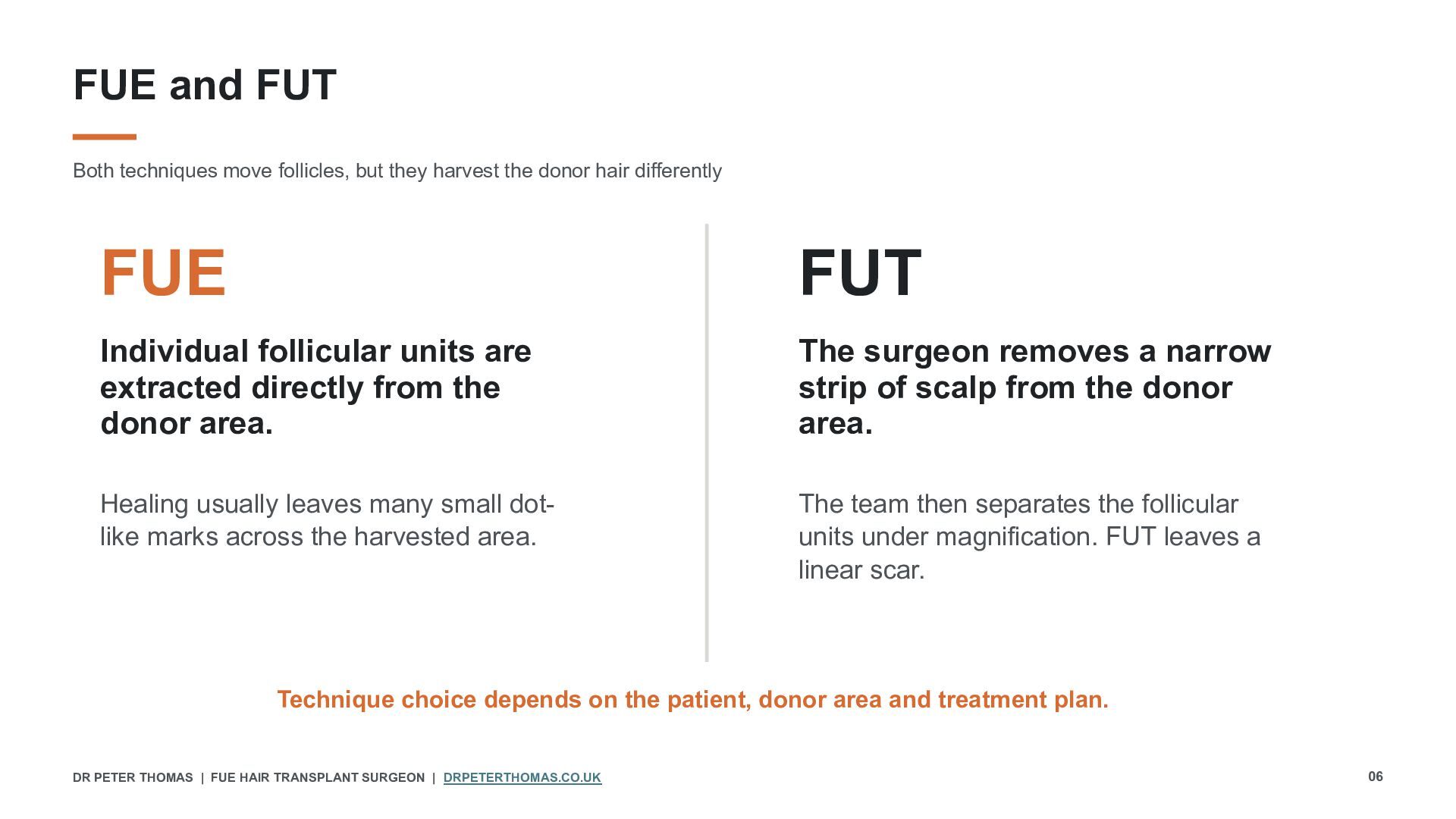
the donor hair differently FUE FUT Individual follicular units are extracted directly from the donor area. The surgeon removes a narrow strip of scalp from the donor area. Healing usually leaves many small dotlike marks across the harvested area. The team then separates the follicular units under magnification. FUT leaves a linear scar. Technique choice depends on the patient, donor area and treatment plan. DR PETER THOMAS | FUE HAIR TRANSPLANT SURGEON | DRPETERTHOMAS.CO.UK 06
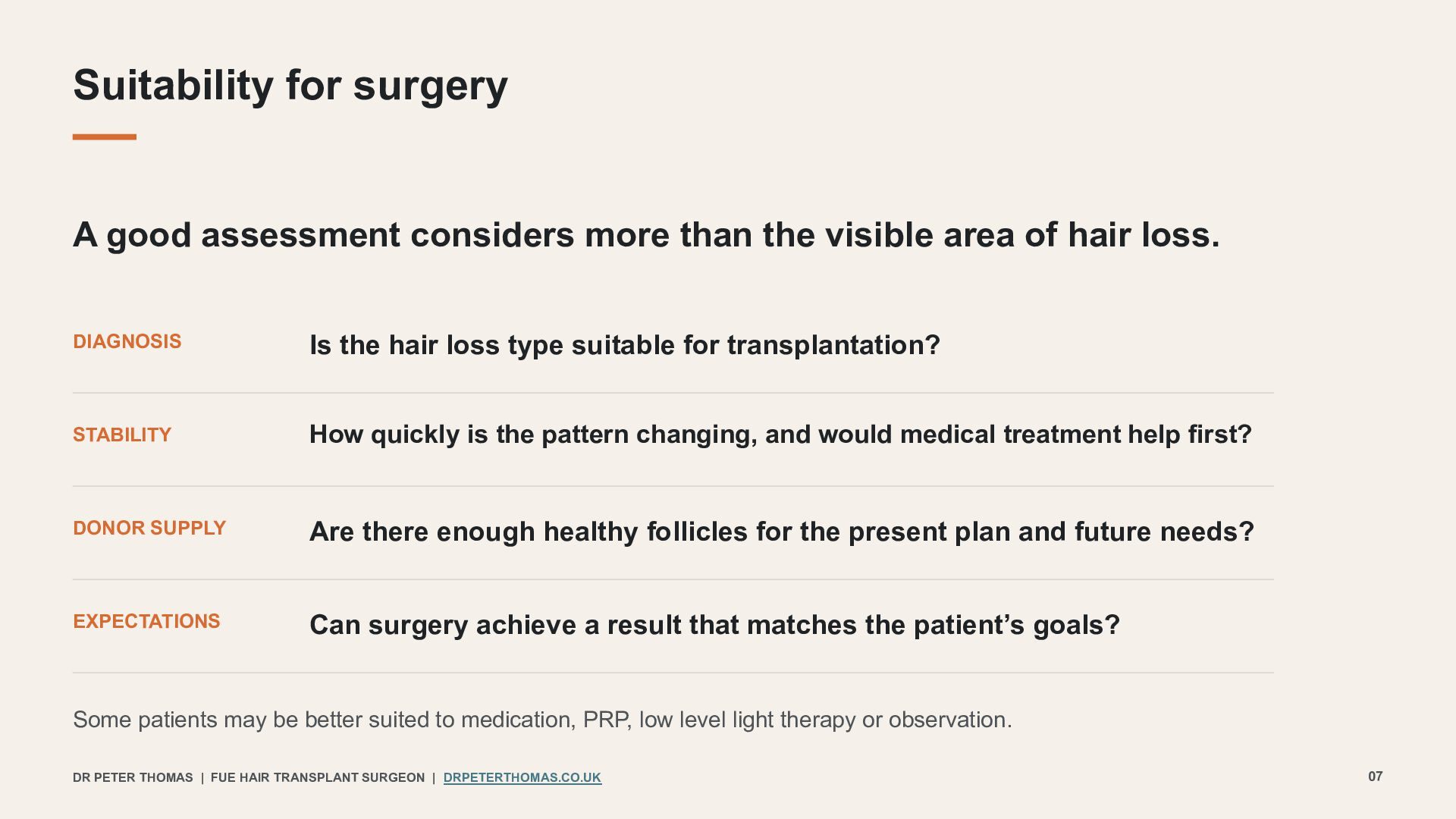
visible area of hair loss. DIAGNOSIS Is the hair loss type suitable for transplantation? STABILITY How quickly is the pattern changing, and would medical treatment help first? DONOR SUPPLY Are there enough healthy follicles for the present plan and future needs? EXPECTATIONS Can surgery achieve a result that matches the patient’s goals? Some patients may be better suited to medication, PRP, low level light therapy or observation. DR PETER THOMAS | FUE HAIR TRANSPLANT SURGEON | DRPETERTHOMAS.CO.UK 07
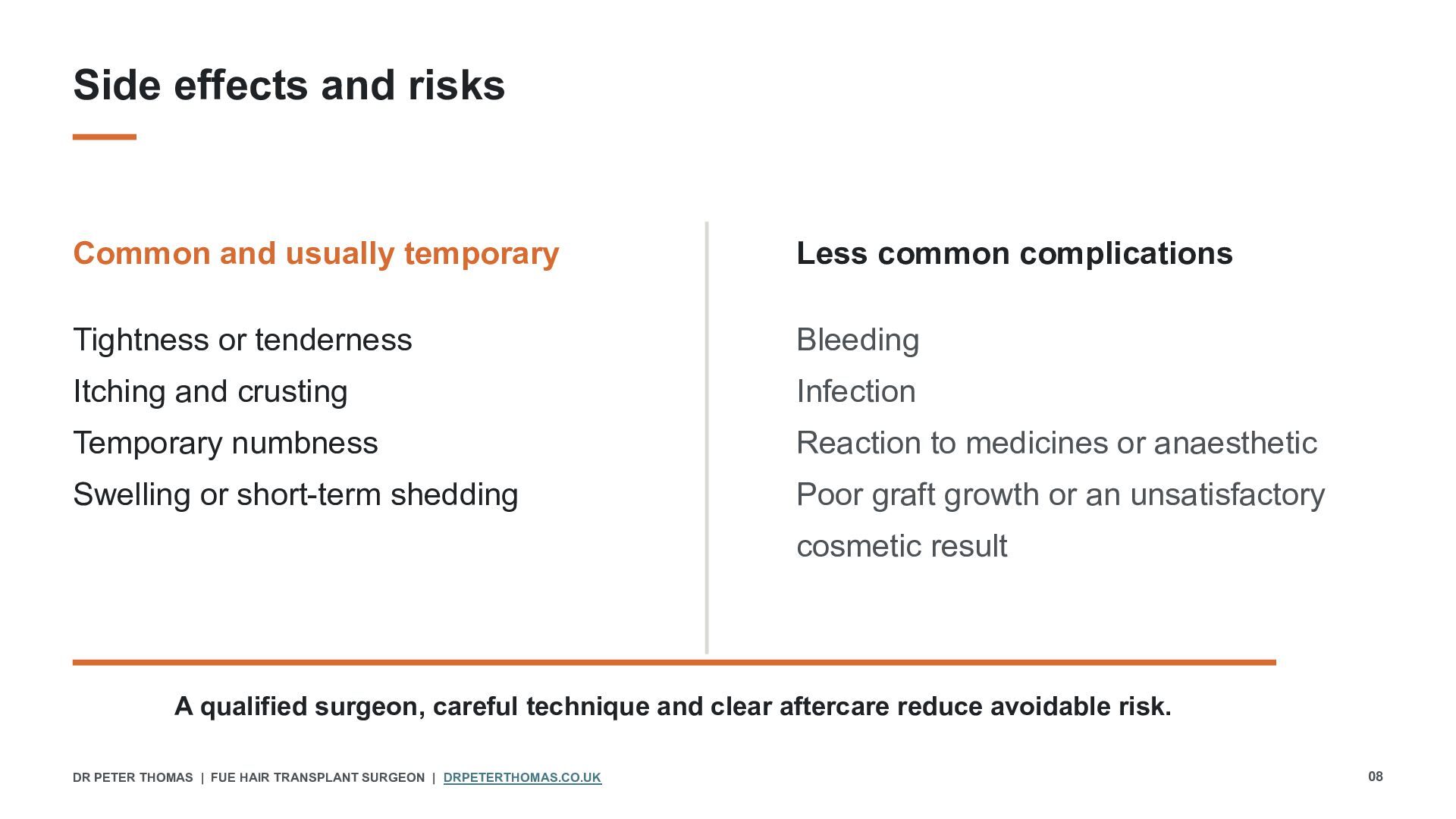
complications Tightness or tenderness Bleeding Itching and crusting Infection Temporary numbness Reaction to medicines or anaesthetic Swelling or short-term shedding Poor graft growth or an unsatisfactory cosmetic result A qualified surgeon, careful technique and clear aftercare reduce avoidable risk. DR PETER THOMAS | FUE HAIR TRANSPLANT SURGEON | DRPETERTHOMAS.CO.UK 08
crusting and sensitivity settle as the scalp heals. Transplanted follicles usually keep growing because they retain donor characteristics. Temporary shedding Transplanted hairs can shed before new growth starts. This does not necessarily mean the grafts have failed. DR PETER THOMAS | FUE HAIR TRANSPLANT SURGEON | DRPETERTHOMAS.CO.UK Existing hair can still thin with age or ongoing pattern loss. Some patients may consider further treatment later. 09
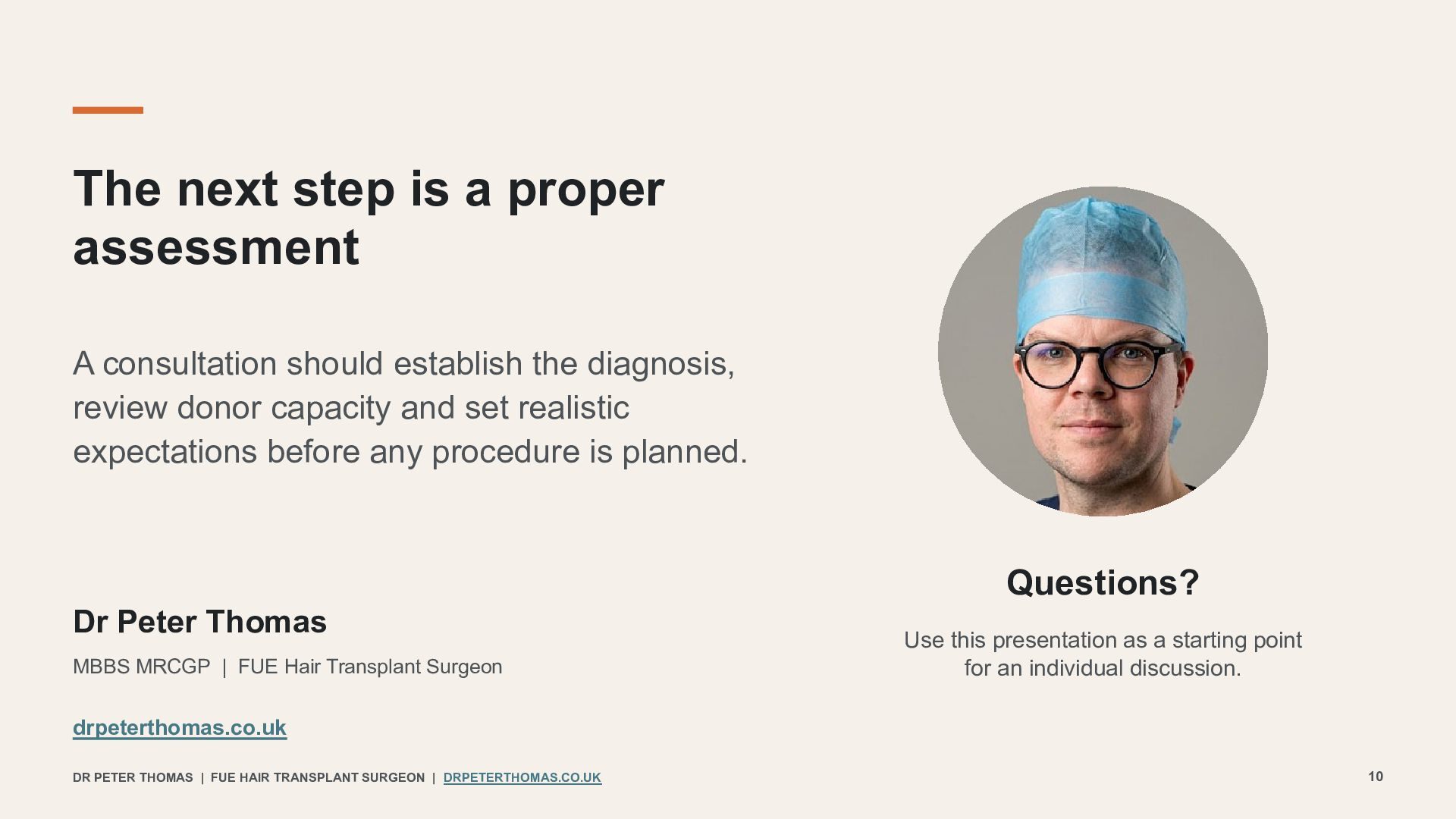
establish the diagnosis, review donor capacity and set realistic expectations before any procedure is planned. Questions? Dr Peter Thomas MBBS MRCGP | FUE Hair Transplant Surgeon Use this presentation as a starting point for an individual discussion. drpeterthomas.co.uk DR PETER THOMAS | FUE HAIR TRANSPLANT SURGEON | DRPETERTHOMAS.CO.UK 10


 michielstock
 trycycle
 tsoh
 hiranabe
 masakiokuda
 tagtag
 hf149
 codingconduct
 aleyda
 soudai
 inesmontani
 maggiecrowley
 marktimemedia
 rasmusluckow
 oripsolob
 ryanjones
 retrage