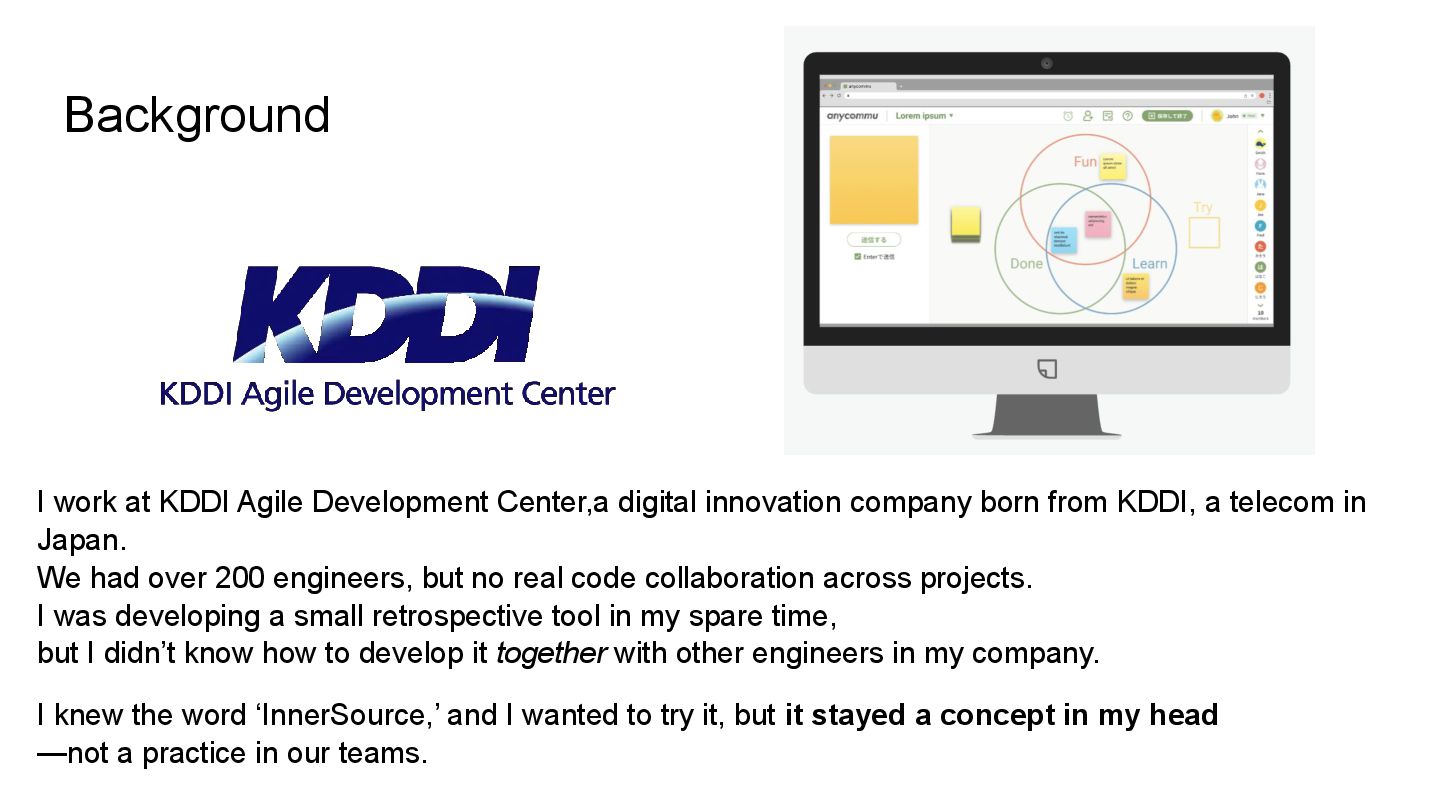
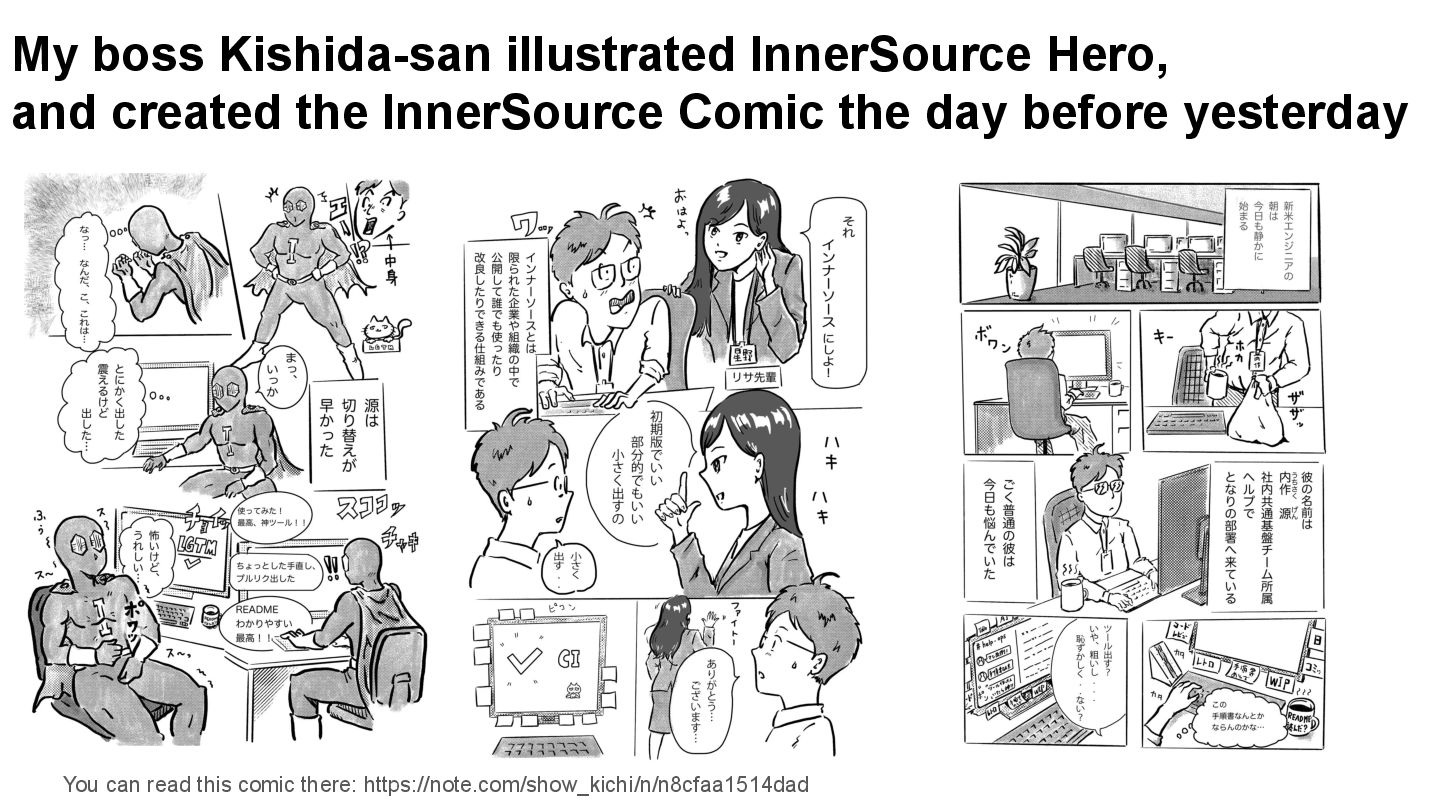
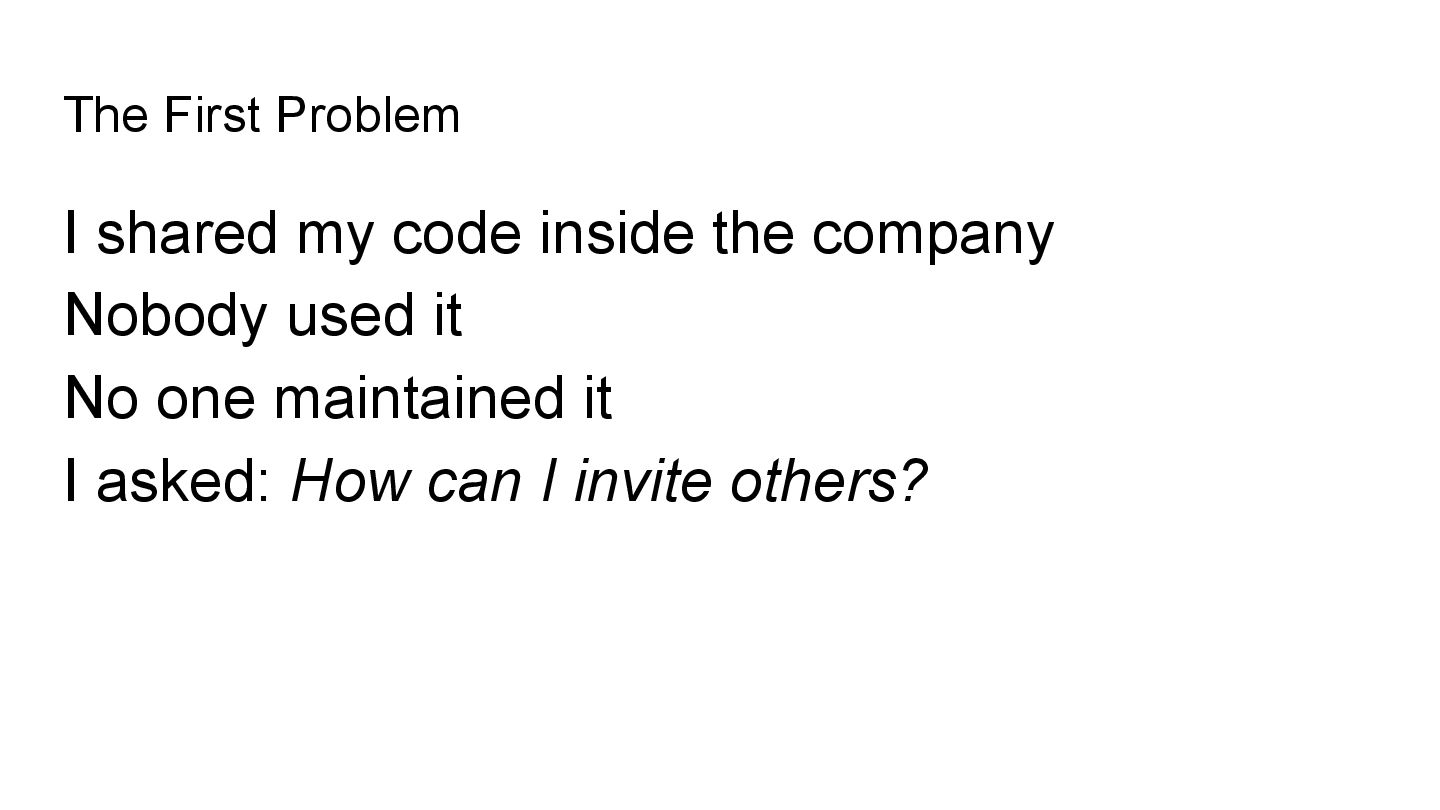
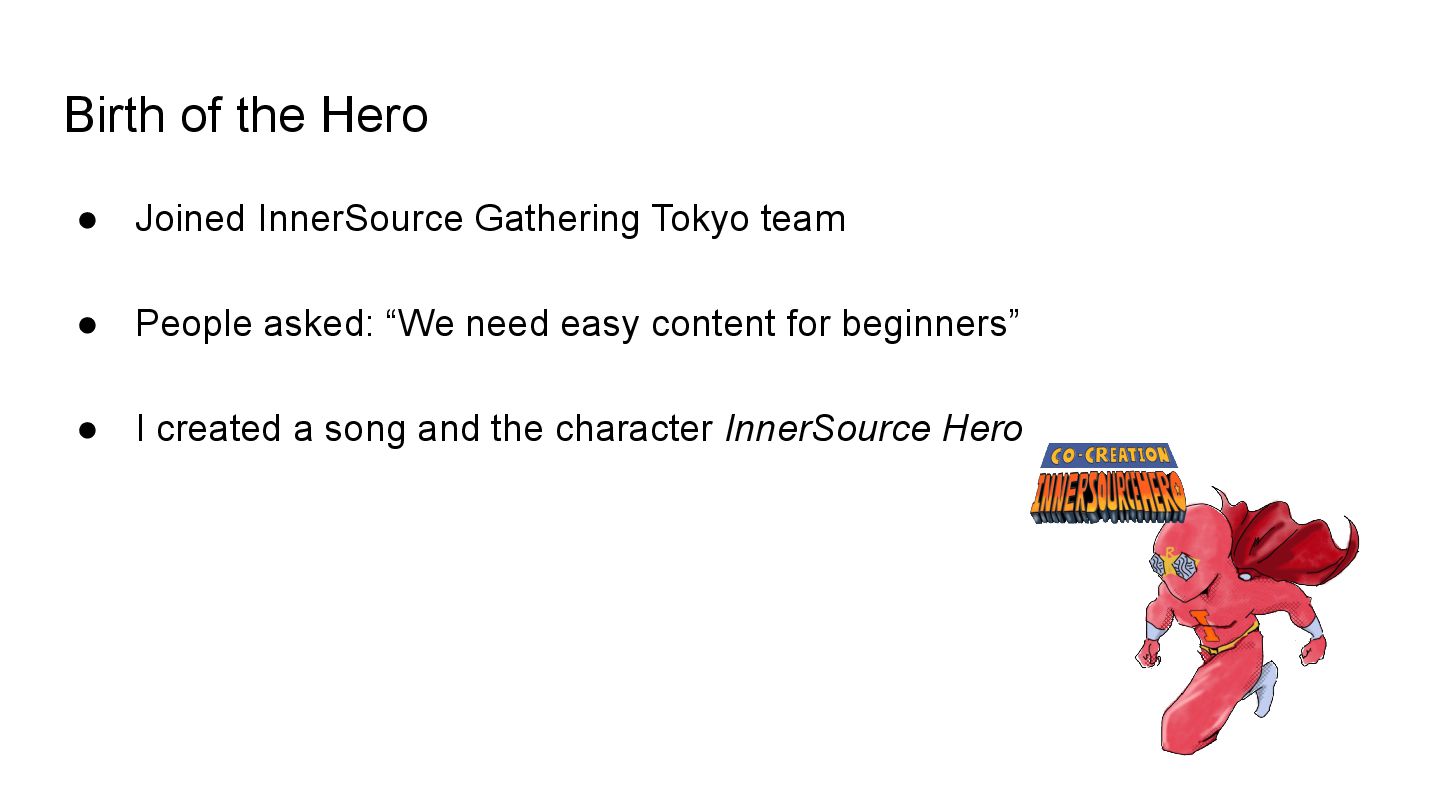
company born from KDDI, a telecom in Japan. We had over 200 engineers, but no real code collaboration across projects. I was developing a small retrospective tool in my spare time, but I didn’t know how to develop it together with other engineers in my company. I knew the word ‘InnerSource,’ and I wanted to try it, but it stayed a concept in my head —not a practice in our teams.
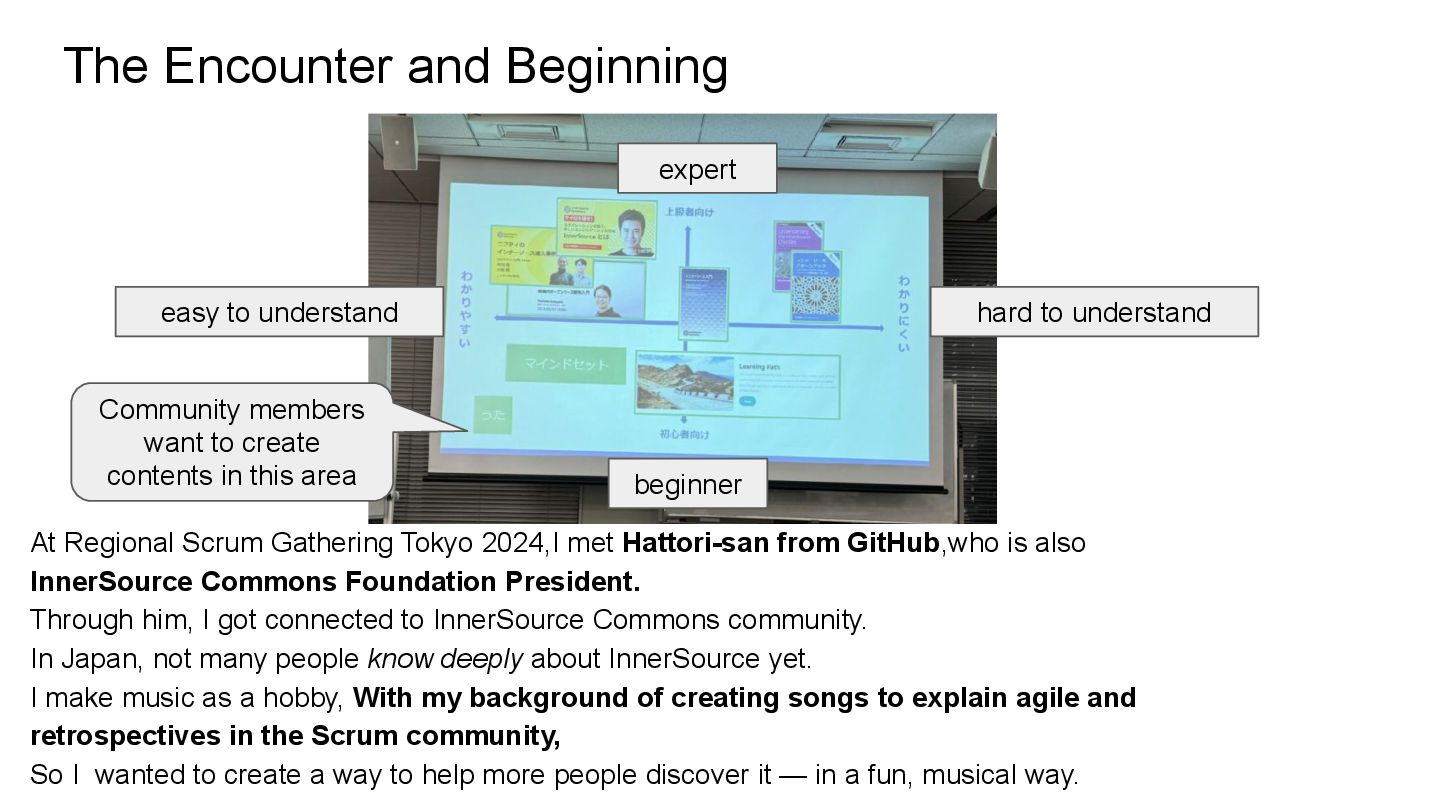
met Hattori-san from GitHub,who is also InnerSource Commons Foundation President. Through him, I got connected to InnerSource Commons community. In Japan, not many people know deeply about InnerSource yet. I make music as a hobby, With my background of creating songs to explain agile and retrospectives in the Scrum community, So I wanted to create a way to help more people discover it — in a fun, musical way. beginner expert hard to understand easy to understand Community members want to create contents in this area
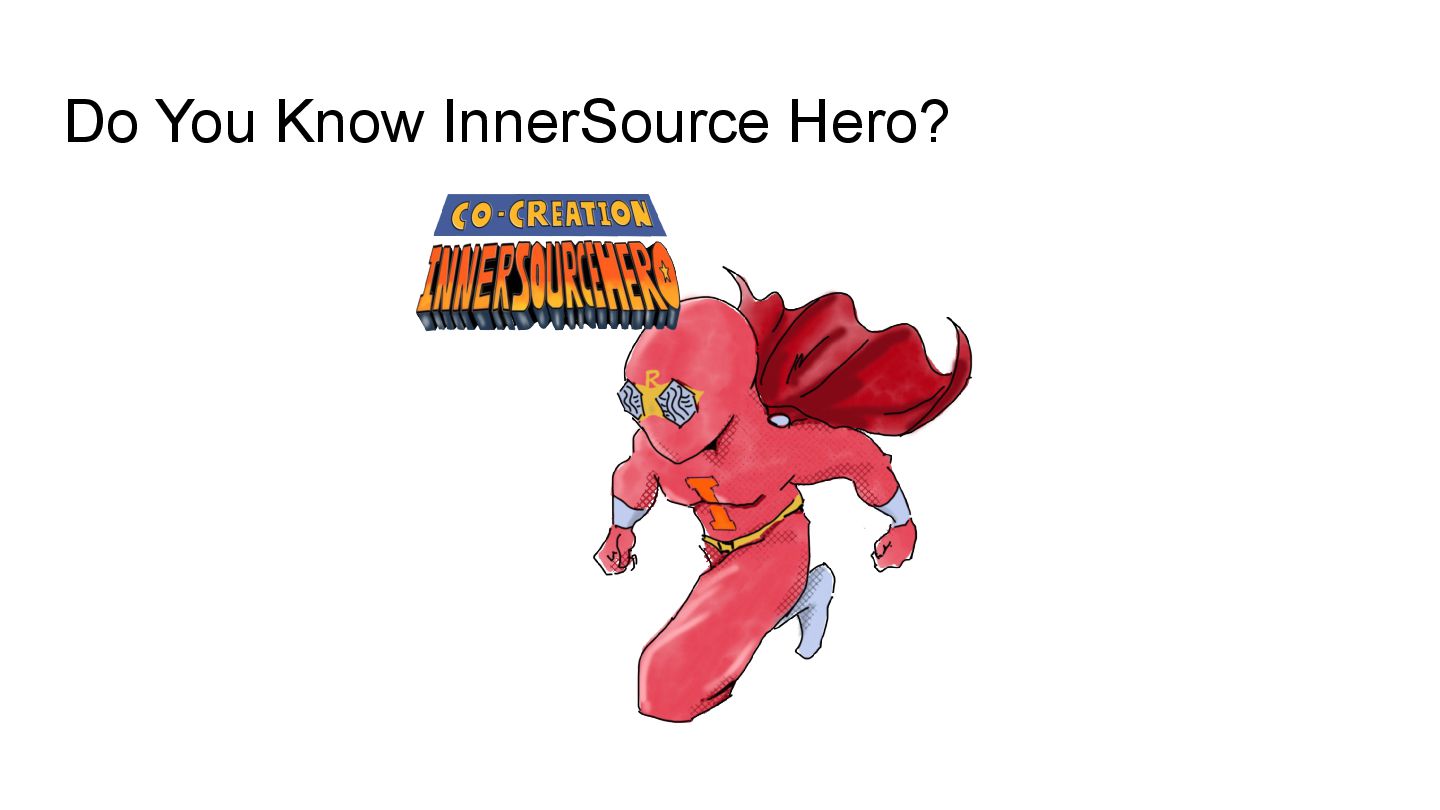
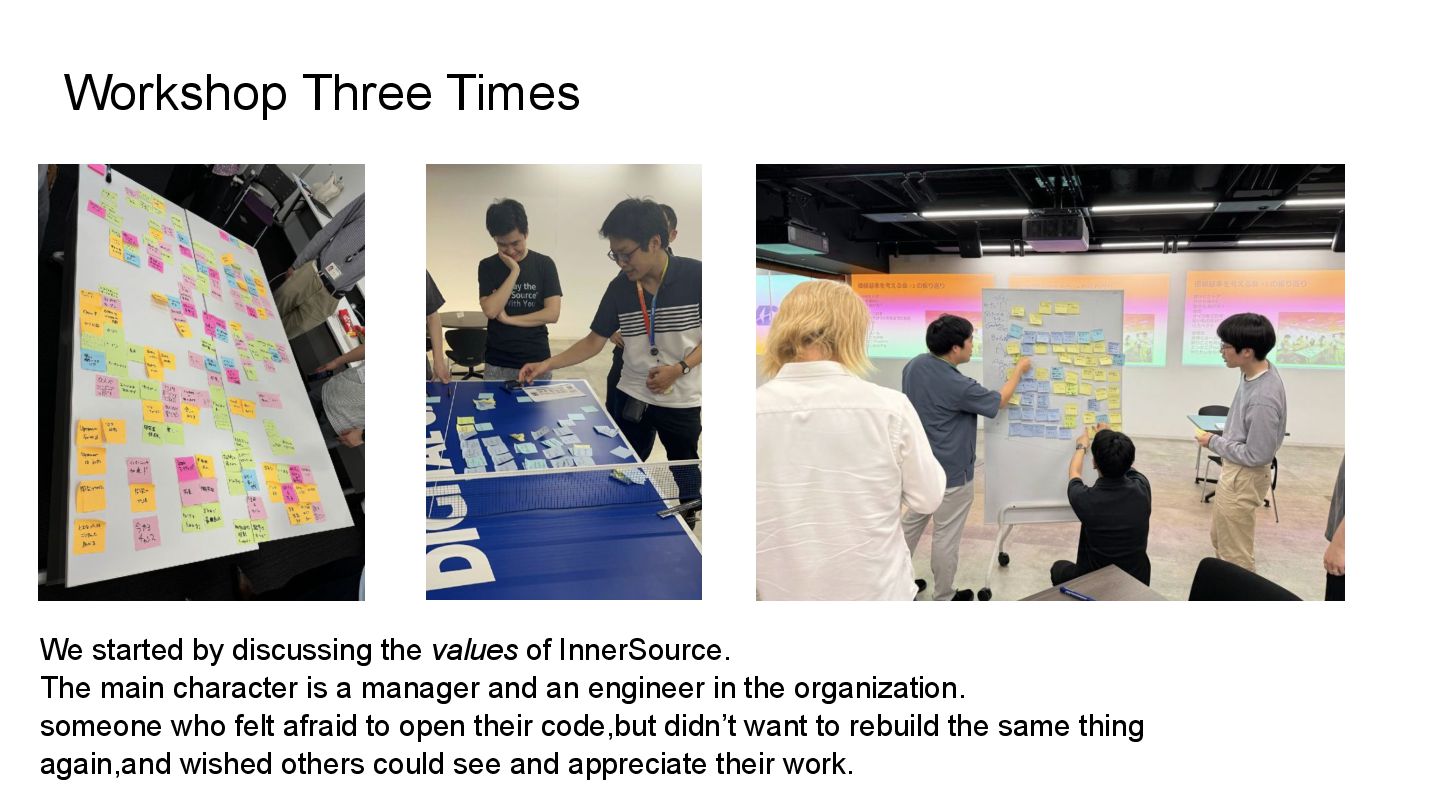
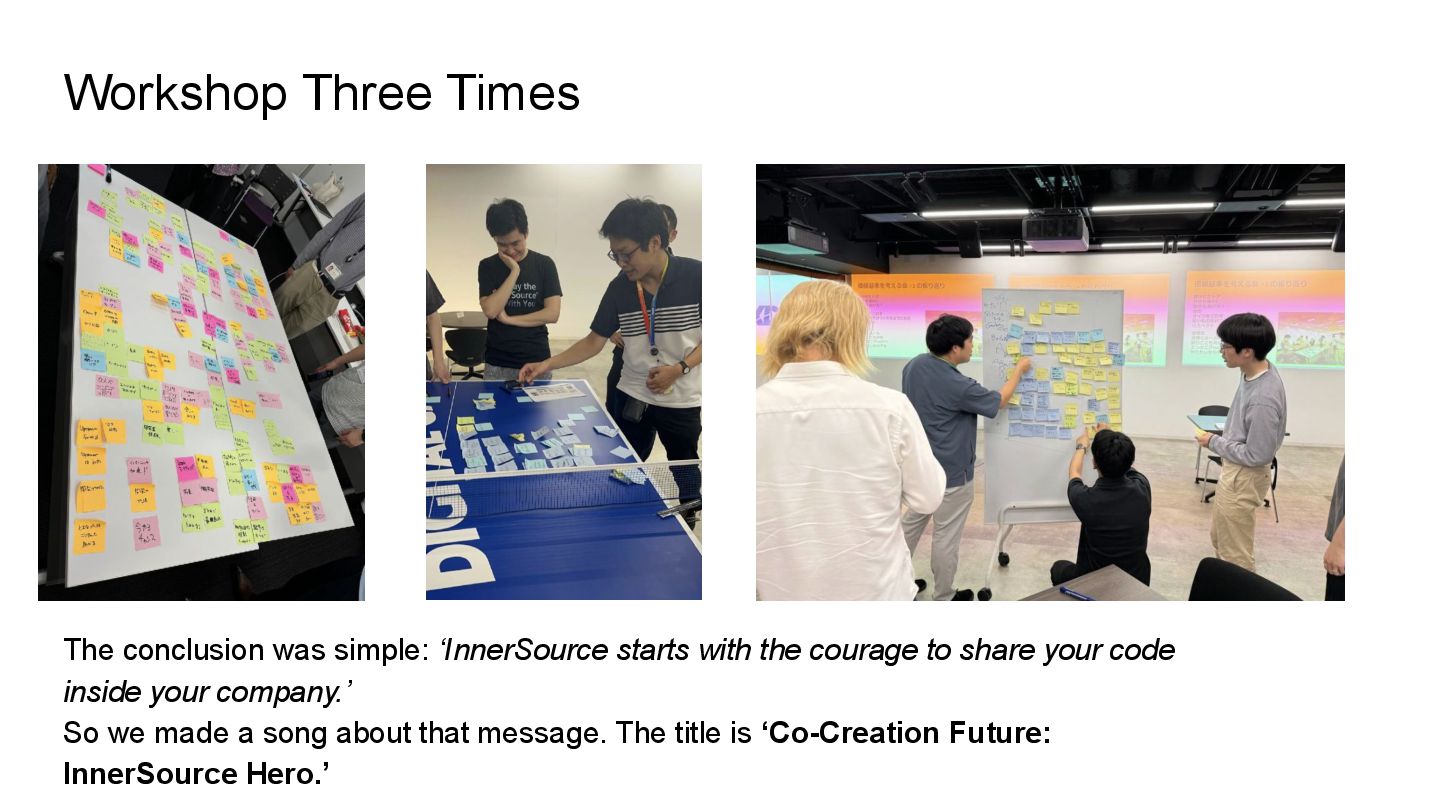
InnerSource. The main character is a manager and an engineer in the organization. someone who felt afraid to open their code,but didn’t want to rebuild the same thing again,and wished others could see and appreciate their work.
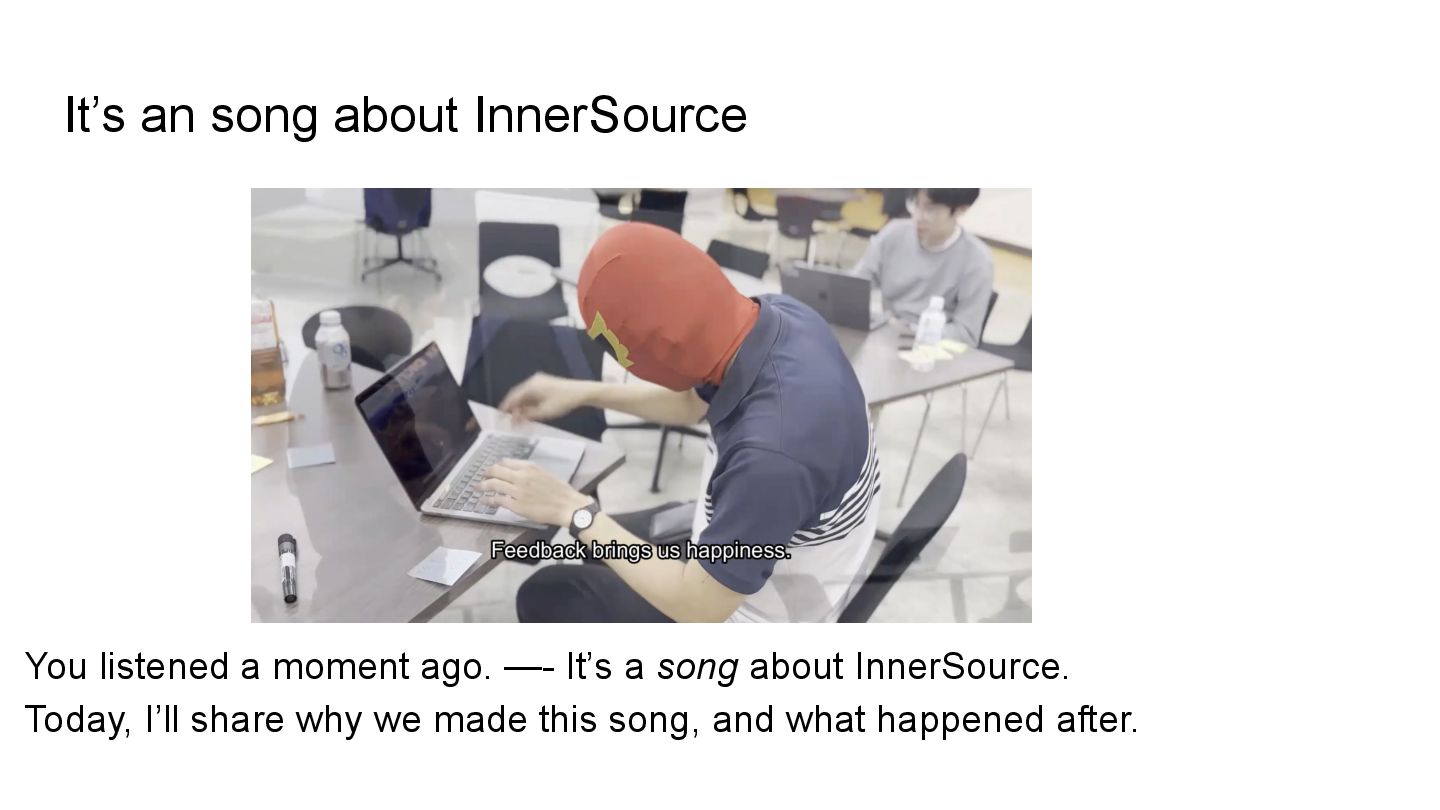
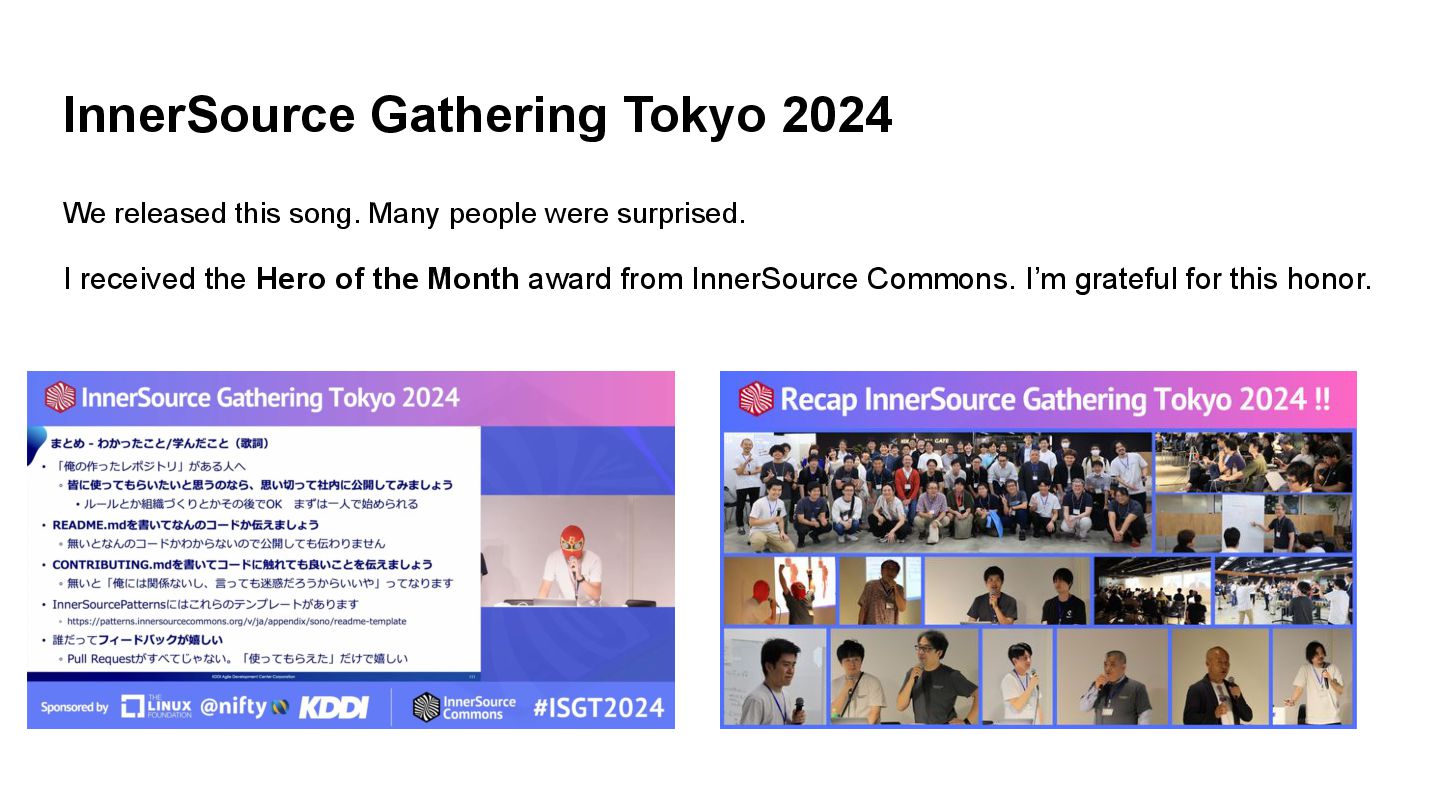
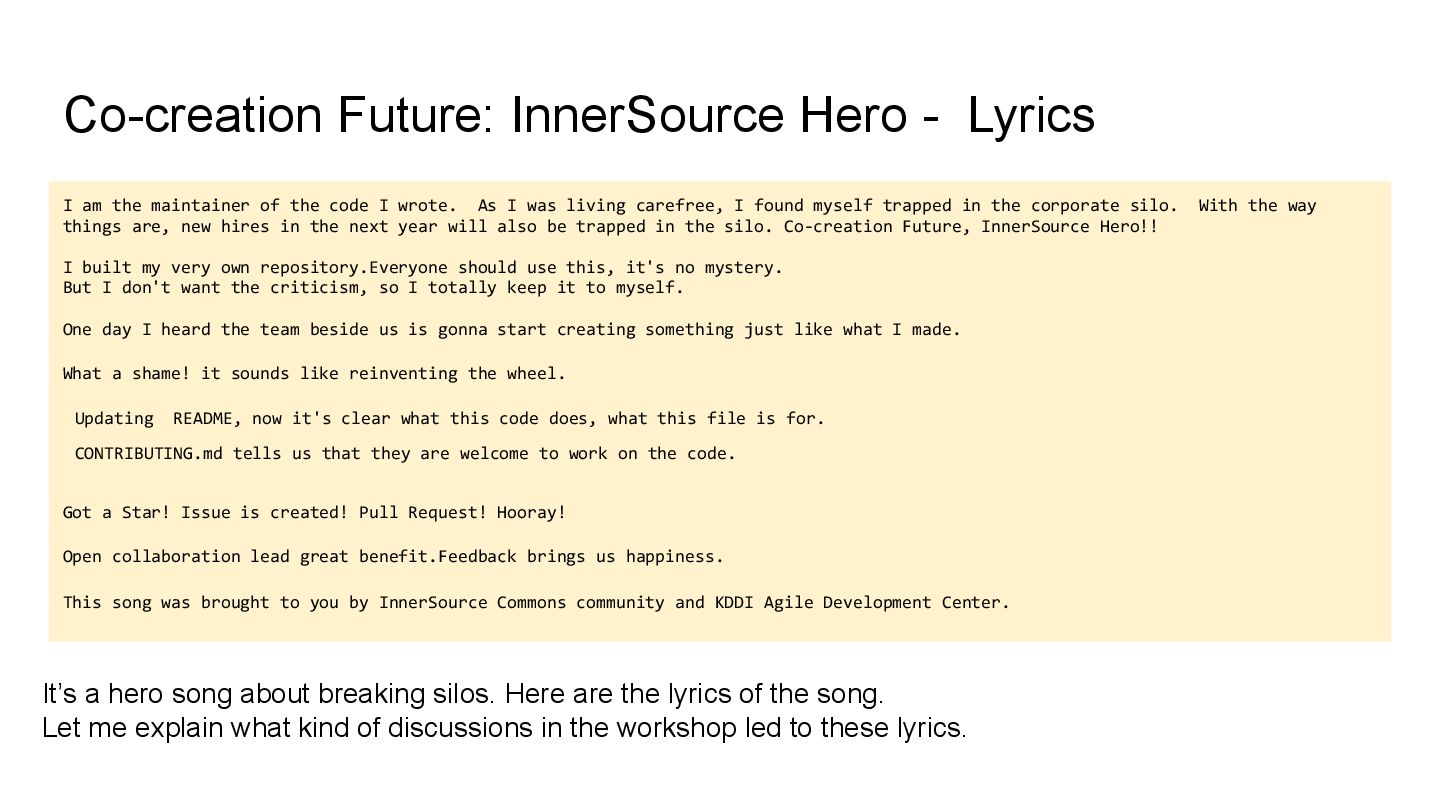
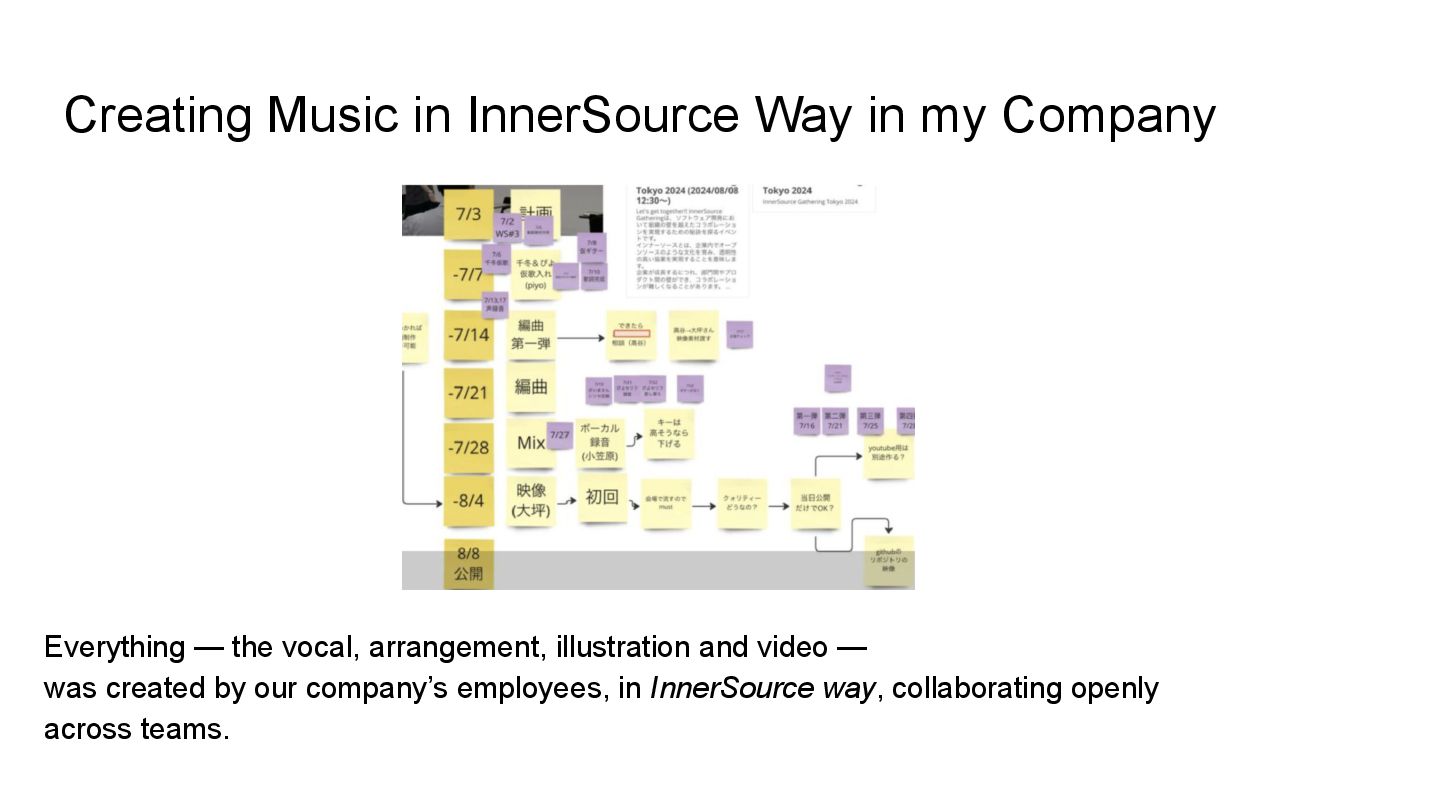
of the code I wrote. As I was living carefree, I found myself trapped in the corporate silo. With the way things are, new hires in the next year will also be trapped in the silo. Co-creation Future, InnerSource Hero!! I built my very own repository.Everyone should use this, it's no mystery. But I don't want the criticism, so I totally keep it to myself. One day I heard the team beside us is gonna start creating something just like what I made. What a shame! it sounds like reinventing the wheel. Updating README, now it's clear what this code does, what this file is for. CONTRIBUTING.md tells us that they are welcome to work on the code. Got a Star! Issue is created! Pull Request! Hooray! Open collaboration lead great benefit.Feedback brings us happiness. This song was brought to you by InnerSource Commons community and KDDI Agile Development Center. It’s a hero song about breaking silos. Here are the lyrics of the song. Let me explain what kind of discussions in the workshop led to these lyrics.
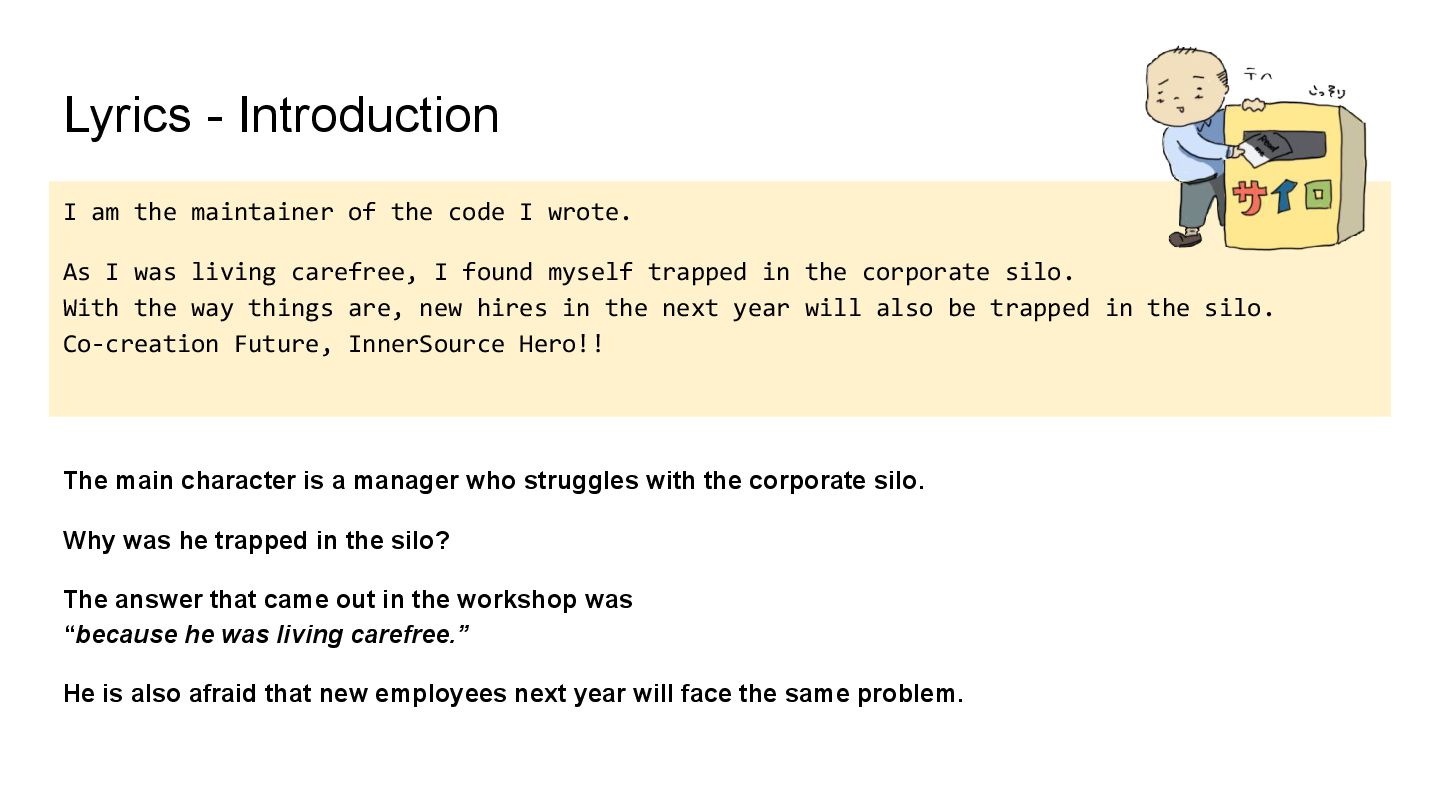
I wrote. As I was living carefree, I found myself trapped in the corporate silo. With the way things are, new hires in the next year will also be trapped in the silo. Co-creation Future, InnerSource Hero!! The main character is a manager who struggles with the corporate silo. Why was he trapped in the silo? The answer that came out in the workshop was “because he was living carefree.” He is also afraid that new employees next year will face the same problem.
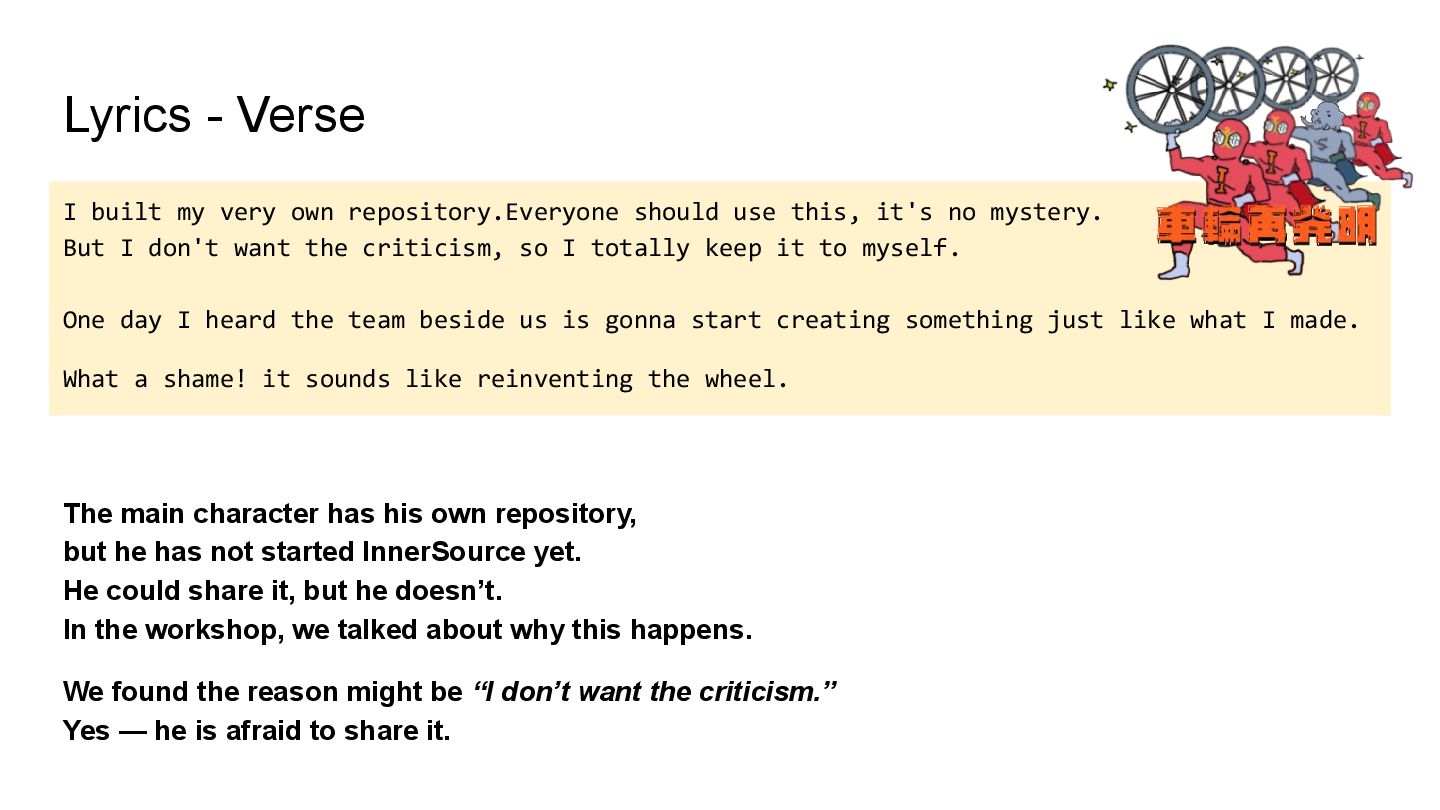
use this, it's no mystery. But I don't want the criticism, so I totally keep it to myself. One day I heard the team beside us is gonna start creating something just like what I made. What a shame! it sounds like reinventing the wheel. The main character has his own repository, but he has not started InnerSource yet. He could share it, but he doesn’t. In the workshop, we talked about why this happens. We found the reason might be “I don’t want the criticism.” Yes — he is afraid to share it.
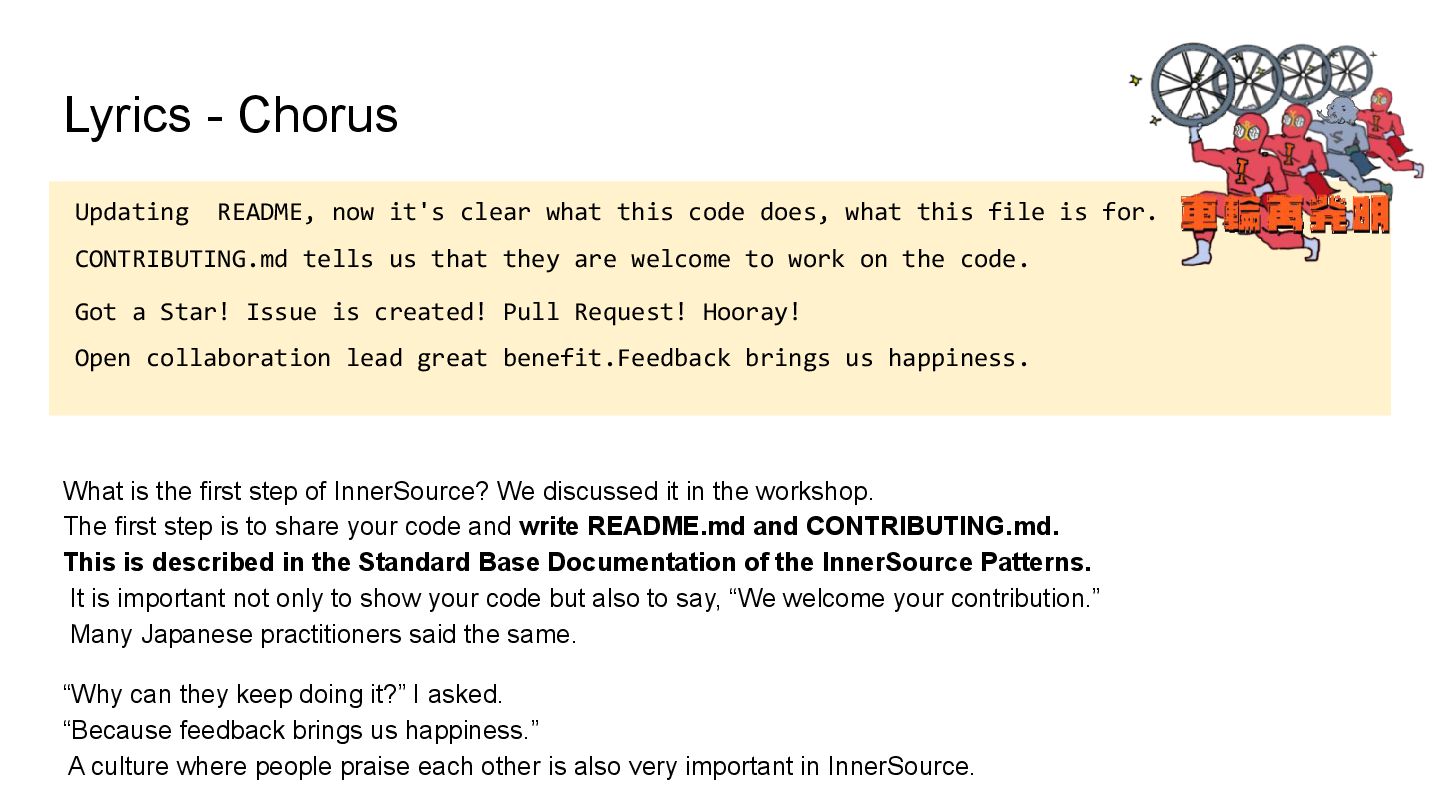
code does, what this file is for. CONTRIBUTING.md tells us that they are welcome to work on the code. Got a Star! Issue is created! Pull Request! Hooray! Open collaboration lead great benefit.Feedback brings us happiness. What is the first step of InnerSource? We discussed it in the workshop. The first step is to share your code and write README.md and CONTRIBUTING.md. This is described in the Standard Base Documentation of the InnerSource Patterns. It is important not only to show your code but also to say, “We welcome your contribution.” Many Japanese practitioners said the same. “Why can they keep doing it?” I asked. “Because feedback brings us happiness.” A culture where people praise each other is also very important in InnerSource.
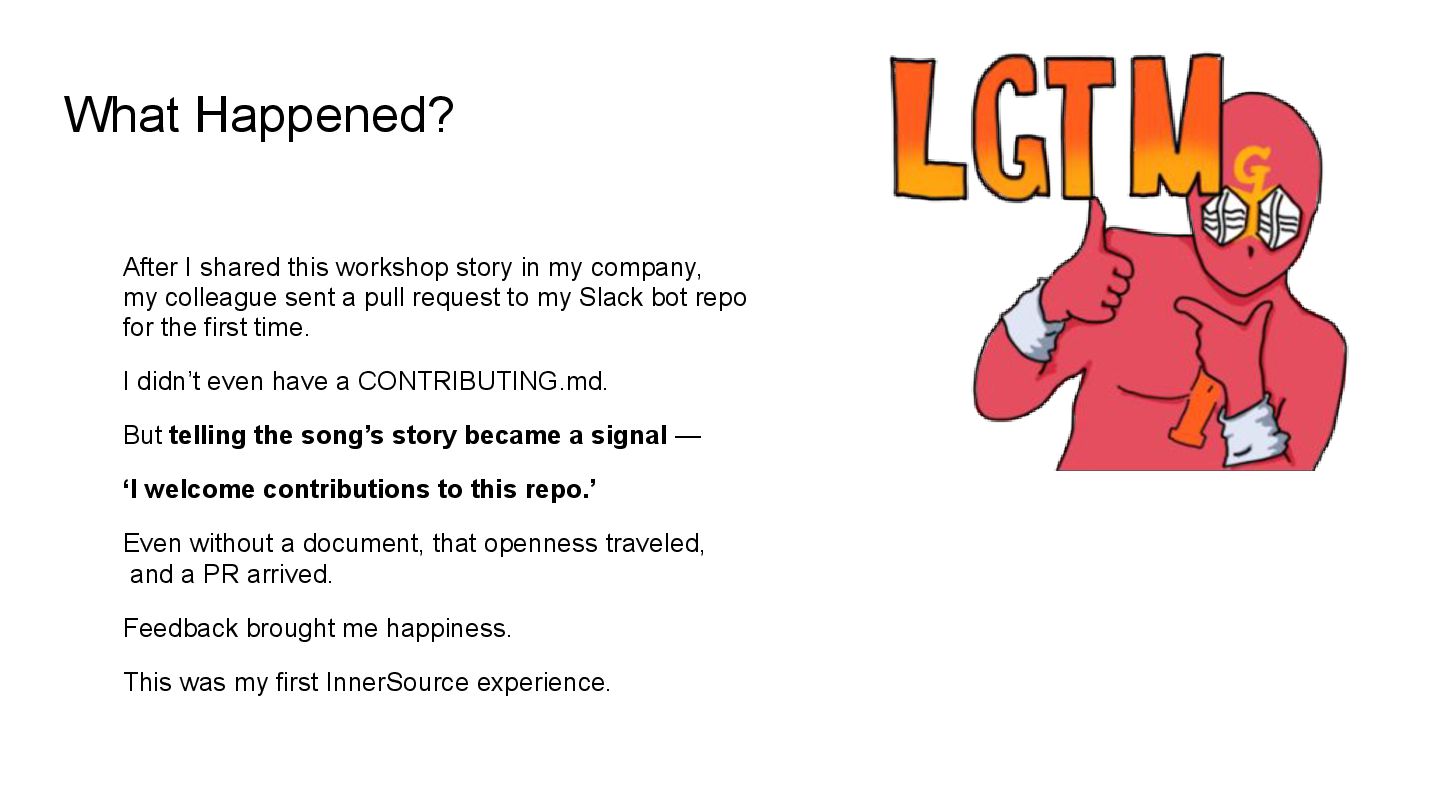
company, my colleague sent a pull request to my Slack bot repo for the first time. I didn’t even have a CONTRIBUTING.md. But telling the song’s story became a signal — ‘I welcome contributions to this repo.’ Even without a document, that openness traveled, and a PR arrived. Feedback brought me happiness. This was my first InnerSource experience.
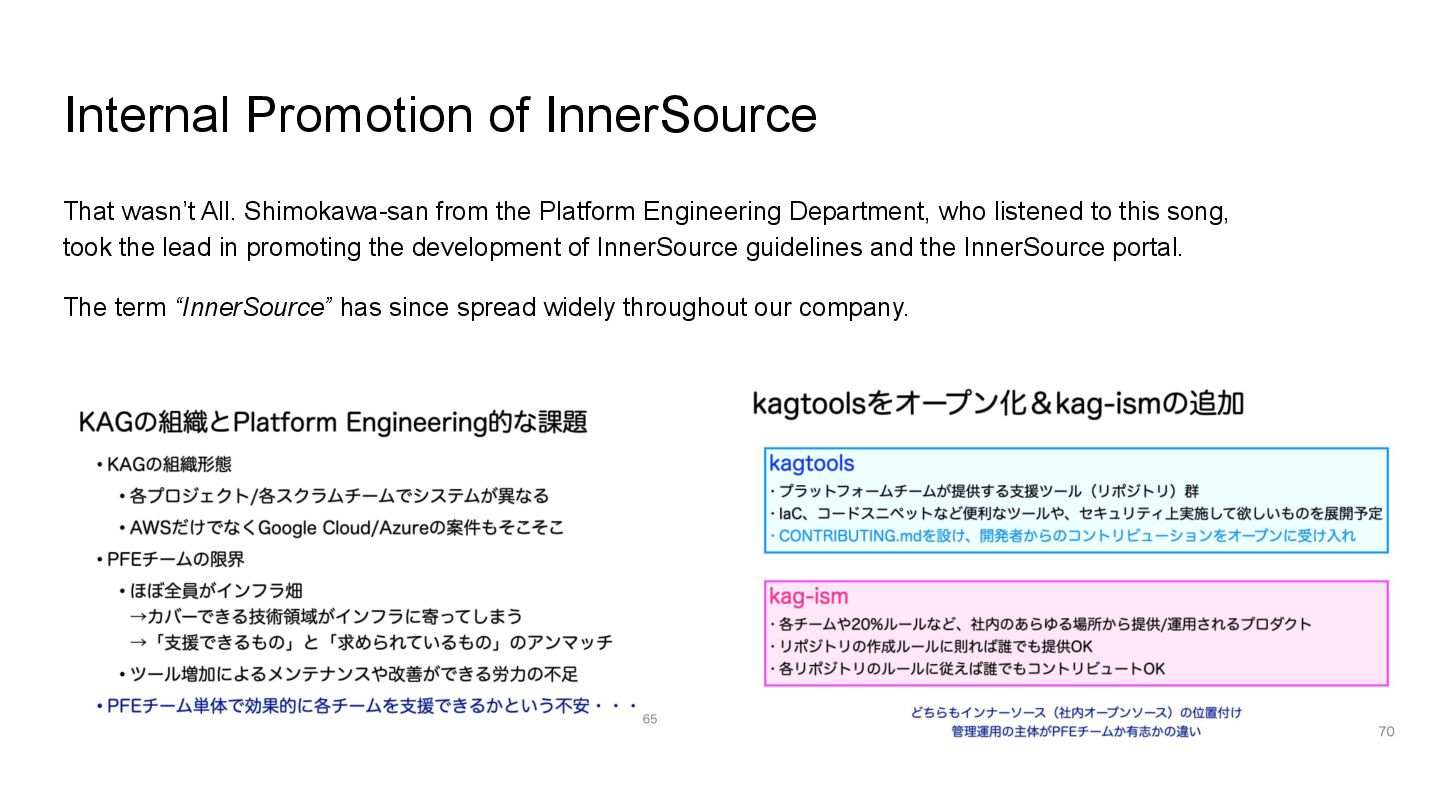
Platform Engineering Department, who listened to this song, took the lead in promoting the development of InnerSource guidelines and the InnerSource portal. The term “InnerSource” has since spread widely throughout our company.
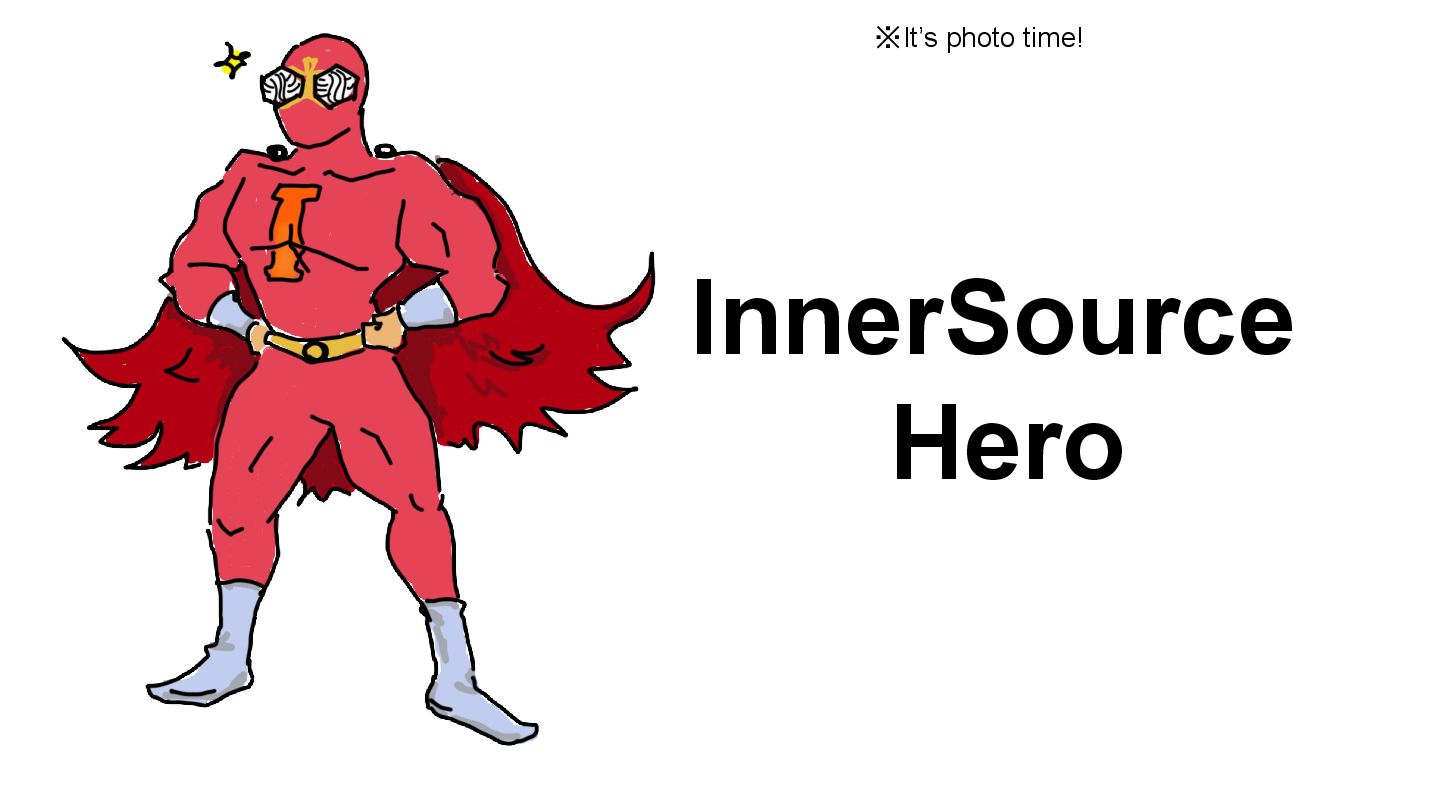
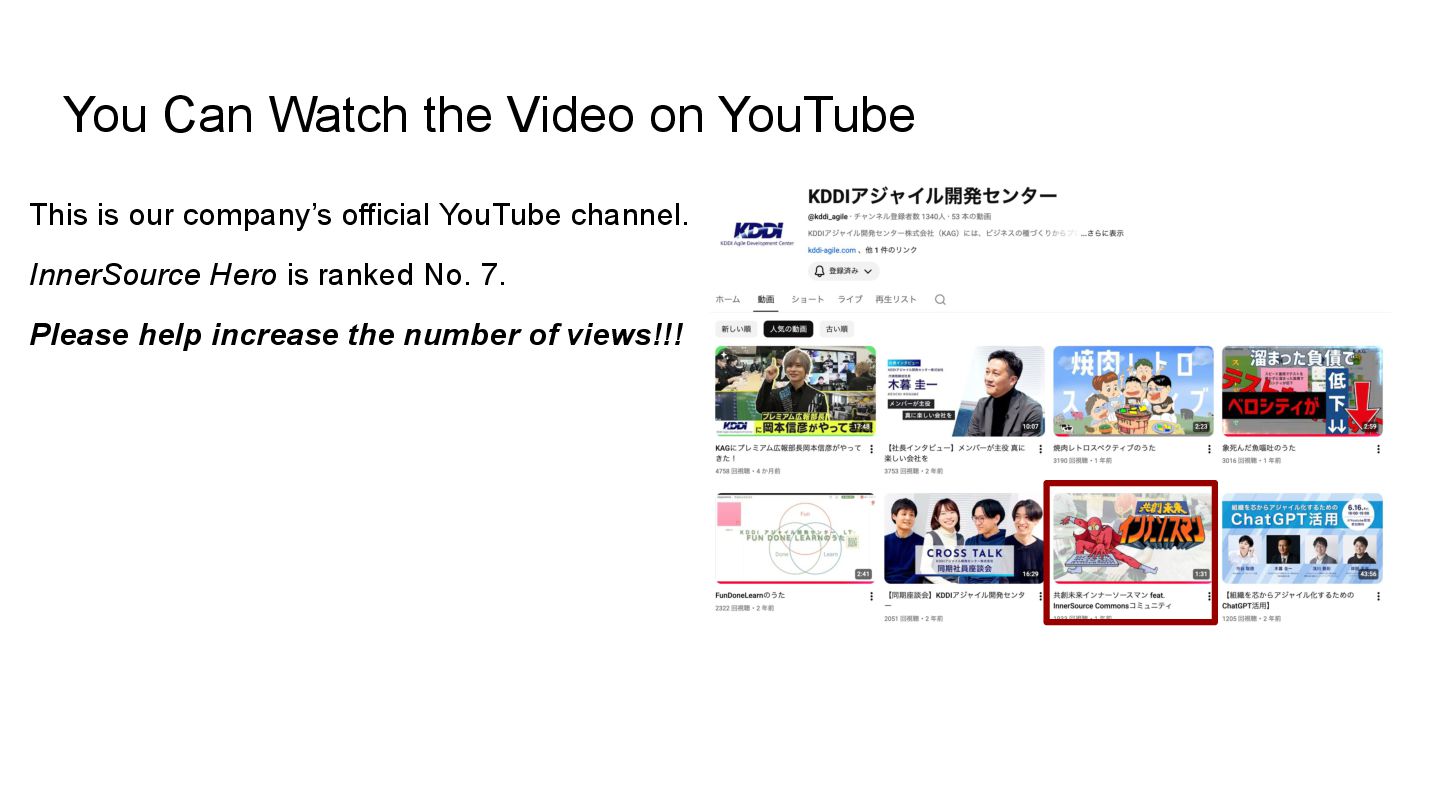
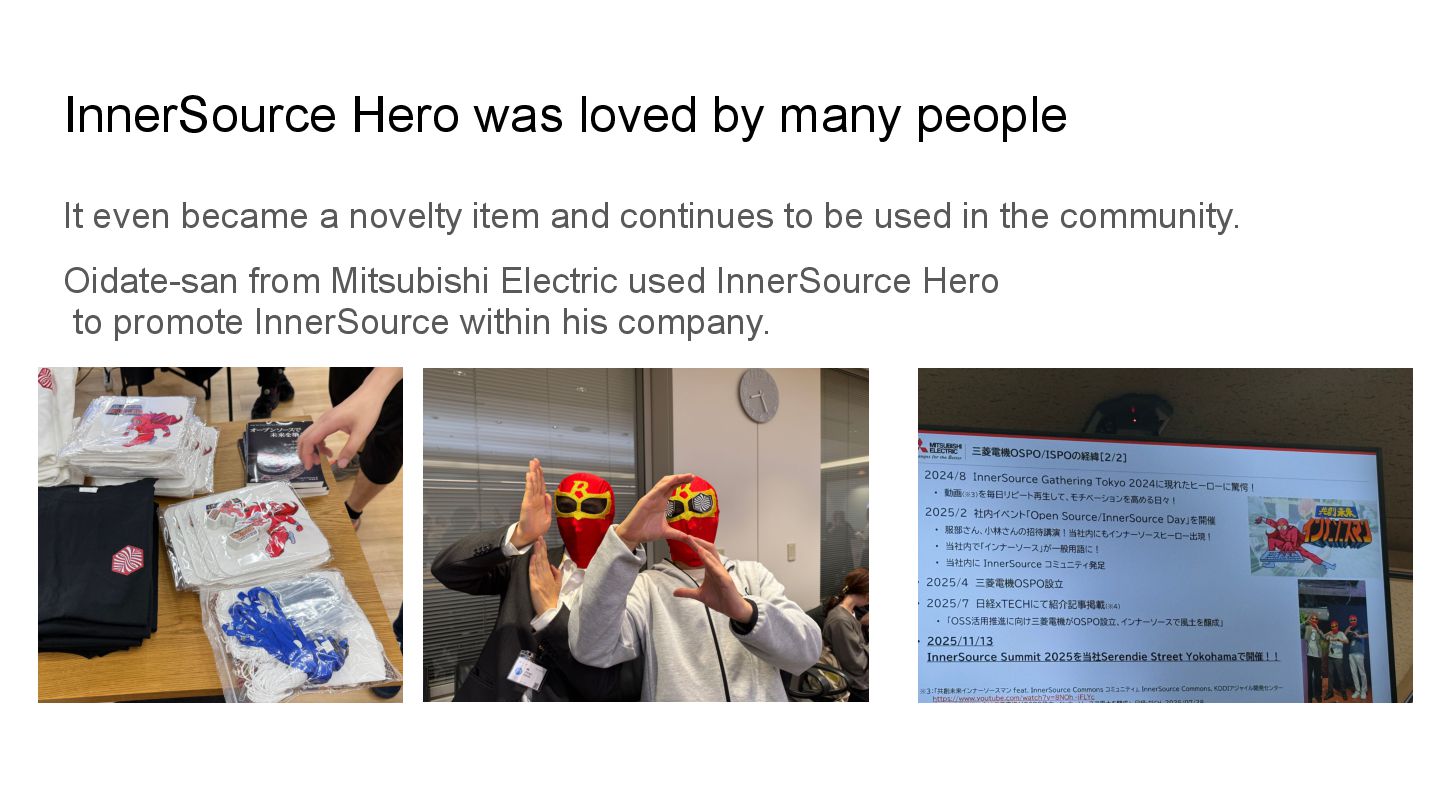
a novelty item and continues to be used in the community. Oidate-san from Mitsubishi Electric used InnerSource Hero to promote InnerSource within his company.
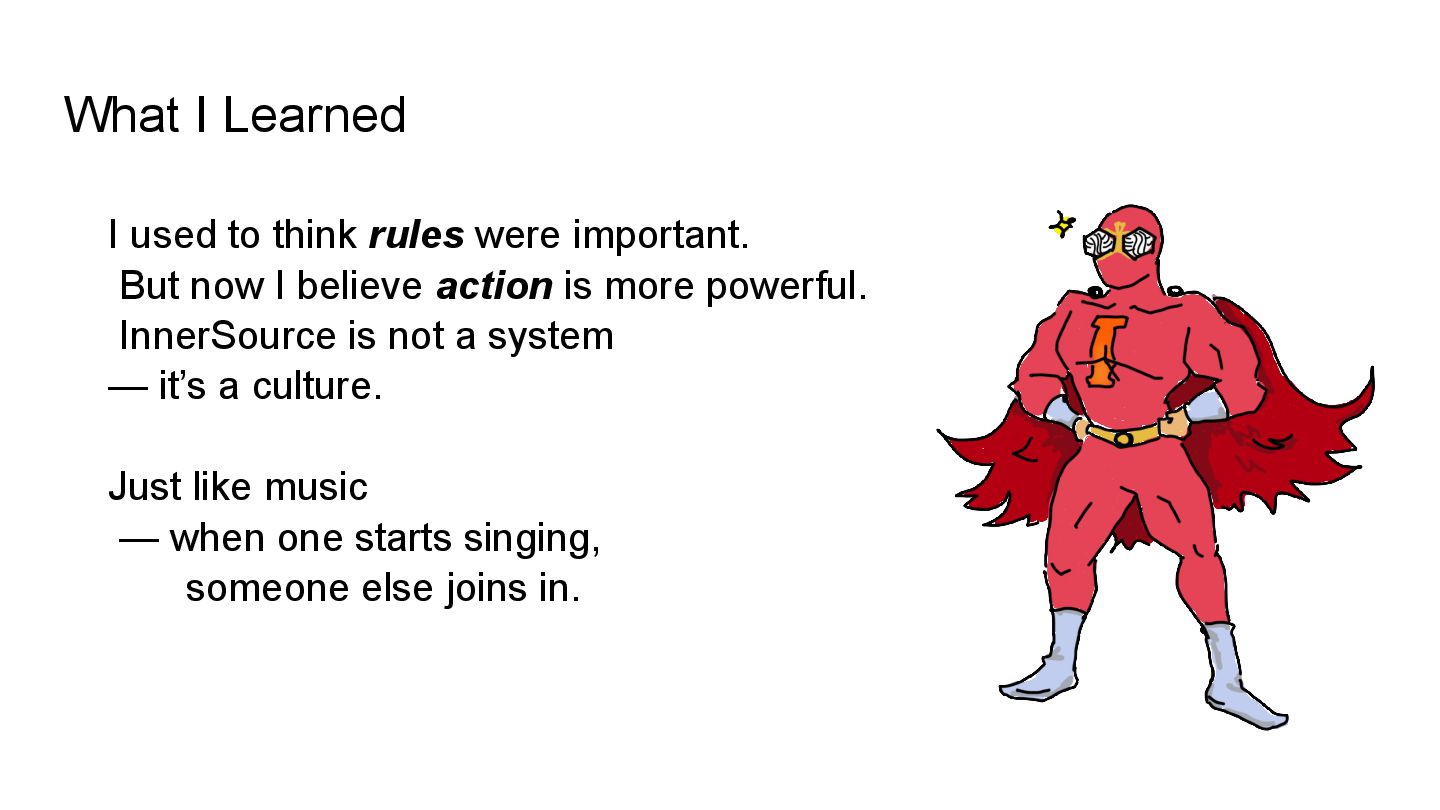
But now I believe action is more powerful. InnerSource is not a system — it’s a culture. Just like music — when one starts singing, someone else joins in.
in Japan. InnerSource Commons,JAWS(AWS User Group),CEDEC 2024, etc. When you share your code with courage — remember — You are also an InnerSource Hero.


 piyonakajima
 nttcom
 baseballyama
 makocchi
 kizawa2020
 glaforge
 ludicmind
 moznion
.png) codatum
codatum
 fespinoza
 ivry_presentationmaterials
 shogo4131
 livesense
 lara
lara
 csswizardry
 jct
jct
 ivargrimstad
 honnibal
 kneath
 chrislema
 michaelherold
 tanoku
 cromwellryan
 frankvandijk