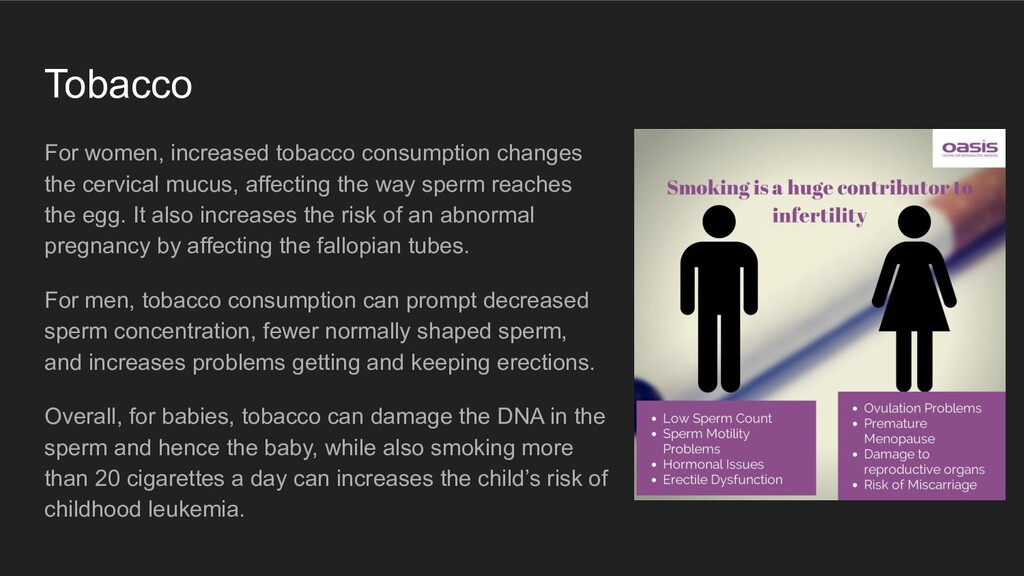
affecting the way sperm reaches the egg. It also increases the risk of an abnormal pregnancy by affecting the fallopian tubes. For men, tobacco consumption can prompt decreased sperm concentration, fewer normally shaped sperm, and increases problems getting and keeping erections. Overall, for babies, tobacco can damage the DNA in the sperm and hence the baby, while also smoking more than 20 cigarettes a day can increases the child’s risk of childhood leukemia.
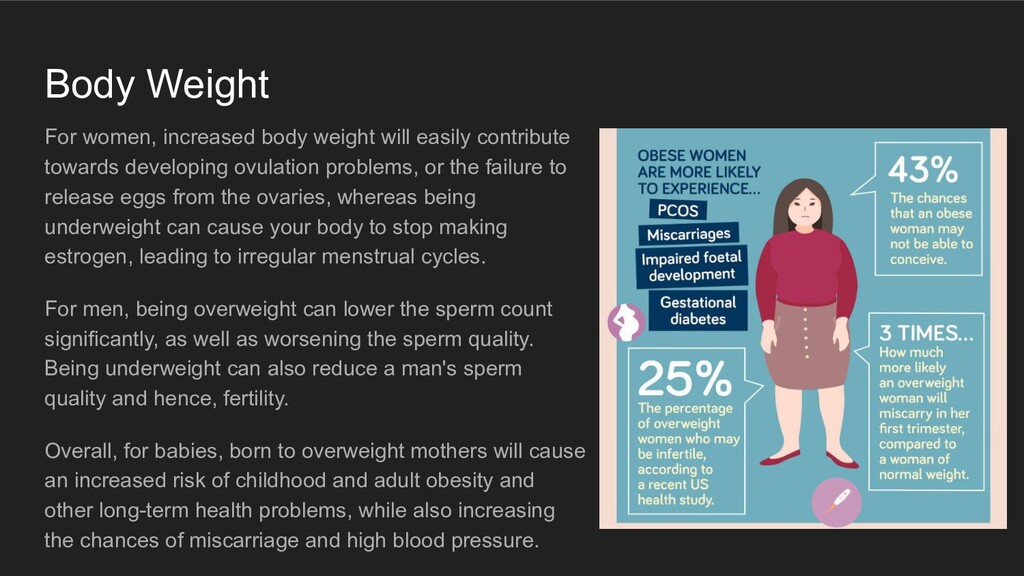
towards developing ovulation problems, or the failure to release eggs from the ovaries, whereas being underweight can cause your body to stop making estrogen, leading to irregular menstrual cycles. For men, being overweight can lower the sperm count significantly, as well as worsening the sperm quality. Being underweight can also reduce a man's sperm quality and hence, fertility. Overall, for babies, born to overweight mothers will cause an increased risk of childhood and adult obesity and other long-term health problems, while also increasing the chances of miscarriage and high blood pressure.
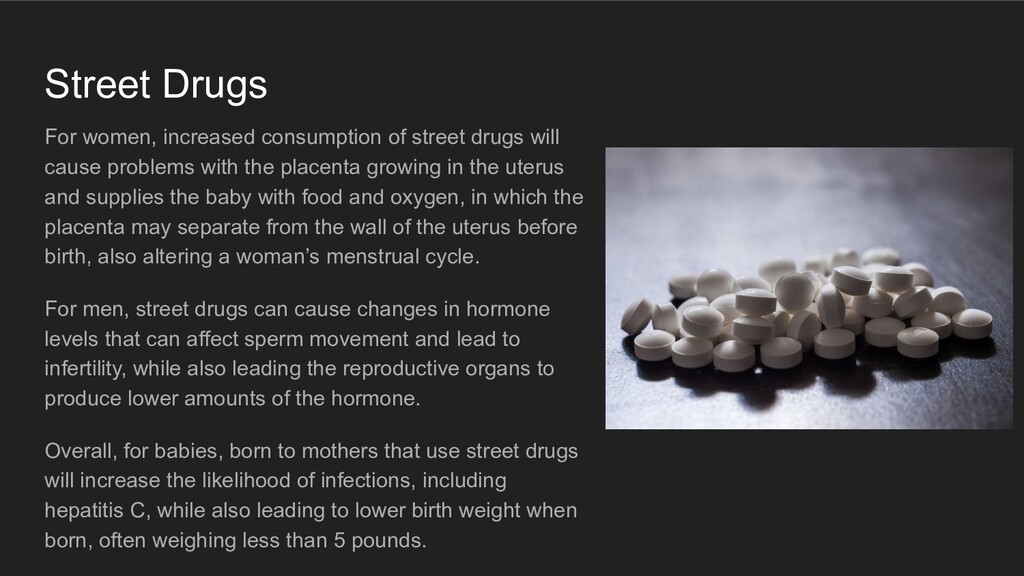
cause problems with the placenta growing in the uterus and supplies the baby with food and oxygen, in which the placenta may separate from the wall of the uterus before birth, also altering a woman’s menstrual cycle. For men, street drugs can cause changes in hormone levels that can affect sperm movement and lead to infertility, while also leading the reproductive organs to produce lower amounts of the hormone. Overall, for babies, born to mothers that use street drugs will increase the likelihood of infections, including hepatitis C, while also leading to lower birth weight when born, often weighing less than 5 pounds.
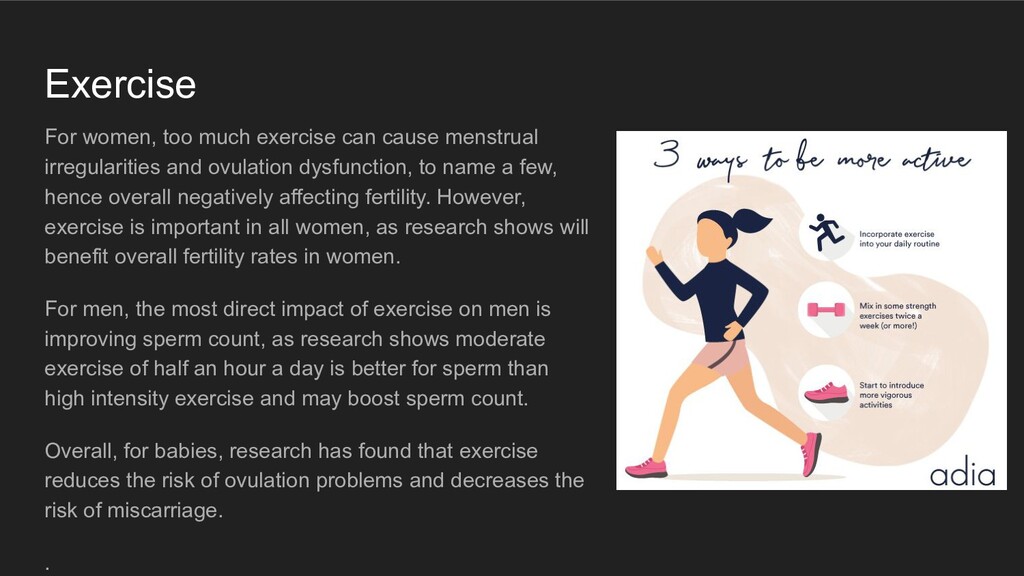
and ovulation dysfunction, to name a few, hence overall negatively affecting fertility. However, exercise is important in all women, as research shows will benefit overall fertility rates in women. For men, the most direct impact of exercise on men is improving sperm count, as research shows moderate exercise of half an hour a day is better for sperm than high intensity exercise and may boost sperm count. Overall, for babies, research has found that exercise reduces the risk of ovulation problems and decreases the risk of miscarriage. .
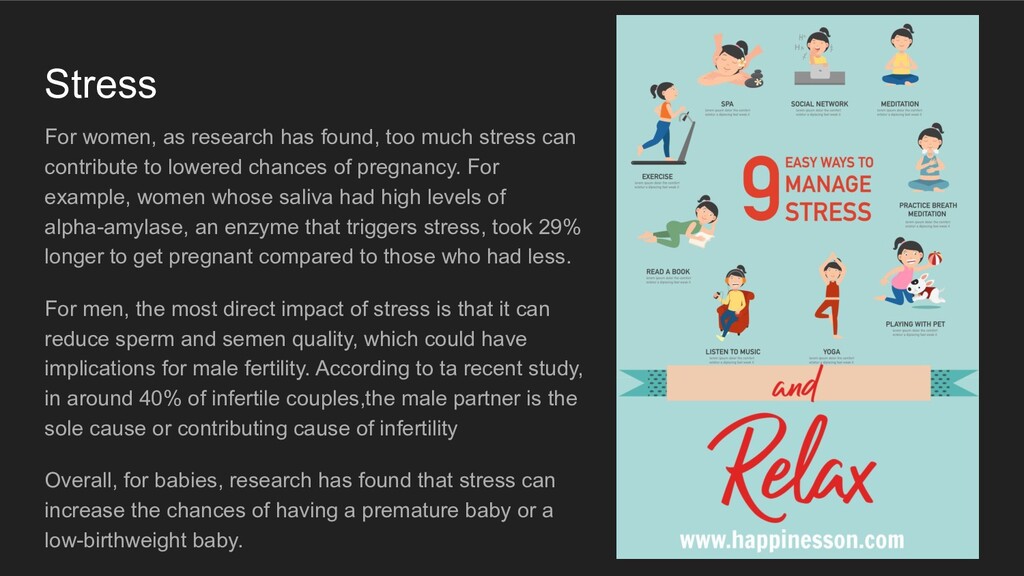
can contribute to lowered chances of pregnancy. For example, women whose saliva had high levels of alpha-amylase, an enzyme that triggers stress, took 29% longer to get pregnant compared to those who had less. For men, the most direct impact of stress is that it can reduce sperm and semen quality, which could have implications for male fertility. According to ta recent study, in around 40% of infertile couples,the male partner is the sole cause or contributing cause of infertility Overall, for babies, research has found that stress can increase the chances of having a premature baby or a low-birthweight baby.

 Your Podcast. Everywhere. Effortlessly.


 frievea
 pawan_pharm
 2720japanoke
 madhuri28
 3l4l5
 akiraasano
 hiola
 naoji_taniguchi_ksk_0827
 robintux
 signer
 cbtlibrary
 ytapples613
 helenjbeal
 bluesmoon
 philnash
 sugarenia
 pauljervisheath
 inesmontani
 bermonpainter
 portentint
 stephaniewalter
 rkendrick25
 aleyda
 lauravandoore