Share
Embed
Predicting Random Numbers in Ethereum Smart Contracts
The Ethereum blockchain is deterministic and as such it imposes certain difficulties for those who have chosen to write their own pseudo-random number generator (PRNG), which is an inherent part of any gambling application. We decided to research smart contracts in order to assess the security of PRNGs written in Solidity and to highlight common design antipatterns that lead to vulnerabilities allowing prediction of the future state.
Arseny Reutov
January 31, 2018
Transcript
53 slides
-
PREDICTING RANDOM NUMBERS IN ETHEREUM SMART CONTRACTS Arseny Reutov @theRaz0r
[email protected] AppSec California 2018 -
About me ▸ Application security researcher at Positive.com ▸ Member
of PHDays security conference team (CFP is open!) ▸ Occasional web security blogger at Raz0r.name -
Agenda ▸ Ethereum and smart contracts 101 ▸ Hands on
vulnerable PRNGs in the wild ▸ Towards a safer PRNG ▸ Automating discovery of vulnerable contracts ▸ … and a bonus wargame with prizes! -
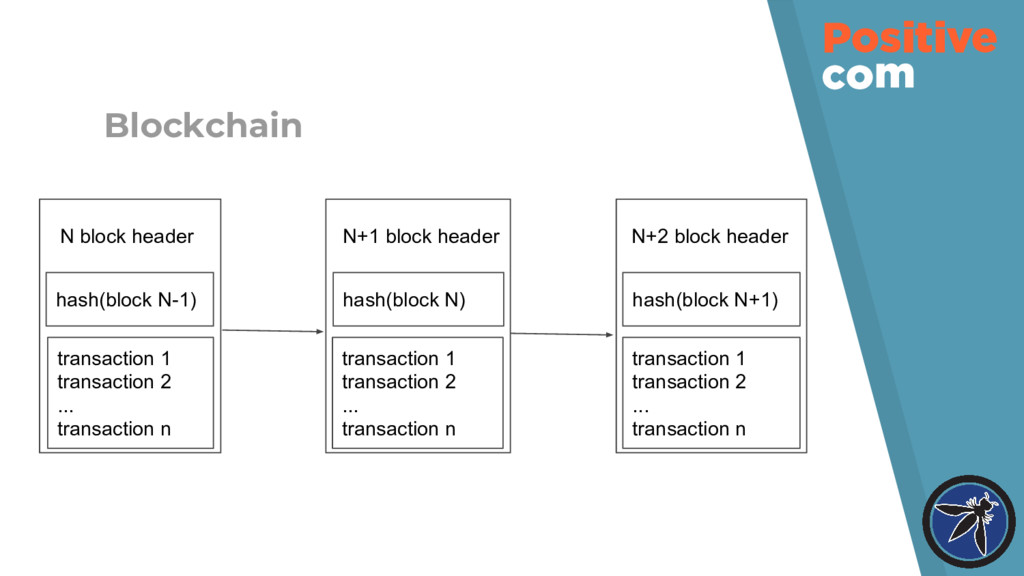
Blockchain transaction 1 transaction 2 ... transaction n hash(block N+1)
N+2 block header transaction 1 transaction 2 ... transaction n hash(block N) N+1 block header hash(block N-1) transaction 1 transaction 2 ... transaction n N block header -
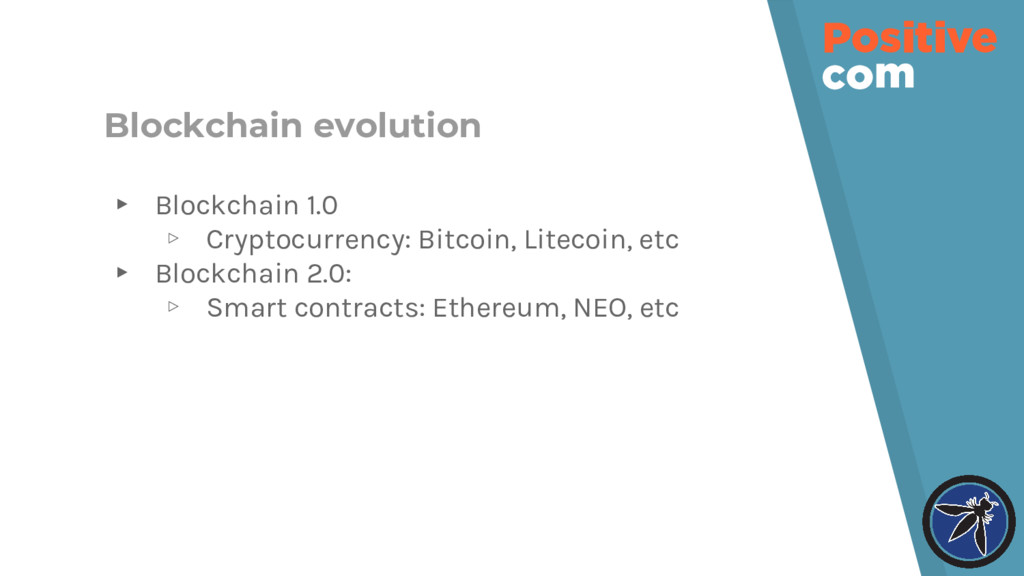
Blockchain evolution ▸ Blockchain 1.0 ▹ Cryptocurrency: Bitcoin, Litecoin, etc
▸ Blockchain 2.0: ▹ Smart contracts: Ethereum, NEO, etc -
Externally Owned Accounts (EOAs) ▸ have an ether balance ▸
can send transactions (ether transfer or trigger contract code) ▸ are controlled by private keys ▸ have no associated code -
Contract accounts ▸ have an ether balance ▸ have associated
code ▸ code execution is triggered by transactions or messages (calls) received from other contracts or EOAs ▸ when executed - perform operations of arbitrary complexity (Turing completeness) -
Solidity ▸ looks like JavaScript ▸ but is strongly-typed ▸
has no string operations, has no floats (integers only) ▸ is mainly used to implement ERC20 tokens ▸ as a Turing-complete language can be used to create lotteries, card games or roulettes ▸ contracts have bugs! -
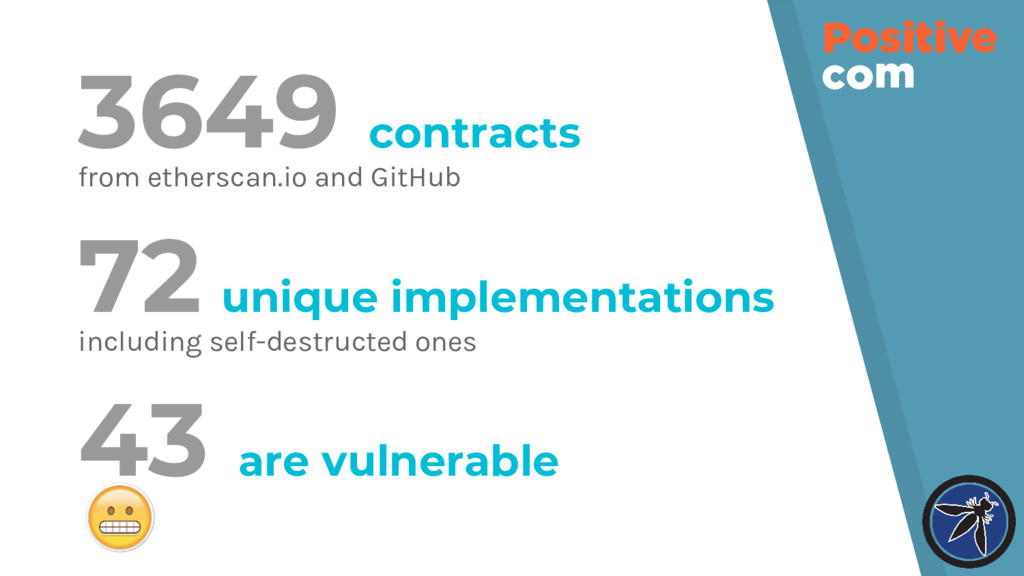
3649 contracts from etherscan.io and GitHub 43 are vulnerable 72
unique implementations including self-destructed ones -
1. Vulnerable implementations ▸ Based on block variables ▸ Based
on past blockhash ▸ Based on past blockhash and a “private” seed ▸ Prone to front-running -
PRNGs based on block variables There are a number of
block variables that may be wrongly used as a source of entropy: ▸ block.coinbase ▸ block.difficulty ▸ block.gaslimit ▸ block.number ▸ block.timestamp -
PRNGs based on block variables ▸ You don’t even need
to be a miner to predict the outcome ▸ An exploit contract with the same PRNG function can call the target contract ▸ Since these calls are in the same transaction, all the block variables will be shared -
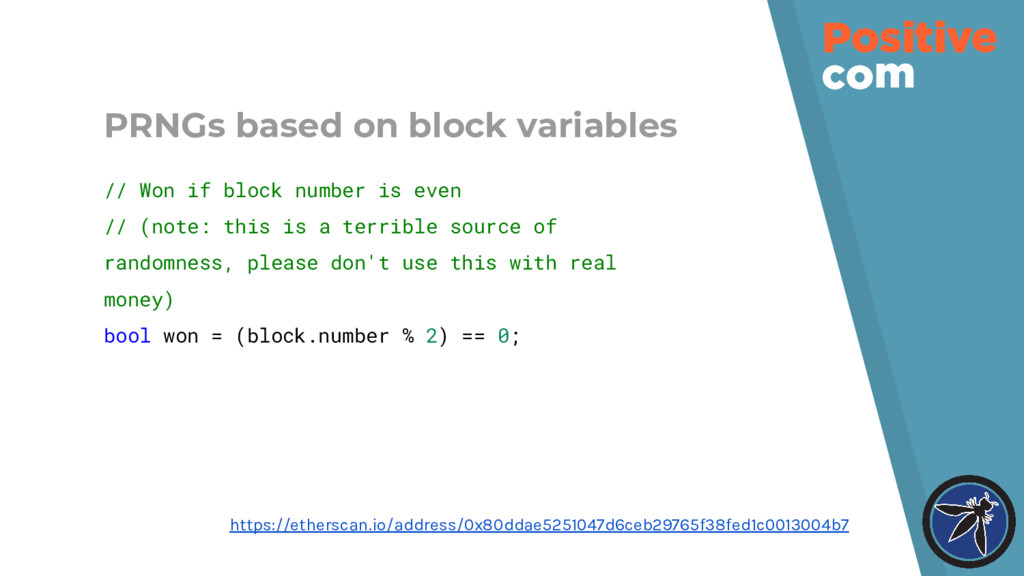
PRNGs based on block variables // Won if block number
is even // (note: this is a terrible source of randomness, please don't use this with real money) bool won = (block.number % 2) == 0; https://etherscan.io/address/0x80ddae5251047d6ceb29765f38fed1c0013004b7 -
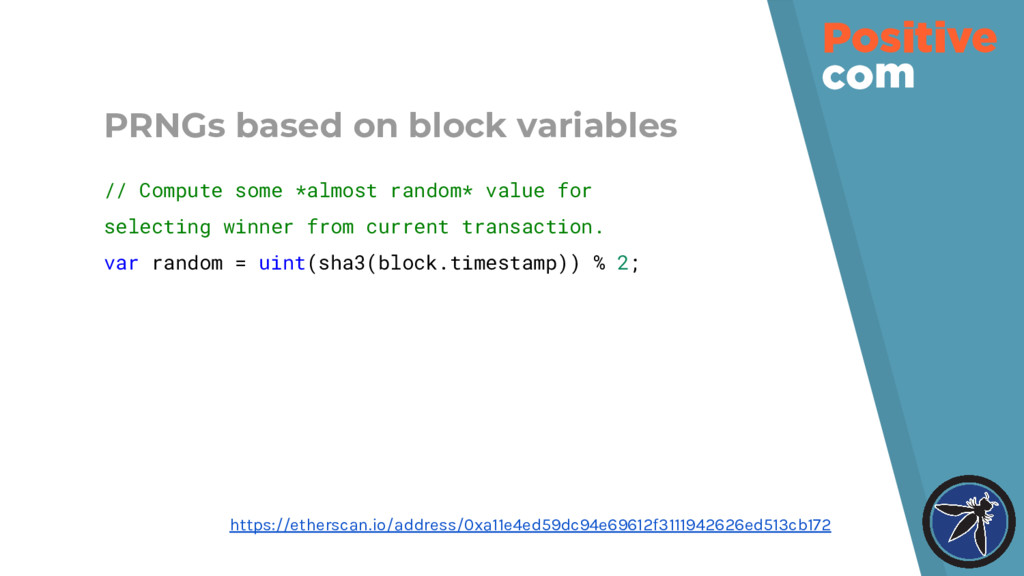
PRNGs based on block variables // Compute some *almost random*
value for selecting winner from current transaction. var random = uint(sha3(block.timestamp)) % 2; https://etherscan.io/address/0xa11e4ed59dc94e69612f3111942626ed513cb172 -
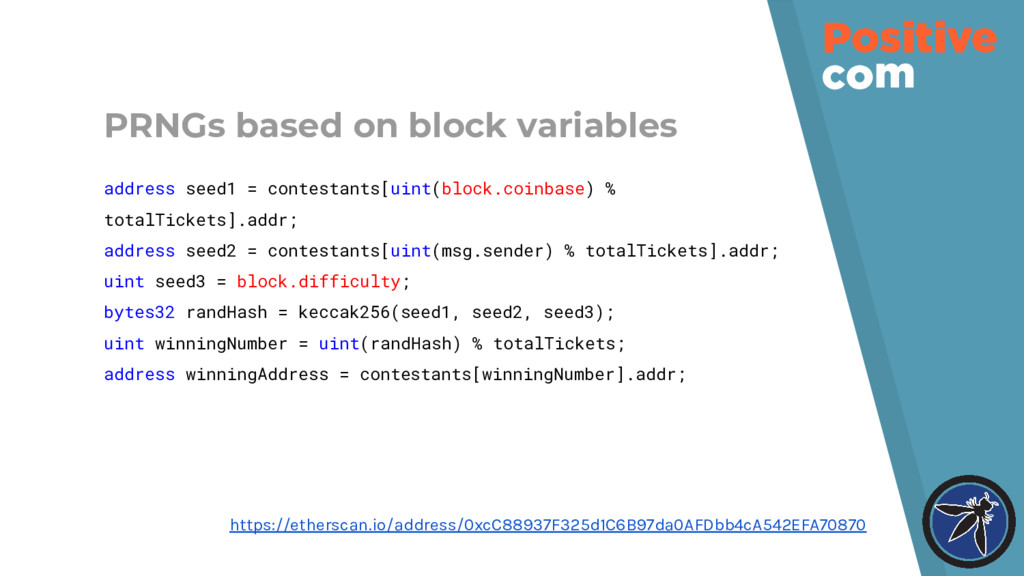
PRNGs based on block variables address seed1 = contestants[uint(block.coinbase) %
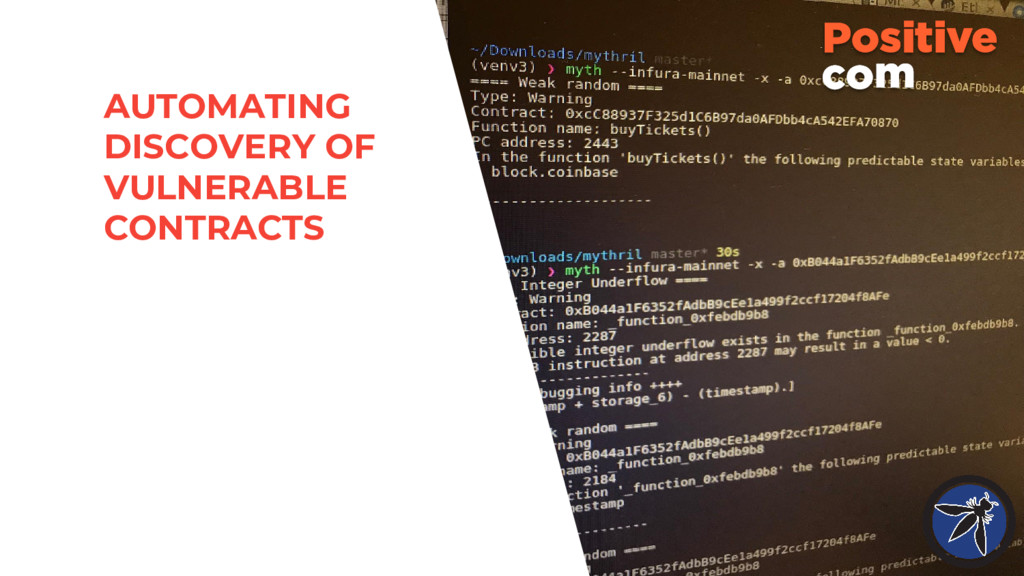
totalTickets].addr; address seed2 = contestants[uint(msg.sender) % totalTickets].addr; uint seed3 = block.difficulty; bytes32 randHash = keccak256(seed1, seed2, seed3); uint winningNumber = uint(randHash) % totalTickets; address winningAddress = contestants[winningNumber].addr; https://etherscan.io/address/0xcC88937F325d1C6B97da0AFDbb4cA542EFA70870 -
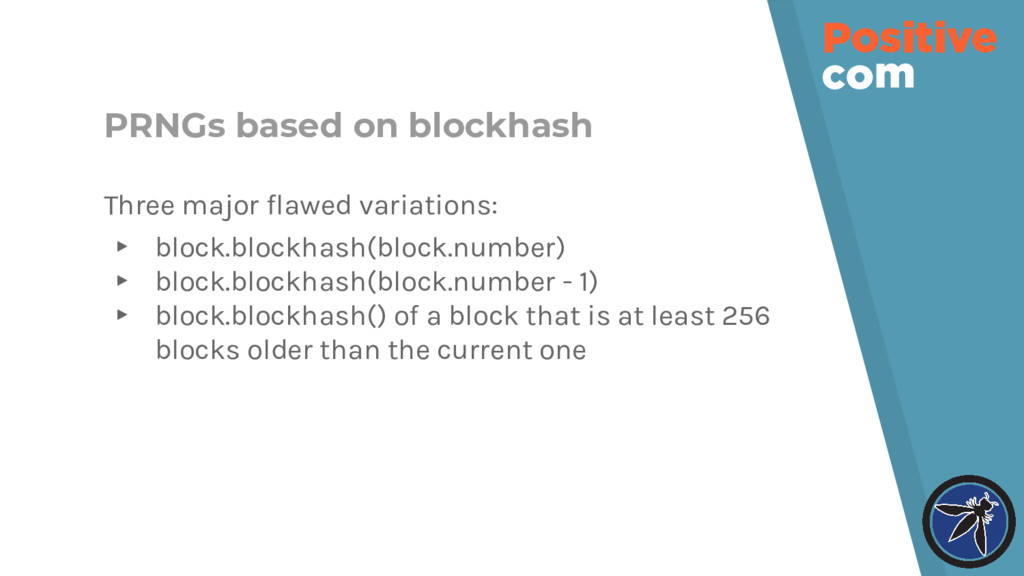
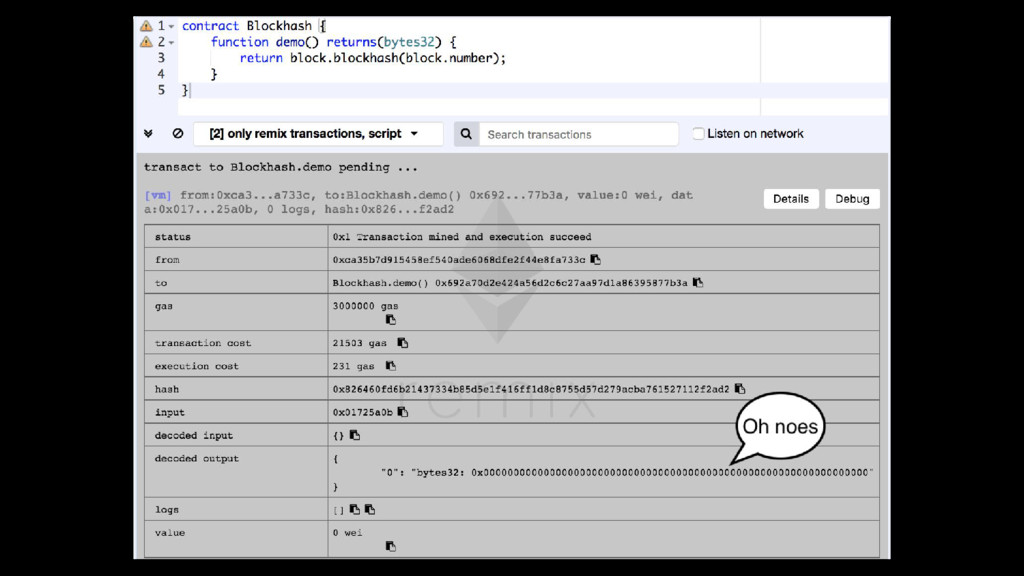
PRNGs based on blockhash Three major flawed variations: ▸ block.blockhash(block.number)
▸ block.blockhash(block.number - 1) ▸ block.blockhash() of a block that is at least 256 blocks older than the current one -
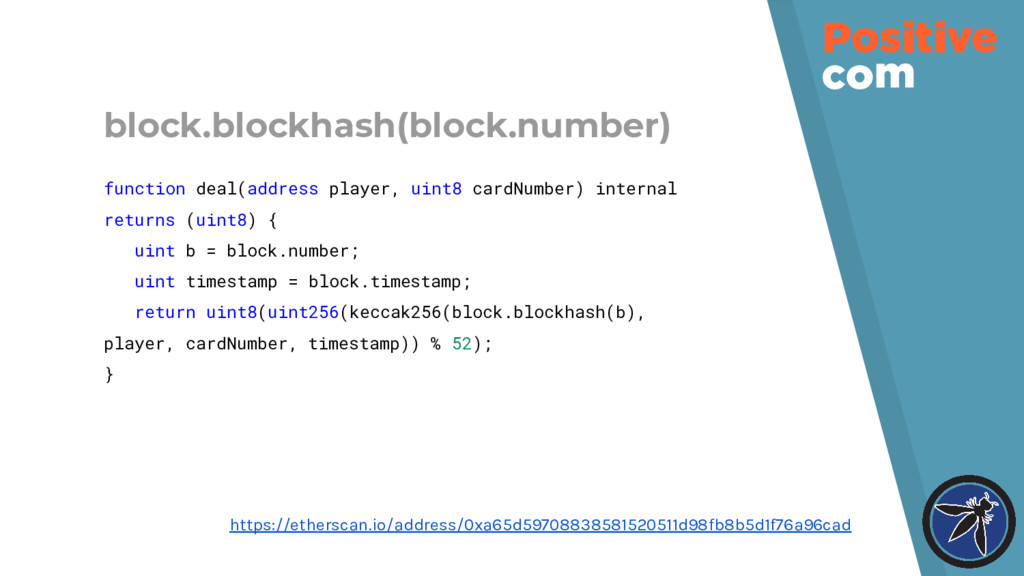
block.blockhash(block.number) function deal(address player, uint8 cardNumber) internal returns (uint8) {
uint b = block.number; uint timestamp = block.timestamp; return uint8(uint256(keccak256(block.blockhash(b), player, cardNumber, timestamp)) % 52); } https://etherscan.io/address/0xa65d59708838581520511d98fb8b5d1f76a96cad -
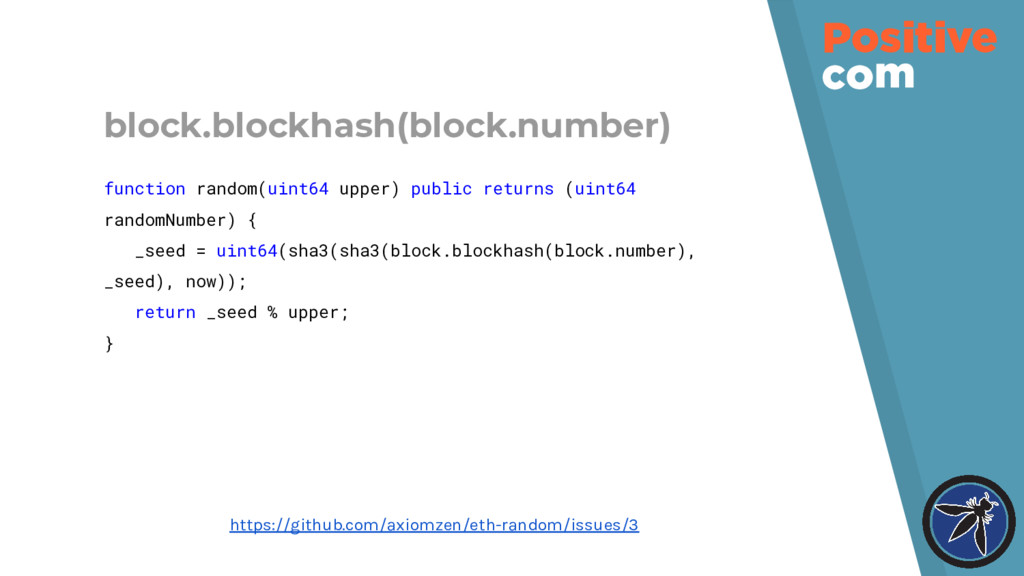
block.blockhash(block.number) function random(uint64 upper) public returns (uint64 randomNumber) { _seed
= uint64(sha3(sha3(block.blockhash(block.number), _seed), now)); return _seed % upper; } https://github.com/axiomzen/eth-random/issues/3 -
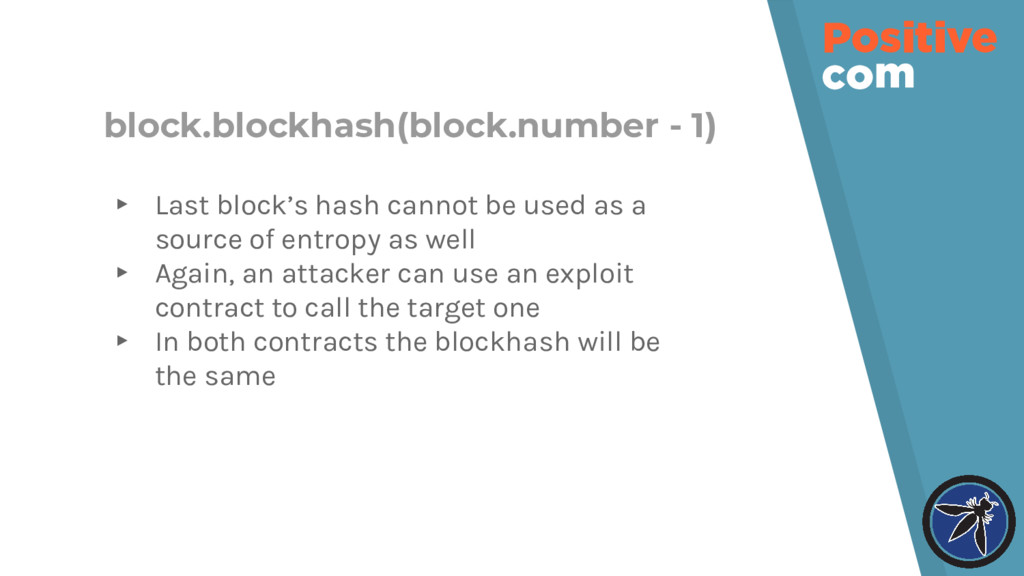
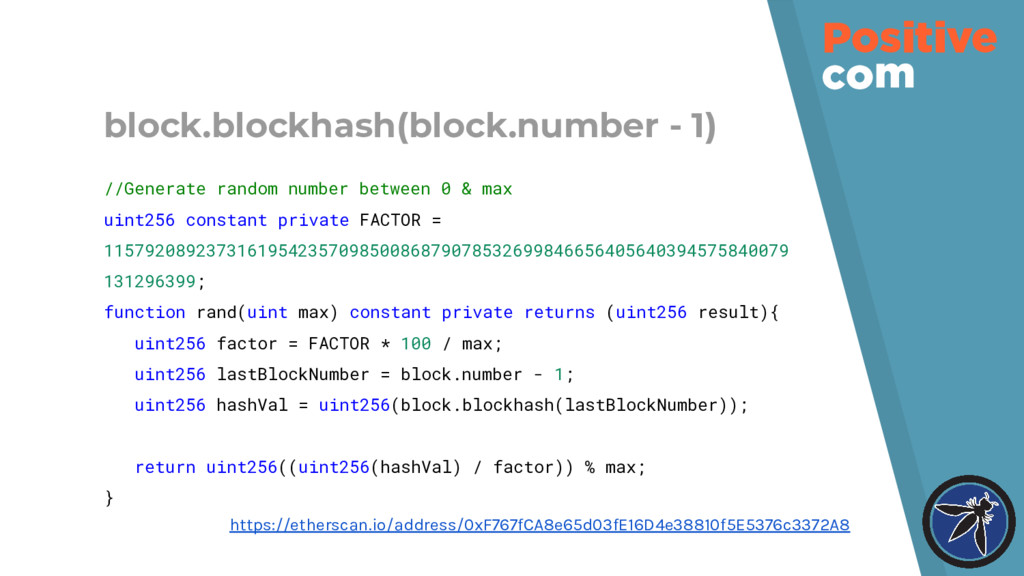
block.blockhash(block.number - 1) ▸ Last block’s hash cannot be used
as a source of entropy as well ▸ Again, an attacker can use an exploit contract to call the target one ▸ In both contracts the blockhash will be the same -
block.blockhash(block.number - 1) //Generate random number between 0 & max
uint256 constant private FACTOR = 1157920892373161954235709850086879078532699846656405640394575840079 131296399; function rand(uint max) constant private returns (uint256 result){ uint256 factor = FACTOR * 100 / max; uint256 lastBlockNumber = block.number - 1; uint256 hashVal = uint256(block.blockhash(lastBlockNumber)); return uint256((uint256(hashVal) / factor)) % max; } https://etherscan.io/address/0xF767fCA8e65d03fE16D4e38810f5E5376c3372A8 -
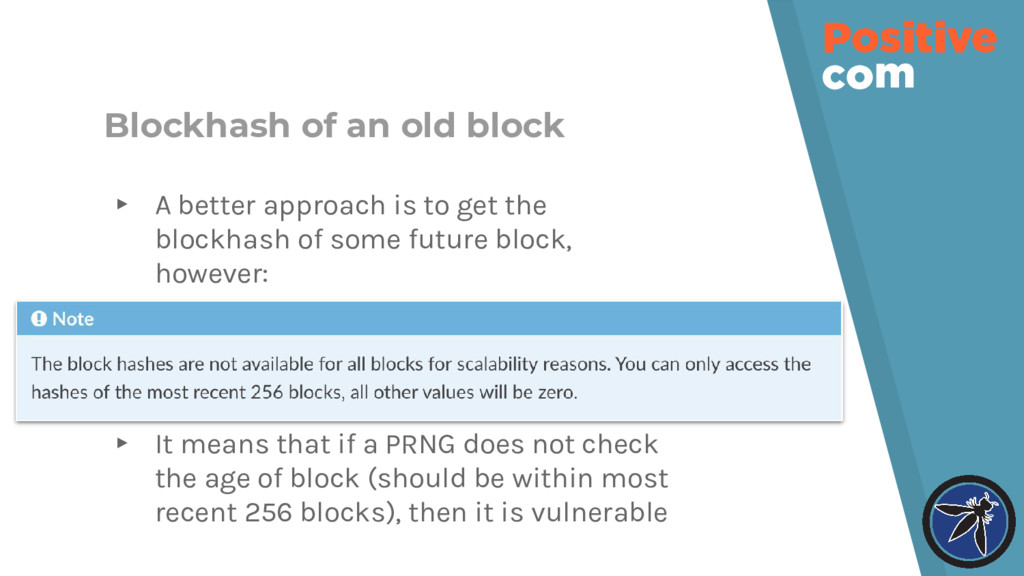
Blockhash of an old block ▸ A better approach is
to get the blockhash of some future block, however: ▸ It means that if a PRNG does not check the age of block (should be within most recent 256 blocks), then it is vulnerable -
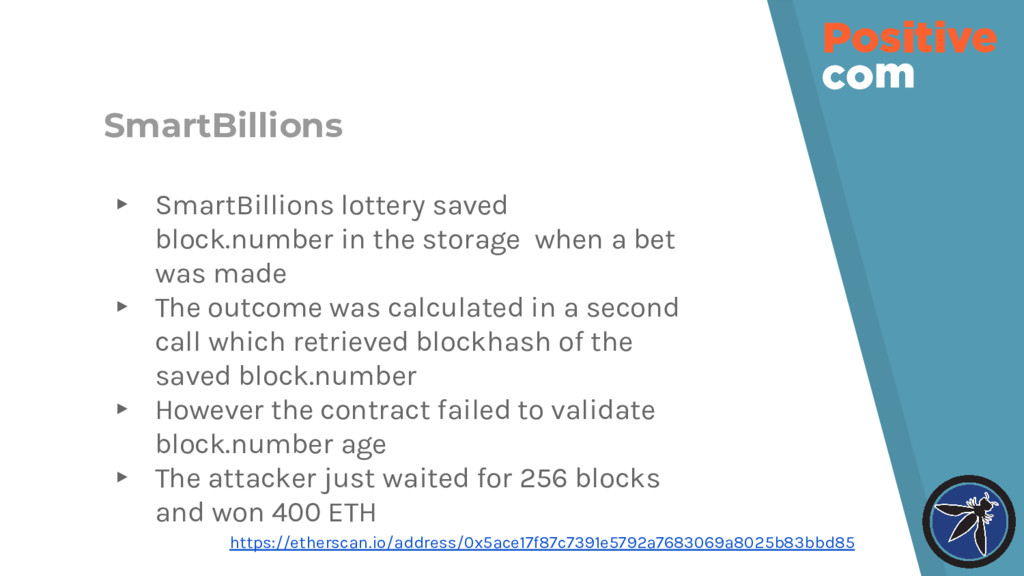
SmartBillions ▸ SmartBillions lottery saved block.number in the storage when
a bet was made ▸ The outcome was calculated in a second call which retrieved blockhash of the saved block.number ▸ However the contract failed to validate block.number age ▸ The attacker just waited for 256 blocks and won 400 ETH https://etherscan.io/address/0x5ace17f87c7391e5792a7683069a8025b83bbd85 -
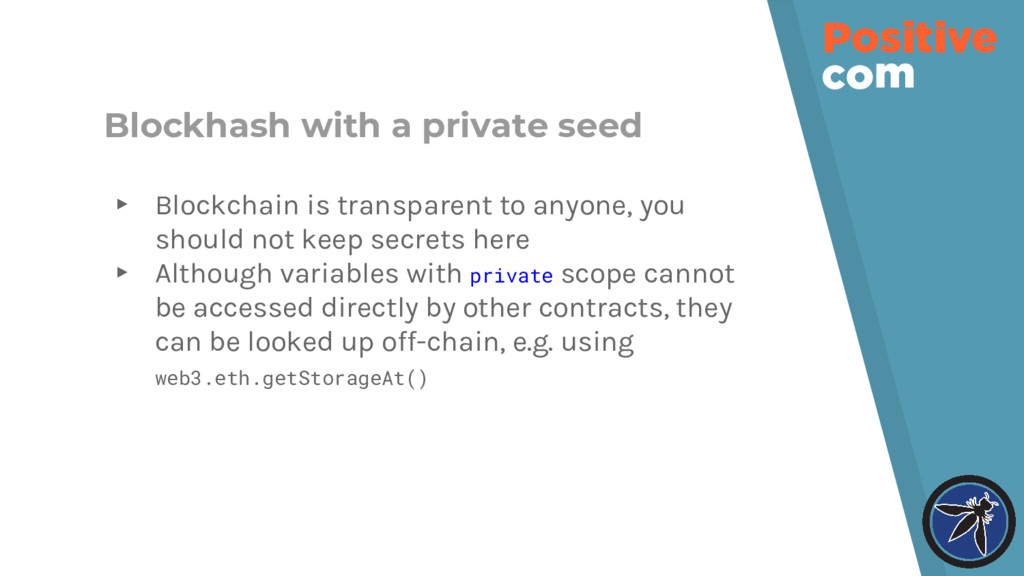
Blockhash with a private seed ▸ Blockchain is transparent to
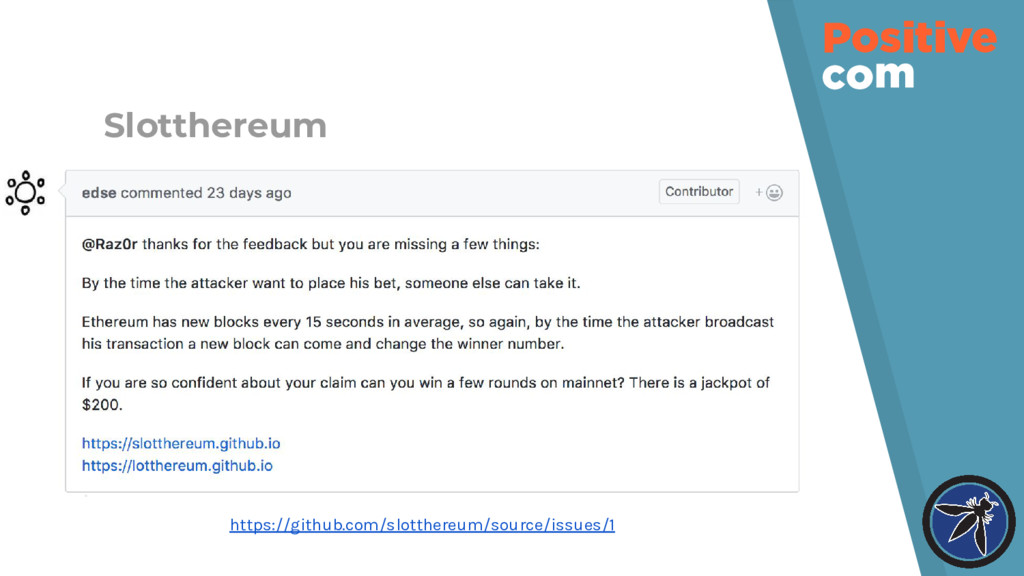
anyone, you should not keep secrets here ▸ Although variables with private scope cannot be accessed directly by other contracts, they can be looked up off-chain, e.g. using web3.eth.getStorageAt() -
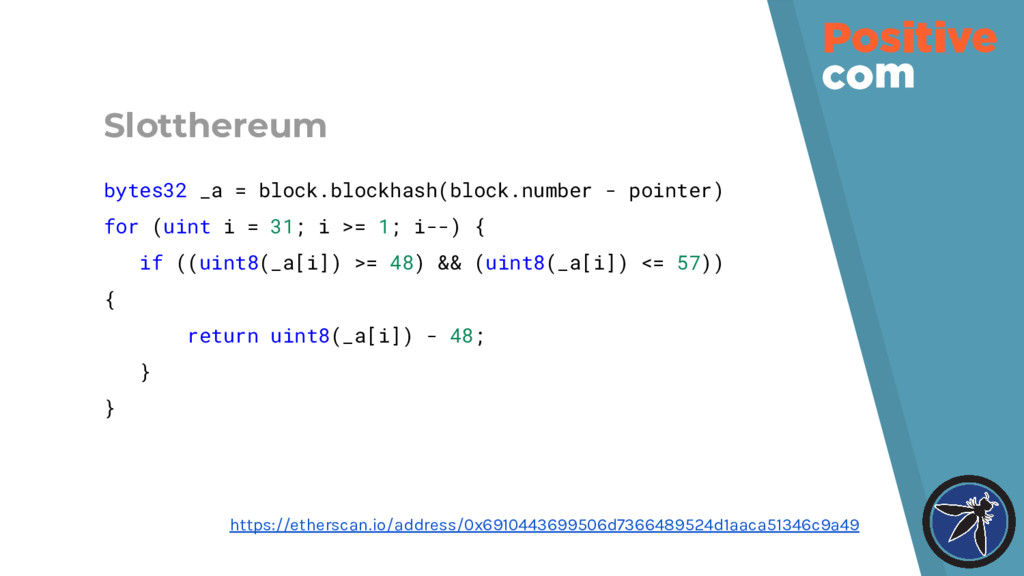
Slotthereum bytes32 _a = block.blockhash(block.number - pointer) for (uint i
= 31; i >= 1; i--) { if ((uint8(_a[i]) >= 48) && (uint8(_a[i]) <= 57)) { return uint8(_a[i]) - 48; } } https://etherscan.io/address/0x6910443699506d7366489524d1aaca51346c9a49 -
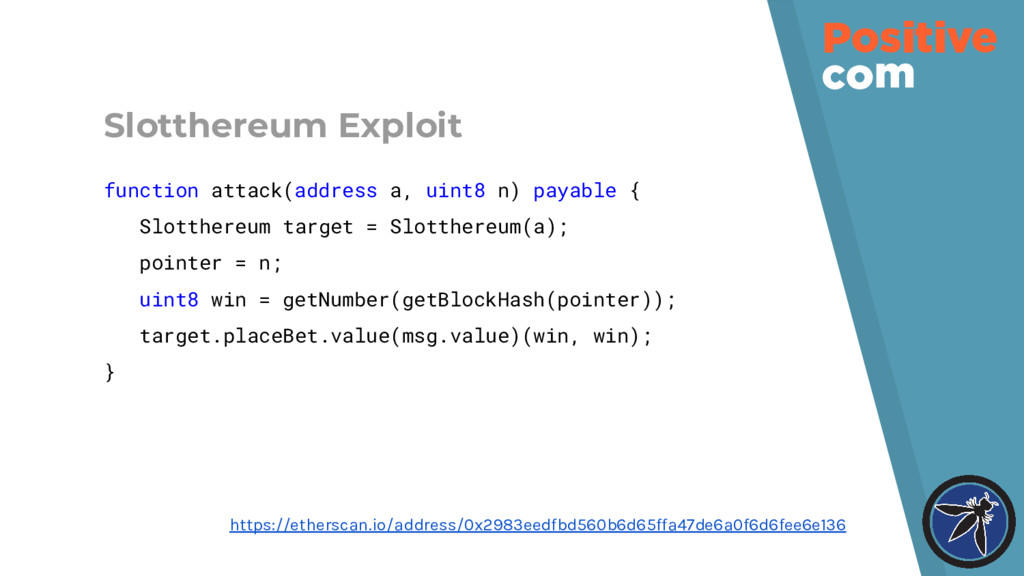
Slotthereum Exploit function attack(address a, uint8 n) payable { Slotthereum
target = Slotthereum(a); pointer = n; uint8 win = getNumber(getBlockHash(pointer)); target.placeBet.value(msg.value)(win, win); } https://etherscan.io/address/0x2983eedfbd560b6d65ffa47de6a0f6d6fee6e136 -
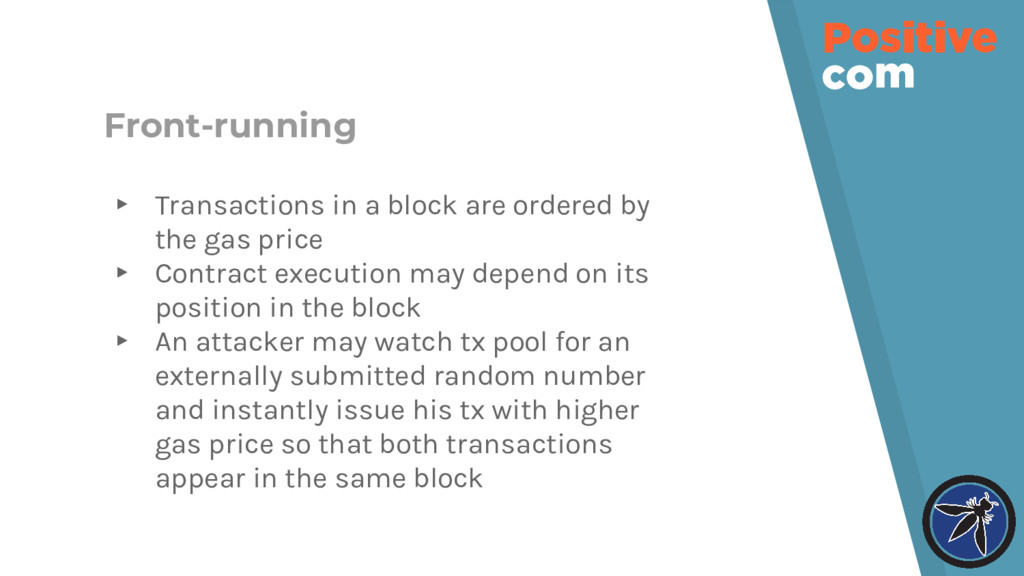
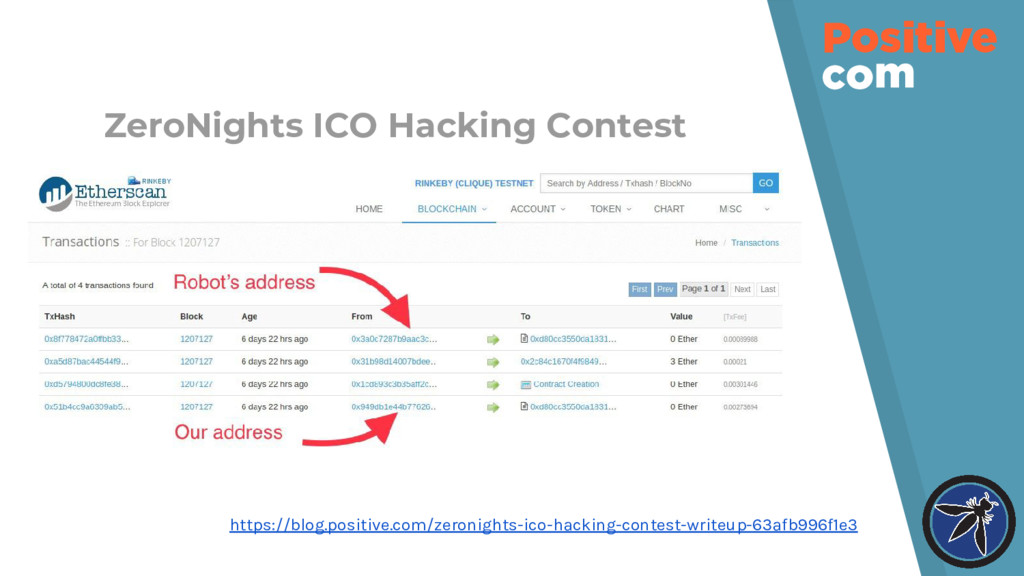
Front-running ▸ Transactions in a block are ordered by the
gas price ▸ Contract execution may depend on its position in the block ▸ An attacker may watch tx pool for an externally submitted random number and instantly issue his tx with higher gas price so that both transactions appear in the same block -
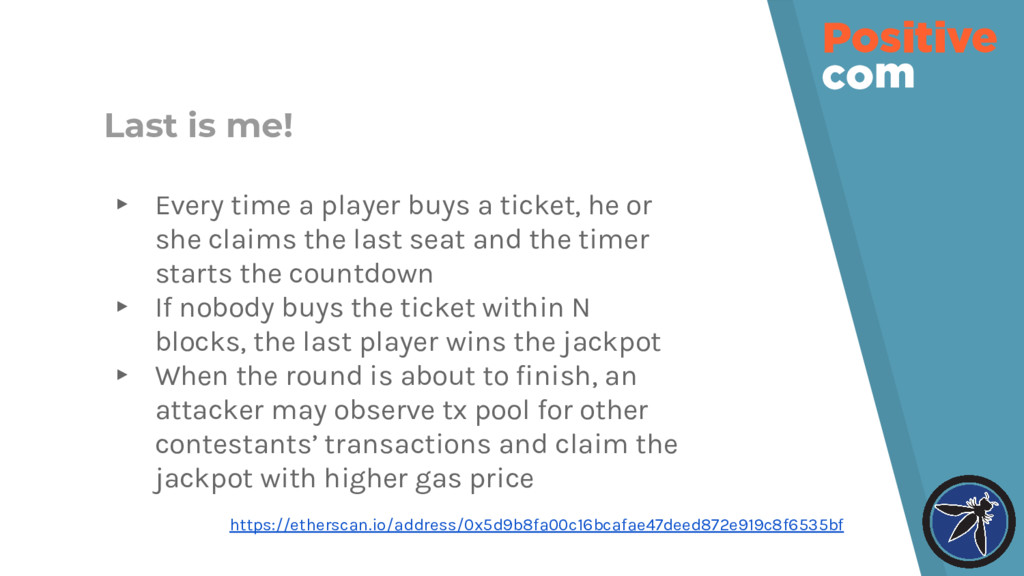
Last is me! ▸ Every time a player buys a
ticket, he or she claims the last seat and the timer starts the countdown ▸ If nobody buys the ticket within N blocks, the last player wins the jackpot ▸ When the round is about to finish, an attacker may observe tx pool for other contestants’ transactions and claim the jackpot with higher gas price https://etherscan.io/address/0x5d9b8fa00c16bcafae47deed872e919c8f6535bf -
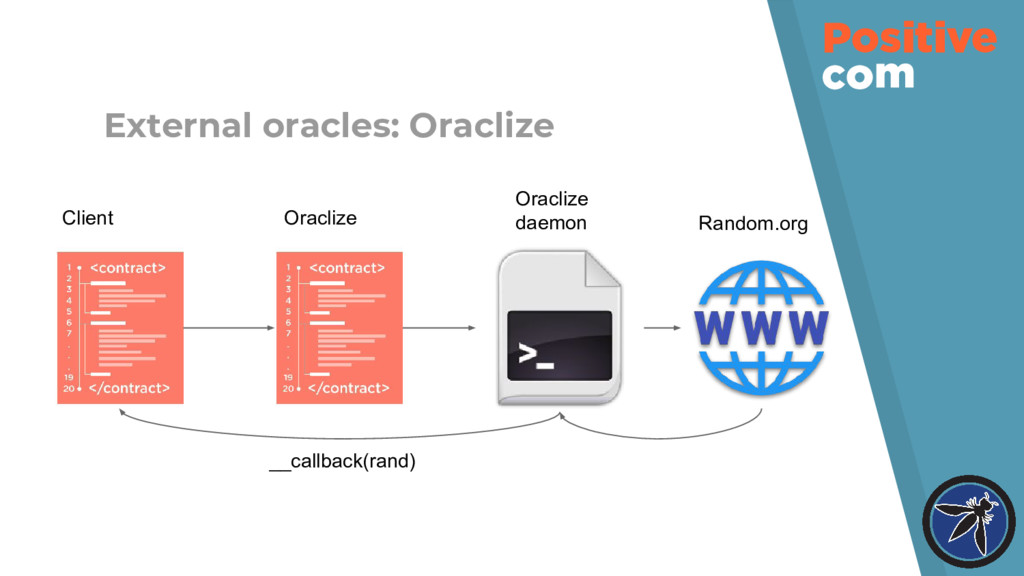
External oracles: Oraclize ▸ Can Oraclize be trusted? ▸ Can
Random.org be trusted? ▸ TLSNotary can be used to verify the results, but only off-chain (i.e. after the winner had been chosen) -
External oracles: Oraclize Some examples: ▸ Block King ▸ Smart
Contract Casino ▸ EtherFlip ▸ Etheroll -
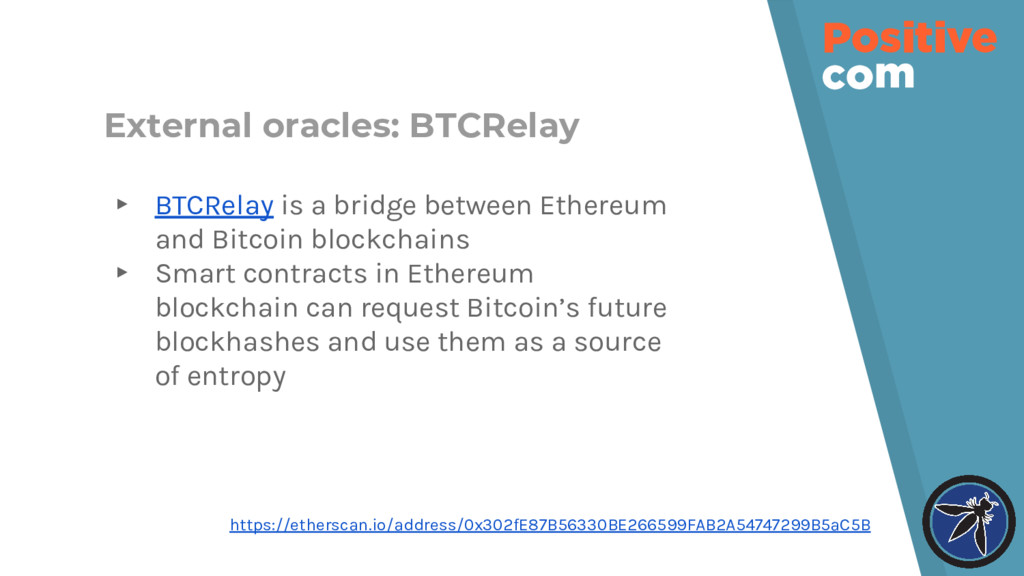
External oracles: BTCRelay ▸ BTCRelay is a bridge between Ethereum
and Bitcoin blockchains ▸ Smart contracts in Ethereum blockchain can request Bitcoin’s future blockhashes and use them as a source of entropy https://etherscan.io/address/0x302fE87B56330BE266599FAB2A54747299B5aC5B -
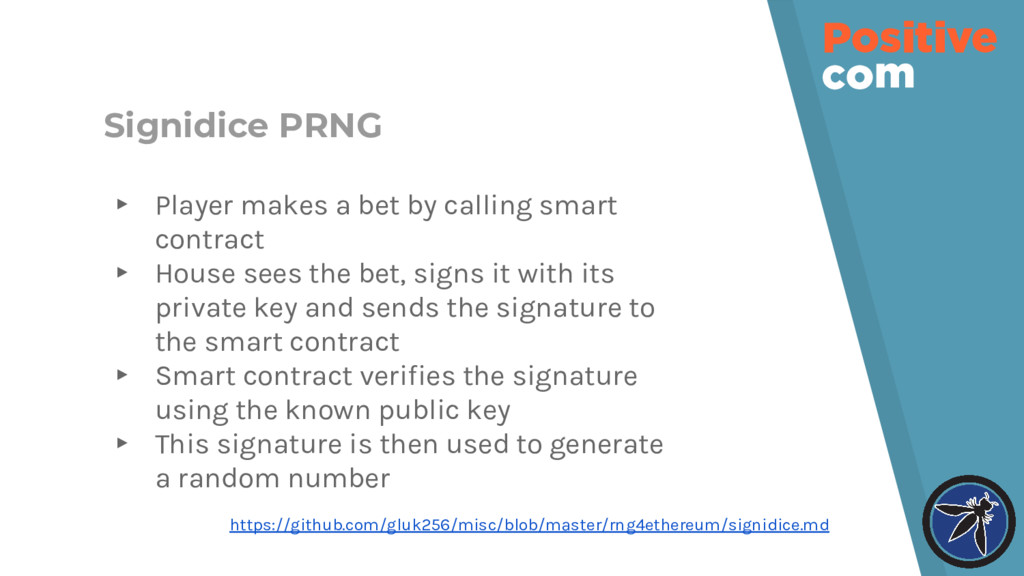
Signidice PRNG ▸ Player makes a bet by calling smart
contract ▸ House sees the bet, signs it with its private key and sends the signature to the smart contract ▸ Smart contract verifies the signature using the known public key ▸ This signature is then used to generate a random number https://github.com/gluk256/misc/blob/master/rng4ethereum/signidice.md -
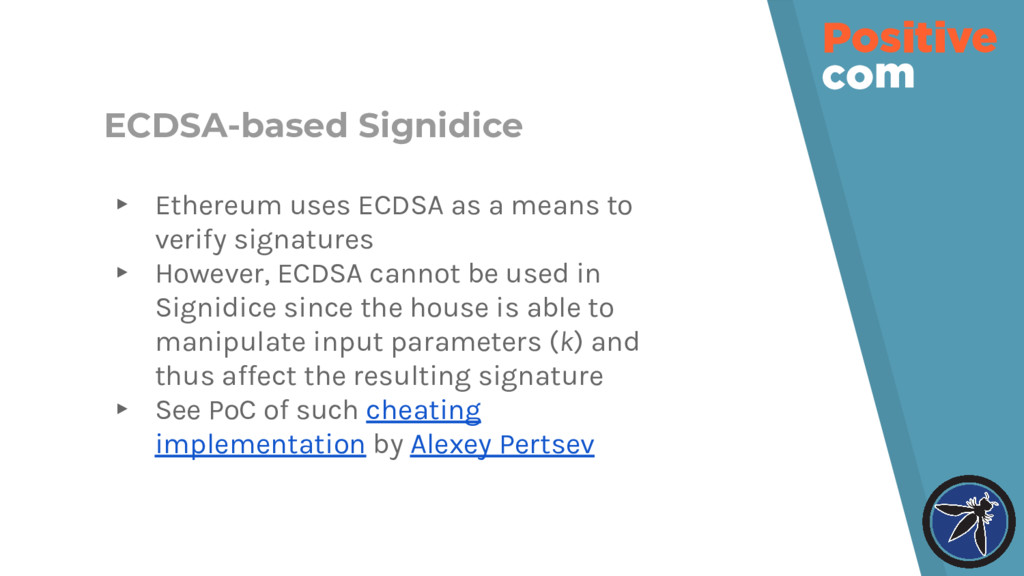
ECDSA-based Signidice ▸ Ethereum uses ECDSA as a means to
verify signatures ▸ However, ECDSA cannot be used in Signidice since the house is able to manipulate input parameters (k) and thus affect the resulting signature ▸ See PoC of such cheating implementation by Alexey Pertsev -
RSA-based Signidice ▸ Unlike ECDSA, RSA does not allow to
manipulate input parameters to find a suitable signature ▸ With Metropolis hardfork, modular exponentiation operation became available thus allowing to implement RSA signature verification ▸ Implemented in DAO.casino -
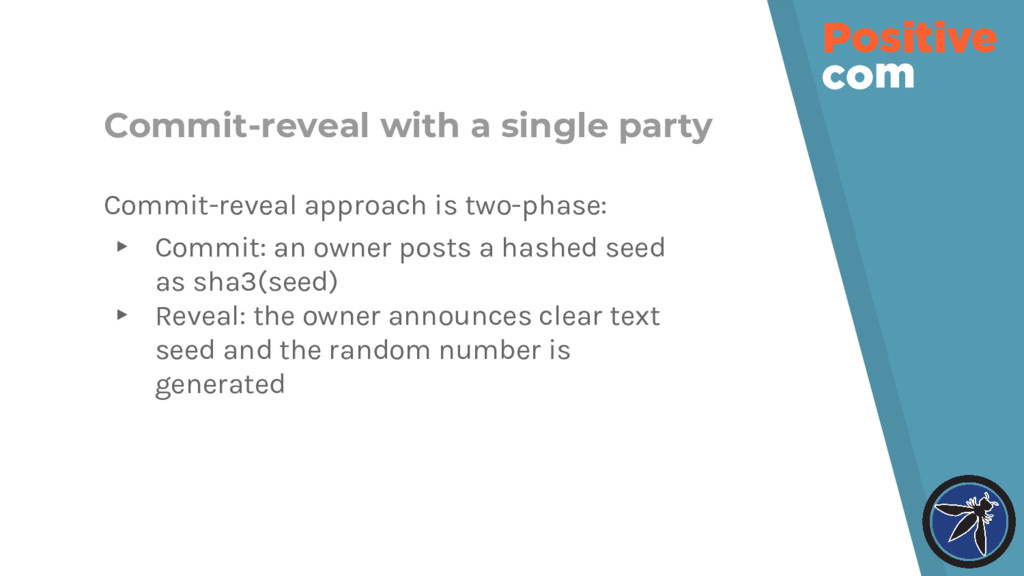
Commit-reveal with a single party Commit-reveal approach is two-phase: ▸
Commit: an owner posts a hashed seed as sha3(seed) ▸ Reveal: the owner announces clear text seed and the random number is generated -
Commit-reveal with a single party ▸ Players do not know
the original seed, so their chances are equal ▸ But an owner can also be a player, thus we cannot trust him Some examples: ▸ HonestDice ▸ TheEthereumLottery ▸ EthereumRoulette -
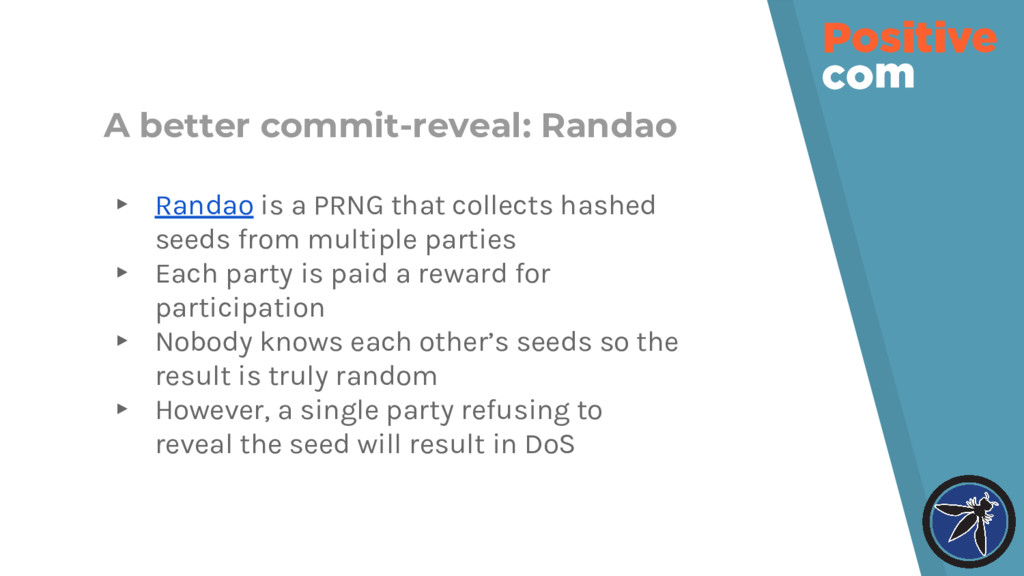
A better commit-reveal: Randao ▸ Randao is a PRNG that
collects hashed seeds from multiple parties ▸ Each party is paid a reward for participation ▸ Nobody knows each other’s seeds so the result is truly random ▸ However, a single party refusing to reveal the seed will result in DoS -
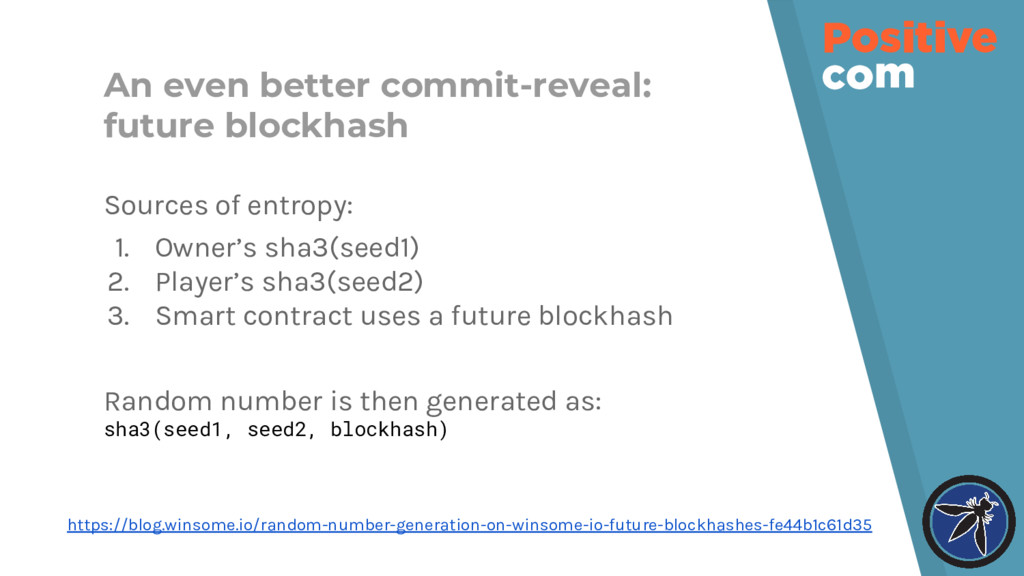
An even better commit-reveal: future blockhash Sources of entropy: 1.
Owner’s sha3(seed1) 2. Player’s sha3(seed2) 3. Smart contract uses a future blockhash Random number is then generated as: sha3(seed1, seed2, blockhash) https://blog.winsome.io/random-number-generation-on-winsome-io-future-blockhashes-fe44b1c61d35 -
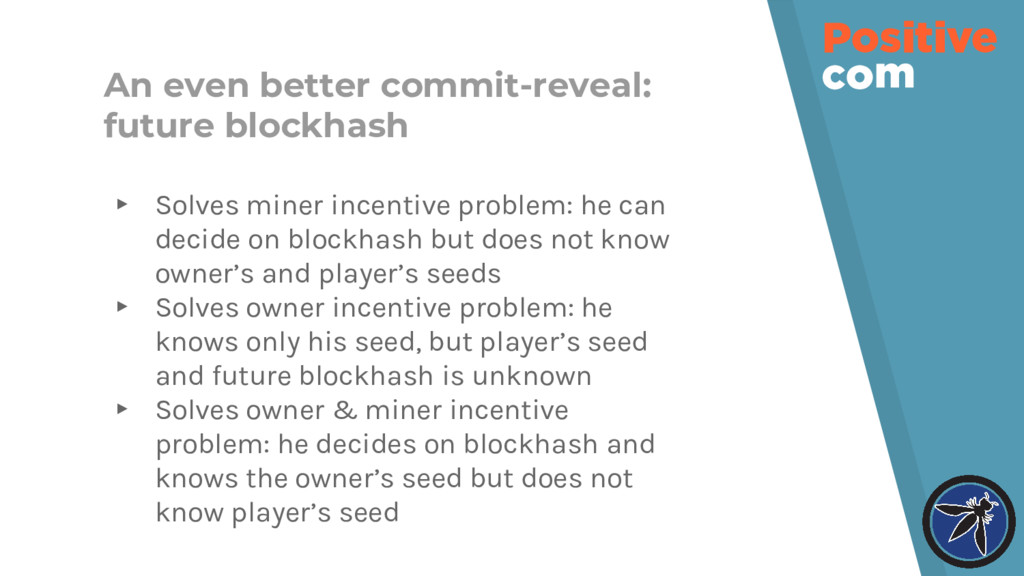
An even better commit-reveal: future blockhash ▸ Solves miner incentive
problem: he can decide on blockhash but does not know owner’s and player’s seeds ▸ Solves owner incentive problem: he knows only his seed, but player’s seed and future blockhash is unknown ▸ Solves owner & miner incentive problem: he decides on blockhash and knows the owner’s seed but does not know player’s seed -
Mythril ▸ Mythril is a tool by Bernhard Mueller to
search Ethereum blockchain for vulnerable contracts ▸ It has a symbolic execution engine based on Z3 ▸ By resolving constraints it is possible to construct a nearly complete CFG of a contract -
Looking for weak PRNGs with Mythril ▸ “weak_random” plugin allows
to detect ether value transfers that are constrained by ▹ predictable block variables ▹ past blockhashes ▸ Thanks to Bernhard for his collaboration on pull request :)