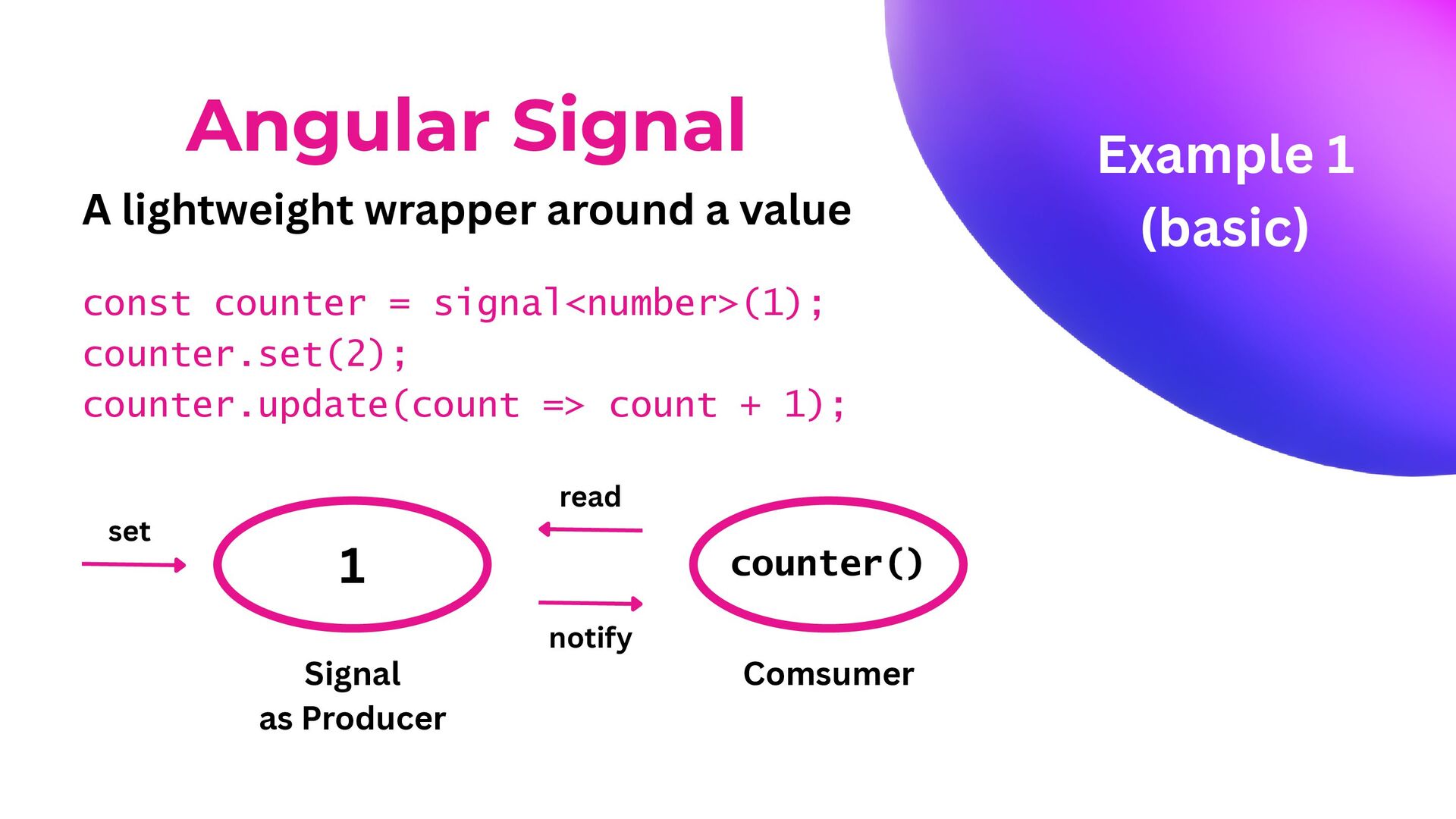
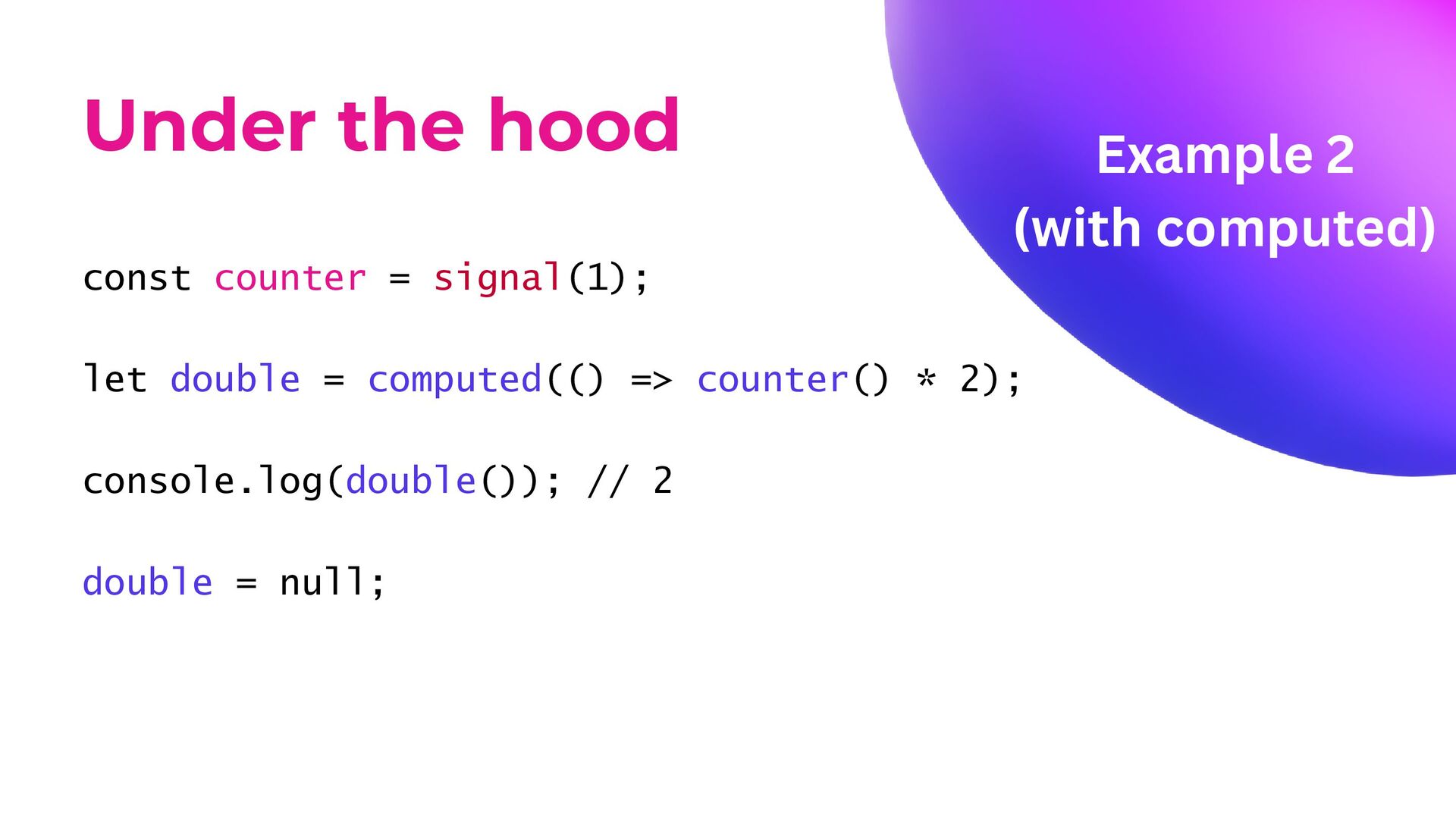
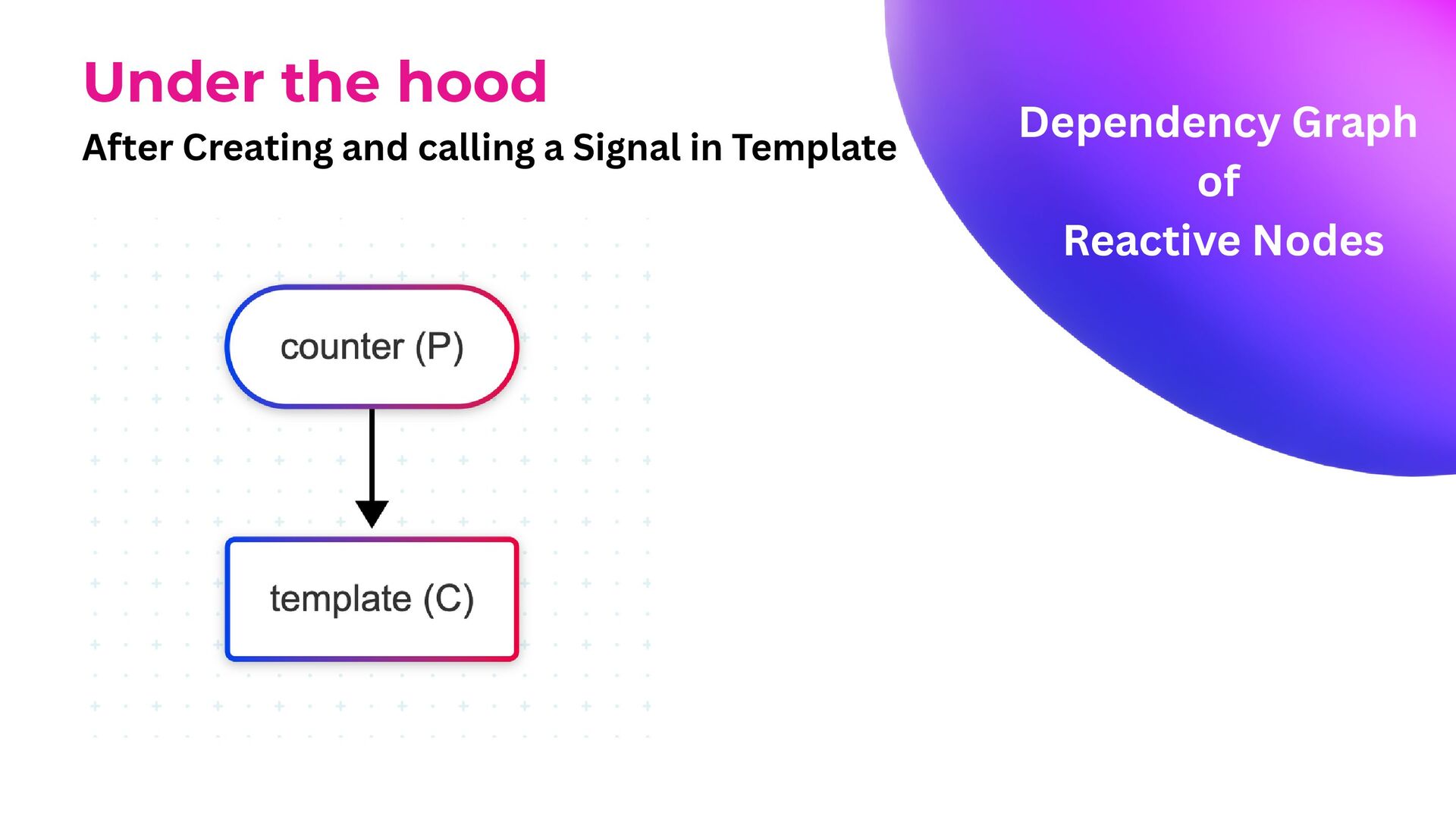
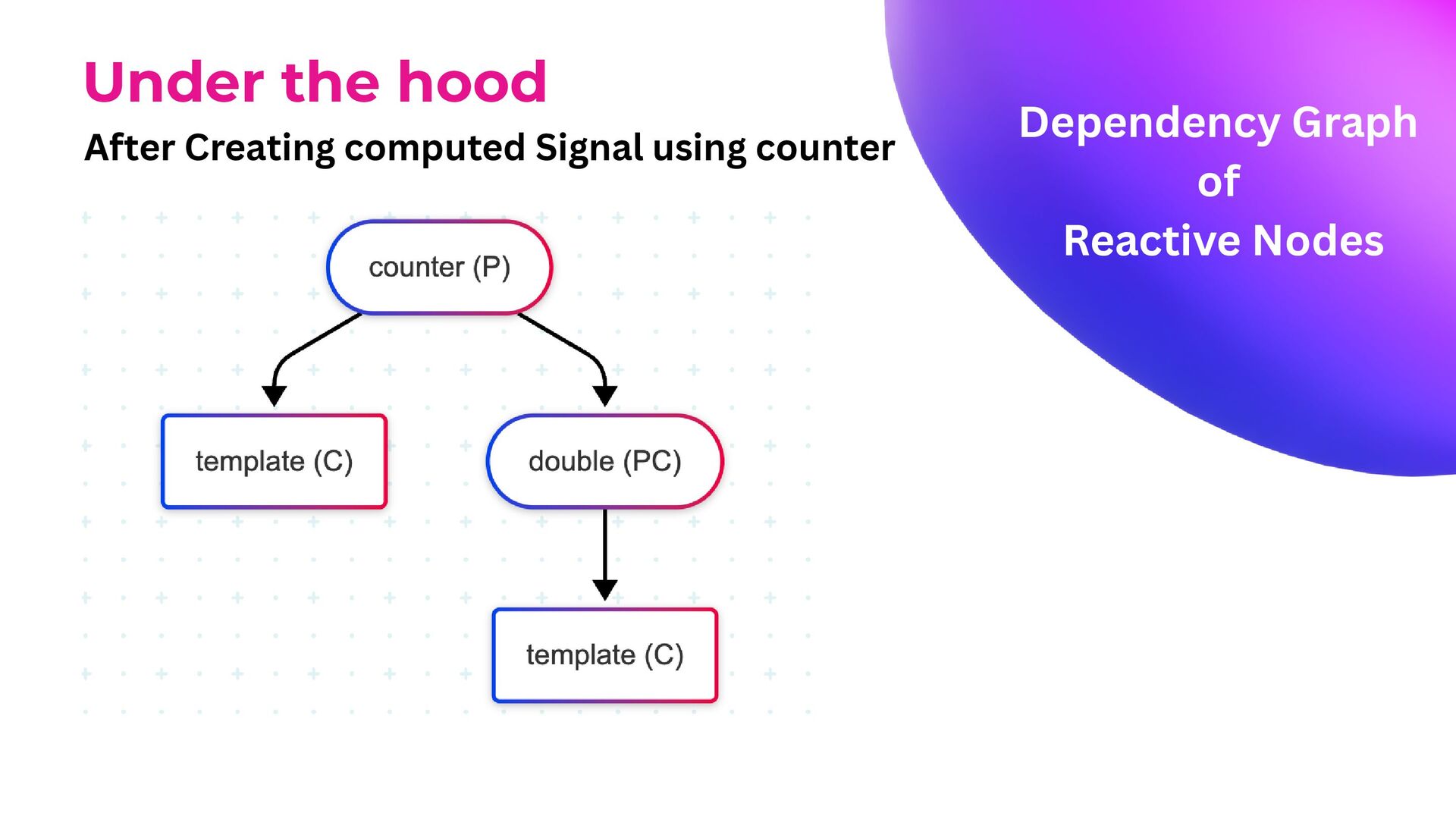
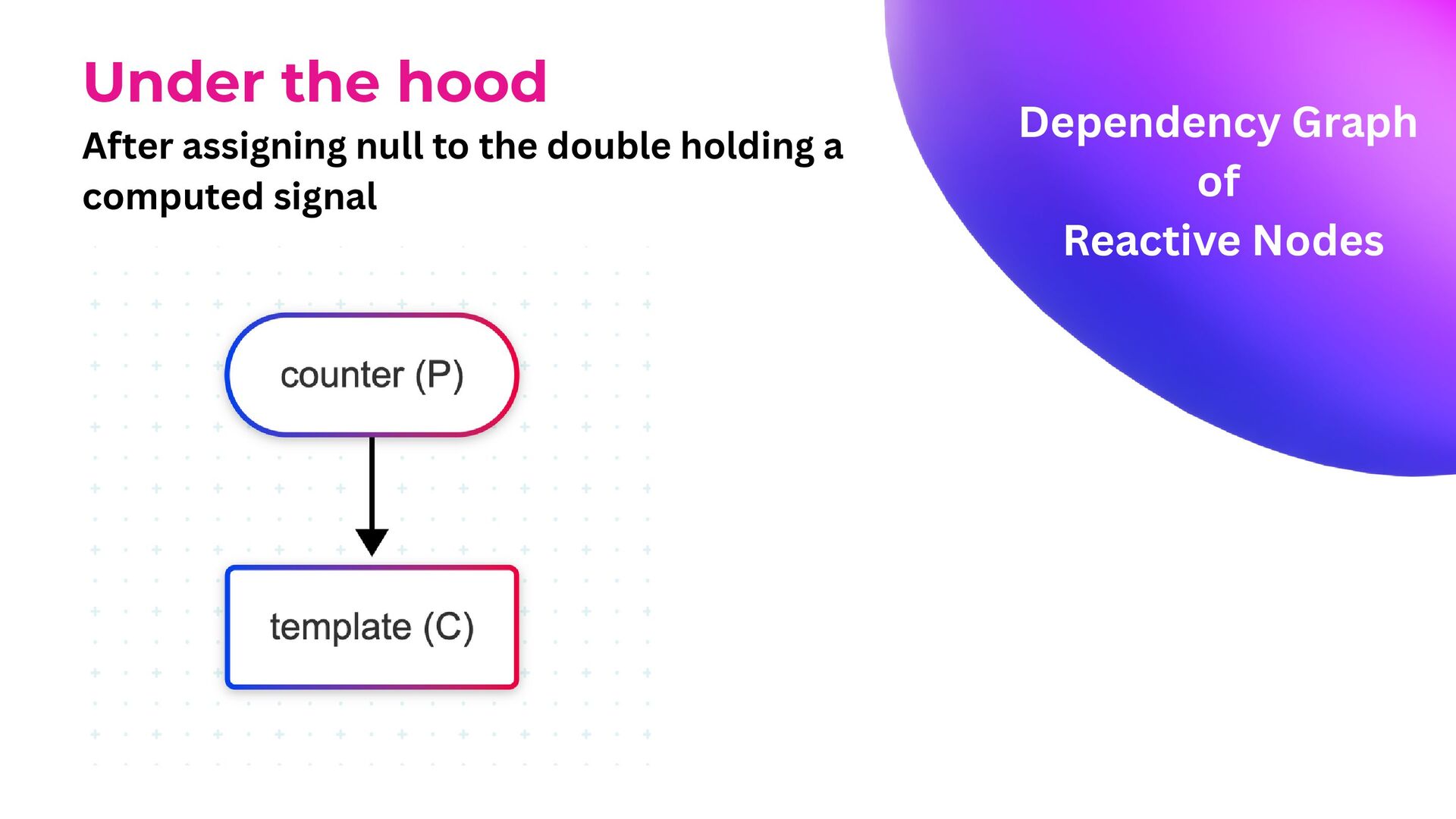
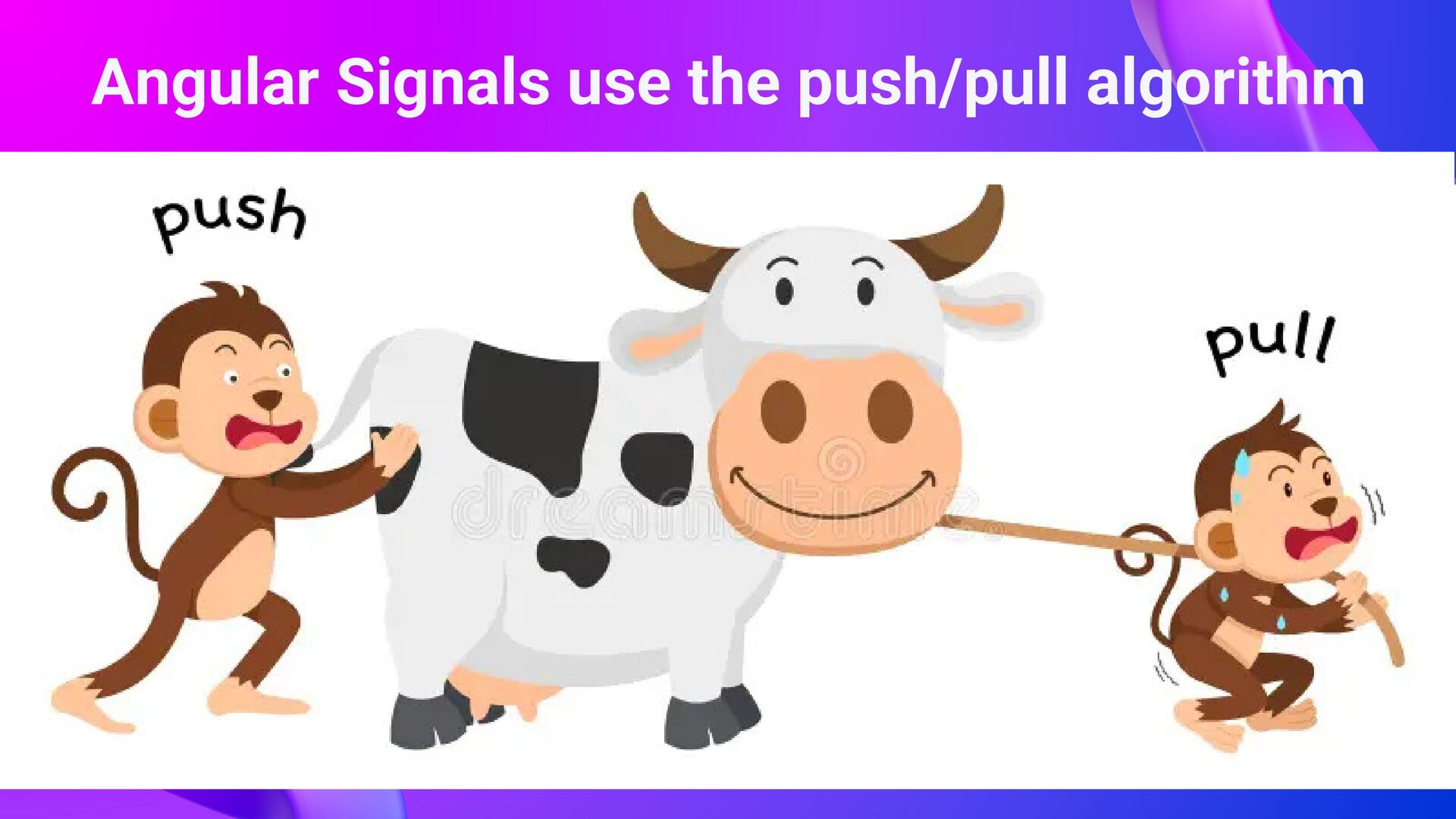
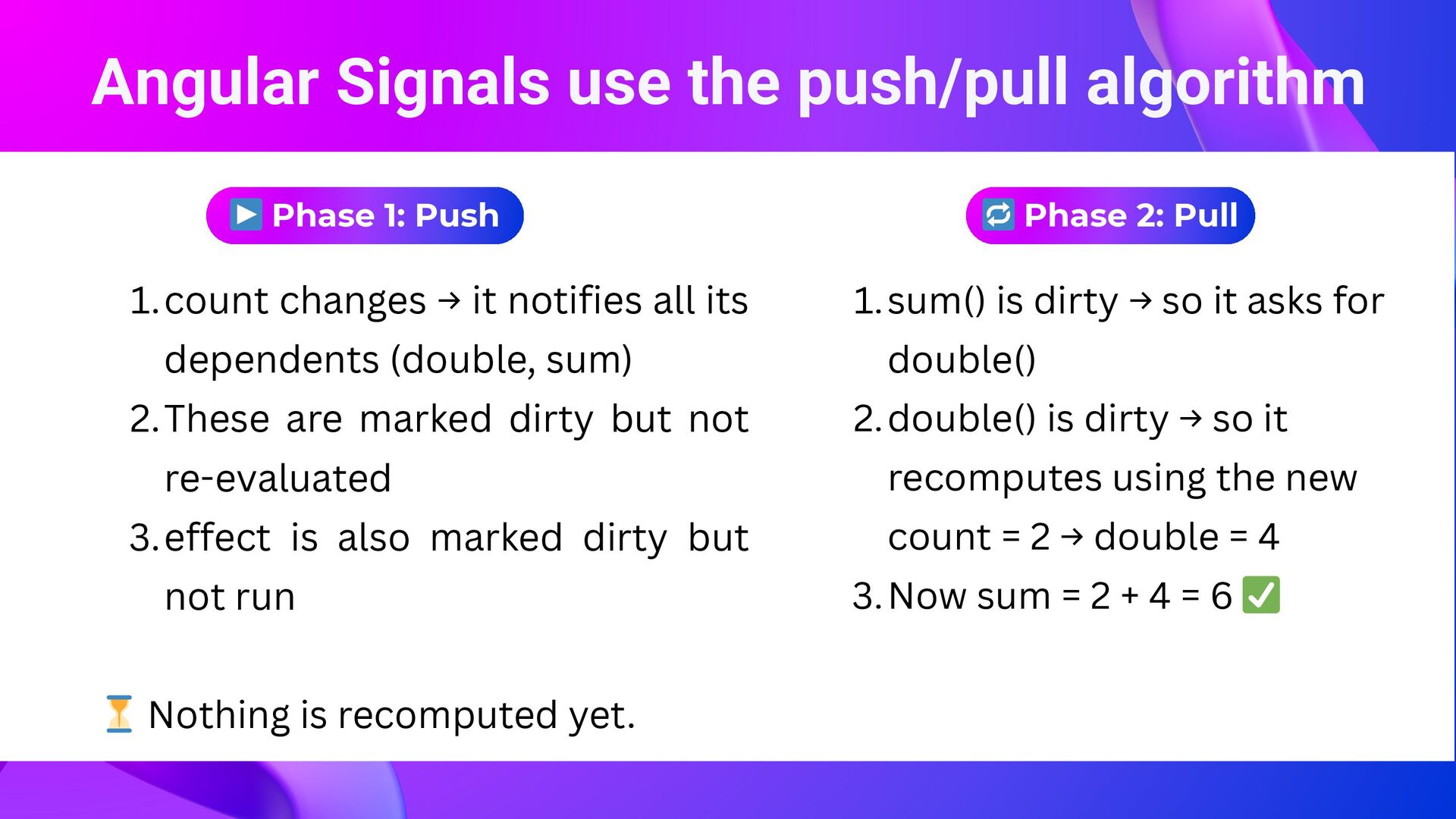
use the push/pull algorithm 1.sum() is dirty → so it asks for double() 2.double() is dirty → so it recomputes using the new count = 2 → double = 4 3.Now sum = 2 + 4 = 6 ✅ 1.count changes → it notifies all its dependents (double, sum) 2.These are marked dirty but not re-evaluated 3.effect is also marked dirty but not run ⏳ Nothing is recomputed yet.
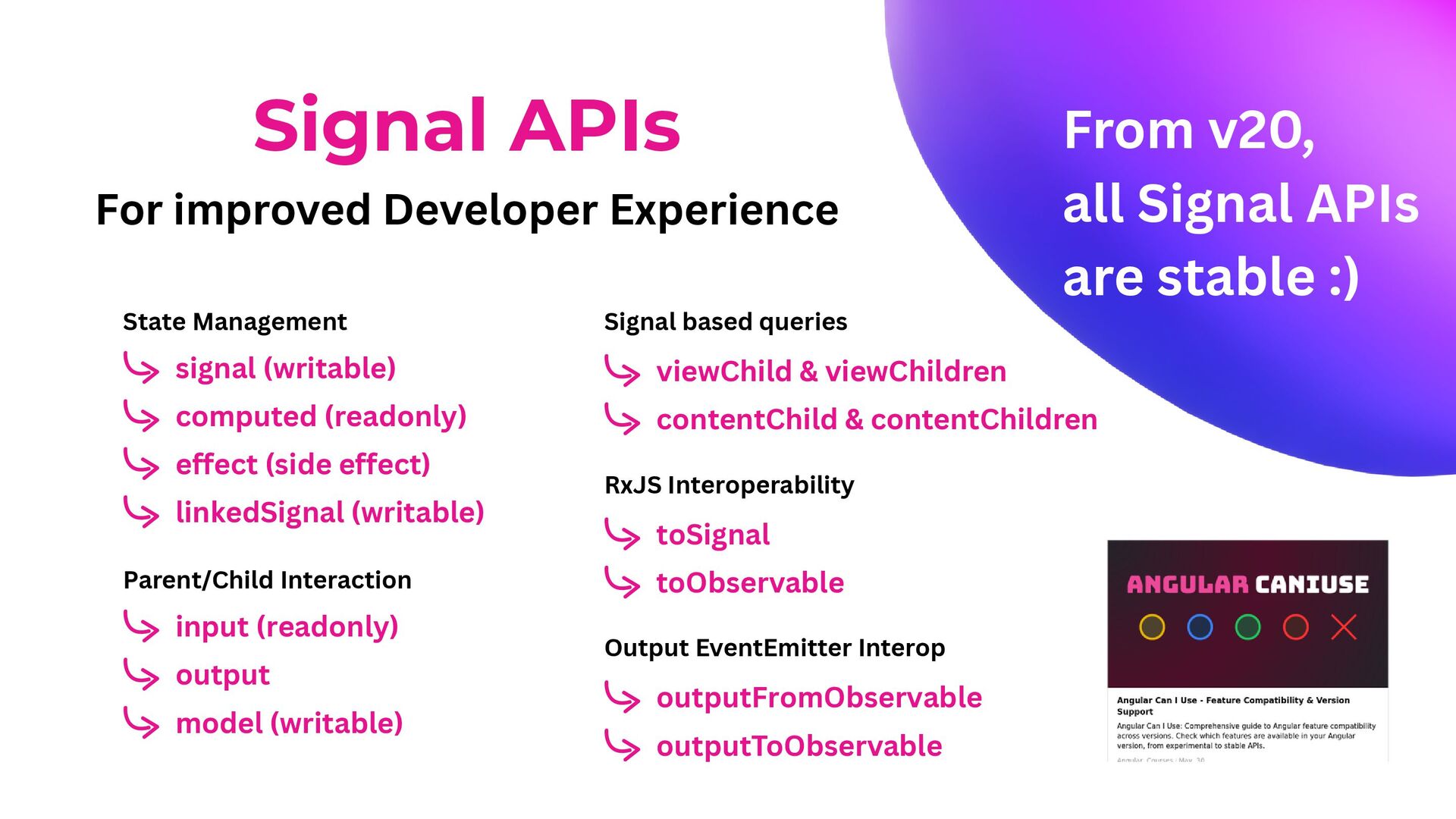
signal (writable) computed (readonly) input (readonly) output model (writable) RxJS Interoperability toSignal toObservable Signal based queries viewChild & viewChildren contentChild & contentChildren effect (side effect) linkedSignal (writable) Output EventEmitter Interop outputFromObservable outputToObservable From v20, all Signal APIs are stable :)


 hschwentner
 findyinc
 rollbear
 clockmaker
 uyuki234
 kasacchiful
 econanringo
 eed3si9n
 kmars0605
 iwiwi
iwiwi
 satoshi256kbyte
 reverentgeek
 tmiket
 panda_program
 sachag
 marktimemedia
 csswizardry
 jnunemaker
 jct
jct
 auna
auna
 thekraken
 deanohume