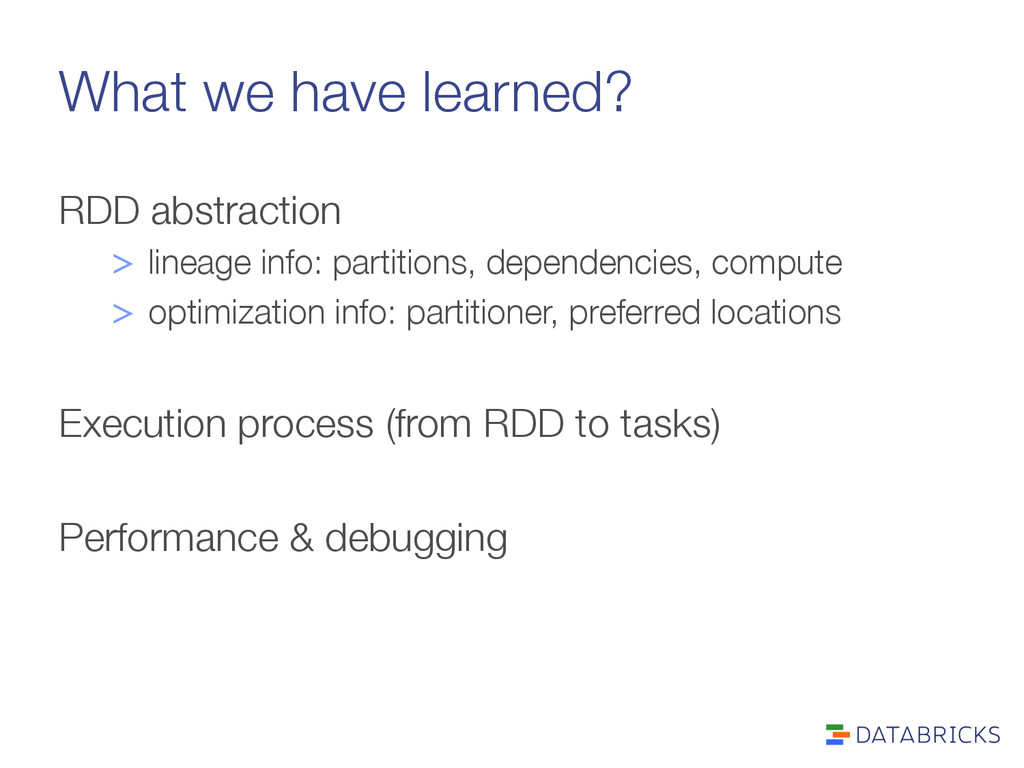
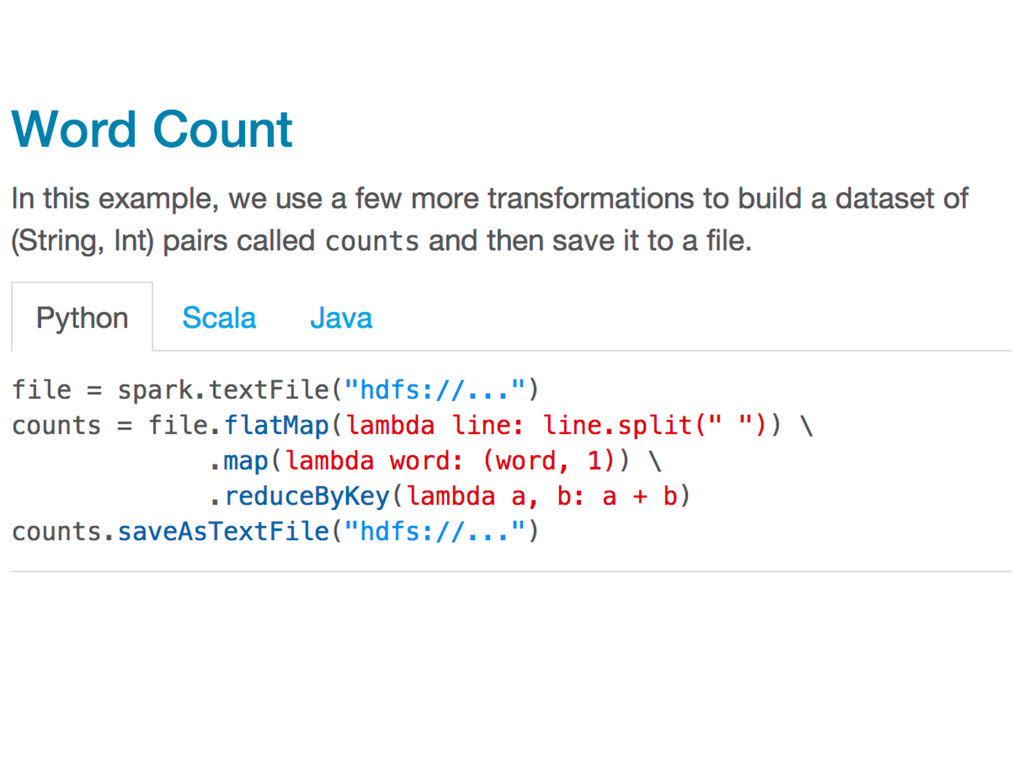
Performance Debugging * Assumes you can write word count, knows what transformation/action is “Mechanical sympathy” by Jackie Stewart: a driver does not need to know how to build an engine but they need to know the fundamentals of how one works to get the best out of it
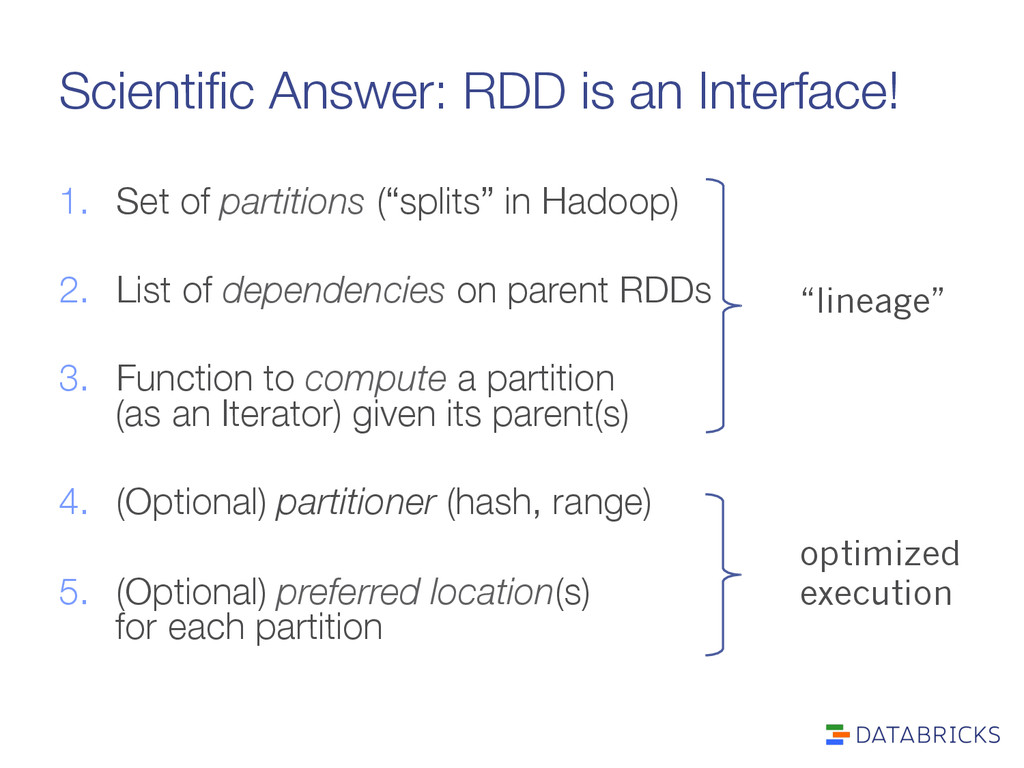
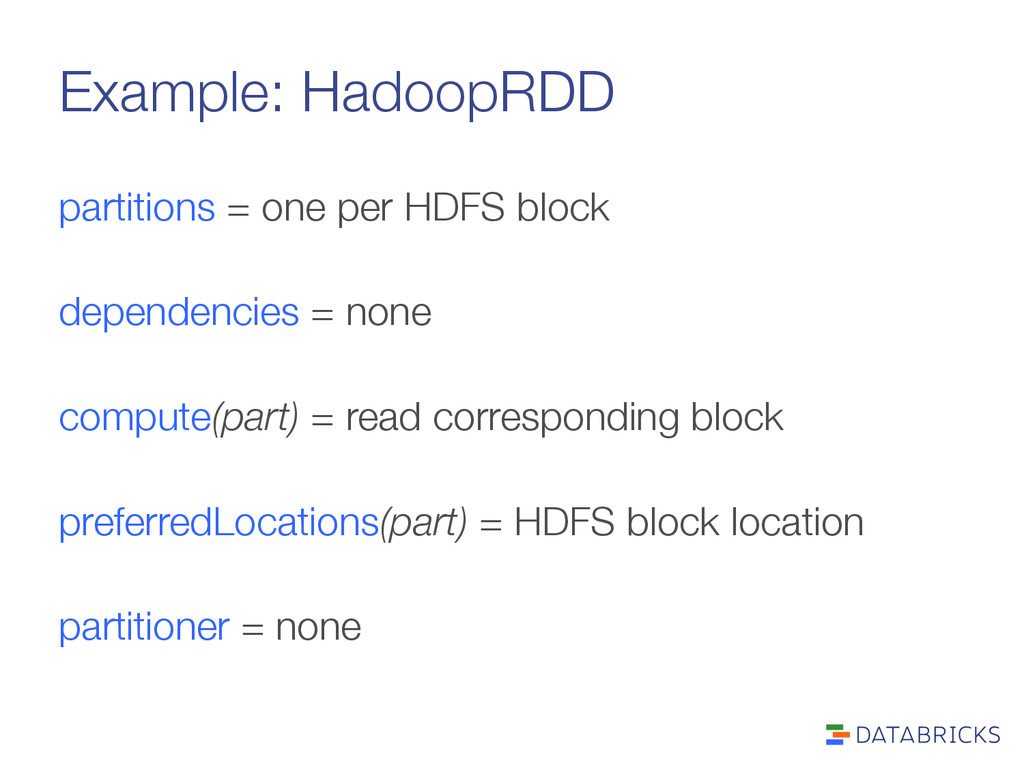
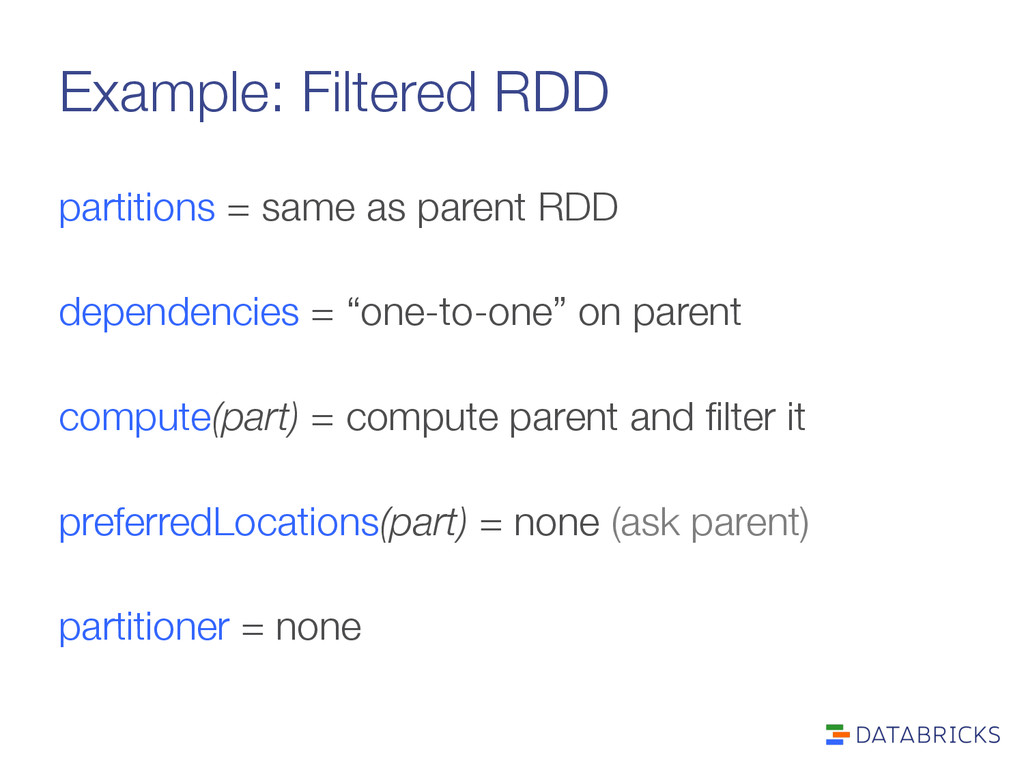
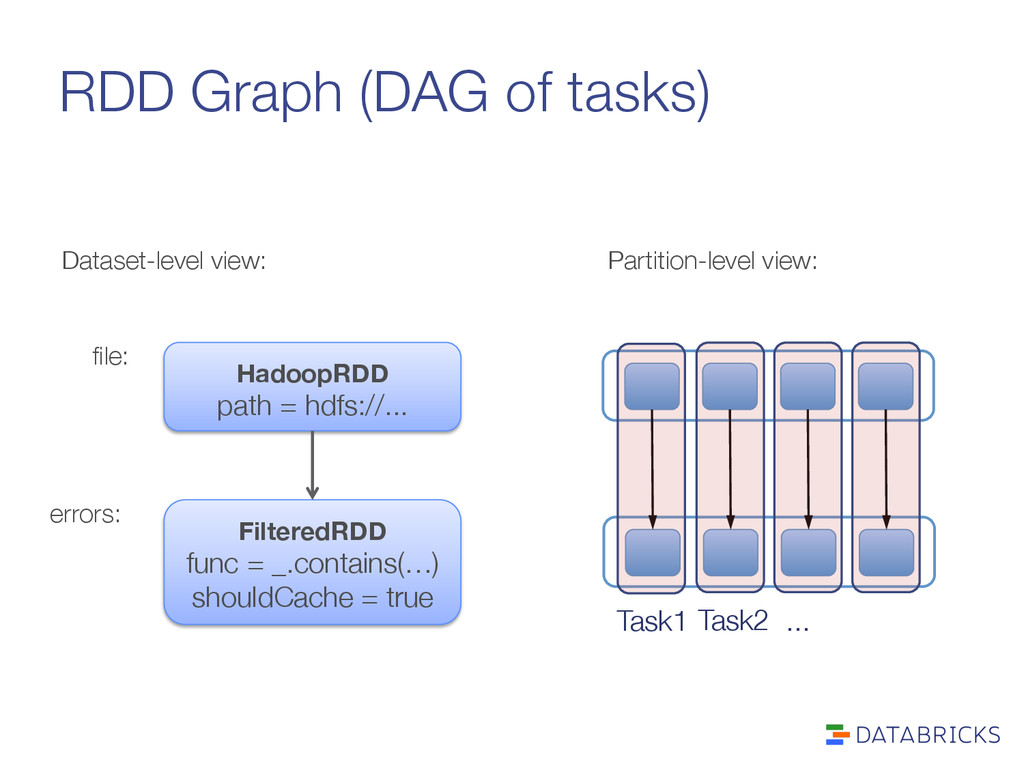
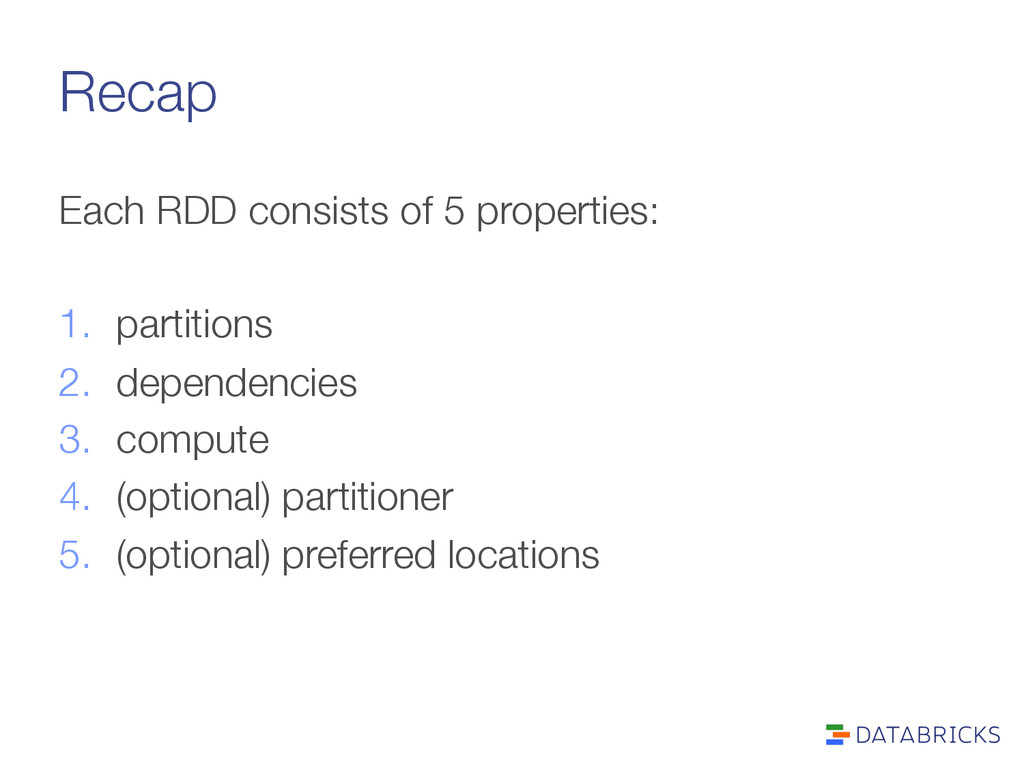
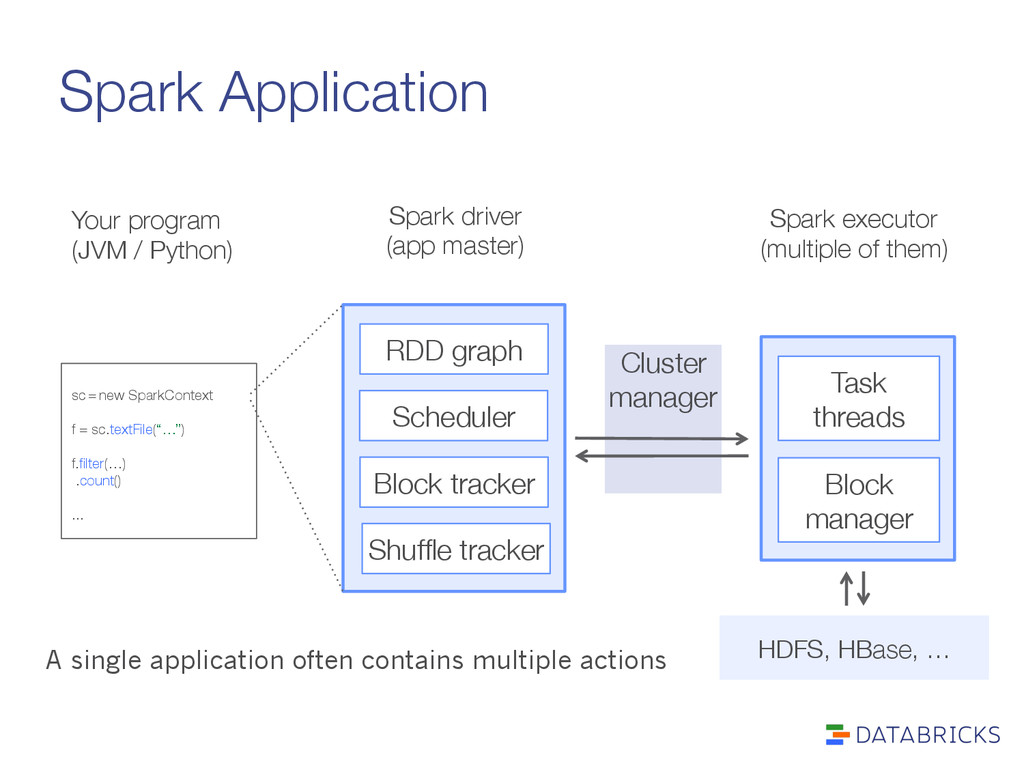
(“splits” in Hadoop) 2. List of dependencies on parent RDDs 3. Function to compute a partition" (as an Iterator) given its parent(s) 4. (Optional) partitioner (hash, range) 5. (Optional) preferred location(s)" for each partition “lineage” optimized execution
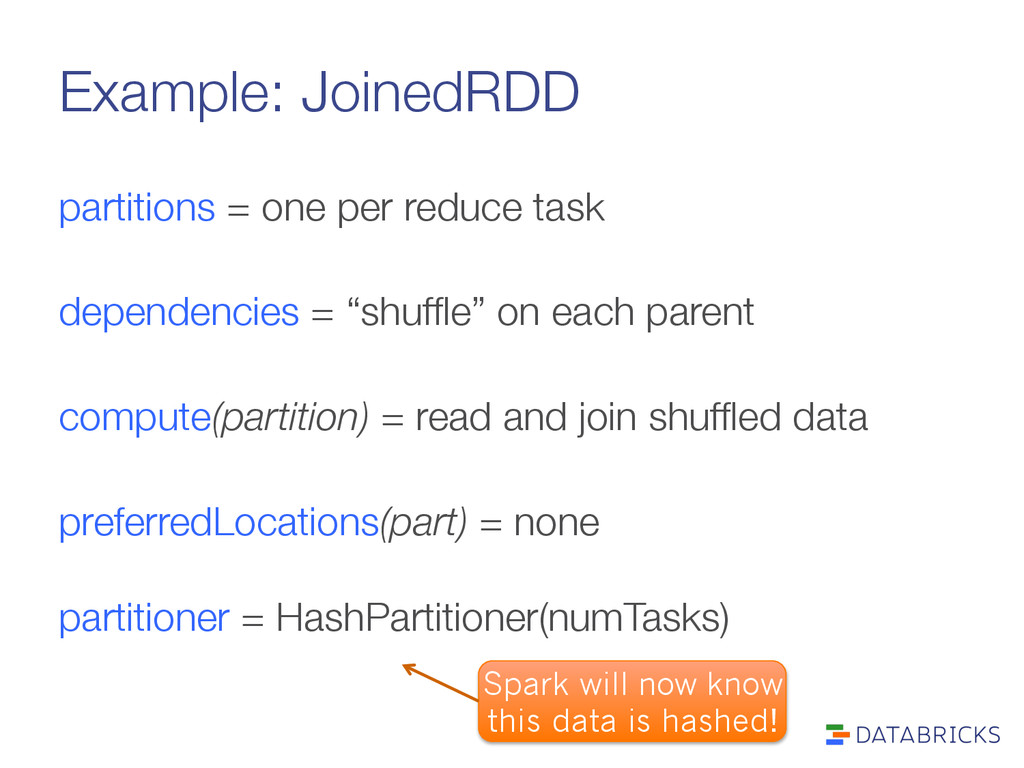
“shuffle” on each parent compute(partition) = read and join shuffled data preferredLocations(part) = none" partitioner = HashPartitioner(numTasks) Spark will now know this data is hashed!
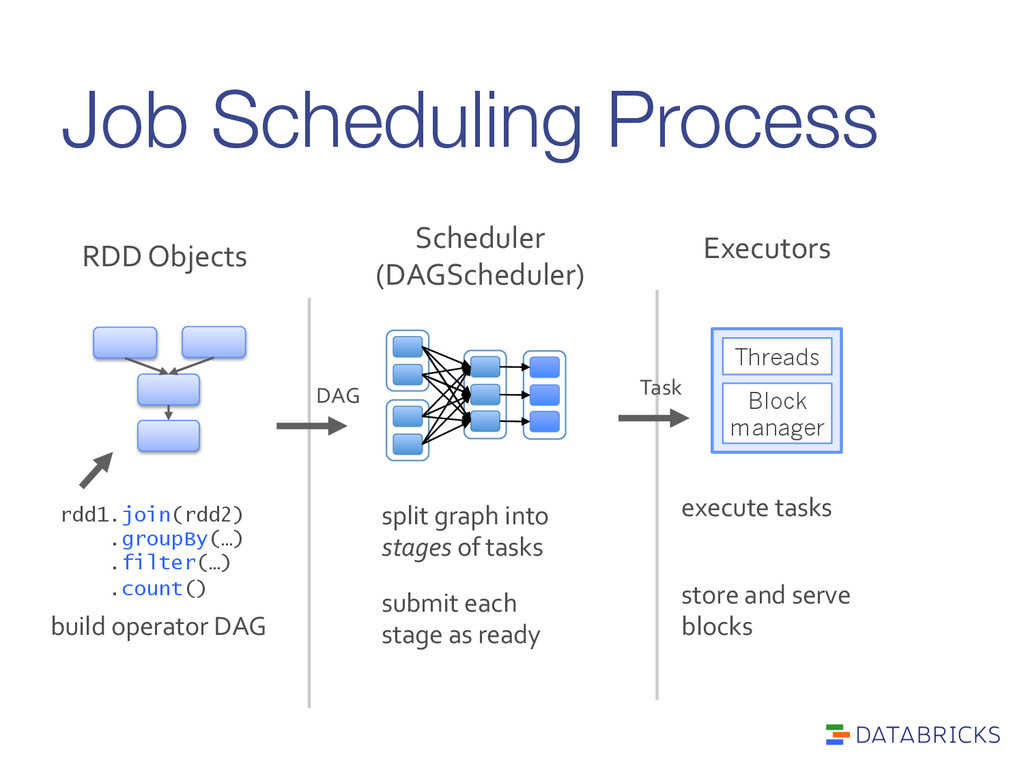
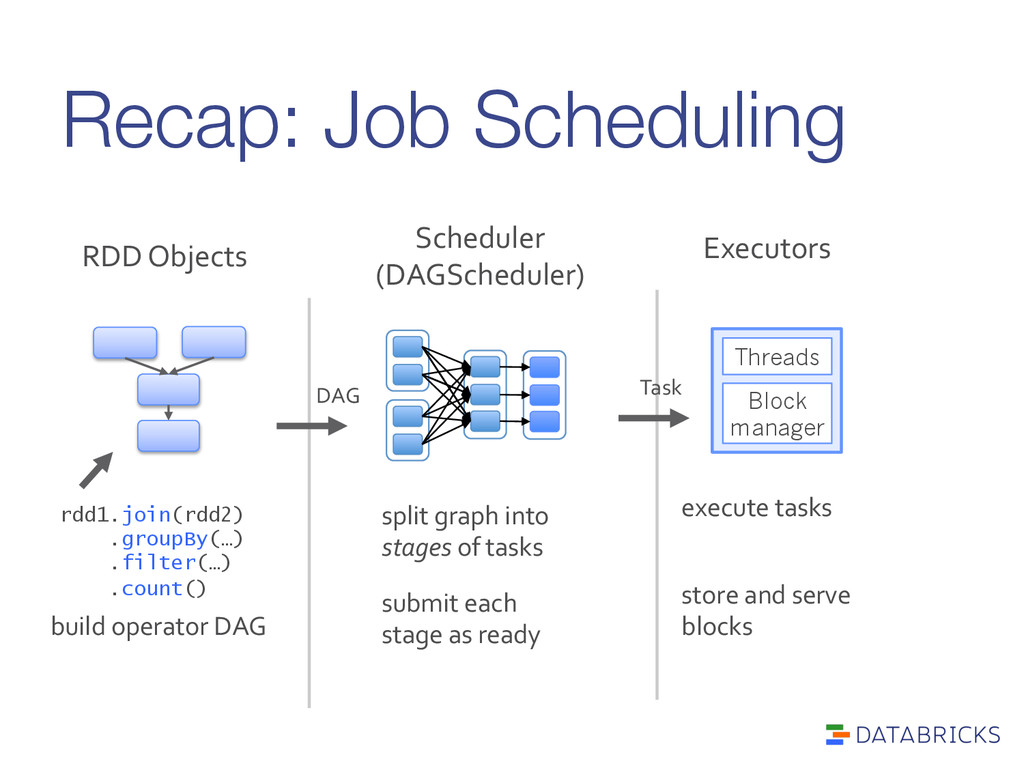
build operator DAG Scheduler (DAGScheduler) split graph into stages of tasks submit each stage as ready DAG Executors execute tasks store and serve blocks Block manager Threads Task
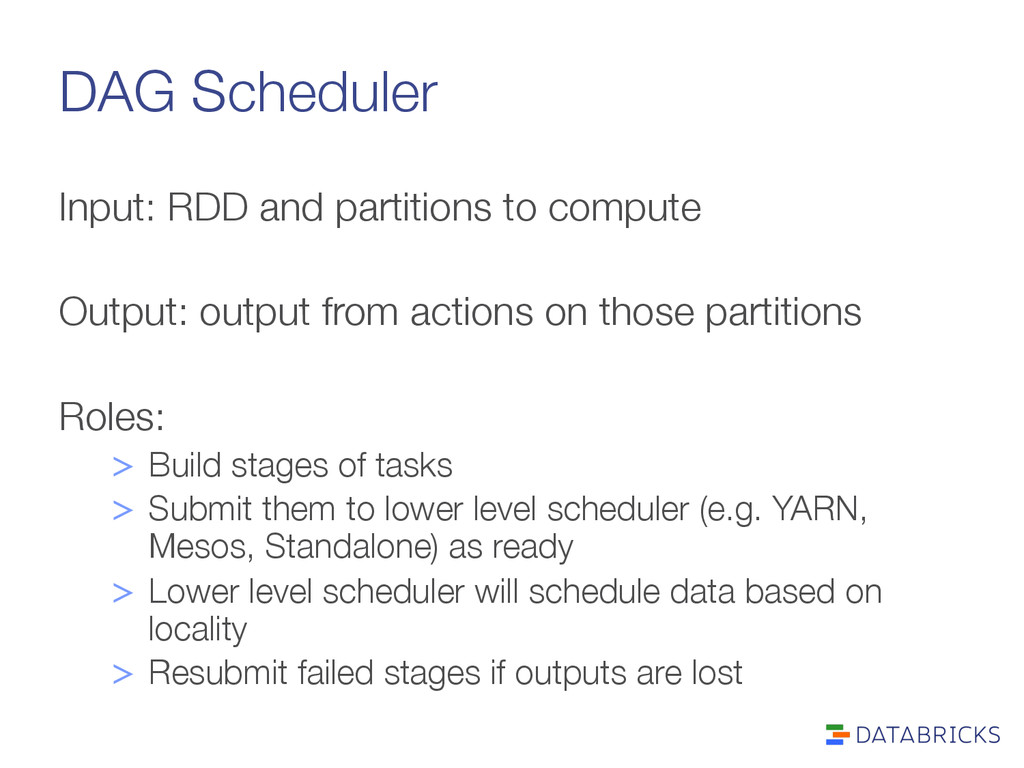
from actions on those partitions Roles: > Build stages of tasks > Submit them to lower level scheduler (e.g. YARN, Mesos, Standalone) as ready > Lower level scheduler will schedule data based on locality > Resubmit failed stages if outputs are lost
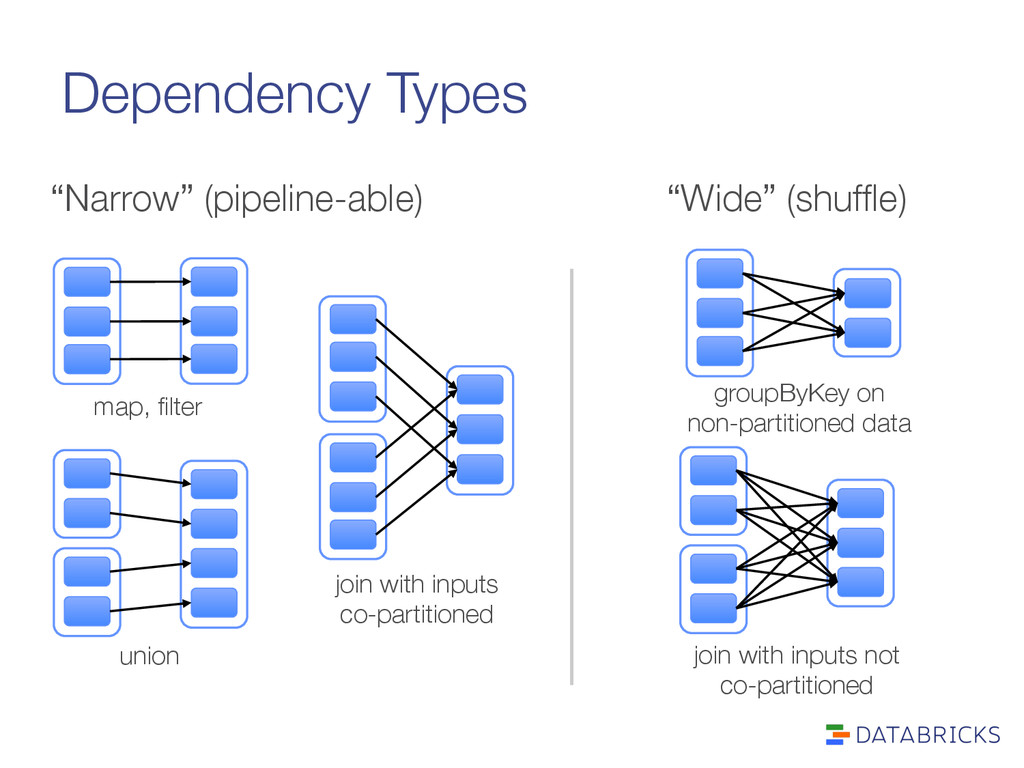
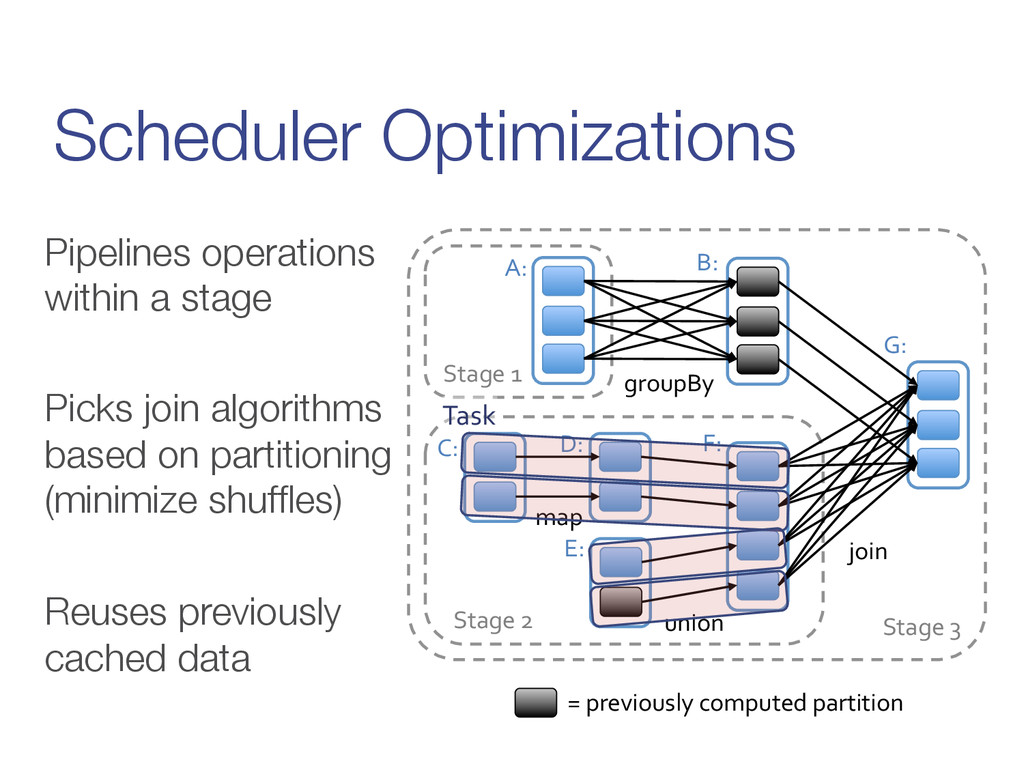
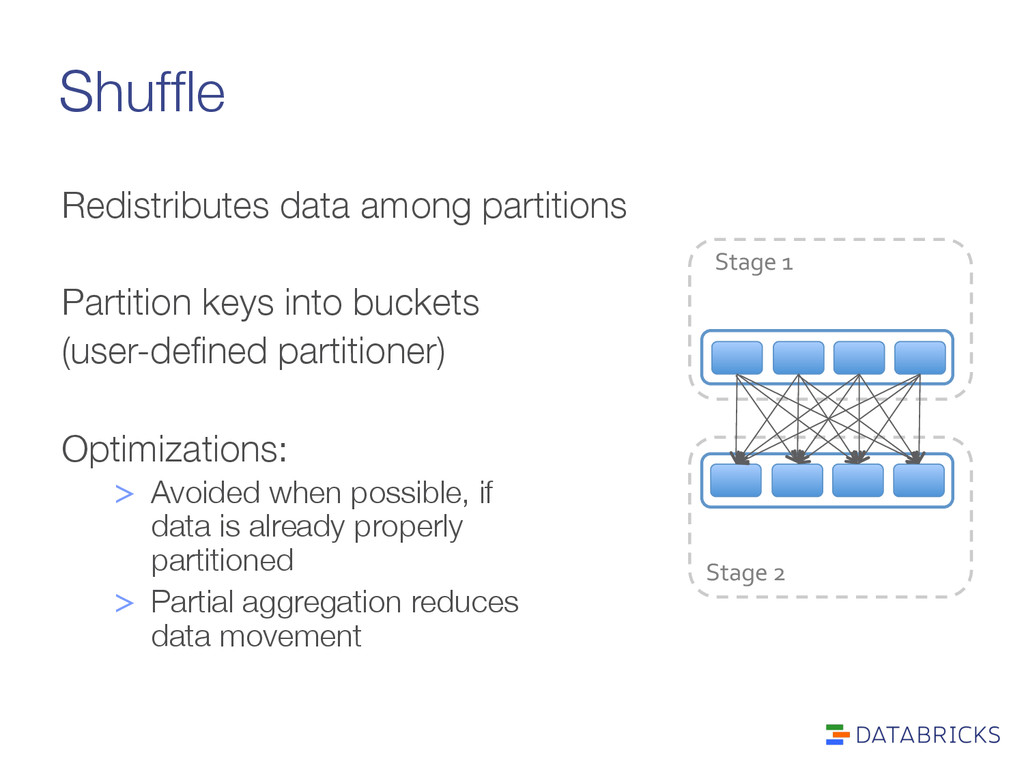
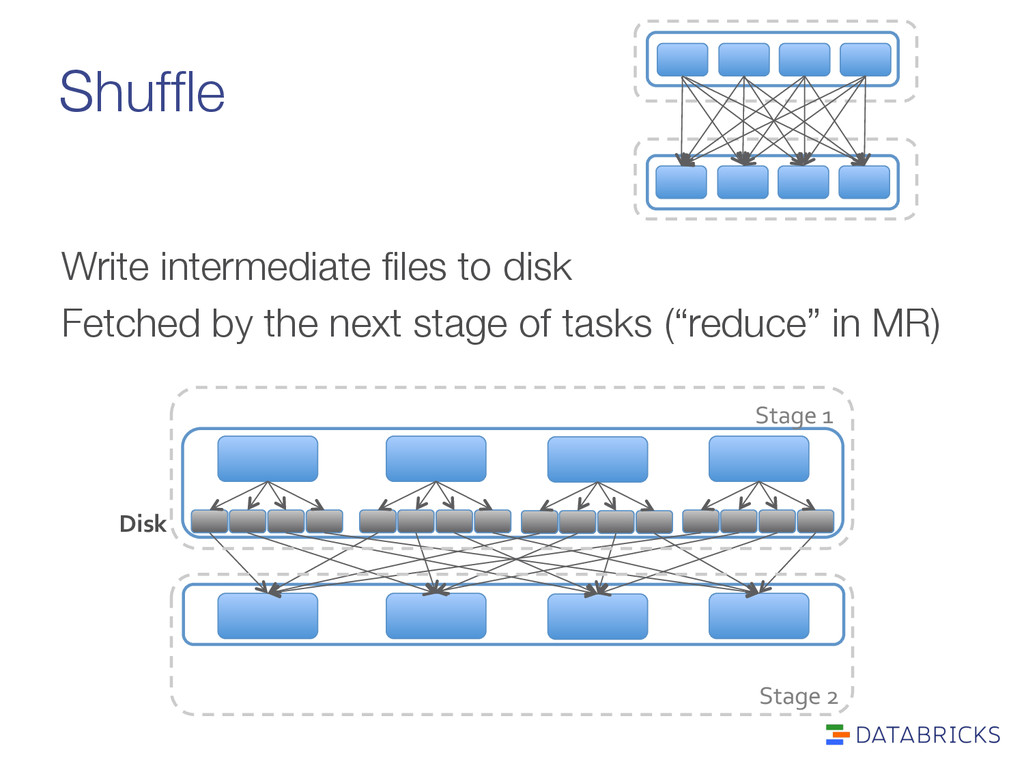
partitions Partition keys into buckets (user-defined partitioner) Optimizations: > Avoided when possible, if" data is already properly" partitioned > Partial aggregation reduces" data movement
build operator DAG Scheduler (DAGScheduler) split graph into stages of tasks submit each stage as ready DAG Executors execute tasks store and serve blocks Block manager Threads Task
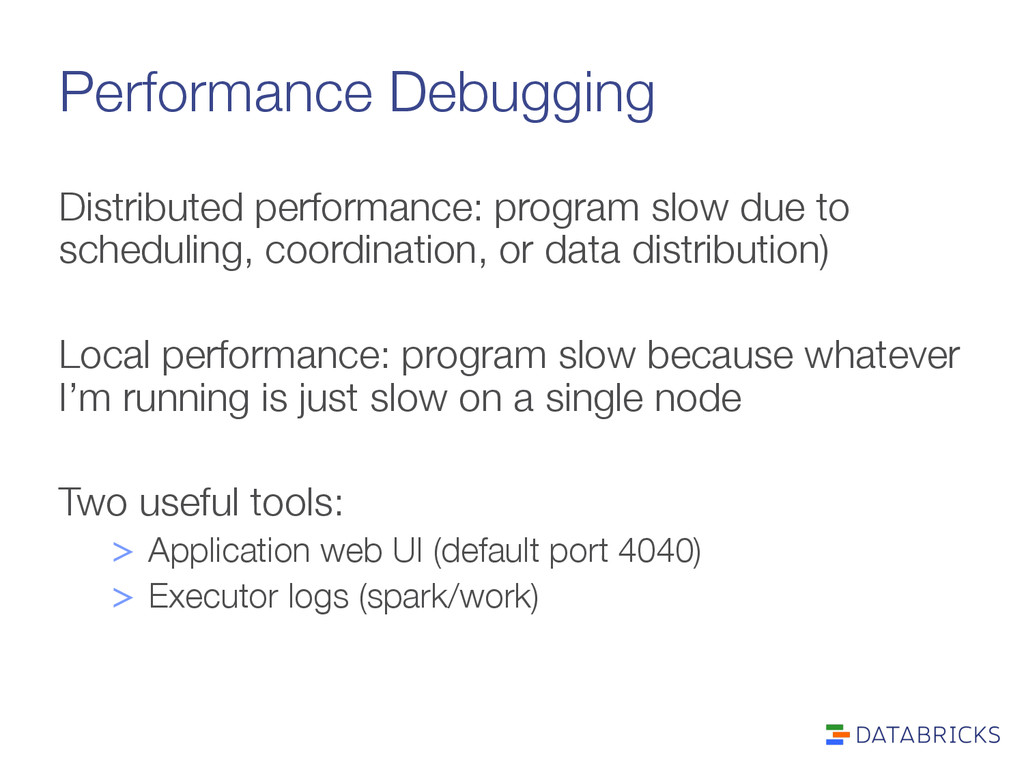
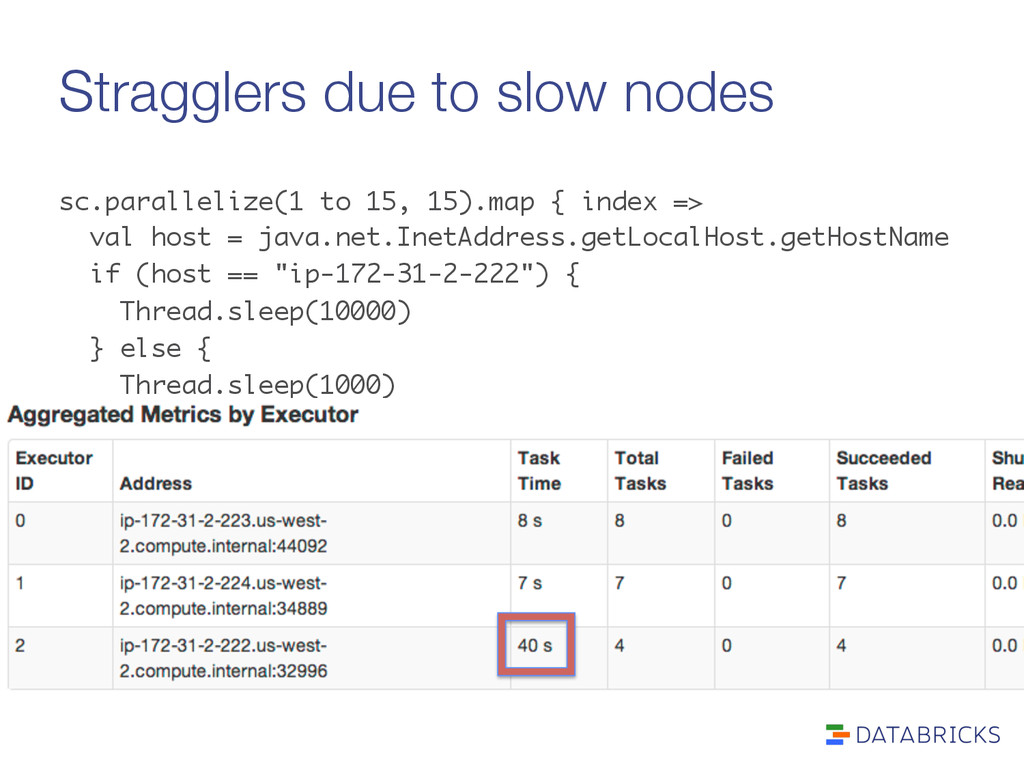
or data distribution) Local performance: program slow because whatever I’m running is just slow on a single node Two useful tools: > Application web UI (default port 4040) > Executor logs (spark/work)
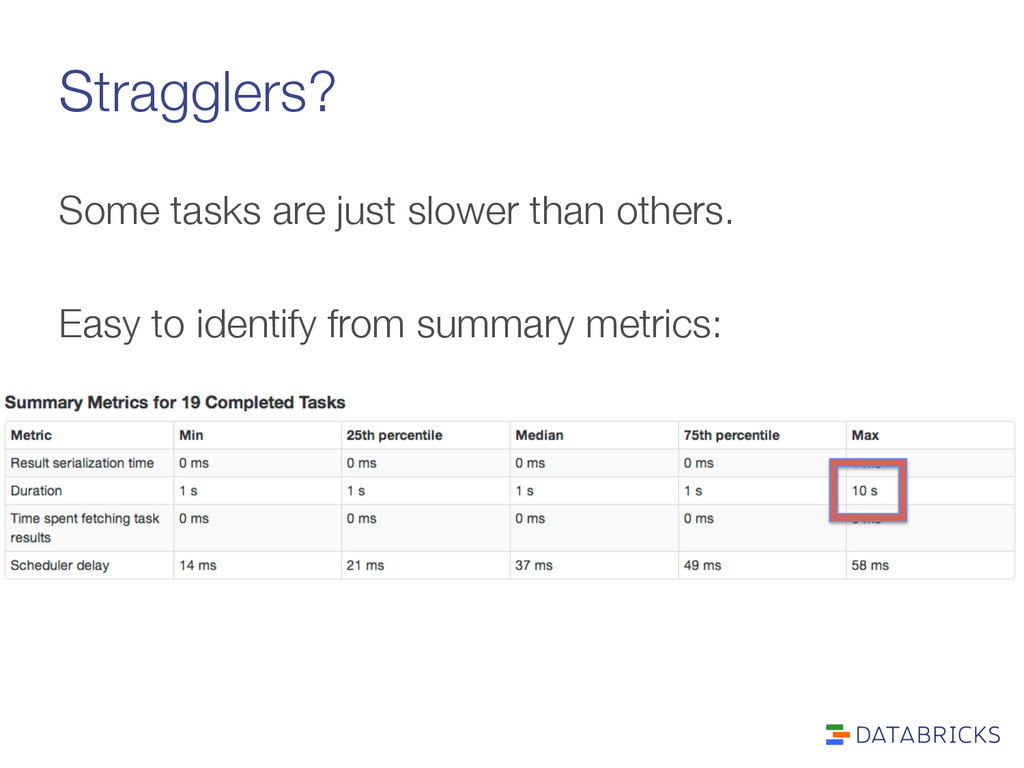
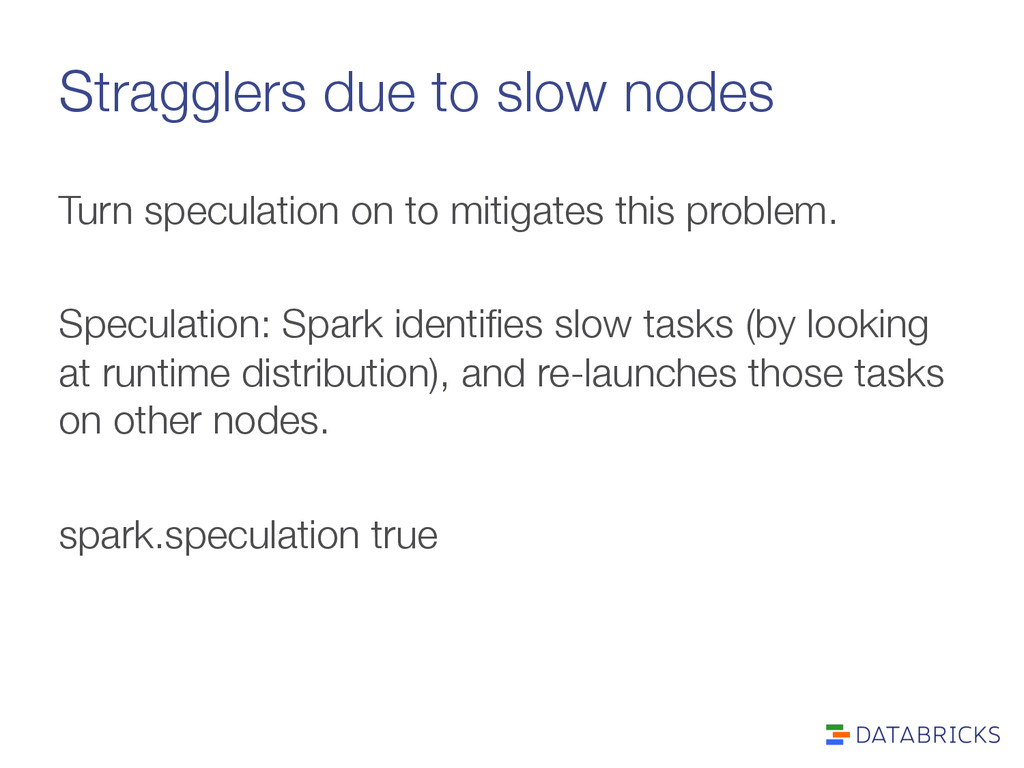
this problem. Speculation: Spark identifies slow tasks (by looking at runtime distribution), and re-launches those tasks on other nodes. spark.speculation true
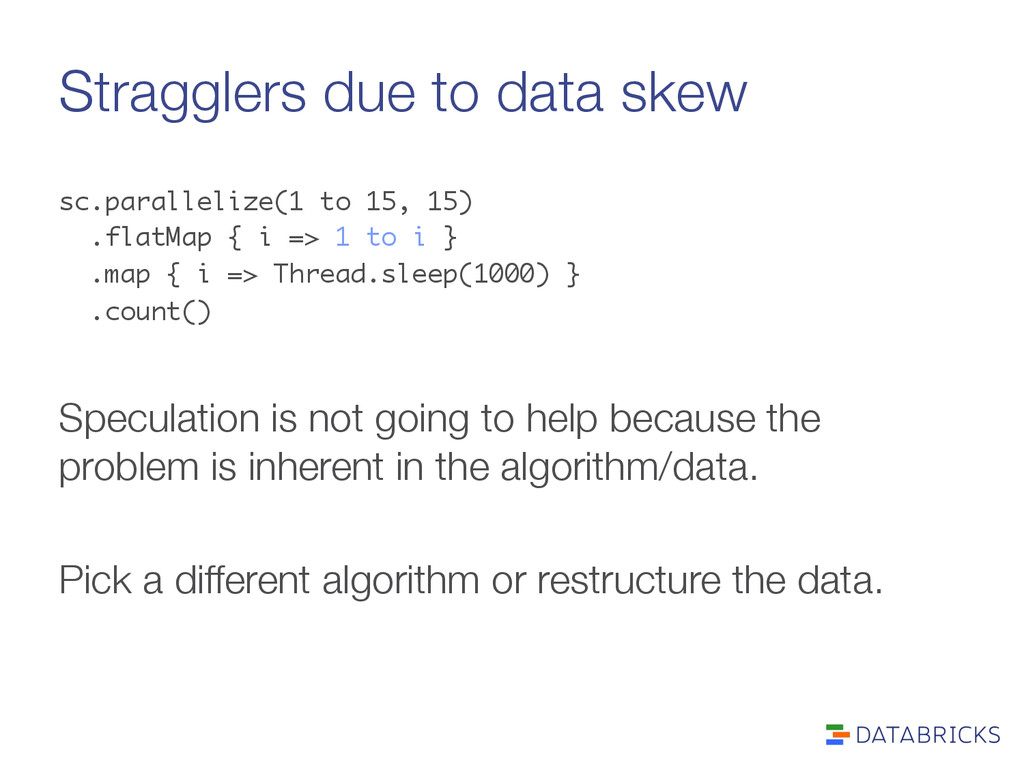
{ i => 1 to i } .map { i => Thread.sleep(1000) } .count() Speculation is not going to help because the problem is inherent in the algorithm/data. Pick a different algorithm or restructure the data.
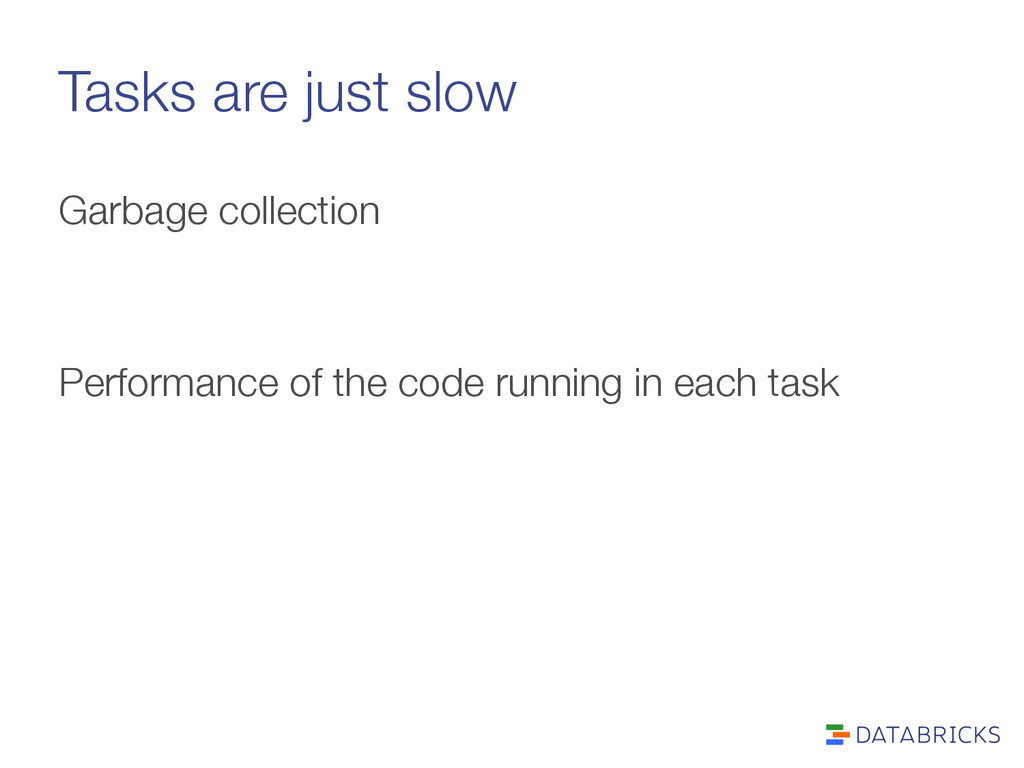
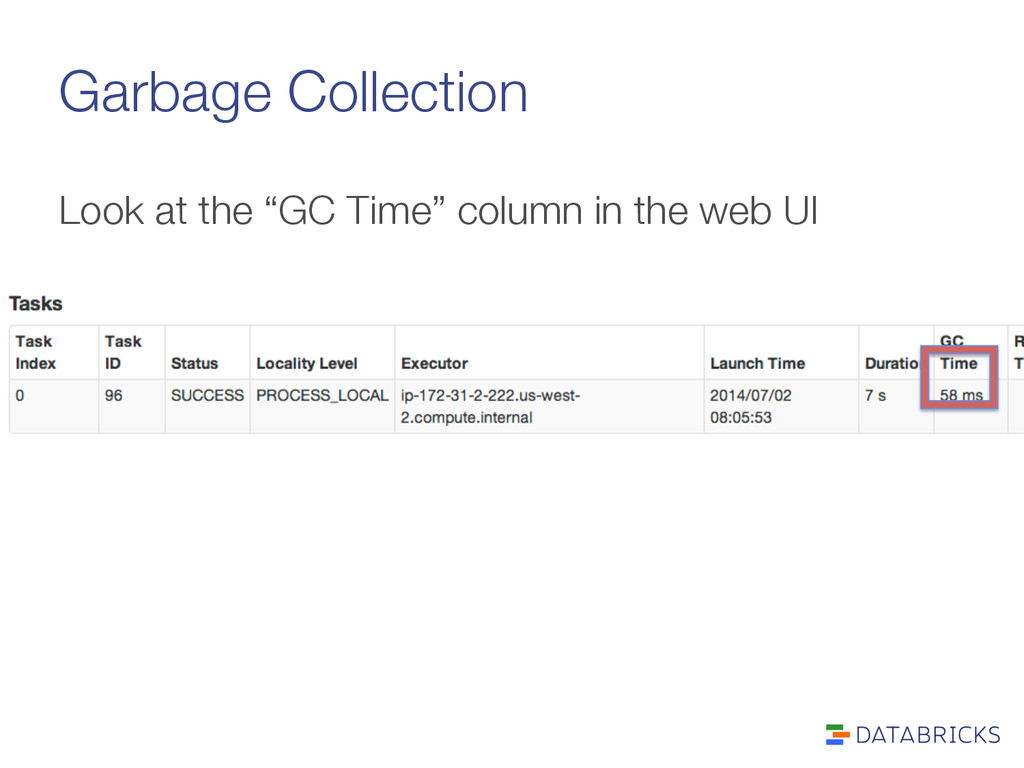
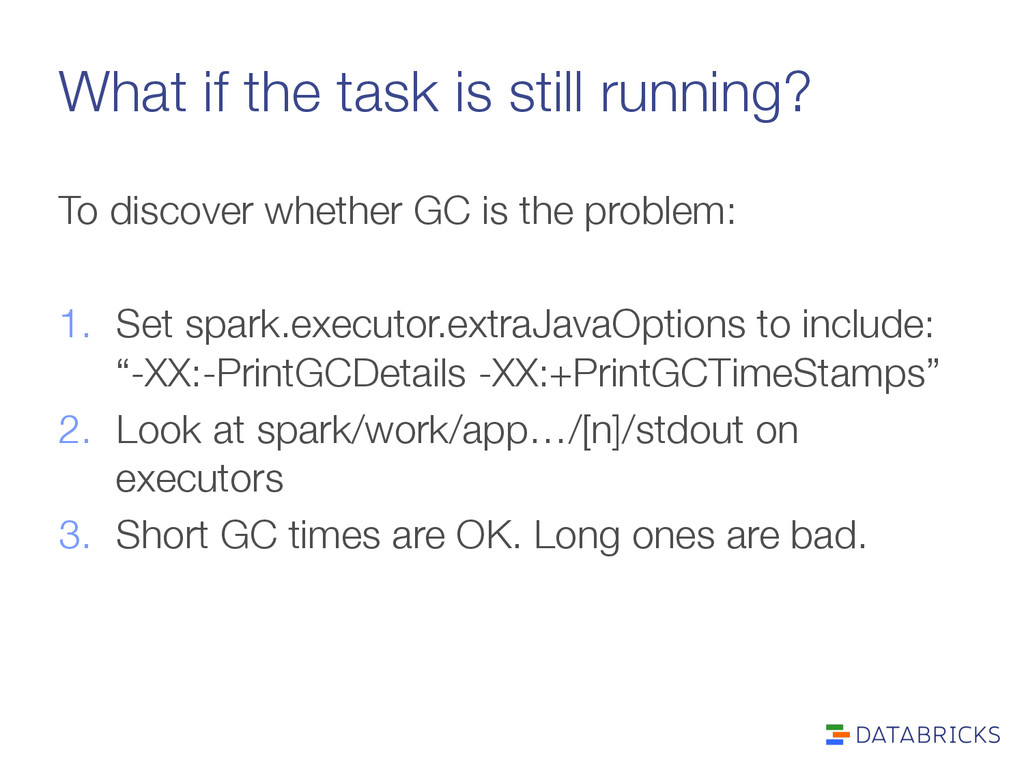
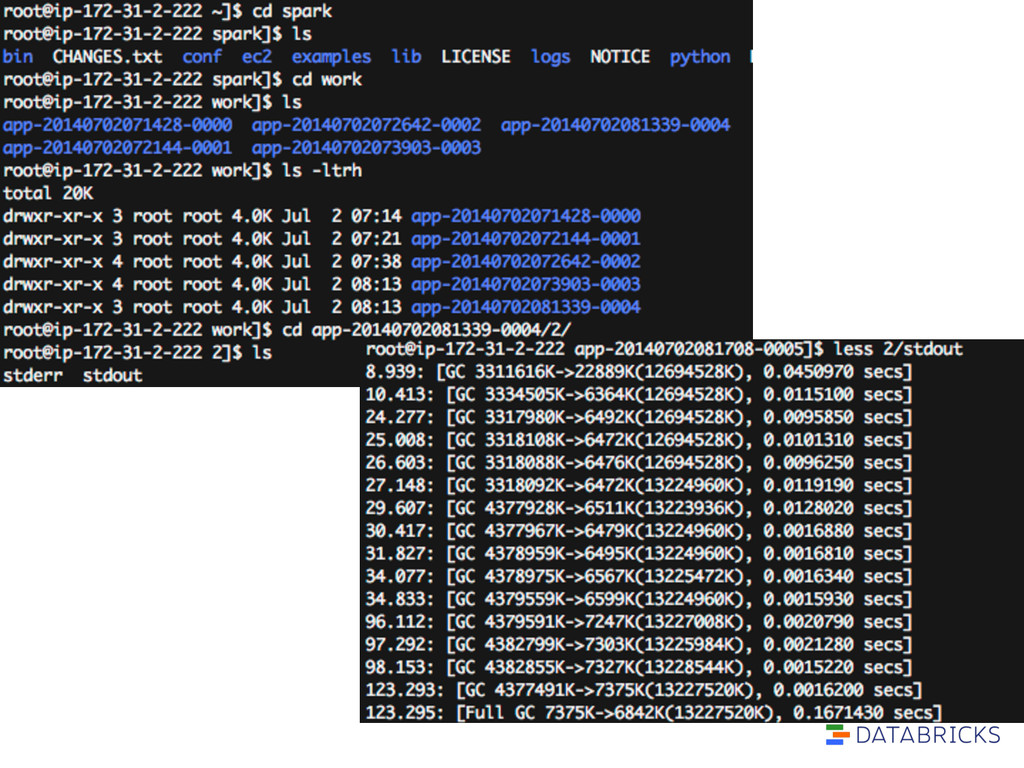
GC is the problem: 1. Set spark.executor.extraJavaOptions to include: “-XX:-PrintGCDetails -XX:+PrintGCTimeStamps” 2. Look at spark/work/app…/[n]/stdout on executors 3. Short GC times are OK. Long ones are bad.
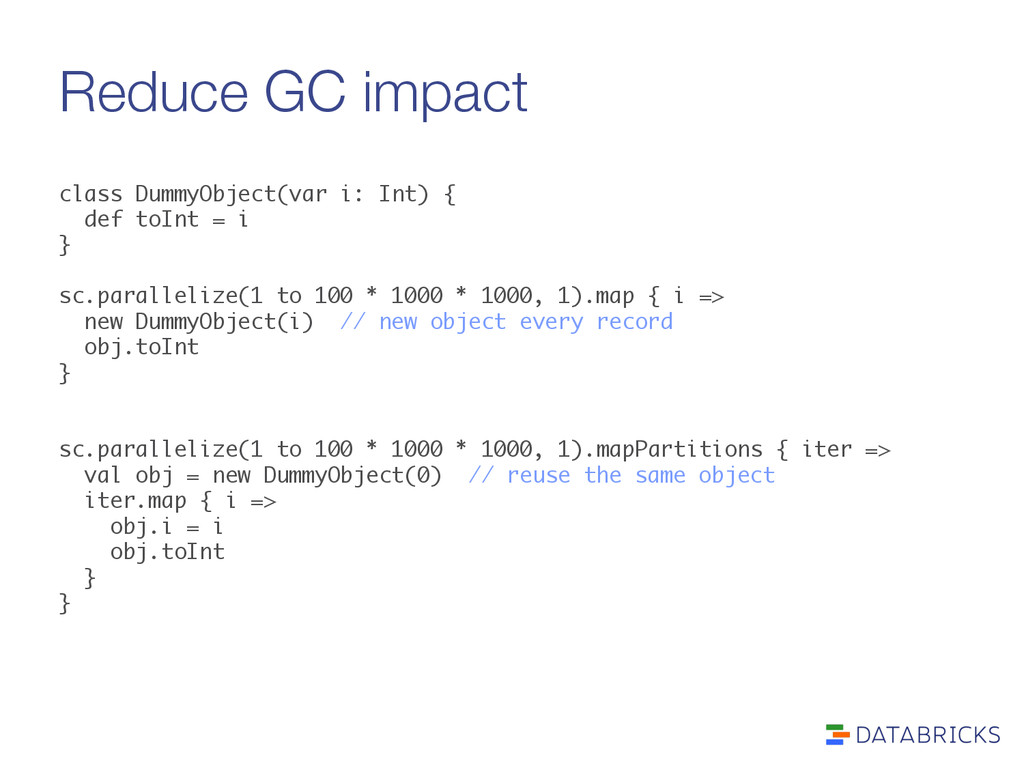
= i } sc.parallelize(1 to 100 * 1000 * 1000, 1).map { i => new DummyObject(i) // new object every record obj.toInt } sc.parallelize(1 to 100 * 1000 * 1000, 1).mapPartitions { iter => val obj = new DummyObject(0) // reuse the same object iter.map { i => obj.i = i obj.toInt } }


 rxin
rxin
 kentapapa
 yakumo
 taiki45
 ktkrhr
 sony
sony
 oracle4engineer
 masasuzu
 tosite
 dip_tech
 ipullrank
 denniskardys
 kimpetersen
 badams
 inesmontani
 marketingsoph
 keithpitt
 codingconduct
 samtorres
 gr2m
gr2m
 jmmastey



![jmap: heap analysis jmap -histo [pid] Gets a histogram of](https://files.speakerdeck.com/presentations/5b5c74e00644013258d2029fef629589/slide_35.jpg)