Upgrade to Pro — share decks privately, control downloads, hide ads and more …

Tested & Proven: Stop Guessing and Start Winnin...

Sponsored · SiteGround - Reliable hosting with speed, security, and support you can count on. →

Tested & Proven: Stop Guessing and Start Winning in SEO

In SEO, we don’t have a shortage of ideas—we have a shortage of proof.

This talk, originally presented at Digital Marketing Europe 2026, breaks down why so many SEOs feel stuck in a cycle of constant work, unclear results, and difficulty proving impact—and more importantly, how to fix it.

Across this session, we explore the three core challenges most SEOs face today:

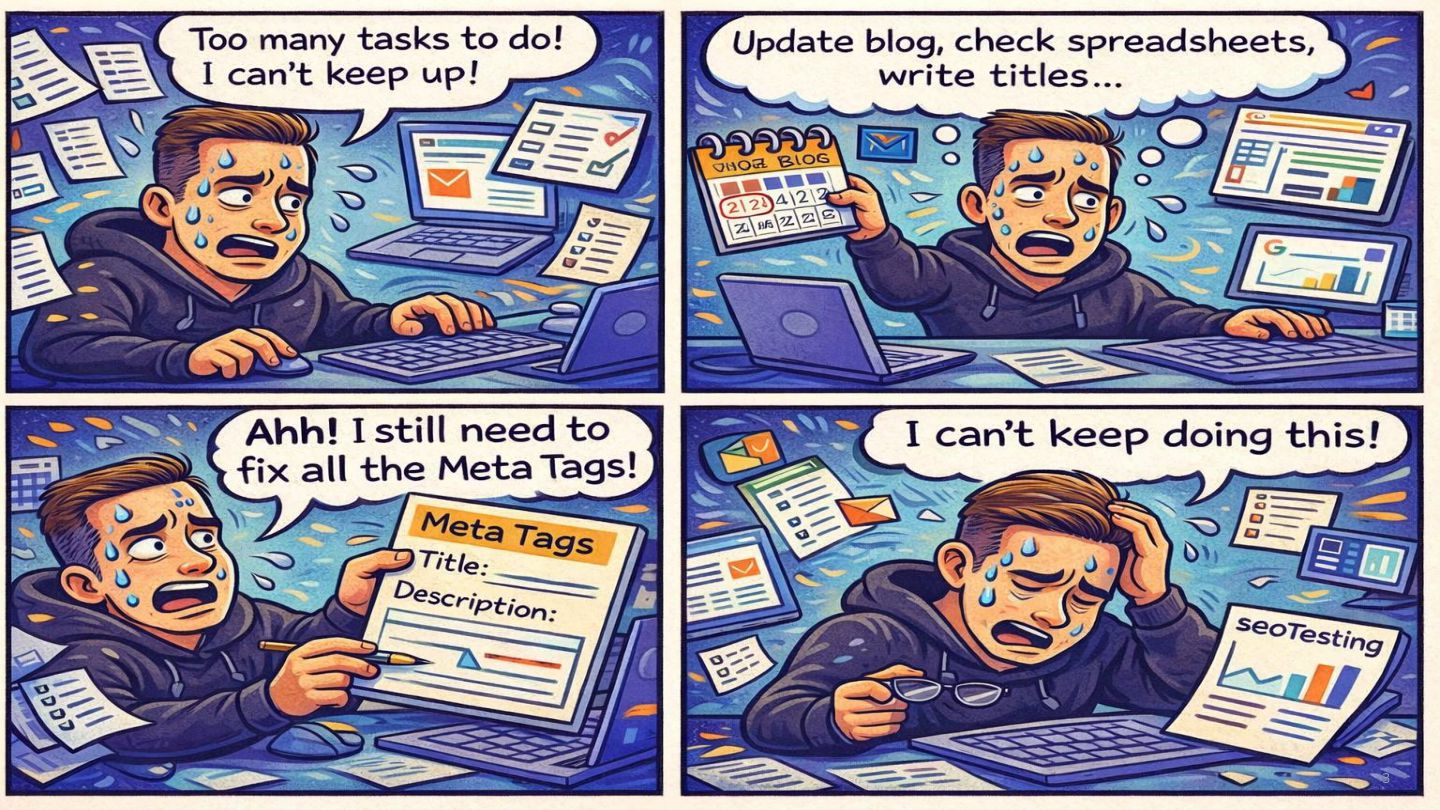
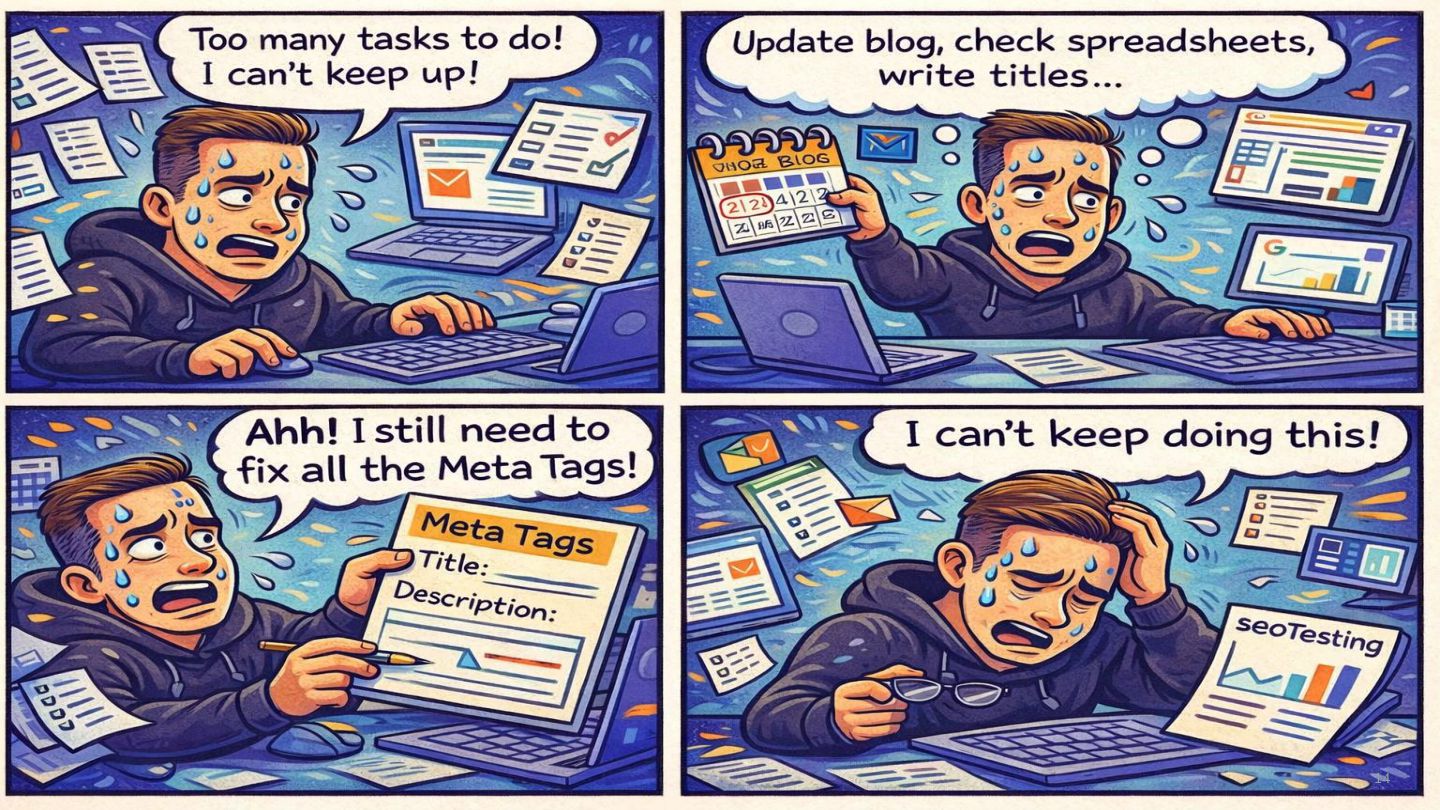
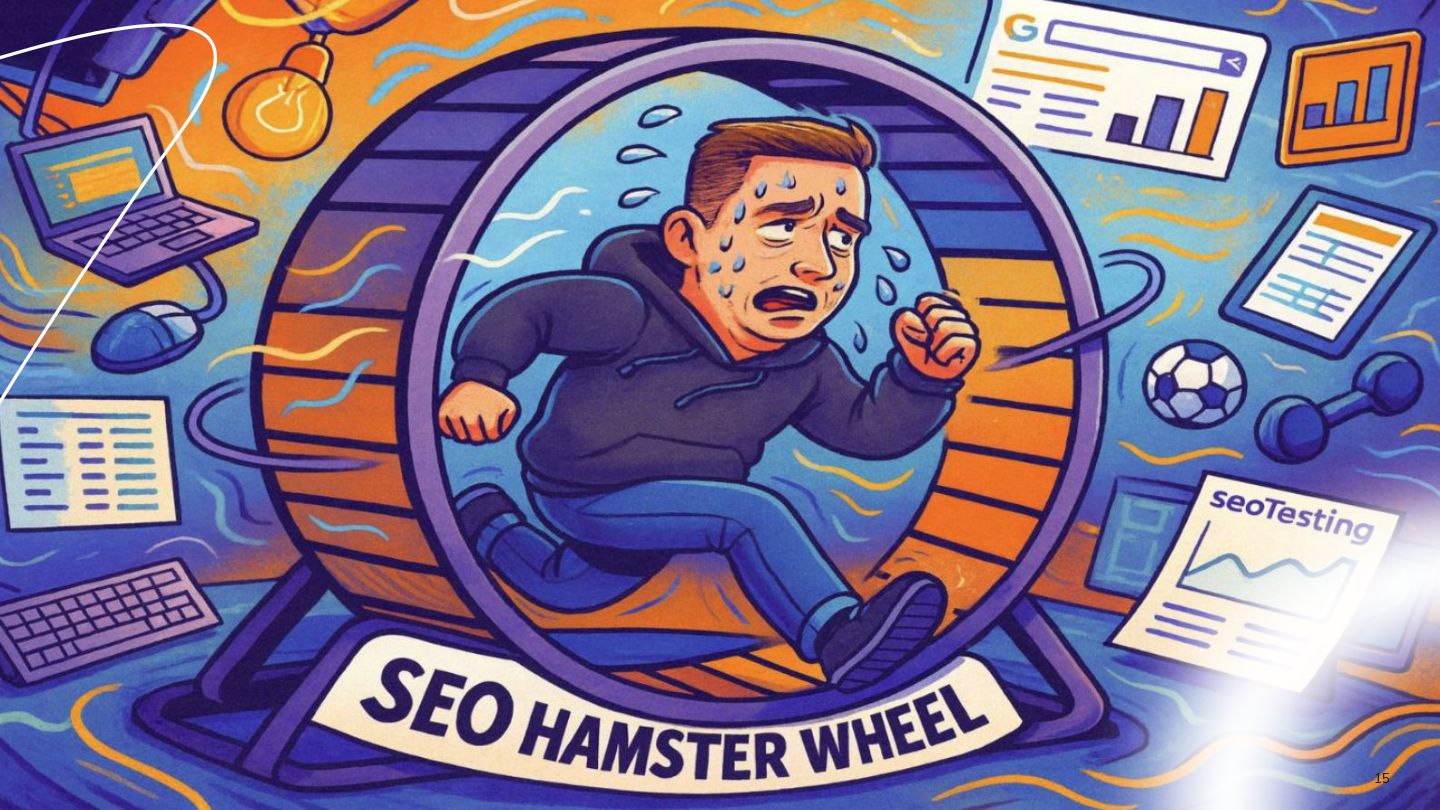
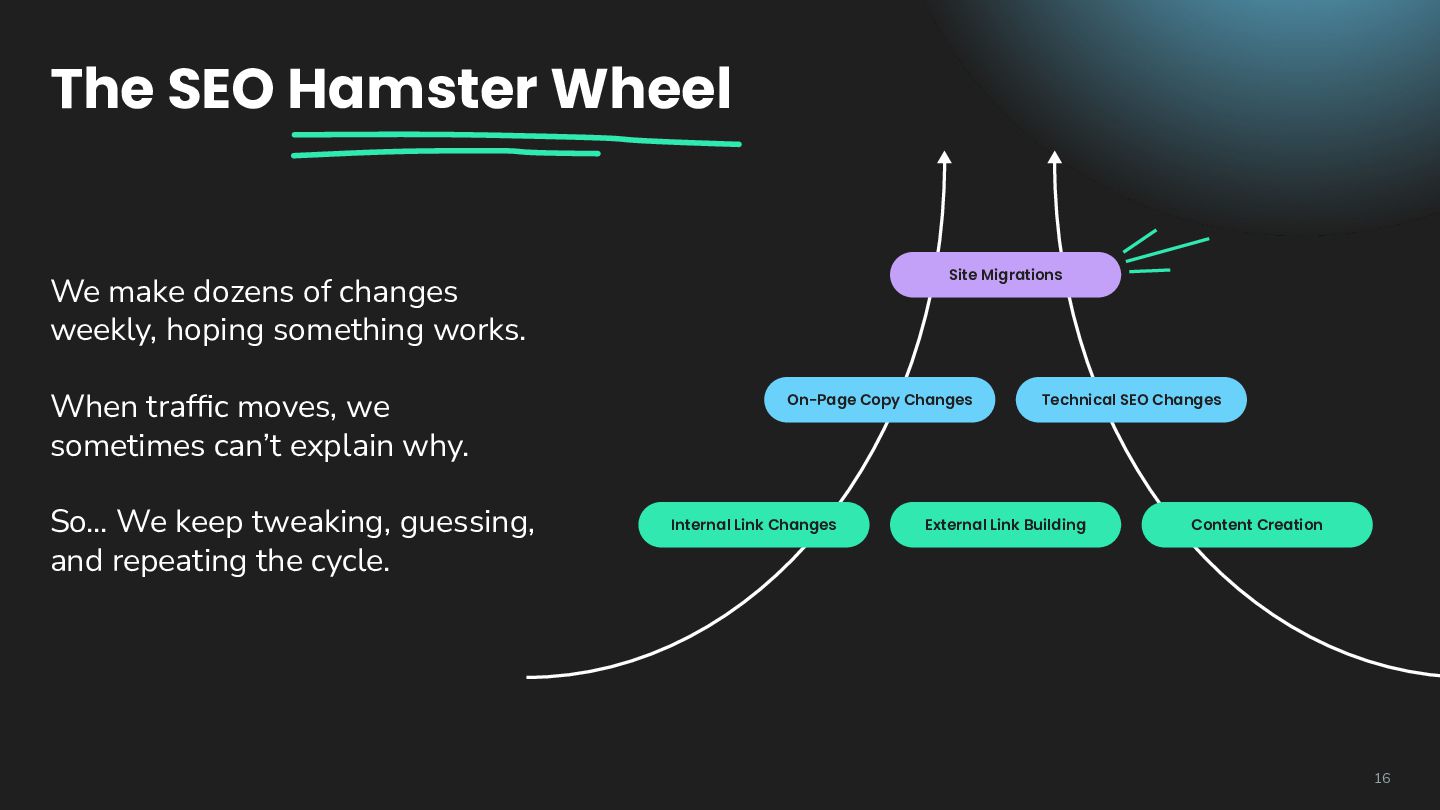
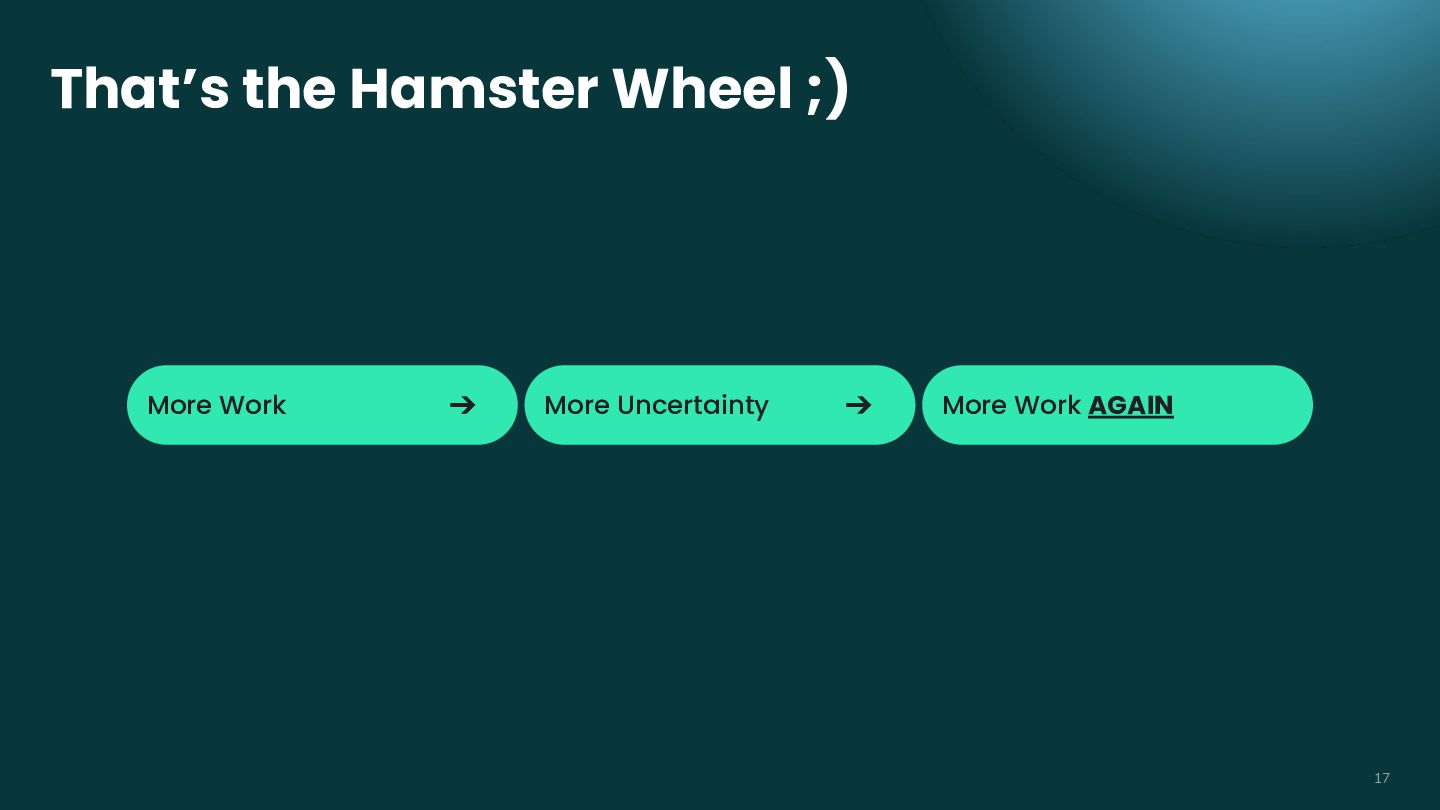
Lack of time — endless tasks, constant changes, and the “SEO hamster wheel” of activity without clear learning
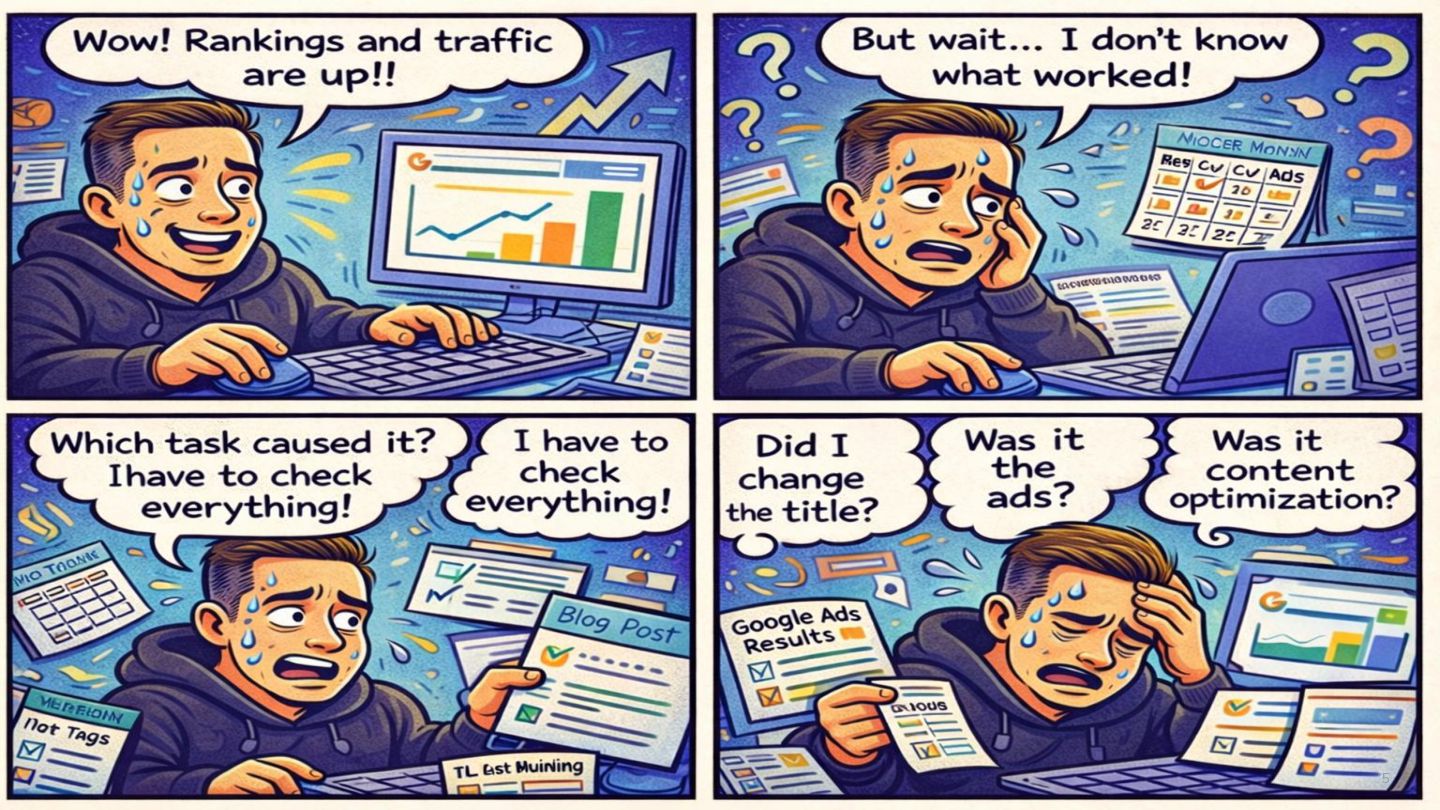
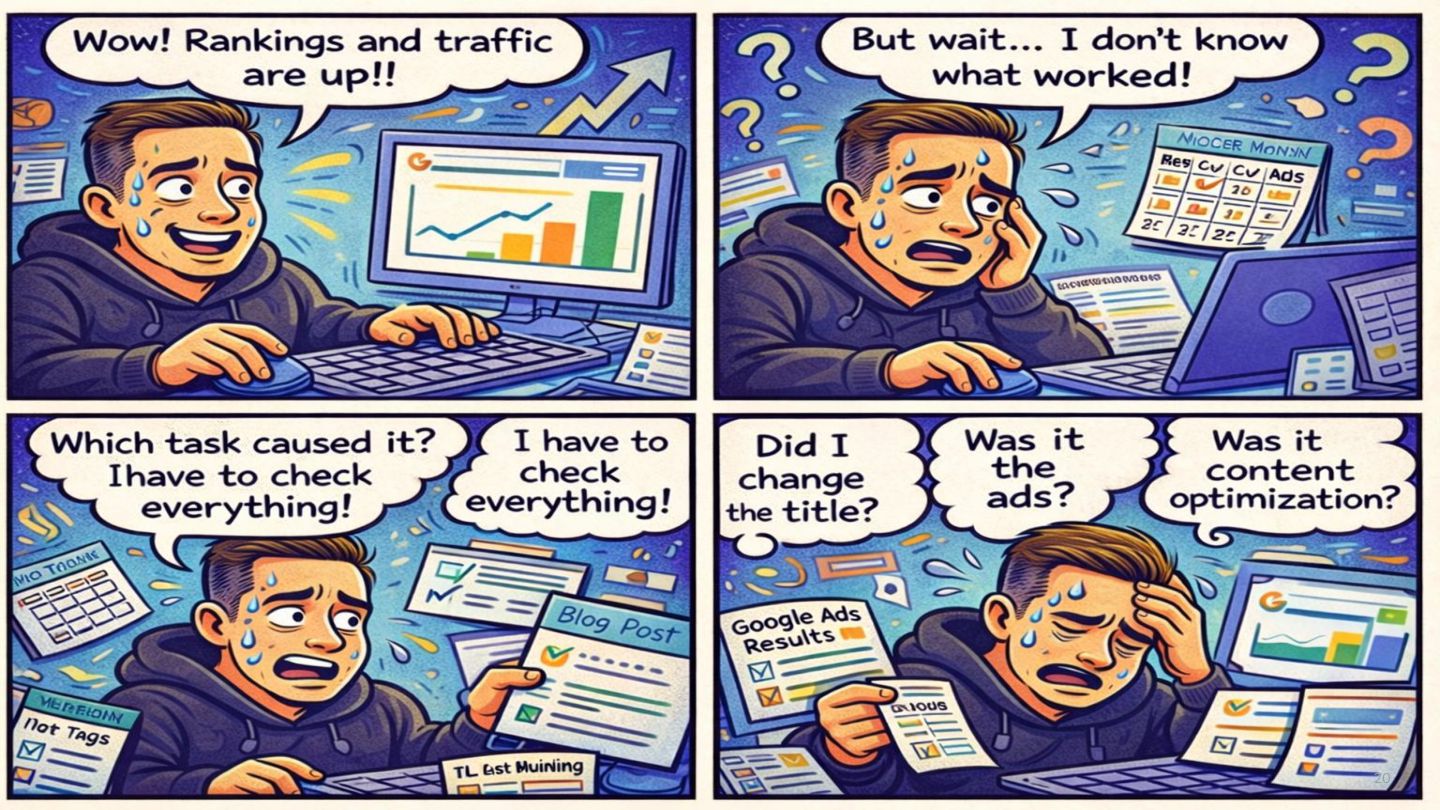
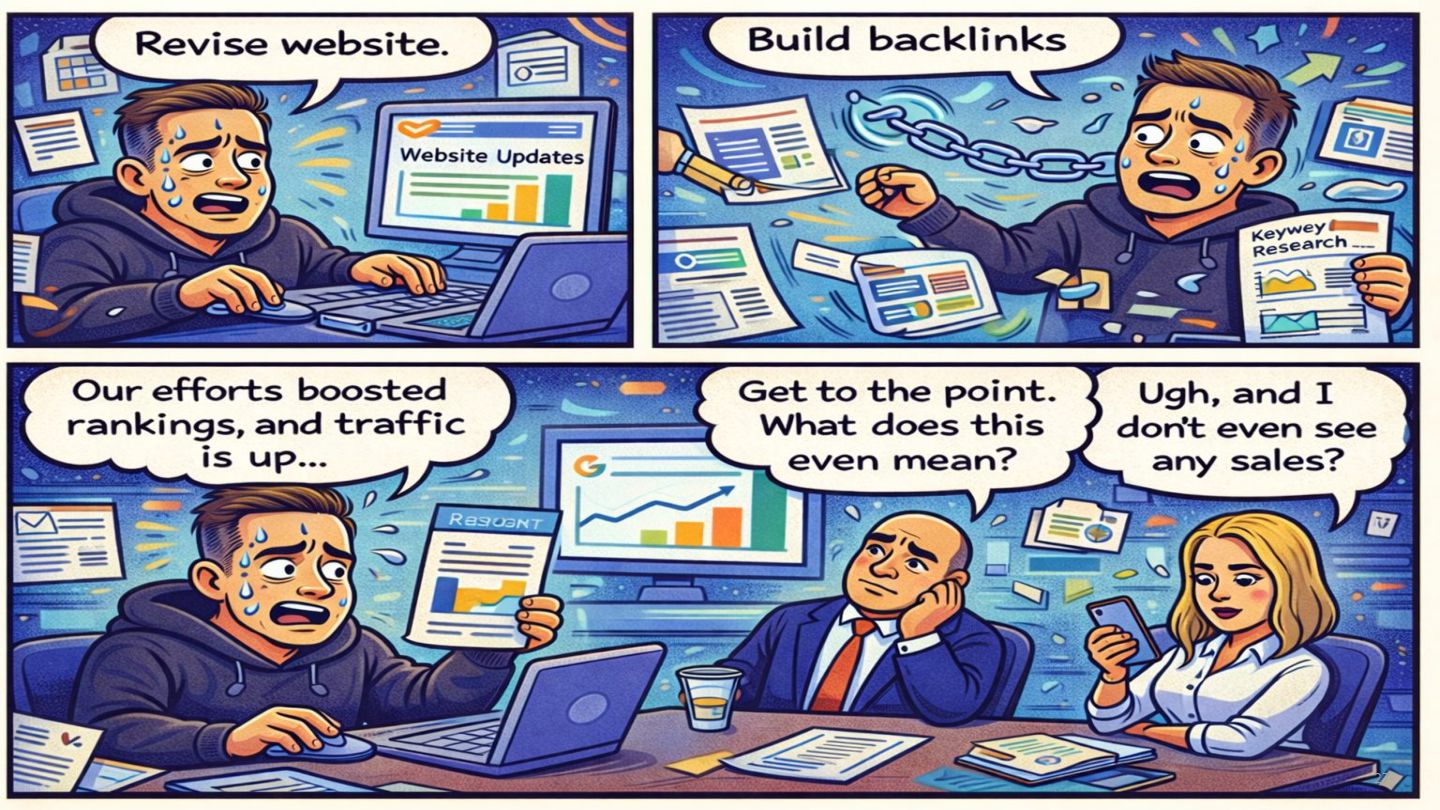
Not knowing what works — rankings go up, but attribution is unclear, leading to wasted effort and repeated guesswork
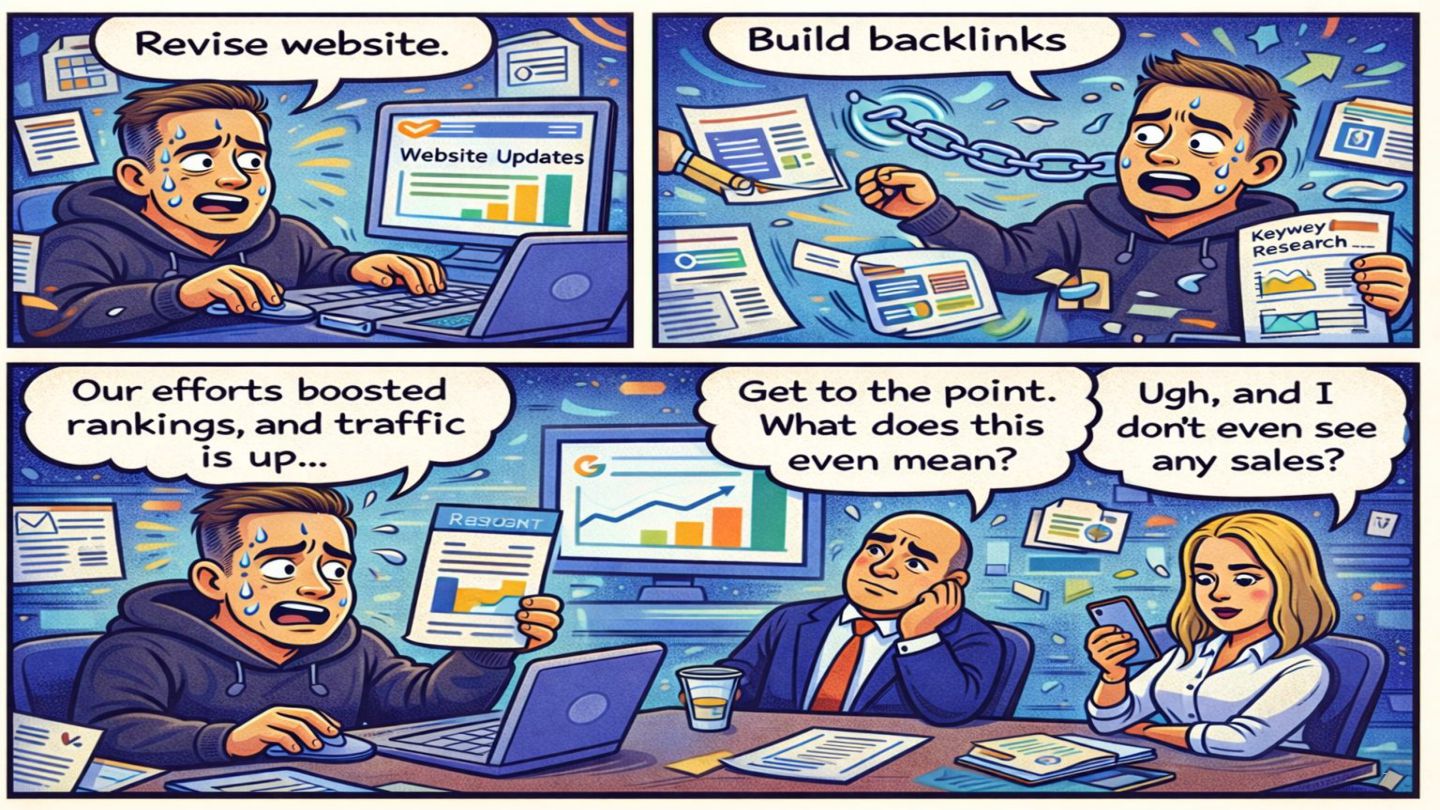
Not feeling valued — without clear cause-and-effect, SEO becomes difficult to justify to stakeholders

From there, we introduce a better approach: SEO testing as a framework for clarity, efficiency, and impact.

You’ll learn:

Why SEO often fails to demonstrate value—and how testing changes that
How to move from assumptions to evidence-based decision making
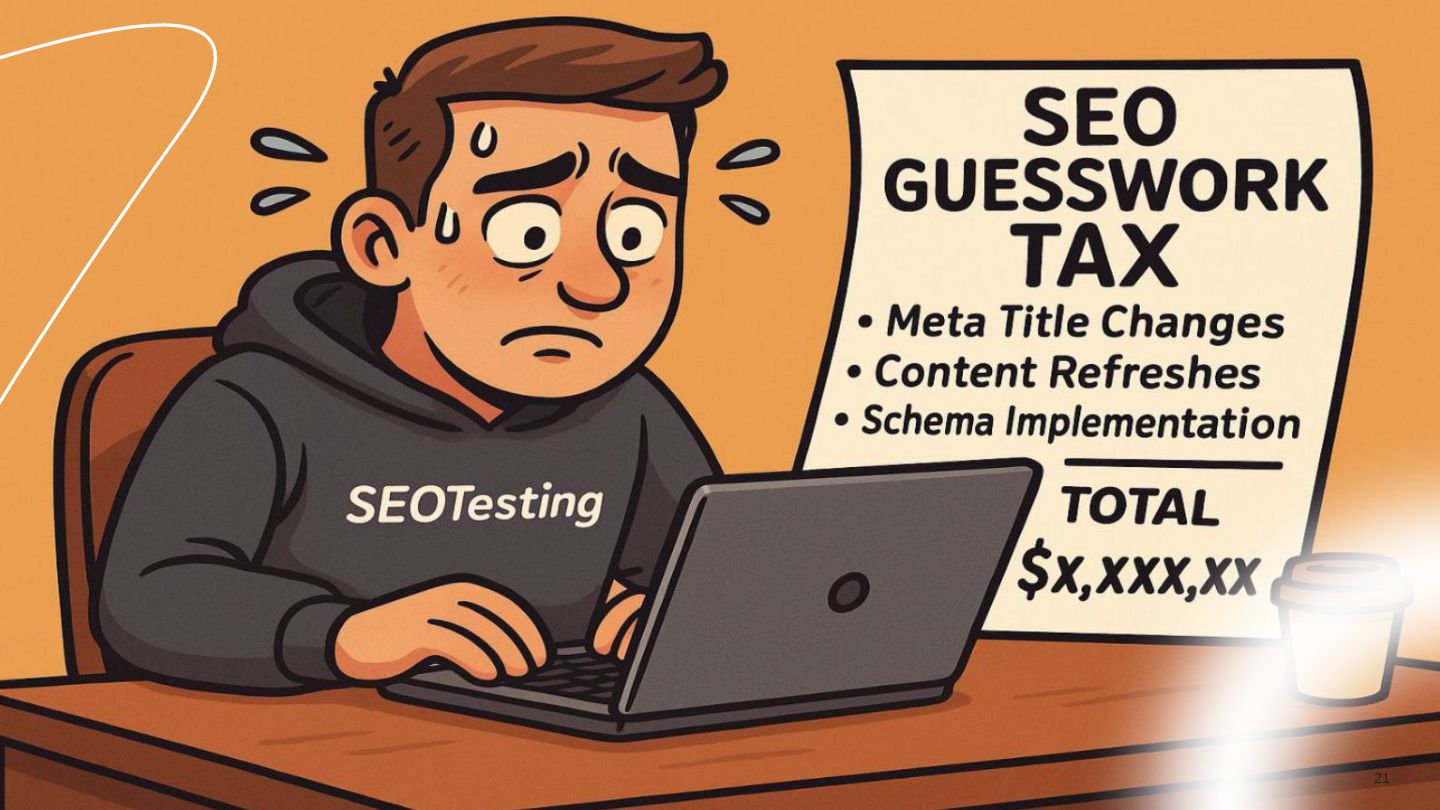
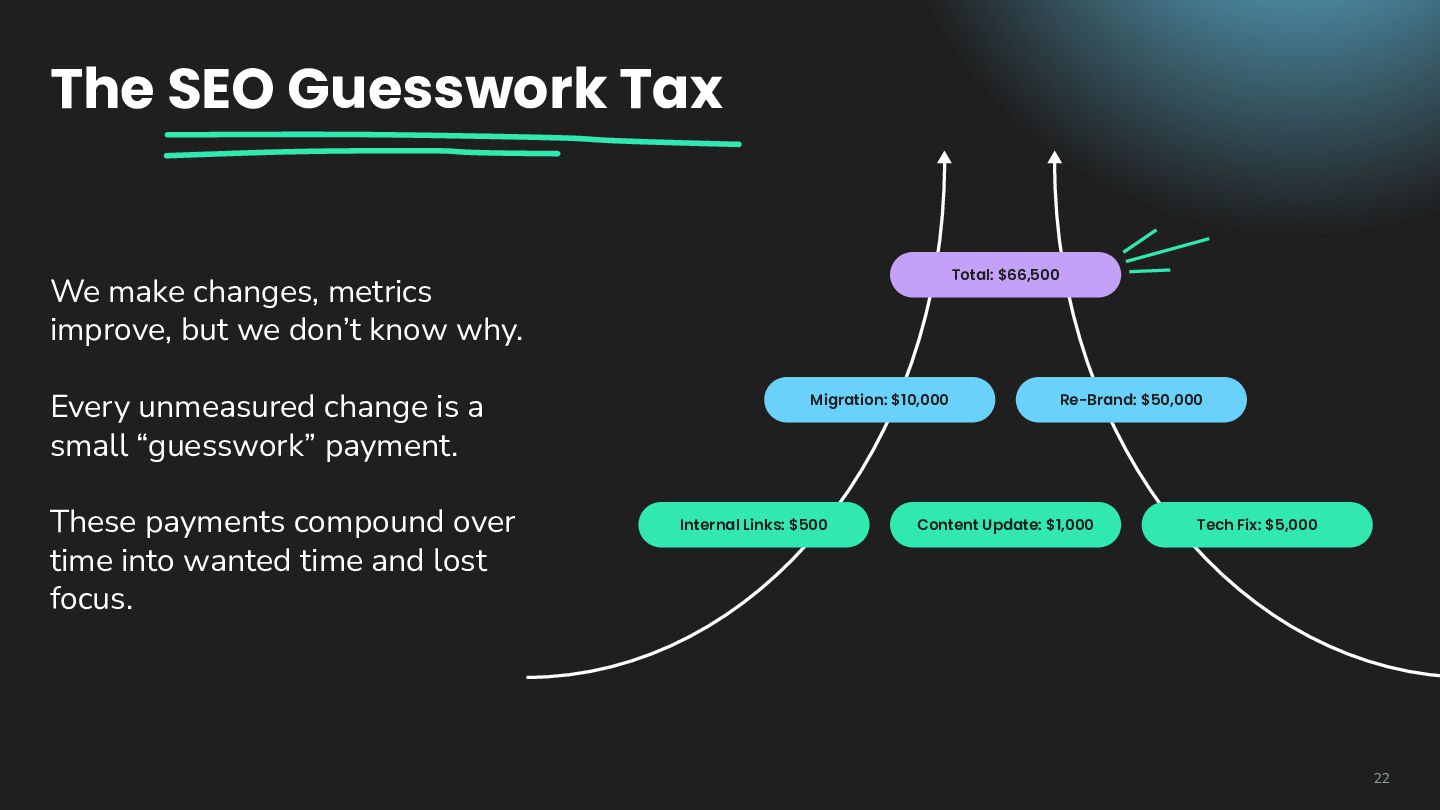
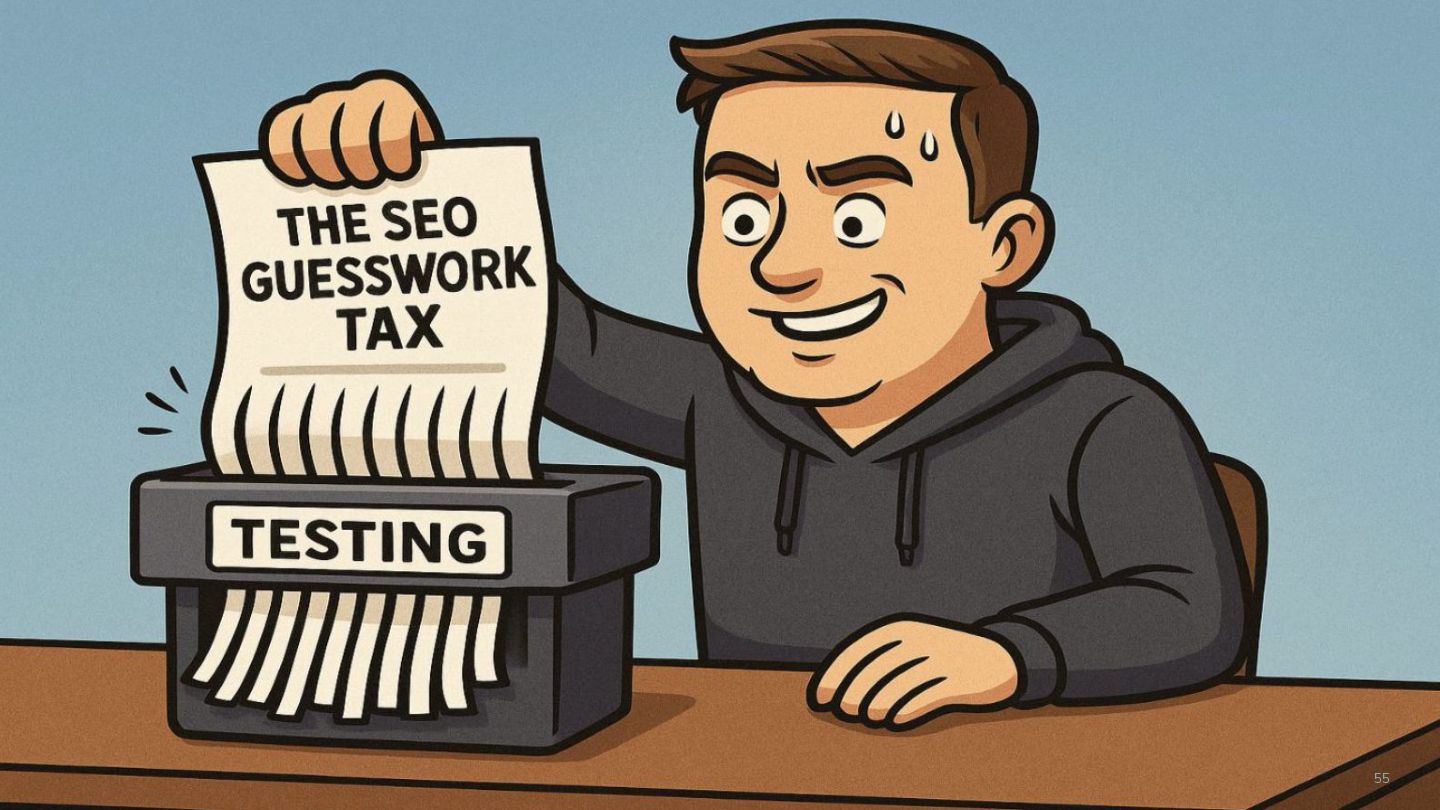
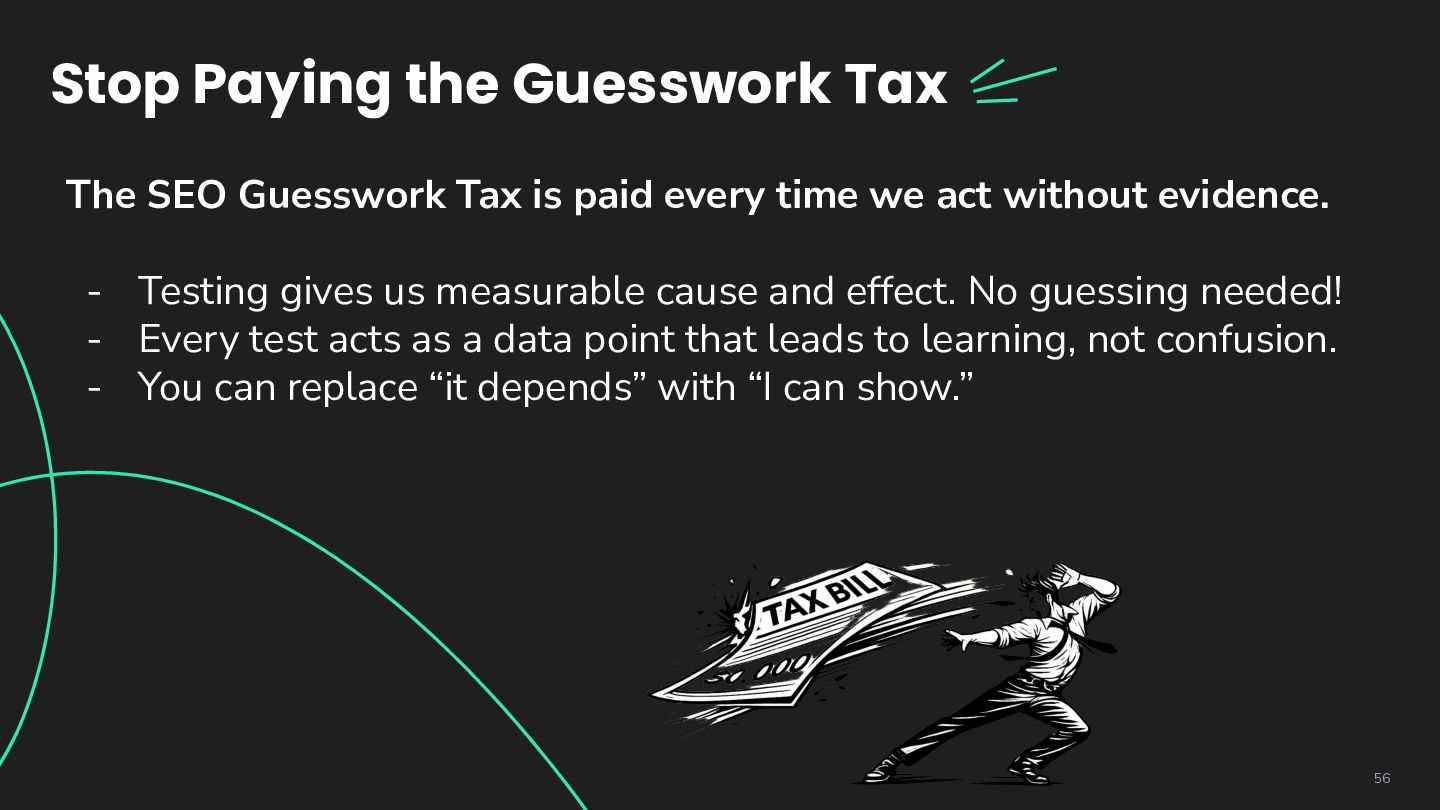
The concept of the “SEO Guesswork Tax” and how it quietly drains time, money, and focus
How testing helps you break the cycle of busy work and instead double down on what actually drives results

We then dive into practical execution, including:

🔍 Types of SEO Tests

Time-based (before vs. after) testing
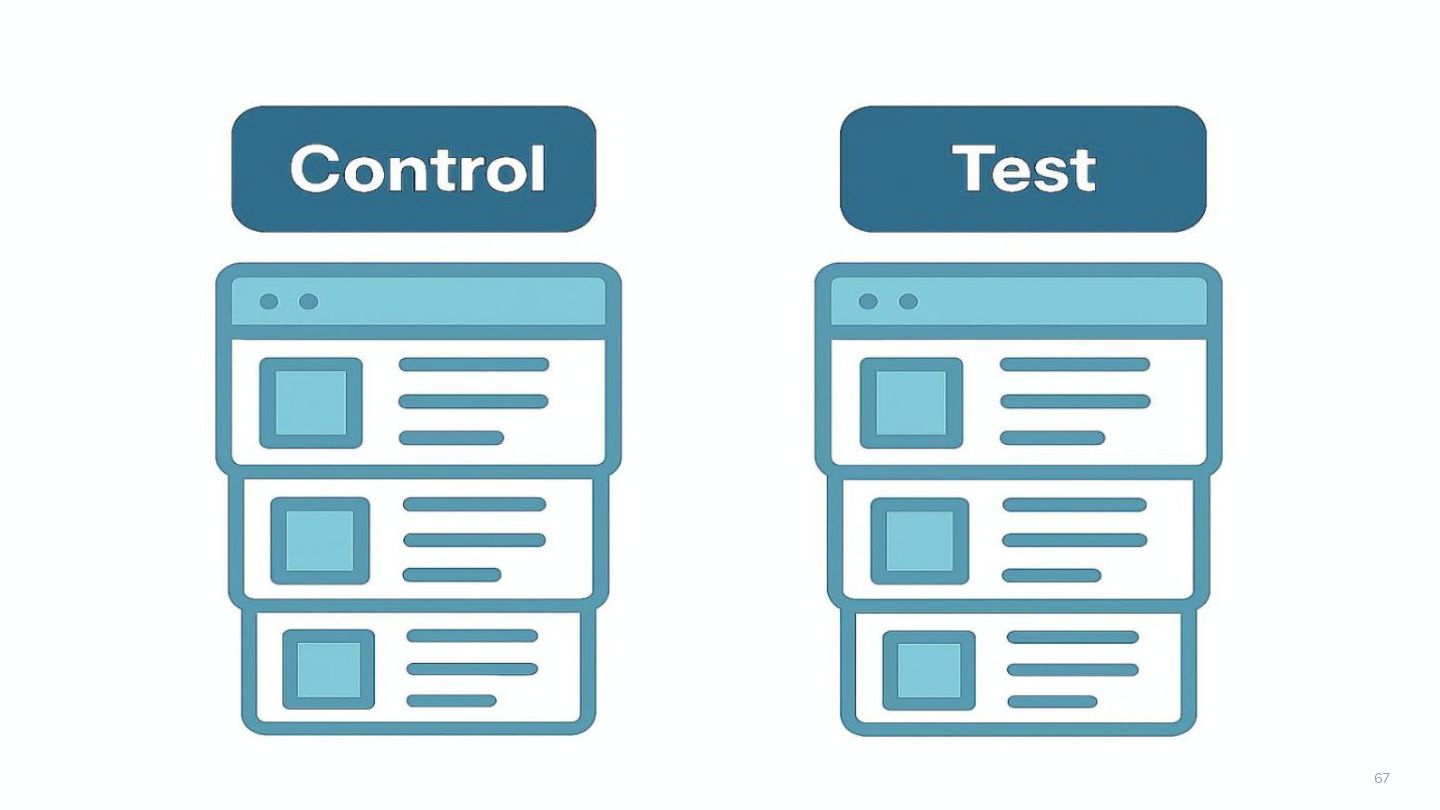
SEO split testing (A/B testing at scale)
Emerging approaches like LLM / AI-driven testing

🧪 How to Run Effective SEO Tests

A clear, repeatable framework:

Form a strong, measurable hypothesis
Select the right pages to test
Implement controlled changes
Monitor both SEO and business metrics
Decide whether to roll out, iterate, or revert

📈 What Good Looks Like

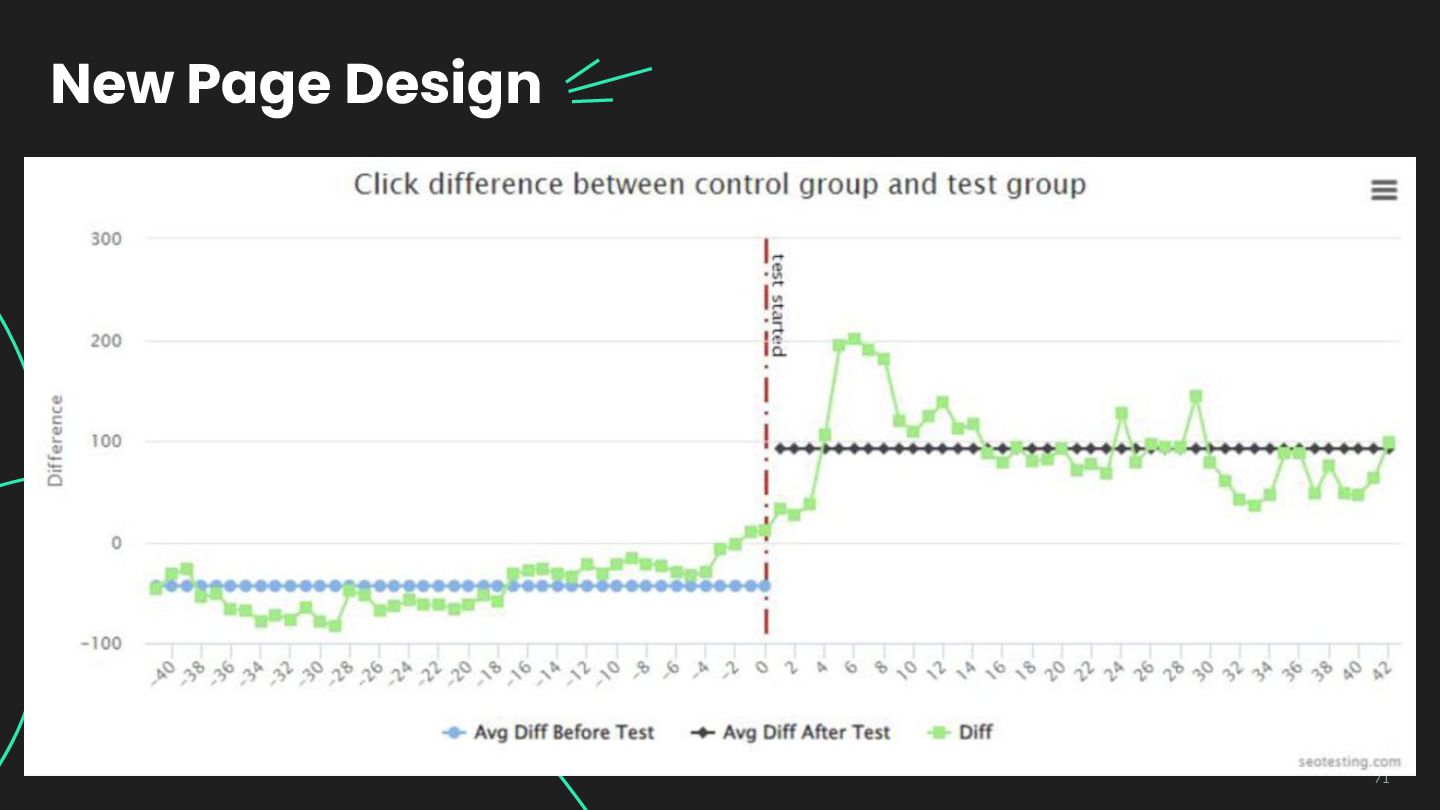
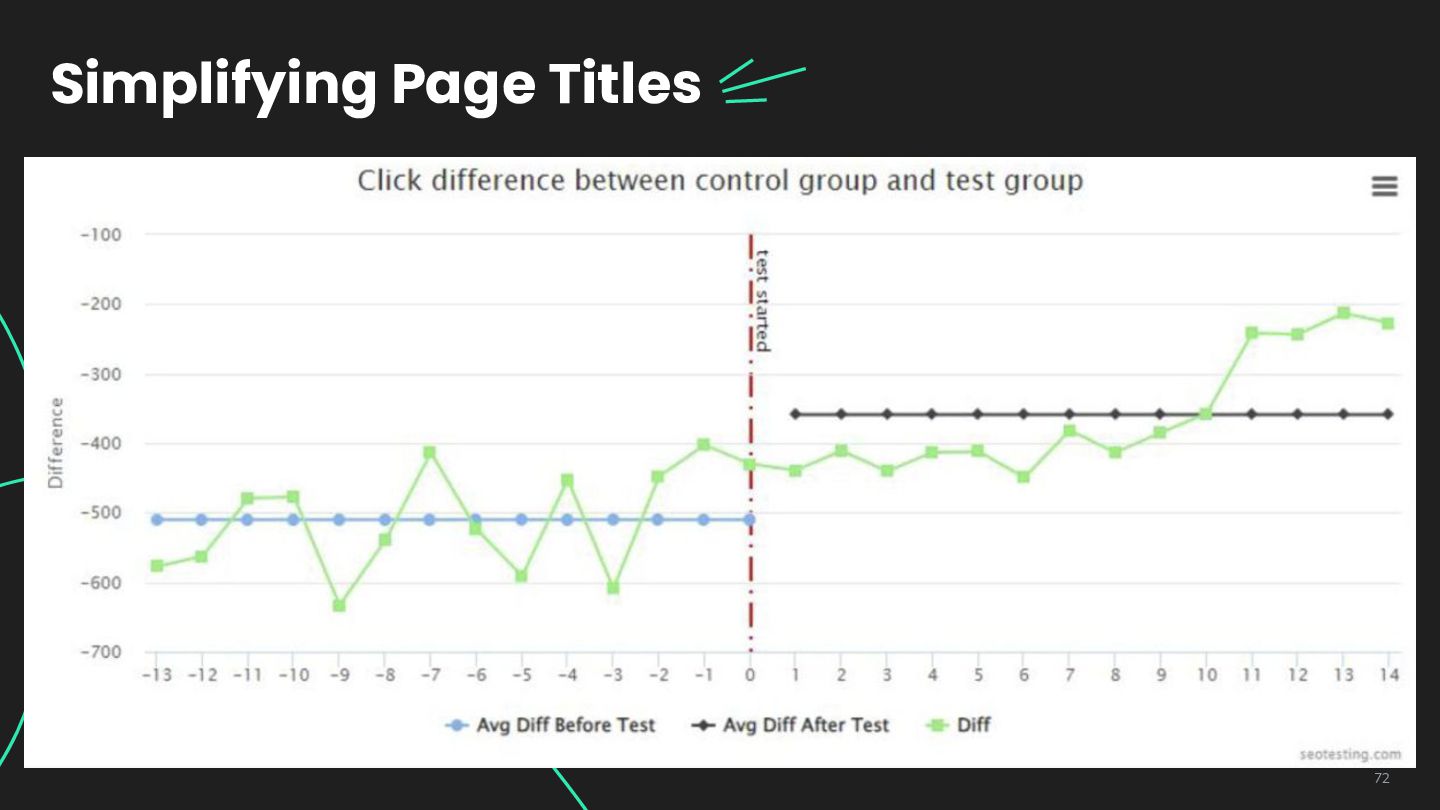
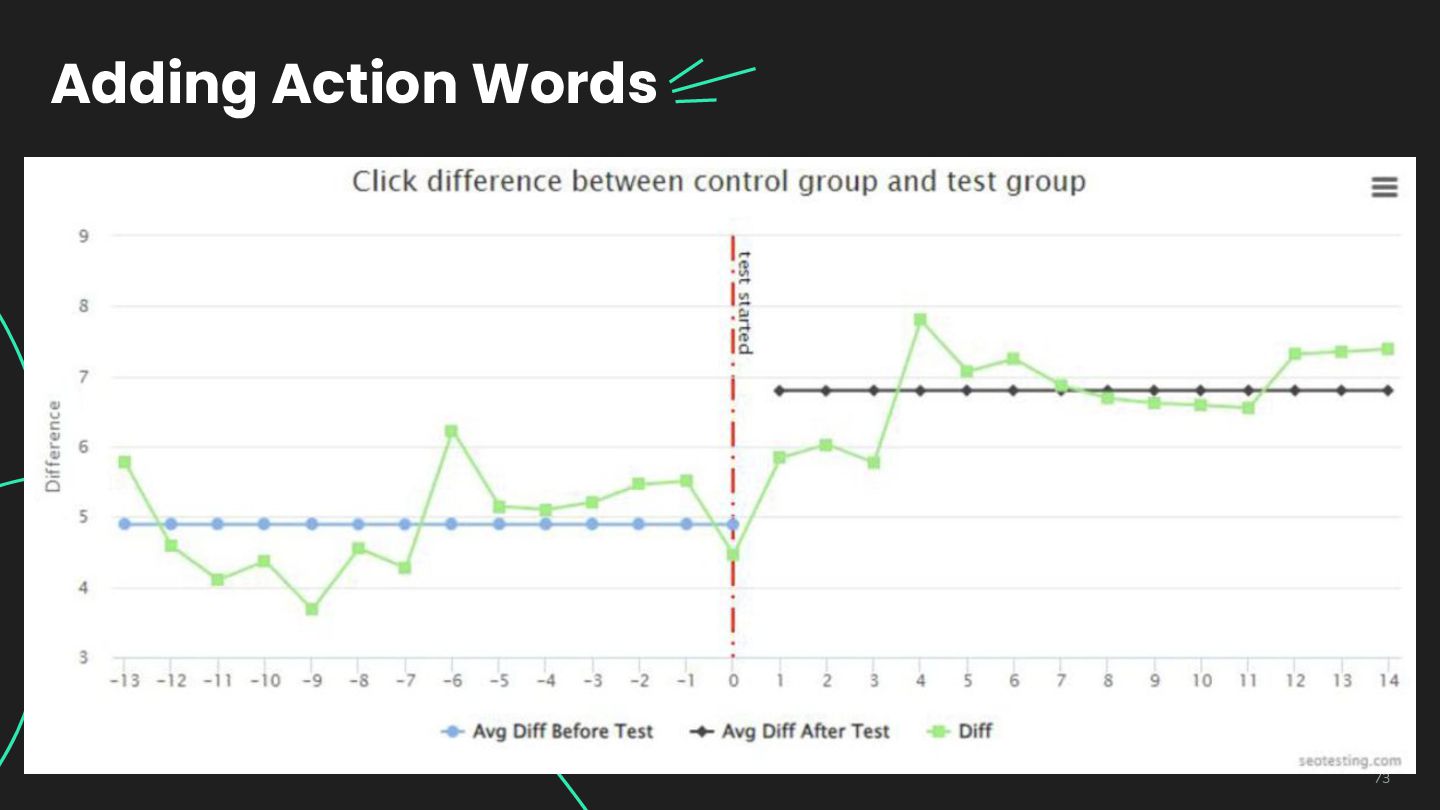
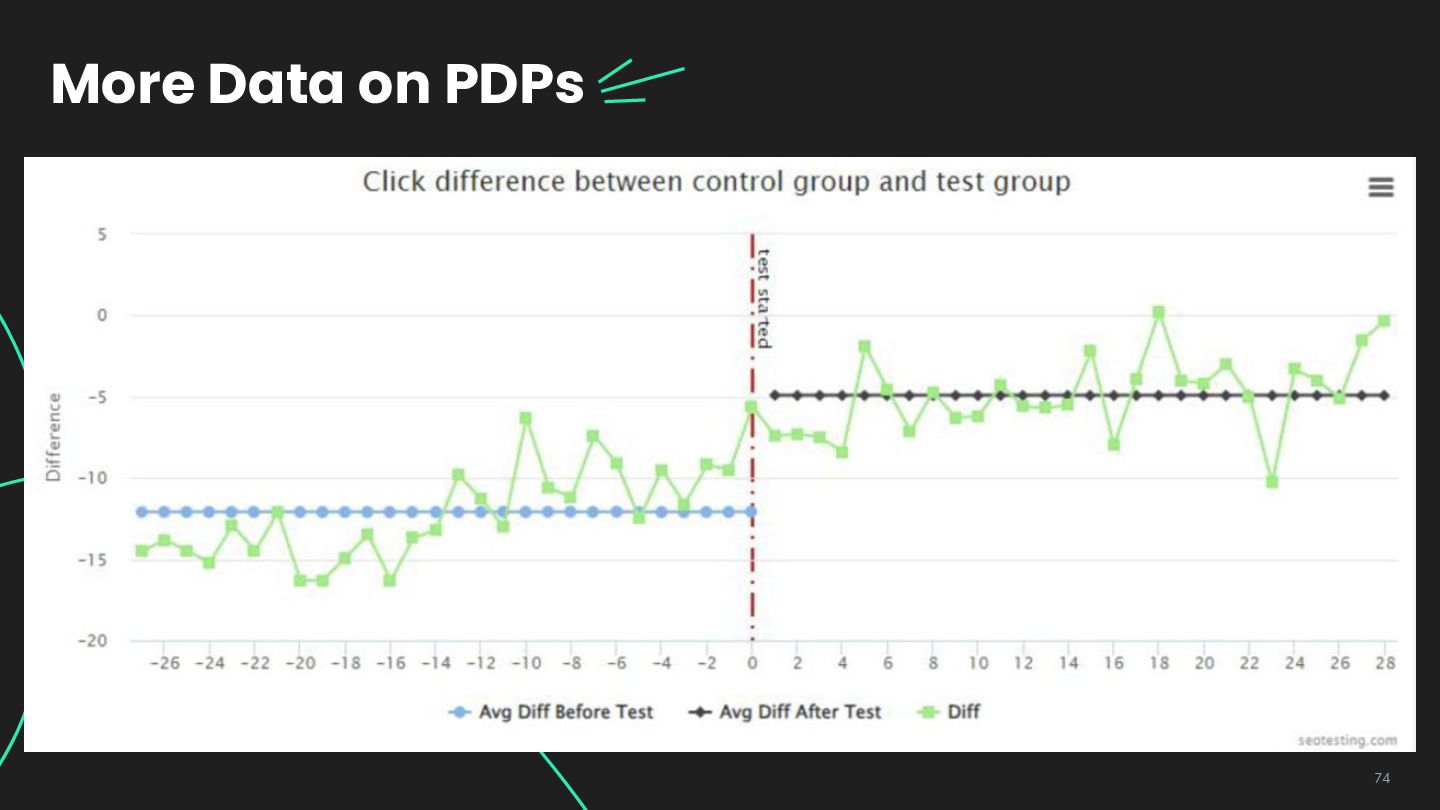
Real-world examples showing how structured testing can:

Increase clicks and CTR
Improve rankings with clear attribution
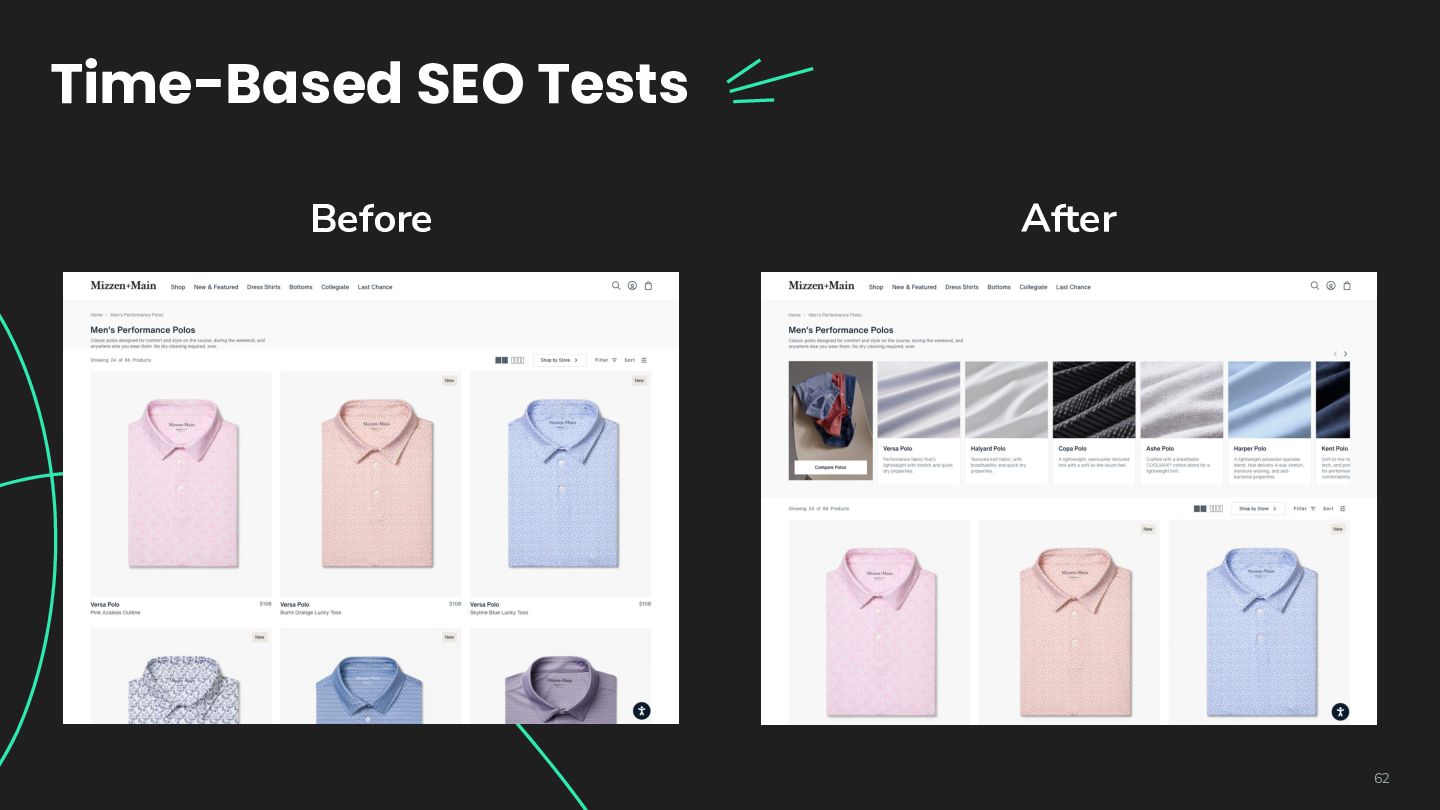
Tie SEO work directly to revenue and business outcomes

💡 Key Takeaway

If you take one thing from this deck, let it be this:

Use your site’s data to tell a story—
Name the problem → Propose a solution → Run a test → Show the results

This talk is for SEOs, marketers, and growth teams who are tired of guessing—and ready to start proving what works.

Whether you're working in-house, agency-side, or independently, this framework will help you turn SEO from “it depends” into “I can show you.”

Avatar for Ryan Jones

Ryan Jones

April 16, 2026

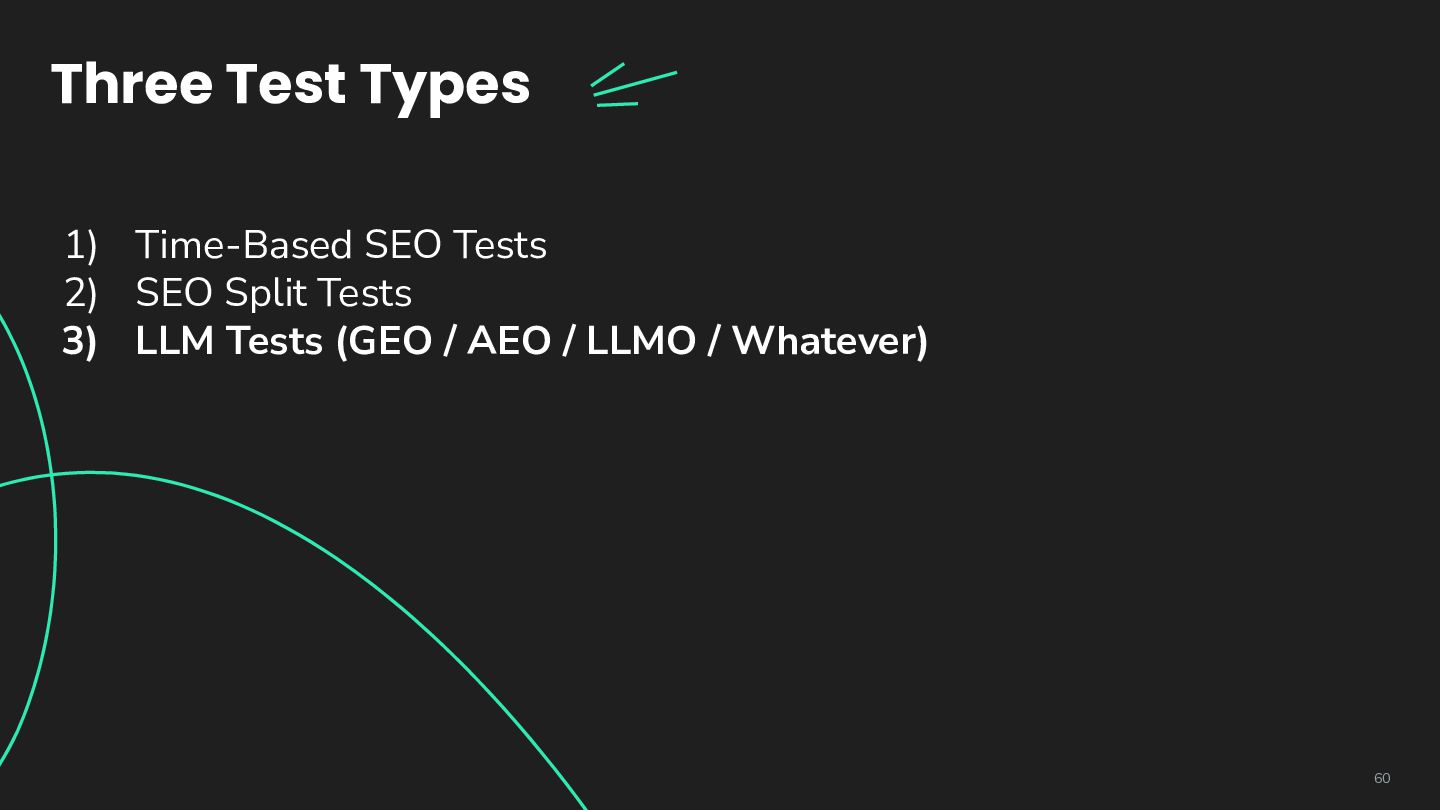
Other Decks in Marketing & SEO

Transcript

  1. 3

  2. 5

  3. 7

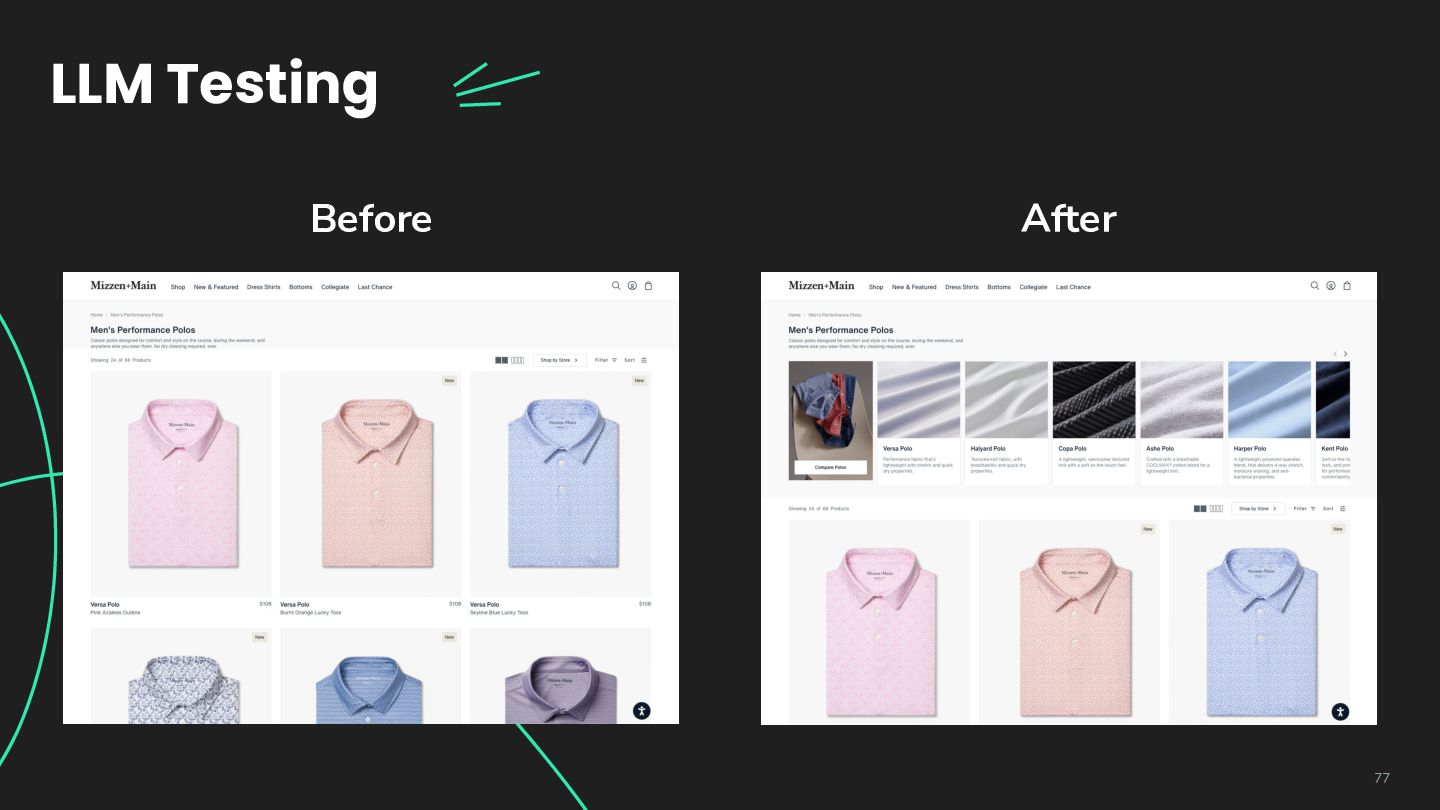
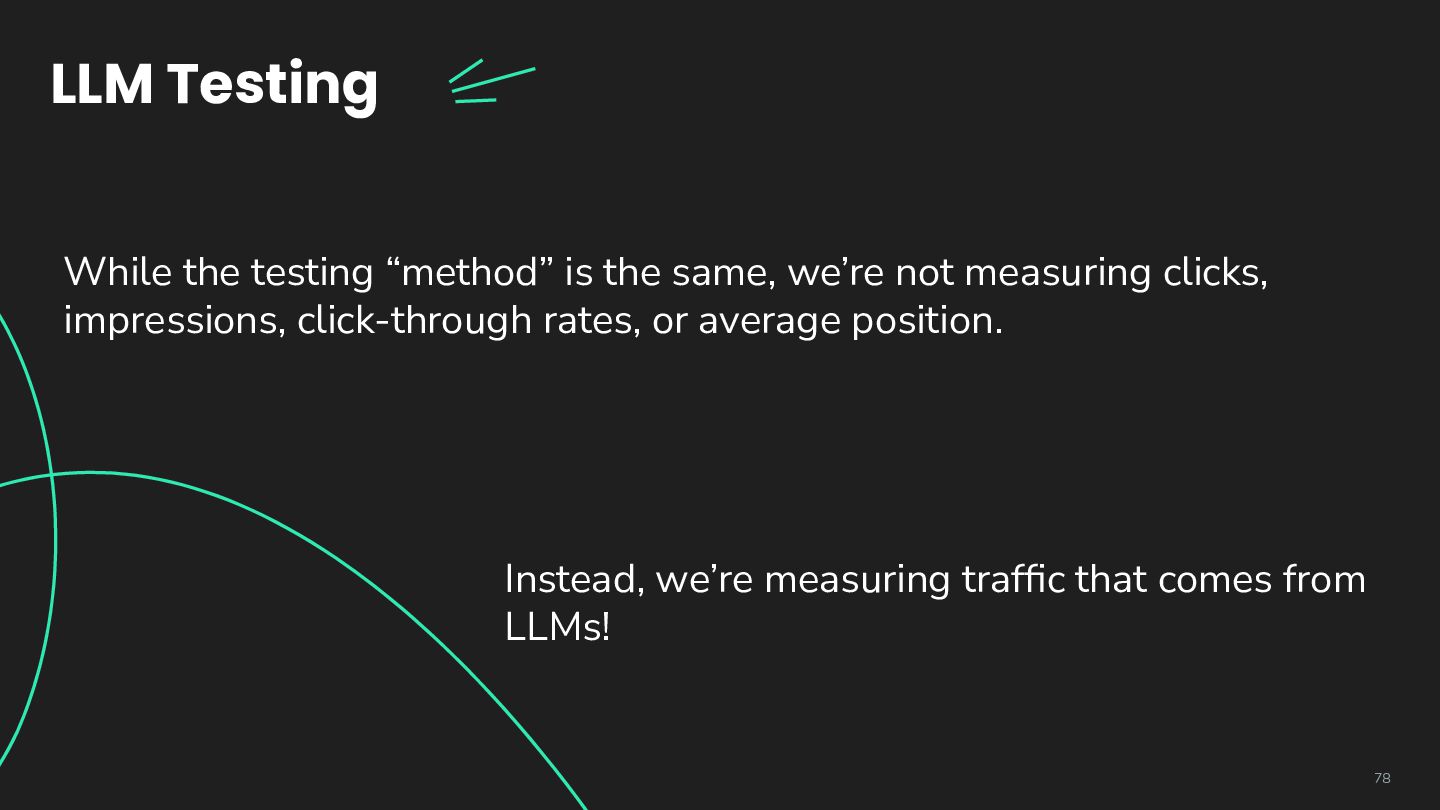
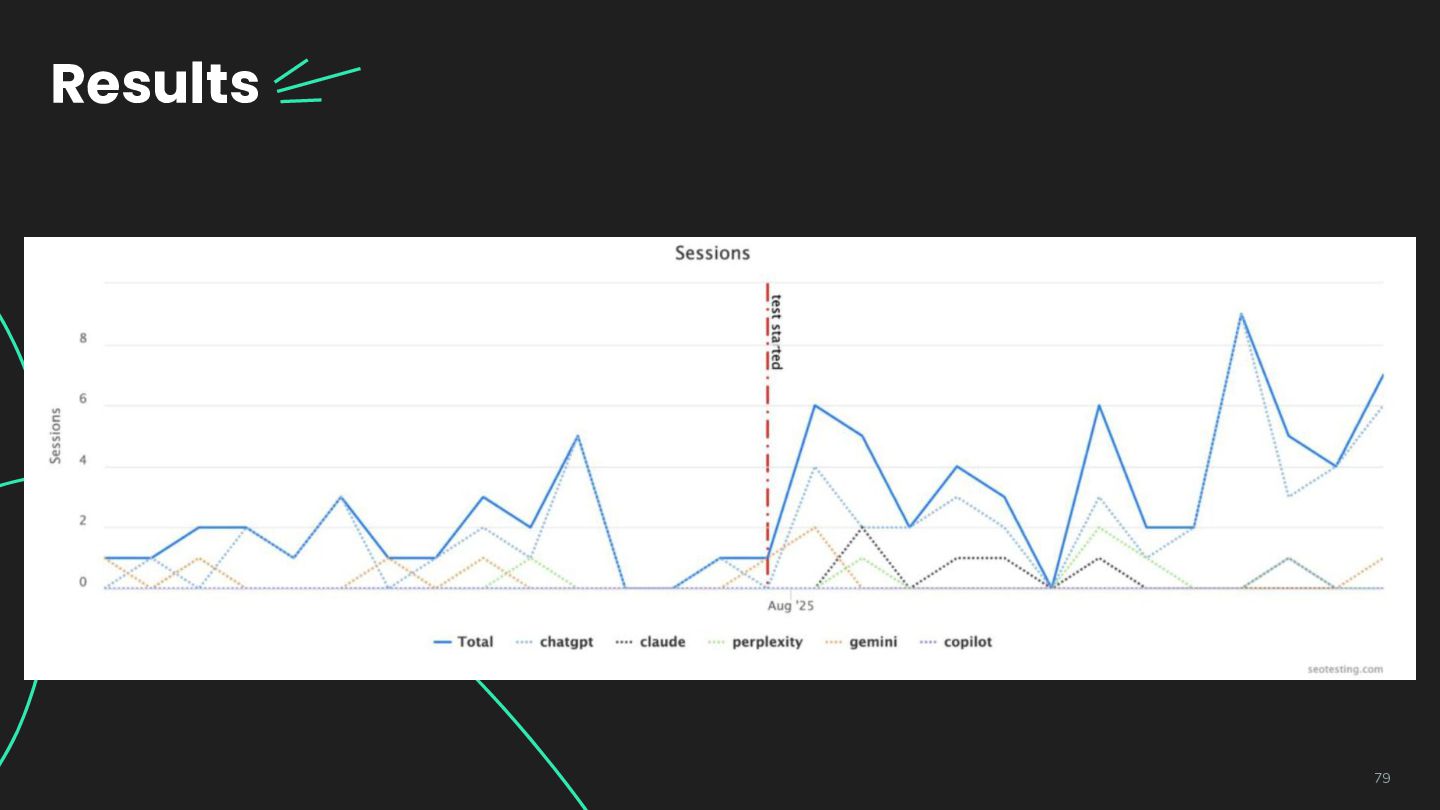
  4. Stick with me for approx. 35-40 minutes, and I’ll take

    you through why you (probably) have these problems, and what you can do about it. Join Me
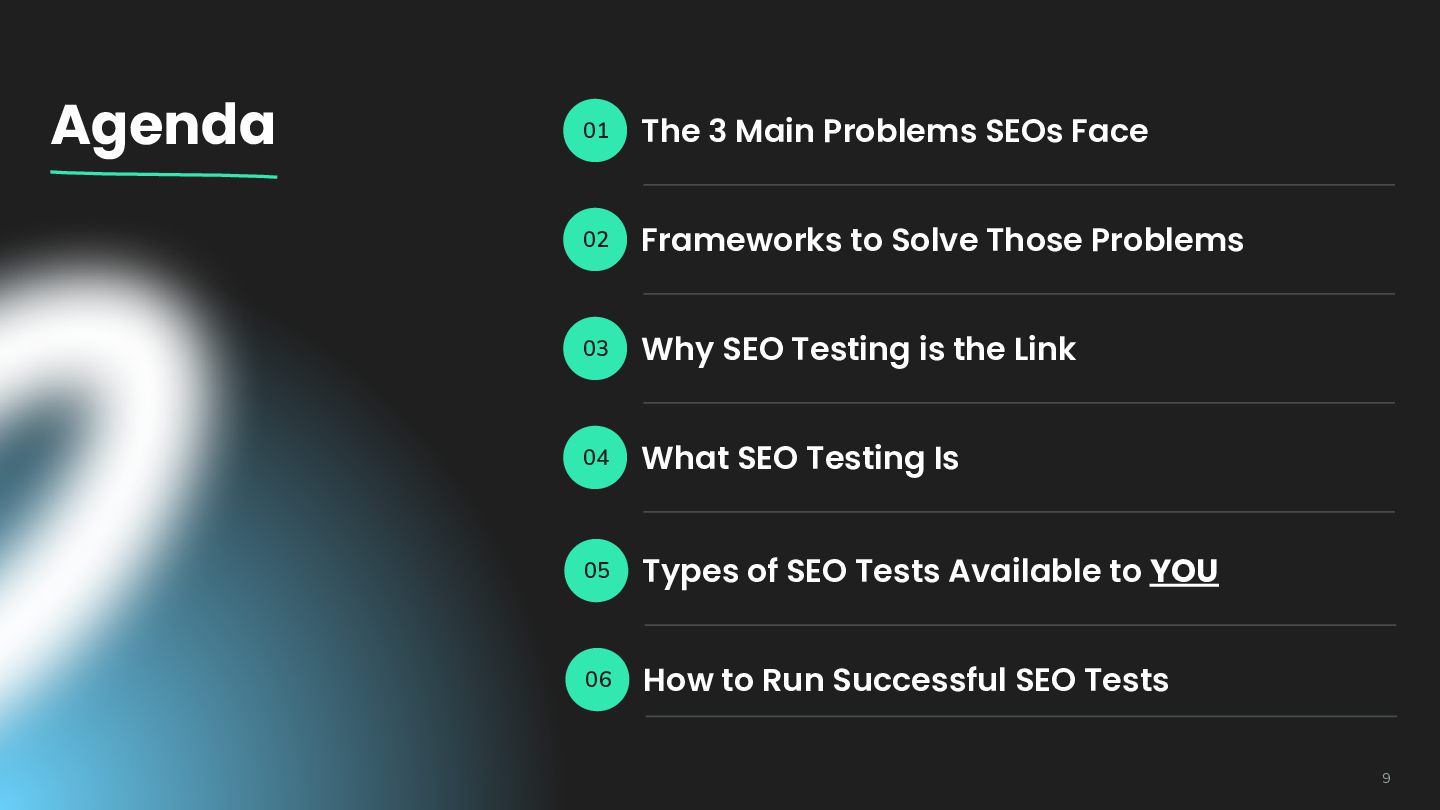
  5. 9 01 02 03 04 The 3 Main Problems SEOs

    Face Frameworks to Solve Those Problems Why SEO Testing is the Link What SEO Testing Is Agenda 05 Types of SEO Tests Available to YOU 06 How to Run Successful SEO Tests
  6. 10 Hi, I’m Ryan! - 10+ Years in SEO &

    Marketing - International Conference Speaker - Lover of All Things Sports ⚽🏈⚾🏎 And I’m here today in beautiful Lisbon to talk to you about one of my true SEO-based passions… How testing can help you achieve MORE in 2026, and well beyond!
  7. 11 Why listen? - Up until March 2026, I worked

    for an SEO testing tool. - I’ve run hundreds of SEO tests across different sites & niches. - I work closely with other SEOs to understand what works. - I regularly speak and write about SEO testing topics. But now… The gloves are off! I’m no longer trying to sell a tool, now I’m just passionate about testing!
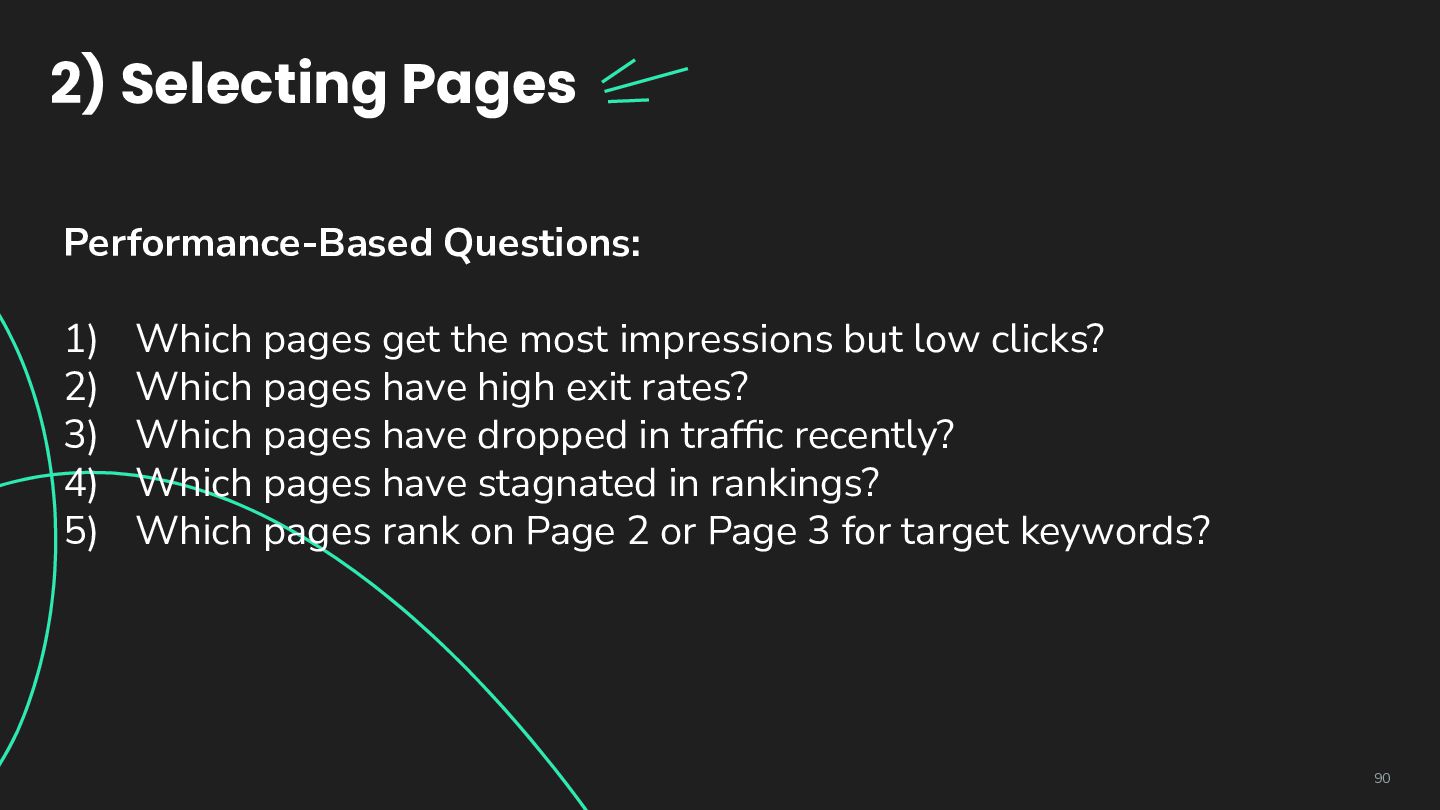
  8. 12

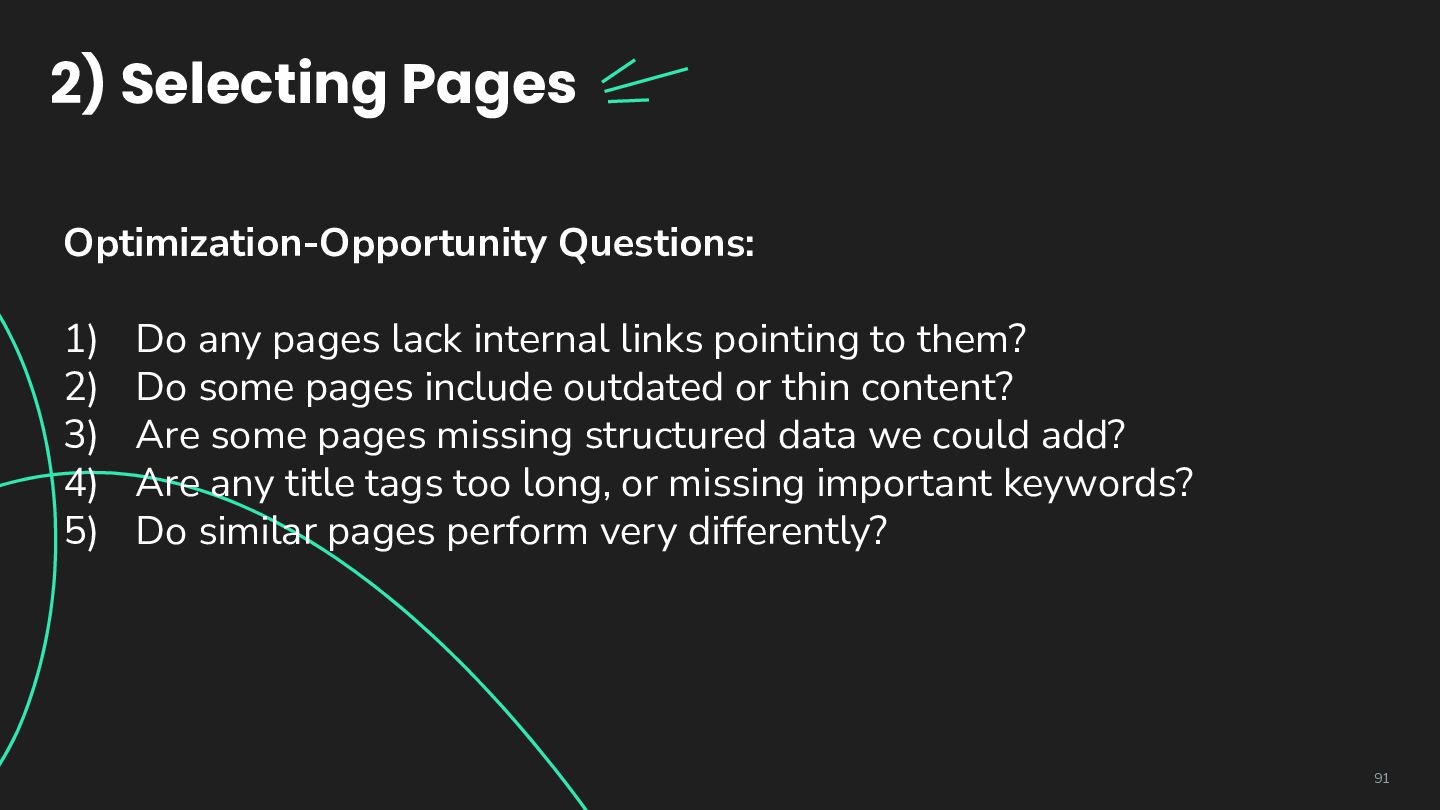
  9. 14

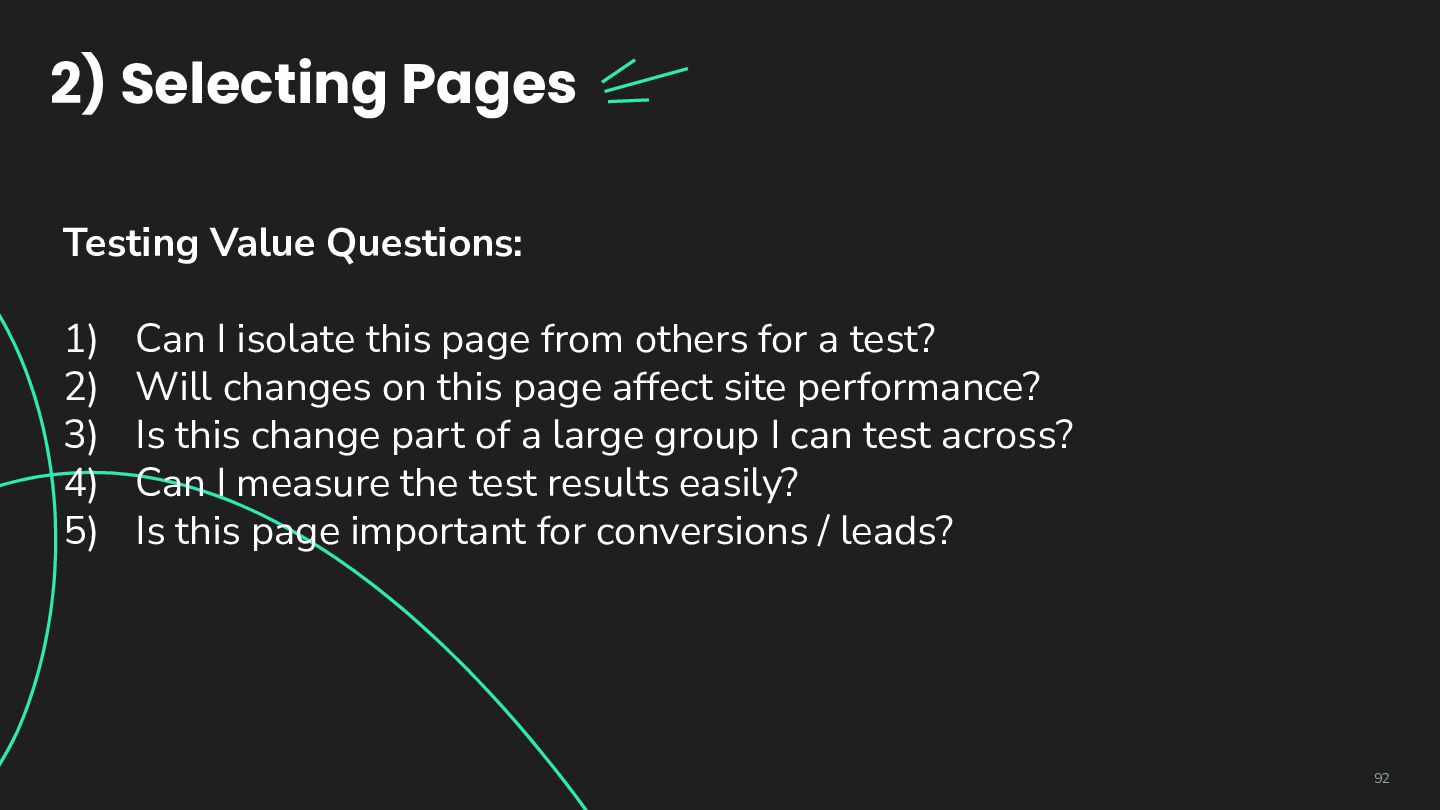
  10. 15

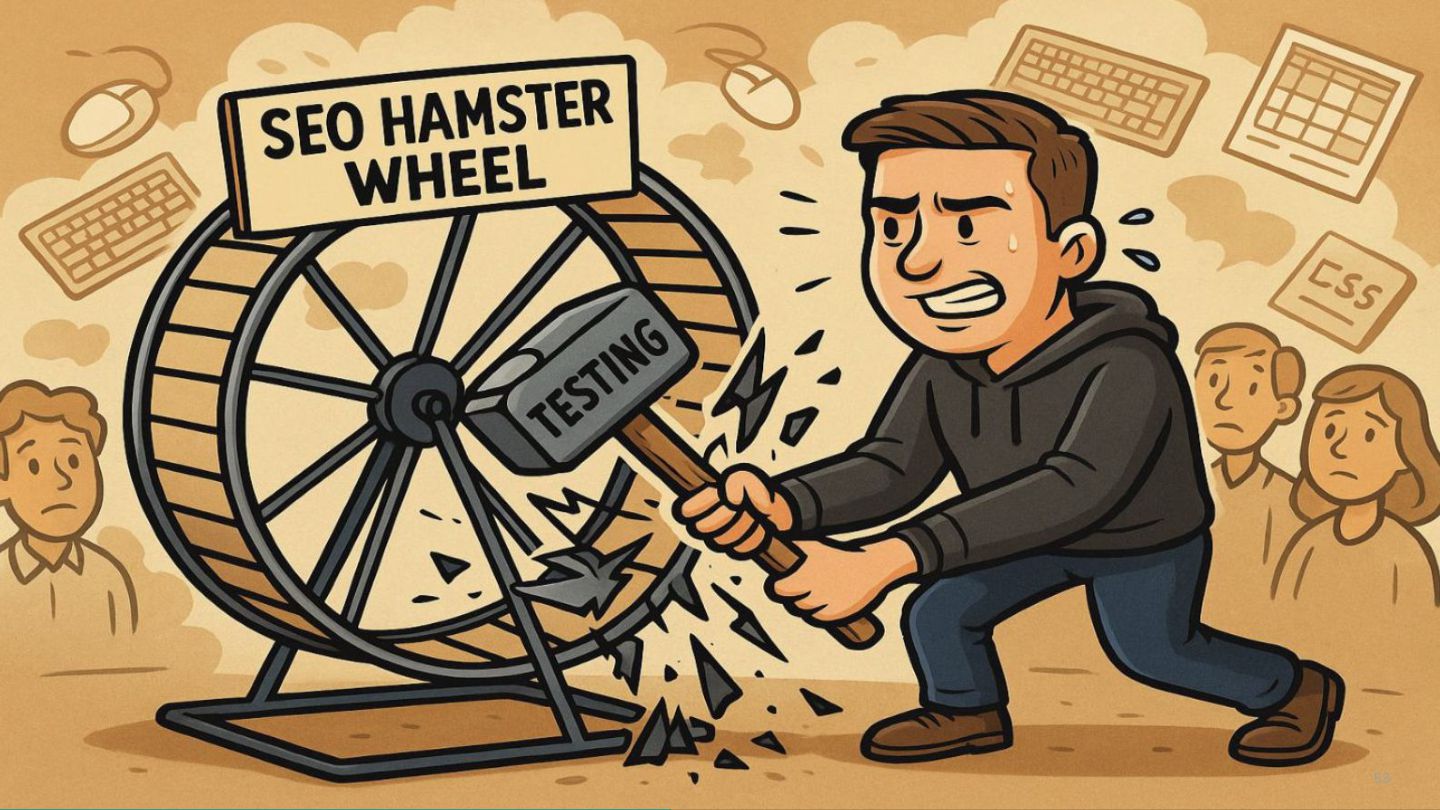
  11. 16 The SEO Hamster Wheel We make dozens of changes

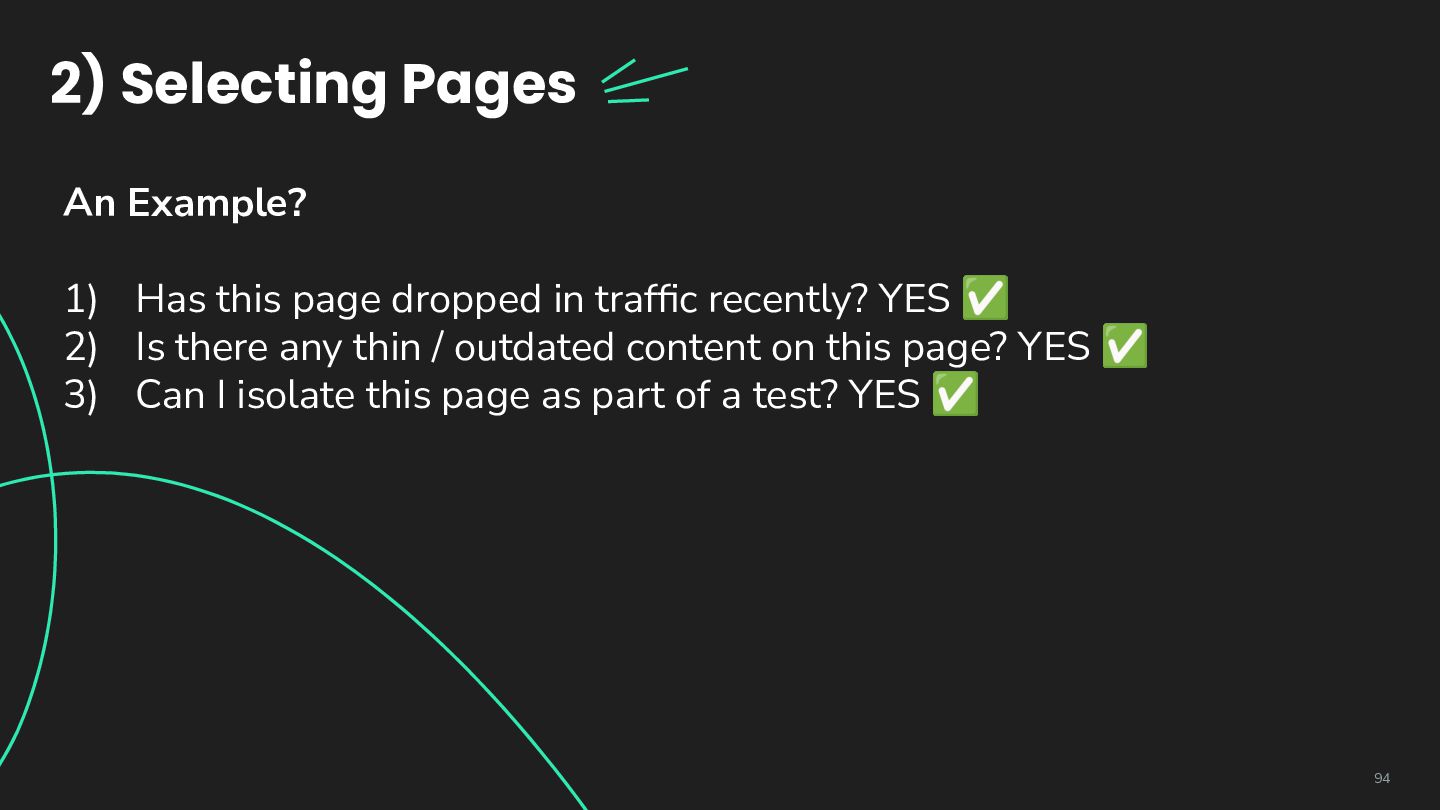
    weekly, hoping something works. When traffic moves, we sometimes can’t explain why. So… We keep tweaking, guessing, and repeating the cycle. Internal Link Changes External Link Building Content Creation On-Page Copy Changes Technical SEO Changes Site Migrations
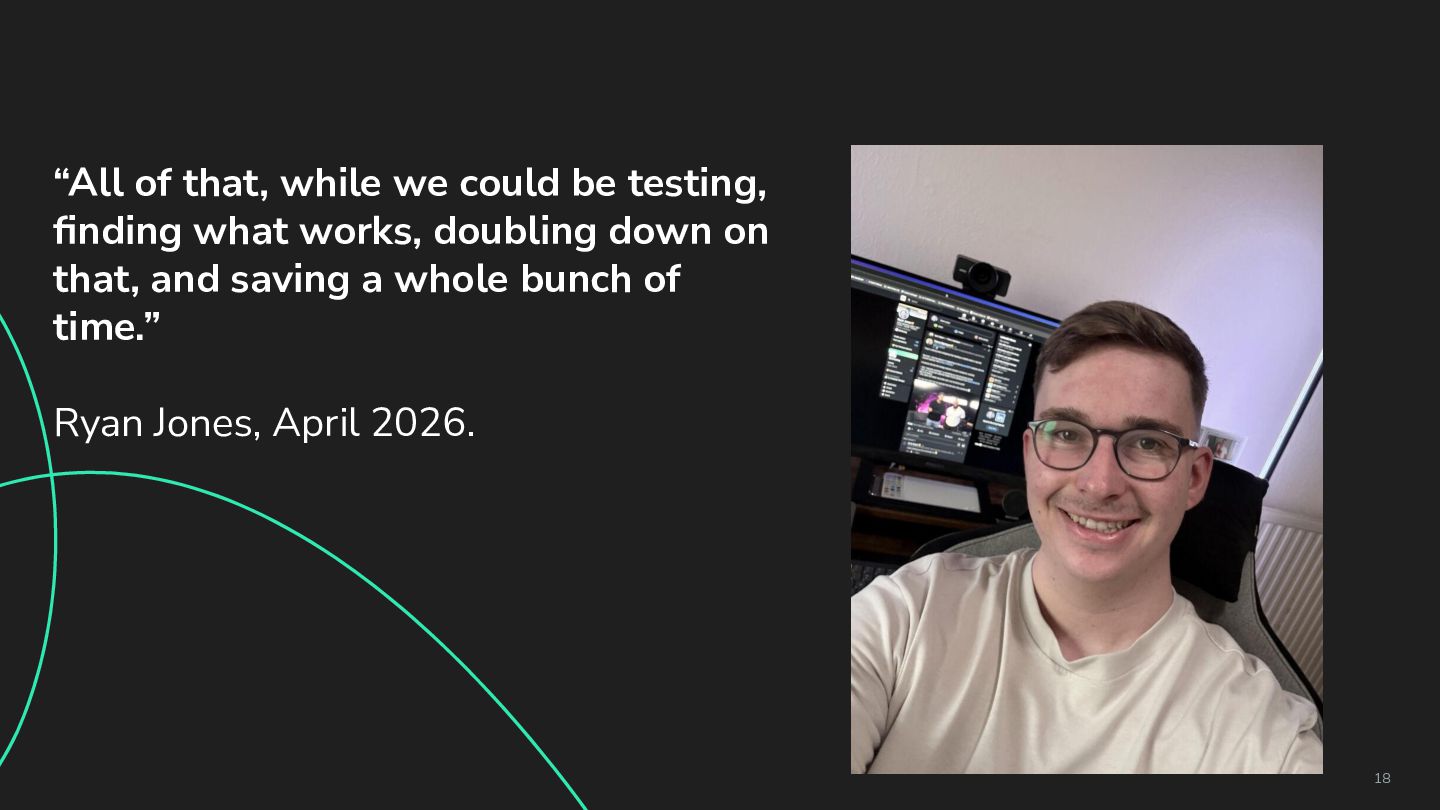
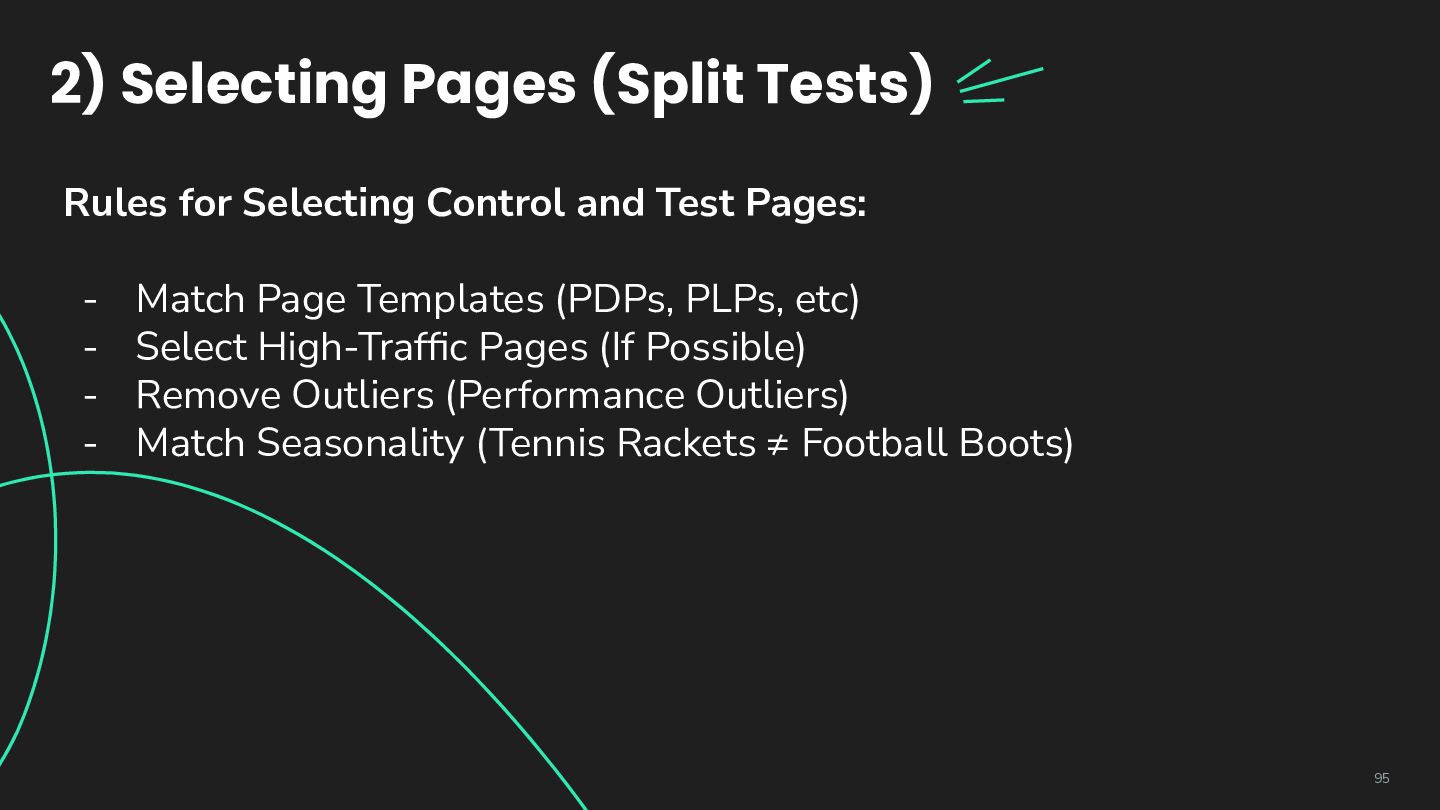
  12. 18 “All of that, while we could be testing, finding

    what works, doubling down on that, and saving a whole bunch of time.” Ryan Jones, April 2026.
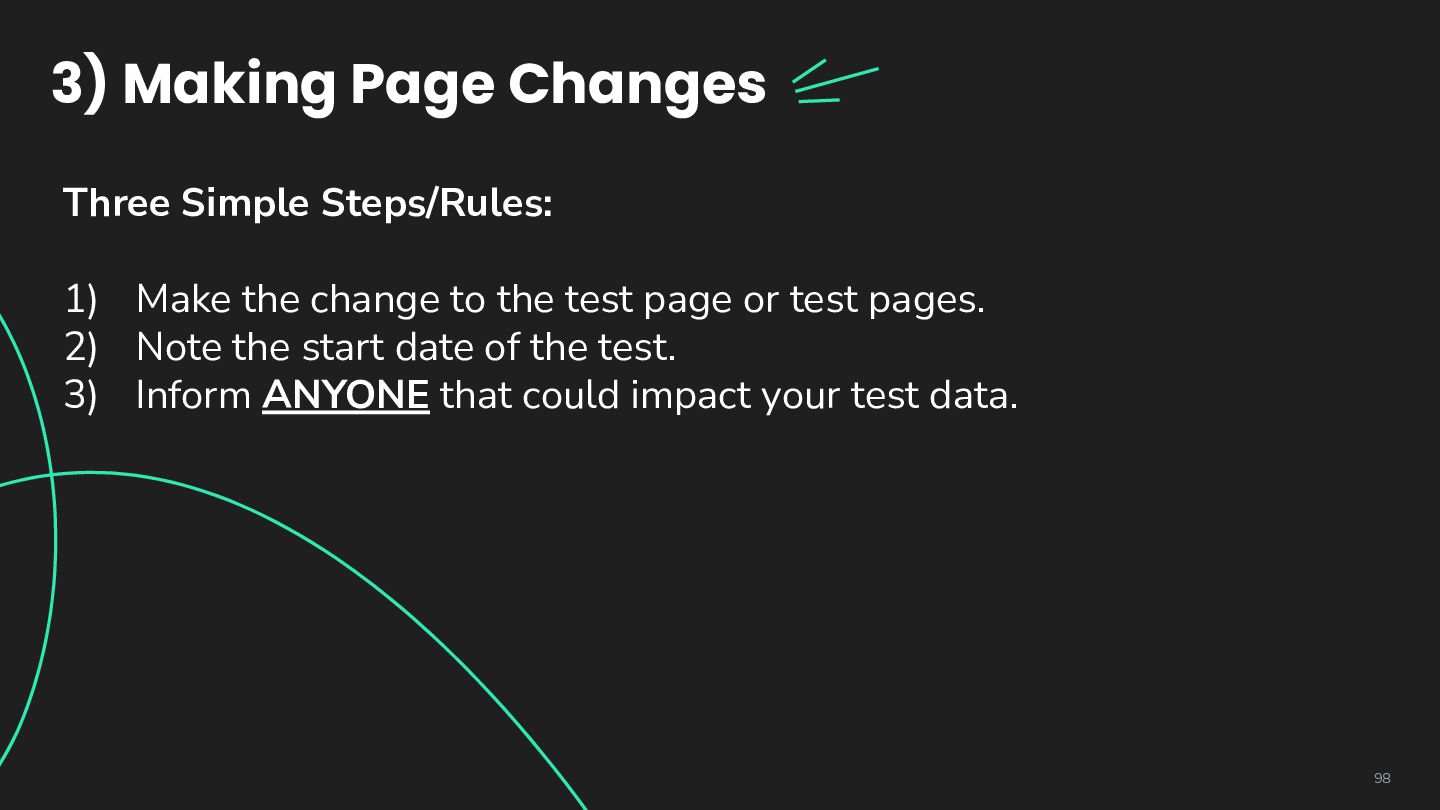
  13. 20

  14. 21

  15. 22 The SEO Guesswork Tax We make changes, metrics improve,

    but we don’t know why. Every unmeasured change is a small “guesswork” payment. These payments compound over time into wanted time and lost focus. Internal Links: $500 Content Update: $1,000 Tech Fix: $5,000 Migration: $10,000 Re-Brand: $50,000 Total: $66,500
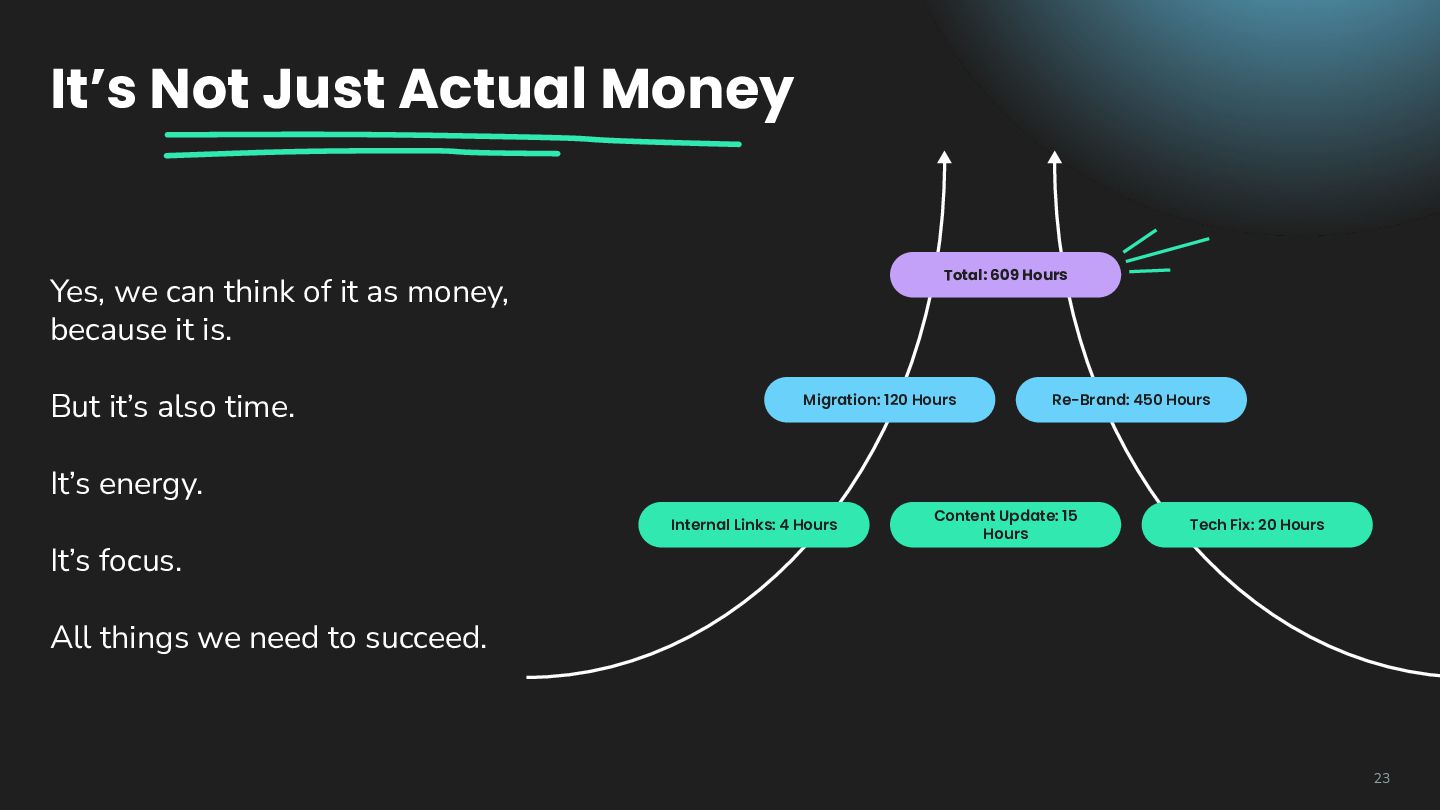
  16. 23 It’s Not Just Actual Money Yes, we can think

    of it as money, because it is. But it’s also time. It’s energy. It’s focus. All things we need to succeed. Internal Links: 4 Hours Content Update: 15 Hours Tech Fix: 20 Hours Migration: 120 Hours Re-Brand: 450 Hours Total: 609 Hours
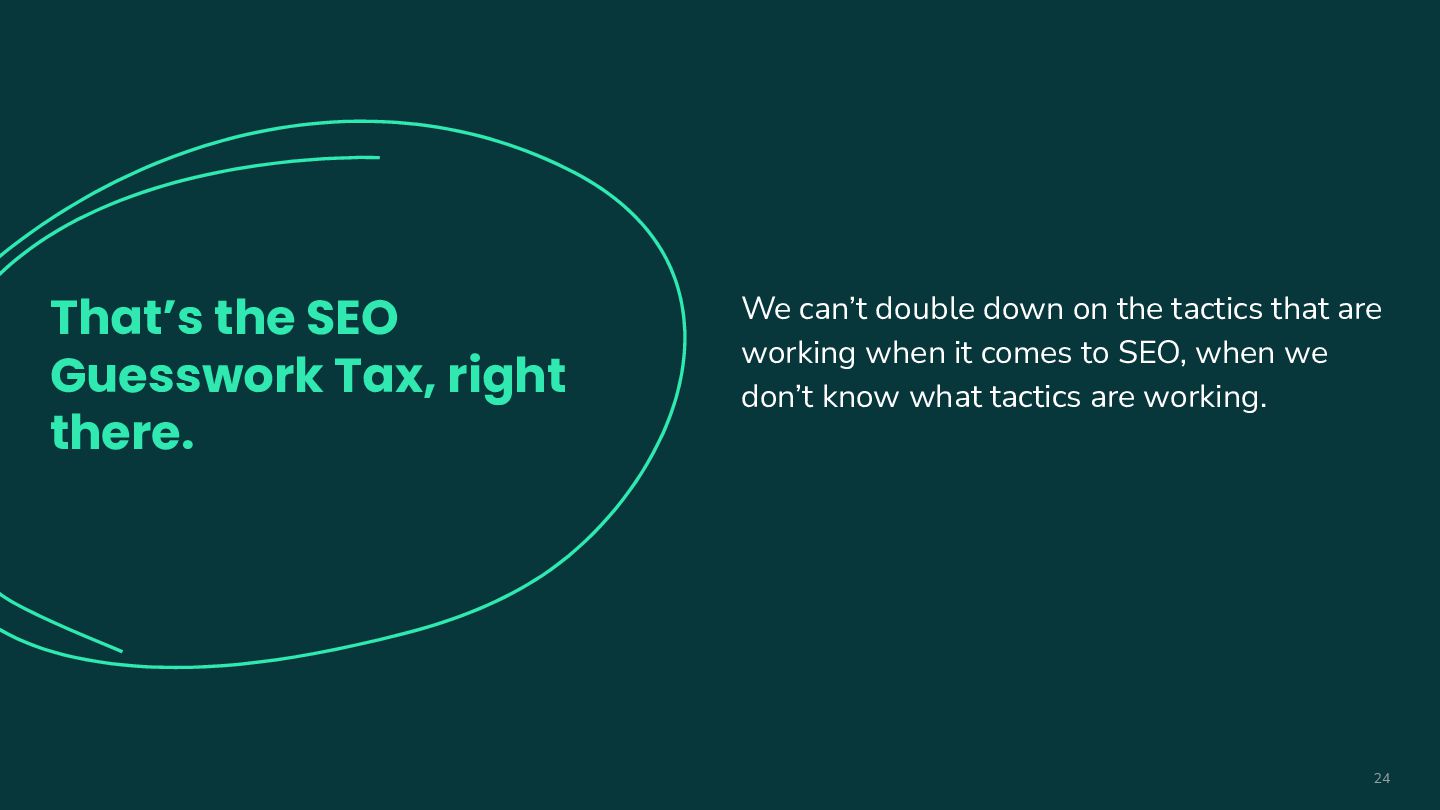
  17. 24 We can’t double down on the tactics that are

    working when it comes to SEO, when we don’t know what tactics are working. That’s the SEO Guesswork Tax, right there.
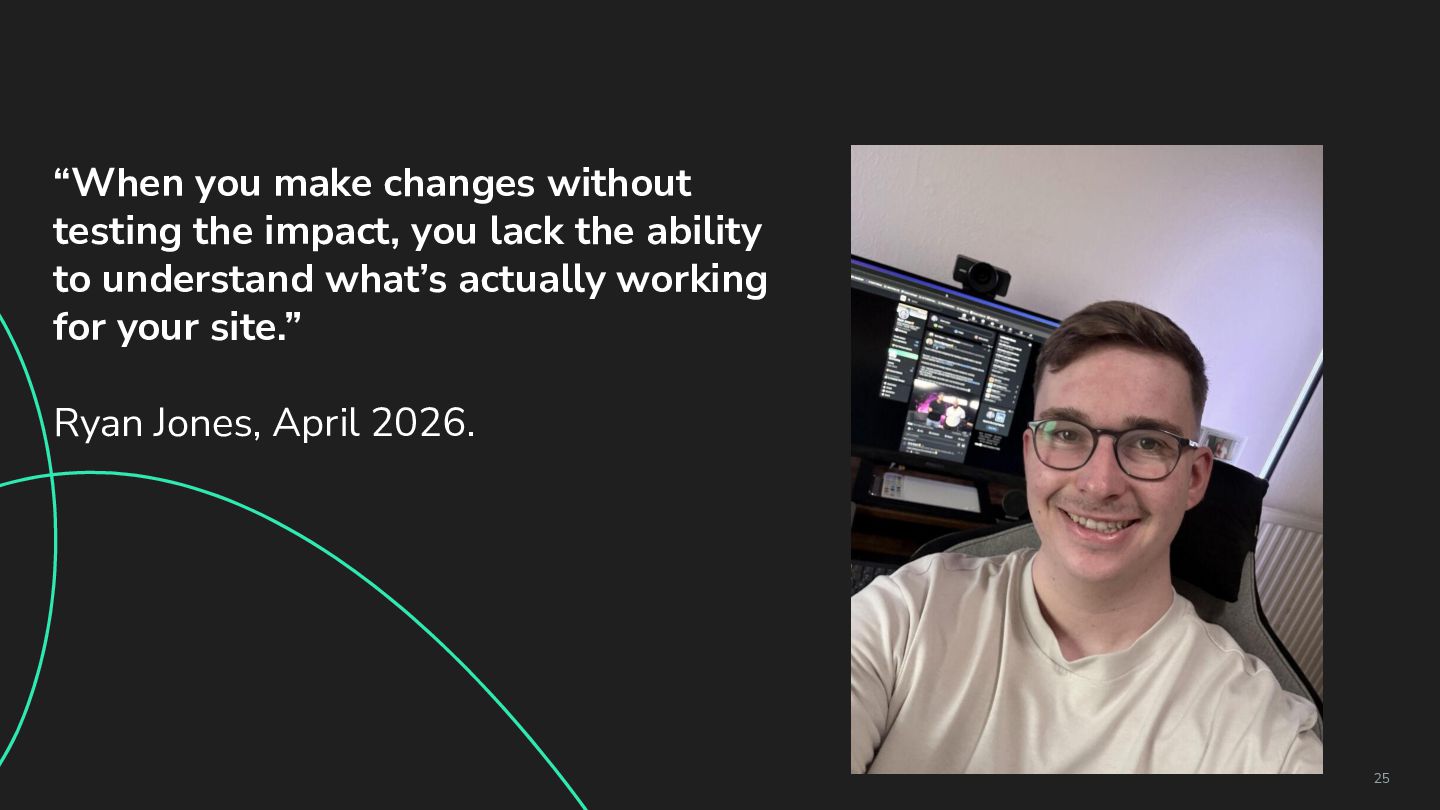
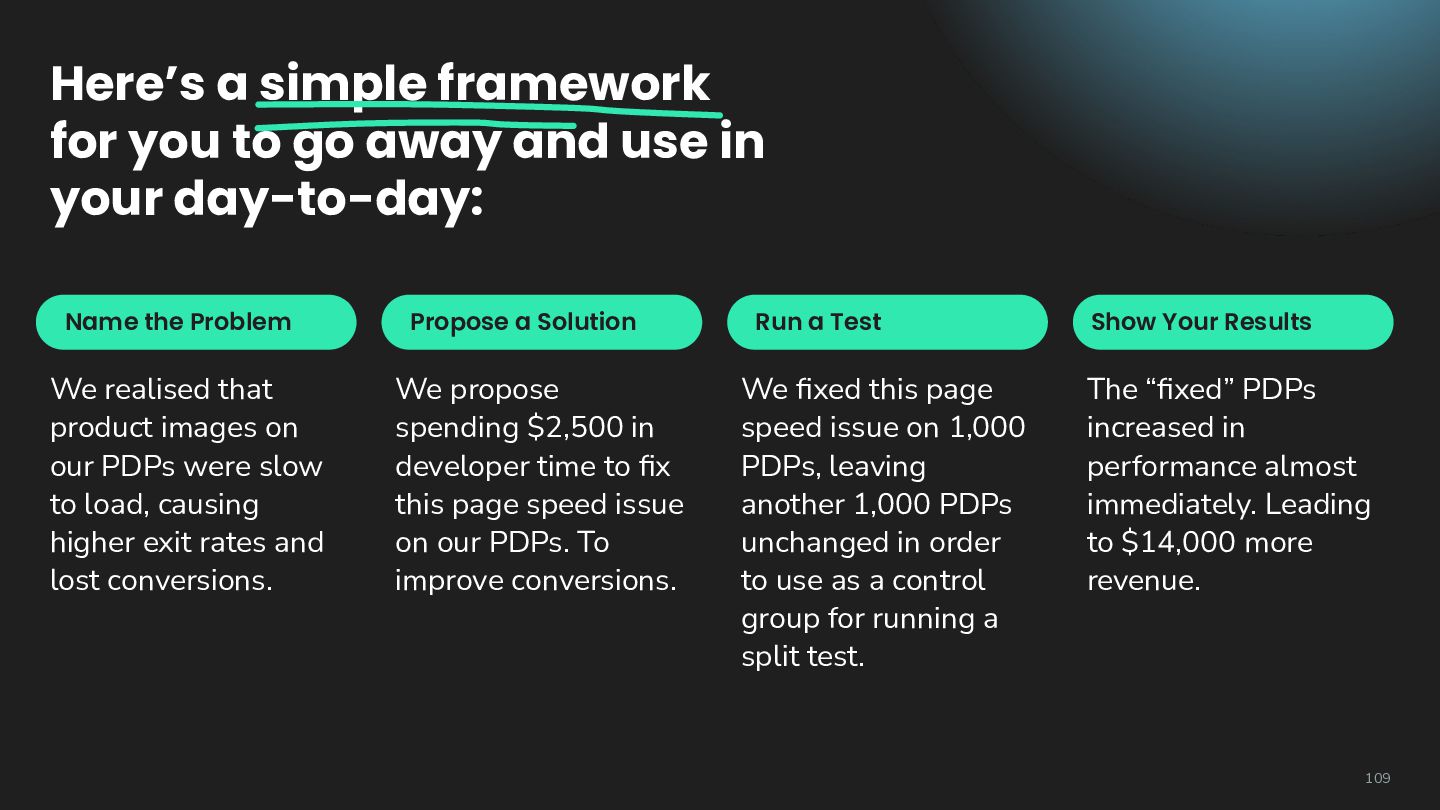
  18. 25 “When you make changes without testing the impact, you

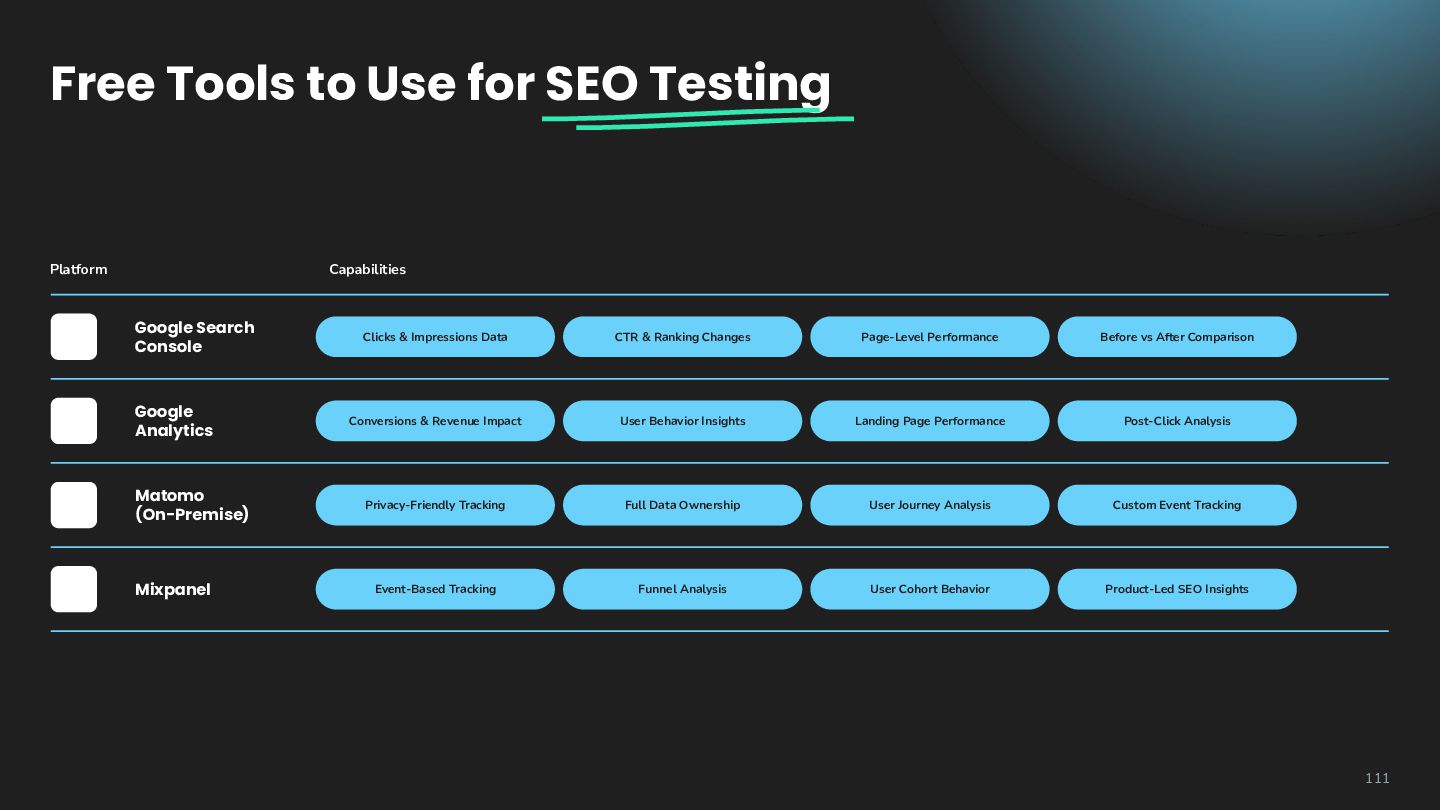
    lack the ability to understand what’s actually working for your site.” Ryan Jones, April 2026.
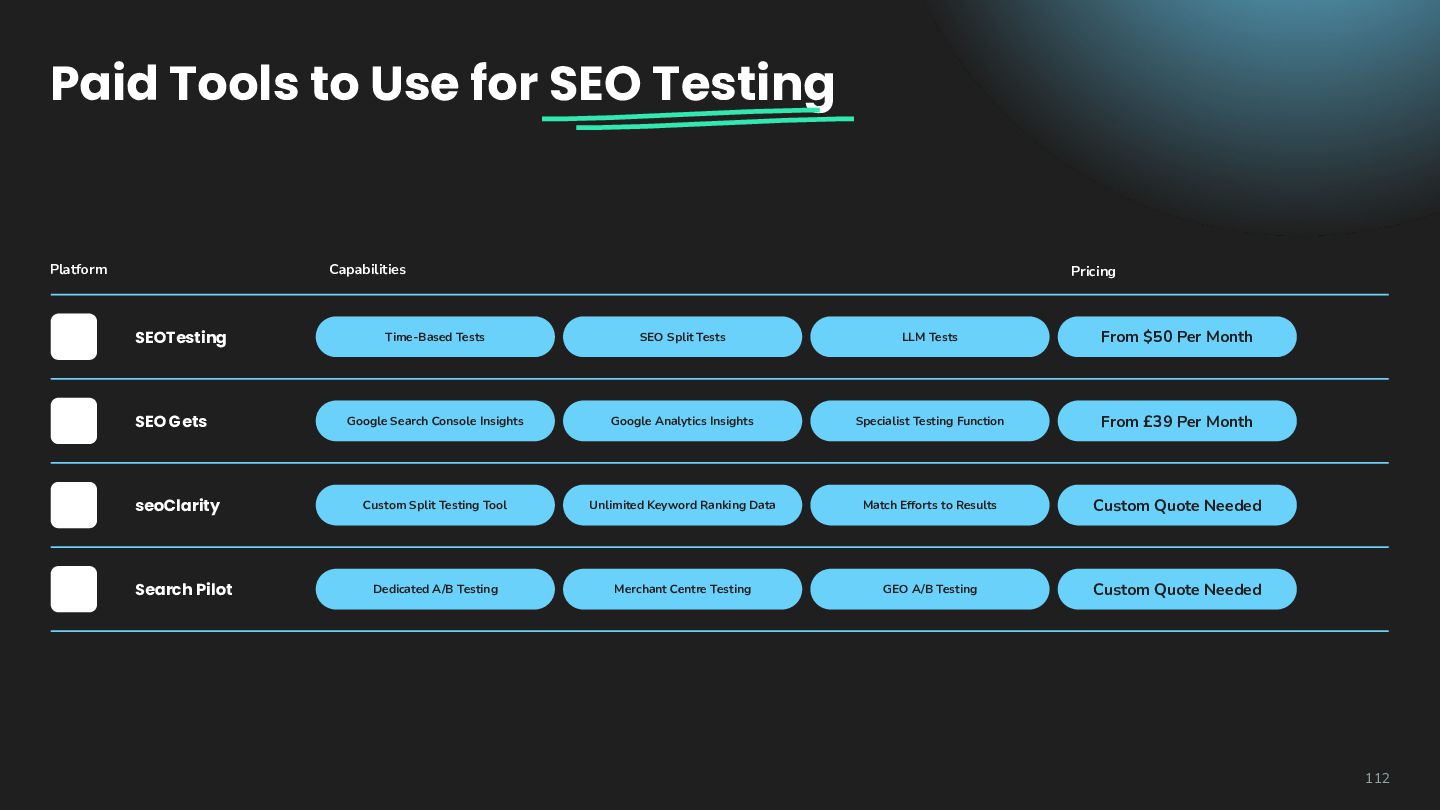
  19. 27

  20. 28

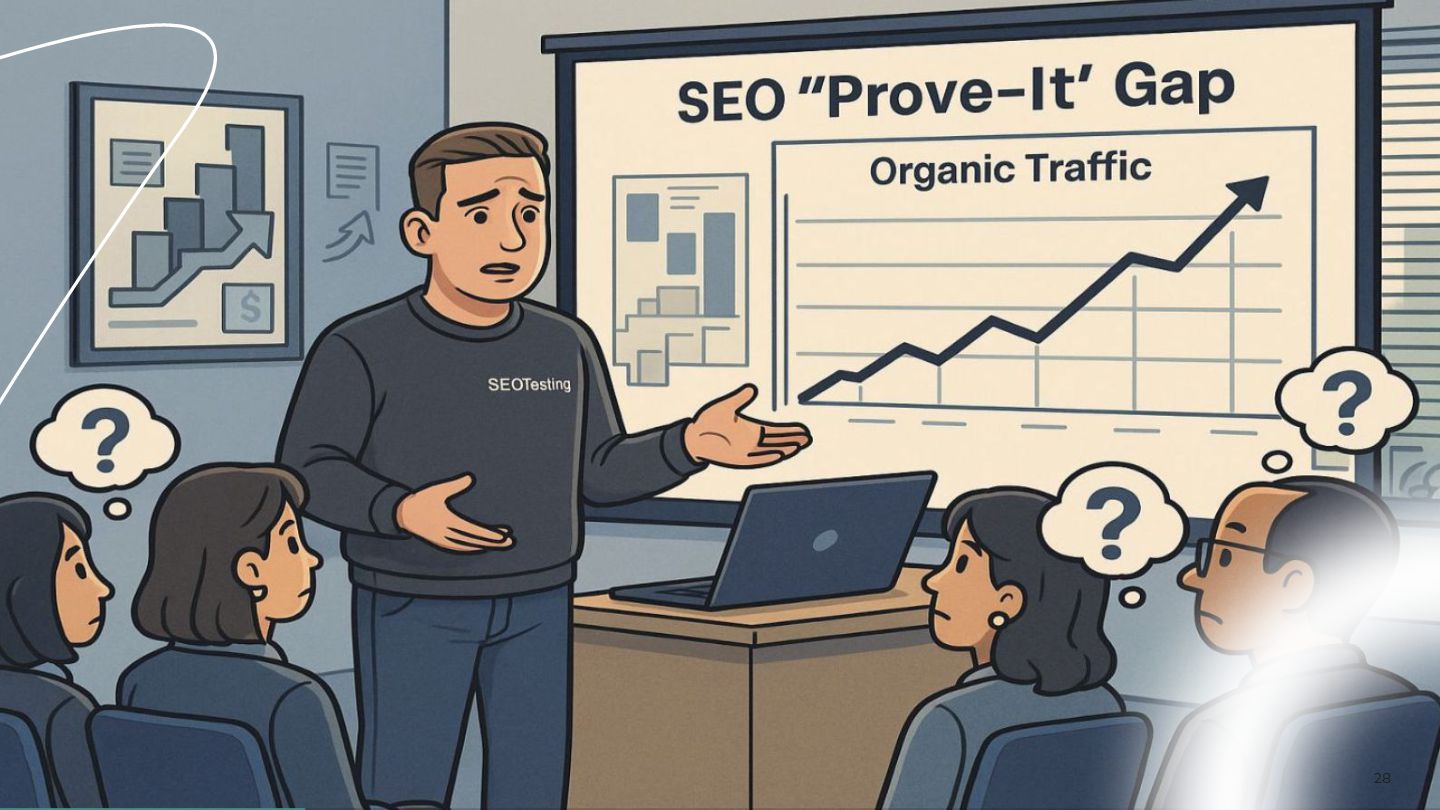
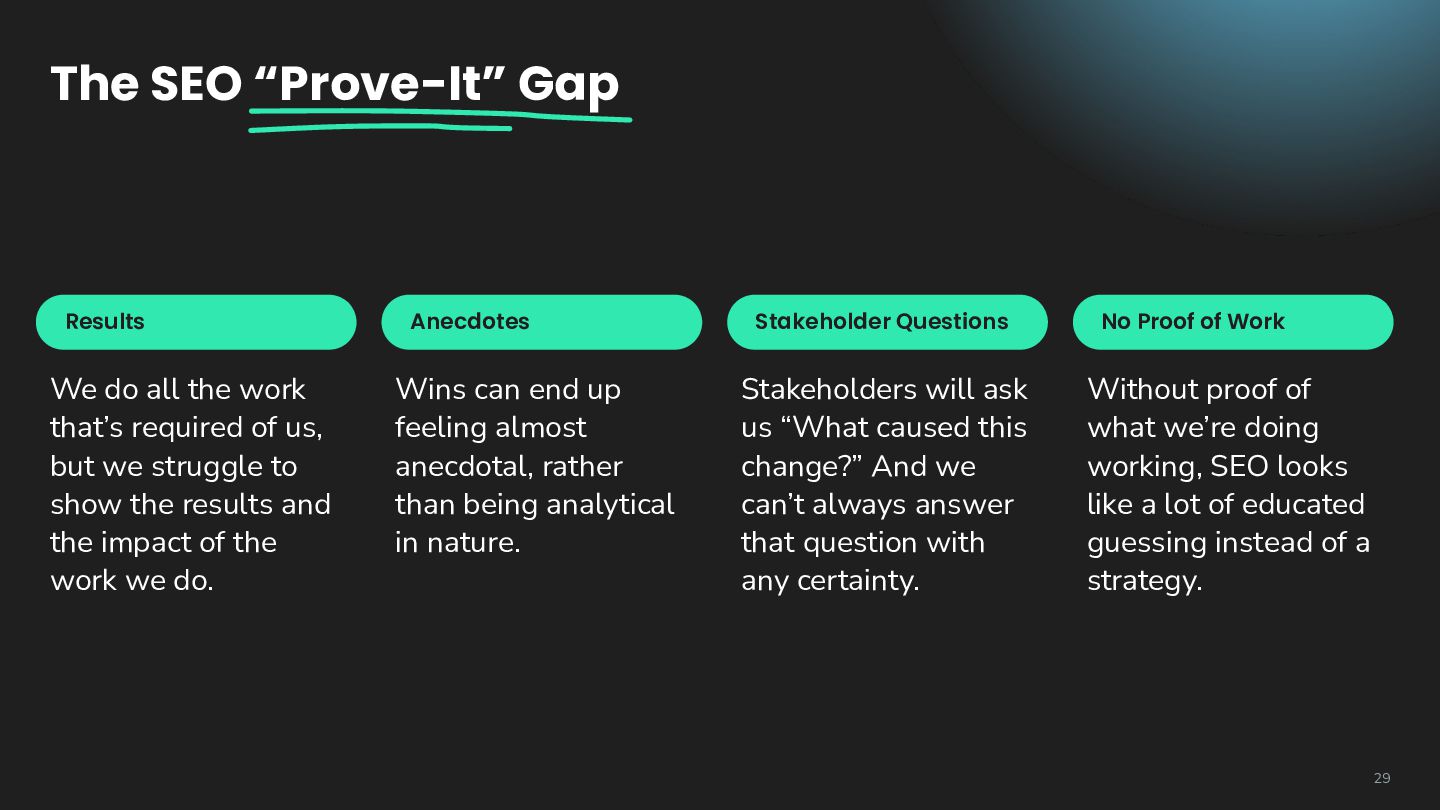
  21. 29 We do all the work that’s required of us,

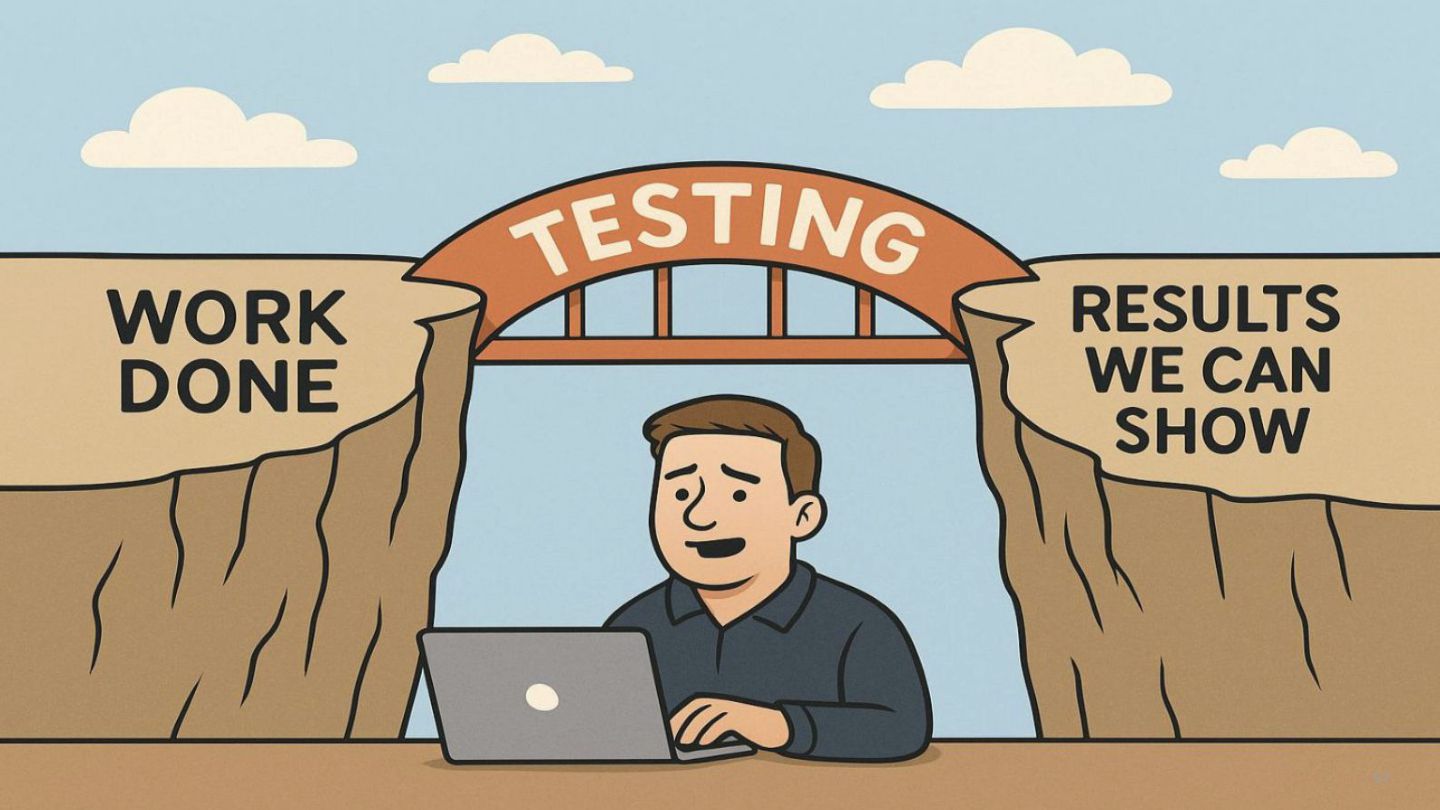
    but we struggle to show the results and the impact of the work we do. The SEO “Prove-It” Gap Wins can end up feeling almost anecdotal, rather than being analytical in nature. Stakeholders will ask us “What caused this change?” And we can’t always answer that question with any certainty. Without proof of what we’re doing working, SEO looks like a lot of educated guessing instead of a strategy. Results Anecdotes No Proof of Work Stakeholder Questions
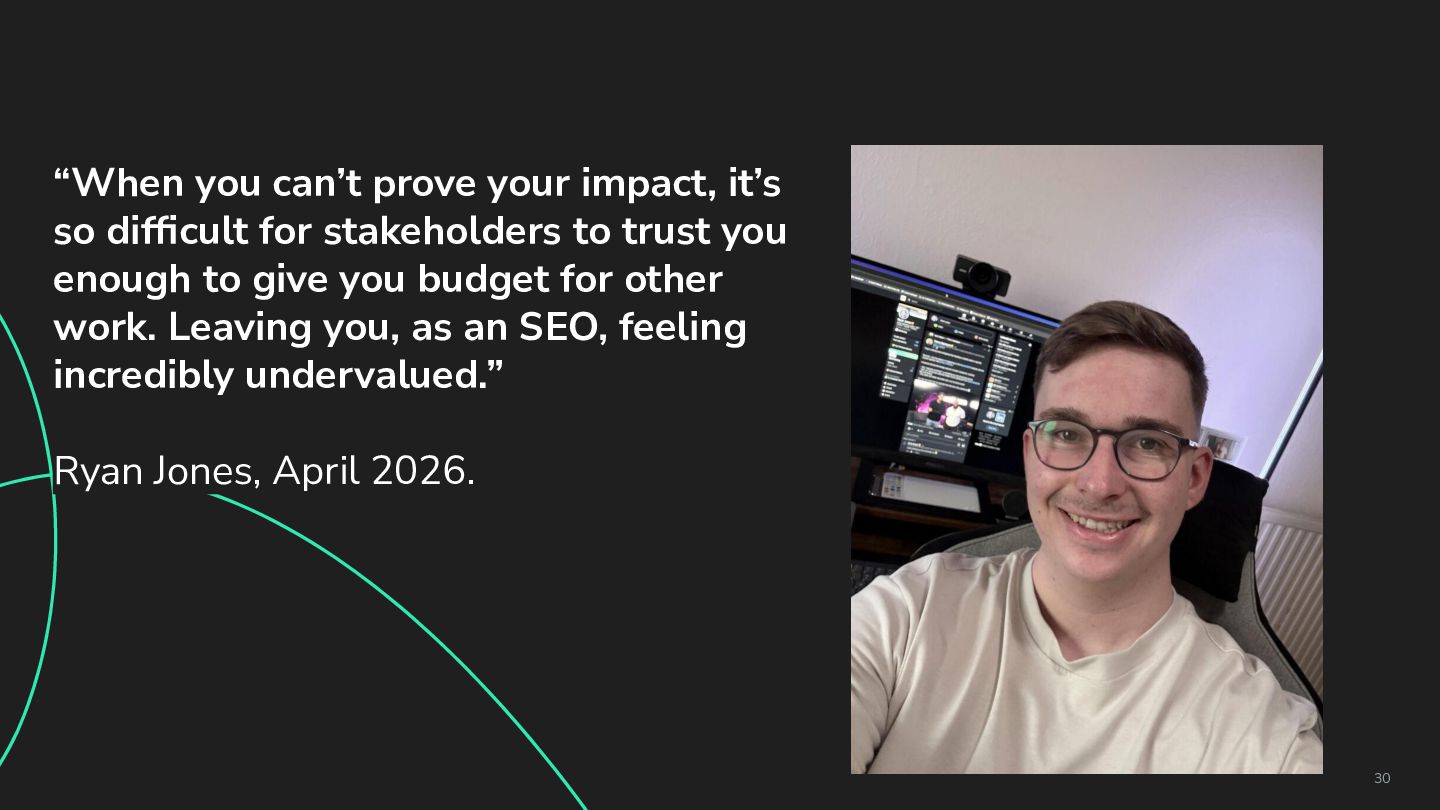
  22. 30 “When you can’t prove your impact, it’s so difficult

    for stakeholders to trust you enough to give you budget for other work. Leaving you, as an SEO, feeling incredibly undervalued.” Ryan Jones, April 2026.
  23. 31

  24. 32 So… What’s the thing that’s going to help us

    solve the three problems I’ve just talked about? Cool… Well if I’ve done a good enough job to this point, I now have your attention.
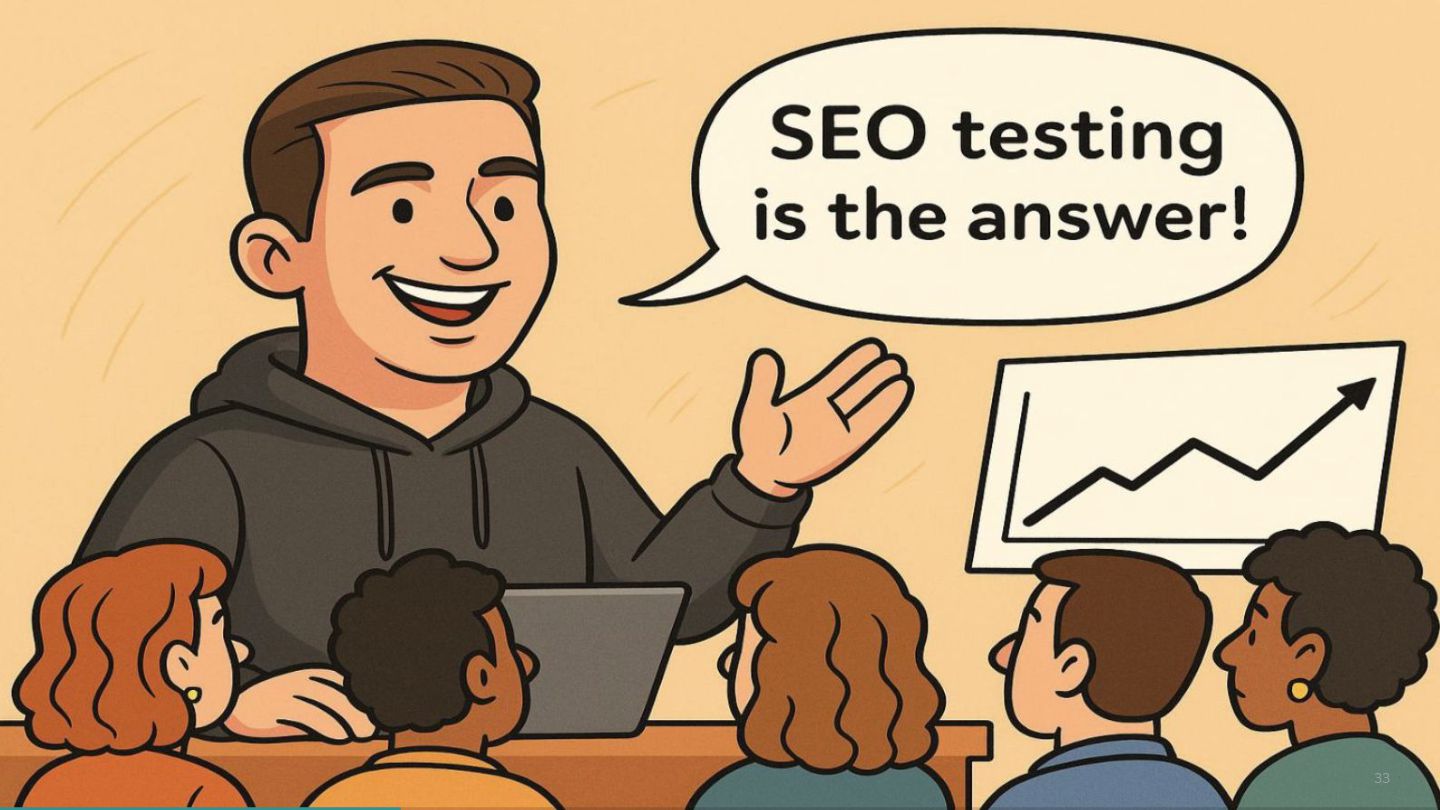
  25. 33

  26. 34

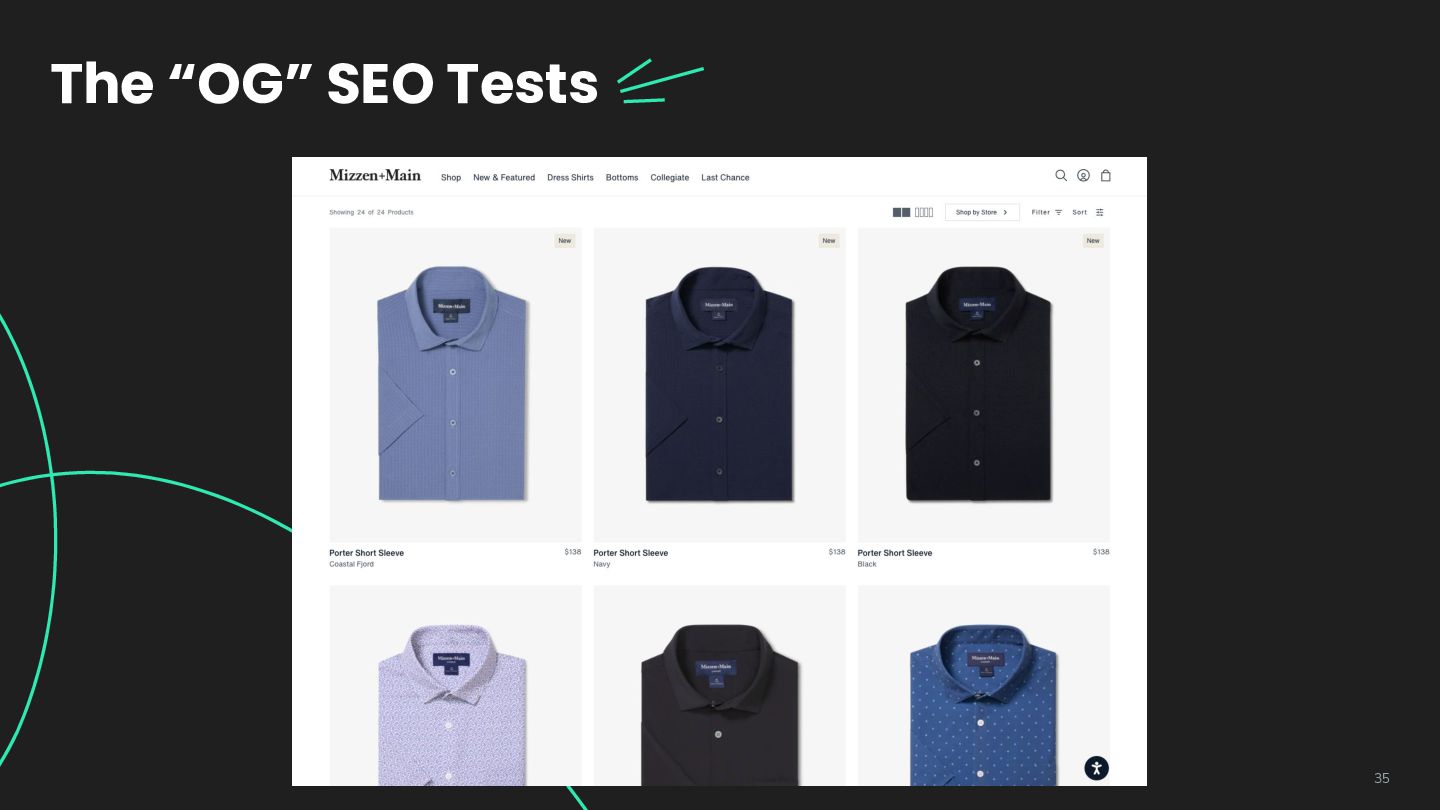
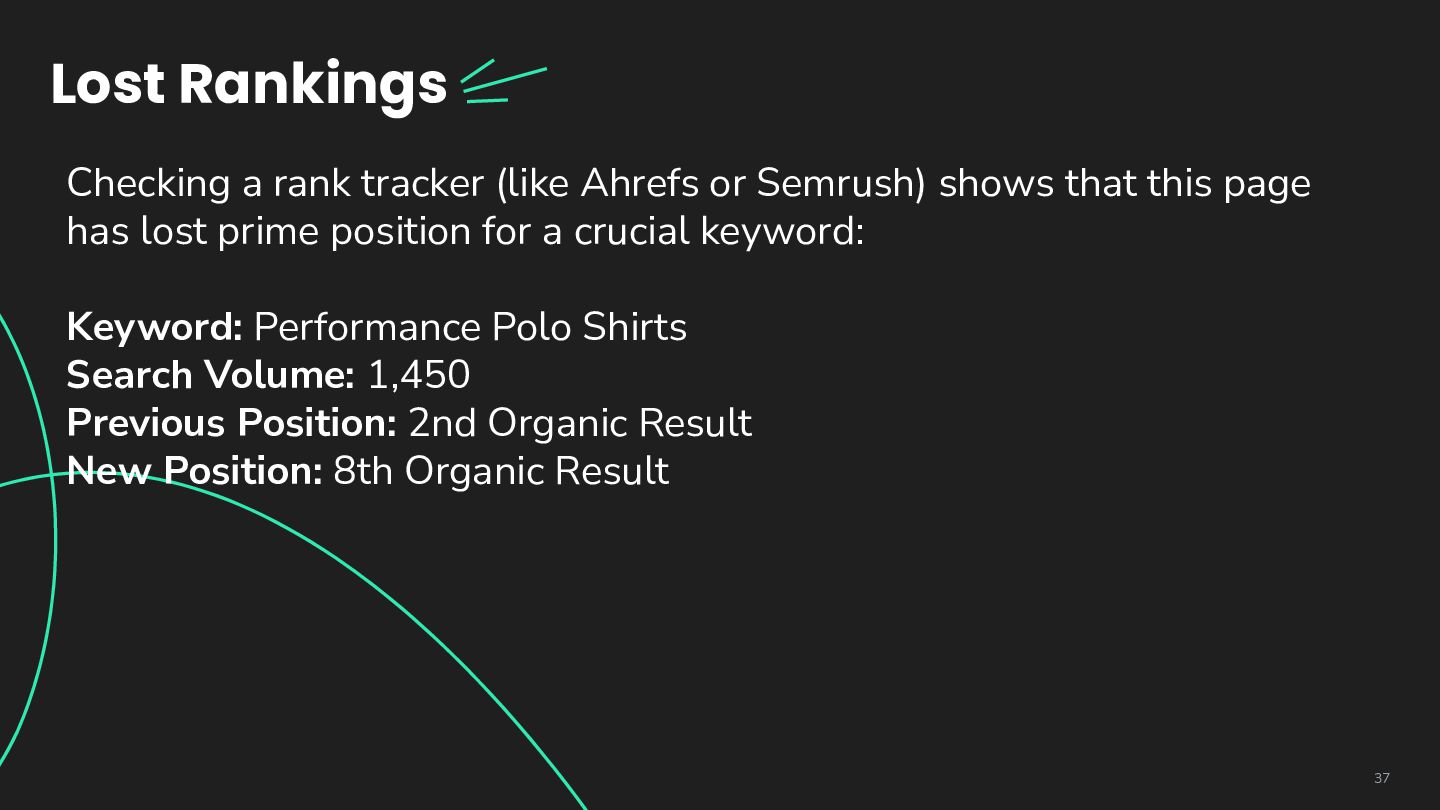
  27. 37 Lost Rankings Checking a rank tracker (like Ahrefs or

    Semrush) shows that this page has lost prime position for a crucial keyword: Keyword: Performance Polo Shirts Search Volume: 1,450 Previous Position: 2nd Organic Result New Position: 8th Organic Result
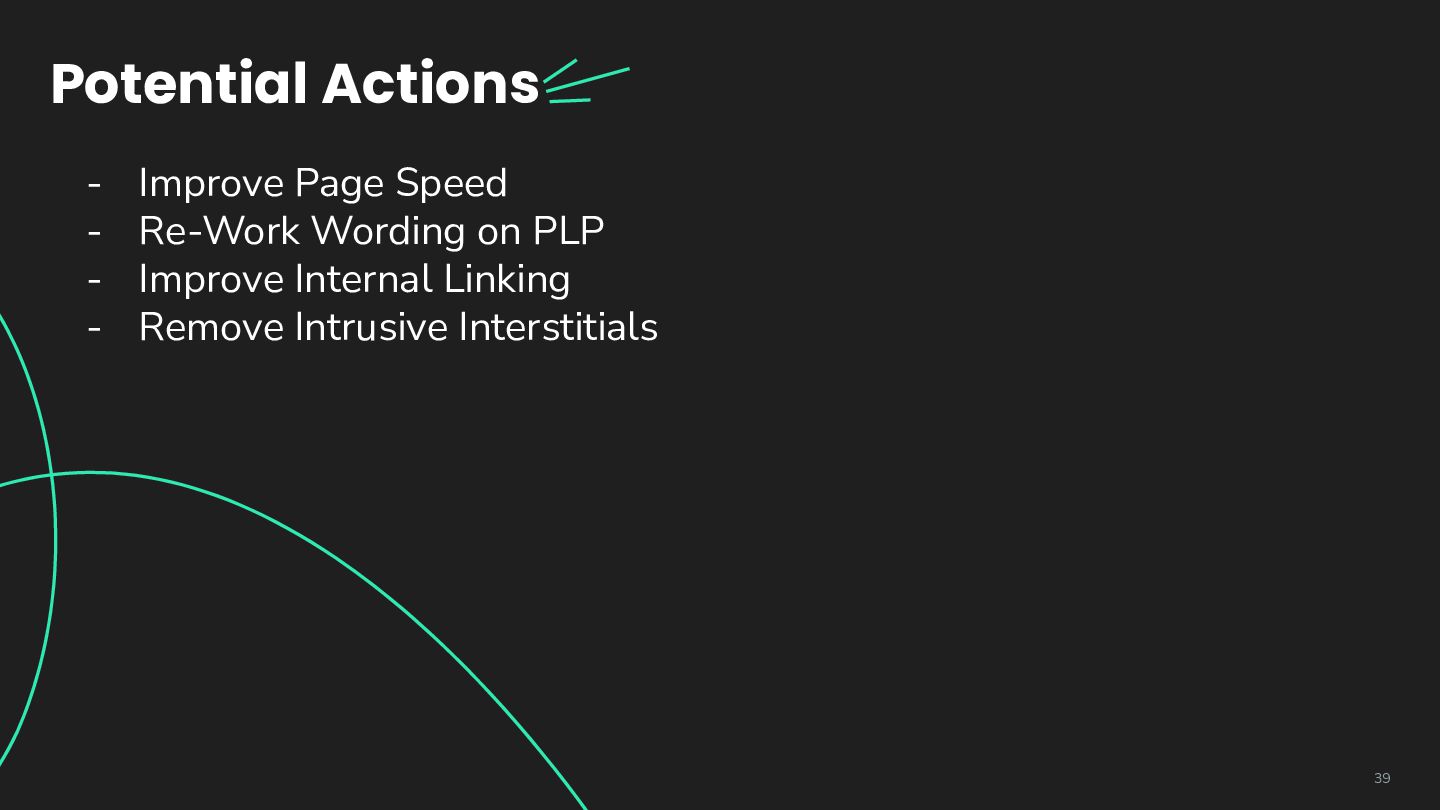
  28. 39 Potential Actions - Improve Page Speed - Re-Work Wording

    on PLP - Improve Internal Linking - Remove Intrusive Interstitials
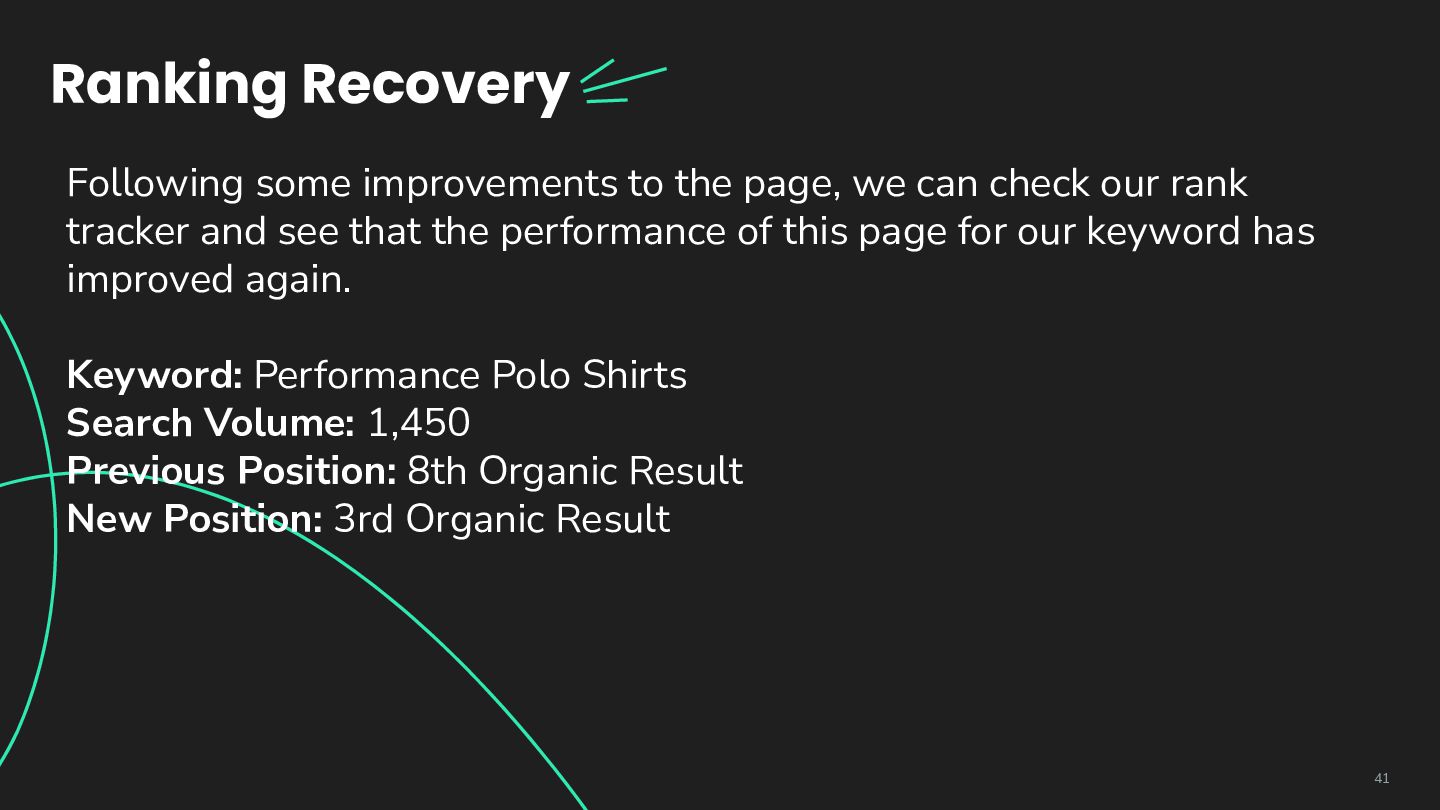
  29. 41 Ranking Recovery Following some improvements to the page, we

    can check our rank tracker and see that the performance of this page for our keyword has improved again. Keyword: Performance Polo Shirts Search Volume: 1,450 Previous Position: 8th Organic Result New Position: 3rd Organic Result
  30. 43

  31. 44 The New Approach We now have more / better

    data (and tools) to do SEO tests the right way:
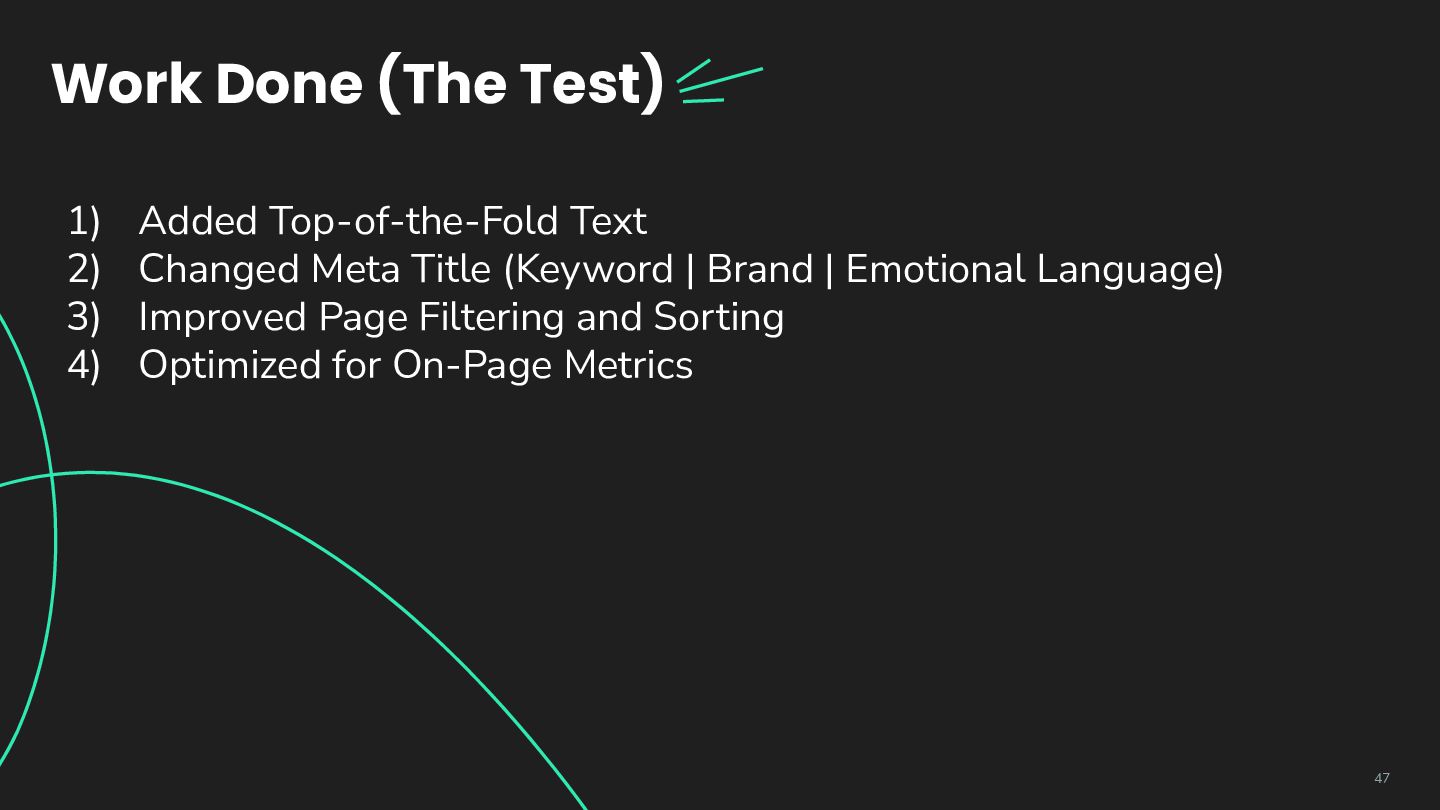
  32. 47 Work Done (The Test) 1) Added Top-of-the-Fold Text 2)

    Changed Meta Title (Keyword | Brand | Emotional Language) 3) Improved Page Filtering and Sorting 4) Optimized for On-Page Metrics
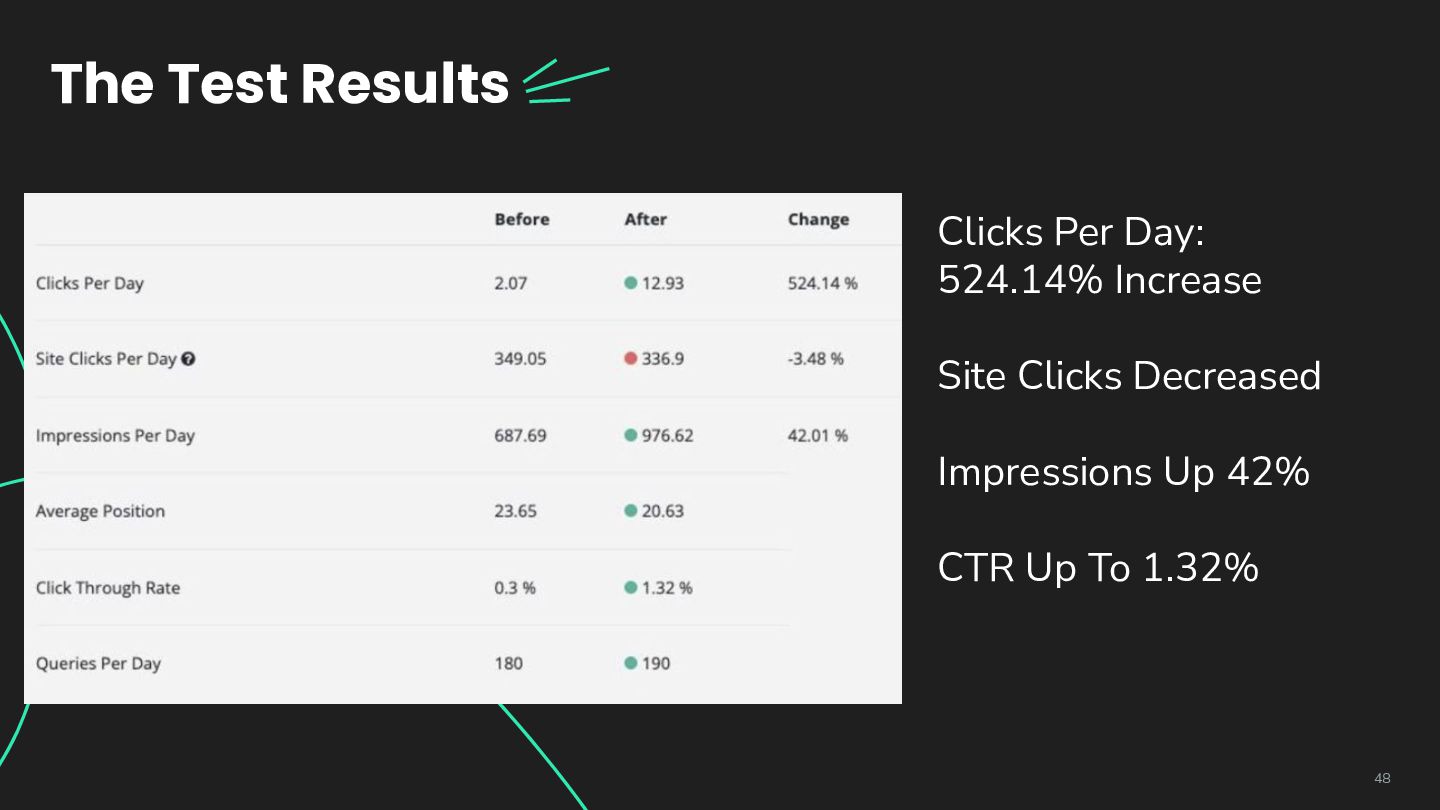
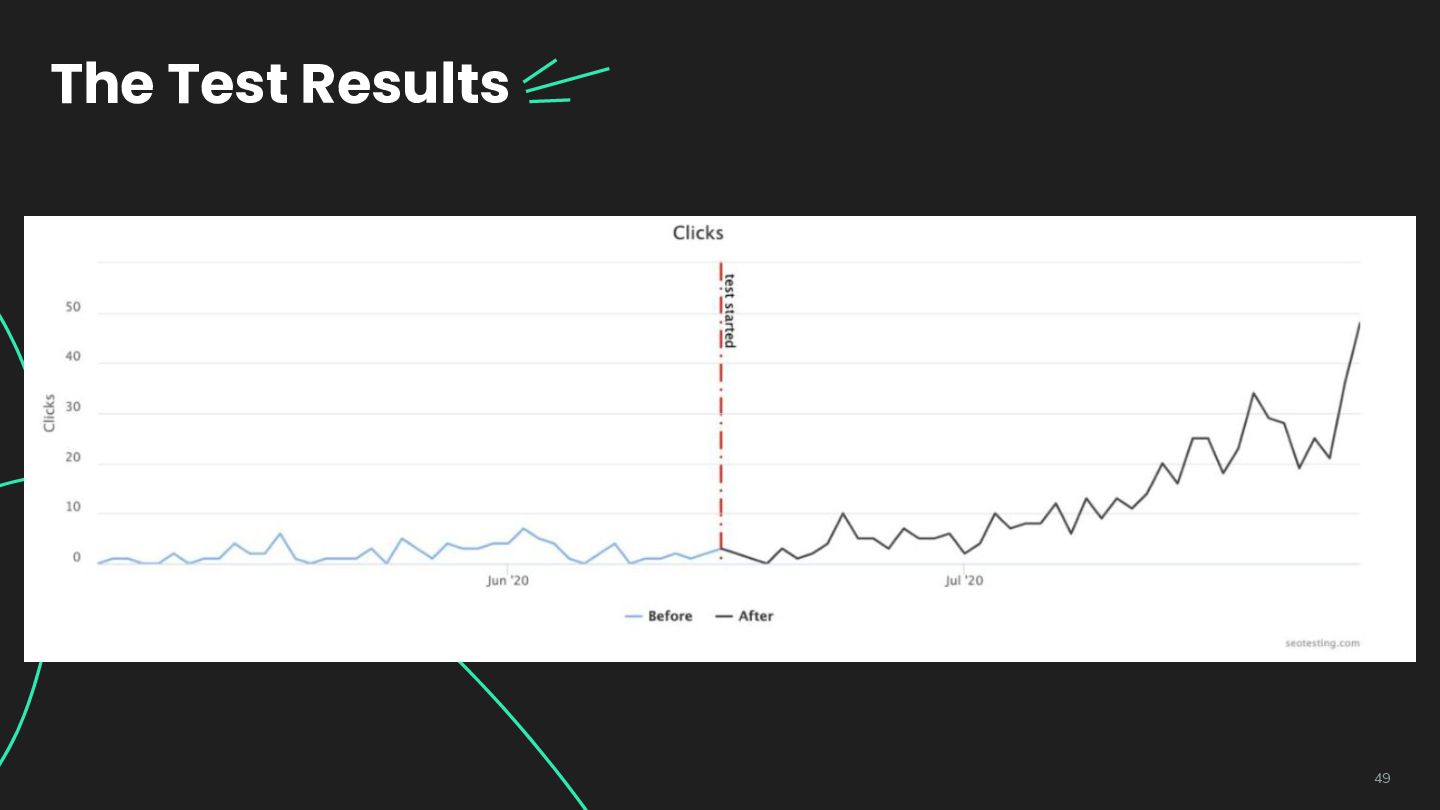
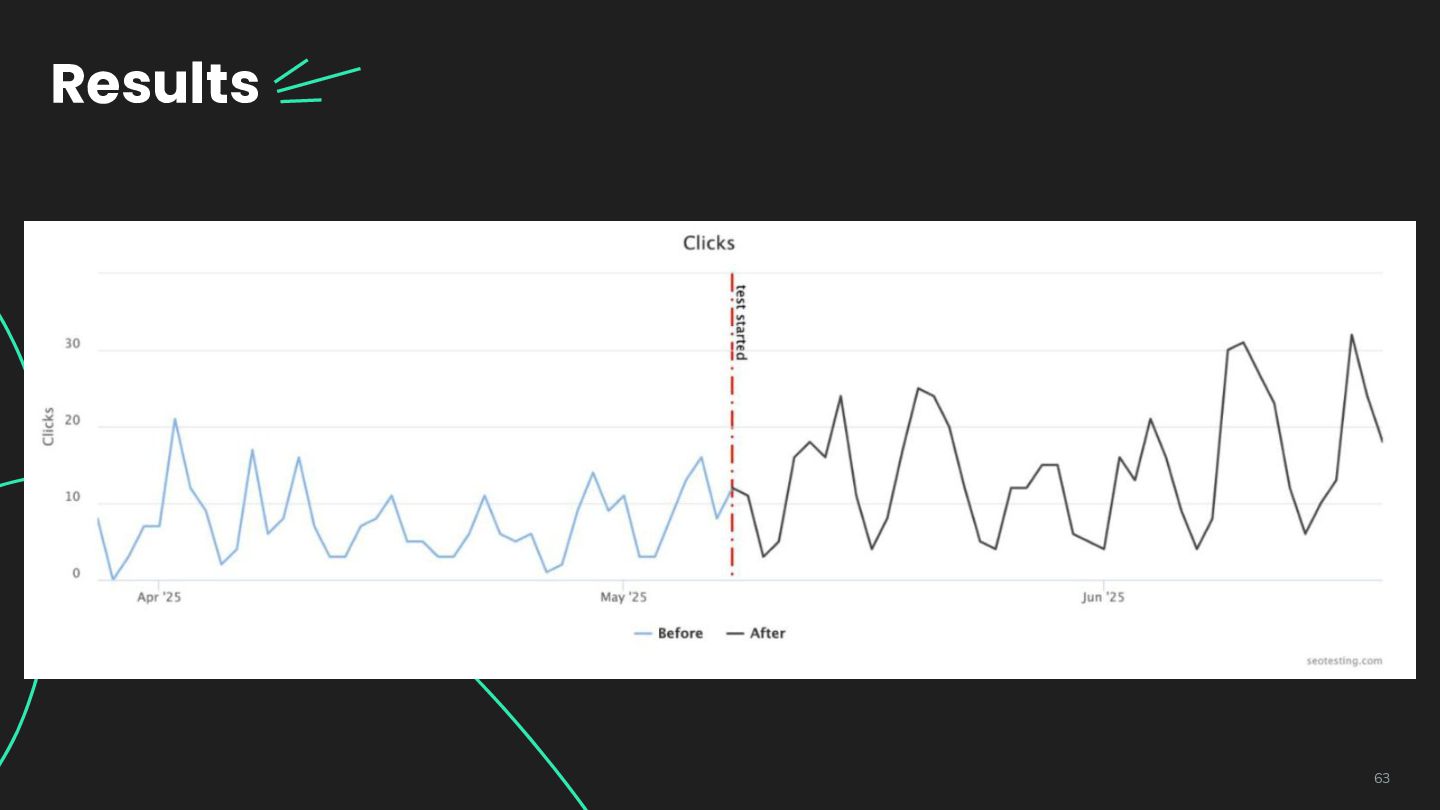
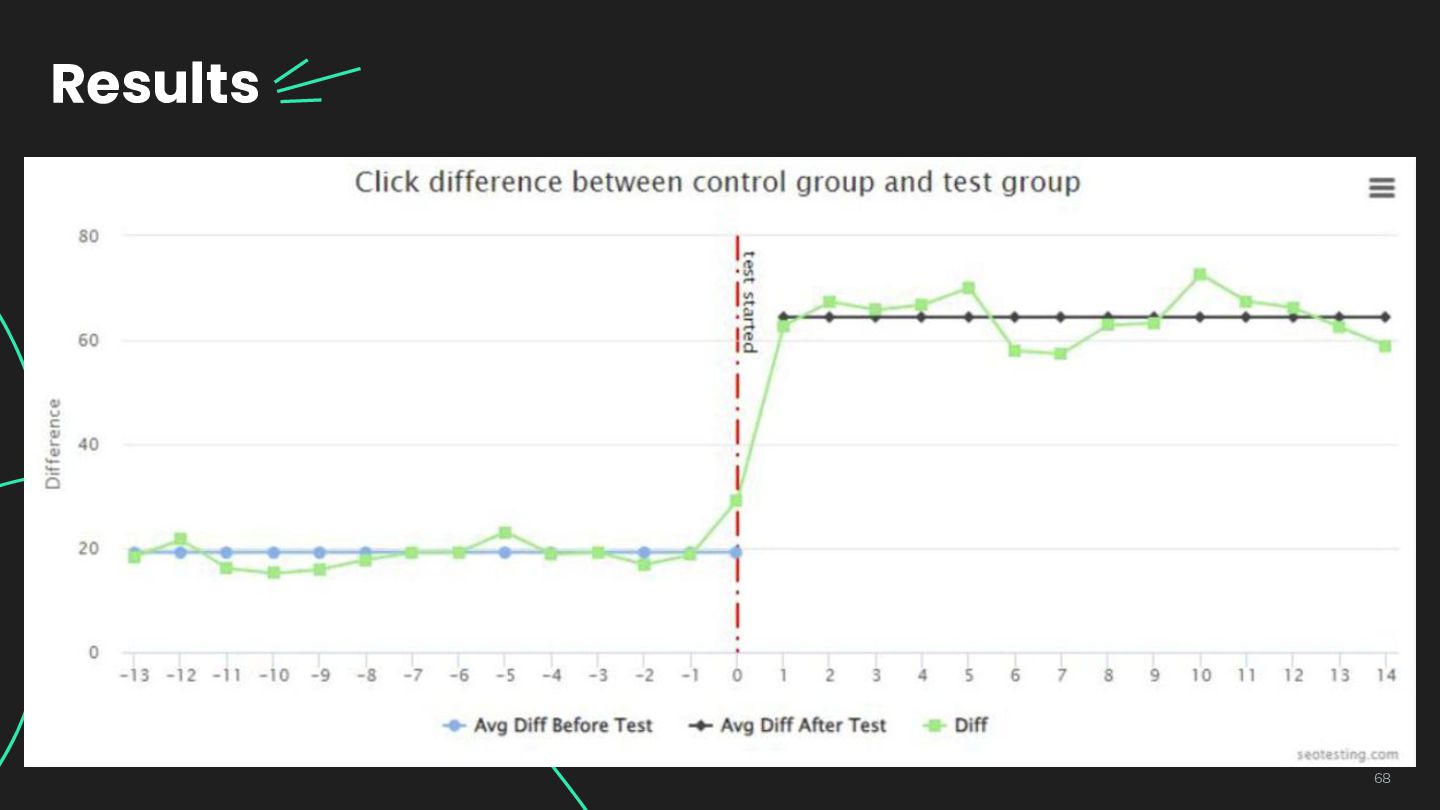
  33. 48 The Test Results Clicks Per Day: 524.14% Increase Site

    Clicks Decreased Impressions Up 42% CTR Up To 1.32%
  34. 50

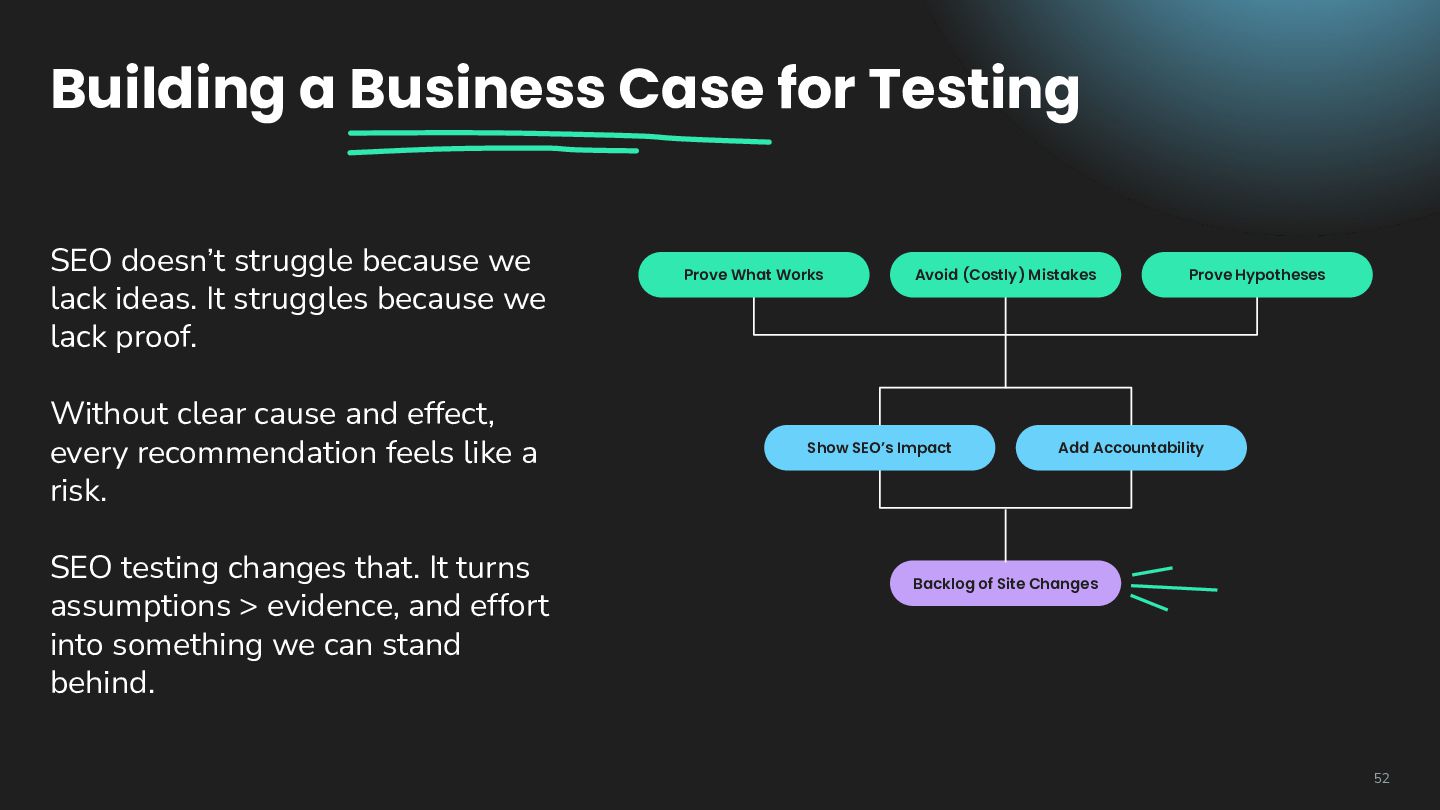
  35. 52 Building a Business Case for Testing SEO doesn’t struggle

    because we lack ideas. It struggles because we lack proof. Without clear cause and effect, every recommendation feels like a risk. SEO testing changes that. It turns assumptions > evidence, and effort into something we can stand behind. Prove What Works Avoid (Costly) Mistakes Prove Hypotheses Show SEO’s Impact Add Accountability Backlog of Site Changes
  36. 53

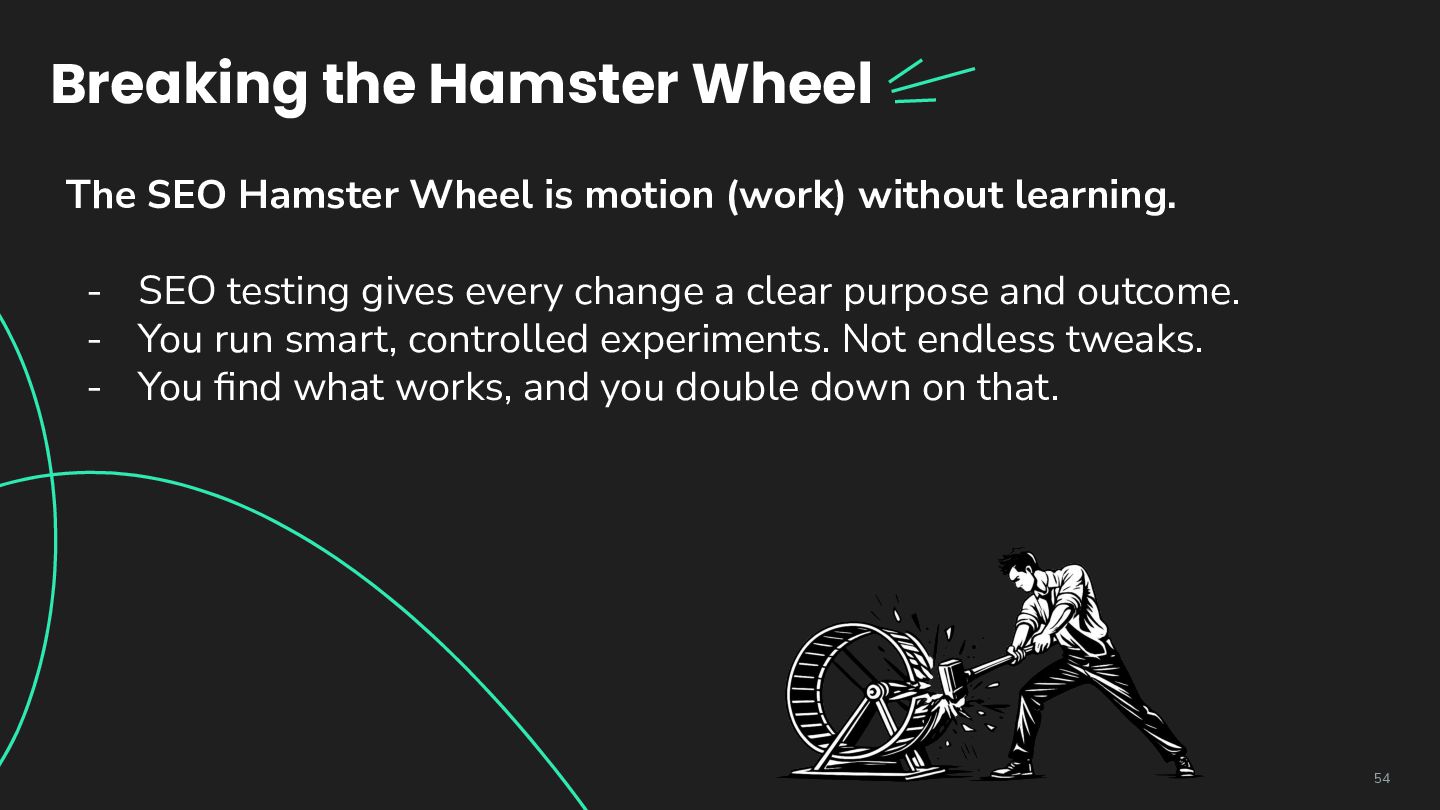
  37. 54 Breaking the Hamster Wheel The SEO Hamster Wheel is

    motion (work) without learning. - SEO testing gives every change a clear purpose and outcome. - You run smart, controlled experiments. Not endless tweaks. - You find what works, and you double down on that.
  38. 55

  39. 56 Stop Paying the Guesswork Tax The SEO Guesswork Tax

    is paid every time we act without evidence. - Testing gives us measurable cause and effect. No guessing needed! - Every test acts as a data point that leads to learning, not confusion. - You can replace “it depends” with “I can show.”
  40. 57

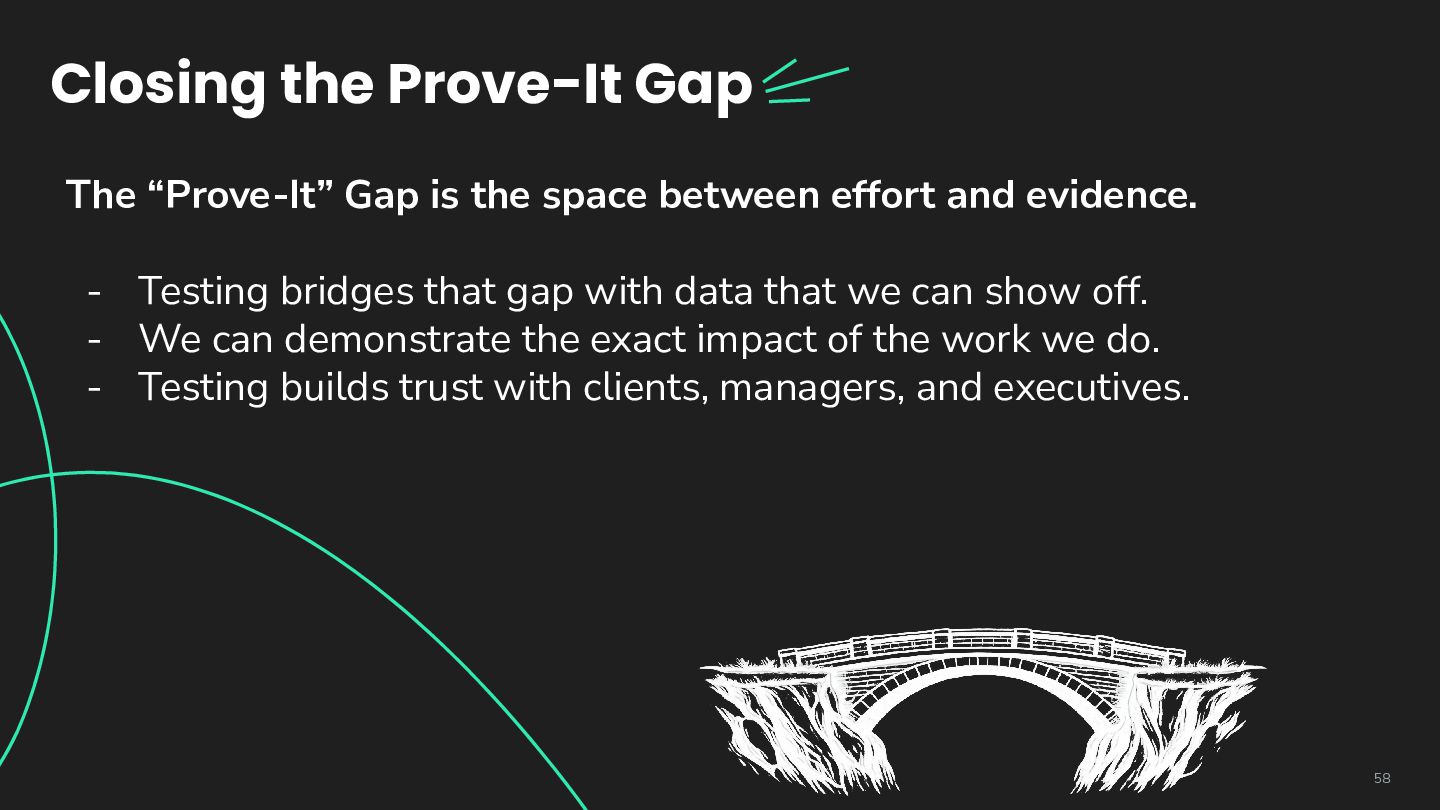
  41. 58 Closing the Prove-It Gap The “Prove-It” Gap is the

    space between effort and evidence. - Testing bridges that gap with data that we can show off. - We can demonstrate the exact impact of the work we do. - Testing builds trust with clients, managers, and executives.
  42. 60 Three Test Types 1) Time-Based SEO Tests 2) SEO

    Split Tests 3) LLM Tests (GEO / AEO / LLMO / Whatever)
  43. 64 Time-Based tests are great for many different reasons: -

    Single-Page Changes - Content Refreshes - Adding Video Embeds - Internal Link Changes - Any Change to One-Off Content Time-Based Test Use Cases
  44. 67

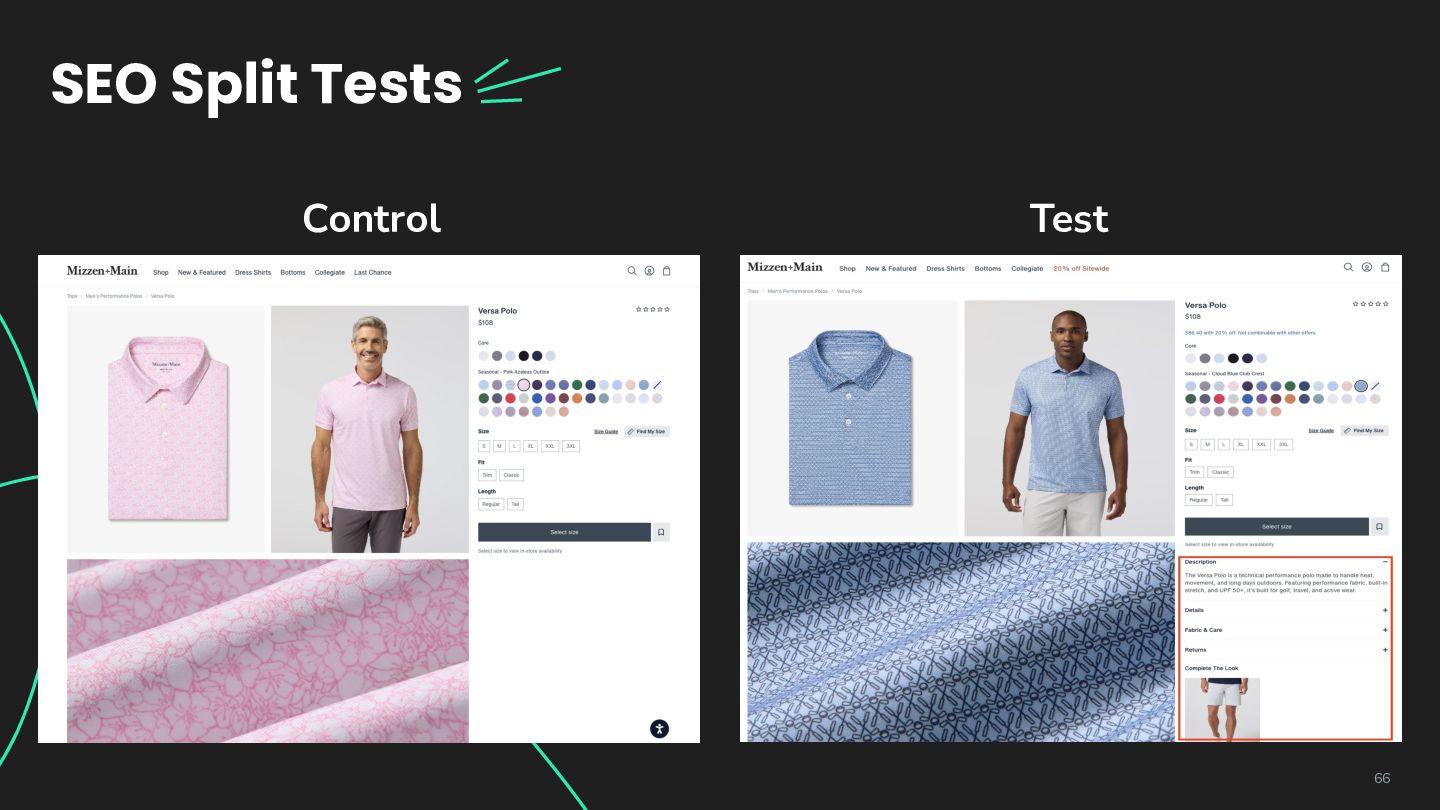
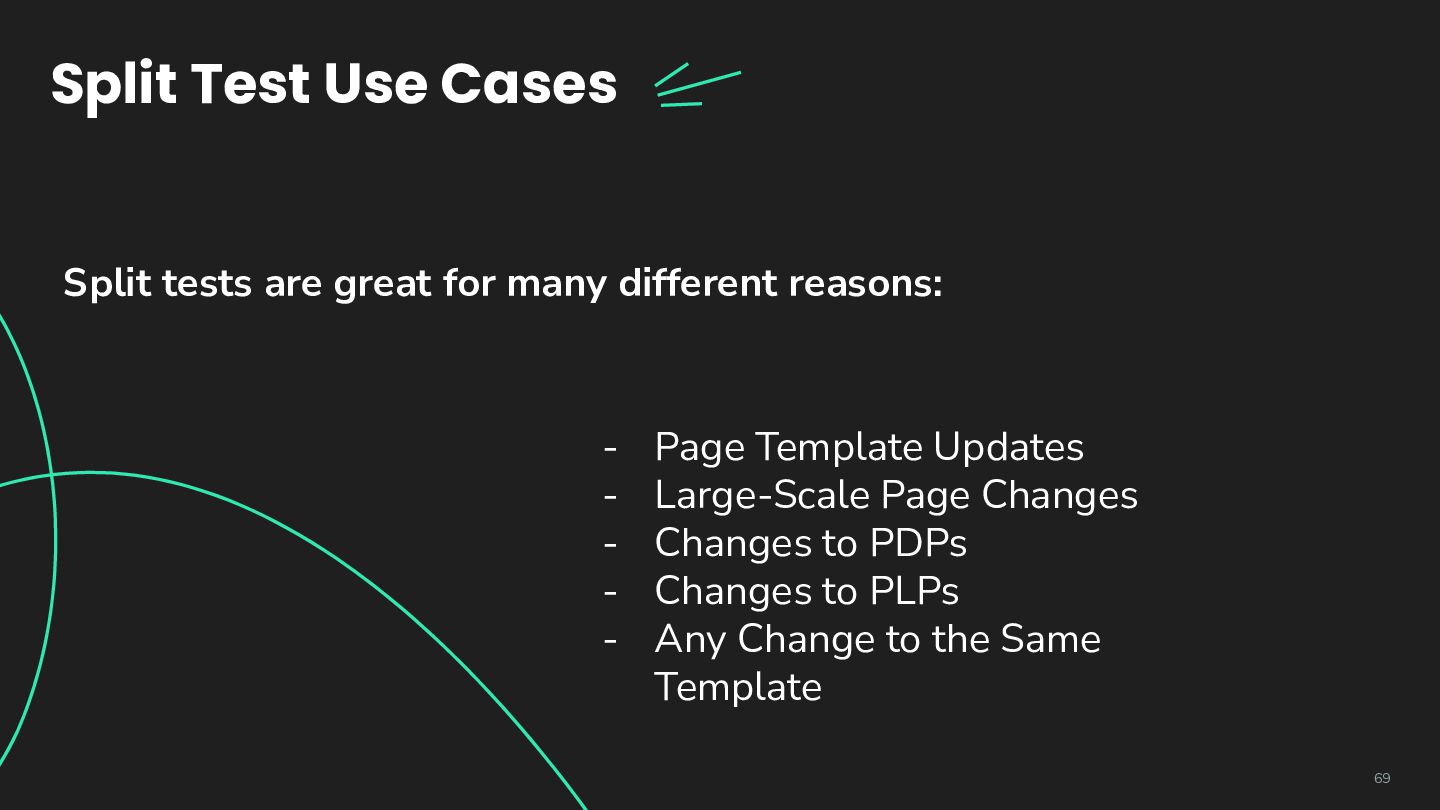
  45. 69 Split tests are great for many different reasons: -

    Page Template Updates - Large-Scale Page Changes - Changes to PDPs - Changes to PLPs - Any Change to the Same Template Split Test Use Cases
  46. 75

  47. 78 LLM Testing While the testing “method” is the same,

    we’re not measuring clicks, impressions, click-through rates, or average position. Instead, we’re measuring traffic that comes from LLMs!
  48. 80 Caveats Look, I get it… Measuring traffic directly from

    LLMs isn’t the most accurate in the world. Especially given sometimes the LLMs won’t even give us proper referral data. But we can often get enough to test on. And we can use those test results to show whether we’re moving in the right direction.
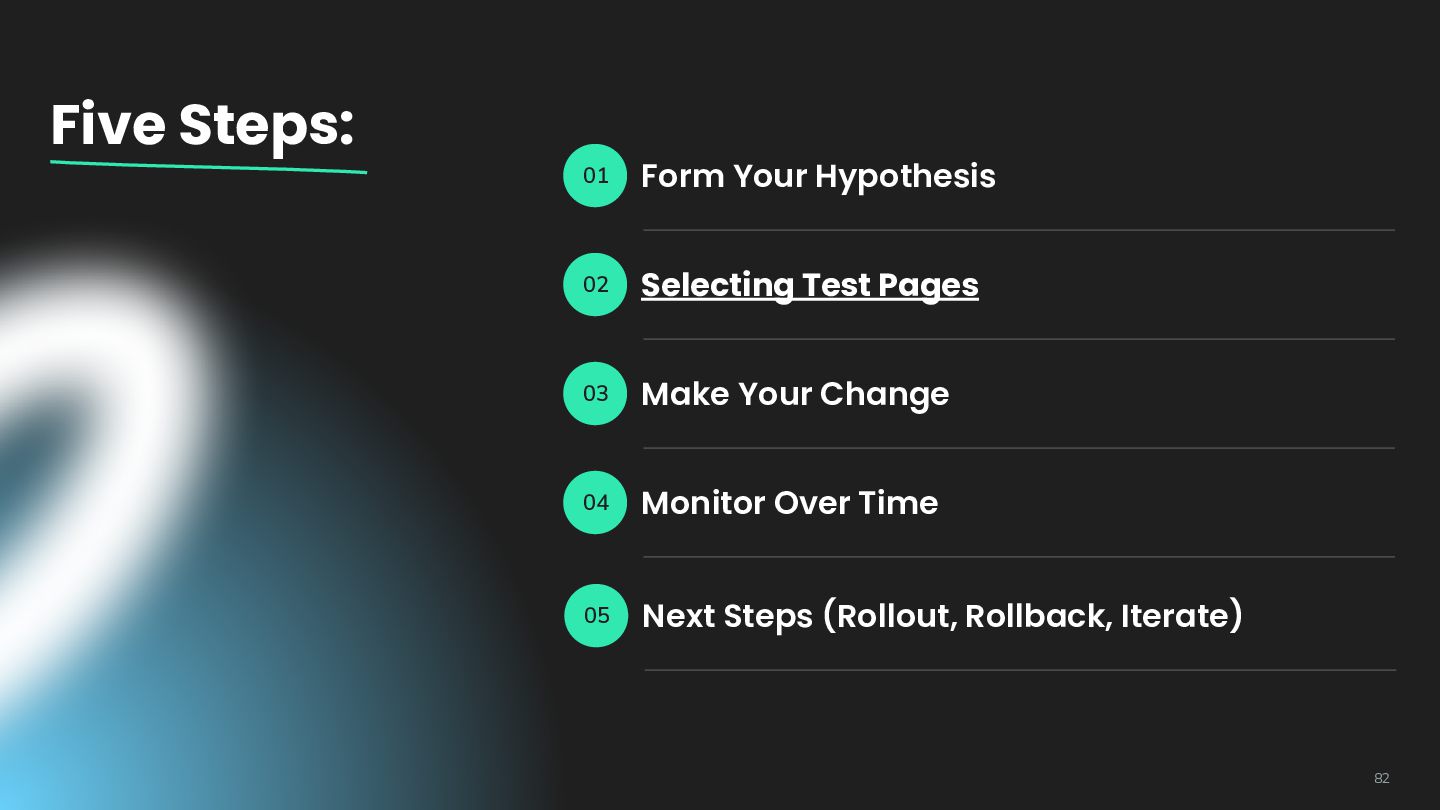
  49. 82 01 02 03 04 Form Your Hypothesis Selecting Test

    Pages Make Your Change Monitor Over Time Five Steps: 05 Next Steps (Rollout, Rollback, Iterate)
  50. 84 1) Hypothesis Your hypothesis should be statement-based, including something

    you’re not happy with, something you can change, and something that you can measure to determine whether you were correct or not.
  51. 85 1) Hypothesis An Example of a Hypothesis to be

    Improved: What will happen if we remove the product carousel from our Polo Shirt PDP? Will organic traffic / conversions increase or decrease?
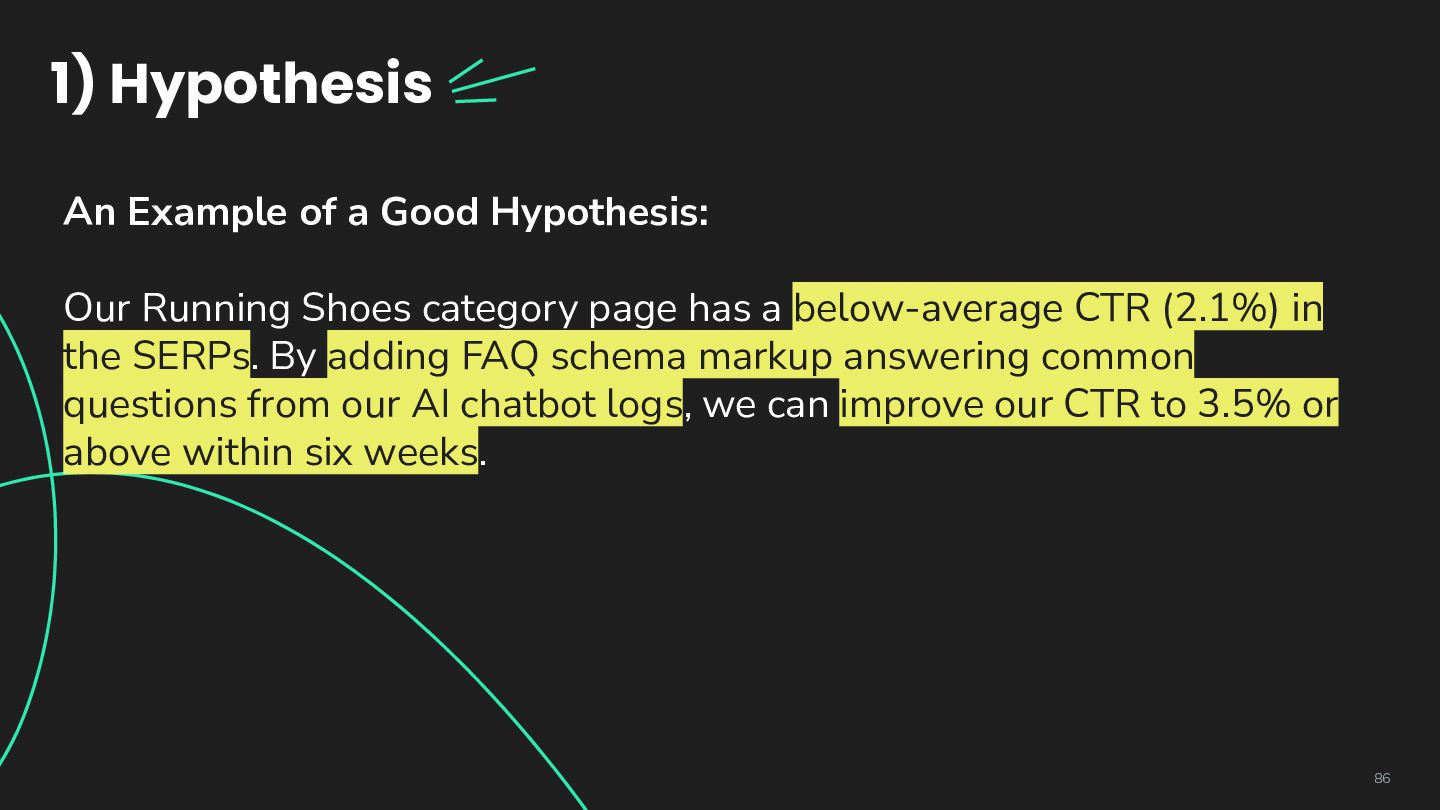
  52. 86 1) Hypothesis An Example of a Good Hypothesis: Our

    Running Shoes category page has a below-average CTR (2.1%) in the SERPs. By adding FAQ schema markup answering common questions from our AI chatbot logs, we can improve our CTR to 3.5% or above within six weeks.
  53. 87 1) Hypothesis Something You’re Unhappy With: Current CTR Something

    to Change: Adding FAQ Schema Something to Measure: The Page’s CTR (Post-Test)
  54. 89

  55. 90 2) Selecting Pages Performance-Based Questions: 1) Which pages get

    the most impressions but low clicks? 2) Which pages have high exit rates? 3) Which pages have dropped in traffic recently? 4) Which pages have stagnated in rankings? 5) Which pages rank on Page 2 or Page 3 for target keywords?
  56. 91 2) Selecting Pages Optimization-Opportunity Questions: 1) Do any pages

    lack internal links pointing to them? 2) Do some pages include outdated or thin content? 3) Are some pages missing structured data we could add? 4) Are any title tags too long, or missing important keywords? 5) Do similar pages perform very differently?
  57. 92 2) Selecting Pages Testing Value Questions: 1) Can I

    isolate this page from others for a test? 2) Will changes on this page affect site performance? 3) Is this change part of a large group I can test across? 4) Can I measure the test results easily? 5) Is this page important for conversions / leads?
  58. 93 2) Selecting Pages The key is to find a

    combination of those prior questions to find good candidate pages for SEO tests!
  59. 94 2) Selecting Pages An Example? 1) Has this page

    dropped in traffic recently? YES ✅ 2) Is there any thin / outdated content on this page? YES ✅ 3) Can I isolate this page as part of a test? YES ✅
  60. 95 2) Selecting Pages (Split Tests) Rules for Selecting Control

    and Test Pages: - Match Page Templates (PDPs, PLPs, etc) - Select High-Traffic Pages (If Possible) - Remove Outliers (Performance Outliers) - Match Seasonality (Tennis Rackets ≠ Football Boots)
  61. 97

  62. 98 3) Making Page Changes Three Simple Steps/Rules: 1) Make

    the change to the test page or test pages. 2) Note the start date of the test. 3) Inform ANYONE that could impact your test data.
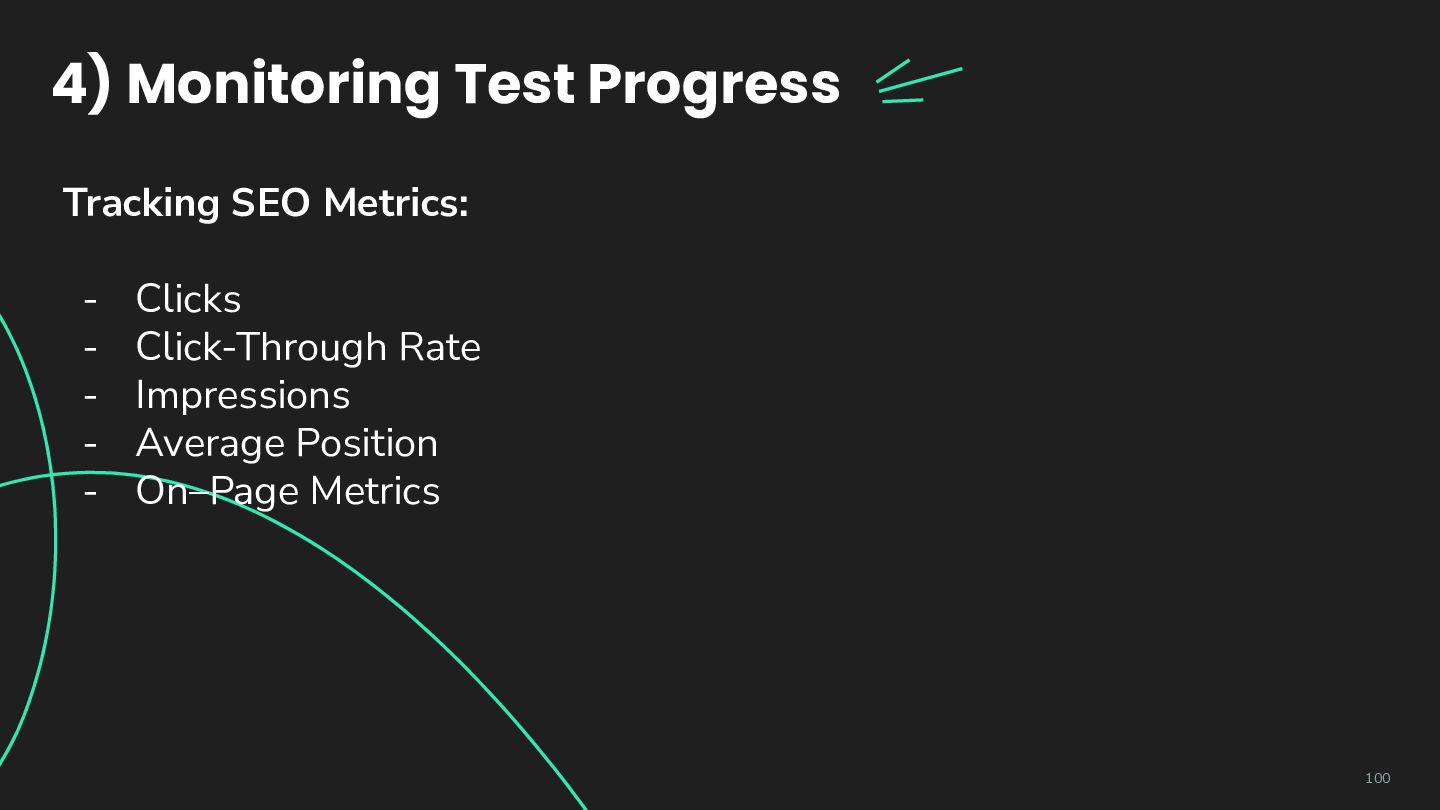
  63. 100 4) Monitoring Test Progress Tracking SEO Metrics: - Clicks

    - Click-Through Rate - Impressions - Average Position - On–Page Metrics
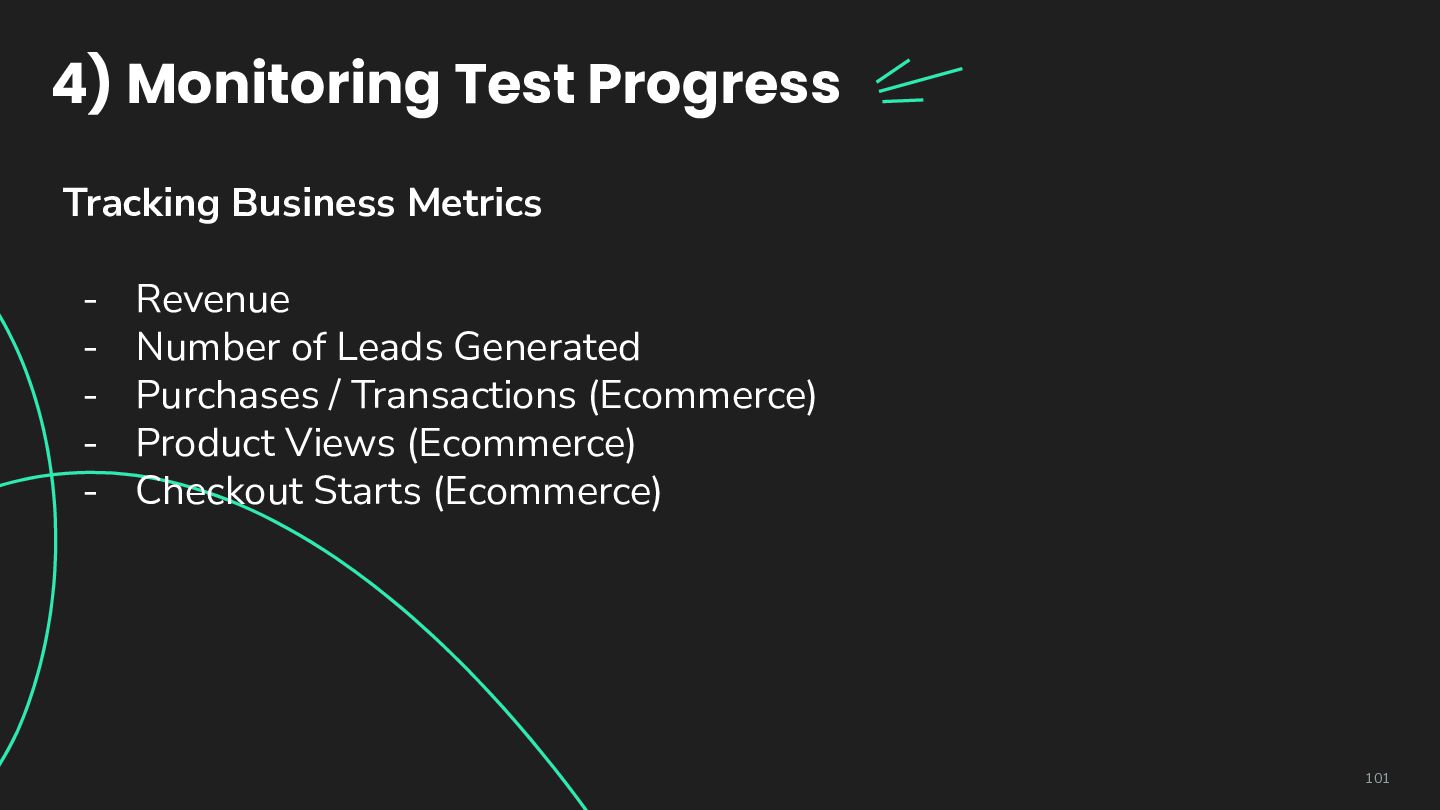
  64. 101 4) Monitoring Test Progress Tracking Business Metrics - Revenue

    - Number of Leads Generated - Purchases / Transactions (Ecommerce) - Product Views (Ecommerce) - Checkout Starts (Ecommerce)
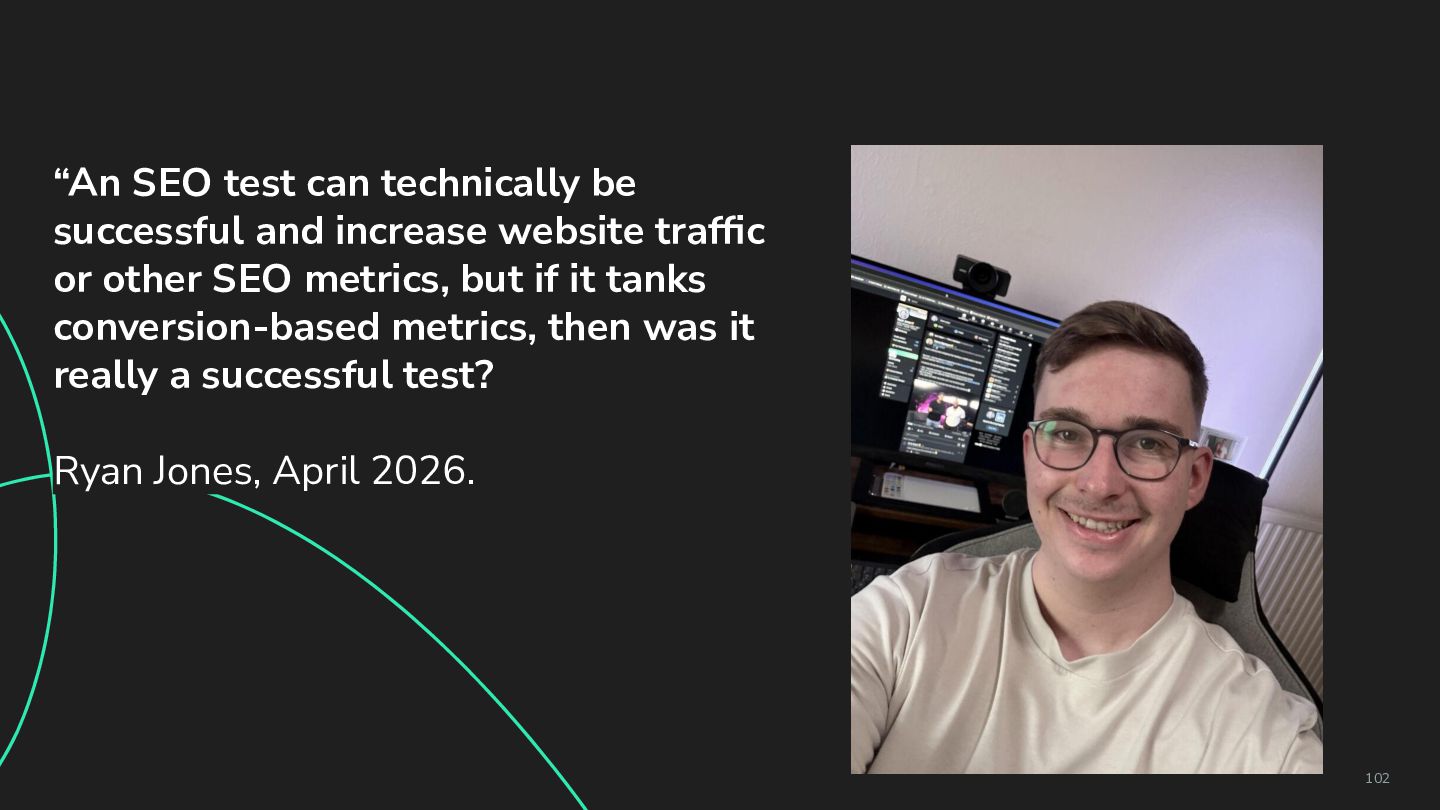
  65. 102 “An SEO test can technically be successful and increase

    website traffic or other SEO metrics, but if it tanks conversion-based metrics, then was it really a successful test? Ryan Jones, April 2026.
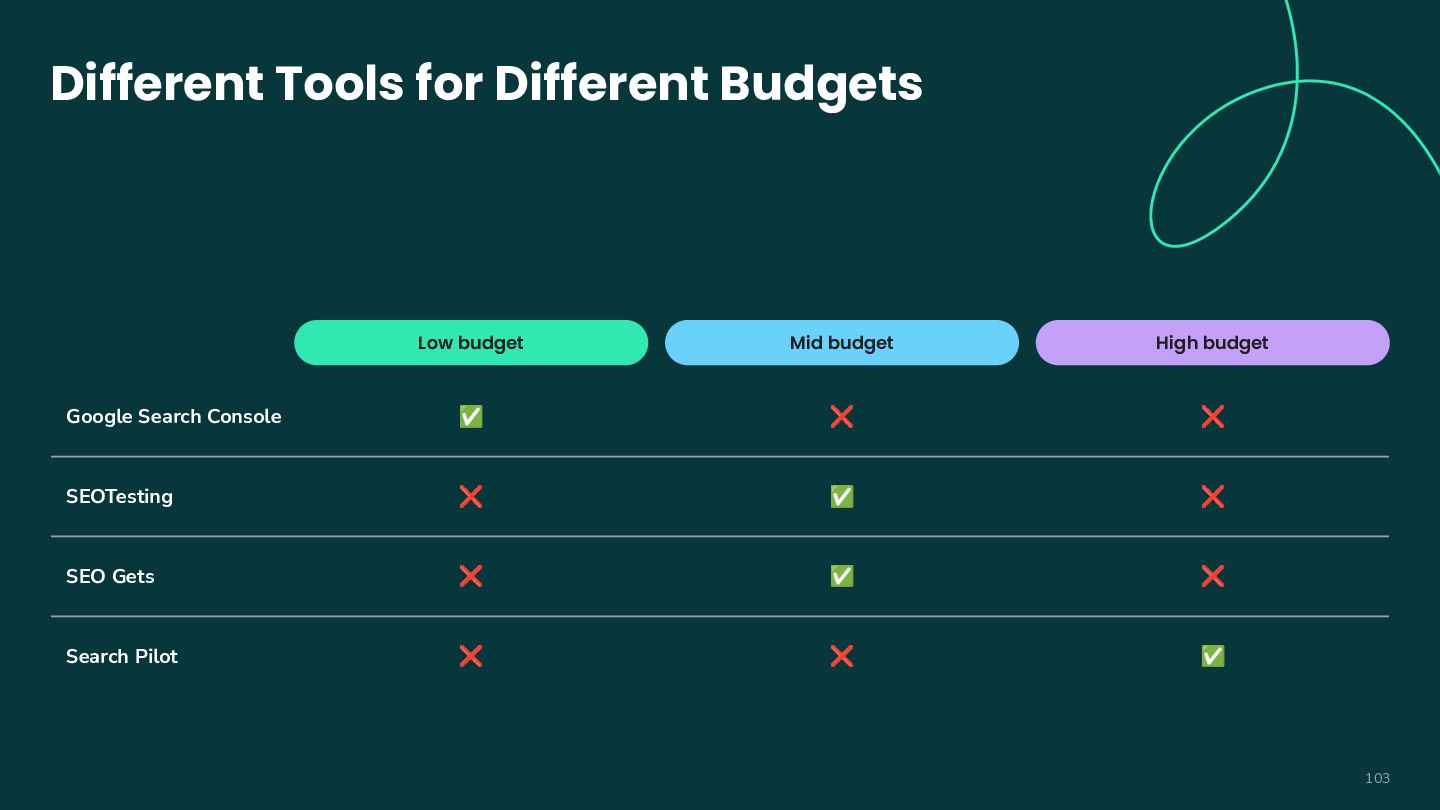
  66. 103 Different Tools for Different Budgets Mid budget High budget

    Google Search Console ✅ ❌ ❌ SEOTesting ❌ ✅ ❌ SEO Gets ❌ ✅ ❌ Search Pilot ❌ ❌ ✅ Low budget
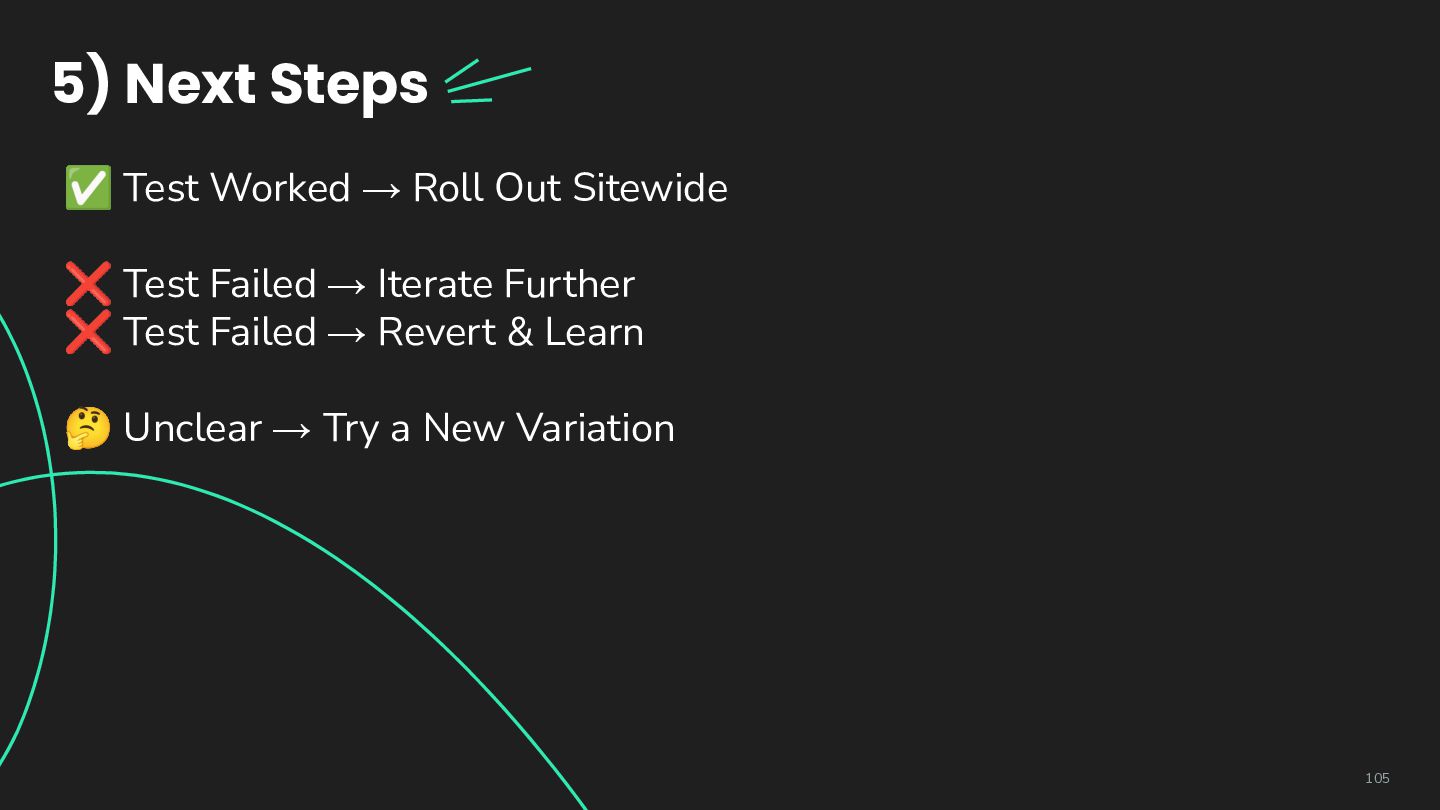
  67. 105 5) Next Steps ✅ Test Worked → Roll Out

    Sitewide ❌ Test Failed → Iterate Further ❌ Test Failed → Revert & Learn 🤔 Unclear → Try a New Variation
  68. 107 Use your site’s data to tell stories. If you

    take one thing away from this presentation… Let it be this:
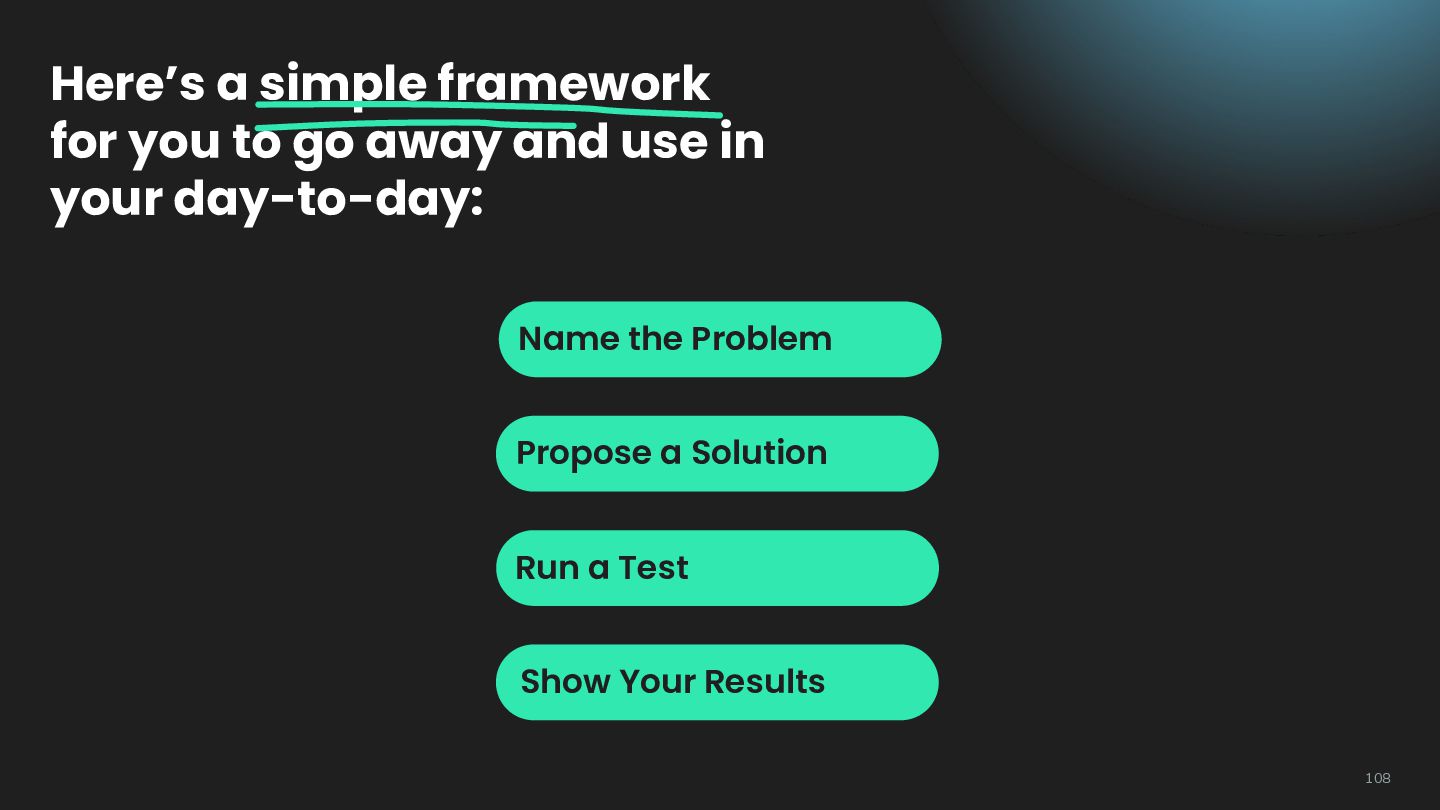
  69. 108 Here’s a simple framework for you to go away

    and use in your day-to-day: Name the Problem Propose a Solution Show Your Results Run a Test
  70. 109 We realised that product images on our PDPs were

    slow to load, causing higher exit rates and lost conversions. Here’s a simple framework for you to go away and use in your day-to-day: We propose spending $2,500 in developer time to fix this page speed issue on our PDPs. To improve conversions. We fixed this page speed issue on 1,000 PDPs, leaving another 1,000 PDPs unchanged in order to use as a control group for running a split test. The “fixed” PDPs increased in performance almost immediately. Leading to $14,000 more revenue. Name the Problem Propose a Solution Show Your Results Run a Test
  71. 111 Free Tools to Use for SEO Testing Platform Capabilities

    Google Search Console Clicks & Impressions Data CTR & Ranking Changes Page-Level Performance Before vs After Comparison Google Analytics Conversions & Revenue Impact User Behavior Insights Landing Page Performance Post-Click Analysis Matomo (On-Premise) Privacy-Friendly Tracking Full Data Ownership User Journey Analysis Custom Event Tracking Mixpanel Event-Based Tracking Funnel Analysis User Cohort Behavior Product-Led SEO Insights
  72. 112 Paid Tools to Use for SEO Testing Platform Capabilities

    SEOTesting Time-Based Tests SEO Split Tests LLM Tests From $50 Per Month SEO Gets Google Search Console Insights Google Analytics Insights Specialist Testing Function From £39 Per Month seoClarity Custom Split Testing Tool Unlimited Keyword Ranking Data Match Efforts to Results Custom Quote Needed Search Pilot Dedicated A/B Testing Merchant Centre Testing GEO A/B Testing Custom Quote Needed Pricing
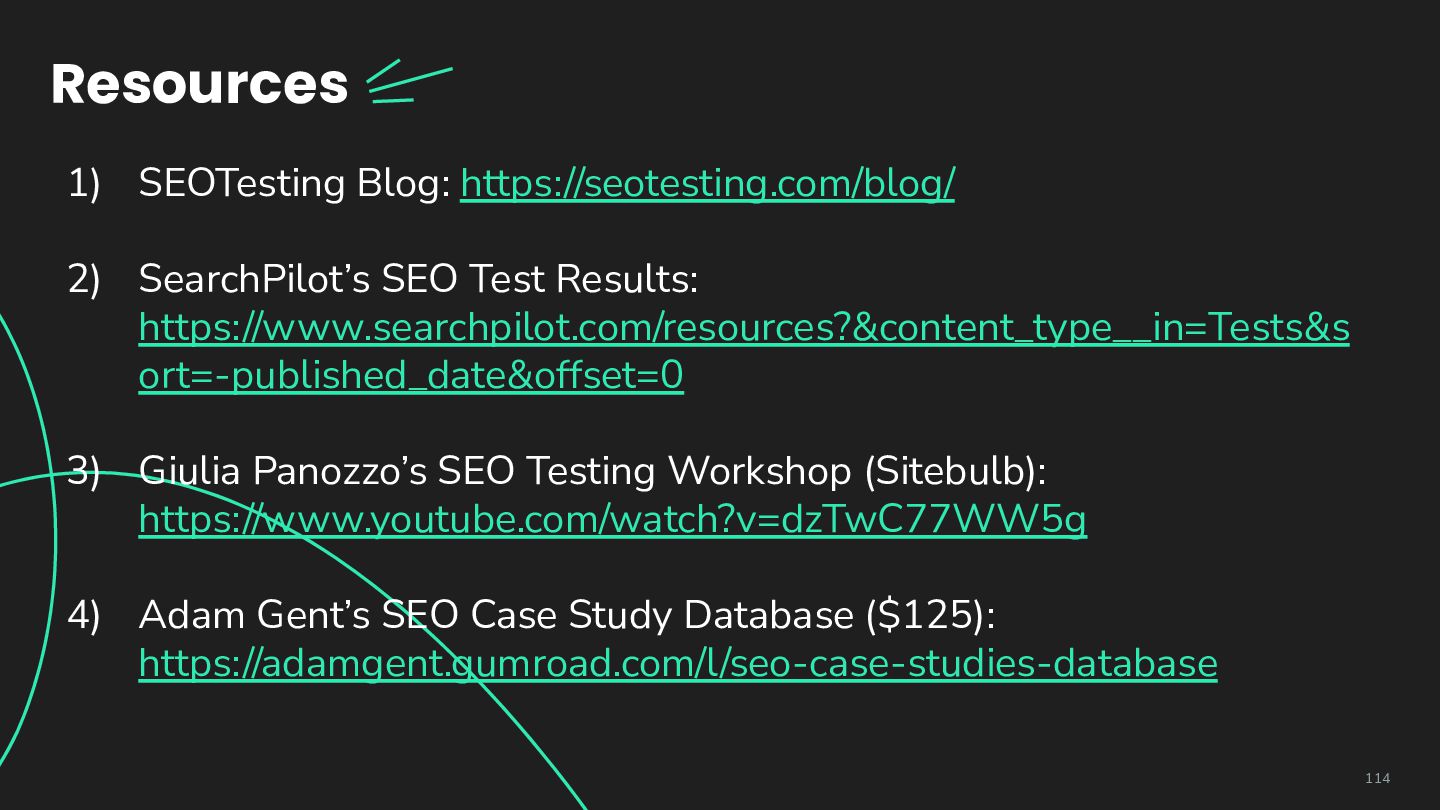
  73. 114 Resources 1) SEOTesting Blog: https://seotesting.com/blog/ 2) SearchPilot’s SEO Test

    Results: https://www.searchpilot.com/resources?&content_type__in=Tests&s ort=-published_date&offset=0 3) Giulia Panozzo’s SEO Testing Workshop (Sitebulb): https://www.youtube.com/watch?v=dzTwC77WW5g 4) Adam Gent’s SEO Case Study Database ($125): https://adamgent.gumroad.com/l/seo-case-studies-database