Upgrade to Pro — share decks privately, control downloads, hide ads and more …

How to Spot AI BS: Finding Real AI Value in Med...

How to Spot AI BS: Finding Real AI Value in MedTech and Digital Health — MedInvest 2025

How can investors distinguish real AI value from persuasive branding? In this MedInvest keynote, Shahid N. Shah presents practical questions for evaluating AI in medical devices and digital health: the quality and reproducibility of the data, evidence that the system works, user acceptance testing, integration into clinical workflows, and the economics and accountability behind deployment.

The presentation challenges buyers and investors to look beyond an AI label and ask what the technology actually changes, whether a simpler approach would suffice, and how the product creates measurable value.

Presented at MedInvest in New York City on December 11, 2025. This is the original historical presentation. Its statements about automation and human review express a product-design viewpoint, not a determination that clinical oversight or applicable regulatory requirements can be removed.

More about Shahid: https://shahidshah.com

Avatar for Shahid N. Shah

Shahid N. Shah

December 11, 2025

More Decks by Shahid N. Shah

Other Decks in Technology

Transcript

  1. How to spot AI BS Everyone “Has AI.” Almost No

    One Has Evidence.  by Shahid N. Shah www.shahidshah.com
  2. Who is Shahid and why should you care what I

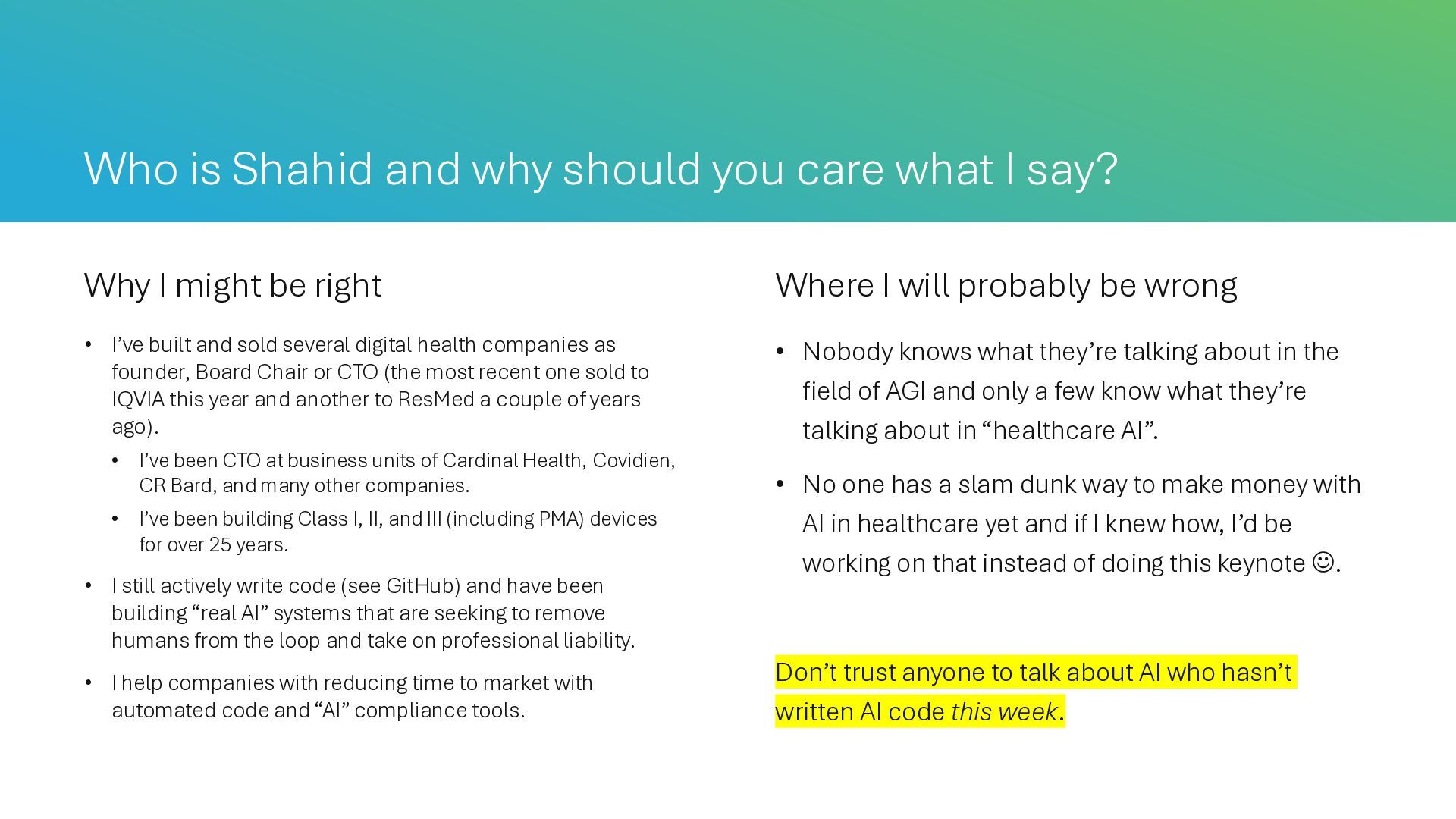
    say? Why I might be right Where I will probably be wrong • I’ve built and sold several digital health companies as founder, Board Chair or CTO (the most recent one sold to IQVIA this year and another to ResMed a couple of years ago). • Nobody knows what they’re talking about in the field of AGI and only a few know what they’re talking about in “healthcare AI”. • I’ve been CTO at business units of Cardinal Health, Covidien, CR Bard, and many other companies. • I’ve been building Class I, II, and III (including PMA) devices for over 25 years. • I still actively write code (see GitHub) and have been building “real AI” systems that are seeking to remove humans from the loop and take on professional liability. • I help companies with reducing time to market with automated code and “AI” compliance tools. • No one has a slam dunk way to make money with AI in healthcare yet and if I knew how, I’d be working on that instead of doing this keynote ☺. Don’t trust anyone to talk about AI who hasn’t written AI code this week.
  3. When someone doesn’t know how precisely to automate something they

    will say “AI”. When they know precisely how it works and what it does, they will say “X automation”.
  4. Companies that have “real AI” have built deep benches of

    cleansed reproducible data with sophisticated simulators and user acceptance testing (UAT) regimes. Moreover, companies with “real AI” can probably sell faster.
  5. Customers aren’t looking for AI, they’re not even looking for

    productivity – they’re seeking to eliminate roles, lower liabilities and improved margins.
  6. Your thought leadership ideas are feared by permissions-oriented institutions. They’re

    trying to simplify while you’re trying to differentiate.
  7. Marketing will not solve the problem that your solutions can

    not be easily integrated into regulated device-focused clinical workflows. Incumbent vendors will not entertain the potential of new legal liabilities without someone to share it with or new competition without direct compensation.
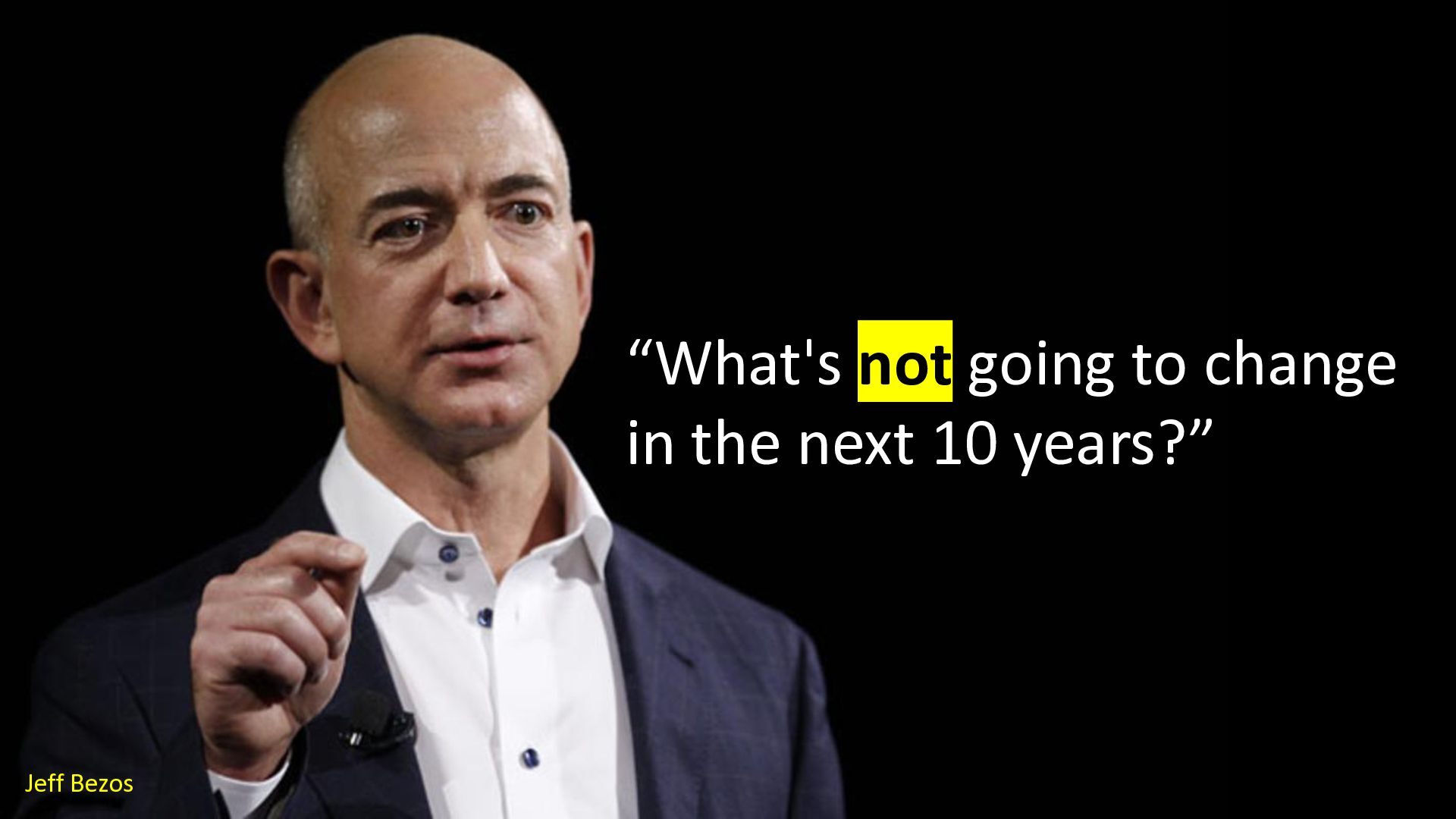
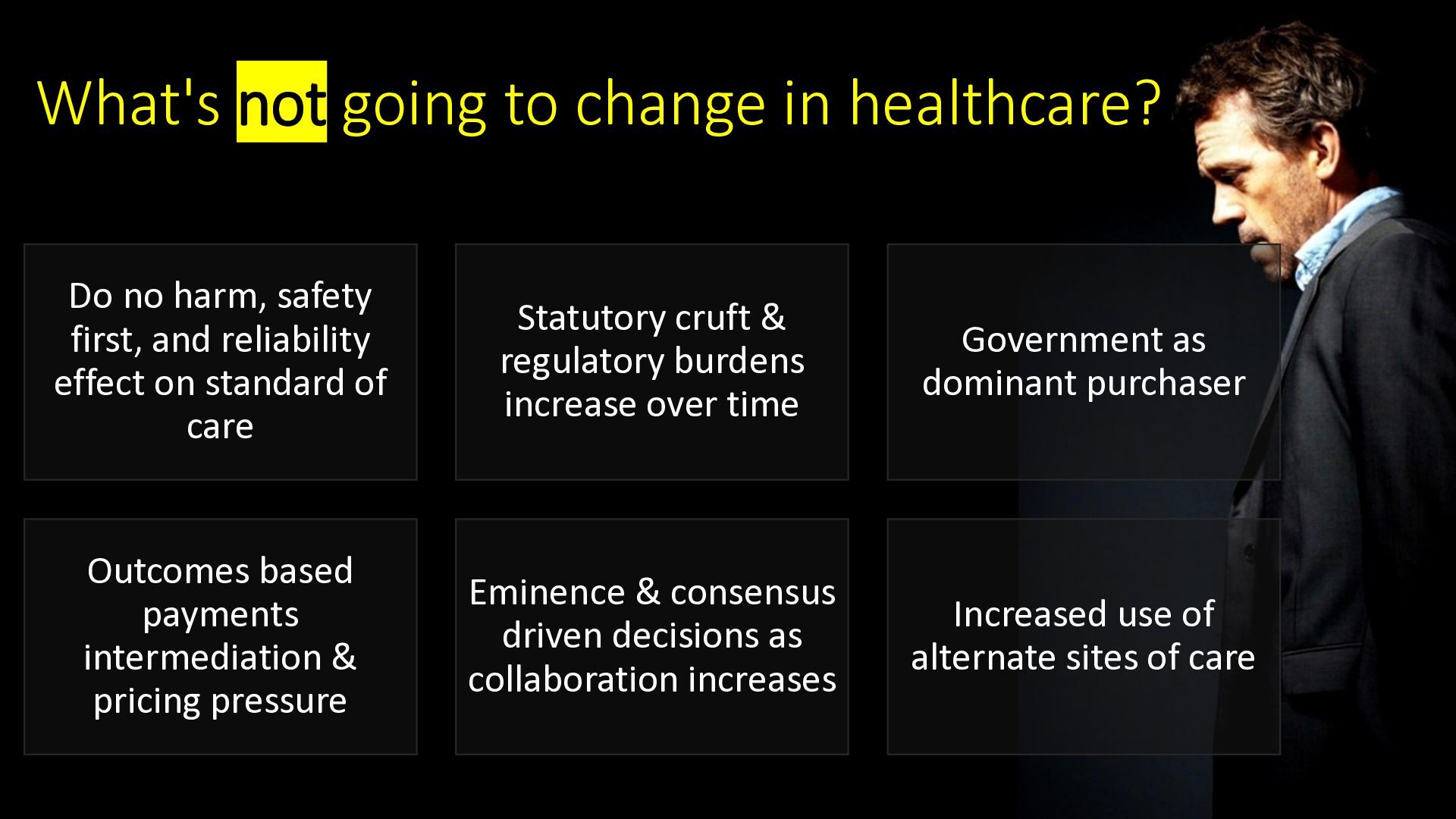
  8. What's not going to change in healthcare? Do no harm,

    safety first, and reliability effect on standard of care Statutory cruft & regulatory burdens increase over time Government as dominant purchaser Outcomes based payments intermediation & pricing pressure Eminence & consensus driven decisions as collaboration increases Increased use of alternate sites of care
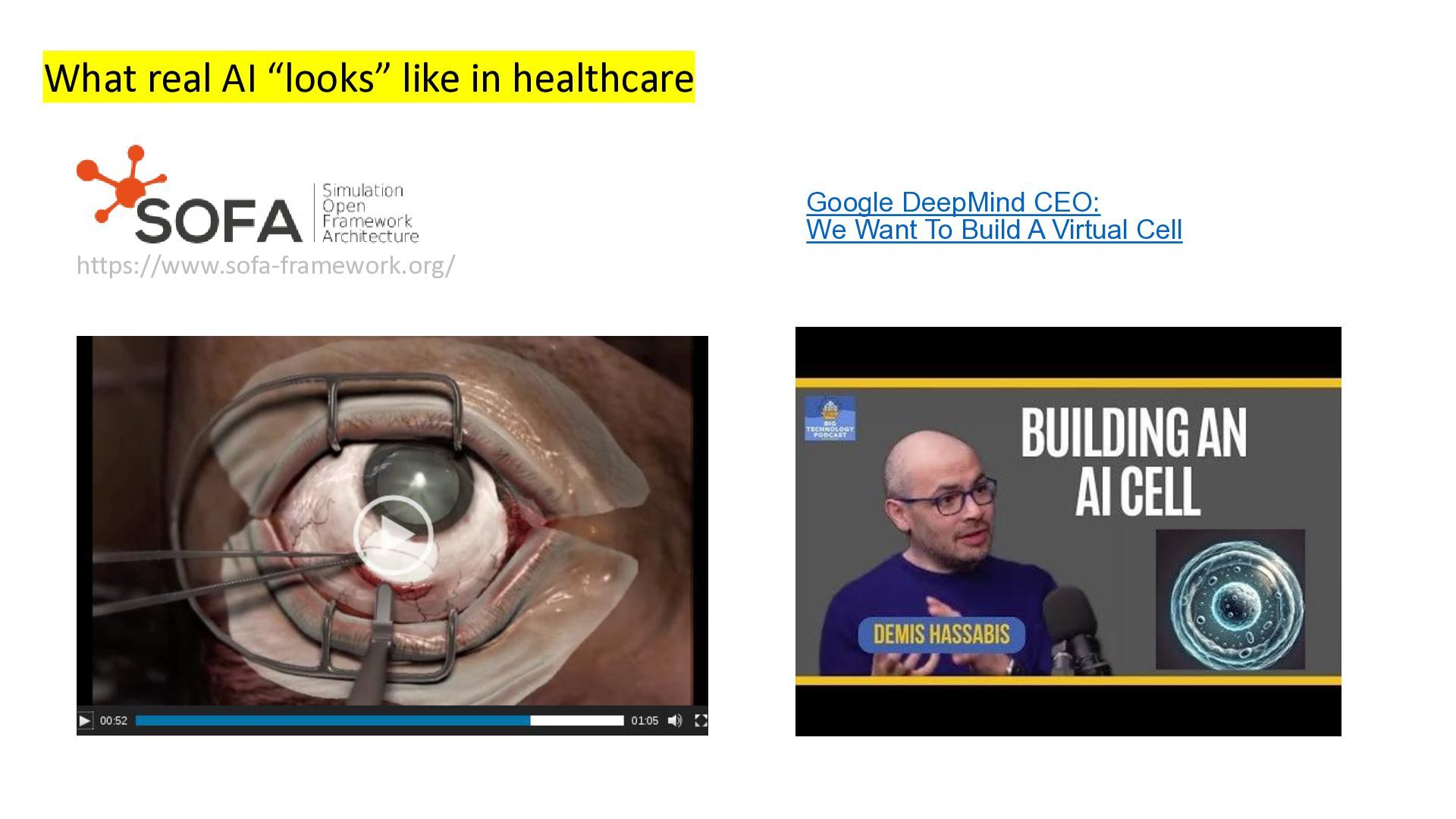
  9. What real AI “looks” like in healthcare Google DeepMind CEO:

    We Want To Build A Virtual Cell https://www.sofa-framework.org/
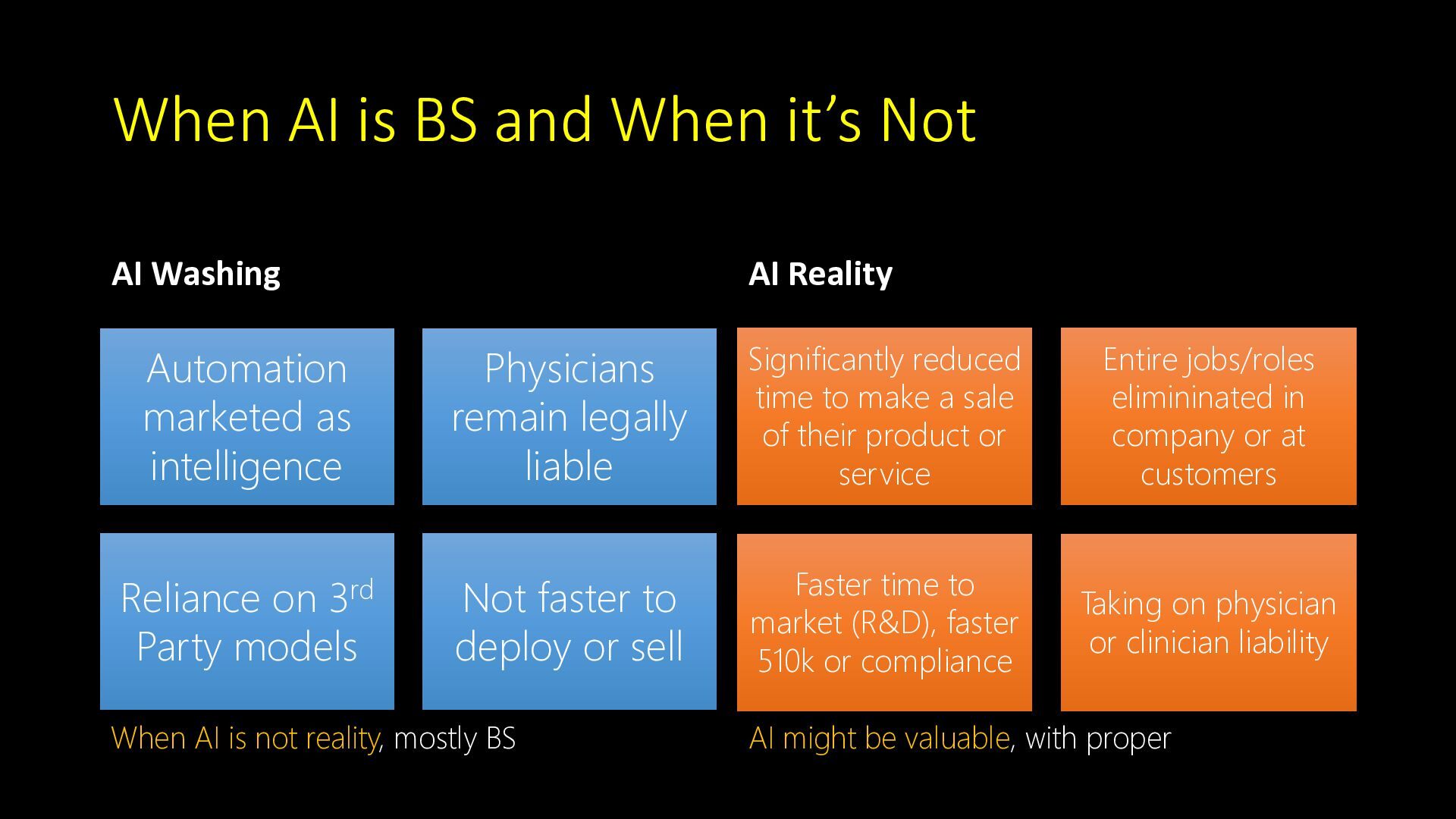
  10. When AI is BS and When it’s Not AI Washing

    AI Reality Automation marketed as intelligence Physicians remain legally liable Significantly reduced time to make a sale of their product or service Entire jobs/roles elimininated in company or at customers Reliance on 3rd Party models Not faster to deploy or sell Faster time to market (R&D), faster 510k or compliance Taking on physician or clinician liability When AI is not reality, mostly BS AI might be valuable, with proper
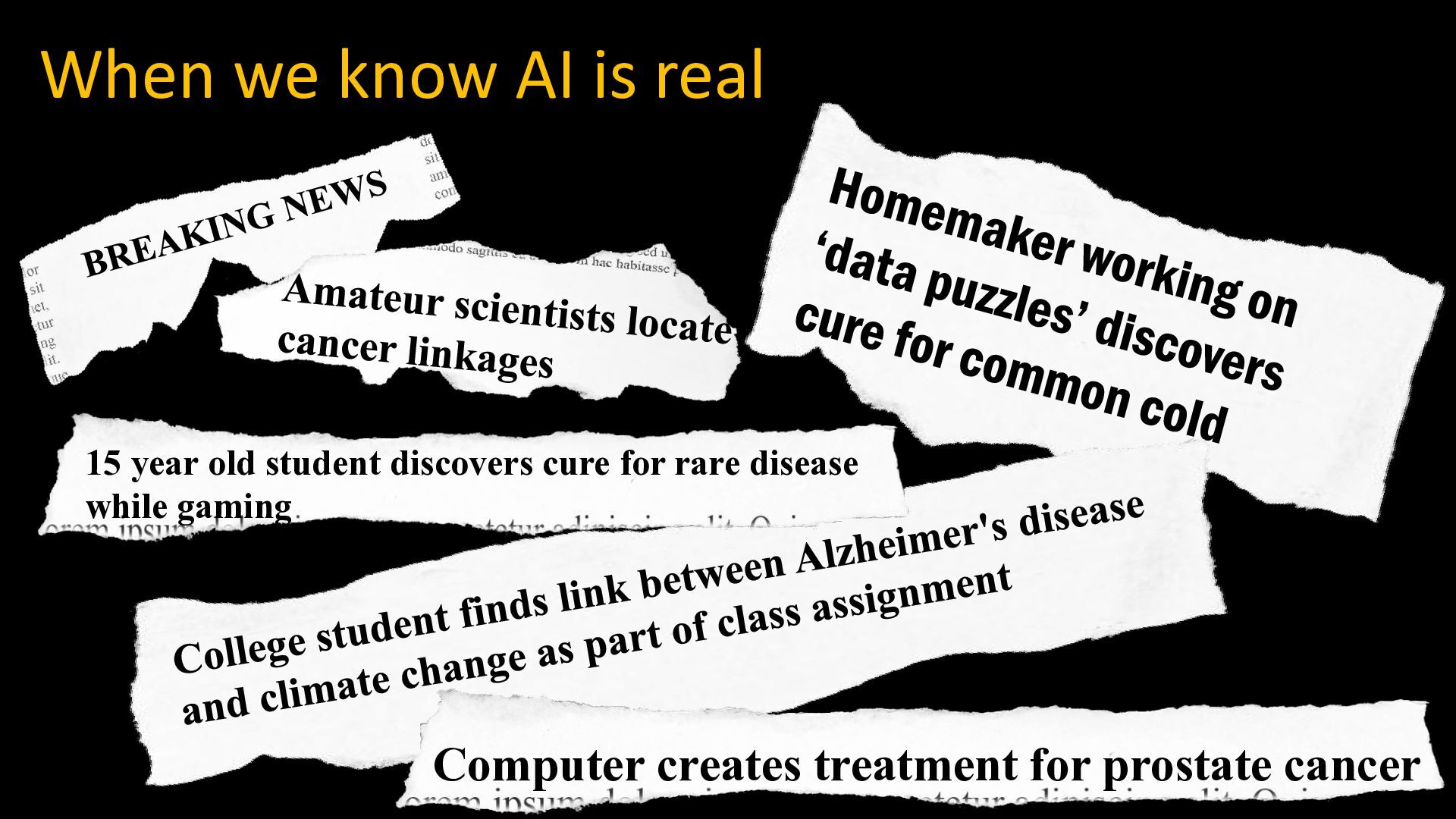
  11. When we know AI is real 15 year old student

    discovers cure for rare disease while gaming Computer creates treatment for prostate cancer
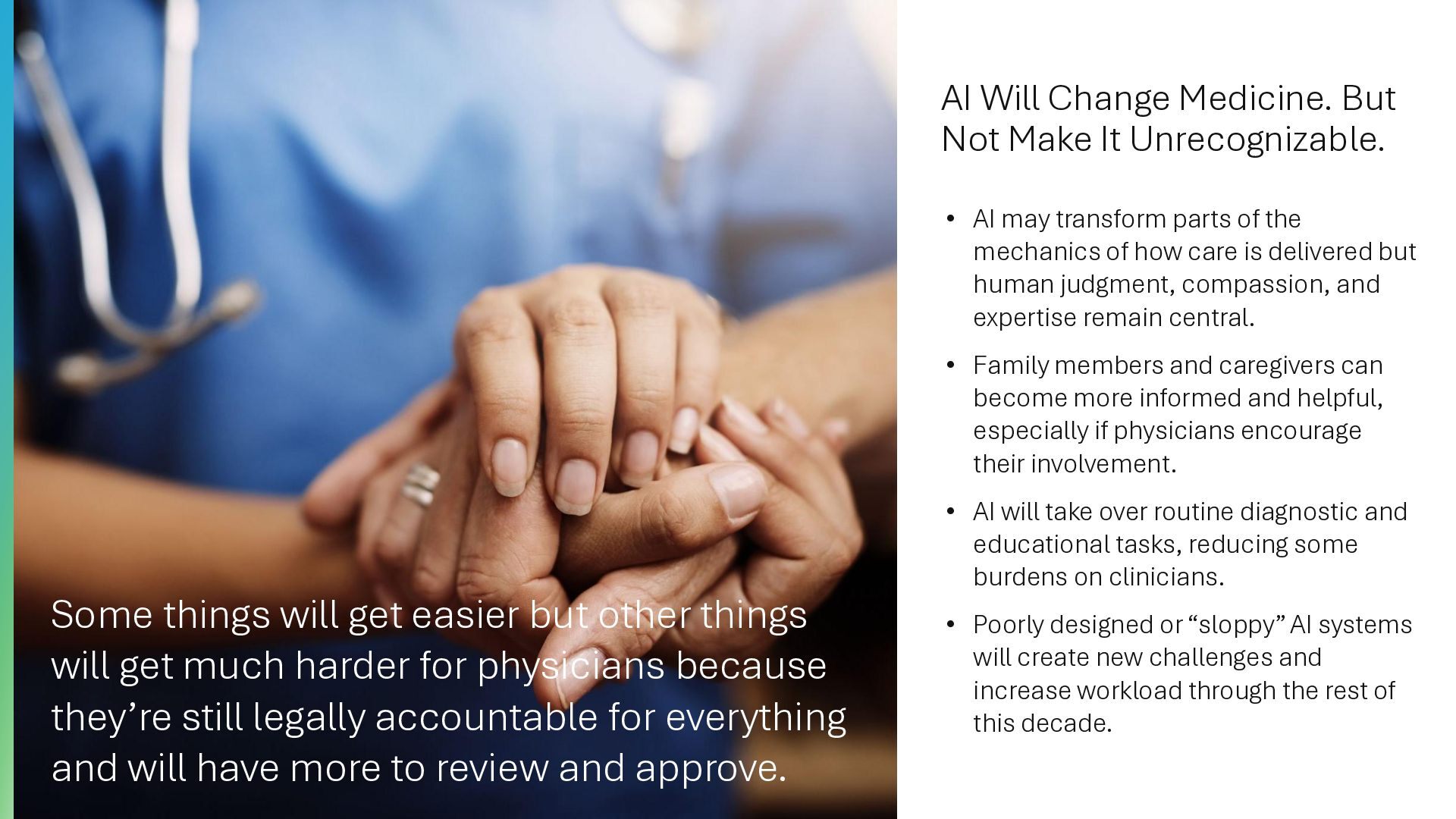
  12. AI Will Change Medicine. But Not Make It Unrecognizable. •

    AI may transform parts of the mechanics of how care is delivered but human judgment, compassion, and expertise remain central. • Family members and caregivers can become more informed and helpful, especially if physicians encourage their involvement. Some things will get easier but other things will get much harder for physicians because they’re still legally accountable for everything and will have more to review and approve. • AI will take over routine diagnostic and educational tasks, reducing some burdens on clinicians. • Poorly designed or “sloppy” AI systems will create new challenges and increase workload through the rest of this decade.
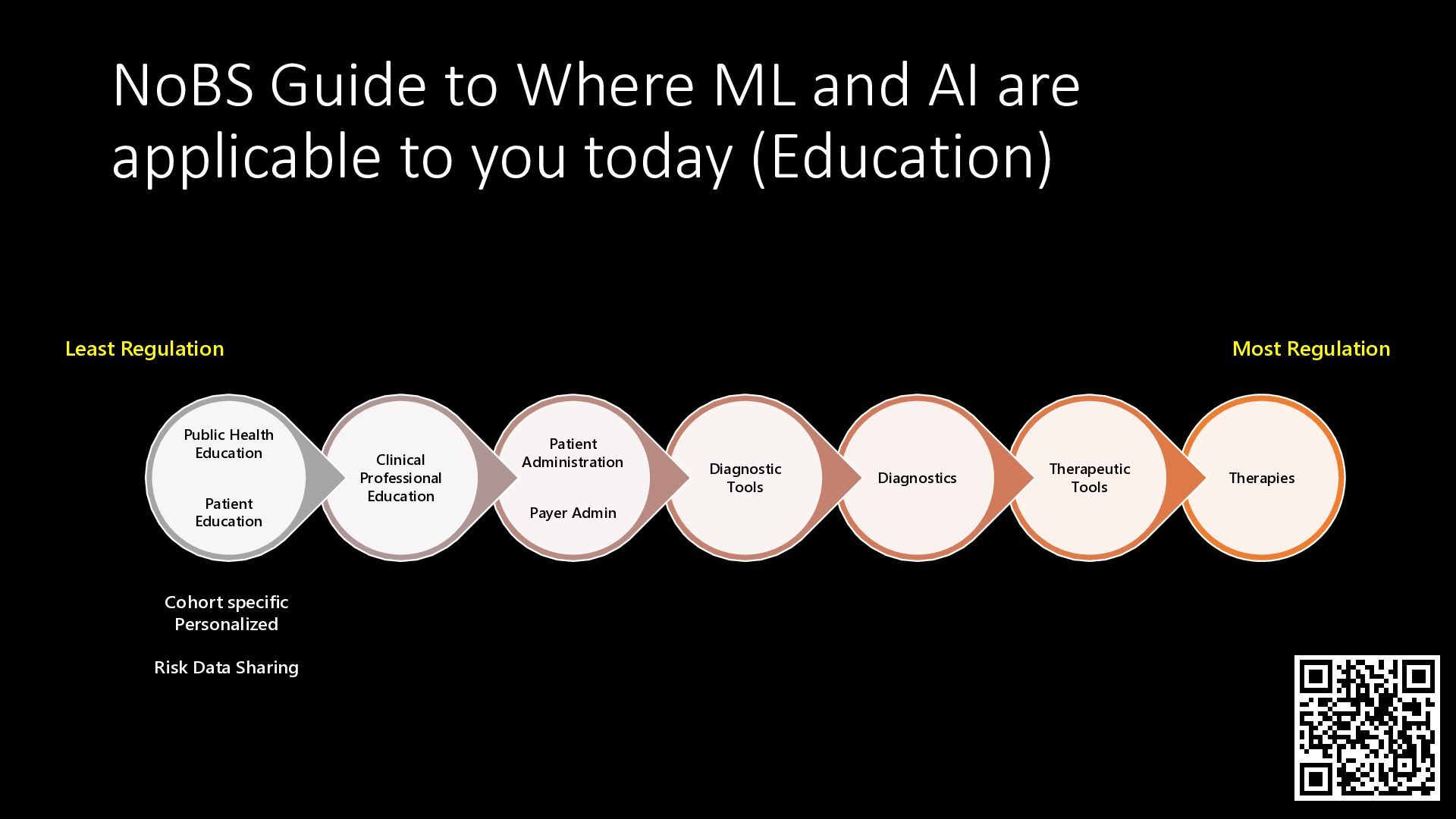
  13. NoBS Guide to Where ML and AI are applicable to

    you today (Education) Least Regulation Public Health Education Patient Education Cohort specific Personalized Risk Data Sharing Most Regulation Clinical Professional Education Patient Administration Payer Admin Diagnostic Tools Diagnostics Therapeutic Tools Therapies
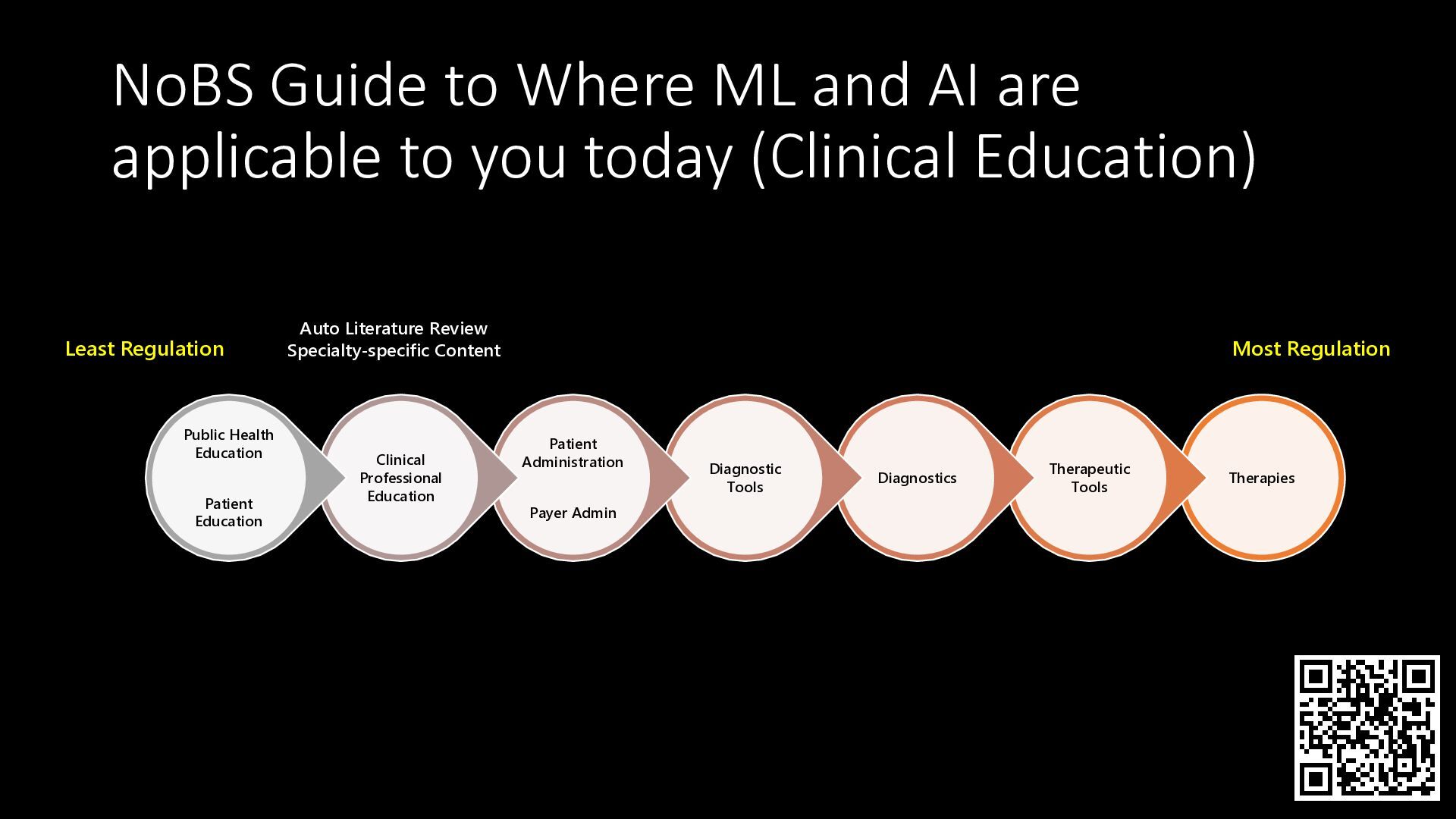
  14. NoBS Guide to Where ML and AI are applicable to

    you today (Clinical Education) Least Regulation Public Health Education Patient Education Auto Literature Review Specialty-specific Content Clinical Professional Education Most Regulation Patient Administration Payer Admin Diagnostic Tools Diagnostics Therapeutic Tools Therapies
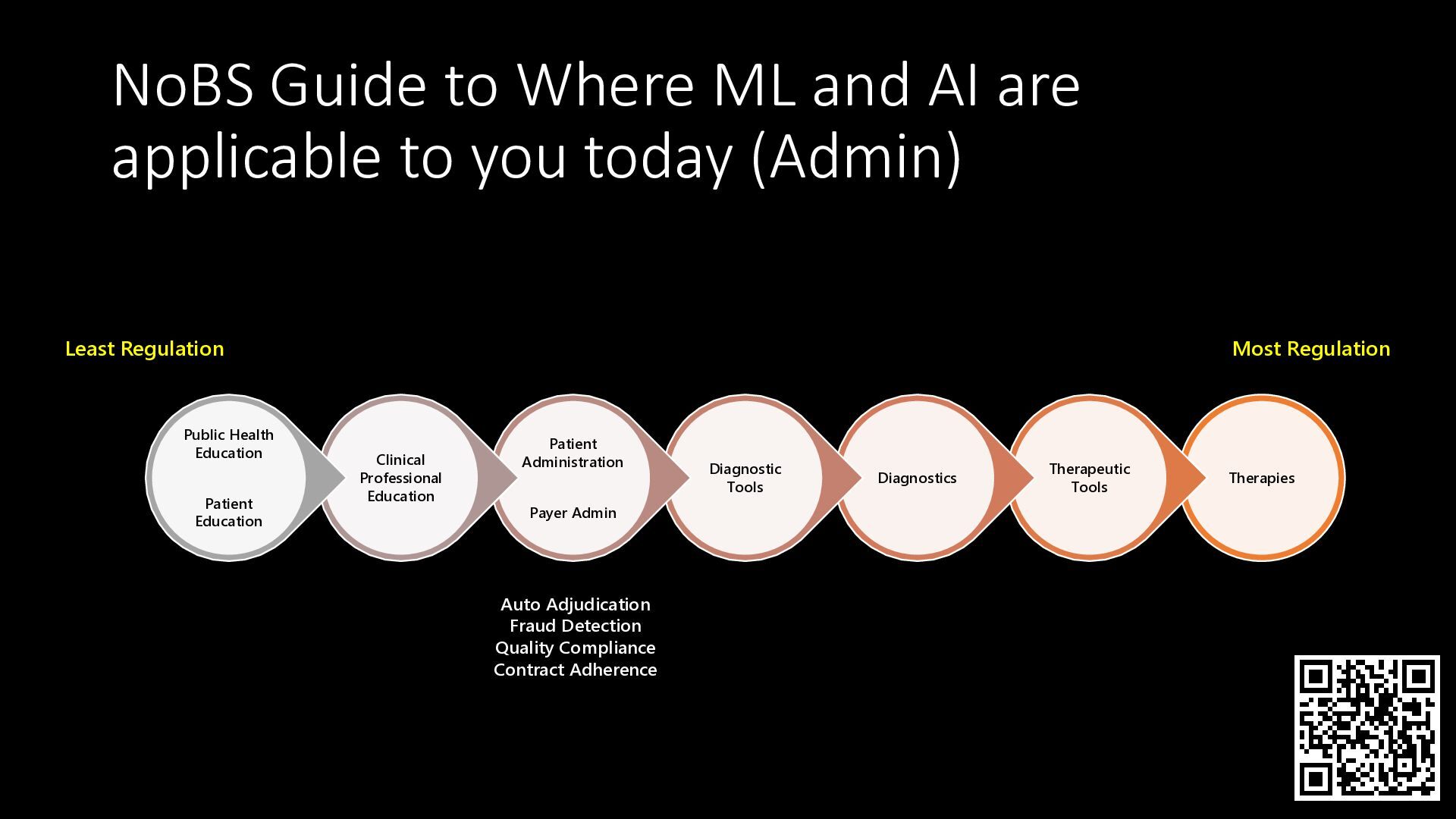
  15. NoBS Guide to Where ML and AI are applicable to

    you today (Admin) Least Regulation Public Health Education Patient Education Most Regulation Clinical Professional Education Patient Administration Payer Admin Auto Adjudication Fraud Detection Quality Compliance Contract Adherence Diagnostic Tools Diagnostics Therapeutic Tools Therapies
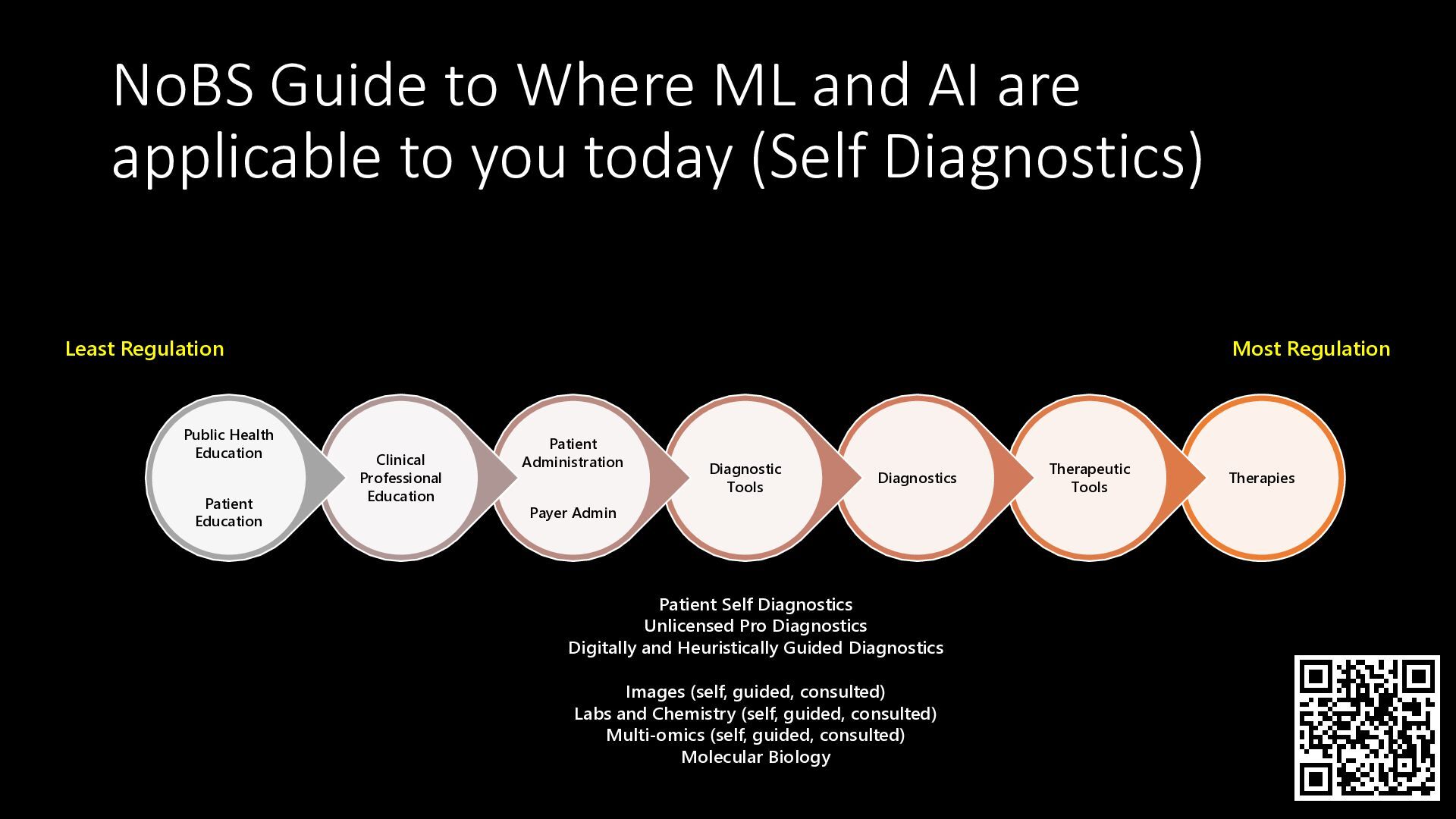
  16. NoBS Guide to Where ML and AI are applicable to

    you today (Self Diagnostics) Least Regulation Public Health Education Patient Education Most Regulation Clinical Professional Education Patient Administration Diagnostic Tools Diagnostics Payer Admin Patient Self Diagnostics Unlicensed Pro Diagnostics Digitally and Heuristically Guided Diagnostics Images (self, guided, consulted) Labs and Chemistry (self, guided, consulted) Multi-omics (self, guided, consulted) Molecular Biology Therapeutic Tools Therapies
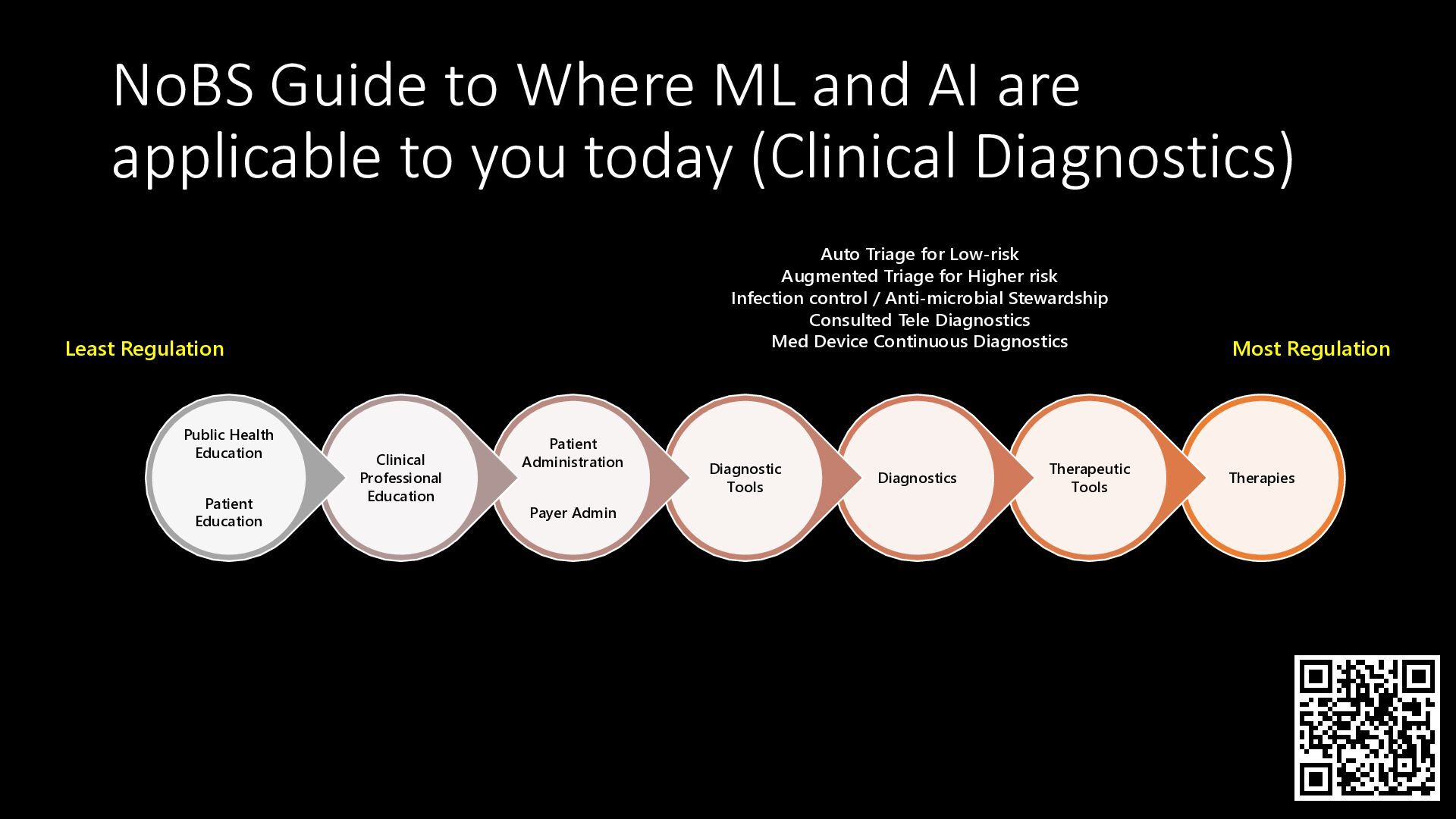
  17. NoBS Guide to Where ML and AI are applicable to

    you today (Clinical Diagnostics) Auto Triage for Low-risk Augmented Triage for Higher risk Infection control / Anti-microbial Stewardship Consulted Tele Diagnostics Med Device Continuous Diagnostics Least Regulation Public Health Education Patient Education Clinical Professional Education Patient Administration Payer Admin Diagnostic Tools Diagnostics Therapeutic Tools Most Regulation Therapies
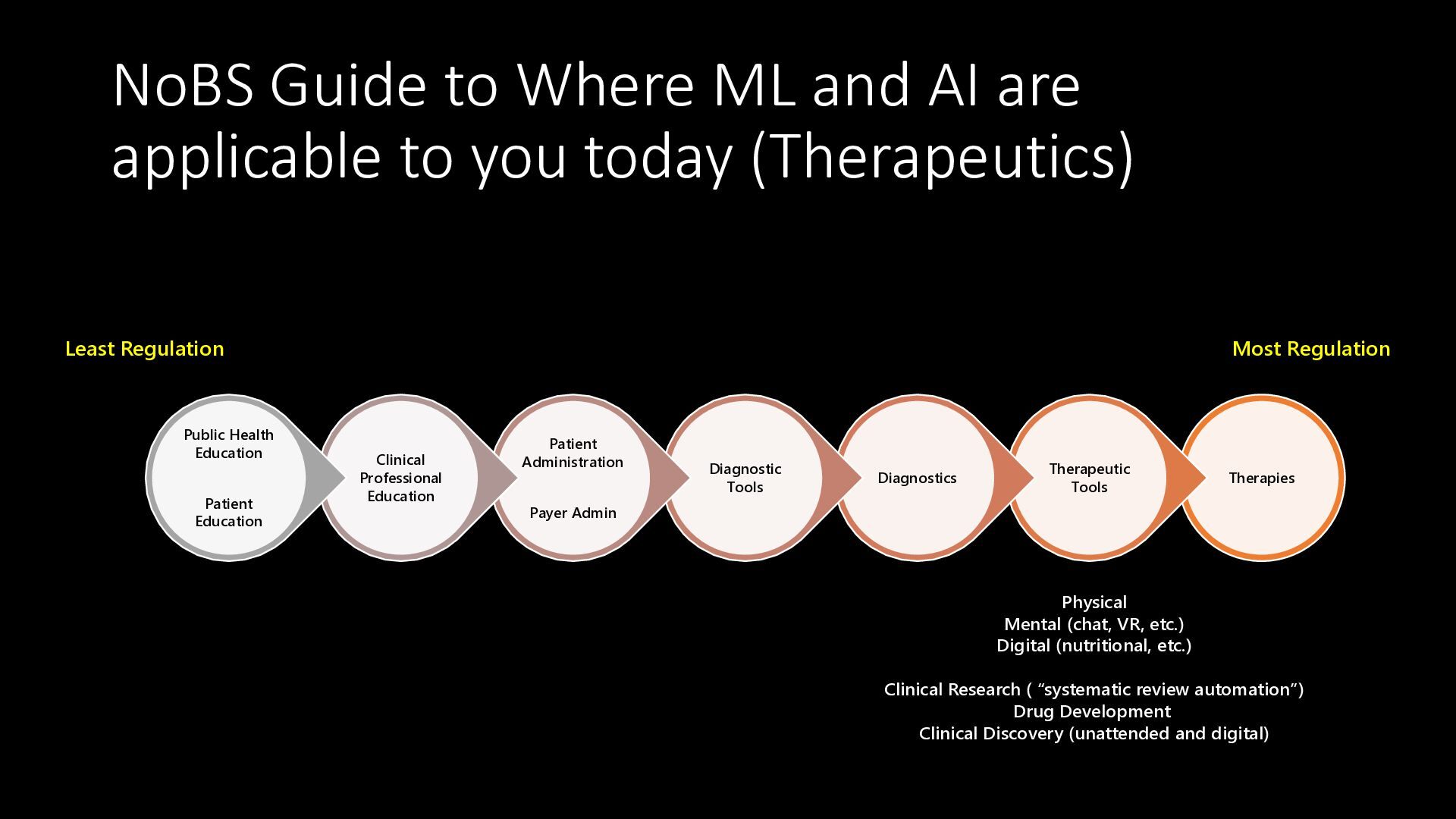
  18. NoBS Guide to Where ML and AI are applicable to

    you today (Therapeutics) Least Regulation Public Health Education Patient Education Most Regulation Clinical Professional Education Patient Administration Diagnostic Tools Diagnostics Therapeutic Tools Therapies Payer Admin Physical Mental (chat, VR, etc.) Digital (nutritional, etc.) Clinical Research ( “systematic review automation”) Drug Development Clinical Discovery (unattended and digital)
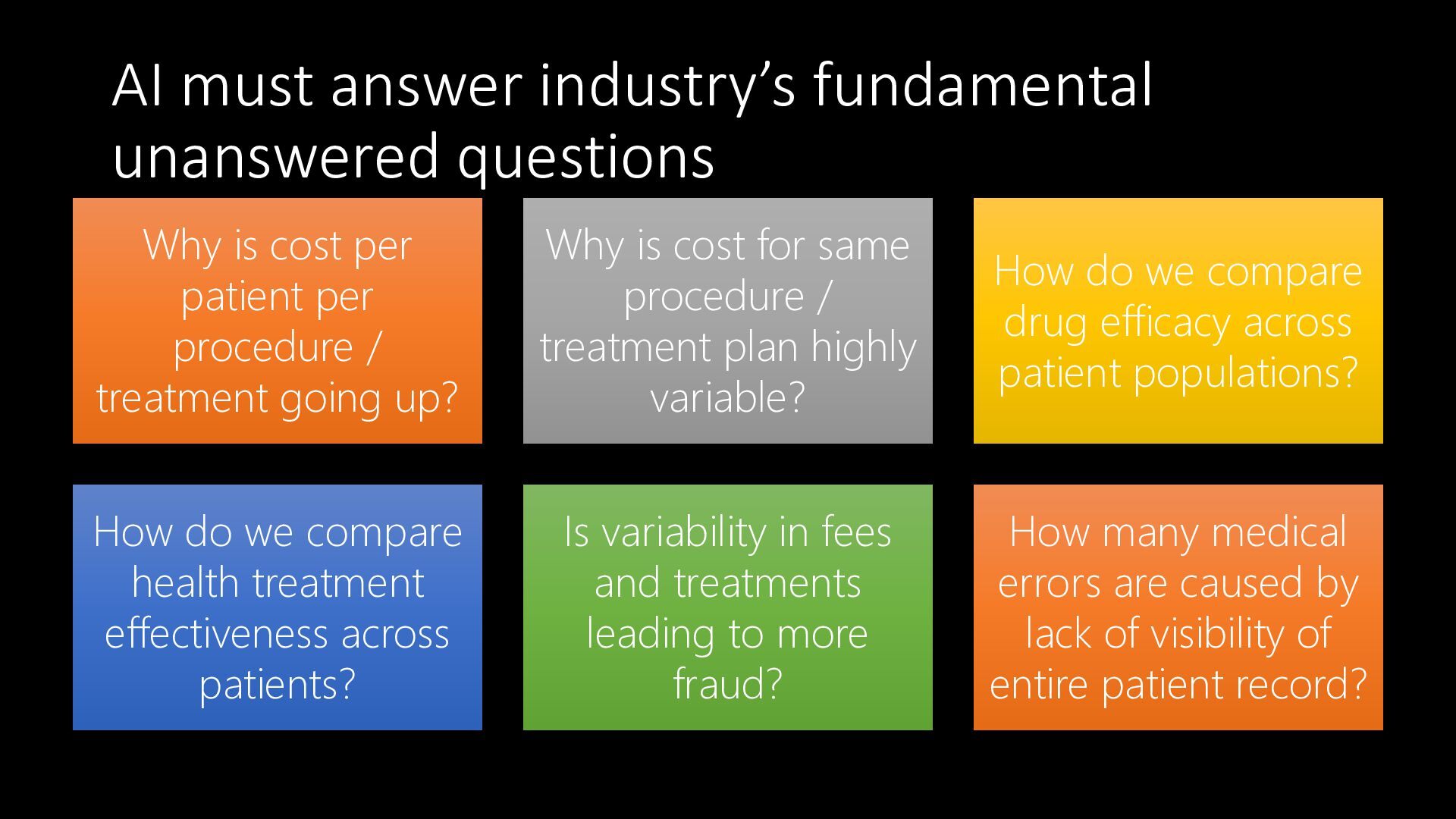
  19. AI must answer industry’s fundamental unanswered questions Why is cost

    per patient per procedure / treatment going up? Why is cost for same procedure / treatment plan highly variable? How do we compare drug efficacy across patient populations? How do we compare health treatment effectiveness across patients? Is variability in fees and treatments leading to more fraud? How many medical errors are caused by lack of visibility of entire patient record?
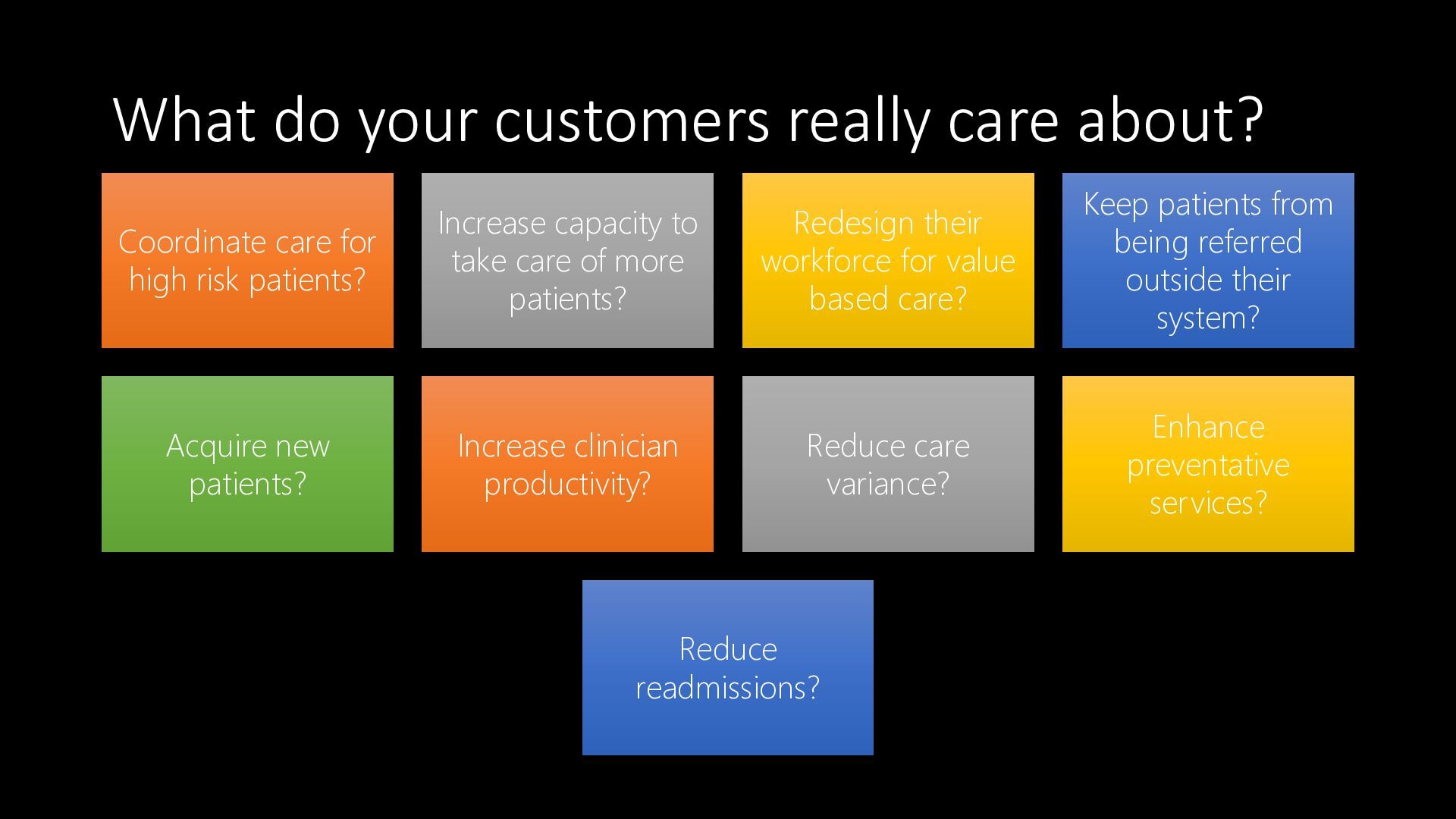
  20. What do your customers really care about? Coordinate care for

    high risk patients? Increase capacity to take care of more patients? Redesign their workforce for value based care? Keep patients from being referred outside their system? Acquire new patients? Increase clinician productivity? Reduce care variance? Enhance preventative services? Reduce readmissions?
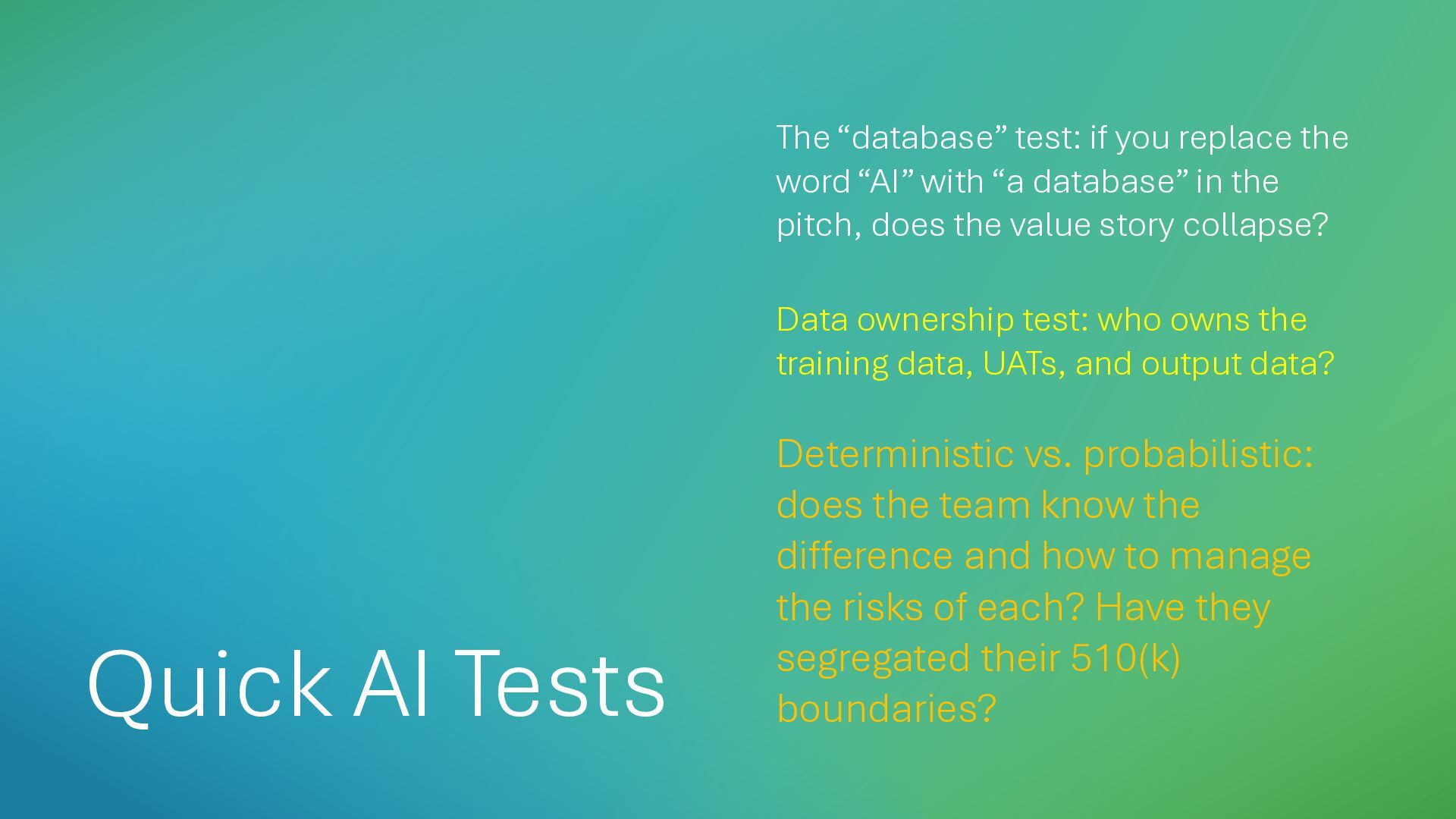
  21. The “database” test: if you replace the word “AI” with

    “a database” in the pitch, does the value story collapse? Data ownership test: who owns the training data, UATs, and output data? Quick AI Tests Deterministic vs. probabilistic: does the team know the difference and how to manage the risks of each? Have they segregated their 510(k) boundaries?
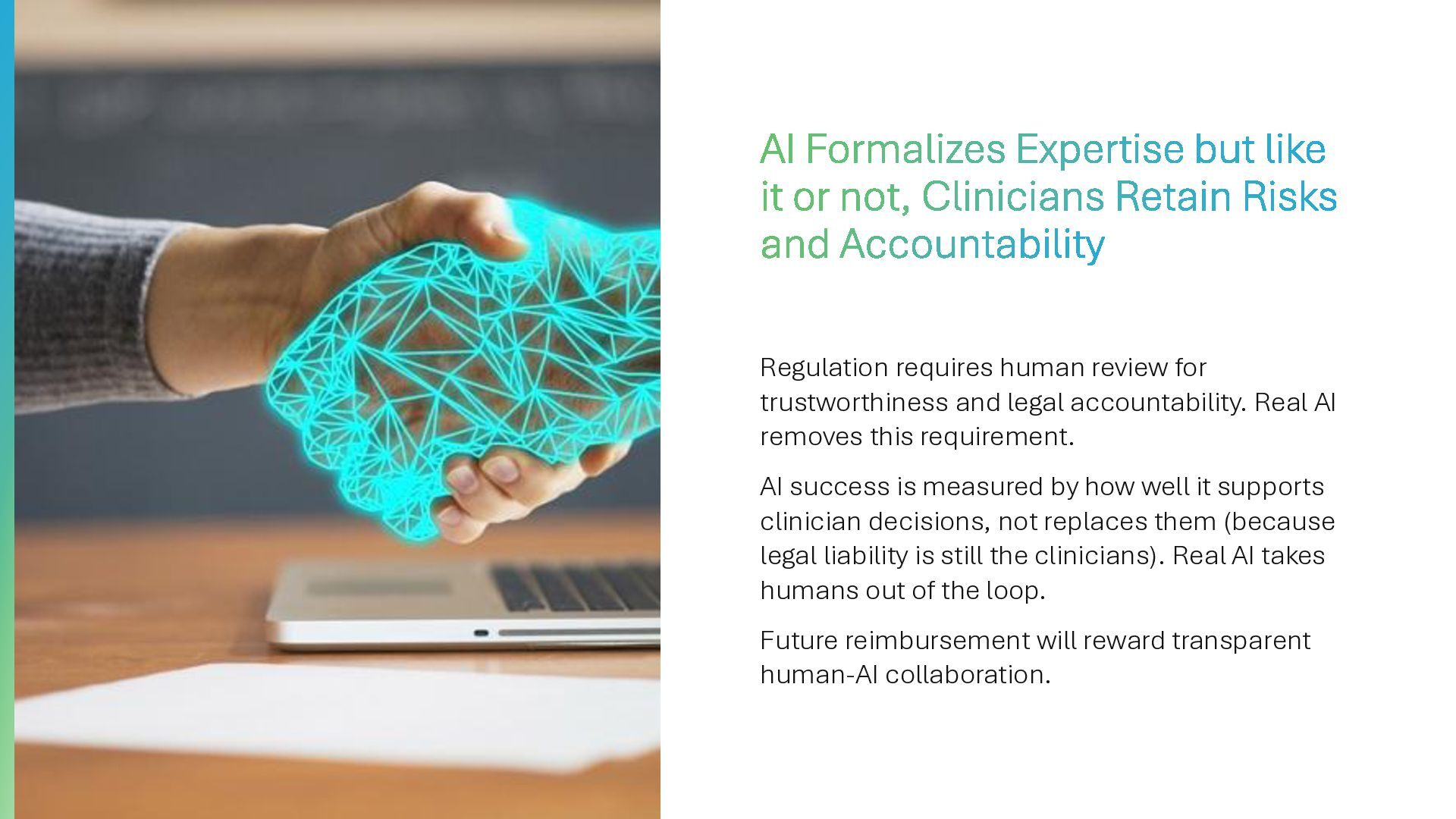
  22. AI Formalizes Expertise but like it or not, Clinicians Retain

    Risks and Accountability Regulation requires human review for trustworthiness and legal accountability. Real AI removes this requirement. AI success is measured by how well it supports clinician decisions, not replaces them (because legal liability is still the clinicians). Real AI takes humans out of the loop. Future reimbursement will reward transparent human-AI collaboration.
  23. Thank You. Find this and many other of my decks

    at http://www.SpeakerDeck.com/shah ML and AI are here and your judgement matters more than ever. How will the medical devices change in the next 10 years? @ShahidNShah (Twitter) shah (GitHub) @shahidshah.com (Bsky) [email protected] linkedin.com/in/shahidshah