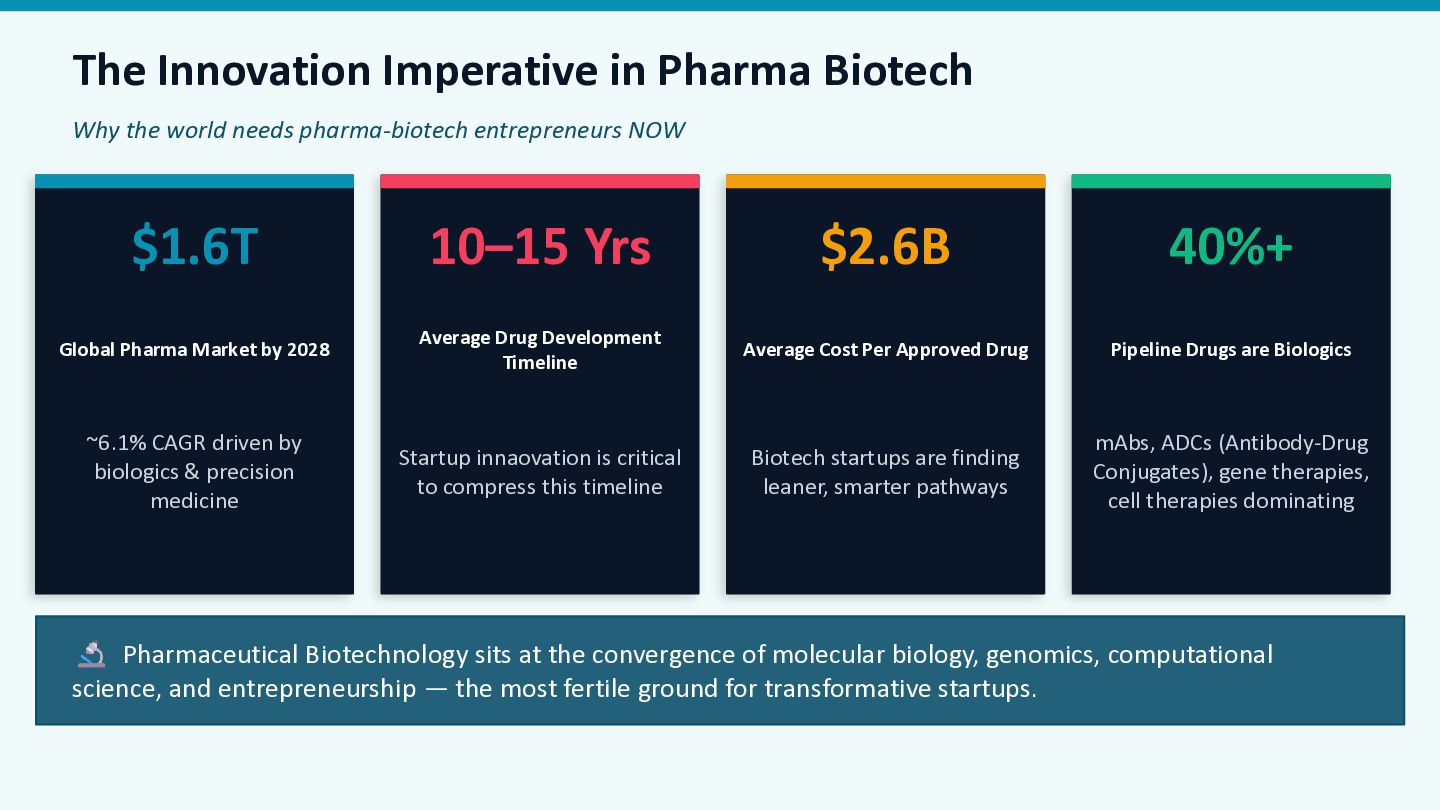
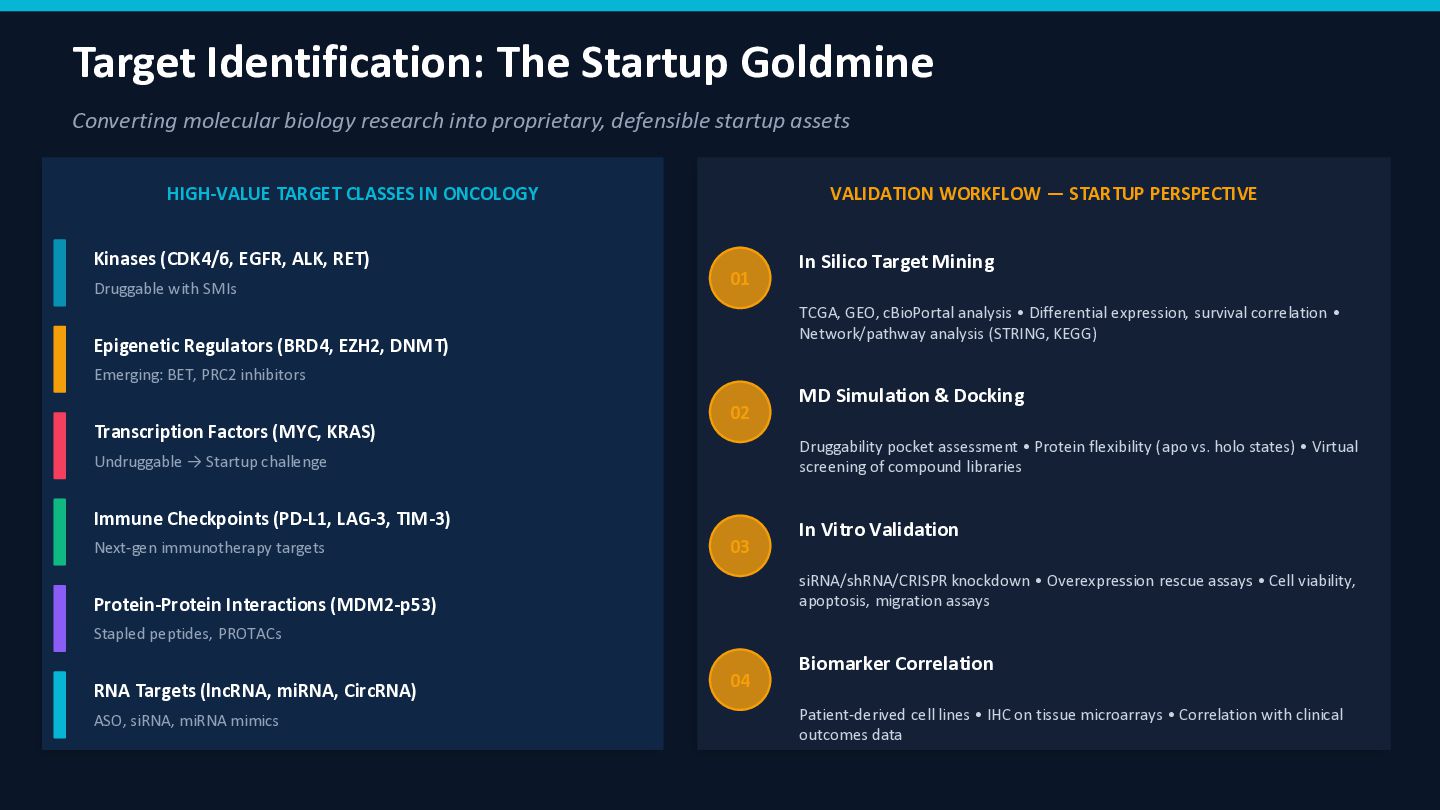
pharma-biotech entrepreneurs NOW $1.6T Global Pharma Market by 2028 ~6.1% CAGR driven by biologics & precision medicine 10–15 Yrs Average Drug Development Timeline Startup innaovation is critical to compress this timeline $2.6B Average Cost Per Approved Drug Biotech startups are finding leaner, smarter pathways 40%+ Pipeline Drugs are Biologics mAbs, ADCs (Antibody-Drug Conjugates), gene therapies, cell therapies dominating Pharmaceutical Biotechnology sits at the convergence of molecular biology, genomics, computational science, and entrepreneurship — the most fertile ground for transformative startups.
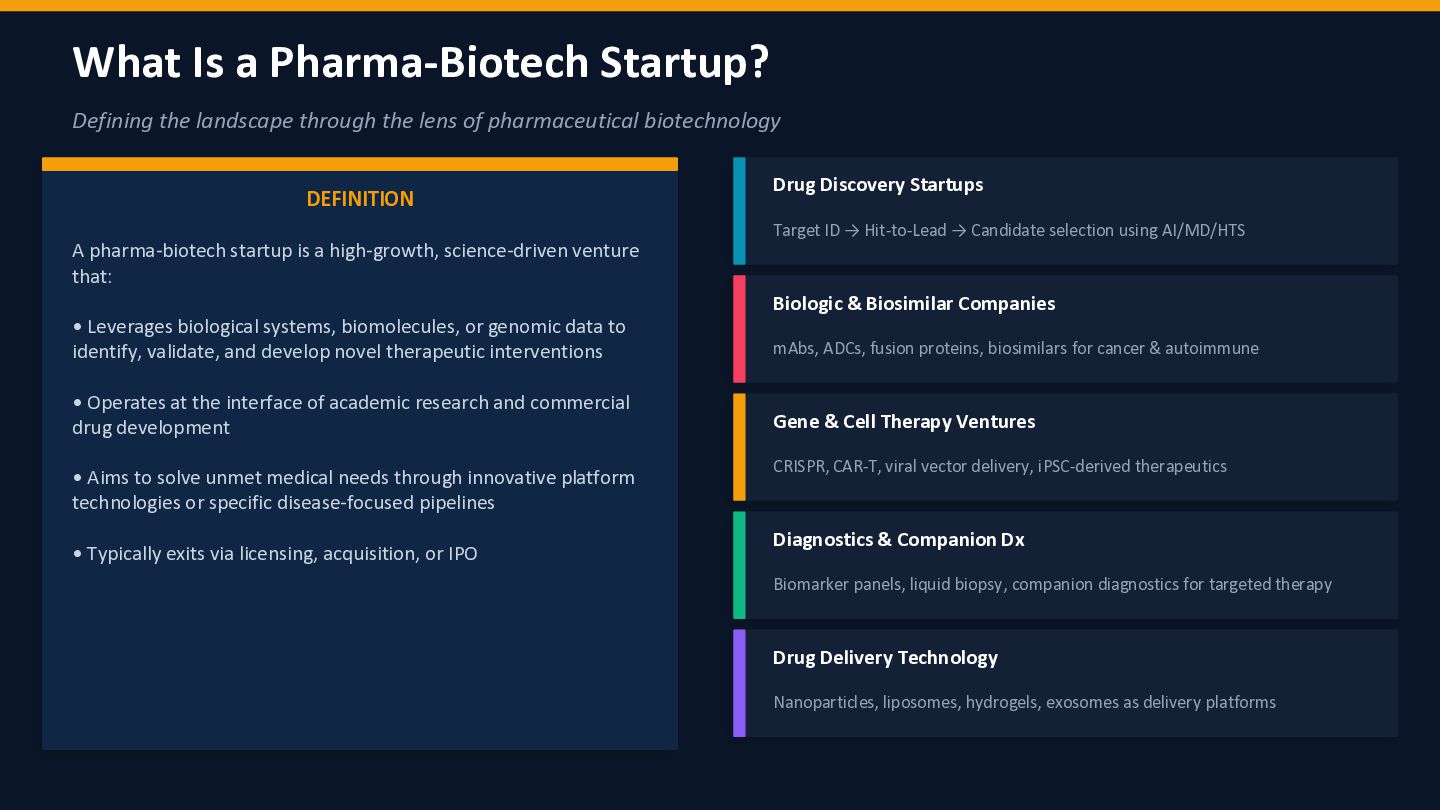
lens of pharmaceutical biotechnology DEFINITION A pharma-biotech startup is a high-growth, science-driven venture that: • Leverages biological systems, biomolecules, or genomic data to identify, validate, and develop novel therapeutic interventions • Operates at the interface of academic research and commercial drug development • Aims to solve unmet medical needs through innovative platform technologies or specific disease-focused pipelines • Typically exits via licensing, acquisition, or IPO Drug Discovery Startups Target ID → Hit-to-Lead → Candidate selection using AI/MD/HTS Biologic & Biosimilar Companies mAbs, ADCs, fusion proteins, biosimilars for cancer & autoimmune Gene & Cell Therapy Ventures CRISPR, CAR-T, viral vector delivery, iPSC-derived therapeutics Diagnostics & Companion Dx Biomarker panels, liquid biopsy, companion diagnostics for targeted therapy Drug Delivery Technology Nanoparticles, liposomes, hydrogels, exosomes as delivery platforms
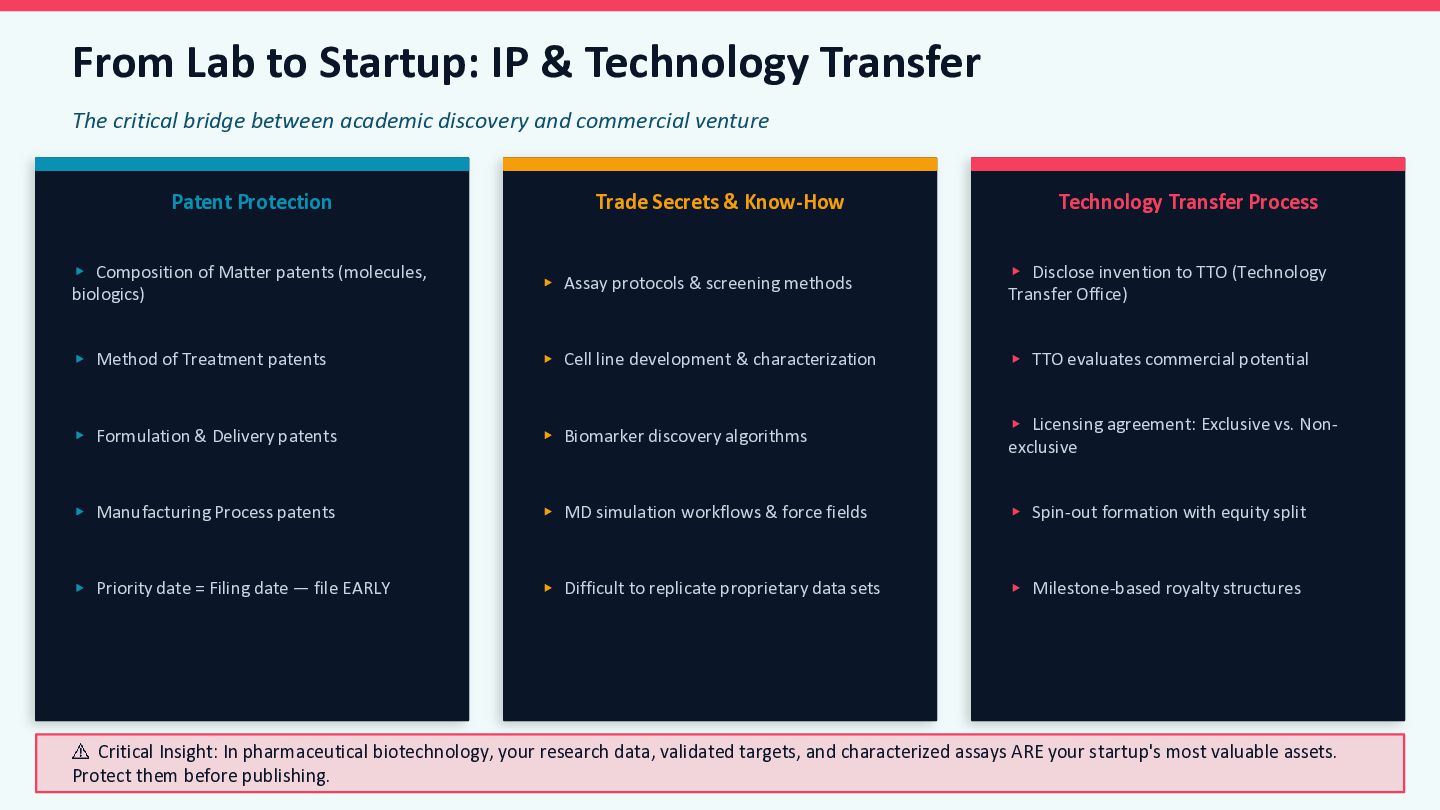
bridge between academic discovery and commercial venture Patent Protection ▸ Composition of Matter patents (molecules, biologics) ▸ Method of Treatment patents ▸ Formulation & Delivery patents ▸ Manufacturing Process patents ▸ Priority date = Filing date — file EARLY Trade Secrets & Know-How ▸ Assay protocols & screening methods ▸ Cell line development & characterization ▸ Biomarker discovery algorithms ▸ MD simulation workflows & force fields ▸ Difficult to replicate proprietary data sets Technology Transfer Process ▸ Disclose invention to TTO (Technology Transfer Office) ▸ TTO evaluates commercial potential ▸ Licensing agreement: Exclusive vs. Non- exclusive ▸ Spin-out formation with equity split ▸ Milestone-based royalty structures Critical Insight: In pharmaceutical biotechnology, your research data, validated targets, and characterized assays ARE your startup's most valuable assets. Protect them before publishing.
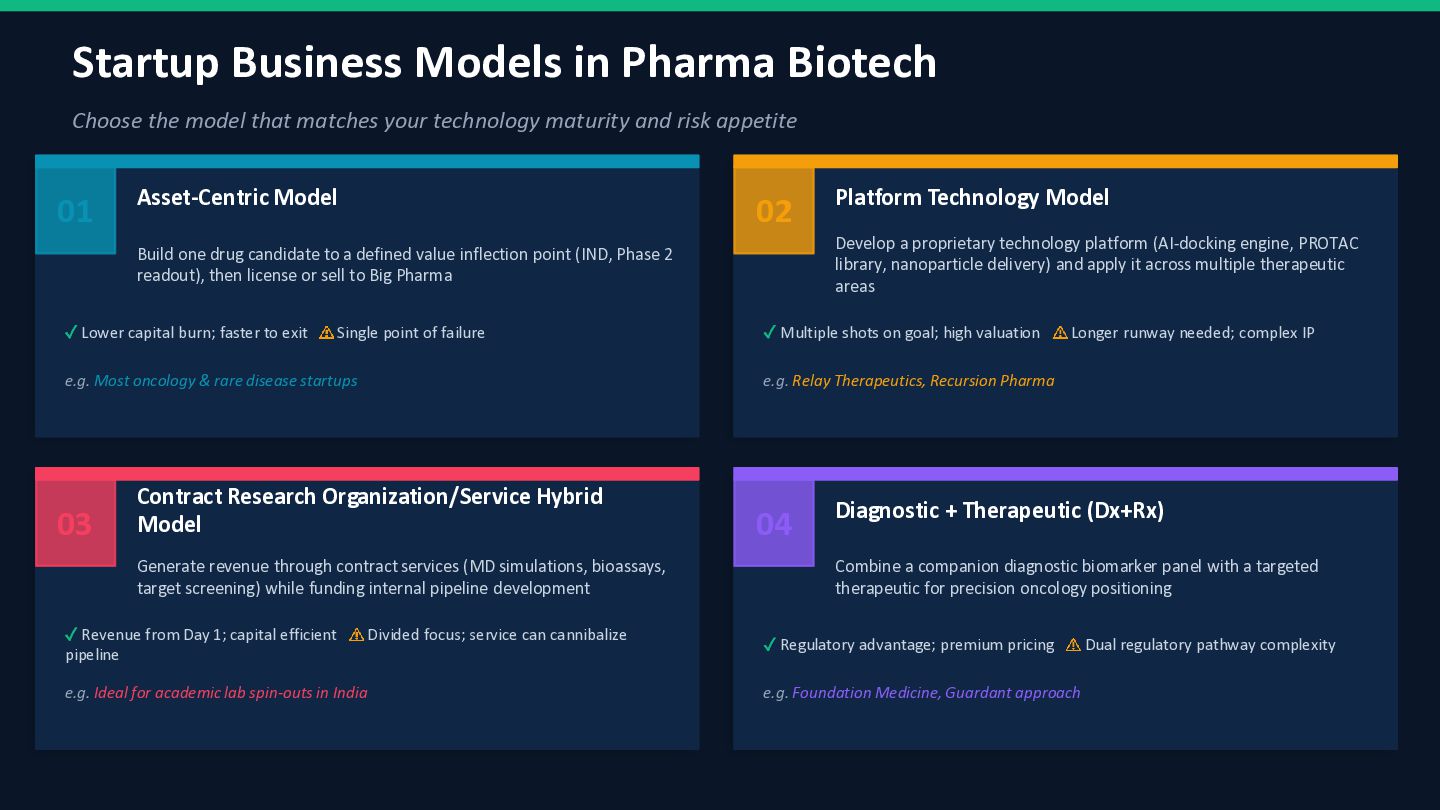
matches your technology maturity and risk appetite 01 Asset-Centric Model Build one drug candidate to a defined value inflection point (IND, Phase 2 readout), then license or sell to Big Pharma ✓ Lower capital burn; faster to exit Single point of failure e.g. Most oncology & rare disease startups 02 Platform Technology Model Develop a proprietary technology platform (AI-docking engine, PROTAC library, nanoparticle delivery) and apply it across multiple therapeutic areas ✓ Multiple shots on goal; high valuation Longer runway needed; complex IP e.g. Relay Therapeutics, Recursion Pharma 03 Contract Research Organization/Service Hybrid Model Generate revenue through contract services (MD simulations, bioassays, target screening) while funding internal pipeline development ✓ Revenue from Day 1; capital efficient Divided focus; service can cannibalize pipeline e.g. Ideal for academic lab spin-outs in India 04 Diagnostic + Therapeutic (Dx+Rx) Combine a companion diagnostic biomarker panel with a targeted therapeutic for precision oncology positioning ✓ Regulatory advantage; premium pricing Dual regulatory pathway complexity e.g. Foundation Medicine, Guardant approach
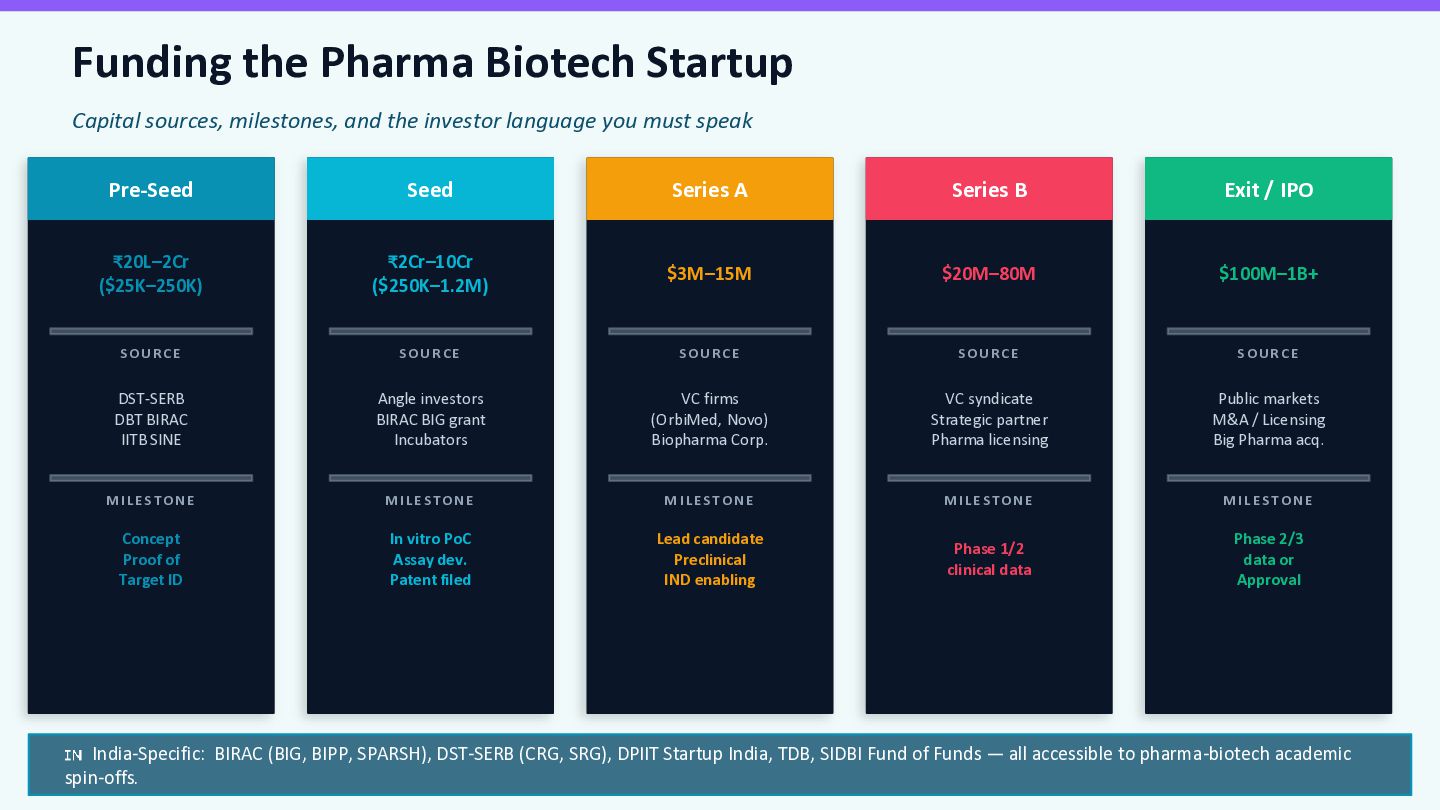
investor language you must speak Pre-Seed ₹20L–2Cr ($25K–250K) SOURCE DST-SERB DBT BIRAC IITB SINE MILESTONE Concept Proof of Target ID Seed ₹2Cr–10Cr ($250K–1.2M) SOURCE Angle investors BIRAC BIG grant Incubators MILESTONE In vitro PoC Assay dev. Patent filed Series A $3M–15M SOURCE VC firms (OrbiMed, Novo) Biopharma Corp. MILESTONE Lead candidate Preclinical IND enabling Series B $20M–80M SOURCE VC syndicate Strategic partner Pharma licensing MILESTONE Phase 1/2 clinical data Exit / IPO $100M–1B+ SOURCE Public markets M&A / Licensing Big Pharma acq. MILESTONE Phase 2/3 data or Approval India-Specific: BIRAC (BIG, BIPP, SPARSH), DST-SERB (CRG, SRG), DPIIT Startup India, TDB, SIDBI Fund of Funds — all accessible to pharma-biotech academic spin-offs.
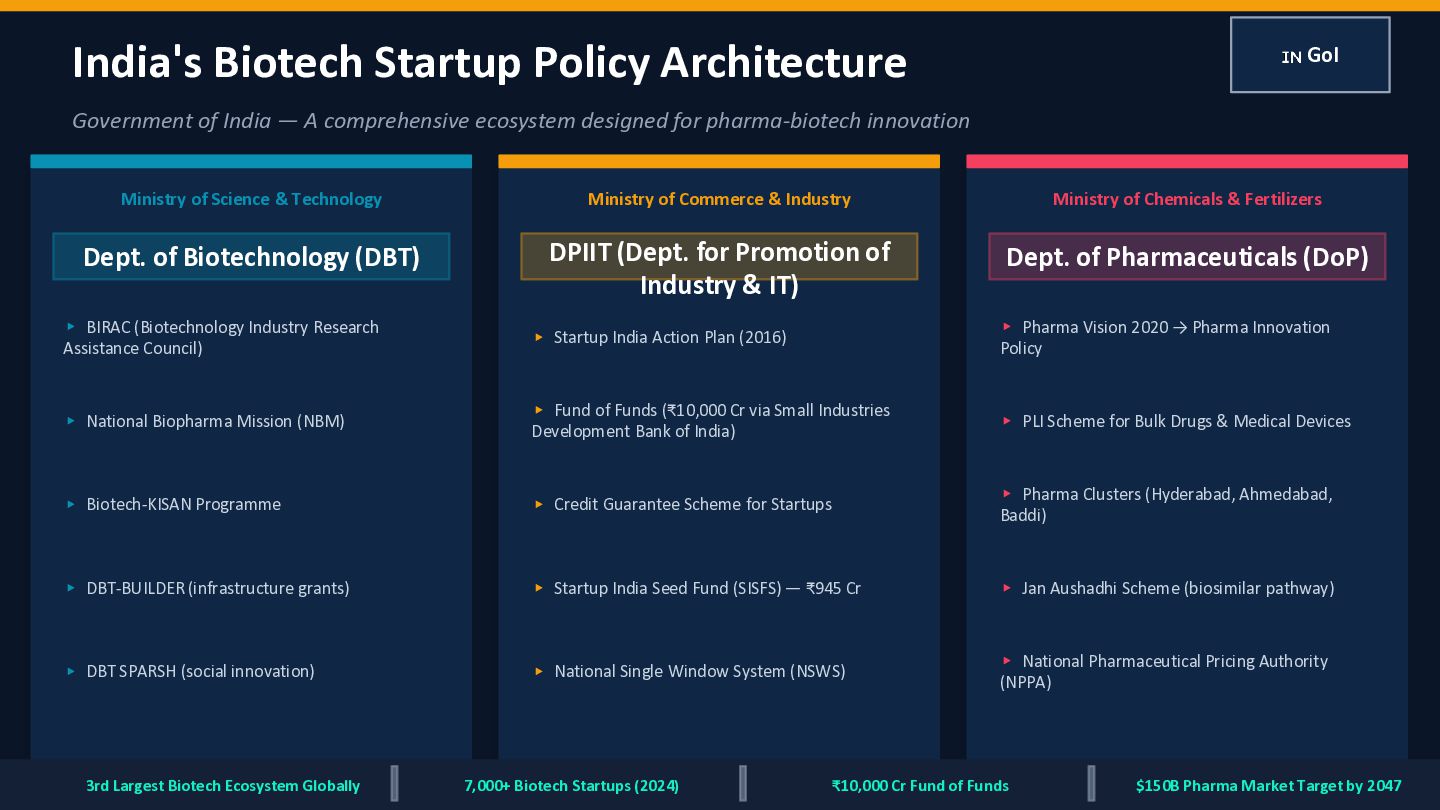
comprehensive ecosystem designed for pharma-biotech innovation GoI Ministry of Science & Technology Dept. of Biotechnology (DBT) ▸ BIRAC (Biotechnology Industry Research Assistance Council) ▸ National Biopharma Mission (NBM) ▸ Biotech-KISAN Programme ▸ DBT-BUILDER (infrastructure grants) ▸ DBT SPARSH (social innovation) Ministry of Commerce & Industry DPIIT (Dept. for Promotion of Industry & IT) ▸ Startup India Action Plan (2016) ▸ Fund of Funds (₹10,000 Cr via Small Industries Development Bank of India) ▸ Credit Guarantee Scheme for Startups ▸ Startup India Seed Fund (SISFS) — ₹945 Cr ▸ National Single Window System (NSWS) Ministry of Chemicals & Fertilizers Dept. of Pharmaceuticals (DoP) ▸ Pharma Vision 2020 → Pharma Innovation Policy ▸ PLI Scheme for Bulk Drugs & Medical Devices ▸ Pharma Clusters (Hyderabad, Ahmedabad, Baddi) ▸ Jan Aushadhi Scheme (biosimilar pathway) ▸ National Pharmaceutical Pricing Authority (NPPA) 3rd Largest Biotech Ecosystem Globally 7,000+ Biotech Startups (2024) ₹10,000 Cr Fund of Funds $150B Pharma Market Target by 2047
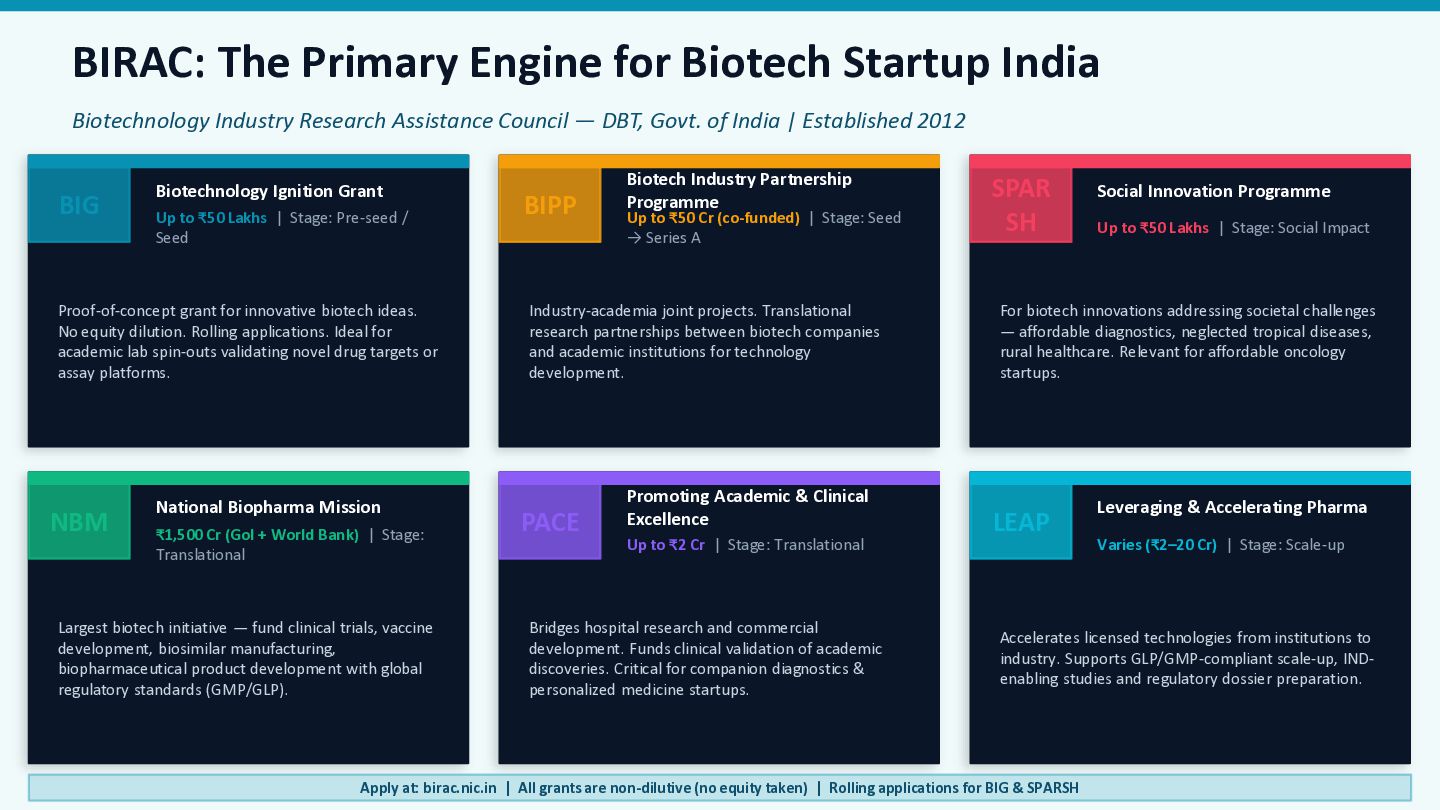
Research Assistance Council — DBT, Govt. of India | Established 2012 BIG Biotechnology Ignition Grant Up to ₹50 Lakhs | Stage: Pre-seed / Seed Proof-of-concept grant for innovative biotech ideas. No equity dilution. Rolling applications. Ideal for academic lab spin-outs validating novel drug targets or assay platforms. BIPP Biotech Industry Partnership Programme Up to ₹50 Cr (co-funded) | Stage: Seed → Series A Industry-academia joint projects. Translational research partnerships between biotech companies and academic institutions for technology development. SPAR SH Social Innovation Programme Up to ₹50 Lakhs | Stage: Social Impact For biotech innovations addressing societal challenges — affordable diagnostics, neglected tropical diseases, rural healthcare. Relevant for affordable oncology startups. NBM National Biopharma Mission ₹1,500 Cr (GoI + World Bank) | Stage: Translational Largest biotech initiative — fund clinical trials, vaccine development, biosimilar manufacturing, biopharmaceutical product development with global regulatory standards (GMP/GLP). PACE Promoting Academic & Clinical Excellence Up to ₹2 Cr | Stage: Translational Bridges hospital research and commercial development. Funds clinical validation of academic discoveries. Critical for companion diagnostics & personalized medicine startups. LEAP Leveraging & Accelerating Pharma Varies (₹2–20 Cr) | Stage: Scale-up Accelerates licensed technologies from institutions to industry. Supports GLP/GMP-compliant scale-up, IND- enabling studies and regulatory dossier preparation. Apply at: birac.nic.in | All grants are non-dilutive (no equity taken) | Rolling applications for BIG & SPARSH
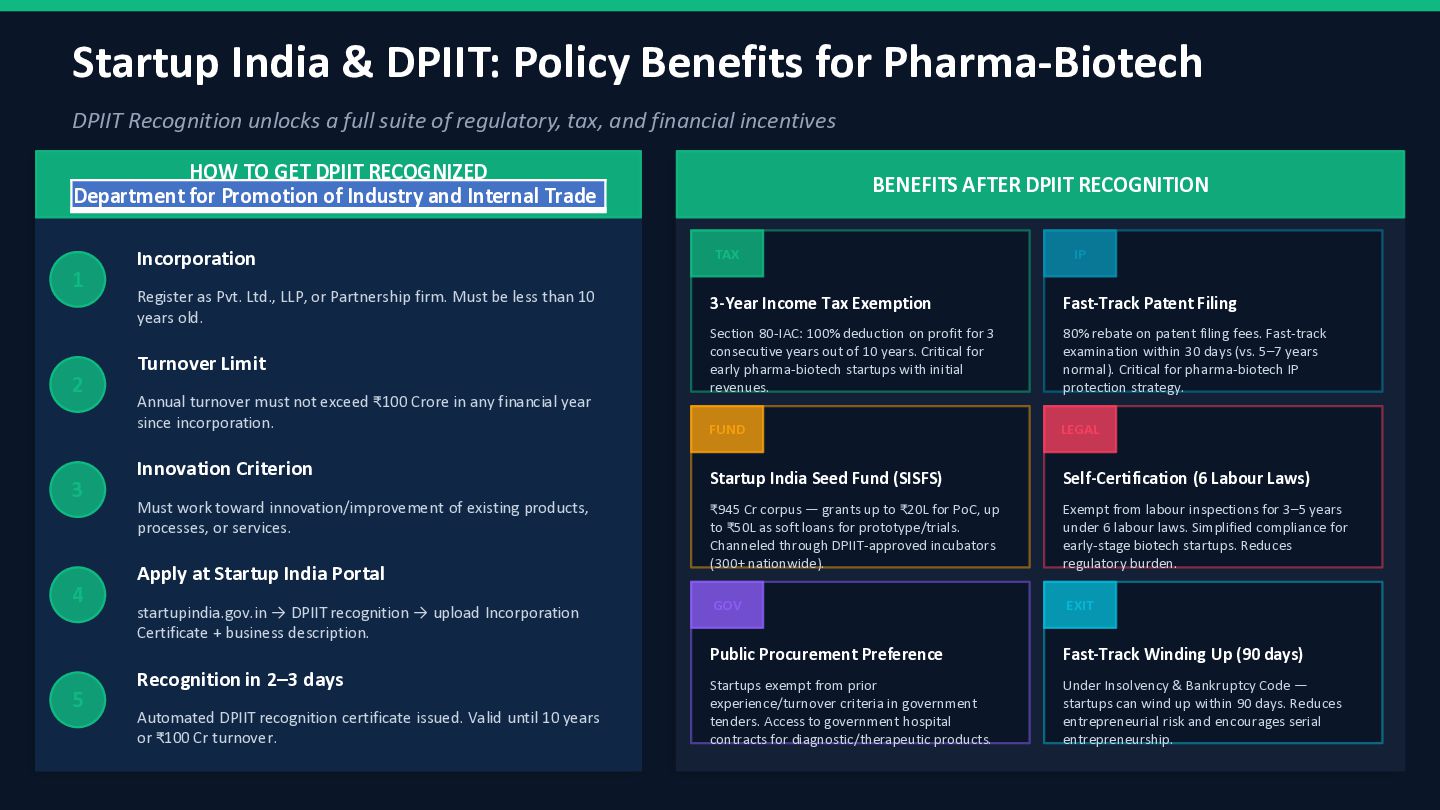
unlocks a full suite of regulatory, tax, and financial incentives HOW TO GET DPIIT RECOGNIZED 1 Incorporation Register as Pvt. Ltd., LLP, or Partnership firm. Must be less than 10 years old. 2 Turnover Limit Annual turnover must not exceed ₹100 Crore in any financial year since incorporation. 3 Innovation Criterion Must work toward innovation/improvement of existing products, processes, or services. 4 Apply at Startup India Portal startupindia.gov.in → DPIIT recognition → upload Incorporation Certificate + business description. 5 Recognition in 2–3 days Automated DPIIT recognition certificate issued. Valid until 10 years or ₹100 Cr turnover. BENEFITS AFTER DPIIT RECOGNITION TAX 3-Year Income Tax Exemption Section 80-IAC: 100% deduction on profit for 3 consecutive years out of 10 years. Critical for early pharma-biotech startups with initial revenues. IP Fast-Track Patent Filing 80% rebate on patent filing fees. Fast-track examination within 30 days (vs. 5–7 years normal). Critical for pharma-biotech IP protection strategy. FUND Startup India Seed Fund (SISFS) ₹945 Cr corpus — grants up to ₹20L for PoC, up to ₹50L as soft loans for prototype/trials. Channeled through DPIIT-approved incubators (300+ nationwide). LEGAL Self-Certification (6 Labour Laws) Exempt from labour inspections for 3–5 years under 6 labour laws. Simplified compliance for early-stage biotech startups. Reduces regulatory burden. GOV Public Procurement Preference Startups exempt from prior experience/turnover criteria in government tenders. Access to government hospital contracts for diagnostic/therapeutic products. EXIT Fast-Track Winding Up (90 days) Under Insolvency & Bankruptcy Code — startups can wind up within 90 days. Reduces entrepreneurial risk and encourages serial entrepreneurship. Department for Promotion of Industry and Internal Trade
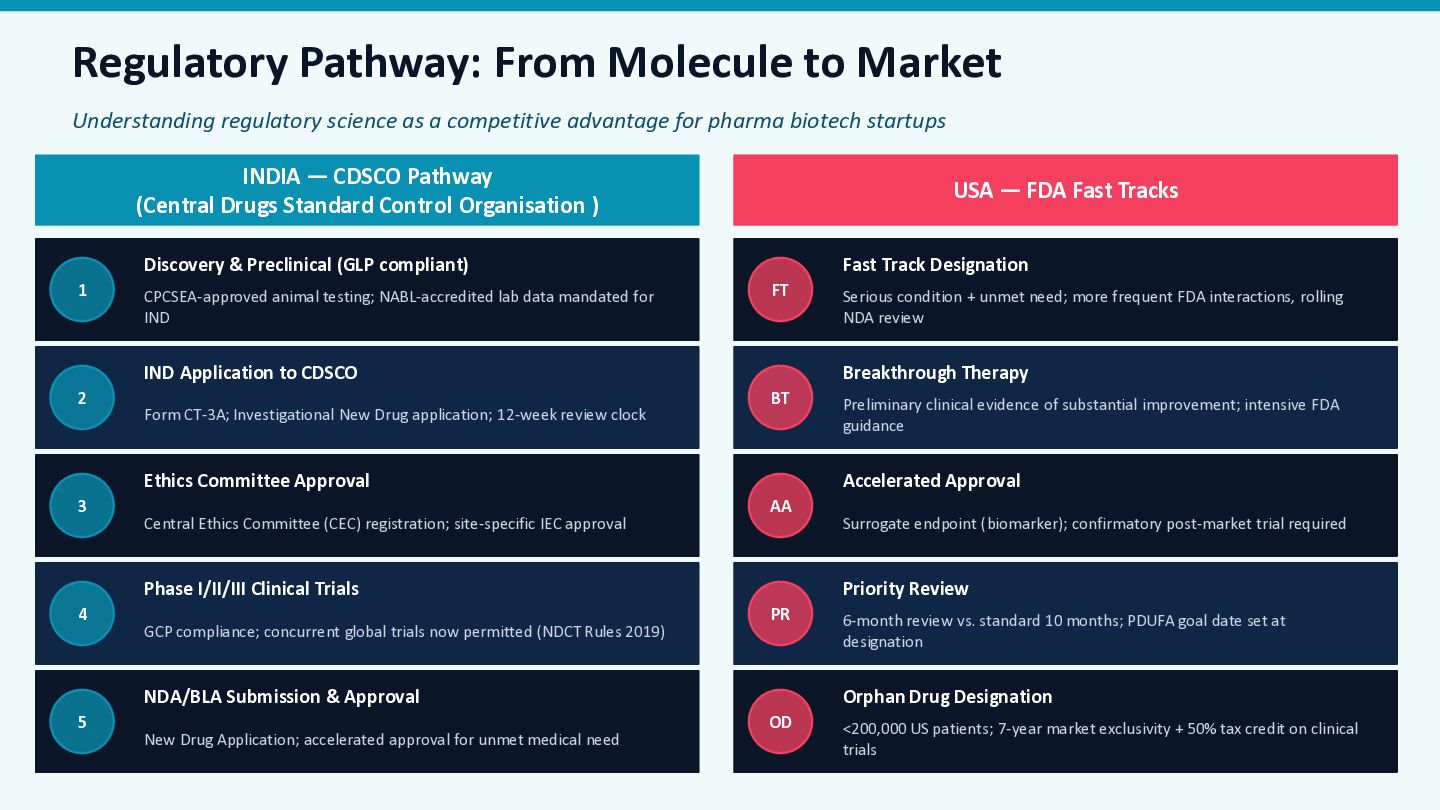
a competitive advantage for pharma biotech startups INDIA — CDSCO Pathway (Central Drugs Standard Control Organisation ) 1 Discovery & Preclinical (GLP compliant) CPCSEA-approved animal testing; NABL-accredited lab data mandated for IND 2 IND Application to CDSCO Form CT-3A; Investigational New Drug application; 12-week review clock 3 Ethics Committee Approval Central Ethics Committee (CEC) registration; site-specific IEC approval 4 Phase I/II/III Clinical Trials GCP compliance; concurrent global trials now permitted (NDCT Rules 2019) 5 NDA/BLA Submission & Approval New Drug Application; accelerated approval for unmet medical need USA — FDA Fast Tracks FT Fast Track Designation Serious condition + unmet need; more frequent FDA interactions, rolling NDA review BT Breakthrough Therapy Preliminary clinical evidence of substantial improvement; intensive FDA guidance AA Accelerated Approval Surrogate endpoint (biomarker); confirmatory post-market trial required PR Priority Review 6-month review vs. standard 10 months; PDUFA goal date set at designation OD Orphan Drug Designation <200,000 US patients; 7-year market exclusivity + 50% tax credit on clinical trials
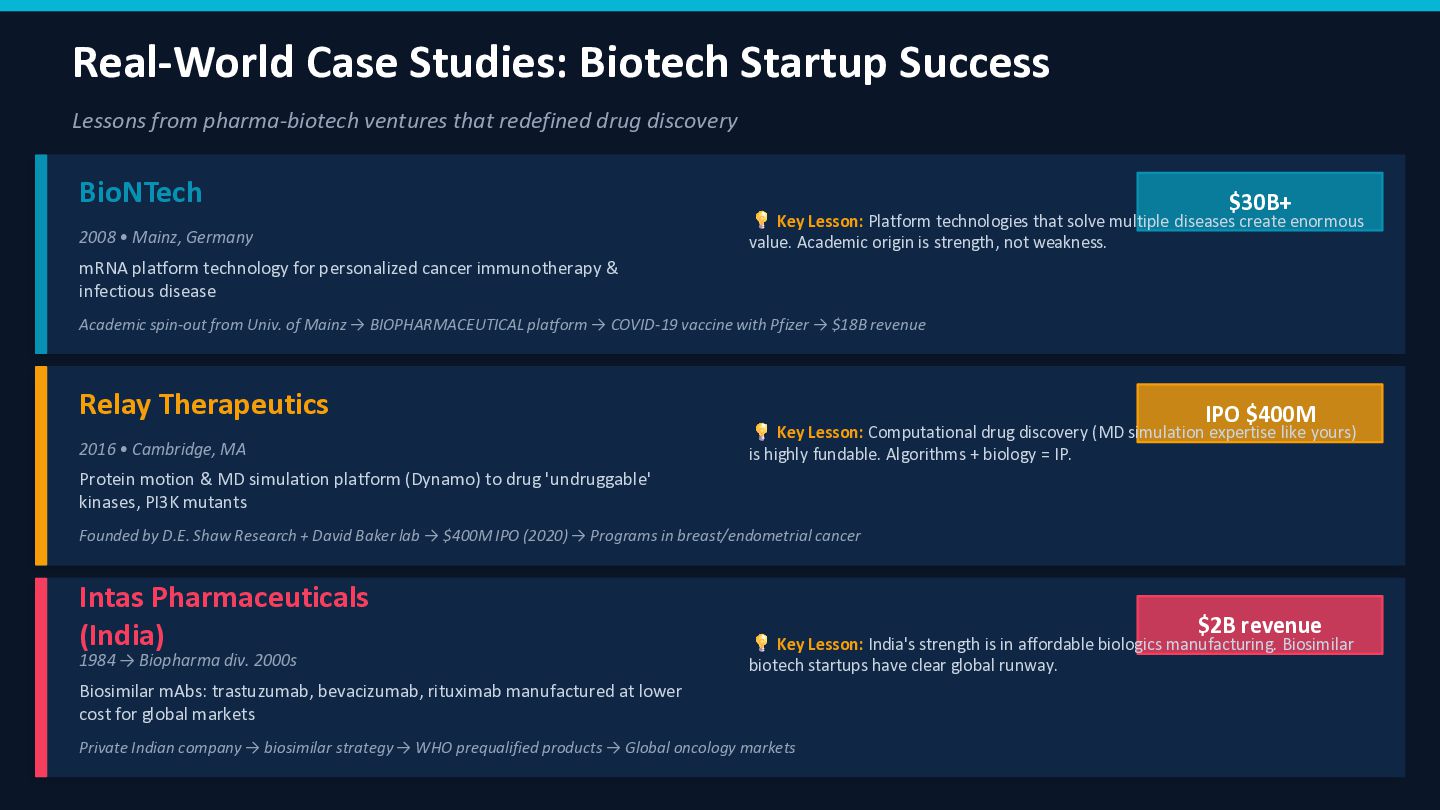
that redefined drug discovery BioNTech $30B+ 2008 • Mainz, Germany mRNA platform technology for personalized cancer immunotherapy & infectious disease Key Lesson: Platform technologies that solve multiple diseases create enormous value. Academic origin is strength, not weakness. Academic spin-out from Univ. of Mainz → BIOPHARMACEUTICAL platform → COVID-19 vaccine with Pfizer → $18B revenue Relay Therapeutics IPO $400M 2016 • Cambridge, MA Protein motion & MD simulation platform (Dynamo) to drug 'undruggable' kinases, PI3K mutants Key Lesson: Computational drug discovery (MD simulation expertise like yours) is highly fundable. Algorithms + biology = IP. Founded by D.E. Shaw Research + David Baker lab → $400M IPO (2020) → Programs in breast/endometrial cancer Intas Pharmaceuticals (India) $2B revenue 1984 → Biopharma div. 2000s Biosimilar mAbs: trastuzumab, bevacizumab, rituximab manufactured at lower cost for global markets Key Lesson: India's strength is in affordable biologics manufacturing. Biosimilar biotech startups have clear global runway. Private Indian company → biosimilar strategy → WHO prequalified products → Global oncology markets
cancer — your targets, your assays, your MD simulations — is exactly the foundational science that pharma-biotech startups are built upon. Audit Your IP List every target, assay, and dataset that is unpublished. Schedule TTO meeting this month. Find Your Co-Founder You need a business partner. Start with BIRAC mentor network, IIT alumni, and incubator communities. Apply to an Incubator BIRAC BIG, SINE IIT Bombay, KIIT-TBI, AIC- NIPER — all have rolling applications. Start now. The molecules you study today could be the medicines that save lives tomorrow. Q U E S T I O N S & D I S C U S S I O N
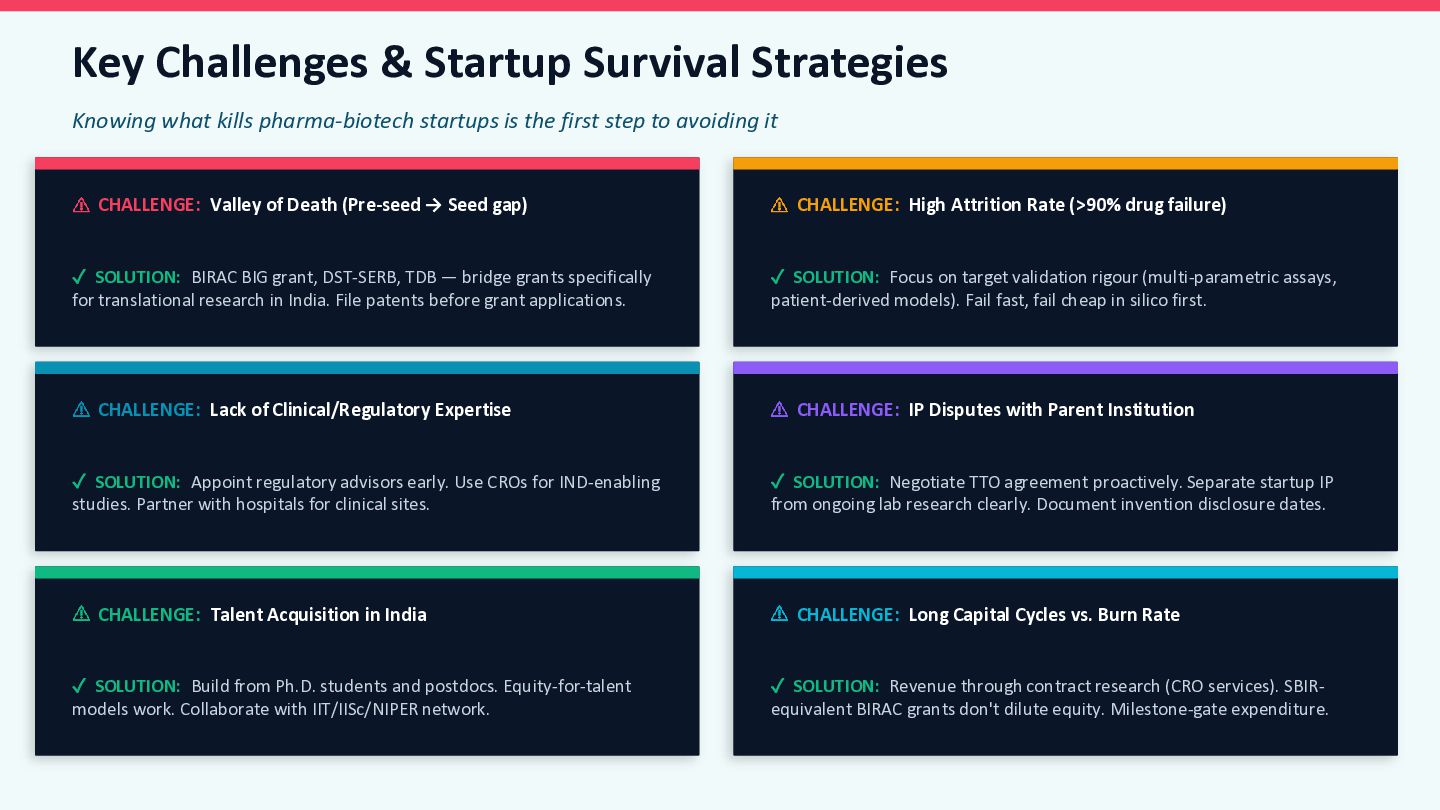
startups is the first step to avoiding it CHALLENGE: Valley of Death (Pre-seed → Seed gap) ✓ SOLUTION: BIRAC BIG grant, DST-SERB, TDB — bridge grants specifically for translational research in India. File patents before grant applications. CHALLENGE: High Attrition Rate (>90% drug failure) ✓ SOLUTION: Focus on target validation rigour (multi-parametric assays, patient-derived models). Fail fast, fail cheap in silico first. CHALLENGE: Lack of Clinical/Regulatory Expertise ✓ SOLUTION: Appoint regulatory advisors early. Use CROs for IND-enabling studies. Partner with hospitals for clinical sites. CHALLENGE: IP Disputes with Parent Institution ✓ SOLUTION: Negotiate TTO agreement proactively. Separate startup IP from ongoing lab research clearly. Document invention disclosure dates. CHALLENGE: Talent Acquisition in India ✓ SOLUTION: Build from Ph.D. students and postdocs. Equity-for-talent models work. Collaborate with IIT/IISc/NIPER network. CHALLENGE: Long Capital Cycles vs. Burn Rate ✓ SOLUTION: Revenue through contract research (CRO services). SBIR- equivalent BIRAC grants don't dilute equity. Milestone-gate expenditure.
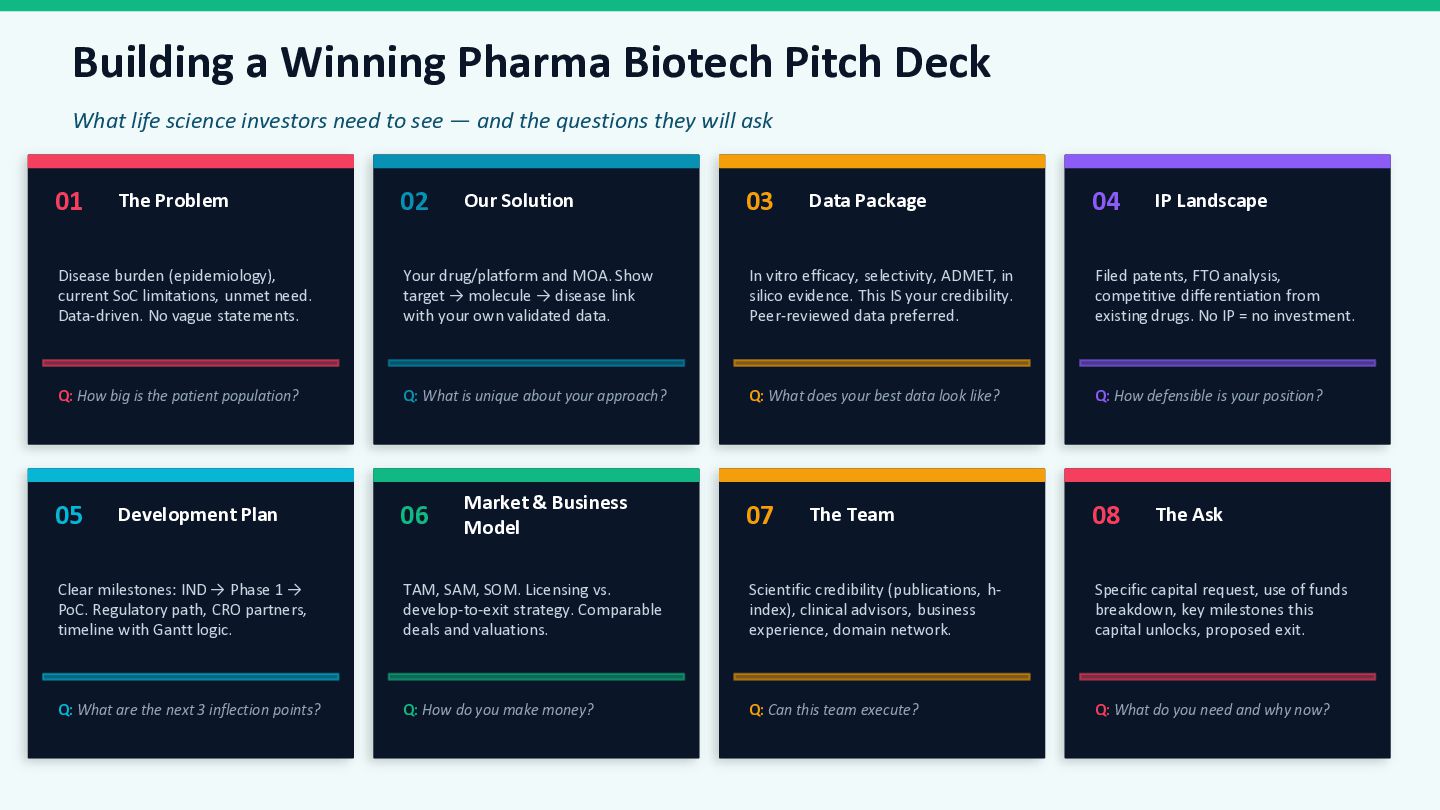
investors need to see — and the questions they will ask 01 The Problem Disease burden (epidemiology), current SoC limitations, unmet need. Data-driven. No vague statements. Q: How big is the patient population? 02 Our Solution Your drug/platform and MOA. Show target → molecule → disease link with your own validated data. Q: What is unique about your approach? 03 Data Package In vitro efficacy, selectivity, ADMET, in silico evidence. This IS your credibility. Peer-reviewed data preferred. Q: What does your best data look like? 04 IP Landscape Filed patents, FTO analysis, competitive differentiation from existing drugs. No IP = no investment. Q: How defensible is your position? 05 Development Plan Clear milestones: IND → Phase 1 → PoC. Regulatory path, CRO partners, timeline with Gantt logic. Q: What are the next 3 inflection points? 06 Market & Business Model TAM, SAM, SOM. Licensing vs. develop-to-exit strategy. Comparable deals and valuations. Q: How do you make money? 07 The Team Scientific credibility (publications, h- index), clinical advisors, business experience, domain network. Q: Can this team execute? 08 The Ask Specific capital request, use of funds breakdown, key milestones this capital unlocks, proposed exit. Q: What do you need and why now?


 synergymarketing
 so_kotani
 nakahara
 shunsuke_takeuchi
 stanby_inc
 takemura_yuto
 malna
 openwork
 gatechnologies
 ikuodanaka
 hubbleinc
 gpol
 marketingsoph
 jonrohan
 chriscoyier
 irinanazarova
 scottboms
 eileencodes
 reverentgeek
 katiecoart
 paigeccino
 bryan
 mclloyd