Upgrade to Pro — share decks privately, control downloads, hide ads and more …

Are Roof Repairs Cheaper When They Are Caught E...

Are Roof Repairs Cheaper When They Are Caught Early?

Roof repairs are significantly more affordable when damage is identified and addressed early, before it has the chance to spread into deeper structural issues. Small problems such as missing shingles, minor leaks, or damaged flashing may seem harmless at first, but they can quickly escalate into costly repairs if ignored. Early intervention helps prevent water from penetrating the roof system, which reduces the risk of mold growth, wood rot, and interior ceiling damage. Homeowners who act quickly often avoid expensive restoration work that involves insulation replacement, drywall repair, and structural rebuilding. Timely maintenance also helps preserve the overall strength and lifespan of the roofing system. Professional roofing inspections play a key role in detecting hidden issues before they become severe. Experienced contractors can identify weak spots that are not visible from the ground and recommend cost-effective solutions. For example, trusted providers like Covenant Roofing & Restoration help homeowners understand the importance of addressing small roofing concerns before they turn into major expenses. Weather conditions such as heavy rain, wind, and hail can accelerate damage, making early repairs even more critical. Regular roof maintenance ensures that drainage systems, flashing, and shingles remain in good condition throughout the year. It also helps reduce emergency repair situations that often come with higher labor and material costs. By catching problems early, homeowners can avoid unnecessary stress and financial strain. In addition, early repairs help maintain energy efficiency by preventing air leaks and moisture intrusion. This keeps heating and cooling costs under control while improving indoor comfort. Ultimately, taking prompt action on roof issues protects both the structure and value of the home, making early roof repair one of the most cost-effective maintenance decisions a homeowner can make.

Avatar for Marcelline Duval

Marcelline Duval

May 11, 2026

Other Decks in Business

Transcript

  1. Are Roof Repairs Cheaper When They Are Caught Early? Introduction

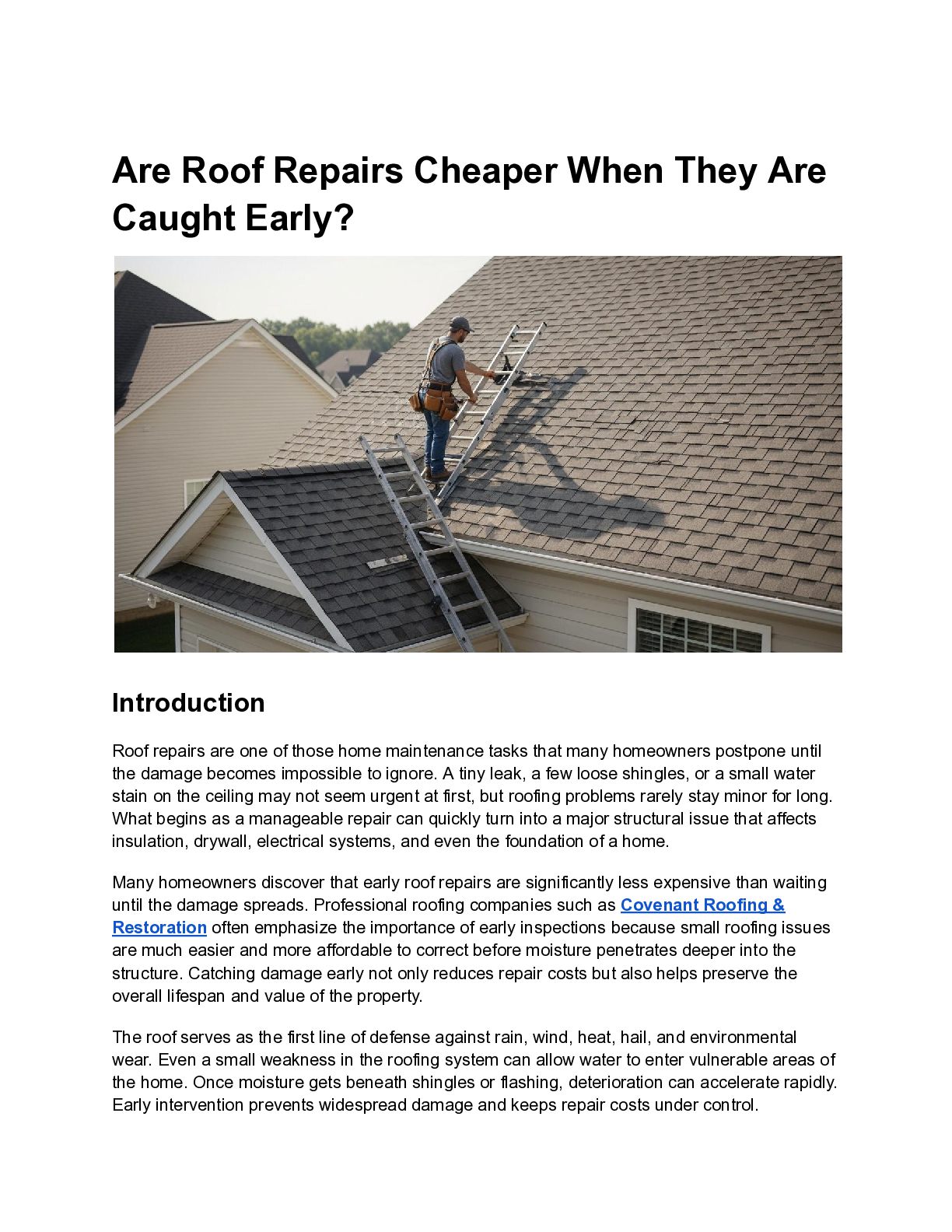
    Roof repairs are one of those home maintenance tasks that many homeowners postpone until the damage becomes impossible to ignore. A tiny leak, a few loose shingles, or a small water stain on the ceiling may not seem urgent at first, but roofing problems rarely stay minor for long. What begins as a manageable repair can quickly turn into a major structural issue that affects insulation, drywall, electrical systems, and even the foundation of a home. Many homeowners discover that early roof repairs are significantly less expensive than waiting until the damage spreads. Professional roofing companies such as Covenant Roofing & Restoration often emphasize the importance of early inspections because small roofing issues are much easier and more affordable to correct before moisture penetrates deeper into the structure. Catching damage early not only reduces repair costs but also helps preserve the overall lifespan and value of the property. The roof serves as the first line of defense against rain, wind, heat, hail, and environmental wear. Even a small weakness in the roofing system can allow water to enter vulnerable areas of the home. Once moisture gets beneath shingles or flashing, deterioration can accelerate rapidly. Early intervention prevents widespread damage and keeps repair costs under control.
  2. This article explores why roof repairs are usually cheaper when

    problems are identified early, how roofing damage progresses over time, the warning signs homeowners should watch for, and how proactive maintenance can save thousands of dollars in future repairs. Why Small Roof Problems Become Expensive Minor Damage Rarely Stays Minor A roof is a connected system. When one component fails, nearby materials often become vulnerable as well. For example, a single missing shingle may expose the underlayment to moisture. Over time, water can seep into the decking, insulation, and attic spaces beneath the roof surface. The longer the issue remains untreated, the larger the repair area becomes. What could have been solved with a small patch or shingle replacement may eventually require partial reroofing or even full structural restoration. Water Damage Spreads Quickly Water intrusion is one of the biggest reasons delayed roof repairs become costly. Moisture can travel far from the original leak source, making the damage harder to locate and more expensive to repair. Common consequences of water intrusion include: •​ Mold and mildew growth •​ Rotting wood decking •​ Damaged insulation •​ Ceiling stains •​ Warped drywall •​ Electrical hazards •​ Flooring damage •​ Compromised structural framing Water damage often progresses silently. By the time visible signs appear indoors, significant hidden deterioration may already exist.
  3. Structural Damage Increases Repair Costs Roof structures are designed to

    remain dry. Once moisture repeatedly enters the system, wood components can weaken and deteriorate. Structural damage may involve: •​ Rotted rafters •​ Soft roof decking •​ Sagging roof sections •​ Compromised trusses •​ Weakened attic framing Structural repairs are substantially more expensive than surface-level roofing repairs because they require additional labor, materials, and reconstruction work. Why Early Roof Repairs Are Usually Cheaper Smaller Repairs Require Fewer Materials Early-stage roofing problems often involve limited damage areas. A roofer may only need to replace: •​ A few shingles •​ Small flashing sections •​ Minor underlayment areas •​ Sealant around vents or chimneys These targeted repairs use fewer materials and take less time to complete. By contrast, delayed repairs frequently require: •​ Deck replacement •​ Insulation removal •​ Interior drywall restoration •​ Mold remediation •​ Larger roof sections to be rebuilt
  4. The overall project scope becomes much larger and more expensive.

    Labor Costs Remain Lower Minor roof repairs can often be completed quickly by a small crew. Once the damage spreads, however, repairs become more labor-intensive. Complex repairs may involve: 1.​ Removing multiple roofing layers 2.​ Replacing structural wood 3.​ Drying moisture-damaged areas 4.​ Reinstalling insulation 5.​ Repairing interior finishes 6.​ Performing mold treatment More labor hours directly increase repair costs. Emergency Repairs Cost More Roofing emergencies are often significantly more expensive than scheduled repairs. Emergency services may include: •​ Storm tarping •​ After-hours labor •​ Immediate leak mitigation •​ Temporary waterproofing •​ Fast-response crews When homeowners wait too long, repairs frequently occur during emergencies rather than during planned maintenance visits. Early Repairs Protect Energy Efficiency Roof damage can affect attic ventilation and insulation performance. Moisture-damaged insulation loses effectiveness, causing heating and cooling systems to work harder.
  5. Consequences may include: •​ Higher energy bills •​ Uneven indoor

    temperatures •​ Increased HVAC strain •​ Reduced indoor comfort Fixing small roofing issues early helps maintain energy efficiency and prevents unnecessary utility expenses. Common Roof Problems That Are Cheaper When Fixed Early Missing or Loose Shingles Shingles protect the roof from water penetration and UV exposure. A few missing shingles are relatively inexpensive to replace, but if ignored, exposed areas can allow moisture beneath the roofing system. Early repair prevents: •​ Underlayment deterioration •​ Deck rot •​ Widespread leaks Flashing Damage Flashing seals vulnerable roof transitions around: •​ Chimneys •​ Skylights •​ Roof valleys •​ Vents •​ Dormers Small flashing gaps can usually be repaired quickly. Delayed flashing issues often lead to hidden water damage inside walls and ceilings.
  6. Minor Roof Leaks A tiny leak may appear harmless initially,

    but even slow drips can cause major long-term deterioration. Early leak repairs prevent: •​ Mold growth •​ Ceiling damage •​ Structural rot •​ Insulation saturation Clogged Gutters and Drainage Issues Poor drainage allows water to pool on roofing surfaces and overflow near the home’s foundation. Routine maintenance helps prevent: •​ Roof edge rot •​ Fascia damage •​ Ice dams •​ Water backup beneath shingles Nail Pops and Lifted Shingles Temperature fluctuations can cause roofing nails to loosen over time. Lifted shingles create openings where water and wind can enter. Addressing these issues early is inexpensive compared to repairing widespread moisture intrusion later.
  7. Signs Your Roof Needs Immediate Attention Exterior Warning Signs Homeowners

    should regularly inspect roofs for visible changes. Common warning signs include: •​ Curling shingles •​ Cracked shingles •​ Missing shingles •​ Granule accumulation in gutters •​ Moss or algae growth •​ Sagging roof sections •​ Rusted flashing •​ Damaged vents Even minor-looking defects can indicate deeper problems beneath the surface. Interior Warning Signs Roofing damage often appears indoors before homeowners notice exterior issues. Interior symptoms may include: •​ Water stains on ceilings •​ Bubbling paint •​ Peeling wallpaper •​ Mold odor •​ Damp attic insulation •​ Sunlight visible in attic spaces •​ Increased humidity indoors These warning signs should never be ignored.
  8. How Weather Accelerates Roof Damage Heavy Rain Rainwater quickly exploits

    weak roofing areas. Small cracks and gaps become entry points for moisture intrusion. Repeated rainfall increases the risk of: •​ Deck rot •​ Mold growth •​ Ceiling leaks High Winds Strong winds can loosen shingles and flashing. Once roofing materials lift, surrounding sections become vulnerable to further wind damage. Wind exposure can rapidly turn minor issues into severe roofing failures. Hail Damage Hail impacts may crack shingles, dislodge granules, and weaken protective coatings. Initially, hail damage may appear cosmetic, but weakened shingles deteriorate faster over time. UV Exposure Constant sun exposure gradually breaks down roofing materials. Older shingles become brittle and less resistant to weather damage. Minor vulnerabilities become more serious as UV degradation continues. Freeze-Thaw Cycles
  9. Water trapped inside roofing materials expands when frozen and contracts

    when thawed. This repeated expansion can: •​ Widen cracks •​ Loosen flashing •​ Separate roofing seams Cold-weather damage often worsens rapidly if repairs are delayed. The Financial Difference Between Early and Delayed Repairs Small Repair vs. Major Restoration Early Repair Example •​ Replacing several shingles •​ Minor sealant application •​ Small flashing repair Delayed Repair Example •​ Deck replacement •​ Insulation replacement •​ Mold remediation •​ Ceiling reconstruction •​ Structural framing repairs The financial difference between these scenarios can be dramatic. Insurance Complications Insurance companies may deny claims if damage resulted from neglect or lack of maintenance. Delaying repairs can create complications such as:
  10. •​ Reduced claim coverage •​ Out-of-pocket expenses •​ Disputes over

    pre-existing damage Prompt repairs help document responsible home maintenance. Reduced Property Value Visible roofing issues can lower buyer confidence and reduce resale value. Potential buyers often view roof problems as indicators of broader maintenance neglect. Early repairs help maintain: •​ Property value •​ Buyer appeal •​ Home inspection results The Importance of Professional Roof Inspections Why Professional Inspections Matter Some roofing damage is difficult for homeowners to detect safely or accurately. Professional roofers inspect: •​ Flashing integrity •​ Ventilation systems •​ Underlayment condition •​ Structural movement •​ Moisture penetration •​ Drainage performance Experienced contractors can identify hidden problems before they become severe.
  11. Recommended Inspection Frequency Experts generally recommend roof inspections: •​ Once

    or twice annually •​ After major storms •​ Before buying or selling a home •​ After hail or wind events •​ When leaks appear indoors Routine inspections often uncover inexpensive repair opportunities before serious damage develops. Preventative Roof Maintenance Saves Money Routine Maintenance Tasks Preventative care significantly reduces long-term roofing costs. Important maintenance practices include: •​ Cleaning gutters regularly •​ Removing roof debris •​ Trimming nearby branches •​ Checking attic ventilation •​ Inspecting flashing •​ Monitoring moisture levels Consistent maintenance extends roof lifespan and minimizes emergency repairs. Maintenance Helps Extend Roof Life A well-maintained roof can last many years longer than a neglected one. Benefits of regular maintenance include:
  12. •​ Delayed roof replacement •​ Fewer leak incidents •​ Better

    weather resistance •​ Improved energy efficiency Small investments in maintenance often prevent much larger future expenses. How Homeowners Can Catch Roof Problems Early Perform Visual Inspections Homeowners should visually inspect roofing systems after storms and during seasonal transitions. Look for: •​ Missing shingles •​ Damaged flashing •​ Debris accumulation •​ Sagging areas •​ Water stains Ground-level inspections with binoculars can help identify visible concerns safely. Monitor the Attic Attics often reveal early roofing problems before they appear inside living spaces. Signs to check for include: •​ Damp insulation •​ Musty odors •​ Water stains •​ Mold growth •​ Sunlight penetration Attic inspections are especially important after storms.
  13. Pay Attention to Energy Bills Unexpected increases in heating or

    cooling costs may indicate roofing or insulation issues. Moisture-damaged insulation reduces efficiency and may signal hidden roof leaks. When Roof Repairs Become Roof Replacement Extensive Damage Can Make Replacement Necessary Delayed repairs sometimes allow deterioration to spread beyond practical repair limits. Replacement may become necessary when roofs experience: •​ Extensive rot •​ Multiple leaks •​ Severe shingle deterioration •​ Structural sagging •​ Advanced age combined with widespread damage Timely repairs can often delay replacement for many years. Delaying Repairs Shortens Roof Lifespan Every unresolved roofing issue contributes to cumulative wear and deterioration. Ignoring minor problems can dramatically shorten the lifespan of: •​ Asphalt shingle roofs •​ Metal roofing systems •​ Tile roofs •​ Flat roofing membranes Addressing damage early protects the roofing investment.
  14. Choosing the Right Roofing Contractor Important Qualities to Look For

    Homeowners should choose roofing contractors carefully. Look for companies that provide: •​ Proper licensing •​ Insurance coverage •​ Detailed inspections •​ Transparent estimates •​ Warranty information •​ Strong local reputation Reliable contractors focus on long-term roofing performance rather than temporary fixes. Timely Repairs Require Professional Expertise Experienced roofers can: •​ Detect hidden damage •​ Recommend cost-effective solutions •​ Prevent recurring leaks •​ Improve roof durability Professional intervention early in the damage process usually leads to lower overall repair expenses. Frequently Asked Questions Are roof repairs always cheaper when done early?
  15. In most cases, yes. Early repairs prevent moisture intrusion, structural

    deterioration, and interior damage, which significantly reduces overall repair costs. How long can a small roof leak go unnoticed? Small leaks can remain hidden for months while causing gradual damage behind walls, ceilings, and insulation. Can delaying roof repairs void warranties? Some roofing warranties require proper maintenance. Neglecting repairs may void warranty coverage in certain situations. Does homeowners insurance cover delayed roof damage? Insurance may deny claims if damage resulted from long-term neglect rather than sudden events. How often should roofs be inspected? Most professionals recommend inspections at least once or twice per year and after severe weather events. What is the most expensive consequence of ignoring roof damage? Structural rot and mold remediation are often among the most expensive consequences of delayed roof repairs.
  16. Conclusion Roof repairs are almost always cheaper when problems are

    identified and repaired early. Minor issues such as loose shingles, flashing gaps, or small leaks can quickly evolve into serious structural and interior damage if left untreated. Water intrusion spreads rapidly, increasing labor costs, material requirements, and restoration expenses over time. Proactive inspections, routine maintenance, and timely repairs help homeowners avoid emergency situations and extend the lifespan of their roofing systems. Catching damage early not only saves money but also protects property value, energy efficiency, and overall home safety. A roof is one of the most important components of any home. Addressing even small concerns promptly can prevent thousands of dollars in future repairs and provide long-term peace of mind.