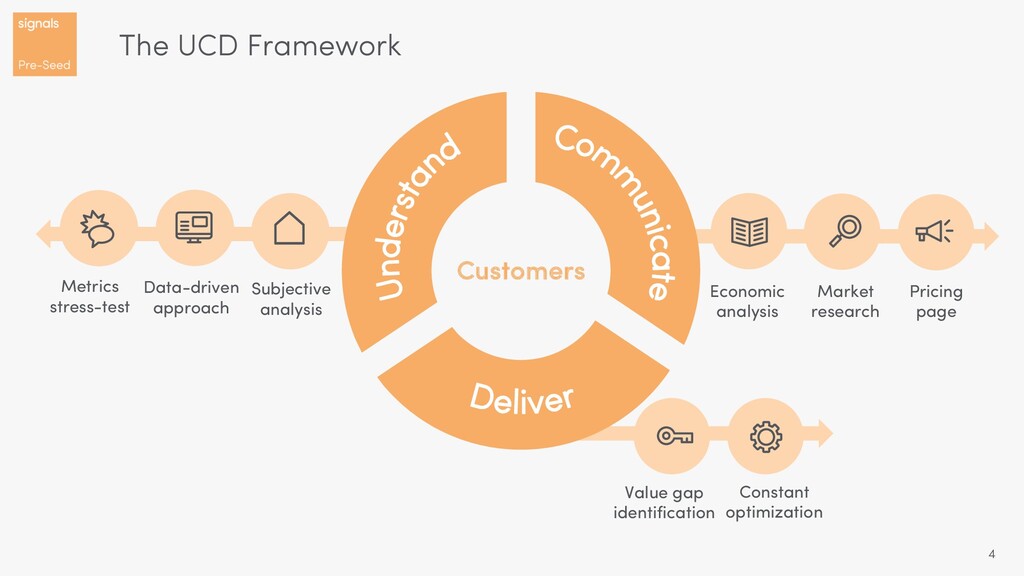
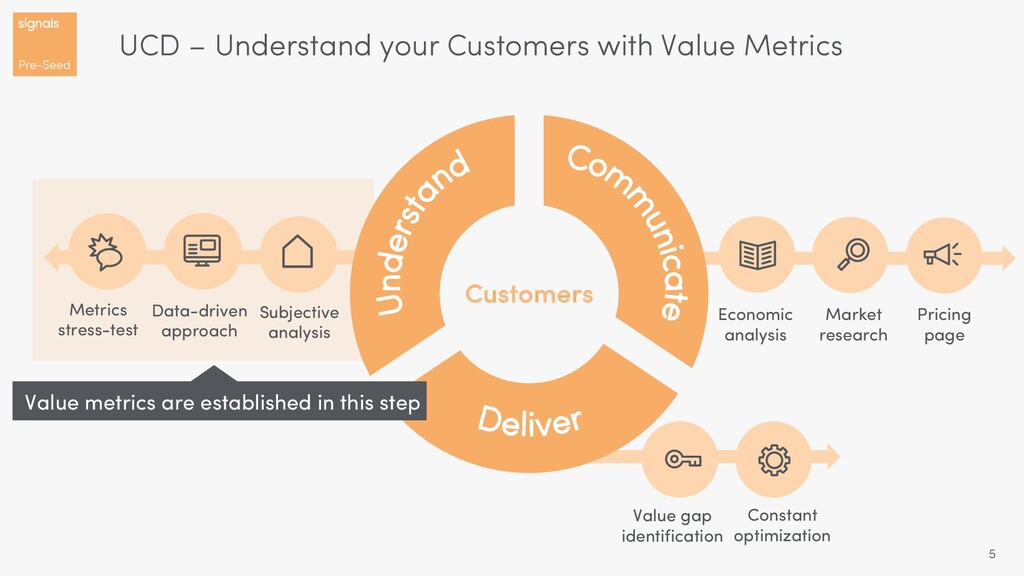
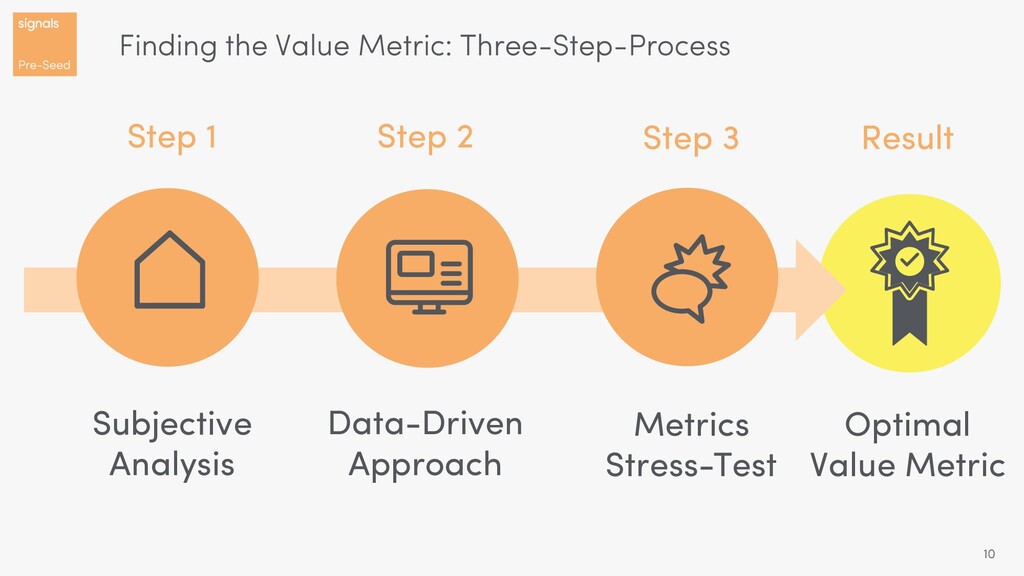
is an end user-focused growth model that relies on the product itself as the primary driver of customer acquisition, conversion and expansion. (Openview Partners). 2. What is the UCD framework? UCD is a framework that sets the foundation for product-led GTM activities. UCD stands for 1) Understand your value, 2) Communicate the perveived value of your product 3) Deliver on your promised value. Each phase contains several steps, starting with establishing value metrics. 3. What are value metrics and why do I need them? Value metric measure value exchange in your product. Value metrics present the key KPI for product-led GTM activities. They help to understand & monitor product value and refine pricing. They can be established through a 3-step-process incl. Subjective analysis, data-driven approach and stress- test. 2
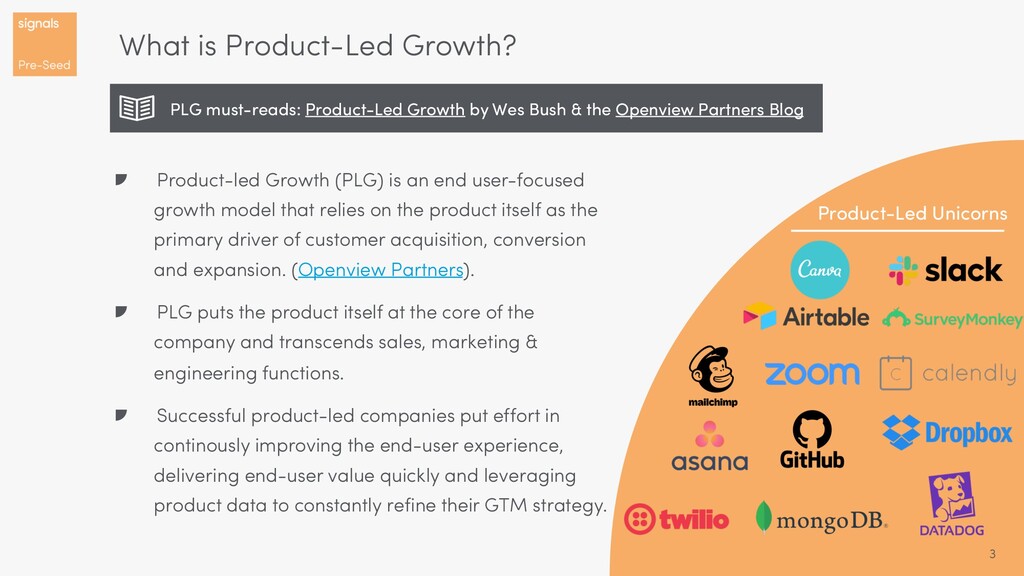
Partners Blog What is Product-Led Growth? Product-led Growth (PLG) is an end user-focused growth model that relies on the product itself as the primary driver of customer acquisition, conversion and expansion. (Openview Partners). PLG puts the product itself at the core of the company and transcends sales, marketing & engineering functions. Successful product-led companies put effort in continously improving the end-user experience, delivering end-user value quickly and leveraging product data to constantly refine their GTM strategy. 3 Product-Led Unicorns
approach Metrics stress-test Subjective analysis Value gap identification Constant optimization Economic analysis Market research Pricing page Customers Value metrics are established in this step
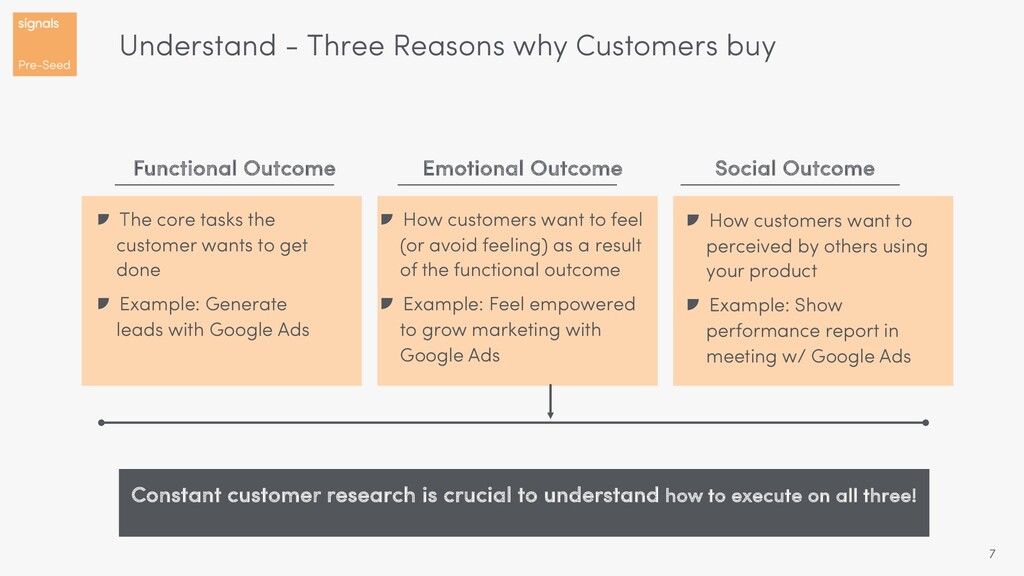
tasks the customer wants to get done Example: Generate leads with Google Ads How customers want to feel (or avoid feeling) as a result of the functional outcome Example: Feel empowered to grow marketing with Google Ads Functional Outcome Emotional Outcome Social Outcome How customers want to perceived by others using your product Example: Show performance report in meeting w/ Google Ads Constant customer research is crucial to understand how to execute on all three!
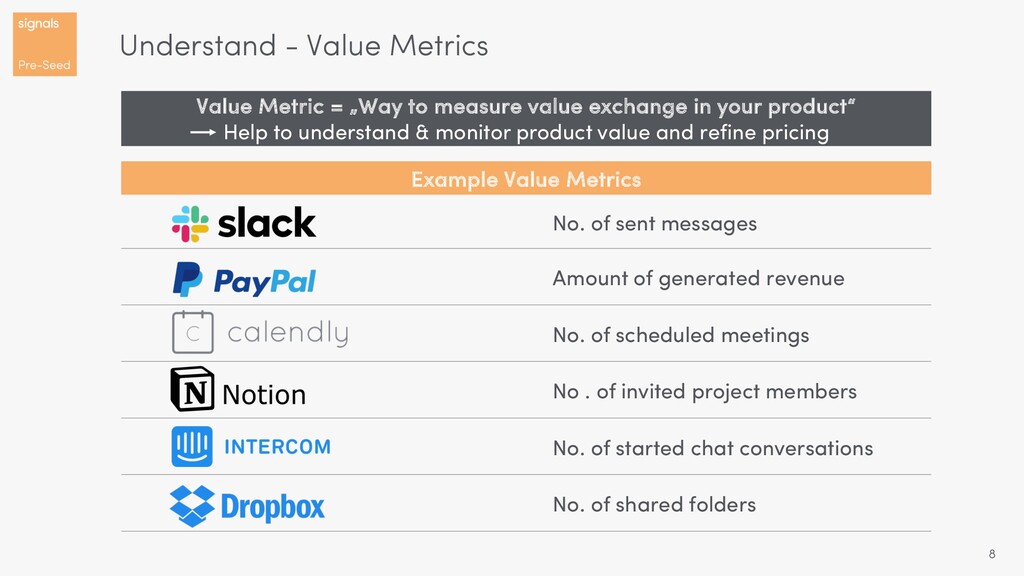
measure value exchange in your product“ Help to understand & monitor product value and refine pricing Example Value Metrics No. of sent messages Amount of generated revenue No. of scheduled meetings No . of invited project members No. of started chat conversations No. of shared folders
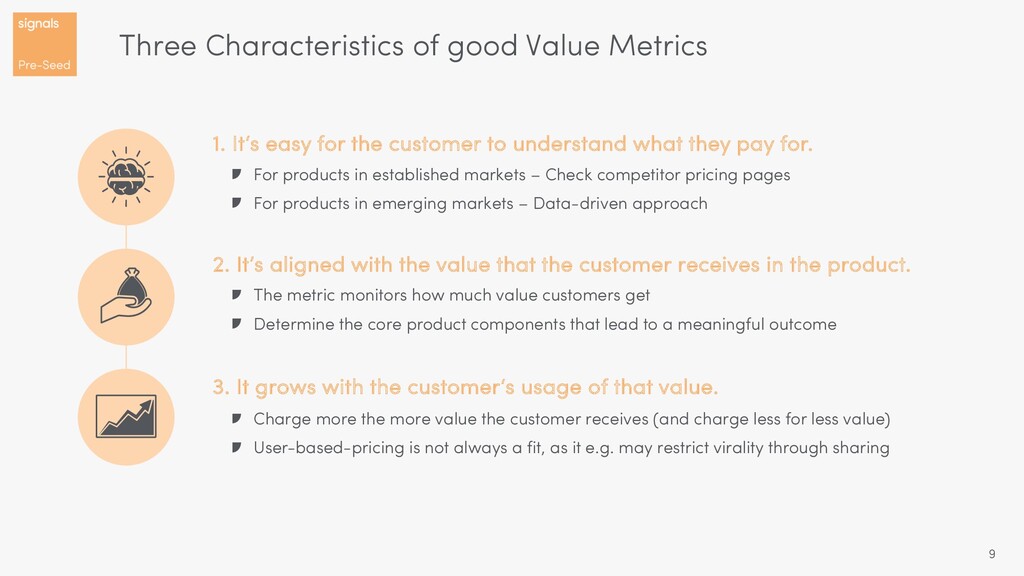
for the customer to understand what they pay for. For products in established markets – Check competitor pricing pages For products in emerging markets – Data-driven approach 2. It’s aligned with the value that the customer receives in the product. 3. It grows with the customer‘s usage of that value. The metric monitors how much value customers get Determine the core product components that lead to a meaningful outcome Charge more the more value the customer receives (and charge less for less value) User-based-pricing is not always a fit, as it e.g. may restrict virality through sharing
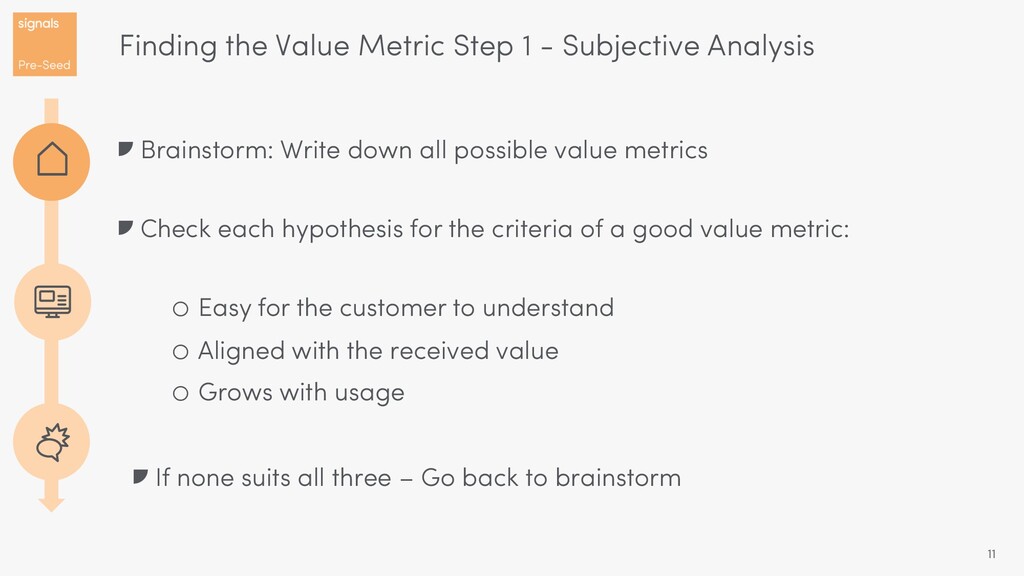
Write down all possible value metrics Check each hypothesis for the criteria of a good value metric: o Easy for the customer to understand o Aligned with the received value o Grows with usage If none suits all three – Go back to brainstorm 11
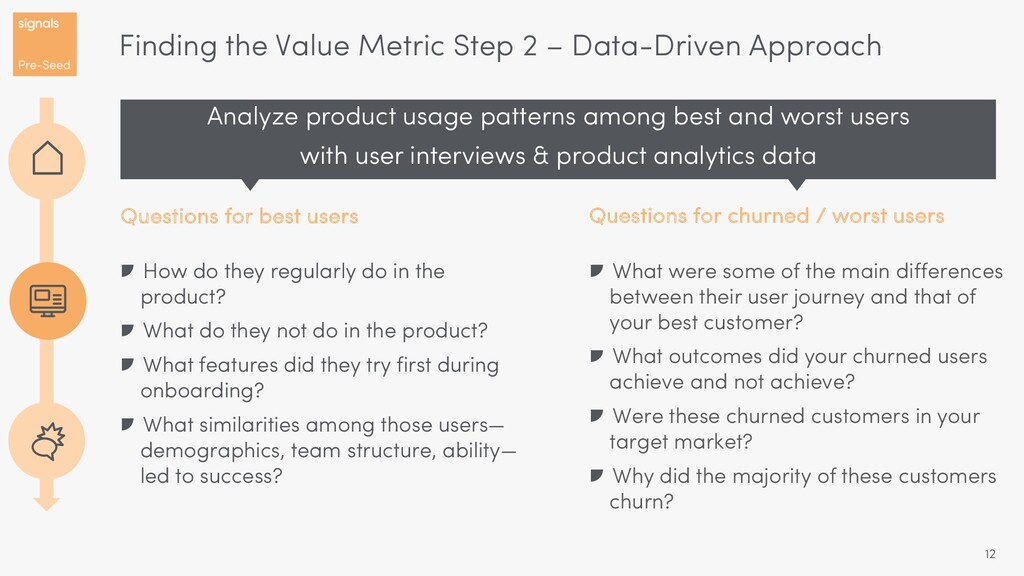
user interviews & product analytics data How do they regularly do in the product? What do they not do in the product? What features did they try first during onboarding? What similarities among those users— demographics, team structure, ability— led to success? Finding the Value Metric Step 2 – Data-Driven Approach 12 Questions for best users Questions for churned / worst users What were some of the main differences between their user journey and that of your best customer? What outcomes did your churned users achieve and not achieve? Were these churned customers in your target market? Why did the majority of these customers churn?
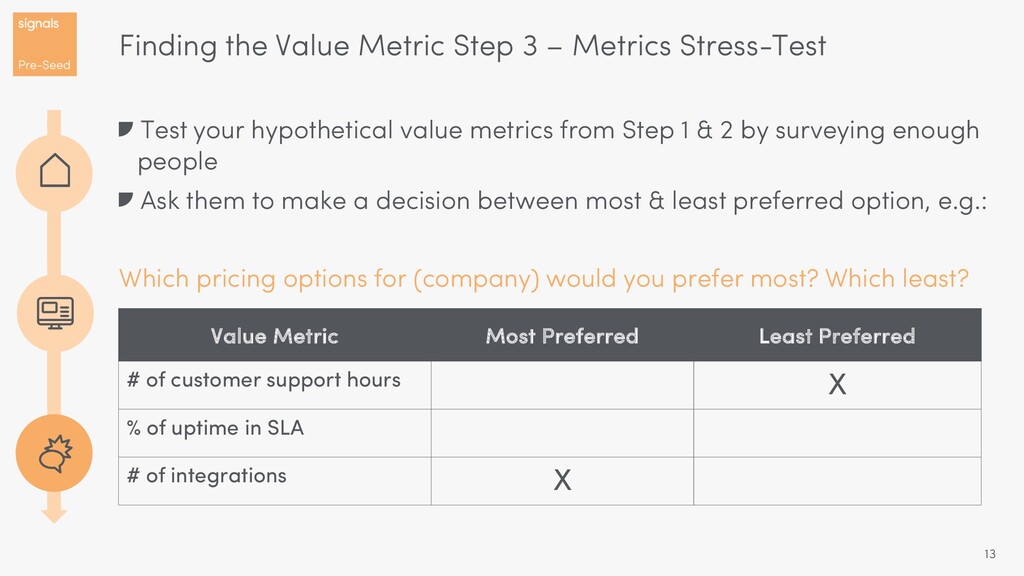
your hypothetical value metrics from Step 1 & 2 by surveying enough people Ask them to make a decision between most & least preferred option, e.g.: Which pricing options for (company) would you prefer most? Which least? 13 Value Metric Most Preferred Least Preferred # of customer support hours X % of uptime in SLA # of integrations X
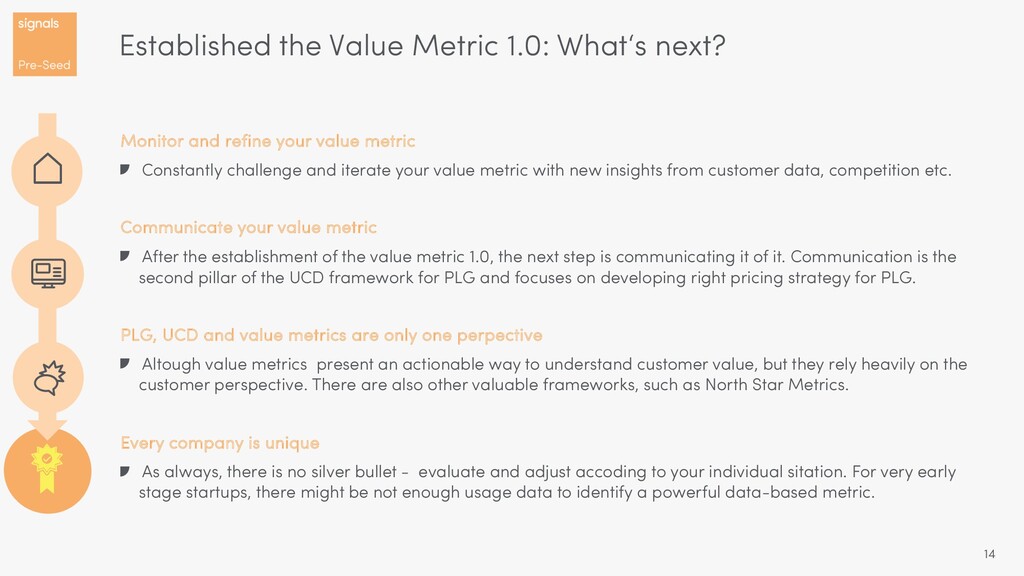
refine your value metric Constantly challenge and iterate your value metric with new insights from customer data, competition etc. Communicate your value metric After the establishment of the value metric 1.0, the next step is communicating it of it. Communication is the second pillar of the UCD framework for PLG and focuses on developing right pricing strategy for PLG. PLG, UCD and value metrics are only one perpective Altough value metrics present an actionable way to understand customer value, but they rely heavily on the customer perspective. There are also other valuable frameworks, such as North Star Metrics. Every company is unique As always, there is no silver bullet - evaluate and adjust accoding to your individual sitation. For very early stage startups, there might be not enough usage data to identify a powerful data-based metric.
do? We invest in: Scalable, software-based solutions for SMBs and enterprises Strong, visionary and complementary founding teams Startups with an initial MVP and initial traction in the DACH region 15 Get in touch and join our portfolio!


 sukatsu1222
 arid2
arid2
 takeshisumida_
.png) speakbuddy
speakbuddy
 m3c
m3c
 takeuchigroup
 uluru_hr
 malna
malna
 gatechnologies
 flux
flux
 caddireat
 makaibito
 rasagy
 mayunak
 ipullrank
 csswizardry
 katiecoart
 sarafernandez
 scottboms
 morganepeng
 rasmusluckow
 samlambert
 szymonslowik
 jlugia