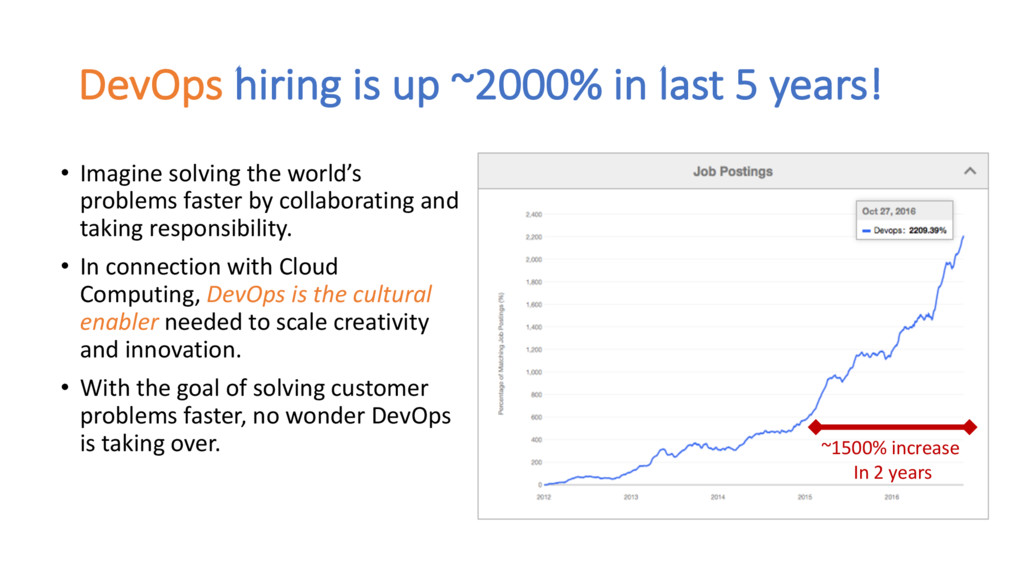
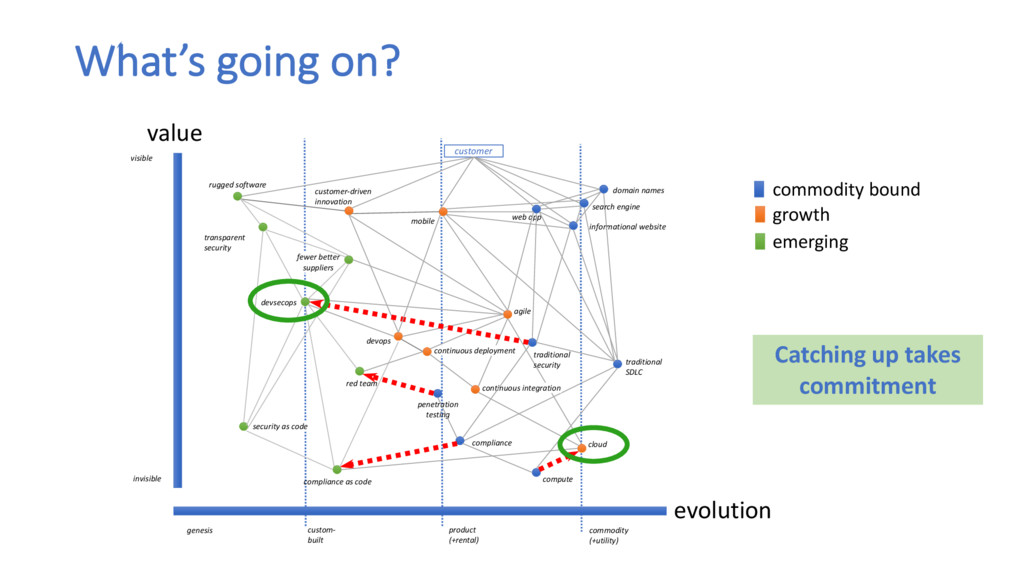
Imagine solving the world’s problems faster by collaborating and taking responsibility. • In connection with Cloud Computing, DevOps is the cultural enabler needed to scale creativity and innovation. • With the goal of solving customer problems faster, no wonder DevOps is taking over. ~1500% increase In 2 years
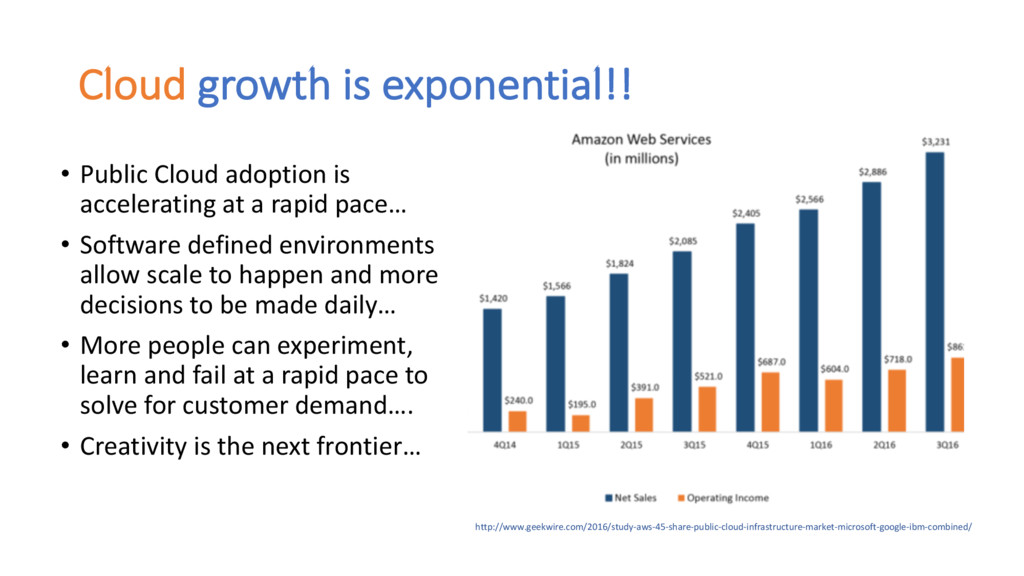
at a rapid pace… • Software defined environments allow scale to happen and more decisions to be made daily… • More people can experiment, learn and fail at a rapid pace to solve for customer demand…. • Creativity is the next frontier… http://www.geekwire.com/2016/study-aws-45-share-public-cloud-infrastructure-market-microsoft-google-ibm-combined/
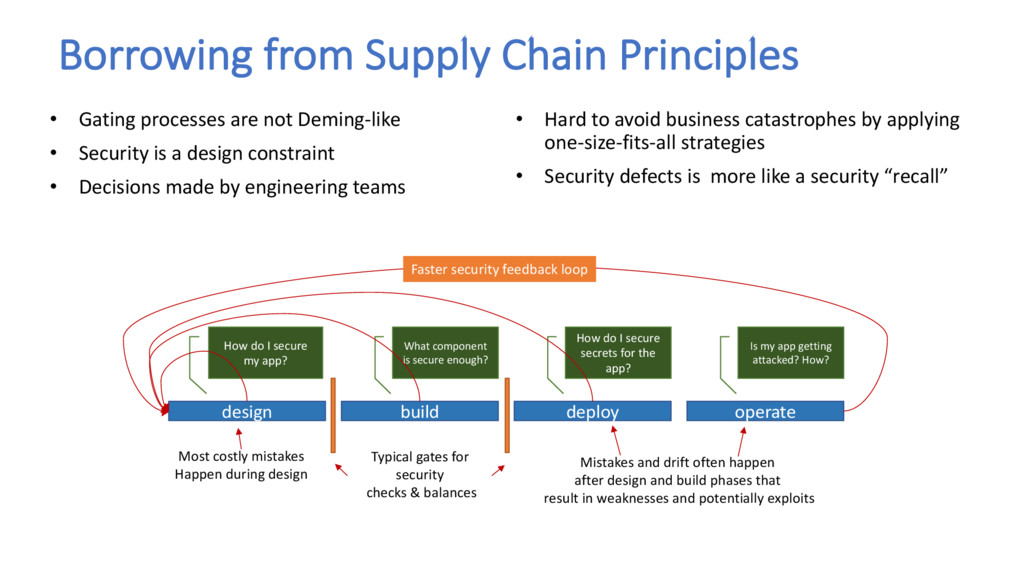
Deming-like • Security is a design constraint • Decisions made by engineering teams • Hard to avoid business catastrophes by applying one-size-fits-all strategies • Security defects is more like a security “recall” design build deploy operate How do I secure my app? What component is secure enough? How do I secure secrets for the app? Is my app getting attacked? How? Typical gates for security checks & balances Mistakes and drift often happen after design and build phases that result in weaknesses and potentially exploits Most costly mistakes Happen during design Faster security feedback loop
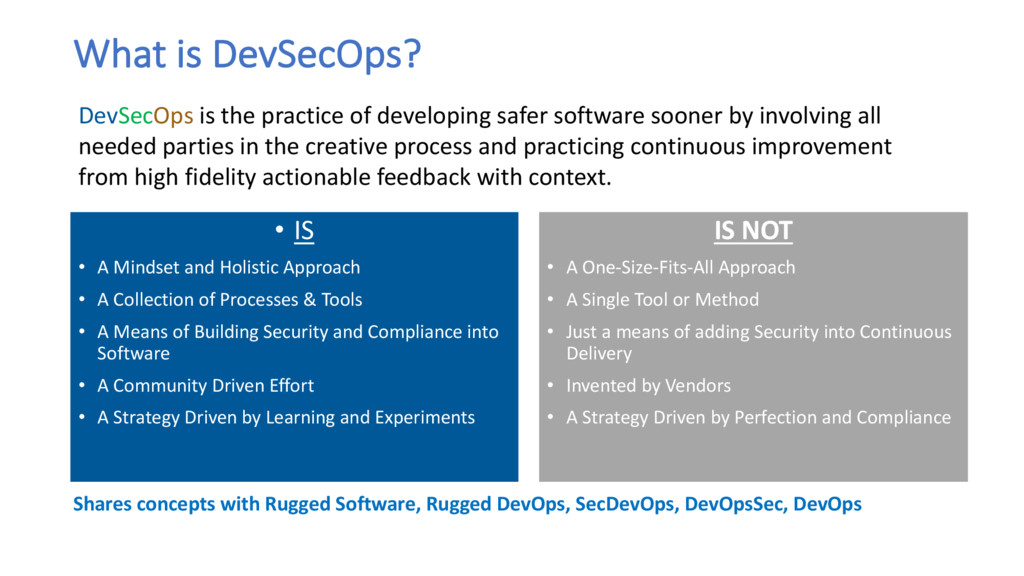
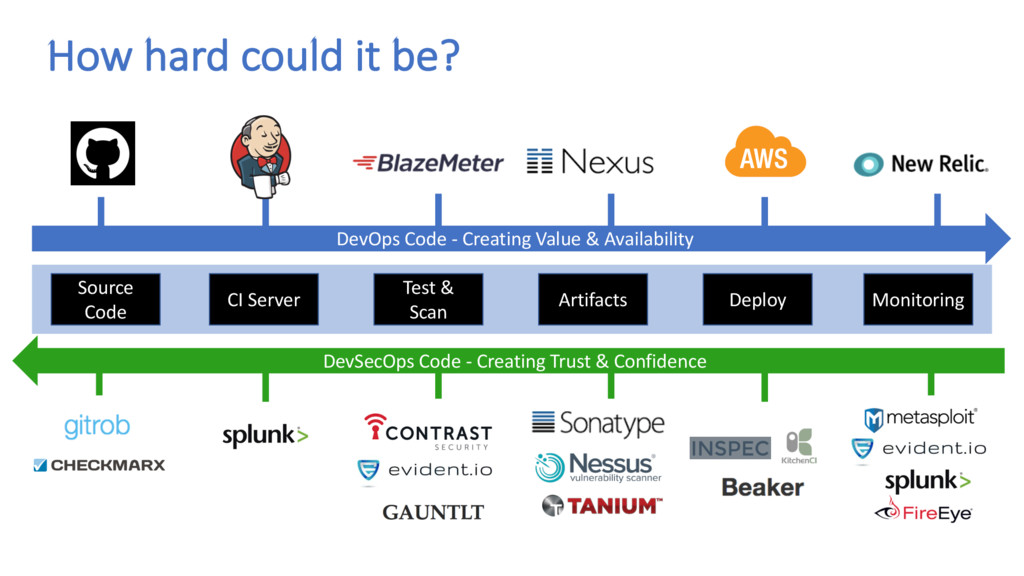
Approach • A Collection of Processes & Tools • A Means of Building Security and Compliance into Software • A Community Driven Effort • A Strategy Driven by Learning and Experiments IS NOT • A One-Size-Fits-All Approach • A Single Tool or Method • Just a means of adding Security into Continuous Delivery • Invented by Vendors • A Strategy Driven by Perfection and Compliance DevSecOps is the practice of developing safer software sooner by involving all needed parties in the creative process and practicing continuous improvement from high fidelity actionable feedback with context. Shares concepts with Rugged Software, Rugged DevOps, SecDevOps, DevOpsSec, DevOps
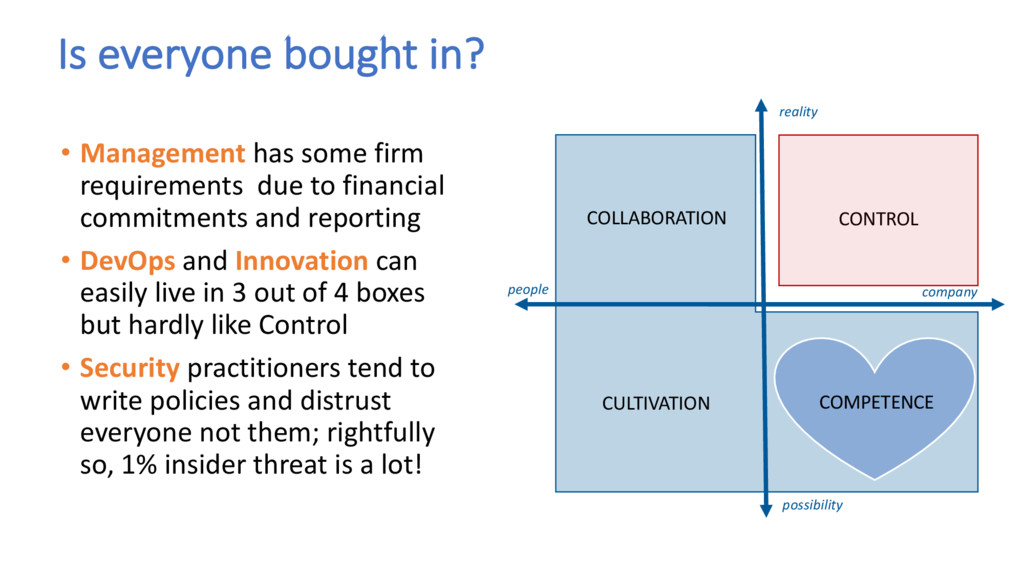
due to financial commitments and reporting • DevOps and Innovation can easily live in 3 out of 4 boxes but hardly like Control • Security practitioners tend to write policies and distrust everyone not them; rightfully so, 1% insider threat is a lot! CONTROL COLLABORATION CULTIVATION COMPETENCE people company reality possibility
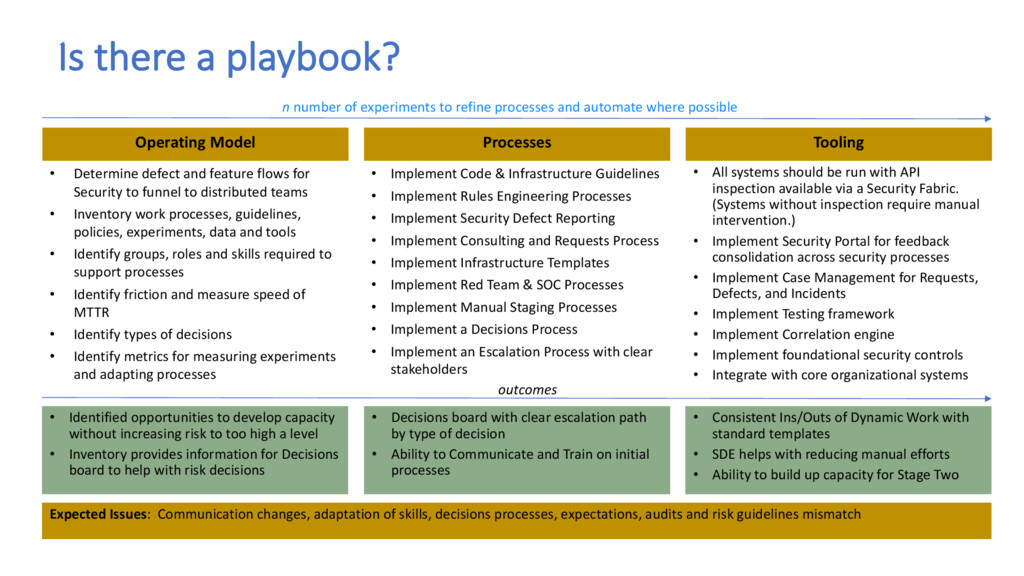
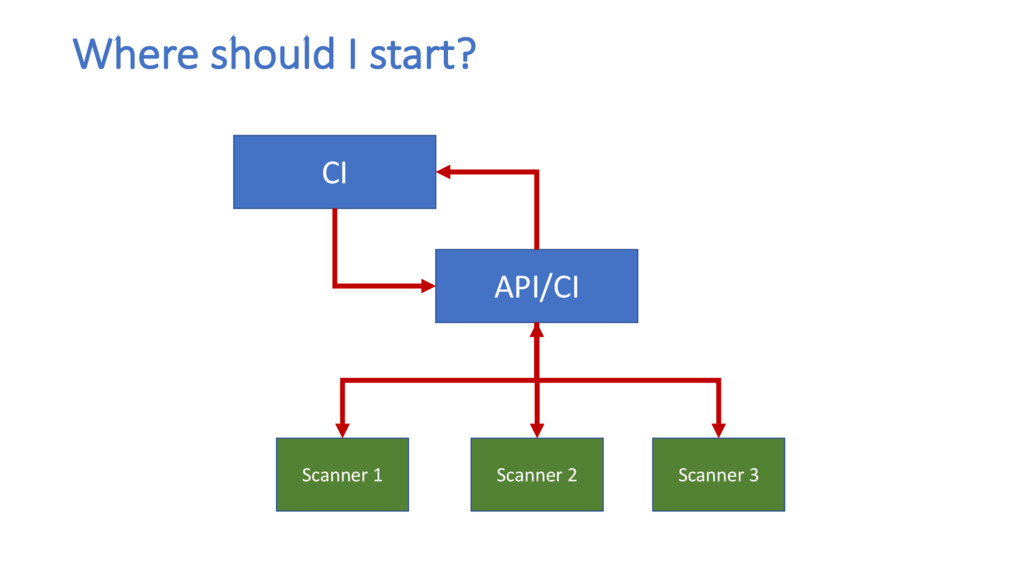
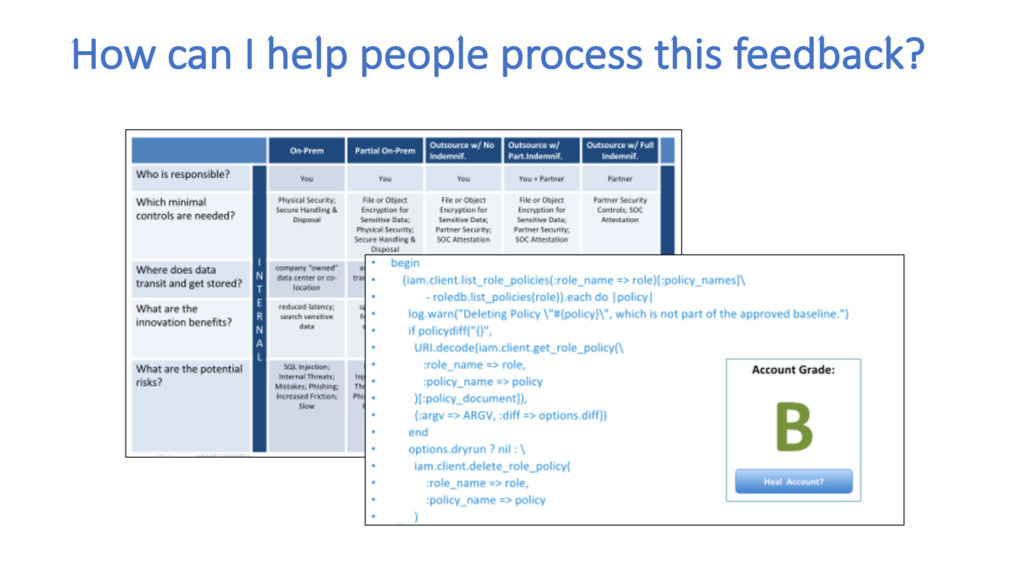
for Security to funnel to distributed teams • Inventory work processes, guidelines, policies, experiments, data and tools • Identify groups, roles and skills required to support processes • Identify friction and measure speed of MTTR • Identify types of decisions • Identify metrics for measuring experiments and adapting processes • Implement Code & Infrastructure Guidelines • Implement Rules Engineering Processes • Implement Security Defect Reporting • Implement Consulting and Requests Process • Implement Infrastructure Templates • Implement Red Team & SOC Processes • Implement Manual Staging Processes • Implement a Decisions Process • Implement an Escalation Process with clear stakeholders • All systems should be run with API inspection available via a Security Fabric. (Systems without inspection require manual intervention.) • Implement Security Portal for feedback consolidation across security processes • Implement Case Management for Requests, Defects, and Incidents • Implement Testing framework • Implement Correlation engine • Implement foundational security controls • Integrate with core organizational systems Operating Model Processes Tooling n number of experiments to refine processes and automate where possible • Identified opportunities to develop capacity without increasing risk to too high a level • Inventory provides information for Decisions board to help with risk decisions outcomes • Decisions board with clear escalation path by type of decision • Ability to Communicate and Train on initial processes • Consistent Ins/Outs of Dynamic Work with standard templates • SDE helps with reducing manual efforts • Ability to build up capacity for Stage Two Expected Issues: Communication changes, adaptation of skills, decisions processes, expectations, audits and risk guidelines mismatch
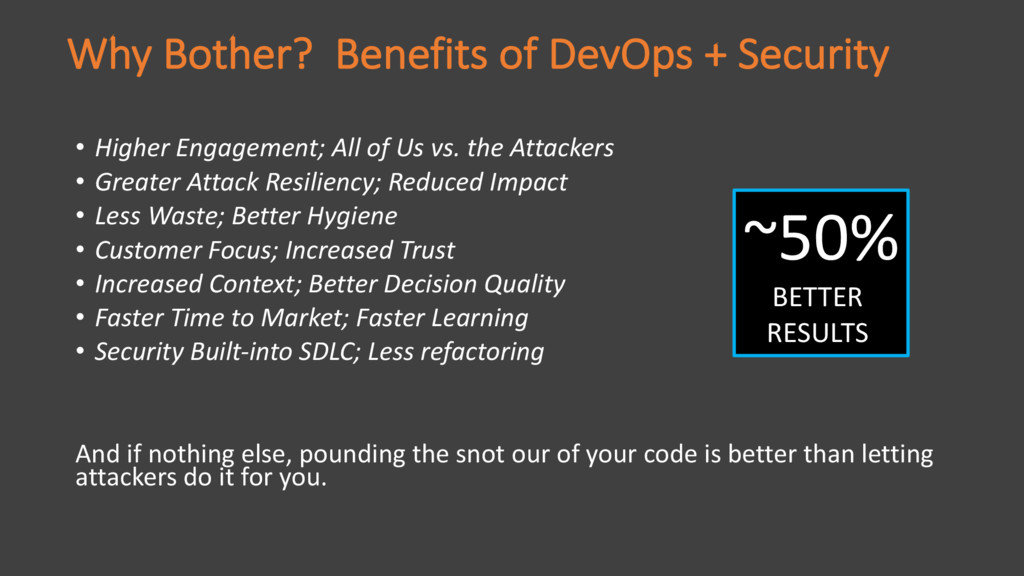
Greater Attack Resiliency; Reduced Impact • Less Waste; Better Hygiene • Customer Focus; Increased Trust • Increased Context; Better Decision Quality • Faster Time to Market; Faster Learning • Security Built-into SDLC; Less refactoring And if nothing else, pounding the snot our of your code is better than letting attackers do it for you. ~50% BETTER RESULTS Why Bother? Benefits of DevOps + Security
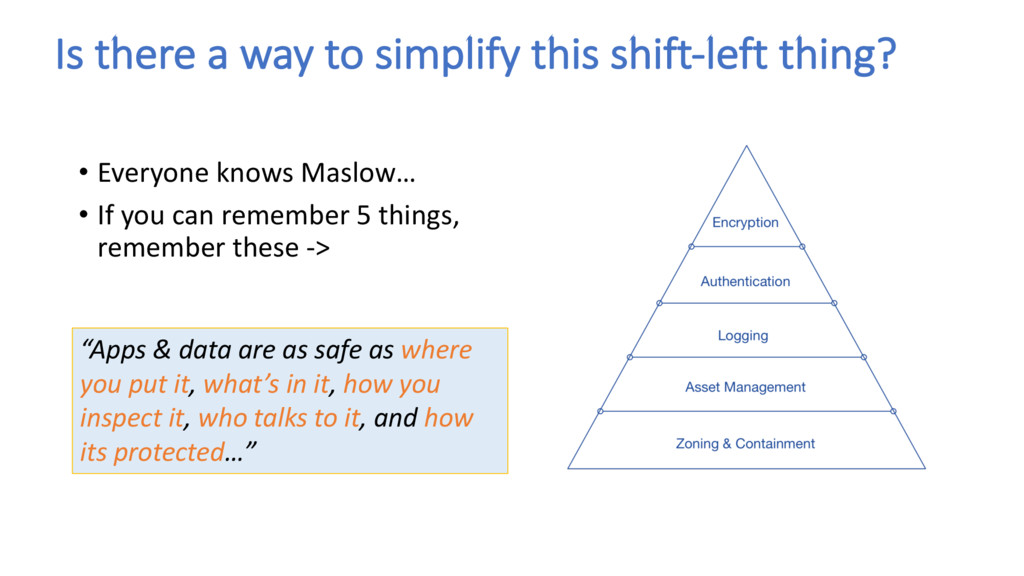
Everyone knows Maslow… • If you can remember 5 things, remember these -> “Apps & data are as safe as where you put it, what’s in it, how you inspect it, who talks to it, and how its protected…”


 slietz
 pfn
 hiracky16
 akitoshiga
 teamlab
 prog893
 yazm
 minorun365
 occhi
 ivry_presentationmaterials
 kizawa2020
 kworkdev
 ymotongpoo
 khoart
 pwiseman
 kneath
 codingconduct
 philnash
 szymonslowik
 akashhashmi
 marcelosomers
 axbom
 jnunemaker
 tamaranovitovic
 frankvandijk