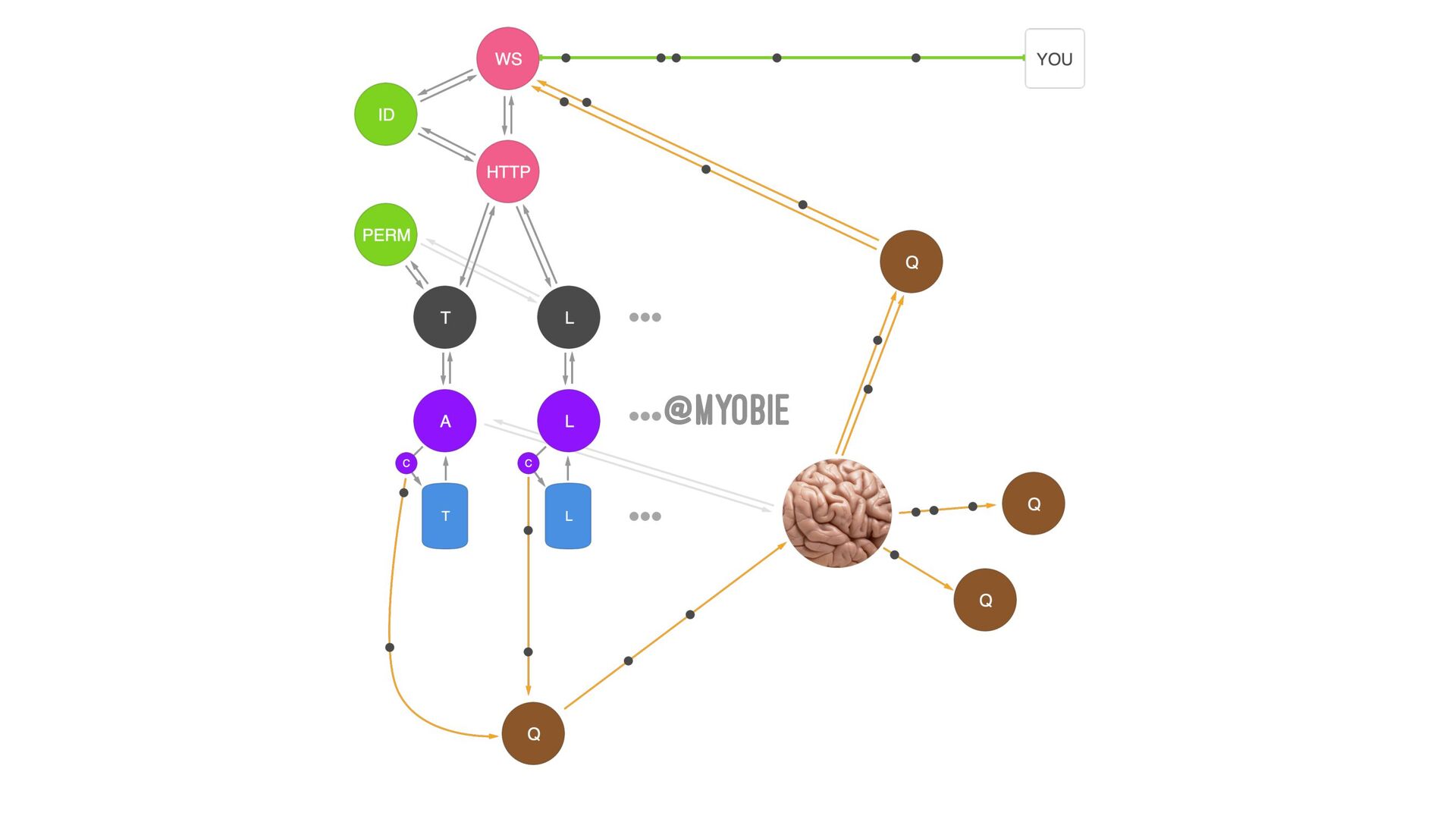
documentation > supports dependencies, retries > easy to test, even locally all target > executes multiple targets in parallel > coding is necessary to modify -> changelog in Git
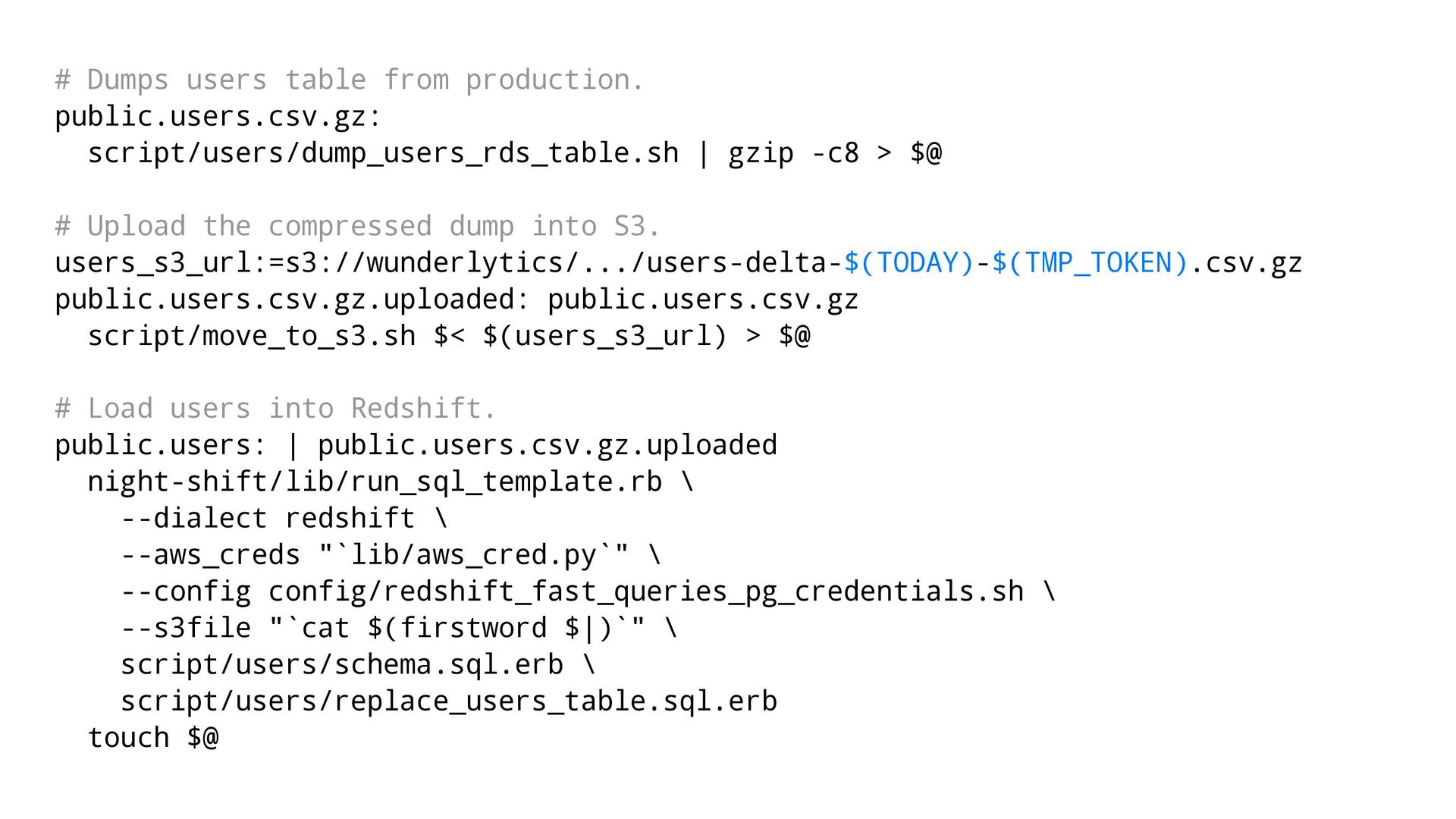
dependencies, partial results, retries > glue with bash > inject variables and logic into SQL with Ruby's ERB > runs in a tracking shell, so timing, output and errors are logged > monitoring interface in Flask > locally testable > Open source
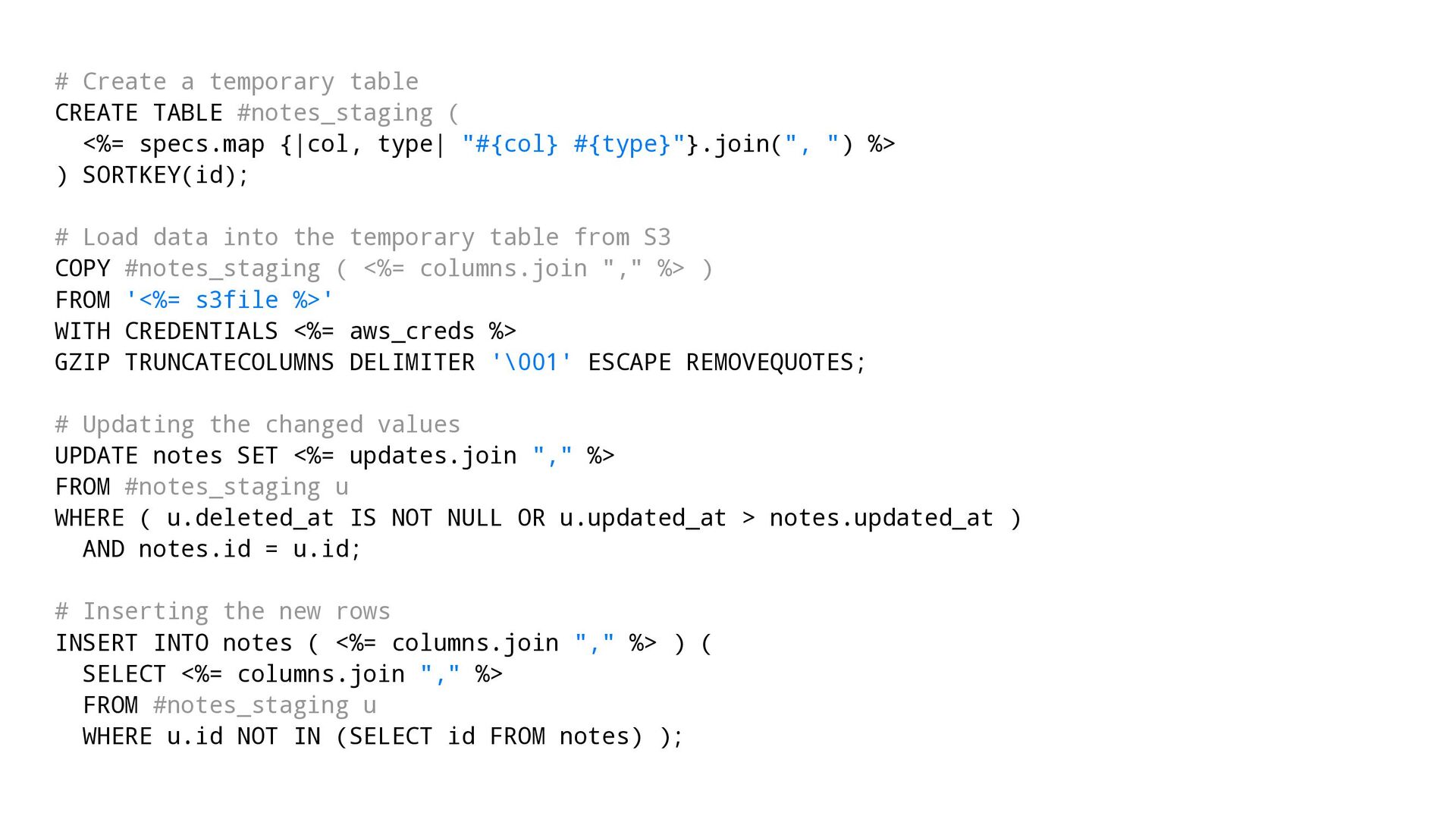
specs.map {|col, type| "#{col} #{type}"}.join(", ") %> ) SORTKEY(id); # Load data into the temporary table from S3 COPY #notes_staging ( <%= columns.join "," %> ) FROM '<%= s3file %>' WITH CREDENTIALS <%= aws_creds %> GZIP TRUNCATECOLUMNS DELIMITER '\001' ESCAPE REMOVEQUOTES; # Updating the changed values UPDATE notes SET <%= updates.join "," %> FROM #notes_staging u WHERE ( u.deleted_at IS NOT NULL OR u.updated_at > notes.updated_at ) AND notes.id = u.id; # Inserting the new rows INSERT INTO notes ( <%= columns.join "," %> ) ( SELECT <%= columns.join "," %> FROM #notes_staging u WHERE u.id NOT IN (SELECT id FROM notes) );
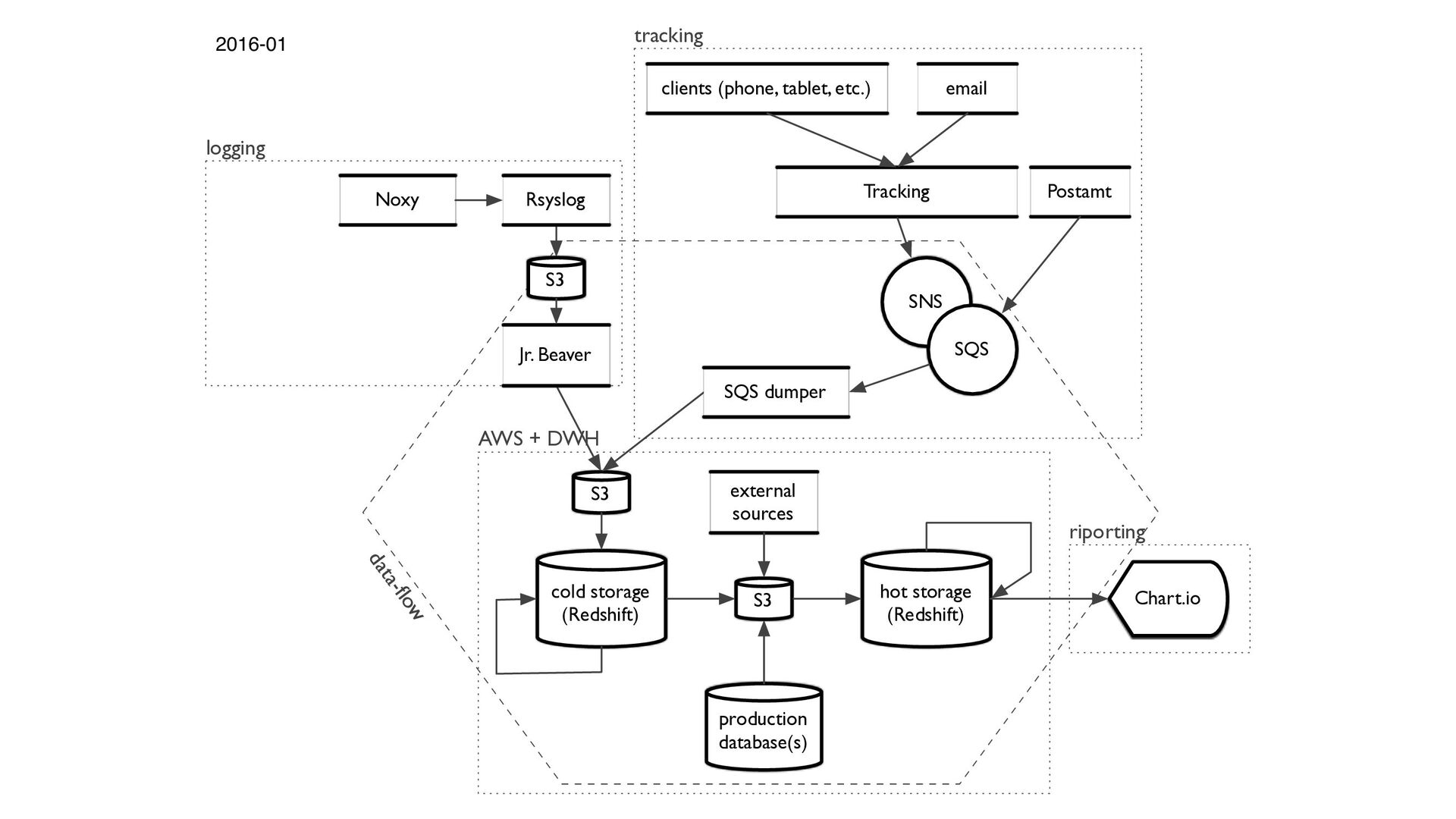
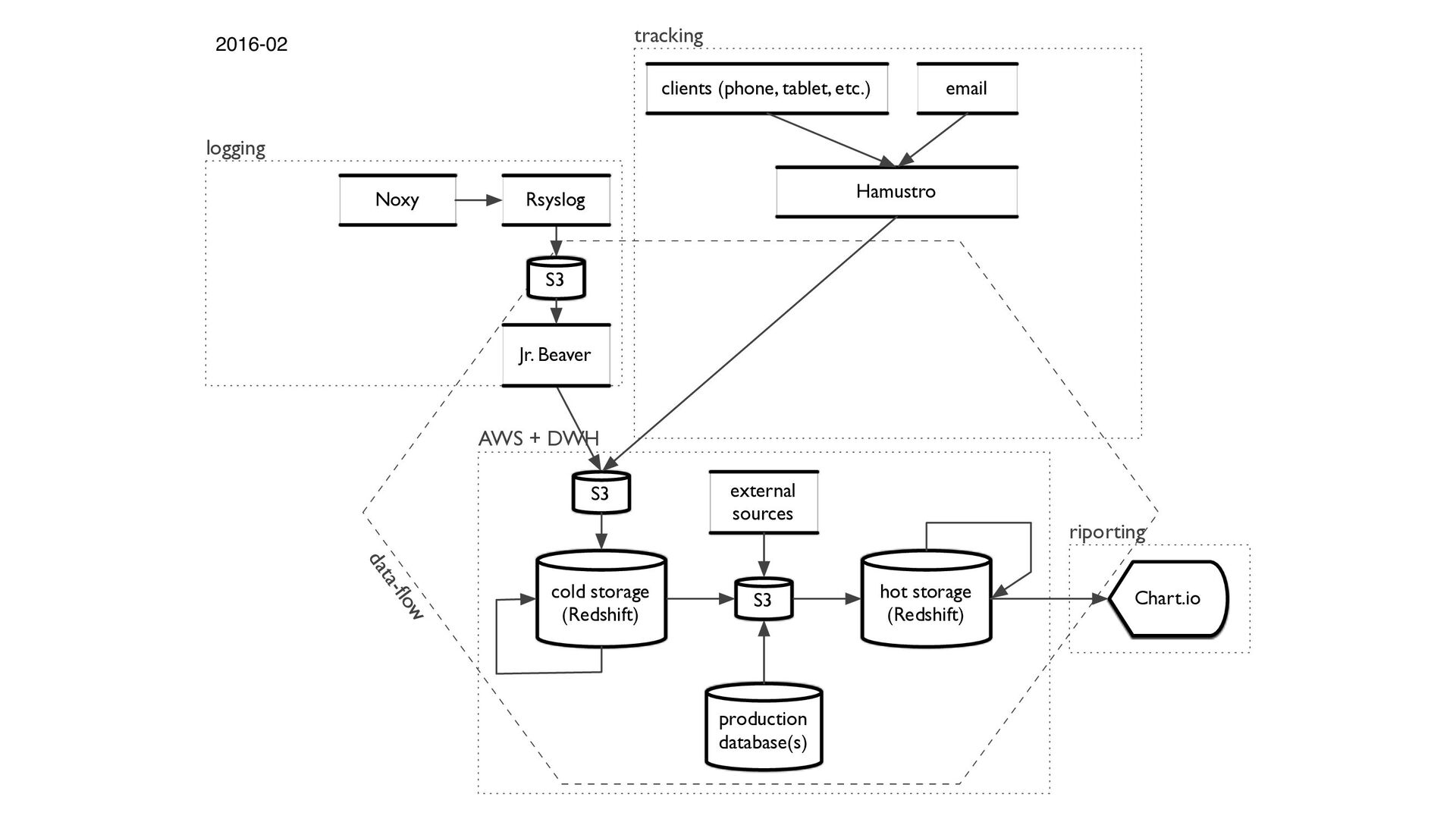
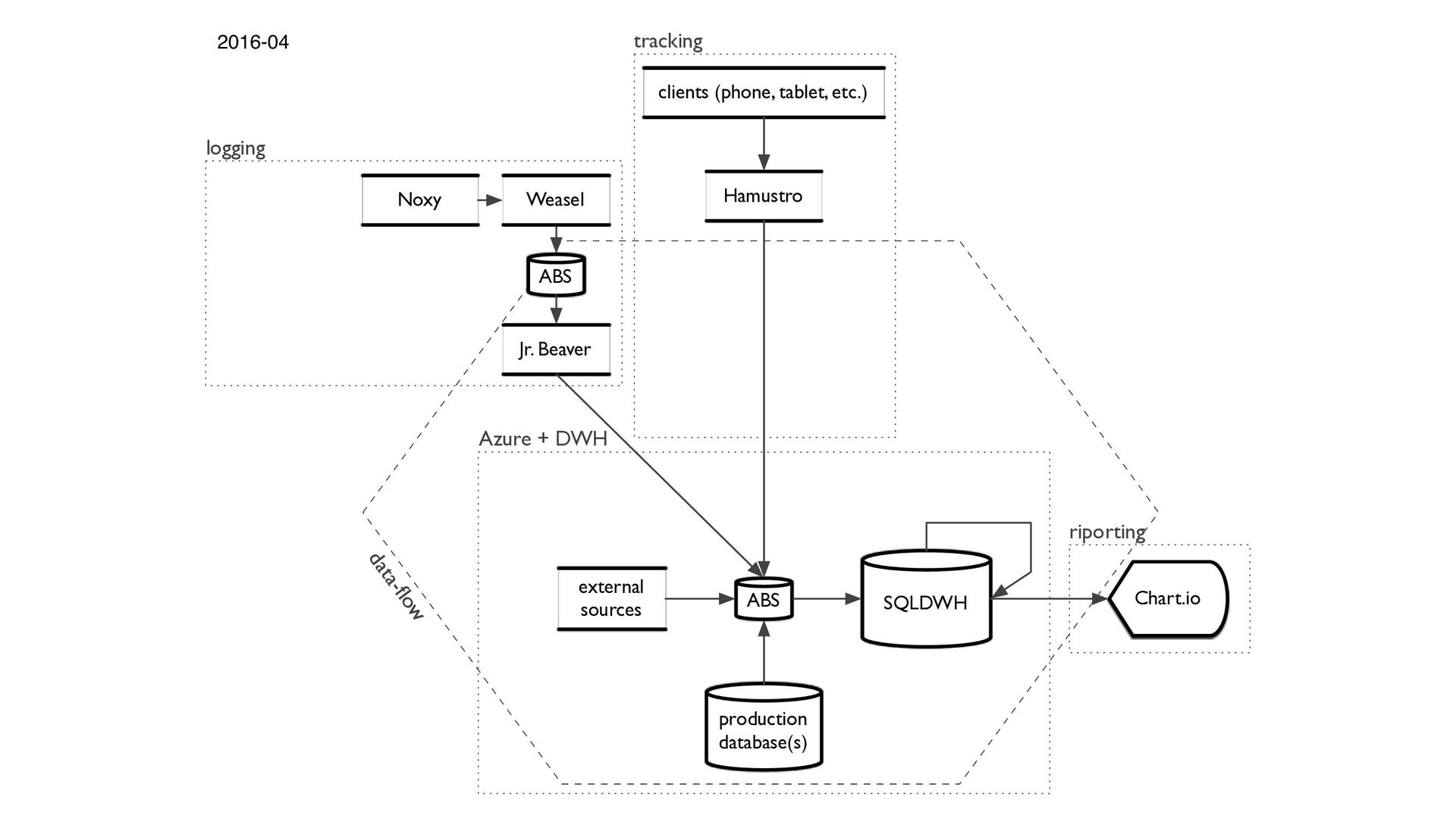
log line > Log cruncher that standardizes microservices' logs > Classifies events' names based on API's URL > Filters the analytically interesting rows > Map/reduce functionality. > Hadoop+Scala to make+pypy
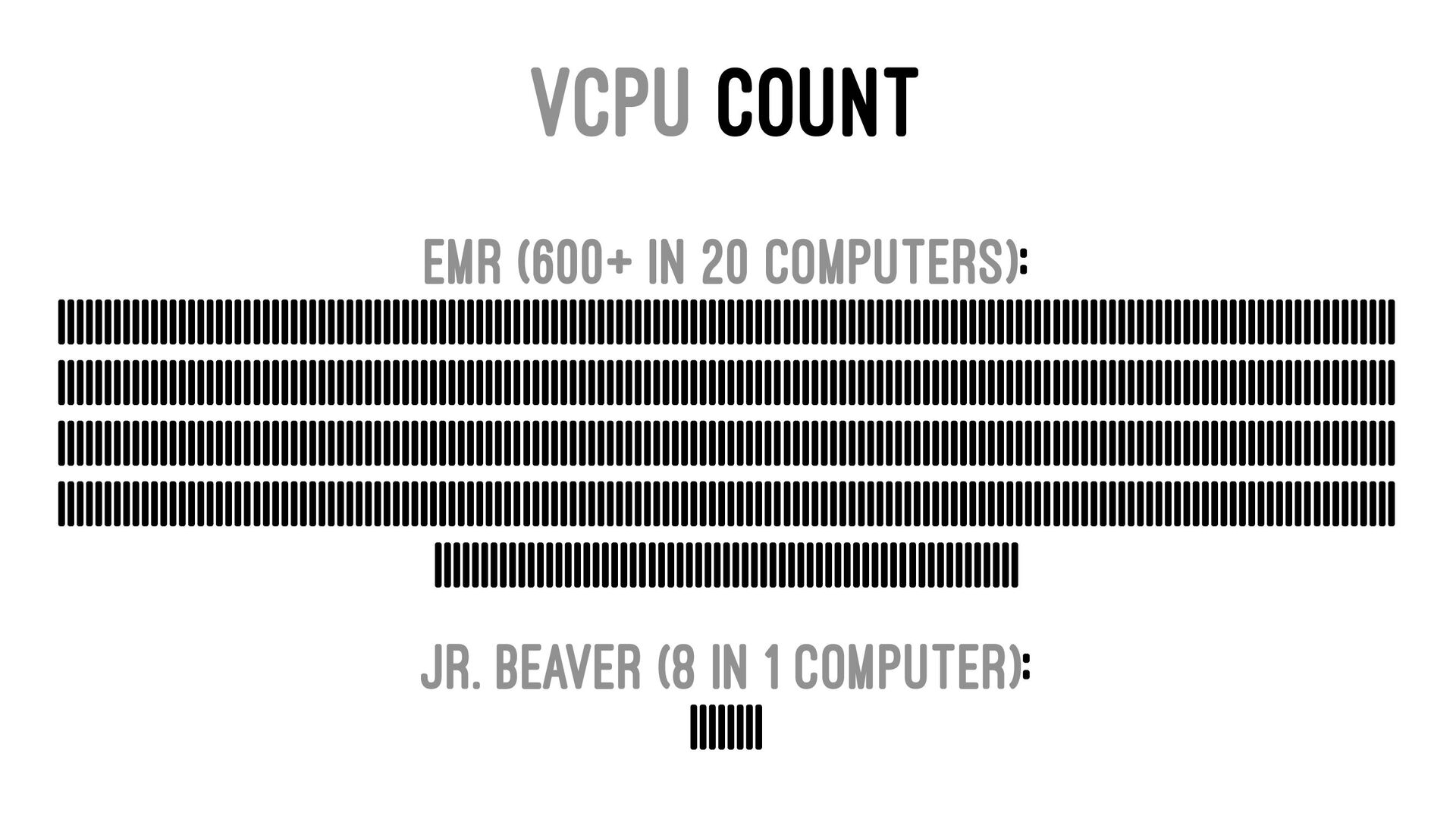
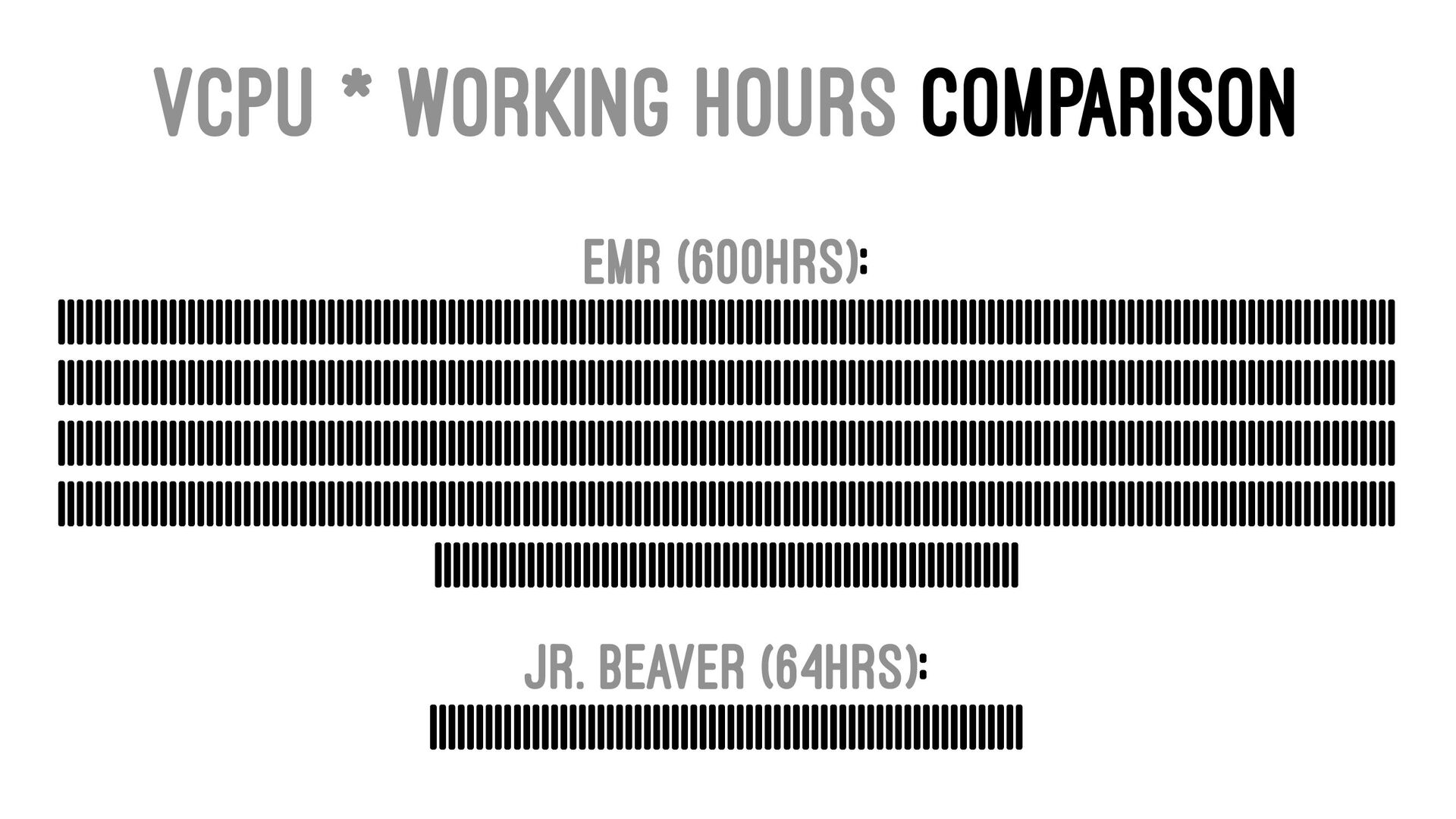
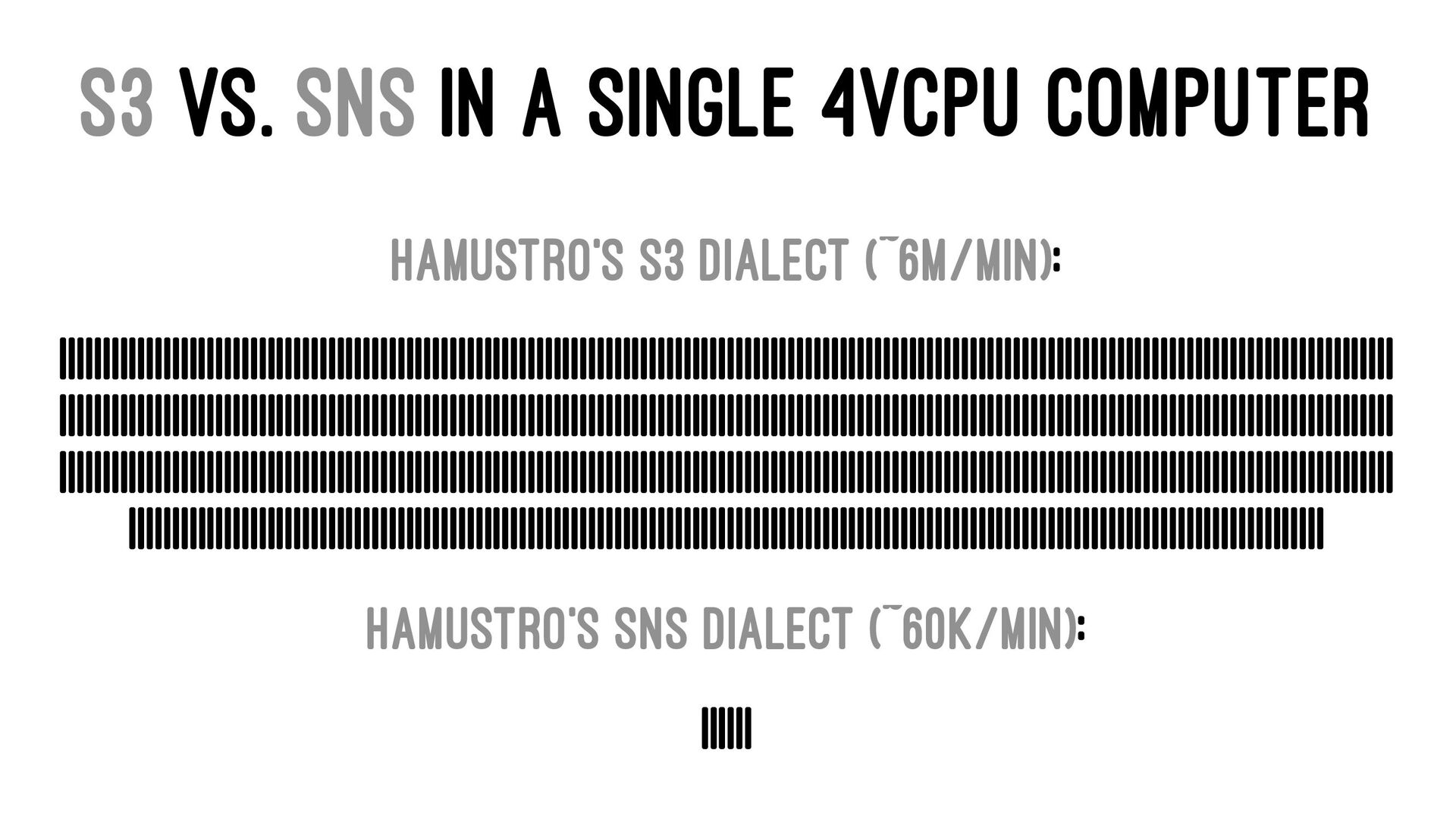
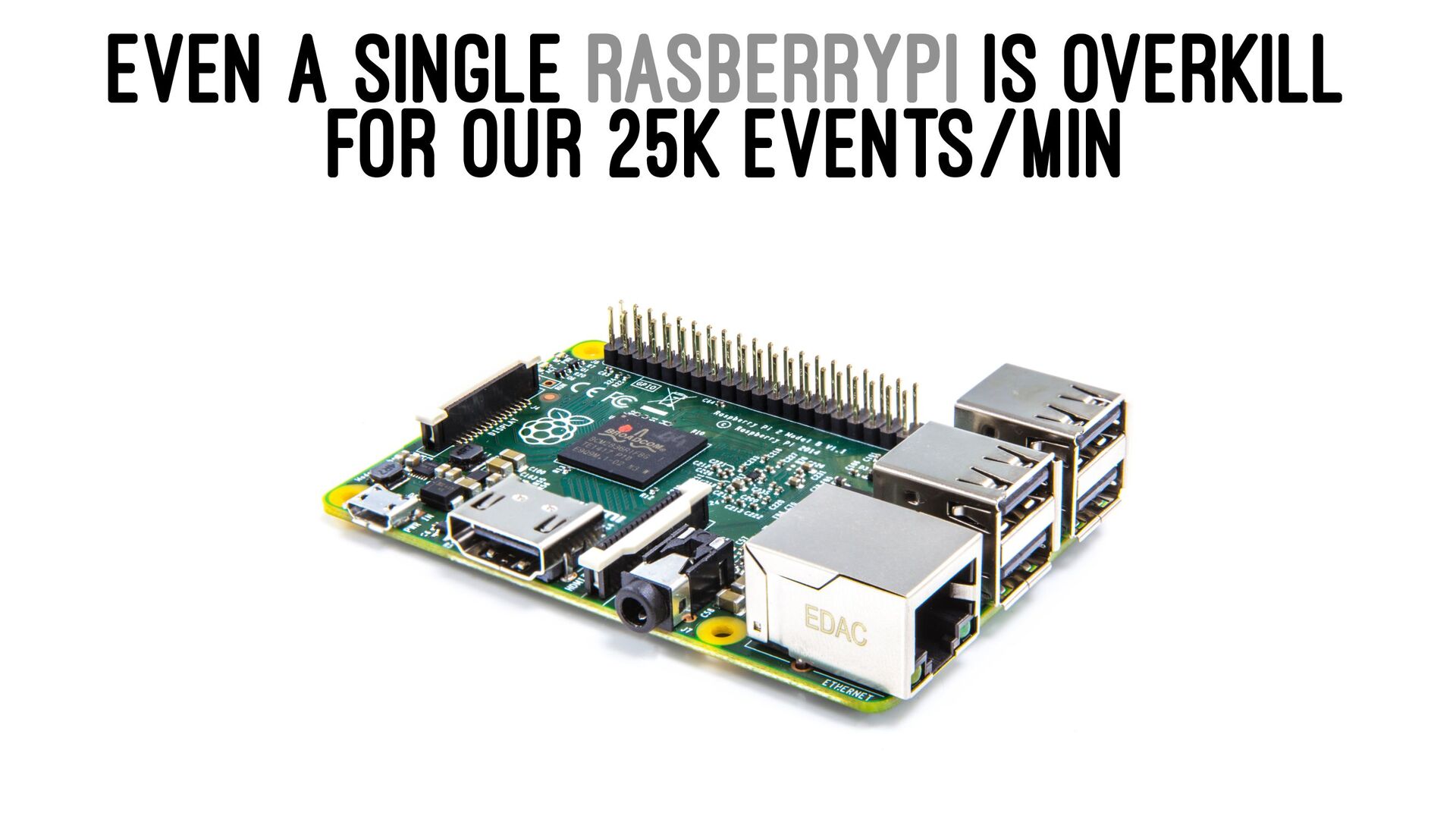
|||||||||||||||||||||||||||||||||||||||||||||||||||||||||||||||||||||||||||||||||||||||||||||||||||||||||||||||||||||||||||||||||||||||||||||||| ||||||||||||||||||||||||||||||||||||||||||||||||||||||||||||||| Jr. Beaver (8 in 1 computer): ||||||||
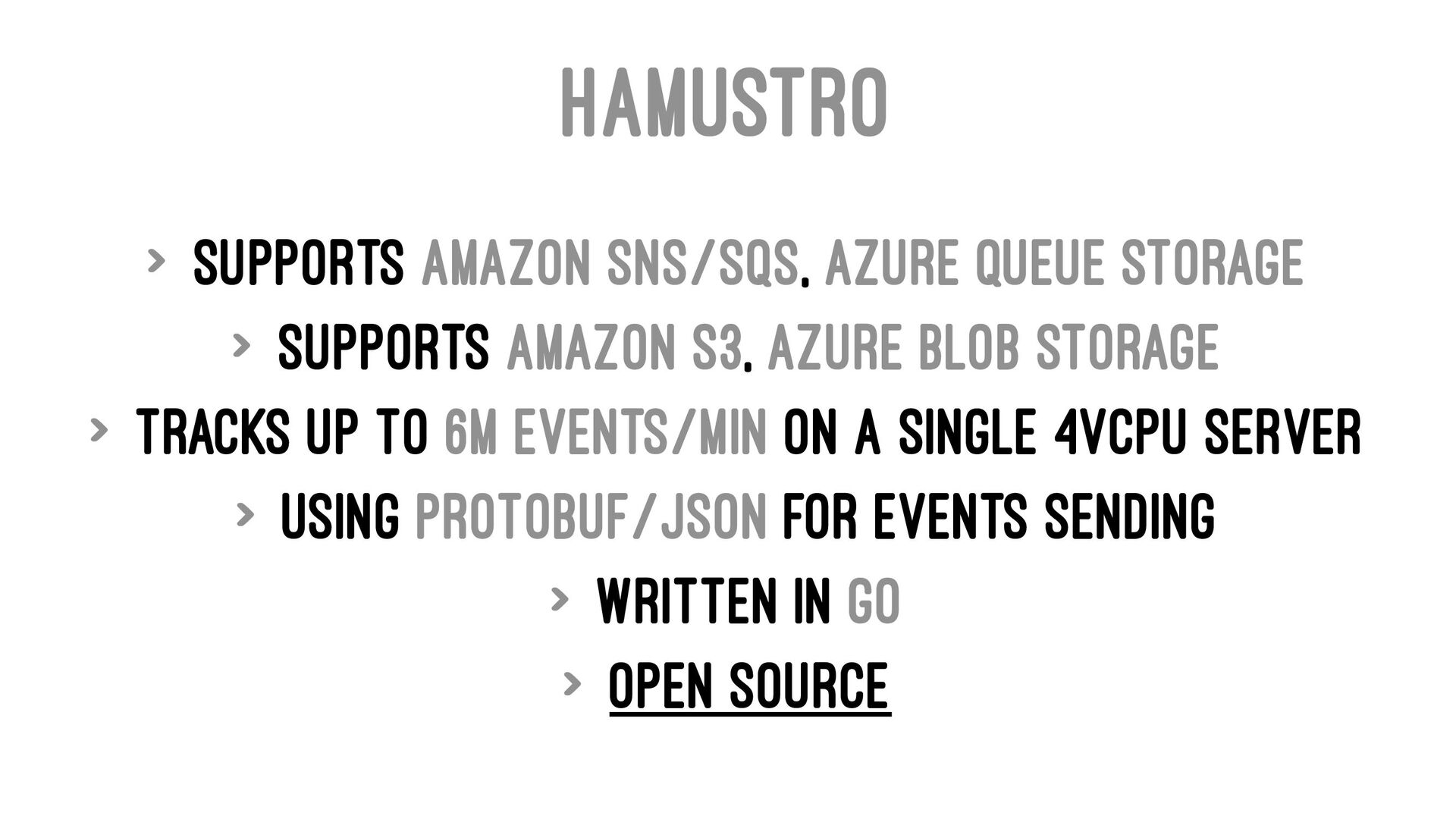
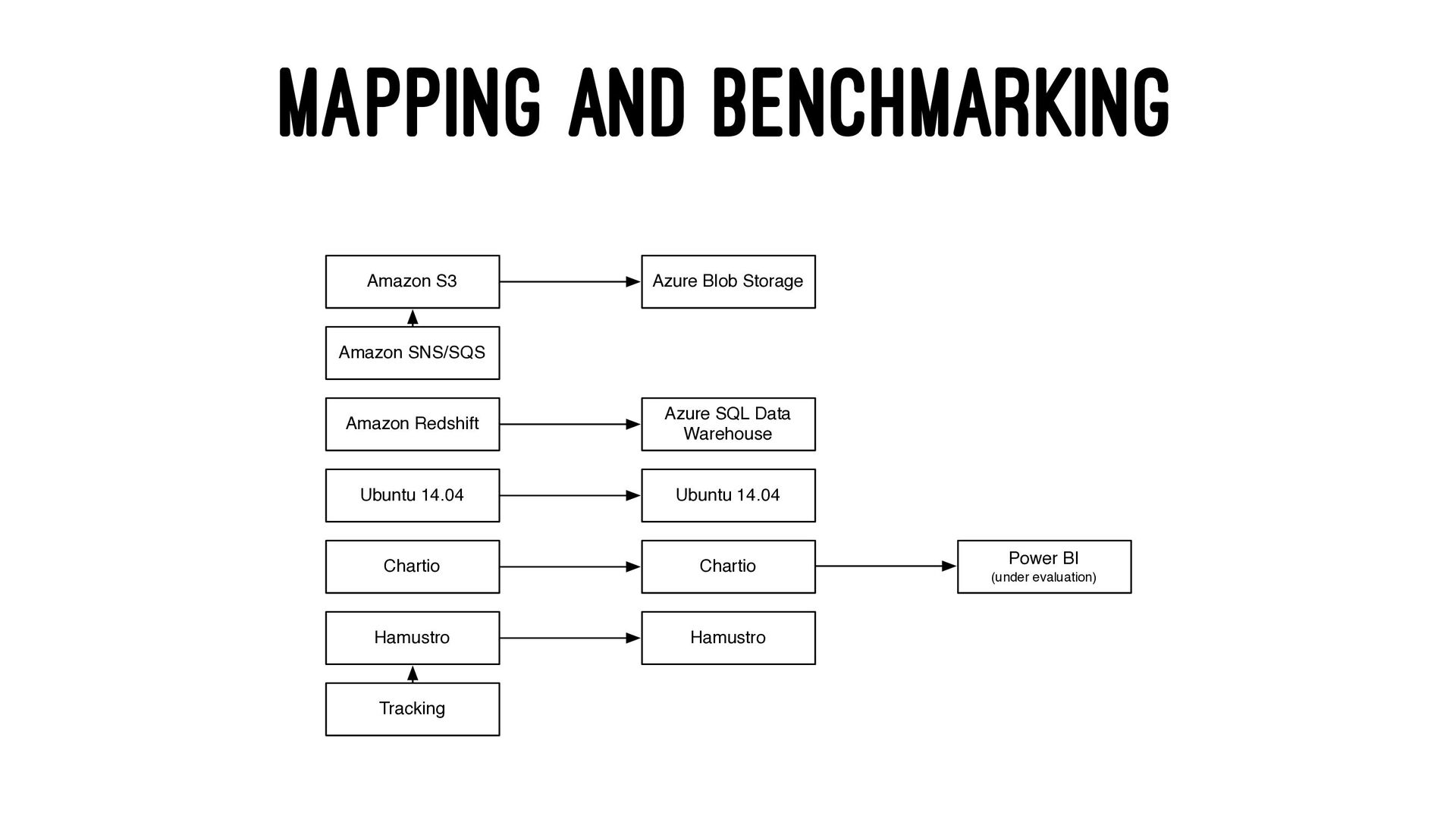
Saves to cloud targets > Handles sessions and strict order of events > Rewritten from NodeJS to Go > Uses S3 directly instead of SNS/SQS (inspired by Marcio Castilho)
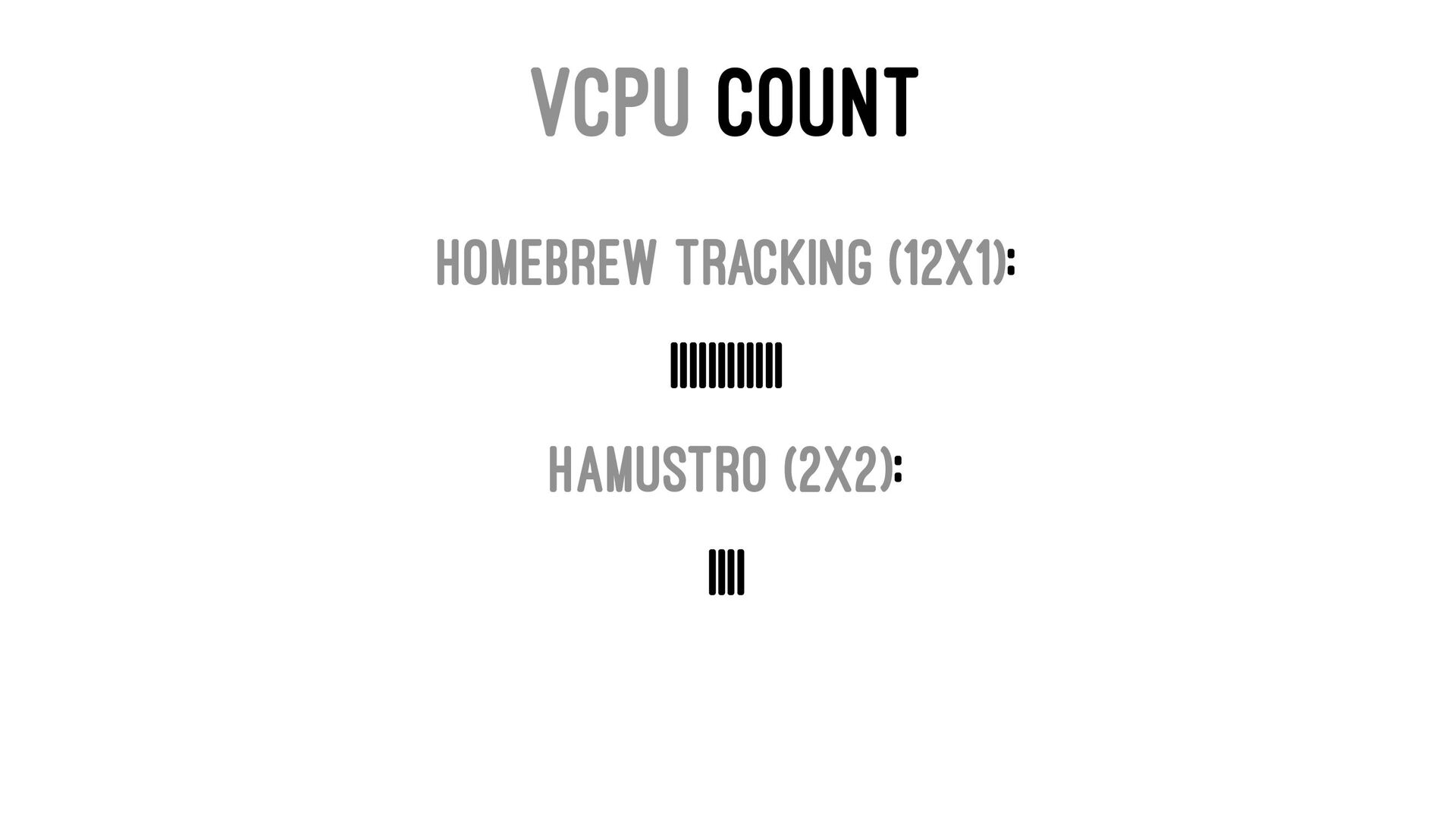
Amazon S3, Azure Blob Storage > Tracks up to 6M events/min on a single 4vCPU server > Using Protobuf/JSON for events sending > Written in Go > Open source
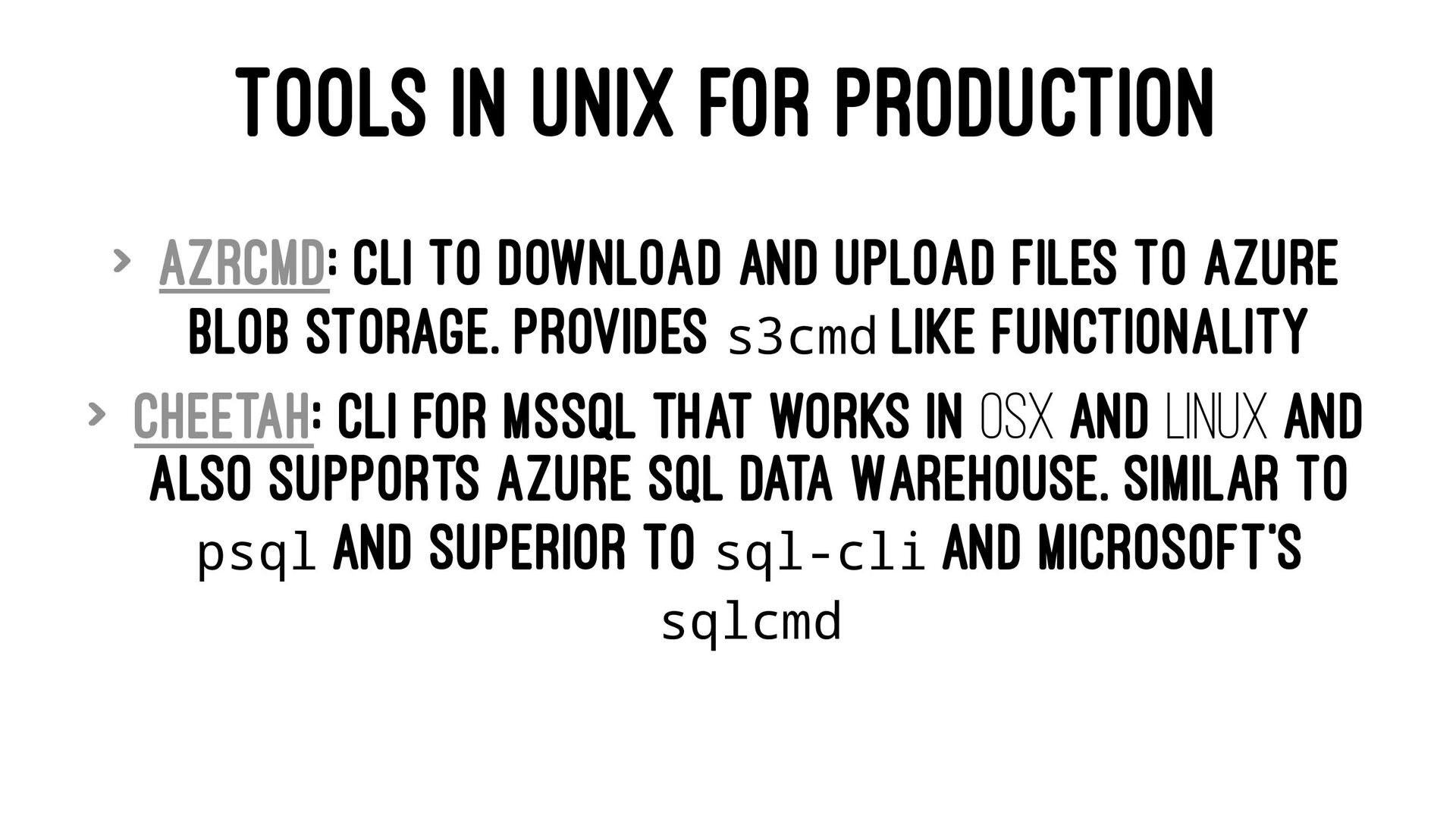
and upload files to Azure Blob Storage. Provides s3cmd like functionality > cheetah: CLI for MSSQL that works in OSX and Linux and also supports Azure SQL Data Warehouse. Similar to psql and superior to sql-cli and Microsoft's sqlcmd
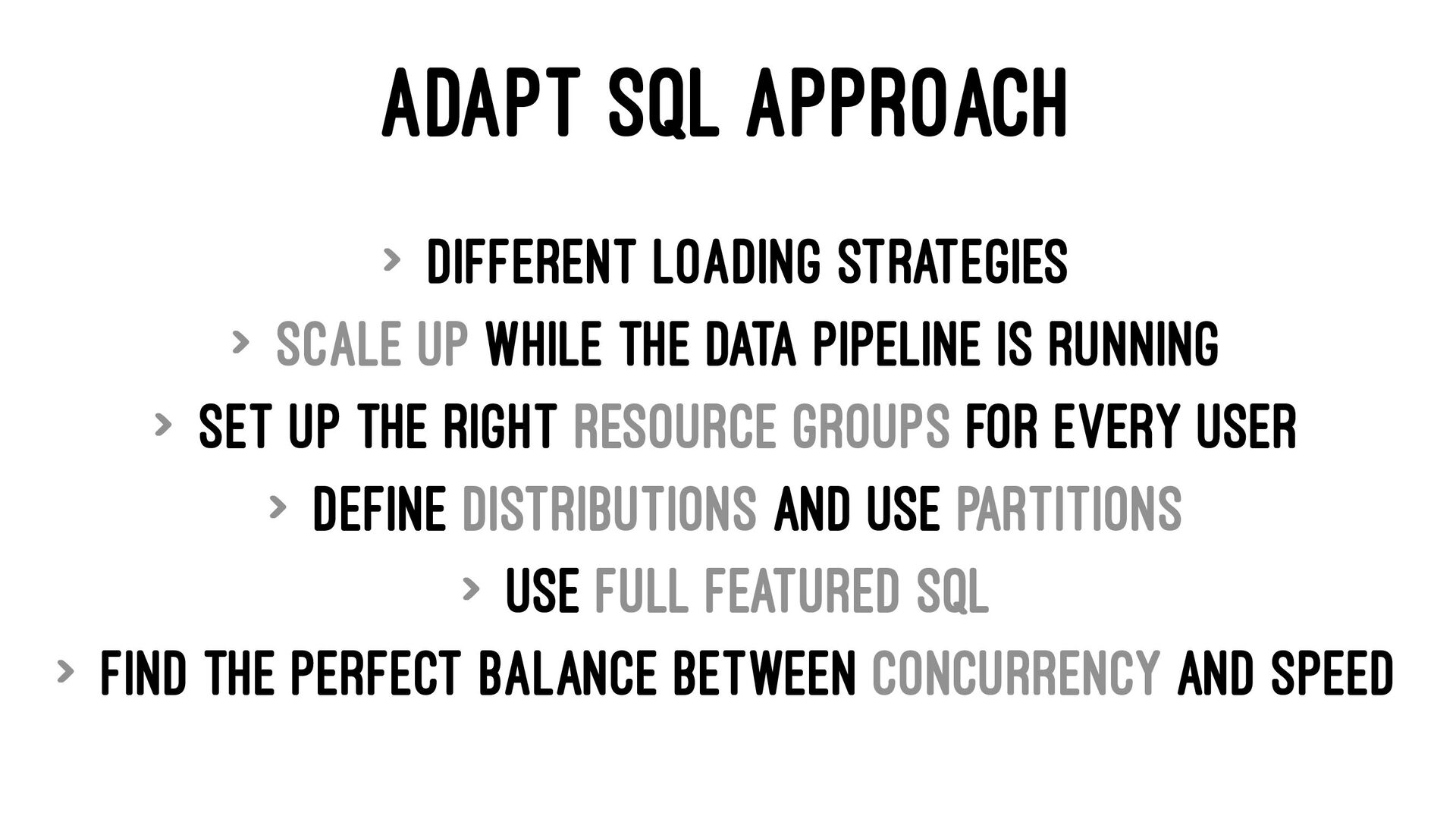
while the data pipeline is running > Set up the right resource groups for every user > Define distributions and use partitions > Use full featured SQL > Find the perfect balance between concurrency and speed


 soobrosa
 hamadakoji
 masasuzu
 gree_tech
 kentarofujii
 yahonda
.jpg) lamaglama39
lamaglama39
 orgachem
 ykanoh
 onk
onk
 taketakekaho
 daidaidai
 satoshi7
 tmiket
 lara
lara
 maggiecrowley
 destraynor
 codingconduct
 emna__ayadi
 holman
 techseoconnect
 smashingmag
 csswizardry
 aleyda
 lfama
lfama