Upgrade to Pro — share decks privately, control downloads, hide ads and more …

Prescriptive Analytics

Prescriptive Analytics

Prescriptive Analytics is a type of data analytics that recommends the best course of action by analyzing data, predicting possible outcomes, and evaluating different alternatives. It uses techniques such as artificial intelligence, machine learning, optimization, and simulation to help businesses make effective decisions. For example, a retail store can use prescriptive analytics to determine the right stock levels, optimize staff schedules, reduce costs, and improve customer satisfaction.

Avatar for Subhasheni

Subhasheni

October 17, 2026

More Decks by Subhasheni

Other Decks in Education

Transcript

  1. Prescriptive Analytics: Unlocking Optimal Decisions with Data By Ms.Subhasheni A

    Assistant Professor Department of Computer Science Sri Ramakrishna College of Arts & Science
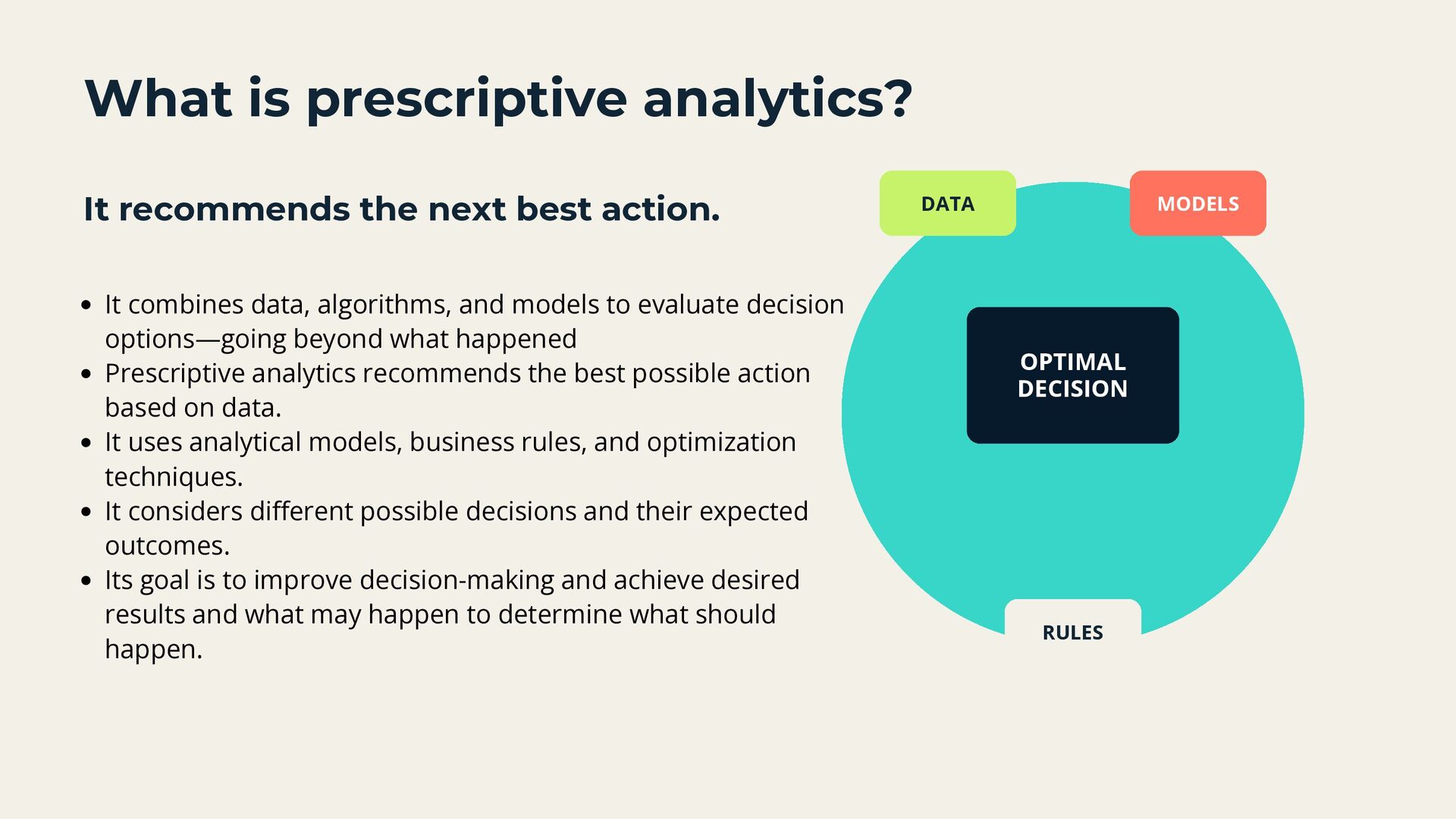
  2. What is prescriptive analytics? It recommends the next best action.

    It combines data, algorithms, and models to evaluate decision options—going beyond what happened Prescriptive analytics recommends the best possible action based on data. It uses analytical models, business rules, and optimization techniques. It considers different possible decisions and their expected outcomes. Its goal is to improve decision-making and achieve desired results and what may happen to determine what should happen. DATA MODELS OPTIMAL DECISION RULES
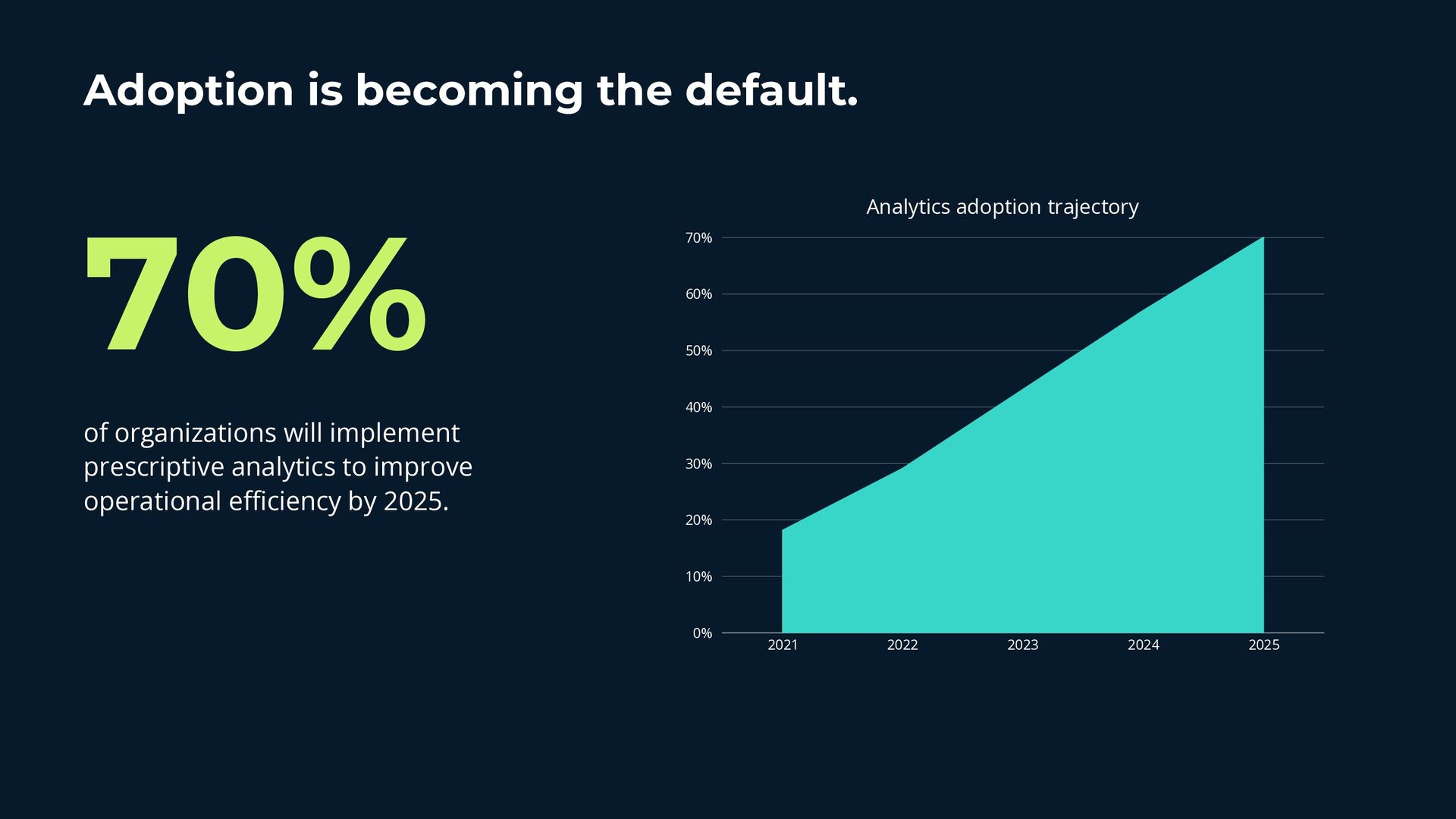
  3. Adoption is becoming the default. 70% of organizations will implement

    prescriptive analytics to improve operational efficiency by 2025. Analytics adoption trajectory 70% 60% 50% 40% 30% 20% 10% 0% 2021 2022 2023 2024 2025
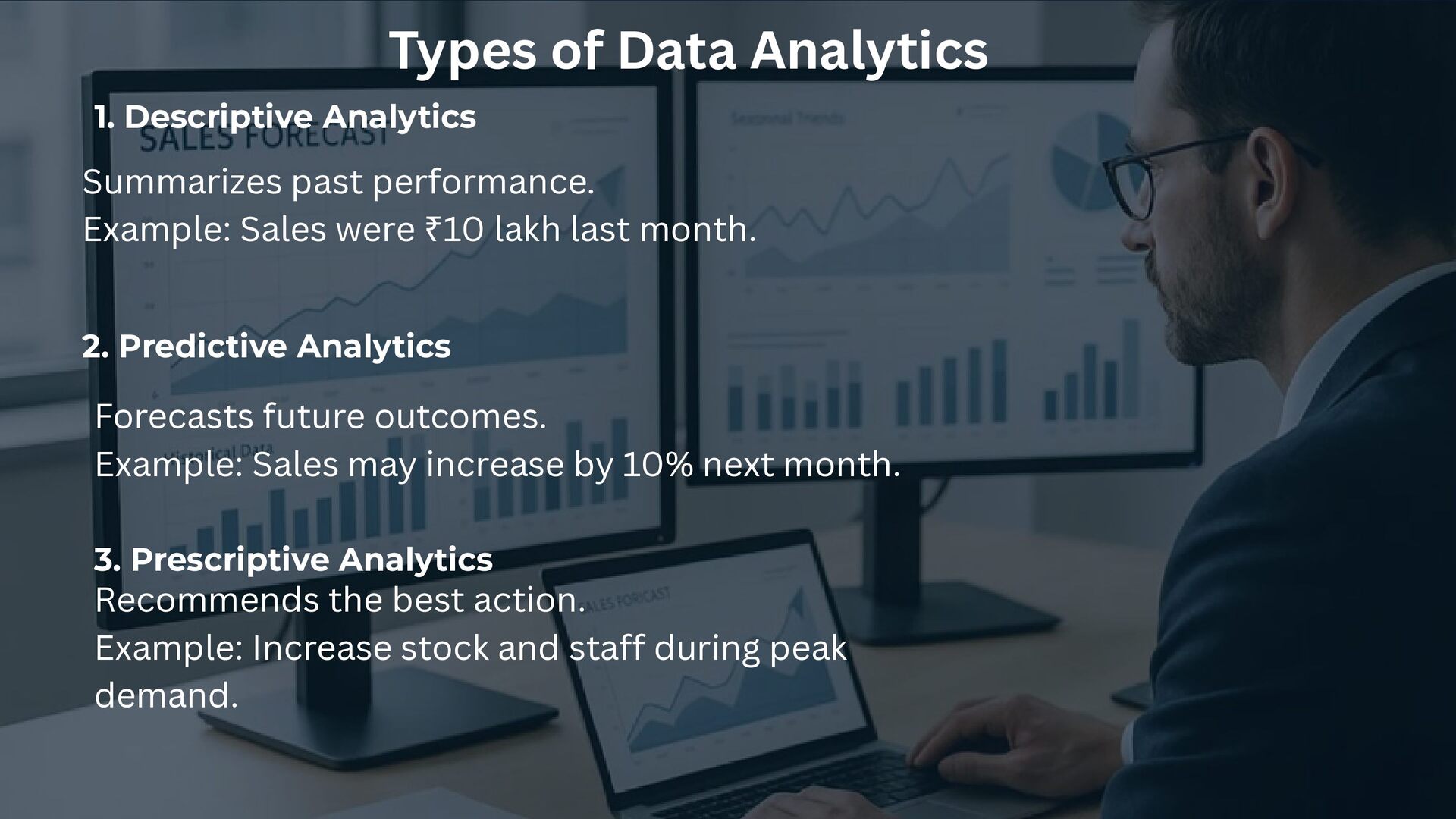
  4. Types of Data Analytics 1. Descriptive Analytics Summarizes past performance.

    Example: Sales were ₹10 lakh last month. 2. Predictive Analytics Forecasts future outcomes. Example: Sales may increase by 10% next month. 3. Prescriptive Analytics Recommends the best action. Example: Increase stock and staff during peak demand.
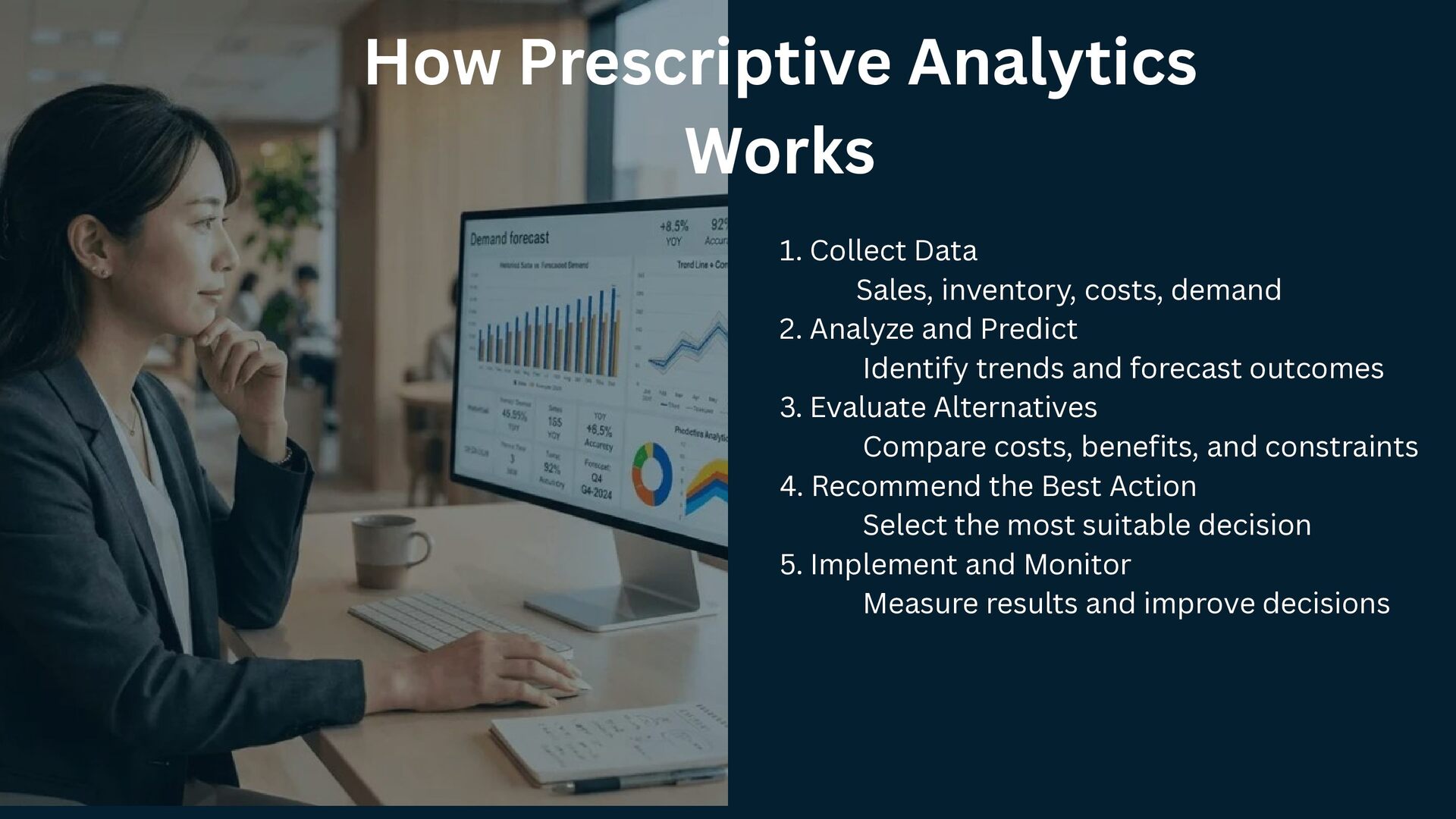
  5. How Prescriptive Analytics Works 1. Collect Data Sales, inventory, costs,

    demand 2. Analyze and Predict Identify trends and forecast outcomes 3. Evaluate Alternatives Compare costs, benefits, and constraints 4. Recommend the Best Action Select the most suitable decision 5. Implement and Monitor Measure results and improve decisions
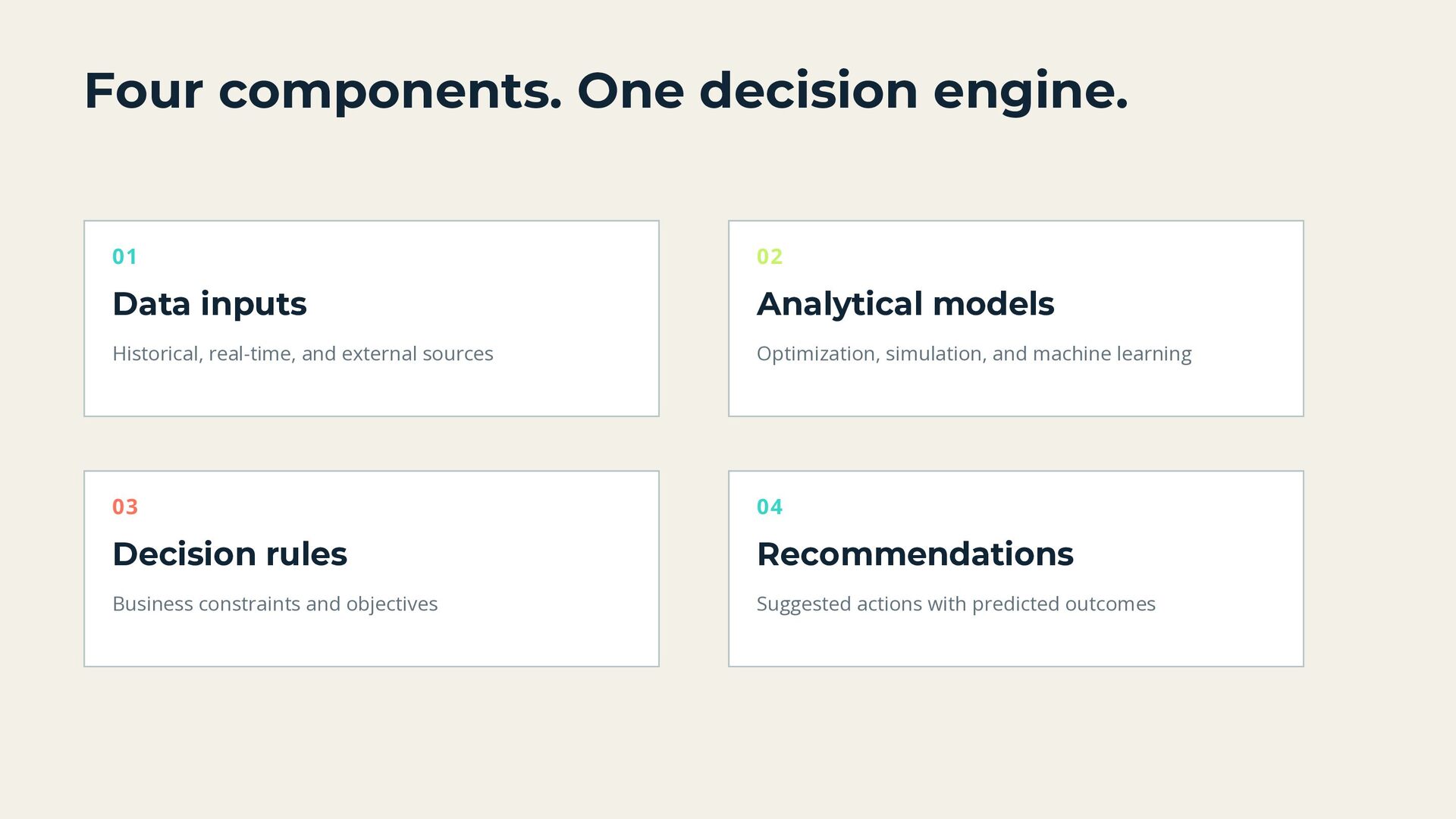
  6. Four components. One decision engine. 01 02 Data inputs Analytical

    models Historical, real-time, and external sources Optimization, simulation, and machine learning 03 04 Decision rules Recommendations Business constraints and objectives Suggested actions with predicted outcomes
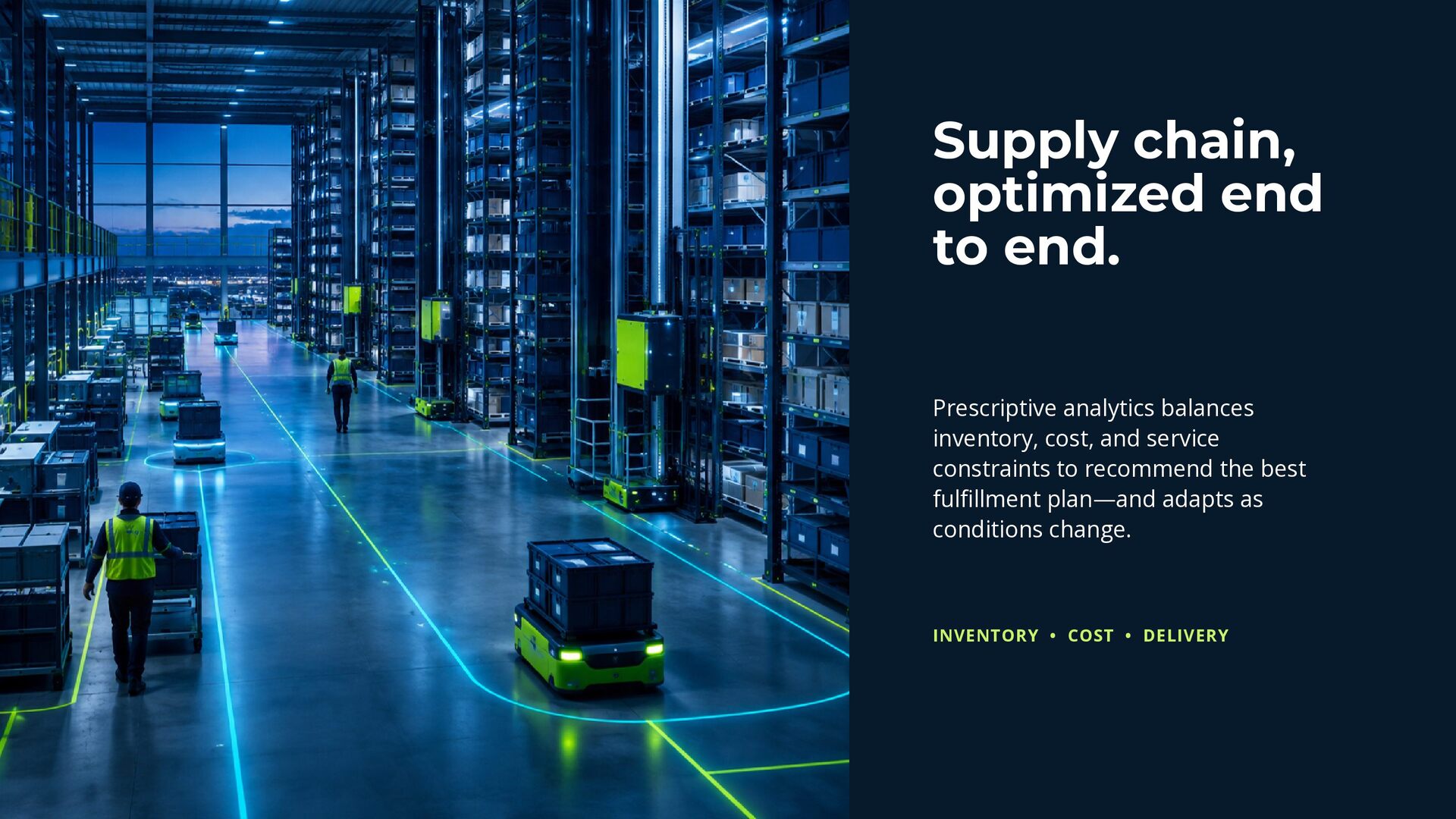
  7. Supply chain, optimized end to end. Prescriptive analytics balances inventory,

    cost, and service constraints to recommend the best fulfillment plan—and adapts as conditions change. INVENTORY • COST • DELIVERY
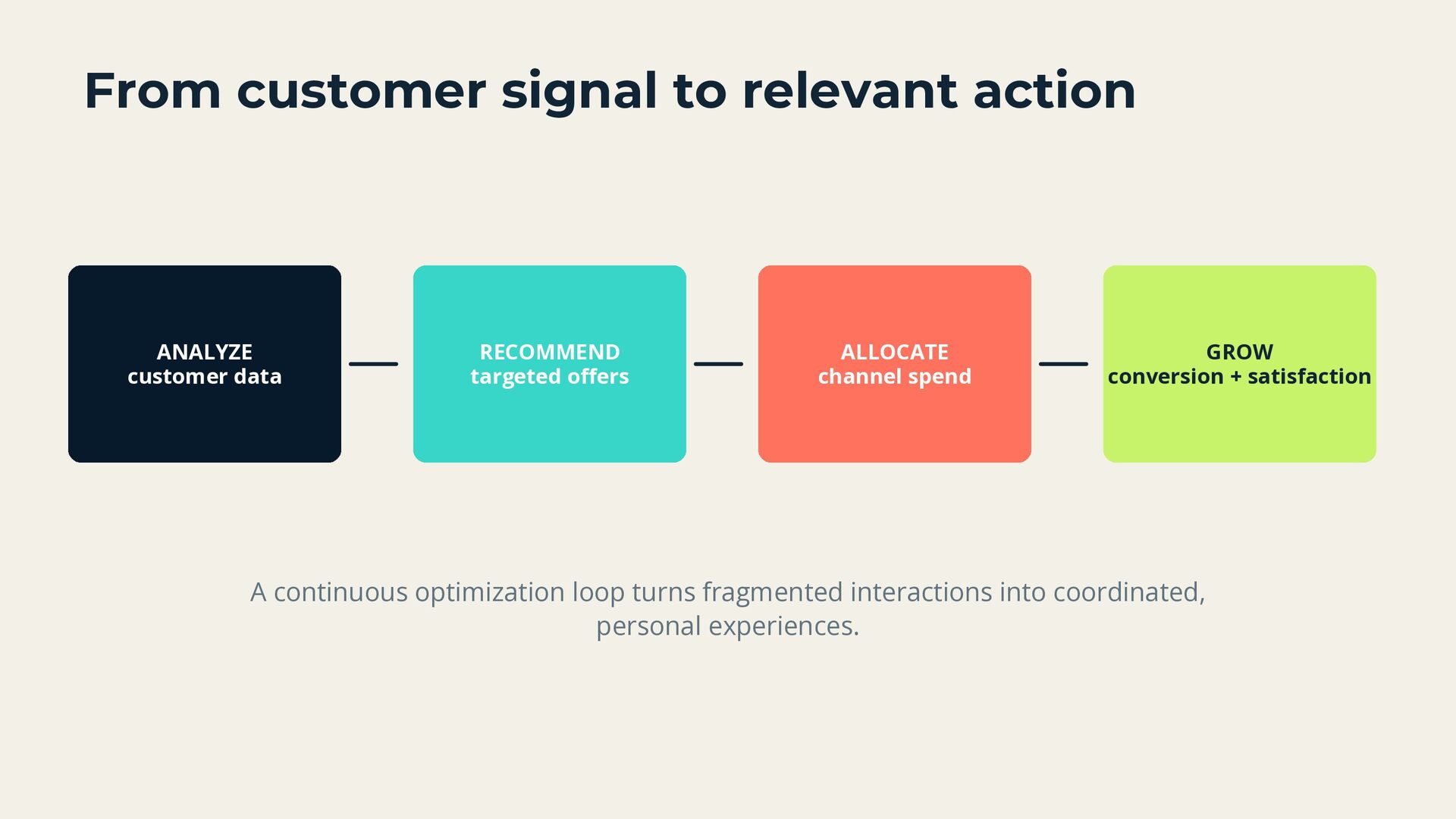
  8. From customer signal to relevant action ANALYZE customer data RECOMMEND

    targeted offers ALLOCATE channel spend GROW conversion + satisfaction A continuous optimization loop turns fragmented interactions into coordinated, personal experiences.
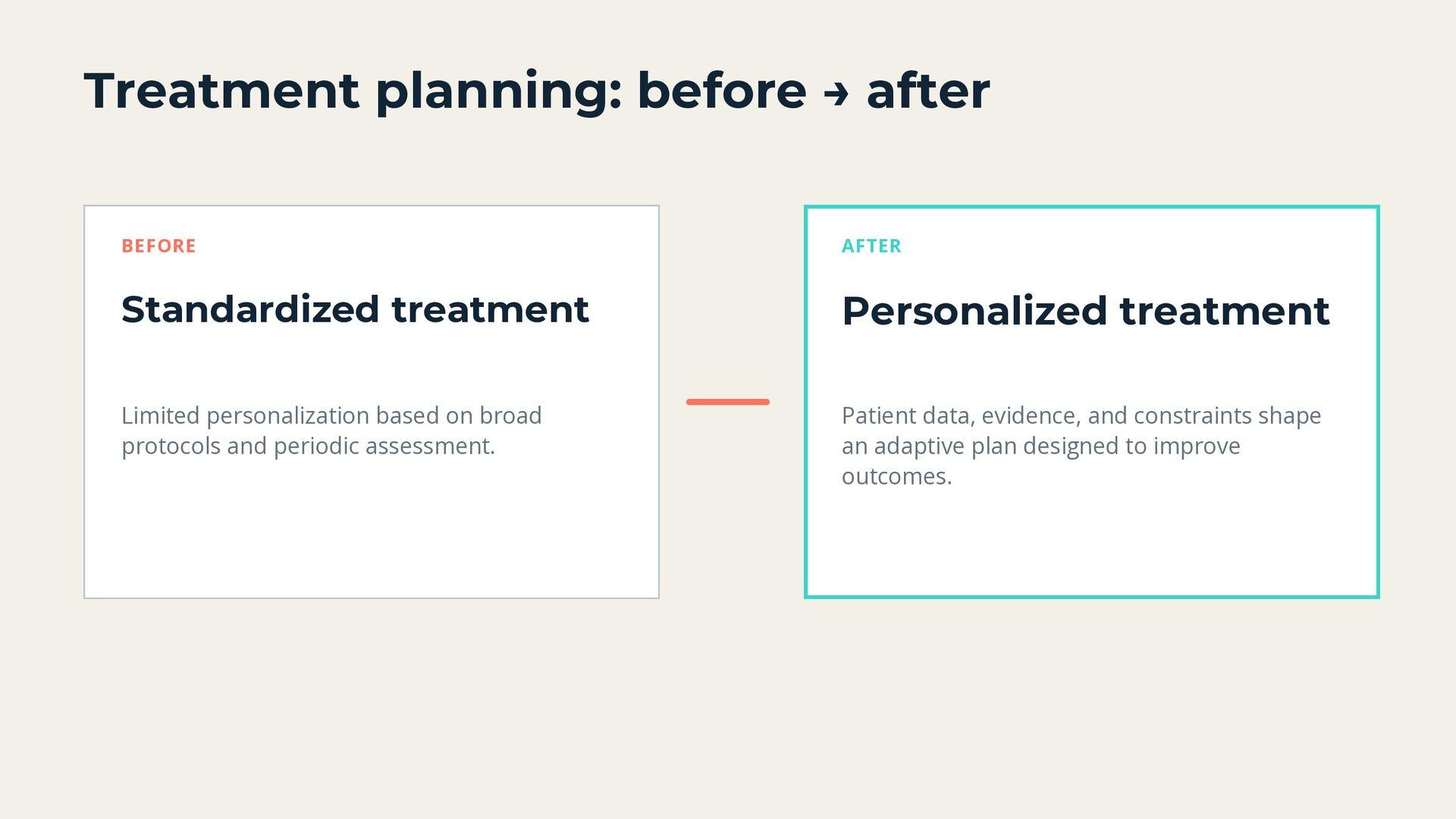
  9. Treatment planning: before → after BEFORE AFTER Standardized treatment Personalized

    treatment Limited personalization based on broad protocols and periodic assessment. Patient data, evidence, and constraints shape an adaptive plan designed to improve outcomes.
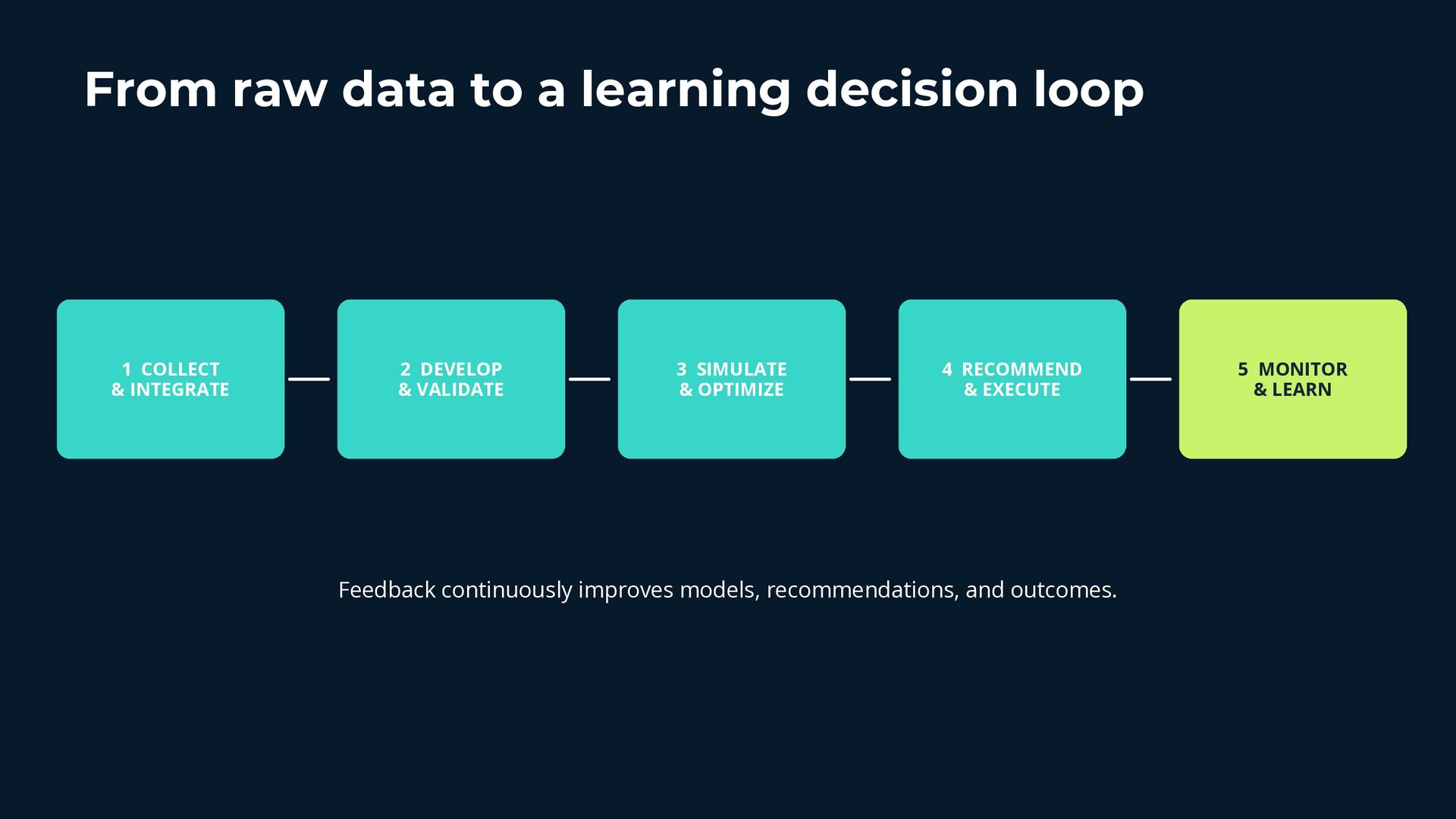
  10. From raw data to a learning decision loop 1 COLLECT

    & INTEGRATE 2 DEVELOP & VALIDATE 3 SIMULATE & OPTIMIZE 4 RECOMMEND & EXECUTE Feedback continuously improves models, recommendations, and outcomes. 5 MONITOR & LEARN
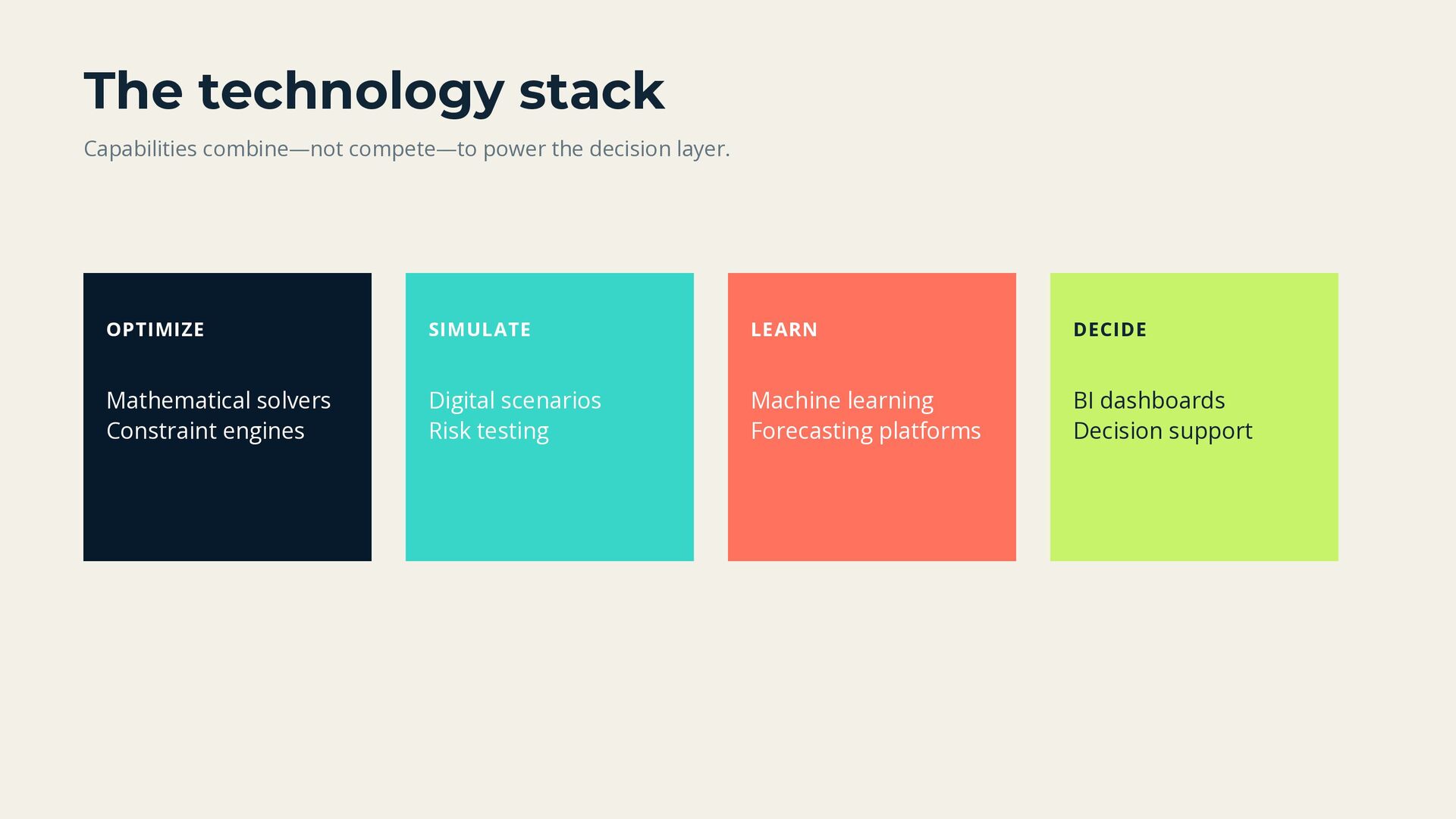
  11. The technology stack Capabilities combine—not compete—to power the decision layer.

    OPTIMIZE SIMULATE LEARN DECIDE Mathematical solvers Constraint engines Digital scenarios Risk testing Machine learning Forecasting platforms BI dashboards Decision support
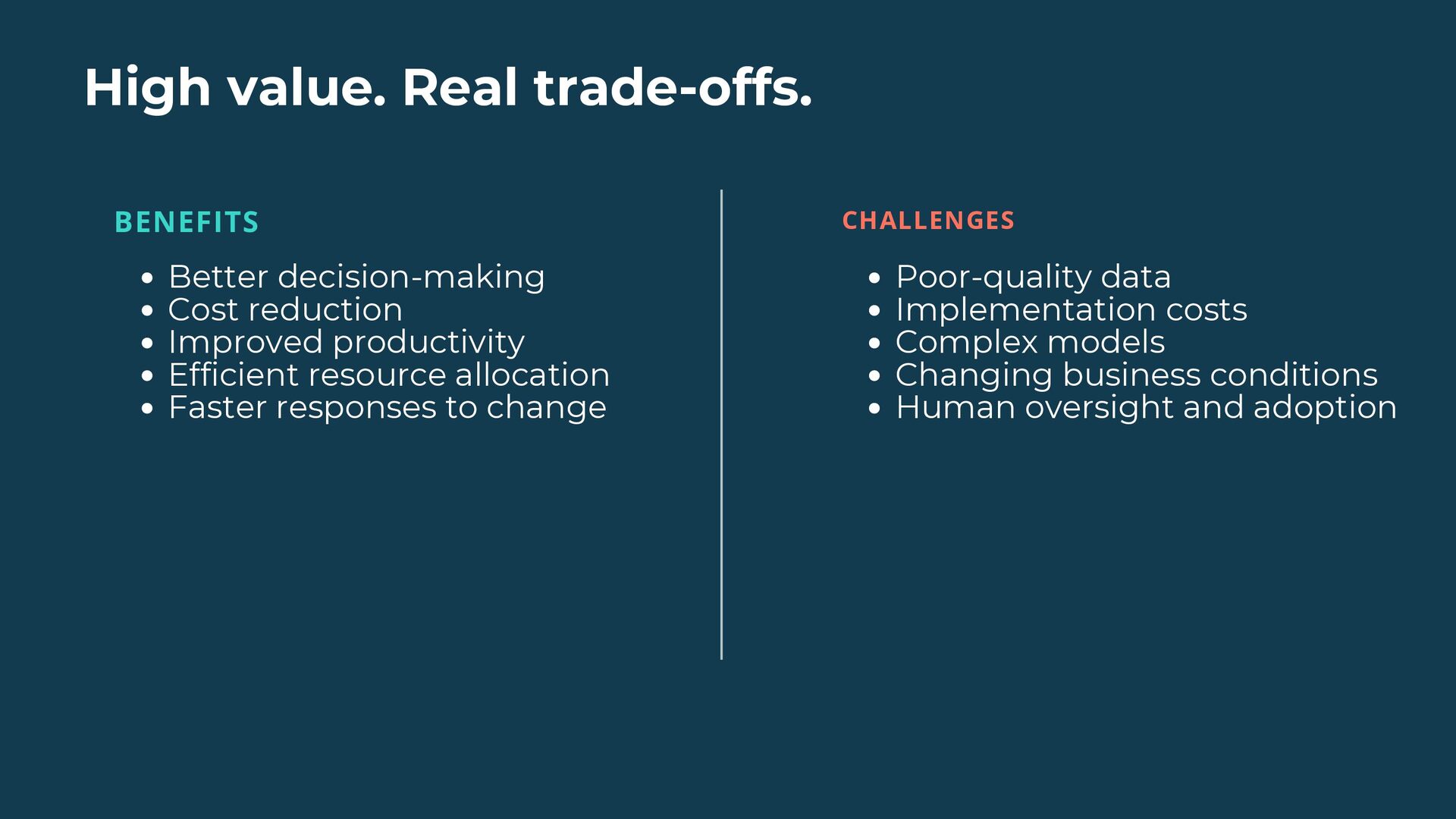
  12. High value. Real trade-offs. BENEFITS Better decision-making Cost reduction Improved

    productivity Efficient resource allocation Faster responses to change CHALLENGES Poor-quality data Implementation costs Complex models Changing business conditions Human oversight and adoption
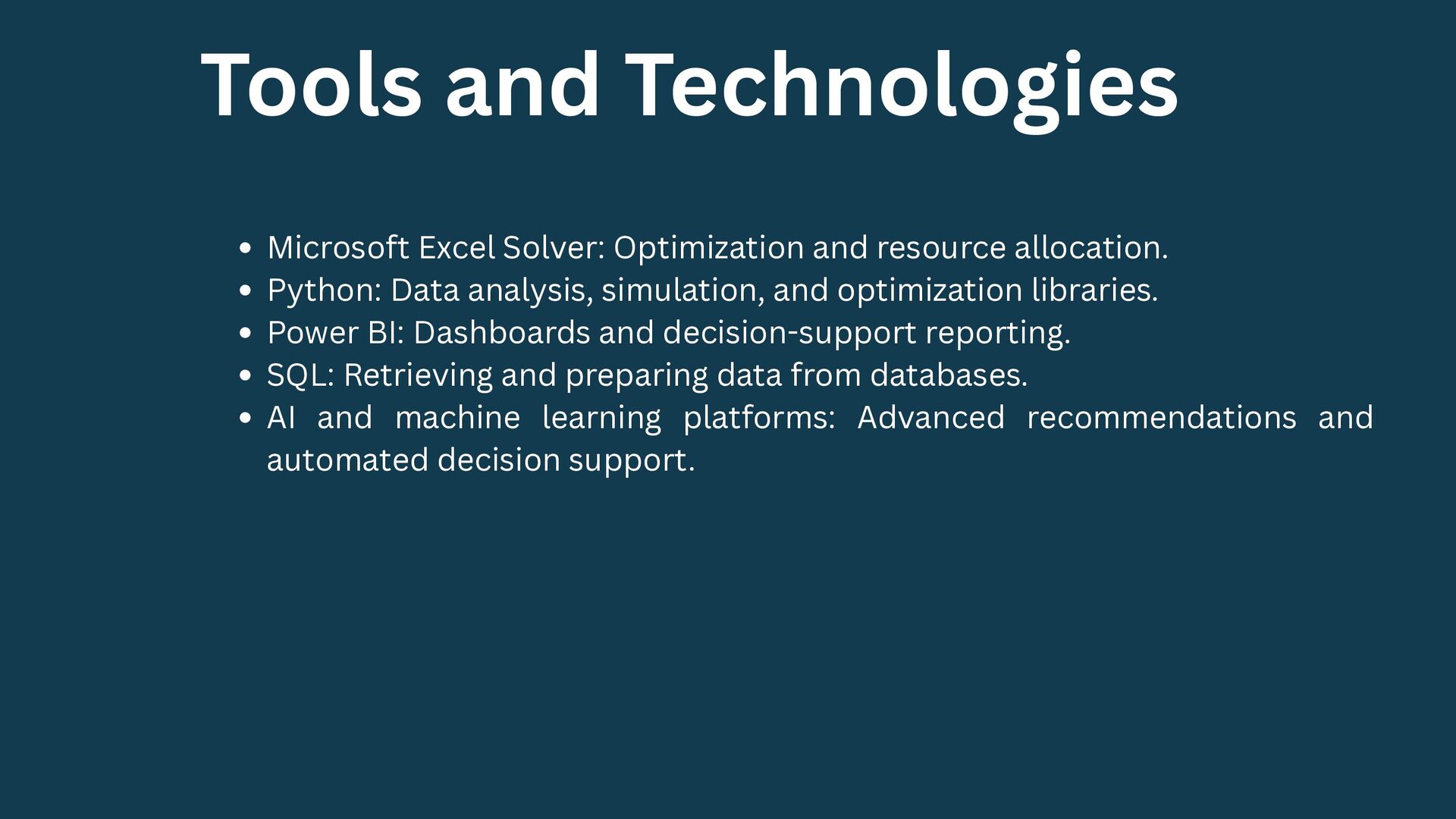
  13. Tools and Technologies Microsoft Excel Solver: Optimization and resource allocation.

    Python: Data analysis, simulation, and optimization libraries. Power BI: Dashboards and decision-support reporting. SQL: Retrieving and preparing data from databases. AI and machine learning platforms: Advanced recommendations and automated decision support.
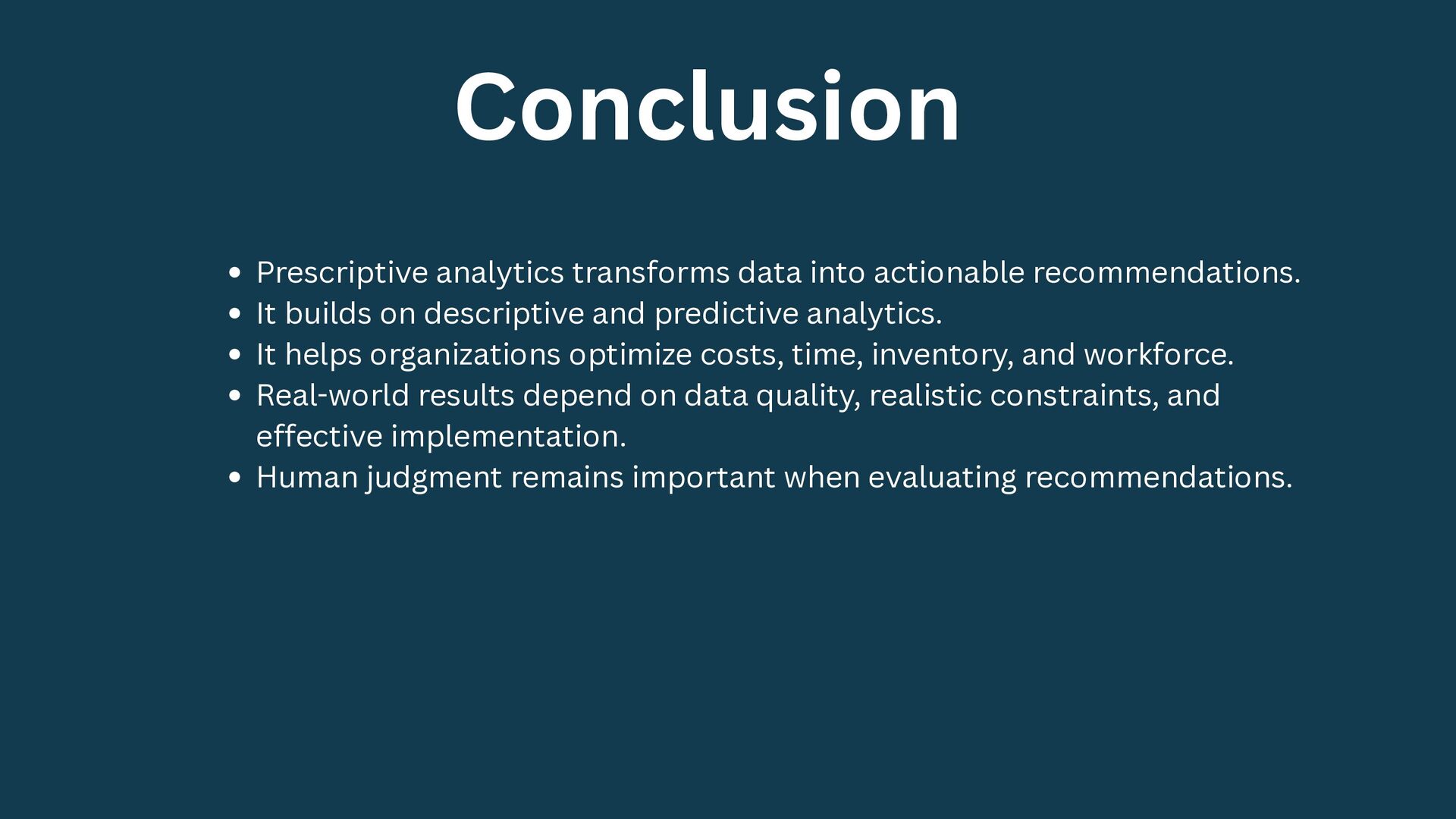
  14. Conclusion Prescriptive analytics transforms data into actionable recommendations. It builds

    on descriptive and predictive analytics. It helps organizations optimize costs, time, inventory, and workforce. Real-world results depend on data quality, realistic constraints, and effective implementation. Human judgment remains important when evaluating recommendations.