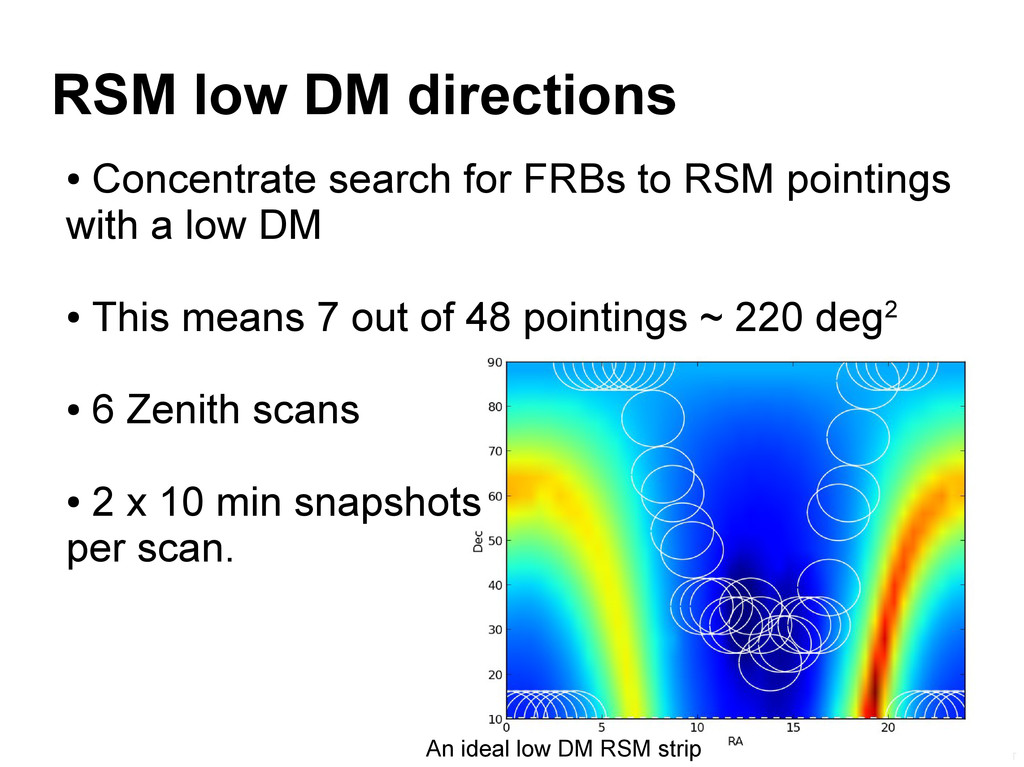
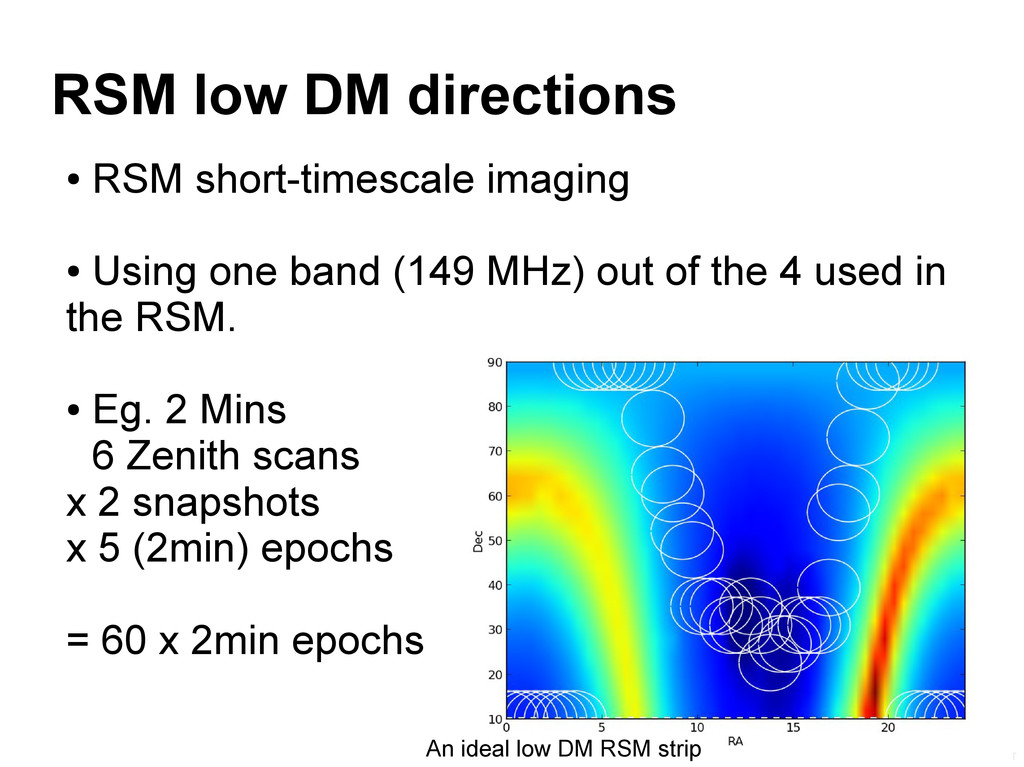
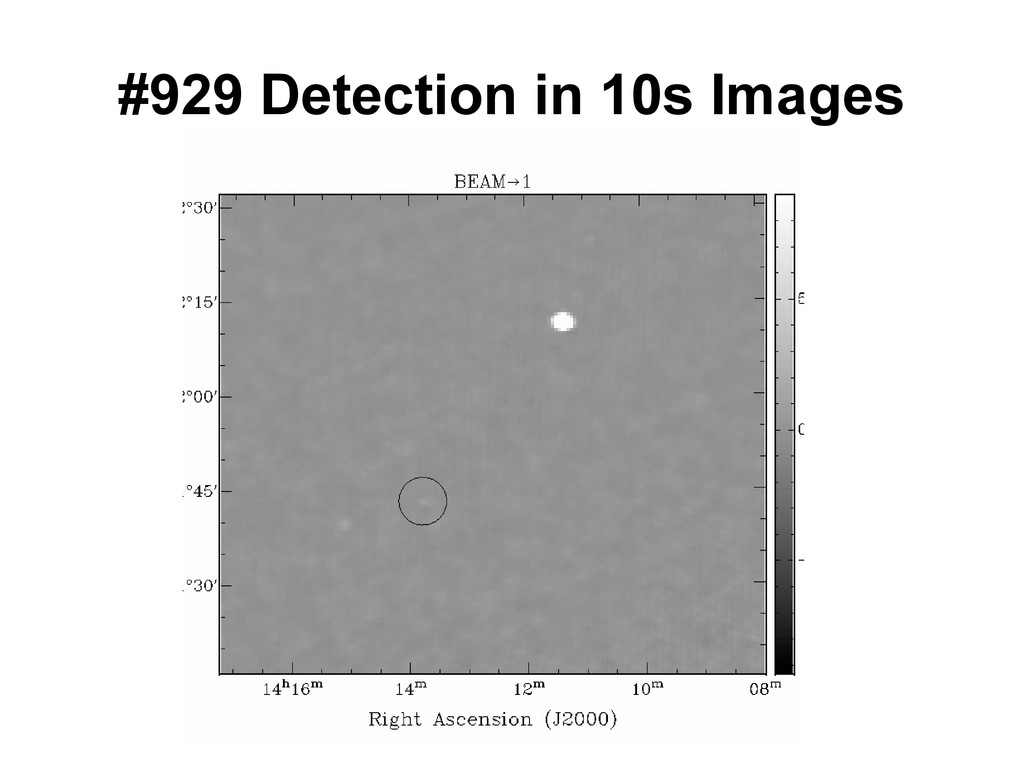
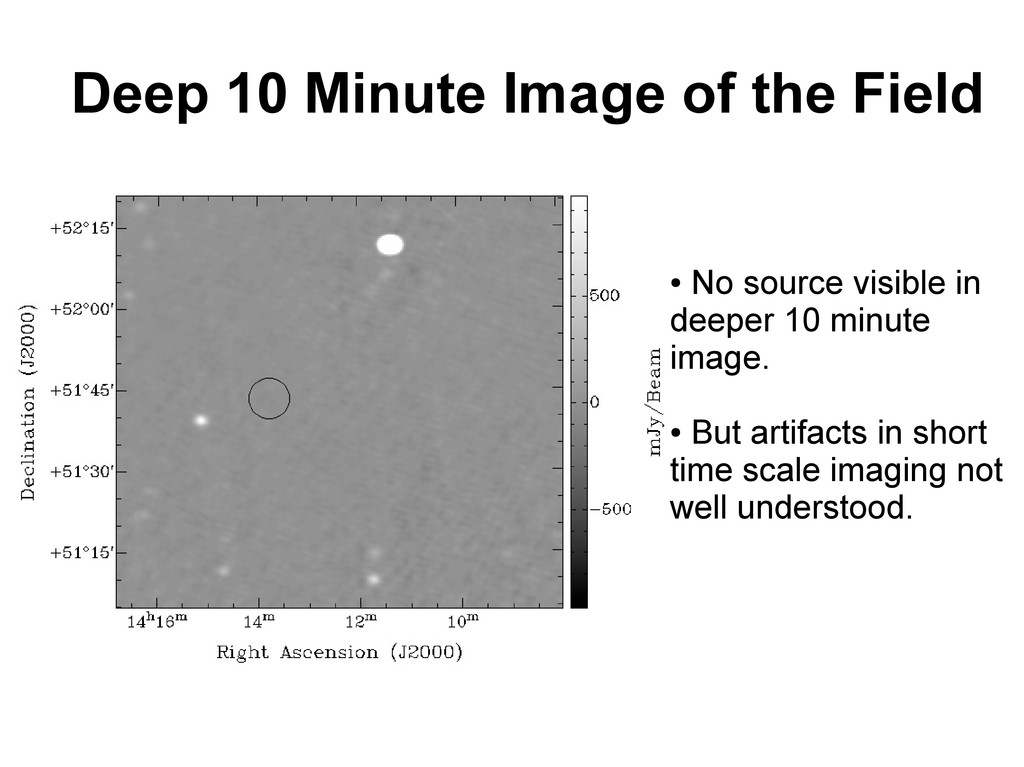
one band (149 MHz) out of the 4 used in the RSM. • Eg. 2 Mins 6 Zenith scans x 2 snapshots x 5 (2min) epochs = 60 x 2min epochs An ideal low DM RSM strip
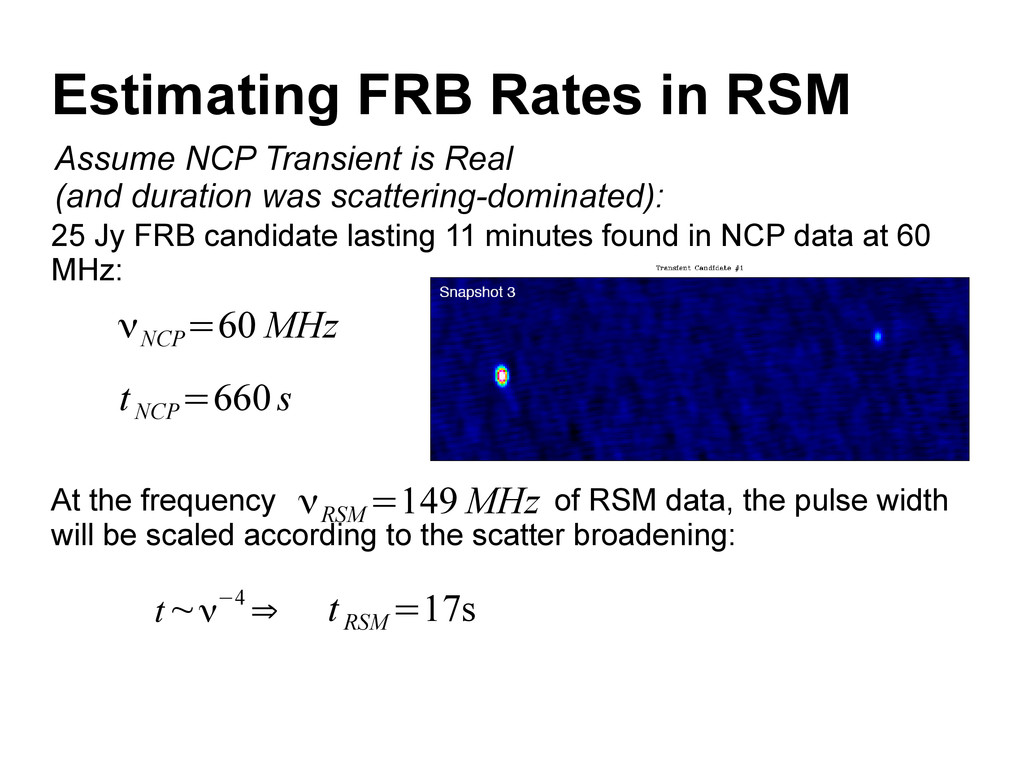
NCP =660s ν RSM =149 MHz t∼ν−4 ⇒ t RSM =17s 25 Jy FRB candidate lasting 11 minutes found in NCP data at 60 MHz: At the frequency of RSM data, the pulse width will be scaled according to the scatter broadening: Assume NCP Transient is Real (and duration was scattering-dominated):
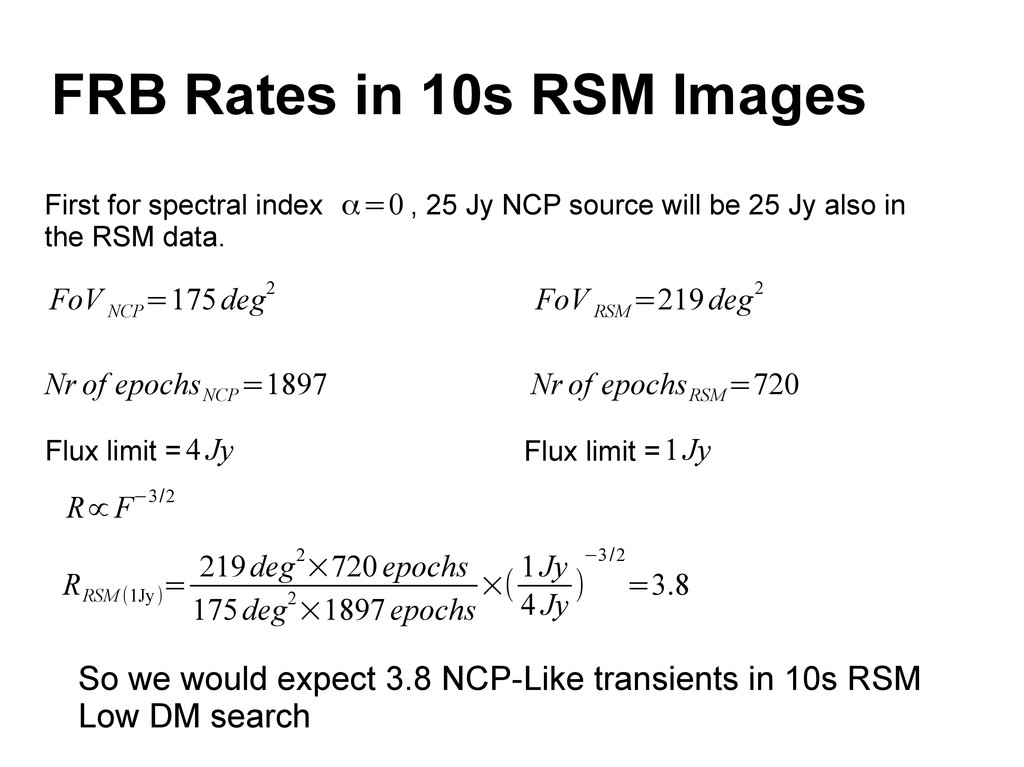
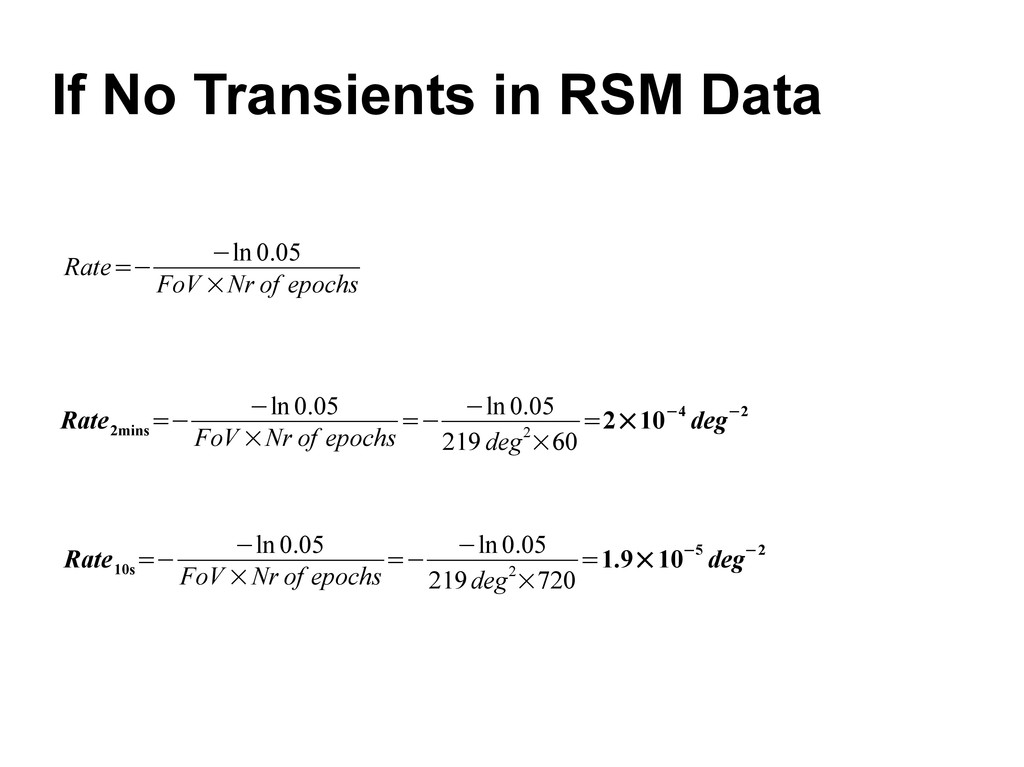
of epochs NCP =1897 FoV RSM =219deg2 Nr of epochs RSM =720 Flux limit = 4 Jy Flux limit =1Jy R RSM (1Jy) = 219deg2×720 epochs 175deg2×1897 epochs ×( 1Jy 4 Jy ) −3/2 =3.8 R∝F−3/2 α=0 First for spectral index , 25 Jy NCP source will be 25 Jy also in the RSM data. So we would expect 3.8 NCP-Like transients in 10s RSM Low DM search
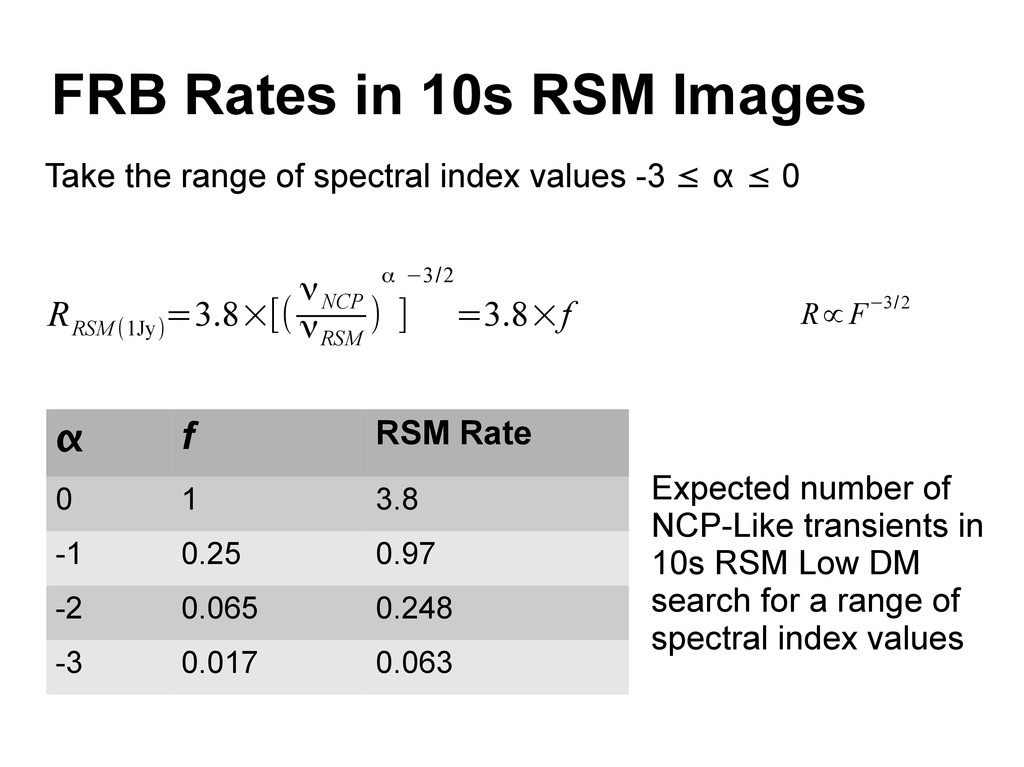
ν NCP ν RSM ) α ] −3/2 =3.8×f R∝F−3/2 Take the range of spectral index values -3 ≤ α ≤ 0 Expected number of NCP-Like transients in 10s RSM Low DM search for a range of spectral index values α f RSM Rate 0 1 3.8 -1 0.25 0.97 -2 0.065 0.248 -3 0.017 0.063
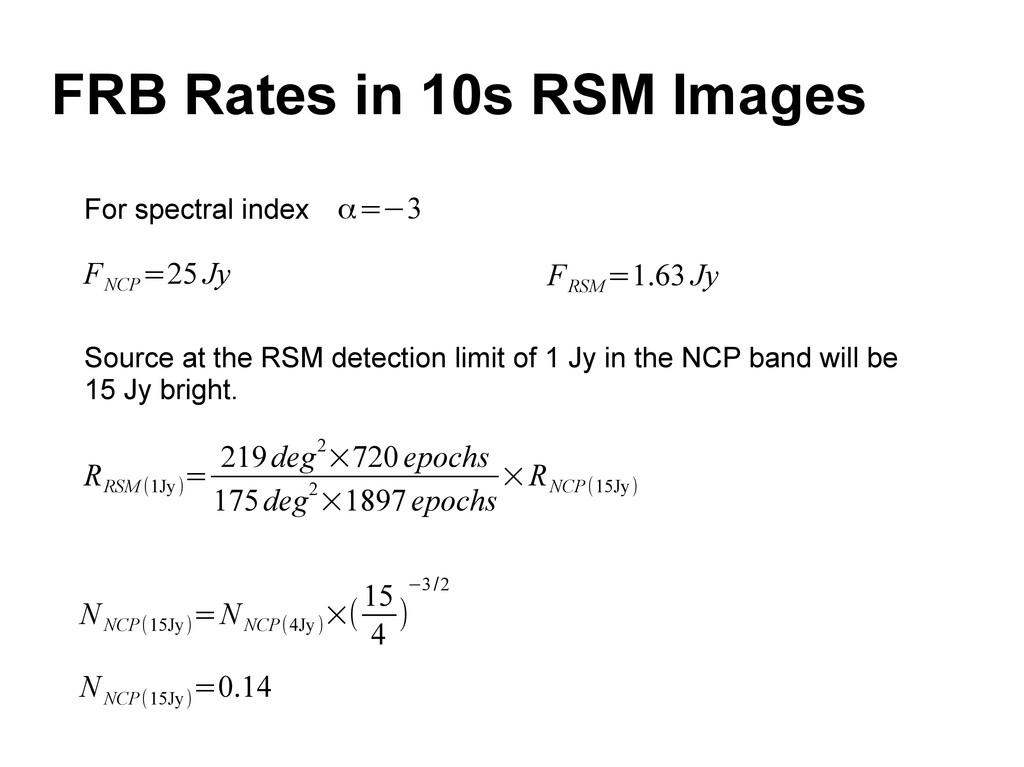
F NCP =25 Jy F RSM =1.63 Jy Source at the RSM detection limit of 1 Jy in the NCP band will be 15 Jy bright. R RSM (1Jy) = 219deg2×720 epochs 175deg2×1897 epochs ×R NCP(15Jy) N NCP(15Jy) =N NCP(4Jy) ×( 15 4 ) −3/2 N NCP(15Jy) =0.14
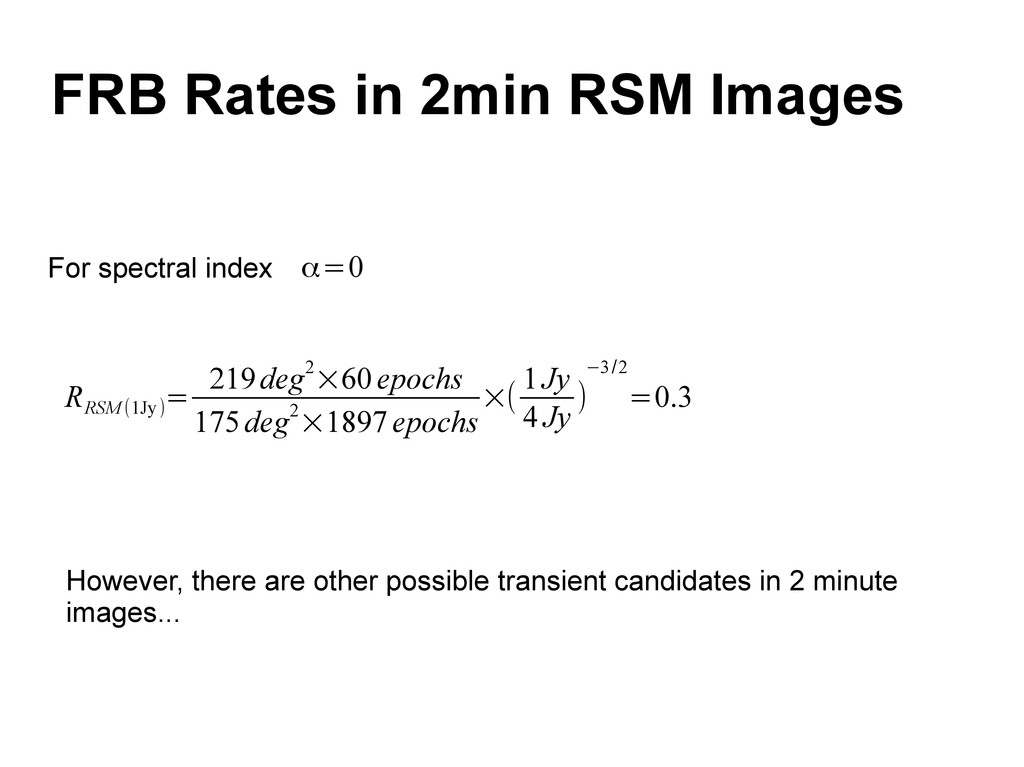
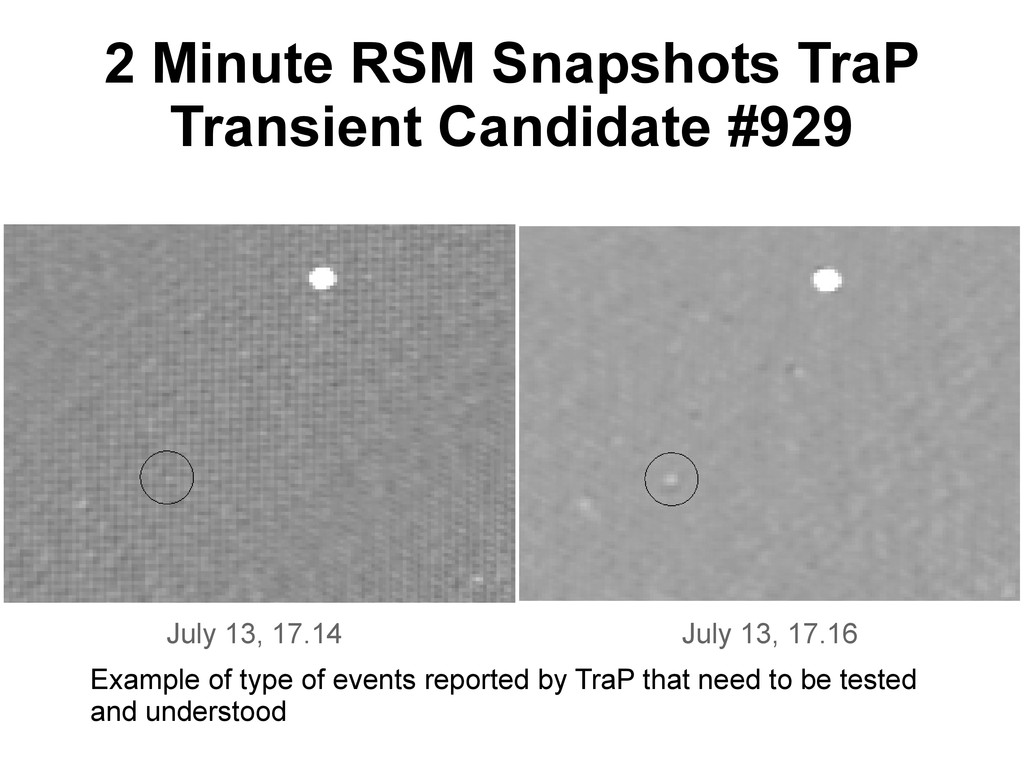
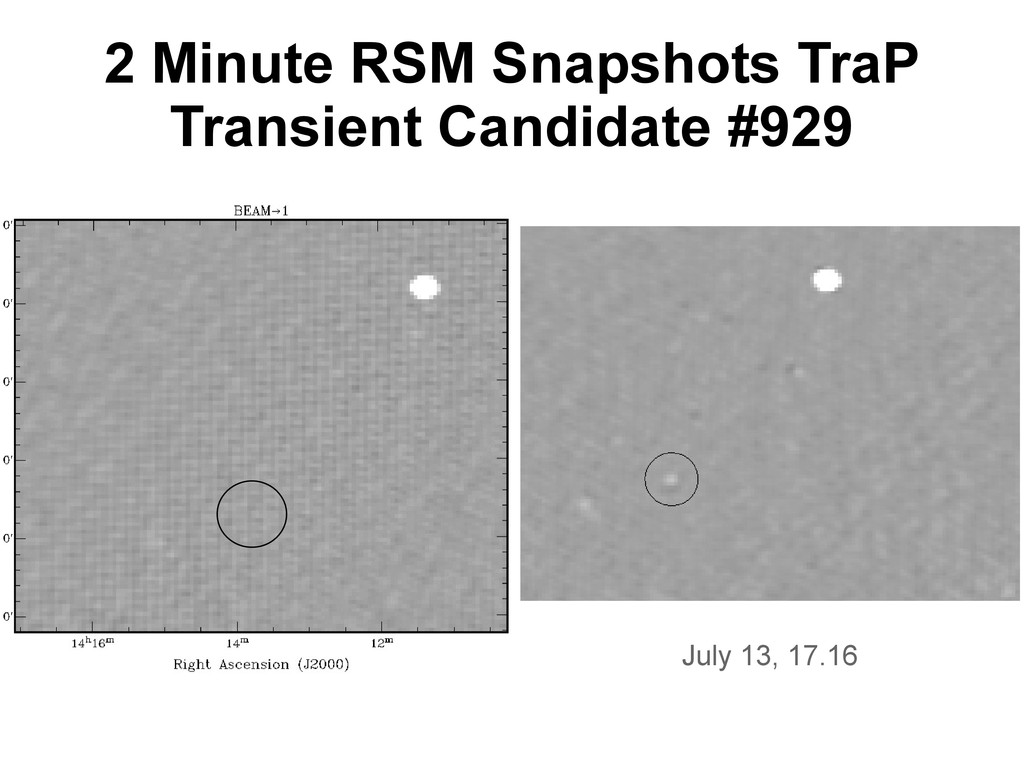
219deg2×60 epochs 175deg2×1897 epochs ×( 1Jy 4 Jy ) −3/2 =0.3 α=0 For spectral index However, there are other possible transient candidates in 2 minute images...
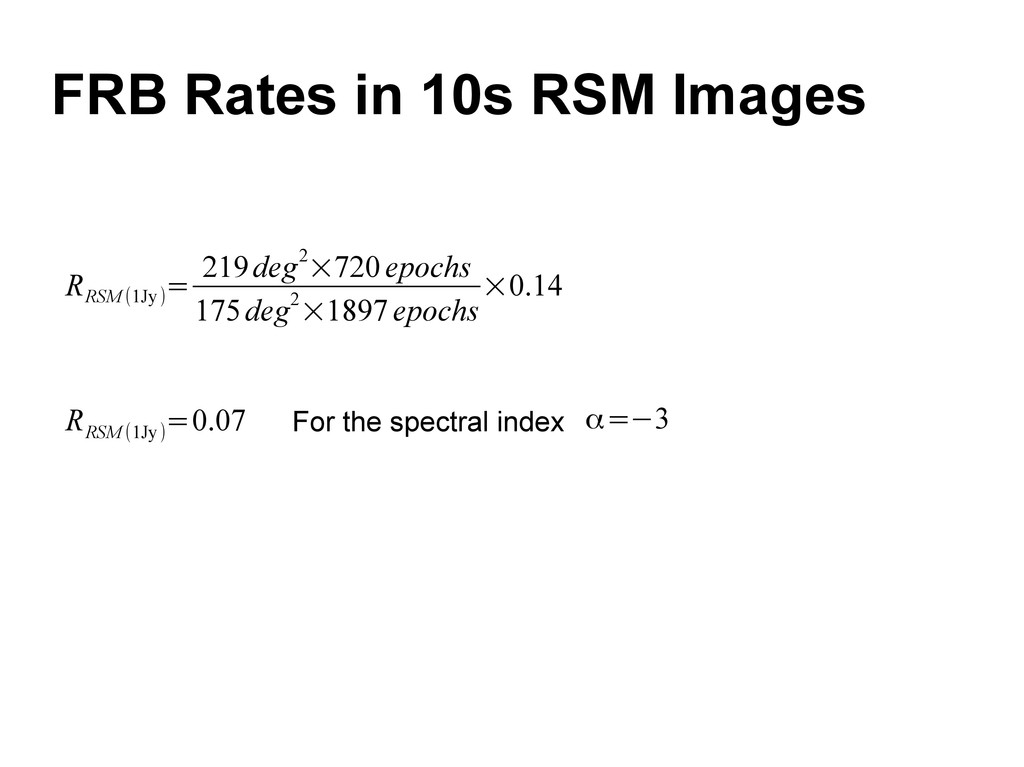
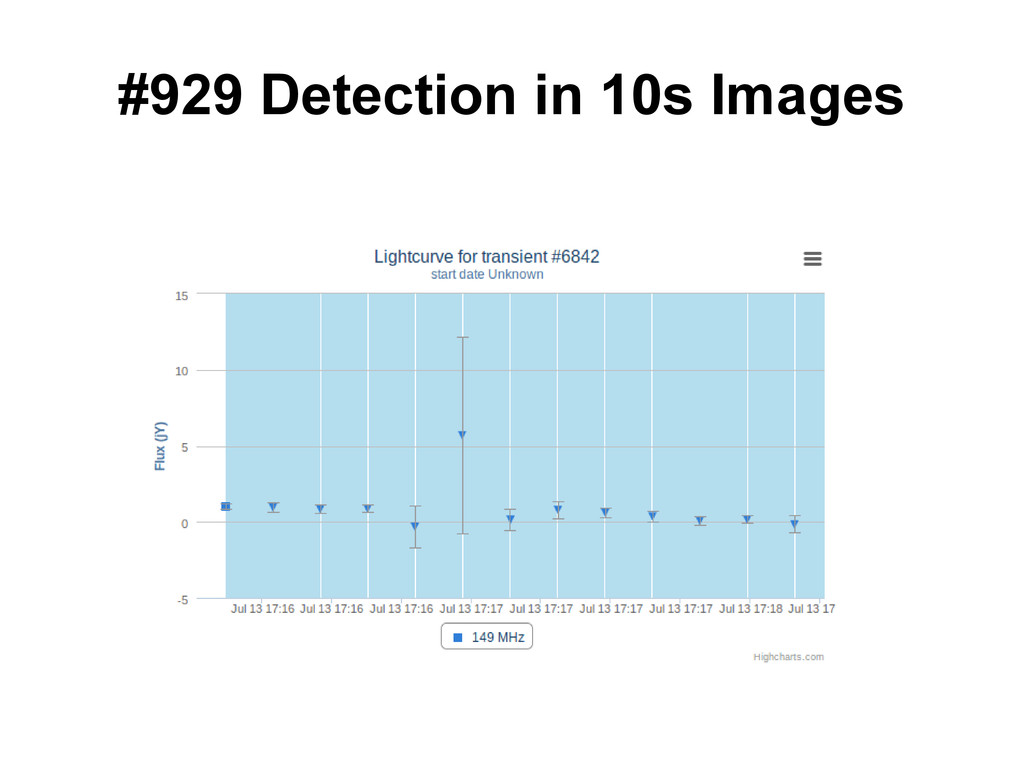
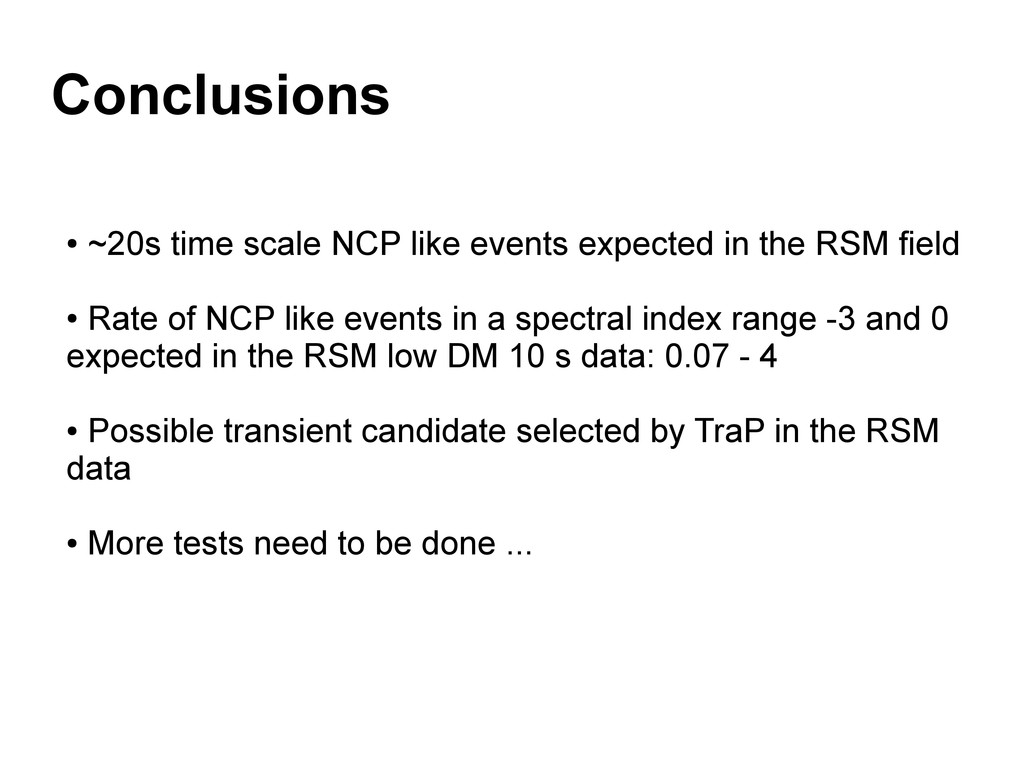
the RSM field • Rate of NCP like events in a spectral index range -3 and 0 expected in the RSM low DM 10 s data: 0.07 - 4 • Possible transient candidate selected by TraP in the RSM data • More tests need to be done ...


 transientskp
 x_ttyszk
.jpg) lychee1223
lychee1223
 voginip
 trycycle
 institutdelelevage
 nagano
 hiranabe
 jarvist
.jpg) ktatsuya
ktatsuya
 mayatellez
 marktimemedia
 jonyablonski
 sonatard
 rakko
rakko
 bcantrill
 samanthasiow
 soudai
 elsirapls
 jnunemaker
 honzajavorek