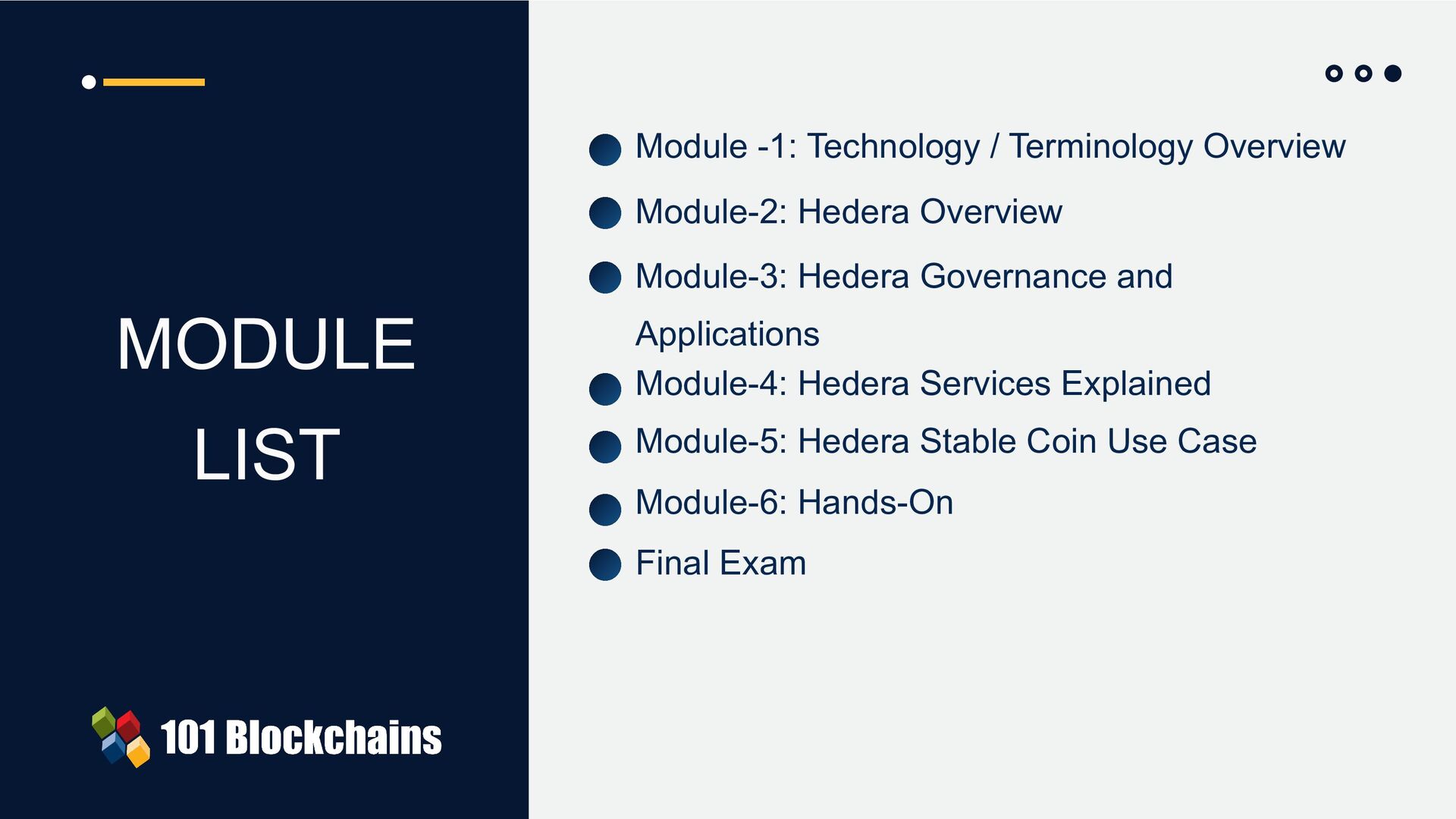
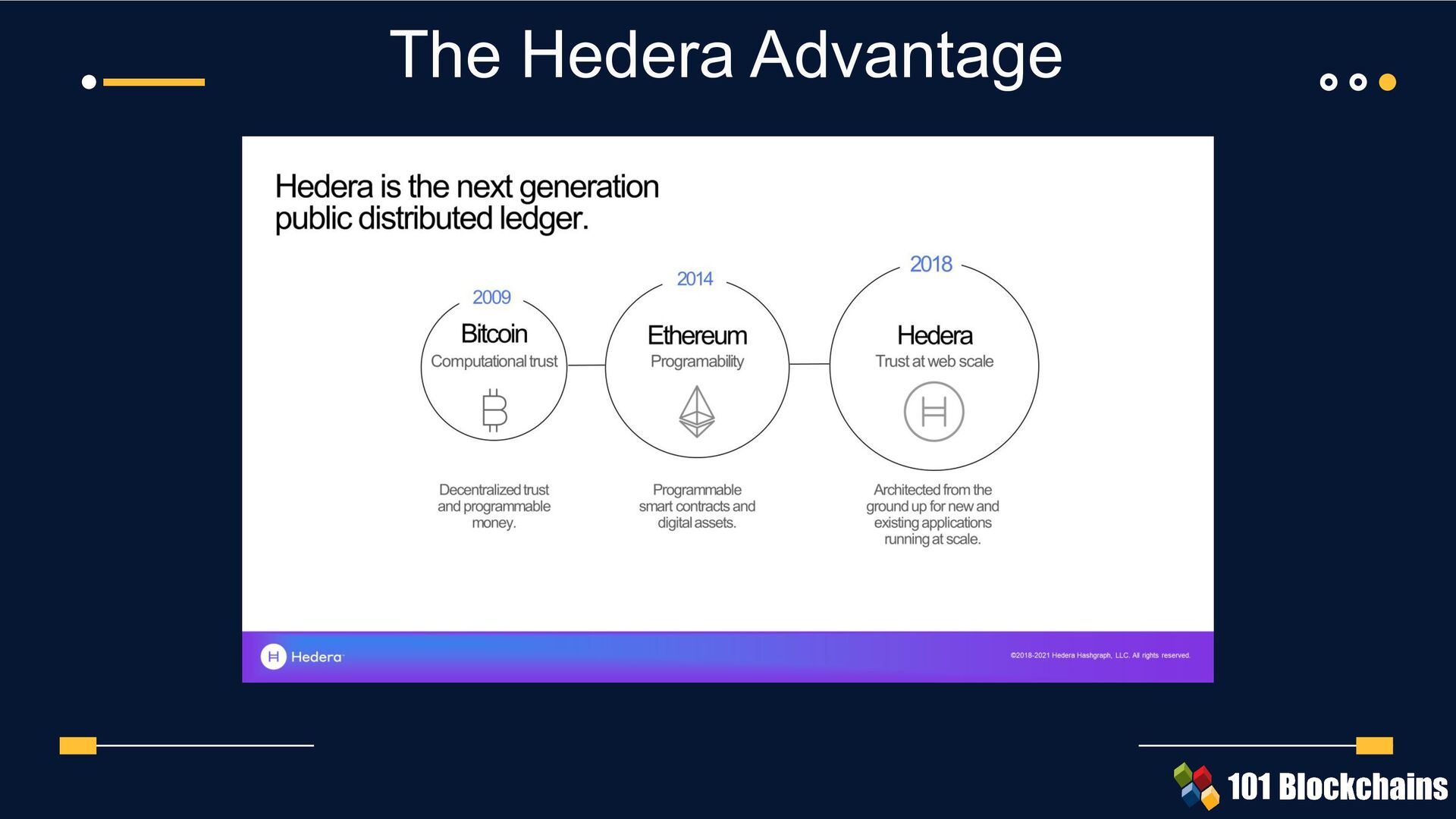
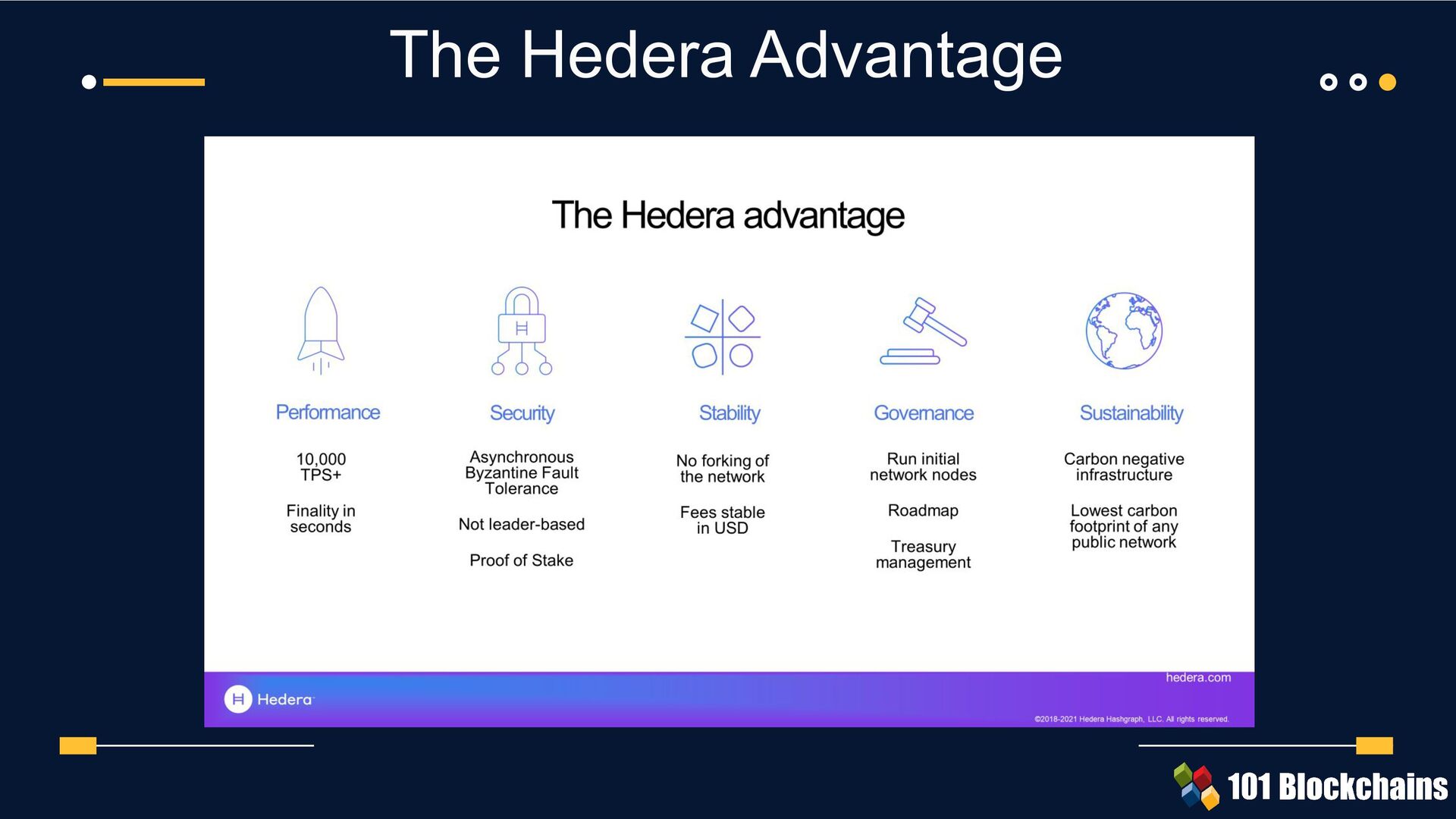
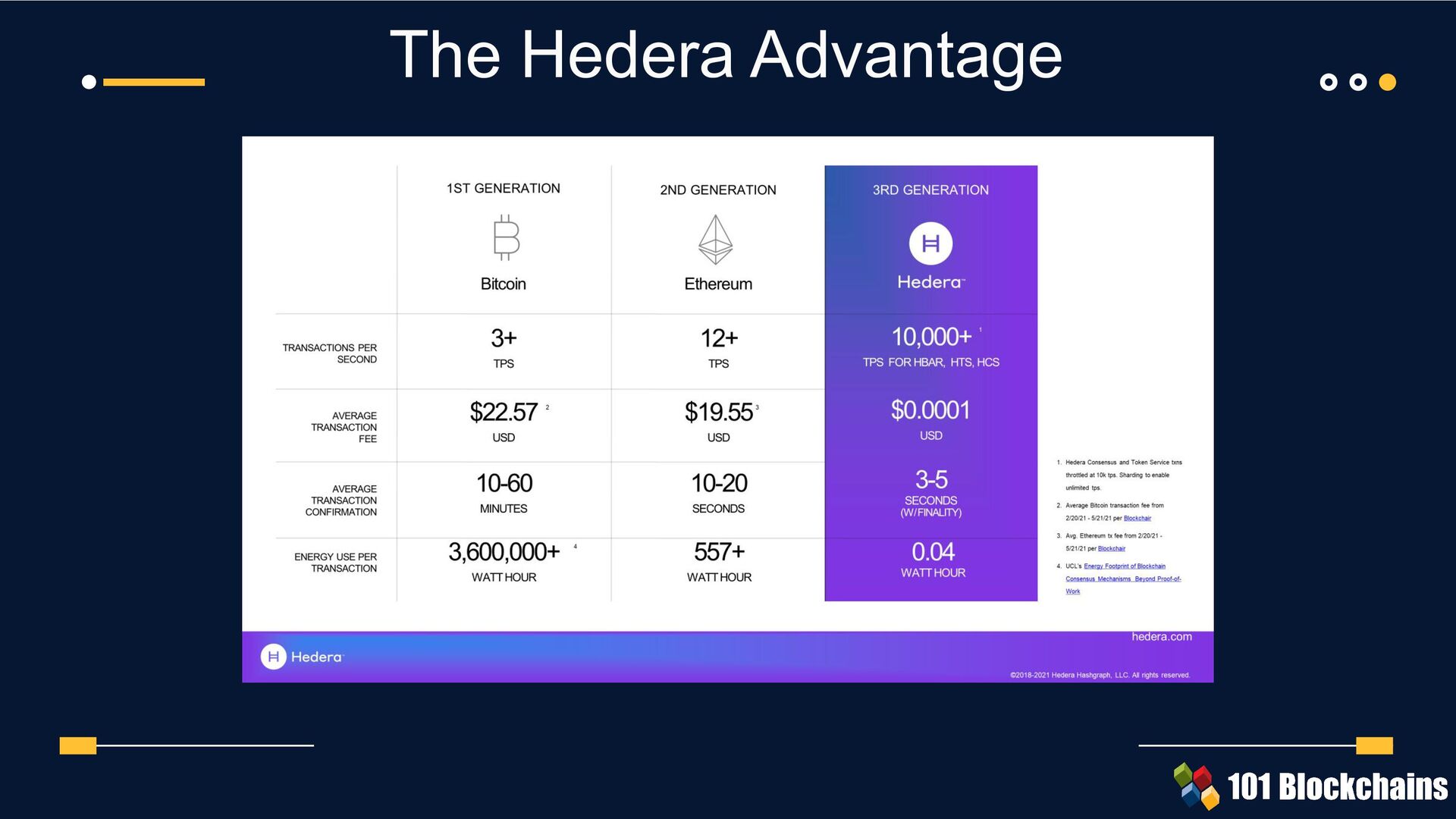
Overview Module-3: Hedera Governance and Applications Module-4: Hedera Services Explained Module-5: Hedera Stable Coin Use Case Module-6: Hands-On Final Exam
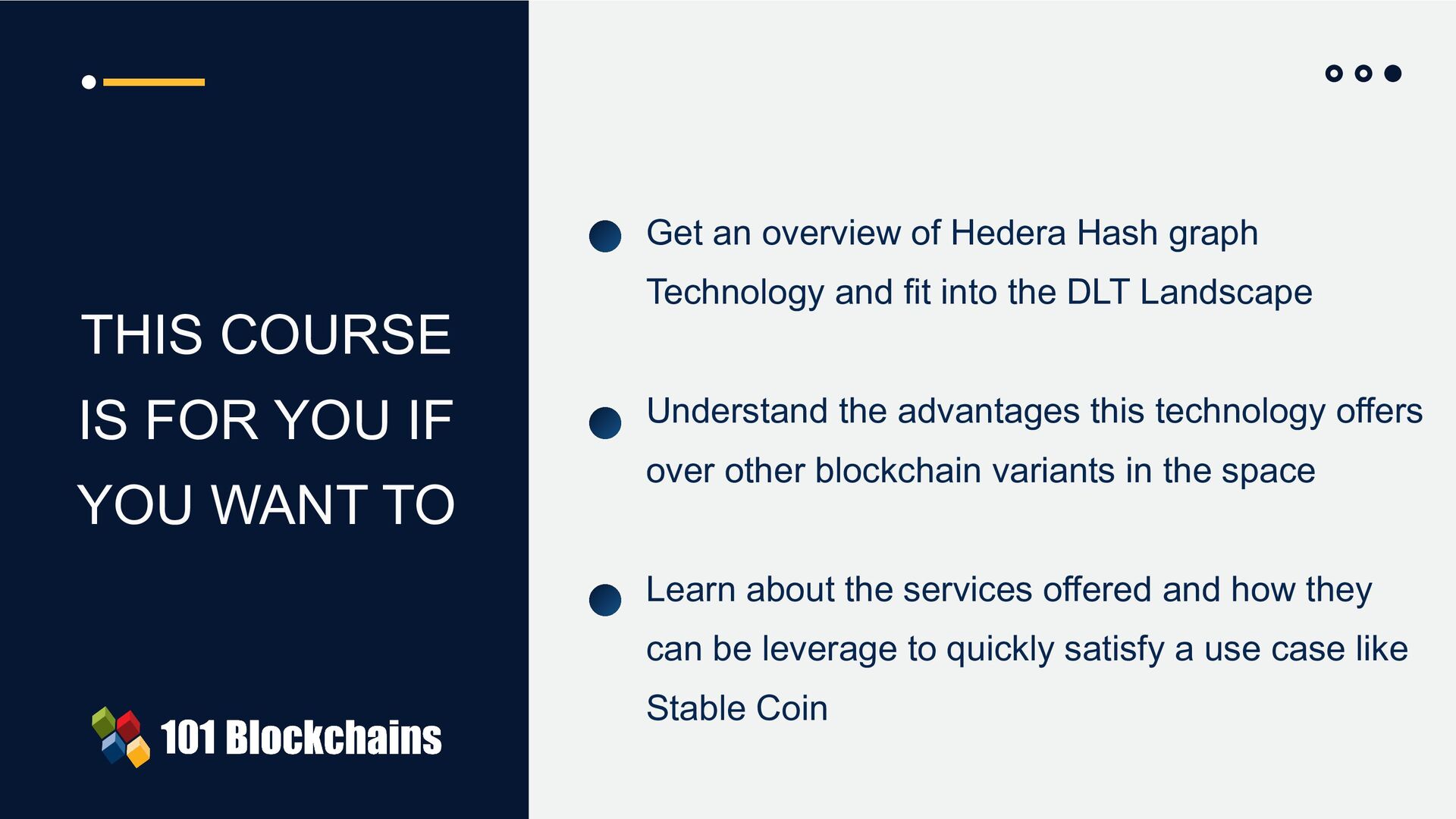
an overview of Hedera Hash graph Technology and fit into the DLT Landscape Understand the advantages this technology offers over other blockchain variants in the space Learn about the services offered and how they can be leverage to quickly satisfy a use case like Stable Coin
and deploying Enterprise Apps on DLTs in production Innovation Leaders and Entrepreneurs Software developers building DApps on blockchain DLT / Blockchain / Web 3.0 enthusiast
advice and should not be taken as such. Claims made in this course do not constitute investment advice and should not be taken as such. Do your own research! While the information contained in this document and course has been obtained from sources believed to be reliable, 101 Blockchains disclaims all warranties as to the completeness or accuracy. Although 101 Blockchains research and training may address business, financial, investment and legal issues, 101 Blockchains does not provide any business, financial, legal or investment advice and this training should not be construed or used as such. 101 Blockchains shall not be responsible for any loss sustained by any person who relies on this training.
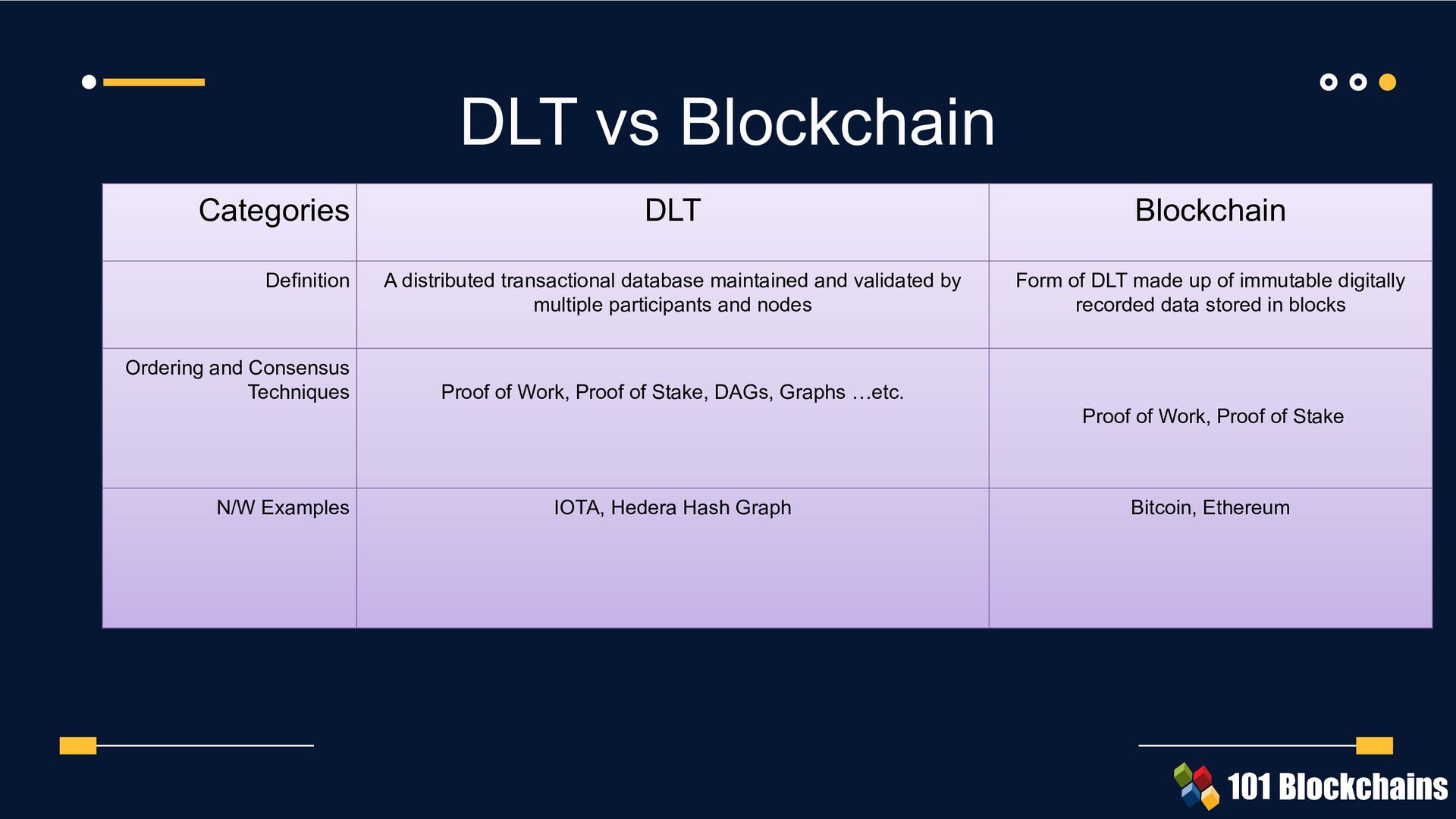
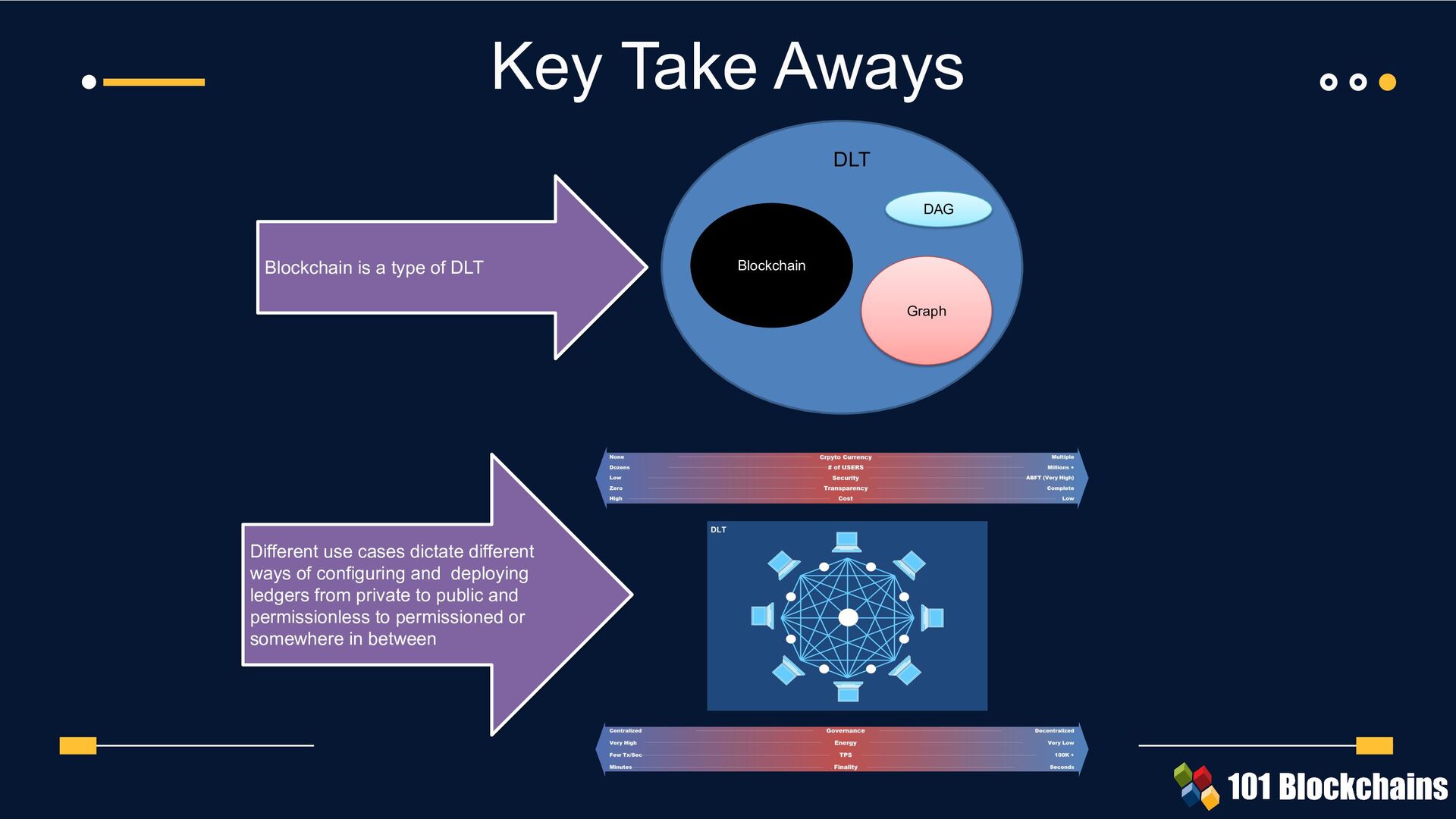
database maintained and validated by multiple participants and nodes Form of DLT made up of immutable digitally recorded data stored in blocks Ordering and Consensus Techniques Proof of Work, Proof of Stake, DAGs, Graphs …etc. Proof of Work, Proof of Stake N/W Examples IOTA, Hedera Hash Graph Bitcoin, Ethereum
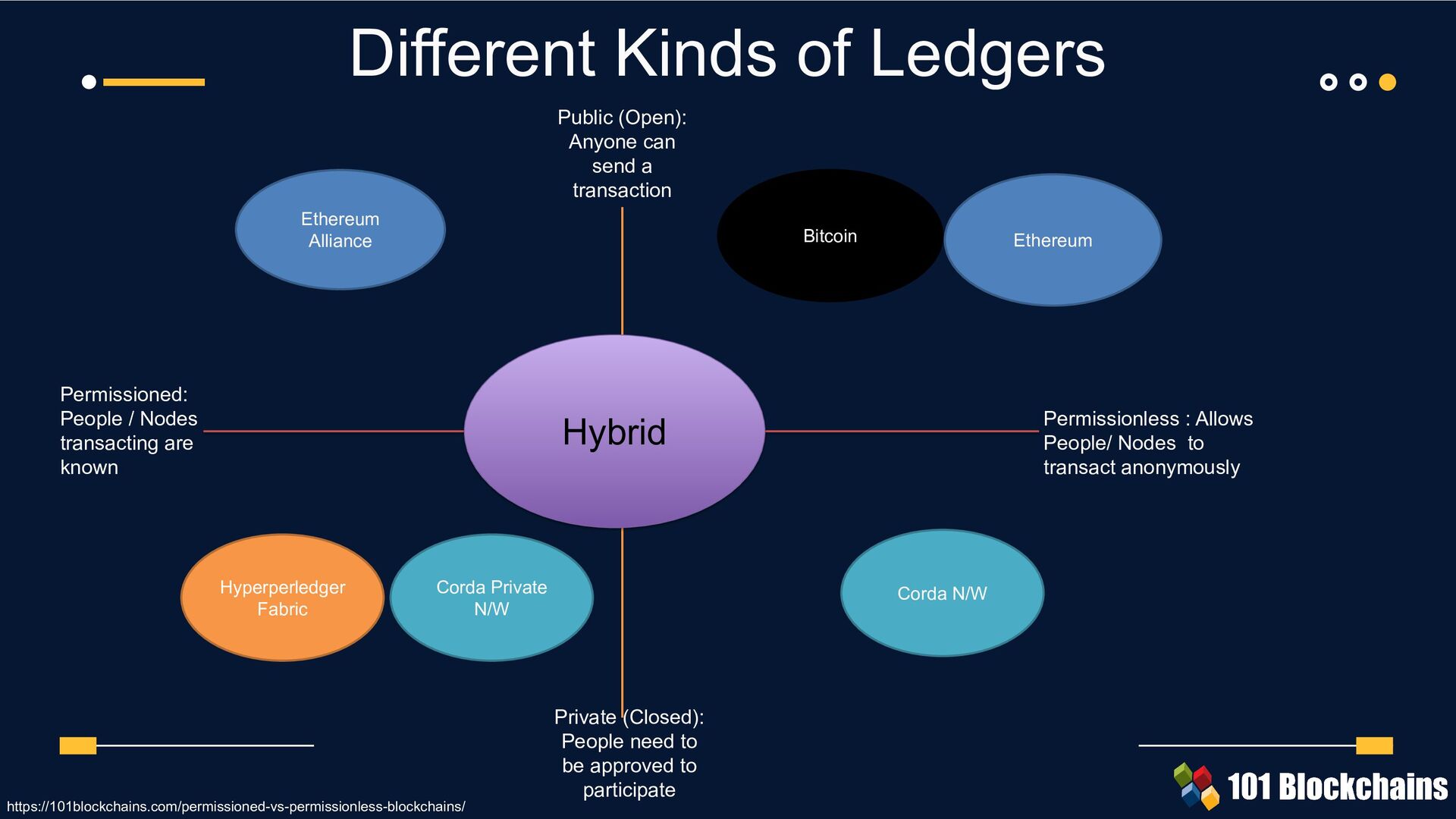
transact anonymously Permissioned: People / Nodes transacting are known Private (Closed): People need to be approved to participate Public (Open): Anyone can send a transaction Bitcoin Ethereum Ethereum Alliance Corda N/W Hybrid Hyperperledger Fabric Corda Private N/W https://101blockchains.com/permissioned-vs-permissionless-blockchains/
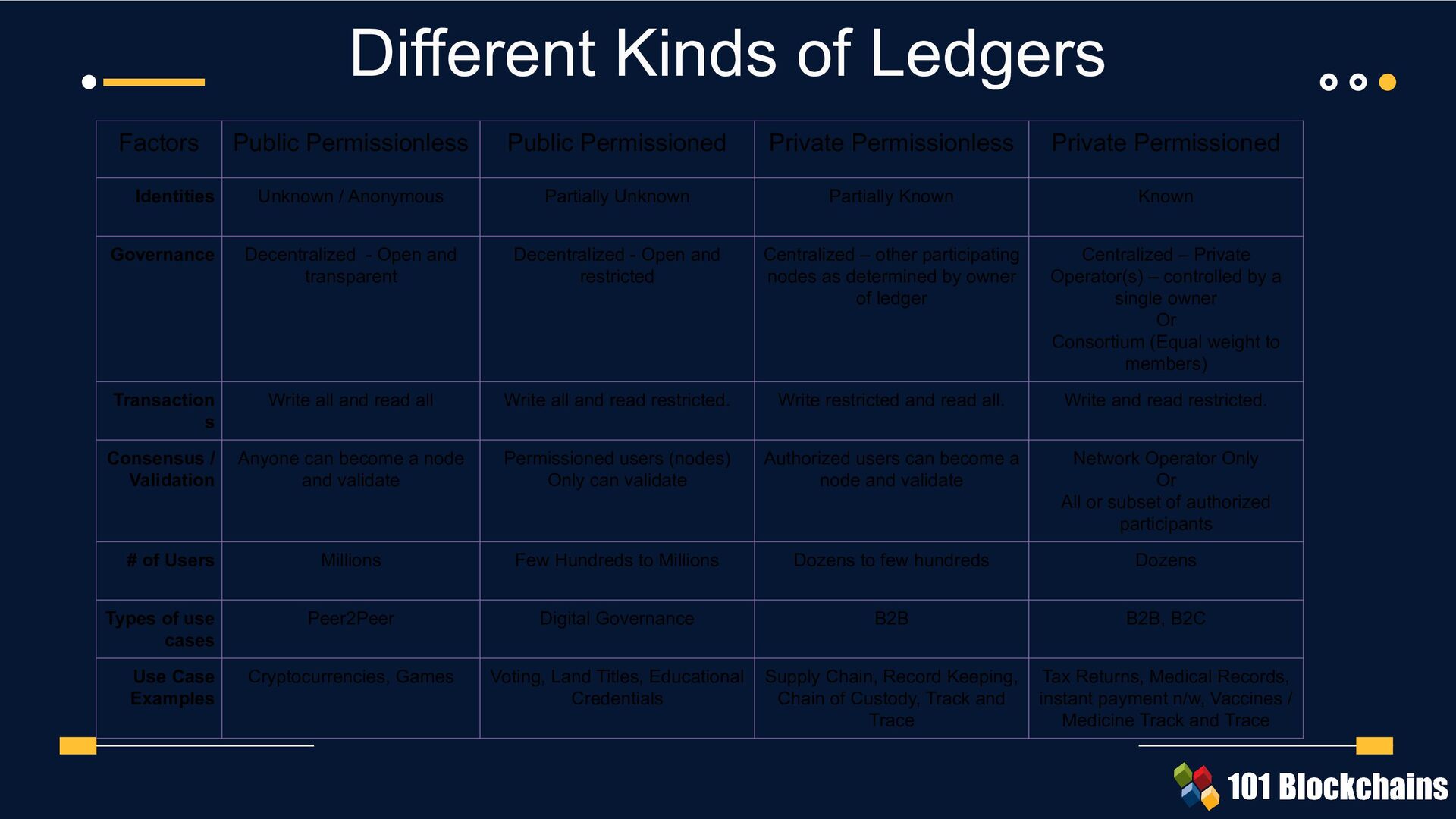
Permissionless Private Permissioned Identities Unknown / Anonymous Partially Unknown Partially Known Known Governance Decentralized - Open and transparent Decentralized - Open and restricted Centralized – other participating nodes as determined by owner of ledger Centralized – Private Operator(s) – controlled by a single owner Or Consortium (Equal weight to members) Transaction s Write all and read all Write all and read restricted. Write restricted and read all. Write and read restricted. Consensus / Validation Anyone can become a node and validate Permissioned users (nodes) Only can validate Authorized users can become a node and validate Network Operator Only Or All or subset of authorized participants # of Users Millions Few Hundreds to Millions Dozens to few hundreds Dozens Types of use cases Peer2Peer Digital Governance B2B B2B, B2C Use Case Examples Cryptocurrencies, Games Voting, Land Titles, Educational Credentials Supply Chain, Record Keeping, Chain of Custody, Track and Trace Tax Returns, Medical Records, instant payment n/w, Vaccines / Medicine Track and Trace
type of DLT Different use cases dictate different ways of configuring and deploying ledgers from private to public and permissionless to permissioned or somewhere in between
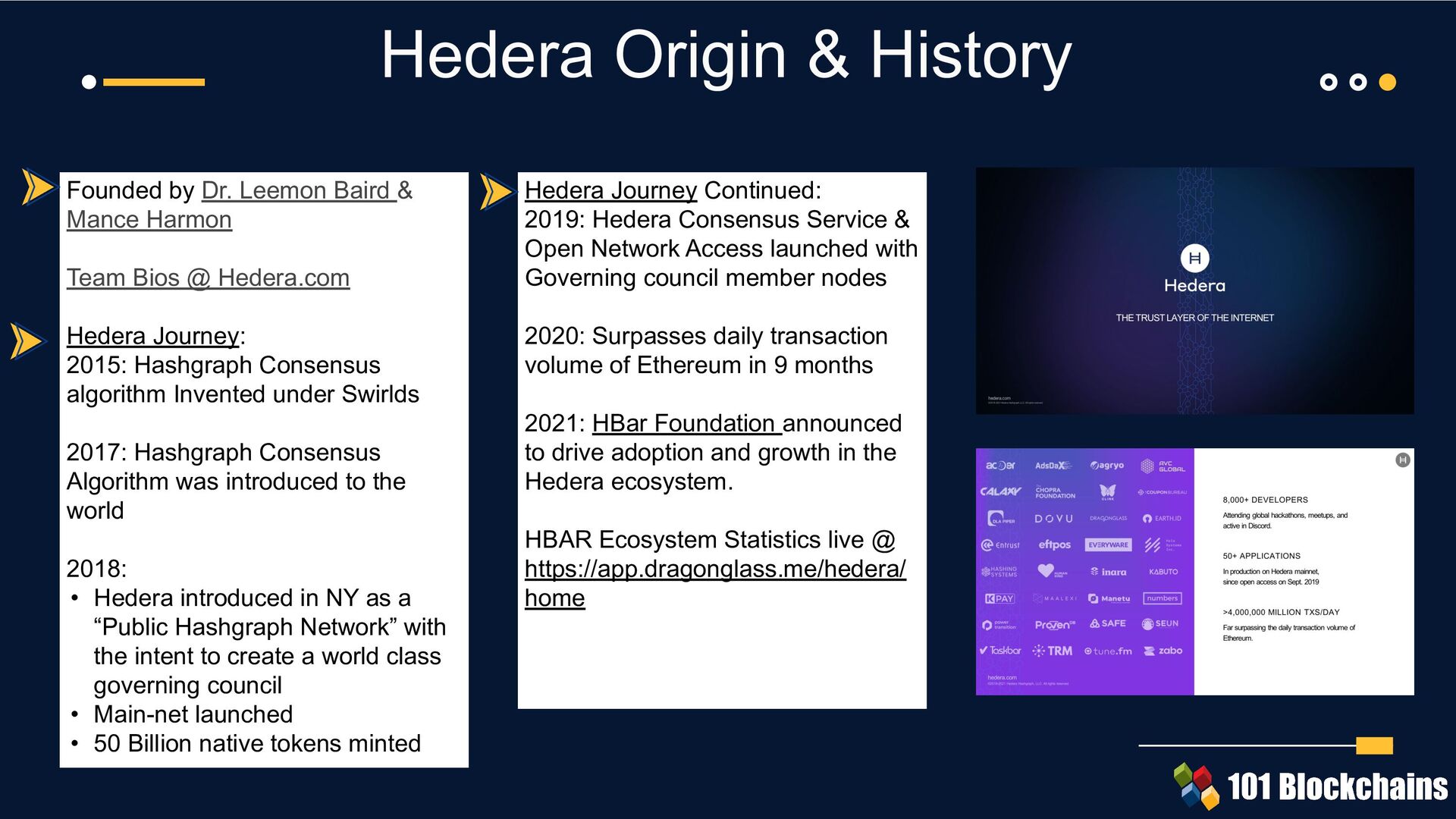
Mance Harmon Team Bios @ Hedera.com Hedera Journey: 2015: Hashgraph Consensus algorithm Invented under Swirlds 2017: Hashgraph Consensus Algorithm was introduced to the world 2018: • Hedera introduced in NY as a “Public Hashgraph Network” with the intent to create a world class governing council • Main-net launched • 50 Billion native tokens minted Hedera Journey Continued: 2019: Hedera Consensus Service & Open Network Access launched with Governing council member nodes 2020: Surpasses daily transaction volume of Ethereum in 9 months 2021: HBar Foundation announced to drive adoption and growth in the Hedera ecosystem. HBAR Ecosystem Statistics live @ https://app.dragonglass.me/hedera/ home
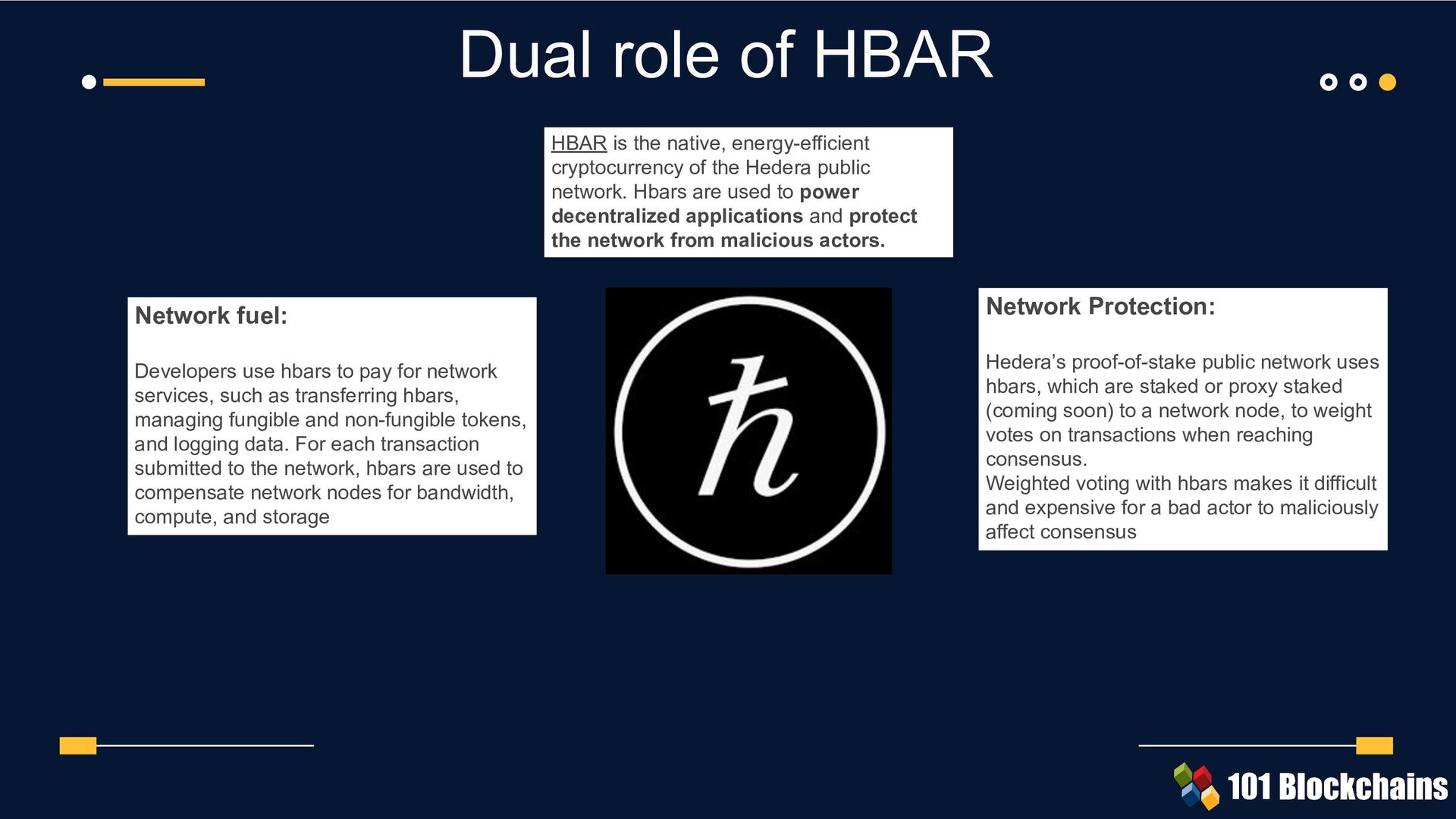
of the Hedera public network. Hbars are used to power decentralized applications and protect the network from malicious actors. Network fuel: Developers use hbars to pay for network services, such as transferring hbars, managing fungible and non-fungible tokens, and logging data. For each transaction submitted to the network, hbars are used to compensate network nodes for bandwidth, compute, and storage Network Protection: Hedera’s proof-of-stake public network uses hbars, which are staked or proxy staked (coming soon) to a network node, to weight votes on transactions when reaching consensus. Weighted voting with hbars makes it difficult and expensive for a bad actor to maliciously affect consensus
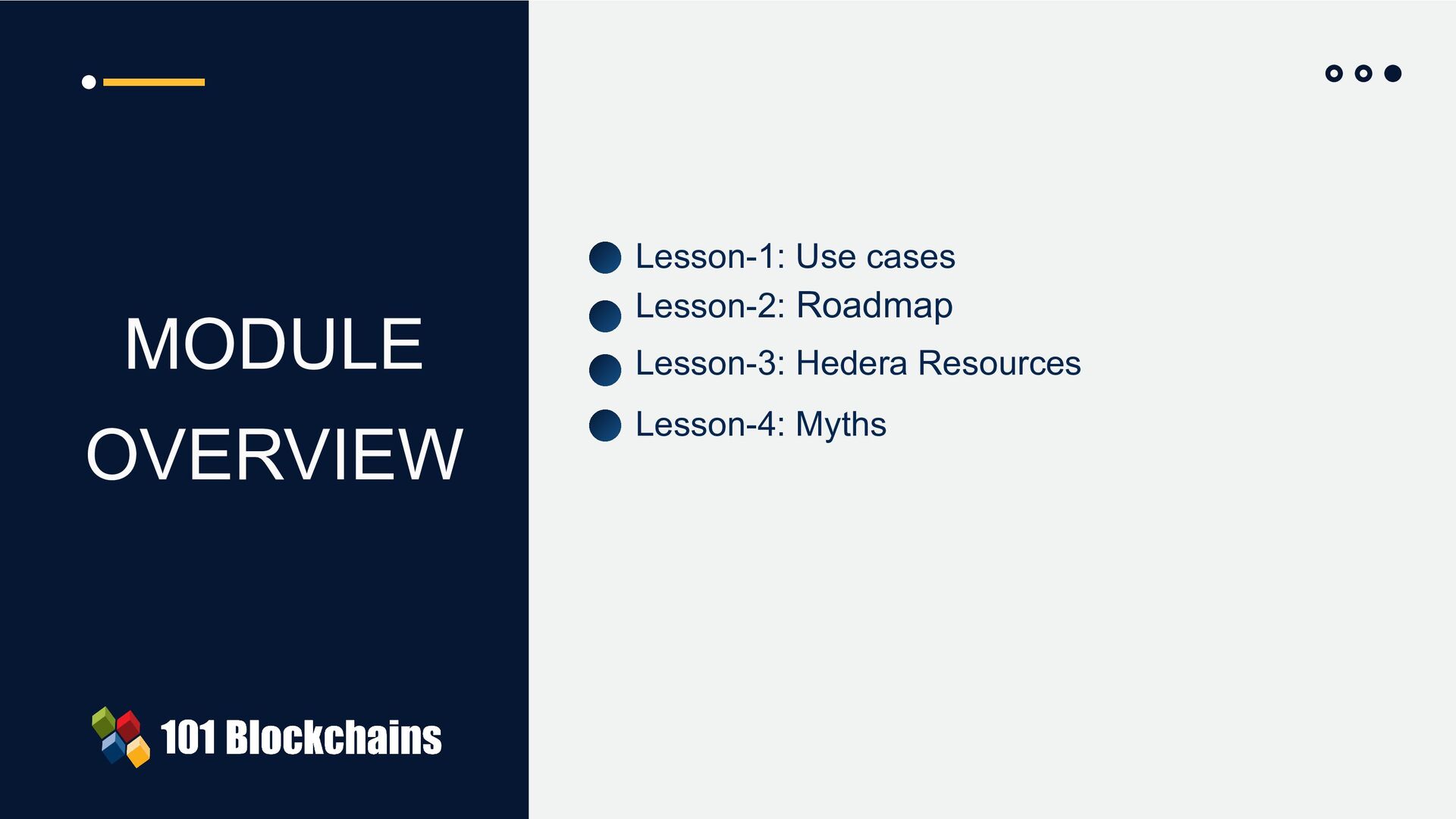
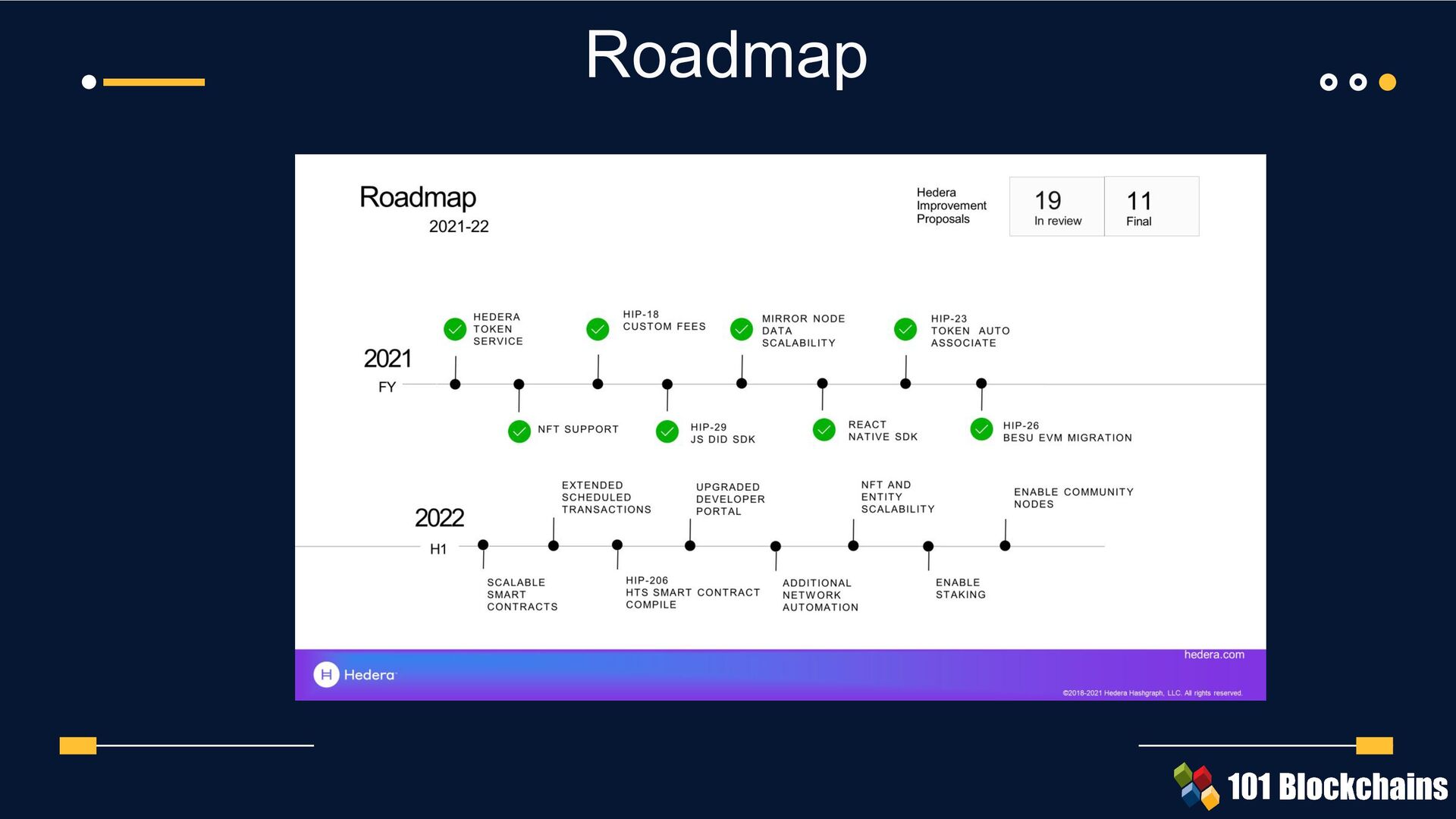
use cases is already addressing Get Insights into Upcoming features & functionality Know how to get engaged with Hedera Dispel some commonly held myths about Hedera
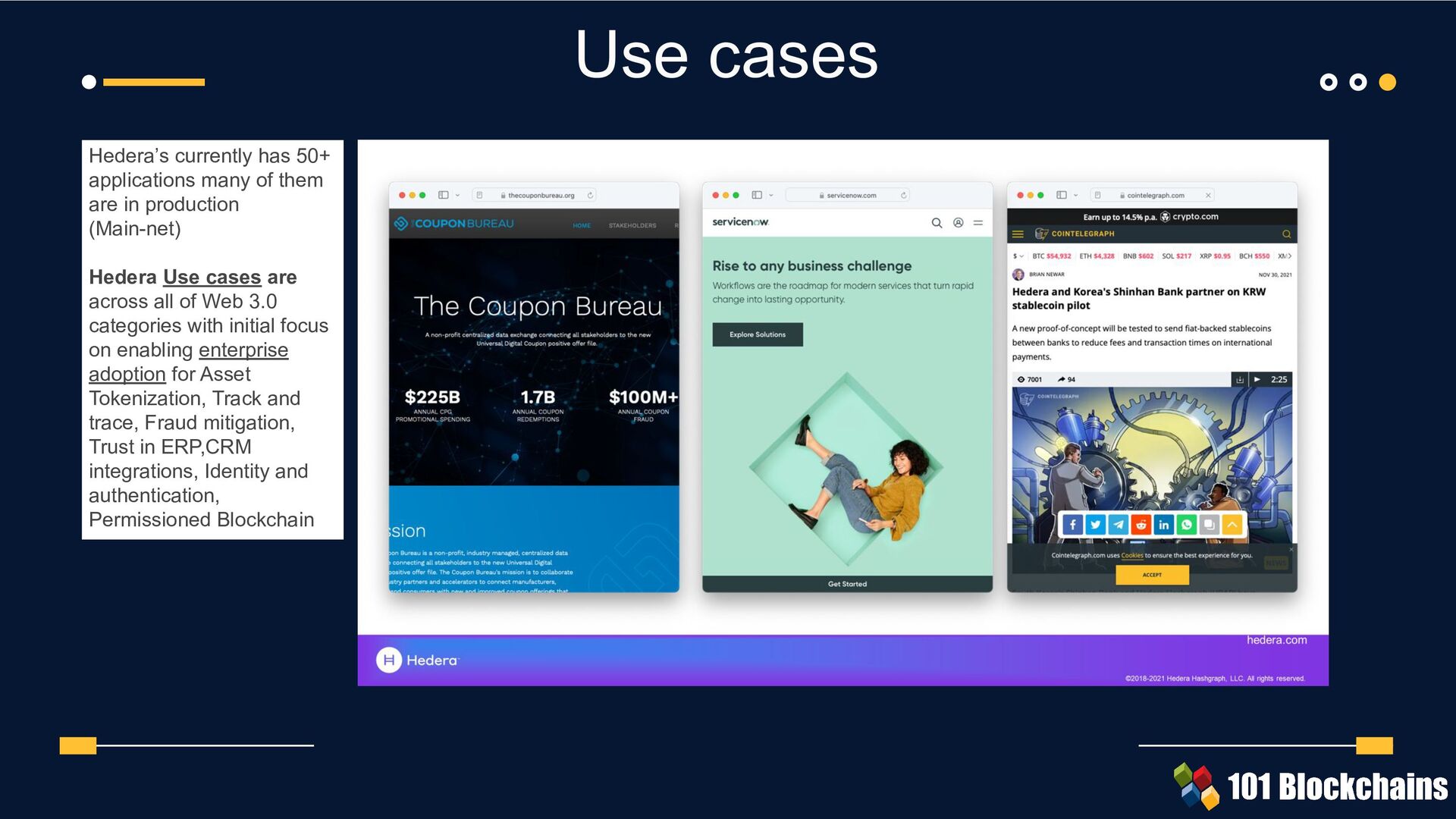
are in production (Main-net) Hedera Use cases are across all of Web 3.0 categories with initial focus on enabling enterprise adoption for Asset Tokenization, Track and trace, Fraud mitigation, Trust in ERP,CRM integrations, Identity and authentication, Permissioned Blockchain
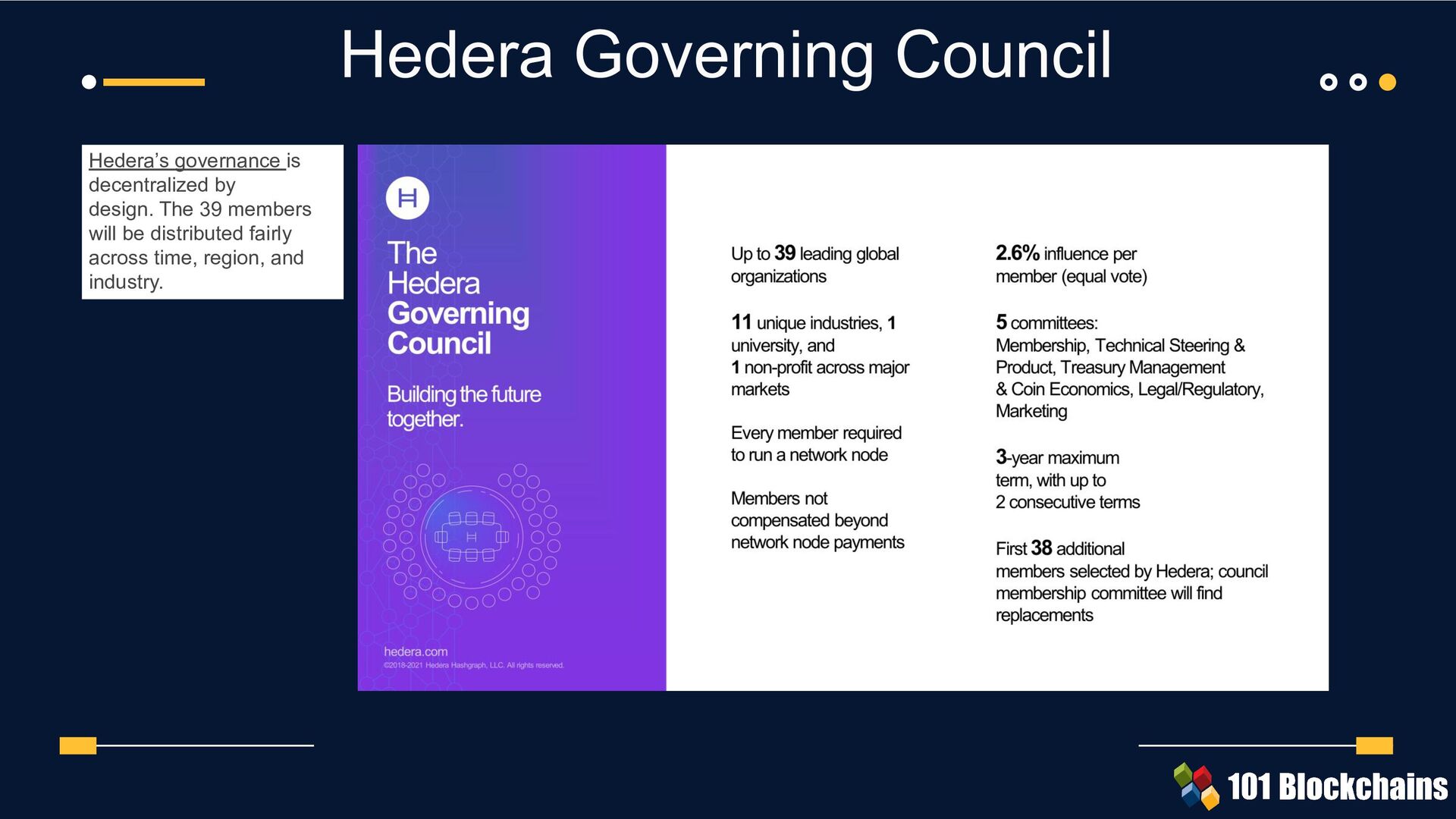
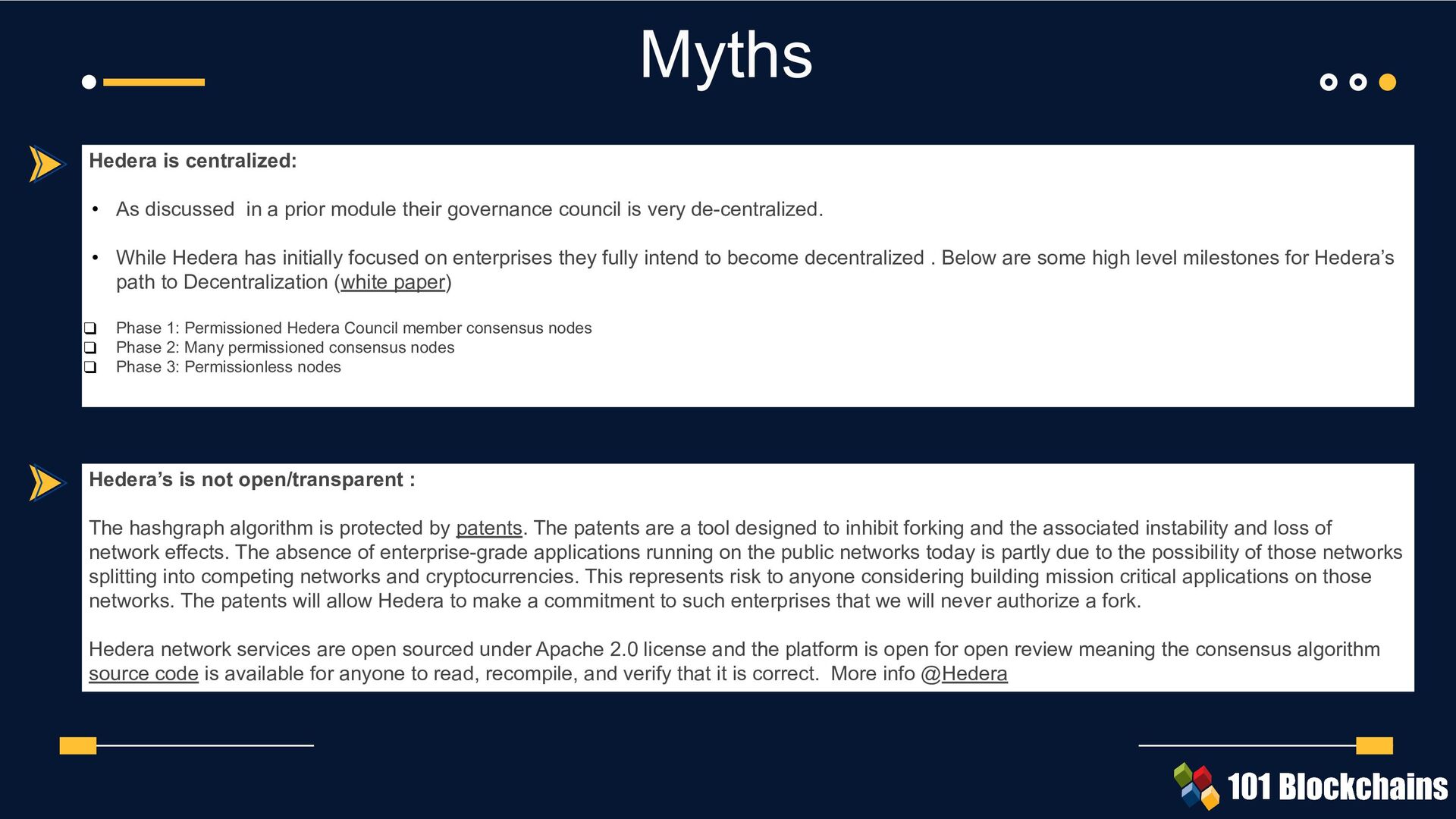
module their governance council is very de-centralized. • While Hedera has initially focused on enterprises they fully intend to become decentralized . Below are some high level milestones for Hedera’s path to Decentralization (white paper) ❑ Phase 1: Permissioned Hedera Council member consensus nodes ❑ Phase 2: Many permissioned consensus nodes ❑ Phase 3: Permissionless nodes Hedera’s is not open/transparent : The hashgraph algorithm is protected by patents. The patents are a tool designed to inhibit forking and the associated instability and loss of network effects. The absence of enterprise-grade applications running on the public networks today is partly due to the possibility of those networks splitting into competing networks and cryptocurrencies. This represents risk to anyone considering building mission critical applications on those networks. The patents will allow Hedera to make a commitment to such enterprises that we will never authorize a fork. Hedera network services are open sourced under Apache 2.0 license and the platform is open for open review meaning the consensus algorithm source code is available for anyone to read, recompile, and verify that it is correct. More info @Hedera
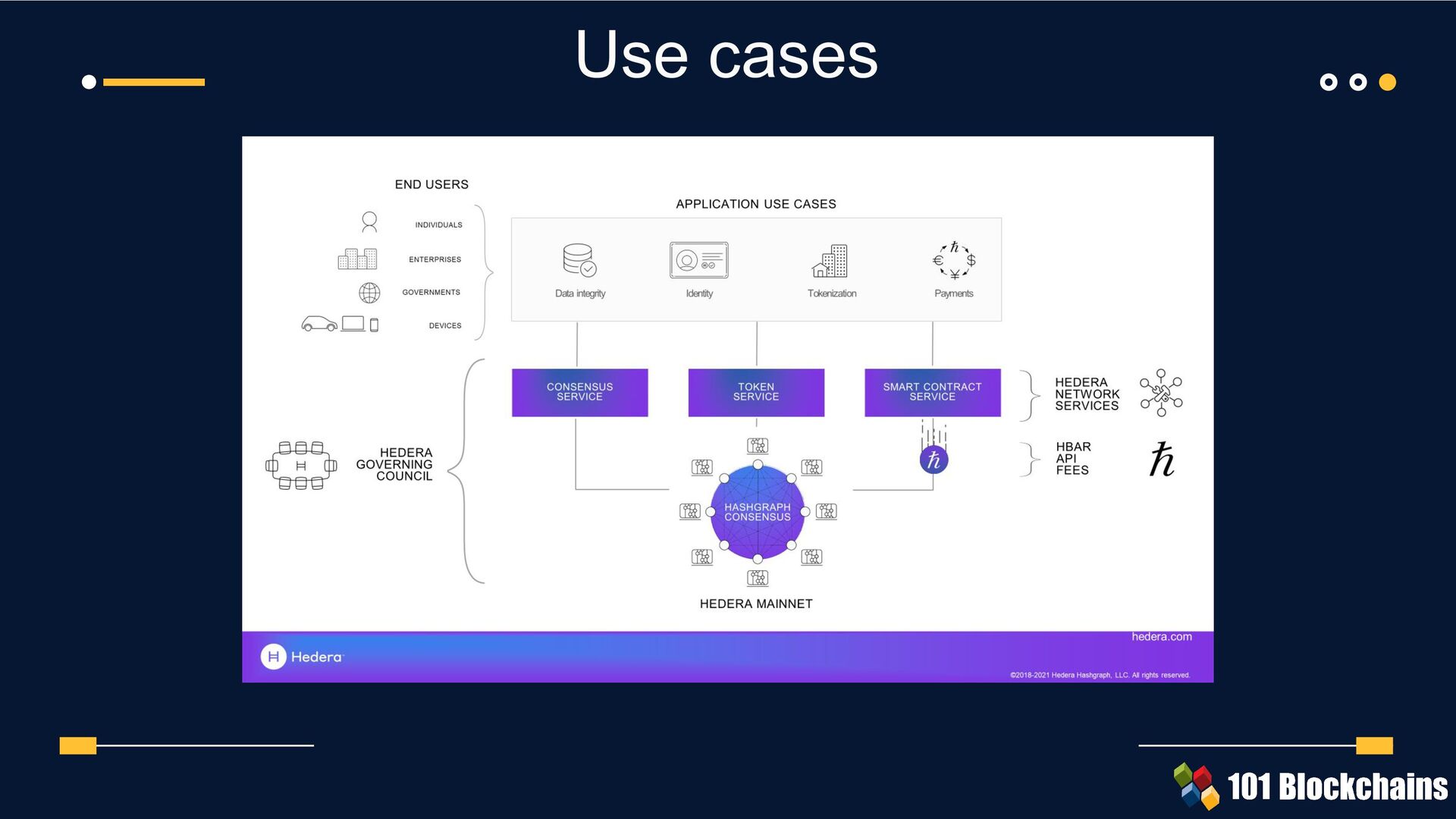
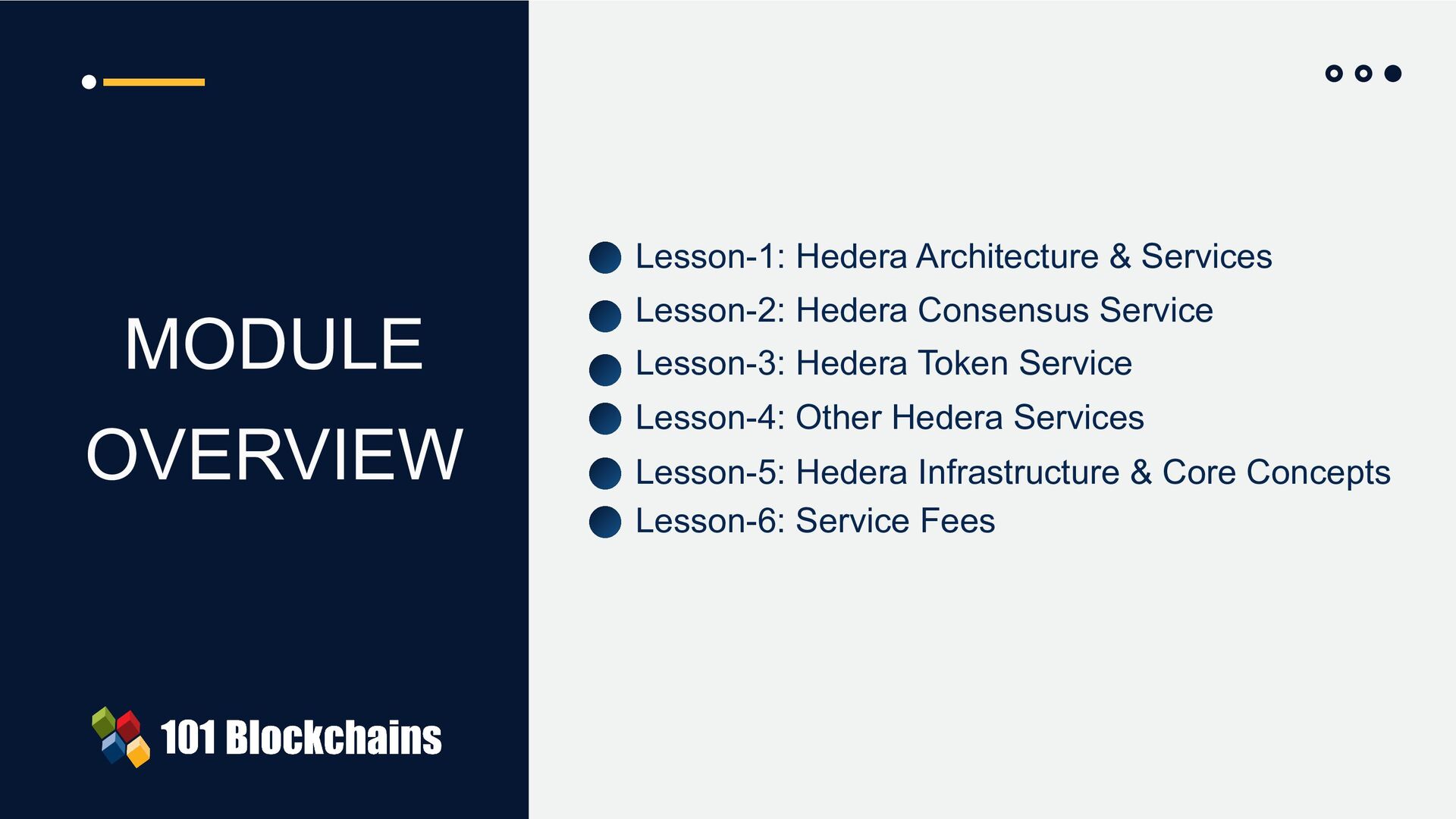
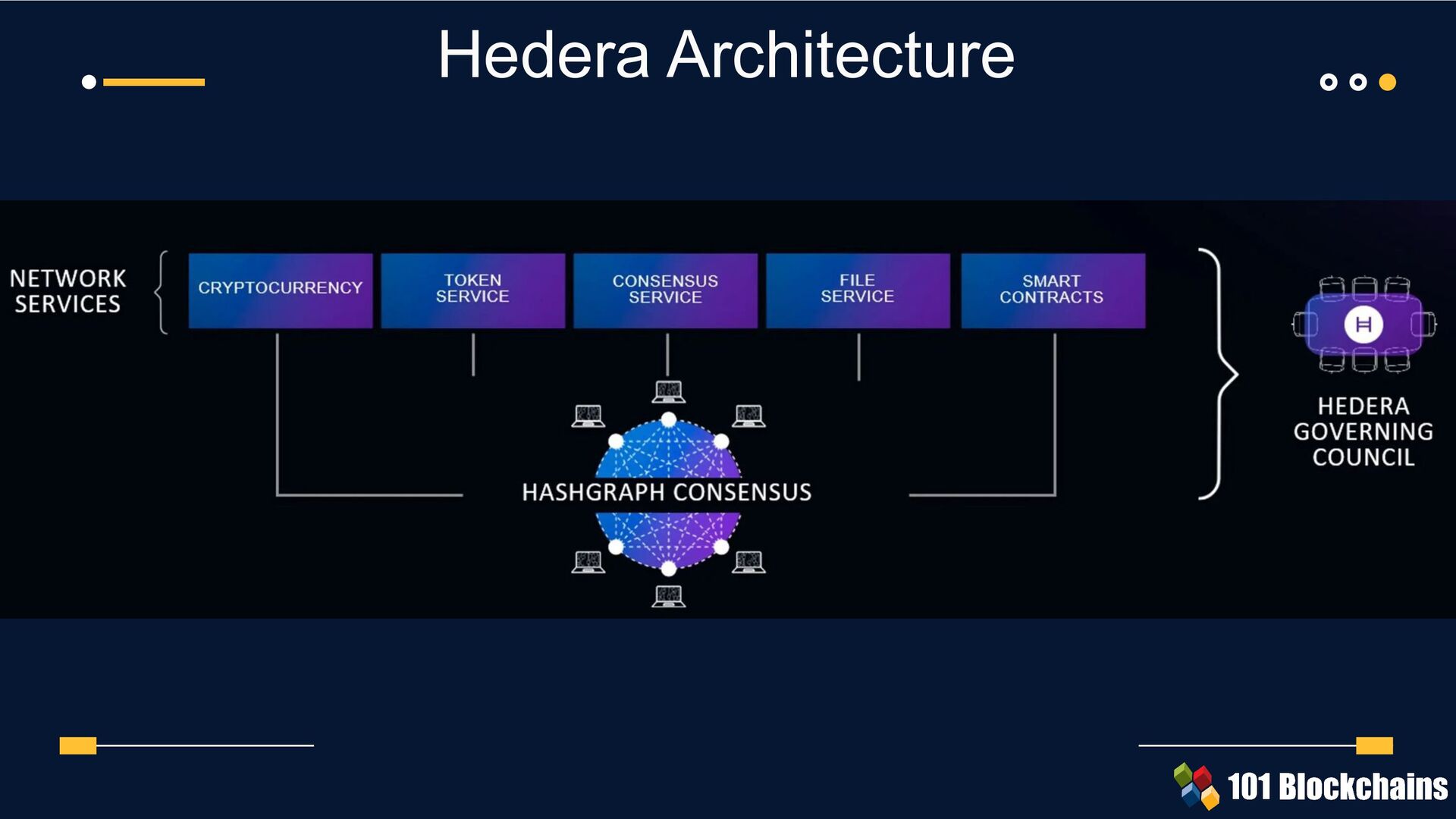
key services of Hedera and where they stand in the general Hedera architecture Conceptual and logical view of how the services can be leveraged to build out DApps Understand how pricing of these services are structured
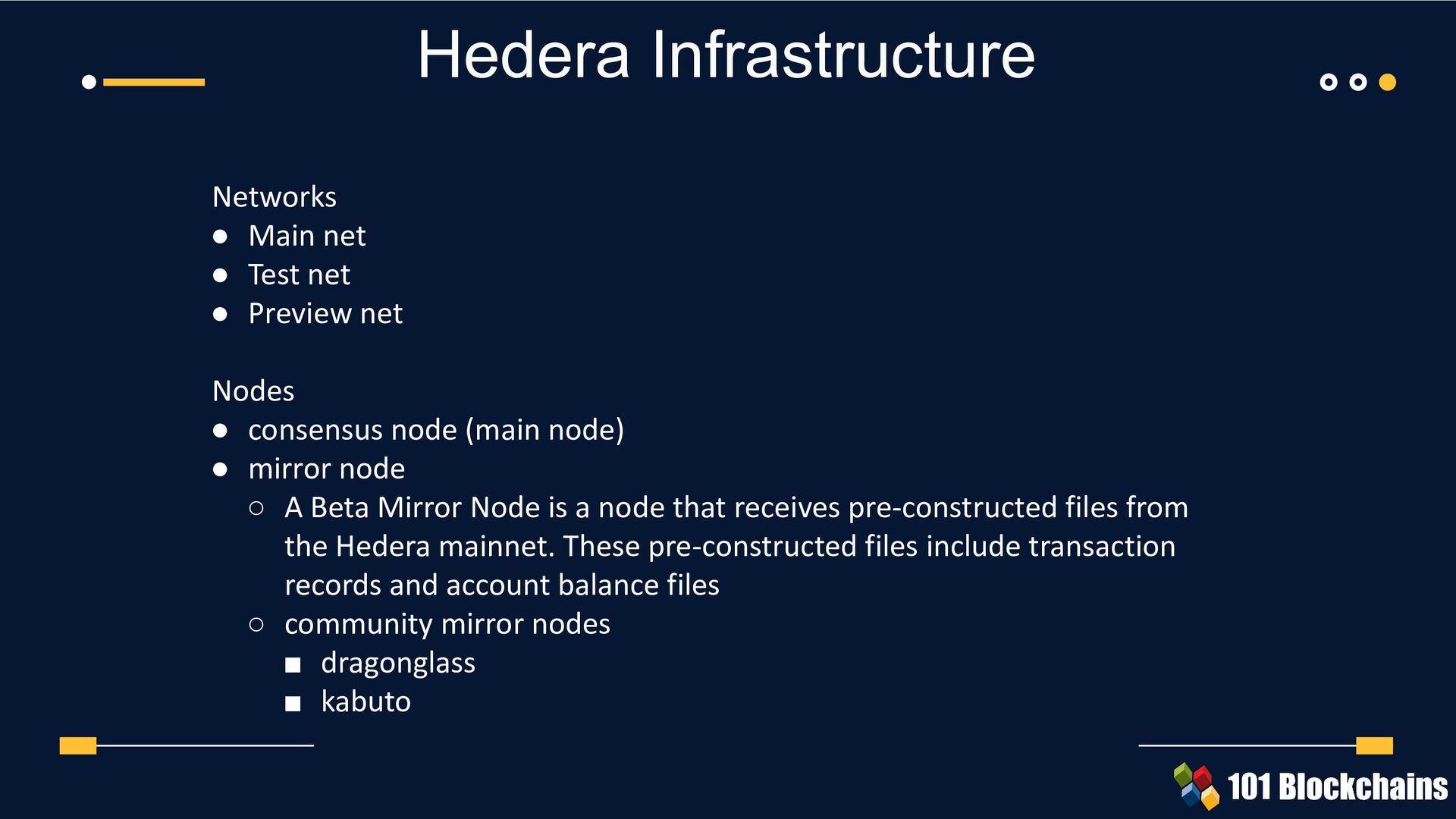
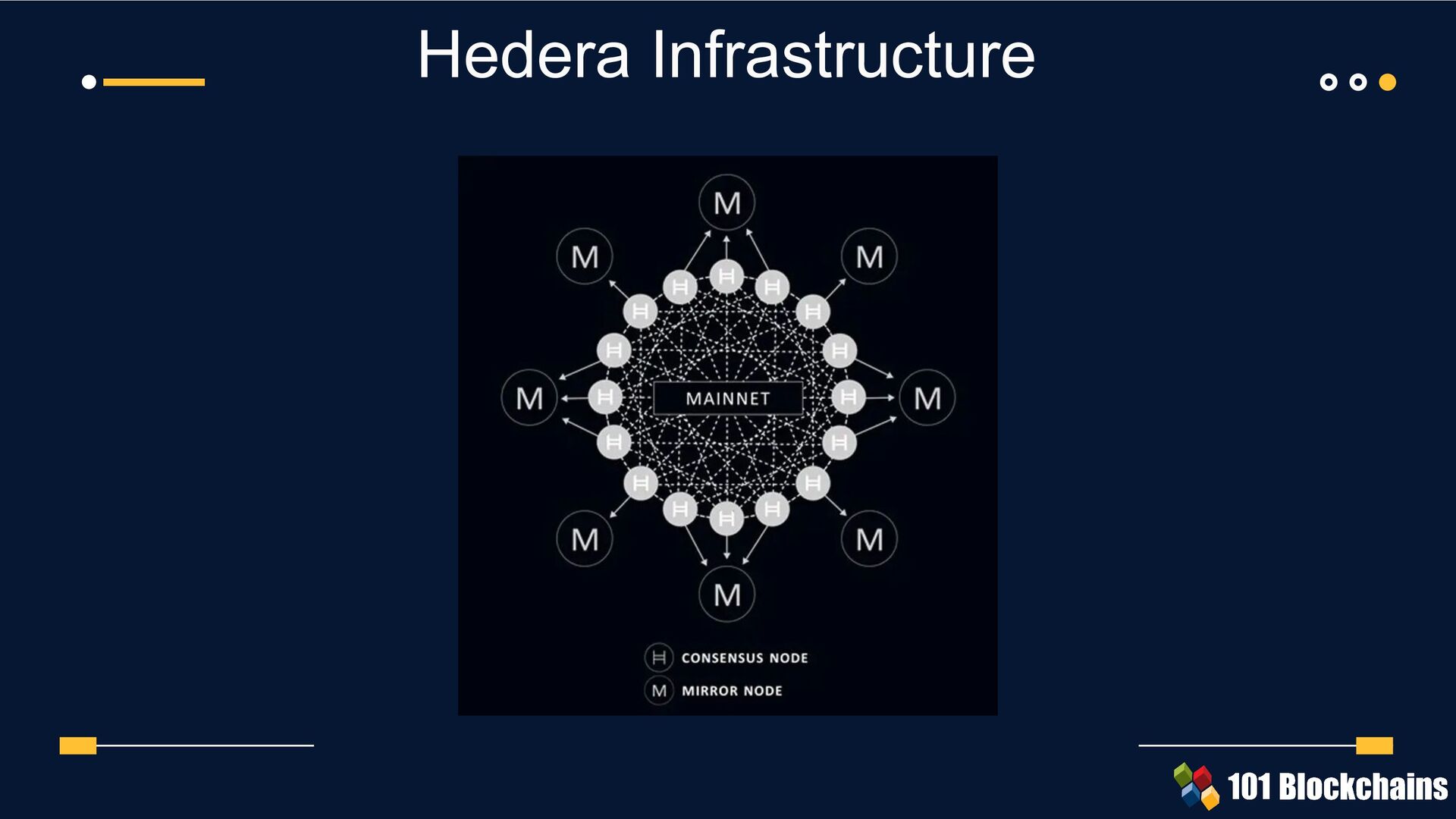
Preview net Nodes • consensus node (main node) • mirror node ◦ A Beta Mirror Node is a node that receives pre-constructed files from the Hedera mainnet. These pre-constructed files include transaction records and account balance files ◦ community mirror nodes ▪ dragonglass ▪ kabuto
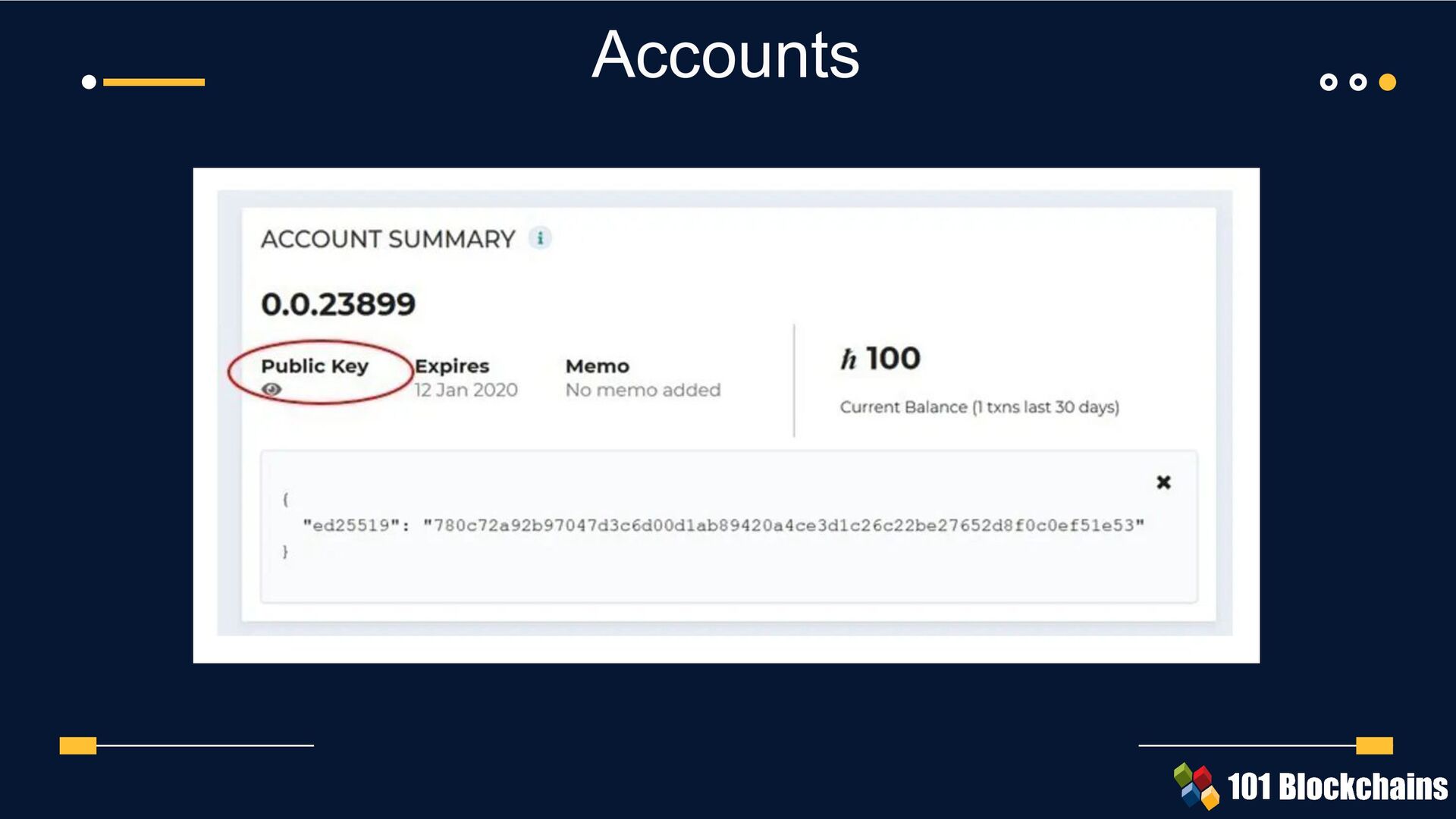
hold hbar which are used to pay for the transaction and query fees • Hedera accounts can be created, updated, or deleted and are represented by an account ID • To create an account, you need an existing account that can pay for the associated transaction fees for the new account and to optionally fund the new account with an initial balance
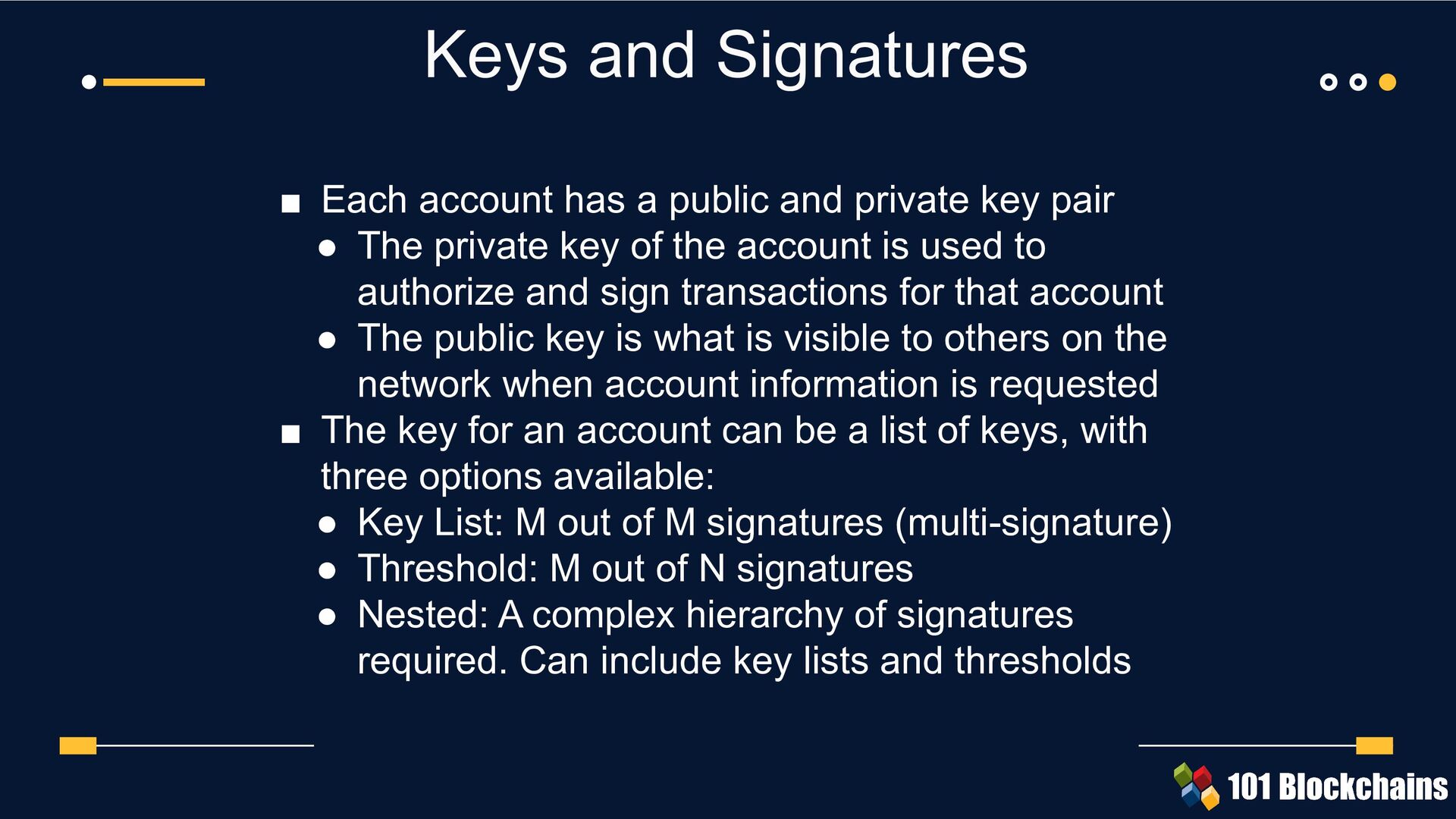
private key pair • The private key of the account is used to authorize and sign transactions for that account • The public key is what is visible to others on the network when account information is requested ▪ The key for an account can be a list of keys, with three options available: • Key List: M out of M signatures (multi-signature) • Threshold: M out of N signatures • Nested: A complex hierarchy of signatures required. Can include key lists and thresholds
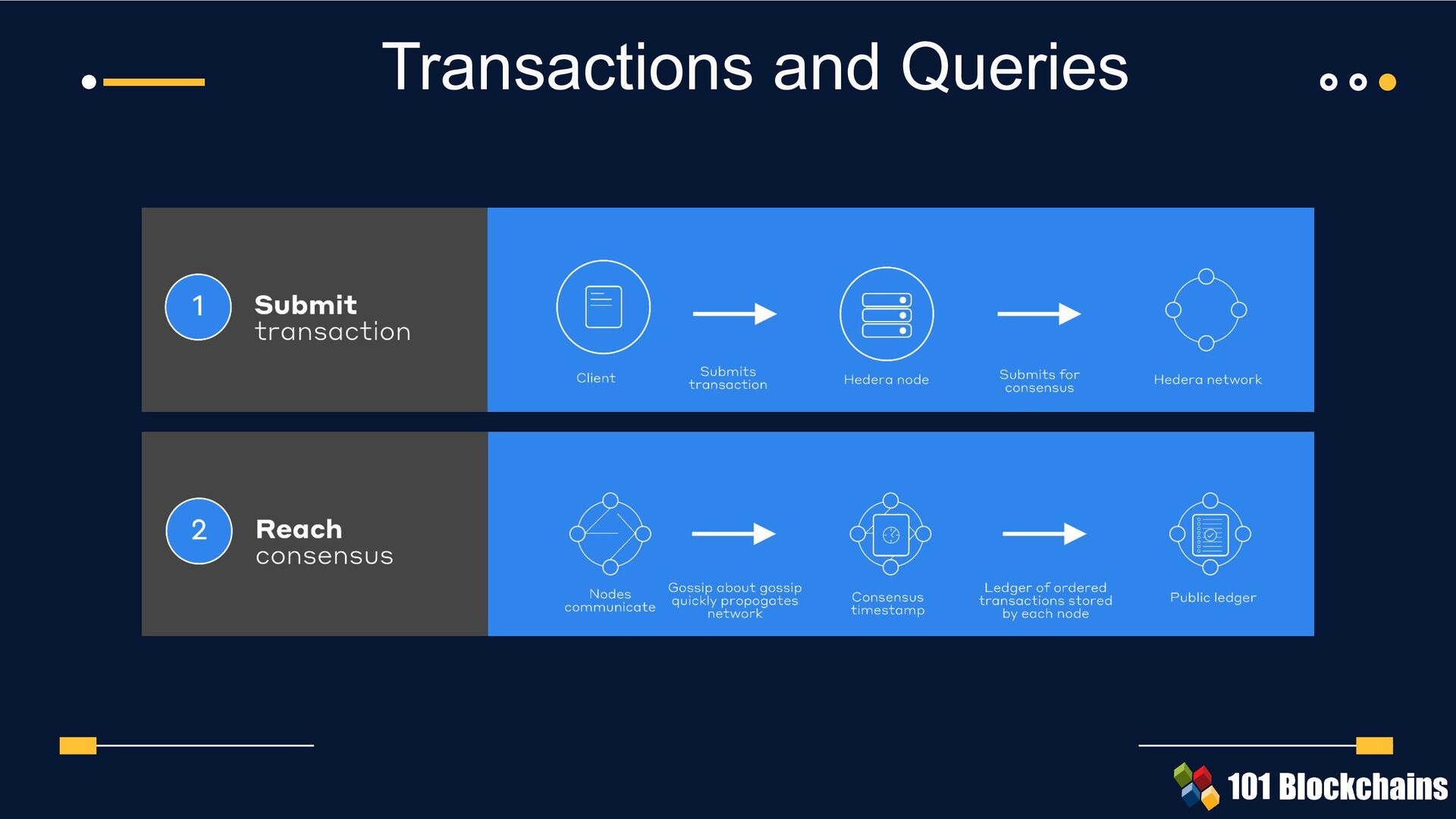
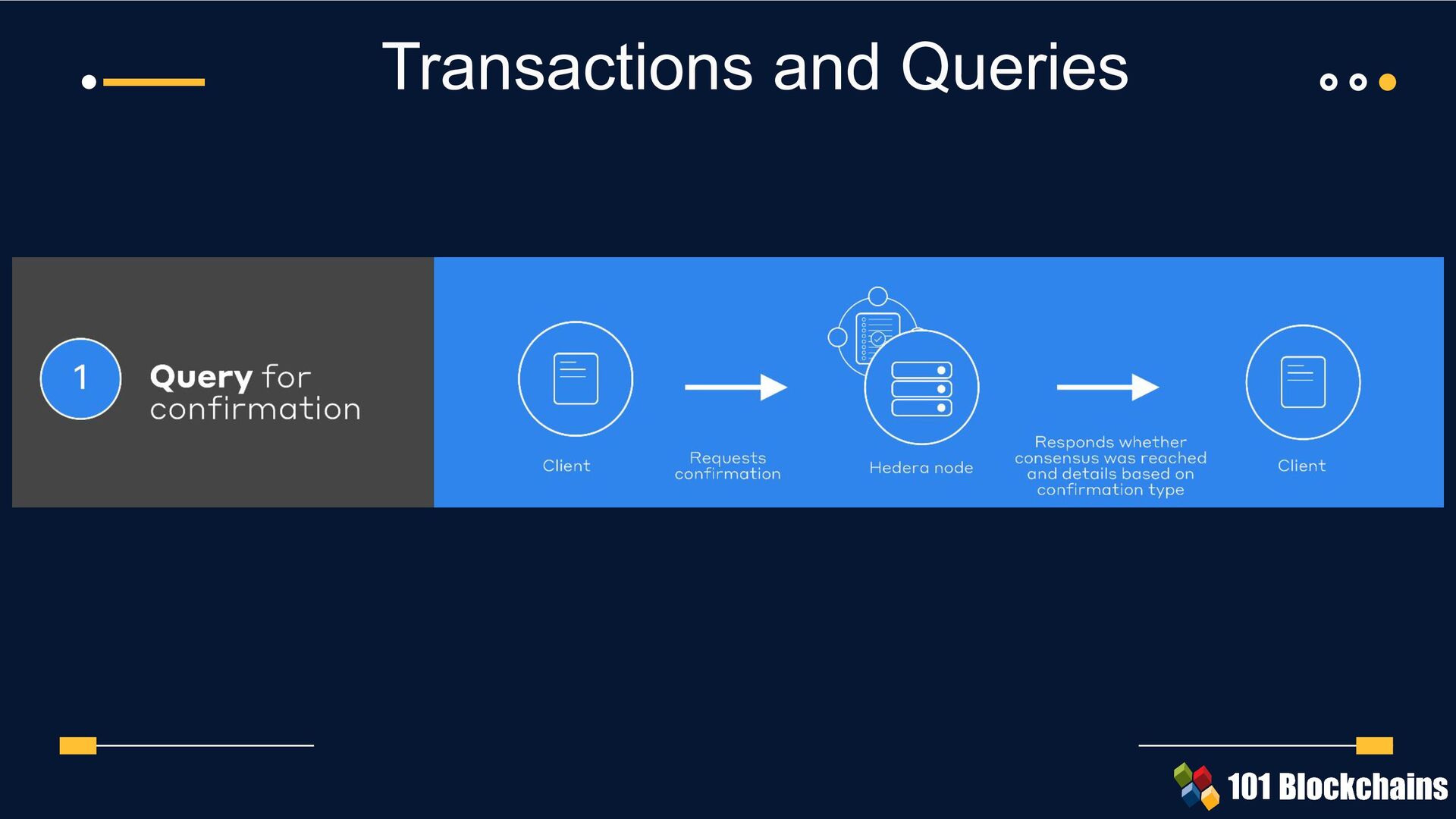
client to the network for processing. Each transaction has an associated transaction fee that compensates the Hedera network for that processing and subsequent maintenance in consensus state • Scheduled transactions enable execution when time and signature requirements are met, which makes them ideal for multi-signature transactions when you don’t have all required signatures immediately available ▪ Queries are sent by clients to a single node to retrieve some aspect of the current consensus state, like the balance of an account
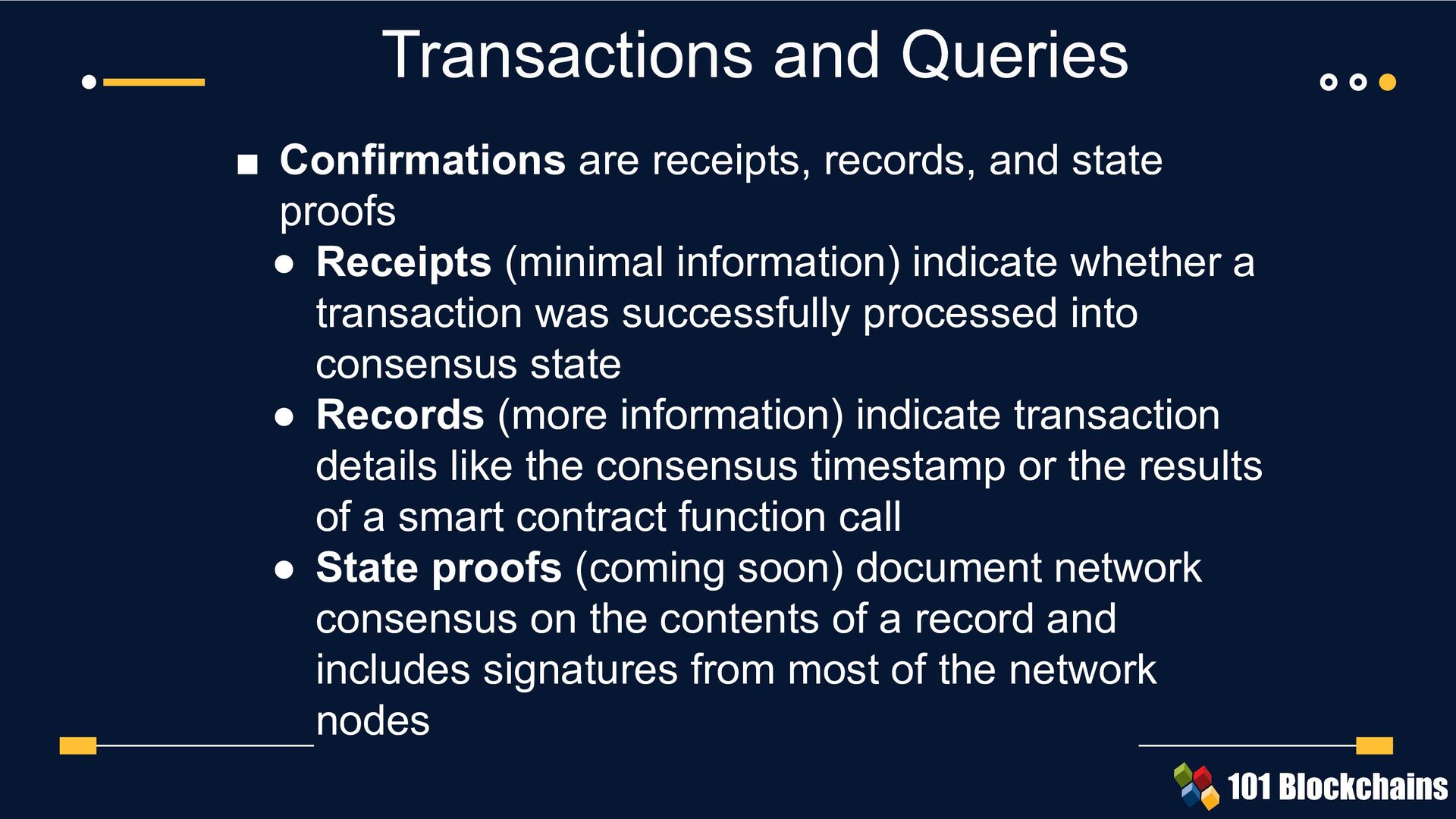
proofs • Receipts (minimal information) indicate whether a transaction was successfully processed into consensus state • Records (more information) indicate transaction details like the consensus timestamp or the results of a smart contract function call • State proofs (coming soon) document network consensus on the contents of a record and includes signatures from most of the network nodes
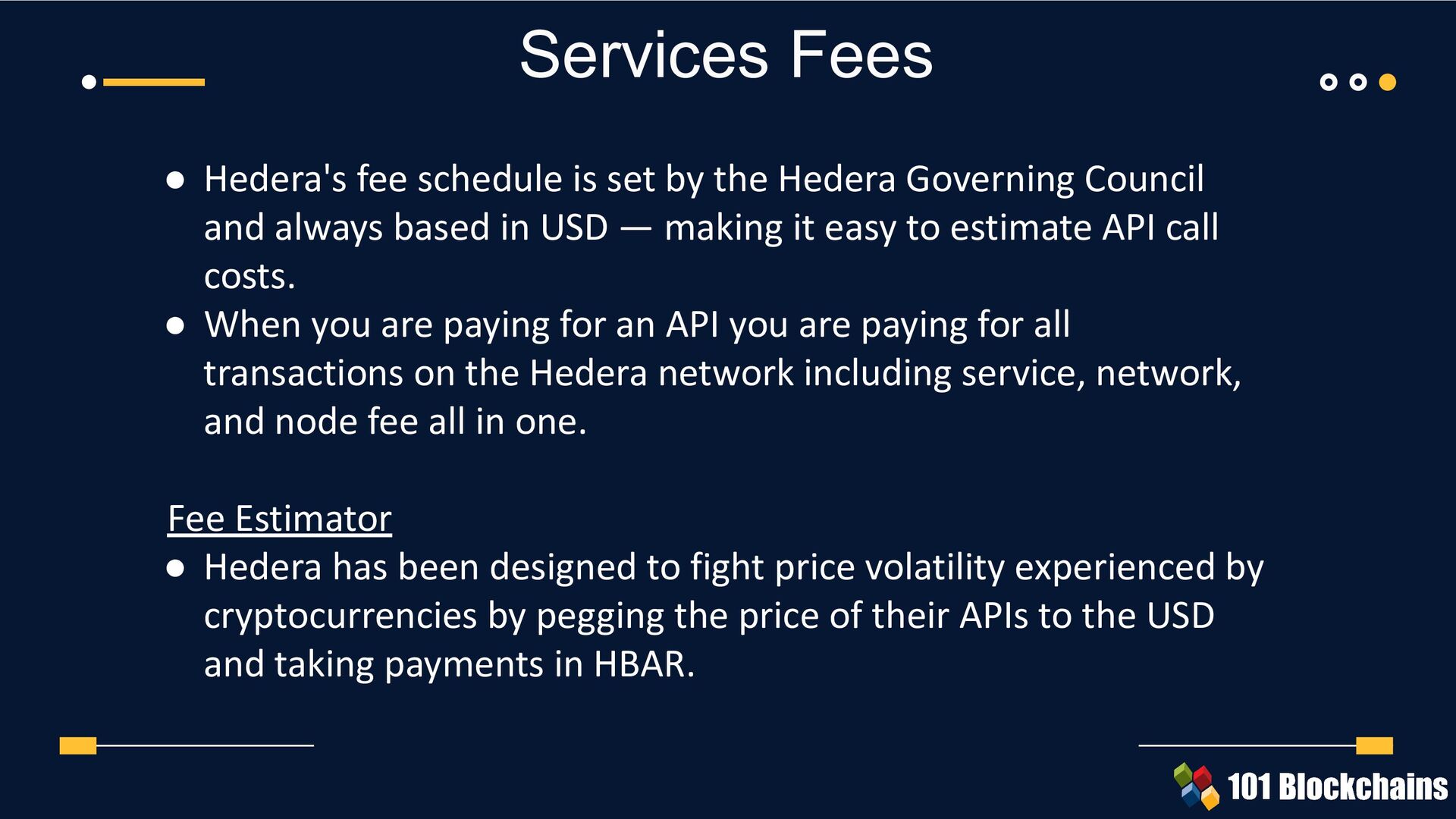
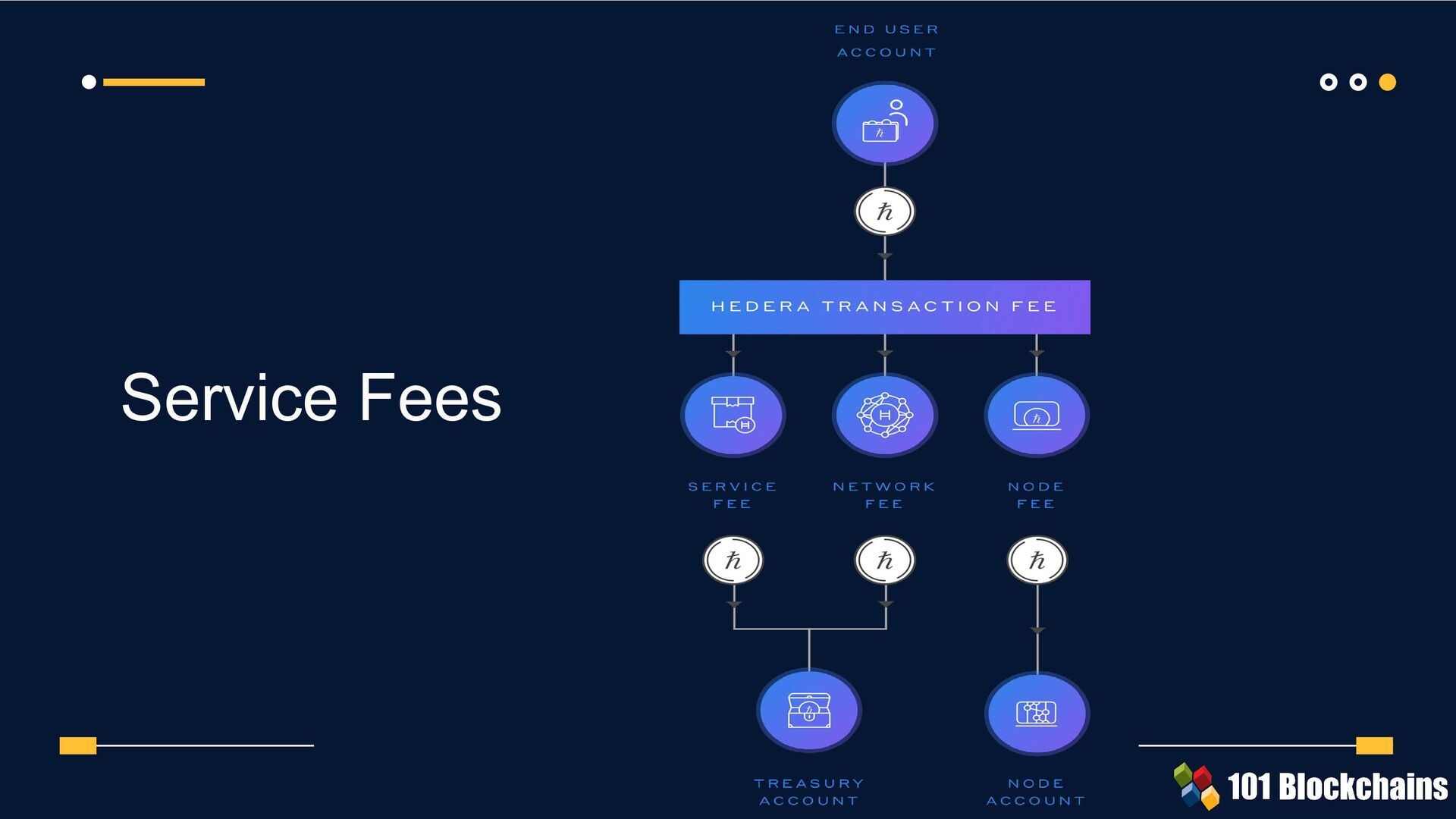
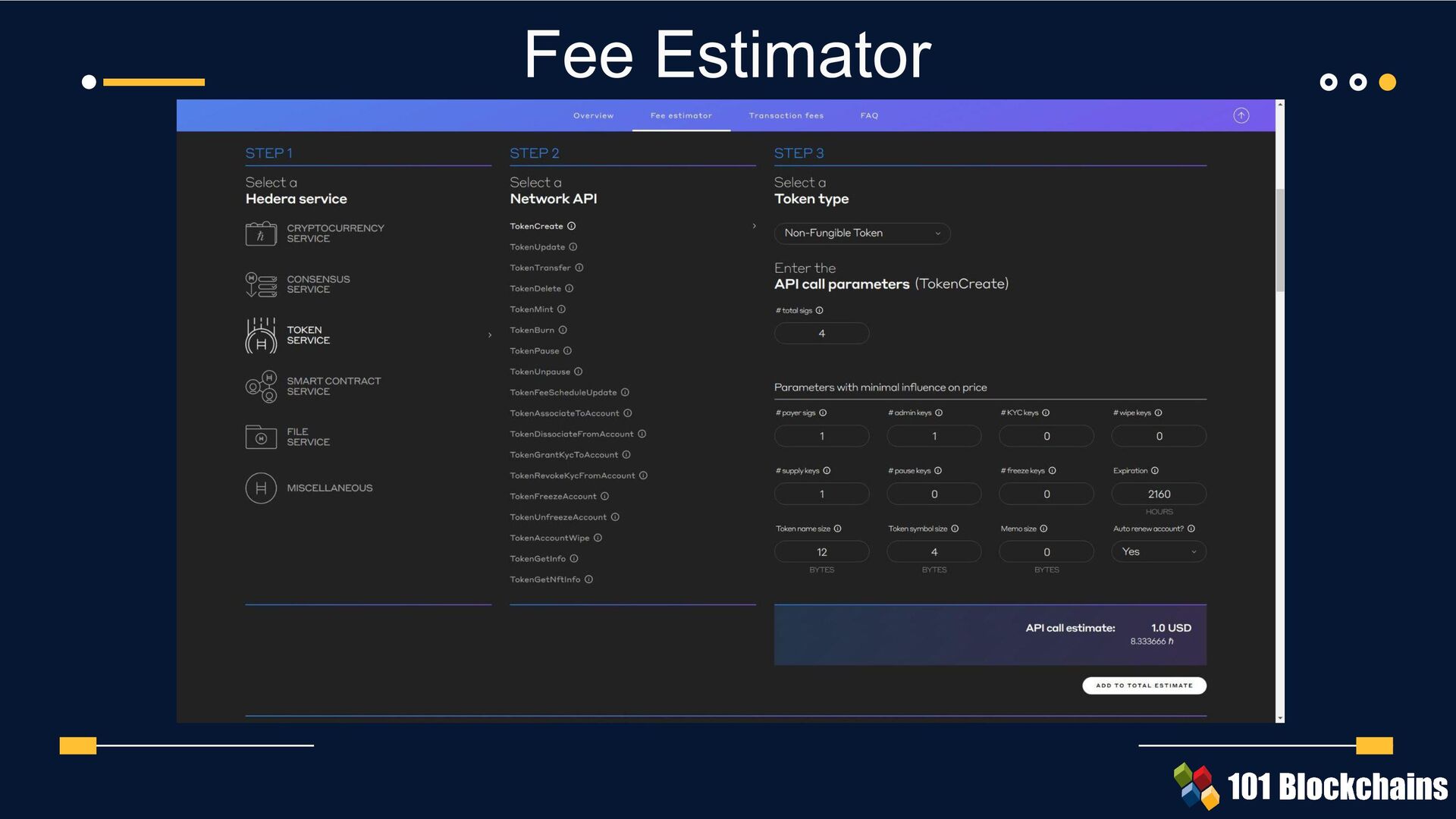
Hedera Governing Council and always based in USD — making it easy to estimate API call costs. • When you are paying for an API you are paying for all transactions on the Hedera network including service, network, and node fee all in one. Fee Estimator • Hedera has been designed to fight price volatility experienced by cryptocurrencies by pegging the price of their APIs to the USD and taking payments in HBAR.
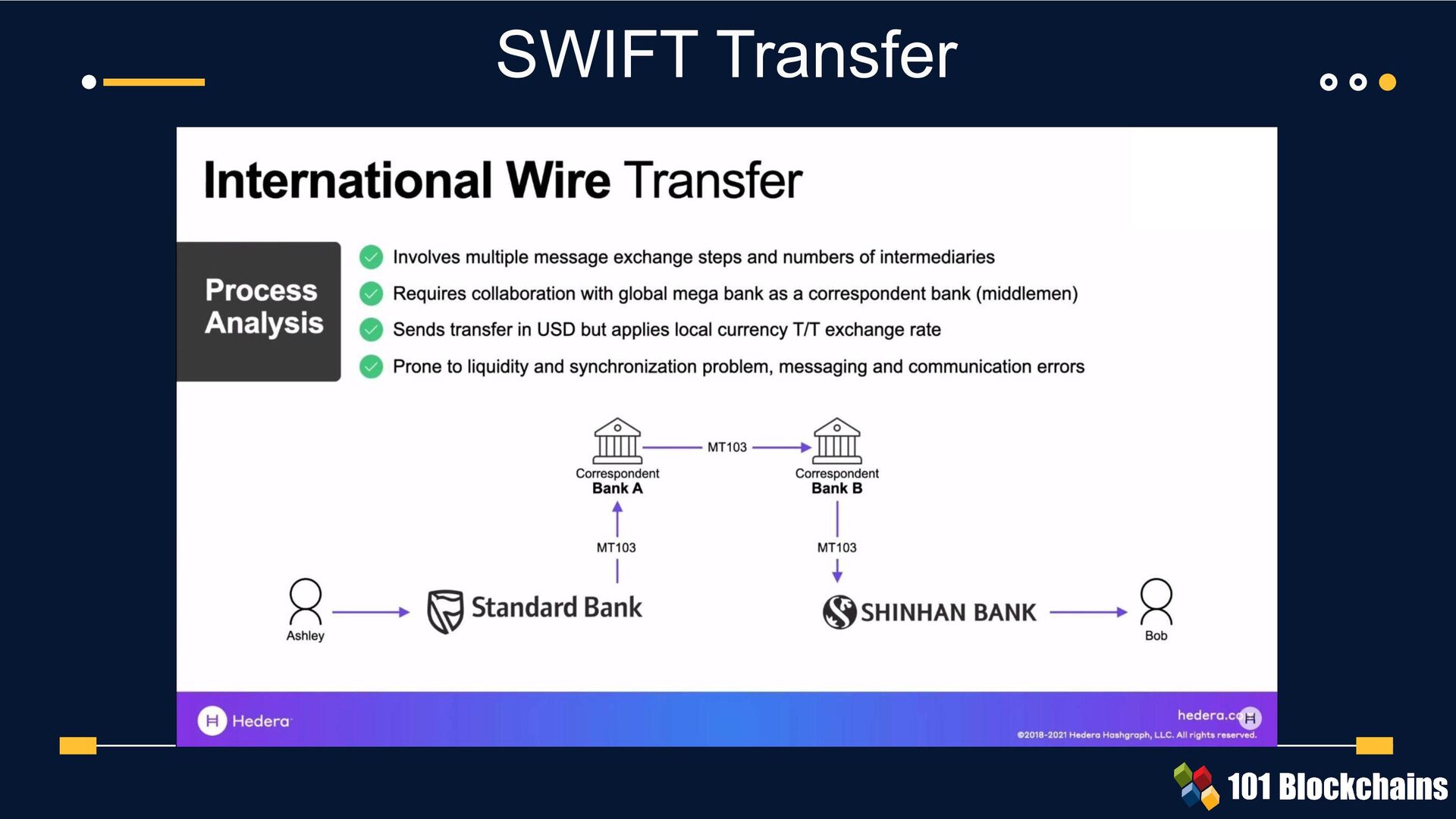
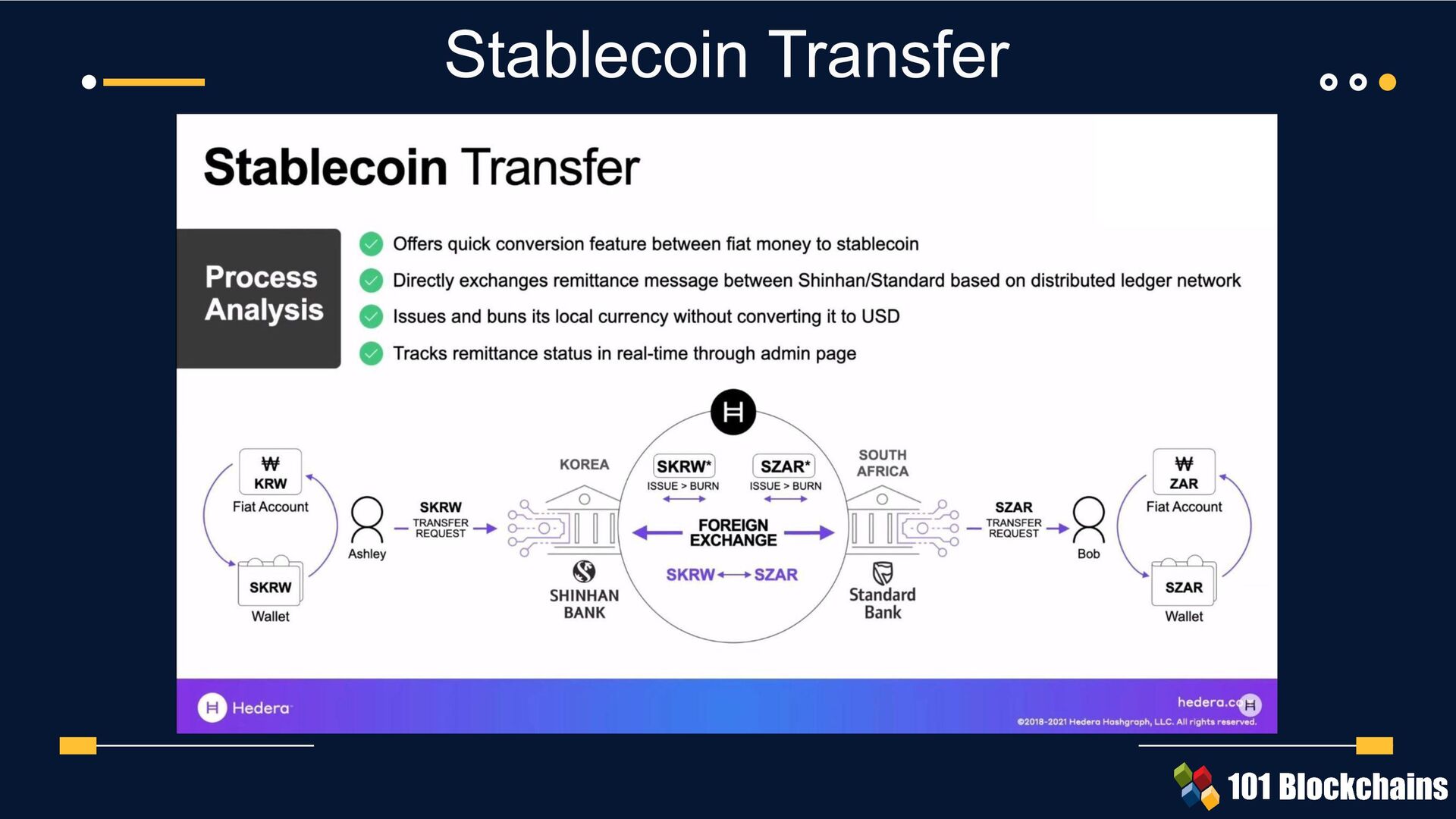
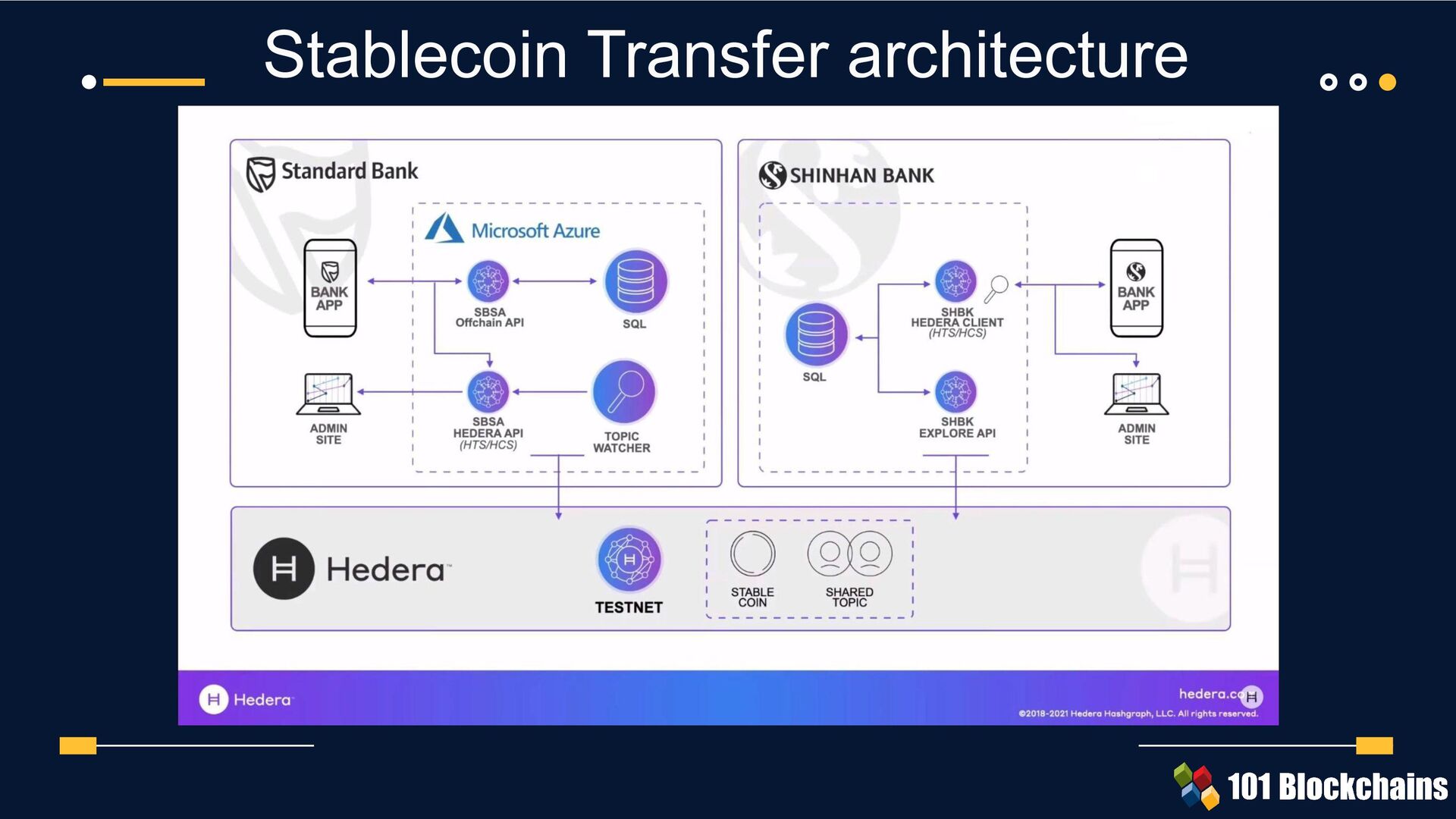
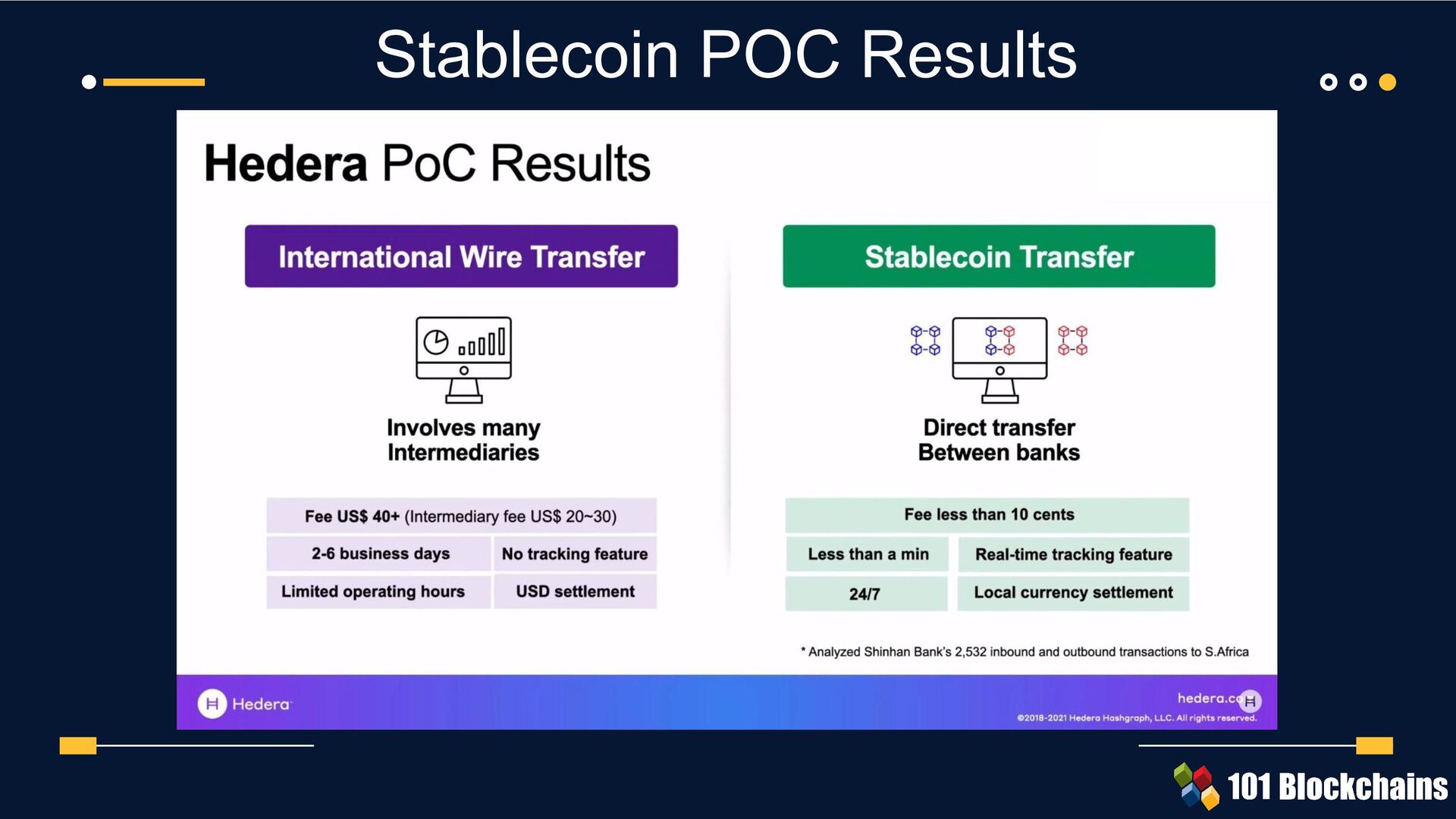
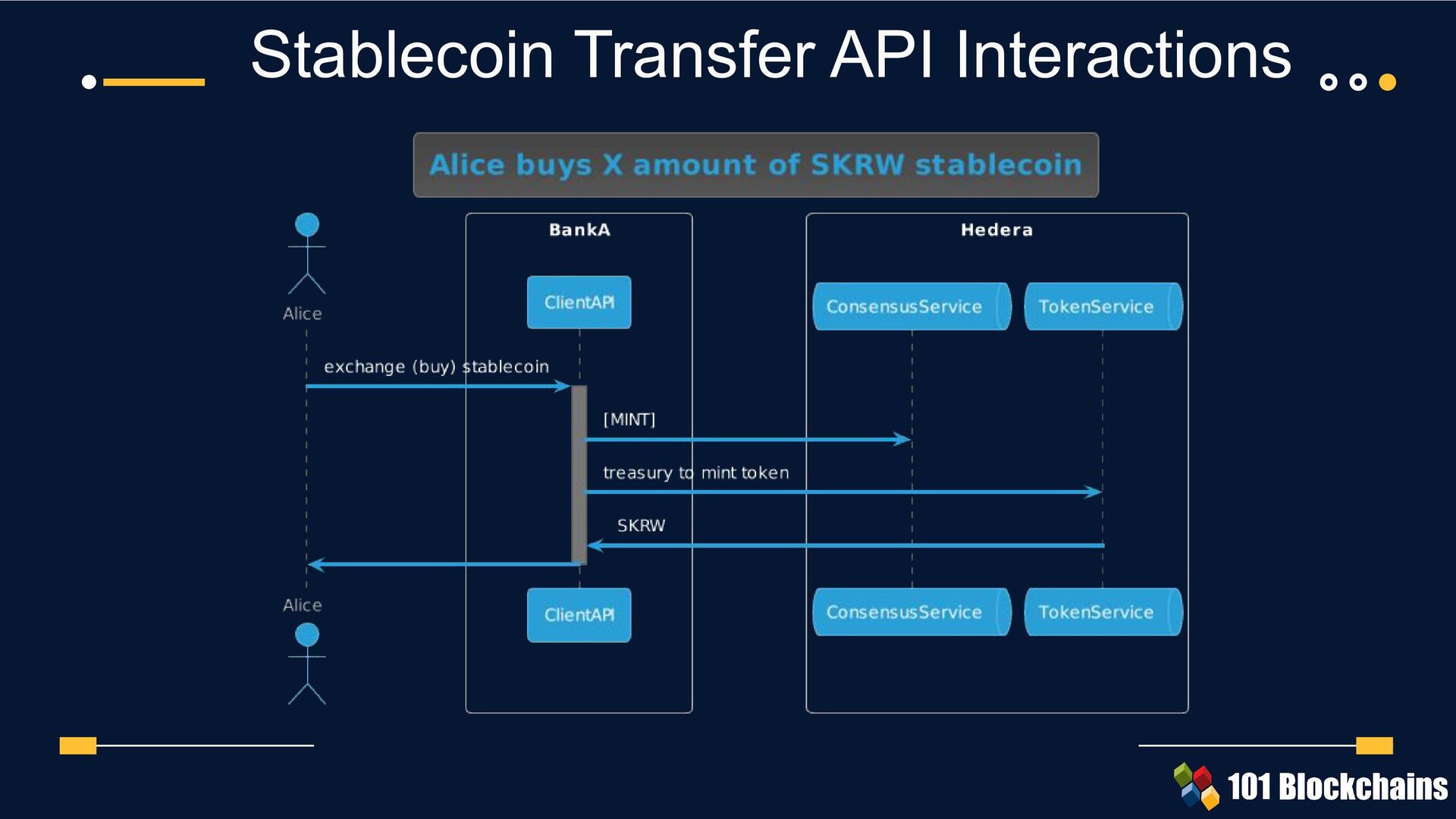
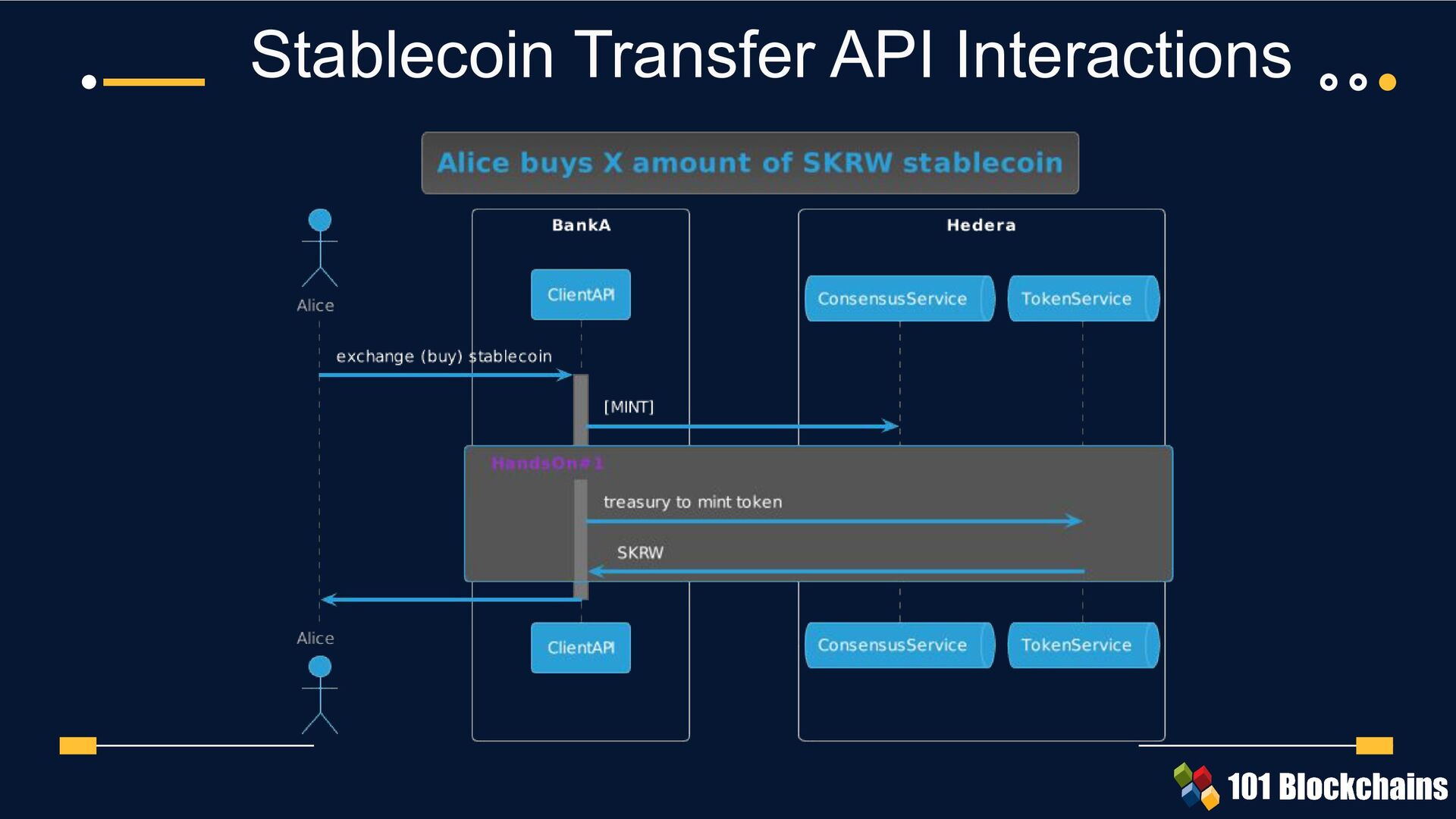
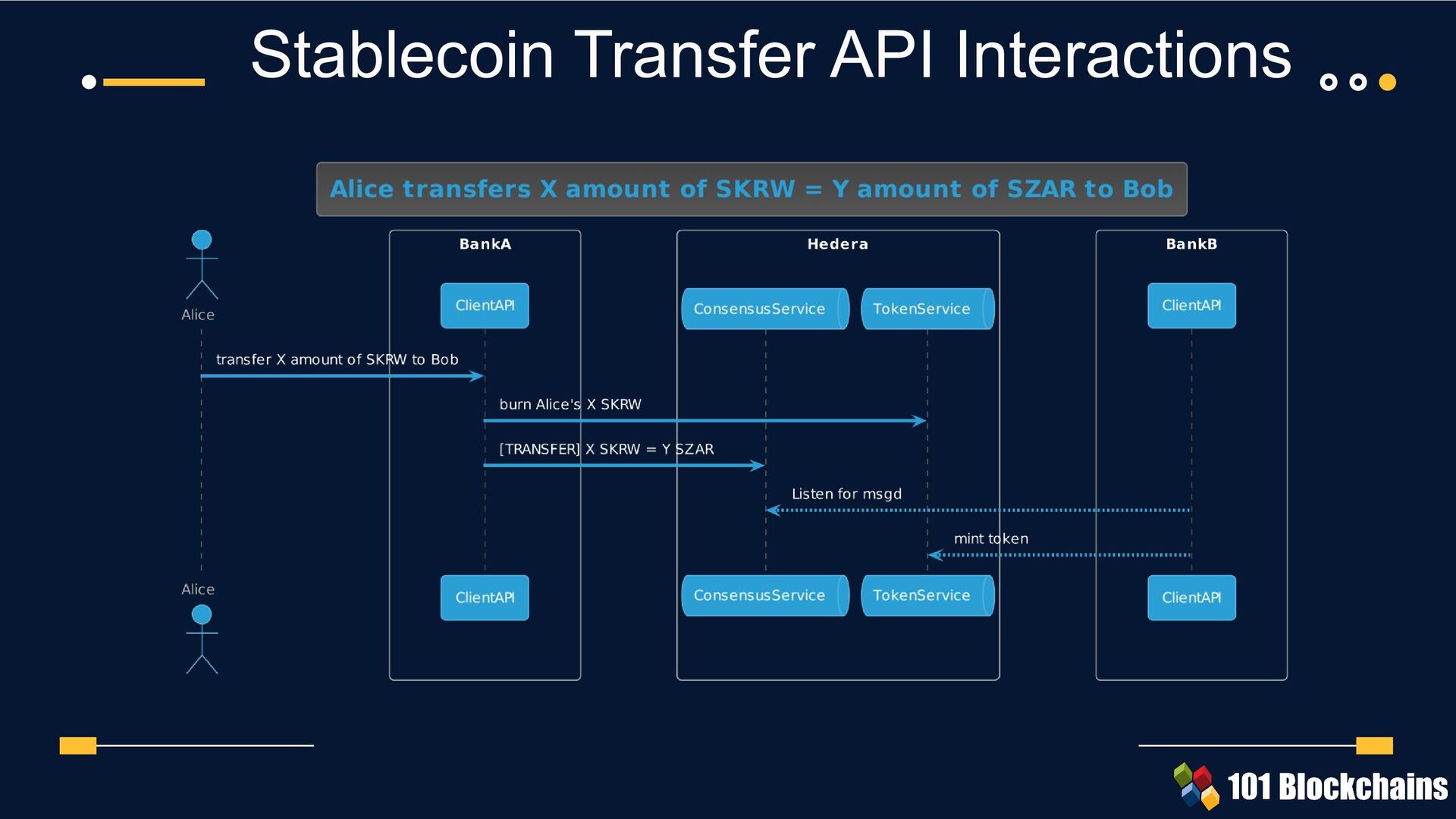
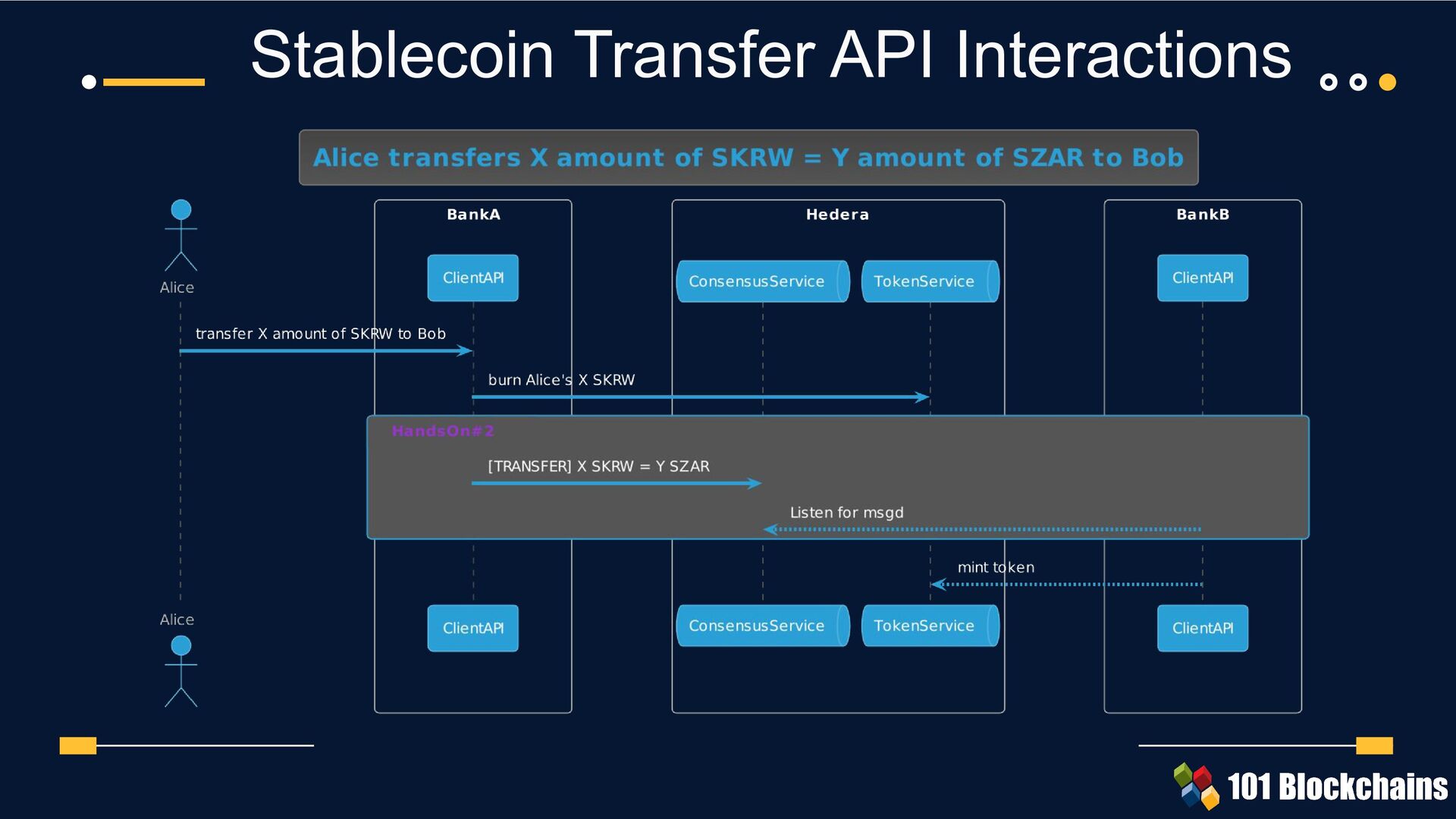
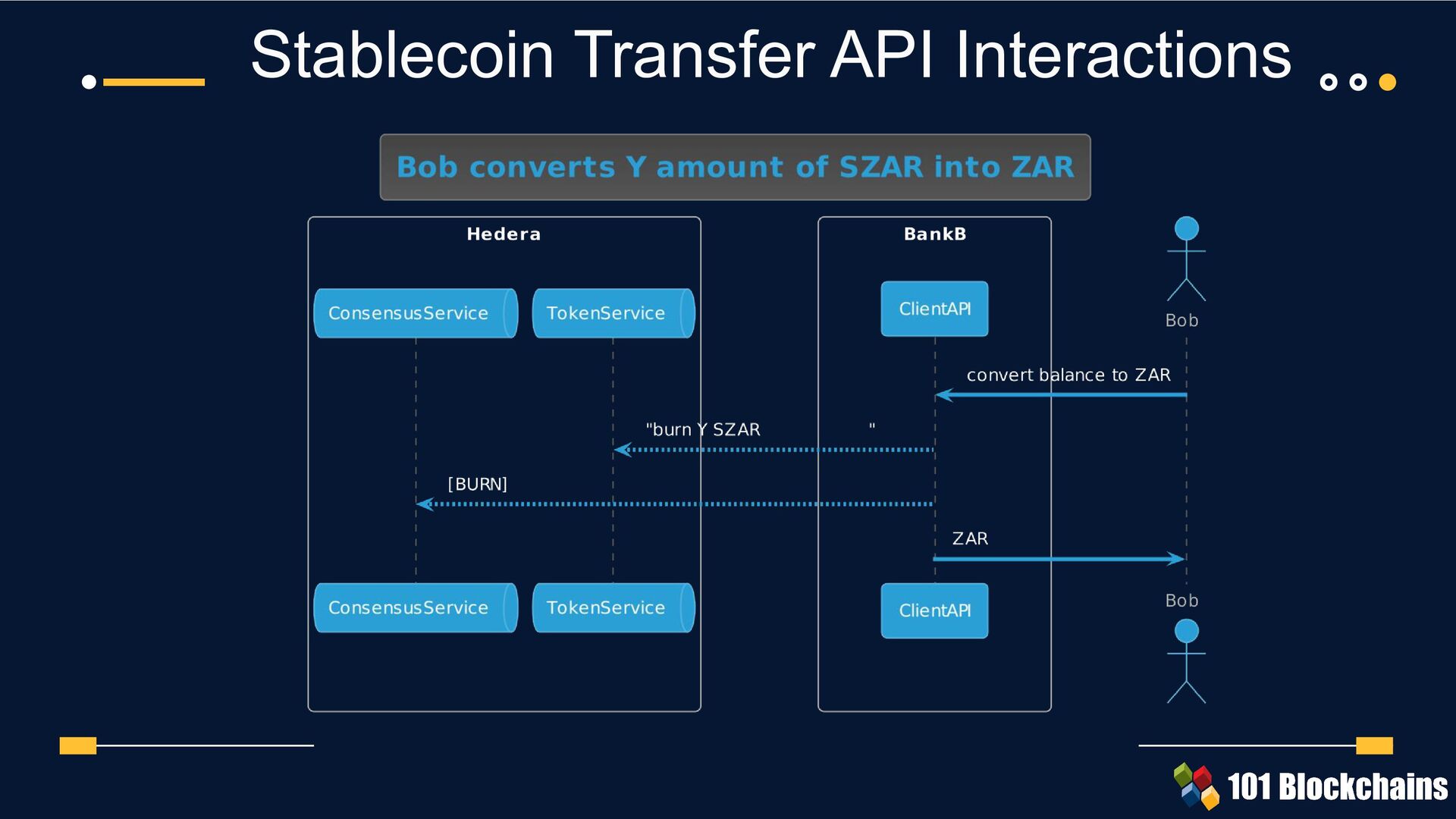
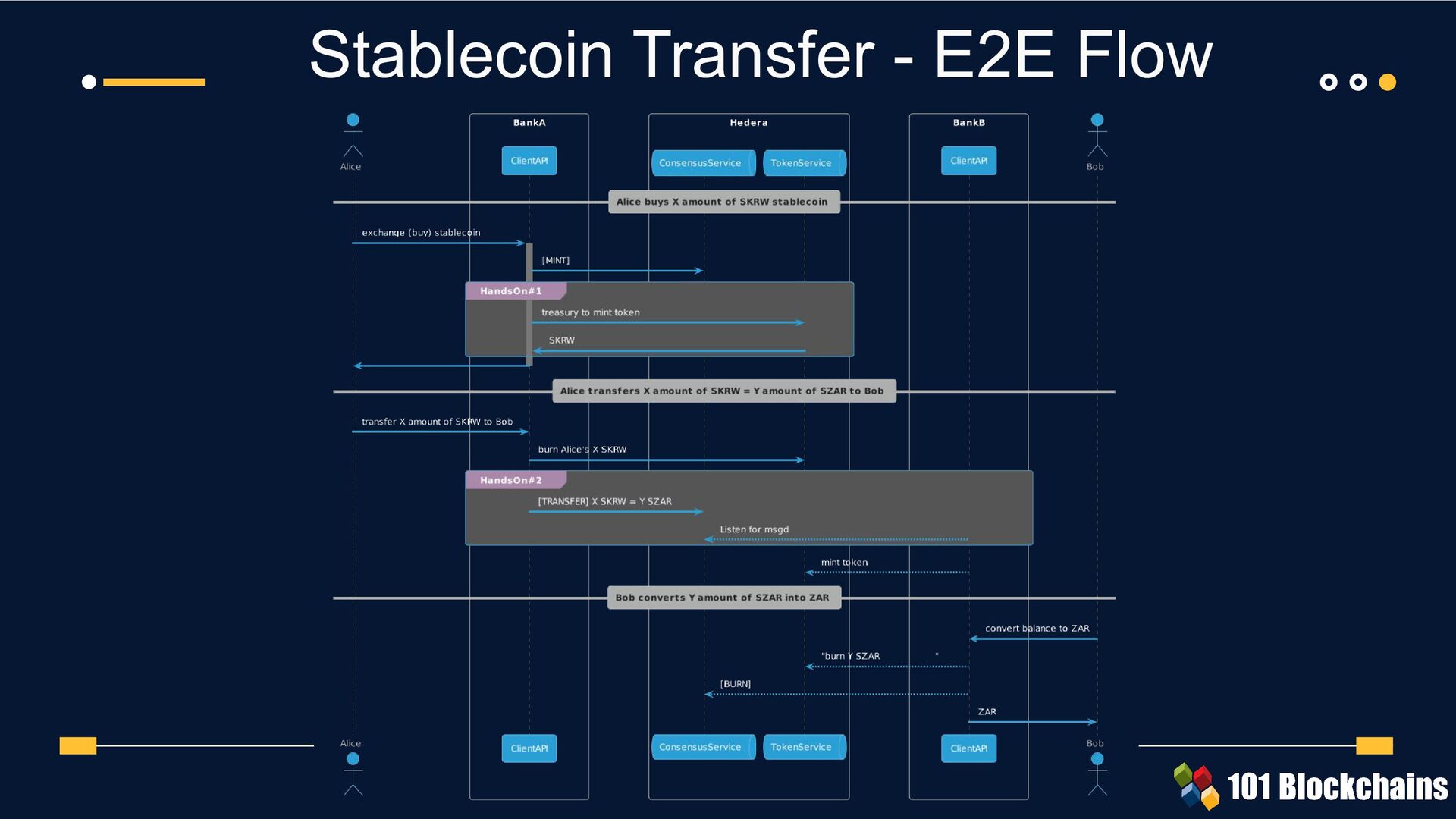
not yet been deployed as a production publicly available application All of the intelectual rights belong to Shinhan bank, Standard bank and Hedera The material presented here is for learning purposes and demonstrate the potential practical real-world application of Hedera platform and services
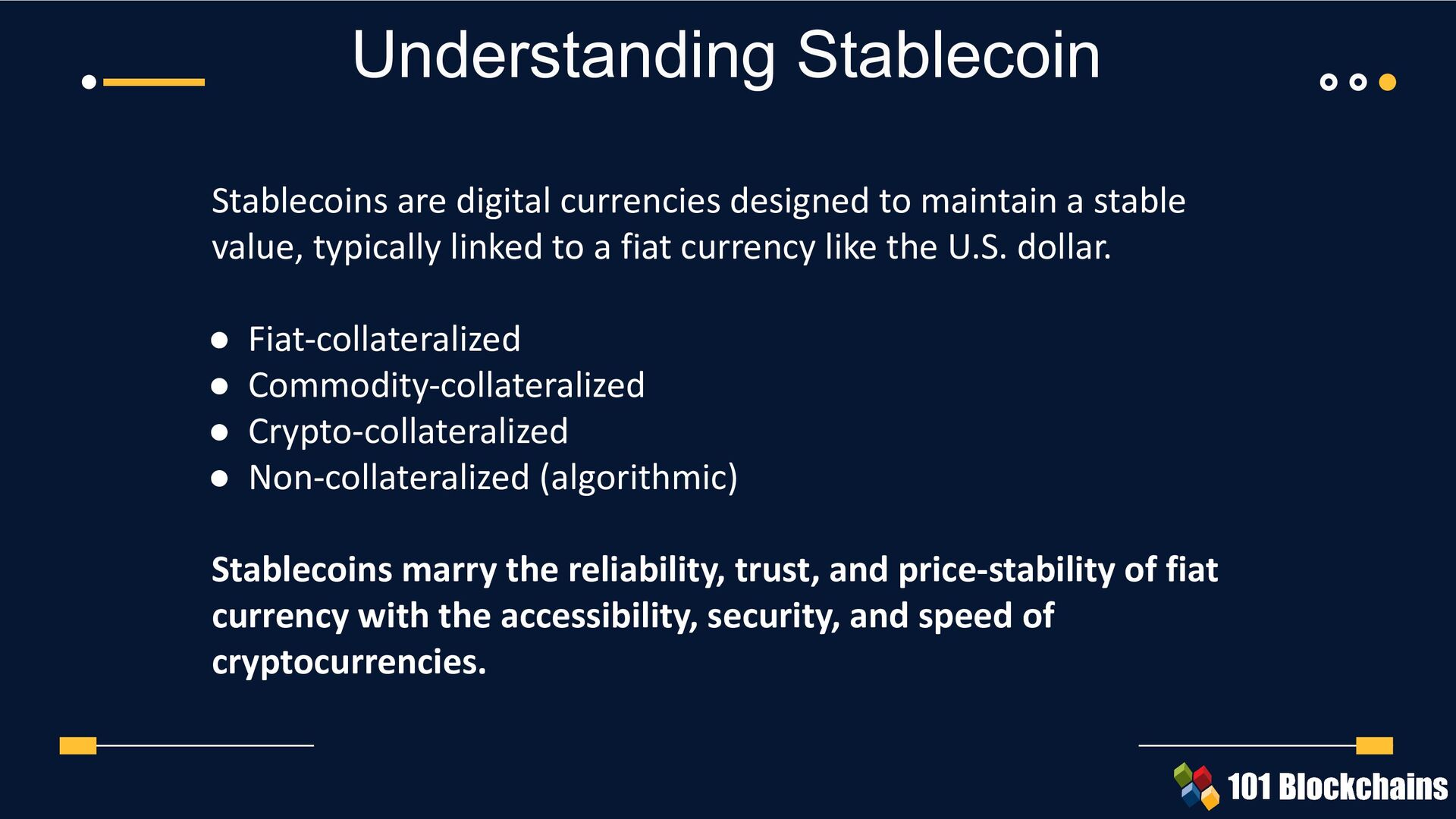
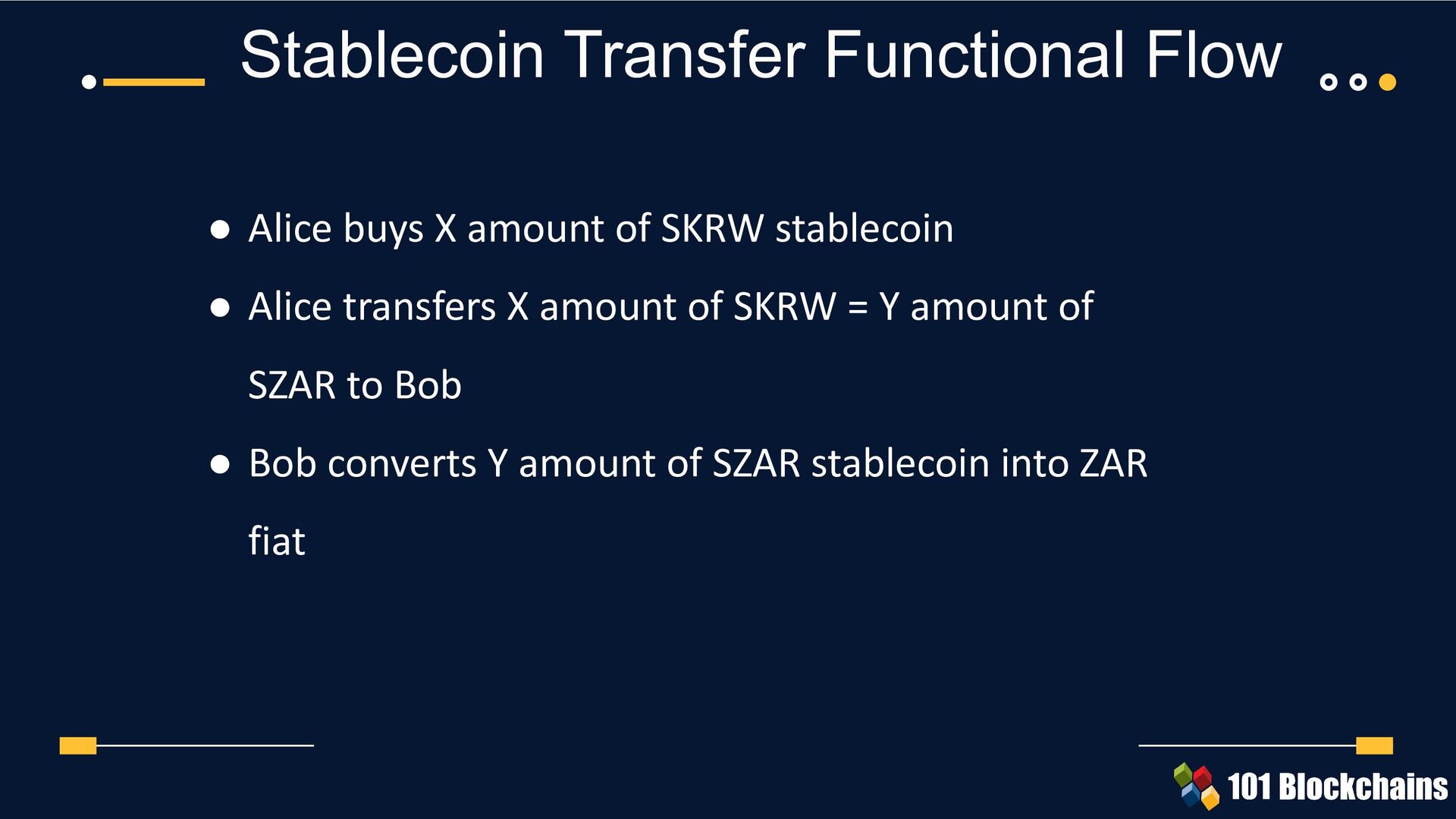
stable value, typically linked to a fiat currency like the U.S. dollar. • Fiat-collateralized • Commodity-collateralized • Crypto-collateralized • Non-collateralized (algorithmic) Stablecoins marry the reliability, trust, and price-stability of fiat currency with the accessibility, security, and speed of cryptocurrencies.
This document may not be distributed, transmitted or reproduced in any form or by any means without 101 Blockchains’ prior written permission. While the information contained in this document has been obtained from sources believed to be reliable, 101 Blockchains disclaims all warranties as to the completeness or accuracy. Although 101 Blockchains research may address business, financial, investment and legal issues, 101 Blockchains does not provide any business, financial, legal or investment advice and this document should not be construed or used as such. 101 Blockchains shall not be responsible for any loss sustained by any person who relies on this publication.

 SiteGround - Reliable hosting with speed, security, and support you can count on.


 twist522
 sansantech
 koukihosaka
 jozono
 taketakekaho
 takuroabe
 iktakahiro
 shuta13
 kentapapa
 genda
genda
 ishikawa_satoru
 occhi
occhi
 namiki64
 shlominoach
 aleyda
 jonrohan
 frankvandijk
 oripsolob
 ryanjones
 aemeredith
 thoeni
 badams
 soudai
 bcantrill
 popppiees